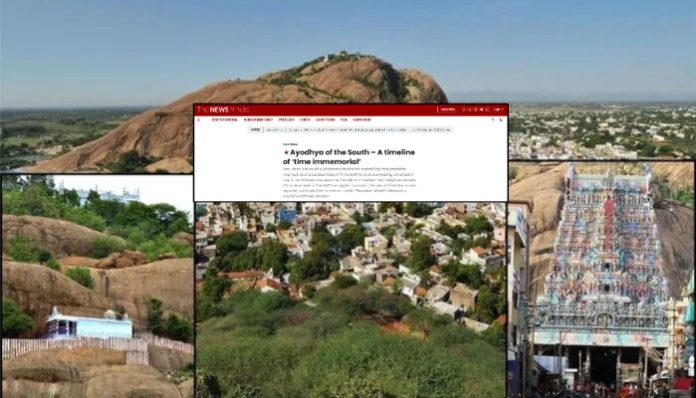
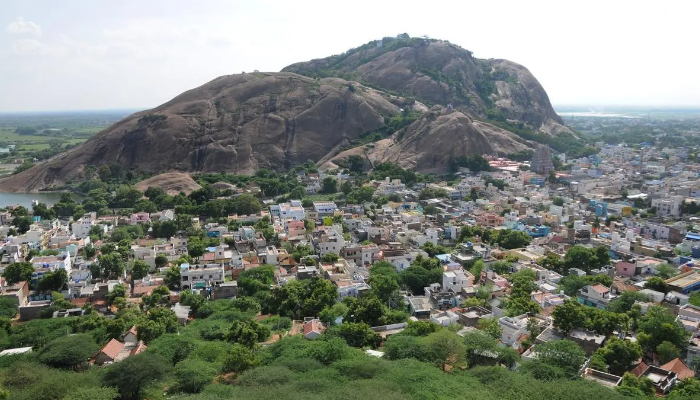
The renowned “Thiruparankundram hill” situated in Madurai of Tamil Nadu had become a central point of religious disagreement between the Hindu and Muslim communities until the Madras High Court delivered its judgment in favor of the Hindus.
The naming of the hillock, the custom of animal sacrifice at the Sultan Sikkandar Badhusha Dargah (shrine) and the right of Muslims to pray in the Nellithoppu area were addressed in the October ruling. The High court highlighted that the name of the holy site will remain “Thiruparankundram hill,” animal sacrifice will be prohibited until a ruling from the Civil Court and Muslims could pray in the Nellithoppu area only during Ramzan and Bakrid, under strict conditions.
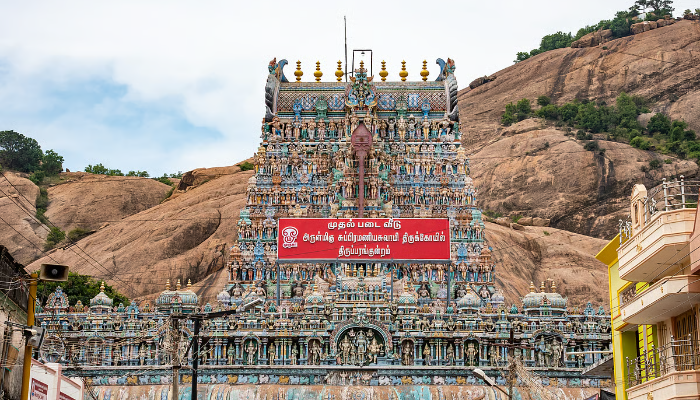
Notably, the place is extremely revered by the followers of Sanatan Dharma because it is home to the historic Arulmighu Subramania Swamy Temple, one of Lord Murugan’s six abodes.
Nevertheless, the infamous leftist mouthpiece “The News Minute” has sought to revive the issue despite the court’s ruling, aiming to provoke religious sentiments and target the Bharatiya Janata Party. The article titled “Ayodhya of the South – A timeline of time immemorial,” which was published on 5th November attempted to create a sensationalized portrayal of distorted facts and falsehoods to propagate the skewed narrative of Muslim victimhood.
The mention of Ayodhya is a clear indication of what the media house intended to accomplish with this piece conveniently overlooking the fact that the Ram Janmabhoomi verdict was rendered by the Supreme Court in consideration of the facts. However, this cabal only accepts such decisions when they serve their interests. Otherwise, they portray every institution as compromised or simply refuse to respect the rulings, as demonstrated in this situation.
Process of shaping Muslim victimhood and attacking the BJP gets underway
The article referenced a 4th July interview with 52-year-old chef Syed Abutahir who wished to sacrifice a goat at the aforementioned shrine in Thiruparankundram and claimed that the “Sunni Muslim moved the date of their Sufi pilgrimage to Christmas. Just so their non-Brahmin Hindu neighbours could join the feast.”
However, a police inspector informed them that animal slaughter is prohibited and did not allow them to proceed. The group including dargah committee members, the local jamaat and mutiple community leaders protested as the police responded with an immediate crackdown, targeting exclusively Muslim men with FIRs (First Information Report) while sparing Hindus, women and children were spared.
The piece commenced by portraying Muslims as individuals with warm, embracing hearts who postpone their significant religious practices for their “non-Brahmin” Hindu neighbours. However, it swiftly progressed to its agenda of attacking the “Hindutva forces” headed by the Hindu Munnani, the Rashtriya Swayamsevak Sangh (RSS) and the Bharatiya Janata Party (BJP) to escalate the issue as state assembly elections approached. The article further charged them with conducting a statewide agitation for complete control of the hill.
The media outlet emphasised that Hindus wanted to prohibit prayers at the dargah as well as animal sacrifice, arguing that the entire rock represents the body of the Hindu god Murugan. Abutahir even alleged there had been no problems with the Muslim practices at the site for years, suggesting that if there were no objections previously, there should not be any at present.
First and foremost, this argument is inherently flawed. The fact that a certain practice has been in effect for years does not necessarily mean it should be allowed to persist. Isn’t this how reforms such as the Triple Talaq Law were introduced to facilitate change and resolve the genuine concerns of the other side?
More importantly, this is not a recent dispute and has been around for more than a century. Hindus have always maintained their ownership of the entire hill especially after the dargah’s effort to erect a mandapam, in 1920.
Claims of “syncretic place of worship” and source of “communal harmony”
According to the piece, neither the local BJP unit nor any other Hindutva outfit were “in the pcture” when the police arrested them. The police had not received a formal complaint from any Hindu residents of Thiruparankundram regarding the animal sacrifice.
Interestingly, the Muslim side approached the court regarding the issue and asserted that it is a “syncretic place of worship that draws pilgrims from both or all religions” during the arguments. It even added that the “main individual who conducted the Halal ceremony at the dargah is a Hindu named Paramasivam, who is part of the Mukkulathor or Thevar community.”
His son described as a “devotee of the dargah” allegedly “signed a sworn statement to this effect, saying his family performs Halal and collects a portion of the meat as part of an ancient ritual barter.”
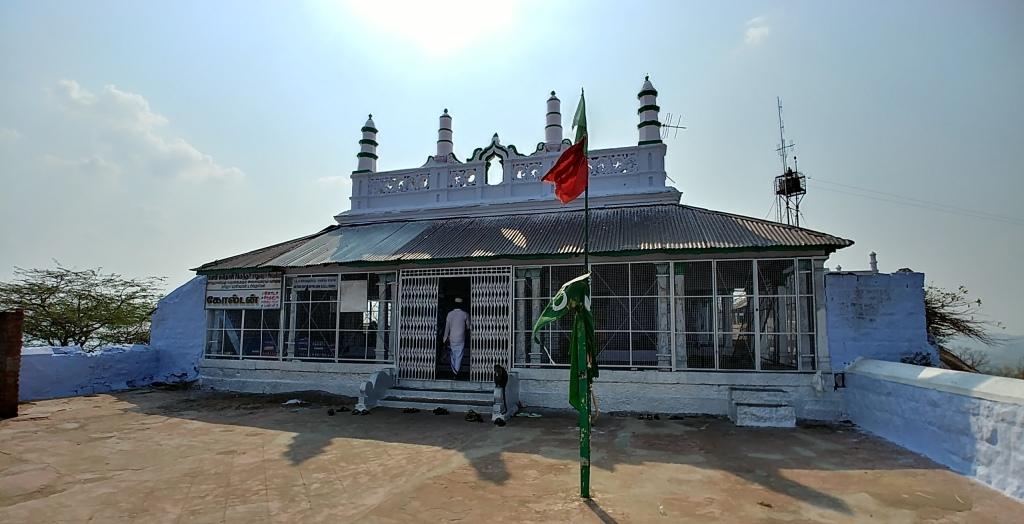
The efforts to depict the dargah which is an integral part of the Islamic faith, as a promoter of syncretic culture and communal harmony where even Hindus participate, are rather desperate.
The involvement of some Hindus in Eid or Christmas festivities or the attendance of non-Hindus at a temple, does not eliminate the religious nature of these occasions or sites. They are not a symbol of secularism and can not be stripped off their religious elements, even if people from different beliefs are involved.
Likewise, how can it represent communal harmony when Hindus have been struggling for their rightful claims to the hill for hundreds of years and are consistently denied the same? The actions of a few Hindus engaging in the dragah can not negate the strong feelings of the broader Hindu community. Furthermore, why should their faith not be considered equally important as that of others?
Casting doubts on official statements to sustain the bogus narrative
The public path leading to the shrine was blocked by Muslims, according to the Thiruparankundram Revenue Inspector. He outlined that they “prevented the police from doing their duty” and “used inappropriate words and slogans” including “down with police anarchy” in the complaint.
The piece then questioned, “Why would one set of pilgrims have a problem with another set visiting the same shrine,” while Abutahir insisted that he did not even recall seeing the official.
The answer to this could be akin to the reason Hindu processions are subjected to attacks during every festival and are regularly rejected permissions to pass through “Muslim areas.” However, the leftist lobby is not prepared for this discussion nor will they ever be. Nothing unsettles them more than inconvenient truths that expose reality of their preferred demographic. Therefore, they continue to gloss over every nefarious facet of the community.
The article informed that the Revenue Inspector’s accusations were restated by Madurai Commissioner of Police J Loganathan in his plea to the Madras High Court’s Madurai bench and lamented the latter’s unwillingness to mention how “Hindus from Rajapalayam travelled with their Muslim neighbours like a family to sacrifice a goat and participate in Sufi rituals” to further peddle the “communal harmony” narrative.
Abutahir reportedly spoke for almost fifteen minutes before abruptly ending the connection and vanishing. He also cut off communication with the Jamaat members who put the media house in touch with him and only agreed to continue the conversation after Madurai lawyer S Vanchinathan promised to take his case and blamed the local police for his disappearing act.
The piece then tried to illustrate a perfect representation of an ideal society where a lone Muslim family resides among Hindus, who are full of appreciation for the man in that household, to insinuate that this is the way individuals from both communities coexist until the BJP or Hindutva activists incite tensions between them.
It shrewdly shifts the responsibility onto the two while conveniently disregarding that this matter has been tied to Hindu religious sentiments for a long time and is completely unrelated to politics or such things. The piece essentially urges Hindus to relinquish their rights at the distorted altar of communal harmony or endure accusations for daring to raise their voice.
Anti-Hindutva rhetoric persists amid efforts to refrain from questioning the relevant authorities
According to the article, the police asserted to have received the orders from District Collector and barred them from mounting the hill but the jamaat discovered that no such order had been given when they verified. The officers then asserted that the instructions were issued on behalf of the district government by the Revenue Development Officer (RDO). However, the Muslims claimed that no such a directive had not been issued to the police.
If it is indeed true, isn’t this an administrative failure of the authorities under the Dravidian government? However, the article chose to criticize the Hindu groups and the BJP, which has merely 4 members in the state assembly, rather than posing questions to the responsible authority. It seems that speaking truth to power is only applicable when it pertains to the saffron party, irrespective of its status in power.
Afterward, the article addded that the Jains have presented archaeological evidence conveying that they established shrines long before the other two religions without pointing out how the Islamists did not even spare their caves and painted them green.
It then declared that the “evolving legal and political equations surrounding this conflict, detailing how police and bureaucratic actions created a vacuum that the BJP rapidly filled to escalate its Hindutva agenda.”
The piece to create an illusion of neutrality claimed that the “secular groups feel profoundly disappointed by the police and the Dravida Munnetra Kazhagam (DMK)-led state machinery, which they view as having actively undermined the Dravidian Model’s commitment to social justice.”
The entire article is dedicated to denounce Hindutva and the BJP, while the government which should be held accountable is only criticized for failing to provide “social justice” in the face of their growing presence in the state.
Notably, it is the same party whose ministers, MLAs and even MPs desire to eliminate Sanatan Dharma and have expressed their aversion to the religion in the most contemptuous manners. It is utterly ridiculous that the piece suggested that such an administration did not act against the mischievous “Hindutva forces” which, in fact, do not hold any authority in the state.
The media outlet then reiterated this rhetoric, stating that “Hindutva groups are labeling it the Ayodhya of South India.” It further condemned how “Hindu Munnani, Hindu Makkal Katchi, RSS, and the BJP together with around five lakh people gathered in Madurai on 22nd June for a Murugan ‘Maanadu’ (conference),” representing the largest Hindutva assembly in the history of the state.
There they pledged to seize possession of the entire hill which they considered was an embodiment of Murugan and demanded that animal sacrifices at the dargah be prohibited. The Hindu Makkal Katchi petitioned the court to prohibit the use of the name Sikkandar Malai and insisted that the hill be referred to as Skandar Malai in honour of one of Murugan’s several names.
Muslims continued their sacrificial practices at the location with Muslim leaders even visiting the site. However, the media organization objected at Hindus exercising their democratic right to assemble and present their case. The Hindus, if deviate even slightly from the prescribed path of secularism, assert their religious identity or make a genuine demand, would be labeled “Hindutva,” regardless of the court’s decision.
History of legal disputes goes back a century
The artcile alleged that “Behind each name and claim over the Kundram, Kundru or Malai is a story that goes back to a time about which there is very little recorded history.” However as aforesaid the dargah tried to construct a mandapam in 1920 but the Arulmigu Subramaniya Swamy Temple in Thiruparankundram requested a declaration of ownership over the complete area.
In 1923, the trial court declared that the temple had nearly the whole hill with the exception of approximately 33 cents of land at Nellithoppu where the dargah flagstaff and mosque are located. The highest court at the time, the Privy Council, upheld the temple’s rights to the hill “from time immemorial” in 1931 after the drgah’s appeal.
This stance was supported by further cases. The court forbade quarrying outside the shrine’s restricted boundaries in 1958 and in 2011, it prohibited any new construction or lighting without the temple’s consent. Following petitions related to tourism initiatives and flag installations were similarly denied.
Courts have continuously maintained the temple’s control of the hill for more than a century, acknowledging the dargah’s rights exclusively within its 33-cent tract.
Reality is in direct opposition to the propaganda
The reality stands in stark contrast to the portrayal that The News Minute attempted to create with the article. Hindus had to organize significant protests to counter the unlawful encroachments by Muslims while simultaneously engaging in legal battles to acquire permissions.
Animal sacrifice was allowed with the approval of the DMK government. The authorities were eventually compelled to act as the Hindu devotees agitated when banned Popular Front of India’s (PFI) political wing the Democratic Party of India (SDPI) attempted to incite communal tensions. Moreover, efforts to rename it as Sikandar Malai (hill) were also in progress despite accusations of Muslim appeasement directed at the DMK.
The dargah could be perceived as a representation of communal harmony and secularism by those with personal motives, yet the fact remains that it has been employed to trample on Hindu religious rights, encroach upon their holy space and violate their religious feelings. The high court’s decision and the legal background of the area also outline this same truth, which cannot be concealed by any amount of victimhood narratives or vested agenda from the liberal-leftist media, to keep the issue alive.