

I occasionally follow ‘The 50’, which is a reality show where a group of influencers and celebrities perform tasks to earn money, not for themselves but for their fans. It is not exactly the sort of programme one watches for intellectual stimulation. Most of the time it is simply mindless entertainment, which one seeks after a day-long work routine. It is the kind of show you put on when you want to switch your brain off for a while. However, sometimes even the most ordinary entertainment ends up revealing something far more unsettling than intended.
That moment arrived during a conversation involving Faisal Shaikh, better known to millions of followers as Mr Faisu. During a discussion with other contestants about his popularity and journey as an influencer, he recalled the early days of his career and told them how things evolved after short video platforms exploded in popularity.
During that conversation, he made a remark that stayed with me. He explained that the company they had signed with had invested heavily in grooming them. According to him, they attended classes where they were taught how to eat properly, how to sit, how to behave in public and how to present themselves as gentlemen.
At first glance, it sounded like nothing more than professional training for social media personalities. Even celebrities take such lessons, and some rich kids too. These people often operate in a competitive environment where presentation matters almost as much as content. Grooming, in that sense, is a simple part of the process of building oneself as a brand.
However, the more I thought about that remark, the more uncomfortable the idea became. Because grooming is not just about table manners. It is about crafting a persona.
The grooming of influencers and the making of an ideal public image
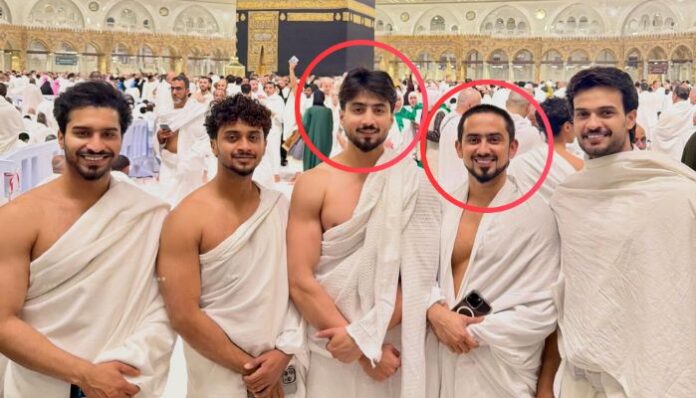
One small detail in Faisu’s remark is worth paying attention to. When he described the grooming classes, he did not speak in the singular. He repeatedly said “we”. The training was not something that happened to him alone. It was something that happened to an entire group and that group was the well-known social media collective “Team 07”. It is a set of influencers who rose to prominence together through TikTok, Instagram and other platforms.
If his group was “groomed”, there must be more investors who are grooming other influencers or groups of influencers. We have noticed that over time, these influencers become completely different from what they used to be a few years ago. In other words, the grooming classes that taught them how to sit, how to eat and how to behave like gentlemen were part of a structured effort to shape an entire influencer ecosystem.
If we think just about being an influencer, there is nothing inherently wrong with learning how to conduct oneself well. In fact, in an era where many online personalities thrive on shock value and vulgarity, the cultivation of discipline and politeness can even appear refreshing.
However, grooming also produces something else, that is, a carefully crafted public image. A well-groomed influencer who appears polite, respectful and disciplined naturally commands admiration. Add physical fitness, charisma and massive social media reach to that, and the effect becomes even stronger. Such personalities become aspirational figures. People admire them, emulate them and often trust them.
Watching ‘The 50’, one can see exactly how that persona plays out. Other contestants praise Faisu for his behaviour and discipline. He performs tasks well. He carries himself confidently. His personality appears measured and controlled. It is easy to understand why he enjoys an enormous fan following, especially among younger audiences.
Yet the idea of systematic grooming raises an interesting question. When personalities are deliberately shaped to appear admirable and trustworthy, what kind of influence do they ultimately hold over those who follow them? And if the grooming applied to the entire group, as Faisu’s use of “we” suggests, then that influence extends far beyond one individual.
The story of Adnaan Shaikh and Riddhi Jadhav
Another figure connected to “Team 07” and ‘The 50’ show is Adnaan Shaikh. Just like Faisu, he also rose to prominence through social media. In fact, they actually rose to popularity together. He also has a substantial following on social media. Though he did not discuss about his marriage on the show, but his bond with Faisu made me do a little bit search about him.
Interestingly, the story surrounding Adnaan extends beyond social media fame. His wife was previously known as Riddhi Jadhav, a Hindu woman and influencer, who later converted to Islam before marrying him. After the conversion, she adopted the name Ayesha Shaikh.
The couple recently appeared in public while shopping ahead of Eid. Photographs and videos circulated online showed Riddhi, now Ayesha, covered in a full burqa. The image once again revived discussions surrounding the circumstances of her conversion and marriage. Adnaan and conversion of his wife to Islam is being talked about on social media.
Reel celeb Adnan Shaikh does Eid shopping for his son, he's accompanied by his Hindu wife Riddhi Jadhav who once wanted to go to temple in shorts.
— JyotiKarma🚩🇮🇳 (@JyotiKarma7) March 15, 2026
Well he's allowing her to breathe that itself might mean great freedom to her! pic.twitter.com/iOAIyHiRNh
Reports had earlier suggested that Riddhi’s family opposed the decision and did not attend the wedding ceremony. The issue had already generated controversy in 2024 when allegations from Adnaan’s sister triggered public debate on social media.
In interviews, Adnaan has addressed the controversy by emphasising that the conversion was Ayesha’s personal decision. He has pointed out that India guarantees freedom of religion and argued that no one can be forced to convert.
At face value, the explanation appears straightforward. But the story contains another detail that Adnaan himself once mentioned. In an earlier interview, he recalled how he first noticed Riddhi years earlier when she was studying at Khalsa College. According to him, she did not initially pay attention to him. He said that during those days he would perform stunts on his bike around her in an attempt to attract her attention.
How easily these scums change the whole identity of Hindu women they trap in love jehad? Ayesha who?
— JyotiKarma🚩🇮🇳 (@JyotiKarma7) March 15, 2026
This OTT celeb Adnan Shaikh aka Chapri, has been chasing Riddhi Jadhav since 12 years. So when she challenged temple rules to wear shorts, he was very well laughing at Hindus… pic.twitter.com/m16dIySnrR
Years later, the two married. Before the marriage, Riddhi converted to Islam and adopted a new religious identity. Another statement of Adnaan’s also stands out. He has openly said that religion comes first in his life.
"Adnan Sheikh roasted his wife." 🤡
— Suraj Kumar Bauddh (@SurajKrBauddh) March 14, 2026
He says he is Muslim and his wife was Hindu, but she converted before marriage because religion is very important to him. Wow!
So religion matters only for you, not for her? pic.twitter.com/dpdZ3KQgDg
When we place all the circumstances and facts together, these details paint a more complex picture than the simplified narrative of personal choice often presented by him in public discussions. Funny thing is, after the controversy, Adnaan told Telly Reporter that her face is not revealed on social media because of his religious beliefs. He claimed it is a personal choice guided by his faith and cultural values.
When admiration becomes influence
The modern influencer economy thrives on emotional connections. Followers feel as though they know the personalities they watch online. They admire their lifestyle, their personality and the way they carry themselves.
Over time, admiration often evolves into trust. And once trust is established, influence becomes inevitable. This is where the discussion begins to intersect with a broader cultural debate that has appeared repeatedly in recent years. Narratives around religious conversions through emotional relationships have surfaced in various contexts, including popular culture.
Films such as The Kerala Story attempted to portray a pattern in which young women were drawn into relationships that gradually evolved into ideological influence and eventually religious conversion. Whether one agrees with the film’s depiction or not, the central idea it explored was simple. Emotional bonds can sometimes become channels of persuasion.
In the film, the Hindu women were coerced into converting and marrying Islamic terrorists by repeatedly pushing narratives against Hinduism. The brainwashing, which used to be subtle, has become overwhelmingly open nowadays and with social media platforms it has become much easier as well.
Friendships and romantic relationships have the ability to shape beliefs and identities in ways that individuals may not fully recognise in the moment. In the age of social media influencers, where personalities are deliberately groomed to appear charismatic, disciplined and admirable, the scale of such influence becomes even greater.
Admiration leads to emotional connection. Emotional connection leads to trust. Trust often leads to deeper influence and that influence can push a person, in most cases a Hindu, to convert to Islam and it is a bitter truth that is undeniable.
The uncomfortable gap within Hindu society
Perhaps the most uncomfortable aspect of this discussion lies not in the actions of individuals but in the condition of the society observing them. Many modern Hindu families have gradually moved away from discussing religion in any meaningful way. Faith is often reduced to festivals, rituals and occasional temple visits.
Children grow up celebrating traditions but rarely receive a clear understanding of the philosophical or cultural foundations behind them. Religion becomes something symbolic rather than something deeply understood.
At the same time, young people are exposed to a world where other communities often possess far clearer and more assertive expressions of religious identity. This difference can create a subtle imbalance. A young person who grows up without a strong understanding of their own belief system may find it easier to adopt another one when emotional relationships come into play.
In such an environment, charismatic personalities and influential figures can wield enormous cultural power. Admiration can easily turn into ideological influence when the individual on the receiving end lacks clarity about their own identity. The issue therefore is not simply about interfaith relationships. India has always been a civilisation where multiple faiths have interacted and coexisted.
The issue is whether individuals enter those relationships with a clear sense of who they are.
The uncomfortable lesson from a reality show
All these thoughts returned to me as I continued watching that seemingly harmless episode of ‘The 50’. It popped up during a discussion with the team at the office and I believe sometimes small details matter.
A casual conversation about influencer grooming suddenly began to feel like a glimpse into a much larger ecosystem. Faisu’s remarks about grooming revealed how carefully influencers’ personalities can be shaped. The emphasis on etiquette, discipline and presentation creates individuals who appear admirable and trustworthy to millions of viewers.
Adnaan’s story, meanwhile, illustrates how a good personality mixed with personal relationships can intersect with identity, belief and religious commitment in ways that spark intense debate.
These are just two influencers. One revealed how he became what he is today and the other revealed how his wife became Ayesha from Riddhi. Interestingly, Riddhi was once accused of wanting to go to a temple in shorts, something that is against Hindu traditions.
Perhaps the real question is not about Faisu or Adnaan as individuals. Perhaps the real question is about the society watching them. Sometimes, a “harmless” show can reveal the uncomfortable truth of things happening around you. Sometimes, it reveals why your modern Hindu friend converted to Islam and now wears a burqa covering her from head to toe.


