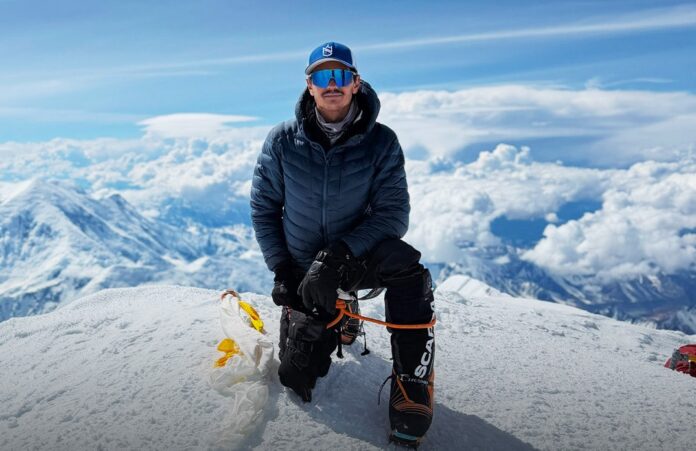
The world of mountaineering has lost one of its greatest modern icons. Legendary British-Nepali climber Nirmal ‘Nimsdai’ Purja was confirmed dead on Saturday after an avalanche struck his expedition on Broad Peak, the world’s 12th-highest mountain, in Pakistan-occupied Kashmir (PoK). Purja had gone missing along with members of his climbing team after the avalanche swept through the mountain’s popular West Ridge route.
His expedition company, Elite Exped, confirmed the tragedy in an emotional statement, saying, “It is with profound sadness and immense heartbreak that we confirm that Nirmal ‘Nimsdai’ Purja tragically lost his life following the avalanche on Broad Peak.” The company also confirmed the deaths of his trusted climbing partners and guides, Pur Bahadur Gurung (Yukta) and Nima Sherpa, while paying tribute to all those who lost their lives in the accident.
Purja was leading an expedition comprising climbers from Nepal, the United States, Pakistan, Oman, China and other countries when disaster struck. GPS trackers carried by the team indicated a sudden and rapid loss of altitude between Camps II and III at around 6,580 metres (21,585 feet) on Broad Peak, suggesting the climbers had been caught in a massive avalanche. Search teams later recovered multiple bodies despite extremely difficult weather conditions.
At just 43, Purja had already secured his place among the greatest high-altitude mountaineers in history. A former Gurkha soldier and member of Britain’s elite Special Boat Service (SBS), he became an international sensation after climbing all 14 mountains above 8,000 metres in a record six months and six days under his ambitious Project Possible expedition in 2019.
His extraordinary journey later inspired the globally acclaimed Netflix documentary 14 Peaks: Nothing Is Impossible, turning him into arguably the most recognisable face in modern mountaineering.
From a Himalayan village to Britain’s elite Special Forces
Purja was born in Nepal’s remote Myagdi district, nestled in the Himalayas at an altitude of around 1,600 metres.
Coming from a family of Gurkhas, military service was almost a tradition. His father and elder brothers had served before him, and at 18, he joined the Brigade of Gurkhas in the British Army in 2003.
His determination soon took him further.
In 2009, Purja completed the gruelling selection process for Britain’s Special Boat Service (SBS), one of the world’s most elite special forces units.
Over a military career spanning 16 years, including a decade in UK Special Forces, he developed the resilience, discipline and mental toughness that would later define his climbing career.
An unplanned trek changed his life
Ironically, Purja never intended to become a professional mountaineer.
In 2012, he trekked to Everest Base Camp as a visitor. Rather than returning home as planned, he made a spontaneous decision to remain in Nepal and learn mountaineering.
His first summit was Lobuche East, a 6,119-metre Himalayan peak.
That decision altered the course of his life.
Within a few years, Purja had evolved from a novice climber into one of the world’s most accomplished high-altitude mountaineers.
His willingness to embrace unexpected opportunities became one of his defining traits.
Even his final expedition reflected that philosophy.
In one of his last posts on X, Purja revealed that Broad Peak had never been part of his original itinerary.
THE MISSION SHIFTS. THE COMPASS HOLDS.
— Nirmal Purja MBE (@nimsdai) July 27, 2026
This was never the plan. Initially, the plan was to climb just G2. But just before setting off for Pakistan, I ran the numbers on my 8000m summits. That’s when it hit me: if I tick off Broad Peak whilst I’m here , only one remains “Cho… pic.twitter.com/rovJzFcazP
His initial plan was to climb Gasherbrum II, another Karakoram giant. Only shortly before leaving did he realise that adding Broad Peak would leave him one summit away from becoming the first climber in history to climb all 14 eight-thousanders twice without supplementary oxygen.
“This wasn’t planned,” he wrote.
“But opportunities don’t scream; they whisper to those already working in silence.”
He ended the post with words that now carry heartbreaking significance:
“Broad Peak, I ask for nothing but safe passage up and back down. I take zero mountains for granted.”
Days earlier, he had celebrated reaching the summit of Gasherbrum II, his 57th successful ascent of an eight-thousander.
The expedition that changed mountaineering forever
Purja’s defining moment came in 2019.
At the time, climbing all 14 mountains above 8,000 metres was considered the pinnacle of mountaineering.
The existing speed record stood at almost eight years.
Purja believed it could be done in months.
Few believed him.
Unable to secure sufficient sponsorship, he reportedly re-mortgaged his home, backed by his wife Suchi, to finance what he called Project Possible.
The gamble paid off spectacularly.
He climbed all 14 of the world’s highest mountains in six months and six days, one of the greatest achievements in mountaineering history.
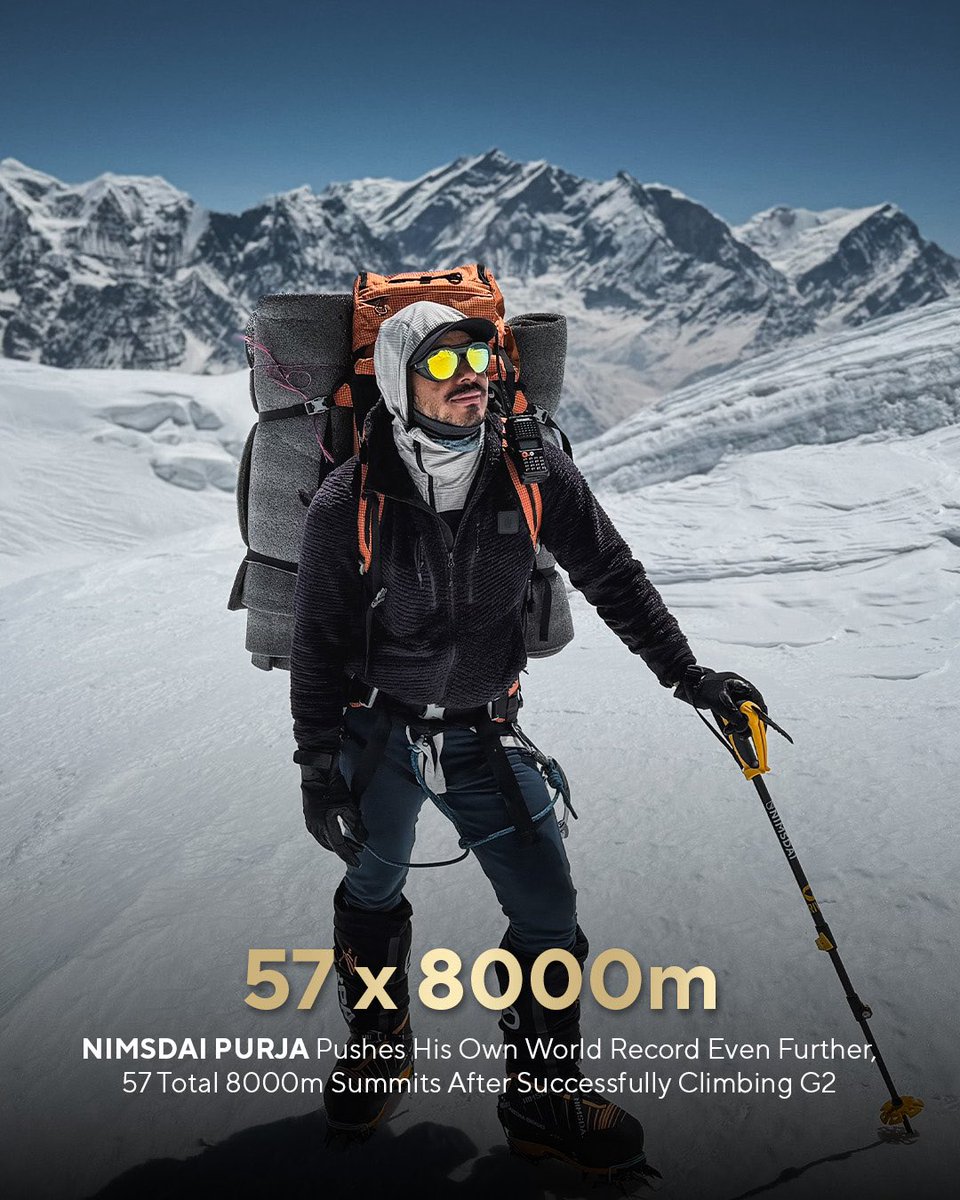
His record has since been surpassed by Norwegian climber Kristin Harila, but Purja’s accomplishment fundamentally changed perceptions of what was physically possible.
As he often said: “People are only limited by their imagination. If you don’t dream, then you won’t do it.”
Netflix turned him into a global icon
Project Possible became the subject of the Netflix documentary 14 Peaks: Nothing Is Impossible.
The film introduced Purja to millions of viewers who had little knowledge of mountaineering and made him arguably the most recognisable climber in the world.
For Purja, however, the mountains were never the real story.
“It’s not about mountain climbing; it’s about following your goals,” he told the BBC.
The documentary inspired people far beyond the climbing community by portraying ambition, discipline and resilience rather than simply dangerous expeditions.
The Everest photograph that sparked a global debate
Purja also produced one of the defining images of modern mountaineering.
While climbing Mount Everest in May 2019, he photographed a long queue of climbers waiting just below the summit.
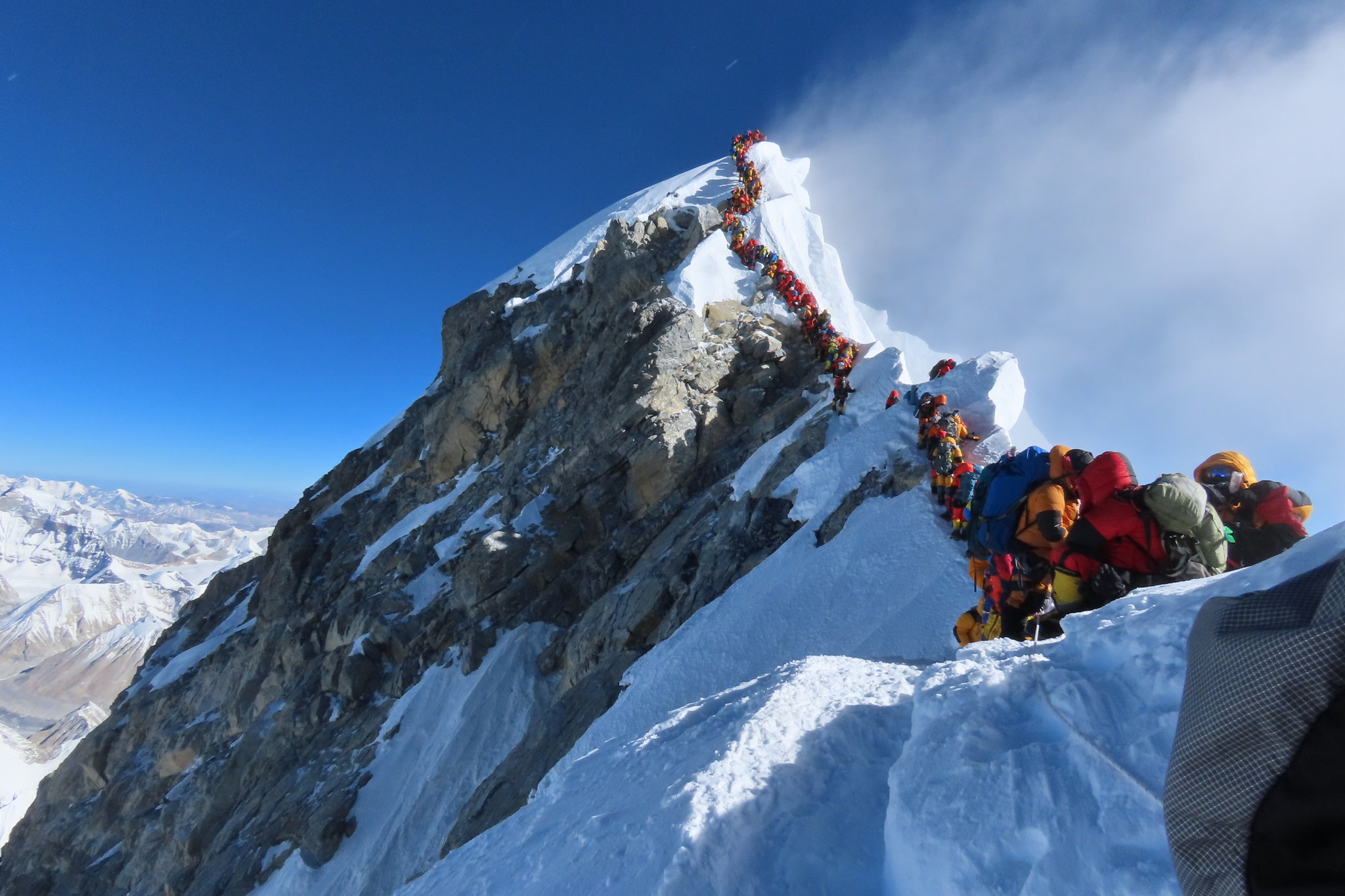
The image quickly went viral worldwide, exposing the dangers of overcrowding on Everest and prompting an international debate over commercial expeditions and safety on the world’s highest mountain.
It remains one of the most iconic photographs ever taken on Everest.
A climber who believed rescuing others came first
Purja earned admiration not only for breaking records but also for repeatedly risking his own life to save others.
During a descent from Annapurna, he led the rescue of climber Chin Qui Kin, who had been stranded for around 40 hours without food, water or oxygen.
Although the climber later died in hospital, Purja’s efforts were widely praised.
Less than a month later, he and his teammates rescued two climbers stranded at an altitude of 8,400 metres, giving away their own precious oxygen supplies despite jeopardising their own safety.
“For me it’s not about ego,” Purja told The Guardian.
“It’s about principles. You can’t call yourself a climber and not help in that situation.”
Championing Nepali climbers
Following his rise to international fame, Purja founded Elite Exped, the Nimsdai Foundation and a mountaineering apparel company.
He also became one of the strongest advocates for greater recognition of Nepali Sherpas and mountain guides, arguing that they deserved equal credit for many of the world’s greatest climbing achievements rather than remaining in the background while foreign climbers received global acclaim.
His contributions to mountaineering had already been recognised in 2018, when Queen Elizabeth II appointed him a Member of the Order of the British Empire (MBE).
Criticism and controversy
Like many public figures, Purja’s growing fame brought scrutiny.
In 2024, The New York Times reported allegations by two women, one accusing him of sexual assault and another alleging inappropriate conduct during a climbing expedition. Purja denied both allegations through his lawyer.
A legacy larger than records
Purja died while leading an expedition of 11 climbers on Broad Peak, where an avalanche struck between Camps II and III at an altitude of around 6,580 metres. Elite Exped later confirmed not only his death but also those of his trusted climbing partners Pur Bahadur Gurung (Yukta) and Nima Sherpa.
Tributes poured in from across the mountaineering world.
British adventurer Bear Grylls, who worked with Purja in the documentary Finding Michael, described the news as “heartbreaking for so many climbers around the world who had a relationship with this remarkable and unique man.”
Perhaps the most fitting tribute, however, came from Purja himself.
In what became his final post on X, he wrote:
“This one is dedicated to everyone who carried me here. Supporters. Critics. All of you. Without both sides, there is no fire. So thank you genuinely.”
For millions, Nirmal “Nimsdai” Purja will be remembered not simply as the man who climbed mountains faster than anyone before him, but as the climber who convinced an entire generation that impossible goals exist only until someone dares to achieve them.