

Haiti has an extraordinary and tragic history. It won independence from slavery, only to be forced to pay its former masters for the freedom it fought to secure. It spent the next two centuries struggling with foreign interventions, dictatorships, natural disasters and political collapse.
In October 2026, another foreign leader entered the picture: El Salvador’s President Nayib Bukele.
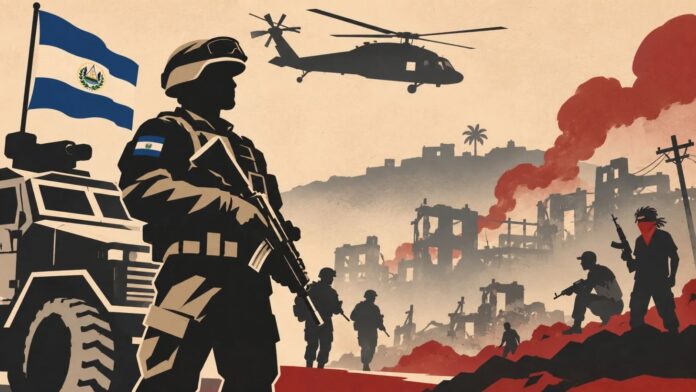
The reason for the intervention was an ambush near Port-au-Prince on October 18. Four Salvadoran air force technicians, serving with an international security mission, disappeared after armed gangs attacked their vehicle. Bukele, known for suppressing criminal gangs and bringing peace and order in El Salvador, responded with an ultimatum, warning Haiti’s gang leaders that the same forces which had crushed gangs in El Salvador could confront them too.
Within weeks, Salvadoran troop numbers in Haiti reportedly rose from around 124 to more than 2,000. What began as an effort to recover four missing men had escalated into a military offensive.
But can a small Central American country like El Salvador succeed in bringing peace and order to Haiti, where three decades of United Nations interventions have failed?
Haiti has a painful history. Under French colonial rule, it was an enormously profitable producer of sugar and coffee, relying on the brutal exploitation of enslaved Africans.
When Haiti declared independence in 1804, it achieved something remarkable: the establishment of a sovereign republic born from a successful slave revolution. That freedom, however, came with a brutal financial punishment. In 1825, France demanded 150 million gold francs as compensation for former plantation owners, including their lost claims over enslaved people. Haiti was forced to borrow from French banks to pay France itself.
The result was the wrecking of public finances for generations. Money that could have built schools, hospitals and roads instead flowed overseas into French coffers.
Then came American occupation, the Duvalier dictatorships, military coups, the devastating 2010 earthquake and the assassination of President Jovenel Moïse in 2021. Each crisis weakened already fragile institutions and brought the small nation further down, blow by blow.
The vacuum of power was claimed by armed criminal gangs, who now rule nearly 70% of the capital city, Port-au-Prince, while nearly 1.5 million Haitians had been displaced.
The United Nations has been working in Haiti since 1993, deploying peacekeepers, police trainers and election-support missions. Its largest operation, MINUSTAH, lasted from 2004 to 2017 and cost more than $7 billion. Yet, stability never came. Worse, UN peacekeepers were linked to a devastating cholera outbreak, while allegations of sexual abuse damaged public trust.
It was not always about money. International forces, including the UN missions, have been trying to fix the wrong things. They were often focused on restoring temporary order without strengthening Haiti’s courts, police, administration and political institutions. When foreign forces withdrew, the underlying weaknesses lingered, and Haiti’s problems went unsolved.
The latest international effort, the Gang Suppression Force, was authorised to deploy up to 5,550 personnel. But its actual strength remained far below that ceiling. El Salvador has been assisting the GSF. That is why the technicians were in the country.
In El Salvador, Bukele’s aggressive crackdown on gangs dramatically reduced reported murders. The government recorded just 82 killings in 2025, compared with a country that had once experienced approximately 18 murders daily. His methods drew criticism from human rights organisations over arbitrary arrests and alleged prison mistreatment, but Bukele has managed to deliver peace and order to his people.
But can he solve Haiti’s problems by applying the same methods? Haiti poses an enormous challenge for Bukele and his forces. El Salvador retained a functioning government, police force and prison system. Haiti’s institutions are severely weakened, and its gangs possess powerful weapons and control extensive territory.
Bukele’s forces are now working in Haiti, targeting gangs and attempting to clear the troubled localities of gang members. The hostage rescue mission has gradually turned into a military intervention and Haiti’s people seem to support it too.
However, the reality is that Bukele may succeed in weakening armed criminals, but eliminating gang leaders cannot, by itself, create functioning institutions, legitimate political leadership or economic opportunity in a country that has been broken from within.
After two centuries of foreign interference, Haiti faces a familiar dilemma. Outsiders arrive promising stability, but the country repeatedly struggles to sustain that stability after they leave.
The real measure of success will not be how many gang members are defeated, but whether Haitians eventually inherit a safer, stronger country capable of governing itself.
The full article can be read here in Chapter 1 Magazine.


