Home Blog Page 1178

‘Rip you apart’ comment by SC judge Ahsanuddin Amanullah in Patanjali misleading ads case enrages present and former judges

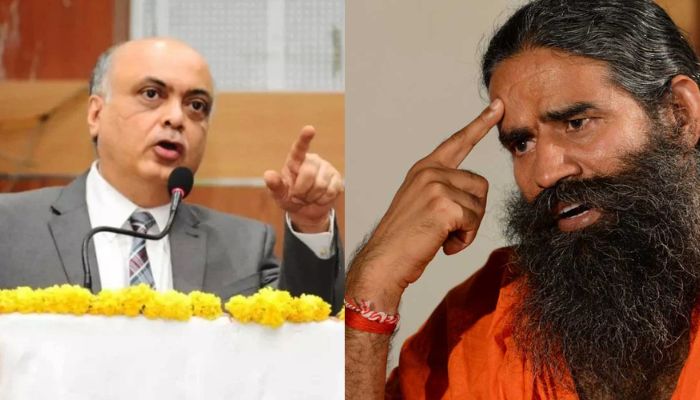
“We will rip you apart” remark by Justice Ahsanuddin Amanullah while rejecting the apology of Baba Ramdev and Patanjali Ayurved MD Acharya Balkrishna has sparked a debate. The said remarks were made by the Supreme Court judge on 10th April during the hearing in Patanjali Ayurved misleading advertisements case.

The remarks were made in the context of the Uttarakhand government’s alleged laxity in restricting misleading ads by Patanjali.

Justice Amanullah’s comment has been criticised by several former judges, ex-CJIs and Supreme Court judges. They asserted that court proceedings have set norms for sobriety and moderation and have provided a forum for dispassionate debate on issues of legality, constitutionality, and the rule of law. They said that the much-feared contempt of court power served to uphold the rule of law, the dignity of courts, and the integrity of their rulings.

Former judges said that the “we will rip you apart” comment verged on a street brawl threat and could never be part of the obiter dicta lexicon of a constitutional court judge, TOI reported.

The comments made by Justice Amanullah recalled memories of the hearings on October 24, 2005, before a bench presided over by Justice B N Agrawal. The judge had questioned, “What is the Bihar governor doing with a bungalow in Delhi? He cannot be allotted a bungalow here. Throw him out,” after finding that politician Buta Singh, who was the governor of Bihar at the time, was unlawfully retaining possession of a government bungalow in Delhi while defying many eviction orders.

Speaking to TOI, former judges and CJIs recommended that Justice Amanullah, who was appointed to the Supreme Court in February of last year, read through two cases to familiarise himself with the appropriate judicial demeanour: Krishna Swamy v. Union of India (1992) and C Ravichandran Iyer v. Justice A M Bhattacherjee (1995).

Observing that the conduct of constitutional court judges should be far superior to the ordinary people, the Supreme Court in Krishna Swamy case had said, “The standards of judicial behaviour, both on and off the bench, are normally high… an unwritten code of conduct of well-established traditions is the guideline for judicial conduct. The conduct that tends to undermine public confidence in the character, integrity or impartiality of the judge must be eschewed. It is expected of him to voluntarily set forth wholesome standards of conduct reaffirming fitness to higher responsibilities.”

In the Ravichandran Iyer case, the Supreme Court has observed, “Judicial office is essentially a public trust. Society is, therefore, entitled to expect that a judge must be a man of high integrity, honesty and required to have moral vigour, ethical firmness and impervious to corrupt or venial influences. He is required to keep the most exacting standards of propriety in judicial conduct. Any conduct which tends to undermine public confidence in the integrity and impartiality of the court would be deleterious to the efficacy of judicial process…”

‘Loose tongue’: When SC judges’ remarks on Nupur Sharma reflected Sharia mentality

In July 2022, while hearing former BJP spokesperson Nupur Sharma’s plea to move all FIRs against her to Delhi, SC judges Surya Kant and Pardiwala had stated that Nupur Sharma’s ‘loose tongue’ had set the entire country on fire and she should apologise to the whole country.

Blaming Nupur Sharma for the chaos unleashed by the Islamists and the regressive ideas that ambiguously declare any criticism of the Islamic prophet as ‘blasphemy’, the apex court of the country surprisingly ignored the hatred and violence unleashed by Islamists and had instead blamed the woman who had stated merely what is written in Islamic hadiths, and affirmed by Islamic scholars all over the world.

However, the ‘loose tongue’ remarks were not made a part of the formal order in the case.

SC rejected Patanjali’s apology

Notably, On 10th April, Yoga guru Baba Ramdev and Patanjali Ayurved’s Managing Director Balkrishna, faced a severe backlash from the Supreme Court of India as the apex court rejected their unconditional apologies regarding the publication of misleading ads. The court deemed their apology as insincere and highlighted that the two apologised only after the matter was brought to light.

On 9th April, Baba Ramdev and Balkrishna tendered an unconditional apology. The affidavit read, “I hereby tender my unconditional apology regarding the issue of advertisements which occurred after the statement of counsel of respondent no. 5 (Patanjali) which was recorded in the order dated November 21, 2023, which I am informed has the force of an injunction.”

Furthermore, Baba Ramdev and Balkrishna apologised for the November 2023 press conference. However, the apex court was not convinced and rejected it on 10th April. The court called it insufficient and hinted Patanjali must face consequences for their actions. The bench expressed surprise over the fact that the affidavit was sent to the media before it was uploaded for the court. 

‘After central forces leave, you will be left here with our forces’: TMC MLA intimidates voters ahead of elections, hints at ‘Khela’ of violence in West Bengal

Ahead of the upcoming Lok Sabha elections in West Bengal, Trinamool Congress (TMC) MLA Hamidul Rehman stirred the hornet’s nest on Thursday (11th April) by threatening people against voting for the BJP.

The incident took place during a public meeting in Majhiali village in Uttar Dinajpur district of the State. During the event, Rehman was heard saying, “The central paramilitary force will be here till the 26th. After that, you will have to live with our force (referring to TMC goons).”

“Don’t dare to waste your vote and commit mischief. The central force will leave on 26th and you will be left here with our forces,” the TMC MP from the Chopra constituency was heard saying.

He further threatened, “At that time, do not complain about the tragedy that will befall your fate.” Hamidul Rehman subtly reminded voters about the TMC’s Khela of violence during the 2021 Vidhan Sabha elections and the 2023 Panchayat polls.

Earlier in March 2021, he referred to supporters of the BJP as ‘namakharam’ and announced that they would be dealt stricktly after the elections.

“Our ancestors have said don’t betray those who feed you…After polls, we will have to meet those who would cheat us. Khela Hobe (the game of violence will be played) with dishonest people. We want Didi (referring it) to be the CM”.

Following the controversy, the BJP had filed a complaint with the Election Commission of india.

Violence against BJP in Bengal

On 24th March, a mob of Trinamool Congress goons attacked several BJP workers in Mather Dighi village in Canning subdivision in South 24 Parganas district of West Bengal.

As per reports, four BJP workers were injured during the attack. Amid the violent clash, three TMC workers were also hurt. All those injured in the attack and counter-attack are now undergoing treatment at the Canning Sub Divisional Hospital.

It has come to light that the TMC goons thrashed the Mandal President of Canning Purba Mandal No 3, and several other karyakartas. According to BJP leader Suvendu Adhikari, the condition of BJP workers Bivas Mondal and Subrata Das remains critical.

Suvendu Adhikari has accused one Hossain Sheikh, who is said to be a close aide of TMC MLA Saokat Molla, of engineering the attack. He has requested the EC to act against Sheikh immediately.

The dead body of a BJP worker, with his hands tied, was discovered in a paddy field near his residence on 23rd March morning. The incident took place in Pingla village in Kharagpur subdivision in Paschim Medinipur district of West Bengal. The deceased was identified as Shantanu Ghorai.

His father has accused the ruling Trinamool Congress (TMC) party of orchestrating the murder. While speaking about the matter to ABP Ananda, Shantanu’s father Chittaranjan remarked, “They were angry at him. He used to speak the truth openly. He had to give his life for being involved with the BJP.

He added that the TMC had previously intimidated Shantanu for speaking against TMC and supporting the BJP. The victim’s father continued, “They used to threaten the boy if they ran into him in the market or neighbourhood. They used to warn him about breaking his bones and killing him alive.”

“Shantanu used to put up flags of BJP before elections,” he added. On being asked whether the victim had been deliberately attacked before elections, Chittaranjan said ‘yes.’

OpIndia has recently reported about 5 incidents of attacks on BJP workers, mostly by goons associated with the ruling Trinamool Congress party.

[email protected]: CBI creates email ID for Sandeshkhali residents to register complaints of crimes against women & land grabbing cases

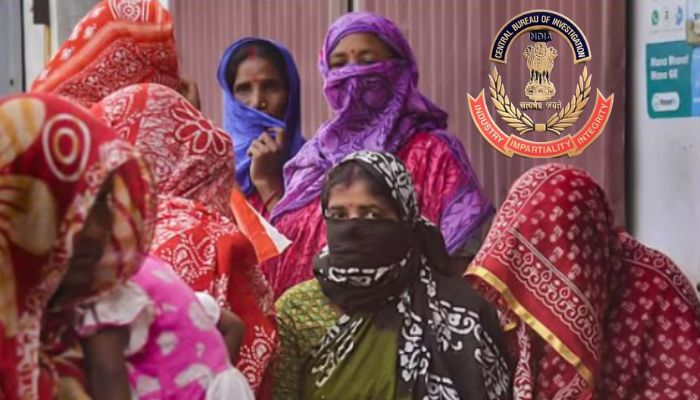
The Central Bureau of Investigation (CBI) has dedicated an email ID to the residents of Sandeshkhali in West Bengal for convenience in reporting instances of land grabbing and other related crimes.

The North 24 Paraganas District Magistrate has also been told to give adequate publicity to the email ID, [email protected].

Taking to X, formerly Twitter, the CBI announced, “CBI takes step to comply with the orders of the Honorable Calcutta High Court regarding complaints of crime against women and land grabbing in Sandeshkhali.”

A CBI spokesperson said, “The District Magistrate, North 24 Parganas has also been requested to give adequate publicity of the said e-mail ID in the locality and also issue a public notice in the vernacular dailies having a wide circulation in the areas as per the Hon’ble High Court’s order.”

This comes after the Calcutta High Court’s order directing a court-monitored CBI investigation of rape cases and land grabbing in Sandeshkhali.

While transferring the probe to CBI, the court emphasised the need for an impartial investigation into these allegations. Additionally, the court also directed the CBI to submit a report on the illegal conversion of agricultural land for pisciculture.

The division bench of Chief Justice T S Sivagnanam and Justice Hiranmay Bhattacharyya also directed the agency to launch a portal to receive complaints from the locals and asked the District Magistrate to spread awareness about the same.

The high court said, “A portal/email ID is to be launched for receiving complaints. The District Magistrate should give adequate publicity mentioning the date of release of the same in vernacular.”

It further stated, “The court will monitor the whole matter closely. CCTV cameras are to be installed on a priority basis within 15 days. LED streetlights are also to be installed. Funds as required shall be given by the state.”

However, the court declined the plea to constitute an Inquiry Committee to be headed by a retired judge of the Calcutta High Court, saying that instead, CBI should investigate and submit a report with regard to the allegations and complaints of the persons of Sandeshkhali.

The court favoured CBI over expert committee headed by a retired HC judge because CBI is already probing an incident which recently took place at Sandeshkhali.

The division bench of the Calcutta High Court issued the order while hearing a bunch of petitions filed by women in Sandeshkhali who had levied sexual assault allegations against local Trinamool Congress leaders, apart from complaints of land grabbing and violence. The case has now been listed for hearing on 2nd May.

Sandeshkhali: BJP worker’s house burnt down allegedly by TMC workers, disaster relief sarees distributed among women with threats to kill if they don’t vote TMC

Even though the Calcutta High Court had ordered a court-monitored probe by CBI into the allegations of sexual abuse and land grabbing by Trinamool Congress leaders in Sandeshkhali in West Bengal, the situation remains volatile in the area. In a fresh incident creating tension, a house of a BJP worker was set on fire allegedly by TMC workers on Wednesday night.

BJP worker Subrata Mandal in Khulna village panchayat of Sandeshkhali has alleged that miscreants linked with TMC set his house on fire late last night. The entire house was reduced to ashes after the fire. However, the TMC has denied any links with the perpetrators.

Subrata Mandal alleged that Trinamool-sponsored miscreants set fire to his house late on Wednesday night. Seeing the fire, the people of the village rushed to try to put out the fire. But before they could control the fire, the house had turned into ashes. Visuals show that only a few bamboo poles remain standing where the house once existed.

While Subrata Mandal has accused TMC-linked miscreants for burning the house, the TMC leaders have denied the allegation, saying that the party has no link with the incident. Trinamool leader Suresh Mondal alleged that the house was burnt as a result of a dispute in the family, which is been given communal colours.

He said, “Subrata’s house was set on fire because of a family dispute. Let the police investigate and the real truth will come out.”

Subrata Mandal has also alleged that the TMC led administration has deprived him of all services because he an active worker of BJP. He said that they burnt his because they could not force him to join TMC. He said that there were many things in the house, and everything was gutted.

In the meanwhile, despite the nationwide focus on the area, TMC leaders allegedly continue to terrorise the women of Sandeshkhali. A Republic Bangla report has revealed that TMC workers are distributing sarees among women asking them to vote for TMC. They are also threatening them with consequences if they don’t vote for the party.

The party workers are distributing green sarees to the women in the dark of the night. Notably, the sarees are not funded by TMC, but they are procured by the West Bengal State Disaster Management Authority to distribute as relief material during disasters, as it is clearly printed on the sarees. The stamps on the sarees show that they were procured in the year 2019, which means the sarees were procured five years ago, but they were lying in store instead of distributing to disaster victims, now those sarees are being used by TMC to entice voters.

Talking to Republic Bangla, several women from Sandeshkhali said that TMC workers visit them in the night to distribute the sarees, and ask them to vote on TMC’s symbol. They also threaten the women that if they don’t vote for TMC, their fingers will be cut, they will be killed. They said that as the place has not streetlights, local TMC leaders visit the area in the dark of the night and distribute the sarees with threats.

The women said that the people who visit them work under Sheikh Shahjahan, and they still fear the TMC strongman. They said that they can vote without fear only if there is a proper CBI probe against Shahjahan.

Pune: Police unearth Rs 4 crore online sharing trading fraud racket in Pimpri Chinchwad, Junaid, Salman, Abdul, Arif and Taufik arrested

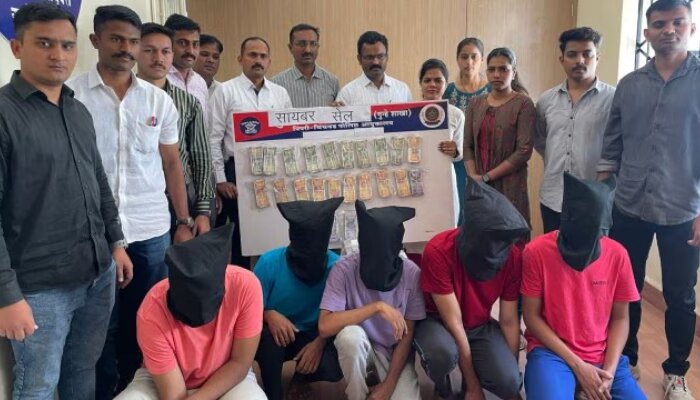
On 10th April, the Pimpri Chinchwad police cyber cell in the Pune district of Maharashtra announced that they have exposed a Rs 4 crore online share trading scheme that involved the use of fake trading applications, money mule accounts (people who let others use their bank accounts to transfer money for commission), and the USDT cryptocurrency to route money to Hong Kong. Five people have been taken into custody in the past week. They have been identified as Junaid Mukhtar Qureshi (21), Salman Mansur Shaikh (22), Abdul Aziz Ansari (23), Arif Anwar Khan (29) and Taufik Gaffar Shaikh (22).

They functioned as delivery boys during the day while operating the massive racket and managed a network of 120 bank accounts that were utilized by global cybercriminals to siphon off money from victims of online share trading scams. The Pimpri Chinchwad police cyber cell was looking into a case involving a 46-year-old lady from Pashan Sus Road who was defrauded of Rs 35 lakh by cyber criminals who had promised her huge profits if she invested her money in stocks.

On 22nd February, the woman told the police that she had seen a post on share market classes and investment on her Instagram account. The message included an embedded link. Inspector Praveen Swami from the cyber cell disclosed, “on clicking the link, her number was added to a WhatsApp group ‘Schoder Academy VI’. She was then told to submit an institutional demat account form and transfer money to different bank accounts (money mule accounts) to purchase initial public offering (IPO) shares. The woman transferred Rs 31.6 lakh in phases to these accounts and another Rs 4 lakh towards charity donations. Later, the crooks stopped communicating with her.”

The cyber cell team focused their investigation on Junaid Qureshi of Tingare Nagar, who was discovered to be using an account that had money taken from the victim. Through his inquiry, the police were able to track down three other accused Salman Shaikh, Abdul Ansari, and Taufik Shaikh, all from Lohegaon who were running multiple accounts of this type and making substantial cash withdrawals from them.

According to an investigating officer, it was found that these men were providing the money to a fifth individual Arif Anwar Khan of Kondhwa who was buying Tether cryptocurrency, also known as USDT to be deposited into the digital wallets of the racket’s masterminds who are suspected to be based in Hong Kong. He stated, “We have come to know of at least 120 bank accounts in which these suspects were operating. These accounts are in the name of people known to them. The holders were being paid small amounts for their accounts to be used for receiving the money siphoned off from victim’s bank accounts.”

Pimpri Chinchwad’s deputy commissioner of police Sandip Doiphode said, “Junaid Mukhtar Qureshi who was into online share trading, first came in contact with their Hong Kong-based handler, partially identified as ‘Greg’. The latter asked Qureshi to secure mule accounts for him to facilitate their activity.” He further continued, “The money mule accounts were used to transfer money of victims of the fraud in the name of online share trading. Post-transfer, the five suspects would withdraw the cash from these accounts and route the same to their handler in Hong Kong via USDT cryptocurrency. In exchange, they received a commission from their handler.”

The law enforcement officials launched a thorough investigation after receiving complaints from residents of Pimpri Chinchwad city in Pune district who lost a total of Rs 31 lakh to the scammers, according to DCP Sandeep Doiphode from the Crime Branch. The Pune Police were able to track down and capture five men associated with the fraudulent share trading program through the implementation of sophisticated technical analysis.

Pune Police conveyed that Arif used to transmit information about these accounts to the perpetrators in Hong Kong who then employed it to obtain income from the scam. Cash withdrawals by Junaid, Salman, Abdul and Taufik were given to Arif who subsequently bought USDT and transferred it to the wallets of the masterminds in Hong Kong. “Over the last couple of months, these 120 accounts have together seen transactions of close to Rs 15 crores and have been flagged in at least 75 different cyber crime cases,” noted an official.

Authorities stated the culprits were delivery executives for a variety of courier and food delivery firms and they came from poor economic and low-education backgrounds. “These suspects are school and college dropouts and chose to do temporary jobs as delivery boys. We are now probing how they came to be working for the cyber criminals operating from abroad. We believe that operatives who make calls to the victims and do other tasks in these cyber crimes are Indians, as revealed by the probe from the Ministry of Home Affairs.”

“We have recovered from the suspects multiple debit cards, chequebooks of at least 12 banks, multiple cell phones and a cash counting machine, besides Rs 7 lakh cash,” mentioned Inspector Praveen Swami. “Probe revealed that this group worked as first and second-level operatives for the international cyber masterminds, and received up to a five per cent cut of the total transactions that were made through these surrogate accounts. Our probe will continue against such operatives and the higher-ups in the hierarchy,” added Sub-inspector Sagar Poman who is probing the matter.

The official divulged that friends and family of the five guys who were arrested owned the majority of these 80 bank accounts. “They were using these accounts by giving some money to their friends.”

The offenders in Pune were found to have Rs 7 lakh, 12 chequebooks from various banks, 8 debit cards, 7 telephones and a cash counting machine. So far, 120 money mule accounts, 80 of which are in Pune banks have been found by police to have been used in the criminal activity. They were cited in at least 75 applications for complaints that the Pimpri Chinchwad police received.

(With inputs from ANI)

Mumbai: Naim Qureshi slaughters cow in Kashigao area ahead of Eid, detained, search underway for two other involved

0

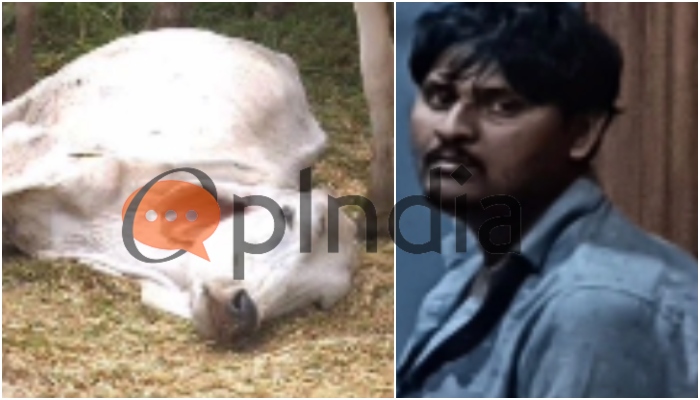
On Wednesday (10th April), the Kashigao Police station in Maharashtra’s Mumbai region booked an individual identified as Naim Saif Qureshi for his involvement in the activity of cattle slaughter in the Minakshi Nagar Mira Road region of the city. As per the information obtained by OpIndia, the accused along with two of his unidentified associates slaughtered a cattle of cow breed ahead of the Islamic festival of Eid.

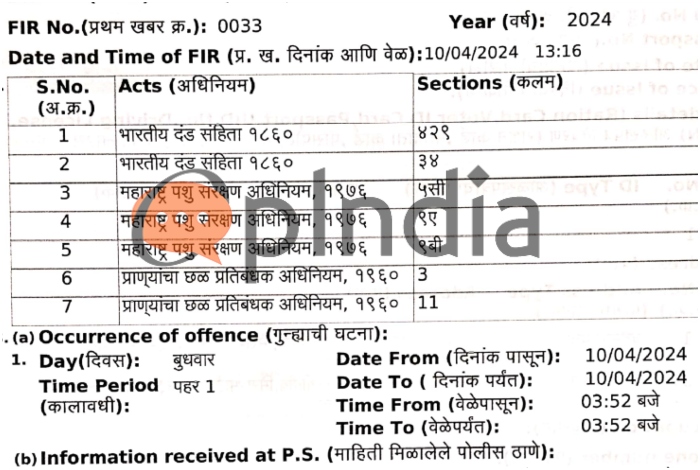
The Police have detained Naim and are interrogating him. However, the two other associates who accompanied the accused during the slaughter fled from the spot after seeing the police approaching on the night of 9th April. The FIR in this case has been filed under sections 429 and 32 of the Indian Penal Code, 1860 and sections 5C, 9A, 9B of the Maharashtra Animal Preservation Act, 1976, and 3 and 11 of the Prevention of Cruelty to Animal Act, 1960.

As per the FIR copy obtained by OpIndia, the incident is said to have happened on the night of 9th April 2024. The police constables from the Kashigaon Police Station were tipped off that an incident of slaughter was taking place in the Minakshi Nagar area of Mumbai.

The Police immediately reached the spot discovering remains of the cattle skin and blood post-slaughter. The police also saw a total of three men surrounding the remains. However, the three tried to flee from the spot after seeing the police constable approaching. While two of them managed to flee, the police caught one of the accused by his collar and identified him as Naim Qureshi.

On interrogation, however, the accused restrained from identifying the other two accused.

The Police also recovered a huge knife-like weapon, a tight rope, and cattle skin from the spot indicating that some slaughter-like activity had taken place on the spot. The police meanwhile also collected blood samples from the spot and sent it for further investigation.

The police complaint has been filed by constable Chaitanya Narale who was on duty at Kashigaon Police Station when it received the tip-off. Further investigations into the case are underway.

Someone with ‘Ram’ in his name asked people to keep quiet when Sanatan Dharma was insulted: Rohan Gupta who left Congress and joined BJP

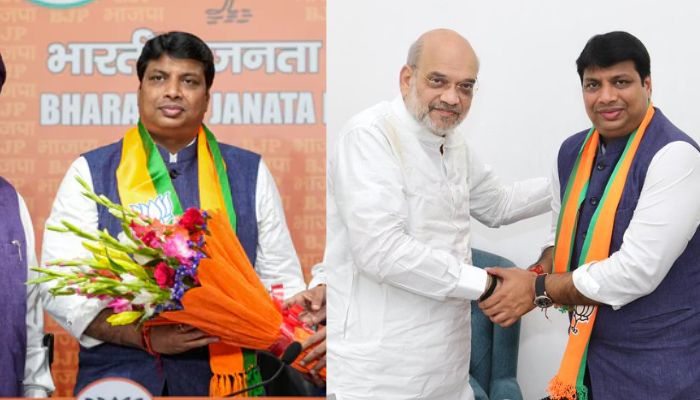
On Thursday (11th April), former Congress leader Rohan Gupta joined the Bhartiya Janata Party (BJP) alleging “constant humiliation” and “character assassination” by a Congress leader connected with the party’s communication department.

Rohan Gupta after joining the BJP also accused Congress General Secretary Jairam Ramesh of directing the party workers to keep quiet when Sanatan Dharma was being insulted by INDI Alliance leaders and also during the Ayodhya Ram Mandir Pran Pratishtha ceremony.

“How many contradictions can be there? There is a communication in charge who has ‘Ram’ in his name, he told us to keep quiet when Sanatan (Dharma) was being insulted…” Gupta said.

Gupta also took a swipe at the opposition bloc I.N.D.I.A., saying that the alliance named after the country consists of ‘antinational elements’.

“An alliance using the country’s name was made but ‘desh virodhi takatein’ (anti-national elements) were included in it,” Gupta said. He also hit out at Congress, asking about its ‘compulsion’ to support the AAP which is led by Arvind Kejriwal, whom the Congress accused of having connection with Khalistanis.

“What is the compulsion that Kejriwal whom the Congress accused of being connected with Khalistanis today is being supported by the same party?” he said. Gupta joined the BJP on Thursday in the presence of Union minister Hardeep Singh Puri and its national general secretary Vinod Tawde. Gupta had resigned from the Congress last month after withdrawing his candidature from the Ahmedabad East Lok Sabha constituency.

Taking to X, Gupta shared a picture with Union Home Minister Amit Shah and said that he is ready to contribute to PM Modi’s ‘Viksit Bharat 2047’ ambition.

“I am ready to contribute to fulfill the resolve of Hon’ble Prime Minister Shri @narendramodi Ji, National President of BJP Shri @JPNadda Ji, Hon’ble Home Minister Shri @AmitShah Ji and the entire @BJP4India family for Vision 2047. Vande Mataram Jai Shri Ram,” Gupta posted.

Notably, Rohan Gupta had resigned from the Congress party last month after withdrawing his candidature from the Ahmedabad East Lok Sabha constituency.

In an X post on 22nd March, Gupta expressed his distress over senior Congress leaders linked to its Communication department. He mentioned that his father, who is currently battling serious health conditions, recounted instances of betrayal and sabotage over the past 40 years.

On 19th March, Rohan Gupta withdrew from the Ahmedabad East Lok Sabha seat contest due to his father’s serious medical condition. Gupta, who was the Congress’ national spokesperson, was among the candidates declared by the party on March 12. All 26 Lok Sabha seats in Gujarat are scheduled for polling in a single phase on May 7, with vote counting set for 4th June.

Several Congress leaders have joined the BJP in the recent past including Milind Deora, Ashok Chavan, Gourav Vallabh and Naveen Jindal.

(With inputs from ANI)

UK: Over 50 children were sexually abused by paedophile catholic monks on holy Caldey Island for decades, no action taken against the accused

In another incident of mass sexual abuse of children in the UK, over 50 children were sexually abused by ‘paedophile’ catholic monks on a reputed “holy island” off the coast of Wales. The crimes took place over 50 years ago, and now an inquiry has been announced over it.

Unbeknownst to thousands of tourists every year, Caldey, off the coast of Pembrokeshire, has a sordid past of sexual assault against infants as young as three. Many adults who were then children were revealed to have been sexually abused in the exquisite gardens, raped in the historic monastery and threatened with eternal damnation if they spoke to anybody about the same on the mainland.

Fifty people from all around the world, ranging in age from 45 to 65, have unveiled, “It happened to me.” A request for a Public Inquiry was turned down, ostensibly because one of the paedophile monks had passed away and none of the fraternity of Cistercian priests had been found guilty. One of the most notorious monks on Caldey Island, Father Thaddeus Kotik is accused of abusing and molesting a large number of children during the 1970s and 1980s. He would first make friends with the kids and give them candy before violating them.

Many of his victims charged that he would entice them to an altar stone hidden among the island’s ruins, where he would carry out his horrific deeds. The deranged clergyman reached the island in 1947 after serving in the Free Polish Army during World War II. He received his ordination in 1956. He passed away in 1992 without being prosecuted for his crimes on the sacred island. Following a civil court proceeding that revealed Father Thaddeus Kotik had sexually molested six girls between 1972 and 1987, the victims received compensation.

The scandal’s victims assert that kids have never felt safe on the picturesque island. There are ongoing allegations of coercion and sexual assault of women on the island. Grooming culture persists there and the offenders are protected. A crime reference number is provided by the majority of the fifty victims who declared to have been “raped or sexually abused” on Caldey. However, none of the perpetrators was ever thrown behind bars.

The abbey is now under fresh leadership in the form of Father Jan Rossey who is the new superior at Caldey Island Cistercian Abbey. He has supported a full inquiry into the matter. He stated, “In common with many other organisations, Caldey Abbey has, in the past, received disclosures and allegations involving members of the monastic community about their behaviour towards children.”

He added, “We take these allegations very seriously and, in order to uphold our commitment to safeguarding, we have commissioned a leading Independent Safeguarding Consultant, Jan Pickles OBE, to conduct a thorough review. This review is about taking responsibility, learning from the past, and building a safe environment for everyone.”

The inquiry will be led by Jan Pickles, former assistant police and crime commissioner at South Wales Police.

Following the formation of “The Caldey Island Survivors Campaign,” which is pushing for a public investigation of the historical child sex abuse that occurred on the island, the accusations began to circulate. The initiative is reported to have been founded by 61-year-old Kevin O’Connell who was raped and abused by Father Thaddeus Kotik when he was just 10 years old and witnessed the “industrial abuse” of children at the abbey.

He mentioned, “I was fearful that people were still being abused on the island but I had no proof, then a letter arrived a few weeks ago. It was anonymous but the person who wrote it lives on the island and described themselves as a concerned resident. A young girl was subjected to sexual harassment and misogynistic behaviour. According to the concerned resident, there was no investigation and the allegations were dismissed by the Abbot. It shows that nothing has changed, they lie and they lie and they lie.”

Father John Shannon and John Cronin, two more men connected to Caldey, were found guilty of sexual offences against minors. Rebecca, the elder sister of Kevin O’Connell was also sexually assaulted by Father Thaddeus and she died at the age of 49. “It was horrible, the police were told but they didn’t want to know. I believe she died young because of what happened to her. I am her voice, I want justice for Rebecca, more than I want it for me. I was also offered money as compensation. I told them I don’t want money, I want the truth.”

Kevin O’Connell voiced that Cistercian Order monks who resided on the island off the coast of Pembrokeshire had sexually assaulted him during the 1960s and 1970s. He divulged that he was trafficked to Surrey and Sussex where he fell prey to other paedophiles. He joined over twenty survivors who came forward in recent years to talk about the abuse they suffered at the hands of the monks.

The founder of the Caldey Island Survivors’ Campaign group, Kevin O’Connell, has been demanding an investigation since 2019 into claims that he and other victims suffered abuse on the monastic island near Tenby. A man who was taken in by the monks and resided on the island for seven years was charged with having indecent pictures of minors in 2011.

Jan Pickles OBE, a former assistant police and crime commissioner for South Wales and independent safeguarding consultant, has been engaged by the Caldey Abbey estate to oversee a “thorough review” of past allegations of child abuse going back to the 1960s.

‘That’s low, poor marketing taste’: Canadian brand Dbrand faces backlash after posting rude, derogatory comment on an Indian customer’s name

Dbrand, a Canadian accessories brand, is attracting backlash after replying in a derogatory manner to an Indian customer’s objection about a MacBook accessory.

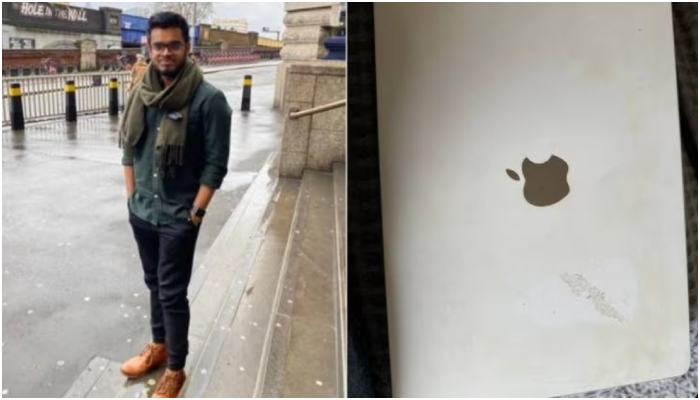
On Monday (8th April), Bhuwan Chitransh complained on the social networking site X about the brand’s MacBook skin getting discolored after only two months of purchase. “@dbrand⁩ bought this skin a couple of months back. Couldn’t even remain the same color after just 2 months. What should I do?” Chitransh posted an image of the MacBook skin.

Instead of addressing the customer’s complaint, Dbrand then made an unpleasant remark regarding his surname, “Chitransh”. “Your last name is basically s**t rash, be serious,” it captioned the message.

Dbrand’s statement drew criticism on X, with some pointing out the racial connotations. Despite the criticism, the accessories firm refused to apologize or eliminate the post. The post has received more than 9 million views on X.

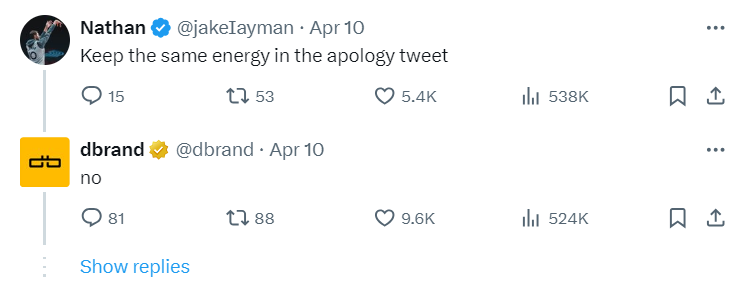
“Wait really dbrand? In lieu of any attempt at customer support, you make fun of a customer’s foreign name?” one of the users wrote. The company meanwhile also refused to issue an apology after one of the users demanded the company to keep the same energy while saying sorry as it maintained while making fun of Chitransh. “No,” the company could blatantly be seen responding.

Screenshot from X

The X users meanwhile also criticized the company for adopting a poor marketing strategy against any customer. The company has not yet deleted the post and also has not yet issued any public apology for making derogatory comments about an Indian customer.

However, the company posted that they made fun of Chitransh’s name only after offering customer support and solving his concern. “Correction: we made fun of his name after the customer support,” it wrote.

The company which has 2.3 million followers on X further justified the comments by saying that it had personally apologized to the customer. It also said that it had been making fun of the customers and that it was unintentional.

“Well, that escalated quickly. Yes – we made fun of a guy’s name. It was a huge fumble. We apologized to him directly and offered him $10,000 as a gesture of goodwill. We’ve been poking fun at customers on social media for over a decade now. We’re not going to stop, but maybe next time you’ll be the one who gets $10,000,” the company tweeted on 10th April.

Dbrand claims to be the “global leader” in the creation, manufacture, and direct-to-consumer (D2C) online sale of customized and impact-resistant goods for flagship electronic devices.

Founded in November 2011, the company is based in Ontario, Canada. Adam Ijaz is the company’s Chief Executive Officer (CEO). Dbrand has established a reputation for its outspoken and snarky social media presence, openly participating in conversations with both competitors and its client base.

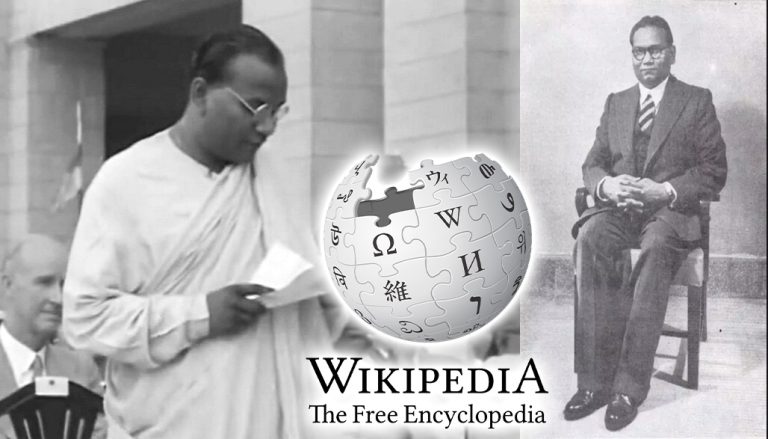
Wikipedia distorts history: Claims Pakistan’s first law minister JN Mandal returned to India for his son’s illness, does not mention his concerns about anti-Hindu riots

Online encyclopaedia Wikipedia is known to be a den of leftists, and most of its articles are written to favour leftist-Islamist views, and are highly critical of conservative ideologies. Therefore, lots of distortions in facts are seen in many Wikipedia articles. As part of its pro-Islamist biased, the website also tends to be anti-Hindu in narrative. Another example of such bias has been noticed, in the Wikipedia page of Jogendra Nath Mandal, the first law and labour minister of Pakistan.

Jogendra Nath Mandal resigned from the position and returned to India in 1950 due to anti-Hindu riots and policies, and the anti-Dalit bias in Muslim majority administration in Pakistan. The reason for Mandal’s return to India is fairly well known, as he had written a long resignation letter on 9th October 1950, giving detailed reasons of his disillusion with Pakistan due to its anti-Hindu and anti-Dalit policies.

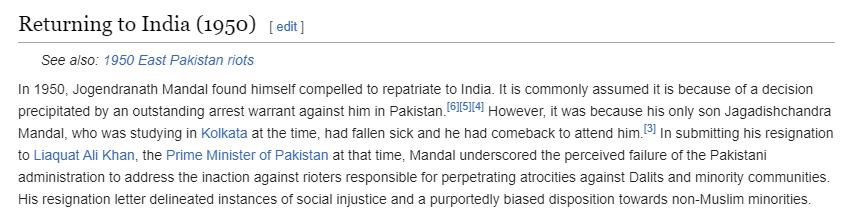
However, now Wikipedia has attempted to distort this well-known history, it claims that Jogendra Nath Mandal returned to India to visit his ill son in Calcutta. It states, “In 1950, Jogendranath Mandal found himself compelled to repatriate to India. It is commonly assumed it is because of a decision precipitated by an outstanding arrest warrant against him in Pakistan. However, it was because his only son Jagadishchandra Mandal, who was studying in Kolkata at the time, had fallen sick and he had comeback to attend him.”

This claim was added on 27 January this year by a Wikipedia editor with the username Achintya2023.

The matter was raised on ? by Kausik Gangopadhyay, economist and professor at IIM Kozhikode. He posted a note on 11 April by Dr. Mohit Ray, an Indian environmental and human rights activist based in Kolkata, which illustrated how the Wikipedia article distorts history.

The post titled “How Wikipedia Lies to Appease Islamists and Secularist Liberals: A Case Study” quotes from the resignation letter of Mandal, which said, “After anxious and prolonged struggle I have come to the conclusion that Pakistan is no place for Hindus to live in and that their future is darkened by the ominous shadow of conversion or liquidation. The bulk of the upper class Hindus and politically conscious scheduled castes have left East Bengal. Those Hindus who will continue to stay accursed in Pakistan will, I am afraid, by gradual stages and in a planned manner be either converted to Islam or completely exterminated.”

However, the Wikipedia edit by Achintya2023 completely downplays these details and claims that Mandal returned to India to attend to his sick son Jagadishchandra Mandal. Moreover, while the Wikipedia article does mention of Madal’s concerns for Dalits or Scheduled Castes in Pakistan, it does not mention the genocide of Hindus mentioned by Mandal in his letter.

Kausik Gangopadhyay said that such dishonesty is even more profound in the Bengali Wikipedia. He wrote, “The dishonesty goes further down in the Bengali Wikipedia which has whitewashed the genocide and pogrom against Hindus in Pakistan but mentions sanitized half-truth of social injustice and biased attitude.”

While adding the claim of the son’s sickness, the Wikipedia editor cited a book titled The Decline of the Caste Question: Jogendranath Mandal and the Defeat of Dalit Politics in Bengal. The book is authored by Dwaipayan Sen, a historian and professor.

OpIndia accessed the book, and found that the book has been incorrectly credited to make the claim. While it does mention that Jogendra Nath Mandal came to Calcutta to see his son who was studying in the city at that time, it does not claim that was the reason for his return to India. The book tells that he used this only as an excuse to come to India, as he was concerned that he would be attacked if he announced his intention to return to India.

After returning to India, Mandal claimed he fell ill himself and wrote to Prime Minister Liaquat Ali Khan asking to allocate his portfolios to someone else. Later, Mandal sent his long resignation letter to Khan, confirming the reason for leaving India, which was the genocide of Hindus and not fulfilling the promised benefits for the Dalits in Pakistan.

The book gives a detailed account of Mandal’s days in Karachi before moving to India. He had become frustrated with the betrayal of the Pakistan govt, as they never fulfilled the promises made for the welfare of Dalits. While Ambedkar had called for all Dalits in Pakistan to move to India during the partition, Mandal had opposed it, hoping for a Muslim-Dalit unity. He had appealed to the Hindus to remain in Pakistan, even during Karachi anti-Hindu riots in 1948.

However, he continued to oppose the mass violence against Hindus including Dalits in Pakistan, but his views were ignored by his government. Seeing the massive communal riots in East Pakistan (now Bangladesh), he had great doubts about Dalits in the province. He was in a great dilemma, because, as a law minister he could not ask Dalits to leave Pakistan, but he could not ensure their safety in Pakistan either.

His resignation letter makes it clear that he resigned due to anti-Hindu riots and policies, the bleak future of Dalits in Pakistan, and his inability to make any changes to the situation despite being a minister. Therefore, he was contemplating resignation and return to India, but this was not easy. He suspected that his resignation might not be accepted. And if he resigned going against the will of the prime minister, he might face violence, and may not be able to even stay safely in his home.

Therefore, Mandal travelled to Calcutta citing his son’s illness and then sent his resignation letter to PM Khan. This is clear that he used his son’s illness to safely exit Pakistan without creating doubts about his intentions, and he left the Pakistan govt and the country due to anti-Hindu riots and policies.

Mandal’s resignation letter mentions Direct Action Day on 16 August 1946 announced by the Muslim League, the Noakhali riots in October 1946, the anti-Hindu policy of Pakistan, anti-Hindu riots in Dhaka on 10 February 1950 that resulted in around 10,000 deaths, the govt’s plan to squeezing Hindus out of East Pakistan, dismal future of Hindus in the country, forced conversions of Hindus, laws eliminating civile liberty etc as the reasons of quitting the govt and leaving the country.

JN Mandal also said in his resignation letter that PM Khand had forced him to make false statements, saying “I can no longer afford to carry this load of false pretensions and untruth on my conscience and I have decided to offer my resignation as your Minister”.

Therefore, the Wikipedia article on Mandal with the recent edit completely distorts the reason for his resignation from the Pakistani govt and return to India. He might have travelled to India to see his sick son, but that just the occasion, it was not the reason of his decision. He has clearly written that he left Pakistan and the Pakistani govt due to its anti-Hindu policies and non-fulfilment of promises made for Dalits, and the Wikipedia article is completely silent on his concerns about Hindus in Pakistan.