Home Blog Page 1381

Prashant Kishor’s observations on Rahul Gandhi’s confidence: Why his supporters celebrating it should consider them as a scathing critique

0

Indian political strategist Prashant Kishor recently shared his candid views on several issues in a freewheeling discussion with journalist Rajat Sharma in his widely popular ‘Aap Ki Adalat’ show on India TV.

However, what truly caught the attention of social media users, including among the dwindling tribe of Congress supporters and IT cell, was Kishor’s withering yet honest remarks on senior Congress leader Rahul Gandhi.

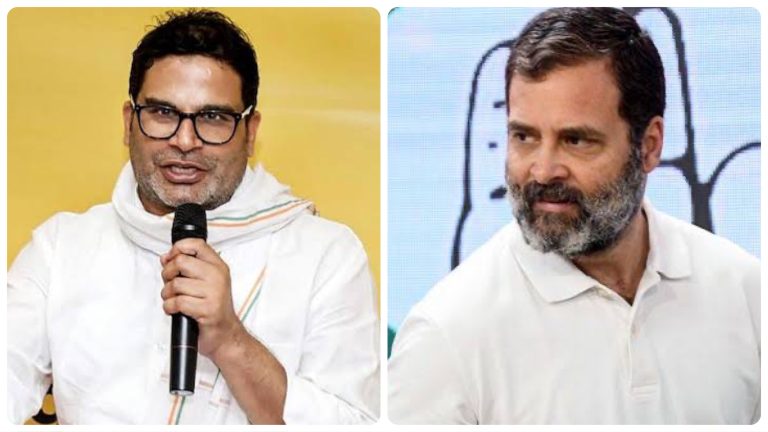
When asked to list the strengths of Rahul Gandhi, Kishor said, ‘I haven’t had the opportunity to work with Rahul Gandhi for too long, but for whatever time I had worked, I was pleasantly surprised by his temperament. He has nerves of steel because after losing so many times, to maintain positivity.”

“This is Rahul Gandhi’s strength that even after losing 90 per cent of elections in the last 10 years, he is convinced that he is on the right path,” Kishor said.

No sooner did the video start doing the rounds on X, formerly known as Twitter, than Congress supporters made a beeline to project it as a compliment showered on their leader. A raft of Congress supporters took to X to heap praises on Rahul Gandhi, an exercise they routinely indulge in, sharing the snippet to claim how a political leader not linked with the Congress party of the Gandhi family has kind words for the Gandhi scion.

While lavishing praises on Rahul Gandhi and Congress could be par for the course for its supporters and even monetarily rewarding, it nevertheless demonstrates the desperation among the ecosystem to seek validation for the competence of their leader despite his decades of experience in social and political life. That they still yearn for acknowledgement from their opponents and political strategists is a scathing indictment of their leader and the collective psyche of the ecosystem that could, at best, be described as clutching at straws as PM Modi takes strides towards his third term as the Prime Minister.

But then, the intelligence of a group is only a reflection of its leader’s intellect. For someone like Rahul Gandhi, as Prashant Kishor observes, being convinced to follow the same path, which has yielded him failures 90 per cent of the time, reflects his obduracy to mend ways and pursue a narrative that strikes a chord with the majority of this country, for India is a democratic nation with universal suffrage and not a personal fiefdom where individual beliefs or dogmas held by the minority trump the majority sentiments.

Rahul Gandhi’s stubbornness to follow the same path that he is following without getting favourable results shows that he is not ready to accept his mistakes—a trait common among fascists—allegations of which his supporters and Congress propagandists loosely hurl at the Modi government to discredit their democratic legitimacy.

Rahul Gandhi’s stubbornness to follow the same path that he is following without getting favourable results shows that he is not ready to accept his mistakes—a trait common among fascists—allegations of which his supporters and Congress propagandists loosely hurl at the Modi government to discredit their democratic legitimacy. A leader claiming to work for the welfare of the people can’t afford to be rigid in his political ideology, typically when consistently not yielding the desired result and handing him and his party one ignominious defeat after another. 

This inflexibility to not learn from mistakes is then covered up using absurd allegations that ‘EVMs are hacked’, ‘The BJP played the communal card’, and ‘Pulwama attack was a false-flag operation’, which are eagerly lapped up by his supporters who probably care little than the bread crumbs thrown at them for defending their leader and deflecting criticism directed at him.

Perhaps this is why his supporters are rejoicing at the sharp observations made by political strategist Prashant Kishor. They are conditioned to believe that their leader is on a noble path and the roadblocks on the way are just stepping stones towards ‘greater glory’—a poison that keeps them alive and indifferent towards the writing on the wall, which is to scrap their historical bent towards minority appeasement and socialist policies, which have wreaked havoc on the country for over 6 decades while being in power.
State couldn’t substantiate Law and Order Problem: Jharkhand HC grants permission for Bageshwar Dham Sarkar Dhirendra Shastri’s Hanumant Katha recitation

0

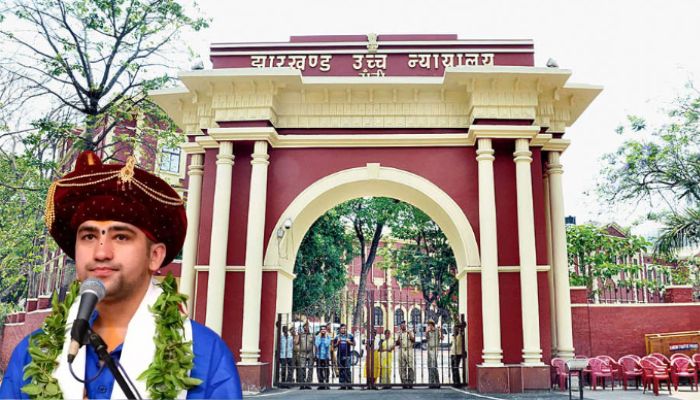
On 5th February (Monday), the Jharkhand High Court quashed the earlier order passed by the District Magistrate-cum-Deputy Commissioner of Palama on 10th January refusing permission for “Hanumant Katha” recitation by Bageshwar Dham Peethadeeshwar Pandit Dhirendra Shastri. Consequently, the High Court granted permission to the Hanumant Katha Aayojan Samiti (HKAS) to conduct the “Hanumant Katha” recitation, despite the state authorities initially denying approval for the same. 

While granting permission for Hanumant Katha recitation, the High Court stated, “There is no doubt that the respondents can impose restriction, but ground for such restrictions should be in consonance with the grounds mentioned in Article 19(3) of the Constitution.”

Notably, the HKAS had filed a writ petition seeking directions to the authorities (respondent) to grant consent and permission to organise a “Hanumant Katha” from 10th February 2024 to 15th February 2024 in Palamu’s Medininagar.  

Justice Ananda Sen noted, “In the instant case the respondents in the impugned order has only mentioned that there would be a law and order problem without describing the nature and its extent thereof. During course of argument they have taken a plea about shortage of sitting arrangement, parking space and shortage of volunteers to manage the crowd. These grounds even if are accepted to be existing are not “law and order problem”, far less disturbance of “public order”. These at best can be said to be infrastructural short comings.”

Justice Sen added, “These grounds are not at all valid grounds to restrict this petitioner to organise the said congregation or to refuse permission.” 

The Samiti had approached the court after its initial request to hold “Hanumant Katha” recitation in Medininagar from 10th to 15th February was denied through the impugned order dated 10th January. It had contended that due to the respondents’ inaction and passive stance on their application, they were compelled to seek direction from the High Court. 

The rationale to deny permission should be in consonance with Article 19(3)

During the hearing, the Court explained the difference between “public order”, “Law and Order problem”, and restrictions to Right of Free Assembly under Article 19(3) of the Constitution of India.

The court noted that Article 19(1)(b) constitutes the fundamental right of citizens in India to peacefully assemble without arms adding that this right is not absolute. 

The court elaborated on Article 19(3) clarifying that the right to assemble peacefully without arms is not without limitations. The court added that the State holds the authority to impose restrictions on assemblies that pose a threat to the sovereignty, integrity, or public order of India. 

However, it asserted that no additional restrictions beyond those specified in Article 19(3) should be imposed to deny or limit the right guaranteed under Article 19(1)(b) for peaceful assembly without arms, as reported by Live Law.

In the context of the present case, the Court highlighted that an order had already been issued which rejected the petitioner’s application for permission to conduct the congregation or assembly. Further, the impugned order dated 10th January had explicitly mentioned the reasons for denial. It claimed that if the event were allowed to proceed it could have the potential for a law and order issue. 

Regarding this, the Court noted that the reasons stated in the impugned order did not align with those specified in Article 19(3) of the Constitution of India. 

The Court explained that the denial of permission should be based on the grounds of a threat to the sovereignty and integrity of India or concerns related to “public order.” 

However, in the present case, the Court observed that the respondents’ rationale was centered around the potential for a “law and order problem.” The Court thus underscored that there exists a distinction between “law and order” and “public order.”

Invoking the case of Ameena Begum vs. State of Telangana and Others, the Court explained, “Thus, it is clear that if an offence committed against some individuals, the same will not fall within the category of disturbance of the “public order”. Where due to some act, public at large is adversely affected by criminal activities of group of persons, such conduct may be said to disturb the “public order”. 

Consequently, the Jharkhand High Court quashed the impugned order passed by the Palamu’s DM on 10th January 2024 refusing permission for the congregation of “Hanumant Katha”as it was not in consonance with Article 19(3) of the Constitution of India. 

After allowing the writ petition, the Court also directed the petitioner (HKAS) to give a detailed plan mentioning the sitting arrangement, that is, the number of devotees expected to attend the congregation per day. For the respondent- authorities, the court directed them to make necessary arrangement and provide the minimum basic facilities/amenities to the devotees, who will attend the said congregation.

The court order has thus allowed Bageshwar Dham’s Dhirendra Shastri’s Hanumant Katha recitation from 10th to 15th February in Palamu’s Medininagar.  

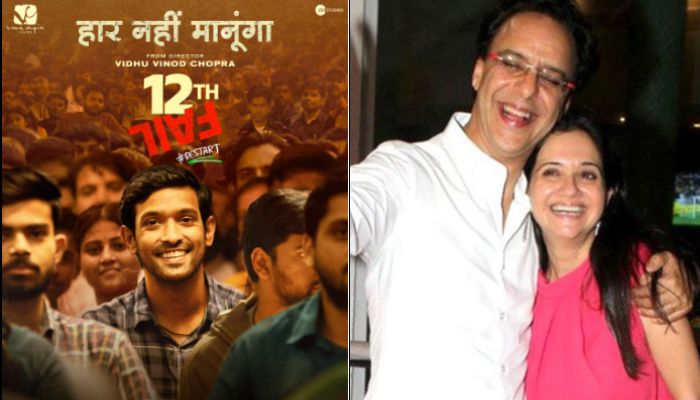
Filmmaker Vidhu Vinod Chopra says wife Anupama Chopra did not believe anyone would go see his film ’12th Fail’

Filmmaker Vidhu Vinod Chopra is basking in the success of his critically acclaimed film ’12th Fail’. The movie has received a great response from the country.

The cast and crew of the film on 2nd February celebrated its 100-day in the theatres. Speaking at the event, Vidhu Vinod Chopra revealed that his wife had declared that ’12th Fail’ would not do well in cinemas.

Vidhu Vinod Chopra’s wife, Anupama Chopra, is a film critic who has often made headlines for her prejudiced reviews, especially against movies with nationalist and patriotic messages.

The filmmaker said, “When we were releasing this film, I was told by everyone, including my dearest wife, to put it out on OTT. She said, ‘Nobody will go to see Vinod. Teri film aur Vikrant ki film ko dekhne koi nahin jayega (laughs). I would like to tell this clearly today in front of everyone. (She said) ‘Koi nahin jayega. Tujhe pata nahin hai, tu filmo ke saath connected nahin hai. Tujhe pata nahin hai, jayega hi nahin koi.’ And there are these agencies who write, ‘Rs. 2 lakhs ki opening’, ‘Rs. 30 lakhs ka lifetime business’. Mujhe dara diya sabne. But still, I believed in the film, so we put in our own money to publicize it. And it opened very small. But that’s okay. And look at where we are.”

“100 days ago, on this very screen, we had our first show. When we talk about numbers, ₹ 100 cr, now there’s ₹ 500 cr, ₹ 1,000 cr, ₹ 2,000 cr, but to me it boils down to one thing. What is your intention? Why are you making that film? You make an honest film and it can reach those numbers. When I was making the film, I was told by everyone, including my dearest wife [Anupama Chopra], to put it out on OTT!” he said.

Anupama Chopra, who was also at the event, later said that she did say who will come to the theatres to see this film.

“He is right. I did say who will come to the theatres to see this film. So I am saying I was wrong and you were right,” the film critic said.

’12th Fail’ starring Vikrant Massey portrays the life of IPS officer Manoj Kumar Sharma who fought against many odds in his journey to cracking the UPSC.

The low-budget movie is also running on OTT platform Disney+ Hotstar.

‘Not the police, Munnan Khan’s goons in uniform fired bullets at me’: Mahant who escaped death during Kar Sevak massacre in Ayodhya in 1990

On 22nd January, the Ram Mandir Pran Pratishtha took place in Ayodhya amid grand celebrations. Devotees from around the world lined up to visit the Bhavya Ram Mandir. While there is reverence in the hearts of the devotees from the temple, they have anger towards those who carried out a massacre in the holy city in the early 1990s.

During OpIndia’s investigation into the massacre of Kar Sevaks in 1990, the name of Munnan Khan emerged several times. The relatives of the martyrs accused Munnan Khan of being involved in the massacre. Meanwhile, during our ground reports, we came across several Kar Sevaks, who escaped death despite being attacked by bullets. They said that it was the goons of Munnan Khan and not the Police who fired on them.

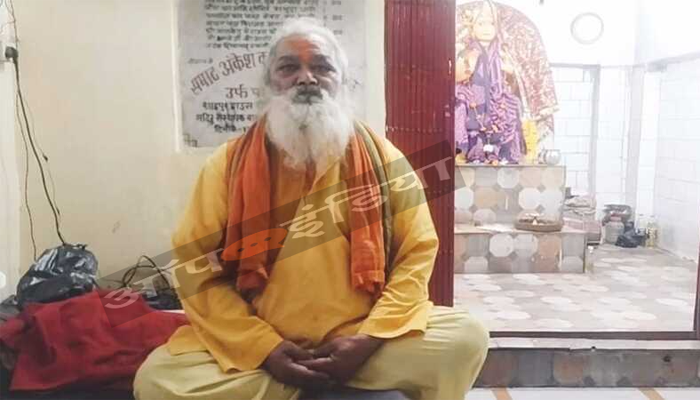
While investigating all aspects of the Ram Janmboomi dispute, OpIndia’s team reached district Gonda. We went to the Maa Durga temple on Lucknow Road, close to the Commissioner’s residence. This temple is the centre of faith for devotees in the region. 68-year-old Ram Swaroop Das is the chief priest of the temple. He originally hails from Gonda itself. During his conversation with OpIndia, Ram Swaroop said that he was actively involved during Kar Seva in 1990 when Mulayam Yadav was the chief minister of Uttar Pradesh.

Ram Swaroop left his job to join Kar Seva

Speaking to OpIndia, Ram Swaroop said he was posted as a follower of the Police. He left his job to join Kar Seva. Many Kar Sevaks from different states came to his village in Gonda. He used to arrange food and shelter for Kar Sevaks and other villagers. Being a devotee of Bhagwan Ram from childhood, he served Kar Sevaks for months.

During that time, the then-chief minister of UP, Mulayam Singh Yadav, issued a challenge saying, “Not even a bird can fly in Ayodhya”. Ram Swaroop said he was irked by the warning given by the Yadav government. He formed a group of people from his village and surrounding areas to march towards Ayodhya for Kar Seva.

Evaded Police to reach Ayodhya

When Ram Swaroop left for Kar Seva, a group of devotees from Rajasthan joined his group. The villagers provided them with food and shelter. They took different routes from the village to Ayodhya. His group finally reached the Ayodhya border on 29th October 1990. They had to take a boat to cross the Saryu River to reach Guptaar Ghat without getting noticed by the Police

Ramswaroop said when he crossed the river and reached Guptaar Ghat, UP PAC personnel met them. They did not exhibit any misbehaviour towards the Kar Sevaks. In fact, they were respectful. He praised PAC personnel and said that had they used force on Kar Sevaks, they could have easily overturned the boat and drowned Kar Sevaks.

After crossing the river, Kar Sevaks met military personnel from the Dogra Regiment. The soldiers provided food to the Kar Sevaks and informed them about locations where they could safely spend the night.

The group of Kar Sevaks reached the disputed structure

Ram Swaroop’s group of Kar Sevaks rested on the night of 29th October, and proceeded towards Ram Janmbhoomi at around 4 AM. The disputed structure was only 5-6 KM from where they spent the night. At around 9 AM, they reached the disputed Babri structure while evading the Police.

Ram Swaroop said that by that time, several groups of Ram devotees had reached Ayodhya. They were holding saffron flags, and chants of “Jai Shri Ram” could be heard from all directions. Every Kar Sevak wanted to reach the disputed structure as soon as possible. They zealously crossed the first barricade set up by the Police, and did not have any fear of death.

Ram Swaroop said a Neem tree worked as a ladder for Ram devotees to reach the dome. Several people, including him, climbed up and reached the dome to hoist the saffron flag. At that moment, a warning came from behind: “Come down, or you will be shot”.

Ram Swaroop lost consciousness after getting shot

When no one paid heed to the warning, they were shot from behind. Several Ram Sevaks who came with Ram Swaroop were martyred. There was a stampede at the site. One of the bullets hit Ram Swaroop on the lower back, after which, he fell and lost consciousness. He said no one hesitated as hoisting the flag was not considered an offence. After falling, he did not remember what happened.

PAC recognised him before throwing him into the river

Ram Swaroop said the administration prepared to throw him in the river, though he was alive. He was thrown in a truck along with martyred Kar Sevaks. When the dead bodies were being thrown in Saryu, PAC personnel identified him as he used to work with them. The PAC personnel who recognised him called his associates. Ram Swaroop was breathing at that time. He was rushed to Shri Ram Hospital in Ayodhya, where he recovered.

The bullet was removed from his body at Dogra Military Hospital. Ram Swaroop has still not entirely recovered from the bullet injury. He has not been able to run since then. He said several Kar Sevaks, who were alive but unconscious, were thrown into the Saryu River. They were never found.

‘Munnan Khan’s goons fired bullets, not police’

Ram Swaroop said he was sure that the Police did not fire bullets at them, but Gonda’s gangster and then-MLA Munnan Khan’s goons dressed as Police fired bullets at them. He said Munnan Khan’s goons were stationed inside the Ram Janmabhoomi area. When Ram Swaroop recovered from the injury, he talked to his fellow Kar Sevaks about how Munnan Khan’s goons killed Ram devotees. Munnan Khan was a prominent name in the massacre that took place during Kar Seva. He was never prosecuted for his alleged involvement in the massacre.

Pakistan: 10 policemen killed, 6 injured after police station attacked in Dera Ismail Khan

0

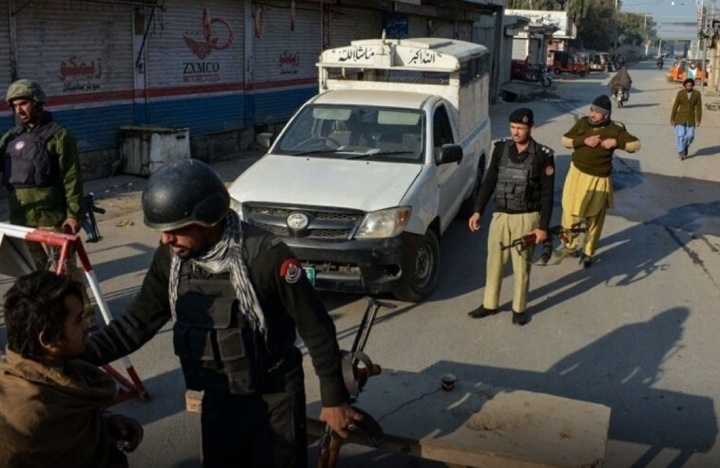
As many as ten policemen have been killed, six injured in an attack on a police station in Khyber Pakhtunkhwa’s Dera Ismail Khan district, the Pakistan police said on Monday, Geo News reported.

As per the police, terrorists attacked the police station with heavy weapons at 3 am in the Daraban tehsil.

The injured have been shifted to DHQ Hospital, the police added, as per Geo News.

The terrorists attacked the police station from all sides with grenades and heavy gunfire.

The police retaliated but the terrorists escaped in the darkness of the night, the law enforcement agency added.

Police forces have now cordoned off the area and launched a search operation to hunt down the fleeing militants, while the quick response force has reached with additional force, as per the police, Geo News reported.

Meanwhile, The News International newspaper recently reported that Pakistan has seen a surge in terror attacks with at least 93 militant attacks taking place in the country in January this year, in which 90 people were killed and 135 injured.

Moreover, 15 individuals have been reportedly abducted in January 2024.

The data was released by an Islamabad-based think tank, the Pakistan Institute for Conflict and Security Studies (PICSS).

(This news report is published from a syndicated feed. Except for the headline, the content has not been written or edited by OpIndia staff)

Liberal narrative, police statement and convenience to select sides: How attacks on Hindus is ignored under the garb of ‘no communal angle’

On 1st February, a tailor in Kumbharwada, Rajendrabhai Chauhan, filed a complaint with Boratalav Police alleging that two attackers, identified as Sahil Padarshi and Shaukat Mankad, entered his shop with a pipe in Sahil’s hand. They verbally abused and threatened the victim, he said, blaming him for filing a complaint against Munna Bilal Padarshi.

Subsequently, Sahil hit the victim on the head with the pipe, causing injuries. The victim was rushed to the hospital, where he received medical attention. A complaint was filed in the matter, leading to an investigation. The incident reminded me of the brutal beheading of Hindu tailor Khanhaiyalal from Udaipur, Rajasthan.

Speaking to OpIndia, the victim said he had been actively involved in various activities, including organising processions on Hanuman Jayanti and undertaking Kavad Yatra. He emphasised the communal harmony in the area, mentioning that both Hindu and Muslim communities reside peacefully. However, the recent incident has disrupted this harmony.

While he mentioned Hanuman Chalisa in his statement, there was no mention of the same in the FIR. When We asked him why there was no mention of Hanuman Chalisa in the FIR, as he mentioned in his statements, he said, “I had told these things to the police too, but if they don’t mention so, what can I do? Otherwise, I have given all these details to them as well.” However, he said that local police officers recently visited him and recorded his statement.

When OpIndia spoke to police, they denied the “Hanuman Chalisa” angle. The IO said, “There is no Hanuman Chalisa angle in the recent incident, and that’s why we haven’t mentioned it in the FIR. The investigation is still ongoing, and we’re probing all aspects.”

In another case, a lone Hindu family in a Muslim-majority village is being forced to convert to Islam. The matter is all over social media but will get ignored by the liberals.

The Hindu family has alleged that they are being forced to convert to Islam. They alleged Muslims assaulted them and threw their belongings out of their house. The family is the lone Hindu family left in the area, resulting in the harassment. The victim’s son, Vicky, accused five members of the Muslim community of pressuring them to either embrace Islam or leave the village. Vicky questioned if Hindus do not have constitutional rights and accused the authorities of neglecting their plea. Though the District Magistrate ordered an investigation after the matter made headlines, the police claimed there was no communal angle. SDO Bhalapatti Police Station claimed it was a hoax and the matter was related to a land dispute. Imagine it happening in reverse. The whole ecosystem would have jumped to criticise Hindus.

These two incidents did not happen out of the blue. In 2021, a mob of around 25-30 people brutally stabbed a Bajrang Dal activist named Rinku Sharma on 10th February (Wednesday). The 26-year-old deceased, who was stabbed in his house in front of his family members, was actively involved with the Hindu outfit and was a part of the donation drive being carried out by Bajrang Dal for contributing towards the construction of Ram Mandir in Ayodhya.

When blood-soaked body pictures went viral on social media, there was haunting silence among the media houses. When it was finally covered, the media houses tried to whitewash the crimes, and the desperation to prove that there was ‘no communal angle’ to the murder was evident.

The Hindustan Times’ headline passed this off as just another murder that followed a scuffle. Rinku Sharma was murdered after an argument at a birthday party, Hindustan Times desperately wanted us to believe.

The Indian Express, true to its form, quoted a police officer saying, “When their businesses failed, they blamed one another… At a mutual friend’s birthday party, this issue again came up. However, people intervened at that time… The accused later went to Sharma’s place; he was standing outside. Both sides attacked each other, and Sharma was stabbed”.

Both media houses and police often deny communal angles in similar matters. But Why does the police say ‘No communal angle’ even when there seems to be one? Various factors typically play a role in such situations.

First of all, it is essential to recognise that incidents of this magnitude are seen as failures of the local police. For example, local police often appear cautious about acknowledging their inability to control riotous Islamist mobs. From the Delhi Riots of Nuh Violence, such incidents have shown how police sometimes fail to control the Islamist mobs.

There was an incident in Hauz Qazi where idols of Hindu deities were destroyed in a temple by a Muslim mob. The police swiftly procured the new idols to replace the desecrated ones overnight. However, the local Hindus resisted the replacement. Such patterns have been observed in several other cases where the authorities tend to downplay the communal crimes as such incidents question their jurisdiction.

Secondly, police have to operate in conditions where tensions and animosity escalate very quickly among the communities. There have been times when they deny communal angle even when it is present only to prevent further unrest in the region where the incident occurred.

In 2021, OpIndia talked to a retired police officer who spoke to us on condition of anonymity on such cases. He said, “We often know the truth but downplay communal incidents to ensure tensions are diffused. Policing cannot be influenced by public sentiment. Maintaining law and order is crucial to prevent one crime from escalating into several more, creating an uncontrollable situation.”

He further emphasised that sometimes, the police have to convey to the local community that they do not see a crime as communal to ensure there is communication without territorial disputes. The officer added, “People tend to identify with their co-religionists. If the police label a crime as communal, the Muslim community might not cooperate, hindering our investigation. Even if a crime is communal, downplaying it in the media is necessary for us to perform our duty, investigate, and ensure justice for the victim.”

In cases where a communal angle is involved, emotions run high. The police, who are responsible for maintaining law and order, irrespective of the situation and demography, find themselves caught between reality, incompetency and the necessity to prevent further law and order situations.

From the outside, it appears as an attempt to deny justice to Hindus deliberately. However, the reality is far more complex. The street veto to turn things violent is prevalent in regions where a particular community is in the majority. Such incidents and the police’s attempts to downplay the community angle come with the downside that Hindus have to struggle to establish themselves as victims. They must bring out the actual or accurate narrative the hard way by dragging their feet inside the courts for decades.

Denying communal angles can control the situation for once. But in larger purview, it gives the rioters a free hand for the future. It also raises questions about the true nature of justice expected to be delivered to the victims.

In the most recent case, there is an apparent communal angle. The victim himself said to multiple media houses that the police denied adding the joint angle in the FIR and did not mention playing Hanuman Chalisa was the reason for the attack. The Divya Bhaskar article has published their version, which clearly stated that the victim said the police refused to record that he was indeed attacked over Hanuman Chalisa. The report further added that the victim claimed the police pressured him not to add Hanuman Chalisa to the complaint.

It is essential to note that the liberal narrative tends to place faith in the police selectively. They are often biased in their approach to crimes. In cases where Muslims are criminals, liberals unquestioningly trust the police because acknowledging Muslim involvement in an attack on Hindus clashes with their agenda.

They consistently accept or reject the police version based on their narrative. This pattern of biased reporting persists in all types of cases, irrespective of whether there is a communal angle. Liberals either embrace or discard the police version according to what suits their narrative. The liberal ecosystem’s credibility goes up in the air as they prioritise agenda over facts.

Muslim mob creates chaos outside police station after the arrest of Salman Azhari, cops allow Islamic hate preacher to ‘pacify’ his supporters

On Sunday (4th February), a team of Gujarat police reached Mumbai and arrested Salman Azhari in connection to his genocidal speech against the Hindu community.

The cops obtained a 2-day transit remand to take the Islamic hate preacher to Junagadh in Gujarat. Azhar was initially detained inside the Ghatkopar police station.

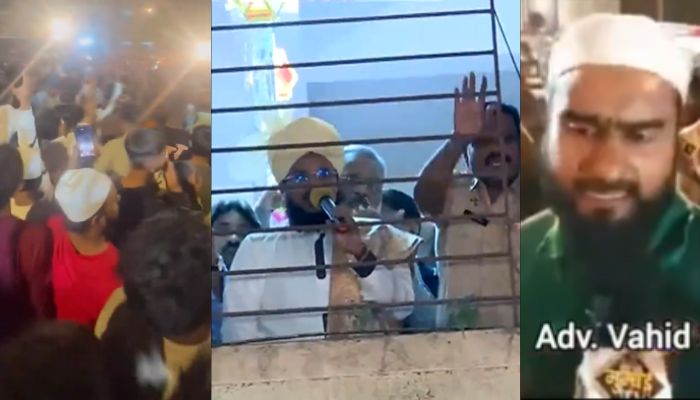
Once the news of his arrest spread, a large mob of frenzied Muslims gathered outside the police station. They created chaos, brought the traffic in the area to a standstill and demanded the immediate release of Salman Azhari.

The advocate for Salman Azhari, Vahid Shaikh, was seen issuing veiled threats to the police. He claimed, “The Gujarat Anti Terrorism Squad (ATS) is planning to take him from here. If the police will not execute their duty properly, then, the law and order situation can deteriorate.”

In the meantime, Muslims from across Mumbai assembled outside the Ghatkopar police station in the hopes of intimidating the police into releasing Salman Azhari.

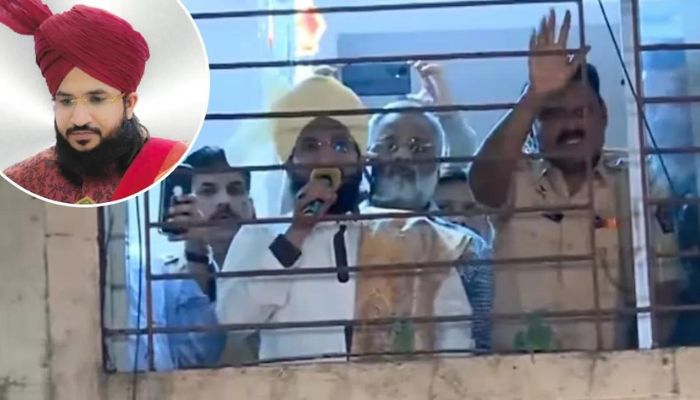
When the police failed to control the situation, they allowed Salman Azhari to make an announcement from inside the Ghatkopar police station.

“…Neither am I a criminal, nor have I been brought here for committing a crime. They are doing the required investigation and I am also cooperating with them. I am ready to be arrested if it is in my destiny…” he was heard saying.

A police officer, standing beside Salman Azhari, was seen trying to pacify the Muslim mob.

In the meantime, the police claimed that the situation was under control. DCP Hemrajsingh Rajput says, “In Mumbai, there is peace, the Ghatkopar area is also peaceful. Don’t believe any rumours. I want to tell the people of Mumbai that, for them, Police are on the road…”

Soon after, Muslim ‘journalists’ came out in support of the radical Islamic preacher. Ali Sohrab, who has a history of peddling fake news against Hindus, wrote, “#IStandWithSalmanAzhari.”

‘Political analyst’ Imam Malik shamelessly whitewashed the genocidal comment made by Salman Azhari. He wrote, “Mufti Salman Azhari has been arrested by the Gujarat police only because the ‘poem’ has the word ‘dog’ in it.”

The Background of the Controversy

On January 31, accused Mufti Salman Azhari gave a venomous speech during a program attended by a large number of Muslims on the grounds of Narayan Vidya Mandir near the Junagadh court.

In the video, Azhari was heard saying, “Abhi to karbala ka akhiri maidan baqi hai…Kuch der ki khamoshi hai, fir shore ayega… Aaj kutton ka wakt hai, kal hamara daur ayega.” (The final battle of Karbala is yet to come… a moment of silence, then there will be noise again. Today is the time of the dogs, tomorrow will be our time).” After saying this, he chanted, “Labbek Ya Rasulullah” and the crowd repeated after him.

Parliamentary panel tables report in Rajya Sabha on ‘Countering Global Terrorism at Regional and International Levels’

A report on ‘Countering Global Terrorism at Regional and International Levels,’ crafted by a Parliamentary committee, has been submitted in the Rajya Sabha on Monday as the house convened for the day.

The document from the Parliamentary Standing Committee on External Affairs (Seventeenth Lok Sabha) was presented in the Upper House shortly after its assembly at 11 am.

Rajya Sabha MP Dr Ashok Kumar Mittal laid a copy (in English and Hindi) of the Twenty-Eighth Report of the Department-Related Parliamentary Standing Committee on External Affairs (Seventeenth Lok Sabha) on the ‘Countering Global Terrorism at Regional and International Levels’.

In the report, sources said, the committee has provided recommendations to the government on addressing the terrorism threat, encompassing both domestic and international dimensions. The reports of the Parliamentary Committees are significant and the government takes them seriously.

Due to the sheer volume of information and scale of operations that the Indian Parliament is required to undertake, it is not feasible to take up all issues on the floor of the House. Thus, Parliamentary committees – panels made up of MPs – are constituted to deal with such situations and take up sector-specific concerns.

The government is required to table an ‘Action Taken’ report for the House to judge the progress made on the suggestions of the committee. Even though committee reports aren’t binding on the government, they help the legislature ensure oversight of the executive.

The Parliamentary Standing Committee on External Affairs is a department-related standing committee (DRSC) of selected members of parliament, constituted by the Parliament of India, for the purpose of legislative oversight of the foreign policy, and decision-making of the Ministry of External Affairs.

Besides the report of the Committee, Union Minister Bhupendra Yadav will introduce the Water (Prevention and Control of Pollution) Amendment Bill, 2024 Bill in the Rajya Sabha later in the day to amend the Water (Prevention and Control of Pollution) Act, 1974. The House will later resume discussion over the motion of thanks on the President’s address.

Union Finance Minister Nirmala Sitharaman will also lay on the table, a statement (in English and Hindi) showing the Supplementary Demands for Grants, 2023-24. The Minister will also lay on the Table, a statement (in English and Hindi) showing the Supplementary Demands for Grants in respect of the Union territory of Jammu and Kashmir (with Legislature) for the year 2023-24.

She will also lay in the Rajya Sabha statements (in English and Hindi) of the estimated receipts and expenditure (2024-25) of the Union territory of Jammu and Kashmir (with Legislature), and statement under the Fiscal Responsibility and Budget Management Act, 2006 (in English and Hindi). (ANI)

(With agency inputs)

“If Muslim youth go out of our control, no one can save India from civil war,” says controversial Maulana Tauqeer Raza Khan miffed over Bharat Ratna Award to LK Advani

On 3rd February, a controversial Islamic cleric and chief of the Ittihad-e-Millat Council party, Maulana Tauqeer Raza Khan criticised the recent decision of the central government to award Bharat Ratna to veteran politician Lal Krishna Advani.

Tauqeer Raza, known for his incendiary remarks, expressed his views during a press interaction. He accused Advani of playing divisive politics and spreading hatred in the country. In a shocking conclusion to the remarks, Maulana threatened a civil war in the country.

Tauqeer Raza claimed that if the Rath Yatra that Lal Krishna Advani took in the 1990s was for progress, prosperity, peace, and brotherhood in the country, he deserves the award. However, according to him, Advani was awarded for playing politics of division and spreading hatred in the country. He termed it as an “insult to Bharat Ratna”.

He said that the current political situation in the country is overshadowed with “hatred, dishonesty, and injustice”, and awarding someone “involved in creating such an environment was an insult to the prestigious award”.

He said, “If anyone is responsible for these issues, it is Lal Krishna Advani.” He continued to express his dismay over awarding Advani. He said that the award should be given to those accepted by all sections of the society and whose actions are admired by the nation.

“The one who has divided the country, spread hatred, and created an atmosphere of hatred in the country should not be given Bharat Ratna,” the Maulana said.

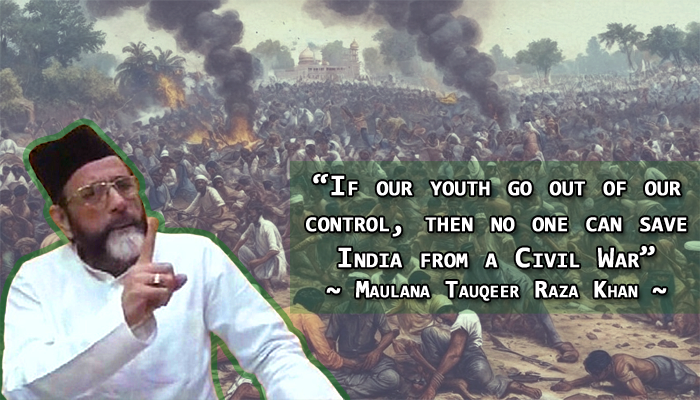
The irked Islamic cleric did not stop there and warned of a civil war in the country. He said that it is due to the patience practiced by Muslims that religious tensions are not escalating. Cautioning against Muslims losing control, he said, “If our youth go out of control, then no one can save India from a civil war.”

He claimed that Muslims want peace and do not want an atmosphere of religious fanaticism, demolitions of mosques, lynching of Muslims and destruction of their cultural symbols.

The controversial remarks by Maulana Tauqeer Raza Khan are not new. Tauqeer Raza, who came out in support of Congress in the 2022 Assembly Elections in Uttar Pradesh, has repeatedly warned of riots.

In April 2022, irked by the bulldozer action against criminals in UP, he said, “If this government continues to do such injustice, the countrywide Jail Bharo Andolan will become so big that government will be unable to contain it. And the day Muslims come to the streets, one must understand that they will be uncontrollable. Therefore, I warn the government and Narendra Modi in particular that if he fails to correct this way of taking action with immediate effect….. And his silence. You are the Prime Minister for all of us. Such acts are taking place in your country, and you remain silent?”

In January 2022, he made similar remarks while addressing a crowd of 20 lakh Muslims. He said, “I see the anger within my Muslim youths, and I am afraid that the day this anger bursts out, the day I lose control over them… I want to warn my Hindu brothers that I’m scared that the day my Muslim youths are forced to take the law into their hands, you will not find a place to hide anywhere in India.”

Maulana Tauqeer Raza Khan has allied with Congress on multiple occasions. He also supported the party in the 2009 General Elections in UP.

‘Release Salman Azhari’: Muslim ‘journalists’ shamelessly defend radical Islamic preacher who made genocidal remarks against Hindus

Hours after Salman Azhari was arrested in connection to his genocidal speech against the Hindu community on Sunday (5th February), Muslim ‘journalists’ came out in support of the radical Islamic preacher.

One Ashraf Hussain wrote, “Mufti Salman Azhari has said that he is not a criminal. Whatever will happen,it will happen for good. Inshallah. #ReleaseSalmanAzhari #IStandWithSalmanAzhari”

Radical Islamist Mohammed Asif Khan, masquerading as a ‘journalist’, claimed that Salman Azhar has been the victim of a ‘smear campaign’ of the BJP IT Cell.

He alleged, “Mufti Sahab’s team must file a case against those IT Cell trolls who intentionally cropped his video and posted with misleading claim.#ReleaseSalmanAzhari #IStandWithSalmanAzhari”

‘Journalist’ Wajid Khan uploaded a picture of Salman Azhari and exclaimed, “I, Wajid, is standing with Mufti Azhar. If you are with him, then, write about it in comments.”

Ali Sohrab, who has a history of peddling fake news against Hindus, wrote, “#IStandWithSalmanAzhari.”

‘Political analyst’ Imam Malik shamelessly whitewashed the genocidal comment made by Salman Azhari. He wrote, “Mufti Salman Azhari has been arrested by the Gujarat police only because the ‘poem’ has the word ‘dog’ in it.”

Another political commentator who goes by the name of ‘Nargis Bano’ tweeted, “I demand the immediate release of Salman Azhari. “

The Background of the Controversy

On January 31, accused Mufti Salman Azhari gave a venomous speech during a program attended by a large number of Muslims on the grounds of Narayan Vidya Mandir near the Junagadh court.

In the video, Azhari was heard saying, “Abhi to karbala ka akhiri maidan baqi hai…Kuch der ki khamoshi hai, fir shore ayega… Aaj kutton ka wakt hai, kal hamara daur ayega.” (The final battle of Karbala is yet to come… a moment of silence, then there will be noise again. Today is the time of the dogs, tomorrow will be our time).” After saying this, he chanted, “Labbek Ya Rasulullah” and the crowd repeated after him.

Organisers of the event, Muhammad Yusuf Malek, Azim Habib Odedara, and Mufti Salman Azhari, have been named as the accused in the FIR. A case has been filed against the trio under Sections 153(C), 505(2), 188, and 114 of the IPC.

The FIR now includes sections for incendiary and provocative speech in the program and a breach of the declaration by extending the program after the time limit had passed. An investigation is now underway into this matter.

On Sunday (4th February), Gujarat Police got a two-day remand of Islamic Preacher Mufti Salman Azhari from a Mumbai Court in an alleged hate speech case.

According to officials, the Gujarat Police had on Sunday evening sought Mufti Salman Azhari’s remand, and a Mumbai Court granted his transit remand to them on Sunday evening, allowing the police to take him to Junagadh.

“They (Police) had applied for his transit remand; we opposed that and we had also said that he was illegally detained. The notice that needs to be served to us as per the law wasn’t given to us…he has been sent to a 2-day transit remand. We have been told that he will be taken to Junagadh (Gujarat),” Azhari’s lawyer Arif Siddiqui told reporters.