Home Blog Page 2010

Kanwar Yatra: Six kanwariya pilgrims electrocuted to death, more than 10 injured after coming in contact with a high tension wire, investigation underway

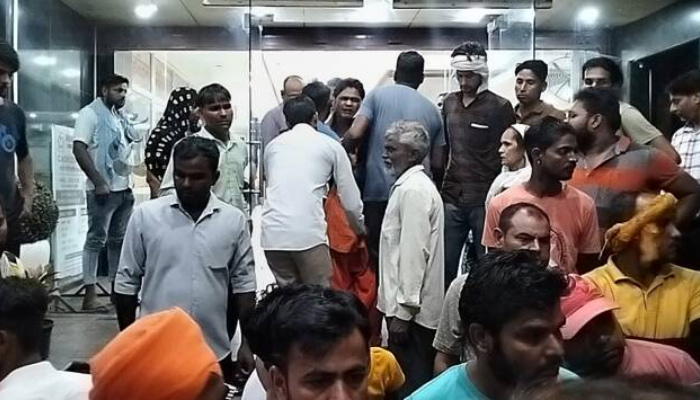
Six kanwariya pilgrims, including an eight-year-old boy, were electrocuted to death when their DJ vehicle came in contact with a high-tension overhead wire near Rauli Chauhan village, Bhawanpur area of Meerut district on the evening of 15th July.

One of the deceased, Manish, was declared dead on the spot while the rest succumbed to their injuries in the hospital. In addition, more than 10 kanwariyas received injuries and are being treated at multiple hospitals. Some are reported to be in critical condition.

Following the mishap, devotees jammed the roads to protest about the incident and accused the electrical department staff of recklessness. District Magistrate Deepak Meena confirmed the deaths and stated that the wounded are being medically treated.

The tragic incident transpired around 8.15 PM, some 500 metres from the village, while the pilgrims were on their way home after carrying water from the Holy Ganges, per the police. According to Senior Superintendent of Police Rohit Singh Sajwan, the former’s DJ car which was playing celebratory music collided with a low-hanging high-tension power wire that was traversing the road. The minor who passed away was reportedly standing adjacent to the four-wheeler.

The villagers hurried to the scene and contacted the power station to disconnect the electricity supply amid the chaos. Afterwards, they organised a demonstration and demanded action against the electricity department’s officials for their negligence.

A local resident said, “The accident was a result of negligence in the preparation for the Kanwar Yatra,” resonating with the views of the others. Their demand for responsibility and justice highlighted the unrest following the horrible instance. Police informed that additional forces have been deployed to avoid any untoward incident.

Kanwar Yatra

Kanwar Yatra is an annual pilgrimage of devotees of Shiva, known as kanwariyas to Hindu pilgrimage places of Haridwar, Gaumukh and Gangotri in Uttarakhand and Sultanganj in Bhagalpur, Bihar to fetch the holy waters of Ganges River.

Millions of devotees fetch sacred water from the river Ganga and carry it on their shoulders for hundreds of miles to offer it in their local Śiva shrines, or specific temples such as Pura Mahadeva temple in Baghpat district and Augharnath temple in Meerut, Kashi Vishwanath temple in Varanasi, Baidyanath temple in Deoghar etc.

It is the biggest religious event in the country, attracting between 10 and 12 million people from states like Uttar Pradesh, Bihar, Rajasthan, Delhi, Haryana, Punjab, Madhya Pradesh, Chhattisgarh, Odisha, and Jharkhand each year. The pilgrims, who wear saffron attires, usually walk barefoot beside moving vehicles on roads as a sign of their devotion.

Rajasthan: Junaid Khan poses as Rohit Pradhan to lure a Hindu woman, rapes her repeatedly and takes her money, threatens to kill after truth came out

On Saturday, July 15, a woman in the Alwar district of Rajasthan filed a case at Sadar police station alleging that a Muslim man lured her into marrying him by posing as a Hindu. The complainant alleged that Junaid Khan, a resident of Kakrali village pretended to be Rohit, got married to her and raped her for over a year. 

In her complaint, the 24-year-old Hindu woman who works at a beauty parlour stated that she met Junaid Khan in February last year at a marriage function. She added that Junaid introduced himself as Rohit Pradhan and the two soon started chatting over Instagram. 

The complainant alleged that accused Junaid often asked for money from her saying that the financial condition of his family is not good. He took a total of Rs 8 lakh from her often in cash or through online payments. 

Moreover, the victim alleged that when she went to Alwar on April 11, 2022, the accused Junaid intoxicated her at a hotel and raped her. She alleged that Junaid Khan also took obscene pictures and videos of the same. He used the pictures and video to blackmail her and rape her multiple times. 

On 3rd July this year, the woman alleged that when she went to Jodhpur for some work, Junaid alias Rohit arrived there as well and blackmailed he using her objectionable pictures and videos. The accused allegedly raped the victim again. Later on, when she talked about getting married, Junaid took her to a rented accommodation in Alwar and on July 12 raped her again.

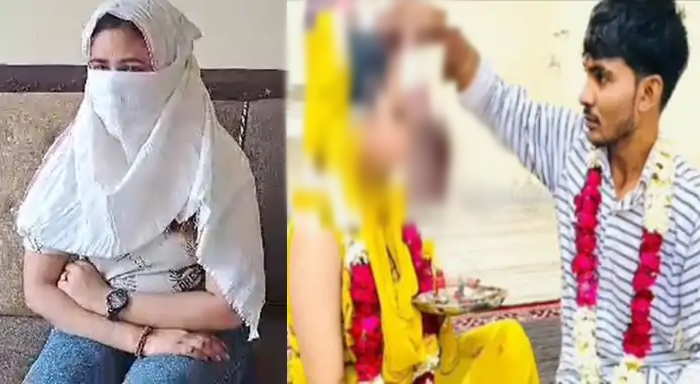
In the meantime, Junaid posing as Rohit married the Hindu woman. She showed a photo as evidence, which shows the man applying vermilion on her forehead, the Hindu custom of marriage. She also used to talk to his family. But despite the marriage, he didn’t keep her with him. But he used to meet her at various places and have forcefully physical relations with her despite her objections.

The woman said that accused Junaid Khan’s mother often used to ask her for money giving some or the other excuse.

The complainant woman said that when she went to Kakrali village, she came to know that the person she knew as Rohit Pradhan is actually Junaid Khan. Moreover, she learnt that the accused Junaid Khan is already married to another woman. Upon learning the truth, the victim returned to Alwar. 

According to the complaint, on July 13th, accused Junaid Khan barged into the victim’s house at around 8 pm with a knife. He threatened to kill her if she talked about marriage or asked for the money she gave to him. Junaid also threatened to circulate the victim’s obscene photos and videos on social platforms. 

Meanwhile, Thana SHO Tarachand Sharma said that a complaint in the matter has been received. A woman has alleged that a man befriended by faking his identity and raped her. Police are investigating the matter and the search is on to arrest accused Junaid Khan. 

Godhra massacre convict Hassan Ahmed Charkha released on parole by Gujarat High Court, was part of the mob that burnt the train carrying Hindu pilgrims

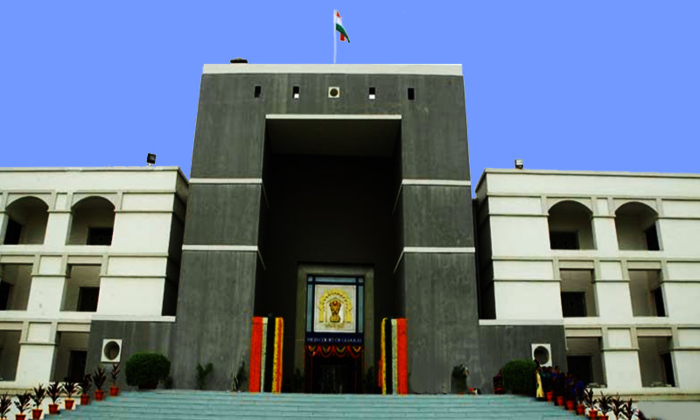
On 15th July 2023, a 15-day parole was granted to Hasan Ahmed, who is serving a life sentence in the Godhra train burning case. Hassan had applied for parole in the name of the marriage of his sister’s children. Gujarat High Court granted him parole for the same.

Hassan Ahmed Charkha alias Lalu, reportedly shouted slogans of ‘Burn down Hindu infidels, Pakistan Zindabad, Hindustan Murdabad’ during the Sabarmati train burning in Godhra. At that time, 59 Hindu karsevaks, including women and children, were burnt alive by a Muslim mob, including Hassan.

The Gujarat High Court granted parole to Hassan saying the parole should be counted within the period of punishment. Justice Nisha M Thakor made the remarks while granting 15-day parole to Hassan. He is currently serving a life sentence.

In his petition, Hassan Charkha said that he needed to be present at the nikah as his father was not alive. On the other hand, the counsel for the state government opposed the plea and argued that the appeal against the sentencing of Charkha was pending in the Supreme Court with an application for regular bail. The public prosecutor argued that since the appeal was pending in the Supreme Court, the convict could not seek parole under Section 226 of the CrPC, he could seek bail temporarily only under Section 389 of the CRPC. However, the Gujarat High Court granted parole to Hassan and allowed him to stay out of jail for 15 days as per the rules.

Notably, Hassan Ahmed Charkha was convicted under sections 143, 147, 148, 302, 307, 323, 324, 325, 326,322, 395, 397, 435, 186, 188, 188, 120(B), 149, and 153(B) of the Indian Penal Code as well as sections 141, 150, 151, and 152 of the Indian Railways Act. He was also convicted under sections 3 and 5 and 152 of the Prevention of Damage to Public Property Act and sentenced to life imprisonment.

In March 2011, when he was sentenced by a sessions court, it was confirmed that he was part of a pre-planned criminal conspiracy under which a mob armed with dangerous weapons and explosive chemicals poured petrol on the train full of pilgrims and set it on fire.

On February 27, 2002, a coach of the Sabarmati Express carrying Hindu karsevaks, returning from Ayodhya after offering service at Ram Janmabhoomi, was set on fire at Godhra railway station as part of a pre-planned conspiracy. 59 people, including 27 women and 10 children, died in this carnage.

US: Over a dozen artisans withdraw from case of forced labour and human trafficking against BAPS temple, say they were coerced into making false allegations

On 13th July, over a dozen artisans who were part of a lawsuit against Bochasanwasi Akshar Purushottam Swaminarayan (BAPS) temple in New Jersey, United States, decided to withdraw their names from the case. In May 2021, a lawsuit was filed against BAPS in the United States of America alleging forced labour for construction of temple as well as human trafficking.

Rajasthan High Court Advocate Aaditya SB Soni has issued a press release on behalf of the artisans under the banner of Bharatiya Majdoor Sangh and Patthar Gadhai Sangh stating the artisans were threatened to be part of the deep-rooted conspiracy to stall the construction of the grand Hindu Temple.

The volunteer stone carving artisans stated that they were made accomplices in the conspiracy but have rebelled against it. They have decided to withdraw from the civil complaint filed in an American court against the Hindu temple. Advocate Soni, who is representing over 25 clients, all of whom are artisans, said that his clients served as volunteers for religious stonework at the BAPS Hindu Mandir being built in Robbinsville town of New Jersey, USA.

Around a dozen of them were pressured to join as plaintiffs in a civil complaint in the New Jersey court. Based on the complaint, the Federal Bureau of Investigation (FBI) entered the temple premises on 11th May 2021 and took away volunteers claiming they were trafficked to the US. Around 110 out of 134 artisan volunteers were taken away by the authorities from the temple site. Some of them contacted Advocate Sone and informed him that an advocate from the US named Swati Sawant had misled them into making the complaint, and now they want to withdraw from it.

“These artisans have made strong claims that Swati Sawant and her companions impressed upon them and misled them, using false temptations, to make a complaint against the temple management,” the press release read.

Notably, these artisans have provided their services for BAPS temples in India and the US for many years. They never experienced any pressure, castism or discrimination during their association with the BAPS temple.

“These artisans have clarified that they were treated with love and respect at the BAPS Swaminarayan temple, where they served and were well cared for. Advocate Aaditya SB Soni stated that the temple provided all support and facilities to these volunteers, including their flight tickets, their stay in the USA, their lodging and boarding, clothes, healthcare and medicines. The temple also provided for their family members in India. The volunteers returned from the USA to India to visit their families regularly, as per their wishes. They would return as per their convenience after spending some time with their families,” the press release added.

Furthermore, Advocate Soni stated in the press release that the artisans were scared to tell the truth as Swati Sawant allegedly warned them that some of their own fellow artisans would report them to the US police and they would be put behind bars if they revealed the truth. She also “convinced them to make false allegations in court, tempting them with promises of American citizenship for them and their families, and huge amounts of money.”

Due to the temptations, the artisans went with the FBI, but when they learned that they needed to make false allegations against the temple, they had second thoughts. The press release stated, “They realised they were caught in a conspiracy and wished to return home. Their families in India were worried about them and were calling them home. Some of them gathered the courage to leave the FBI’s custody and return home, even though Swati Sawant insisted that they stay and repeated her offer of American citizenship and money for them. Advocate Sawant also called their families in India to make them force the artisans to stay in the US. But by this time, the artisans had realised the truth and contacted lawyer Aaditya SB Soni for his help.”

“Some of the artisans who had filed a false case against the temple in civil courts also realised that they had been misled. A dozen of these ‘plaintiffs’ decided to withdraw their complaint and remove their names from the case and asked Aaditya Soni for his help to inform the American courts and attorneys. The artisans have now withdrawn from the case and have voluntarily withdrawn their claims in court. Though their previous attorneys were informed three weeks ago, they are yet to submit this withdrawal to the court,” the press release noted.

Speaking to OpIndia, Prabhuram Meena, General Secretary, Bharatiya Paththar Ghadhai Avam Nirman Majdoor Sangh, confirmed that the artisans withdrew their name from the complaint. Advocate Soni said the press release was issued on behalf of his clients. Further details on the matter from him are awaited. OpIndia has also contacted BAPS to get their comments on the matter. Their reply is awaited.

Allegations of human trafficking against BAPS temple

In May 2021, a group of Indian artisans in the US filed a lawsuit alleging human trafficking and forced labour and claimed they were confined and forced to work for as low as USD 1 on the construction of the Swaminarayan temple in New Jersey’s Robbinsville. BAPS was accused of luring labourers from India to work on temples near Atlanta, Chicago, Houston and Los Angeles, along with New Jersey, while paying only USD 450 a month.

BAPS denied the claims and said worship through seva is an integral part of Bhakti in the sect, and volunteers from around the world contribute to the same. The volunteers who take part in such construction activities of the temple regularly interact with people who come to visit. They are also regularly in touch with their family members back home.

BAPS further stated that many of the artisans then went back home while some chose to stay back and perform seva at other temples in the US. “When the artisans have come to the US, they have done so on R-1 visa, which the federal government has approved for 20 years. In addition, federal, state and local government agencies have regularly inspected and approved all of the mandir construction projects on which the artisans volunteered,” the statement read.

Complaint filed in MP-MLA court against Congress leader Digvijaya Singh for attributing fabricated quotes to MS Golwalkar

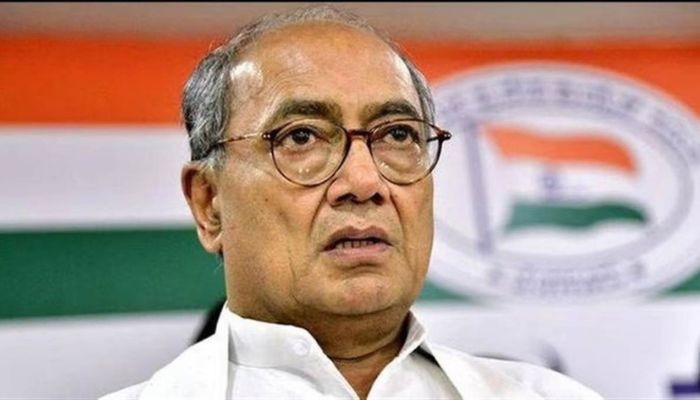
In a recent development, a complaint was filed in the MP-MLA court of Varanasi in Uttar Pradesh against veteran Congress leader Digvijaya Singh on Saturday, 15th July 2023, for sharing fake and fabricated quotes attributing them to former Rashtriya Swayamsevak Sangh (RSS) chief, MS Golwalkar. The complaint, filed by advocate Shashank Shekhar Tripathi, alleges that Singh’s actions have caused social hatred and tarnished the image of the RSS. The court has scheduled 18th July 2023 to record statements and evidence in the case.

The controversy surrounding Digvijaya Singh’s tweet began on 8th July 2023 when an FIR was lodged against him in Indore, Madhya Pradesh, for his contentious remarks about Golwalkar. The tweet, which contained a picture of Golwalkar along with comments portraying him as anti-Muslim and anti-Dalit, sparked strong objections from RSS workers. Consequently, Singh was booked under sections 153A, 469, 500, and 505 of the Indian Penal Code, with the crime FIR number 311/23.

Advocate Rajesh Joshi, who filed the FIR in Indore, stated that Singh’s tweet distorted Golwalkar’s statements, leading to allegations of misrepresentation and the creation of social disharmony. The RSS vehemently denied the accuracy of Singh’s claims and accused him of selectively cropping the image to advance his agenda. Similar allegations are now made by Shashank Shekhar Tripathi in Varanasi. Shashank Shekhar Tripathi is convenor of BJP’s Kashi region legal cell.

In Digvijaya Singh’s tweet, he used fabricated quotes to suggest that Golwalkar opposed equal rights for Dalits, OBCs, and Muslims. The controversial image claimed that these quotes were extracted from Golwalkar’s book, ‘We and Our Nationhood Identified.’ Singh’s tweet said, “Know what was Guru Golwalkar ji’s view on Dalits, OBCs, and Muslims and national rights over water, forest, and land.”

One particular quote alleged that Golwalkar advocated for concentrating wealth and resources in the hands of a few trusted individuals while impoverishing the majority. Another claim attributed to Golwalkar asserted his readiness to serve the British rather than support freedom that granted equal rights to Dalits, OBCs, and Muslims.

Advocate Rajesh Joshi, who lodged the FIR, contended that the dissemination of false and inappropriate posts to tarnish the image of the Rashtriya Swayamsevak Sangh was unacceptable. The FIR serves as a response to the alleged defamation caused by Digvijaya Singh’s social media activities.

The recent complaint filed in the MP-MLA court of Varanasi against Digvijaya Singh adds another layer to the ongoing controversy surrounding his statements about MS Golwalkar.

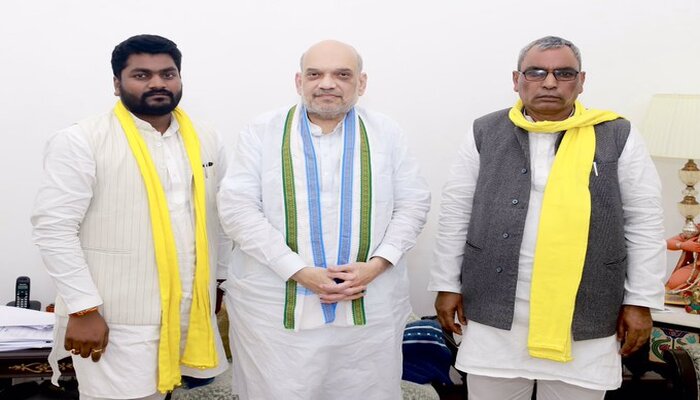
Ahead of Lok Sabha polls, SBSP chief OP Rajbhar returns to NDA after meeting Amit Shah

Ahead of the Lok Sabha elections, Suheldev Bharatiya Samaj Party (SBSP) leader OP Rajbhar returned on Sunday, July 16, to the fold of the National Democratic Alliance (NDA). The move comes as a significant blow to the opposition ‘unity’. 

Taking to Twitter, Union Home Minister and senior BJP leader Amit Shah announced the BJP-SBSP alliance saying that OP Rajbhar’s return to NDA will bolster NDA’s position in Uttar Pradesh and also give strength to Prime Minister Narendra Modi’s efforts to uplift the downtrodden. 

“Met Shri @oprajbhar ji in Delhi and decided to join the NDA alliance led by Prime Minister Shri @narendramodi ji. I welcome him to the NDA family. The arrival of Rajbhar ji will strengthen the NDA in Uttar Pradesh and the efforts being made by the NDA under the leadership of Modi ji for the welfare of the poor and oppressed will get further strength,” Amit Shah tweeted in Hindi.

Meanwhile, SBSP supremo OP Rajbhar also expressed his thoughts in a tweet over his return to NDA after leaving the alliance in 2019. In his tweet, Rajbhar announced that the BJP and SBSP will fight together to protect the country and work for the weaker sections of society.  

“BJP and SBSP come together. Bharatiya Janata Party and Suheldev Bharatiya Samaj Party will fight together for the protection of deprived, oppressed, backward, Dalits, women, farmers, youth, every weak class,” Rajhar tweeted in Hindi.

In another tweet, he thanked Prime Minister Modi and Home Minister Amit Shah as he met Shah today before re-joining NDA. 

OP Rajbhar was elected to the Zahoorabad seat for the first time in 2017. He was the minister in the Yogi Adityanath government for OBC welfare and differently-abled people’s development, but was removed from the Yogi government in 2019 due to ‘anti-alliance activities’. 

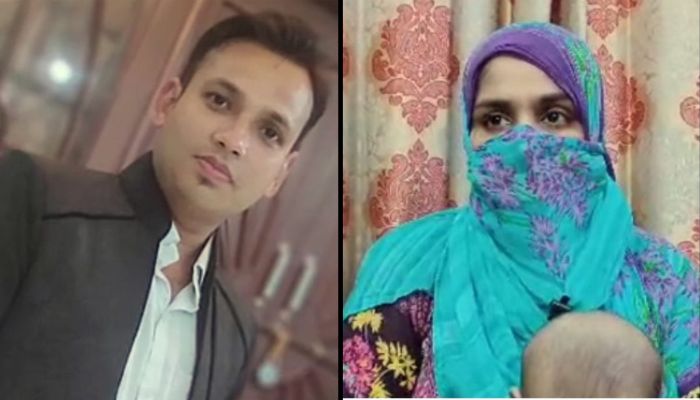
Moradabad: Aamir Ali, who wanted to convert to marry his Hindu girlfriend, arrested for dowry, domestic violence against his wife

On Friday (July 14), the Moradabad police arrested a man named Aamir Ali in connection to a case filed against him by his wife.

Ali made headlines after he wrote to the District Magistrate (DM) about his wish to convert to Hinduism and marry his Hindu girlfriend. He also expressed his desire to adopt the Hindu name of ‘Amit Maheshwari.’

Following that, the District Magistrate ordered an inquiry into the matter. It came to light that Aamir is already married to another woman named Gulafshaan and has a 4-month-old daughter.

His wife has now filed a complaint with the Moradabad police, accusing Aamir of cheating, cruelty, domestic violence and solicitation of dowry. Gulafshaan said that Aamir was in a relationship with a Hindu woman prior to her marriage and that his father, mother and sisters withheld the information from her.

She said that the accused and his family would harass and assault her for dowry. A First Information Report (FIR) was lodged by the Moradabad police, following which Aamir was arrested and taken into custody. He was presented before a court and then sent to jail.

The Background of the Controversy

Aamir Ali submitted an application to the District Magistrate (DM) for conversion to Hinduism. Meanwhile, the 22-year-old man’s wife claimed that he wanted to convert to Hinduism only to marry a Hindu woman and avoid a triple talaq case. He also wanted to get rid of the love jihad accusations, she alleged.

Reportedly, Gulafshaan, a resident of Mughalpura police station precinct in Moradabad got married to Aamir Ali in February 2022. Within six months of her marriage to Ali, she learnt that her husband was in a relationship with a Hindu woman since 2014. 

Recently she caught Aamir Ali chatting with a woman named Shubhangi Maheshwari. When Gulafshaan confronted Ali, he claimed that he had been in a relationship with Shubhangi since 2014 and that she is blackmailing him now.

19-year-old Gulafshaan who has a four-month-old daughter informed her mother about her ordeal. Gulfashaan’s mother pacified her and asked her to convince Aamir Ali. However, the situation took a bitter turn as Aamir Ali submitted an application to change his religion and become Amit Maheshwari.

Gulafshaan alleged that Aamir Ali was doing a “drama” of becoming a Hindu. She claimed that Ali is a hardcore Islamist and that he did not even purchase goods from Hindu shop owners.

She alleged that he was doing the conversion drama to get married to his Hindu girlfriend Shubhangi and also get rid of her. By ‘converting’ to Hinduism, Aamir Ali also aimed to fend off the love jihad allegations. 

Trade in Rupees, interlinking payment systems, IIT in Abu Dhabi: MoUs signed to bolster India-UAE relationship during PM Narendra Modi’s visit

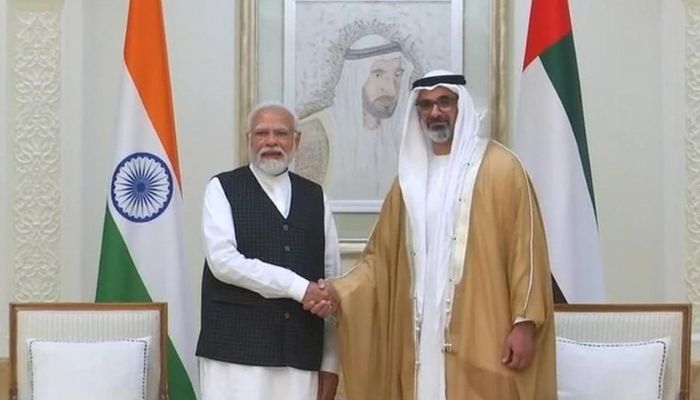
Prime Minister Narendra Modi went on a two-day state visit to the United Arab Emirates (UAE) during his return journey from France. This visit aimed to strengthen bilateral ties and enhance cooperation between the two nations. The visit was marked by several significant agreements showcasing the deepening relationship between India and the UAE.

Upon his arrival in Abu Dhabi, Prime Minister Modi was warmly received by the Crown Prince of Abu Dhabi, His Highness Sheikh Khaled bin Mohamed bin Zayed Al Nahyan, at the airport. A ceremonial welcome and Guard of Honour were accorded to the Prime Minister, reflecting the importance attached to his visit.

During his visit, Prime Minister Modi engaged in delegation-level talks and one-on-one discussions with the President of the UAE, His Highness Sheikh Mohamed bin Zayed Al Nahyan. The discussions covered various aspects of the bilateral partnership, including trade and investment, fintech, energy, renewables, climate action, higher education, and people-to-people ties. The leaders also exchanged views on regional and global issues of mutual interest.

To promote further economic cooperation, three significant Memorandum of Understanding (MoUs) were signed. The first MoU signed between the Reserve Bank of India (RBI) and the UAE Central Bank, established a framework to promote the use of local currencies (INR-AED) for international transactions.

The second MoU focused on bilateral cooperation between the RBI and the UAE Central Bank on interlinking their payment and messaging systems. This cooperation aims to improve the efficiency of the transactions between UAE and India, including the integration of instant payment systems and mutual acceptance of domestic card schemes.

The third MoU was signed between the Ministry of Education of India, the Department of Education and Knowledge, Abu Dhabi, and the Indian Institute of Technology (IIT) Delhi. This MoU paves the way for the establishment of IIT Delhi – Abu Dhabi, with the Master’s program in Energy Transition and Sustainability scheduled to be operational by January 2024. This initiative signifies the commitment of both nations to higher education and research collaboration.

A joint statement was issued after the meeting between the leaders, highlighting the key outcomes of their discussions. Both leaders recognised the significant progress made in UAE-India relations, with trade between the two countries reaching USD 85 billion in 2022. India emerged as the UAE’s second-largest trading partner, while the UAE became the fourth-largest investor in India in 2022-2023.

The joint statement also underscored the importance of the UAE’s presidency of COP28 (28th Session of the Conference of Parties to the United Nations Framework Convention on Climate Change (UNFCCC)) and India’s presidency of the G20 in 2023. Prime Minister Modi extended his support to the UAE’s COP28 presidency and commended the UAE’s role in promoting the Global South’s interests. Both leaders called for collective action and emphasised the principles of equity, common but differentiated responsibilities, and respective capabilities in tackling climate change.

Furthermore, the joint statement highlighted the significance of fortifying the adaptation capacities of developing countries and progressing the global goal of adaptation. Concrete progress in critical areas such as transforming food systems, water management, carbon sink conservation, biodiversity, and public health was emphasised.

The leaders recognised the potential of renewable energy, green hydrogen, and low-carbon solutions in accelerating sustainable economic growth and job creation. They stressed the importance of supporting and deploying all technologies to address emissions while ensuring a just transition for comprehensive sustainable development. The international community was called upon to redouble efforts in ensuring the availability, accessibility, and affordability of critical technologies for developing countries.

The joint statement reiterated the urgency for developed countries to fulfil the USD 100 billion delivery plan and double climate finance for adaptation to developing countries by 2025. International financial institutions and multilateral development banks were urged to make tangible progress in reforming financial mechanisms and unlocking concessional finance to support climate change initiatives taken up by developing countries.

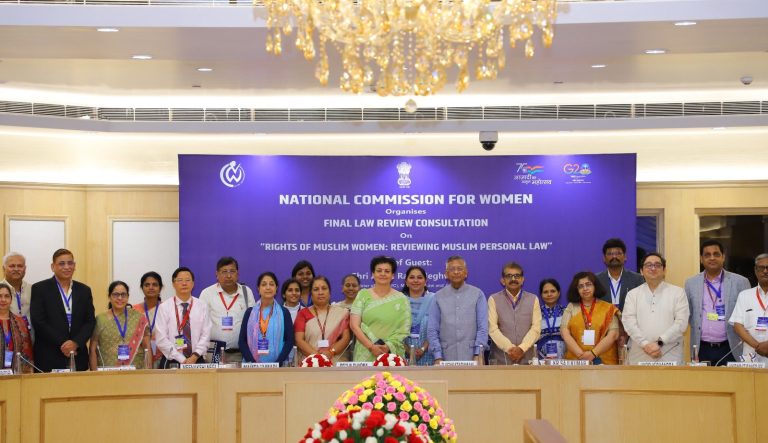
Non-codified nature of Muslim personal law poses significant challenges for women, lack of UCC resulted in inequalities and inconsistencies: NCW

On the 15th of July, the National Commission for Women (NCW) held a deliberation to discuss the rights of Muslim women. The particular focus of the discussion was to review the Muslim Personal Law. 

The panel said that the “non-codified” nature of the Muslim personal law has led to misinterpretation and posed significant challenges for Muslim women.

After the discussion, the Women’s Commission issued a statement highlighting the key aspects of the discussion and its prominent attendees. According to the statement, the panel noted that there was an unequivocal need for the codification of Muslim Personal Law. Additionally, it argued that there is a need to revisit the marriage and divorce law and guardianship law.

During the discussions, the panel stated that the lack of a Uniform Civil Code has perpetuated inequalities within our diverse nation. 

It stated, “The discussion also emphasised that the absence of a Uniform Civil Code has perpetuated inequalities and inconsistencies in our diverse nation, hindering progress towards social harmony, economic growth, and gender justice.” 

NCW Chairperson Rekha Sharma said that the nation needs to draft a legal framework to provide equal rights for all irrespective of their religious belief. 

She said, “In our pursuit of equality, let’s reflect: if a law cannot serve the rights of Hindu, Christian, Sikh, and Buddhist women, can we truly say it is just for Muslim women? The need for codified laws is urgent. We need to work towards a legal framework that ensures equal rights for all, regardless of religion.”

Prominent participants in the discussions comprised notable figures such as Attorney General R Venkataramani, senior law officers, vice chancellors of law universities, legal experts, and civil society organizations. 

According to the statement, Attorney General Venkataramani stressed that there is a need to reform and strengthen the institution of marriage. Further, the Attorney General emphasised the significance of granting equal respect and status to both men and women. Moreover, he emphasised the necessity for fairness in the processes that preserve the dignity of individuals involved in entering and exiting marital relationships, irrespective of their religion.

The consultations were held in the background of the ongoing debate on the Uniform Civil Code (UCC). Notably, the Law Commission issued a notification on the 14th of June, seeking responses from various organisations and the public in relation to UCC within one month. 

A day earlier, on the 14th of July, the Law Commission of India extended the last date to submit views on ideas on the proposed UCC by two more weeks. Now, any interested individual, institution, or organisation may furnish their comments on the issue of the Uniform Civil Code till the 28th of July, 2023.

As British politician makes rhetorical claim on “UK’s foreign aid” to India after Chandrayaan-3 launch, here is how it is a falsehood repeatedly peddled by colonists

On the 14th of July, India’s premier space research organisation ISRO successfully launched the Chandrayaan-3 from the Satish Dhawan Space Centre in Andhra Pradesh’s Sriharikota at the scheduled time of 2:35 PM (IST). This is ISRO’s follow-up attempt after the Chandrayaan-2 mission faced challenges during its soft landing on the lunar surface in 2019 and eventually crashed on the lunar surface. 

Taking into account learnings from the last mission, the Chandrayaan-3 will attempt a soft landing on the Moon’s south pole on the 23rd of August. If everything goes as planned by ISRO’s scientists, India will become the fourth nation to pull this remarkable feat of successfully demonstrating soft-landing capabilities on the Lunar surface. Previously, only the United States, Russia, and China have successfully demonstrated this. 

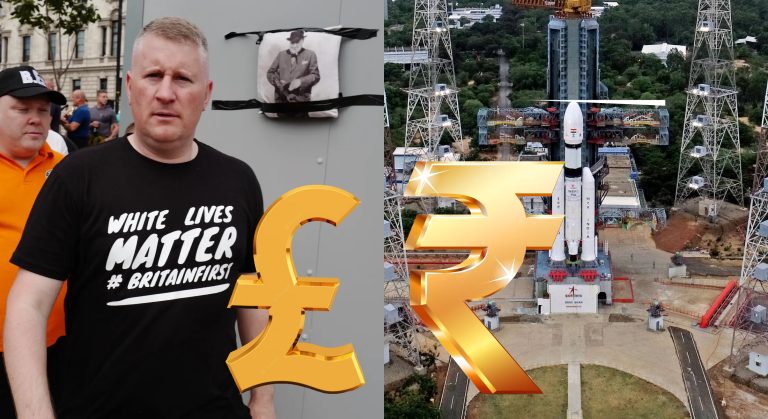
Apparently, this ambitious space programme by India has not gone down well in some quarters, particularly among the elites in the United Kingdom and elsewhere. Seemingly jealous, British politician and leader of the British First political party, Paul Golding raked the rhetorical issue of the UK’s “foreign aid” to India. 

Taking to Twitter, he said, “Well done India on the success of your space programme. And shame on UK politicians who keep unnecessarily giving India tens of millions of pounds in ‘foreign aid’.”

Netizens were quick to respond back in kind to this uncanny congratulatory tweet from the British politician. While many highlighted the fact that Britain looted $45 trillion and killed millions of innocent Indians, some reiterated that this unwarranted “aid” only ends up in the pockets of notorious NGOs that are serving the nefarious purposes of Christian missionaries and trying to create fissures in Indian society. While calling for Britain to return the Koh-i-Noor diamond and other items kept in the British museums, many told him that the Indian govt has stopped accepting any aid from the UK, and now its grants and investments go towards NGOs.

The elephant in the room – UK’s “aid” to India

In 2012, India’s former finance minister, Pranab Mukherjee described Britain’s annual aid of £280 million (Rs 2,798 crore) to India as “peanuts.” This irked many British politicians who questioned the continuation of this so-called “aid” to India. They argued that India funds its own space programme and has its own foreign aid budget, thus it doesn’t require foreign aid from the UK. 

In 2015, the UK aid to India was supposed to stop after the Indian government expressed its disinterest in it. Later, in 2017, the Indian government reminded several analysts and colonial-mindset-driven political commentators that India has been giving more foreign aid to countries than it received.

However, in March 2023, the Independent Commission for Aid Impact (ICAI) released a report claiming that the UK is still giving aid to India, however, it added that its nature and purpose have changed now. 

Notably, the ICAI scrutinises UK government aid and is independent of the government. The report stressed that approximately £2.3 billion (Rs 23,000 crore) of UK aid was provided to India from 2016 to 2021.

The report stated, “We calculated that the UK provided around £2.3 billion in aid to India between 2016 and 2021. This figure includes £441 million in bilateral aid, £129 million in development investment via the Foreign, Commonwealth and Development Office (FCDO), £749 million of aid through multilateral organisations, and £ 1 billion in investments through British International Investment (BII), the UK’s development finance institution.” 

As per the ICAI report, BII is the world’s oldest development finance institution and was established in 1948 as the Colonial Development Corporation. Its mission is to do good without losing money. The report added that the BII has a portfolio of 389 investments in India valued at £2.3 billion in 2021, by far its largest country portfolio at 28% of the total.

The ICAI report made it clear that the British funding was not going to the Indian government but to various programs in India, including investments. The report said, “While there are still substantial volumes of UK aid to India, it is now very different in nature and purpose.” 

The report categorically highlighted that UK aid to India is now largely focused on climate, infrastructure, and economic development, rather than the provision of basic services such as health and education to the poorest states in India.

Additionally, one spokesperson from FCDO categorically highlighted that the UK has given no financial aid to the Indian government since 2015.  

The spokesperson said, “Since 2015 the UK has given no financial aid to the government of India. Most of our funding now is focused on business investments which help create new markets and jobs for the UK, as well as India. UK investments are also helping tackle shared challenges such as climate change.”

UK government’s official response to ICAI’s report

On the 25th of April, 2023, the UK Government officially responded to the ICAI’s review ‘UK aid to India’ released in March 2023. The UK government added that it accepted 3 recommendations completely, and it partially accepted its other two recommendations on UK’s aid review to India since 2016. The UK government categorically maintained that its investment portfolio in India has a strong “development rationale”.

As per the 2023 Integrated Review Refresh (IRR) published recently, the UK government prioritises the Indo-Pacific region. It stated that developments in this region will have a disproportionate influence on the global economy, supply chains, stability, and norms of state behaviour. Therefore, the UK government asserted that it is investing and offering Official Development Assistance (ODA) in this region for its strategic interest. 

Reiterating its position, the UK government said that it has ended direct bilateral financial assistance to the Indian government since 2015. This decision was taken because India has made substantial development gains and has increased investment in its own development.  

The official response said, “The bulk of our bilateral offer is investment with the dual objective of development impact and preserving our capital.” 

The imperative part here is that the UK government maintained that it is preserving its capital which directly negates smear campaigns and insinuations in the name of the UK’s “foreign aid” to India. The claim that the United Kingdom is dolling out money in the form of “foreign aid” to India can’t be further from the truth. The UK govt is investing in various projects in India, it is not giving ‘aid’.

The UK government noted India’s increasing global stature and financial prowess. The UK government further asserted multilateral financing to India has evolved because the country is at par with emerging economies of the world. 

It stated, “During the review period (since 2016), the World Bank and Asian Development Bank finance has also evolved, and they have stopped providing concessional loans and India instead borrows on the same terms as other emerging economies. We are providing a guarantee to the World Bank to enable them to provide an additional $1 billion of climate finance to India.”

It is worth noting that lower and middle-income countries have been accusing the Western nations of falling short of their pledge to climate financing and atoning their climate sins. After repeated persuasion, these nations are compelled to partner with developing nations like India on the issue of climate change and step up for climate financing, out of their dark record in the past. 

Both the ICAI review and the UK government noted that it is economic growth that has driven the reduction in poverty in India. Apparently, recently the World Bank highlighted that India has successfully pulled 415 million people out of poverty in the last 15 years.  

In its response, the UK government emphasised India’s ongoing efforts to reform the international finance institutions to better respond to current development challenges and extended support to India’s bid in its G20 Presidency on this matter.

The claim that the UK releases foreign aid to India has no merit

Before moving ahead, let’s clearly demarcate a few things first. 

Developmental assistance/loans, investments facilitated by multilateral financing institutions, and climate financing, among other forms, are different from financial handouts, charity/donations, humanitarian assistance, or emergency aid that do not necessitate repayment from the recipient country. 

The latter forms of aid are the ones that are frequently highlighted in rhetorical claims surrounding foreign aid and mostly with the mindset of a superiority-inferiority complex.

Driven by a colonial mindset, British political commentators frequently attempt to insinuate that substantial progress and development in India are solely funded by handouts from the United Kingdom to its former colony, a notion that lacks both logical basis and factual evidence. 

The recent insinuation regarding India’s successful Chandrayaan-3 mission, suggesting it was financed through British handouts or donations, serves as yet another manifestation of this entrenched perspective.

Apart from the recent display of self-aggrandization, earlier in March 2022, British journalist Alastair Stewart sermonised that India should not receive any penny in aid from the United Kingdom, as if it was the case. Such sermons and White-man-burden type commentary are factually wrong. 

In fact, the Indian government has time and again rejected “foreign aid”, humanitarian assistance, or any form of donations/charity. India has maintained that the country can cope with the situation on its own. 

For example – the Indian government officially refused to accept foreign aid for disasters as early as 2004. That year, during the Indian Ocean tsunami, India not only refused any humanitarian assistance from Japan but also turned down emergency aid offers from the US and Israel.

Similarly, in 2018, when Kerala faced its worst floods in over 100 years, India again refused any external aid, even from one of its closest trade partners, the United Arab Emirates. The UAE had offered almost $100 million in aid.

However, the fact is that India has not been completely averse to the idea of accepting foreign aid. The only thing is that India has changed the terms for receiving foreign aid. Now, India is only inclined to accept aid on a long-term basis and is open to accepting long-term aid from multinational institutions like World Bank,  Asian Development Bank (ADB), and the Organisation for Economic Co-operation and Development (OECD) among others. 

Moreover, India welcomes foreign investment in the country, which is completely different, as the investor will gain from the investment.

With British watchdog ICAI review reports, the UK government’s official response in this matter, and the Indian government’s stated stance, it is clear that the UK has not been giving any foreign aid to India. The fact is that it has either invested in India for its strategic interests, profitability, or for climate financing, to aton for climate sins done earlier. 

As per the British government’s response, a small portion of its “investment/aid” in India goes to Non-governmental organisations (NGOs). The response stated, “The volume of ODA spent on open societies and democratic standards will remain relatively low as a proportion of total spend.” 

However, this particular investment/aid is under constant scrutiny by the government of India as it is seen that it is harming Indian interests in many ways. Many foreign-funded NGOs are working against the interests of India, like opposing development projects, meddling in politics, supporting religious conversions etc.

Earlier, in January 2022, the UK Parliamentarians were rattled and asked the Indian government to reverse its decision to not renew the FCRA license of more than 6,000 organisations, including the charity founded by Mother Teresa. 

In totality, the claim that the UK is giving foreign aid to India is factually incorrect and it will be of great help for India if these voices of UK politicians end up helping India is solving the menace of rampant NGOs drawing illicit funds from foreign sources for anti-India activities like forced conversion.