On June 28, the Bombay High Court directed Brihanmumbai Municipal Corporation (BMC) to ensure no illegal slaughter occurs at Nathani Heights Society in South Mumbai. A division Bench comprising of Justice Girish Kulkarni and Justice Jitendra Jain was hearing a petition filed by two society residents named Haresh Jain and Apeksha Shah.
In their plea, the residents cited environmental and hygiene concerns related to the slaughter of animals in open spaces in society. The bench heard the matter at 7 PM on Wednesday, with the hearing lasting until 8:10 PM. The petitioners stated there were no proper arrangements to maintain hygiene because of animal slaughter on Eid, posing a threat to the environment. The High Court directed BMC and Mumbai Police to ensure no illegal slaughter occurs inside the society.
In its order, the court said, “Respondent No 3, Municipal Corporation, shall ensure that illegal slaughtering of animals shall be allowed at Nathani Heights situated at Lamington Road, Mumbai Central, Mumbai-400008 unless the same is recognised or licensed by the Municipal Corporation.”
The court added that in case the BMC has not issued a license to slaughter animals at the society, the municipal corporation officials have to take police help and initiate appropriate action in accordance with the law to prevent the slaughtering proposed for Bakrid. The court noted, “The Police Commissioner / Officer-in-Charge of Nagpada Police Station is directed to provide appropriate police assistance to the officers of the Municipal Corporation in the event an action is required to be taken.”
Appearing for BMC, advocate Joel Carlos opposed the ban and said the BMC officials would visit the site and take appropriate action if any violation is found. He added the words of the petitioner “cannot be taken to impose any ban”. Advocates Subhash Jha, Mikhail Dey, Pulkeshi Gaikwad, and Dinesh Tiwari appeared for the petitioner.
Notably, on June 27, petitioners approached Nagpada Police Station, where they were directed to BMC. The officers at BMC orally assured the petitioners that they would look into the matter on Wednesday morning and that all animals kept inside society premises for slaughtering would be removed. However, three residents brought animals inside the society forcing the petitioners to approach the High Court.
As per the Times Now report, local Muslim residents of the society and the BMC Commissioner held a meeting and took back the decision to slaughter animals on Bakrid. There were around 50 goats tied in the parking of the society. The court has set July 3 as the next date for the hearing.
HC expressed ‘great displeasure’ on the last-minute plea in a related matter
In a related matter, a division bench comprising Justice Gautam Patel and Neela Gokhale directed BMC to consider Hajrat Peer Malik’s petition to slaughter animals on Bakrid at Vishalgad Dargah. The court said, “We make it clear that we are not ourselves directing that the permission is to be granted, and we are not granting that permission ourselves. We are only directing that the application made by the petitioner (Hajrat Peer) is to be considered urgently by the authorities in question.”
The court also expressed displeasure over last-minute petitions. The bench said, “The Justice Patel-led bench disposing of the interim plea said: “At the same time, we express our great displeasure that such applications are repeatedly made at the last minute. Bakrid has been on the calendar for the better part of the year.”
Controversy over bringing goats to society houses for slaughter
On June 27, a controversy erupted in the capital city of Maharashtra concerning a Muslim family living in a Mira Road society in Mumbai. The family purchased two goats one day before Bakrid (Eid-Ul-Adha). However, the residents of Mira road housing society protested and stated that they would not allow any slaughter of animals (the goats) to take place within the society.
Residents of the society on Mira Road protested against the slaughter of goats on Bakrid within their premises. They also chanted Hanuman Chalisa, and some individuals raised “Jai Shree Ram” slogans. Videos of the incident have since gone viral in the media. After the residents protested, the police assured them that no slaughter would take place inside the housing society, and the Muslim couple also said the same.
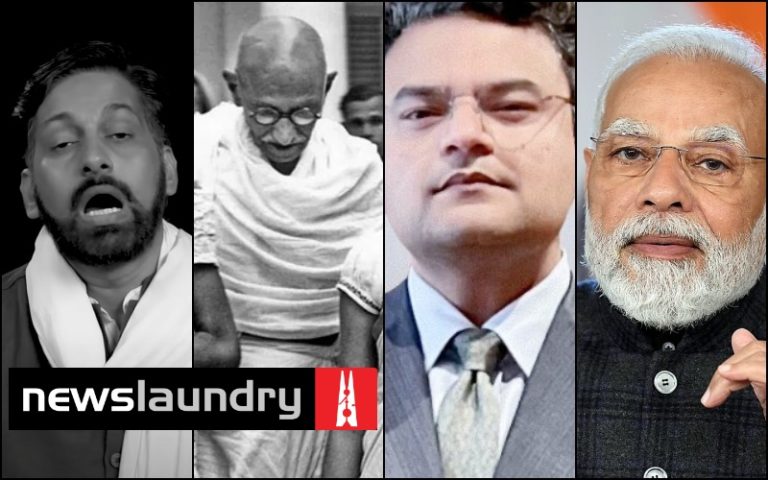
On June 28, Newslaundry stooped to another low in journalism with a below-the-belt attack on Prime Minister Narendra Modi. In a 24-minute video, under their section ‘Tippani’ (comment in English), Newslaundry’s Atul Chaurasia ranted against Professor Anand Ranganathan for his comments on MK Gandhi. During the video, Chaurasia tried to draw a strange parallel between Gandhi’s celibacy experiments and PM Modi’s married life.
Chaurasia said, “Gandhi bluntly believed in idealism. Gandhi himself told the world about his experiments with celibacy. He did not hide it. He used to sleep naked while his granddaughter lived in the same room. It was a strange experiment. His associates were also stressed about it. But if you are from ‘Ranga Bridage’, you will describe it as ‘Gandhi used to sleep with his granddaughter’. This is a cunning way of describing it. Sleeping with granddaughter and sleeping in granddaughter’s presence are two different things.”
He added, “Take the example of Modi Ji. He broke his relationship with his wife long ago. In this, one side will always justify Modi claiming ‘he got married at a very young age. At that time, maybe he was not able to think or do anything about the decision [of the family]. The decision of two families was forced upon him. It is not necessary that it was the right decision. We do not know the real truth. In the language Gandhi is being described, is Ranga Babu going to describe Modi in the same language? You know the answer.”
In this segment, Chaurasia essentially wonders why Anand Ranganathan would not use the same language for MK Gandhi (while talking about his experiments with celibacy) and PM Modi (talking about his marriage). While attempting to show that Ranganathan was somehow biased against Gandhi and favoured PM Modi, Newslaundry ended up displaying their own glaring bias by essentially comparing the two and saying that the same yardstick needs to be used while talking abut the two situations – which have nothing in common – insinuating that PM Modi’s marital status was somehow equivalent or comparable to MK Gandhi sleeping naked with young girls.
His atrocious comments came in response to Prof Ranganathan’s recent video on the controversy surrounding Gita Press getting the Gandhi Award that went viral. In his statement, Prof Ranganathan said giving Gandhi Prize to Gita Press was an insult to Gita Press. He added that the award should not have existed in the first place. He briefly picked several instances of Gandhi’s life, including sleeping with his grandnieces, asking Hindus to let Muslims kill them, and asking Jews to disarm Hitler by praying and denying medicine to his wife while she was on her death bed, among others.
Hindus should not harbour anger against Muslims even if the latter want to destroy and kill us all. We should face death bravely. If Muslims established their rule after killing all Hindus we would be ushering in a new India. – Mahatma Gandhi, Father of the nation, April 6, 1947. pic.twitter.com/mK6vkbed6C
Prof Anand Ranganathan mentioned his celibacy experiments only twice, that too vaguely. But someone in Newslaundry thought it would be best to compare PM Modi’s married life with it in an elaborate video targeting Anand Ranganathan for not toeing their line.
Mohandas Karamchand Gandhi and his celibacy experiments – sleeping naked with young girls and women against their will
First of all, MK Gandhi did not sleep with his granddaughter but grandnieces and the sister of his personal secretary. Yes, there were three women, not one. Gandhi’s experiments were not limited to just sleeping with young girls and women naked. On October 2, 2020, OpIndia published a detailed report on his experiments based on available documents. Initially, MK Gandhi embraced Brahmacharya in 1906 when he was in his 30s. It included complete abstinence from sexual relationships with his wife, Kasturba Gandhi. Brahmacharya meant a complete change in his lifestyle, not just celibacy – it also included strict control on diet and other aspects of daily life. In 1907, he wrote, “It is the duty of every thoughtful Indian not to marry. In case he is helpless in regard to marriage, he should abstain from sexual intercourse with his wife.” According to him, sexual intercourse was justified only to have children and should be avoided at all other times.
However, things changed with time. His experiments with Brahmacharya got strange and bordered amounted to the abuse of young girls when he challenged his resolve to test himself. And thus began a series of experiments which the Newslaundry has now tried to justify. He had set up ashrams where he conducted his experiments, where boys and girls were to bathe together and sleep together. But they were to maintain chastity – they would be punished if there were any sexual talks. The rules of the ashram had forbidden married couples living in the ashram to sleep together, and Gandhi had advised that the husbands should not be alone with their wives. When they felt passion, they should take a cold bath; he had further advised.
Rules were different for Gandhi himself, who had started to surround himself with women to challenge his resolve. In the 1920s, Gandhi started resting his hand on the shoulders of young women during his morning and evening walks, whom he had jokingly referred to as his walking sticks. His grandnieces Abha and Manu were his regular ‘walking sticks’. After this started, elaborate daily massages were performed by young women in the ashram. The massage was followed by taking a bath, helped and accompanied by his female attendants.
Sushila Nayar, the sister of MK Gandhi’s personal secretary Pyarelal Nayyar, was his personal doctor who took care of MK Gandhi since her teenage years. She was his regular companion in taking baths. He had claimed that he didn’t look at Sushila while taking a bath together, saying he used to keep his eyes tightly shut.
Gandhi’s experiments also progressed as time progressed, which now involved young women sleeping with Gandhi naked. Initially, it was merely a sleeping arrangement, but it soon became a part of his experiments. This was his method of attaining the nirvana state of perfect Brahmacharya, to maintain abstinence while sleeping next to attractive young women naked. Apart from Sushila, his grandnieces Abha and Manu were his regular ‘sleeping companions’, along with other women in his Ashram.
As Gandhi grew older, the number of women surrounding him in the Ashram increased, particularly after the death of his wife, Kasturba, after Gandhi denied her treatment by Western medicine. More women were asked to sleep with him to test his control over his libido. While Gandhi slept naked with these women, they were not allowed to sleep with their own husbands in the Ashram.
Disclosing his experiments, he wrote in a letter to his Ashram manager Munnalal Shah Gandhi had written, “Abha slept with me for hardly three nights. Kanchan slept only one night. Vinas sleeping with me might be called an accident. All that can be said is that she slept close to me.” It may be noted that Kanchan was Munnalal’s wife, while Abha was the wife of Gandhi’s grandnephew Kanu Gandhi.
He went on to write, “What Abha and Kanchan told me was this; that she had no intention whatever of observing Brahmacharya, but wished to enjoy the pleasure of sex. She, therefore, stayed very reluctantly and undressed only for fear of hurting me. If I remember correctly, she was not with me for an hour. I then stopped both the women from sleeping with me, for I realised that Kanu and you were upset.” Gandhi then added that these three women were excluded from the experiment.
He then added, “I have deliberately included Pra. in the experiment. Maybe I should not. She often used to sleep with me to keep me warm even before I was conscious that I was doing an experiment. I used to draw her to me when she lay on the floor, shivering, for my sake.”
While many women slept naked with Gandhi, and some women were willing partners in his experiments, most did so at the insistence of Gandhi and not out of a free will. He had a strong personality, and it was very difficult to say no to him. Gandhi himself revealed it. In a letter to Krishnachandra, he wrote, “What I mean is that I have done naturally. Almost all of them would strip reluctantly. I have written— haven’t I?—that they did so at my prompting. If I wish to be a Brahmachari under all circumstances and want women also to be such, this is the one way. Now leave this matter alone and watch what happens.”
Gandhi led a very unusual life which would not be acceptable in today’s era, and legal action will follow if someone tries such ‘experiments’ today. Actually, it was not acceptable in that era. From his personal assistants to senior leaders like Jawaharlal Nehru, everyone criticised it. Sardar Vallabhbhai Patel had called it a “terrible blunder” and had asked him to stop it.
Newslaundry and the new low in journalism – comparing MK Gandhi’s questionable ‘experiments’ with PM Modi’s marital situation in a video targeting Anand Ranganathan
Prime Minister Modi got married when his wife, Jasodaben was 17. According to her own interview when Narendra Modi was declared BJP’s PM candidate, after marriage, when she came to his house, he would ask her why she came to her in-law’s house when she is so young. He would repeatedly ask her to pursue her studies and do well in life. She spoke about how the separation was amicable and her in-laws were always kind to her. Essentially, it was a marriage because the families decided so, however, it was evident that Modi’s heart was not in it. He had dedicated his life to his work and wanted Jasodaben to study and advance her career and life.
Jasodaben says that in the three years that they were together, Modi and she must have communicated for only three months in which he told her to pursue academics. She still wishes him well and hopes he succeeds.
Ultimately, it was a child marriage which ended with both parties going their separate ways amicably, with the woman going on to pursue her studies and becoming a teacher and the man going on to lead a country of 1.3 billion people.
To compare this with MK Gandhi’s ‘experiments’ with celibacy where he admits that he slept naked with young girls and women against their will is an example of propaganda journalism that discovers new lows in their political hate. MK Gandhi slept naked with young girls and women, sometimes, against their will. They were reluctant in getting undressed but Gandhi insisted. PM Modi separated from his young wife, urging her to pursue her studies and dedicated himself to the service of the people of his country.
Interestingly, Newslaundry had a previous working relationship with Anand Ranganathan. After they parted ways because of their ideological difference, the “journalists” and writers of Newslaundry constantly slandered Ranganathan and encouraged vicious abuse against him. Ranganathan refused to toe their Leftists line and paid the price for it. This video by Newslaundry was another attempt to slander Anand Ranganathan and in the process, slander PM Modi and all those who refuse to bow down to their insidious agenda.
Those who are aware of the lifestyle Gandhi followed in the backdrop of their ‘larger than life’ stature as “Father of the Nation”, “Mahatma”, or “Bapuji” can see how wrong Newslaundry is. Stooping low to the level where you compare Gandhi’s sexual experiments with naked women outside his marriage is disgusting and a blot on journalism.
On Wednesday (June 28), an armed man opened fire outside the US consulate in Jeddah city of Saudi Arabia.
As per reports, the unnamed accused stopped his car outside the consulate building and fired gunshots. This led to a retaliatory firing by the Saudi security authorities, which resulted in his death. A Nepali security guard, deployed at the building, also died after sustaining injuries during the gunfight.
In a statement, a police spokesperson (Makkah region) informed, “A person in a car stopped near the American Consulate building in Jeddah Governorate and got out of it carrying a firearm in his hand, so security authorities took the initiative to deal with him as required, and the exchange of fire resulted in his death.”
According to the US State Department, no Americans were harmed during the attack. A spokesperson for the US State Department said, “The U.S. Embassy and Consulate remain in contact with Saudi authorities as they investigate the incident.”
“We offer our sincere condolences to the family and loved ones of the deceased local guards member,” the official added. Following the shooting, the US consulate building was locked down. The motive of the armed assailant behind orchestrating the attack has not been ascertained so far.
Past attacks on the US consulate in Jeddah
Reportedly, the US consulate building in Jeddah has been targeted several times in the past. On the occasion of America’s Independence Day (July 4) in 2016, a suicide bombing attack was carried out at the Dr Suleiman Faqeeh Hospital, which is located opposite the consulate building.
The incident resulted in the death of the terrorist and injured two others. Similarly in 2004, five terrorists belonging to the radical Islamist outfit ‘Al-Qaeda’ barged into the US consulate building in Jeddah, killing 4 Saudi security personnel and 5 staffers of the building.
About 18 employees in the US consulate were also held hostage. In total, three of the five terrorists were neutralised. One man was awarded the death penalty in 2013 while 19 others were given jail sentences of up to 25 years.
On Thursday, June 28, the Union Cabinet headed by Prime Minister Narendra Modi approved the introduction of the National Research Foundation (NRF) Bill, 2023 in Parliament. The approved Bill will pave the way for establishing the NRF. The new foundation will seed, grow, and promote Research and Development (R&D) in the country.
Further, the NRF will foster a culture of research and innovation and impact Indian universities, colleges, research institutions, and R&D laboratories.
Cabinet approves Introduction of National Research Foundation Bill, 2023 in Parliament to strengthen research eco-system in the country
The approved Bill will pave the way to establish NRF that will seed, grow and promote Research and Development (R&D) and foster a culture of… pic.twitter.com/5YvFvN096k
After receiving approval in Parliament, the bill will establish the National Research Foundation (NRF) as the apex body responsible for providing strategic direction to scientific research in the country. Reportedly, this initiative aligns with the recommendations of the National Education Policy (NEP).
As per the official statement of the Ministry of Science and Technology, the NRF will be established with a total investment of Rs. 50,000 crores over five years (2023-2028), after approval of the Parliament.
The statement adds that the Department of Science and Technology (DST) will serve as the administrative Department of NRF. Further, this department will be governed by a Governing Board that will consist of eminent researchers and professionals from various disciplines.
Furthermore, the scope of the NRF will be wide-ranging and it will impact all Ministers. Consequently, the Prime Minister will be the ex-officio President of the Board, and the Union Minister of Science & Technology & Union Minister of Education will be the ex-office Vice-Presidents.
An Executive Council chaired by the Principal Scientific Adviser to the Government of India will oversee the functioning of NRF.
The intention of the bill is that NRF will forge collaborations among the industry, academia, government departments, and research institutions.
Additionally, this will facilitate the establishment of a mechanism to engage and involve industries and state governments, along with scientific and line ministries.
The NRF will primarily focus on two key aspects. First, it will work towards creating a policy framework that supports collaboration and cooperation. Second, it will establish regulatory processes aimed at encouraging increased spending by industries on research and development (R&D).
The new proposed bill, after approval from Parliament, will also repeal the Science and Engineering Research Board (SERB). The SERB was earlier established in 2008 by an act of Parliament.
As per the Ministry’s statement, the new NRF, once established, will subsume the SERB. This would be possible as NRF would have an expanded mandate and cover activities over and above the actions of SERB.
As per media reports, the Monsoon Session of Parliament may likely function from July 17 to August 10 which is when the Union government will try to turn this bill into an Act.
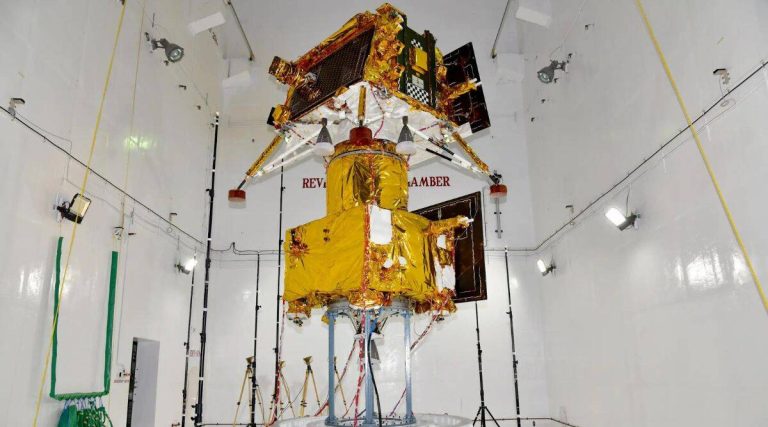
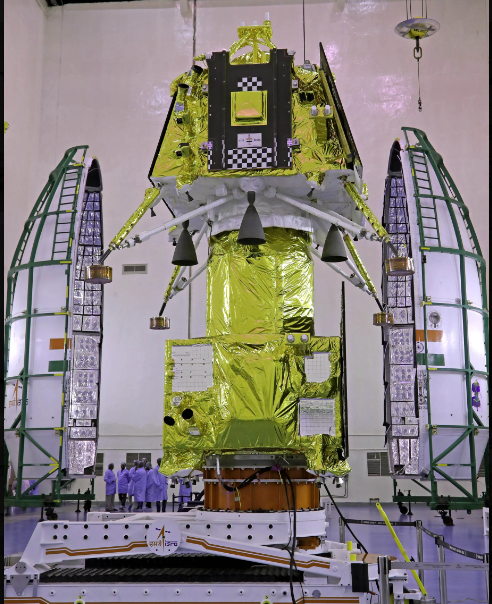
ISRO on Wednesday announced that the launch of Chandrayaan-3 has been scheduled for mid-July. ISRO Chairman S Somnath said the agency is now awaiting its integration with the rocket.
“The Chandrayaan-3 is already fully built, assembled inside the fairing and we are waiting for integration with the rocket. Currently, the window of opportunity is between 12-19 of July, and we will take the earliest possible date,” Somnath said.
VIDEO | Chandrayaan-3 to be launched in July. "The Chandrayaan-3 is already fully built, assembled inside the fairing and we are waiting for integration with the rocket. Currently, the window of opportunity is between 12-19 of July, and we will take the earliest possible date,"… pic.twitter.com/oQhTARAJu9
The ISRO chief said that the window of opportunity to launch is between 12-19 July and the exact date will be announced once all tests are complete. Even so, some reports say the launch date has been fixed 13 July at 2.30 pm. It will be launched by Geosynchronous Satellite Launch Vehicle Mark-III from the Satish Dhawan Space Centre in Sriharikota.
Chandrayaan-3 is India’s third lunar mission and a follow-on mission to Chandrayaan-2 to demonstrate end-to-end capability in safe landing and roving on the lunar surface. Chandrayaan-3 consists of an indigenous Lander module (LM), a Propulsion module (PM) and a Rover with the objective of developing and demonstrating new technologies required for Interplanetary missions.
The GSLV-Mk3 will place the integrated module in an Elliptic Parking Orbit (EPO) of around 170 x 36500 km size.
The propulsion module will carry the LM from launch vehicle injection till final lunar 100 km circular polar orbit and separate the LM from the PM. The propulsion module has a Spectro-polarimetry of Habitable Planet Earth (SHAPE) payload to study the spectral and Polari metric measurements of Earth from the lunar orbit. It has been added as a value addition which will be operated after the separation of the Lander Module.
The Lander will have the capability to soft land at a specified lunar site and deploy the Rover which will carry out in-situ chemical analysis of the lunar surface during the course of its mobility. The Lander and the Rover have scientific payloads to carry out experiments on the lunar surface.
The Lander will carry several instruments to study the lunar surface. These include Surface Thermophysical Experiment (ChaSTE) to measure the thermal conductivity and temperature, an instrument for Lunar Seismic Activity (ILSA) for measuring the seismicity around the landing site, and Langmuir Probe (LP) to estimate the plasma density and its variations. A passive Laser Retroreflector Array from NASA is also accommodated for lunar laser ranging studies.
The rover module will carry Alpha Particle X-ray Spectrometer (APXS) and Laser Induced Breakdown Spectroscope (LIBS) for deriving the elemental composition in the vicinity of the landing site.
The mission objectives of Chandrayaan-3 are:
To demonstrate Safe and Soft Landing on Lunar Surface To demonstrate Rover roving on the moon and To conduct in-situ scientific experiments.
The launch was originally scheduled for 2021 but was postponed owing to the Covid-19 pandemic.
Aditya-L1 Mission
The ISRO chief also gave an update on Aditya-L1 Mission, India’s first mission to study the sun. “Satellites are now getting integrated. Payloads have been developed by various agencies. It has reached the satellite center. Payloads are getting integrated into satellites and it will go through a series of testing,” he said.
#WATCH | ISRO chief S Somanath gives an update on Aditya-L1 Mission, India's first mission to study the Sun.
ISRO’s target is to launch Aditya-L1 by the end of August this year.
Aditya L1 will be the first space-based Indian mission to study the Sun. The spacecraft shall be placed in a halo orbit around the Lagrange point 1 (L1) of the Sun-Earth system, which is about 1.5 million km from the Earth. A satellite placed in the halo orbit around the L1 point has the major advantage of continuously viewing the Sun without any occultation/eclipses. This will provide a greater advantage of observing the solar activities and their effect on space weather in real-time.
The spacecraft carries seven payloads to observe the photosphere, chromosphere and the outermost layers of the Sun (the corona) using electromagnetic and particle and magnetic field detectors.
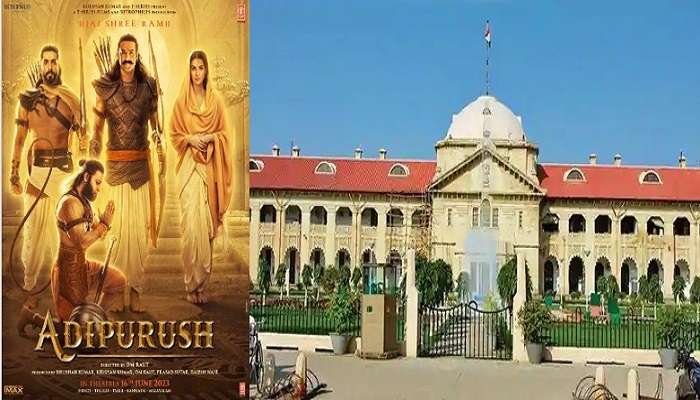
On June 28, the Allahabad High Court resumed the hearing regarding the two pleas that had challenged the objectionable dialogues and scenes in Adipurush. Notably, a day earlier, on June 27, the court had conducted an hour-long hearing in this matter.
After resumption, the court questioned the portrayal of religious characters shown in the film. It stressed that no one thinks like this about Ramayana characters as the filmmakers have shown in the movie. The court observed, “Does anyone imagine the religious characters to be in existence in the way they are shown in the movie? The attire worn by the characters in the movie, do we imagine our Gods to be like this? Ramcharitmanas is a sacred text, people recite it before leaving their homes and you depict it in such a pathetic way?”
Court criticised CBFC for certifying the movie
The Court questioned the Film certification board and remarked that it has committed a blunder by certifying such a movie. Responding to this, Dy. SGI argued that the certification was done by a board comprising sensible members.
To which the court said, “Aap keh rahe hain ki sanskar wale logon ne is movie ko certify kiya hai (referring to board members) jahan Ramayana ke baare mein aisa dikhaya gaya hai to wo log dhanya hai.” (You are saying people with culture have certified this film (referring to board members) where Ramayana is shown like this then those people are blessed).
During the hearing, the court also directed the Union Information and Broadcasting Ministry and the Central Board of Film Certification (CBFC) to submit their separate affidavits in this matter.
Such depictions hurt people’s sentiment
The Court acknowledged that the movie’s depiction of religious characters from Ramayana may have offended people’s sentiments. It further mentioned that there have been instances in recent times where Hindu deities were portrayed in a funny manner in various movies.
The court remarked, “If we will shut our mouths today then you know what will happen? These incidents are increasing day by day. I saw a movie wherein Lord Shankar was shown running with his Trishul in a very funny manner. Now, these things will be showcased? The filmmakers earn money as films do business.”
#AllahabadHighCourt: "I am unable to comprehend what went through the minds of the Film makers that they made such a movie. Unhe to sirf paise kamane hain film hit karakar. Maine jaisa kaha ki bade funny tarah se Hindu devi devtaon ko dikhaya jaata hai.#Adipurush
The court highlighted that there would have been severe consequences if any documentary would have depicted wrong things about Quran. However, it categorically asserted that sacred texts such as Quran, and Bible should not be touched and any religion should not be portrayed in a negative way.
Additionally, the court assured everyone that the courts belong to all religions, it is by chance that the concerned case relates to Ramayana.
The court added, “Suppose you (the filmmakers) make even a short documentary on the Quran, depicting wrong things, then you will see what will happen. However, I may once again clarify that it is not about any one religion. It is by chance that this issue is concerned with Ramayana, otherwise, Court belongs to all religions.”
The bench further stated that it sought opinions from various individuals regarding the film, and the feedback indicated that the film is intolerable and many had left it mid-way.
The Court said, “Few people could not watch the film completely. Those who respect Lord Rama, Lord Laxman, and Maa Sita, can not watch such a movie.”
Earlier observations of the court
A day earlier, on June 27, the two-judge bench comprising Justices Rajesh Singh Chauhan and Shree Prakash Singh conducted an hour-long hearing in the case.
On day 1, the court slammed the makers of the film for objectionable portrayal of Ramayana’s character. In a strong criticism, the court stated that if a religion is tolerant, will it be put to the test?
The bench remarked, “If we close our eyes on this issue too, because it is said that the people of this religion are very tolerant, will it be put to test as well?.”
The court added, “The one who is gentle should be suppressed? Is it so? It is good that it is about religion, the believers of which did not create any law and order problem. We should be thankful. We saw in the news that some people had gone to cinema halls (wherein the movie was being exhibited) and they only forced them to close the hall, they could have done something else as well.”
On the issue of the disclaimer, the court asked a sharp question and said do the people who put the disclaimer consider the countrymen, and youth to be brainless? You show Lord Rama, Lord Laxman, Lord Hanuman, Ravana, and Lanka and then say it is not Ramayan.
The court also remarked that Ramayana is a paragon for us and people read Ramcharitmanas before leaving home. The court also asserted that such things should be left untouched.
Additionally, the court also made film dialogue writer Manoj Muntashir Shukla a petitioner in the case and ordered to send him a notice.
The Court will continue to hear the pleas in the coming days.
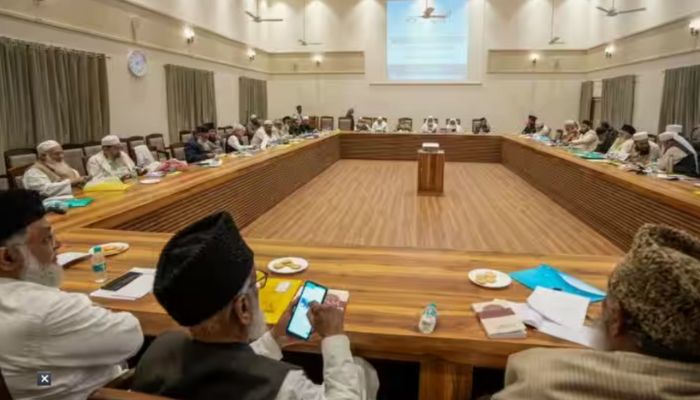
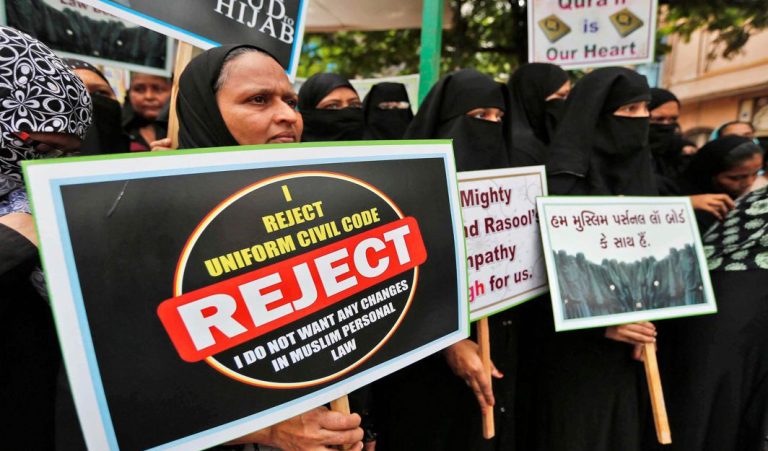
After Prime Minister Narendra Modi’s statement on the Uniform Civil Code (UCC), a fresh discussion has started across the country. Meanwhile, the All India Muslim Personal Law Board (AIMPLB) held a meeting on Tuesday, June 27. The AIMPLB wrote a letter to the Law Commission seeking six months’ time to give its suggestions. On June 14, the Law Commission sought the views of all stakeholders and religious organisations on the Uniform Civil Code (UCC). The letter tweeted by AIMPLB on 28th June 2023 is actually dated 23rd June 2023.
It is pertinent to note that AIMPLB and its members have often discarded the idea of UCC and said that nobody, not even the State, can alter Sharia law.
In this letter addressed to the secretary of the law commission and signed by All India Muslim Personal Law Board General Secretary Mohammad Fazlur Rahim Mujadidi the AIMPLB said, “We have got to know about the above-referred notice issued by the Commission. We are sure that, we being the largest confederation of Muslim religious organizations in India shall submit a proper response to the said notice as we have also done in the past.”
— All India Muslim Personal Law Board (@AIMPLB_Official) June 28, 2023
The letter further said, “However, considering the vast nature of the issue involved, the time duration given for the filing of response is too short. Secondly, the content set out in the above-referred notice is vague, too general and unclear. Thirdly, the terms for the suggestions to be invited are missing. Fourthly, we are not clear how this issue has become so important at this stage keeping in view that this commission’s predecessor had examined the very same issue and reached a conclusion that UCC is neither necessary nor desirable.”
The AIMPLB further said, “We are in the process of drafting and finalizing our response to your notice (though the ambit of the notice is open-ended and vague), but considering the mammoth task we will request you to extend this time by at least by 6 months so that appropriate response can be prepared by religious organizations individuals and public-spirited persons.”
On Tuesday, the All India Muslim Personal Law Board decided to continue its opposition to the Uniform Civil Code, saying it will present its arguments more strongly before the Law Commission in this regard.
Senior board member Maulana Khalid Rashid Farangi Mahali told news agency PTI that various office bearers and members of the board, including chairman Maulana Khalid Saifullah Rahmani, attended the board meeting. He said the meeting, which lasted till late in the night, deliberated on the draft of objections to be raised by the board’s lawyers before the Law Commission on the UCC issue.
Maulana Farangi Mahali said that in the meeting it was decided to continue the opposition to UCC and it was decided that the board will put its arguments more strongly before the Law Commission in this matter.
On the 27th of June, PM Modi batted firmly in support of the Uniform Civil Code (UCC), after the Law Commission set the ball rolling over the proposed single personal law for all religions. Several political leaders from the Muslim community have opposed the move. This prompted the All India Muslim Personal Law Board (AIMPLB) to hold an emergency online meeting late in the evening.
As per media reports, the Islamic personal law body decided to oppose the proposed implementation of the law “more strongly” in the wake of PM Modi’s UCC pitch earlier in the day. The Islamic personal law body also decided to prepare a draft that will be presented in front of the Law Commission. Reports add that the draft will include important parts of Shariah mentioned in it.
AIMPLB member Khalid Rasheed Farangi Magli said, “Our stand is that UCC is against the spirit of the Constitution and we will oppose it strongly.” He added that all prominent Muslim leaders of the country were present in the online meeting.
AIMPLB executive committee member Dr. Qasim Rasool said, “The UCC is neither necessary nor does it benefit our country in any way. India is a multi-religious, multicultural nation that must respect its diversity. The Constitution enshrines religious freedom as a fundamental right and the UCC interferes with this right as Muslim personal law is a part and parcel of our religious freedom.”
Earlier in the day, on June 27, AIMIM Chief Asaduddin Owaisi claimed that by bringing UCC, PM Modi wants to strip the country of its pluralism and diversity. He even labelled UCC as Hindu Civil Code.
#WATCH | AIMIM chief Asaduddin Owaisi speaks on PM Modi's statement on Uniform Civil Code in Bhopal; says, "India's PM considers India's diversity & its pluralism a problem. So, he says such things…Will you strip the country of its pluralism & diversity in the name of a UCC?…… pic.twitter.com/XeBhdBDycD
Similarly, Maharashtra MLA Abu Azmi claimed that all religions will oppose the interference in Shariat through UCC.
He said, “Modi Ji should also say that people of only one religion will live in this country. In our country, languages, culture, religion, etc change after going a few kilometers away, so do you want to destroy them all? Not only Muslims but people of all religions will oppose the interference in Shariat through #UCC whose religious laws you will interfere with.”
मोदी जी को #UniformCivilCode पर ये भी कह देना चाहिए के इस देश में एक ही धर्म के लोग रहेंगे। हमारे देश में कुछ किलोमीटर दूर जाने पर भाषाएं, संस्कृति, धर्म आदि बदलते है तो क्या आप उन सब को ख़त्म कर देना चाहते है? #UCC के ज़रिए शरीयत में दखल अंदाजी का विरोध सिर्फ मुसलमान ही नहीं… pic.twitter.com/Yz9T4IQ3RS
AAP asks BJP to “convince” all religions to implement UCC
The Aam Aadmi Party shared a tweet expressing their “in principle” support on the issue of the Uniform Civil Code (UCC).
However, AAP National General Secretary Organisation Sandeep Pathak emphasised that these matters have long-term impacts and can’t be reversed later. He also urged the Union government to build consensus with all religions, political parties, and organisations.
Speaking to the news agency PTI, Pathak said, “In principle, we support Uniform Civil Code (UCC) as Article 44 also says that there should be UCC in the country. However, it should be implemented after wider consultation with everyone. We feel that there should be wide consultation with all religions, political parties, and organizations and a consensus should be built.”
हम सैद्धांतिक रूप से UCC के समर्थन में हैं क्योंकि Article 44 भी कहता है कि देश में UCC होना चाहिए।
कुछ मुद्दे ऐसे होते हैं, जिन पर आप Reverse नहीं जा सकते हैं, ऐसे मुद्दे लागू करने से आपसे कई धर्मो, सम्प्रदाय के लोग नाराज़ हो सकते हैं
In its tweet, the party stressed that there are some issues on which people of many religions and sects can get angry with you. AAP asserted that the government cannot implement such issues in an authoritarian manner, and therefore a consensus should be built by discussing on a large scale with all religions, political parties and organizations.
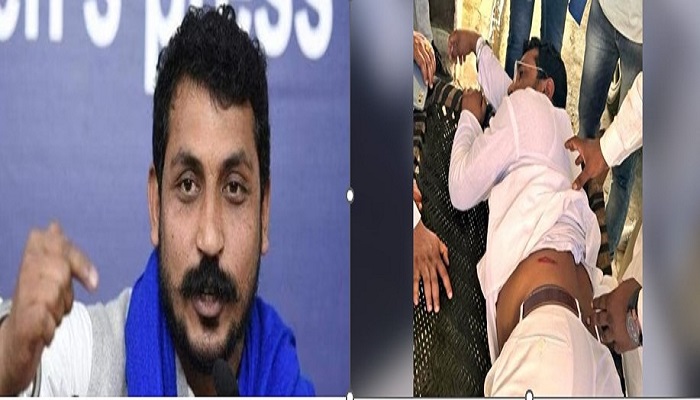
On June 28th evening, the convoy of the Bhim Army founder and National President of Azad Samaj Party Chandrashekhar Azad was attacked by unidentified assailants in Uttar Pradesh’s Saharanpur. The car-borne armed assailants fired shots at his convoy in which Aazad was reportedly injured. Subsequently, he was quickly rushed to the hospital for treatment.
Informing about the attack, Saharanpur SSP Dr Vipin Tada stated that the convoy of Chandrashekhar Aazad was fired at by a few car-borne armed men. He added that Aazad is stable and was taken to CHC for medical treatment.
SSP Tada said, “Half an hour back, the convoy of Chandrashekhar Aazad was fired at by a few car-borne armed men. A bullet brushed past him. He is alright and has been taken to CHC for medical treatment. Police are investigating the matter.”
Uttar Pradesh | Chandra Shekhar Aazad, national president of Aazad Samaj Party – Kanshi Ram and Bhim Army leader's convoy attacked by armed men in Saharanpur.
SSP Dr Vipin Tada says, "Half an hour back, the convoy of Chandra Shekhar Aazad was fired at by a few car-borne armed… pic.twitter.com/RUoh15yYWY
Speaking about the attack, Aazad claimed that he doesn’t remember what exactly unfolded and claimed that his supporters identified them.
He said, “I don’t remember well but my people identified them. Their car went towards Saharanpur. We took a U-Turn. Five of us, including my younger brother, were in the car when the incident occurred.”
#WATCH | "I don't remember well but my people identified them. Their car went towards Saharanpur. We took a U-Turn. Five of us, including my younger brother, were in the car when the incident occurred..," says Bhim Army leader and Aazad Samaj Party – Kanshi Ram chief, Chandra… pic.twitter.com/MLeVR8poaN
Reports add that two bullets were fired at his car. One of the bullets grazed his waist as it passed through the door. The second bullet narrowly missed him after hitting the back door. The Bhim Army shared photos of their injured leader and his damaged vehicle.
In a statement, the Bhim Army said, “The deadly attack on Bhim Army Chief and National President Bhai Chandrasekhar Azad in Deoband of Saharanpur is a cowardly act of stopping the Bahujan Mission Movement!”
The party demanded that strict action should be taken against the accused and they should be quickly arrested. Further, they also demanded security for the party’s National President Chandrasekhar Azad.
Several social media handles have also shared photos and videos of injured leader and his damaged vehicle.
Azad samaj party chief Chandrashekhar Azad was attacked by an identified gunmen in the Deoband, Saharanpur (UP). Gunmen opened fire at his car in the convoy. A bullet brushed past him. He is currently under observation. pic.twitter.com/bZ1vHFdiYm
Hours after massive controversy erupted in the JP Infra Housing Society, Mira Road in Mumbai over a Muslim couple getting goats to their apartment ahead of the Bakrid, the residents of the housing society who protested against the couple revealed that they were publicly abused by the couple on June 27.
The saga began on Tuesday as the Muslim couple identified as Mohsin Sheikh and Yasmin Khan got two white goats for the purpose of slaughtering ahead of the Bakrid. The couple could be seen taking the lambs to their apartment, the video of which was captured in the CCTV footage and now it has gone viral over the media platforms.
Later the residents of the society demanded that the lambs be removed from the society premises and said that they won’t allow any kind of slaughter within the society. But the couple took the lambs to the apartment after which the police were informed. The police who reached the spot immediately tried to maintain peace and communal harmony and assured the other residents in the society that no slaughtering would take place within the society premises.
The police are also believed to have allowed the goats saying that there is no such rule or law against a man getting goats or animals into his house. However, the authorities said that Mohsin would get arrested if he slaughters animals in his apartment or within the society premises.
‘Those people abused us, used derogatory language for women,’ allege residents protesting against Mohsin
Amid the uproar, the residents of the society talked to OpIndia and confirmed that Mohsin has been problematic to the society and that he has broke several regulations of the premises. “All the buildings in the society had decided earlier and had disallowed anyone to bring animals for slaughter in the society. In spite of this, Mohsin Sheikh got two lambs and took them to his apartment straight. He attained nobody’s permission, not the police, not even the society. He has broken the laws and he should be punished,” said one of the residents.
Meanwhile, a woman resident revealed that Moshin and his associates abused the women residents of the society while the latter tried to oppose and demand the removal of the lambs. “There was no brawl, no fist fight, nothing. They (Mohsin and his associates) are claiming that scuffle happened here. But we all are here and nothing that sorts happened. Instead the women residents here were abused and verbally assaulted. Everybody now is furious and want those lambs outside the society. Nobody will return to their apartments unless the lambs are removed,” she said.
Mohsin broke the society law and illegally got the goats to the apartment
One another resident who had applied tilak on his face stated that Mohsin got the lambs deliberately in the society and tried to showcase his power. “He went against the rules and got the lambs. There are other Muslims who stay in the society but none has got animals for slaughter since the society has denied permission to do so. Mohsin wanted to showcase his intimidating power. JP Infra Housing Society has already allotted them a land for keeping the animals in a place nearby but he wanted to get it here only. His wife has alleged that she was harassed and beaten but nothing sorts of this has happened and we have proofs to show,” the male residents added.
Wife of Mohin claims she was physically assaulted and abused, residents call it ‘fabrication’
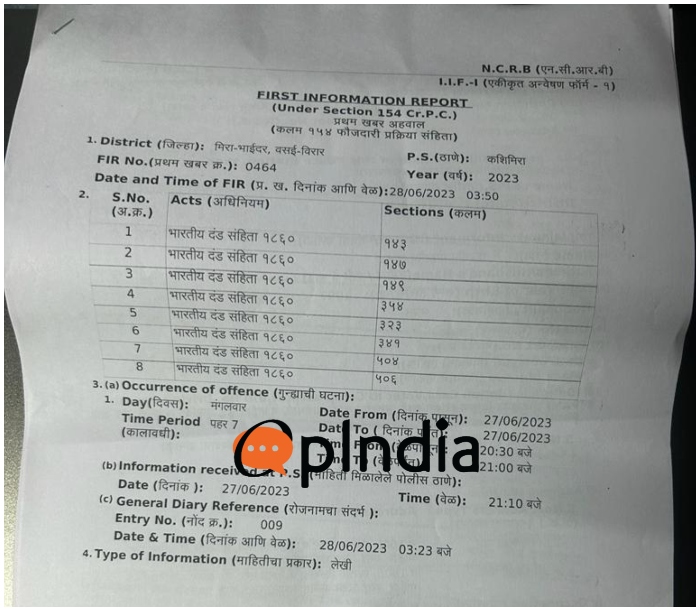
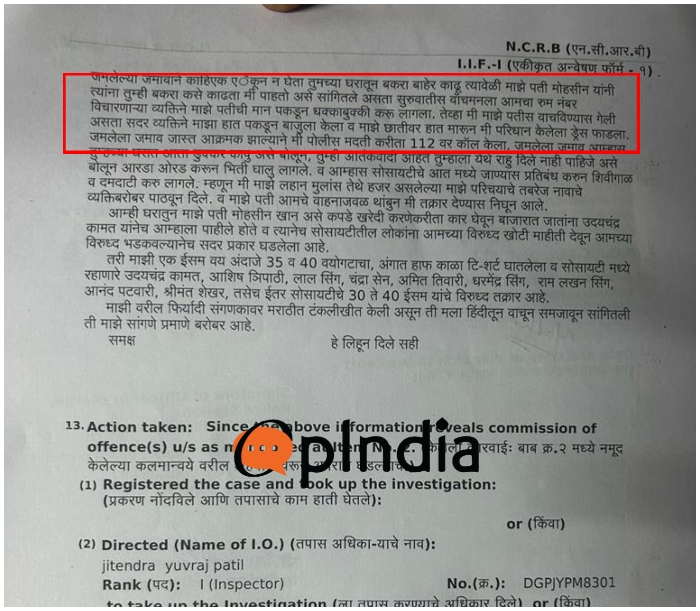
This is after Yasmin Khan w/o Mohsin has filed an FIR u/s 143 (unlawful assembly), 147 (rioting), 149, 354 (criminal force on woman), 323 (voluntarily causing hurt), 341, 504 (insulting to provoke) and 506 (criminal intimidation) of the Indian Penal Code claiming that she and her husband were harassed and assaulted by the society members. Around 8 persons identified as Ashish Tripathi, Lal Singh, Chandra Sen, Amit Tiwari, Dharmendra Singh, Ram Lakhan Singh, Anand Patwari and Shrimant Shekhar have been named in the FIR filed by Yasmin.
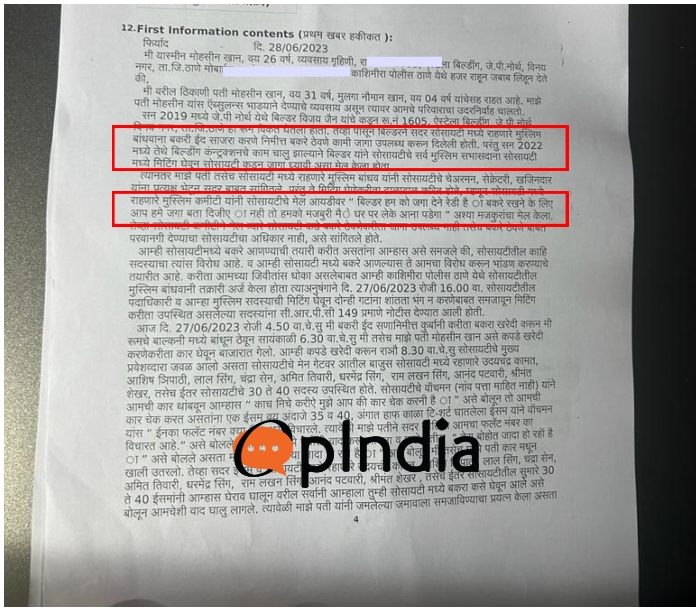
FIR copy obtained by OpIndia
The woman in the FIR stated that the society residents allegedly threatened her and her husband and asked her for the apartment number in which she was residing. She later said that the persons named in the FIR allegedly held her husband by his neck, pushed her away and also thumped her on her chest. Later she added that the men also allegedly tore the clothes that she was wearing.
Woman said that she was abused
Yasmin claimed she was ‘mob lynched’, though Hindu residents didn’t even touch her
Interestingly, several videos are going viral over social media platforms in which the woman is seen talking to someone on her phone claiming that she and her husband are being ‘mob lynched’ by the residents of the society. Meanwhile, the protesting Hindu residents are seen just standing around the couple seeking answers to their act of breaking the society rules and illegally getting the lamb on the premises. Mohsin, in the video, can also be seen abusing and using derogatory language for the residents of the society.
Mohsin Khan and his wife were trying to play "mob lynching" victim card, and when the Society ppl made video to bust their Propaganda, Mohsin started abusing the Hindu members of the society to trigger the them so that someone hits him and he can play the victim card of "mob… pic.twitter.com/bBO0Jr5gqX
Responding to the complaint by Yasmin, one of the Hindu residents clarified to OpIndia that the woman was fabricating the incident and that she was never beaten or abused by anyone. “We have the society CCTV records. We all gathered at first and very calmly talked to the couple about the lamb. Nobody touched the woman or held the man. All our CCTV footages are in a well working condition and can be checked for evidence. The woman is lying,” he indicated.
The man also said that the society had allotted a place for the Muslim people to keep and slaughter their lambs but Mohsin deliberately had got it in the premise to showcase his ‘power’. As stated by the residents, Mohsin is associated with the Shiv Sena party but has been removed from the party after the incident.
Muslims had warned JP Society that they would get lambs in their apartments
In the FIR copy obtained by OpIndia, Mohsin himself said that the JP Infra Housing Society had provided a separate premise for keeping the lambs to the Muslim residents. However, after 2022, the premise got occupied in a construction project as a result of which the society ran out of space to provide for the Muslims to keep the lambs.
JP society had given the land to Muslims
Later, as per one of the Hindu residents, the society had allotted a separate land in a nearby area for Muslims in the society to store animals. But Mohsin and the other Muslim people emailed the society authorities to provide a premise within the society. They also threatened the authorities and said that they would take the lambs to their apartments if no such separate place is provided by the society. “Builder is ready to give us a separate premise. Please let us know the same soon otherwise we’ll take the lambs at our homes,” the Muslim community had written to the society, as mentioned in the FIR copy obtained by OpIndia.
Earlier, it was reported how Islamists and left-liberals were outraged about residents opposing potential animal slaughter on Eid inside Mira Road housing society calling them ‘uncivilized’. The Islamists cabal continues to support the Muslim couple and claims that the lambs were not brought for slaughter in the apartment. Alt News co-founder Mohammed Zu bair also happened to blame the society for allegedly not providing the land for keeping the lambs. However, as mentioned in the FIR filed by Mohsin, the society had provided the land but after 2022 the land was taken away due to the extended construction.
Several News Channels have reported that Mohsin Khan, A resident of private housing colony Estella Society at Mira Road had brought goats to his flat for sacrificial purpose. This is Not true. He brought the animals to keep them at his flat till bakrid. All the residents would… pic.twitter.com/wbDHqA2rt8
JP Infra Resident confirms the land allotment, says Mohsin deliberately wanted to get the lambs in the apartment
One of the JP Infra residents named Gigraj Kumavat confirmed to OpIndia that Mohsin and Yasmin were lying and that they were not assaulted by any of the residents from the society. “These people were permitted by the society to keep lambs in a separate location since the land originally allotted to them was taken away due to the ongoing construction job. The builder has taken the land on rent and allowed them to keep the lambs there. But these people want the land within the society premises. They also had threatened the builder earlier that they would get the lambs in their apartment,” Kumavat said.
He also added that the lambs have now been removed from the society premises but the Muslim couple has filed a fabricated complaint against some of the residents in the society. “The woman is lying. She has claimed that her husband was held and her clothes were pulled down. Nothing like this happened. All the society was on ground. Even the women residents. How could anything like this happen,” he added.
Tensions continue to disrupt the peace in the Mira road society of Mumbai forcing the protesting residents to think that they reside not in India, but Pakistan. OpIndia has obtained several videos in which the residents are seen expressing their frustration over the ‘fabricated’ police complaint filed by Yasmin Khan. The residents have denied any incident of brawl and assault on the woman as claimed by Yasin.
The Police meanwhile has assured the residents that the lamb will not be slaughtered in the society premises come what may. The police continue to monitor the situation at the society and are trying to maintain communal harmony.