Home Blog Page 2158

Why Congress reduced the divine Sengol to a mere walking stick of Nehru: Chola Dynasty, the apotheosis of Congress, Somnath Temple and whitewashing of Ghazni

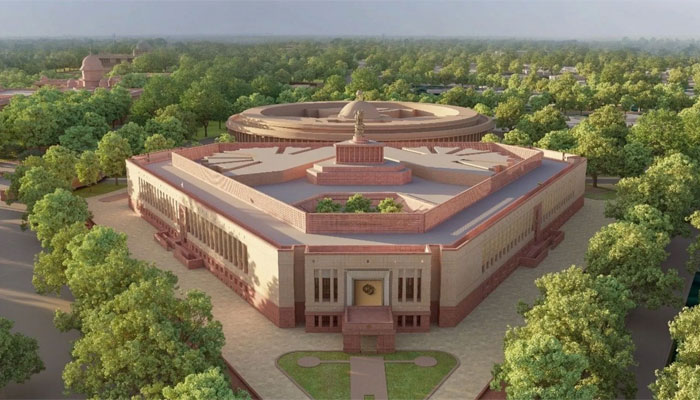
The new parliament building of India will be inaugurated by Prime Minister Narendra Modi on 28 May. On this occasion, a historic tradition will be revived, when the historic Tamil sceptre, ‘Sengol’, will be placed in the new parliament. A tradition forgotten, a piece of the illustrious Hindu history tucked away, shunned, discarded and insulted.

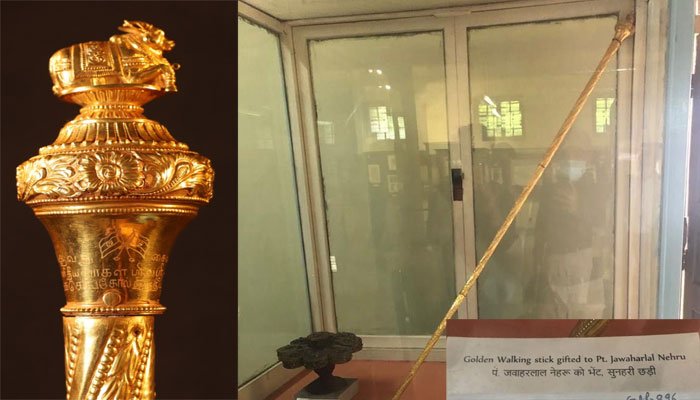
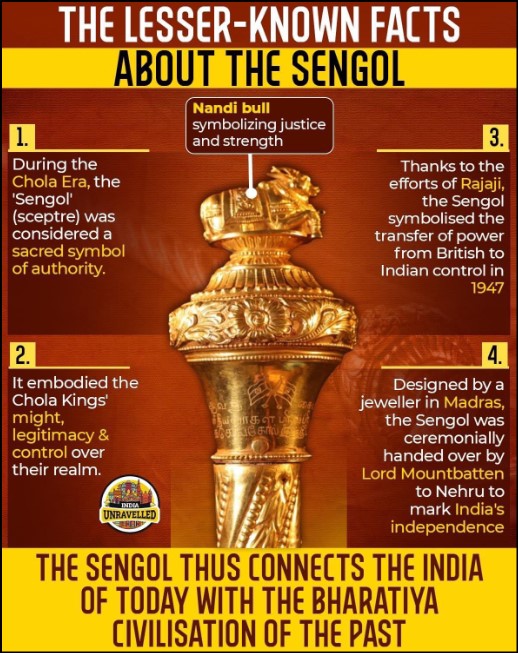
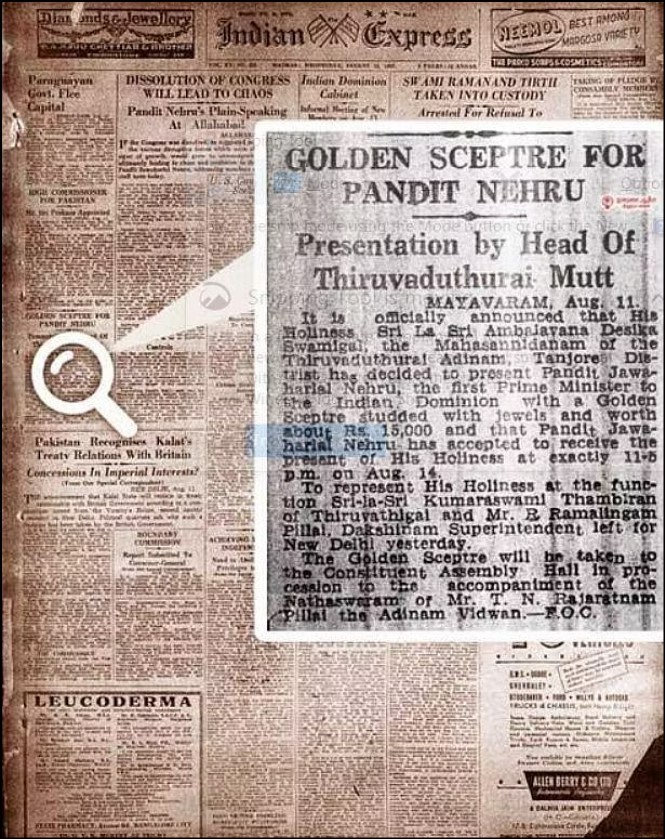
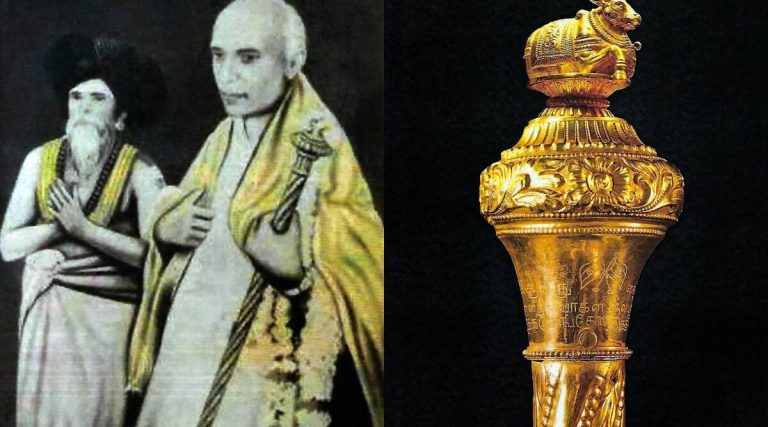
The golden sceptre is studded with jewels and was worth about Rs 15000 at the time of Indian independence. Nandi, the protector and symbol of justice, and bull vahana of Lord Shiva, sits proudly on the top of the sceptre. The Sengol is 5 feet long, which is a masterpiece of Indian art with rich workmanship from top to bottom.

During the inauguration of the new Parliament building, the Sengol will be ceremoniously transported to the House in a grand procession. The occasion is likely to be steeped in Tamil tradition, reminiscent of the ancient traditions of the Chola empire.

It was a traditional Chola practice for Samayacharyas (spiritual leaders) to lead the coronation of kings and sanctify the transfer of power, which is also considered a kind of recognition for the ruler.

When it was decided that the British will hand over power to the Indians, Lord Mountbatten asked Pandit Nehru about the cultural symbol that should be used as a representation of the transfer of power. However, Nehru was also not sure, he sought some time to discuss with others. He discussed the matter with C Rajagopalachari. He studied multiple historic books and informed Jawaharlal Nehru about the Sengol.

Following that, the head of the Thiruvaduthurai Mutt Sri La Sri Ambalavana Desika Swamigal sent the Sengol to Nehru, who accepted it to use as a symbol of power. The seer had sent a delegation carrying the sceptre in a special aircraft arranged by the government. 

The Sengol, which was handed down to Nehru, was made of silver, and gold-plated, this was ordered specially by the Adheenam. Jeweller Vummidi Bangaru Chetty in Madras hand-crafted this. It was therefore a replica. However, that it was the Chola tradition being followed makes it a divine Sengol representing The Hindu traditions of the Chola dynasty.

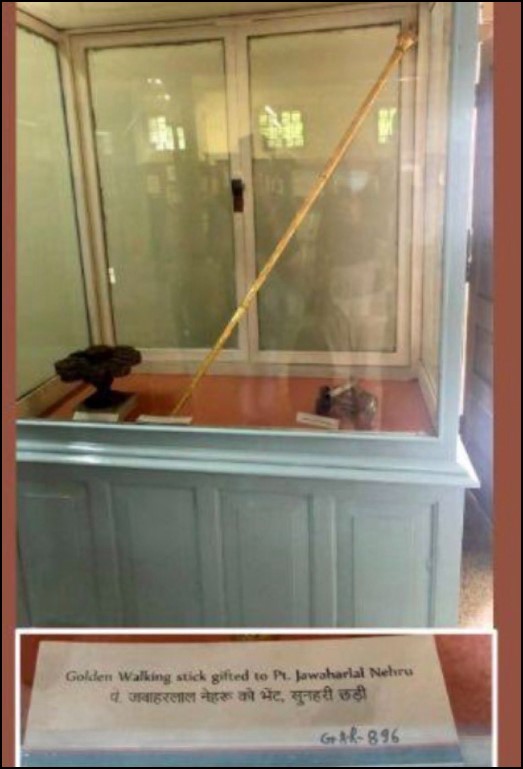
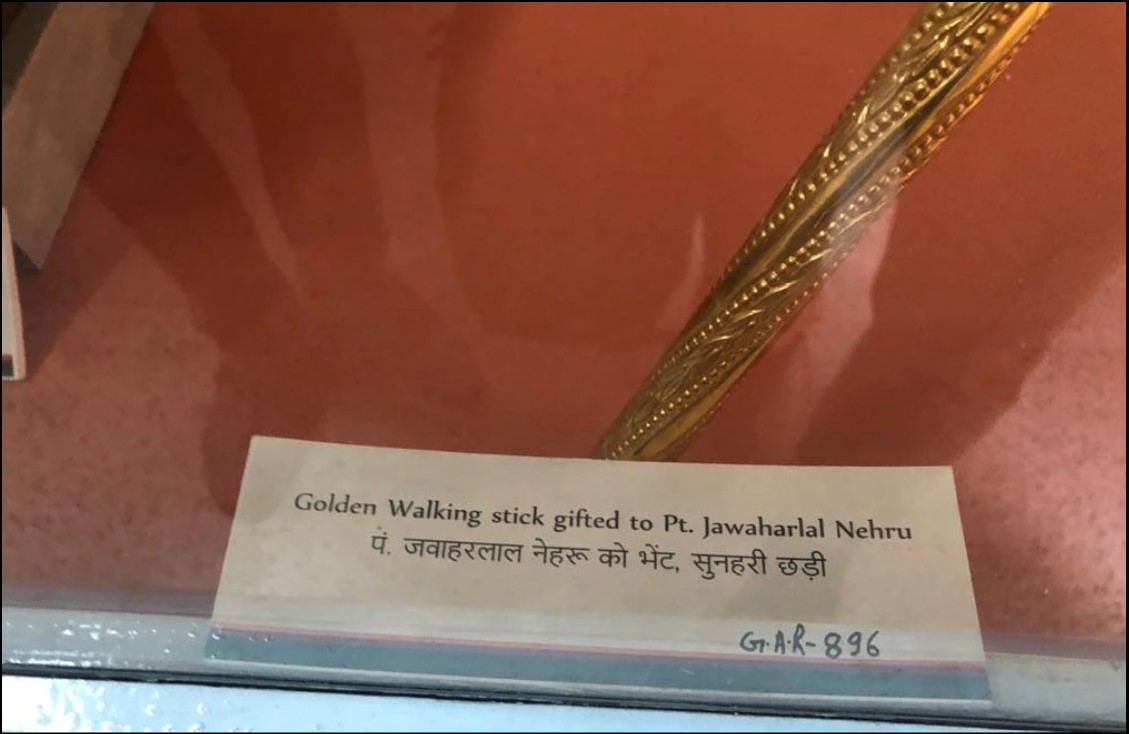
Sengol, the historical sceptre from Tamil Nadu, was received by India’s first prime minister Jawaharlal Nehru to represent the transfer of power from the British. However, this sceptre was soon forgotten and was since kept in a museum in Prayagraj as “Jawahar Lal Nehru’s golden walking stick”. Nobody knows for sure how and why such a historic artefact was kept in a museum as Nehru’s walking stick, but now it gets a place worthy of its significance in the new Parliament.

The historic hatred harboured by Jawaharlal Nehru and his handpicked diplomats against anything Hindu

There are, however, significant questions that we must ask, as this historic symbol of Hindu tradition and kingship gets its rightful place in the parliament. Seemingly, from the information available, we can’t particularly say that Congress did this intentionally. Essentially, we cannot say for certain that Congress wanted to insult Hindu traditions and therefore, relegated this Sengol to a political museum as the walking stick of a political figure.

However, given that Congress was in power for decades and it was indeed first handed down to Jawaharlal Nehru, one must ask about the inherent disdain that Congress harbours for Hindu traditions. Jawaharlal Nehru must be recalled, had utter disregard, if not contempt, for Hindu traditions and values.

After the Nawab of Junagarh had fled to Pakistan on 26th October 1947, the Indian army moved into Junagarh on 9th November 1947. After the famed uprising, Sardar Patel arrived in Junagarh on 13th November 1947 to a massive reception from the people of the state and had vowed to rebuild the dilapidated Somnath Temple that was attacked 17 times in its existence, most brutally by Islamic invaders. When Sardar Patel returned to Delhi, the decision to rebuild the Somnath temple was passed in a cabinet meeting and a decision was made for the state to dole the expenses. A decision later overturned due to MK Gandhi’s insistence, that the people be asked to pay for it.

Gandhi died in 1948 and Sardar Patel’s soul departed in 1950. After the demise of Sardar Patel, the task of Somnath Temple’s restoration was to be undertaken by then cabinet minister, KM Munshi, who was the Chairman of the Advisory Committee of the Trust formed for this purpose.

Jawaharlal Nehru has been famed to tell KM Munshi, in 1951, “I don’t like your trying to restore Somnath. It is Hindu Revivalism.” By Congress’ own admission, Nehru did not attend the Bhumi Pujan of the Somnath Temple because he said he was the leader of “secular” India. When the then-President Rajendra Prasad went for the inauguration ceremony, Nehru objected after learning about his plans via a letter. President Prasad wrote back and said, “I believe in my religion and cannot cut myself away from it.” The said exchange of letters was mentioned in the book by Durga Das, “India: From Curzon To Nehru And After”.

A letter written by India’s first ambassador to China, K. M. Panikkar, to then PM Nehru shows that Nehru’s hatred for Hinduism was shared by his handpicked diplomats.

Narrating how he opposed the idea of rebuilding temples destroyed by Islamic invaders, Panikkar wrote, “if an unofficial Hindu organisation wanted to restore that temple, no one could have any objection. Even then, where is one to stop? Kutub Minar to be pulled down and the stones which came from temples used for restoring the shrines? Is Aurangzeb’s tomb in Banares to be pulled down and Kashi Viswanath restored to original glory? If we start on this Path, where are we to stop? This is the state of mind that leads straight to RSS and the desire to revive Hindupada padishahi in India. I was rather surprised to see that some members of the Government were associat­ed with it and the suggestion that the President of India should be the chief yajaman of this obscurantist reviva­lslism, I confess, was a little frightening”.

The Ambassador to China had also alleged that the “Somnathists” were trying to forget the period of Indian history after the Muslim invasion. “These are the real founders of the India of today and our “Somnathists” unfortunately desire to forget them. I am sorry to inflict this on you, but I think you should know how strongly some of us feel at all this dangerous “revivalism” which seems to have affected even those closely associated with Governments in the Provinces and even at the Centre”.

The letter by Panikkar and the comments by Nehru explain, rather starkly, why India became deracinated and painfully divorced from its roots, also explaining, why the sceptre was forgotten, insulted and shunned.

The apotheosis of Congress leaders and the shunning of Bharatiya traditions at the feet of Islamic appeasement and British colonialism

From what Jawaharlal Nehru felt about the Somnath Temple and the letter of Pannikar, a few realities of India’s contemporary political history stare us in the face. When India won its independence, Bharat was brutally tortured, killed and buried by those who may have led free India, but were caged by their own Abrahamic and colonial intellectual shackles. The fact that the British, who still have a Monarchy committed to the Church, forced an ancient civilisation like India to adopt a skewed version of secularism, one which was then internalised by white-adjacent masters like Nehru, led to the notion that for India to treat its people justly, regardless of their collective numerical strength, India must bury its proud, Hindu history.

It is for this reason that Nehru was so vehemently opposed to the rebuilding of the Somnath Mandir. It is for this reason by Pannikar was utterly ashamed to even acknowledge those who refused to forget their own roots – like the then President.

Another reason why Bharat’s proud heritage had to be erased is that the internalised obsession that historic atrocities, when spoken about or corrected, would deliver a massive blow to the misplaced, bloated and alien pride that the Muslim community feels in the tyrannical Mughal rule. If you take pride in the Hindavi Swaraj that Chhatrapati Shivaji Maharaj established or the glory and valour of Tarabai, you might offend the Muslims who bask in the glory of Aurangzeb. If you talk about Ram Janmabhoomi, you might offend the converted-by-Mughal Islamists who take pride in the demolition of idolaters and temples. You rebuild Somnath, you might offend those who deify Mahmood Ghazni.

And it is perhaps the urge to preserve the feelings of those who deify Mahmood Ghazni that also contributes to the insult of the Sengol. It was the head of the Thiruvaduthurai Mutt Sri La Sri Ambalavana Desika Swamigal who sent the Sengol to Nehru, who accepted it to use as a symbol of power. The seer had sent a delegation carrying the sceptre in a special aircraft arranged by the government. The Sengol is a lasting Hindu tradition of the Chola Dynasty.

Mahmud Ghazni was a contemporary of the Chola King, Rajendra I and there have been several attempts made by the likes of Romila Thapar to minimise the Somnath raids of Mahmud Ghazni by blaming the Chola King for not foiling the raids. That theory has been summarily debunked in this article by Swarajya, however, the fact that any Hindu traditions handed down by the Cholas would diminish Congress’ narrative is obvious and one that cannot be ignored.

Since Nehru was against the rebuilding of the Somnath Mandir and his trusted soldiers, decades later, diminished the Chola King and whitewashed the Somnath Raids of Ghazni (by blaming the Chola Kind instead), even with no direct evidence to suggest that the sceptre was insulted and tucked away because of Congress’ utter contempt for Hindu history, it does not take a lot to connect the dots.

Any acknowledgement of the proud Hindu history of the Cholas would immediately demolish the lies of Macaulay historians that the Cholas did not particularly care about Ghazni demolishing the Somnath Temple because they were Kings from the South of India and did not necessarily fight for Temples at all.

Consider this – Jawaharlal Nehru knew the historic Hindu legacy that he had been handed down. Yet, he chose to use it as a walking stick. The Congress and its lackeys then chose to discard it in some museum insulting Bharatiya Sanskrit and the divine right that came with the sceptre by calling it a mere walking stick of their deity – Nehru. I say they chose to do so because every article that is kept in a museum is researched, documented and described. I find it very hard to believe that those who placed the sceptre there did not know exactly what its history is. But perhaps for them, that Nehru used it as a walking stick is the identity that mattered. Either way, after it was placed in the museum, there were several historians who visited the museum, many who wrote about Nehru and the articles placed in the museum that tells the tale of Chacha – how is it that none of them, to date, raised alarms that the sceptre was one that held significance to Hindu culture was not a mere walking stick used by their favourite politician?

While everyone looked away and chose to insult the sceptre, there were politicians claiming that Cholas had nothing to do with Hinduism and historians trying to whitewash Ghazni by blaming the Chola King, Rajendra I.

When one erases history, one erases the consciousness of a people. You erase the pride they must feel in their identity, knowing that they are the children of great warriors who fought to preserve Dharma. You kill their appreciation for their roots and their will to preserve a civilisation hard fought and kept intact for generations, battling Islamic invasion and colonialism. You kill their will to fight the external threat and their courage to battle neo-colonialism.

When you reduce a divine sceptre to an ornamental walking stick, you tell the Hindus of this land that the person using the walking stick is the only one worth remembering, the person from whom your history starts.

One recalls how Congress stood up tall in court to assert that Lord Ram was a mere fictional character and that the Ram Setu must be demolished. In 2007, the government in an affidavit to the Supreme Court in the Sethusamudram project case had not only dismissed the existence of any man-made bridge between India and Sri Lanka but even questioned the existence of the characters of Ramayana.

History means nothing to Congress. Heritage means nothing to Congress. Hindus mean nothing to Congress. Our civilisational memory and consciousness mean nothing to Congress. The only thing that means something to Congress is to prove that their leaders were the apotheosis of our great civilisation and for that, the divine sceptre atop which Nandi baba sits must be reduced to a walking stick.
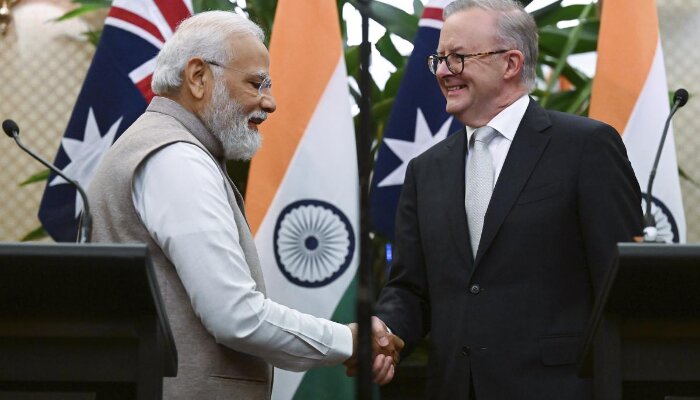
Thank you to my friend Narendra Modi for visiting Australia: Prime Minister Anthony Albanese

Australian Prime Minister Anthony Albanese, on Thursday, May 25, release a montage video in commemoration of Indian PM Narendra Modi’s recent visit to Australia. PM Albanese called the Indian PM his friend and also thanked him for the visit.

The footage shows the prime ministers of Australia and India at their multiple engagements across the country including excerpts from the event in Sydney where PM Modi addressed the Indian diaspora.

Prime Minister Narendra Modi returned to India after over fifty engagements and traveling across three nations on Thursday, May 25. He visited three nations, Japan, Papua New Guinea and Australia during his time away, and met over 12 global leaders.

Pm Modi left for Hiroshima in Japan, for the G7 Summit on May 19. He proceeded to visit Papua New Guinea next, for the Forum for India-Pacific Islands Cooperation (FIPIC), a grouping of India and 14 Pacific Island countries, making him the first Indian prime minister to go to the country.

PM Modi concluded the visit with his final destination in Sydney, Australia, where he met his Australian counterpart, Anthony Albanese, and also addressed a major event organised by the Indian community there.

It should be noted that Narendra Modi is renowned for his tight relationships and interpersonal bonds with foreign leaders, including US President Joe Biden, who has admired his strong leadership and broad popularity among the populace.

Karnataka elections creates a villain in Amul? Now Tamil Nadu CM MK Stalin opposes milk procurement by Amul in the state alleging threat to Aavin

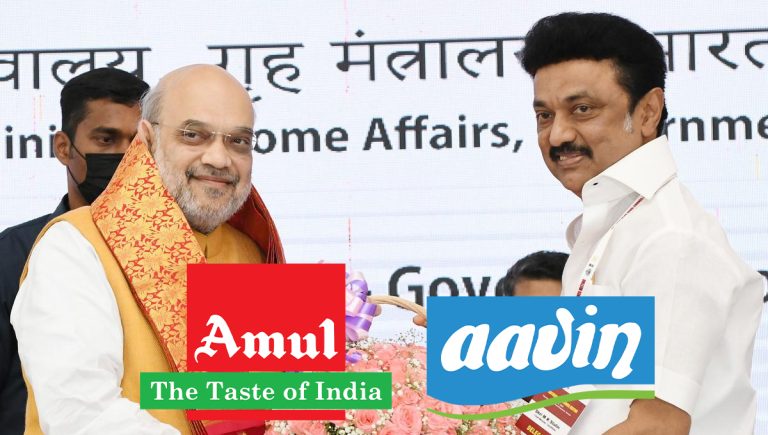
After the Congress party opposed the operation of Amul in Karnataka ahead of the assembly elections in the state, now Tamil Nadu chief minister M K Stalin has opposed the Gujarat-based co-operative society procuring milk in the state. The DMK leader has sent a letter to Cooperation Minister Amit Shah, asking him to stop Amul from procuring milk in Tamil Nadu’s milk shed area.

The CM wrote that like other states with strong dairy cooperatives, Tamil Nadu has Aavin Co-operative, under which 9,673 milk producer cooperatives are functioning in rural areas. According to CM Stalin, recently the Kaira District Cooperative Milk Producers’ Union (Amul) has utilised their multi-state cooperative licence to install chilling centres and a processing plant in Krishnagiri district and has planned to procure milk in several districts.

According to the Tamil Nadu CM, it has been a norm in India to let cooperatives thrive without infringing on each other’s milk-shed area, and now Amul is violating that norm by starting milk procurement in the state. “Such cross-procurement goes against the spirit of ‘Operation White Flood’ and will exacerbate problems for the consumers given the prevailing milk shortage scenario in the country. This act of AMUL infringes on Aavin’s milk shed area which has been nurtured in true cooperative spirit over decades,” he wrote.

MK Stalin claims that this move by AMUL will create unhealthy competition between cooperatives engaged in procuring and marketing milk and milk products. “Regional cooperatives have been the bedrock of dairy development in the states and they are better placed to engage and nurture producers and to cushion consumers from arbitrary price hikes,” he added.

Therefore, he requested the urgent intervention of Minister Amit Shah to “direct Amul to desist from milk procurement from the milk shed area of Aavin in Tamil Nadu with immediate effect.”

It is notable that in recent weeks, Gujarat Cooperative Milk Marketing Federation Limited (GCMMF), which owns the Amul brand, has released ads in Tamil Nadu inviting farmers to supply milk in northern districts of the state, including Dharmapuri, Vellore, Krishnagiri, Tiruvannmalai, Ranipet and Kancheepuram districts. Amul already has a wide presence in the state through distributors to market its dairy products.

Reportedly, this is the second attempt by Amul to procure milk in the state after a failed attempt five years ago. Reports also mention that GCMMF agents have met milk producers in the state and have promised them ₹1 or ₹2 more than the price being paid by Aavin. The cooperative society has also promised to release payment within a day or two, and has assured monthly or quarterly incentives.

It is notable that as per extant laws regarding cooperative societies, GCMMF can’t set up a cooperative society in Tamil Nadu, but it can procure milk from dairy farmers just like private companies do. In Tamil Nadu, only the state govt’s agency Aavin can set up cooperative societies in the sector. Therefore, what Amul is doing is permitted as per existing laws in the state.

While CM Stalin is saying Amul procuring milk will create unhealthy competition between cooperatives, Aavin officials say they don’t think there will be a threat to them. “Our farmers are exclusively associated with Aavin, and we do not perceive any threat due to the entry of Amul,” said G Rajendran, general secretary of the Tamil Nadu milk producers’ welfare association. He also added that “competition in the milk market may ensure better price for farmers.”

Aavin officials also expressed confidence in their strong network of milk suppliers. The cooperative has launched several schemes to help the dairy farmers, which include the purchase of two lakh milch cows, 50% subsidy premium for cattle insurance, and an enhanced supply of cattle feed and fodder.

MK Stalin’s opposition to Amul procuring milk in the state alleging threat to Aavin can repeat the Amul vs Nandini debate recently seen in Karnataka before the assembly elections. However, in Karnataka, the opposition was Amul’s proposal to sell its milk and curd in the state. The then opposition parties Congress and JD(S) had alleged that the BJP government was planning to merge Nandini, the Karnataka-based dairy cooperative, with Amul.

BJP had rejected the allegations, and Amit Shah had said that the presence of both brands in the state can do wonders for the dairy sector. Then CM Basavaraj Bommai had said that Nandini is also a brand as it is available in other states as well. However, the issue almost vanished after the Karnataka assembly polls, indicating that this was mostly an election issue.

Amul’s packaged and processed products have been available all across India for several decades. However, the GCMMF was procuring milk from Gujarat only and sent the products to other states. However, in recent years the cooperative has also started to sell fresh milk and similar products in other states. Gujarat-based cooperatives now use milk trains to send fresh milk to nearby states.

However, milk procured in Gujarat is not sufficient to supply in all the states, and therefore GCMMF has also started procuring milk in other states. Just like there is no bar on Amul from selling its products anywhere in India, there is similarly no bar on it from procuring milk in any state. But despite that fact, the Tamil Nadu govt is opposing milk procurement by Amul in the state.

Anusuchit Jati Bachao Manch opposes reservation for Dalits converted to Islam and Christianity, presents petition to Ahmedabad collector

The Anusuchit Jati Bachao Manch (AJBM) delegation of Dalits on Monday, May 22, presented a petition to the Ahmedabad collector opposing any proposal to offer Scheduled Caste reservation benefits to those Dalits who have converted to Islam or Christianity.

According to the organisation, giving quota privileges to Dalits who converted to Islam or Christianity would jeopardise the future of Scheduled Caste generations to come.

The Supreme Court has agreed to take scheduled caste status petitions for Dalit Christians and Muslim converts under consideration in July. The appeals in the case stated that it was unfair to exclude Dalits of both Abrahamic faiths from the list of Scheduled Castes.

The Constitution (SC) Order, 1950, specifies that only Dalits of Hindu, Sikh, and Buddhist beliefs are presently eligible to be classified as members of the scheduled caste community.

After a brief hearing in April this year, the three-judge panel of Sanjay Kishan Kaul, Ahsanuddin Amanullah, and Aravind Kumar issued their ruling, declaring that the plaintiffs maintain that the process of waiting for the most recent Commission report will be never-ending and that the case will never be resolved. The Court agreed with their argument that the records’ documentation was sufficient to proceed with the matter.

While attorneys Prashant Bhushan, Colin Gonsalves, and CU Singh submitted the petitioners’ case, additional solicitor general K.M. Nataraj represented the union government.

The Justice Ranganath Mishra Commission’s 2007 report on religious and linguistic minorities had previously been rejected by the Centre. The Centre established a special committee under the direction of former judge KG Balakrishnan to examine the prospect of awarding SC membership to those who historically belonged to the SC group but have converted to faiths other than Hinduism, Buddhism, and Sikhism.

The bench remarked that it was important for the court to first consider whether empirical data from the 2007 report can be relied upon for deciding a constitutional question.

The Supreme Court agreed to explore the constitutional question of whether the exclusion of Muslims and Christians from the 1950 decree violated Articles 14 (equality before the law), 15 (prohibition of discrimination), 16 (equality of opportunity in matters of public employment) and 25 (freedom of conscience and free profession, practice and propagation of religion) in 2011.

The bench pointed out that it was crucial to have a first debate on the topic regarding the implications of the center’s rejection of the findings and the applicability of the empirical data for resolving the constitutional issue because the court had concerns about the objectivity of the study.

The Constitution (Scheduled Castes) Order 1950, as it has been periodically modified, is alleged to be discriminatory and to violate Articles 14 and 15 of the Constitution by discriminating against Scheduled Caste converts to religions other than Hinduism, Sikhism, and Buddhism in a writ plea filed in 2004 which contests the exclusion of Christians and Muslims from the order.

Plea submitted in Supreme Court asking for President Murmu to inaugurate the new Parliament Building

On May 25, Advocate CR Jaya Sukin filed a petition in the Supreme Court seeking directions to the Lok Sabha Secretariat to have the President of India Droupadi Murmu inaugurate the new parliament building on May 28 instead of Prime Minister Narendra Modi.

In the plea, advocate Sukin claimed that the invites issued by the Secretary General of Lok Sabha for the inaugural function of the new building violated the Constitution of India. It read, “That President is the First Citizen of India this regard and head of the institution of Parliament…That all important decisions regarding the country are taken in the name of the Indian President.”

It further stated that the Parliament, which consists of the President and two houses, Lok Sabha and Rajya Sabha, holds the supreme legislative authority of India. It further added that the President has the authority to summon and prorogue the Parliament or dissolve the house.

The plea further cited Article 79 of the Constitution of India to contend that the President is an integral part of the Parliament and should not be kept away from the inauguration. The petitioner further accused the Lok Sabha Secretariat of malpractice.

Congress and other opposition parties targeting the Central govt over the inauguration by PM Modi

19 opposition parties on Wednesday issued a joint statement saying they will boycott the inauguration of the new Parliament building on May 28, saying, “When the soul of democracy has been sucked out from the Parliament, we find no value in a new building.”

Pressing on the presence of President Murmu, the opposition parties indicated that PM Modi inaugurating the new Parliament building without the President was an insult to the President and the Indian constitution. Interestingly, what the parties said in their statement and what Sukin said in the petition are very similar.

The statement read, “The President is not only the head of the state in India but also an integral part of the Parliament. She summons, prorogues, and addresses the Parliament. She must assent for an act of Parliament to take effect. The parliament cannot function without her. Yet, the Prime Minister has decided to inaugurate the new parliament building without her. This undignified act insults the high office of the President and violates the letter and spirit of the Constitution. It undermines the spirit of inclusion which saw the nation celebrate its first Adivasi woman President.”

Notably, opposition parties have a history of boycotting the President’s address in the parliament. Several opposition parties had boycotted the address by President Murmu as well as the previous President Ram Nath Kovind’s address.

Interestingly, the opposition parties, who then boycotted the President’s address in their protest against the BJP, are now fighting for the dignity and honour of the President.

As Modi Govt places Chola dynasty sceptre ‘Sengol’ in the new Parliament, read how DMK govt mentioned it in the 2021-22 policy note

On Wednesday, May 24, Home Minister Amit Shah announced that the Chola dynasty sceptre ‘Sengol’ will be placed in the new Parliament building. Since then, it has come to light that Sengol was mentioned in the DMK-led Tamil Nadu government’s document from 2021-22. 

Sengol was presented to the first Prime Minister of India Jawahar Lal Nehru by Lord Mountbatten as a symbol of the transfer of power. The historic artefact, linked to the Hindu religion, was since then placed in a hidden corner of Anand Bhawan, Nehru’s residence in Prayagraj, mislabelled as the ‘golden walking stick gifted to Nehru’.

Sengol was mentioned on page 27 of Hindu Religious and Charitable Endowments Policy Note 2021-2022 by Tamil Nadu Government’s Tourism, Culture and Religious Endowments Department under the section ‘Head of Mutts as Royal Counsel’. While speaking about the significance of Sengol, HM Shah pointed out that Tamil media had covered it widely, and the Tamil Nadu government also mentioned it. On May 25, BJP IT cell head Amit Malviya also shared a screenshot of the policy note on Twitter.

It read, “At the time of enthronement, the traditional guru or the preceptor of the King would hand over the ceremonial Sceptre to the new ruler. Following this tradition when the Oduvars completed the singing of the last line of “11th stanza” from Kolaru Pathigam, Thevaram, Thiruvavaduthurai Aadheenam Thambiran Swamigal handed over the goldplated silver sceptre to Pandit Jawaharlal Nehru. This signified the transfer of power from the British Governor-General Lord Mountbatten to the first Prime Minister of India.”

About Sengol and GoI’s decision to place it in the new parliament building

On May 24, HM Shah talked about the historical significance of the sceptre. He said that while the historically significant sceptre was used as a transfer of power in 1947, it vanished after that as it was kept in a museum, and the successive Congress governments and the general public quickly forgot about it. Now the Modi government is reviving the glory of the Sengol by placing it in India’s parliament.

Sengol is a Tamil world, which means full of wealth. “This Sengol has huge significance. When PM Modi got to know about this, he asked to get more info on this,” Amir Shah said. He added, “August 14, 1945, around 10:45, Nehru accepted this Sengol from the people of Tamil Nadu. It is a sign of a shift of power from Britishers to the people of this country.”

When it was decided that the British will hand over power to the Indians, Lord Mountbatten asked Pandit Nehru about the cultural symbol that should be used as a representation of the transfer of power. However, Nehru was also not sure, he sought some time to discuss with others. He discussed the matter with C Rajagopalachari. He studied multiple historic books and informed Jawaharlal Nehru about the Sengol.

The golden sceptre is studded with jewels and was worth about Rs 15000 at that time. Nandi, the bull vahana of Lord Shiva, sits on the top of the sceptre. Nandi is the protector and symbol of justice, said the description given at the press conference. The Sengol is 5 feet long, which is a masterpiece of Indian art with rich workmanship from top to bottom.

Following that, the head of the Thiruvaduthurai Mutt Sri La Sri Ambalavana Desika Swamigal sent the Sengol to Nehru, who accepted it to use as a symbol of power. The seer had sent a delegation carrying the spectre in a special aircraft arranged by the government.

Sengol, the symbol of the transfer of power from the British, was displayed as Nehru’s ‘golden walking stick’ at Anand Bhawan in Prayagraj

The historic sceptre ‘Sengol’ is set to take pride of place in India’s new parliament building. The Chola-inspired sceptre will be installed near the chair of the Lok Sabha Speaker in the new parliament building which will be dedicated to the nation by PM Narendra Modi on May 28, 2023.

Addressing a press conference today in Delhi, home minister Amit Shah said that the ‘Sengol,’ which is from the Chola dynasty, will be introduced as a ‘significant historical’ symbol of Independence, as it was a symbol of the transfer of power from the British to Indians.

Sengol is a Tamil world, which means full of wealth. “This Sengol has huge significance. When PM Modi got to know about this, he asked to get more info on this,” Amit Shah said. He added, “August 14, 1945, around 10:45 Nehru accepted this Sengol from the people of Tamil Nadu. It is a sign of a shift of power from Britishers to the people of this country.”

Reportedly, when the British handed over power to Indians in 1947, the momentous occasion was symbolised by the handing over of a Sengol (sceptre) to the first Prime Minister of India Jawaharlal Nehru by the last Viceroy Lord Mountbatten through Hindu saints from Tamil Nadu.

But what happened to the sceptre in the intervening years?

Mislabelling of the ‘Sengol’ as Nehru’s “golden walking stick” and its revival due to PM Modi

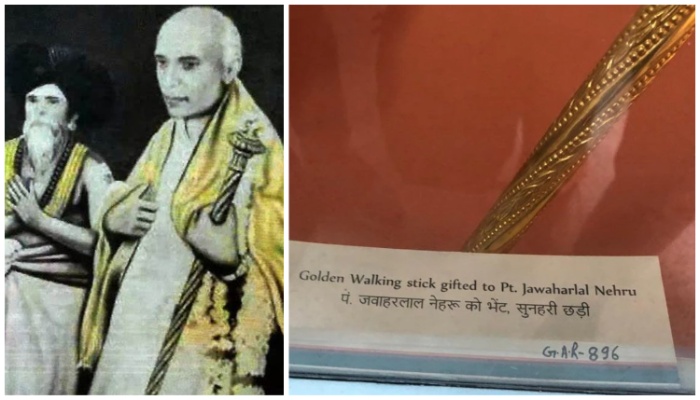
The Sengol, a testament to India’s emergence as a new, sovereign independent nation, had languished in a nondescript museum in Prayagraj, Uttar Pradesh for nearly seven decades. The display box’s description tag read, “Golden walking stick given to Pandit Jawaharlal Nehru.”

Sengol displayed in a museum in Prayagraj (Source: Twitter user Himanshu Jain)
Source: India Today

The five feet long sceptre of the ‘Sengol’ was retrieved from the Allahabad Museum after a one-minute video by Chennai-based Vummudi Bangaru Jewellers (VBJ) reportedly caught PM Narendra Modi’s attention.

“It had been lying there for decades, mislabelled as Nehru’s ‘golden walking stick’. We were not aware of the ‘sengol’ story until we read about it in a magazine in 2018. We found it in the museum in 2019 and planned a press conference with Allahabad Museum officials,” said VBJ managing director Amarendran Vummudi. “That did not happen because of the pandemic. So, we made a video. It caught the attention of PM Modi,” Amarendran said.

The ‘sengol’ had been forgotten by the Vummudi family. Bangaru Chetty, who created the ‘sengol’ out of more than 100 sovereigns of gold and charged the government roughly Rs 15,000, died. His son Vummudi Ethiraj, who was 22 at the time of independence, had vague memories of Madras Presidency VVIPs visiting their shop to inspect the ‘sengol’ before it was packed and shipped to Delhi.

“He told us they took less than a month to make it. But he did not know what it was made of or how it looked,” Amarendran added.

The jeweller’s marketing head Arun Kumar found it at the Allahabad Museum. “It was displayed along with a miniature brass cannon and a multi-component storage box within a glass box. The description tag in the display box read: ‘Golden walking stick gifted to Pandit Jawaharlal Nehru’,” he said. However, he recognised the sceptre which had Goddess Lakshmi surrounded by flowers on the orb and a Rishabha (sacred bull) atop it.

Later, when a team appointed by the PMO, comprising journalist S Gurumurthy, contacted the Vummudi group, a documentary with input from the Indira Gandhi National Centre for the Arts (IGNCA), historians, and Shaivite mutt leaders from Tamil Nadu was made by filmmaker Priyadarshan and National Award-winning production designer Sabu Cyril.

“We recreated a replica of the sengol,” Amarendran said, adding that the piece is kept in his office.

Less than a month ago, the IGNCA officials approached Vummudi Bangaru Jewellers and tasked them with creating a copy of the gold sengol (sceptre). Vummudi had to create a copy of the gold sceptre on a silver sheet this time. Later, it was gold-plated. The silver sceptre will be used for public exhibition, while the original will be retained in Parliament indefinitely.

“We were given just eight days. We had three teams of artists working day and night,” he said. The gold-plated sceptre was handed over to officials at Chennai Airport and flown in a separate seat to Delhi.

Source: Twitter

The lesser-known facts about the Chola-Inspired Sceptre

The sceptre known as ‘sengol’, derived from the Tamil word for righteousness, was received by Nehru to represent the transfer of power from the British. It was later moved to a museum in Allahabad (today’s Prayagraj) in Uttar Pradesh. For all these years, the historic sceptre was regarded as Nehru’s “golden walking stick”.

Sengol, as few people know, was the brainchild of India’s last Governor General C Rajagopalachari, whom Nehru met after Lord Mountbatten asked how India’s freedom could be symbolised. He studied multiple historic books and informed Jawaharlal Nehru about the Sengol. Rajaji relied on a Chola-era practise in which the state’s high priest would give the new king a sceptre upon assuming power.

After Nehru agreed to the suggestion, Rajaji contacted the Thiruvaduthurai Aadheenam, a 14th-century Saivite mutt in the Mayiladuthurai district town of Thiruvaduthurai. The mutt’s seer arranged for the sceptre. Prominent Chennai jeweller Vummidi Bangaru Chetty was handed over the task to create the sceptre, topped with a statue of Nandi, the bull vahana of Lord Shiva.

Source: TNIE

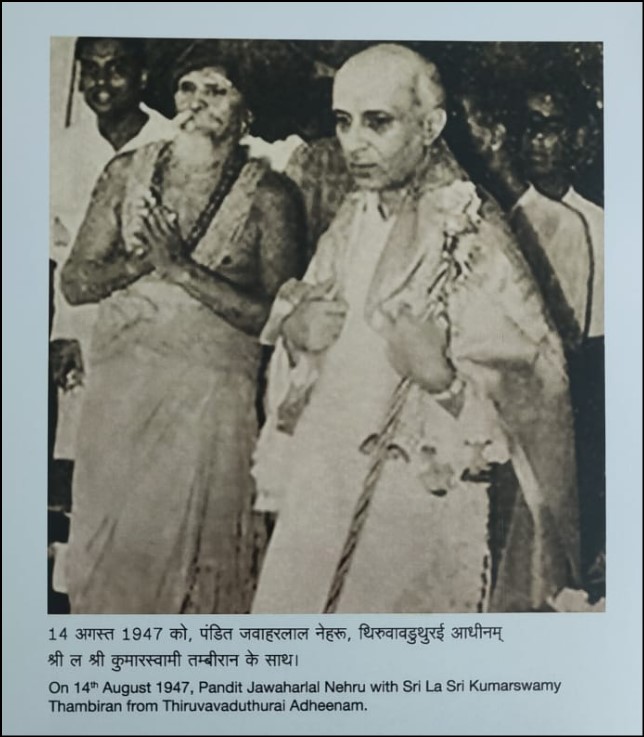
On the eve of India’s independence, the Sengol was specifically flown to Delhi, with the deputy pontiff of the mutt Kumaraswamy Thambiran Swamigal initiating the transfer of power. The Sengol was sanctified with holy water minutes before the clock struck 00:00, and verses from the Thirumurais’ Kolaru Padhigam (a collection of poetry honouring Hindu God Shiva) were chanted. Swamigal gave the sceptre to Nehru, completing the transfer of power.

This high-profile historical event was, however, kept under wraps. The historic Sengol vanished after the event because it was housed in a museum. Worse, the sacred totemic Sengol, which represents authority and justice, became known as Nehru’s “golden walking stick.” Thanks to the Nehruvian ecosystem and succeeding Congress governments, the general people eventually forgot about it, and it ended up languishing in a mundane museum as Jawaharlal Nehru’s “Golden Walking Stick” for over 7 decades.

Today, thanks to the Modi government’s efforts, this Sengol has been restored to new life and will be installed in India’s new temple of democracy, majestically near the Speaker’s chair.

More about Sengol can be read on this website.

‘False allegations’ of sexual harassment on Brij Bhushan Singh, ‘Involvement in Modi teri kabar khudegi’ slogans: Plea claims before Delhi Court

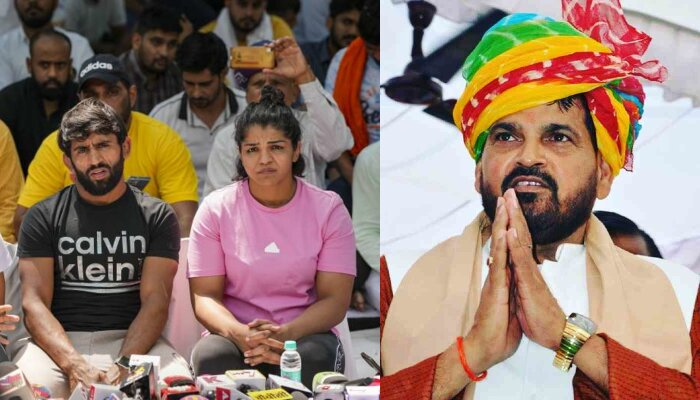
Amidst the ongoing wrestlers’ protest against Wrestling Federation of India (WFI) chief Brij Bhushan Singh, a social activist and chief of Atal Jan Shakti Party, Bam Bam Maharaj Nauhatiya has lodged a criminal complaint in a Delhi Court against wrestler Vinesh Phogat, Bajrang Punia, and Sakshi Malik for pressing “false allegations” of sexual harassment on Brij Bhushan Singh and also for involvement in delivering a hate speech against Prime Minister Narendra Modi. The matter will be heard today (May 25) by an Additional Chief Metropolitan Magistrate at Patiala House Court, Delhi. 

According to the plea filed by Bam Bam Maharaj Nauhatiya, a social activist and National Chief of the Atal Jan Shakti Party, the claims made by the accused persons against Brij Bhushan Singh are “false” and are linked in a direct or indirect way, by any “influence or personal gain.”

Nauhatiya’s complaint filed through his counsel Dr AP Singh stated that none of the accused wrestlers are physically weak to be unable to oppose the alleged offence. “The Accused persons are well-known wrestlers who also play international tournaments and any one of them is not physically weak or poor to oppose the alleged offence. So, it is hard to believe that they were harassed by a 66-year-old man—Brij Bhushan Sharan Singh,” the complaint read.

The plea further states that none of the protesting wrestlers protested or lodged a police complaint, or notified the Women Helpline or the State Women Commission, Ministry of Women Welfare, Indian Olympic Association, etc against Singh over the alleged harassment. 

The plea also argues that Brijbhushan Sharan Singh’s character had been assassinated as a result of false accusations and actions taken by the accused wrestlers at the protest site.

Furthermore, it has been alleged that the wrestlers’ protest at Jantar Mantar in New Delhi was just aimed to exert unnecessary pressure on the Police and the Court in order to obtain the desired actions.

“According to the telecast news on National news Channels, MODI TERI KABRA KUDEGI, the slogan was raised openly at the Jantar Mantar protest organised by the wrestlers, which falls under the category of Hate Speech, and it is clear that the protestors threatened to kill Narendra Modi,” the plea contended.

“Hate Speech is a crime in law and a serious offence according to the latest precedents set by the Supreme Court of India,” the petition stated.

It is pertinent to recall that on 28th April 2023, ‘Modi Teri Kabar Khudegi’ slogans were raised at the wrestlers’ protests at Jantar Mantar in Delhi. These slogans were being raised in the presence of several wrestlers including Bajrang Punia, Sakshi Malik, Vinesh Phogat, Sangeeta Phogat etc 

Rajasthan: Bhagwan Parshuram Yatra organized by Hindus in Kaman halted midway after stone pelting by people of a ‘specific community’, some detained

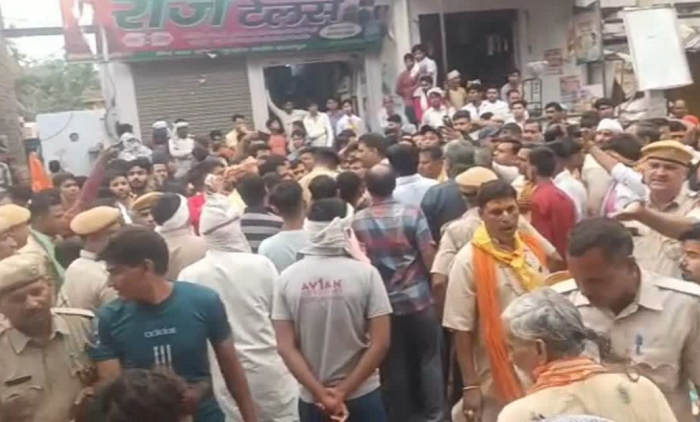
On Wednesday, Bhagwan Prshuram Yatra organized by Hindus in the Jurhera village of Kaman, Rajasthan was attacked by some persons from a specific community who pelted stones at the participants, leaving them injured.

According to an ETV Bharat report, the Yatra was organized on a massive scale on the afternoon of May 24. Amid the yatra, some of the shopkeepers from the specific community opposed the loud sound of the DJ system. The Hindu participants assured to reduce the volume of the DJ. In spite of this, the shopkeepers called some more people from their community and complained about the Yatra.

The mob belonging to the specific community then pelted stones at the Yatra and also used lathis to stop the Hindus from dancing to the DJ music. It is also alleged that a police constable named Shaheed provided the attackers with sticks, instead of trying to calm the situation.

The Hindus eventually stopped the Yatra and called the police. They also demanded strict action against the accused persons. The police took cognizance of the incident and assured the detention of the accused persons. The Yatra was then officially concluded.

Law Minister Arjun Ram Meghawal also commented on the issue and slammed the ruling party in the state for favouring and boosting the specific community for votes. He also indicated that the Congress party was torturing the Hindu society in the state of Rajasthan.

Tensions continue to prevail in the Juraher village after the incident. Additional SP Himmat Singh, DSP Pradeep Yadav, Kaman Police Station Officer Ramkrishna Yadav, Gopalgarh Police Station Officer Ramnaresh along with some other police personnel have been deployed at the spot. Reports mention that some of the people have also been taken into custody and are being interrogated in the case.

“During the Shobha Yatra, there was a dispute due to misunderstanding between the two parties. After reaching the spot, the police persuaded the people and got the Shobha Yatra completed. Some people have also been detained from the spot. Sector’s Police personnel has been posted in Jurhara town,” Pradeep Yadav, DSP Kaman confirmed.

It is also believed that the Hindu Brahmin community who had organized the Yatra held a meeting after the incident and has planned to file an official complaint against the accused. The injured persons were immediately shifted to the hospital and are attaining proper treatment.

As LIC reports 447.5% growth in Q4 consolidated PAT, read how Rahul Gandhi and ‘journalists’ had accused the Modi govt of ‘killing’ India’s largest insurer

On May 24, India’s largest life insurer LIC reported an impressive growth for the fourth quarter of Financial Year 2022-23. The Consolidated Profit After Taxes (PAT) of LIC stood at an impressive Rs 13,190.79 crores. The company has seen a 5.5 folds year-on-year rise of 447.47%. Notably, for the financial year 2021-22’s fourth quarter, LIC’s PAT was only Rs 2,409.39 crores. The company’s growth for Q4 was 107.77%.

The company earned a consolidated net premium income of Rs 1,32,233.21 crores. It has come down by 8.27% compared to Q4 of the previous year which was Rs 1,44,158.84 crores. However, compared to Q3 of FY 2022-23, the company saw a growth of 17.7%. The net premium income of the company has declined by 8.34% on a year-on-year basis but rose by 17.87% on a quarter-on-quarter basis.

On the sidelines of the impressive performance by the company, the board of directors have recommended a dividend of Rs 3 per equity share for the FY 2022-23. Chairperson of LIC Siddhartha Mohanty said, “Our results demonstrate the resilience of our business, built in every nook and corner of the country, over a period of more than six decades. Our efforts towards enhancing the share of non-par products in the overall product mix are bearing fruits.”

In FY 2021-22, the company’s profit was Rs 4,043.12 crores. It has increased to Rs 35,397.40 crores in FY 2022-23. Furthermore, the Value of New Business on the gross bases of the company has increased from Rs 9,920 crores in FY 2021-22 to Rs 11,553 crores in FY 2022-23.

Speaking on the increased profits, Mohanty said, “We are well positioned to continue our growth journey, in the service of the nation and its citizens. The regulatory initiatives towards Insurance for All by 2047 will present opportunities to grow for the sector and we intend to participate in that growth. As we move forward to grow our business further, we will endeavour to create superior value for all our stakeholders. Finally, we thank all our policyholders, agents, employees and shareholders for maintaining their faith in us.”

The current price of LIC shares on BSE is Rs 607.75 per share.

The share price dropped after the Hindenburg report

It is pertinent to note that LIC’s price has seen ups and down since it was listed on May 20, 2022. The base price started at Rs 826.15 and plunged to its lowest at Rs 534.35 on March 31, 2023. It reached its lowest point before that in 2022 on October 21, 2022, at Rs 589.20. Since March 31 this year, the price has been rising persistently.

On January 24, 2023, Hindenburg Research, a short-selling company that pose as a whistleblower to gain profits, published a report against Adani Group alleging the company was manipulating its share prices. As LIC holds a substantial amount of shares of Adani Group in its portfolio, the Indian public sector insurer faced a direct impact. From Rs 712.80 per share, the price drastically dropped and kept touching lower points till March 31 this year.

On May 18, it was reported that there was a 35% drop in the market capitalisation of LIC. In May 2022, it was Rs 5.48 crore which dropped to Rs 3.59 crore in May 2023. Congress leader and disqualified MP Rahul Gandhi used the opportunity to gain some brownie points.

Opposition, journalists and liberals attack Modi govt over alleged LIC losses

For Congress Party, Rahul Gandhi became the frontrunner to attack the Modi government over LIC market share and its holdings in Adani Group since the Hindenburg report came. Other opposition leaders, journalists and liberals joined the crusade.

In March 2023, Rahul Gandhi released an influencer-style video claiming that the investors were losing around Rs 1,000 crore every day as LIC had invested in Adani Group shares. He questioned who pressured LIC-SBI to invest in the Adani Group.

In the same month, Congress coined the term “Modani” to target the Modi government and claimed that the money from LIC, SBI and EPFO was transferred to the Adani Group.

In January 2023, Congress President Mallikarjun Kharge targeted the Modi government by stating LIC shares plunged after the Hindenburg report and the investors lost Rs 22,442 crores in two days. He said, “Modi Govt changes its name to LOOT INVESTMENT for CRONIES!”

Congress Secretary Randeep Surjewala said, “LIC is public money! Post Hindenburg Report, the value of LIC investment in Adani Group shares have fallen from ₹77,000 Crore to ₹53,000 crores — loss of ₹23,500 crores.”

In February 2023, AIMIM leader Asaduddin Owaisi said, “Poora kuppa kar diye” as we say in Hyderabad. LIC is putting the common man’s savings at risk; all for the sake of one man’s friendship. @PMOIndia’s motto seems to be “profit before people”.”

In a letter to PM, AAP leader Sanjay Singh claimed, “Adani’s mountain of lies and fraud is crumbling like a pack of cards. Crores of investors in the country are worried. Those who have invested in LIC, and SBI because both of them have given loans worth crores of rupees. The Prime Minister should come forward and address the issue.”

In April, AAP targeted the government by saying LIC lost Rs 60,000 crores by investing in Adani Group companies. Singh gave notice to Rajya Sabha for discussion claiming crores of investors were lost as LIC and SBI invested in Adani group.

BRS leader Prof Dasoju Srravan said, “Just for the sake of one crony capitalist (#Adani), #Modi Govt is destroying #LIC affecting crores of its policyholders.. How come such a steep fall of market value from Rs 5.48 Lakh to Rs 3.59 Lakh Cr wiping away an amount of Rs 1.9 Lakh Cr within an year?” (sic)

Journalist Ravish Kumar questioned if LIC was safe and insinuated as if the investors’ money would be lost. Interestingly, LIC’s exposure in the Adani Group is 0.975 per cent at book value, as per The Hindu Businessline report from March 2023.

The Hindenburg report definitely affected the share price of LIC. However, its price was already fluctuating a lot since it was issued in May 2023. The company’s share is recovering since FY 2023-24 started. Since LIC release its Q4 report, the price has seen a jump of 2.06% by the time this report was published.