Home Blog Page 2427

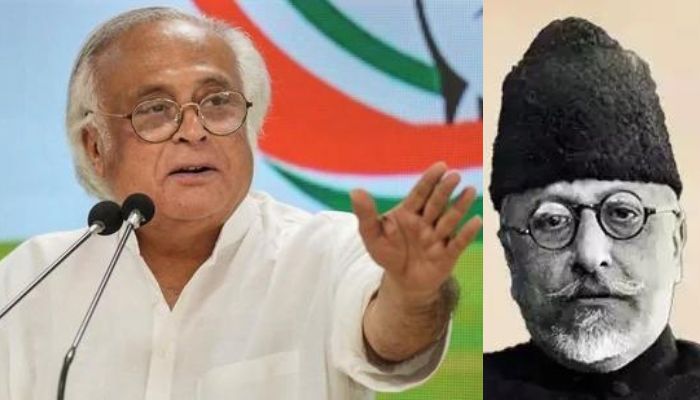
Jairam Ramesh apologises to Muslims after outrage over omission of Maulana Abul Kalam Azad from Congress ad

Senior Congress leader Jairam Ramesh apologised after Muslims outraged over the exclusion of Maulana Abul Kalam Azad from party advertisements.

On Sunday, 26th February 2023, the Congress party left out Maulana Abul Kalam Azad from one of its advertisements published during its 85th plenary meeting in Raipur of Chhattisgarh. The advertisement was about well-known leaders of party.

After Muslims lambasted Congress for missing out one of their co-religionists, Jairam Ramesh apologized for excluding Maulana Abul Kalam Azad. It is notable that independent India’s first education minister Maulana Abul Kalam Azad is known for distorting history to cover up the crimes of the Mughals.

Jairam Ramesh tweeted, “Today an ad released by INC did not carry a photograph of Maulana Azad. It was an inexcusable slip-up. Responsibility for it is being fixed & action will be taken. Meanwhile, this is a most sincere apology from us. He will always remain an iconic & inspiring figure for us & India.”

The advertisement published by the Congress party included pictures of its past party presidents and former Prime Ministers. It also had images of Sonia Gandhi, Rahul Gandhi, and current party president Mallikarjun Kharge.
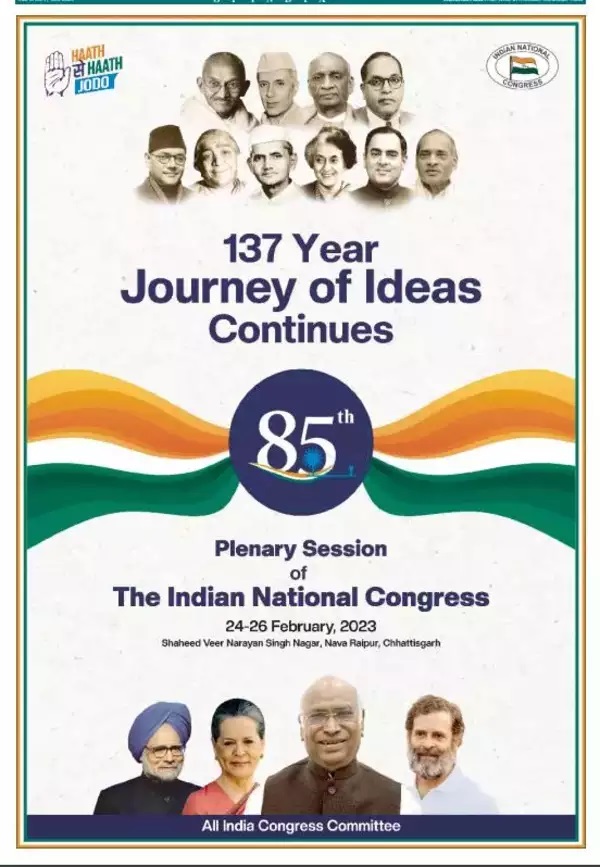
The advertisement was published by the Congress party during its plenary session. Image Source: Times of India

Several Muslim leaders from Congress showcased their displeasure over the advertisement. Mumbai Congress general secretary Asif Farooqui said, “This is an unpardonable mistake on the part of those who approved the ad for an important occasion in the 137-year history of the Congress. I hope this is not true. but people are seeing it as part of the party’s strategy to stay away from Muslims. including Muslim freedom fighters.”

Another Congress leader MLA Amin Patel said, “After I received many messages flagging the mistake, I shared them with some senior leaders, including Jairam Ramesh. He apologized on behalf of the party. I am glad he has said action will be taken and hopefully this slipup is not repeated in the future.”

Maulana Abul Kalam Azad exalted Mughals and attempted to whitewash their sins while obfuscating Hindu history

From 1947 till his death in 1958, Maulana Abul Kalam Azad was India’s Education Minister. Today (November 11), the entire nation observes National Education Day in his honor and discusses how he was instrumental in the development of independent India’s education system, but no one seems to discuss how he began the process of negationism of history to cover up misdeeds of Islamic tyrants.

He served as Education Minister for over 11 years. During that period, he recruited individuals who were either member of the same community or adhered to the Leftist ideology. Humayun Kabir, MC Chagla, and Fakhruddin Ali Ahmed were among them. All of them combined to present the Mughals as “messiahs of the oppressed Hindu masses” and in the worst case as ‘benevolent dictators.’

A report by Freedomfirst.in published in 2014 read, “As Union Education Minister for eight years, Azad saw to it that the history of India presented in the textbooks was negationist; that is, cover up deeds perpetrated by the Muslim invaders and settlers and converts – loot, slaughter, destruction of temples, Jazia tax, forced conversions, forcing widows of dead soldiers into harems, sale of captured children in the slave bazaars of Baghdad, burning of libraries and appropriation of defeated peoples’ properties to constitute Wakfs for the welfare of  Muslims, etc.”

Azad’s ideas demonstrated unequivocally that his allegiances were always with Islam and the true ramifications of his ideology—agreed to and supported by Nehru—reflected in our history textbooks where crimes of Islamic invaders were downplayed while Hinduism vilified
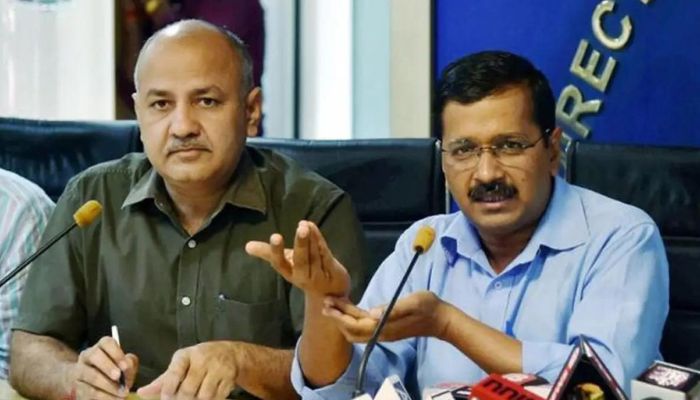
‘CBI officers were against Manish’s arrest’: Arvind Kejriwal claims they had ‘huge respect’ for him and had ‘no evidence’

0

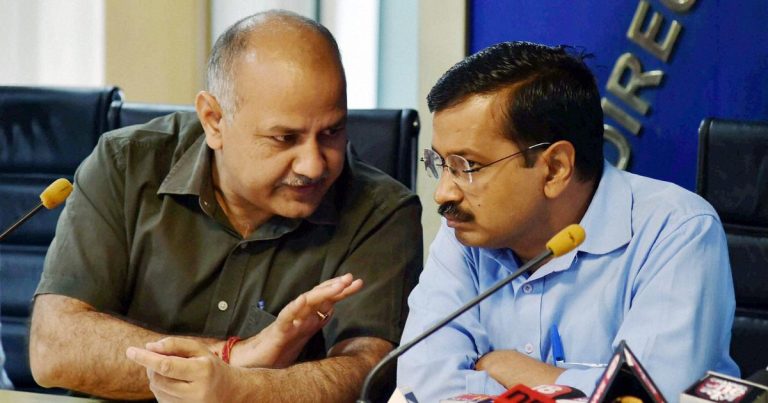
In a stunning claim in connection with the arrest of Delhi Deputy Chief Minister Manish Sisodia, Chief Minister Arvind Kejriwal on Monday claimed that most CBI officers were “against” the former’s arrest due to lack of evidence, but were compelled to do so owing to the “pressure” borne on them by their “political masters”. 

His remark comes a day after Sisodia was arrested by the premier central probe agency in connection with the Delhi liquor policy scam case. Sisodia, who also handles the Finance portfolio, was arrested after eight hours of questioning. 

“I am told that most CBI officers were against Manish’s arrest. All of them have huge respect for him and there is no evidence against him. But the political pressure to arrest him was so high that they had to obey their political masters,” Kejriwal tweeted. 

Meanwhile, the CBI on Sunday released a statement on Sisodia’s arrests, claiming he was giving evasive replies and wasn’t cooperating in the ongoing investigation in the liquor scam case. 

The agency further said Sisodia had been summoned earlier on February 19 in connection with the ongoing probe, but had sought a week’s time citing the Delhi Budget. 

“The Deputy CM was issued a notice under section 41A of CrPC for attending the investigation on February 19, 2023. However, he sought time of one week citing his preoccupation,” the CBI stated. 

Accepting his request, he was issued a notice — u/s 41A CrPC — to report to the agency on February 26 and answer questions he ‘evaded’ during his examination on October 17, 2022, and further questions relating to his ‘incriminating role’ based on evidence collected during investigation of the case. 

“However, he gave evasive replies and did not co-operate the investigation despite being confronted with evidence to the contrary. Therefore, he has been arrested,” the statement read. 

“The arrested accused will be produced before the designated court in Delhi,” it added further. 

Shortly before arriving at the CBI office for questioning, the deputy chief minister had said false cases were being lodged against leaders of the party, as Prime Minister Narendra Modi was “afraid” of CM Kejriwal.

(This news report is published from a syndicated feed. Except for the headline, the content has not been written or edited by OpIndia staff)

After Imtiaz Alam from Hizbul, former commander of terrorist group Al Badr shot dead in Pakistan: Read about the terror group and their jihad against India

0

On Sunday, February 26, unidentified men killed Syed Khalid Raza, a former commander of the Pakistan-based terrorist outfit Al Badr. The dreaded terrorist was shot outside his residence in Gulistan-e-Johar Block 7 area of Karachi, Pakistan.

For almost 8 years in the 1990s, Syed Khalid Raza was the commander of the Al-Badr terror group in Jammu and Kashmir.

According to Jamaat e Islami President Karachi, the deceased was also associated with JeI Talba Wing.

Wanted Hizbul terrorist Bashir Ahmad Peer alias Imtiaz Alam shot dead by unknown assailants in Rawalpindi, Pakistan

The dreaded terrorist’s death came a week after Imtiaz Alam alias Bashir Ahmed Peer, one of India’s most wanted terrorists, was killed in similar circumstances in Rawalpindi, Pakistan. Imtiaz was a founding member of the outlawed terror organization Hizbul Mujahideen, serving as its third commander. On Monday (February 20, 2023), he was killed in front of a shop by two unidentified assailants.

Pakistan-based terrorist organization Al Badr

Pakistan-based Al-Badr terrorist outfit, a designated Foreign Terrorist Organization by the United States, was formed in June 1998 to strengthen the ‘Kashmiri freedom struggle’ and ‘liberate’ the Indian State of Jammu and Kashmir and merge it with Pakistan.

It is one of several terrorist offshoots of the Jamaat-e-Islami and has often worked in tandem with the notorious Hizb-ul-Mujahideen (HM).

Al Badr’s origins may be traced back to 1971 when Pakistan-sponsored Islamic terrorists carried out a pogrom against the Bengali-speaking populace in East Pakistan (now Bangladesh). Subsequently, Al Badr became a part of the Hizb-i-Islami, an Islamic terrorist organization based in Afghanistan, led by Gulbuddin Hekmatyar. It first appeared in Kashmir in 1990, when it launched a jihad against India under the banner of the Hizb-ul-Mujahideen. Under the aegis of Pakistan’s Inter-Services Intelligence (ISI), the HM was formed in 1990 as an armed branch of the Jamaat-e-Islami. Nevertheless, in 1998, Al Badr developed differences with the HM and broke away to form an independent separatist organization.

In places where it operated, Al Badr also began imposing its fanatical interpretations of Islamic law. This had a terrible social impact, particularly on women. For example, in a major terrorist incident in 2002, three ladies were killed in the Jammu region. In 2003, the organization warned women in rural regions under its control, of the risks of not following Islamic precepts (wearing veils, giving up education at age 14, and so on). It also criticized the India-Pakistan truce in 2003, stating that Pakistan should concentrate on the jihad against India rather than “spending time pursuing a diplomatic settlement.”

Modus Operandi

To further its agenda, the terror organization resorted to violence and attacked government officials, security forces, and even civilians. It wreaked havoc and disrupted peace using weapons supplied by Pakistan and other terrorist organizations. Other than the LeT and the JeM, the Al Badr is the only group that has incorporated suicide (Fidayeen) attacks into its strategy. It disseminateed propaganda through its Urdu journal ‘Al Badr,’ which was founded in Pakistan in 1999.

Source of funding for Al Badr

The ISI, along with the Jamaat-e-Islami, have long been significant supporters of the organization, though relations with the Jamaat have been strained. It openly solicited funds in Pakistan for its operations, with almost no resistance from the authorities.

In 2012, for example, it held a two-day public rally in Rawalpindi to collect funds. Yet, it is claimed that the organization has been suffering from a lack of funding in recent years, forcing it to close multiple training camps.

Upon its formation, the group separated itself from both the HM and the Jamaat, operating as an autonomous entity. It continues to get funding from Pakistan’s ISI for its terrorist operations in the Kashmir Valley while marginalizing local separatist organizations. As part of this agenda, it carried out strikes on the Indian military, government facilities, and personnel.

Notably, Al Badr fought on Pakistan’s side against Indian forces during the 1999 Kargil War. According to reports, the group’s ‘Chief Commander,’ Bakht Zameen, was directing militant operations from his headquarters in Skardu near the Ladakh border, where its terrorists crossed the Line of Control (LoC) to target Indian troops.

In 2000, the terrorist organization increased its terrorist activities in the Kashmir Valley and started using suicide attack tactics to wage jihad in the valley. Notably, Al Badr is the only terrorist organization in the Valley that employs such techniques, aside from the Lashkar-e-Taiba and the Jaish-e-Mohammed.

The terror organization seems to be undergoing a massive revival on the terror map of Jammu and Kashmir. Though a significant number of terror attacks have been reported, the number of counter-attacks is also on the rise. The Indian Army is working painstakingly along with the intelligence agencies, trying to stifle cross-border terrorism.

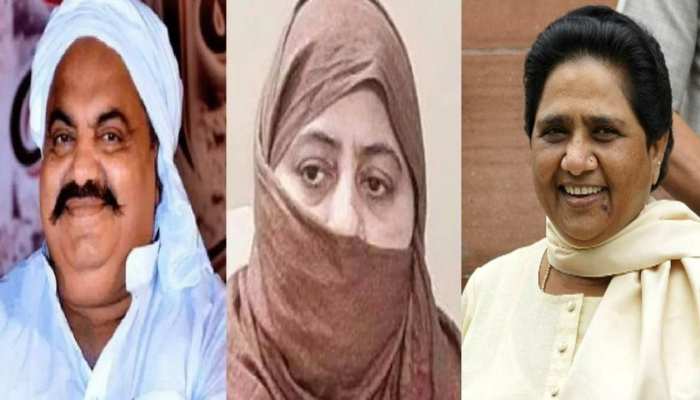
‘Atiq Ahmed a product of Samajwadi Party’: Mayawati says his wife will be expelled from the BSP if found guilty in Umesh Pal murder case

0

Reacting to the killing of Umesh Pal in the 2005 BSP MLA Raju Pal murder case, BSP party supremo Mayawati said the wife of Mafia Atiq Ahmed would be expelled from the party if she is found guilty of the murder. The former UP CM also called Atiq Ahmed a product of the Samajwadi Party.

The Prayagraj Police have emphasized Atiq Ahmed’s association with the homicide of Umesh Pal, given that his two sons were apprehended in connection with the case. This occurred subsequent to the shooting of Umesh Pal on Friday evening by unidentified attackers at his home in Prayagraj, Uttar Pradesh.

In a string of tweets, Mayawati said her party has taken note of the reports of the FIR filed against the former MP and five-times, Shaista Parveen, the wife of the mafia-turned-politician, and their two sons in the murder of Umesh Pal and his attacker.

“Information has also been published about the registration of an FIR against Atiq Ahmed’s son and his wife in connection with the murder of advocate Umesh Pal and his gunner, an important witness in Raju Pal’s murder case that took place years ago in Prayagraj,” Mayawati tweeted.

Promising the expulsion of Parveen on proven guilty, Mayawati tweeted, “Taking serious cognizance of this, BSP has decided that Mrs Shaista Parveen, wife of Atiq Ahmed, will be expelled from the party as soon as they are proven guilty in the ongoing investigation of this matter.

“It is a well-known fact that Atiq Ahmed is a Samajwadi Party product and he was MP and MLA from that party. Also, Raju Pal’s wife too has switched over from the BSP to the SP, the party she had been calling the main culprit,” she further tweeted.

The BSP chief further claimed that BSP neither inflicts punishment for crimes on innocent people nor encourages criminal elements based on caste and religion.

Umesh Pal murder case, police identify Atiq Ahmed’s son as one of the accused

Earlier yesterday, Uttar Pradesh police gained major success in the investigation of the Umesh Pal murder case, as they identified four attackers who killed Umesh Pal, the key witness in the 2005 murder case of BSP MLA Raju Pal on Friday, after analyzing the CCTV footage of the incident.

Among the four assailants were mafia and former MP Atiq Ahmed’s son Asad Ahmed, Atiq Ahmed’s close aide Guddu Muslim, Arman, and Mohammed Ghulam. ADG Law and Order Prashant Kumar and ADG STF Amrit Abhijat have camped in Prayagraj. It is being said that seven people were involved in the attack on Umesh Pal, out of which four have been identified so far. Out of the four identified attackers, three have been arrested.

This comes after  Umesh Pal, the key witness in the 2005 murder case of BSP MLA Raju Pal, was fatally shot on Friday evening at his home in Prayagraj. Raju Pal had been elected to the Allahabad (West) assembly seat in his first electoral campaign, defeating Khalid Azim, the younger brother of former MP Atiq Ahmed. Months later, Raju Pal was murdered. The prime suspects in the Raju Pal murder case are Atiq Ahmed, his brother, and former MLA Ashraf. All three accused individuals are currently lodged in jail.

After analyzing the CCTV footage, the police have reported that the attackers arrived at the scene in both a car and a motorcycle. The police have also stated that the assailants were pursuing Umesh Pal’s vehicle and had crude explosive devices in their possession. In one of the video clips obtained, an individual can be seen removing a bomb from their bag and throwing it at Umesh Pal. The police said additional men used improvised explosive devices during the attack, resulting in a cloud of smoke and inciting panic and disorder. Umesh Pal was quickly transported to Swaroop Rani Nehru Hospital for treatment, but unfortunately, he passed away from his injuries.

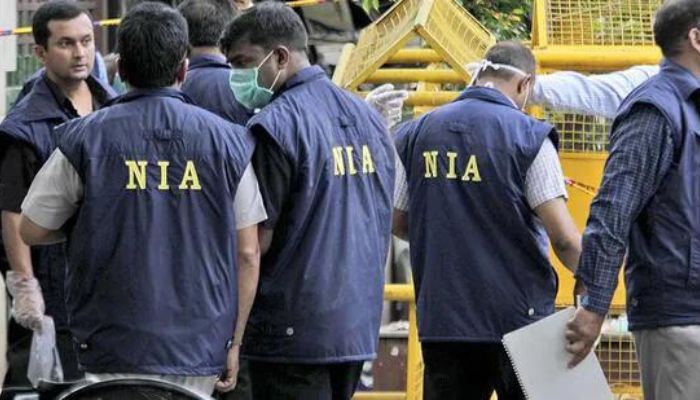
NIA issues alert to Mumbai Police regarding movement of suspicious person Sarfaraz Memon who is ‘dangerous’ to India

0

The National Investigation Agency (NIA) has alerted Mumbai police regarding the movement of a suspicious person in the capital city of Maharashtra here, Mumbai police sources said. 

The NIA apprised the Mumbai Police through an email and stated that a person identified as one Sarfaraz Memon has reached the city and asked the police to be alert. The NIA email referred to Memon as “dangerous” to India. According to Mumbai Police sources, the NIA has informed that Memon, a resident of Madhya Pradesh has taken training in China, Hong Kong and Pakistan. 

NIA has sent the person’s Aadhaar card, driving license and passport over email to Mumbai Police. The investigating agency has been alerted since the receipt of this email, the source added. 

The Mumbai Police have also informed the Indore Police about the matter. 

Earlier this month the NIA received a mail from an unidentified individual claiming to be a Talibani member threatening to carry out a terror attack in Mumbai, police sources had said. 

According to the sources, the NIA apprised the Mumbai Police about the development following which various cities of Maharashtra were put on alert. 

Also, last month the Dhirubhai Ambani International School in Mumbai received a threat call where an unidentified caller threatened to blow up the school. In October last year, a threat call was received at the HN Reliance Foundation Hospital during which the unknown caller threatened to blow up the hospital and issued death threats to the Ambani family. 

(This news report is published from a syndicated feed. Except for the headline, the content has not been written or edited by OpIndia staff)

As AAP protests against arrest of Manish Sisodia in Delhi liquor scam, here are the times when Kejriwal himself wanted strong action against the corrupt

On Sunday (February 26), the Central Bureau of Investigation (CBI) arrested Delhi Deputy CM Manish Sisodia in connection with the liquor policy scam case. Sisodia was grilled by the central agency for several hours prior to his arrest.

Even before Sisodia appeared before the CBI, Aam Aadmi Party (AAP) workers created a ruckus outside the office of the central agency. Some of them were detained for creating chaos in the garb of ‘protests’.

Other heavyweight leaders in the party wrote ‘premature obituaries’, cast aspersions on the integrity of the CBI, and tried to deviate public discourse from the matter at hand to Sisodia’s credentials as Education Minister.

Manish Sisodia reportedly waived off ₹144.36 crores on the license fee, to be paid by the private liquor vendors, under the garb of the Coronavirus pandemic. He also allegedly caused a loss to the Excise Department and benefitted liquor licensees by waiving the import pass fee of ₹50 per beer case.

This, however, did not stop Arvind Kejriwal from crying foul over the interrogation and subsequent arrest of fellow party leader and his deputy, Manish Sisodia. It must be mentioned that not long ago, the AAP supremo was out with all guns blazing against corruption and had tried to promote himself as an anti-corruption crusader.

In October 2012, Arvind Kejriwal called upon the people of India to overthrow the ‘corrupt regime’ of the Congress-led UPA government.

Two years later, in February 2014, Kejriwal even announced that he is willing to sacrifice his Chief Ministership 100 times to remove corruption from the country.

A year later, he was seen boasting about dismissing his own Minister for the latter’s involvement in corrupt activities. “I am the only CM who dismissed, on my own, a minister n a senior officer on charges of corruption and handed their cases to CBI,” Arvind Kejriwal had tweeted.

From time to time, the Delhi CM has reiterated his stance of ‘zero tolerance’ against corruption.

In May 2016, he said that he is ready to relinquish his job as Delhi CM and join CBI instead, provided it became an independent entity. “Will send corrupt to jail n get India rid of corruption,” he had stated.

Arvind Kejriwal, who came to power by posing as an anti-corruption crusader, had stated in 2018 that he would take exemplary action against those guilty of corruption. “No one will be spared,” he had emphasized.

Kejriwal attributed Delhi’s development to a lack of corruption

In February 2022, Arvind Kejriwal claimed that the infrastructure development in the National Capital under the AAP government was due to a lack of corruption.

While blaming the Sheila Dixit government, he had said, “From officer level to employees, and from sentries to ministers, everyone was involved in corruption. As a result, even low-cost projects became prohibitively expensive.”

“The government has thus saved crores of rupees in many projects, and with this money, basic amenities such as free electricity, water, education, and healthcare are being provided to the people of Delhi,” Kejriwal went on to browbeat.

Ahead of the Punjab elections, he even claimed that corruption had been eradicated altogether from Delhi. Arvind Kejriwal said, “It’s been 75 years since we have gained independence but we still have to pay bribes. All parties have indulged in corruption. Aam Aadmi Party is the first party to run an honest government.”

“Kejriwal and his ministers, Mann, and his ministers are not corrupt. We don’t want ‘hafta’ (protection money). Just like we eradicated corruption in Delhi, we will end it in Punjab as well,” he gloated.

Delhi CM on the arrest of Dr Vijay Singla

In May last year, the AAP-led-Punjab government sacked its Health Minister, Dr Vijay Singla, following ‘concrete proofs’ of corruption. It had come to light that Dr Singla was taking a 1% commission in all tenders floated by the health & family welfare department.

After the AAP leader was removed as Minister and arrested, Arvind Kejriwal hailed Punjab CM Bhagwant Mann for taking action against one of their own. “Corruption is betrayal to the country. We will handle everything but not betrayal to India,” he had said.

Arvind Kejriwal to MCD councilors on corruption

Following the victory of the Aam Aadmi Party at the Municipal Corporation of Delhi (MCD) polls, Arvind Kejriwal told the newly elected councillors that they should refrain from corrupt practices at all costs.

“Don’t get greedy otherwise this 5-year term will be your last opportunity in public life. If you work honestly, people will stand with you. People are sick and tired of corruption in MCD,” he had said.

“This time, we have fought against the corruption by the BJP. It should not happen that BJP will fight an election against our corruption next time…We have to work together against corruption, garbage, and social ills,” Kejriwal stated in December 2022.

However, when it came to one of his close aides, the Delhi CM deserted his anti-corruption stance and resorted to blaming institutions, questioning the motives of the Centre instead of cooperation with the investigating authorities in unearthing the corruption.

Arvind Kejriwal, who mouthed platitudes over the years about making India corruption free, decided to retract his own rules when it came to Manish Sisodia.

Punjab police start learning gatka, the Sikh martial arts skills from nihangs after violence from Amritpal Singh’s followers

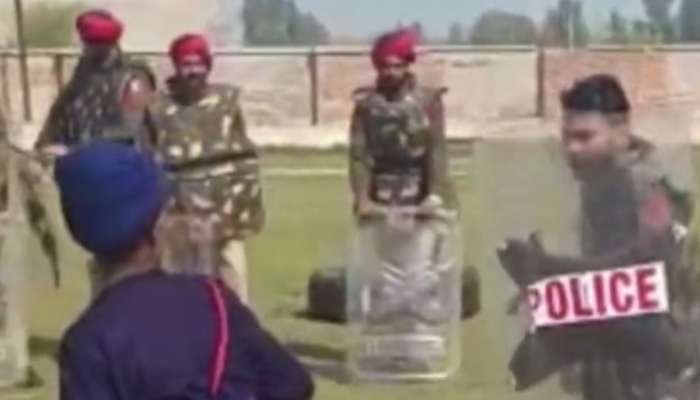
Days after a clash between the supporters of Khalistani preacher Amritpal Singh and the police at Punjab’s Ajnala police station, the Muktsar police Sunday, February 26, started learning ‘gatka’ (Sikh martial arts skills) from ‘nihangs’ at the district Police Lines here.

A video has been going viral on social media wherein a Punjab police official is seen learning the form of martial art from a Nihang Sikh.

Speaking to The Tribune, Avtar Singh, DSP (Headquarters), Muktsar, said, “Two ‘nihangs’ were called to the district Police Lines to show their ‘gatka’ skills to the quick reaction team (QRT) and armed police. Nearly 250 policemen participated in this anti-riot drill, which will continue in future as well.”

Meanwhile, the news agency also quoted a retired police officer as saying, “It is good to hear that the police are learning ‘gatka’ skills in Muktsar. It will make them active and prepare to face any untoward situation in the field. Such drills are the need of the hour. Other districts too should follow this practice.”

Gatka is a traditional martial art discipline associated with the Sikh gurus. It instills sword and stick fighting abilities as well as self-control. Gatka is thought to have started when the 6th Sikh Guru Hargobind used ‘Kirpan’ for self-defense during the Mughal rule. It is a stick fighting style involving two or more participants which is a milder form of the more lethal Shastar Vidya. In Gatka, the sharp swords of Shastar Vidya have been replaced with wooden sticks (soti) and shields (farri). The weapons were made mandatory for everyone to employ for self-defense by the 10th Guru Gobind Singh. Gatka was earlier confined to gurudwaras, nagar kirtans and akharas, but now it finds presence in the sports category after the formation of the Gatka Federation of India (GFI) in 2008.

The Ajnala incident

In the aftermath of the Ajnala incident on February 24, where frenzied adherents of radical preacher Amritpal Singh stormed over barricades and attacked the Ajnala police station, the Punjab police have considered adopting this traditional technique. Police on duty had to defend themselves against attacks from Amritpal Singh’s extremist supporters, who were armed with lathis, swords, and even weapons.

The police were quick to give in and release Singh’s aide, Lovepreet Toofan, even though he was arrested a few days earlier on February 18 in connection to a kidnapping and assault case.

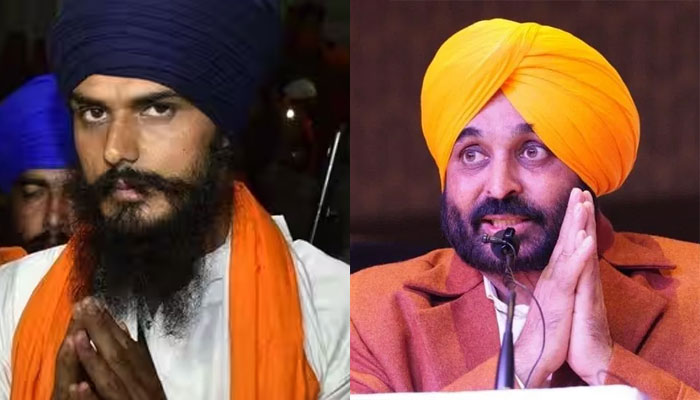
‘Do you consider 1,000 people, Punjab?’ CM Bhagwant Mann waters down calls for Khalistan, reassures law & order even as Amritpal Singh held state hostage

On February 26, Chief Minister of Punjab Bhagwant Mann claimed the law and order situation in the state was under control. He further added that the state Police are capable of controlling any anti-social elements. Speaking to the media, CM Mann criticised Amritpal Singh and his followers for using Shri Guru Granth Sahib as a shield during a protest outside Ajnala Police Station.

He said Amritpal Singh is being funded by Pakistan to destabilise Punjab and assured the state’s people are against the calls for Khalistan. However, the reports coming from Punjab and the way Amritpal Singh is rising to fame are not in sync with the statements of the Chief Minister.

While CM Mann has repeatedly claimed that law and order was under control in the state of Punjab, in reality, the state has been pushed into lawlessness ever since AAP came to power. Even recently, as Punjab was being held hostage by Khalistani Amritpal Singh, Mann along with Arvind Kejriwal was in Mumbai discussing politics.

KPS Gill in 2017 had sounded an alarm, saying that Arvind Kejriwal and AAP were espousing radical elements. IPS Kanwar Pal Singh Gill who was responsible for quelling the spread of separatism in Punjab had slammed AAP for providing a platform to the ‘radical Sikh diaspora’ which aimed to create a base to operate.  In an interview with The Indian Express in 2017, KPS Gill had called the 2017 Maur Mandi blasts ahead of assembly polls “very very serious” and that the Aam Aadmi Party is “not aware of what they are doing.”

KPG Gill had underscored that the Khalistan supporters abroad were looking for a window of opportunity to return to Punjab and work on their separatist designs, however, over the years they were not able to do so but with the presence of Aam Aadmi Party in Punjab, that window has opened leading to an influx of them from foreign countries. 

“Now with Aam Aadmi Party, there is an influx of them from foreign countries. They think this is the opportunity which is very good for them and they would be able to create a big base from which to operate”, he said. 

Gill also asserted that AAP has ‘unwittingly’ provided a platform to radical NRIs who have a sole agenda of spreading terrorism in the state. 

Funding from Pakistan

In his statement, CM Mann claimed that the likes of Amritpal Singh are getting funding from Pakistan and other countries intending to destabilise the state. He said Punjab has seen over a decade of insurgency, and the state police can tackle such situations. CM Mann did not reveal if the state has any concrete plan to tackle the rise of Khalistani elements. Notably, Mann, in a press conference in Gujarat when he gave the statement.

Mann said Rajasthan shares a larger border with Pakistan, but Punjab’s disturbance is being created. “Why do drones land in Punjab and not in Rajasthan? Because their masters are sitting there, they want to disturb Punjab,” he added.

‘Do you consider 1,000 people, Punjab?’

When asked about the calls for Khalistan, a sovereign state for Sikhs, he claimed that only a handful of people in the state are raising their voices for Khalistan. He asked, “Do you think 1,000 people (who have been seen shouting pro-Khalistan slogans) represent entire Punjab? You come to Punjab and see who are all shouting such slogans.”

‘Not Punjab’s Waris’

Speaking about the violence outside Ajnala Police Station, Mann criticised Amritpal Singh and his followers for using Shri Guru Granth Sahib as a shield. He termed it a “minor” incident and watered down the threats of violence issued by Amritpal Singh. He said, “This is khayali pulao (daydreaming). Punjab has seen such dark days in the past. The Punjab Police can handle them, and we will never allow anyone to vitiate the peaceful atmosphere.” He added, “Such people cannot be Punjab’s waris”.

While Punjab CM, some reporters and so-called experts claim it is just a ‘law and order’ problem in the state, the reality is far grimmer. Notably, it has been reported that following the violent incident at Ajnala Police Station, Amritpal Singh and his followers visited Golden Temple in Amritsar.

Thousands of people flooded the premises of the holy shrine just to get a glimpse of the rising pro-Khalistani leader. Amritpal Singh has extended support to different sections that call for Khalistan, including the terrorist organisation Sikhs For Justice founded by Gurpatwant Singh Pannu who is currently running Referendum 2020, a so-called voting demanding a separate country for Sikhs.

Furthermore, when we compare how Bhindranwale gained popularity in the late 1980s, it is similar to the methods being adopted by Amritpal Singh. From local panchayats and courts based on Sikh teachings to resolve problems to doctrines against “social evils” to save Sikhi, Amritpal is doing everything that Bhindranwale did in the late 1980s to establish confidence among the masses.

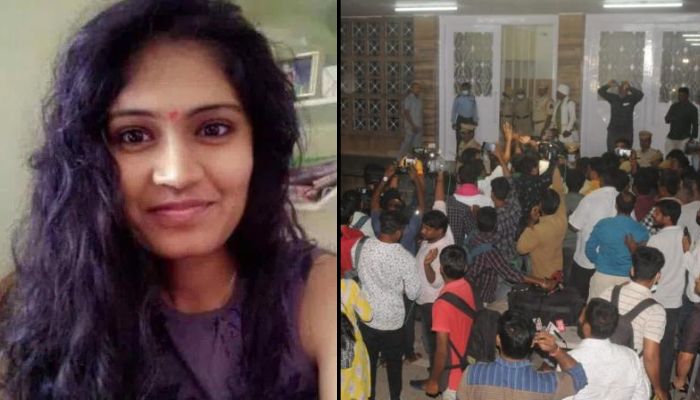
Junior anesthesiologist Dr Preethi, who attempted suicide after being harassed by Dr Saif, passes away

Days after Dr Preethi Dharavath attempted suicide following harassment by her senior Dr Saif, the junior anesthesiologist breathed her last on Sunday (February 26).

A post-graduate student of Kaktiya Medical College in Warangal, Dr Preethi reportedly fought for her life for close to 85 hours. She was undergoing treatment at Nizam’s Institute of Medical Sciences (NIMS).

In a statement released by NIMS Medical Superintendent Dr Satyanarayana, he said, “Despite continuous efforts by a multidisciplinary team of specialist doctors, Dr Preethi could not be saved and was declared dead on February 26, 2023, at 9.10 pm.”

The news of Dr Preethi’s death led to mild tension at the hospital. Some groups had gathered outside the hospital premises to demand that the State government provide ex gratia to her family. A large contingent of police was deployed to prevent any law and order situation.

Reportedly, the family members of the junior anesthesiologist refused to allow doctors to shift her body from NIMS to Gandhi Hospital for a post-mortem examination.

“We want to know what has happened till now. The details of the treatment provided to my sister and also an assurance on the action against Saif,” the deceased’s brother, Vamshi Prudhvi, had demanded.

Meanwhile, the Panchayat Raj Minister, Errabelli Dayakar Rao, announced an ex gratia of Rs 10 lakh for the medico’s family on behalf of the State government.

He also stated that the government would investigate the incident to prevent such incidents from recurring and would take strict action against those responsible for her death.

The Background of the Case

On February 24 this year, the Telangana Police arrested Dr. MA Saif, a second-year MD student at Kakatiya Medical College in Warangal district in connection with the suicide attempt by Dr. Preethi, his junior at college.

Earlier on February 22, Dr Preethi was discovered unresponsive in the MGM Hospital staff room while on duty. She is said to have attempted suicide by injecting anaesthesia drugs due to Dr. Saif, who is accused of harassing Preethi and forcing her to try ending her life.

The Telangana police have cited ragging-related laws and the SC/ST (Prevention of Atrocities) Act in addition to charges of abetment to suicide against the accused.

After examining Preethi and Saif’s cell phones, the police concluded that Preethi had been subjected to harassment. Commissioner A V Ranganath said that police had mostly relied on discussions between the two and their group chats, as well as personal chats with other classmates.

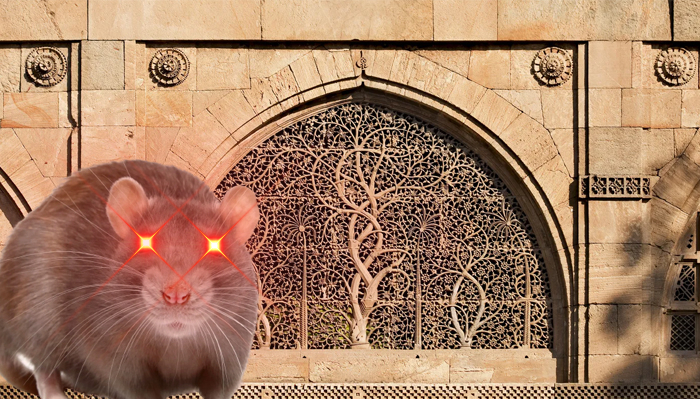
Ahmedabad: Cat-sized rats weaken the foundation of Sidi Saiyyed Jali mosque

The foundation of the historic Sidi Saiyyed Jali mosque in Ahmedabad is rotting, thanks to cat-sized rats that have made it their home. The community has demanded swift action to save the mosque.

As per local media reports, the administration failed to maintain the mosque, which resulted in the rat infestation. The rats have made the foundation of the mosque their home by digging through it and hence the land there has softened leading to weakened structure. The mosque in question is one of the prominent tourist spots in the city and attracts tourists from India and abroad.

Both the Archeological Survey of India (ASI) and the local administration are responsible for its maintenance. There is a garden on the back side of the mosque that has turned into ruins because of a lack of maintenance. The fountain in the garden has also been damaged.

The mosque was built in 1572. The presence of rats in the mosque’s premises was reported last year and in 2018 as well but no action was taken. In a 2018 report, it was mentioned that the problem of rats persisted since 2014.

A caretaker has told Ahmedabad Mirror in 2018 that whenever he filled up old holes, rats would dig up new ones. “It is a pointless exercise,” he said. “We had to put tiles in the Maulvi’s room because the rats had infiltrated there as well. They continue to enter the mosque. I had placed rat poison a few times, but even that did not help,” the caretaker added.

Local activists have demanded that the administration immediately take action to preserve the mosque or it will turn into rubble.