Home Blog Page 2426

The rise of Amritpal Singh and unthoughtful comparison to glorious Sikh history: How Times of India tried to ‘explain’ a violent, separatist movement

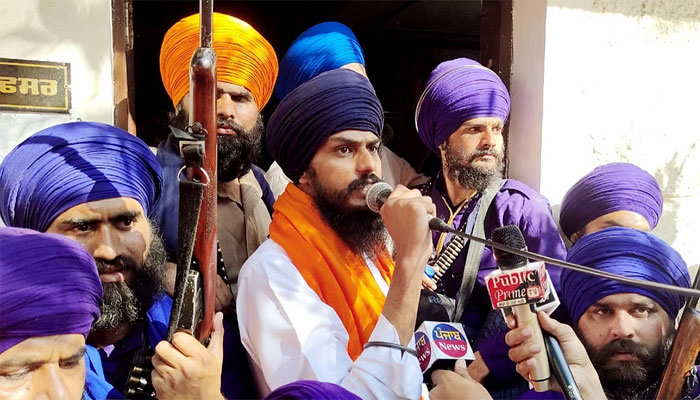
In a recent op-ed, Sarju Kaul, the resident editor of the Times of India, talked about Amritpal Singh’s rising popularity and insinuated as if Sikhs, in general, are the ‘anti-establishment’. First and foremost, using anti-establishment is in itself problematic in this case. Anti-establishment essentially means opposition to the conventional social, political, and economic principles of a society. It is a political philosophy. The Khalistan movement is anything but that. It is a terrorist movement that wants to break India and has historically been involved in mass murders of Hindus. Times of India, therefore, at the very outset, whitewashed the Khalistan movement by calling it anti-establishment instead of what it really is – anti-India.

Going through the op-ed as a Punjabi Hindu, there are a lot of aspects that need to be discussed. Kaul started with a very problematic statement ‘ Punjab is never in sync with Delhi’. To prove her point, the author used the historic anti-establishment sentiments that the people of Punjab had before India gained independence. It was claimed that the sentiment drives support for all causes and protests at an organic level.

But how far is it true? It is a well-established fact that the farmers’ protests were not limited to the repealing of farm laws alone. Some elements propagated pro-Khalistan sentiments during the protests and attempted to drive youth towards the demand of Khalistan. Notably, actors like the late Deep Sidhu, who established Waris Punjab De before his death, tried his best to target youth during farmer protests and make it about not just the farm laws but the religion itself.

The author compared the recent anti-India sentiments during farmer protests to the pre-partition Punjab where the sentiment was not against India but against imperialists. By such a comparison, was she trying to propagate that the whole of Punjab does not want to stay with India? There are many Sikhs and Punjabis who are against the idea of Khalistan, and they often openly speak on social media and offline about it. Even leaders like General Secretary of Shiromani Akali Dal Bikram Singh Majithia has spoken against the idea of Khalistan in connection to the rise of Amritpal Singh in the state.

Sikhs have been historically against the invaders. The formation of Khalsa was to fight Mughal invaders and later British invaders. Kaul talked about the concept of Miri-Piri given by Shri Guru Hargobind Singh Ji, the sixth Sikh Guru. The concept discusses temporal authority (Miri) and spiritual authority (Piri). Guru Hargobind Singh Ji was the first Sikh Guru to establish an army to fight against the invaders, i.e. Mughals. Comparing that resistance with the rise of anti-India sentiments in today’s Punjab due to alleged injustice in sacrilege cases, demolition drives, and police firing holds no ground.

Differentiate between centre and state matters

Punjab, which is known for its agricultural stature, is the biggest beneficiary of the procurement drives of the central government. Data that is present with OpIndia shows that since 2014, there has been a substantial increase in the MSP and procurement every year. Thus, the issue of alleged injustice by the central government is hard to digest. Furthermore, the problems like sacrilege, police firing etc., are state matters. If there has to be any resistance, it should be at the state level.

If we talk about the central and state-level “injustice,” it should be mentioned that for years the Central Government tried to pay the money against procurement directly to the farmers. Still, the state government created hurdles in it. The state wanted the procurement payments to occur via arthias or middlemen. It was only in 2022 that the payments were made directly to the farmers in Punjab. From infrastructure to industrialisation and schemes for farmers to the general public, most issues are state subjects. If there are any anti-establishment sentiments, they should be against the state government. How is it linked to Punjab being part of India?

Later in the op-ed, the author compared Bhagat Singh to Sidhu Moosewala. Putting these two in a single sentence is unimaginable at every level. First, Amritpal Singh and his followers do not consider Bhagat Singh, their hero. On the other hand, they despise the murder of Sidhu Moose Wala as he talks about “the issues of Punjab” through his songs.

Bhagat Singh’s ideology is immaterial – the fact is that he lived and died for India and her independence. Bhindranwale and his followers in the past, or Amritpal Singh and his followers in the present times, follow a radical religious ideology. These two segments are entirely different. Bhagat Singh talked about ‘one nation, one language’. On the other hand, those who call for Khalistan demand a separate nation. The ideologies and the structural demands are different from each other. Furthermore, Moosewala was possibly killed due to personal enmity and not because he resisted the state or the centre. Pertinently, Moosewala was also a strong proponent of Khalistan and therefore, it is unthinkable that the Times of India would compare him to Bhagat Singh – a patriot.

The political loss of SAD

Shiromani Akali Dal lost its ground in Punjab in the recent Assembly elections. It was portrayed by the author as if it was a sign of SAD’s inability to side with Punjabis’ sentiments. It has been claimed that the SAD-controlled Shiromani Gurudwara Prabandhak Committee (SGPC) is losing the ground support it gained by invoking Sikh identity and religion. The loss that has been because of the unhinged politics is seen as the reason for the resistance in the youth towards the traditional parties and favouring the separatist values.

However, in reality, the people of Punjab, let it be the majority of Sikhs or Hindus or other communities, would not prefer a separate nation. They chose to bring a fourth party to the play to give them a chance to rule the state. Had there been any sentiments of a separate state, Shiromani Akali Dal (Amritsar) would have contested and won all seats in the Punjab Assembly elections.

Punjabi Youth and future in farming

The author further said that Punjabi youth wants to shift to other countries like Australia and Canada as they do not see any future in agriculture. Had it been the way it was presented, why were there protests against the Agriculture Laws in the first place? The youth would have sold land and shifted to other countries, something a percentage of Punjabis have already done. The reality is Sikhs, or Punjabis will never leave their motherland and Agriculture. Many landlords rent out their farms and enjoy a good income.

The youth of Punjab needs support from the state government, and that too beyond the lines of politics. There have been practices in farming that are not sustainable and need an overhaul. There is no need to demand a separate nation for Sikhs but a dedicated government that the people of Punjab have failed to choose for decades. There is a need to come out of the fear that industrialisation or capitalism will ruin the state. It will help the state in bringing sustainable income. There is a need to educate youngsters to stay away from drugs and guns and not push them towards the sentiments of a separate nation.
Tripura elections: Assam congress chief shares badly edited fake opinion poll on polling day

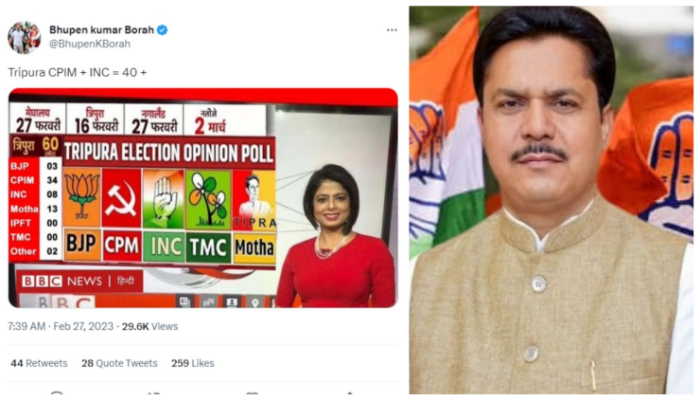
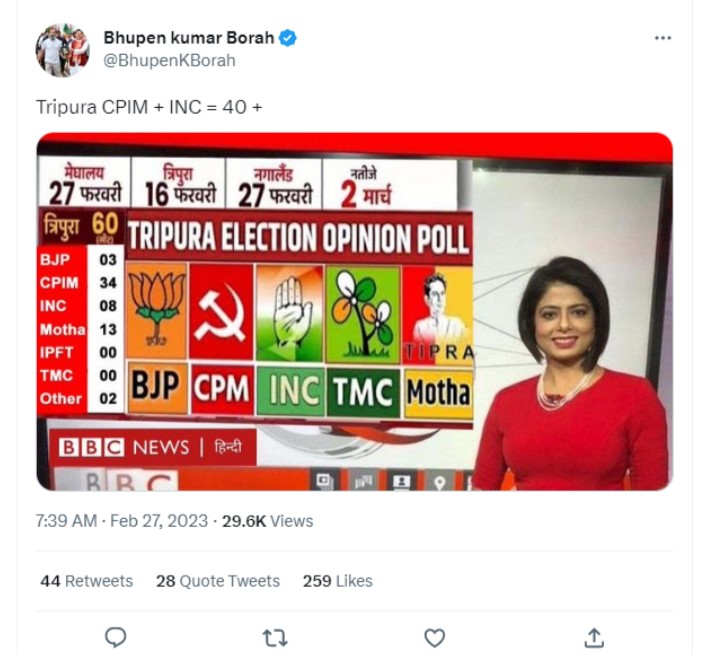
Today (February 27), when exit polls are getting announced by pollsters and News Sites, Bhupen Kumar Borah, the chief of the Assam State Congress Committee, has tweeted a fake BBC poll about the Tripura elections in 2023. In his tweet, he clubbed a Tripura Elections opinion poll graphics with a BBC news logo.

The Congress leader, however, quickly withdrew his tweet when netizens called him out for unethically uploading a modified fake opinion poll to show that exit surveys gave a win for his alliance.

SS of Borah’s now-deleted tweet

Assam Congress chief, in the caption of his now-deleted tweet, indicated that his party and Communist Party of India- Marxist (CPI-M) will get over 40 seats in the Tripura Elections 2023 results. Both political parties, who are direct opponents in Kerala, joined hands to form an alliance ahead of the elections. 

The Congress state chief, Bhupen Kumar, poorly edited the opinion survey in his eagerness to show his party as the clear winner of the poll. As seen in his tweet, the BBC logo can be seen below the screenshot of the opinion poll pasted on top of the logo, plainly suggesting that it is a false opinion poll.

Soon after the Congress state chief tweeted the BBC fake poll, netizens identified his post as false and chastised the Congress leader for propagating misleading information.

Assam minister and BJP leader Pijush Hazarik took to Twitter to share a screenshot of the fake BBC opinion poll graphic posted by Bhupen Kumar Borah alongside a screenshot of the original BBC news logo on which the opinion poll was superimposed.

“After non stop defeat in elections, Congress has been reduced to using poor edited fake opinion polls Was this the grand strategy decided at AICC Plenary @BhupenKborah ji? PS: You have also violated the law by sharing fake opinion polls on polling day,” tweeted the BJP leader.

Congress files police complaint against Jan Ki Baat’s Pradeep Bhandari after the polls predicted BJP victory

It may be recalled that on Tuesday, February 14, the Tripura unit of the Congress party lodged a complaint against Jan Ki Baat founder Pradeep Bhandari over the recently released opinion polls that predicted a victory for the Bhartiya Janata Party (BJP) in the state.

Apparently, the opinion poll did not go down well with the Congress leaders who filed a police complaint against Bhandari saying that despite a directive issued by the Election Commission on the broadcast of opinion and exit polls, the Jan Ki Baat opinion poll was released.

Congress leaders Dr Ajoy Kumar and Gaurav Gogoi, along with party workers, reached the local police station to file a complaint against Bhandari seeking action against him for allegedly violating the Model Code of Conduct.

Tripura Elections ended on February 16 with unprecedented voter turnout. According to election commission data, Tripura recorded an 87.6% voter turnout out of a total of 28.13 lakh electorates. From 1993 until 2018, the Left Front ruled Tripura for over 25 years. However, during the most recent assembly elections, the state voted out the Left government giving an overwhelming majority to BJP.

Men’s chaddi crisis strikes again: ET draws inspiration from Shekhar Gupta’s ThePrint to cry economic slowdown

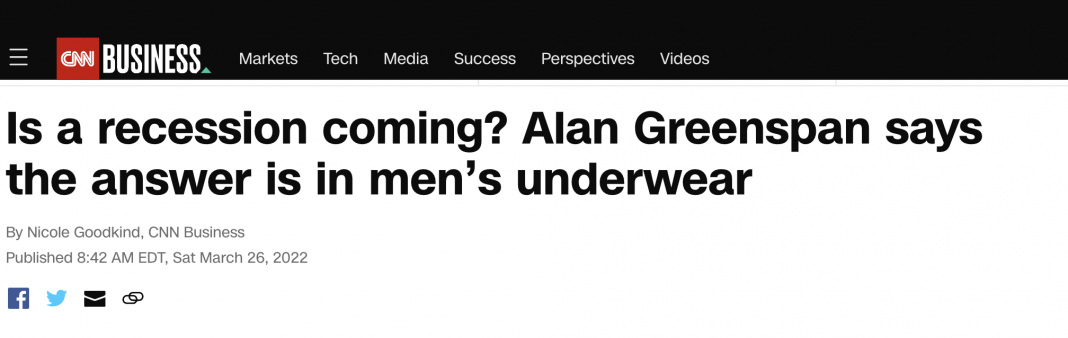
Apparently, when men throw hygiene out of window, that is the prime indicator that the country’s economy is in shambles, if this Economic Times article is to be believed. In an article titled, “गिर रही है पुरुषों के अंडरवियर की बिक्री, क्या इकोनॉमी को लगने वाला है जोर का झटका?” (Sale of men’s underwear is falling, is economy declining?), ET claimed that US Federal Reserve’s Alan Greenspan had attached sale of men’s underwear as an economy indicator.

ET claimed that as per Greenspan, a man’s underwear is his most private thing and is ‘hidden’. Hence, whenever economic crisis leads to pinch in the wallet, they stop changing their underwear. Here one truly hopes ET meant they don’t buy new underwear and not that men just refuse to change their underwear till economy improves because the second option is quite revolting. Not that it would make sense in either case.

ET claims that for the quarter ending December 2022, the sale of underwear dropped by 55% for men. Because of rising prices, people are not left with enough money to buy new underwear. Hence, men not buying new underwear is a prime indication of slowdown of economy. Without giving any specific details, ET claimed that there has been a decrease in sales in the third quarter in men’s underwear companies like Jockey and Lux Cozy. Even Rupa, which makes men’s underwear, showed reduction of 52% sales.

This decrease in sale of men’s underwear could be a cause of concern, reported ET. Usually, Jockey underwear is sold in urban market and in such a case if there is decrease in sale of underwear it is something to be cautious about.

Shekhar Gupta, the ‘chaddi’ psychic… but wait

What ET thought now, Shekhar Gupta had already predicted in 2019. Months after 2019 general elections, when PM Modi returned to power with a stronger majority, Shekhar Gupta’s ThePrint had published an article titled “Indians are not buying underwear. That’s how bad the economy is”. ThePrint had reached out to manufacturers and retailers of men’s underwears to paint Indian economy in shambles.

ThePrint had at that time blamed GST and demonetisation for men not buying chaddis but ET does not even have anything to blame. They just decided men not buying new chaddis is economic crisis. They had interviewed top men’s underwear manufacturers to write about their economic woes.

Except…

It was an Economic Times report from August 2019 linking sale of chaddis and economy that triggered Gupta.

ET and chaddi crisis

Before Gupta’s ThePrint went off for investigative journalism on chaddi sale, in August 2019 Economic Times had published an article claiming that innerwear sale reveals a slowdown. And surprise, surprise, this article cites Alan Greenspan. Same man who has been cited by ET in its recent report.

Over the years, Greenspan has tracked sale of men’s underwear to predict economy around the world.

Alan Greenspan underwear

In March 2022, CNN reported Greenspan’s quirk of using innerwear as economic indicator.

Quartz report

In March 2016, Greenspan was saying how economy was improving after increase in sale of men’s underwear.

Sept 2021

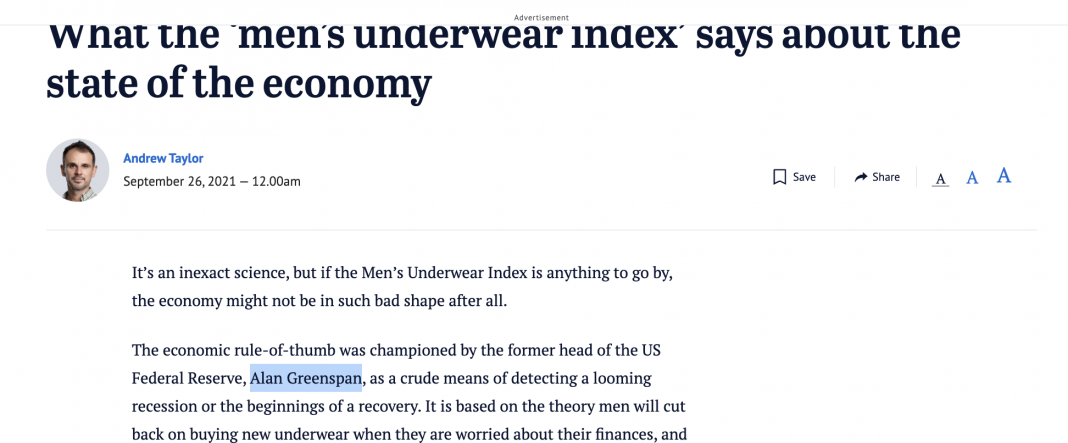
In September 2021, he was cited by Sydney Morning Herald.

Greenspan has been tracking underwear sale for men for over a decade.

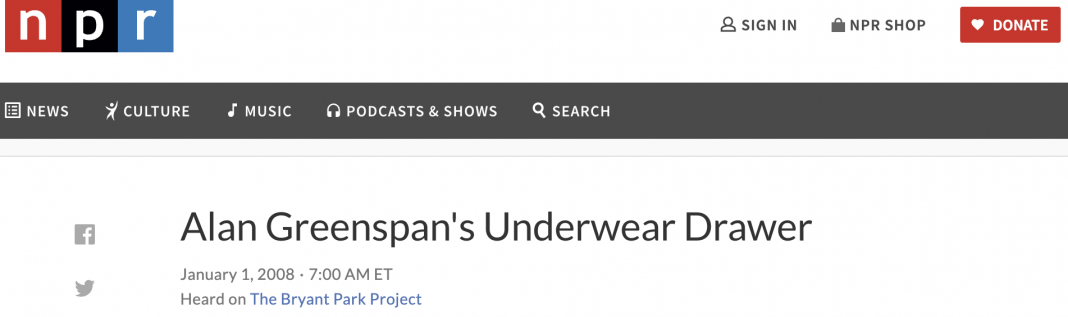
2008 underwears

In fact, there have been articles analysing his underwear theories and how it could be flawed.

Greenspan chaddi theory criticism

In October 2009, NYMag had criticised Greenspan’s underwear theory. Turns out his theory is not new and he had come up with it in the 70s. That means over 40 years of chaddi sale tracking.

Greenspan’s chaddi chronicles reminded me of the time this one guy I had briefly known years ago told me his ‘secret’ that he ‘stores underwears in suitcases’. A teenaged me was so taken aback I asked him if he stored women’s underwears and were they used or unused. “Like a trophy?” I asked. He said, no. He said he collected and stored only unused men’s underwears. Needless to say, I never spoke to him again.

Chaddi is a necessity

On that note, I may not be an economist, but I will stick my neck out and say that chaddis are necessity and are not quite price elastic. Hence, unless you are talking about luxury underwear for men or if these underwears come studded with diamond, one hopes men change their underwear as frequently as needed to, you know, save themselves from various infections.

2 AAP ministers, now in jail, head 19 ministries combined in the Delhi government while CM Arvind Kejriwal has none: Details

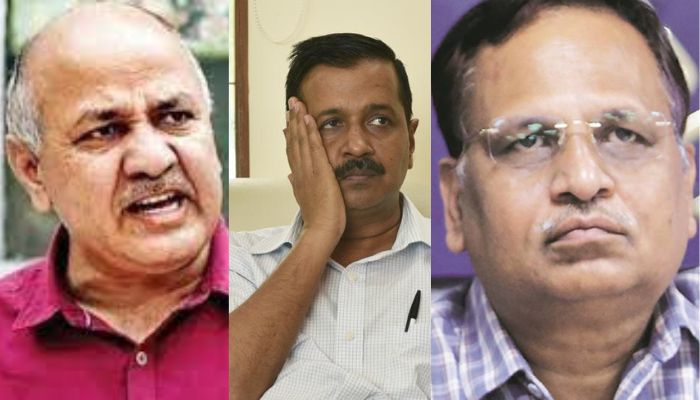
With Manish Sisodia’s arrest by the Central Bureau of Investigation on Sunday, 26th February 2023, two of the total seven ministers of the Delhi government’s cabinet are lodged in jail. Interestingly, both ministers together head a dozen departments while the chief minister of Delhi and Aam Aadmi Party’s convenor Arvind Kejriwal heads no specific department.

In the 2020 assembly elections of Delhi, Satyendra Jain won from the Shakur Basti constituency for the consecutive third time. In the cabinet of the Arvind Kejriwal government, Satyendra Jain heads ministries viz. health and family welfare, industries, home, power, water, urban development, irrigation & flood control.

In the 2020 assembly elections of Delhi, Manish Sisodia won from the Patparganj constituency for the consecutive third time. In the cabinet of the Arvind Kejriwal government, Manish Sisodia heads ministries viz. finance, education, tourism, public works department, labour, planning, land & building, vigilance, services, art, culture, and language.

In this way, two of the seven ministers in Arvind Kejriwal’s cabinet are responsible for 19 departments. On the other hand, chief minister Arvind Kejriwal does not have any specific department. With Satyendra Jain and now Manish Sisodia getting arrested, the caretakers of the 19 departments of the Delhi government are behind the bars.

Satyendra Jain’s arrest

The ED attached assets worth Rs 4.81 crores linked to Jain and his family in April. The ED launched an investigation in the case based on an FIR which was registered by the Central Bureau of Investigation (CBI) against Jain and others under relevant sections of the Indian Penal Code and the Prevention of Corruption Act.

It is alleged that while Jain was a public servant, his companies received up to Rs. 4.81 crores from shell companies via the Hawala network. Satyendar Jain was arrested and detained by the Enforcement Directorate on May 31, 2022.

Manish Sisodia’s arrest

On Sunday, 26th February 2023, the Central Bureau of Investigation (CBI) arrested Delhi Deputy Chief Minister Manish Sisodia in connection with the alleged Delhi liquor excise policy case, after eight hours of questioning. However, Sisodia has not been named an accused in the chargesheet filed in the case. Arrested businessmen Vijay Nair and Abhishek are among the seven accused named in the chargesheet.

In August last year, the CBI searched Sisodia’s bank locker in connection with the case. The deputy CM claimed the sleuths did not find any incriminating material in his locker. The CBI launched a probe in the matter on the basis of a report forwarded by the Delhi chief secretary to L-G Saxena recommending a probe by the central agency.

Shooter Arbaaz, accused in Umesh Pal murder case, killed in police encounter

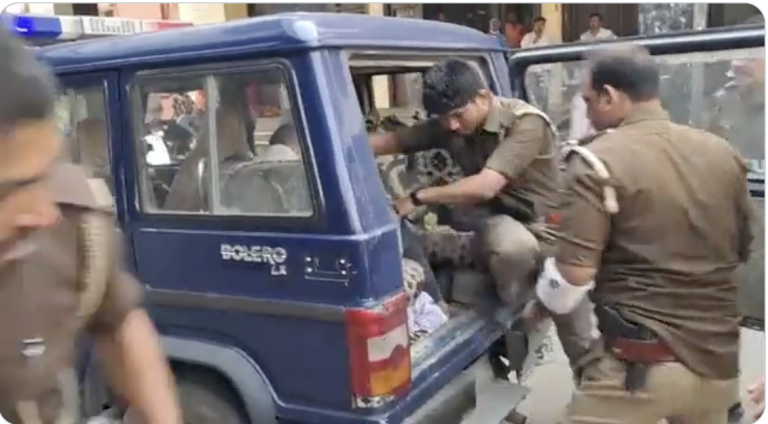
Shooter Arbaaz, one of the prime accused in Umesh Pal murder case, was killed in police encounter on Monday in Prayagraj. Arbaaz is one of the prime accused in murder of Umesh Pal, who was one of the key witnesses in Raju Pal murder case. As per police, Arbaaz was the one driving the Creta car which was used in the murder of Umesh Pal.

Over ten teams of STF and Prayagraj Police were involved in the investigation. Gangster turned politician Atiq Ahmed Khan’s wife and children are also being question in the case. His son, one of the accused involved in murder case is currently absconding. It is reported that during the run-in with the police, Arbaaz managed to escape with two other people.

Pal’s murder took place on last Friday, February 24, and within just three days on Monday, one of the accused was killed in a police encounter. As per reports, Arbaaz tried to fire at the police and in retaliatory firing, he was shot at. Police had first shot at his leg. The police is still looking for other accused.

It is reported that Arbaaz was a close aide of former MP Atiq Ahmed. Arbaaz also used to drive Atiq Ahmed’s car for him. The encounter took place in the Nehru Park jungle in Dhumanganj area. One police official was also injured in the firing.

Umesh Pal murder case

Umesh Pal, a key witness in 2005 murder case of BSP leader Raju Pal, was killed on Friday. Since then, at least ten teams of UP Police and other agencies have been carrying out raids at various places. Amid this, the Creta car used in Umesh Pal’s murder was recovered from Atiq Ahmed’s house. Atiq Ahmed is one of the accused in Raju Pal murder case as well.

Raju Pal was murdered on 26 January 2005 soon after he was elected as an MLA after defeating Atiq Ahmed’s brother Ashraf on a BSP ticket. In 2004, Atiq was elected MP from Phoolpur constituency. Pal’s wife had accused Atiq, his brother and three more of murdering her husband.

Umesh Pal was one of the witnesses in the Raju Pal murder case. 7 shooters, of which two were from Atiq gang, were allegedly involved in Pal’s murder last week. Atiq Ahmed is currently lodged in Ahmedabad’s Sabarmati jail from where he is believed to have hatched the conspiracy.

Assam: Copy of Quran and Hadiths and other Islamic articles found inside Kali Mandir, in 2021, a similar incident had taken place in Bangladesh

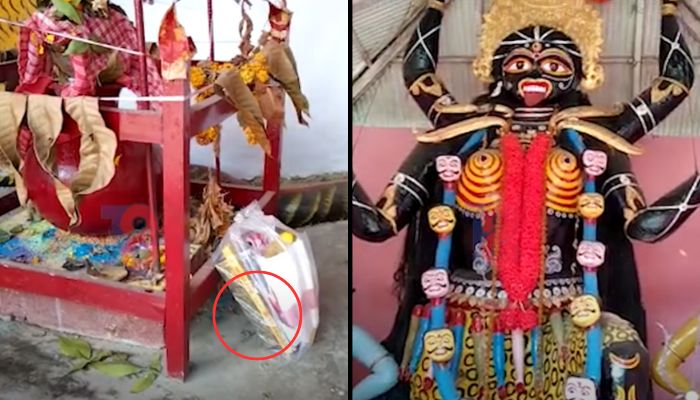
On Monday (February 26), a copy of the Quran and other Islamic paraphernalia was found on the premises of a temple, dedicated to Goddess Kali. The incident took place in Garajan village in Rupohihat in the Nagaon district of Assam.

When the matter came to light, the locals informed the police. On receiving information, the cops rushed to the spot and initiated a probe into the matter.

They also seized the copy of the Quran and other Islamic scriptures including Hadiths that were allegedly placed by miscreants at the sanctum sanctorum of the temple.

The incident has created an atmosphere of chaos and unrest in the Rupohihat area. Locals have raised questions about how the Islamic book ended up within the temple premises and the intention behind orchestrating such an event.

They demanded rapid action against those involved in the desecration of the temple. It must be mentioned that the deliberate placement of the Quran in Hindu temples by Islamists had led to large-scale attacks against the Hindu community in the past.

In October 2021, a 35-year-old man named Iqbal Hossain placed a copy of the Quran on the feet of the idol of Lord Hanuman at the Nanuar Dighir Par Durga Mandir in the Cumilla district of Bangladesh.

His actions triggered a series of violent attacks against the minority Hindus in the country. The Hindu community had insisted vehemently that nobody among them had kept the Islamic ‘Holy book’ at the Puja Pandal and the incident was a deliberate plan to foment trouble.

For over five days, houses and temples of the Hindu community in Bangladesh remained under attack. Videos of broken idols, demolished pandals and Moorti of Maa Durga being thrown in a pond emerged on social media platforms along with other videos of attacks on Hindus.

It came to light later that the copy of the Quran was given to Iqbal Hossain by the caretakers of a nearby mosque.

What interference by George Soros means and the changing nature of imperialism that we must acknowledge to safeguard our freedoms

Recently, American billionaire George Soros has been in news for his outlandish views on the Indian government and especially PM Modi. Some Indian commentators say Soros means well and some others feel he is a bad actor trying to create social discord as he did before the 2020 US elections using the BLM movement which he generously funded. The fact is, it does not matter if you think George Soros is a good man or bad. The only thing that matters is he is an American. What matters is as a foreigner, he has no right to interfere in India’s democratic processes.

In fact, his own country America understands this well. American law is very strict when it comes to defining what is foreign election interference. According to the U.S. Department of Homeland Security, it is “malign actions taken by foreign governments or actors designed to sow discord, manipulate public discourse, discredit the electoral system, bias the development of policy, or disrupt markets for the purpose of undermining the interests of the United States and its allies.” Soros is not a political novice. He is a close ally of President Biden’s party and also their biggest donor. George Soros knows very well that what he is doing in India, an Indian billionaire would not be able to do in the US.

In the United States, there are several laws and regulations in place to prevent foreign interference in U.S. elections. Some of these laws include:

Foreign Agents Registration Act (FARA)

This law requires agents of foreign governments, political parties, and individuals working on their behalf to register with the U.S. Department of Justice and disclose their activities, funding sources, and other relevant information.

The Federal Election Campaign Act (FECA)

This law prohibits foreign nationals, governments, and corporations from making donations or contributing money in connection with U.S. federal elections. It also prohibits foreign nationals from engaging in political activities, such as providing campaign advice and prohibits political candidates from soliciting or accepting such contributions.

The Help America Vote Act (HAVA)

This law provides funding to states to improve election administration and security, including measures to prevent hacking, tampering, and other forms of interference.

The Intelligence Authorization Act

This law requires the Director of National Intelligence to report to Congress on foreign efforts to interfere in U.S. elections and provides funding for the intelligence community to counter such efforts.

The Cybersecurity Information Sharing Act (CISA)

This law encourages government agencies and private sector organizations to share information about cyber threats and vulnerabilities in order to prevent cyber-attacks and other forms of interference.

Of course, these laws will only threaten you if you as an Indian want to interfere in the US elections. On the other hand, the US is perfectly happy to let George Soros openly interfere in India’s. He funds hundreds of NGOs and media that do his bidding and control various indices, ranking, reports and academic research. They all speak in one voice to repeat whatever suits HIS agenda. Is it foreign election interference? Of course, it is.

But why is foreign election interference so bad? Because elections are a measure of our sovereignty. It is an all-Indian affair. If foreign powers interfere, it is direct erosion of our fundamental rights as Indians. It gives a direct opportunity to foreign powers to control who rules us and what policies they adopt. That is the dictionary definition of imperialism. While western imperialism depended on hard power in the past, in today’s technology-dominated small world, soft power is equally important. George Soros has invested billions in building that soft power. From presidents to college professors to fact-checkers, Soros has found a way to legally deliver his money using the cloak of charity, education, climate, social justice, preserving democracy, defeating fascism, racism, casteism, LGBTQ rights, Islamophobia, refugees, you name it. And with billions of dollars in the bank, he has found it easy to buy that influence.

As stated earlier, it does not matter if George Soros believes in all that he preaches. It is still imperialistic interference in India’s democracy. At the same time, we should look at what kind of people Soros funds. You must be aware of rabid Islamist hate-monger Khaled Beydoun. Funded by Soros. Anurima Bhargava, the “Hindu” member of USCIRF who recommended sanctions on India and one who is always seen on Islamist organisation IAMC’s forum? Funded by Soros. Harsh Mander, who authored the infamous Communal Violence Bill for Sonia Gandhi’s NAC? Funded by Soros. How can such a person, who funds such open Hindu hate, be called a philanthrope? Simple, those calling him that is also funded by him or the ecosystem he is part of.

We need tailor-made solutions – If we use the same yardstick the west uses to identify foreign election interference, it will not work. There is a vast power imbalance between former imperialists and their former colonies. One must understand the west benefits from their centuries-long imperialism and the cultural capital they have accumulated by force. For example, an article in an Indian newspaper has no resonance in the USA, but an article in the NYT shapes global views on India. The two are not the same. This means we must come up with our own definition of foreign election interference and not blindly follow the west’s self-serving framework. Of course, the west will resist. After all, they gave us this democracy, the least we can do is not exercise it without their permission, no?

Are Indian laws sufficient? In the fast-paced technology-driven public space, the answer to this question is always no. We probably have more understanding and preparedness for technological challenges to our elections. But the much more subjective challenge of foreign narratives affecting our elections and economy is far more complex. It will require strong political will and swift legal manoeuvring to push back against George Soros and his army of narrative builders. Taking common Indians into confidence is key. Let the people ask, why is a 92-year-old controversial American billionaire interested in who rules India? Why is a foreigner’s voice more important than the voice of a common Indian? These questions will lead Indians to the much-neglected task of decolonisation. It will open our eyes to the risks of foreign powers controlling our fate. No common Indian, no matter what their political affiliation would find that palatable. Let all those foreign-funded opinion makers in India face public scrutiny. If that happens, George Soros will have done us a big favour.

When imperialists took control of India in the past, they claimed they were only civilising us. They only wanted to fix the ills of Indian society. That is what they said. But their designs were purely rooted in superiority, exploitation, and imperialism. Mr Soros is no different. The west is no different. Protecting our freedoms will require that we acknowledge the changed nature of imperialism. And yet, that will only be the first step. Let us all collectively take it.

59 Hindus were burnt alive in the S6 coach of the Sabarmati Express 21 years ago, know about two families who lost everything in the Godhra carnage

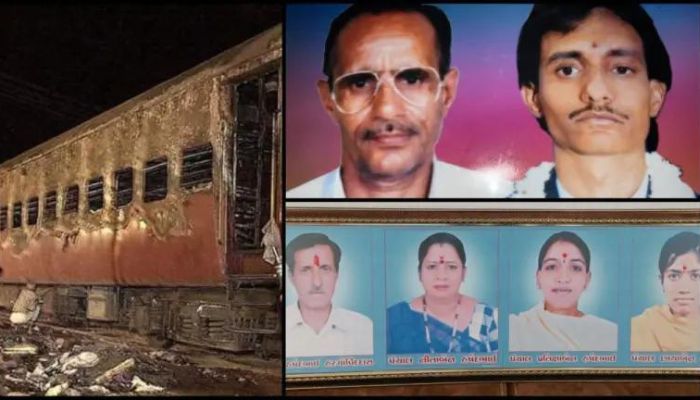
No Hindu will ever forget the dreadful incident that took place on 27th February 2002, in which 59 innocent Hindus were killed as the Islamic jihadis set on fire the S6 coach of the Sabarmati Express near the Godhra railway station in Gujarat. This incident is known as the Godhra carnage.

The Hindu families, who were victims of the Islamic jihadi attack at that time, have not yet recovered from that shock. Many families lost their family heads and prime earning member, there are many who do not have any money now, and some families have ceased to exist. Today, here we will talk about two such families from Ahmedabad who lost everything in the Godhra carnage.

The Soni family of Vastral vanished

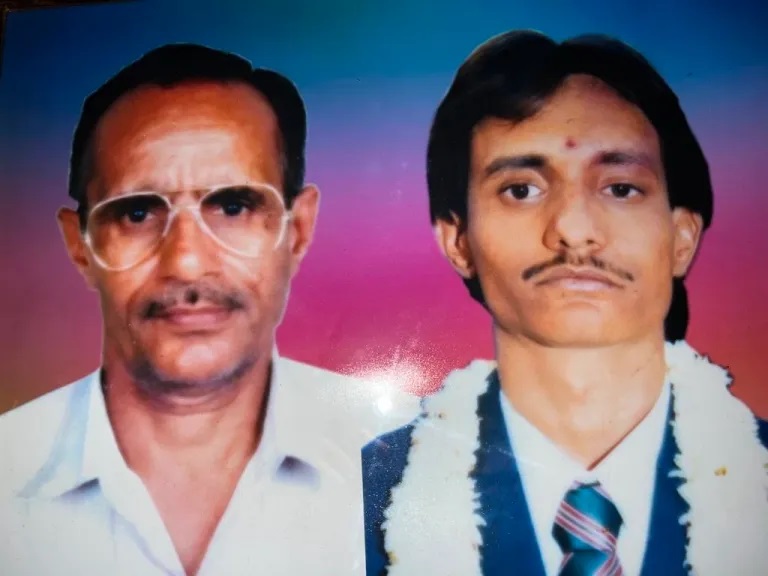
On February 27, two prominent members of the Soni family living near the Surelia Estate in Vastral were killed in the Sabarmati Express. Mansukhbhai Kanjibhai Soni and his 22-year-old son Jesalkumar Mansukhbhai Soni lost their lives in the massacre.

Father Late Mansukhbhai Soni (Left), Son Late Jesal Soni (Right) Image Source: OpIndia Gujarati

It is worth mentioning that at the time of this Godhra carnage, Jesal Soni’s daughter was only 6 months old. On that fateful day, the daughter-in-law and mother-in-law in this family became widows.

As the daughter-in-law was still young, she was remarried within the community and after some time, Jesal Soni’s mother and Mansukhbhai’s wife – the only member of the family – died of illness. Thus, Godhra carnage erased the name of this Soni family of Ahmedabad.

Ramol’s Panchal family left with 4 daughters under 15 years of age

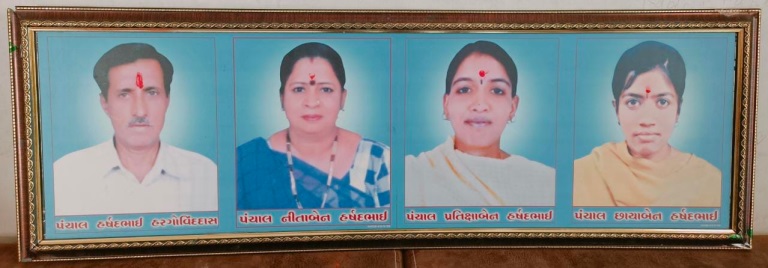
Just like the Soni family, there is also a sad story of the Panchal family of Ramol. On the day of the Godhra carnage, there were five members of the Panchal family in that compartment of the train. Husband Harshadbhai Hargovindbhai Panchal, wife Nitaben Harshadbhai Panchal, and their three daughters Pratiksha, Chhaya, and Gayatri. Their other three daughters stayed at home as they were very young.

The husband and wife and their two daughters Pratiksha and Chhaya were killed in the attack by Islamic fundamentalists, and Gayatri somehow managed to save her life.

Four members of the Panchal family were killed in the fire. Image Source: OpIndia Gujarati

Thus, after the Godhra carnage, there was no supporting man left in the Panchal family. Only 4 daughters below 15 years of their age were left, for whom life was no longer like the others.

Here we have only talked about two families who were victims during this Godhra massacre. The families of each of those 59 massacred Hindus suffered an irreparable loss, due to which, even after 21 years, these families haven’t recovered from the shock of the Godhra carnage.

Chandra Shekhar Azad death anniversary: When his nephew Sujit said that it was Nehru who got the revolutionary killed by the British: Details

0

On this day (February 27), ninety-two years ago, the iconic Indian revolutionary freedom fighter Chandra Shekhar Azad died, preferring to shoot himself than get arrested by the British.

It is well known that the CID head of British police was tipped by someone that Azad is conducting a meeting at Alfred Park (currently Chandra Shekhar Azad park). With 80 sepoys, the police surrounded the park and soon a gunfight broke out. Azad didn’t give up till his final breath and eventually shot himself to avoid being captured by the Britishers.

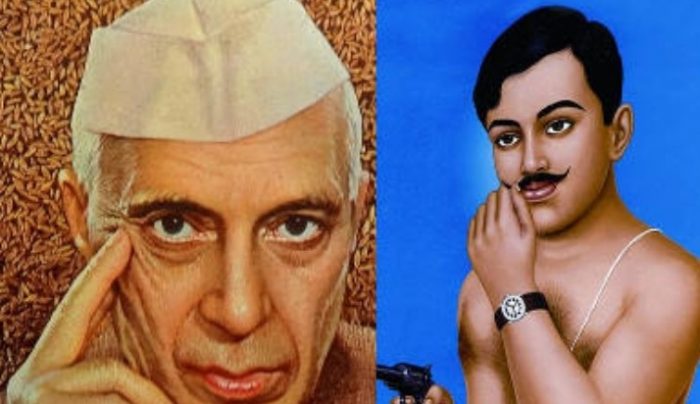
Another known fact is that Sujit Azad, the nephew of revolutionary freedom fighter Chandra Shekhar Azad, has been asserting for several years now, that India’s former Prime Minister and Congress leader Jawaharlal Nehru provided specific information about Azad’s whereabouts to the British.

Sujit Azad alleged that Nehru informed the British about the presence of Chandra Shekhar Azad at Alfred Park because other than Nehru and his fellow HRA members, nobody else knew Azad was coming there. He has also urged previously that the ‘Bharat Ratna’ award given to Nehru should be revoked. Similarly, he demanded that a panel similar to the ‘Kapur Commission’ (formed after Gandhi’s death) should be appointed to investigate the aforementioned allegations and the truth should be made public.

Jawaharlal Nehru was a prominent figure in Congress at the time of Chandra Shekhar Azad’s death. Motilal Nehru, his father, was a well-known barrister, Congress politician, and financial supporter of the revolutionaries. But, Jawaharlal Nehru was not as enthusiastic about the revolutionaries.

On February 27, 1931, Chandra Shekhar Azad visited Anand Bhavan (Nehru residence in Lucknow) to meet him secretly to seek clemency for Bhagat Singh, Sukhdev, Rajguru, and other freedom fighters who were sentenced to death by the British government. At that time, Azad also handed over the treasury belonging to the ‘Hindustan Socialist Republican Association’ to Nehru to secure Bhagat Singh’s release. Nehru started giving evasive answers, due to which Chandra Shekhar Azad came out of the meeting in anger.

Azad went to Albert Park in Allahabad with his aide after returning from ‘Anand Bhavan’ to discuss his next course of action. Nehru, who was the only person who knew where Azad was, allegedly informed the British about his location as per Sujit Azad. Based on the particular information, the police surrounded Azad with 80 sepoys, and a gunfight ensued. Azad, facing the entire police force, refused to surrender. He battled till the bitter end and kept firing at the British cops until he was down to one bullet. He pointed the pistol at his head and pulled the trigger. Azad, a renowned revolutionary and a courageous son of India, chose to die over submission to the British.

According to Sujit Azad, Nehru not only grabbed the treasury but also betrayed Chandra Shekhar Azad, leading to his death.

‘As long as my head is satisfactorily attached to my torso’ – Prof Ranganathan slams Taslim Ahmed Rehmani at ARTH Cultural Fest; video viral

0

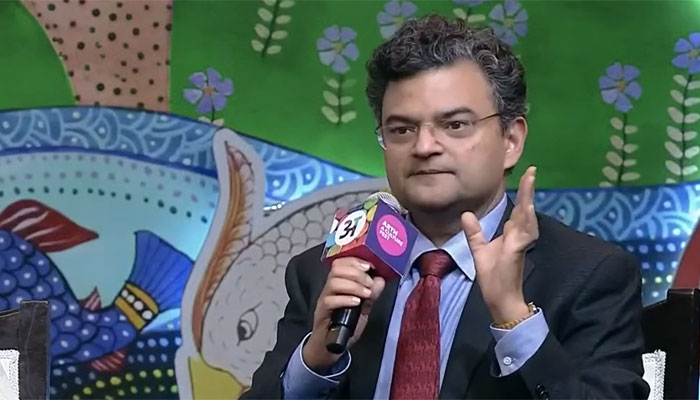
On February 26, JNU Professor and Author Anand Ranganathan slammed Dr Taslim Ahmed Rehmani at ‘ARTH – A Culture Fest’ during Uniform Civil Code (UCC) discussion. Prof Ranganathan and Rehmani were among the panelists to discuss different perspectives of UCC.

During his introduction, Prof Ranganathan said, “I am proud to be an Indian. Really proud to be one amongst you because sitting next to me (pointing at Rehmani) is a gentleman who is so safe and sound. He is roaming around. He is saying whatever he likes. One year ago, the woman he was in a debate with is sitting at home. Those who protest against this country, saying there is no democracy, should remember this. Rehmani Sahab is safe and sound, and he is here with me. Remember that, always. Don’t forget that. All those who think that this is not a democracy remember that. There is a woman, poor woman, all she did was quoted some scriptures, and her life has been ruined.”

Rehmani interrupted the professor at this point and said, “He is tarnishing my image on a false basis. That is why I am objecting. Let’s not divert from the topic, please.”

Abhinav Prakash, who was moderating the discussion, requested Prof Ranganathan not to pass a personal remark, to which he said, “I am not passing any personal remarks. I am proud to be an Indian. How is that personal? I am proud that you are safe. How is that personal?”

He further added, “And image can only get tarnished if [there is an image to tarnish].”

Rehmani got furious at this and said, “If this is the way of this debate at the outset. Targeting a personality then, I have many things to say for many people but I do not want to continue. I can leave this debate if you have to insult me over here.”

Prof Anand Ranganathan said, “I am not insulting anyone,” and asked the public if he did, to which everyone cheered. Rehmani continued to say, “You are insulting me. You are spreading falsehood about me. You are spreading rumours against me and trying to demonize my personality. I object to it.”

“I take your objection wholeheartedly as long as my head is satisfactorily attached to my torso”, the professor replied.

Prof Ranganathan’s statement at the fest went viral on social media, and netizens praised him for calling out Rehmani.

Nupur Sharma and the controversy around her

In a debate on the disputed structure at Gyanvapi in Kashi in May 2022, the former Bharatiya Janata Party spokesperson Nupur Sharma slammed Taslim Ahmed Rehmani for his repeated offensive language. She questioned Rehmani about how he would feel if she quoted Islamic scriptures. Alt News’ co-founder Mohammed Zubair took her statement out of context, removed Rehmani’s comments and shared her statement on social media.

It was alleged that Sharma insulted Prophet Mohammed, which led to riots in several places in the country, and Islamic countries issued statements against Sharma and Indian Government. BJP removed Nupur Sharma from the party, and she is still living at an unknown location with threats to her life. Multiple FIRs were also registered against her. In the aftermath, Hindus were killed for supporting Sharma, including Kanhaiya Lal in Rajasthan and Umesh Kohle in Maharashtra.