Home Blog Page 253

Freight Equalisation Policy: Another Nehru ‘gift’ that kept mineral-rich states like Bihar and Odisha backward while Southern states and Maharashtra prospered with industrialisation

The Nehru-Gandhi family has ruled India for so long that the implications of their policies continue to affect the nation to this date. India has encountered everything from territorial conflicts to internal discord, threats to democracy and the Constitution as well as significant economic challenges, all under the leadership of Congress-led governments steered by the most “distinguished” political family in the country.

The decisions, whether misguided, flawed, driven by personal or political interests, or for any other reason, can be debated. Yet, it is clear that they functioned as barriers to the development and progress of the country, causing the nation to endure the most adverse ways of misery, the consequences of which are borne even by the current population.

One such move was the Freight Equalisation Policy, which, rather than advancing equitable industrial progress as its name suggests, ultimately created a stark economic disparity for generations to come. Have you ever pondered why the most resource-rich eastern Indian states like Bihar, Jharkhand and Odisha have such a poor industrial growth?

Ofcourse, there are other underlying factors, but the catastrophic freight equalization policy played a major role in devastating the states. Introduced in 1952, it subsidized long-distance freight transportation with the goal of facilitating equitable economic development. Instead, it exacerbated poverty and income inequality in the eastern region.

Its outcome was calamitous and the repercussions continue to be apparent in these states till today. Interestingly, the mineral-abundant eastern states have primarily functioned as consumer markets for merchant capital that evolved into industrial capital since independence, a legacy also attributed to the British imperialists.

The policy did not apply to raw materials like cotton, rather, it only applied to specific commodities that were considered necessary for the economy, such as iron, steel and cement. Therefore, states that benefited from it, remained dominant in the market for raw resources including cotton.

Likewise, eastern India was not provided with the opportunity to set up cotton and textile mills since cotton was not subsidized under this program as the manufacturing industries began to shift west and south.

FEP: A glaring failure

The union government under Nehru implemented the the Freight Equalisation Policy in 1952 and it lasted until 1993. The primary rationale behind it was to encourage balanced regional development by stimulating industrial development in places which were far from major raw material suppliers and manufacturing centers.

However, Hansraj Bhardwaj, who was a minister in the government of India, accepted that the policy had fallen short of its objectives and had to be revoked.

“This policy did fulfil this objective in the initial years. However, various committees appointed by the union government from time to time reviewed the policy and observed that the beneficial effect of the policy in terms of regional dispersal was more than offset by the increased in real transport costs,” he acknowledged, while responding to a query.

He added that other tools including suitable credit and fiscal policies, the supply of necessary infrastructure and transportation subsidies, among others were available to achieve balanced regional growth. “Government accepted these recommendation and freight equalisation was gradually phased out in most items,” the minister highlighted.

The policy suggested that industrialists paid the same amount for raw resources as they did in mineral-rich states, including coal, iron ore, aluminum, bauxite, limestone, mica, etc. Hence, the states that produced these important minerals lost their competitive edge as a result of this strategy, which also discouraged private investment in eastern states with abundant mineral resources, including West Bengal, Assam, Bihar, Jharkhand, Odisha, Madhya Pradesh and Chhattisgarh.

The subsidised transportation of raw minerals to coastal states with adequate infrastructure and market cities in the nation’s preferred locations, Mumbai and Pune in Maharashtra, Ahmedabad in Gujarat, Chennai in Tamil Nadu, Bengaluru in Karnataka, Hyderabad in Andhra Pradesh and Delhi was the reason for the disincentive.

Industrialization in the mineral-rich eastern states was hampered as majority of industries were started outside of these regions. Private capital’s incentives to install production facilities in these states were diminished. Hence, the companies found industrial sites in other regions of the nation that were nearer to coastal markets and trade centers. Odisha, despite being a coastal state that is also mineral rich, was also left out of this incentivisation.

Moreover, the new paradigm of development during the economic reforms policy regime comprising of liberalization, privatization, and globalization, assumed an open market system with less governance, moving away from the inspector raj or license rule. It resisted the open market system’s fair playing field since less privileged governments had worse infrastructure and fewer competitive advantages.

Why was FEP introduced

The Freight Equalisation Policy’s premise was that all Indian states should have ‘equal access’ to resources for producing iron and steel without having to shell out more for transportation. Eastern India’s natural gift of minerals was perceived as ‘unjust’ for some reason. After the Planning Commission was established in 1950, redistribution of income and resources sounded like a reasonable decision, during the height of Nehruvian socialism.

92% of the nation’s steel production and 48% of all manufacturing in 1950 originated from the states of West Bengal and Bihar which also had Jharkhand at the time. Coal and other natural resources were abundant in the states as well. There were just two integrated steel plants (ISPs) in India at the time, one in Burnpur, West Bengal, and one in Jamshedpur, then Bihar.

Prime Minister Jawaharlal Nehru was a strong supporter of industrial growth under central government and was influenced by Fabian Socialism. He authorized the establishment of additional steel factories in Durgapur, West Bengal, Bokaro Steel City, Bihar, Bhilai, Madhya Pradesh and Rourkela, Odisha.

However, the Planning Commission also made the decision to offer freight transportation subsidies to businesses located wherever in India. It neutralized the benefit that a manufacturing sector would receive from being situated near a steel factory. “Only by securing a balanced and coordinated development of the industrial and the agricultural economy in each region can the entire country attain higher standards of living,” read the Second Five Year Plan which outlined its intention clearly in 1956.

The goal of manufacturing firms is to keep transportation expenses as low as possible. As a result, those who produce items using iron and steel are usually found near steel plants which has led to an industrial boom since the Industrial Revolution. The cost of transportation was no longer a consideration when the FEP was put into effect, therefore the price of the land, the availability of inexpensive labor and other state government incentives were the main factors in the decision to open a plant.

The data indicated that even though the subsidies were relatively minimal, the companies were able to relocate from eastern India to other regions of the country. At the expense of eastern India, areas such as western and southern India prospered as centers of manufacturing. The government equalized shipping prices for cement and fertilizer in addition to steel, citing their value for agriculture. However, the same approach was not extended to all resources and goods.

How FEP ruined the steel industry

Multiple industries were covered under the Freight Equalisation Policy but India’s manufacturing sector employed very few of these commodities in comparison to the iron and steel sector. As a result, it had little to no impact in these other industries. The foundation of Indian manufacturing was the iron and steel sector.

It was determined in 1954 that the union government, acting through Hindustan Steel Limited (HSL), would be in charge of future steel production. HSL was given the task of developing new steel mills in Durgapur, Bhilai, Bokaro and Rourkela. Both Tata and IISCO (Indian Iron and Steel Company, previously Steel Corporation of Bengal) were privately held until 1972, when the latter was taken over by the government.

Iron ore is the main raw material used to make steel, and it can only be obtained in a few places. The iron ore would thereafter be transformed by the Integrated Steel Plants s into coils, plates, structural steels and pig iron. Therefore, the conversion of iron ore into steel and wrought iron products which is the initial step in the supply chain would not be affected once the site of ISPs was selected.

The users of these products can be categorized into two main types: (a) those who produce customized refined steel and alloy products based on specifications, for instance, in car axles and (b) their users, like the auto industry. The industries included in the aforementioned categories would have preferred to be as close to the ISPs as feasible to minimize their expenses in absence of this policy. The place itself, as provided by nature, would actually be the biggest subsidy.

The alleged “factory retention price” was determined by the union government and was contingent on the steel type and the distance of transit. The difference in transportation costs was covered as credits for manufacturing facilities situated farther away and an equalization fund was founded to compute the difference between the factory retention price and the price of steel paid for short distances.

The formation of a joint plant committee was initiated precisely to control these rates. Therefore, any inherent regional advantage was effectively eliminated through artificial means regulated by the government. Older factories would relocate to areas with higher labor and land prices if they were given incentives and since the policy offered a consistent shipping rate, geography was no longer a factor in the decision to build a new plant.

FEP withdrawn after damage was inflicted

It should be noteworthy that the state governments of Bengal and Bihar did not receive sufficient compensation from the center during this time of major losses. An interministerial assessment in 1977 demonstrated that the subsidies received were just a minor portion of the ultimate price. Meanwhile, the union government persisted to stand by its policy.

Nevertheless, the manufacturing sector’s downward trend persisted, despite the centre’s claims. Furthermore, the Freight Equalisation Policy’s emphasis on heavy industries prevented the economic diversification. It put an end to Bihar’s early industrial boom. The state’s industrial output increased by 75% between 1951 and 1961 which was a substantial increase over the 41% national average.

As a result, it saw the creation of more than 100,000 new jobs. However, Bihar’s industrialization began to slow down as the policy’s long-term effects became apparent. A distance-based subsidy cap was finally introduced by the National Development Council in 1991. Due to the relatively high ceiling, the national exchequer was drained until the policy was ended in 2001, confessing its failure.

“The removal of the freight equalisation and licensing policies cannot compensate for the ill that has already been done,” cried former Lok Sabha speaker Somnath Chatterjee in 1996. He headed the West Bengal Industrial Development Corporation at the time.

Which states gained from FEP

The Freight Equalisation Policy’s goal was to level the playing field, but its ignored eastern India’s natural advantage of having easily accessible mineral fortune, and allowed other states to prosper while the mineral producing regions remained backward.

Tamil Nadu used it to further modernize and grow its well-established textile sector. The initiative strengthened the state’s textile output and exports by lowering the cost and increasing access to raw resources like cotton.

Gujarat also experienced a rise in heavy industries like chemicals and steel. The impact of the policy was further amplified by its proximity to ports and a growing industrial ecosystem.

Similarly, heavy industries were drawn to Maharashtra by its convenient location close to ports and pre-existing industrial infrastructure which was made possible by the policy’s subsidized transportation. The creation of important industrial belts like the Mumbai-Pune corridor was greatly aided by the same.

The agriculturally proficient state of Punjab also profited from the policy. It promoted the establishment of industries for agricultural machinery and food processing as well as diversified the state’s economy and generating new job alternatives.

It also boosted industrial development in Andhra Pradesh which is abundant in coal and limestone. The policy brought in the steel and cement companies, which employed the state’s natural resources and boosted its economy.

Fallout from FEP resonates decades later

The late President Pranab Mukherjee supported the long-standing allegation of Bihar and other states that the Freight Equalization Policy had significantly impeded the growth of eastern India. In 2017, He referred to a remark of Bihar chief minister Nitish Kumar in the 1990s while he was a member of the Lok Sabha.

He stated that the latter appeared to have a point when he charged that the policy destroyed the competitive advantage of Bihar and other eastern states of the country. “So, despite having mineral resources and fertile land, Bihar, and now Jharkhand, too, could not make the desired progress,” Mukherjee pointed out.

Last year, finance minister Nirmala Sitharaman also stated that the region that suffered as a result of the Freight Equalization Policy is now at the center of the National Democratic Alliance (NDA) government’s development agenda.

The cabinet minister noted how eastern Indian states lost greatly as a result of this policy since it reduced incentives for the establishment of enterprises near mining areas which pushed companies farther away and hurt the economic prospects of the region. People left in pursuit of work as a result of that as well.

Last year, former union minister Rajeev Chandrasekhar similarly attributed North India’s development deficit on the Freight Equalisation Scheme of the successive Congress governments at the centre. “It is also necessary for the people of India today, especially in North India, to know why it is that North India has lagged behind South India in development,” he stated.

He was responding to former Congress MP DK Suresh’s startling statement that if the center “continues the trend” of withholding funds from the southern states, they will want their own nation.

“The answer to that is, from 1952 under the Congress till 1995, almost 40 years, the Congress government pursued a freight equalisation policy that made it absolutely no incentive for companies to invest in Jharkhand, to invest in Bihar, to invest in the north of India,” outlined Chandrasekar.

“South India garnered all the investments because of the policy. So if anything, today the people of states like Jharkhand and people of states like Bihar should be asking Congress, Why did you do this to us for 50-55 years? Now MPs from the Congress in the south are saying we should not help north India. So this is the hypocrisy of the Congress. This is the double speak of the Congress that one leader talks about jodo, another leader talks about todo,” he charged.

K. Annamalai shows the mirror

K. Annamalai, the Vice President of the Tamil Nadu Bharatiya Janata Party (BJP), also addressed the issue of how the policy represented a significant injustice to the northern states of India, while launching a stinging attack on North and South division politics perpetuated by parties such as Dravida Munnetra Kazhagam (DMK), Congress leaders and their ecosystem.

“We live in age, a reality where some of the political parties and leaders have started to emphasise North and South. Our Chief Minister claimed that we contribute more tax from the south region but receive less while the share of some other state is higher than their contribution. He called it unfair. Sometimes, we don’t read our history properly. The second year plan, when India wanted to have a balanced development, Freight Equalisation Policy was enforced,” he stated.

Annamalai then underlined the aforementioned figures to outline how the policy hindered the growth of the eastern states of India. “38% of engineering output originated from Bengal and Bihar. Nevertheless, the government believed that the southern region was not progressing as it should have been,” he expressed.

He added that the south’s failure to manage the expenses associated with the transportation of coal, steel and other raw materials led to the government’s implementation of the policy.

“The engineering output, which was at 92%, decreased to 30% over a span of 30 years. Additionally, 17 steel plants were established in both western and southern India. The imbalanced policy resulted in advancement in one area while another experienced setbacks,” the BJP leader voiced and highlighted that hence the claims of superiority by some southern politicians are baseless.

Conclusion

The distribution of wealth via artificial means, which is a central agenda for Congress, the left and their ecosystem, seldom proves effective in the long term and the failure of the Freight Equalisation Policy illustrated the same. However, the party persists in misleading voters for electoral benefits, despite its many detrimental policies.

The severe industrial lag of the eastern states remains a striking example of the same, while their unwarranted reliance on larger financial assistance from the central government, a problem created by the grand old party, is often employed as a means to deride and belittle them.

Congress demand for digital copies of electoral rolls is not legally tenable, matter already conclusively settled by Supreme Court: ECI sources

0

Sources within the Election Commission of India (ECI) have clarified that the Indian National Congress’ (INC) ongoing demand for machine-readable, digital copies of electoral rolls is “not legally tenable” and has already been conclusively settled by the Supreme Court.

Officials pointed out that this issue was earlier raised by former Madhya Pradesh Congress Committee President Kamal Nath in 2018 through written petition (C) No. 935 of 2018. The Supreme Court had definitively ruled in favour of the Election Commission’s position in that case.

While acknowledging that the Leader of Opposition in the Lok Sabha, Rahul Gandhi, has been demanding digital electoral rolls for the past seven months, ECI sources said that this is part of a Congress strategy spanning over eight years. They added that this fact “appears to have been selectively obscured in the present representation.”

The sources said that although Rahul Gandhi’s demand is consistent with the Congress party’s historical position, it cannot be accommodated within the current legal framework. The matter has already been legally settled through a Supreme Court judgment in the case of Kamal Nath vs. Election Commission of India.

Rahul Gandhi “may not have been appropriately apprised of the finality with which the matter stands concluded in judicial record,” they said.

In its 2019 judgment, the Supreme Court specifically addressed whether voter lists should be supplied to political parties in searchable text mode rather than PDF format.

“The draft electoral roll in that mode i.e. text mode, has been supplied to the petitioner,” the Supreme Court noted, adding that the Election Manual’s Clause 11.2.2.2 uses the expression “text mode” but “nowhere says that the draft electoral roll has to be put up on the Chief Electoral Officer’s website in a ‘searchable PDF’.”

The apex court upheld the ECI’s decision to provide electoral rolls only in “Image PDF” format in the public domain. The judgment stated that the current format “fulfils the requirement contained in the Election Manual.”

The court also noted that if political parties require searchable formats, “he can always convert it into searchable mode, which of course, would require him to put his own efforts.”

ECI sources further emphasised that the Commission’s instructions dated January 4, 2018, directing field functionaries to provide only “Image PDF” versions of electoral rolls, remain valid and have been judicially endorsed.

The clarification comes amid renewed political debate over electoral transparency and access to voter data, with the Congress party continuing to press for enhanced digital access despite the settled legal position.’


(This news report is published from a syndicated feed. Except for the headline, the content has not been written or edited by OpIndia staff)

SpaceX Dragon spacecraft piloted by Group Captain Shubhanshu Shukla docks with International space station, Axiom Mission-4 crew members enter the ISS

In a significant milestone for international space cooperation, Axiom Mission 4 successfully docked with the International Space Station (ISS) on Thursday, June 26, 2025, at approximately 4:15 IST (10:31 UTC). The mission, operated by Axiom Space in partnership with SpaceX and NASA, marks the fourth private astronaut mission to the ISS.

The Axiom Mission-4 piloted by Indian Air Force Group Captain Shubhanshu Shukla lifted off aboard a SpaceX Dragon spacecraft from Florida on Thursday. Shukla has been selected as an astronaut by ISRO for its own space missions.

The Axiom-4 crew, consisting of four members, emerged from the SpaceX Dragon spacecraft to begin their two-week stay aboard the orbiting laboratory. Leading the mission is Commander Peggy Whitson, a veteran astronaut making her fifth trip to space. She is accompanied by Shubhanshu Shukla, representing the Indian Space Research Organisation (ISRO), Sławosz Uznański-Wiśniewski from the European Space Agency (ESA) on behalf of Poland, and Tibor Kapu, Hungary’s second astronaut since the fall of the Soviet Union.

The docking process was closely watched by space enthusiasts and mission control teams worldwide. After the Dragon spacecraft autonomously docked with the the space station’s Harmony module, the hatches were opened, allowing the crew to transition into the station. The event was marked by warm welcomes and hugs from the existing Expedition 73 crew.

Shubhanshu Shukla’s presence on this mission is particularly noteworthy as it underscores India’s growing role in global space exploration. His participation is a precursor to ISRO’s upcoming Gaganyaan mission, aimed at sending Indian astronauts into space independently. The inclusion of astronauts from Poland and Hungary further highlights the diverse international collaboration fostered by the ISS.

During their 14-day stay, the Ax-4 crew will conduct various scientific experiments and research, contributing to the broader understanding of space and its effects on human biology. This mission also advances Axiom Space’s plans to build the world’s first commercial space station, with the ISS serving as a critical testing ground.

Madras HC delivers split verdict in plea against animal sacrifice at Dargah on Thiruparankundram Hill where Hindu temples are also located, rejects renaming of the hill

A division bench of Madras High Court delivered a split verdict on a batch of petitions filed regarding the practice of animal sacrifice in Dargah located on Thiruparankundram Hill in Madurai, Tamil Nadu and the renaming of the hill itself. The Thiruparankundram Hill has been in the spotlight since earlier this year, when some Hindu organisations held protests against the practice of animal sacrifice atop the hill that houses a Dargah, Sikandar Badhusha Avuliya Dargah, two temples, Arulmigu Subramaniya Swamy Temple and Kasi Viswanathar Temple and Jain caves.

A bench of Justices J Nisha Banu and S Srimathy unanimously decided against renaming of the Hill. However, the bench delivered a split verdict regarding the issue of animal sacrifice on the hill.

Noting that the Dargah and the two temples are situated at different locations on the hill, Justice Banu said that the religious practices of one community do not impinge upon the sacred spaces of another. “The Thiruparankundram Hill, insofar as the Hindus are concerned and subject to the recognised rights of the Mohammedans, is not vested with any individual or any particular group or association of people, but is vested with Arulmigu Subramaniya Swamy Temple, Thiruparankundram. There is no allegations of violation of the rights of the Temple in respect of the Thiruparankundram Hills, as such rights have been recognised and confirmed by the Civil Courts,” Justice Banu said in the order passed in 25th June.

Justice Banu upheld the practice of animal sacrifice saying that it was practiced by both Hindus and Muslims. “…it is evident that the animal sacrifice in the Dargah located at Thiruparankundram Hills has been prevalent as a religious practice from time immemorial practices not only by Muslims but also by other communities as well. It is also pertinent to note that the Tamil Nadu Animals and Birds Sacrifices Prohibition Act, 1950 was repealed in 2004 by Tamil Nadu Act 20 of 2004. Therefore, as on date, there is no statutory bar against the traditional practice of animal sacrifice at religious places in Tamil Nadu,” Justice Banu added.

On the other hand, Justice Srimathy ruled against the practice of animal sacrifice citing lack of evidence to prove that it was an ancient religious practice. “… the Court is of the considered opinion that the RDO is right in coming to conclusion that the parties ought to approach Civil Court to establish whether Kandoori animal sacrifice was an established practice in Sikkandar Dargah. Therefore, this Court has held that there is no such practice of Kanthoori animal sacrifice in Sikkandar Dargah. If at all they practice, the dargah may approach appropriate civil court to establish such practice,” Justice Srimathy observed.

“The Dargah is directed to approach Civil Court to establish their practice of Kandoori animal sacrifice as well as prayer during Ramzan, Bakrith and other Islamic festival was prevailing prior to O.S.No.4 of 1920,” Justice Srimathy added.

Background of the case

The issue is believed to have begun last year on 27th December after a Muslim family led by Syed Abu Dahir, a 53-year-old from Malaiyadipatti attempted to take animals on the hill for sacrifice. The police detained the family which further irked 20 Islamists to protest against the police. This was followed by a protest by Muslims in January this year demanding free access to the hill. demanding the continuation of animal sacrifice calling it an old tradition. They even named the hill as ‘Sikandar Hills’.

Subsequently, in the same month, a scuffle erupted after the police stopped Islamist outfits including the Social Democratic Party of India (SDPI), the political arm of the banned terrorist outfit Popular Front of India (PFI) from carrying out animal slaughter (Qurbani) on the hill. The police had allowed Muslims to carry cooked meat to the Dargah and consume it there. Sacrificing of animals was not allowed considering that the hill has the presence of ancient Jain caves and Lord Murugan temple. Communal tensions were further flared up after some a few ‘unidentified’ miscreants painted ancient ‘Jain caves’ green on the hill causing outrage from the Hindu community amidst the ongoing controversy.

Outraged by the incidents, several Hindu organisations such as Bharat Hindu Munnani, staged protests in February this year against the practice of animal sacrifice on the Thiruparankundram Hill. The Muslims have been claiming the entire hill as the Waqf property and demanding the continuation of animal sacrifice calling it an old tradition. They even named the hill as ‘Sikandar Hills’


Karnataka: Congress files FIR against BJP for equating Indira Gandhi with Hitler in AI-generated video commemorating emergency

As the Congress government in Karnataka is gearing to introduce a ‘fake news’ law in the state, the state Congress committee has already started targeting social media posts that it considers “derogatory” and “disrespectful”.

The Karnataka Pradesh Congress Committee (KPCC), has reportedly filed an FIR against the BJP Karnataka unit at High Grounds Police Station in Bengaluru for making a post about emergency on X. The FIR was made on the complaint of S Manohar, General Secretary, KPCC, which reportedly alleged that contents of the video as “disrespectful” and aimed at creating inciting hatred among different religious and communal groups.

A 38-second AI-generated video was posted from the BJP Karnataka handle on 26th June equating former PM Indira Gandhi with German dictator Adolf Hitler commemorating the dark period of emergency on its 50th anniversary. The video described the emergency period through visuals showing press freedom being curbed, people being beaten for speaking against the government and put behind the bars.

In the video, Indira Gandhi is shown with Hitler’s well-known moustache.

Karnataka Home Minister G Parameshwara justified the FIR saying that it was filed after receiving complaints against the post that tried to “malign the leader who served the country for many years”.

Karnataka Deputy Chief Minister DK Shivakumar defended the declaration of emergency by Indira Gandhi saying that after emergency, she came back to power after receiving people’s mandate. “I think it’s a problem with the BJP, they should know that after then emergency was declared, the entire country has given a mandate to Indira Gandhi. She ruled the country in 1980. The Janata Dal or any other party, could not maintain and they could not bring back their government. So the Congress Party under the leadership of Indira Gandhi came back to power. And she ruled, she sacrificed her life for the sake of this country,” Shivakumar said.

Karnataka government to introduce law against “fake news”

The Siddaramaiah government in Karnataka has proposed a bill named the Karnataka Misinformation and Fake News (Prohibition) Bill, 2025, which aims to put behind the bars anyone found spreading what the state government categorises as false or inaccurate information on social media. The bill will empower the state government to start criminal proceedings against any person, found to be sharing what the government considers as false information. It confers sweeping powers on the state government to take action against not just people residing in Karnataka but also those living outside the state.

25th June marked 50 years of emergency, a dark period in the history of Indian democracy, which was imposed by the then Prime Minister Indira Gandhi to remain in power. A resolution was passed by the Union Cabinet on the day to pay tribute to the exemplary courage of the countless individuals whose right to freedom was taken away and who continued a valiant resistance to the Emergency’s excesses despite the hardships they faced.

As hitlist of 950 leaders including judges is recovered from PFI terrorists, here is how SC gave bail to a PFI terrorist accused of killing a Hindu leader saying ‘only one person killed’: Details

0

The National Investigation Agency (NIA) recently informed a special NIA court that they have uncovered a hitlist of over 950 individuals at the locations linked to members of the banned Islamic organisation Popular Front of India (PFI). The revelation was made during the bail hearing of PFI terrorists from Palakkad.

While the hitlist has emerged, it has to be noted that on 21st May this year, the Supreme Court of India granted bail to PFI terrorists in the case of the murder of a Hindu leader. The apex court, during the hearing, stated, “Only one person has been killed. How many people do you want to put behind the bars?” Despite the Attorney General of India’s (ASG) Raja Thakare’s objection and argument that PFI had a hitlist and it was not about one murder but a larger conspiracy, bail was granted to Yahya Thangal and Abdul Rauf in the murder case of RSS leader Sreenivasan.

The remarks made by the bench during the hearing raise serious concerns over the judiciary’s treatment of violent Islamist conspiracies. The case was heard by two-Judge bench comprising Justice Oka and Justice Ujjal Bhuyan.

ASG flagged Yahya Thangal’s role in selecting Hindu murder targets

ASG Thakare argued that Thangal was not merely a protestor, as claimed by the defence. He was a key figure in a retaliatory murder conspiracy. He cited an approver’s statement that after the murder of PFI member Subair, seven teams were formed to pick a Hindu to be murdered in revenge. Thangal and Rauf were part of the team that selected RSS worker Sreenivasan as the target for revenge when they gathered at the hospital where Subair’s body was kept. Notably, Thangal was earlier accused of making communal remarks against judges of the Kerala High Court.

Court undermines conspiracy laws, ignores established legal precedent

Despite the submissions by the ASG, Justice Oka questioned the implications of Thangal and others in the murder. He stated, “These people are sitting somewhere else… how can they be made responsible?” He further remarked, “Only one man is killed. Murder is only of one man.”

The line of reasoning runs contrary to the very definition of criminal conspiracy under Indian law. A conspiracy need not involve physical execution of the act; participation in planning or facilitation is enough. It is established that conspiracy is proved largely through circumstantial evidence. Yet, the apex court ignored the basic legal principle and granted bail, arguing that no direct communication to the hit team had been shown in the approver’s statement.

Notably, Section 61 of the Bharatiya Nyaya Sanhita (BNS), or, earlier, Section 120A of the Indian Penal Code, clearly lays down the legal definition for criminal conspiracy. It states that when two or more persons agree with a common object to do an illegal act or to do a legal act by illegal means, such an agreement constitutes a criminal conspiracy.

It is crucial to note that the law clarifies that an overt act in pursuance of such agreement is only needed when the agreement is not to commit an offence. This means that in cases where the objective of the conspiracy is to commit an offence, as in the targeted killing of Hindu RSS leader Sreenivasan, no further act is required for the offence of conspiracy to be established. Hence, the Supreme Court’s dismissal of the approver’s statement for lacking direct communication to the hit team is not only legally flawed but also contrary to well-established jurisprudence.

The Supreme Court has from time to time given rulings supporting the fact that it is hard to establish direct evidence to prove conspiracy. For example, in Kehar Singh vs State (Delhi) in 1988, and in Major EG Barsay vs State of Bombay in 1961, the court ruled that mere agreement, even without overt act, is sufficient to constitute conspiracy.

In Rajiv Kumar vs State of Uttar Pradesh in 2017, the court categorically said that “It is extremely difficult to adduce direct evidence to prove conspiracy.” The court further added, “Existence of conspiracy and its objective can be inferred from the surrounding circumstances and the conduct of the accused.”

Despite the legal precedent, the court decided to grant bail.

Ideology of murderers is not punishable, says judge

What is even more alarming is the court’s approach towards the ideological motivation of the accused. In the case of Abdul Sathar, who has over 70 criminal cases against him, including for violent protests, the bench argued that “people cannot be kept in jail for ideology.” Justice Oka said, “For ideology, you can’t keep somebody in jail. That is the trend we find. It is because they have adopted a particular ideology.”

This statement raises serious questions. The “ideology” here is not an abstract political or religious leaning. It is the same one found in PFI’s infamous “India 2047” document that openly laid out a blueprint for an Islamist takeover of India. To grant bail under the pretext that ideology cannot be punished is to legitimise a manifesto of radical Islamic supremacy.

Downplaying murder of a Hindu leader, legitimising a banned outfit’s plans

It is especially chilling that while PFI is now known to have maintained a hitlist of nearly a thousand targets, including judges, the judiciary has shown leniency to its top operatives. The court did not treat the murder of Sreenivasan as part of a larger jihadist agency but trivialised the killing and repeatedly stressed that “only one person” was killed. Such remarks come dangerously close to dismissing the gravity of the act.

As the deep-rooted conspiracies of the banned Islamist outfit PFI are being unearthed by the NIA, and investigative agencies are putting their lives at risk, the attitude of the judiciary sets a worrying precedent.

Conclusion

As investigators piece together the extent of PFI’s network and its mission of religiously motivated violence, it is critical that courts recognise the layered, conspiratorial nature of such cases. Granting bail on the flawed ground that only one person was killed, or that ideology cannot be punished, sends a dangerous message to the country and weakens the rule of law.

West Bengal school scraps 25-year-old practice of separate mid-day meals for Hindu and Muslim students after administration launched a probe

Kishoriganj Manmohanpur Primary School in West Bengal has finally stopped the practice of distributing mid-day meals separately to students based on their religious communities. The decades-old custom was discontinued on Wednesday after the district administration ordered a probe into reports that different meals were being cooked and served separately to Hindu and Muslim students for years.

The investigation was initiated promptly after the district administration became aware of the issue. “We sent an inquiry team to the school. Action will be taken based on the report,” said Ayesha Rani, District Magistrate of Purba Bardhaman.

The school’s headmaster, Tapan Ghosh, held a two-hour-long meeting to address the matter. The meeting was attended by teachers, villagers, panchayat members, and representatives of both the district administration and the police. The purpose was to discuss the issue in detail in the presence of all stakeholders.

“The students study together, sit in the same classroom, but the food is cooked and served separately. This has been the practice for years. I joined the school a year ago and tried to intervene, but failed. Today, I called a meeting of parents and local panchayat members, to resolve the issue” said Ghosh.

Since 2000, the school maintained separate kitchens and utensils for preparing meals for Hindus and Muslims, and also engaged two different cooks. Food was served separately based on the students’ religion. “This practice has now been discontinued. From now on, meals will be prepared and served together to all students, regardless of their community. A Self-Help Group (SHG) will also be formed soon to manage mid-day meal cooking in the school,” said an official.

The SHG will include local village women who will cook the meals following all prescribed norms. “All guidelines will be followed,” confirmed Mahbil Hussain Mondol, Deputy Pradhan of the Gram Panchayat. Although the administration has expressed commitment to preventing religious divisions in schools, it is evident that a lack of cooperation from some parents is hindering the process. Despite the administration’s firm stance, several parents have shown reluctance, and religious division continues to be a challenge in the school. According to school authorities, the segregated arrangements have been in place since 2000, shortly after the Mid-Day Meal Scheme was introduced.

Located in Purbasthali I Block, nearly 150 km from Kolkata, Kishoriganj Manmohanpur Primary School currently has 72 students—29 Muslims and 43 Hindus. Although meals were prepared using a single gas connection, they were served in separate classrooms based on religion.

The Mid-Day Meal Scheme was launched in India on August 15, 1995, under the leadership of then Prime Minister P. V. Narasimha Rao. The key objective was to improve both the nutritional status and educational outcomes of school-going children, particularly those from economically and socially disadvantaged backgrounds. Other aims of the scheme include increasing enrollment and retention rates and promoting social equality by encouraging children from diverse castes, religions, and communities to share meals together.

In 2021, the scheme was renamed PM POSHAN (Pradhan Mantri Poshan Shakti Nirman) to further streamline its implementation and impact. Despite ongoing challenges, it remains one of the world’s largest school meal programs, playing a vital role in addressing child hunger, enhancing learning outcomes, and bridging social divides across the country.


When will Congress stop flogging this dead horse and stop peddling conspiracy theories about Maharashtra assembly elections?

‘You can wake someone asleep, but you can’t wake someone pretending to be asleep’. Driven by sheer frustration over losing not only the assembly election in Maharashtra last year but also its ‘EVM-VVPAT hacking’ issue, the Congress party has for months been crying hoarse over imaginary voting irregularities.

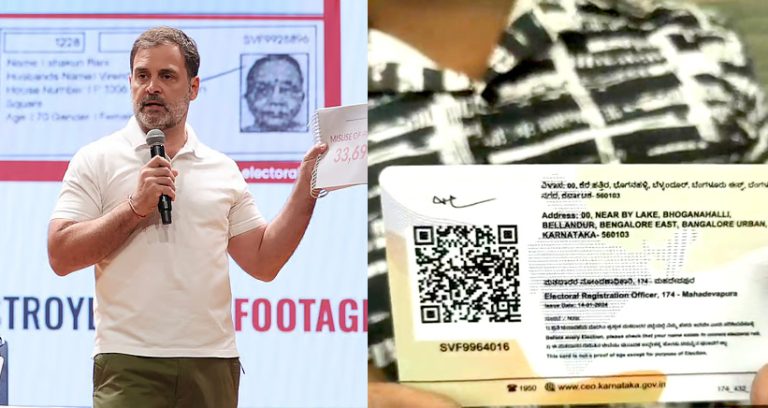
Congress prince Rahul Gandhi and other leaders have been deliberately questioning the validity of around 76 lakh votes reportedly cast after the 6 pm deadline, to allege that the Election Commission of India favoured the Bhartiya Janata Party-led alliance in the Maharashtra assembly elections.

After the Election Commission invited Leader of Opposition Rahul Gandhi for talks over his allegations regarding the 2024 Maharashtra Assembly polls, the Congress party on Thursday responded through a letter.

The Congress party has urged the Election Commission to share a digital, machine-readable copy of the Maharashtra voter list and polling day video footage from both Maharashtra and Haryana within a week, saying they will meet the EC and present their analysis once the data is received.

In the letter, the Congress party wrote, “We request you to provide us with a machine-readable, digital copy of the Maharashtra voter lists and video footage of the polling day of Maharashtra and Haryana within a week from the date of this letter. This has been a long-standing request that should be easy for the EC to comply with. The Congress party leadership will be happy to meet with the EC soon after we have received these. In that meeting, we will even present our analysis findings to you.”

It must be recalled that the BJP-led Mahayuti coalition had won 235 out of 288 seats in the last assembly elections in Maharashtra, giving a major setback to the Maha Vikas Aghadi (MVA), the coalition of Congress, NCP, and Shiv Sena (UBT).

Leader of Opposition (LoP) in Lok Sabha Rahul Gandhi had earlier called upon the Election Commission to publish consolidated, digital, machinereadable voter rolls for the most recent elections to the Lok Sabha and Vidhan Sabhas of all states, including Maharashtra, saying that “telling the truth” will protect the poll panel’s credibility.

Unsurprisingly, Rahul Gandhi cited a dubious report published by leftist propaganda outlet Newslaundry and claimed that the voter list grew by eight per cent in just five months in Maharashtra Chief Minister Devendra Fadnavis’s constituency, labelling it as “vote theft”.

“In Maharashtra CM’s constituency, the voter list grew by 8 per cent in just 5 months. Some booths saw a 20-50 per cent surge. BLOs reported unknown individuals casting votes. Media uncovered thousands of voters with no verified address,” Gandhi claimed on X.

“And the EC? Silent – or complicit. These aren’t isolated glitches. This is vote theft. The cover-up is the confession. “That’s why we demand the immediate release of machine-readable digital voter rolls and CCTV footage,” Gandhi added.

Additional 76 lakh votes, voter theft, ECI compromised? Congress party peddling conspiracy theories based on the Newslaundry report, serving propaganda packaged as facts

The Newslaundry article cited by Rahul Gandhi in his X post claimed that CM Devendra Fadnavis’s seat, Nagpur West, added 29,219 new voters. The report claimed that about 162 voters were added every day, marking an 8.25 per cent increase.

Newslaundry also claimed that of 378 booths, 263 saw a “jump of over 4 percent in the electorate – in 26 booths more than 20 per cent and in four booths over 40 percent.”

Newslaundry report cited by Rahul Gandhi in his recent X post attacking the ECI

In response to Rahul Gandhi’s allegations based on the Newslaundry report, CM Devendra Fadnavis put out a detailed rebuttal. CM Fadnavis said that there are more than 25 constituencies in Maharashtra where more than 8% voters have increased between the Lok Sabha and Assembly elections, and Congress has won in many places.

“Rahul Gandhi, I agree that your pain of the crushing defeat in Maharashtra is increasing day by day. But for how long will you keep shooting arrows in the air? By the way, for your information, there are more than 25 constituencies in Maharashtra where more than 8% voters have increased between the Lok Sabha and Assembly elections and Congress has won in many places. In the West Nagpur constituency adjoining my South-West constituency, 7% voters (27,065) increased and Congress candidate Vikas Thackeray won the election there.

“In North Nagpur, 7% (29,348) voters increased, and Congress’s Nitin Raut won. In Pune district, in Vadgaon Sheri, 10% (50,911) voters increased and Sharad Pawar faction’s Bapusaheb Pathare won. In Malad West, 11% (38,625) voters increased and your Congress party’s Aslam Sheikh won. In Mumbra, 9% (46,041) voters increased, and Sharad Pawar faction’s Jitendra Awhad won,” Fadnavis added.

“Even if not with the allies, but it would have been better if he had talked to his old colleagues like Aslam Sheikh, Vikas Thackeray, Nitin Raut of his own party, once before this tweet. At least the lack of communication in Congress would not have been displayed so badly…” he continued.

Lie louder, make unreasonable demands, cry hoarse when get called out: Congress’s coping mechanism or ground laying for renewed ‘Democracy khatre mein hai’ campaign?

Notably, Rahul Gandhi had earlier also raised questions over the transparency and integrity of the Election Commission and claimed that the ECI is ‘destroying evidence’, including 45-day CCTV footage. “Voter list? Will not provide machine-readable format. CCTV footage? It was hidden by changing the law. Photo-video of the election? Now, not in 1 year, we will destroy it in 45 days only. The one from whom the answer was needed is destroying the evidence. It is clear – the match is fixed. And a fixed election is poison for democracy,” Gandhi wrote on X.

Gandhi demanded that the CCTV footage be made public, even as making webcasting footage of polling stations public would have violated the privacy and security concerns of voters. The ECI had slammed the Congress party and said that while such demands appeared to champion voter interest and democratic integrity, they were actually intended to achieve the “opposite objective”.

For the sake of lending credence to his conspiracy theory, Rahul Gandhi has been trying to compel the ECI to share the footage, which could allow easy identification of voters and non-voters, exposing them to potential pressure, discrimination, or intimidation by anti-social elements.

In this regard, the ECI officials said that if a political party received fewer votes at a specific booth, it could use CCTV footage to identify who voted and who didn’t, which could put the voters in danger.

The ECI had also clarified that they retained CCTV footage, which is used solely as an internal administrative tool, for 45 days in accordance with the legal window for filing an election petition. The ECI contended that since no election can be disputed beyond this time period, retaining the video would allow non-contestants to exploit it to disseminate disinformation and other nefarious agendas. They further stated that the footage is saved and made available to the appropriate court upon request if an election petition is filed within 45 days.


Congress scion claimed 7,000 fake voters registered from one building in Shirdi, caught lying again

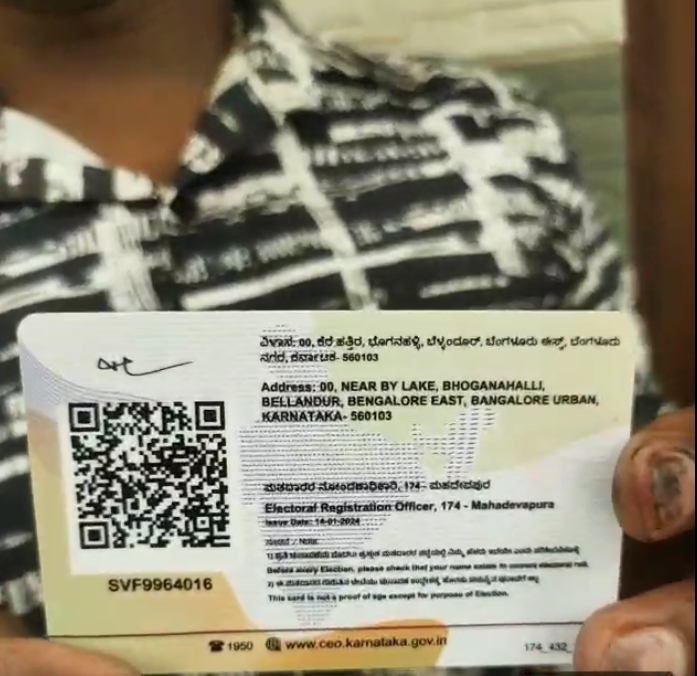
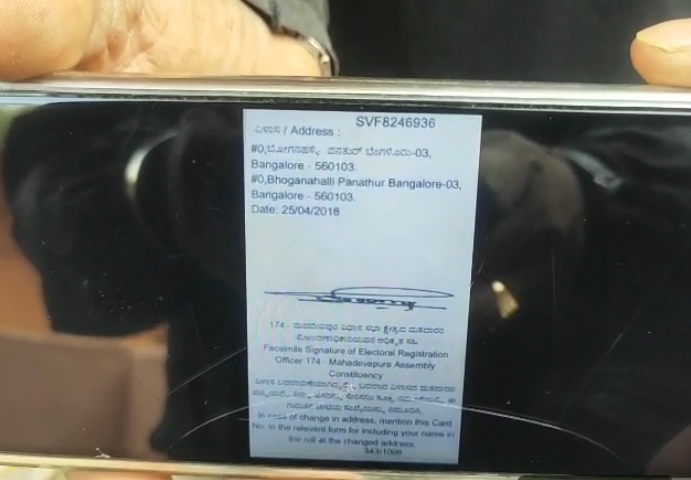
Not only this, in February this year, Rahul Gandhi also claimed in parliament that 7,000 voters had been registered from “one building” in the Shirdi constituency, in a period of five months after the Lok Sabha polls last year. Gandhi insinuated that fake voters were added from this common address. However, it turned out that contrary to the claim made by Rahul Gandhi, the number was close to 3,000, that too not from one single building in Shirdi.

These were mostly students residing in hostels in the Loni town under the Shirdi seat. In their forms, the college they are enrolled in is the registered address, and hence the common address across students.

Elaborating on the common address among the 3,000 registered voters, Ahilyanagar District Collector Siddharam Salimath told IE, “When we first received the complaint from a political party, we informed the Election Commission (EC) about the reality. The increase of voters from the centre in question was about 3,000 voters. There are educational institutions in the Loni area, and the new voters are students from hostels of one of those institutions.”

He added, “If a person is above 18 years of age, he or she can choose where to vote from with the necessary documents. Since the students are residing in hostels, the college admission papers are taken as residence proof.”

The officer had also stated that a thorough cross-check was done to see if any voter registered twice; however, no such discrepancy was found. Thus, Rahul Gandhi’s another claim turned out to be misleading.

Rahul Gandhi lied about 65 lakh additional votes in the Maharashtra elections during his US visit

Even during his two-day visit to the United States in April 2025, Rahul Gandhi claimed that the electoral process was manipulated to favour the Bhartiya Janata Party-led Mahayuti Alliance in the Maharashtra elections. The Congress scion alleged that something is “very wrong with the system.”

Citing the example of the Maharashtra elections, Rahul Gandhi claimed that there was an addition of 65 lakh voters to the voter turnout in two hours, which was impossible.

“It is very clear to us that the Election Commission is compromised, and it is very clear that there is something wrong with the system. I have said this multiple times…More people voted in the Maharashtra Assembly elections than there are adults in Maharashtra. The Election Commission gave us a voting figure for 5:30 PM, and between 5:30 PM and 7:30 PM, 65 lakh voters voted. This is physically impossible. For a voter to vote, it takes approximately 3 minutes, and if you do the Math, it would mean that there were lines of voters till 2 AM, but this did not happen…When we asked them for the videography, they not only refused but they also changed the law so that now we are not allowed to ask for the videography…” Gandhi said.

The Indian Express platformed Rahul Gandhi to peddle lies about Maharashtra and Lok Sabha elections

In June 2025, Gandhi wrote a misleading opinion piece in The Indian Express, wherein he desperately tried to dub the party’s loss in the 2024 Maharashtra Vidhan Sabha election as the result of ‘industrial-scale rigging.’ From questioning appointment process of Election Commissioners, making misleading claims of inflated voter registration, lying about increased voter turnout to mindlessly conflating Lok Sabha and Vidhan Sabha results, Rahul Gandhi blamed everything under the sun for his party’s nonchalant performance in the Maharashtra elections and the Lok Sabha elections perhaps as a coping mechanism or to lay ground for a wider political campaign that would allow him to play victim of the ‘system’ while also dodging accountability for his party’s political incompetence. OpIndia published a detailed and fact-based rebuttal to Rahul Gandhi’s lies.

ECI debunked Congress’s lies about inflated voter turnout in Maharashtra elections

After the 2024 Maharashtra assembly elections, the Election Commission of India (ECI) wrote a detailed letter to the Congress party debunking their lies pointwise. Regarding Congress’s allegation of inflated voter turnout, the apex poll body explained how an increased voter turnout in the final hours of voting is a normal phenomenon. The ECI pointed out how it is impossible to change the actual voter turnout, as the statutory Form 17C, which contains the details of voter turnout, is provided to the authorised agents of candidates at the polling booth at the time of closing of the poll. The ECI also refuted Congress’s allegation that the number of voters was arbitrarily added and removed from the electoral rolls.

Back in November 2024, Congress used the dubious report published by leftist propaganda outlet The Wire, and now the party is using a similar, zero-per-cent-fact-hundred-per-cent-propaganda report by another leftist outlet, Newslaundry.

As reported earlier, TheWire had claimed that 5,04,313 additional votes were cast during the Maharashtra state elections. The Chief Electoral Officer (CEO) Maharashtra had debunked these lies. He stated that TheWire report had included 5,38,225 postal ballots in the votes counted, which was not part of the votes polled data released by the CEO Maharashtra. It highlighted that 6,40,88,195 votes were cast in all 288 Assembly seats through EVMs, which has been “mischievously” displayed as the overall number of votes cast.

The fact that Rahul Gandhi fails to substantiate his allegations and that his lies have been repeatedly debunked by the Election Commission after each election does not make a difference to Gandhi. That is because his motive is not to bring about transparency or accountability but to save his face and shift the blame to an external source after his party’s repeated election defeats. Gandhi and his party have repeated their same old, done-to-death excuses for losing elections so many times that they have become the standard, go-to excuses for any political party that loses an election in the country.

Congress claimed irregularities in the Maharashtra electoral roll, ECI debunked the lies

In April this year, the election commission refuted the accusations of irregularities in Maharashtra’s electoral roll published in January this year. Hardly any first or second appeals were made under Section 24 of the Representation of People Act, or correction of any entries in Electoral Rolls (Section 22) or Inclusion (Section 23) during the recent Special Summary Revision published on January 6-7, 2025. The ECI said that only 89 appeals for changes with the district election office and only one with the chief electoral office were filed against 9.7 crore registered voters. The ECI asserted that this negligible number contradicts the claims made by opposition parties in parliament’s winter session.

Bombay High Court adds to Congress embarrassment, dismisses petition challenging 2024 Maharashtra elections

The Bombay High Court on Wednesday dismissed a plea seeking to annul the November 2024 Maharashtra Assembly election results over alleged voting irregularities.

The petition, filed by Mumbai resident Chetan Chandrakant Ahire and argued by Vanchit Bahujan Aghadi leader Prakash Ambedkar, questioned the validity of around 76 lakh votes reportedly cast after the 6 pm deadline. It alleged a lack of transparency and claimed a suspicious surge in late voting, raising doubts about the electoral process.

The bench of Justices GS Kulkarni and Arif Doctor, however, found no merit in the arguments, noting that similar voting trends in past elections, including the 2024 Lok Sabha polls, were never challenged. The court stated that unless there was clear evidence linking post-6 pm votes to any candidate’s victory, the allegations were baseless.

While dismissing the petition, the court refrained from imposing costs despite noting the significant time lost. The Election Commission’s counsel had also questioned the petitioner’s locus standi and the absence of victorious candidates in the case, arguments the court agreed with.

“We have no manner of doubt that this writ petition needs to be summarily rejected. It is accordingly rejected. The hearing of this petition has practically taken the whole day, leaving aside our urgent cause list, and for such reason, the petition would certainly warrant dismissal with costs; however, we refrain from doing so,” the court said.

It was indeed a waste of judicial time, since the ECI had on multiple occasions refuted these allegations, asserting the transparency of the process, with over 1 lakh booth-level officers, 288 returning officers, over 1 lakh booth-level agents, including 28,421 from the Congress party itself, overseeing the elections. Despite this, Congress and its undeclared Prime Minister aspirant persist in demanding digital voter rolls, CCTV footage and whatnot, painting the routine electoral practices as some sort of sinister anomalies just because his party failed to secure victory.

Why is Congress pretending to be asleep? Why is the party clinging to a narrative devoid of facts but loaded only with conspiracy theories?

Although EVM hacking and VVPAT tempering allegations brought nothing but criticism and embarassment for the Congress party, the question arises why the grand old party is clinging to an even more sinister narrative around voter turnout, inflated voter numbers, and whatnot to directly attack the ECI. Well, the answer lies in desperation and deflection. Having suffered a crushing defeat at the hands of the Mahayuti alliance, Congress is unwilling to introspect on electoral failures such as a lack of appealing leadership, a weak campaign, or failure to come up with better counters to the BJP-led alliance’s poll agenda. Instead of introspecting, Congress has resorted to masking its own shortcomings by casting aspersions on the ECI’s integrity and mindlessly alleging systemic manipulation.

Even as Congress’s claims of EVM hacking and VVPAT tempering were largely dismissed by the voters and even the courts as baseless, Congress pivoted to the ‘additional voters’ conspiracy theory. However, the recent remarks by the Bombay High Court on the petition that essentially put forth the same claims made by the Congress party regarding the Maharashtra poll results suggest that Congress’s strategy is backfiring spectacularly. The voters notice that the Congress party accepts the results of the elections conducted by the same ECI when it secures victory; however, it comes up with myriad conspiracy theories in the face of defeat. The voter notices how Congress projects its rare victories as ‘triumph’ of democracy by fighting the BJP-controlled ‘system’ while its defeat as ‘hum haare nahin hume haraya gaya hai’ [we didn’t lose, we were made to lose].

Congress’s disgraceful persistence in furthering debunked claims inadvertently goes in favour of its opponents, as the party is alienating voters who see through the party’s rhetoric as sour grapes. By doubling down on demands for voter lists and CCTV footage, Congress is playing a Gobbelsian trick of repeating a lie until it becomes truth. Congress is clinging to the apocryphal narrative that the party and its media allies have concocted since their strategy is not to seek answers but only to keep repeating the same lies in the form of questions to keep the flame of ‘JanNayak fighting the system’ burning. As long as the questions appear to remain unanswered, Congress will be able to dodge accountability for its own failures while also presenting itself as a ‘victim’ of a ‘system’ hijacked by its nemesis, the BJP.

If the party had any real intention of seeking factual answers, Congress would have sent its representative to the ECI office when the poll body invited the party to have its questions answered and before that they would have done some introspection as to why are they being rejected by the voters. Instead, Congress comes up with long and repetitive letters to push a false narrative that somehow they are keen to find the ‘truth’, but the ECI is avoiding them since they are hand in glove with the BJP. However, this charade is more harm than benefit to the Congress party, as no one but its own supportive ecosystem is buying its lies.

Bangladesh: Durga Mandir in Dhaka demolished by administration two days after Islamic mob issued an ultimatum to remove it, idols crushed by bulldozer

A Durga Mandir in Bangladesh capital Dhaka was demolishedv by the administration 2 days after a large mob threatened to bring it down. As per reports, the Khilkhet Sarbajanin Durga Mandir was demolished based on an order issued by Bangladesh Railway’s Dhaka Division Deputy Commissioner and Divisional Estate Officer Md. Nasir Uddin Mahmud on Wednesday.

The Durga Mandir was demolished on Thursday morning, surrounded by Hindu men and women breaking down in tears. A huge army and police bulldozer arrived at the Mandir premises from Purbachal Army Camp in Dhaka to carry out the order. Hindu devotees sat in front of the temple and tried to stop the demolition party, but army personnel removed them from the spot, and then the bulldozers proceeded to bring down the structure.

As a last resort, Hindus had requested to allow the Rath Yatra to take place tomorrow and postpone the demolition after that, but this was rejected. The idols in the temple, puja materials and other items in the temple were destroyed in the operation. The idols of Goddess Kali and Lord Shiva were crushed brutally under the bulldozer, shattered into pieces.

For more than half a century, annual Durga Puja is being held at the Khilkhet Sarbajanin Durga Mandir in Dhaka. In the temple premises, there is an idol of Goddess Kali also, regularly worshiped. The temple built with corrugated iron sheets was in a dilapidated condition, and was a makeshift temple built on Railway land, but was an important place of worship for minority Hindus in the Islamic nation.

On the night of June 24, a Muslim mob attacked the temple, attempted to vandalise it, and gave a deadline of 12 hours to vacate it. They also abused the devotees foul language and even threatened to kill them.

They gave an ultimatum to the Hindu devotees to remove the temple by 12 pm on Tuesday (24th June), and vowed to demolish the temple if their diktat is not implemented. After that, the local Hindu leaders approached the Khilket police.

However, instead of protecting the temple, it was demolished suddenly in the name of eviction, just two days after the mob violence. The Railway Department of the Bangladesh Government led by Mohammad Yunus has said that under the powers conferred by Sections 5(1) and 5(2) of Ordinance No. 24 of 1970, a program to evict illegal establishments and squatters from Bangladesh Railway land in the Philkhet Bazar area from Kuril Bishwa Road intersection has been implemented to evict illegal encroachers from railway land.

As per the administration, the temple was located on encroached govt land. But the Hindus say that the temple was there for a long time with the knowledge of the administration, and it was never deemed to be illegal.

The demolition just before the Jagannath Yatra has created outrage among the Hindus in Bangladesh. While govt says it was eviction from encroached land, Hindus believe it just a part of ongoing atrocities against minorities in the country. Questions are also being raise while the idol could not be relocated instead of destroying it.

According to some locals, the land was actually donated for the temple by the Railways.

Prime Ministers Museum and Library may file theft case against Sonia Gandhi for withholding Nehru’s papers: Read why

Congress leader Sonia Gandhi may find herself in a legal storm as the Prime Ministers Museum and Library (PMML) Society is considering legal action to retrieve private papers of former Prime Minister Jawaharlal Nehru that were taken away in 2008. The discussions at the 47th Annual General Meeting of the PMML Society were held on 23rd June, chaired by Prime Minister Narendra Modi. Reports suggest that there was a consensus among the members that the issue must now be pursued through legal channels.

Sources within the PMML Trust have confirmed to OpIndia that a case of theft is indeed being considered. The documents in question were donated and are legally the property of the institution. The alleged removal of the papers by Sonia Gandhi took place during the UPA era and is now under sharp scrutiny.

Letters packed in 51 cartons taken away in 2008 during UPA rule

The controversy revolves around a large cache of documents from Nehru’s private collection. It includes letters exchanged with historical figures including Edwina Mountbatten, Albert Einstein, Jayaprakash Narayan, Vijaya Lakshmi Pandit, Babu Jagjivan Ram and Aruna Asaf Ali. These papers were housed at the Nehru Memorial Museum and Library (NMML), which is now known as PMML, between 1971 and 2008.

In 2008, the papers were reportedly packed in 51 boxes and taken by Sonia Gandhi. These included material that was originally donated to NMML by former Prime Minister Indira Gandhi and later by Sonia Gandhi herself, who acted as the family heir.

PMML sent several official letters and appeals this year to Sonia Gandhi’s office, including those from Gujarat-based historian and PMML Society member Professor Rizwan Kadri. However, the Congress leader did not respond. Kadri had written twice, first to Sonia Gandhi in September 2024, and then to Rahul Gandhi in December, urging the Gandhi family to return the original papers or at least provide photocopies and digital scans of the same. However, neither Sonia Gandhi nor Rahul Gandhi responded to the requests.

PM Modi chairs crucial AGM; ministers and society members back retrieval

The 47th AGM was held at Teen Murti Bhavan. It was attended by senior Union Ministers including Rajnath Singh, who serves as Vice-President of the PMML Society, Nirmala Sitharaman, Dharmendra Pradhan and Ashwini Vaishnaw. Other notable members included BJP leader Smriti Irani, lyricist Prasoon Joshi, and former Railway Board chairman Ashwani Lohani, who now serves as PMML’s Director.

Reports suggest that the meeting revisited the issue discussed earlier in the February 2024 AGM, that of Sonia Gandhi having “reclaimed” a significant portion of papers donated by the Nehru-Gandhi family. The board reached a consensus that these papers are a national treasure and must be preserved by the institution.

Following legal advice received after the previous AGM, a formal communication had been sent earlier this year to Sonia Gandhi’s office. For the first time, it was officially put on record that the papers had been taken away and a request was made for their return. However, no reply came from Gandhi’s office. Members of the PMML Society now seek to “course correct” what they described as an “administrative lapse” from the pre-2014 era.

Trust asserts that donated papers cannot be reclaimed

The Trust is considering its legal position on the principle that once a donation is made, ownership cannot be reversed. Hence, the papers remain the rightful property of the museum. Discussions have also been held on related concerns of ownership, custodianship, copyright, and the scholarly use of these collections.

According to the PMML Society, it is essential to ensure that letters such as those between Nehru and Edwina Mountbatten are accounted for. There are demands among members for a forensic audit of the material that was taken to assess if any vital documents are missing.

New-look council backs action, PM suggests museum mapping and Emergency archive

The PMML executive council was reconstituted in January 2025. Notable new members including Smriti Irani, former NITI Aayog Vice-Chairman Rajiv Kumar, retired Lt Gen Syed Ata Hasnain, filmmaker Shekhar Kapur, and artist Vasudev Kamath were added to the council. Nripendra Mishra was given another five-year term as chairperson.

In the Monday meeting, apart from the Nehru papers issue, PM Modi proposed creating a “museum map” of India and a comprehensive national database of museums across the country. He also suggested compiling all legal cases and documentation related to the Emergency period to mark its 50th anniversary.

BJP dubs letters ‘historical documents’, Parliament had taken note too

In December 2024, BJP MP Sambit Patra reacted to the matter of papers linked to Nehru and stated that these are not just family correspondences. He asserted that those documents are valuable in national interest. He insisted that the public had a right to know what they contain. The issue was also raised in Parliament last year, signalling its potential to escalate further if legal proceedings are initiated against Sonia Gandhi.

If the PMML Trust goes ahead with formal legal steps, it could trigger a high-profile legal and political battle between the PM Modi-led NDA government and the Congress party.