Home Blog Page 2783

‘Shirk’, ‘You’d go to hell’: Islamists attack Indian cricketer Zaheer Khan after he shares his picture celebrating Diwali

The Hindu festival of Diwali, which symbolizes the spiritual victory of light over darkness, good over evil, and knowledge over ignorance was celebrated across the country with much grandeur and devotion. While many celebrities took to their social media accounts to wish citizens a Happy Diwali, the Islamist netizens slammed former Indian cricketer Zaheer Khan for wishing everyone a prosperous Diwali.

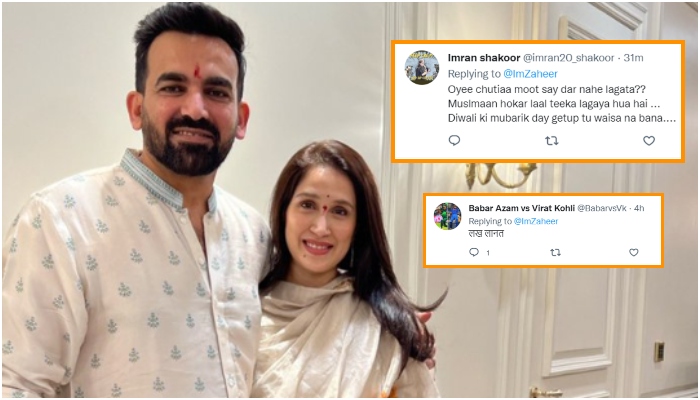
Khan on October 24 happened to post a picture on Twitter with his wife, actress Sagarika Ghatge to extend wishes for the ongoing Hindu festival of Diwali. “Happy Diwali from us to you”, he tweeted. The former cricketer was also seen sporting a tilak on his forehead. The Islamist netizens apparently didn’t like the post shared by Khan and schooled him for going against his religion.

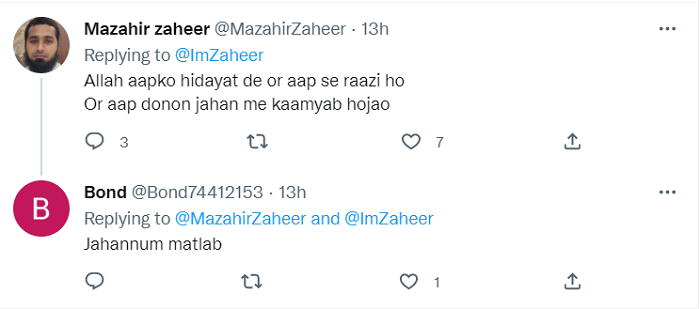
One of the users identified as Hani Mirza on Twitter called India an anti-Muslim country while ‘blessing’ the couple. “Bless, I mean I can understand why you posted this picture in an anti-Muslim country, India where you have to live, unfortunately”, he tweeted. Meanwhile, another named Haroon Wani stated that though Muslims can have a love for every religion and zero per cent hate for any particular religion, they can’t celebrate festivals celebrated by other religions.
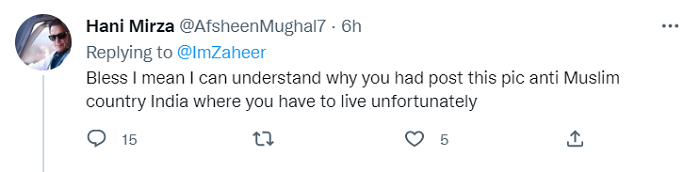
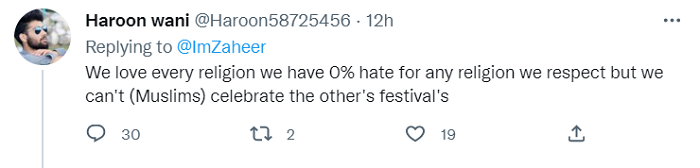
Screenshot from Twitter

A Twitter quoted Khan’s tweet and said “shirk”. It is worth noting that idol worshipping or idolatry is considered an unpardonable sin as per Islamic texts and carries strict punishment. The Qur’an considers shirk as a sin that will not be forgiven if a person dies without repenting of it.

Another user shared a quote in which Mohammed Ali Jinnah, the founder of Pakistan was quoted saying, “Muslims who are opposing Pakistan will spend rest of their lives proving loyalty to India”. The user, who hailed from Pakistan, also termed Jinnah a legend and criticized Khan for wishing everyone on the Hindu festival of Diwali.

Also, one of the users identified as Waleed Afridi on Twitter could be seen attacking the former Indian cricketer on his Diwali post this year. He said that Khan had extended Diwali wishes forcefully to live in India. “Kia kuch kerna phadta hy India ma rehny k liye lol (What all a man has to do to live in India)”, the tweet read which was followed by a hilarious reply by a user who said, “1947 mai train choodni padhti hai (He has to leave the train to Pakistan in 1947)”.
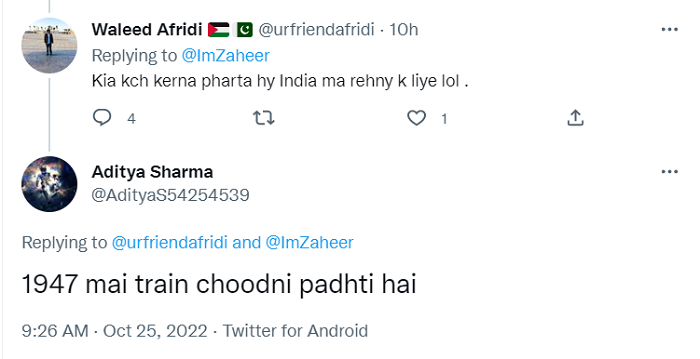
Screenshot from Twitter

Here are some more tweets by Islamists abusing Khan for wishing on Diwali
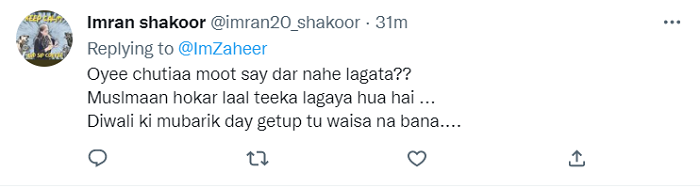
Screenshot from Twitter

It is notable that this is not the first time that the former Indian cricketer is being hated by Muslims for extending wishes on Diwali. Earlier in the year 2019, Khan was abused by radical fundamentalists. Also, recently, cricketer Mohammed Shami was slammed by radical Islamists for extending wishes on the occasion of Dussehra.

Zaheer Khan was a renowned pace bowler in the Indian cricket team. He was one of the world’s finest pacers of his time. His powerful left-arm bowling had consistently challenged several world-class batsmen and played a pivotal role in India’s 2011 world cup victory. The cricketer made his international cricket debut in the year 2000. The left-arm bowler appeared in 92 Tests, 200 ODIs, and 17 T20Is, bagging 311, 282, and 17 wickets, respectively. He also played six One-Day Internationals for Asia XI throughout his international career. Zaheer is the second most successful Indian pacer and the fourth most successful Indian bowler.
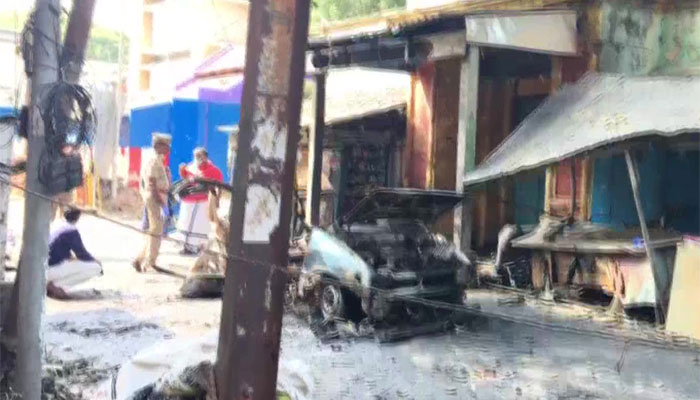
Five arrested in Coimbatore blast case where suspected ISIS suicide bomber Jamesha Mubin died inside car that exploded near temple

On October 25, Coimbatore police informed that they had arrested five people, identified as Mohammed Talka, Mohammed Azarudeen, Mohammed Riyas, Feroz Ismail, and Mohammed Navaz Ismail, in the cylinder blast case. A 29-year-old man identified as Jamesha Mubin of Kottaipudur, Ukkadam, was killed in the blast on October 23.

As per the police, the blast was triggered by an LPG cylinder in the vehicle. Reports say that intelligence agencies suspect it to be a terror attack and that Mubin might be a suicide member. During a search at Mubin’s house, the police recovered a large cache of explosive material. News agency ANI quoted DGP Sylendra Babu saying that the investigation into the matter was underway.

He said, “During the search at Jamesa Mubin’s residence in the Kottaimedu area in Ukkadam, we have recovered chemicals like Potassium nitrate, aluminium, and sulfur, which are used to make crude bombs. We have also recovered nails and ball bearing from the spot where the explosion happened. He is not affiliated with any Organizations.”

Notably, Ukkadam is considered to be a sensitive area and has a Muslim-majority population. The blast on Sunday took place outside the famous ‘Kottai Eshwaran Temple’. Since then, the police have been on high alert, and additional police personnel were deployed across Coimbatore, considering Diwali.

Interestingly, the Intelligence Agencies have also confirmed that CCTV footage of Mubin was seen loading the cylinder in the car and that footage is being investigated. The News18 report also says that authorities believe that Mubin was “circumcised” and that the attack could have a link to ISIS. In the attack, the asbestos of the temple was damaged, however, no other damage was caused.

While the blast took place in the wee hours of Sunday morning, on Saturday night, at around 11:25 PM, 5 men were taking out gunny bags from the house of Mubin, as confirmed by the CCTV footage recovered by the police.

In above CCTV footage, the suspects could be taking some material out from a house in a white bag.

Dear Sonia fans, Rishi Sunak has become UK PM because he was chosen by Tory MPs for that post, not under some minority quota

Since Rahul Gandhi or Sonia Gandhi have so far failed to become Prime Minister of India, whenever Congress leaders and members of the old ecosystem see a chance, they choose to criticize the Indian people for not choosing them. It does not matter if their arguments are valid, or have any linking with facts, they just invent some contrived trope to claim India is a bad country because it has not ordained the descendants of Nehru as de-facto rulers.

When Rishi Sunak was declared as the next PM of the UK, with the support of the MPs of the Conservative Party in the UK, the same whine surfaced on Indian Twitter, by the same group of people.

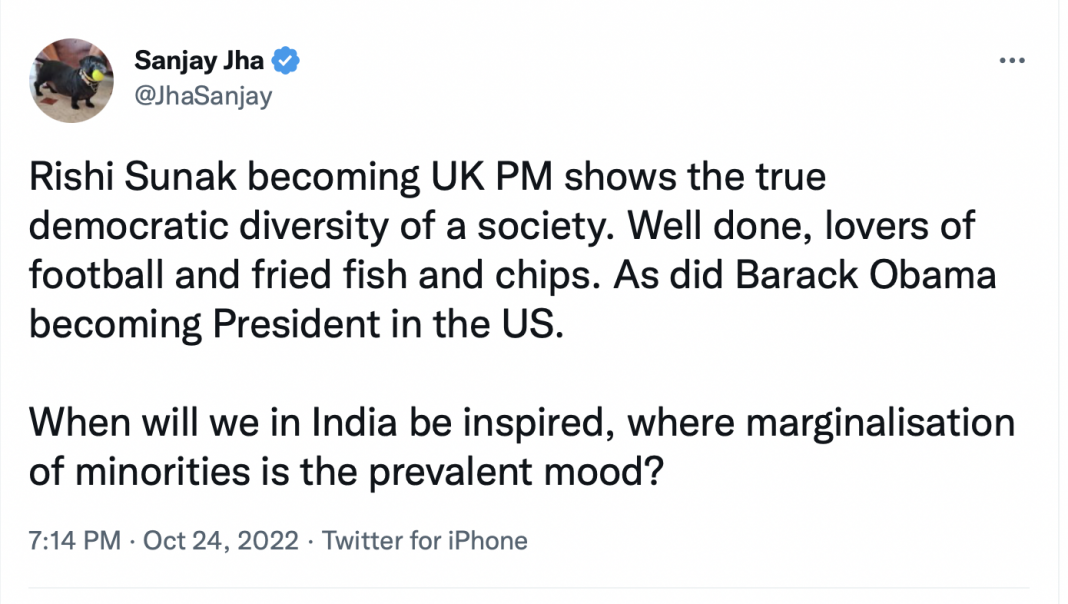
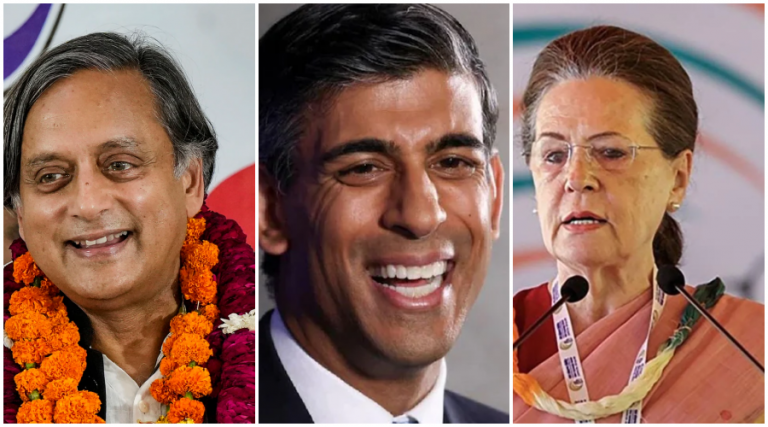
Thiruvananthapuram MP Shashi Tharoor tweeted, “Britain has done something ‘very rare’ in the world, in making a member of ‘visible minority’ in the most powerful office. As we Indians celebrate the ascent of Rishi Sunak, let’s honestly ask, can it happen here?”

TMC MP Mahua Moitra was quoted by Moneycontrol as saying, “Proud of the UK, my second favorite country for placing a British Asian in Number 10. May India be more tolerant and more accepting of all faiths, all backgrounds.”

Congress leader Chidambaram too joined in, praising the UK for embracing a non-majority citizen at high office.

It was not limited to just politicians, berating India indirectly for not anointing Sonia or Rahul as PM is one of the favorite ‘Liberal-Secular’ talking points.

Screenshot via Twitter

Here is why the above arguments are all hollow and meaningless and are just there to indirectly shame Indians for not creating especially favorable circumstances for the Gandhi family to rule the country.

That is not how electoral democracy works

India is a democracy that chooses its Prime Minister. The Prime Minister has to be the leader of the party (or coalition of parties) that has the most seats in the Lok Sabha. That is how Dr. Manmohan Singh, a Sikh from a minority community that has only a 1.72% share of the Indian population, became the Prime Minister. Dr. Manmohan Singh had the support of Congress MPs and a majority of MPs in the UPA coalition led by the Congress Party agreed to make him the PM. That is how he had become the Prime Minister for 2 consecutive terms.

In 2009, Manmohan Singh was the declared PM face of India, and the UPA won a bigger majority. So it was Indians who voted for a Sikh PM. On the other hand, in many states of India, where Hindus do not form a ‘visible majority’, it is almost impossible to have a Hindu majority CM. Electoral democracy manifests the will of the majority population and that is how it is going to be.

Sonia Gandhi was the President of the Congress Party and the de-facto leader of the UPA coalition. Why did the UPA not choose her to become the PM is the UPA’s problem. Sushma Swaraj and other BJP leaders’ vehement opposition to having Sonia as the PM is often cited, but let us be clear and factual here. The UPA led by the Congress party did not decide its PM face based on the sensibilities of BJP leaders. It chose a name that will be acceptable to the members of its own coalition.

Rishi Sunak has been chosen by Tory MPs as their leader for the present after Truss’s resignation, and after Boris Johnson declined. The same Sunak was rejected just a couple of months ago. He now has the support of Tory MPs that currently has a majority in the UK parliament because that is how their democracy works. He has not been appointed PM under some minority quota.

India does not need to learn democracy, minority rights, or representation from anyone.

India has had a Sikh PM, a Sikh President, 3 Muslim presidents, a Parsi Chief Justice, and currently a President from a remote Tribal community. It has had ministers, senior party leaders, judges, and CMs from a varied range of diverse communities and tribes. The constitution of India gives any Indian of the appropriate age the right to contest elections, form a party, gather a coalition, and hold a constitutional post. It has happened, and it will continue to happen. India does not need lessons in diversity or democracy from anyone, especially not the UK.

The UK is a monarchy, an Anglican Christian monarchy

The UK elects a parliament and appoints a PM, but it still bends the knee before a monarch. The monarchy is hereditary and the monarch is the head of the Church of England. When Rishi Sunak assumes office, one of his first jobs will be to visit King Charles and bow down before him.

India is a sovereign democratic republic. Our PM does not bend the knee before any monarch. Even the servile attitude displayed by Manmohan Singh before Sonia had created a negative impression in the mind of Indians and that is one of the major reasons why they rejected the Congress. Indians have refused to be ruled by any one family.

Shashi Tharoor and Chidambaram failed to become the leaders of their own party

It is not even a week since Shashi Tharoor lost the so-called ‘election’ for the post of Congress President to Mallikarjun Kharge by a huge margin. Despite the pretensions by the Congress that the elections were ‘fair’ everyone knows that Kharge won because he had the support of the Gandhi family. Tharoor himself had lamented how he was opposed by his own party members and how they had gone to Rahul Gandhi to make Tharoor drop out of the election.

So, it is a bit rich for Tharoor to comment on things like diversity, minority representation, democracy, etc when his own party is still under the rule of ‘one family’, almost like a sad, twisted version of a bankrupt, vanquished monarchy.

The thing is, just as Sunak has got the support of his party MPs to become PM, Rahul, Sonia, Priyanka Gandhi, Mamata Bannerjee, or anyone for that matter, can gather the support of their leaders, contest elections, and if their MPs are in majority, and they agree to accept them as the leader, can become the PM of India. There is no law that can stop them. We hold elections every 5 years.

Delhi: #DhuaHuaKejriwal trends as netizens share pictures of firecrackers being burst on Diwali defying ban by Arvind Kejriwal govt

As Diwali celebrations continue across the country, social media users have been uploading videos and pictures of lighting firecrackers, apparently in Delhi, defying the ban imposed by the state government led by Arvind Kejriwal’s Aam Aadmi Party. Users on Twitter used the hashtag #DhuaHuaKejriwal and shared photos and videos. Though the visuals shared seemed to be from Delhi, OpIndia could not verify the authenticity at the time.

One user wrote, “Reportedly Delhi was rocking today … Har Har Mahadev”

Another user wrote, “Thank You Delhi for showing your courage to son of Aurangzeb” and shared a video of fireworks over a vast sky.

Twitter user Mayank Singh wrote, #CrackerBan my foot. @ArvindKejriwal give your gyan on parali & delhi vehicle pollution instead of 1 days #Diwali celebration.” Mayank tweeted a video bursting firecrackers with the hashtag #DhuaHuaKejriwal

Anushree wrote, “Dedicated to @ArvindKejriwal and Friends!”

National Secretary of Bharatiya Janata Yuva Morcha Tajinder Pal Singh Bagga also took to Twitter and wrote, “@ArvindKejriwal was saying that the children of Hindus would be sent to jail for 6 months for lighting sparklers, the children blew up Kejriwal’s”

Notably, the Delhi government banned the manufacturing, storage, sale, and use of all types of fireworks in the state, citing poor air quality following the festival celebrations. Gopal Rai, Delhi’s Environment Minister, said on October 19 that manufacturing, storing, and selling firecrackers in the national capital is a penal offence. He went on to say that anyone caught engaging in these activities might face a Rs 5,000 fine and a six-month prison sentence. Even purchase and bursting crackers on Diwali would have attracted a fine of Rs 200 and a six month jail term.

And while firecrackers do pollute the air, the major problem with Delhi’s poor air quality is not one day of bursting crackers but the stubble burning in neighbouring states, especially Punjab. The wind direction upon burning of stubble after the reaping that takes place around mid-October, brings the pollutants towards national capital which leads to severely polluted air quality around Diwali.

Earlier, a study conducted by IIT Delhi revealed that biomass burning contributes the most to the air pollution of the national capital, and the pollutants from Diwali firecrackers don’t even remain in the air for a day. According to the research, biomass burning during winter includes stubble burning and burning of firewood etc for heat.

‘Environment Canada’ singles out Diwali fireworks for poor air quality, retracts statement later

On Monday (October 25), ‘Environment Canada’ along with Ontario’s Ministry of the Environment singled out the Hindu festival of Diwali for ‘high levels of air pollution’ in the Ontario province of Canada.

While blaming the decline in air quality on Diwali firecrackers, it said, “A special air quality statement is in place due to the possibility of deteriorating air quality as a result of fireworks for Diwali.”

“Light winds and stagnating weather conditions are expected to cause increasing levels of air pollution. Air quality may deteriorate locally if the smoke from fireworks remains at or descends to ground level,” Environment Canada added.

“If you or those in your care are exposed to firework smoke, especially those who are particularly sensitive to smoke, consider taking extra precautions to reduce your exposure,” it further cautioned. The contentious observation had raised fear of backlash among the local Hindus.

“That is my concern, is for the safety of our community. I think it was purely wrong timing and not properly presented with facts to support any argument that there will be a negative impact,” said Hindu Federation president Pandit Roopnauth Sharma.

He emphasised, “The person who made the statement didn’t do their due diligence or consider the impact of their statement.” However, by Monday (October 25) afternoon, the contentious observation was dropped from the advisory for residents of Toronto, Mississauga and Brampton without explanation.

Environment Canada retracts statement

The updated statement read, “A special air quality statement is in place as air quality is expected to deteriorate this evening due to meteorological conditions common at this time of year.”

It must be mentioned that Brampton and Mississauga and Brampton allow burning firecrackers on private property without the need for a permit on Diwali. However, the same rule does not apply to the city of Toronto, where a permit is mandatory.

Interestingly, in Brampton, firecrackers that travel only up to 3 metres are permitted. In Mississauga, only ‘low-hazard recreational fireworks’ can be used without permit.

PM Modi’s congratulatory message to Rishi Sunak mentions the ‘living bridges’ of Meghalaya, read what they are

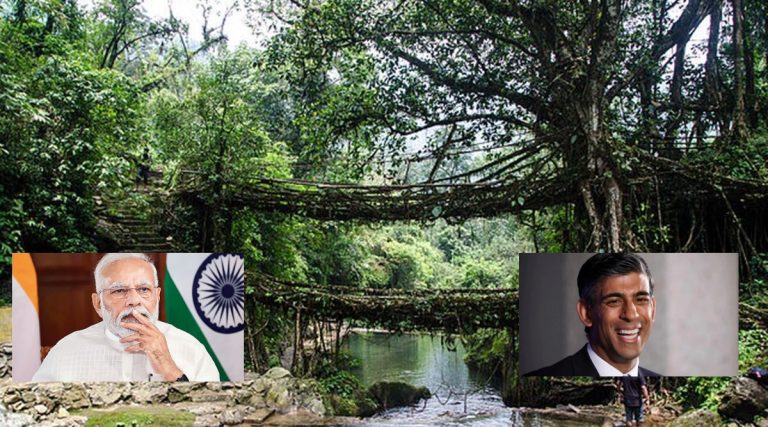
On October 24, Prime Minister Narendra Modi congratulated the newly-elected Prime Minister of the United Kingdom, Rishi Sunak. In his message, he called PM Sunak an example of ‘living bridge’, that the UK Indians are.

He wrote, “Warmest congratulations Rishi Sunak! As you become UK PM, I look forward to working closely together on global issues and implementing Roadmap 2030. Special Diwali wishes to the ‘living bridge’ of UK Indians as we transform our historic ties into a modern partnership.”

The ‘Living Bridges’ of Meghalaya – the bridges that get stronger with time

Meghalaya has a vast and healthy ecosystem that contains dense forests. The Khasi tribe, which lives in and around those forests in the eastern parts of Meghalaya, are believed to be the creators of the living bridges or the living root bridges. The Khasi tribe is well known for its ability to nurture the ecosystem and self-sufficiency.

Living root bridges are one of many extraordinary legacies of Khasi. These bridges are pedestrian bridges made out of the roots of living trees, thus the name. These are used mainly for crossing rivers. These bridges form an essential connection between remote places and help the tribe members source raw materials like wood and water for sustainable survival in the dense forest.

This year, the living root bridges of Meghalaya were included in the preliminary list for UNESCO World Heritage Site status.

The process of creating Living Root Bridges

The living root bridges are the symbol of the relationship of the Khasi tribe with the forests. The entire structure of these bridges is made from tree branches, trunks and roots. The formation of the bridge begins with placing young pliable aerial roots of Ficus Elastica trees in hollowed-out trunks of the Areca Catechu tree, which is a type of palm tree.

The trunks provide essential nutrition and protection from the weather to the young roots. These trunks also provide a guidance system to the roots. Initially, a bamboo framework is placed alongside the entire structure to provide it basic support. Gradually more roots are included in the structure in different geometric shapes, such as stairs, handrails etc. Over time, as the aerial roots increase in strength and thickness, the trunks are no longer required.

With time, the tribe members add dead load to the bridge in the form of stones, timber planks, leaves, and soil. It helps not only to plug the gaps between the roots but also becomes a way to weight test the living root structure. With time, the humid climate in Meghalaya and the pedestrian movement along the bridge compact the soil and dead load.

It takes around 15 to 30 years for the roots to become strong enough that it no longer requires the bamboo framework to support the substantial weight. The bridges made out of concrete get weaker with time and use. On the other hand, these living root bridges get stronger and more resistant with time and use. The average span of these bridges varies from 15 feet to 250 feet. These bridges last for several centuries.

PM Modi used the term to describe the flourishing Indian diaspora

For hundreds of years, Indians have traveled to various parts of the world and have created thriving communities in several countries. Sunak’s parents were born in Kenya and Tanzania respectively. By mentioning ‘living bridges’, PM Modi meant that the descendants of Indians are the living, breathing, and flourishing representatives of India’s timeless culture and energy.

Gujarat: Petrol bombs hurled, shops set on fire as communal clashes erupt in Vadodara on Diwali night

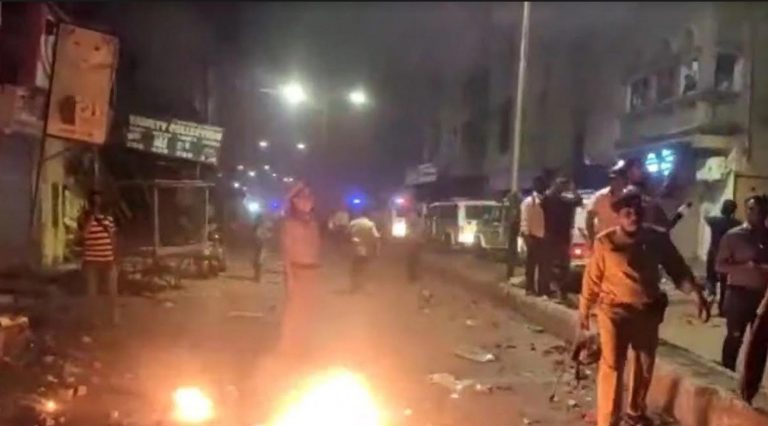
On Diwali night, communal clashes erupted in Vadodara’s Pani Gate locality. Local media reports suggest the clashes broke out over bursting of firecrackers on Diwali and petrol bombs were also hurled. Police has arrested one suspect from the general direction from which the petrol bomb was thrown.

As per the report, a mob also damaged a few shops there and set some on fire. The incident took place near the Muslim medical centre, a medical store, that is there in the area.

Reports suggest that streetlights were turned off before violence broke out so that the culprits cannot be identified. The police reached the spot and brought things under control. Police is verifying CCTV footage and questioning eye witnesses to find out motivation behind it. Further investigation is currently underway.

Situation in this area had heated up earlier in August during the Ganesh Chaturthi as well. 13 people were detained after stones were pelted on the procession during Ganesh Visarjan. Similarly, such clashes took place in same area during Navratri as well.

Intelligence inputs say the Coimbatore explosion opposite Kottai Eswaran Temple was an act of terror, Mubin possibly a suicide bomber: Details

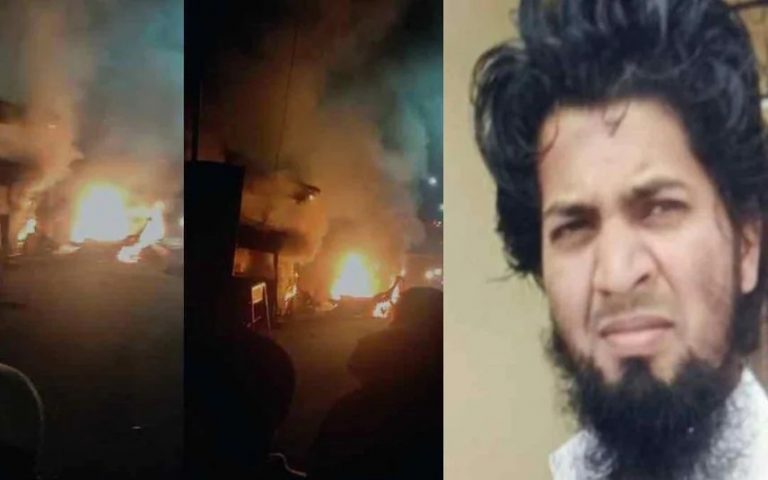
A 25-year-old man died on October 22 in Coimbatore, Tamil Nadu, after an LPG cylinder in a vehicle exploded in the communally sensitive Kottaimedu region. A Jamesha Mubin of Kottaipudur, near GM Nagar in Ukkadam, has been identified as the deceased who triggered the Coimbatore blast. There was an explosion at about 4 am in a Maruti car just opposite the Kottai Eswaran temple in the Ukkadam area of Coimbatore. Two gas cylinders, marbles, and nails were found.

The blast caused the vehicle, a Maruti 800 hatchback to shatter into pieces. Another unexploded LPG cylinder, steel balls, glass pebbles, and aluminium and iron nails were also recovered from the spot by police.

Reports are now emerging of the Intelligence Agencies confirming that the blast was not detonation by mistake, however, was a confirmed “Fidayeen attack” or terrorist attack. According to an exclusive report by News18, there have been several explosive items like Potassium nitrate, sulphate etc have been recovered from the house of Jamesha Mubin, the terrorist who was in the car that exploded.

Reported, on his phone display picture, Mubin had written, “if the news about my death reaches you, forgive my mistakes, hide my shortcomings, participate in Janaasa and pray for me” – according to News18 intelligence sources, this is a clear indication that Mubin was, in fact, a suicide bomber. In fact, the News18 source has said that Mubin’s plan was to detonate, probably when the Temple crowd was at its peak and that could be the reason why he had gone to the area at 4 AM.

Interestingly, the Intelligence Agencies have also confirmed that CCTV footage of Mubin was seen loading the cylinder in the car and that footage is being investigated. The News18 report also says that authorities believe that Mubin was “circumcised” and that the attack could have a link to ISIS. In the attack, the asbestos of the temple was damaged, however, no other damage was caused.

While the blast took place in the wee hours of Sunday morning, on Saturday night, at around 11:25 PM, 5 men were taking out gunny bags from the house of Mubin, as confirmed by the CCTV footage recovered by the police.

It is pertinent to note that before this information emerged about the Coimbatore blast, the DGP had given a different statement. “He is not affiliated with any organisation. There is no case against the deceased person, but he has links with a few people under NIA’s radar. We have identified the source of the cylinders and the car. This could not be a suicide attack. The explosion happened when the nails and ball bearing were in the car. Chemicals were in his home. We are going through his call history and contacting the people who were in touch with him,” the DGP said. “We have traced him within 12 hours of the incident. It is suspected that Jamesha was on his way to some other place in the car with materials used for making explosives. To evade police checks, he must have parked the vehicle in front of the temple where the blast occurred. We don’t know the full details of his plan. Further probe is on,” Sylendra Babu said. The DGP also said, “In 2019, the National Investigation Agency conducted searches at his house. We are investigating his background, links, and possible association with any organisation”.

Who is Jamesha Mubin – the Islamist who triggered the Coimbatore blast

Jamesha Mubin, who triggered the Coimbatore blast, used to work in his father’s scrap store in the city’s Town Hall district. Police have filed complaints under Sections 174 of the IPC and 3A of the Explosive Substances Act, and an investigation has commenced.

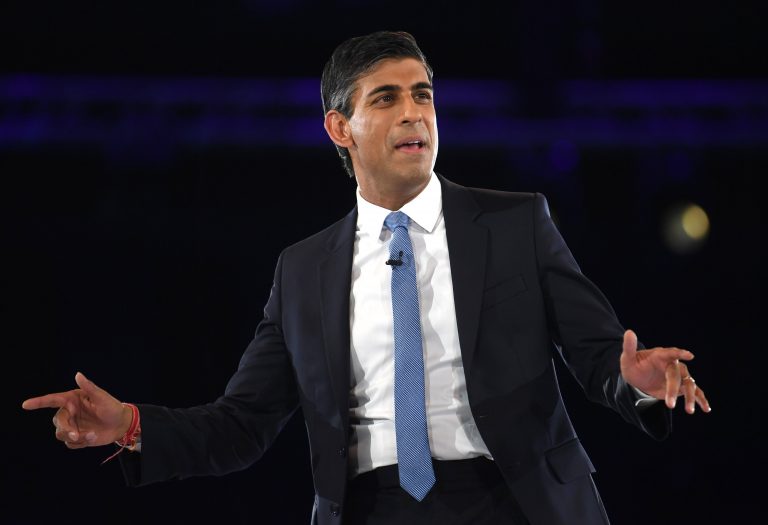
Rishi Sunak is new Prime Minister of UK, first Indian-origin person to hold the chair

Rishi Sunak is now set to succeed Liz Truss as the new Prime Minister of UK. This move comes days after Truss announced her resignation as a result of a number of policy reversals, Cabinet reshuffles, and an open revolt against her.  Former UK Prime Minister Boris Johnson had amassed huge support for himself setting stage for his own huge comeback to power, months after his abrupt resignation.

However, Sunak will now become the Prime Minister of UK, a first person of colour to hold the post. He would also be first person of Indian origin and a first Hindu person to do so. He will be third Prime Minister of UK in seven weeks.

Resignation by Liz Truss

United Kingdom’s Prime Minister Liz Truss resigned on Thursday 20th October 2022. She resigned from the Prime Ministerial post on the 45th day of joining the office. Truss made the statement outside Downing Street, following her near-complete loss of political power. Liz Truss announced her resignation following the collapse of the markets after her controversial economic policies. She also lost two important ministers, and lose the trust of nearly all of her own MPs. Truss will hold the record for the shortest tenure as prime minister of the UK.

On 5th September 2022, Mary Elizabeth Truss, serving as the Foreign Secretary since 2021, emerged victorious in her race with Rishi Sunak to become the new Prime Minister of the United Kingdom. Liz Truss got over 57% of the votes compared to Sunak, who served as the Chancellor of the Exchequer in Boris Johnson’s administration before resigning, who could only get just over 42%.

Bandi Chhor Diwas: Read about the significance of Diwali in this Sikh festival

Sikhs celebrate Bandi Chhor Diwas, which falls on the day of Diwali, the Hindu festival which commemorates return of Bhagwan Ram from Lanka along with Maa Sita and his brother Lakshman after slaying Lankan demon king Ravan. Diwali not only holds utmost importance in Hinduism, but it is an important festival for Sikhs as well. Historical documents reveal how Sikh Gurus and leaders have celebrated the festival for centuries. This day is also celebrated as Bandi Chhor Diwas, which literally translates to “The day of prisoner release”.

The history of Bandi Chhor Diwas

Bandi Chhor Diwas is linked to Shri Guru Hargobind Singh Ji, who was the sixth Sikh Guru. Shri Guru Hargobind Singh Ji was only eleven years old when he had to take over as Sikh Guru after his father, Shri Guru Arjan Singh Ji, was killed by the Mughals. As per the Sikh records, the Mughals did not like some verses in Shri Guru Granth Sahib Ji as they claimed they were against Islam. They asked Guru Arjan Ji to remove those verses, but he denied it and was assassinated by the Mughals.

After taking over as Sixth Sikh Guru in 1606, Shri Guri Hargobind Singh Ji decided to concentrate on ‘Shakti’ with ‘Bhakti’. He called for the formation of the Sikh army to fight against the atrocities of the Mughals. It is said that at the young age of 11, he used to keep two swords with him named Meeri and Peeri. Meeri word came from Meer, which means the ruler and Peeri word came from Peer, which means religious leader or saint.

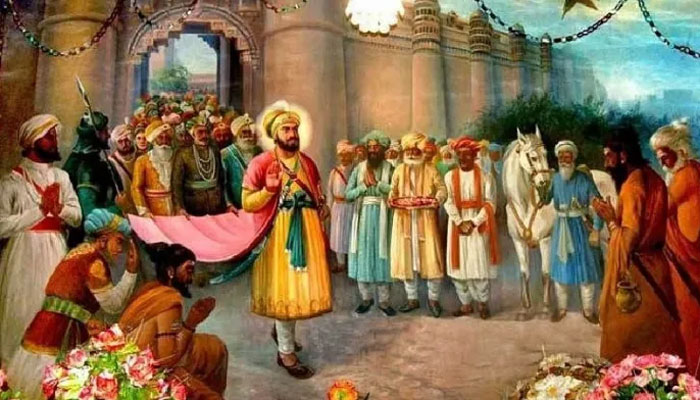
In 1612, Mughal ruler Jahangir captured Guru Hargobind Singh Ji. He was kept in prison in Gwalior. In that prison, there were 52 Hindu Kings and Princes with him. During that time, Jahangir fell ill, and despite all the efforts, his health did not get better. Sufi Saint Mian Mir advised him to release Guru Hargobind Singh Ji, to which he obliged.

However, Guru Hargobind Singh Ji said he would leave the prison only if all the 52 kings and princes would get freedom with him. Jahangir was not ready to accept the condition. He gave Guru Hargobind Singh Ji a counteroffer and said he would let go of those Kings and Princes who could hold his ‘Palla’ piece of cloth he would be wearing while leaving the prison. Guru Hargobind Singh Ji agreed.

He got a special cloth stitched that had the Palla long enough to let all 52 kings and princes hold it comfortably. On the day of release, Guru Hargobind Singh Ji instructed them to hold his Palla and follow him out of prison. Jahangir, who got defeated in his own challenge, could not do anything.

When Guru Hargobind Singh Ji reached Amritsar with the Kings and Princes, the people of Amritsar welcomed him by lighting Diyas. That was the day of Diwali. Since then, Sikhs have celebrated the day as Bandi Chhor Diwas.

Sikhs have a history of celebrating Diwali

In the last few decades, there have been attempts to create a pit between Sikhs and Hindus by propagating the narrative that Sikhs do not celebrate Diwali, which is not true. Shri Guru Nanak Dev Ji was in Assam on the day of Diwali, and he gave a sermon to the people of Assam on that day. Shri Guru Gobind Singh Ji rewrote Ramayana.

Sikh Scholar and historian Puneet Sahani tweeted several pieces of documental evidence to show how Diwali was considered an important festival. In a handwritten letter by Guru Teg Bahadur Singh Ji, he asked his congregation of Pak Pattan to visit him for Diwali!

In a letter dated October 5, 1699, Guru Gobind Singh Ji, grandson of Guru Hargobind Singh Ji, asked the congregation of Naushera Pannuan to visit him for Diwali.

Attempt to separate Sikhs from Hindus

There have been many Khalistani elements to create a divide between Sikhs and Hindus trying to distance the Sikh community from their Hindu roots. Sikhism is an Indic faith and the fact is that until Guru Arjan Dev Singh Ji, the fifth Sikh Nanak (Guru), had the leadership in his hands, Sikhism was never regarded as a separate faith from Hinduism. Till then, Sikhism was not treated as a distinct religion but just a separate sect.

Under the leadership of the first five Gurus, Sikhism emphasized universal selflessness and brotherhood. Till then, the Sikhs had not taken up arms. It was the atrocities and barbarism of the Islamic invaders, which had compelled the Sikhs to take up arms. In fact, it was under the leadership of the sixth Sikh guru, Guru Arjan Dev Singh Ji’s son Guru Hargobind Singh Ji that the Sikh community became militarized.