Home Blog Page 284

Taufiq tried to force ‘Rakhi-sister’ Neha into marry him, lied about not having a real sister: More details emerge after he killed her by pushing from roof of building

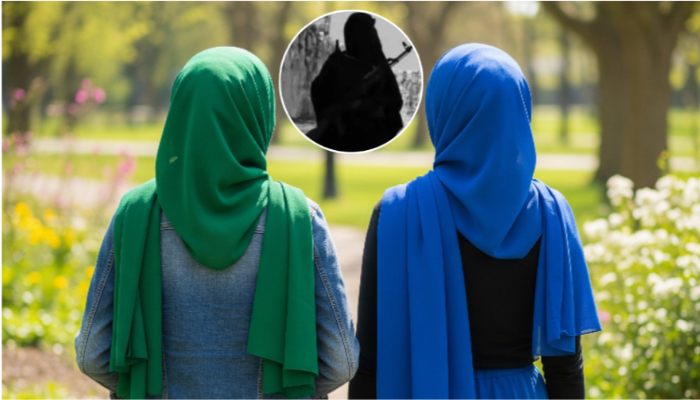
An alarming incident in Ashok Nagar of Delhi has caused a stir throughout the area. Neha, a 19-year-old, was pushed from the roof of a five-storey building by a 30-year-old man. The accused, Taufiq-ur-Rehman, entered the premises dressed in a burqa. It is reported that he had been pursuing her.

The police stated that the incident occurred at about 8:30 am on 23rd June (Monday), when the girl went to the rooftop to turn on the water pump after informing her mother. Neha plummeted approximately 50 feet onto the bricks in an unoccupied plot.

She was rushed to the Guru Teg Bahadur Hospital in east Delhi, however, succumbed to her injuries. She had just begun working for an oil business in Mandoli and her father, Surender Kumar, had also found a new job at a factory. The family had been looking forward to a more promising future until the disaster befell them. “All we want is justice for my daughter,” expressed the grieving father outside the hospital mortuary.

“I was downstairs doing my chores when I heard a commotion. I rushed up to find Taufiq attacking my daughter. He pushed her off the rooftop and she fell to her death. I tried to save her but he shoved me,” he disclosed. The hurting father mentioned that he hurried to protect his screaming daughter as the shocking scene transpired on the rooftop but Taufiq grabbed him and threw him to the ground.

He added, “After that attack, I couldn’t get up. My arm was hurting badly. I couldn’t even move to protect Neha.” Taufiq turned to her and shoved her over the rooftop as her father was hurt and couldn’t help. Everything happened right in front of his eyes. He sounded the alarm, but the offender had already left. “Some neighbours tried to catch him, but he was fast and slipped past the lanes before anyone could stop him,” he recounted the horrific incident.

Neha, who had finished Class XII, wanted to help her family, who unveiled that she and Taufiq had been friends for a few years. The latter even claimed that he had no sister. “She used to consider him a brother and had even tied a rakhi on his wrist. Over the years, Taufiq had also grown close to the family,” highlighted a relative.

The family eventually found out that he had a sister and Neha’s harassment commenced after she stopped speaking to him following the revelation. Her mother noted, “He would call her office repeatedly and had been warned to stop contacting her.” The family pointed out that Taufiq had begun to pressure Neha into marrying him.

He reportedly threatened her just a week before killing her, declaring, “Main tujhe kahin ka nahi chhodunga (I’ll completely ruin you).” She told her mother about the same. According to the mother, she woke up early and decided to wash her clothes outside on the terrace. She requested that her mother turn on the water pump.

“Then I heard screams, people shouting ‘catch him, catch him’ and I saw Taufiq fleeing. He was dressed in black. We had warned him to maintain a pure brother-sister relationship with Neha, but he didn’t listen,” she pointed out.

Neha’s older sister remarked, “We regarded him as a member of our family. We tied rakhi on him. We never imagined in our wildest dreams that he would act in this manner.” Her aunt called for the death penalty for the murderer and stated that had they been aware of his intentions, ther would have protected their daughter.

The event has resulted in unrest in Ashok Nagar. The Ashok Vihar market was entirely shut down on 24th June. Satendra Sharma, the general secretary of the Agrasen Market Association, voiced, “We convened a meeting on Monday evening and collectively agreed to keep the market closed on Tuesday to express our solidarity with the family. The association also resolved that shopkeepers will cease to hire any Muslim workers.” Members from various right-wing organizations also assembled outside the victim’s residence to support the family.

The Delhi Police apprehended fugitive Taufiq in the Tanda region of Rampur district in Uttar Pradesh. Multiple police units executed raids in both Delhi and Uttar Pradesh, successfully capturing him. His identity and location were determined through the analysis of CCTV footage and additional evidence.

According to the authorities, Taufiq is from Hapur in Uttar Pradesh and worked as a daily wage labourer in the local market of Ashok Nagar. He had a long-standing relationship with the victim’s family and celebrated festivals like Rakshabandhan with them. Neha and her two sisters used to Rakhi on him. Nevertheless, in the last three months, Taufiq had begun to follow Neha. He would exert pressure on her and threaten her if she refused his demands. The family stated that they never imagined he would take such a drastic measure.

India banks big on nuclear power, states urged to submit proposals, as Minister proposes NPP for Bihar

On 24th June, Union Energy Minister Manohar Lal Khattar announced that the Centre was ready to set up a nuclear power plat in Bihar. The announcement was made as part of the Government of India’s plan to establish six Small Modular Reactors (SMRs) across the country. Notably, Assembly Elections are soon to happen in the state of Bihar and Bharatiya Janata Party (BJP) is hoping to come back to power as part of NDA in alliance with Nitish Kumar’s JDU.

Khattar was in Patna to preside over the fifth meeting of Energy Ministers of eastern States including Bihar, West Bengal, Odisha, Jharkhan and others when he made the announcement. Speaking to media, he said, “If the Bihar government wants to set up a nuclear power plant, the central government is fully prepared to provide support.”

Khattar added, “While agreeing to the demand of Bihar government to set up a nuclear power plant in the State, we also agreed on a proposal to provide additional 500 MW power to the State for three months.” He said that the government reviewed the power situation in eastern States, discussed the problems and vision for power sector in the country till 2035.

Khattar pointed out that Bihar has installed record number of smart meters. He said, “The State was said to be backward in power sector, but today it has come forward. Today, Bihar has demanded that a nuclear power plant be set up in the State, and the central government has agreed to support Bihar in setting up the plant.”

The power minister added that India was known as a power deficit country and in 2013-14 there was power deficit of 4.5% in the country. However, today not only India’s needs are being fulfilled but the power is being exported to countries like Bhutan, Bangladesh, Myanmar and Nepal. He asserted that India is becoming self-sufficient in power sector.

The Small Modular Reactors of nuclear power can be set up in a short duration and at a lower cost with enhanced safety as compared to traditional large nuclear reactors. The SMRs are best for regions with moderate power demand especially where large scale nuclear plants are not possible to set up.

Union govt asked states to examine feasibility of nuclear power plants

In May this year, Khattar informed media that the Centre asked the state government to examine the feasibility of setting up nuclear power plants and their respective states and send proposals. He said that the country is currently generating eight gigawatts of nuclear power, and the aim is to generate 100 gigawatts by 2047.

He informed the media that the feasibility of setting up a nuclear plant in Goa was discussed with the State officials including CM Pramod Sawant, Union Minister of State for New and Renewal Energy Shripad Naik, Goa Power Minister Sudin Dhavalikar and Urban Development Minister Vishwajit Rane during the review meeting. Goa notably does not have any thermal, hydro or solar power plants and depend on other states for its power needs.

In November 2024 as well, the central government had asked the states to consider moving away from coal-based power plants and consider setting up nuclear-based power plants. Khattar has said that states should consider setting up nuclear power plants at the sites where coal-based thermal power plants have completed their life.

Government of India’s push for nuclear-based clear energy

In February 2025, Union Budget 2025-26 outlined a significant push towards nuclear energy as part of India’s long term energy transition strategy. The GoI recognised nuclear power as a critical component for achieving energy security and sustainability and introduced Nuclear Energy Mission for Viksit Bharat. The initiative aimed at enhacing domestic nuclear capabilities, promote private sector participation and accelerate the deployment of advanced nuclear technologies including SMRs.

Notably, the government allocated Rs 20,000 crore for Nuclear Energy Mission that focused on R&D of SMRs aiming at developing at least five indigenously designed and operational SMRs by 2033.

In a significant push to decarbonise India’s energy sector and meet its long-term climate commitments, the Government of India unveiled a strategic plan in the Budget to partner with the private sector in the development of nuclear energy infrastructure. It included the establishment of Bharat Small Reactors (BSRs), research and development of Bharat Small Modular Reactors (BSMRs), and innovations in next-generation nuclear technologies.

BSRs are designed as 220 MW Pressurised Heavy Water Reactors. These are being optimised to require less land, making them suitable for industries like steel and aluminium that seek captive power resources. The proposed model includes private players providing land, water, and capital, while the Nuclear Power Corporation of India Limited (NPCIL) will take responsibility for design, quality assurance, and operations. This initiative will push India’s target of achieving 500 GW of non-fossil fuel-based power capacity by 2030.

Simultaneously, BARC is advancing Small Modular Reactors (SMRs) that offer scalable, factory-built solutions suitable for remote or retiring coal-based sites. These reactors, ranging from under 30 MWe to over 300 MWe, present a cost-effective and flexible alternative to large nuclear plants, helping to stabilise grids and complement renewable energy sources. India’s strong background in PHWR technology serves as a foundation for indigenising SMRs and supporting Paris Agreement goals.

India’s nuclear expansion plan includes raising total capacity from 8,180 MW to 22,480 MW by 2031–32, with reactors under construction in several states. In Andhra Pradesh, six 1208 MW reactors are planned with US cooperation. A major milestone came in September 2024 when RAPP-7 reached criticality, showcasing indigenous nuclear prowess.

Assam govt intensifies crackdown on illegals in the state, 88 Rohingya and Bangladeshi infiltrators detected and deported from Cachar in a month

Assam Chief Minister Himanta Biswa Sarma, on Wednesday (25th June), announced that Assam government has identified and deported 88 illegal Rohingya and Bangladeshi immigrants from Cachar district in last one month. Taking to X, CM Sarma shared that his government has intensified operations against illegal infiltrators. Cachar district shares a 32 km-long border with Bangladesh.

“For far too long have illegal infiltrators gone scot free.WE ARE TOLERATING IT NO MORE. We have begun intensified operations against illegal infiltrators and in the last 1 month, in Cachar district alone, we have pushed back 88 Bangladeshis and Rohingyas back to Bangladesh,” the Assam CM posted.

CM Sarma added that among those pushed back into Bangladesh, 59 are Bangladeshi refugees and 29 are Rohingya refugees. These illegal infiltrators were tracked and identified through special operations.

Notably, a nationwide Operation Push-back is being conducted to detect, detain and deport Bangladeshi and Rohingya infiltrators and Assam is leading the way.

On 22nd June, Assam police detained 15 Bangladeshi infiltrators in Cachar and shifted them to a temporary detention facility in Silchar. As per the local police, several of these illegals were from Bangladesh’s Khulna area, and had been residing in Gujarat’s Surat for many years. With increased crackdown on illegal immigrants, they were trying to go back to Bangladesh via Assam.

In Cachar alone, the Assam Police has caught more than hundred Bangladeshi in the district’s sensitive Katigorah area.

Earlier this month, CM Sarma said that his government has pushed back over 330 illegal infiltrators in the last few months. He asserted that this operation will be expedited in the coming days.

Recently, the Assam Chief Minister said that the Assam government does not need to go to court every time to deport illegal foreigners, as it can use an old law passed in 1950. Talking to reporters in Nalbari after an official visit, he said that the Supreme Court recently said that the Immigrants (Expulsion From Assam) Act, 1950, is still valid, and the state government can use it to deport illegal foreigners without approaching courts.

Manorama Yadav, Neelam Yadav, Brajesh Yadav, all Kathavachaks, all with followers from every caste: Those looking at Etawah Kathavachak case with a caste angle probably do not know their own culture

An incident in Etawah, Uttar Pradesh, has created a stir in social and political circles. The matter started with allegations of molestation against Kathavachak Mukut Mani followed by an assault on him and his associates, which was later presented as a caste dispute. The incident has now taken a socio-political turn with some trying to portray it as a Brahmin vs OBC-Dalit dispute.

There are several angles to be considered during this entire episode – caste sensitivity, the tendency to immediately rush to social media and give reactions without knowing facts of the case, and issues like the character of the Kathavachak.

In this article, we will understand these matters in detail. Along with this, we will also see that there has been no caste issue regarding Kathavachaks in the Sanatan tradition. We will also give examples of those Kathavachaks who are non-Brahmins. We will also tell you the reason for this particular case going viral, and how some people started playing their caste politics by targeting Brahmins without knowing the facts of the case

What is the Etawah case all about matter related to Etawah

Shrimad Bhagwat Katha was organized on 21 June 2025 in Dandarpur village of Bakewar police station area of ​​Etawah. Kathavachak Mukut Mani and his associate Sant Singh Vyas were called by a Brahmin family for the Katha. Renu Tiwari, a woman from the host family, and her husband Jai Prakash Tiwari have said that the Kathavachak behaved indecently during and after the Katha.

The victim Renu says that the Kathavachak held her hand with wrong intentions during the Kalash Yatra and when it was opposed, he threatened that he is a relative of Samajwadi Party (SP) National President Akhilesh Yadav.

After this, the matter took a turn towards becoming a caste issue after it came to light that the Kathavachak had hidden his caste. Two Aadhar cards were found with him, in one of them, it was mentioned that he is a Brahmin (Agnihotri). The dispute escalated when the villagers came to know about his real caste (Yadav) and on the night of June 22, some people beat up the Kathavachak and his aides, and cut their braids. Four people were arrested after a case was registered against two named and 50 unidentified persons in Bakewar police station.

This incident sparked tension in the area. The Brahmin Mahasabha called it a conspiracy against Brahmins and demanded action against the Kathavachaks, while the Samajwadi Party and Yadav Mahasabha portrayed it as harassment of OBC-Dalit community by Brahmins. The matter also became a hot topic of discussion on social media and many people started targeting Brahmins without knowing the entire truth.

There is no caste barrier to become a Kathavachak in Sanatan Dharma

There has been no caste barrier to become a Kathavachak or for devotion in Sanatan Dharma. This tradition has been going on since ancient times and the biggest example of this is the ‘Vyadh Geeta’ of Mahabharata. In this story, a hunter (Vyadh), who was from a lower caste community, preaches karma and dharma to a Brahmin. These preaching are considered as important as the Bhagavad Gita. In the Sanatan tradition, caste has never come in the way of knowledge and devotion.

Even in modern times, there are many non-Brahmin Kathavachaks who are respected in the society and who are followed by millions of people. This can also be understood from some examples –

Morari Bapu: Gujarat’s famous Kathavachak Morari Bapu comes from the Bania community. His tales of Ramcharitmanas are heard by millions of people in the country and abroad. His devotees include people from every section of the society.

Acharya Manorama Singh Yadav: This Kathavachak from Uttar Pradesh narrates Shrimad Bhagwat Mahapuran and Ramkatha. Millions of people watch YouTube videos of her tales. Despite being from the Yadav community, she is respected by every section.

Neelam Yadav Shastri: She is also a popular Kathavachak, whose bhajans and stories are especially popular among women. Her events are attended by huge crowds and she is also a non-Brahmin.

Hemraj Singh Yadav: The videos of this Kathavachak, who does a unique blend of comedy and devotion, are always viral on social media. People from every section also attend his tales. Similarly, Manjesh Singh Yadav is also a famous Kathavachak.

Dr. Brajesh Yadav: Surgeon Dr. Brajesh Yadav of Bareilly distributes copies of Ramcharitmanas. He instills the message of ‘becoming a Ram devotee’ to everyone and enjoys a large following.

Hanuman Prasad Poddar: His Ramcharitmanas ki Tika published by Gita Press Gorakhpur is the most widely read in the world today. He was also a non-Brahmin. Thanks to people like Hanuman Prasad Poddar, Sanatan culture is present in every corner of the world today. He targeted the opponents of Sanatan, even if they were Brahmin Prime Ministers of the country like Jawaharlal Nehru, and he never backed down from the fight for Sanatan. Hanuman Prasad Poddar was never a Kathavachak, rather he was the protector, propagator and pioneer of Sanatan.

These examples prove that there is no caste barrier to becoming Kathavachak in the Sanatan tradition. Even in villages, the priests of most temples are from non-Brahmin communities. Anyone who has faith in the religion can worship in the temple. Yet some people look at every incident from the prism of Brahmin vs non-Brahmin and try to promote social unrest.

Akhilesh Yadav playing politics on Etawah case

This Etawah case soon started taking political colour. Samajwadi Party leaders, especially Akhilesh Yadav, presented it as OBC-Dalit oppression by Brahmins. SP district president Pradeep Shakya rejected the allegations of Brahmin Mahasabha and said that if there was any objection against the Kathavachaks, then why was no complaint made earlier. On the other hand, Brahmin Mahasabha President Arun Dubey called it a conspiracy against Brahmins and demanded action against the Kathavachaks.

Some people also started targeting Brahmins on Social Media through videos and posts without knowing the entire truth. Videos and posts made immediately after the incident, with half truths, went viral, in which Brahmins were described as casteists and oppressors. This trend is serious, because it not only increases social tension but also weakens the unity of Sanatan tradition.

Odisha example – Another case of false propaganda and targeting of upper castes

The Etawah case is not an isolated one. Recently, 40 members of a Scheduled Tribe (ST) family were ‘purified’ in Baigangoda village in Odisha’s Rayagada district because one of their young girls had married a Scheduled Caste (SC) boy. The village panchayat ordered the family to shave their heads and perform animal sacrifice. The video of the incident went viral on social media and some people attacked Brahmins and upper castes by calling it ‘Manuvadi supremacy’ and ‘oppression by upper castes’.

However, it later came to light that the ritual was performed by the family as per their own will following tribal traditions and no upper caste community had any role in it. Yet some handles on social media like ‘Tribal Army’ used it to target the upper castes and the BJP-RSS.

Several other handles also propagated this false propaganda to target the Brahmin community.

Why do Brahmins become easy targets

There are many reasons behind the repeated targeting of the Brahmin community. First, Brahmins are considered a symbol of social and religious traditions, due to which some people easily target them by calling them “Manuvadi” or ‘casteist’. Second, the Brahmin community usually does not play ‘victim’, due to which some people consider it as their weakness. Third – political parties and some people active on social media capitalize on such incidents for their vested interests.

In the Etawah case, the Samajwadi Party used it as an opportunity to divide Hindus and defame Brahmins. Leaders like Akhilesh Yadav gave it the colour of social discrimination without knowing the entire truth. Even on social media, some people immediately made videos and started cursing Brahmins, without understanding that the Kathavachak himself had misbehaved and hidden his caste.

Social expectations from Kathavachaks

A Kathavachak is highly respected in the society. He is expected to be pure, moral and simple. In the Etawah case, serious allegations like molestation and intimidation have been leveled against Kathavachak Mukut Mani. Apart from this, a fake Aadhaar card in his possession has also raised suspicion. Now, the question arises whether it is wrong to question the purity of a Kathavachak? And if a Kathavachak does comething wrong, should he be defended on the basis of his caste?

In the Sanatan tradition, the religion and conduct of the Kathavachak is paramount, not his caste. If a Kathavachak does something wrong, he should be criticized, no matter which community he belongs to. But it is wrong to use it as an opportunity to attack the entire community. In the Etawah case, some people used it against Brahmins, which is not only unfair but also harmful to social unity.

The need to understand the truth

The Dandarpur case in Etawah is a complex social and legal issue, involving several aspects like assault, molestation, and caste dispute. The police have arrested four people in the case, and the SSP has assured a fair investigation after hearing both sides. But presenting the case as Brahmin vs OBC-Dalit and giving quick reactions on social media is only increasing social tension.

In the Sanatan tradition, there is no caste barrier to becoming a Kathavachak. Non-Brahmin scholars-Kathavachaks like Morari Bapu, Manorama Singh Yadav, Neelam Yadav and Hanuman Prasad Poddar have proved that the basis of devotion and knowledge is conduct and faith, not caste. Yet some people make every incident an opportunity to campaign against Brahmins, which is not only wrong but also weakens the unity of Hindu society.

The law should do its job in this case. Serious allegations like assault and molestation should be investigated impartially and the culprits should be punished. But at the same time, society also needs to understand that targeting a particular community without knowing the entire truth is not only unfair but also dangerous. We have to avoid such politics and propaganda which works to divide the society.

The original article can be read on OpIndia Hindi here.

Religious conversions in the name of ‘Jesus Darbar’ exposed: Over 500 Hindus converted through false promises, Pastor caught red-handed in Prayagraj

For the past five years, a covert religious conversion racket was operating under the guise of a “Jesus Darbar” (Jesus congregation) in Uttar Pradesh’s Prayagraj district. Vulnerable individuals were lured with false promises of jobs, miraculous healings, and even childbirth for women struggling with fertility. Under the tent of this so-called Sunday gathering, hundreds of Hindus from over 50 nearby villages were systematically converted to Christianity.

The racket came crashing down on Sunday, June 22, 2025, when police, assisted by Bajrang Dal activists, raided the site. The moment police arrived, chaos erupted as people scattered in panic, and organizers scrambled to cover their tracks. Shockingly, one of the event heads even tried bribing the officers to bury the case.

Police detained Pastor Anil Kumar along with his associates Krishan Kumar and Sanjay on the spot. Authorities revealed that this illegal congregation had been operating in Nevada village under Bahria police station limits, based on complaints by local BJP and VHP workers. An FIR has been registered against 18 individuals involved.

Further investigations exposed how residents like Usha Devi, Rajesh Kumar, and Vivek Kumar were coaxed into religious conversion with promises of employment, money, and health cures. It has also emerged that the Darbar was set up illegally on village land without any authorization. The village head, Shiv Kali Devi, has demanded its removal, and police assured action to dismantle the tent setup immediately.

Trump slams Spain for refusing to increase defence spending to 5% of GDP like other NATO members, says it is terrible and threatens to make them pay double

NATO leaders have agreed to increase their defence spending to 5% of the GDP by 2035, as demanded by US president Donald Trump. At a meet at The Hague on Wednesday, the leaders of the North Atlantic Treaty Organization finally accepted the US demand after dodging it for several months.

However, Spain has refused to agree with the demand, resulting in an angry outburst from Trump. Ahead of the meeting today, Spanish Prime Minister Pedro Sanchez had said on Thursday he would not commit to the 5% target. Spain has committed to spend 2.1% of GDP to meet NATO’s core military requirements, up from current 2%.

Saying that his country can raise its expenditure to 2.1%, Pedro Sanchez said “nothing more, nothing less.” He said that Spain will meet the alliance’s ambitious new weapons and troop targets, but without committing to the price tag that NATO had attached to it. 

Sanchez had said that increasing spending on defence will result in drastic cuts on social spending such as state pensions, or tax hikes, and he was unwilling to do the same. At that time also, Trump had said that Spain “has to pay what everybody else has to pay”, adding that Madrid was “notorious” for low defence spending.

As Spain finalised its decision today, Trump said that it is terrible what they have done, and Spain is the only NATO country to not hike defence spending. He also threatened to double tariff on Spain to make it pay.

Trump said, “You’re the only country that is not paying. I don’t know what the problem is,” adding that Spanish economy is doing well. He further said, “We’ll make it up. You know, we’re going to do, we’re negotiating with Spain on a trade deal. We’re going to make them pay twice as much. And I’m actually serious about that.” He added that the economy of Spain may blow if something happens.

However, Madrid said that they are downplaying Trump’s remarks. A spokesperson said, “We downplay Trump’s comments and we emphasize our commitment to NATO.”

As per a joint declaration issued by NATO, other member nations will increase their defence spending target from 2% of gross domestic product to 5% by 2035, marking a massive increase. US has been demanding this increase, arguing that it contributes to the majority of NATO expenses, and it can’t continue. Notably, some member states have yet to meet the 2014 target to spend 2% of GDP on defence.

Of the 5%, “at least” 3.5% of GDP will be spent on “pure” defence related activities, with the remainder 1.5% can be sent on other security and defence-related “critical infrastructure” to ensure “our civil preparedness and resilience, unleash innovation, and strengthen our defence industrial base,” the statement said.

The allies will be required to submit annual plans “showing a credible, incremental path to reach this goal.” The joint statement said that they are united against “profound security threats and challenges, in particular the long-term threat posed by Russia to Euro-Atlantic security and the persistent threat of terrorism”.

Operation Sindhu: Total 3,154 people evacuated so far from Iran, operation to be gradually winded down due to ceasefire announcement

0

Another special flight carrying 296 Indian nationals and four Nepalese nationals stranded in conflict-hit Iran landed safely in New Delhi on Wednesday, taking the total number of people evacuated under Operation Sindhu to 3,154.

“296 Indian and 4 Nepalese nationals were evacuated from Iran on a special flight that arrived in New Delhi from Mashhad at 16:30 hrs on 25th June. 3154 Indian nationals have now been brought home from Iran as part of Operation Sindhu,” the Ministry of External Affairs stated in a post on X.

Operation Sindhu was launched amidst the escalating conflict between Iran and Israel, which had gripped the region for the past couple of weeks before a ceasefire was agreed on Tuesday.

The Indian Embassy in Iran has announced that it will be gradually winding down its evacuation exercise for Indian nationals, initiated after the escalated conflict in the region following Israel’s military operations on the Islamic Republic, as a ceasefire deal was made between the two countries on Tuesday.

In a post on X, the Embassy detailed the closure of the contact desk set up for registering new names of Indian nationals for evacuation, while assuring continued monitoring of the security situation.

“Announcement from Embassy of India, Tehran: Since there has been an announcement of ceasefire, the Embassy is gradually winding up the evacuation exercise initiated during the military conflict in Iran. Hence the Embassy has closed the contact desk that was opened to register new names for evacuation. At the same time, Govt. of India is keeping a careful eye on the evolving situation & will reassess its strategy in case there is again a threat to the security of Indian nationals in Iran,” the Embassy stated.

The Embassy advised Indian nationals currently in other parts of Iran, who were planning to travel to Iran’s Mashhad for evacuation, to remain in their current locations and continue monitoring news updates and any revised advice from the Embassy.

For those who had already arrived in Mashhad in recent days and are staying in hotels arranged by the Embassy, it issued a directive to shift to the Sadr hotel in Iran by Wednesday (local time). “Those Indians who had already travelled to Mashhad in the last few days, and are staying in one of the hotels arranged by the Embassy, are requested to shift to Sadr hotel today itself, because the Embassy will be releasing the rooms in other hotels,” the Embassy specified.

This came after US President Trump, on early Tuesday, announced a ceasefire agreement between the two conflict-gripped nations following Iran’s attack on US military bases in Qatar and Iraq in response to the US strikes on its nuclear facilities.


(This news report is published from a syndicated feed. Except for the headline, the content has not been written or edited by OpIndia staff)

What are Satra lands and how the Himanta govt in Assam is taking them back from illegal encroachers

The Northeastern State of Assam is host to several Vaishnavite monasteries called Satras, which were founded by Assamese saint-scholar Srimanta Sankardeva and his disciples in the 15th and 16th centuries.

Satra is a spiritual institution and has been the centre of traditional performing arts (literature, music and theatre) in the State. Typically, it consists of a large prayer hall, bathing tanks, dormitories, and guest accommodation.

Devotees can participate in the worship of Lord Krishna and Lord Vishnu and watch traditional bhaona performances, and observe artisans at work. The first Satra was founded in Assam’s Majuli.

Satras of Assam, image via the Department of Tourism/ Government of Assam

In total, there are 900 Satras spread across the State, which have been established for the propagation of socio-cultural ideals and ethics.

The popular Satras include Auniati, Kamalabari, Dakhinpat, Garamur, Bengenaati, Samaguri and Natun Kamalabari.

Over several centuries, kings and local Hindus have donated vast acres of land to Satras for cultural, economic and religious propagation. These lands are known as ‘Satra lands’, which were part of official land records.

These Satra lands provided economic support to the monks and helped maintain the religious and cultural functions of the institutions. Satras continue to play a key role in preserving Assamese identity.

The menace of land encroachment

A grim reality is that today, large portions of Satra lands across Assam are under illegal encroachment. Factors such as demographic changes, involvement of land mafia and political patronage have contributed to the menace.

The extent of the problem is significant. On 13th June, this year, Chief Minister Himanta Biswa Sarma informed that 15,288.52 bighas of Satra lands remain illegally occupied across 29 districts of the State.

He highlighted massive encroachment in districts such as Bongaigaon, Majuli, Dibrugarh, Nagaon, Bajali, Kamrup, Lakhimpur and Dhubri.

“An area twice the size of our capital Dispur! Yes, that’s the magnitude of Satra land encroached upon in Assam. The sheer scale of encroachment of the Satras is a direct assault on Assam’s culture and identity,” Sarma tweeted.

He vowed to deal with the menace of illegal encroachment firmly.

Himanta Biswa Sarma government is reclaiming Satra lands in Assam

In recent years, the Himanta Biswa Sarma government in Assam launched a strict drive to reclaim Satra lands from illegal encroachment.

In November 2021, it formed a high-level committee, which later came to be known as the ‘Commission for Review and Assessment of Problems of Satra Lands in Assam (CRAPSLA)’ to study the extent of encroachment on Satra lands.

“There have been complaints and news reports about encroachment of land belonging to ‘satras’. But till now no government has done any survey on this issue. Now we have decided to constitute a committee to look into all aspects of the problem,” the Assam CM had said at that time.

A year later in December 2022, CRAPSLA submitted its interim report to Himanta Biswa Sarma. The Commission comprised of 3 MLAs, Pradeep Hazarika, Rupak Sarma and Mrinal Saikia.

According to reports, they visited 62 Satras of Assam and emphasised the urgent need to clear off illegal encroachments. The tenure of the Commission was further extended so that field visits could be done to more affected Satras.

On 9th June this year, CRAPSLA submitted its final report to Himanta Biswa Sarma. The Commission visited 126 Satras, gave its detailed assessment and recommendations for policy action.

“This report sheds light on the growing threats to Satra lands due to encroachments. The government will examine the findings thoroughly and act upon the recommendations,” the Assam CM stated.

He also announced the establishment of a Permanent Satra Aayog within 1 year. The Commission will have administrative autonomy, judicial authority and financial grants to support the functioning of Satras in the State.

“A law will be introduced in either the September or February legislative session to institutionalise the Aayog. It will formulate a 25-year vision document to protect and modernise Satra institutions,” he added.

Concrete action against encroachers on the ground

Soon after the interim report of CRAPSLA was published in December 2022, the Assam government cleared off encroachments from 1000 bighas of land near the birthplace of Srimanta Sankardev in Batadraba Than in Nagaon district of Assam.

In February 2023, the Assam government successfully reclaimed 55 bighas of encroached land near Gopal Ata Satra. A similar anti-encroachment drive in July 2024 helped restore 34 bigha land near the revered spiritual institution.

In August 2024, the Himanta Biswa Sarma govt enacted the ‘The Assam Land and Revenue Regulation (Second Amendment) Bill’ to prevent outsiders from buying land within a 5-km radius of heritage institutions that are over 250 years old.

This includes Batadrawa Than, Barpeta Satra and Majuli Island, which have been re-categorised as “Heritage Blocks.”

Himanta Biswa Sarma had informed around the same time that Satras were being provided with financial support.

In October last year, the Assam government launched protective zoning measures under ‘Mission Basundhara 3.0’ to facilitate land distribution to Satras and formalise legal ownership.

Many Satras in districts such as Nagaon and Morigaon have come together to ensure the swift recovery of encroached properties.

Himanta Biswa Sarma had recently pointed out that mosques were being constructed on Satra lands, and beef was being consumed to hurt the indigenous cultural identity.

“When cow meat is consumed near a Satra, and the sound of Azaan from a masjid overlaps with the Namghar of the Satra, it becomes a non-negotiable point,” he said, adding that such activities can be done 10 kms away but not near Satras.

The BJP has been raising the issue of the encroachment of Satra lands as early as 2016 while the Congress regime had tried to brush it off as conspiracy theory.

In the past 9 years, efforts have been made by the BJP government(now in a mission mode) to reclaim indigenous land meant for Satras.

50 years of Emergency: While most media houses bowed down to Indira Gandhi’s diktats, here is how some newspapers refused to give in to the censorship

Today marks the 50th anniversary of the Emergency proclaimed by Indira Gandhi in 1975—a year etched in black ink for the nation, as it curtailed the freedoms of its people. Several events unfolded during that period which led to the imposition of Emergency on the midnight of 25 June 1975. That night turned into a nightmare, as the nation woke up to a bombshell from the Allahabad High Court, which found Indira Gandhi guilty.

India was governed by Prime Minister Indira Gandhi and President Fakhruddin Ali Ahmad when the Emergency was enforced under Article 352. The move was justified by citing internal disturbance and a threat to national security. Between the proclamation and 1977—nearly two years of unrest—the nation faced numerous challenges: civil liberties were suspended, opposition leaders jailed, press freedom was curbed, public gatherings banned, and much more. Although India remained a democracy on paper, it felt stripped of its identity for the next 21 months.

While every decision deeply unsettled the nation, the censorship of the press was especially disturbing. The press was silenced overnight. Power supply to newspaper presses in Delhi was cut immediately after the Emergency was declared. Mainstream media such as The Indian Express resumed publication with its June 28 edition, leaving a blank space in the editorial section. The Statesman followed with similar blank columns. The National Herald, founded by Jawaharlal Nehru, faded out its masthead slogan: “Freedom is in peril, defend it with all your might.”

The Indian media was instructed that all newspapers must seek approval from the Chief Press Adviser before publishing anything, and were barred from sharing any content that could spark public outrage. In fact, Indira Gandhi issued a set of guidelines for journalists, making it mandatory to adhere to them.

While mainstream media gasped for air, vernacular newspapers struggled to hold on to their identity. People continued to rely on regional publications for news. Newspapers like Frontier, Sadhna, Janata, Himmat, and Swaraj quickly fell victim to censorship. Ranchi Express, the only newspaper in the then-united Bihar, which began in 1963, left its editorial space blank—carrying the censor officer’s signature—a fact documented in the book Emergency Ka Kahar Aur Censor Ka Zahar.

Gour Kishore Ghosh, a satirist and editor, was jailed after he shaved his head and published a symbolic letter mourning the loss of freedom. Bartaman—founded later by Barun Sengupta—reflected that enduring spirit of dissent, even though it came post-Emergency.

The restrictions were so severe that the press was barred from covering major news. In mid-1975, Sanjay Gandhi launched a Five-Point Programme—family planning, abolition of dowry, eradication of illiteracy, elimination of casteism, and a plantation drive—perhaps to distract the public from the Emergency. Journalists were strictly banned from reporting or photographing the slum demolitions at Delhi’s Turkman Gate, which rendered thousands homeless. Coverage of the conditions inside the high-security Tihar Jail was also off-limits.

Foreign journalists from The Times, Newsweek, and The Daily Telegraph were given just 24 hours to leave India if they refused to sign censorship agreements. While the Indian press remained under government surveillance for 21 months, the foreign media found opportunities to expose the real state of journalism in India and the suspension of constitutional rights.

According to Om Mehta, the then Home Minister, nearly 7,000 journalists and media workers were arrested by May 1976.

The English weekly Himmat, started by Rajmohan Gandhi, faced intense backlash and initially left its editorial page blank in protest. Later, the publication resumed its regular tone, only to be informed it had violated censorship norms. Rajmohan Gandhi and his brother Ramchandra Gandhi were soon arrested after covering a prayer meeting at Rajghat on October 2, where Acharya J.B. Kriplani had spoken. They were later released.

Veteran politician L.K. Advani’s famous remark—“You were asked only to bend, but you crawled”—still echoes in the conscience of Indian journalism. He too was imprisoned during the Emergency. Noted journalist Kuldip Nayar was also arrested for raising his voice in protest.

Even before the ink had dried on the Emergency declaration, Punjab Chief Minister Giani Zail Singh called N.P. Mathur, the Chief Commissioner of Chandigarh, urging strict action against the press. He demanded that The Tribune, a leading newspaper in Punjab, Haryana, Himachal Pradesh, and Jammu & Kashmir, be shut down, and that its editor, Madhavan Nair, be arrested. Mathur found himself in a bind—he didn’t want to issue official orders. Instead, he relayed the message to S.N. Bhanot, the Senior Superintendent of Police. However, Bhanot refused to act without written instructions from the District Magistrate. Still, he visited The Tribune‘s office and warned the staff not to publish content that could displease the government. A small police team was also stationed there.

But The Tribune did not back down. The paper hit stands the next morning as usual. This infuriated Haryana Chief Minister Chaudhary Bansi Lal, who threatened that if the Chandigarh administration didn’t raid The Tribune and arrest its editor, he would send the Haryana Police to do it himself. But that too didn’t happen—civil servants stood their ground and refused to carry out unlawful orders. Ultimately, they only appointed a Censor Officer under the Defence of India Rules.

In Jalandhar, Hindi and Urdu newspapers printed blank pages with the label ‘Censor ki Bench’. Veer Pratap, a Hindi daily from Jalandhar, was even more expressive, printing an Urdu couplet beneath its empty editorial space: “I can neither anguish nor petition; it is my fate to choke and die.”

The government later labelled this period as ‘Samvidhan Hatya Diwas’—a time that may have tested the nerves of Indian citizens, but did not break them. Despite the heavy censorship, what remains crucial to remember is that Indian newspapers and media outlets kept breathing. With the rise of independent and digital media in the 21st century, the ability to report truth has only strengthened—offering the people easier and broader access to information than ever before.

Millennia-old palaeochannel traced in Rajasthan again hints at ancient Saraswati: Read how Leftists have kept denying its existence, despite cultural legacy and scientific evidence

“Mythology, not history”: this is the first and foremost argument leftists put forth whenever Saraswati, the sacred ancient river kept alive in Hindu faith, is mentioned. In what could be a significant step in tracing the Saraswati river mentioned in the most ancient religious text Rig Ved, the Archaeological Survey of India (ASI) has dug up an ancient paleochannel buried 23 metres under the Bahaj village in the Deeg district of Rajasthan.

Notably, a paleochannel is the remnant of an ancient river or stream channel that is no longer active and has ceased surface flow.

What emerged from the excavation conducted between April 2024 and May 2025 has drawn the attention of historians and archaeologists, who link the discovered paleochannel to the Saraswati River. There is evidence suggesting that there were settlements here between 3500 and 1000 BC. These discoveries date back to the Kushan, Magadha and Sunga (also spelt, Shunga) dynasty.

The discovery of a paleochannel is reported to be the first-ever in India’s archaeological history.

While giving a presentation at the Banaras Hindu University, Vinay Gupta, superintending archaeologist of ASI Jaipur, said, “This ancient river system nourished early human settlements and connects Bahaj to the larger Saraswati basin culture.”

Gupta also called the palaeochannel an “unprecedented discovery confirming ancient water systems supported civilisation here”.

Notably, the ASI has submitted its report to the Ministry of Culture, which will decide how to preserve the site. In addition to the paleochannel, the ASI excavation team has also found remnants of residential structures with earthen posts, trenches with stratified walls, furnaces and a variety of iron and copper artefacts.

The Microlithic tools or small stone implements suggest that the roots of this settlement date back to the pre-Holocene era, TOI reported.

The excavation team also found many Hindu religious relics, including 15 yajna kundas (sacrificial pits), votive tanks dedicated to Shakti worship, and terracotta images of Shiva and Parvati, dating back to around 1000 BC. In addition, Yajna kundas from the Mahajanapada period were also found, most of them filled with sandy soil and miniature pots holding uninscribed copper coins.

The mythical river that never was‘ or the ancient ‘Guptagamini’ remerging? How leftists kept denying the existence of Saraswati due to its Vedic connection

In the Vedas, theSaraswati River is called “ambitame, naditame, devitame (the best of mothers, the best of rivers, the best of goddesses)”. The Saraswati river is mentioned some fifty times in the hymns of the Rig Veda. It is closely related to the ancient Rig Vedic society and Hinduism.

The Saraswati river, also known as ‘Guptagamini’ (the river with a hidden flow), revered in the Vedas as a mighty and sacred river, has long been a subject of debate among scholars, archaeologists, and ideologically driven groups looking for opportunities to demean and discredit Hindu history. While scientific evidence now increasingly hints at the existence of a massive river system matching the Vedic descriptions, especially the mentions made in the oldest Vedic text, the Rig Ved, some leftists ‘historians’ and propaganda outlets have perpetually been dismissing even legitimate research pertaining to the existence of the Saraswati river. They come up with absurd arguments to claim that Saraswati is only a ‘mythological’ river or a symbolic mention instead of a real geographical entity.

On the surface, the rhetoric of leftist ‘scholars’ and ‘media’ around the Saraswati River’s existence or the possibility of its existence appears to be academic denial. However, this denial is not simply academic; the Hindu-hating leftists have long been critiquing and dismissing research and findings that emphasise the antiquity and continuity of Vedic traditions. They undermine the cultural and historical significance of the Vedas as the Vedic texts form the bedrock of Hindu civilisation.

In fact, the repeated use of the term ‘mythical’ for the Saraswati River in the media indicates a perpetual and deliberate attempt at subtle brainwashing so as to convince the general populace, especially the Hindus, that the Saraswati River is ‘mythical’ even as archaeological evidence and research show otherwise.

Unsurprisingly, leftist propaganda portal TheWire has long been denying the Saraswati River’s existence, slamming attempts at research and mindlessly mocking legitimate scientific enquiries into India’s ancient river systems.

In February 2019, TheWire published an article headlined: Saraswati: ‘The River That Never Was, Flowing Always in the People’s Hearts’. In this piece, the author mentioned the likes of Romila Thapar, Irfan Habib, among other leftist historians who have a history of glorifying Islamic invaders and tyrants and diminishing the Hindu history, to equate the existence of the Saraswati River with cultural memes.

“So it is also likely that the Saraswati was a mental construct of the Vedic Aryans, which metaphorically overflowed as they encountered the bleak, water-poor landscape of the Indus-Yamuna interfluve. The new findings don’t believe there existed a perennial river in Harappan times in the Indus-Yamuna interfluve region of northwest India,” TheWire article reads.

It further lamented the government’s decision to spend Rs 50 crore on finding a “non-existent” river.

In 2021, TheWire again cried hoarse over the government’s decision to set up the Centre of Excellence for Research on the Saraswati River (CERSR) at Kurukshetra in Haryana. TheWire article headline, “How the Indian Govt Is Pushing Money Down a Mythological River“, called the Modi government’s efforts to trace the ‘disappeared’ Saraswati River, a ‘Hindu project’.

The article authored by an architect and sculptor also lamented back then that the Central government was spending money on connecting Char Dham and on the Kashi-Vishwanath Corridor, suggesting that the government is promoting Hindu ‘mythology’. It also asserted that Saraswati is a mythical river and mythology provides immediate results while science is slow, tedious and evidence-based, thus, may not yield quick benefits for the Modi government.

TheWire also platformed alleged journalist-turned-YouTuber Ravish Kumar in August 2018, to mock the government’s steps to back research and investigation pertaining to the Saraswati River.

Similarly, in January 2018, Scroll reported the formation of a permanent panel to study the mythical Saraswati river. The concluding paragraph of the article, as usual, casts aspersions on the existence of the river itself.

There are many such articles calling Saraswati a ‘mythical’ river, the pursuit of tracing it as a ‘Hindu project’, and any scholar, historian, or archaeologist attempting to explore history and archaeological remains, based on the descriptions made in the Vedic texts, as ‘Hindutva-influenced’. Such opinion pieces, mostly authored by leftist ‘intellectuals’, insinuate that a trend of excavating sites approximating descriptions in the ancient Hindu scriptures has become mainstream and is a part of the ‘revivalist’ agenda of the Hindu nationalists.

At the 2001 Indian History Congress, Marxist historian Irfan Habib, who has been a Mughal fanboy and often villainises the Hindus, presented his research paper titled, “Imaging River Sarasvati: A defence of common sense”. In this, Habib not only dismissed the grandeur of once-thriving Saraswati River, but also argued that the claims about Saraswati’s existence were exaggerated to back a Hindu-centric view of history. Even Romila Thapar has been among the leftist-communist historians who reject the research and findings linking the Ghaggar-Hakra system with the ancient Saraswati River.

While the leftists dismiss Vedic texts and other Hindu scriptures as unreliable sources since, for them, everything mentioned in these texts is ‘mythical’, a growing body of scientific research hints at the existence of paleochannels in northwestern India, consistent with the Vedic descriptions of the Saraswati River.

In 2019, a research team led by scientists and researchers of IIT-Bombay and the Physical Research Laboratory, Ahmedabad, stated that they had found ample evidence of a perennial river on the plains of Northwestern India, which had led to the flourishing of early Harappan civilisations in the area.

Contradicting the earlier beliefs that the Harappan civilisation depended upon the monsoon, ample evidence has been found that suggests that a considerable number of Harappan settlements flourished along the ancient course of a modern seasonal stream called Ghaggar in Northwestern India.

The research by the Physical Research Laboratory, Ahmedabad, in collaboration with IIT-Bombay, has stated that there is enough evidence to say that there was a perennial river in the parts of Northwestern India that followed along the current course of the Ghaggar. The scientists believe that it is the ancient river Saraswati mentioned in the Rig Veda.

The research says that the Saraswati was perennial and had flowed from the higher Himalayas between 7000 and 2500 BC. The Harappans had built their earliest settlements along the perennial Saraswati between 3000 and 1900 BC. The decline of Saraswati eventually led to the collapse of Harappan civilisation, the research adds. It also says that the demise of the river and the Harappan civilisation approximately coincide with the onset of the Meghalayan stage, the current dry state of global climate that began 4200 years ago.

The scientists involved in the study also say that while the Saraswati had sources in the glacial regions of the Himalaya, similar to the Ganga, Yamuna and Sutlej, the current Ghaggar has no direct connection to the higher Himalayas and originates from the Siwalik, the foothills of the Himalaya.

The dating of the layer was done with the radiocarbon and optically stimulated luminescence methods at the PRL. Scientist JS Ray explains that they found that the perennial river had uninterrupted flow starting 80,000 years ago and continued till 20,000 years ago. It then started diminishing due to the extreme aridity of the later glacial period. However, the river gained strength some 9000 years ago and continued till 4500 years ago.

The decline of Saraswati’s flow is said to have started due to the drying up of the Sutlej-fed channels. The later Hindu scriptures, such as the Mahabharat, also describe the Saraswati’s diminishing flow, till it all but disappeared.

“This revived perennial condition of the Ghaggar, which can be correlated with the Saraswati, likely facilitated the development of the early Harappan settlements along its banks. The timing of the eventual decline of the river, which led to the collapse of the civilisation, approximately coincides with the commencement of the Meghalayan Stage,” the research report reads.

“Our study brings to light the fact that the Harappans built their early settlements along a stronger phase of the river Ghaggar, during ~9 to 4.5 ka, which would later be known as the Saraswati. However, by the time the civilisation matured, the river had already lost its glacial connection,” the study adds.

In his book, “The Land of Seven Rivers”, noted historian and economist Sanjeev Sanyal comments that tectonic shifts may have played a role in the shift of the river’s course. The site Dholavira (Gujarat) is located in the Rann of Kutch. Surely, no civilisation could have built a city and lived there if there were no water source nearby. He also backs the hypothesis that the Harappan civilisation could have ended due to the death of the Saraswati River. The people who lived in those cities might have moved eastwards to the Gangetic plains after the death of the Saraswati River.

Source : The Land of Seven Rivers by Sanjeev Sanyal

Interestingly, back in 2013, an unstarred question was asked by Harish Chaudhary in the Lok Sabha about the Saraswati River. Since ISRO functions directly under the PMO, the answer was addressed to the Prime Minister. In response to the query raised, the government said that the Indian Space Research Organisation (ISRO) studied the paleochannels in North West India and related them to the channels of the River Saraswati.

“An integrated palaeochannel map of River Saraswati has been prepared from the origin in the Himalayas to the Rann of Kutchch. The origin of the mapped course of the River Saraswati palaeochannel in North West India was linked to the Himalayan perennial source through the Sutlej and Yamuna Rivers,” the government said.

It added that the work on delineation of the entire course of the river ‘Saraswati’ in North West India was carried out using Indian Remote Sensing Satellite data along with a digital elevation model. Satellite images are multispectral, multitemporal and have the advantage of a synoptic view, which is useful to detect palaeochannels. The palaeochannels are validated using historical maps, archaeological sites, hydro-geological and drilling data. It was observed that major Harappan sites of Kalibangan (Rajasthan), Banawali and Rakhigarhi (Haryana), Dholavira and Lothal (Gujarat) lie along the River Saraswati.

Drainage map of northwestern India showing old bed of Saraswati river which is largely occupied by modern Ghagghar River except a 35 km loop which flows north of the palaeochannel near Fatehabad. Source: Research Gate

There are numerous Harappan sites, including Kalibangan, Rakhigarhi, and Dholavira, located along the Ghaggar-Hakra system. This suggests that a significant river supported the development of the Indus Valley Civilisation, which is also known as the Sindhu-Saraswati or Indus-Saraswati Civilisation.

Archaeologist Braj Basi Lal, or BB Lal, the former Director-General of the ASI, has been a prominent advocate of the argument that the distribution of these Harappan sites aligns with the course of Saraswati, not the Sindhu/Indus, suggesting that Saraswati was a central hub of the IVC. Even in Kalibangan, excavations have uncovered Vedic ritual altars, Vedis, and Yupas, hinting at the cultural-religious continuity between the Vedic and Harappan civilisations. Interestingly, BB Lal is often labelled as a ‘Hindutva-influenced’ archaeologist by the left-liberal cabal.

The deliberate dismissal of the Saraswati as ‘mythical’ seeks to weaken the authority of Hindu scriptures, especially the Vedas, as reliable historical sources. It is understandable that relying solely on religious scriptures, even if those scriptures are the cornerstone of Hindu culture and give elaborate insights into the life and times of the Vedic era, is not appropriate. However, the leftists discredit legitimate research papers, archaeological findings and other evidence just because it does not align with their agenda, and to prevent further research and investigations in this direction.

Besides the ideological imperative of undermining the histriocity of Hindu scriptures, the leftists and other anti-Hindu elements who have been blind supporters of the Aryan Invasion Theory (AIT), are also opposed to efforts to trace what they call the ‘dead river’, since the Saraswati’s perennial phase, (9,000-4,500 years ago), and its mention in the Rig Ved as massive river still flowing, likely before 1900 BCE. Many scholars are of the view that this earlier dating aligns the Vedic period with the Mature Harappan phase (2600-1900 BCE). This suggests that the Vedic and the Harappan cultures could have been contemporaneous or even identical.

Interestingly, the discovery of Vedic religious elements at Harappan sites, the absence of archaeological evidence for a violent invasion, as well as genetic studies showing limited Steppe ancestry in India, have devastated the Aryan Invasion Theory propagators. So far, the studies have hinted at cultural continuity rather than a disruptive and violent foreign incursion. Even the shrewd attempts by leftist scholars and historians to shift the narrative from ‘invasion’ to ‘immigration’ have not yielded the desired results.

However, denying the existence of the Saraswati River helps leftists maintain whatever little relevance their AIT has, by avoiding the need to reconcile the Rig Ved’s timeline with the Indus Valley Civilisation. No wonder, there was a massive outrage among the left liberal ‘intellectual’ ecosystem when the NCERT decided to update the name of Harappan Civilisation as Sindhu-Saraswati Civilisation in school textbooks. Not to forget, acknowledging Saraswati River’s existence validates the antiquity of the Vedic culture and also debunks the divisive claims made by the likes of Max Müller and other foreign scholars in the 19th century and later on, that the foreign Aryans invaded the Indian subcontinent and clashed with the native Dravidians, displacing the existing Indus Valley civilisation. Interestingly, while the neo-Buddhists are among those who propagate the AIT as a universal truth, OpIndia reported earlier how even their idol, Dr BR Ambedkar, debunked the Aryan Invasion Theory.

In conclusion, while left-liberal cabal kept trying all tactics at hand to discredit Hindu history and to establish the narrative that the Saraswati river is nothing but a ‘myth’, archaeological evidence emerging one after the other, suggest that what they call ‘myth’ is probably, a truth yet to be fully discovered. Thus, more research on the Saraswati River and its link to the Harappan and Vedic cultures should be conducted to trace the ancient river and its role in an indigenous Vedic-Harappan continuum.