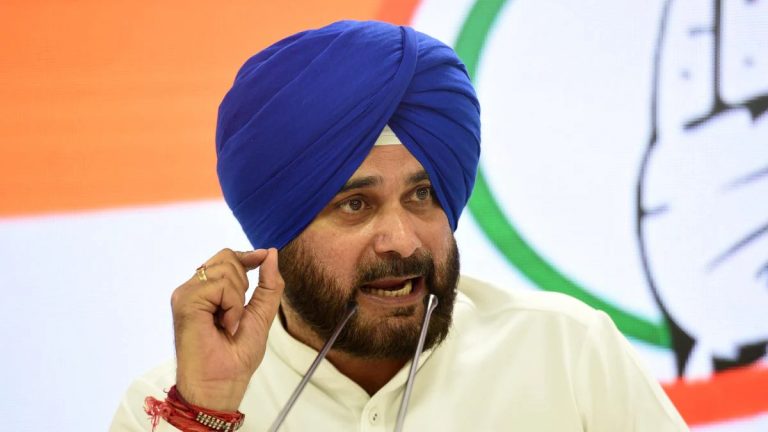
Congress leader and former cricketer Navjot Singh Sidhu has finally surrendered in the road rage case where he was sentenced to 1-year imprisonment. Sidhu will be lodged in Patiala jail during the course of his imprisonment.
Navjot Singh Sidhu surrendered before Patiala chief judicial magistrate (CJM) Amit Malhan on Friday after he was given a 1-year prison sentence by the Supreme Court in a 1988 road rage case when he caused the death of an elderly person named Gurnam Singh
Earlier, Sidhu had tried to seek more time to surrender on medical grounds, but his plea was not entertained by the Supreme Court.
Sidhu road rage case
On December 27, 1988, Sidhu and one of his friends had beaten Patiala resident Gurnam Singh for allegedly blocking his vehicle. While Gurnam Singh was taken to a hospital, he was declared dead. Sidhu and his friend Rupinder Singh Sandhu were booked in the case.
In 1999, the Patiala district and sessions court acquitted them citing a lack of evidence. The state govt had appealed against it, and the Punjab and Haryana High Court found them guilty in 2006 and had awarded them a three-year jail term. In 2007, the Supreme Court had stayed the conviction on Sidhu’s appeal, and in 2018, the apex court had reduced the term to a Rs 1000 fine, while Sandhu was acquitted.
However, after a plea in the Supreme Court, Sidhu’s punishment was enhanced to 1-year imprisonment.
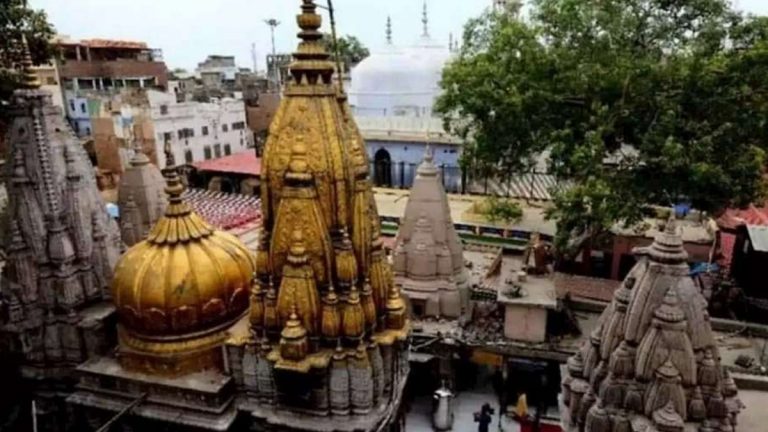
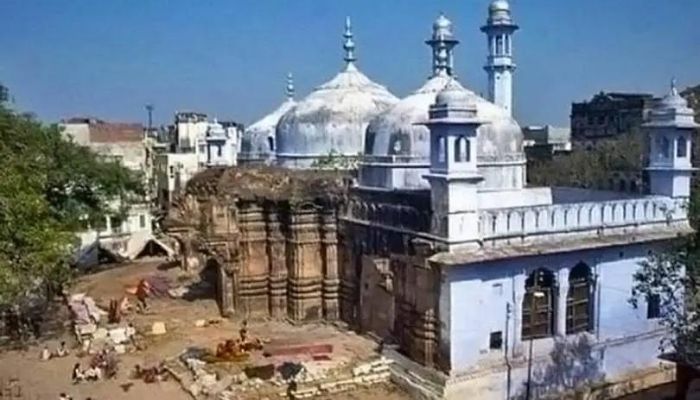
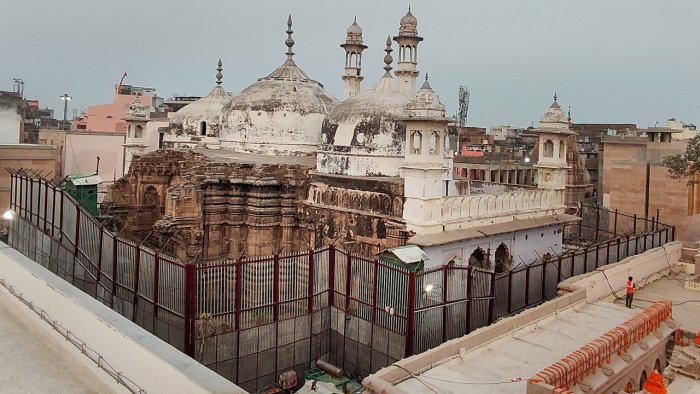
As the Gyanvapi case is heard by the Supreme Court and Varanasi court, advocate Hari Shankar Jain representing the Hindu side in this case has come up with a new claim about the Shivling found in the Wazukhana of the so-called mosque erected at the disputed site of the Gyanvapi complex in Varanasi. Advocate Hari Shankar Jain, while speaking with news channel Aaj Tak, said that the Shivling found in Varanasi was originally studded with a diamond which was removed after occupation. He said that because of this reason the upper part of the Shivling shows cracks.
Hari Shankar Jain said, “I have submitted a 274-page document along with evidence to the Supreme Court, on the basis of which the hearing will be held today. In this document, there is information on what is Kashi, and what is the importance of Kashi. Kashi is a religious city that was settled by Lord Shiva. It is mentioned in the Puranas and Scriptures.”
He further said, “I have told the court how Aurangzeb came and destroyed the temple. However, he could not demolish it completely and the servants in the temple continued the Puja rituals.” Hari Shankar Jain also said that on the western wall of the mosque there are artistic inscriptions that are usually seen in temples.
The lawyer of the Hindu side in this case further said, “The dome is placed just above the old temple. We have also reported about the dome, below it is the crest of the temple. I also have a picture of it. According to my information, on top of the original Shivling, which was there, there was a place to keep diamonds. The talks going on about it being a fountain is a matter of fooling people. There is a place to keep diamonds on top of the Shivling, from where the diamonds are missing and it is a complete Shivling.”
On Friday 20th May 2022, the Supreme Court of India refused to strike down the Varanasi court’s orders to do a survey of the disputed structure of Gyanvapi Mosque in Varanasi and the subsequent orders to seal parts of the structure after Hindu symbols including a Shivling was discovered in the survey. The court said that its order in the case will continue, which included the sealing of the Wazukhana on the premises, which reportedly contains the Shivling. The status quo is to be maintained till the case is heard by the local courts.
Rakhi Singh and others, representing the Hindu side in the Gyanvapi controversy, have filed a reply in the Supreme Court outlining all of the facts justifying the temple’s existence at the Gyanvapi edifice site. The reply was filed in response to the Masjid Committee’s special leave petition challenging the Civil Court’s orders for a survey and sealing of the mosque premises. According to the submissions, the property has belonged to Adi Vishweshwar for centuries, even before the Islamic rule in India, and hence the deity’s property cannot be handed to anybody.
In the reply submitted on behalf of the plaintiffs by Advocate Vishnu Shankar Jain, it is claimed that the property is vested in the deity Lord Adi Vishweshwar and that Gyanvapi is not a mosque since Aurangazeb did not form a Waqf by dedicating the property. According to legend, the property had belonged to Adi Vishweshwar for thousands of years and was forcibly removed by Aurangazeb.
As stated in the reply, “The property in question does not belong to any Waqf. The property had already vested in deity Adi Vishweshwar lakhs of years before the start of the British Calendar year and is continuing to be the property of the deity. No Waqf can be created on the land already vesting in a deity. In the historical books written during the Mughal regime and thereafter even Muslim historians have not claimed that Aurangzeb after demolishing the temple structure of Adi Vishweshwara had created any Waqf or thereafter any member of the Muslim community or Ruler was dedicated such property to Waqf.”
“The alleged Gayanvapi Mosque is only a structure and same cannot be regarded as Mosque. Another aspect is that the disputed construction has not been erected over any Waqf property. The principle Waqf by the user cannot be applicable as the alleged Gyanvapi Mosque was constructed after demolishing a Hindu temple in 1669 at the same very place and the date of construction of the alleged Mosque is well known,” the reply further maintained.
“A Waqf can be created only on the land dedicated to Waqf by wakif who is the owner of the land. In the instant case, it is clear that from the time memorial the land and property belong to the deity and therefore there can be no Mosque there”, the reply mentions. It is asserted that a structure built on the site of a temple under the authority of any Muslim king or by any Muslim cannot be considered a mosque.
The reply asserted that in this case, “Aurangzeb did not create any Waqf and did not bequeath the property in question to the God. Therefore, the construction in question cannot be even presumed to be a mosque.” As a result, the property in question continues to be a Hindu place of worship. It is contended by the Hindu side that the religious character of the property has always been that of a Hindu temple and that it can never be interpreted as a mosque, therefore, the Places of Worship (Special Provisions) Act 1991 is not applicable because the lawsuits have no intention of changing the religious character of the place.
The response further mentions that remains of the Hindu temple may be seen on the walls of the disputed Gyanvapi structure, which stands on the site of the demolished original Kashi Vishwanath Temple. It further states that on December 30, 1810, the then-District Magistrate, Mr Watson, wrote to the President Council requesting that the Gyanvapi area be permanently given to Hindus.
The matter was heard today by the Supreme Court, which reassigned the Gyanvapi dispute case from the Varanasi civil court to the Varanasi district court. Given the intricacies of the case and the sensitive issues involved, a three-judge bench comprised of Justices DY Chandrachud, Surya Kant, and PS Narasimha stated that the matter should be handled by a senior and experienced judge.
The court went on to say that under the Places of Worship Act of 1991, there is no prohibition on determining a place’s religious character. The bench further stated that there are certain intricacies of the Act that will be considered further.
On Friday, the Madhya Pradesh Police registered an FIR against a person named Nihal Khan for deceitfully assaulting a Hindu woman and allegedly forcing her to accept the religion of Islam. The 31-year-old victim, who is a physiotherapist by profession, said that Nihal never revealed his full name and developed physical relations with her assuring of marriage.
According to the reports, the accused Nihal Khan is the Director of a General Hospital in Bhopal. The victim used to visit the General Hospital at Depot intersection area of the city on call. The duo met there and soon became friends. The victim in a video statement said that Khan never revealed his full name and always introduced himself as just Nihal. The victim also never bothered to ask his full name as they had become good friends. “We started sharing personal things about ourselves. He came to know that I was already a divorcee and that I was alone. He used to show sympathy. This is how he started visiting my house”, she said.
On November 20, 2018, when the parents of the victim were not at home, Khan arrived and proposed to her for marriage. He promised that he would never leave her and after that developed physical relations with her. He kept on repeating the act, while the victim started to press him for legalizing the relationship.
“I pressed him for marriage. He started ignoring me. Later to my shock, he told me that he didn’t believe in the religious marriage system but believed only in Nikah. He asked me to convert my religion to Islam and refused to marry if I didn’t convert”, the victim stated. She added that he hit her and abused her as she told him that she would complain about the incident to the Police. “He said he did not believe in the Police and the Courts and also threatened to kill me”, she said.
The victim in the Police complaint also mentioned that the accused had duped her for money. The hospital that she owned in the Ashoka Garden area of Bhopal was deceitfully acquired by the accused. “Also I was a partner at the General Hospital. It cost me more than Rs 8 lakhs. Nihal forged the documents of both the hospitals and discharged my name from the papers. He said that he would return me the assets only if I get converted to Islam”, she noted in the FIR.
Recent cases of Grooming Jihad:
It is important to note that this is not the first time that such a case of Grooming Jihad has been reported. Last month, a minor girl was raped, blackmailed and exploited by a man named Kasim who had allegedly claimed to be Rahul. Kasim had allegedly lured the girl into a relationship online by identifying himself as ‘Rahul’. He belonged to the same neighbourhood as the victim and had gradually gained her confidence, eventually raping her and making obscene video clips to blackmail her further.
In Mumbai, a 23-year-old man named Mohammed Ansari was arrested in connection to the brutal murder of an 18-year-old NEET aspirant girl named Sonam Shukla. The victim had gone missing after she left her home for tuition. As per the police, the teenager did not attend her tuition classes and instead went to one of her female friend’s houses before leaving the place. The 19-year-old had gone to the residence of Mohammed Ansari, a graduate student and a bakery owner, where he killed her over a heated argument with her.
The Haridwar police had arrested a youth named Sadiq who posed as a Hindu to befriend a minor girl and raped her thereafter. According to the FIR filed in the case on April 10, 2022, Sadiq had introduced himself as Ratan Tyagi to lure the Hindu girl. He then threatened her with her intimate pictures and sexually assaulted her.
Besides this, there are several similar cases of Love Jihad, where Muslim men have lied about their religious identity to trap innocent non-Muslim women to forcefully marry and sexually abuse them. OpIndia has documented several such cases over the last few years.
The Madhya Pradesh Police in the recent case has registered an FIR against accused Nihal Khan and has booked him under the relevant sections of the Indian Penal Code and the Madhya Pradesh Religious Freedom Act. The Police officers have also launched a manhunt to nab the accused who is absconding. The investigations are underway.
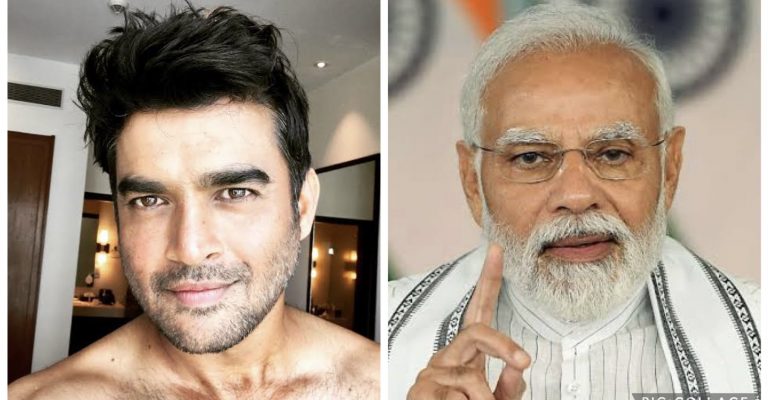
Actor R Madhavan on Thursday lavished praises on PM Modi as he hailed the central government’s push for the “micro-economy” while speaking at the Cannes film festival. The Rocketry-The Nambi Effect actor said while the world at large was sceptical about the Centre’s embrace of the digital economy, believing that digitisation would be big “disaster” for the country where farmers are uneducated, the story changed in a couple of years believing that digitisation would be a “big disaster” in a country where farmers may not know as India became one of the largest users of micro-economy in India.
The Information and Broadcasting Minister Anurah Thakur shared a snippet of Madhavan’s response on Twitter, tweeting, “When our PM @narendramodi introduced a micro-economy & digital currency there was a furore…it is going to be a disaster. In a couple of years, the whole story changed & India became one of the largest users of micro-economy in the world. This is #NewIndia.”
When our PM @narendramodi introduced a micro economy & digital currency there was a furore…it is going to be a disaster. In a couple of years the whole story changed & India became one of the largest users of micro economy in the world. This is #NewIndia – @ActorMadhavanpic.twitter.com/yhuuZf8iHI
— Office of Mr. Anurag Thakur (@Anurag_Office) May 19, 2022
“When the PM started his term, he introduced the micro-economy and digital currency. There was a furore around the world among the economic community which said it’s not going to work, it’s a disaster because how are you going to get farmers and people who are uneducated in small villages to handle a mobile phone and handle their accounting,” Madhavan said.
He further added, “Micro-economy was considered as a big disaster in India. In a couple of years, the whole story changed and India became one of the largest users of micro-economy in the world. And You know why that happened? It is because farmers need not be educated to know if they have got their money, who they have sent their money, and if they have received the money in their accounts. This is New India.”
‘Rocketry: The Nambi Effect’, which is India’s official selection for its world premiere at the 75th edition of the Cannes Film Festival, saw its grand premiere at the convention centre of Palais des Festivals. Madhavan is playing the character of Aerospace scientist Nambi Narayanan, who was caught in the throes of a spying scandal and falsely accused of espionage during Congress rule in the mid-90s.
A huge crowd gathered at the disputed structure in the Gyanvapi complex during Friday prayers on 20th May 2022. According to locals, they have never seen the disputed Gyanvapi structure so crowded. Now that Shivling has been reportedly discovered inside Gyanvapi Mosque, a large number of people came to offer Namaz on Friday.
Earlier, when the survey of the Gyanvapi complex was conducted, a similar crowd had gathered at that time. For the first time since the Gyanvapi complex survey, a large number of Muslims had arrived during the Friday prayers. During this time, the Masjid management had to announce on behalf of the mosque committee and tell the Namazis to go back due to the crowd. People were diverted to Raziya’s Masjid which is situated nearby.
As the number of Muslims arriving at the disputed structure for offering prayers increased, they were being allowed to enter from gate number 4 of the Kashi Vishwanath Temple complex. All the necessary security measures were ensured by the local police. When the Muslims came out of the so-called mosque at the disputed structure, none of them was seen interacting with the media or other people. Reportedly, the mosque committee had asked the Namazis not to say anything to anyone in order to avoid any possible conflict if someone makes any sensational statement accidentally.
Still, while talking to Zee News, one of the Muslims coming out of the mosque said, “People have come here to offer the Friday Namaz. The whole mosque was full. On almost every Friday there is such a crowd. Look, it is related to people’s feelings, so they come here and offer the Namaz. It is true that this time there is an increase in the number of people attending the Friday Namaz. But everything was carried out with discipline and there is no law and order problem.”
According to reports, since the wuzukhana was sealed after the discovery of Shivling there, the administration had also provided an alternative arrangement for wuzu before offering the Namaz in the so-called mosque.
नमाज के बाद ज्ञानवापी से बाहर आ रहे मुस्लिम समुदाय के लोगों ने कहा- ‘जिला प्रशासन और हिंदू समाज के साथ ही सभी लोगों ने किया भरपूर सहयोग’
Sharing the news, journalist Shivam Pratap wrote on Twitter, “People from the Muslim community arrived in large numbers for the Friday prayers. Thousands of Namazis arrived, entry of Namazis from gate no.4 of Kashi Vishwanath temple. On the spot, seeing the crowd of Namazis, it seems that this is the only mosque in the whole of Kashi!!”
जुमे की नमाज के लिए भारी संख्या में ज्ञानवापी पहुंचे मुस्लिम समाज के लोग.
हजारों की तादात में पहुंचे नमाजी, काशी विश्वनाथ मंदिर के गेट न.4 से नमाजियों की हो रही एंट्री.
प्रशासन के आलाधिकारी मौके पर, नमाजियों की भीड़ देखकर प्रतीत हो रहा है कि पूरे काशी में यही एक मस्जिद है!! pic.twitter.com/DRkIPTdxf7
In a subsequent tweet, he wrote, “Announcement of mosque management: Gyanvapi mosque was filled with Namazis, offer prayers elsewhere. People are not ready to listen, now gate no. 4 has been closed!! The local shop owners said, “There has never been such a crowd, today a countless number of Namazis reached, the hands and feet of the administration are swelled!!”
मस्जिद प्रबंधन का एलान : ज्ञानवापी मस्जिद नमाजियों से फुल हुई, कहीं और पढ़ें नमाज.
लोग मानने को तैयार नहीं, अब गेट न. 4 बंद किया गया!!
स्थानीय दुकान वालों ने बताया, कभी इतनी भीड़ नहीं हुई, आज हद्द से ज्यादा नमाजी पहुंचे, प्रशासन के हाथ पांव फूले!! https://t.co/xFnTWLFwJD
Reacting to the developments in Kashi, Bharatiya Janata Party’s spokesperson Ajay Sehrawat tweeted, “Namazis are adamant about going inside the Gyanvapi temple, the full capacity of the mosque is 700 but more than 1200 people are present. Isn’t this a kind of show of strength??”
ज्ञानवापी मंदिर के अंदर जाने की जिद पर अड़े हैं नमाज़ी, पूरी क्षमता 700 लेकिन 1200 से ज्यादा लोग मौजूद। क्या ये एक तरह का शक्ति प्रदर्शन नहीं है??
Meanwhile, among the latest updates in the Gyanvapi case, the Supreme Court ordered the transfer of the Gyanvapi case to District Judge, Varanasi on 20th May 2022. The Supreme Court ordered that a senior and experienced judicial officer of UP Judicial services will hear the case.
The Supreme Court of India today refused to struck down the Varanasi court’s orders to do survey of the disputed structure of Gyanvapi Mosque in Varanasi and the subsequent orders to seal parts of the structure after Hindu symbols including a Shivling was discovered in the survey. The court said that its order in the case will continue, which included sealing of the Wazukhana in the premises, which reportedly contains the Shivling. The status quo is to be maintained till the case is heard by the local courts.
The court also transferred the Gyanvapi dispute case to Varanasi district court from the civil court in Varanasi. A three-judge bench comprising Justices DY Chandrachud, Surya Kant and PS Narasimha said that given the complexities of the case and the sensitives involved, the case should be heard by a senior and experienced judge.
Justice Chandrachud said that while the bench was not casting aspirations on the judicial officials in Varanasi hearing the case, the case needs to be heard by someone senior and the Varanasi District Judge has experience of 20-25 years and they know how to handle such cases.
Order : We accordingly order and direct that the Civil Suit __from Civil Judge Senior Division Varanasi shall stand transferred to District Judge Varanasi and all interlocutory applications shall stand transferred.
The Supreme Court bench ordered the district court to hear the petition of the Muslim side against the court judgement on priority, while saying the interim order of the Supreme Court will continue till the plea of the Muslim side is decided and for 8 weeks after that. The court also ordered the District Magistrate to make arrangements for Wazu, or ritual washing before Namaz, for the Muslim devotees visiting the disputed site.
During the hearing, senior advocate Huzefa Ahmadi who was representing the masjid committee, said that the matter has to be nipped in bud, and all orders issued by the Varanasi court, like appointing commissioner for survey of the structure to its sealing the site are illegal and they should be declared as void. “My submission is right from the date the Commission was appointed till date, all these orders shall be declared as void and null,” he said.
However, the Supreme Court said that it can’t decide on the maintainability of the suit of the Hindus because the Masjid Committee has already filed a petition against the suit in a Varanasi court.
Ahmadi pressed hard to get the Varanasi court order overturned, but the apex court refused to accept his arguments. The Masjid Committee lawyer even issued a veiled threat of violence by talking about ‘ramifications’ across the country.
Ahmadi : There is a narrative which is being created. Commission reports are being leaked selectively. This is disturbing communal harmony. Don’t look at this from the point of one suit alone. Look at the ramifications across the country.
The lawyer claimed that a status quo of over 500 years have been violated, and it is disturbing communal harmony and will cause public mischief. He argued that the mosque has been in existence for 500 years, and the court orders violate the places of worship act.
However, the apex court rejected his arguments, and defended the Varanasi court order for survey of the structure. In a significant observation, justice Chandrachud said that under the Places of Worship Act, 1991, there is no bar on ascertainment of religious character of a place. The bench also said that there are various nuances of the Act, which will fall for consideration, rejecting Ahmadi’s argument that the act puts a blanket ban on changing the character of religious places.
The judge noted that the ascertainment of religious character of a place as a processual instrument may not fall foul of Section 3 or 4 of the Act. “These are matters where we will not hazard an opinon in our order. We are in a dialogue,” he added.
Justice Chandrachud said that hybrid religious structures are not unknown in India, where symbols of different religions are found in the same place. He said just because some place has a cross, it does not become Christian place automatically.
Advocate Ahmadi also claimed that the Shivling found by the survey team is actually a fountain, and asked that the taps present in the area should be made available for Wazu. But the bench refuses saying they don’t have photographs of the area, so they can’t pass judgements on this. The court instructed the District Magistrate to make arrangements for Wazu instead. It is notable that even before the Supreme Court order, the magistrate had already arranged two drums of 1000 litres of water and 50 mugs for today’s Jumma Namaz.
Today’s order by the Supreme Court means that the place inside the structure where the Shivling has been discovered will remain sealed, and Muslims won’t be able to use the pond for Wazu. It is notable that while Varanasi court had ordered to seal the entire mosque, the Supreme Court had changed that to seal only the part where Shivling was found, and had allowed Namaz to go on inside the structure. However, today the Masjid Committee requested the people to not come to the mosque in large numbers for Friday prayers, because the Wazukhana and the toilets have been sealed as per court orders.
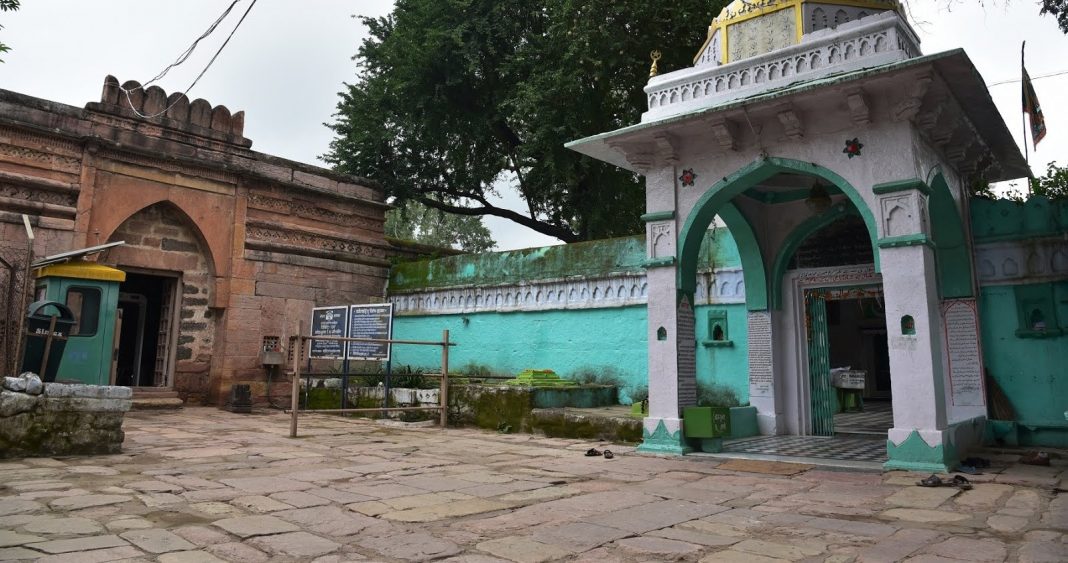
On May 11, the Madhya Pradesh High Court accepted a petition seeking a stay on Muslims performing Namaz in the compound of the Bhojshala monument in the state’s Dhar district. The Court also served the summons to the Madhya Pradesh government, the Union government, and the Archaeological Survey of India.
The case was made by the ‘Hindu Front For Justice,’ which was challenging an order issued by the ASI Director-General on April 7, 2003. The ASI decree had enabled Muslims to offer Namaz in the compound of the 11th-century structure known as the ‘Kamal Maulana Mosque.’ The Hindu organisation said that the monument is a religious heritage structure revered by Sanatan Dharma followers.
The Hindu organisation also requested the installation of a statue of Goddess Saraswati (Vagdevi) in the Bhojshala complex, as well as the production of coloured pictures of the complex’s inscriptions. It also requested that the Union government undertake radiocarbon dating on the antiquities and sculptures housed within the monument.
What is Bhojshala?
The ‘Bhojshala’ is a unique and historic temple dedicated to Mata Saraswati, the Goddess of Knowledge and Wisdom. Raja Bhoj (1000–1055 AD), the greatest emperor of the Parmar dynasty and a devout promoter of education and literature, founded a college at Dhar that became known as Bhojshala and attracted students from far and wide.
This Mata Saraswati temple lies in Madhya Pradesh’s Dhar district, which was then Raja Bhoj’s capital. Many students used to come here to learn music, Sanskrit, astronomy, yoga, Ayurveda and philosophy. Bhojshala was a massive educational establishment that accommodated thousands of students and intellectuals.
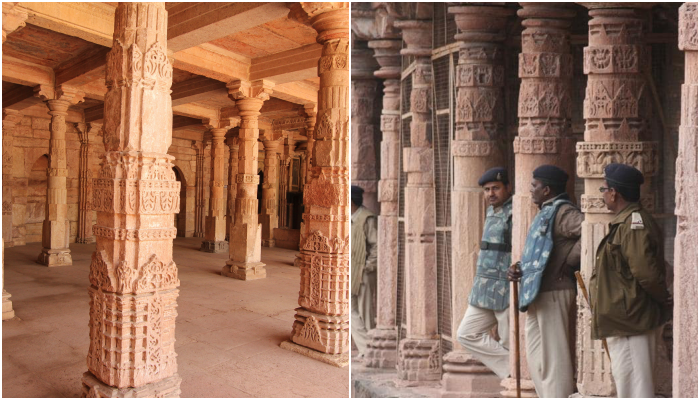
The pillars in the corridors of the Bhojshala complex.
The current Kamal Maulana Mosque, which was erected by Muslim conquerors after the temple was razed, has remnants of the Bhojshala. The carved pillars used in the mosque are the same ones utilised in the Bhojshala. Engraved stone slabs affixed to the mosque’s walls still contain valuable works. These inscriptions go into great depth about Sanskrit grammar. Besides that, some inscriptions praise the emperors who came after Raja Bhoj. There are also inscriptions in classical Sanskrit with theatrical compositions. These inscriptions are notable for being written in characters from the 11th and 12th centuries A.D.
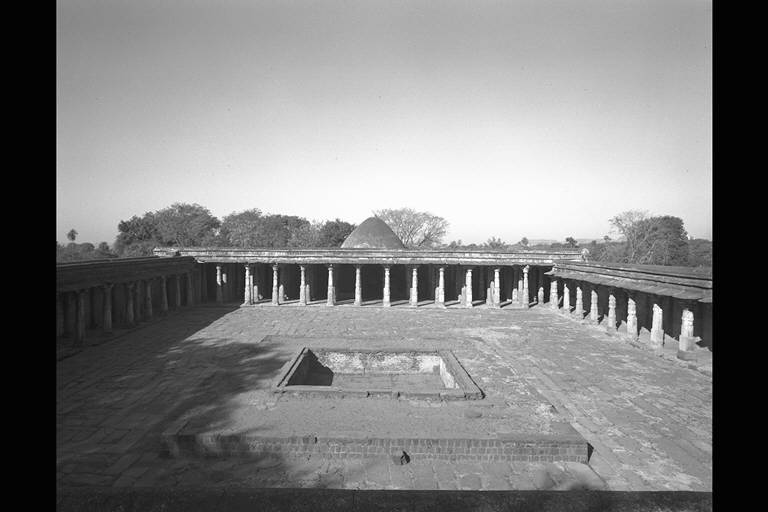
Yagna Kund inside the Bhojshala premises.
The temple was considered to be the centrepiece of Dharanagari’s 84 squares, the city of palaces, temples, universities, theatres, and gardens. The goddess Saraswati’s statue is presently housed at the London Museum. The royal poet Madan mentioned this Mata Saraswati shrine in his poems as well.
The Islamic invasion and destruction of the Bhojshala complex, Hindu students were massacred, temple destroyed
In 1305, 1401 and 1514 AD, Muslim monarchs repeatedly wrecked the majestic temple and centre of learning at Bhojshala. In 1305 AD, the ruthless and barbaric Muslim tyrant Alauddin Khilji destroyed Bhojshala for the first time. Nevertheless, the process of Islamic invasion began 36 years before, in 1269 AD, when a Muslim Fakir named Kamal Moulana reached Malwa.
Kamal Moulana utilised deceitful methods to convert many Hindus to Islam. He spent 36 years gathering extensive information on the Malwa area and turning it over to Alauddin Khilji. Khilji massacred 1200 Hindu students and teachers at Bhojshala for refusing to convert to Islam, and he demolished the temple complex. The current mosque has the name of the same Kamal Maulana.
The Kamal Moulana Makbara
Another Muslim conqueror, Dilawar Khan, demolished Vijay Mandir (Surya Martand temple) and attempted to turn a portion of Saraswati Temple Bhojshala into a dargah in 1401 AD. Muslims perform Namaz at the same Vijay Mandir today. Again in 1514 AD, one Mehmudshah besieged Bhojshala and attempted to transform it into a dargah. He encroached on the area outside Saraswati Temple and established ‘Kamal Moulana Makbara.’ It is on this basis that Bhojshala is being claimed to be a Dargah.
The entry of the British into the scene
Malwa was taken by Marathas in 1703 AD, thereby ending Muslim rule. The East India Company seized Malwa in 1826 AD. They, too, invaded Bhojshala, destroying several monuments and shrines. Lord Curzon removed the deity’s idol from Bhojshala and placed it in England in 1902. The statue is currently on display at a museum in London.
Saraswati idol from Bhojshala, currently in London
For the first time since Muslim rule, Muslims attempted to offer Namaz by entering Bhojshala during British authority in 1930. This attempt, however, was thwarted by Hindu activists from Arya Samaj and Hindu Mahasabha.
Post-independence
In 1952, the Central Government gave up Bhojshala to the Archaeological Survey of India. In the same year, campaigners from the Rashtriya Swayamsevak Sangh and the Hindu Mahasabha began to educate Hindus about Bhojshala. Around the same period, Hindus established Shri Maharaja Bhoj Smruti Vasantotsav Samiti.
Following that, in 1961, Padmashri Dr Vishnu Shridhar Wakankar, a well-known archaeologist, artist, writer, and historian, visited London and established that the Vagdevi idol kept in London was the actual one installed by Raja Bhoj at Bhojshala.
Prior to March 12, 1997, Hindus were permitted to take darshan but unable to do puja. However, in 1997, CM Digvijaya Singh issued an order permitting Muslims to offer Namaz at Bhojshala every Friday but prohibiting Hindus from even entering Bhojshala. Hindus were only permitted to enter and offer puja at Bhojshala during Vasant Panchami.
Bhojshala was opened for Hindus in April 2003. Darshan was allowed to Hindu devotees every day, apart from Tuesday, when they may worship using flowers.
In order to regain complete access to the entire premises for worship, the current petition filed has stated that the destruction of a temple and its continuation in the same form is a continuing trauma for the worshippers, denying them spiritual power, and in such a situation, the worshippers’ lives remain in jeopardy, giving day to day tease and a feeling of humiliation done by the invader, and such continued wrong has to be rectified under the sweep of Article 13 (1) of the Constitution of India to protect the life and religious rights guaranteed under Article 21 and 25 of the Constitution of India.
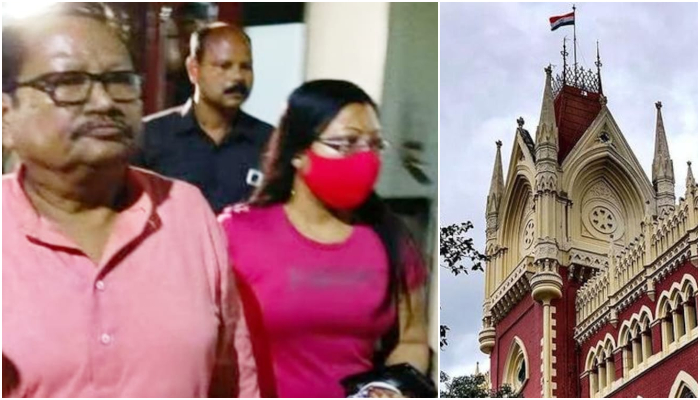
On Friday, May 20, the Calcutta High Court disallowed West Bengal’s Education Minister Paresh Adhikari’s daughter Ankita Adhikari from entering the school premises where she worked as a teacher and also asked her to refund the salary for the tenure she has already served. The Court was hearing a case related to the SSC scam being investigated by the CBI.
SSC scam | Calcutta HC orders West Bengal minister Paresh Adhikari’s daughter Ankita Adhikari not to be allowed to enter the school premises where she worked as a teacher till further orders. Court says she has to refund her salary for the tenure she has already served
This decision came a day after the CBI registered an FIR against Minister Adhikari and his daughter for skipping the CBI summons deadline that was set by the Calcutta High Court. He was summoned for illegally recruiting teachers in government-aided schools and also for allotting a job to his daughter despite her absence from the merit list.
The agency had also quizzed senior TMC leader and Industry Minister Partha Chatterjee as the alleged recruitment scam had taken place when he was the education minister. Adhikari however, who is the minister of state for education was grilled on May 19.
Meanwhile, the BJP leaders protested on the streets against the Mamata Banerjee-led government over the issue of the SSC scam and demanded the resignation of both Paresh Adhikari and Partha Chatterjee.
Kolkata | BJP workers protest against Mamata Banerjee government over the issue of the alleged SSC scam pic.twitter.com/fER4CVYXKn
The CBI has been investigating several cases where teaching and non-teaching staff in the state of West Bengal were allegedly appointed illegally in schools following recommendations by the West Bengal Central School Service Commission (SSC).
The West Bengal Teacher’s recruitment scam, more commonly referred to as the SSC scam, looks into the recruitment process conducted through the State Level Selection Test (SLT) conducted by SSC from 2014 to 2016. Candidates who appeared for the State Level Selection Test (SLST) exam had alleged that many candidates who secured fewer marks ended up with higher ranks on the merit list. They further stated that the candidates who were not on the merit list were also sent appointment letters.
Also, in the year 2016, multiple allegations of corruption cropped up regarding the recruitment of Group C and Group D employees in secondary and higher secondary schools under the West Bengal Board of Secondary Education. The matter came to light in March this year after irregularities were noticed in the recruitment process of teachers in the state government schools.
Earlier, the single bench had ordered the CBI to interrogate the former chairman of the SSC advisory committee, SP Sinha, and other former members of the panel. The court had asked the CBI to file a report after interrogating the former members. In April, the CBI also registered an FIR against West Bengal Directorate of School Education former deputy director Alok Kumar Sarkar and unidentified officials of the SSC.
According to the FIR, the accused had extended the undue advantage in appointing around 500 undeserving candidates for Group-D staff posts. Reportedly, they had also flouted the departmental rules and used forged documents for the purpose. The FIR was filed by the central agency’s anti-corruption bureau under Sections 120-B (criminal conspiracy), 420 (cheating), 468 (forgery for purpose of cheating), and 471 (using forged documents or electronic records as genuine) of the Indian Penal Code.
On April 8, the accused were questioned by the CBI and a detailed report was submitted before the Court. The Court further asked the then Education Minister Partha Chatterjee to appear before the CBI. The CBI has charged the Minister Paresh Adhikari and his daughter Ankita Adhikari under sections 120B (criminal conspiracy), 420 (Cheating and dishonestly inducing delivery of property), and Prevention of Corruption Act 7 (Obtaining an undue advantage, to perform or cause the performance of public duty improperly or dishonestly).
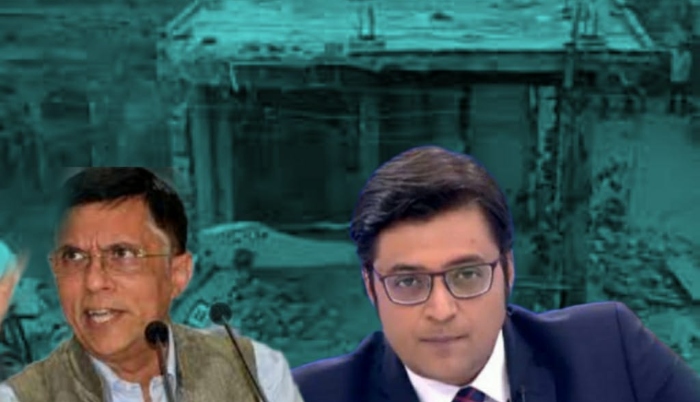
The Rajasthan High Court Friday granted interim protection from arrest to Republic TV Editor-in-Chief Arnab Goswami in a case registered against him by Congress spokesperson Pawan Khera, under IPC section 153A for promoting enmity between religious groups, reported the legal news portal Bar and Bench.
Senior Advocate Mahesh Jethmalani mentioned the matter before Justice Sandeep Mehta, who ordered the police not to take any coercive action against the people named in the FIR and posted the matter for the next hearing on May 23.
According to Bar and Bench, the court passed the order while hearing a plea submitted by Arnab Goswami seeking the quashing of the FIR filed against him on May 17 at Ambamata Police Station in Rajasthan’s Udaipur. The FIR was filed based on a complaint lodged against the journalist by Congress spokesperson Pawan Khera.
Khera had taken objections to a particular news show televised by Republic Bharat, the Hindi channel of the Republic network, on the demolition of an old Hindu temple in Rajgarh and houses of several Hindus in Alwar Rajasthan.
The lawsuit alleged that the FIR was filed with the intent of harassing and entangling Republic TV in legal cases. It said that the Congress member had filed a complaint in a case where the Congress Government of the state of Rajasthan was being questioned, alluding that Khera was attempting to intimidate and silence the media merely because his party was being questioned.
“The current FIR has been filed at the behest of Mr. Pawan Khera who is the Spokesperson, All India Congress Committee and represents the Indian National Congress in various TV talk shows, discussions/debates that are held on different news channels etc. as per his own complaint. It must be noted that in a case where the Congress Government of the state of Rajasthan was being questioned, a member of the Congress has filed a complaint. This establishes how the entire case is motivated and made to harass and embroil a legitimate news network and its members in a litany of cases,” the plea said.
The Republic Bharat show, which the Congress spokesperson took offence to, was a show related to the alleged demolition of a temple in Rajgarh and a demolition drive in Alwar.
Notably, OpIndia had also reported on April 22, 2022, how in Rajgarh, district Alwar in Rajasthan, the authorities have demolished an old Hindu temple, inviting criticism and condemnation from locals. As per reports, a JCB was brought in to destroy the temple’s roof and pillars. Idols of the temple have been damaged in the demolition drive. The Shivalingam inside the temple was also uprooted by using drills.
Moreover, the Rajgarh authorities had demolished the houses of over 85 Hindu families in a ‘road-widening’ drive citing a city masterplan. Locals whose houses and shops have been demolished have stated that they had the valid documents of their properties. Despite this, the municipality has demolished their buildings. In a drive that started on 17 April, over 150 houses and shops, including old temples have been demolished so far.
In fact, the Republic Bharat show was also on the aforementioned news. Arnab Goswami, in his plea, argued that the broadcasts were intended to maintain communal harmony rather than disrupt it.
Regarding the issue of temple demolition in Rajgarh, the plea said, “In fact, the channels also covered how a Muslim Group had filed a complaint naming Congress Zilla Head Yogesh Mishra for vitiating harmony in the region. Therefore, far from causing strife, Republic was exposing it.”
Notably, for the Alwar demolition drive, the program had used the words ‘Jahangirpuri ka badla?’ In his plea, Arnab Goswami explained that the aforementioned line was made not in reference to any community but to question if it was an apolitically motivated demolition drive.
“It is submitted that there was an uproar over a demolition drive in New Delhi’s Jahangirpuri on 20-21st April, 2022. This demolition was being done by the Delhi MCD which is headed by the BJP. Soon after, there was news of the Alwar Demolition in Rajashtan where there is a Congress government in power. Therefore, the question about “Jahangirpuri Ka Badla” were being raised in the context of it being a political battle over demolition,” the petition said.
Senior Advocate Mahesh Jethmalani, representing Arnab Goswami argued that allowing the proceedings to continue would have a chilling effect on free speech and would be in breach of Article 19(1)(aguarantee )’s of freedom of speech and expression. After hearing the plea, the Rajasthan High Court bench of Justice Sandeep Mehta granted the Republic TV chief Arnab Goswami interim relief from arrest and ordered the Rajashthan police not to take any coercive action against the journalist.