Home Blog Page 3224

Lawyer Mehmood Pracha, who was on the cover of ISIS magazine, comes in defence of DU professor arrested for comments against Shivling found in Kashi

Controversial Supreme Court lawyer Mehmood Pracha, who has a history of siding with anti-Hindu entities, has come to the rescue of arrested Delhi University professor Ratan Lal.

Hours after the arrest of Delhi University Professor, controversial Supreme Court advocate Mehmood Pracha came to his rescue, saying that a false case had been registered against Ratan Lal.

Pracha claimed that the FIR has no mention of provisions that can be termed as a cognizable offence, however, despite that, the police have arrested the accused under Sections 153A & 295A IPC.

“This arrest is also a contempt of the judgement by the Supreme Court and a violation of section 3 in the Scheduled Castes and the Scheduled Tribes (Prevention of Atrocities) Act… we will prove his innocence. More protests should happen,” Pracha added, who was once featured on the cover page of the ISIS magazine.

Earlier on Friday, Delhi University professor Ratan Lal was arrested for making objectionable comments against the Shivling that was unearthed inside Varanasi’s disputed structure called Gyanvapi Mosque, built on the ruins of a temple.

Lal, who is an assistant professor at Hindu College, was initially summoned for questioning, and he was later arrested. The Delhi Police arrested him based on a complaint registered by Supreme Court advocate Vineet Jindal, who had accused Lal of offending religious sensitivities.

The Delhi Police had arrested Ratan Lal under Indian Penal Code section 153A (promoting enmity between different groups on the grounds of religion, race, place of birth, residence, language, etc., and doing acts prejudicial to the maintenance of harmony) and 295A (deliberate act to outrage religious feelings of any class by insulting its religion) by the Cyber Police Station, North.

Mehmood Pracha was featured in ISIS magazine.

Mehmood Pracha, who is accused of fanning communal hatred in the past, was featured as the poster boy for a pro-ISIS media outlet and is accused of spreading communal hatred in the past.

As India went through communal turmoil during the anti-Hindu riots earlier in February 2020, a publication titled ‘Voice of Hind’ issued by Al-Qitaal Media Center and Junudul Khilafah al-Hind, had featured Mahmood Pracha on its cover page. The cover was titled “So, Muslims, where are you going?”. It was featured with the subtitle “A call to the Muslims of India”.

The magazine had praised slain terrorists in Kashmir. It had also urged the Muslims to reject the idea of an Indian nation-state and fight for the ‘caliphate’ instead.

Mehmood Pracha had called for ‘Muslims and Dalits to acquire Arms License”

In addition to this, Mehmood Pracha has also been accused of exhorting Muslims to take up arms. In a press conference last year, Shia cleric Maulana Kalbe Jawad and Mehmood Paracha announced that they would be setting up a camp in Lucknow to teach Muslims and Dalits about the ‘right to self-defence and how to apply for a firearm licence.

Mahmood Pracha had cited the incidents of mob lynchings and the Sonbhadra massacre as reasons for conducting the camp. According to him, those events would not have occurred if the victims had legal firearms to defend themselves. They were basically planning to raise an armed militia to combat ‘mob lynchings’, using licenced weapons. Later, Mahmood Paracha was seen holding that training camp inside a Lucknow Mosque, where he was training Muslims about how to fill out forms for licences and acquire firearms, even though an FIR had been registered against him for his incendiary speech.

In 2020, the special cell of Delhi Police had conducted raids at Pracha’s office in relation to the Anti-Hindu Delhi riots case.
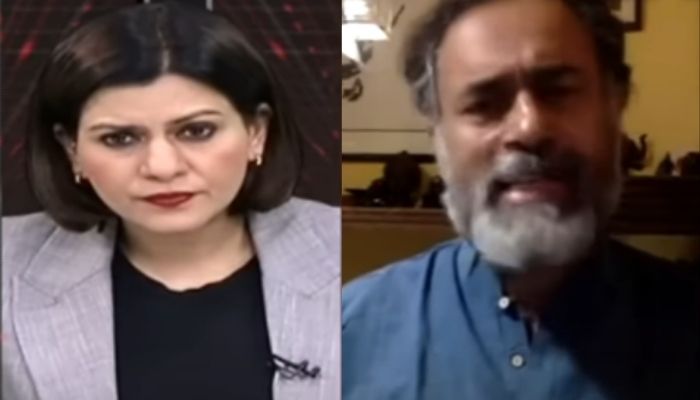
Yogendra Yadav warns of Islamists avenging reclamation of Kashi temple in 2522, Nidhi Razdan tries to prove she does not care about the Shivling: Details

On Thursday (May 19), ‘activist’ Yogendra Yadav courted controversy after he suggested that the Hindu community might face the wrath of Islamists for reclaiming the old Kashi Vishwanath temple when they will no longer be a majority.

While speaking to news anchor and fake Harvard Professor Nidhi Razdan on NDTV, he claimed, “Okay, we were defied for 500 years when they ruled and today it is our rule, we shall decide what happens. Don’t stop us because you could not stop someone else 500 years ago.”

“To all those friends and enthusiasts, I want to say with folded hands – Please remember, if you want to do something today because you are in majority and you can get your way past, for something that happened 500 years ago, please think about what may happen from 500 years for now,” he warned.

Yogendra Yadav then insinuated that Hindus might have to pay the price, for staking a claim at the disputed Gyanvapi mosque in Varanasi, at the hands of the Islamists 500 years later.

“Are we willing that our children, our generations to come, may then pay a price for what happened in 2022? Are we into this game,” he inquired.

The supposed ‘activist’, who was an active participant in the anti-CAA fiasco that led to Delhi anti-Hindu riots, also tried to whitewash the destruction of Hindu temples by Islamic invaders by claiming that several temples were built on the ruins of Holy Buddhist and Jain structures. He said that someone would say that several Hindu temples were built on Jain temples, so should we demand that they be dug up to find the truth? Asking this question, he also wondered how far were we willing to go.

“This country has to draw a line somewhere”, said Yogendra Yadav, saying that the line should be 15th of August 1947. “This country has to say we stop going into the past, whatever existed on that day, good or bad, exists there and let us move forward”, he said.

It was after this statement that he issued the veiled threat and intimidation to Hindus for wanting to reclaim their religious and cultural heritage, dismantled, ruined and demolished by Mughal barbarians. Yogendra Yadav essentially warned Hindus of retributive action when Muslims become a majority in the country, like they were 500 years ago. In an attempt to intimidate Hindus, Yadav was trying to tell Hindus to stop trying to reclaim their religious heritage or their future generations might have to “pay the price” at the hands of the Muslim majority – the price, if history has taught us anything, would be rape, murder and loot.

Interestingly, after Yogendra Yadav issued his veiled threat to Hindus, fake Harvard professor Nidhi Razdan chimed in to clarify essentially that she is holding this debate not because she has any particular affinity towards Hindus or their faith, but because she cares about “interfaith harmony”.

“Honestly, the only reason we are talking about it on this channel is because it has consequences on interfaith harmony, not because we are worried about whether there is a Shivling or not, to be very honest, that is a completely separate matter”, she said, with her hand on her heart, gesticulating feverishly.

Gyanvapi mosque dispute and survey

The Gyanvapi Mosque is a disputed structure built over the ruins of the desecrated old Kashi Vishwanath Temple by Mughal emperor Aurangzeb.

The Kashi Vishwanath Temple complex, which is adjacent to the disputed mosque complex and where devotees can do puja and prayers, was built by Ahilya Bai Holkar of Indore in 1780. A Varanasi court on May 12 allowed a videographic survey of the disputed structure.

Varanasi’s Civil Judge (Senior Division) Ravi Kumar Diwakar issued guidelines for the same and added that a report of the survey must be submitted by May 17. A 54-member team, led by advocate commissioner Ajay Kumar Mishra, surveyed the Gyanvapi complex basement and the western wall on May 14.

According to the reports, the survey team opened eight vaults of the disputed structure of the Gyanvapi mosque. On May 16,  counsel Hari Shankar Jain representing the Hindu side informed the court that a Shivling was discovered inside the premises during the survey.

While speaking to Aaj Tak, he claimed that the Shivling was originally studded with a diamond and was removed after occupation. He explained the missing diamond as the cause behind the crack on the upper part of the Shivling.

Madan Mohan Yadav, another lawyer representing the Hindu side, said the Shivling is 12 feet by 8 inches in diameter and is in the direction where Nandi is facing, as is customary.

DU prof Ratan Lal arrested for derogatory comments against Shivling found in premises of disputed Gyanvapi structure, built on the ruins of a temple

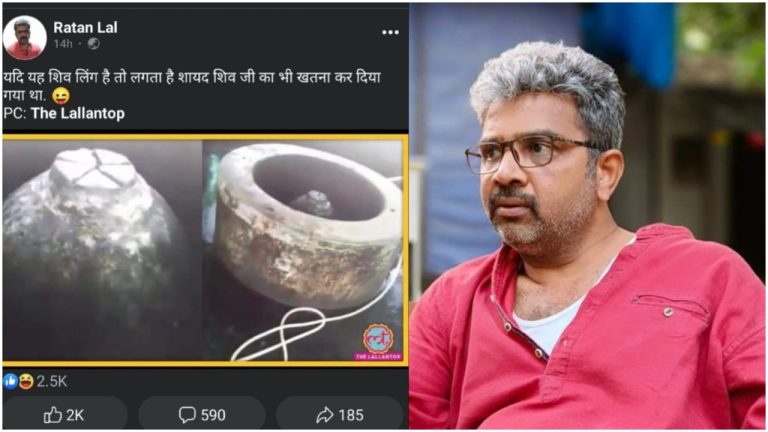
Delhi University professor Ratan Lal was arrested on Friday night for making objectionable comments against the Shivling that was unearthed inside Varanasi’s disputed structure called Gyanvapi Mosque built on the ruins of a temple.

According to reports, the Delhi Police have arrested Ratan Lal under Indian Penal Code section 153A (promoting enmity between different groups on the grounds of religion, race, place of birth, residence, language, etc., and doing acts prejudicial to the maintenance of harmony) and 295A (deliberate act to outrage religious feelings of any class by insulting its religion) by the Cyber Police Station, North.

Lal, who is an assistant professor at Hindu College, was initially summoned for questioning, and he was later arrested. The Delhi Police arrested him based on a complaint registered by Supreme Court advocate Vineet Jindal, who had accused Lal of offending religious sensitivities.

In a social media post, Ratan Lal had made vile statements against the Shivling that was found inside the Gyanvapi disputed structure during the recent survey. He had posted an image of the Shivling saying it was circumcised.

Ratan Lal had received widespread condemnation from netizens for making offensive remarks against Hindu gods.

Shockingly, the associate professor had brazened it out by writing a letter to the central government and the President of India requesting two AK56 rifle-equipped bodyguards or an arms licence. Mocking the Prime Minister, the Home Minister and the President of India, he had also said that commando training should be provided to him.

His vile tweet had come after a Shivling was unearthed during the court-ordered study of the disputed Gyanvapi structure adjacent to the Kashi Vishvanath Mandir in Varanasi. After the discovery, Civil Judge Varanasi (Senior Division) Ravi Kumar Diwakar ordered the sealing of the disputed Gyanvapi structure.

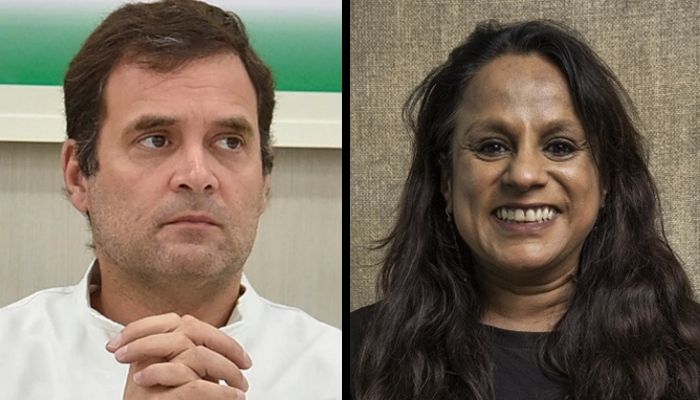
‘Please do a scripted conversation with a journalist for max impact’: Shruti Kapila, ThePrint columnist who will interview Rahul Gandhi at Cambridge

On Thursday (May 19), ThePrint columnist Shruti Kapila took to Twitter to inform that she will be interviewing Congress scion Rahul Gandhi on May 23, 2022.

The event titled ‘India at 75’ is set to be held at the McCrum Lecture Theatre in Corpus Christi College of the University of Cambridge. In a tweet, she wrote, “Very much looking forward to my conversation with Rahul Gandhi on Monday! On India at 75.”

As per her profile, Shruti Kapila is the Associate Professor of Indian History and Global Political Thought Fellow at the University of Cambridge. She is also the author of the book, ‘Violent Fraternity: Indian Political Thought in the Global Age.’

While the political opponents of Rahul Gandhi have labelled his upcoming interview as an ‘image building exercise’ on an international platform, the choice of Shruti Kapila as the interviewer makes for an interesting case.

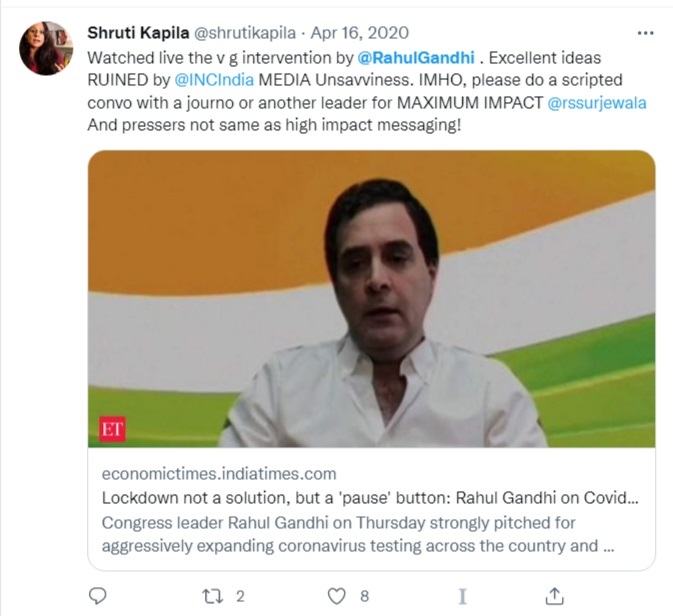
Not until long ago, she was seen suggesting that the Congress scion should only hold ‘scripted interviews’ for high impact messaging. In a tweet in April 2020, ThePrint columnist had lamented how supposedly ‘excellent ideas’ were ruined by an impromptu presser of Rahul Gandhi.

While sharing an article by The Economic Times, Kapila wrote, “Watched live the v g intervention by Rahul Gandhi. Excellent ideas RUINED by Congress media unsavviness. IMHO, please do a scripted convo with a journo or another leader for MAXIMUM IMPACT. And pressers not same as high impact messaging!”

Screengrab of the tweet by Shruti Kapila

As such, it cannot be claimed with certainty that the upcoming interview with Rahul Gandhi will not be ‘fixed in advance.’ While a scripted interview will essentially make the task easier for the Congress leader, the choice of Shruti Kapila as the interviewer is not a matter of coincidence. She is, after all, one of their own.

Shruti Kapila is a seasoned Congress apologist

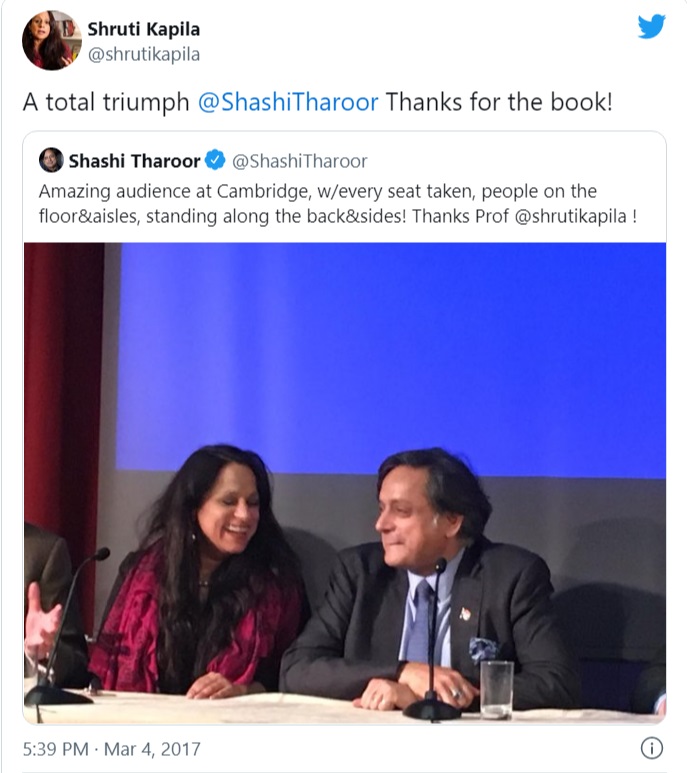
ThePrint columnist was earlier spotted sharing the stage with Congress leader Shashi Tharoor during the launch of his book ‘Inglorious Empires. “A total triumph Shashi Tharoor. Thanks for the book”, she tweeted in March 2017. The latter was seen thanking her in a tweet for the ‘amazing reception’ at Cambridge University.

Screengrab of the tweet by Shruti Kapila

While the electoral performance of the Congress party has been dismal in the past 8 years, loyalists of the party have often tended to intellectualize political catastrophes in the hopes of remaining in the good books of the Gandhi dynasty.

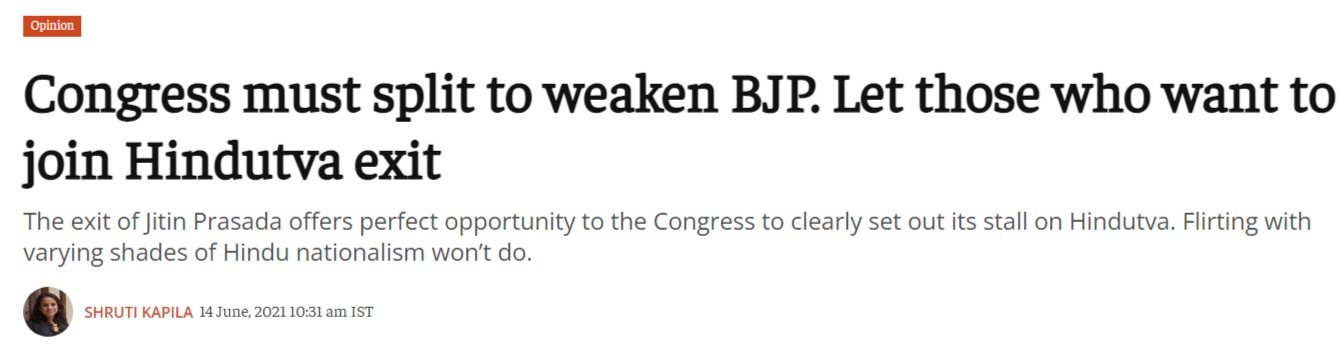
One such attempt was made by Shruti Kapila in an article in ThePrint in June last year. She suggested that the defection of Congress stalwarts to the saffron fold, which further weakened the party, was supposedly a ‘good thing’. The columnist went on to claim that splits in Congress had the potential to weaken the BJP instead.

“The ability to decide, then prosecute that decision to split, even at the cost of a dilution of some numbers in Parliament or legislatures, will alone guarantee the remaking of the Congress and any possible return to power,” the article claimed.

Screengrab of the article by Shruti Kapila

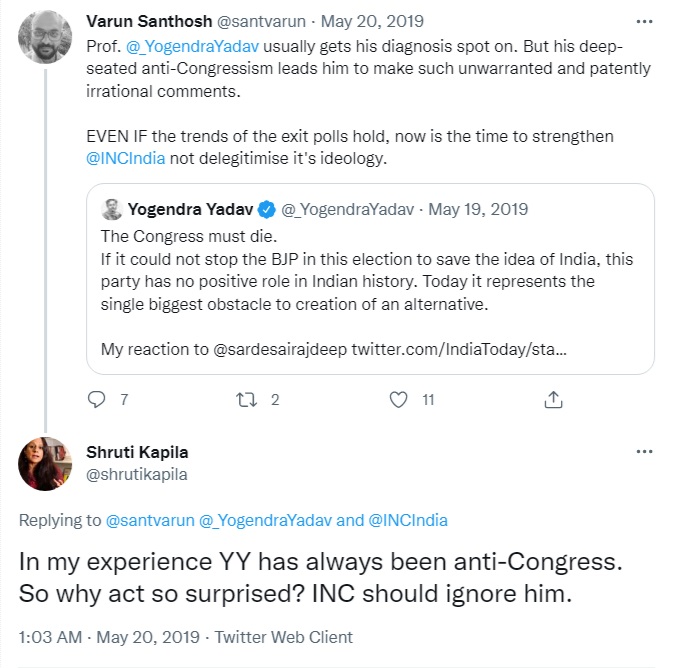
Besides providing intellectual cover fire, Shruti Kapila had been at the forefront of defending the Congress party from political criticism. Following the victory of the BJP in the 2019 General Elections, ‘activist’ Yogendra Yadav had called for the extermination of the grand-old party.

“The Congress must die,” Yadav had said in May 2019. Unable to bear the scathing criticism, Shruti Kapila had asked the Congress party to ignore him. “In my experience, Yogendra Yadav has always been anti-Congress. So why act so surprised? INC should ignore him,” she appealed.

Screengrab of the response by Shruti Kapila

In December 2019, ThePrint columnist had defended the Congress from accusations of being responsible for the Partition of India.

She had said, “Completely disagree. 1937 was a matter of principle: religion versa non-religion. Why should the League be given concessions when Muslims voted en masse for INC in 1937. Fed up of revisionism that continues to give a free pass to the ML (Muslim League) and Jinnah.”

Peddling hysteria, and casting aspersions on the ‘idea of India’

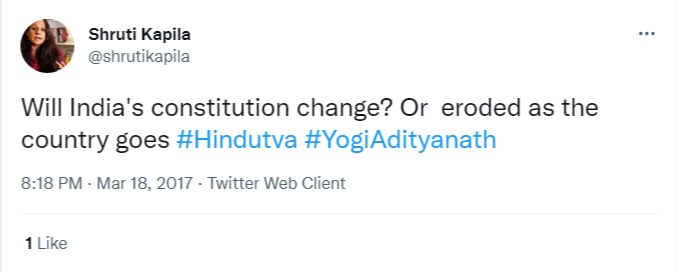
Besides being a full-fledged Congress apologist, The Print columnist was seen casting aspersions about India turning into a ‘religious State’ under the leadership of Prime Minister Narendra Modi.

Following the victory of the BJP in the Uttar Pradesh Vidhan Sabha polls of 2017, she claimed, “Will India’s constitution change? Or eroded as the country goes Hindutva”

Screengrab of the tweet by Shruti Kapila

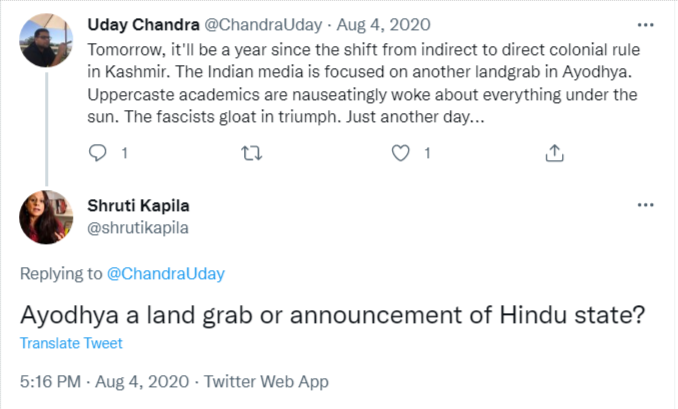
While responding to one Uday Chandra in August 2020, she questioned whether the Bhoomi Pujan in Ayodhya and the associated Ram Janmabhoomi verdict was an instance of ‘land encroachment’ or ‘announcement of Hindu State.’

Screengrab of the tweet by Shruti Kapila

“The annihilation of India’s political opposition is almost complete. Narendra Modi’s ruling party has captured national politics for the foreseeable future,” Shruti Kapila tried to portray the Indian Prime Minister as the villain for the dismal electoral performance of the Opposition.

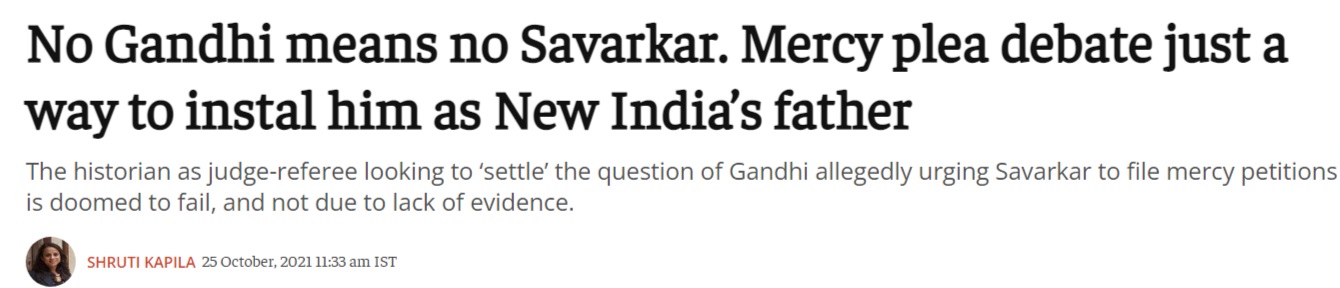
In an article published by The Print, Shruti Kapila claimed that the ‘mercy plea debate’, which if often raked up by the Opposition Congress, was in fact a ploy of the BJP to project Veer Savarkar as the ‘Father of New India.’

“If Gandhi was the face, name and supreme agent of free India, Savarkar is the unacknowledged ‘father of New India’. Whether through public history, commemorations in portraits and statues especially in government and public buildings or in controversies regarding the past, these are all but mechanisms to instal Savarkar,” the article read.

Screengrab of the article by Shruti Kapila in The Print

Besides peddling hysteria among the masses about a possible ‘change in the secular fabric of the Indian Constitution,’ her work remained largely fixated on equating Hindutva with extremism.

One of the quotes on Hindutva by Shruti Kapila, which is popular among Congress stooges, goes as, “Hindutva is a theory of violence in search of a history.”

In an article in Financial Times, Shruti Kapila claimed, “India’s first prime minister, Jawaharlal Nehru, spoke of the ‘idea of India. This grand vision was of a nation based on diversity…”

She then went on to say, “That history is now being rewritten by Mr Modi and his supporters as a revenge saga. To avenge the crimes of partition is to assert a Hindu state.”

Screengrab of the article by Shruti Kapila in Financial Times

Conclusion

The outlandish claims by The Print columnist about a ‘changing India’ and ‘rising Hindu nationalism’ make her camaraderie with the Congress party pretty evident. Given that both thrive on weaponising fear among the masses, Shruti Kapila makes the perfect fit as an interviewer for Rahul Gandhi.

The constant targeting of the Indian State on global platforms, and downplaying of criticism directed at the grand old party has earned her accolades from the Congress loyalists.

Thus, her recommendation to Rahul Gandhi to use ‘scripted interviews’ as a political messaging tool was not influenced by the Congress leader’s limited oratory skills but a clear understanding of what might turn around the fortunes of the grand old party.

Gujarat: Scrap godown manager Liaquat Khan arrested after bundles of scrap found tied in national flag and Hindu religious banners

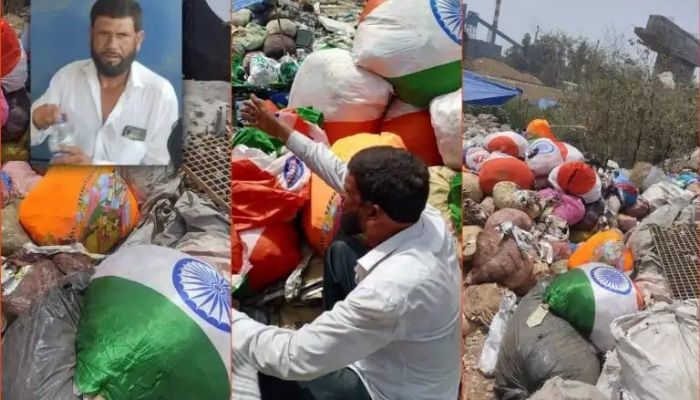
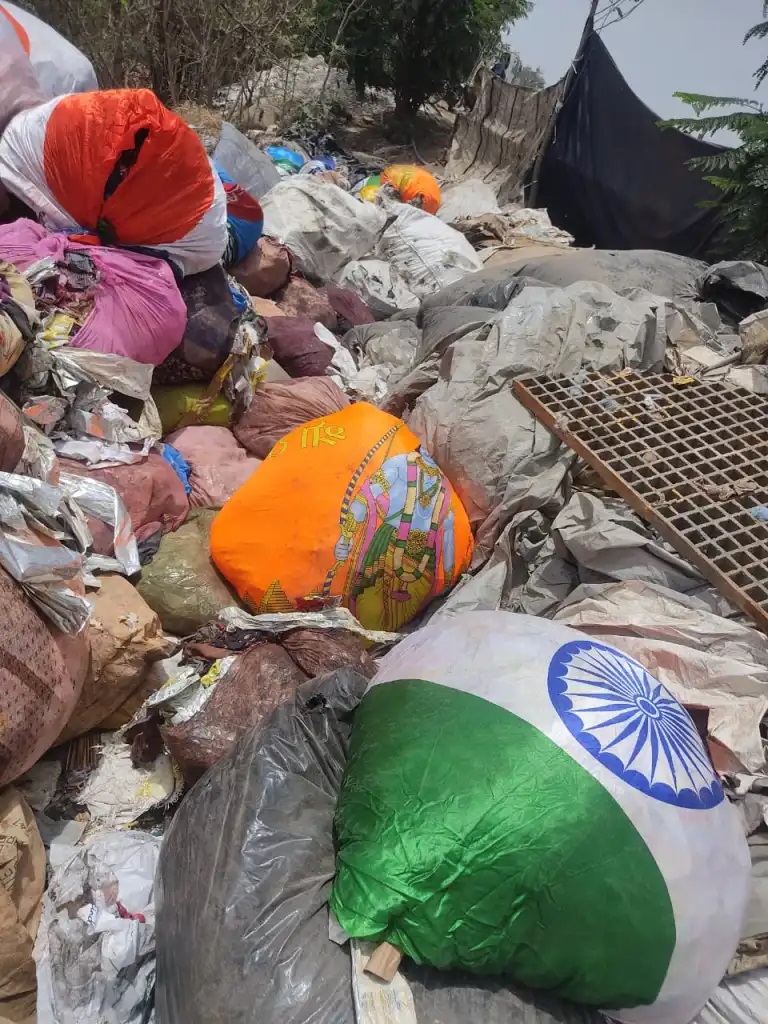
A scrap godown manager named Liaquat Khan was arrested Valsad district in Gujarat for insulting the symbols of the country and Hinduism. It was found that in a scrap godown on the highway near Morai Gate in Vapi town of Valsad district, the national flag of India, banners with photos of Lord Ram, and banners of Hanumanji were used as scrap bags, where scrap materials were tied in such flags and banners. came to light in an open scrap godown. After spotting the national flag and Hindu religious flags and banners being used to tie scrap, locals were outraged and filed a case with the police, after which Khan was arrested.

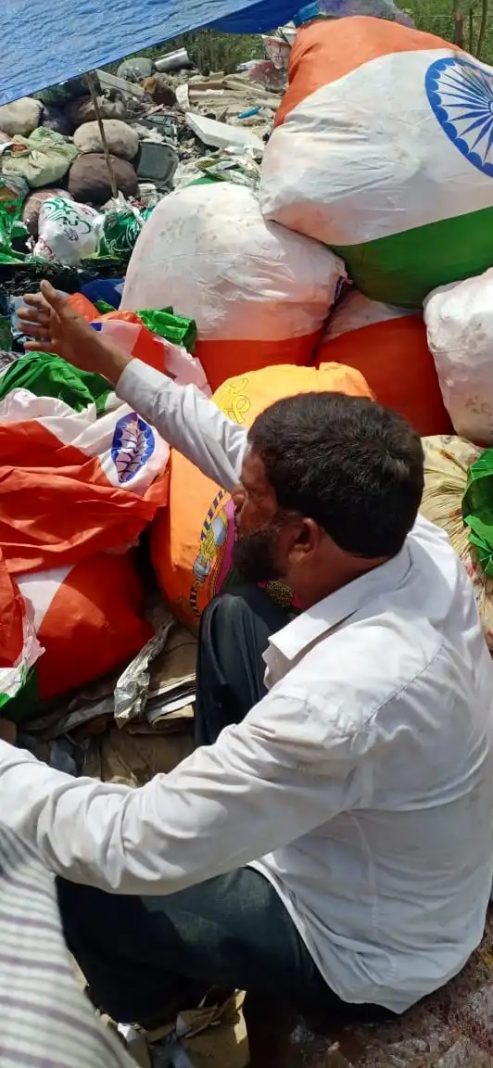
There is an open scrap godown of a man named Liaquat Khan near Morai Gate on the highway from Vapi to Surat. Yesterday, locals while passing by it found bundles of scrap tied in a new cloth in a heap of scrap. Suspicious of seeing it from a distance, the locals went to the spot and checked, and found that the cloth was the national flag of our country. People immediately called up Vapi’s Vishwa Hindu Parishad president and social leader Narendra Payak and informed him about the incident of insulting the national flag.

Warehouse manager Liaquat Khan (Photo: Narendra Payak)

In an exclusive conversation with OpIndia, Narendra Payak said, “When I got a call about this, I immediately reached the spot. There I also saw scrap bundles tied with the national flag. Then we investigated further there and found the national flag, as well as the banners of Lord Shri Ram and Hanumanji, a symbol of the faith of Hinduism, with scraps tied up. So we rushed to the nearby Vapi Town police station immediately. After we informed the Vapi Town police station, the police rushed to the spot.”

Payak told OpIndia that he, on checking the godown, found a total of 30 national flags, 12 banners with a picture of Shri Ram, and 4 banners with a picture of Shri Ram and Hanuman Ji’s portrait filled with debris, which were seized by the police immediately. It was also reported that some banners of other religions were also found at the godown.

Scrap filled with national flag and photos of Hindu deities (Photo: Narendra Payak)

Police acted swiftly and detained the manager of the scrap godown, Liaquat Khan, and seized all these national flags and religious banners. Interrogation of Liaquat Khan revealed that he had purchased the same from a scrap dealer who was filling scrap from a textile mill in Surat. The police have also summoned the mill owner and the scraper from Surat for questioning.

Preliminary investigation revealed that in a textile mill in Surat, where the work of making such flags and religious banners is going on, the entire quantity from the mill was sold in scrap due to some mistake in the printing of a lot of the national flag, which had reached this godown in Vapi on the move. But according to the Indian Flag Code, 2002, this is considered a criminal act.

The Indian Flag Code, 2002 and the insult to the National Flag

According to the Indian Flag Code, 2002, there are two ways to dispose of a torn or damaged national flag – burning or burying it. A strict rule should also be followed while choosing any procedure. These rules are notified as follows.

The code says, “To bury the national flag, collect all the damaged flags in wooden boxes, fold them and place them properly. Bury the box in the ground. Observe silence for a moment after the flag is buried. Another option is to cremate the flag. Choose a safe place and clean it, fold the flag, light the fire and place the flag carefully in the center of the flame. It is also a criminal act that the national flag is cremated without being folded properly or burnt first and later put into the fire.”

It should be noted here that the national flag is a symbol of pride and its dignity should be maintained while disposing of it. Insulting the national flag is a criminal act.

There has been an incident of Hindu hatred in Vapi before

Earlier in March, there was an incident of insult to the Hindu religion at St Mary’s School in Chanod, Vapi. The school had sought an apology from two students of St Mary’s School as they addressed each other by saying ‘Jai Shri Ram’. Vishwa Hindu Parishad’s Vapi district president had Narendra Payak reached the school and protested after the incident was reported to local Hindu organizations. After this, the school management apologized to the parents in writing.

The incident was also taken note of at the three-day representative meeting of the Rashtriya Swayamsevak Sangh in Ahmedabad at that time and the Sangh’s Sarkaryavah Dattatreyaji Hosabale had made a statement in this regard.

A police investigation is currently underway into the insult to the national flag and Hindu gods. The picture is likely to become clearer after the interrogation of the mill owner in Surat and a local scrap worker from Surat.

India receives the highest annual FDI inflow of USD 83.57 billion in FY21-22, IT sector bags the largest share

In the fiscal year 2021-22, India has recorded the largest annual Foreign Direct Investment (FDI) inflow of USD 83.57 billion. In 2014-2015, India received 45.15 billion USD in FDI, compared to the highest ever annual FDI inflow of USD 83.57 billion reported for the fiscal year 2021-22, surpassing the previous year’s FDI by USD 1.60 billion.

Since FY03-04, when inflows were barely USD 4.3 billion, India’s FDI inflows have surged 20-fold. It demonstrates that India is growing as a desirable destination for international investment in a variety of areas.

The growth is particularly remarkable, given that it has come against the backdrop of global uncertainty and a pandemic-wracked world as the emergence of the coronavirus outbreak had rendered economies shut and chipped away at investor confidence.

In addition, India is quickly becoming a popular destination for international investment in the industrial sector. When compared to the previous fiscal year, FDI equity inflows into the manufacturing sector surged by 76% in FY 2021-22 (USD 21.34 billion) (USD 12.09 billion). In India, FDI inflows have grown by 23% post-Covid (March 2020 to March 2022: USD 171.84 billion) compared to pre-Covid (February 2018 to February 2020: USD 141.10 billion).

Computer Software & Hardware has emerged as the leading recipient sector of FDI Equity inflows for FY 2021-22, accounting for around 25% of total inflows, followed by the Services Sector (12%) and the Automobile Industry (12%), respectively. For the fiscal year 2021-22, Singapore ranks first with 27 per cent of FDI equity inflows, followed by the United States (18 per cent) and Mauritius (16 per cent).

Karnataka is the leading beneficiary state, accounting for 38 per cent of total FDI equity inflows recorded for the fiscal year 2021-22, followed by Maharashtra (26 per cent) and Delhi (14 per cent). During the fiscal year 2021-22, the majority of Karnataka’s equity inflows were recorded in the sectors of Computer Software & Hardware (35 per cent), Automotive Industry (20 per cent), and Education (12 per cent).

The reforms implemented by the government over the previous eight years have shown fruit, as seen by the rising amounts of FDI inflows into the nation, which are establishing new records. The government has implemented a liberal and transparent FDI policy, with most industries available to FDI under the automatic route. Reforms have recently been implemented in sectors such as coal mining, contract manufacturing, digital media, single-brand retail trading, civil aviation, defence, insurance, and telecommunications to further liberalise and simplify FDI policy in order to provide ease of doing business and attract investments.

India can become a  $5 trillion economy by 2026-27

The International Monetary Fund (IMF), which forecasted in April that India will not reach $5 trillion in GDP until 2028-2029, has revised its projection in the World Economic Outlook database. According to the most recent IMF estimate, India will attain its $5 trillion economic objectives by 2026-2027, two years earlier than previously expected.

According to Swarajya, the shift in projection is due to the assumption that the rupee will fall to 84 versus the US dollar rather than 94. The International Monetary Fund did not examine the Indian economy’s growth in nominal or real terms and instead focused on the dollar-rupee exchange rate.

“Both bridges are in areas under illegal occupation of China since 1960s”: MEA objects to China building another bridge over Pangong lake

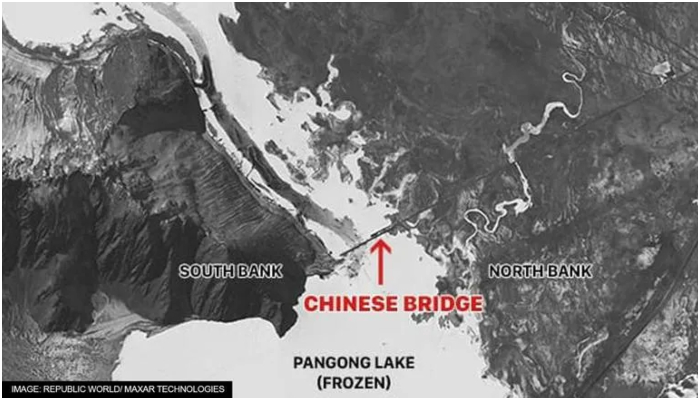
On Friday, the Ministry of External Affairs strongly objected to the Chinese administration for constructing the second bridge across the Pangong Lake in the Union Territory of Ladakh. Official Spokesperson Arindam Bagchi stated that the bridge is being built in an area that is illegally occupied by China and that India does not accept such illegal construction activity.

“We have seen reports of a bridge being constructed by China on Pangong Lake alongside its earlier bridge. Both these bridges are in areas that have continued to be under the illegal occupation of China since the 1960s. We have never accepted such illegal occupation of our territory, nor have we accepted the unjustified Chinese claim or such construction activities”, the spokesperson said in the statement on May 20.

He also said that the government of India is developing the infrastructure along the national security borders to ensure that the nation’s security interests are fully protected. “Government remains committed to the objective of creating infrastructure along the border areas to not only meet India’s strategic and security requirements but also facilitate the economic development of these areas”, the statement read.

Further reiterating that the Union Territories of Jammu and Kashmir and Ladakh are an integral part of India, spokesperson Arindam Bagchi called on for other countries to respect India’s sovereignty and territorial integrity. He also affirmed that India would continue to keep a constant watch on all developments that have a bearing on India’s security and would take all necessary measures to safeguard its sovereignty and territorial integrity.

Yesterday, reports revealed that China had begun construction of the second bridge across the Pangong Lake to accommodate heavily armored vehicles and ensure better movement of the troops. Earlier, the Chinese had built the first bridge in April and used it to move equipment such as cranes needed to build the second one. India at that time also had objected such illegal occupation.

According to the reports, the first bridge is located to the south of a crucial People’s Liberation Army (PLA) position on the north bank of Pangong Lake, at a spot where the two banks of the lake are 500 metres apart. However, the new bridge is being built also to reduce the distance (currently 180 km) between Khurnak Fort and Rutog, the main staging area for the Chinese Army.

‘Prince’ and ‘Little Jesus’ carrying narcotics worth Rs 1526 crores seized by Coast Guard and DRI off the Lakshadweep Islands coast 

The Directorate of Revenue Intelligence (DRI) and the Coast Guard seized 218 packets of 1 kg each of high-grade heroin off the coast of Lakshadweep Islands on Friday. Two boats named ‘Prince’ and ‘Little Jesus’ carrying the contraband were intercepted by the authorities. 

According to ANI, the DRI launched an operation after developing specific intelligence over a period of several months that two Indian boats would be sailing from the coast of Tamil Nadu and receive narcotics in big quantities somewhere in the Arabian sea, during the second half or third week of May 2022.

After receiving the intelligence input, the Indian Coast Guard and the DRI launched a meticulously planned operation, codenamed as Operation Khojbeen, on 7 May 2022 to nab the suspected boats and contraband onboard. The DRI said after several days of continuous search and monitoring amidst inclement weather, the two suspected boats ‘Prince’ and ‘Little Jesus’ were noticed moving towards India. 

The two boats were intercepted by officers of ICG and DRI on May 18, off the coast of Lakshadweep Islands. Several crew members confessed to having received narcotics in huge quantities on the high sea that they concealed in their boats. A thorough search of both boats yielded 218 packets of 1 kg each of heroin. The seizure proceedings under the provisions of the NDPS Act,1985 are currently being undertaken by the DRI.

“The operation was meticulously planned and executed by them & ICG and entailed extensive surveillance in the rough seas over a period of several days. The seized drug appears to be high-grade heroin and its value in the international illicit market is estimated to be around Rs.1,526 crore,” ANI quoted DRI as saying.

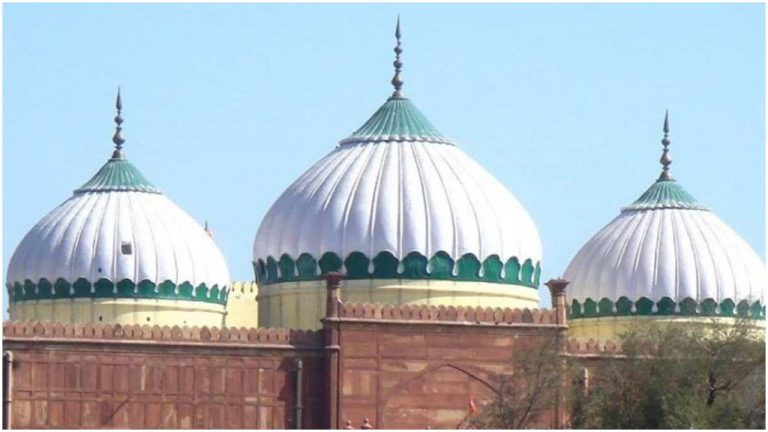
Krishna Janmabhoomi: Mathura Court rules that Places of Worship Act is not applicable to suit seeking removal of Shahi Idgah

The Mathura Court, while allowing the petition seeking the removal of the Shahi Idgah disputed structure near Krishna Janmabhoomi in Mathura, also stated that the Places of Worship Act, 1991 is not applicable to the suit, since the suit was originally filed in 1964, and the current 2020 suit challenges a ‘compromise agreement’ signed in 1968, years before the Places of Worship Act came into force in the year 1991.

The Court clarified that the provisions of the Act are not applicable to the aforementioned suit by virtue of section 4 (3)(b) of the Places of Worship Act, 1991.

The Court also ruled that the suit to remove the Mathura Shahi Idgah Mosque is maintainable on the ground that it was built over the Krishna Janmbhoomi land. The matter has been sent back to the civil court to be heard on merits.

The Places of Worship Act, which came into effect in the year 1991, prohibits “conversion of any place of worship” and provides “for the maintenance of the religious character of any place of worship as it existed on the 15th day of August 1947, and for matters connected therewith or incidental thereto”. While the Act explicitly said that it will be not applicable on the Ram Janmabhoomi case as it was being heard by courts, the Act also contained exepmtios which mean that the Act is also not applicable on several other disputed structures as well.

Section 4(1) of the Act states that “the religious character of a place of worship existing on the 15th day of August, 1947 shall continue to be the same as it existed on that day”. Section 4(2) of the Act further states that “any suit, appeal or other proceedings with respect to the conversion of the religious character of any place of worship, existing on the 15th day of August 1947, is pending before any court, tribunal or other authority, the same shall abate, and no suit, appeal or other proceedings with respect to any such matter shall lie on or after such commencement in any court, tribunal or other authority”. 

However, the section 4(3)(b), which has been cited by the court, says that if any suit, appeal or other proceeding has been finally decided, settled or disposed of by a court, tribunal or other authority before the commencement of this Act, that the Act will not apply in that case. The section 4(3) also includes other exempted cases where the Act is not applicable, which includes any ancient and historical monument or an archaeological site, if any dispute was settled by the parties before commencement of the Act, etc.

Why the Places of Worship Act, 1991 is “not applicable” to the 2020 suit seeking removal of the disputed Shahi Idgah structure

Essentially, the original suit in the Shri Krishna Janmabhoomi-Shahi Idgah mosque case was filed in 1964 by the Sangh regarding ownership of the land, which was dismissed in the year 1974 after a “compromise agreement” was signed between Shri Krishna Janmasthan Seva Sansthan, the temple management authority and the Trust Masjid Idgah in 1968.

The agreement granted ownership of the land to the temple trust even as the management rights of the masjid were left to the Idgah committee.

In September 2020, another suit was filed on behalf of the deity Bhagwan Shrikrishna Virajman seeking the removal of the disputed structure of the Shahi Idgah mosque near the Krishna Janmabhoomi in Mathura and the transfer of 13.37-acre land to the deity. The petitioners had challenged the “fraudulent” 1968 ‘compromise agreement’, on the basis of which the earlier suit filed in 1964 was dismissed, and sought to cancel the same.

Since the original suit was filed in 1964 and the present 2020 suit challenges the ‘compromise agreement’ signed in 1968, the court ruled that the Place of Worship Act 1991 is not applicable to the suit as the case dates back before 1991, when the ‘Place of Worship Act’ came into effect. The Court said that the agreement between the two parties resulted in a compromise decree, which was drawn before the commencement of the Act enacted in 1991, and as the same is the subject matter of challenge in the current suit moved by the petitioner, the act shall not be applicable on this dispute by virtue of section 4 (3)(b) of the Places of Worship Act, 1991.

The case

The suit in the Krishna Janmabhoomi case challenges a compromise between Shri Krishna Janmasthan Seva Sansthan and Trust Masjid Idgah in 1968, under which the Sansthan had conceded 13.37 acres of land in favour of the Masjid Trust. Based on this compromise, a decree was drawn in a Mathura court in 1974. However, this compromise and and the decree has been challenged based on the claim that the Shri Krishna Janmasthan Seva Sansthan didn’t own the land and therefore can’t hand it over.

The land in question was purchased by Seth Jugal Kishore Birla from the heirs of Raja Patnimal through a registered sale deed in 1944. The land situated in Katra Keshav Dev was purchased in the name of Mahamana Pt.Madan Mohan Malviya, Goswami Ganesh Dutt and Professor Bhikanlal Attrey. Later in 1951, Seth Birla had formed a trust named Shri Krishna Janmbhoomi Trust, and entire property of 13.37 acres was dedicated to the deity and given to the trust. The Shri Krishna Janmasthan Seva Sansthan was formed in 1958 and had overpowered the Trust.

Therefore, the current 2020 suit argues that Shri Krishna Janmasthan Seva Sansthan didn’t own the land to hand it over to the Masjid Trust, and therefore the compromise agreement should be declared void. Now the court has ruled that the suit is maintainable, and said that a worshipper, as the next friend of the deity, can file suit for the restoration and re-establishment of religious rights of the deity. Regarding the merits of the case, the court said, “whether Shri Krishna Janma Bhoomi Seva Sangh had the power to enter into compromise with Trust Masjid Eidgah is a matter of evidence which can be determined only on the basis of the evidence adduced by both the parties during the trial.”

Aurangzeb’s descendants living in abject poverty: Wife of Mughal ‘prince’ lives in Howrah slum, survives on govt pension

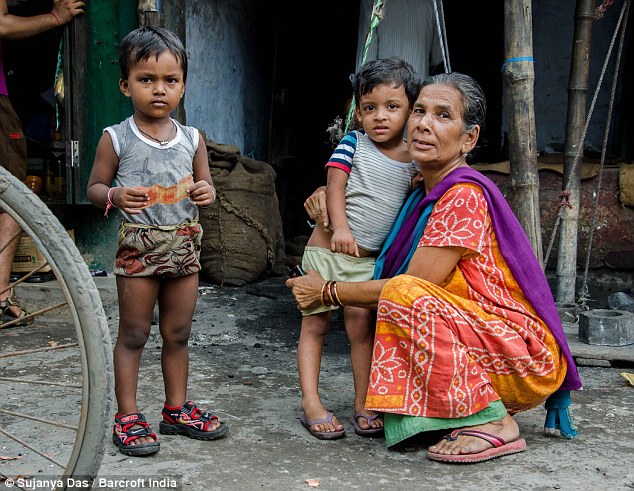
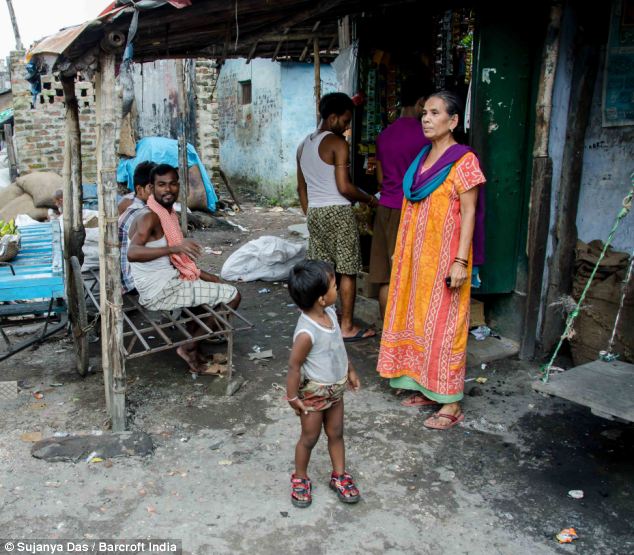
As the debate over Mughal tyrant Aurangzeb’s destruction of Kashi Vishwanath Mandir rages on, an image of one of the last surviving Mughals has gone viral. Sultana Begum, who married the great-grandson of Bahadur Shah Zafar, is the woman whose photo has gone viral in the aftermath of the discovery of a Shivling inside the Gyanvapi mosque.

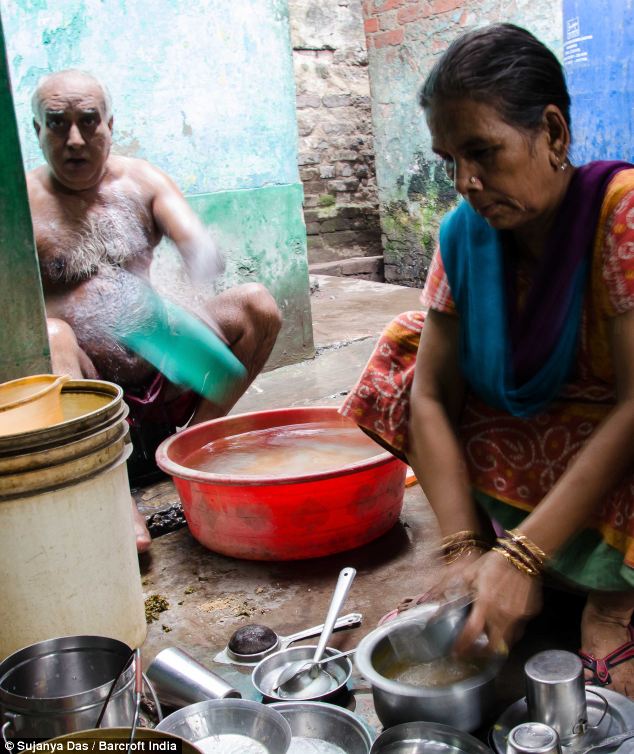
While her ancestors lived in grand palaces and forts, Sultana Begum has been confined to a life in the slums of Kolkata. 69 years old Sultana, who married the great-grandson of the last Mughal emperor survives on a government pension and lives her life from one meal to the next. Ever since her husband ‘Prince’ Mirza Bedar Bukht died in 1980, she has been descending into poverty.

Mughal heiress now lives in a slum in Kolkata (Image source: Daily Mail)

Sultana Begum also petitioned the Supreme Court of India to hand over the Red Fort to her, saying that the fort belongs to her family so she should get possession of it. However, the court refused to entertain her plea asking where were they for the past 150 years.

Sultana Begum washing utensils in people’s homes to survive (Image source: Daily Mail)

Living in obscurity, Sultana’s photos started doing the rounds again on social media during the Gyanvapi row. The disputed stricture in Kashi, which was constructed by Aurangzeb after demolishing Kashi Vishwanath Temple, is currently under litigation in the Supreme Court.

Gyanvapi mosque controversy

 The Gyanvapi Mosque was built by the Islamic invader Aurangzeb after destroying the original Kashi Vishwanath temple. However, the remnants of the ancient Hindu temple can still be seen on the walls of the Gyanvapi Mosque. The temple was an earlier restoration of the original Kashi Vishwanath temple, which was destroyed and rebuilt several times in history. The current Kashi Vishwanath was built on a site near the Mosque in 1777 by Rani Ahilyabai Holkar.

A plea was filed by five Delhi-based women seeking permission to perform daily worship of Hindu deities whose idols are located on the outer wall of Gyanvapi Mosque. The court-appointed a committee to survey and videography of basements in the Gyanvapi-Gauri Shringar complex. Following the survey, reports of a Shivling being present in the wuzukhana of the mosque came out.

.