In an embarrassing development for Pakistan, it is reported that the Chinese people, especially Chinese workers in Pakistan have no confidence left in the Pakistani security systems. The Chinese workers feel insecure in Pakistan and they think that the Pakistani security systems are not able to protect them in an hour of crisis. It is notable that China has made heavy investments in Pakistan in various infrastructure projects. Chinese workers and Chinese funds both constitute an important part of the projects, one of which is the China-Pakistan Economic Corridor (CPEC).
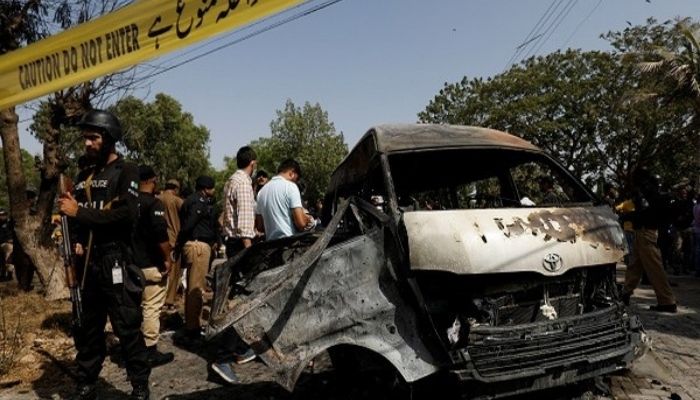
According to a report by The Dawn, senator Mushahid Hussain, chairman of the Senate Defence Committee, said, “The Chinese confidence in Pakistan’s security system’s ability to protect their citizens and their projects is seriously shaken.” Mushahid Hussain led a Senate delegation to the Chinese embassy last week to express his condolences over the loss of three Chinese lives in a suicide attack on their van on the university’s premises last month. The Karachi University attack is the third time this year that the Chinese citizens in Pakistan are directly attacked.
Mushahid Hussain said, “It has caused serious concern and understandable indignation in China. More so, the pattern of attacks is so recurring and it’s clear that Pakistani promises of foolproof security are mere words, not matched by countermeasures on the ground.”
Criticizing the security agencies and the arrangements supposed to be taken care of by them, Mushahid Hussain said, “Security agencies seemed to have been caught napping. If such attacks continue, not just Chinese but other foreign investors will be forced to review their role in Pakistan.”
Reportedly, many Chinese workers went back to their motherland after the Karachi University attack and it was being seen as equivalent to an exodus. Denying such reports, a Chinese source said that such movement of Chinese citizens and workers on the flights is a weekly practice. But that person also did underline that the terrorist attacks definitely make an impact on the Chinese citizens living in Pakistan.
Chinese Foreign Ministry Spokesman Lijian Zhao said in a press conference in Beijing, “The plot of terrorist forces to undermine the two countries’ mutual trust and cooperation will not succeed. The Chinese side would work with Pakistan to conduct a thorough investigation, reveal the truth, bring the perpetrators to justice, and explain to the people of both countries.”
He further said, “China attached importance to Pakistan’s strengthening security measures to protect Chinese personnel, projects, and institutions in Pakistan and stood ready to work together with the Pakistani side to ensure safe and smooth progress in bilateral cooperation and prevent similar incidents from happening in the future.”
On Tuesday 26th April 2022, a massive explosion took place in a vehicle outside the Commerce Department of Karachi University. The varsity is located in the Sindh province of Pakistan. A total of 4 people, including multiple Chinese nationals, died in the blast that occurred around 2:30 pm.
The Central Council Of Health And Family Welfare Conference (CCHFW) comprising health ministers from 20 different states has slammed the World Health Organization (WHO) report on Covid deaths in India in the years 2020 and 2021. The CCHFW which includes health ministers from Congress-ruled states and states ruled by Congress allies has taken an opposite stand to Congress leader Rahul Gandhi who used the flawed report to target the Indian government.
In its recent report on excess deaths due to Covid-19 in India, The World Health Organization (WHO) estimated that nearly 47 lakh Indians died due to the pandemic collectively in the years 2020 and 2021. The figure by WHO contradicts heavily India’s official figure of casualties of 4.81 lakh at the end of 2021, going almost 10 times above it. On a rare occasion, health ministers from even the states ruled by opposition parties joined the central government to slam WHO’s claims.
On Friday, CCHFW passed a resolution that the assumptions and estimates made by WHO in its COVID-19 report were ‘flawed’ and ‘unacceptable’. After the Central Government slammed the report, the CCHFW comprising of health ministers from 20 states said, “The Council is ‘deeply disappointed and distressed’ with the WHO modelling which is based on ‘very high estimates’ of excess mortality in India during the pandemic.”
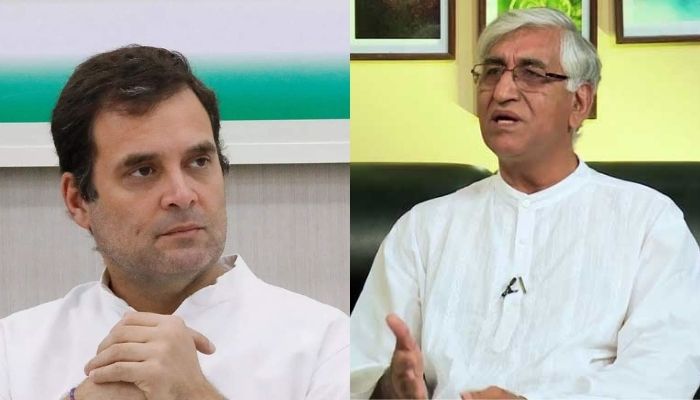
Headed by Union Health Minister Mansukh Mandaviya in Gujarat’s Kevadia, the conference was led by state health ministers including those of Congress. When the report was published, Congress MP Rahul Gandhi attempted to ignite a political slugfest by backing the death estimate by WHO. “47 lakh Indians died due to the Covid pandemic. NOT 4.8 lakh as claimed by the Govt. Science doesn’t LIE. Modi does,” said Rahul Gandhi in a Tweet.
47 lakh Indians died due to the Covid pandemic. NOT 4.8 lakh as claimed by the Govt.
Science doesn’t LIE. Modi does.
Respect families who’ve lost loved ones. Support them with the mandated ₹4 lakh compensation. pic.twitter.com/p9y1VdVFsA
However, Chhattisgarh health minister and Congress leader T. S. Singh Deo said at the conference that the WHO estimates were just ‘projections and extrapolations’ from estimates from other countries. “These are just projections and they are taking it far too seriously. It really doesn’t mean India saw so many deaths,” he said.
Punjab Health Minister from AAP Vijay Singla too alleged that WHO’s death estimate was “fabricated” and that it has not made a proper calculation to arrive at the figure of 47.4 lakh Covid-related deaths. “India has a strong data collection system and there is no reason to doubt its authenticity. The modelling methodology used by the global health body was not scientific,” he added.
With Congress health Minister Deo from Chattisgarh and other parties unequivocally condemning the WHO numbers, Rahul Gandhi has isolated himself in his failed attempt at targeting the government over the unscientific WHO report.
A video clip was shared by several social media users yesterday, claiming that it shows some Vietnamese youths building a replica Bugatti car using clay. However, the video has been shared with misleading claim, because the final replica car is not made using clay, and the short video has been prepared by editing a 45-minute-long original video which was widely reported two months ago.
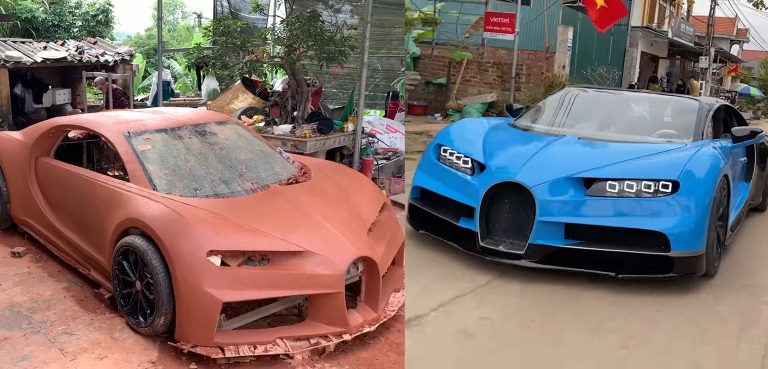
The 2:20 min long video shows the youths picking up clay from a field, placing it on a frame of steel pipes and plastic sheets, shaping and chiselling the clay to give it the shape of a Bugatti Chiron supercar. The video also shows the youths driving around a steel frame with an engine mounted on it, giving the car a proper paint job, and finally driving the Bugatti Chiron replica in its traditional blue and black livery on the streets.
The video was posted by a verified Twitter handle named fgnszen, with the text, “A one-year study of Vietnamese youth who built their own Bugatti out of clay mud”. The Tweet has got almost 74000 retweets, over 8000 quote tweets, and over 384000 likes.
A one-year study of Vietnamese youth who built their own Bugatti out of clay mud… ?? pic.twitter.com/LSvvelI2sc
The Tweet also received thousands of replies, with many wondering how long a ‘clay car’ will last. Many commented that the car won’t be able to sustain even a road bump, and it will be shattered into pieces after a crash. Others commented that it will be very heavy and therefore will consume a lot of fuel etc.
The same video was also shared by several other Twitter users with same or similar claim, that the youths made the car using clay.
However, the claim that the replica car is made of clay is completely wrong and misleading, because, the final car was made using steel and fibreglass, which actually makes it a very strong car. The short video does show some bits of fibreglass work, and the steel frame, but due to the accompanying text, many people blindly believed that the final car was also made of clay. Many other netizens fact-checked the video, saying it was not made of clay.
The short video has been made from the original video posted by the youths themselves who built the car. The Vietnamese youths have a YouTube channel named NHẾT TV dedicated to their efforts of building replica car, and the video posted on Twitter was edited from a 46-minute-long video of the entire process of making the car they had posted on February 1 this year, with the title Full 365 days to homemade a million dollar Bugatti supercar. This video, and other videos of the car posted by the youths, were widely reported by media all across the world.
The video shows the youths starting with a steel frame and wrapping plastic, roughly the shape of the car body, forming the base to hold a mould. They then apply loads of clay on it, and painstakingly shape it to look like a Bugatti Chiron, in a process that must have taken weeks or months, the entire car was ready in a year. After they polish the clay car to give it a very smooth surface, the clay model is ready, however, it is not the final car, but only the model to form a mould, to be used to make the final car’s body.
After the clay model is ready, they apply plaster to it. The youths secure the plaster with metal rods, and after the plaster hardens, the clay is removed from under the plaster mould. Now the car enthusiasts are left with an exact negative copy of the car made of plaster.
After the mould is ready, the youths apply fibreglass on the entire inner surface of the mould using resin. After the fibreglass is cured and hardened, the plaster mould is removed, exposing the fibreglass panel body of the car, which is exact replica of the original clay model.
The youths also built a chassis for the car using steel pipes, and even made discs for the brakes and an A-arm suspension system. The car gets a small four-cylinder Toyota engine, far cry from the turbocharged 8 litre 16 cylinder engine that comes with the original, one of the most powerful engines on a commercially produced car. However, the engine is installed in the middle, like a proper sports car.
The video shows that the youths then install the fibreglass body on the steel frame, attach wheels, and give it a proper paint job. Some parts were bought, like the windshields, windows, LED lights etc, but the tail light unit was made from resin. The interior of the car including the dashboard is also made using fibreglass using the same clay modelling techniques. For some parts, they just used cardboard instead of clay.
Therefore, the original video posted by the youths who made the car makes it clear that the car was actually made using steel, fibreglass and other material used in cars, and it was not made using clay. The clay was only used for making the model of the car to shape the fibreglass, which is a standard practice.
While the 365 days video shows the entire process of making the car, it does not include everything. The NHẾT TV channel has posted several other videos, showing how they made and installed several other parts of the car. They are also continuously modifying and improving the car, and have posted several videos of the same as well.
In other videos, we can see them making seats, wing, steering wheel etc, and installing windshields, power windows, rear-view mirrors, electrical and electronic systems etc, and other videos show the detailed works done in various phases, parts of which were shown in the 365 days video.
Clay modelling in automobile sector
While many people expressed shock that the car was made using clay, actually most car models we see on the road starts as clay models only, just like the ones made by the youths. After car designers finalise a design for a new car model, a clay model is made based on it, which is a 3D representation of the new car. It lets designers see what the car will actually look like. A clay model also lets the designers identify changes needed to be done to the design, which may not be identified in paper or computer drawings.
Even though nowadays computerised modelling and 3D printing are used to make models of a new car design, many car makers still use clay models. While some automakers no longer use it for mass-produced cars, high-end luxury car makers still use this process. For example, this video shows Porsche using clay modelling to design its new 911 car.
Notices have been issued to Foreign Correspondents’ Club (FCC) and Indian Women Press Corps (IWPC) by the Directorate of Estates under the Ministry of Housing and Urban Affairs to vacate the bungalows allocated to them as the tenure ends on 31st July 2022. As per a report in the Indian Express, the notice was sent to FCC on May 4 to vacate the bungalow no AB 19, Mathura Road, New Delhi and IWPC which is allotted bungalow no 5, Windsor Place.
The notice sent to FCC reads that they had in principal approval of retaining the bungalow till 31 July 2022. Hence, they are requested to vacate the bungalow by then and find themselves another suitable accommodation. A copy of the notice was also sent to Ministry of Information and Broadcasting. Similar notice was sent to IWPC.
Citing a senior Ministry official, Indian Express said that the tenure of both the clubs was for over a decade and the same is now coming to an end in two months’ time. IWPC President Shobhana Jain, however, said that this is a routine procedure and that they get such periodic notices following which the tenure is renewed. Last time, the lease was renewed in 2018 and IWPC is confident the same will be renewed this time as well. Munish Gupta of FCC, however, claimed that they have not received any such notice to vacate.
Earlier, the Directorate of Estates had asked various former ministers to vacate their bungalows. Congress was also asked to vacate its Sevadal office located at 26, Akbar Road
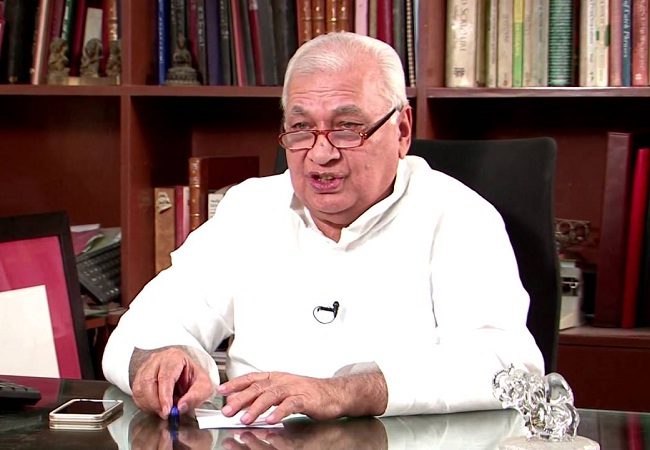
On Saturday, Kerala Governor Arif Mohammad Khan stressed the need to revive India’s ancient culture and restore the principles of ‘Sanatan dharma’ through proper education in the country.
Inaugurating a school in Kalan block in Shahjahanpur District of Uttar Pradesh, the Kerala Governor said that there is a need to work towards reviving the ancient culture of the country.
“Everyone has to work towards reviving the ancient culture of the country, not because we have to go back but because we have to bring back the ‘Sanatan’ principles, and this is not possible without education,” the Governor said.
The Kerala Governor also quoted Indian philosopher Swami Vivekananda saying that the purpose of human life is to attain knowledge, and humility is the result of knowledge. Anyone who has humility cannot be looked down upon.
Interestingly, this is not the first time that Arif Mohammad Khan has rooted for the revival of the Indic culture. Earlier, during the hijab controversy, Arif Mohammad Khan had opposed the Islamisation of secular educational institutions by supporting the hijab ban in schools and colleges. Arif Mohammad Khan had also stressed that the hijab was not an integral part of Islam.
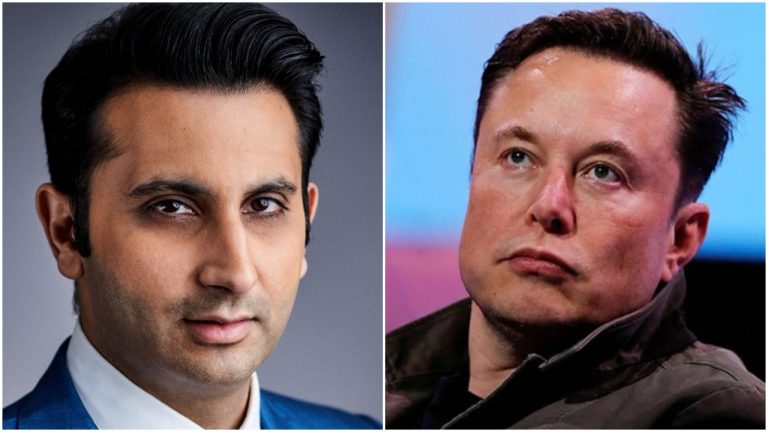
Adar Poonawalla, the CEO of Serum Institute of India, has advised Tesla chief and the world’s richest man Elon Musk to invest in India for high-quality, large-scale manufacturing of Tesla cars. Poonawala suggested that in case Musk’s deal to buy micro-blogging app Twitter doesn’t go through, he can use that freed up capital towards manufacturing Tesla in India.
Taking to Twitter, Adar Poonawalla asked Elon Musk to invest in India if he ended up not buying Twitter. He assured Musk that it would be the best investment the richest person in the world would ever make.
Hey @elonmusk just in case you don’t end up buying @Twitter, do look at investing some of that capital in INDIA for high-quality large-scale manufacturing of @Tesla cars. I assure you this will be the best investment you’ll ever make.
“Hey @elonmusk just in case you don’t end up buying @Twitter, do look at investing some of that capital in INDIA for high-quality large-scale manufacturing of @Tesla cars. I assure you this will be the best investment you’ll ever make,” Adar Poonawalla tweeted.
Poonawalla’s advice to Musk comes after the Tesla chief offered to buy Twitter for $44 billion, and had his offer accepted by the Twitter board. The richest person in the world, Elon Musk, has been eyeing the Indian market for a while, however, the automaker has stated that they have no plans to produce their premium electric cars in India but to import from China and sell it directly to customers.
Tesla has been demanding a reduction in import duties in India so that its cars produced elsewhere can be more affordable for Indian consumers. Musk had also publicly stated that his plans to bring Electric Vehicles to India were hampered by high import duties charged in the country.
“We want to do so, but import duties are the highest in the world by far of any large country!” Musk had tweeted in July.
We want to do so, but import duties are the highest in the world by far of any large country!
Moreover, clean energy vehicles are treated the same as diesel or petrol, which does not seem entirely consistent with the climate goals of India.
However, the Indian government has categorically told Tesla any tax concession can be considered once the company starts manufacturing electric vehicles in India.
Recently, Union Minister of Road Transport and Highway Nitin Gadkari said that he has told US-based electric vehicle (EV) manufacturer Tesla not to sell China-manufactured cars in India.
“I have asked Tesla not to sell electric cars in India which the company has manufactured in China. I have told the company to manufacture electric cars in India and also export cars from India,” the minister had said on Friday while addressing an event.
Minister Nitin Gadkari said that the Narendra Modi government would extend all necessary support to Tesla to set up its unit in India. He said that the negotiation is going on with Tesla regarding the company’s demand related to tax concessions.
The Indian government imposes a 100 per cent import duty on cars as completely built units (CBUs) attract customs duty ranging from 60 to 100 per cent. This depends on engine size and cost, insurance, and freight value less or above $40,000. Such high duties are meant to protect domestic manufacturers.
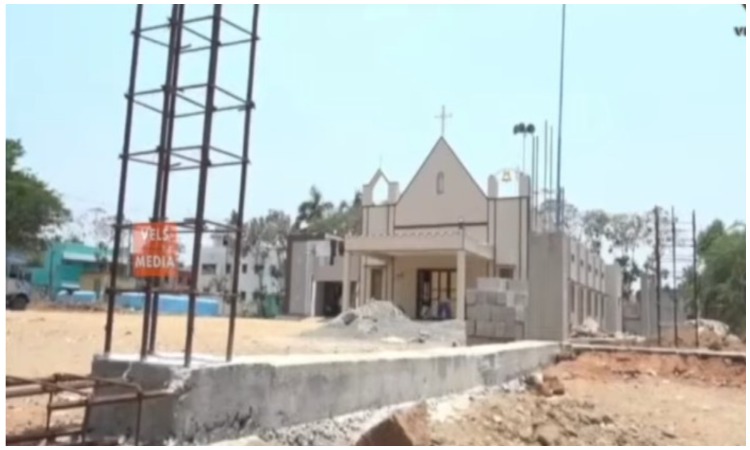
The residents of Maruthuvampadi village in Tiruvannamalai in Tamil Nadu have requested the district collector to take against a Roman Catholic church in their village after they constructed a wall to block the pathway of the villagers.
According to the reports, the villagers have alleged that the church constructed a pathway as they refused to convert. They have also accused the church of declining to provide education to their kids who refused to convert to Christianity.
More than 3000 Hindu residents of the village have allegedly been denied access to the public road because they refused to convert to Christianity.
The Hindu residents of the village have submitted a petition to the Tiruvannamalai district collector accusing Father Yesupadam, the administrative officer of the school run by the Catholic church, of forcing them to convert to Christianity.
Taking out a protest against the Roman Catholic church, the villagers also alleged that the Christian cleric built a compound wall to block the public road around the church. The villagers alleged that there is differential treatment for Hindu and Christian children in the church-run school.
The village residents said that the road had been there for more than 100 years and people have been using it for a long time. However, as it is now blocked, people are forced to travel a long distance to access public transportation facilities. The residents have also complained that they were happy once the school re-opened almost two years of the Covid-19 forced lockdown, but the Church authorities asked them to convert to Christianity first.
“Hindu students don’t get any concessions. We pay the full tuition fee and other fees the school demands. Yet our children were asked to not come during exam time. Moreover, the residents said that only Christian children are allowed inside the school now.
However, the Christian cleric claimed that the land in question belonged to the church and that they have a right to build a wall around it.
OpIndia tried reaching Tiruvannamalai district authorities, however, they did not respond. The report will be updated when they respond.
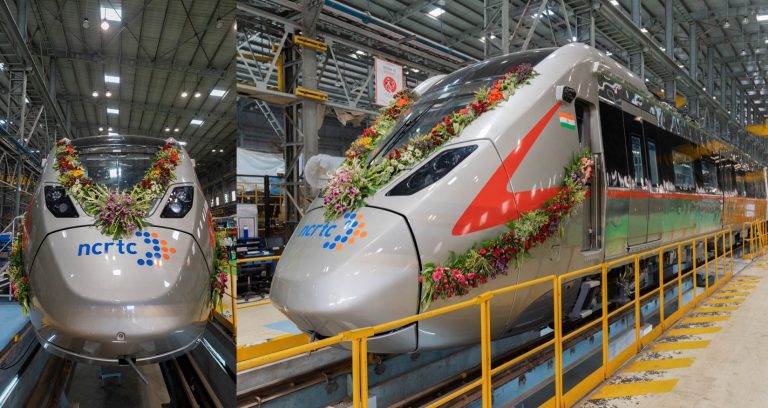
The first trainset for the India’s first Regional Rapid Transit System (RRTS) project was handed over to the National Capital Region Transport Corporation (NCRTC) by Alstom at its plant in Savli in Gujarat. The made-in-India trainset will be transported to Ghaziabad and will be deployed at the upcoming Delhi–Meerut Regional Rapid Transit System.
The NCRTC is establishing India’s first rail-based, high-speed, high-frequency regional commuter transit system connecting Delhi NCR with the neighbouring cities. At present three corridors are being developed in the project, Delhi – Ghaziabad – Meerut, Delhi – Panipat and Delhi-Gurugram-SNB-Alwar.
The Delhi Meerut corridor is coming up first, and the first trainset was delivered to the NCRTC in Savli in presence of Manoj Joshi, Secretary, Ministry of Housing & Urban Affairs (MoHUA) and Chairman of NCRTC. Vinay Kumar Singh, managing director of NCRTC, and other senior officials of the corporation and Alstom were present at the occasion.
Hardeep Singh Puri, Union Minister of Petroleum & Natural Gas and Housing & Urban Affairs, sent a video message for this occasion. He said, “It is a proud moment for all of us as this project is a true manifestation of the Hon’ble Prime Minister’s vision of an Atmanirbhar Bharat.”
“This is just the beginning of India’s journey of Regional Rails with two more RRTS corridors planned in the 1st phase itself. Work on them will also be taken up shortly and once completed it will create a network of networks connecting all the major hubs of NCR,” Puri added.
NCRTC MD Vinay Kumar Singh said that along with the bundled contract for supply and comprehensive maintenance of trainsets awarded to Alstom, they have finalised the selection process of a private O&M Partner for a long-term operation and maintenance contract of the Delhi–Meerut RRTS corridor.
Alstom India MD Alain SPOHR said that the RRTS project is one of the most ambitious ventures in India’s mobility sector and will prove to be a game-changer in India’s regional rail segment.
Alstom has been awarded the contract to manufacture trainsets for the Regional Rapid Transit System, under which the company will 40 trainsets. This includes 10 three-coach trainsets for Meerut Metro. It is notable that Meerut metro will use the RRTS infrastructure, with the addition of some metro-only stations.
The Delhi – Meerut RRTS will mostly consist of elevated tracks and tunnels, will total 82 kms, which will be covered in less than one hour. The trains will run at the speed of 160 km/hour, with the maximum capacity of 180 km/hour. The RRTS will start operations by March 2023. Initially the trains will run on a 17-km long priority section, between Sahibabad and Duhai.
The RRTS trains will have ergonomically designed 2×2 transverse cushioned seating, wide standing space, luggage racks, CCTV cameras, laptop/mobile charging facility, dynamic route maps, auto control ambient lighting system, Heating Ventilation and Air Conditioning System (HVAC), and other amenities.
The lightweight coaches are equipped with a regenerative braking system and are compatible with Automatic Train Protection (ATP), Automatic Train Control (ATC), and Automatic Train Operations (ATO). The AC trains will have standard and premium coaches.
The RRTS is a first-of-its-kind train system where semi-high-speed inter-city train will travel with high frequency.
On Saturday (May 7) night, ‘comedian’ Munawar Faruqui was declared the winner of the reality show ‘Lock Upp’, which is hosted by Bollywood actress Kangana Ranaut.
As per reports, Faruqui received 18 lakh votes and also the vote of Kangana Ranaut to emerge as the winner. The ‘comedian’ also won a car, cash of ₹20 lakhs and an all-expense-paid trip to Italy. The runner-up was actress Payal Rohtagi, followed by TikToker Anjali Arora.
“This is a very symbolic trophy. Munawar Faruqui is the one who deserves the trophy of Lock Upp Season 1, ” remarked Ranaut while handing out the trophy to Faruqui. A short video clip of the winning moment was posted on Instagram by show producer Ekta Kapoor.
“Mirror mirror on d wall who is d ‘fair’est of them all !!! Meet Munawar Faruqui who got 18 lac votes and Kangana Ranaut’s vote too!!! THE very first winner OF Lock Upp. JAI MATA DI,” she wrote.
Munawar Faruqui revealed his mother died of suicide after consuming acid
Earlier on April 17 this year, Munawar Faruqui revealed on the show that his mother died of suicide. He was given a chance to reveal a secret and save himself from elimination. Though initially, he hesitated to talk about the matter, he later requested the host of the show Kangana Ranaut to let him reveal the secret irrespective of whether he got saved or not.
Munawar said it was his mother who ran the household. She would make papad and other snacks to sell so that she could earn enough money to manage the expenses. His father and grandparents did not support them financially. He said, “I saw my mother getting abused day and night for 22 years. If that day I had slept next to her, she might not have taken the extreme step.”
Faruqi’s estranged wife and son’s photos go viral
On April 9, 2022, it was revealed during the reality show Lock Upp that controversial comedian Munawar Faruqui was married from a young age and had a son too. However, the couple was not living together, and the case was in court.
Faruqui’s onscreen romance with fellow contestant Anjali Arora had been the highlight of the show. Before the revelation, Arora had confessed that she had fallen in love with Faruqui.
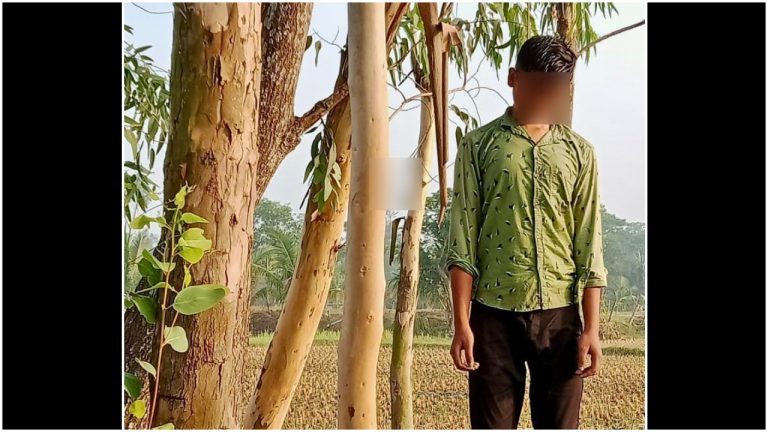
Two days after a BJP member named Arjun Chowrasiya was found hanging in West Bengal’s Cossipore, son of a BJP worker has suffered the same fate in East Medinipur district.
According to the reports, the 22-year-old Debashish Manna was found hanging from a tree in Khejuri, East Medinipur. Debashish is the son of a BJP booth worker Muktipada Manna.
22-year-old Debashish Manna found hanging from a tree. The young man probably would have lived a full life if his father was not a BJP booth worker, Muktipada Manna. This is Khejuri, East Medinipur. Another day in Mamata Banerjee’s Bengal. pic.twitter.com/LPhMBiJiRP
The local BJP leadership has accused Mamata Banerjee-led Trinamool Congress of the death of Debashish Manna. However, the West Bengal police claim that Manna might have committed suicide.
“The family has not lodged a complaint yet. We will investigate if we receive a formal complaint,” police said.
Shockingly, Debashish Manna was found dead on the same day as Union Home Minister Amit Shah’s visit to West Bengal. Union Home Minister Amit Mishra had visited the state amidst the ongoing political killings in the state. During his visit, Amit Shah had accused Mamata Banerjee-led government of promoting a culture of political violence and political murder.
Amit Shah also visited the residence of Arjun Chowrasia, who was found hanging in the Ghosh Bagan area inside an abandoned building in Cossipore.
On Saturday morning, the 26-year-old Chowrasiya, who had made all the arrangements for a bike rally to welcome Home Minister Shah to the state, was found hanging in an abandoned rail quarter in the Cossipore area. He was supposed to lead more than 200 bikes in the rally.