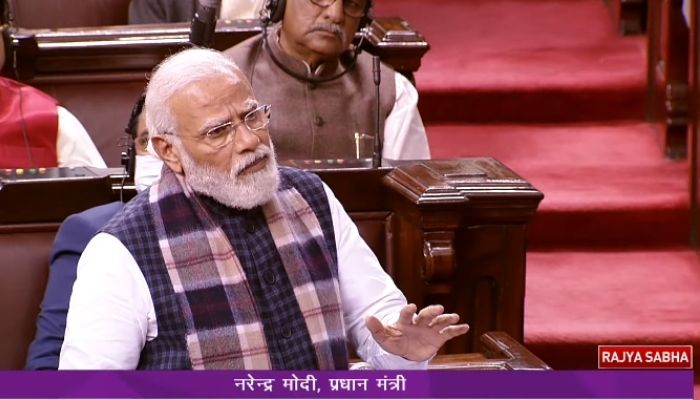
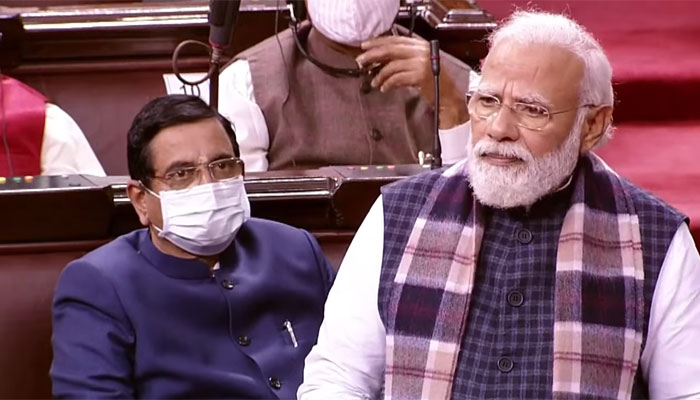
On Tuesday (February 8), Prime Minister Narendra Modi slammed the Congress and Opposition parties for fuelling vaccine hesitancy in India. He made the remarks during his reply to the Motion of Thanks on the President’s Address in the Rajya Sabha.
PM Modi said, “A few leaders of some political parties have shown immaturity in the last 2 years which has disappointed the nation. We have seen how games have been played due to political selfishness. Campaigns were done against Indian vaccines.”
He added that leaders must work for the people, irrespective of their political affiliations. “The mindset that being in the Opposition means stop working towards solving people’s issues is wrong,” he pointed out.
Congress and Opposition parties fuelled ‘vaccine hesitancy’ in India
At a time when Covid-19 cases were on the rise, we had witnessed how the Congress ecosystem and other Opposition parties had tried to derail the ongoing vaccination drive. While some opposed vaccination programme to turn around their political fortunes, others targetted the vaccine manufacturers in a bid to demoralise them. One of the strategies employed by them was discrediting the indigenous Covaxin vaccine, developed by Bharat Biotech. The government had approved its emergency use in the month of January 2021.
Using this as the primary tool for propaganda, Congress leaders such as Shashi Tharoor, Manish Tewari, and Chhattisgarh health Minister TS Singh Deo trivialised the vaccination drive altogether. This is despite the fact that Covishield (developed by Oxford-Astrazeneca) and manufactured by Serum Institue of India (SII) was primarily used until Covaxin completed the third phase trials (with 81% efficacy). Samajwadi Party leader Akhilesh Yadav had gone even a step further to claim that he could not trust ‘BJP’s vaccine’. He claimed that he would only get vaccinated when his government is formed after the next election.
PM Modi speaks about government initiatives to fight Covid-19
During his speech in the Rajya Sabha, PM Modi highlighted the initiatives taken by the BJP government at the Centre to provide relief to people amidst the Wuhan Coronavirus pandemic. He pointed out that a total of 23 meetings were conducted with the Chief Ministers of States on the issue since the outbreak of Covid-19.
He informed that the Indian government provided free ration to 80 crore people and set an example of welfarism before the world. PM Modi said that the government focussed on infrastructure projects to generate jobs during the pandemic. He pointed out that record number of houses were built, which were equipped with tap water connections. He said that more than 5 crore rural families were impacted under the ‘Nal se Jal’ scheme.
He said that a conscious decision was taken to avoid lockdowns in rural areas and impacting the lives of farmers. As such, MSMEs and agriculture sector has been generating emploment opportunities on a large scale. While speaking about the vaccination programme, he said that the government is working towards achieving 100% vaccination.
PM Modi applauded the discipline and willpower of 130 crore people since the outbreak of the pandemic. He appreciated the people’s response to Covid-19 jabs amidst global vaccine hesitancy and anti-vax campaigns. While talking about the job market, he pointed out record trends in hiring in IT sector wherein 27 lakh jobs were generated. At the same time, he said that India built unicorn companies in 1 year equalivelnt to total unicorns in India till date.
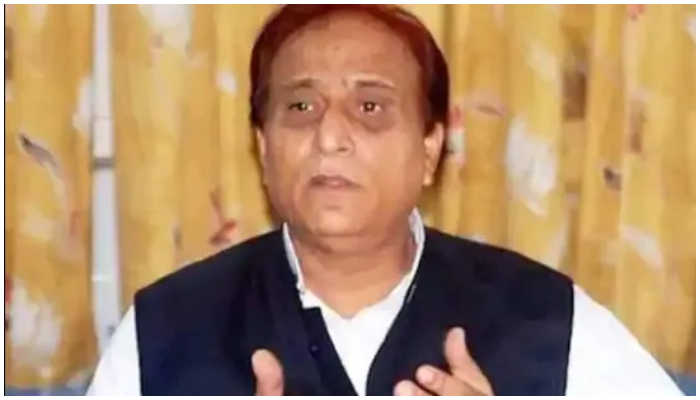
On Tuesday, the Supreme Court refused to grant any relief to Samajwadi Party leader Azam Khan who was seeking interim bail to campaign in the upcoming Uttar Pradesh State Assembly Elections. Justice L Nageswara Rao-led bench asked Khan to approach Allahabad HC and requested the High Court to decide the case expeditiously.
Supreme Court refuses to grant any relief to Samajwadi Party leader Azam Khan who was seeking interim bail to campaign in upcoming #UttarPradeshElections. SC asks Azam Khan to approach concerned court with his plea. pic.twitter.com/XfozRnyuVs
Azam Khan has been fielded from Rampur constituency and had moved to the apex court on January 22 to seek interim relief for poll campaigns. In his plea he had alleged that the Yogi Adityanath led government had purposely delayed three criminal cases to ensure that he is incarcerated during the assembly elections.
He also had said that he had acquired bail in all other cases against him but was not able to secure relief in three criminal cases. According to reports, Khan has more than 84 cases lodged against him and is in Sitapur jail since February 2020.
Recently, Azam Khan’s son who was booked under 43 cases was granted bail, after 23 months of imprisonment. “The oppression will end on March 10”, he had said taking a dig at the Yogi-led government.
Meanwhile, BJP’s Keshav Prasad Mourya sharply criticised the Samajwadi Party for its criminal mindset. Mourya said that SP will not win from Manipuri and from Rampur. “Both Akhilesh and Azam khan will lose their seats. Those sitting in jails dream of winning assembly elections. Every vote for BJP means sending a goon behind the jail. Samajwadi Party will be Samaptawadi Party after March 10”, he was quoted.
It is pertinent to note that SP Chief Akhilesh Yadav is all set to contest UP Assembly polls from Manipuri constituency and Azam Khan will contest from Rampur. Legislative Assembly elections are scheduled to be held in Uttar Pradesh from February 10 to March 7 in seven phases. The counting of the votes and the results will be declared on March 10.
On February 8, during the reply to Motion of Thanks on President’s address in Rajya Sabha, Prime Minister Narendra Modi lashed out at opposition leaders who enjoyed presenting a disappointing picture of India in the house. He said, “Some colleagues presented a disappointing picture of the country in the house. It felt like they were enjoying those moments. When I see such disappointed people, I feel ups and downs are part of public life. Winning and losing is also part of life. However, the disappointment that you are feeling after defeat should not be imposed on the country.”
Speaking on how some opposition leaders are still stuck in the past, he said, “There is a saying in Gujarati. ‘When fields are green, and someone accidentally loses his eyes after seeing those green fields, he remembers the same scene for the rest of his life.’ Those who spent their lives in worse infrastructure and rule till 2013 and lost their vision after the countrymen spread the light with change in power, they are still stuck in those old days.”
He added it does not matter on which side the leader is sitting. He can be with the ruling party or the opposition. However, that does not mean he become a disappointed leader and lose the will to lead. He said, “I want to say something in this house. It does not matter where you are sitting. However, if someone is representing people, he is the leader of his constituency. The people of his command area look upon him. They follow him. It is not right to feel disappointed and lose the will to work if you are in opposition. No matter where you are if you are representing people, you are their leader. If a leader feels disappointed, how will the country function? Are you going to work only if you are in power? It does not work like that.”
He further urged the opposition leaders not to lose the will to work. He said, “You should not be disappointed. The area where you rule might have shrunk, but you still have a responsibility towards the people of your constituency.” He added, “It does not matter who is in power. No one should underestimate the strength of the country. We should promote the strength of the country in front of the world. The country needs that.”
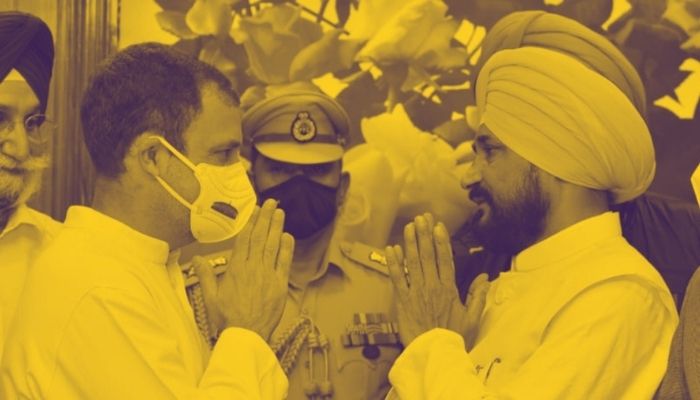
It is an open secret that Charanjit Singh Channi’s selection as a preferred Chief Ministerial candidate for Punjab owes to the Congress’ ambition of wooing Dalit voters in the upcoming assembly elections. In the just-before-elections change of guard that transpired, veteran Captain Amrinder Singh lost his chair; thanks to his stronghold in Punjab posing a direct threat to the depleting hegemony of the Gandhis in the Congress party. Amidst a barrage of speculations for the new face – underlined by rife within the Punjab Congress leadership, ‘Charanjit Singh Channi’ rose to the highest seat from nowhere.
Among the frontrunners in the chief ministerial race were Navjot Singh Sidhu (A Jatt Sikh also famous as a former cricketer), Sunil Jakhar (Congress’ Hindu face in the Hindu-minority state) and Sukhjinder Singh Randhawa (strong face against the Badals). However, even before Channi could play to the galleries, he was painted the state’s first Dalit Chief Minister. Since the elevation of Channi as a CM six months before the upcoming elections, Congress is going all guns blazing about championing Dalit politics all over the country.
It’s great that for the first time in the country, a Congress candidate (Charanjit Singh Channi) will be from the Dalit community (for CM). Punjab public will accept it, too, as he’s a common man who does good work. Rahul Gandhi has given a good message: Mallikarjun Kharge pic.twitter.com/u9wfBJI1Tn
Today, the Former Congress Leader of Opposition in Loksabha, Mallikarjun Kharge claimed that it is for the first time in the country that a Congress candidate will be from the Dalit community as Chief Minister. While it is true that Charanjit Singh Channi rose up to become the first Dalit Chief Minister in Punjab, the party itself has had Dalit faces as Chief Ministers including Bhola Paswan Shastri and Ram Sundar Das in Bihar, Sushil Kumar Shinde in Maharashtra and Jagannath Pahadia in Rajasthan among others. This time, pertaining to a large 31.9% population of backward castes in the state of Punjab, Congress thinks it has secured a large share of the Dalit vote bank with Channi as the CM face.
However, looking back at the track record of earlier Dalit Chief Ministers representing Congress, there’s much reason for Charanjit Singh Channi to chart the forward path with extreme caution. When Damodaram Sanjeevaiah was made the first Dalit Andhra Pradesh CM in 1960, his tenure lasted not more than two years. In a similar case, when Jagannath Pahadia became the first Dalit chief minister of Rajasthan in 1980, his term, ended within a year. The same was the case with Bhola Prasad Shastri too, whose term as the first Dalit Chief Minister of Bihar lasted only for three months because the Congress party lost the majority in the Bihar assembly. But Channi’s case bears the most striking resemblance with that of Sushil Kumar Shinde of Maharashtra.
Sushil Kumar Shinde’s political journey in Maharashtra serves as a cautionary tale for Charanjit Singh Channi
Sushil Kumar Shinde, who hailed from a family of cobblers, rose up to become the first Dalit Chief Minister of Maharashtra in 2003. Similar to what happened in Punjab Congress in 2021, factionalism within the Maharashtra Congress leader cropped up a year before the state assembly elections in 2004. Vilasrao Deshmukh, a popular face from the majority Maratha community had to release his chair even after being a five-time MP and a leader who won a state assembly election in 1999 with the highest margin. He made way for Sushil Kumar Shinde, a Gandhi family loyalist. Shinde was selected as a Chief Minister of Maharashtra by Sonia Gandhi who thought of playing a Dalit card before the next assembly elections. The selection of Shinde was also a trickle-down effect of Mandal politics that played out at the Centre more than a decade earlier, in the 1990s.
Nonetheless, after the elections, the Democratic front aka the Aghadi alliance between Congress, NCP and communist parties got the majority seats with the highest number of (71) seats bagged by Sharad Pawar’s NCP. With NCP racking up more seats than the Congress, the dynamics of the alliance as agreed upon by the coalition partners altered significantly. Consequently, in place of Shinde, who was then the incumbent chief minister of Maharashtra, Vilasrao Deshmukh was sworn in to the office of CM in October 2004. Shinde, who had stewarded the storm-tossed ship of Congress in the tumultuous months before the all-important 2004 assembly polls, was replaced by Vilasrao Deshmukh after the party once again found itself in a formidable position in Maharashtra.
From being ‘appointed’ as a chief minister to govern a state amidst crisis to being hailed as the ‘Dalit’ face of the party, there are glaring similarities between what Congress did with Sushil Kumar Shinde and what is playing out with Channi today. Perhaps, there are lessons for the latter to examine the authority and honour given by the Congress to their Dalit Chief Ministers. In the forthcoming elections in Punjab, if the grand-old party manages to retain power, it will not be a surprise if Channi meets the same fate as Sushil Kumar Shinde did after the Maharashtra assembly elections in 2004 and is defenestrated from the office of CM to accommodate the demands of competing factions within the party.
The state of Punjab will go on assembly elections on February 20, 2021, in a single phase with current CM Charanjit Singh Channi contesting two seats of Chamkaur Sahib and Barnala.
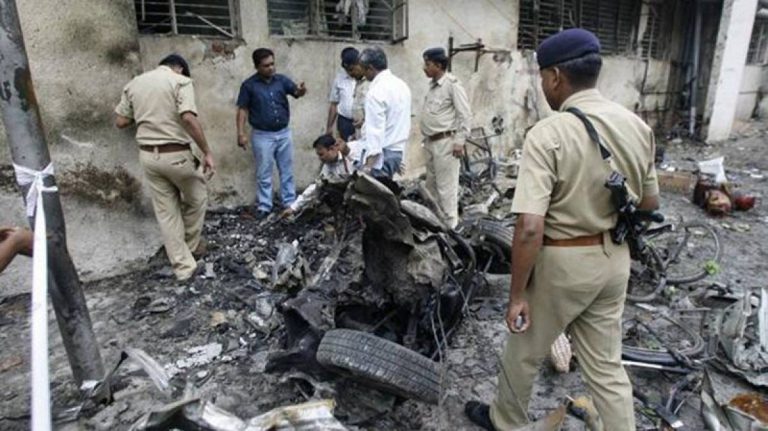
On Tuesday, February 8, 2022, a special court in Gujarat acquitted 28 of the 77 accused in the 2008 Ahmedabad serial bomb blast case. 49 accused were convicted.
Out of the 28 acquitted, 16 were given a benefit of the doubt, while 12 were pronounced innocent due to lack of evidence.
#UPDATE | A total of 49 accused convicted and 28 acquitted in 2008 Ahmedabad serial bomb blast case.#Gujarat
After a protracted trial that lasted almost 13 years in the 2008 serial blasts case in which Ahmedabad was rocked by explosions killing 56 people and leaving 220 injured, the trial of these 77 accused came to an end in September last year.
Special judge AR Patel fixed Tuesday (February 8) as the date for judgment. Earlier, the case was notified twice for pronouncement of judgment but was adjourned.
Gujarat Police has discovered a nationwide network of radical elements who were involved in carrying out serial bombings in the city after the serial blasts. According to the authorities, the attacks were carried out by members of the proscribed terror group Indian Mujahideen (IM), a subgroup of the outlawed Students Islamic Movement of India (SIMI).
The trial in the 2008 Ahmedabad serial bomb case had commenced after as many as 35 cases were merged and consolidated into one case. The FIRs were filed in Ahmedabad, where the explosions occurred, and in Surat, where police discovered bombs in various locations.
The accused were charged with murder, attempted murder, and criminal conspiracy, as well as the anti-terror law Unlawful Activities (Prevention) Act.
For security considerations, the trial in this high-profile and sensitive case began inside the Sabarmati central jail, and the proceedings were thereafter primarily conducted via video-conferencing.
2008 Ahmedabad bomb blast
Back in July 2008, 21 bomb blasts shook Ahmedabad city within 70 minutes. 56 people had lost their lives, and over 200 were injured. Since then, the intelligence agencies have been keeping the city under constant monitoring.
In fact, last year, Ahmedabad Police had issued a high alert in the city based on the intelligence agency inputs. Important establishments, including Sardar Sarovar dam, Statue of Unity and Somnath Temple got additional security and other crowded places across the state got additional security.
Three days after the post by Hyundai celebrating ‘Kashmir Solidarity Day’ in Pakistan, The automobile company has been at the receiving end of wide condemnation and boycott calls in India. After a patronizing, unapologetic statement issued on February 07, Hyundai has issued a second statement on the controversy on Tuesday morning.
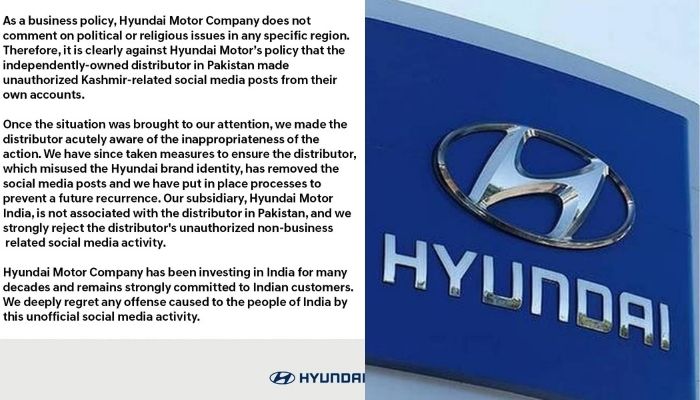
After messing up the cover-up for the post by its Pakistani handle in its first statement, Hyundai India in a second statement has distanced itself from the post saying that its distributor in Pakistan had misused Hyundai’s brand identity. The company has assured that its distributor in Pakistan has been made aware of the ‘inappropriateness of the action’. The statement released by Hyundai India Twitter handle read, “As a business policy, Hyundai Motor Company does not comment on political or religious issues in any specific region. Therefore, it is clearly against Hyundai Motor’s policy that the independently-owned distributor in Pakistan made unauthorized Kashmir-related social media posts from their own accounts.”
With the removal of the posts from Pakistani handles, Hyundai has attempted to assure that it rejects the Pakistani distributor’s ‘unauthorized non-business related social media activity.’
While acknowledging the fact that the post related to Kashmir was inappropriate, Hyundai is seen playing with words again while tendering an apology. “We deeply regret any offence caused to the people of India by this unofficial social media activity.” says the statement. Social media handles are still expecting a ‘sorry’ from the automobile giant, while the PR has done away with solely regrating the offence so caused.
Social media users have pointed out that the ‘regret’ still sounds insincere and reminded them that after their Pakistani distributor’s post was highlighted by Indians, the Hyundai India official handle had gone on a blocking spree, blocking anyone who asked them questions.
Though whatever you’re saying about operations in Pakistan is factually wrong, Let’s more forward.
I’ve given you three point solution. Two done, third pending:
1. Apology: ✔️ 2. Unblock every India: ✔️ 2. Now admit that Kashmir is Indian.https://t.co/IibMinbKrQ
The apology should be from Hyundai Global, which operates in India as well as Pak. Offence has been caused to India not “any offence caused”. This effort of distancing from Distributor in Pak means one hand earns in India and the other hand slaps India ??
Earlier, Hyundai India had posted a similar official statement on its Twitter handle stating the social media post ‘unsolicited’. In the previous post, the company was seen glorifying its position in the Indian automobile sector in order to brush up its commitment towards India. Indian Twitter was harsher on Hyundai this time, for playing word games instead of clarifying its position in the controversy.
On Saturday, February 05, Pakistani handles of Hyundai, Kia and junk food company KFC among others were seen sharing posts in support of the Pakistan sponsored violence in Kashmir which is celebrated as ‘Kashmir Solidarity Day’ every year on the 5th of February. The companies have faced a huge backlash and large scale calls for boycotts in India after which many were seen falling in line.
The Hijab controversy in Karnataka has received a lot of attention in recent weeks. On January 1, this year, some female Muslim students at a Pre-University College (PUC) in Udupi attempted to enter their class while wearing a Hijab. The headmaster forbade the girls from attending classes because they were dressed in Islamic robes. He pointed out that there had never been a problem, and that it rendered the concept of uniform superfluous.
In this article, we’ll go over some relevant information to analyze this whole discussion and show how the premises on which the conclusions are based are without merit and contradict the same principles that they claim to defend.
The Islamic idea of Hijab
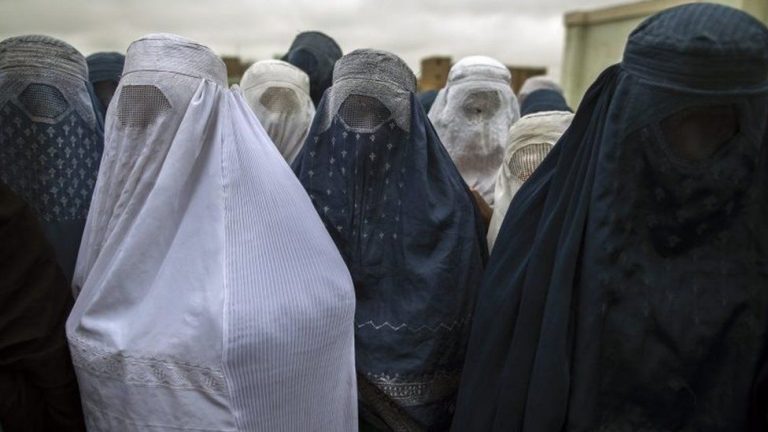
This whole Hijab debate is not a new one, since there have been countless terrible occurrences linked to it all across the world. Hijab is an Islamic idea that Muslim women cannot show their faces and must remain under the veil. The argument that it is a ‘choice’ is a joke. Countless women in Islamic countries have been murdered or jailed for it. ‘Liberal’ feminists argue often that it is a choice, but they will never speak about the brutal murders and honour killings of women who try not to remain under the veil.
Heartbreaking. Today in Iran; This man is holding his 17 yr old wife’s head after beheading her. She had fled to Turkey to be safe but was forced back. In Iran, a father who beheaded his 14 yr old daughter got 8 yr prison but a woman who removed her hijab got 24 years.#LetUsTalkpic.twitter.com/oPy5gIY2Gn
Hijab is not clearly defined in the Islamic sacred book, the Quran, despite its deep roots in Islamic history. It is frequently a cultural and personal idea rather than a theological one. Chapter 24, verses 30 and 31; Chapter 33, verses 32 and 33; and Chapter 33, verses 53 and 54 of the Quran provide insight on the veil and essential themes regarding modesty, respect, privacy, and humility.
The struggle of Muslim women and protest against Hijab
Muslim women throughout the globe have been opposing the Hijab as a veil to cover their bodies. Afghan women have been opposing the Taliban’s new Hijab requirement since the Taliban took control in Afghanistan and enforced it on women. The wearing of a hijab in public has been a very contentious subject for a long.
The atrocities that Muslim women face whether due to Hijab or Triple Talaq are not hidden to anyone. Masih Alinejad, an Iranian lady, was detained by morality police at the age of 19 for not wearing a Hijab, held in prison without trial, and finally told by a court that it had enough evidence to have her executed. Another Iranian lady, Nasrin Sotoudeh, has been held since June 2018 and convicted to a total of 38 years in prison on nine accusations, including “encouraging prostitution,” in connection with her work defending women arrested for peacefully opposing obligatory Hijab.
Global viewpoint of Muslim women scholars
Several Muslim women from various socioeconomic backgrounds have spoken out against the Hijab compulsion. According to Asra Q. Nomani, a former Georgetown professor, and Hala Arafa, a retired program review analyst at the International Bureau of Broadcasting, these justifications for Hijab and modesty are part of conservative Muslims’ well-funded effort to dominate modern societies.
“This modern-day movement spreads an ideology of political Islam, called “Islamism,” enlisting well-intentioned interfaith do-gooders and the media into promoting the idea that “hijab” is a virtual “sixth pillar” of Islam, after the traditional “five pillars” of the shahada (or proclamation of faith), prayer, fasting, charity and pilgrimage.” they wrote in an opinion piece in TWP.
Liberal apologists’ not-so-liberal viewpoints
The support that this row has received from self-proclaimed ‘liberals’ is alarming. Their endorsement of the current controversy is nothing but an effort to incite hatred and target the government, for stating that the uniform and dress codes mandated by educational institutions must be obeyed. It’s worth mentioning that these liberal feminists routinely turn a blind eye to the open intolerance and hatred peddled against non-Muslims in India and across the world, but rush to shout at any incident which involves the Hindu culture. They keep seeking ways to enforce the Islamist views and practices in liberal democracies have never joined feminist developments in Iran, Saudi. The women struggling for their basic rights in Islamic countries never get any support from these self-proclaimed ‘liberals’.
Hijab in educational institutions
Schools and colleges are spaces that are designed and designated to impart education in the best way possible. They are a sort of consecrated place with some pre-requisites for both learners and the teachers. If one has to keep learning, one has to adhere to the rules and regulations set up by the institution.
The wearing of school uniforms is an integral aspect of the educational process. Wearing a school uniform also gives each student a sense of belonging to the institution. As studies suggest, students who wear school uniforms develop an appreciation for and respect for the tradition, as well as a desire to preserve its sanctity. By fostering a sense of belonging to their school, school uniforms also help to bring students together. Insisting on wearing something other than the standard uniform is not only demeaning, but it also demonstrates the audacity to disobey the institution’s regulations.
This obstinate insistence on wearing a hijab in a state-funded institution holds no merit. A state that seeks the welfare of all without discrimination is not obligated to endorse any individual’s or group’s personal beliefs.
The imposition of beliefs
Girls fighting for the right to wear a hijab in schools and universities is not something to be taken lightly. It must be emphasized that it is an attempt to impose one’s beliefs on others. No one disputes the right to wear a hijab or a burqa at a Madrassa, but wearing them in a public school, where pupils from various socioeconomic backgrounds and religions study in the same room, is not justifiable.
Furthermore, the parents and mentors of the protesting girls have lost their credibility to support them. Nobody is unaware that Maulvis, who preach Islam to these individuals, have been involved in open plots to assassinate people who have done nothing except insist on practising their faith, and that too in private space! The most recent incident is the murder of Kishan Bharwad in Gujarat.
The girls protesting and justifying their protest are choosing to be ignorant of how this Hijab is a symbol of Islamic fanaticism and female subjugation. It has come up as an effort to justify certain Islamists’ unwillingness to assimilate into mainstream culture and follow the laws of the state.
Such attempts to impose beliefs must be abandoned from the outset. People who advocate allowing such things in educational institutions must understand that education must be provided impartially and without discrimination. As such the government never prevents individual choice of attending a madarsa. If the students prefer Islamic practises over education, they are free to join madarsas, as MP Pratap Simha said recently.
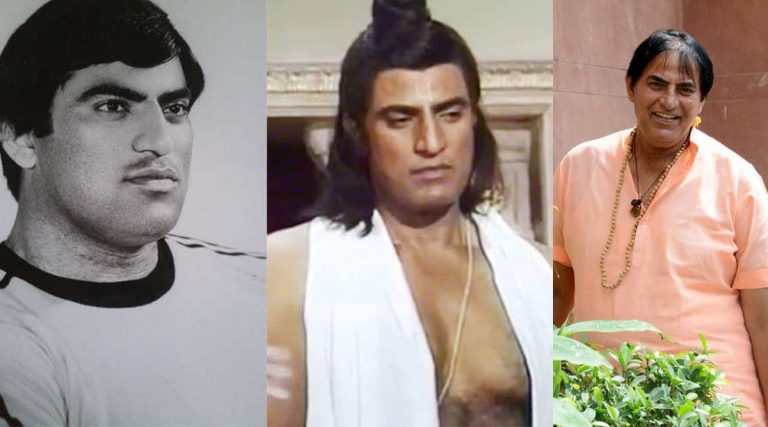
According to reports, the actor has been battling illness and financial difficulties for quite some time. Sobti had made a reputation for himself not just in the acting world but also in sporting events.
The news of his passing comes just a day after the demise of legendary singer Lata Mangeshkar on February 6.
Sobti began his career as a sportsperson because of his height and physical strength. Then he turned on to Hindi movies. Only a few people are aware that Praveen Kumar’s acting career included collaborations with celebrities like Amitabh Bachchan and Jitendra.
Sobti had previously excelled in the hammer and disc throw. Being a former BSF Deputy Commandant, he has won several medals for India at the Asian and Commonwealth Games, including a gold medal at the Asian Games in Hong Kong. He also represented India at the Olympics twice. He rose to prominence in athletics during the 1960s and 1970s.
After getting into the acting profession, he appeared in almost 30 films before meeting BR Chopra, who handed him Mahabharat. He played villains in a number of films, but his most famous part was that of Bheem in the Mahabharat. The rest, as they say, is history.
His performance as Mukhtaar Singh in Amitabh Bachchan’s cult blockbuster Shahenshah was one of his most unforgettable. Karishma Kudrat Kaa, Yudh, Zabardast, Singhasan, Khudgarz, Loha, Mohabbat Ke Dushman, Ilaaka, and others are among the films he has worked in.
Praveen Kumar Sobti entered politics in 2013. On the Aam Aadmi Party’s ticket, he ran for Wazirpur in Delhi but lost the elections. He then left the AAP and joined the BJP.
Mahabharat during Covid lockdown
Notably, Doordarshan televised both Ramayan and Mahabharat TV serials while the whole country of India was quarantined due to the coronavirus outbreak. While India was put on lockdown for 21 days to combat the spread of the deadly Wuhan Coronavirus back in 2020, Doordarshan chose to keep the country engaged by airing the two major epics of Hindu civilization, Mahabharat and Ramayan. BR Chopra’s Mahabharat, a 1988 television series, is widely regarded as a landmark in Indian television.
Days after several automotive manufacturers were found endorsing Pakistani propaganda and supporting secessionism in the Indian Union territory of Jammu and Kashmir, the Federation of Automobile Dealers Associations (FADA) condemned their actions on social media. FADA is the apex national body of the automobile Retail Industry in the country.
In a statement, FADA stated, “We strictly condemn the act of Hyundai Pakistan & Kia Pakistan for the tweets on Kashmir. We remain committed to our motherland and have written to both the companies in India to clear their stand on the same. We also urge the Ministry of Heavy Industries & SIAM India to seek clarifications. Kashmir is India’s integral part & will continue to remain so till eternity. Jai Hind!”
The Federation of Automobile Dealers Associations (FADA) also condemned Suzuki Motocycle Pakistan, Honda Cars Pakistan, Honda Motorcycle, and Isuzu Pakistan for their pro-terrorist stance on the occasion of ‘Kashmir Solidarity Day’. This day is observed annually on February 5 by Pakistan to extend their support to Islamic terrorists and Kashmiri separatists, operating from Indian soil.
Honda, Suzuki, Isuzu support pro-Pakistani propaganda on Kashmir
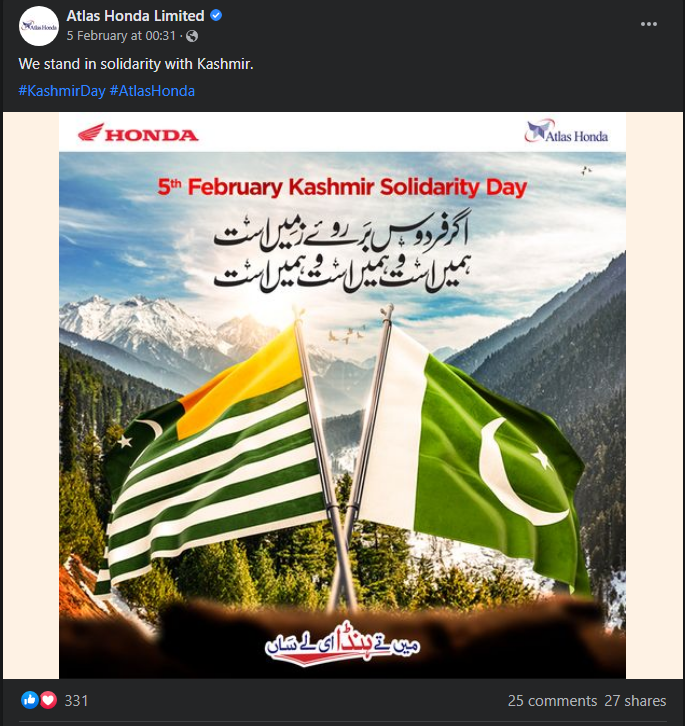
On February 5 this year, Atlas Honda Limited posted on Facebook, “We stand in solidarity with Kashmir.”
Screengrab of the Facebook post by Atlas Honda Limited
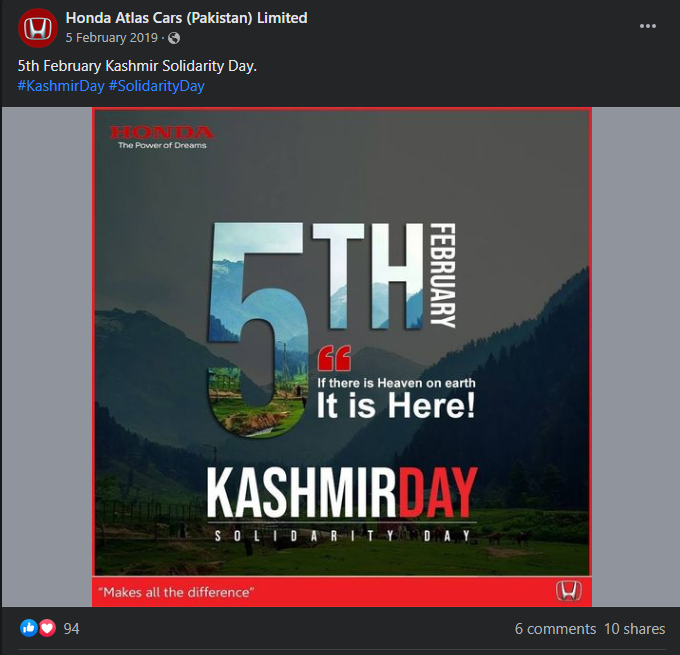
A similar post was uploaded by Honda Atlas Cars (Pakistan) Limited, promoting Pakistan-sponsored Islamic terrorism on Indian soil.
Screengrab of the Facebook post by Honda Atlas Cars (Pakistan) Limited
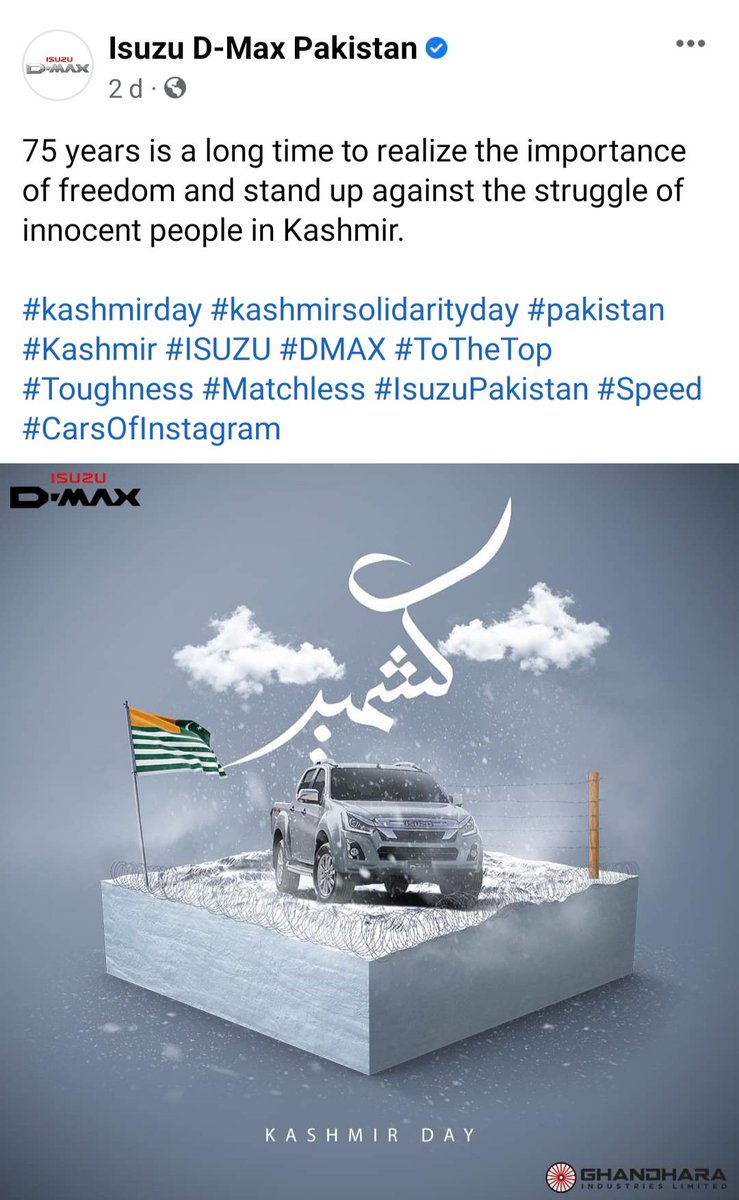
The Pakistani dealership of Japanese vehicle manufacturer Isuzu also called for the secession of Jammu and Kashmir. “75 years is a long time to realise the importance of freedom and stand up against the struggle of innocent people in Kashmir,” it posted on Facebook.
At the time of writing, the contentious Facebook post by Isuzu stood deleted.
Screengrab of the Facebook post by Isuzu
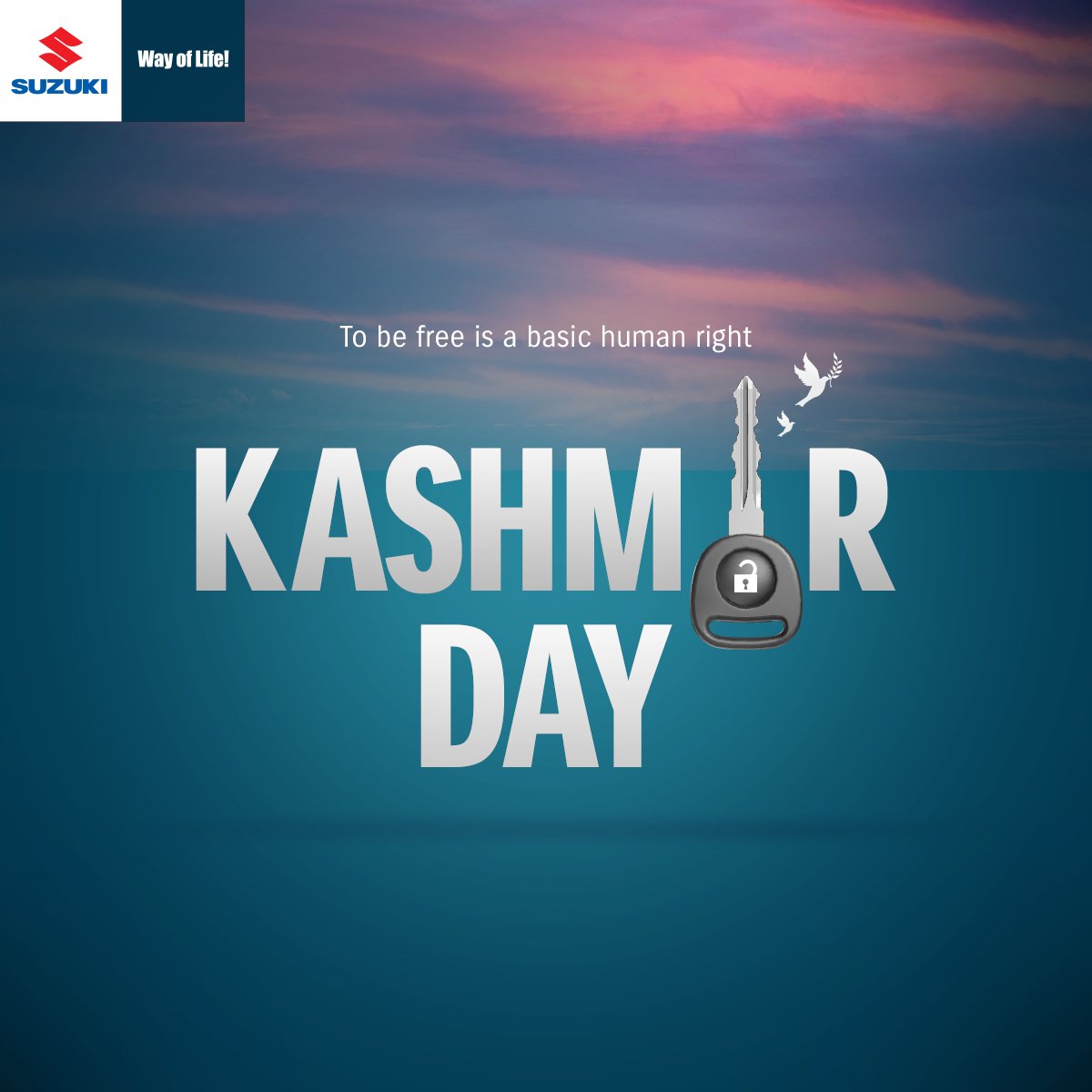
Earlier in 2021, Japanese multinational company Suzuki also posted on the occasion of Kashmir Solidarity Day. While insinuating that Kashmiris in India are not free, it said, “To be free is a basic human right.”
Screengrab of the post by Suzuki
Every year on 5th February, Pakistan tries to reinforce its propaganda on Jammu and Kashmir by observing ‘Kashmir Solidarity Day’, under the guise of which it continues to extend support to the Kashmiri separatist movement that is funded and supported by the Pakistan state. It was launched by Nawaz Sharif as the Pakistani Prime Minister in 1991.
Similar tweets supporting Islamic terrorism in Kashmir were posted by Hyundai Motor Company and Kia Motors on their official social media platforms, following which they received overwhelming flak from netizens.
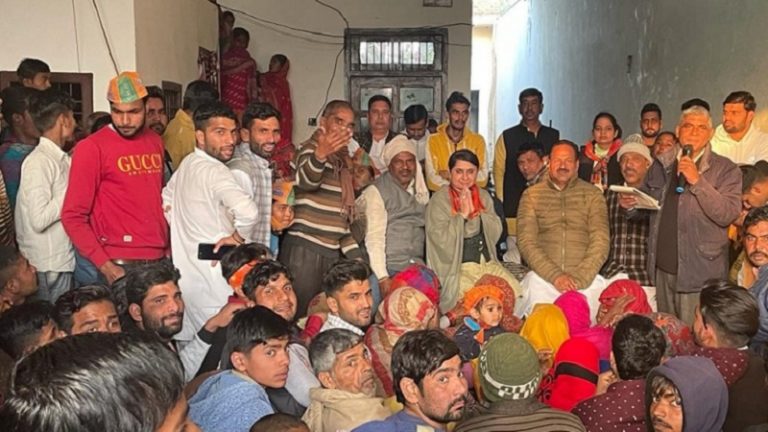
Kairana, which rose to national prominence as a result of the Hindu migration, was formerly the terror of Furkan, Mukim Kala, and Sabir Jandheri. Even now, hushed tones reveal how the police administration failed in the face of Nahid Hasan’s family supremacy under Akhilesh Yadav’s SP government. How the gangsters were let out of jail. Businessmen were murdered in broad daylight in their own stores for failing to pay the extortion. The law-and-order situation in Kairana is considered to be fine today. In the election debates, there are stories of Ajaypal Sharma, Ajay Kumar, Sukirti Madhav, and Prem Veer Singh Rana.
On February 10, 2022, voters in Uttar Pradesh will vote on 58 seats in 11 districts in the first round of the election. It also includes Kairana. Mriganka Singh of the BJP is contesting against Nahid Hasan of the SP in Kairana.
Ajaypal, Sukirti, and Prem Veer are not party candidates. They are not affiliated with any of them, nor are they involved in strategy development or sloganeering. During the Yogi Adityanath-led BJP government’s mandate, these were the Uttar Pradesh police officers who were responsible for restoring peace and order. Criminals were not only imprisoned and confrontations were held, but Havans were also performed at the police station to calm Hindus’ fears of the system. Local merchants have gained confidence in the administration thanks to these individuals, who have fought to restore locals’ faith in the system.
This isn’t only the situation in Kairana. People are sharing stories of bureaucrats like Dinesh Kumar P, Vidyasagar Mishra, Akash Tomar, and Krishna Kumar Gurjar with zeal in other regions of western Uttar Pradesh as well.
Improving law and order everywhere
The improvement in law and order provides the BJP an advantage over its opponents in all of western Uttar Pradesh’s seats, including Kairana. Other issues pale in comparison to the work done on this front by the Yogi Adityanath-led BJP government. The paper equations appear to be falling to the ground.
The owner of Amit Sweets of Kairana says, “If you live in peace, you will be able to fight inflation. Will fight the disease. While there’s life there’s hope.” Trilochan Singh of Dhari village in Gangoh assembly constituency says, “The BJP is on our side. Hooliganism is over in this government. Earlier there was hooliganism. Animals got stolen every now and then. They also used to beat up in the night by entering the house. People used to take out the motor from the field. The hooliganism is over now.” Murtaza Qureshi of Muslim-dominated Deoband says, “Law-and-order is the best in this government. BJP MLAs don’t discriminate between Hindu and Muslim.”
SP government’s “Gangsterism“
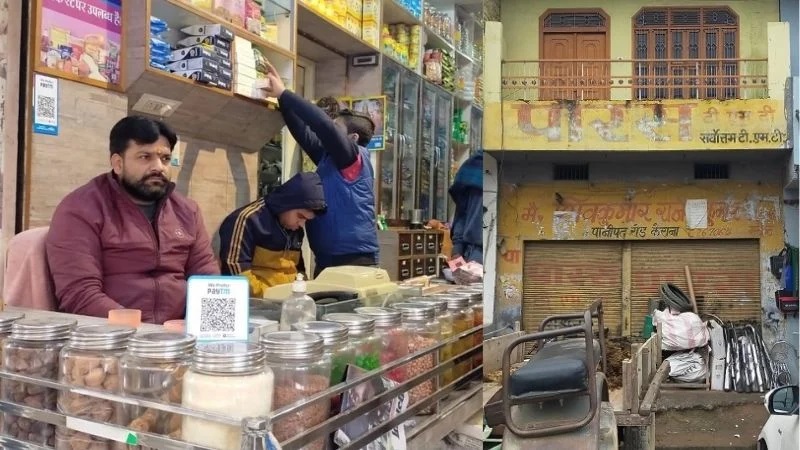
Some occurrences in Kairana provide insight into the level of hooliganism that existed under the previous SP government’s tenure. Hindus were compelled to move as a result of these events. Furkan shot and killed businessman Vinod Singhal in broad daylight on August 16, 2014. Rajendra alias Raju and Shankar, business brothers, were killed at their store in Bhare Bazaar on August 24, 2014. This shop’s shutters are still down. Only a few meters separate the circle police officer’s office and police station from where his store stood in Kairana. The shop of Vinod is located at Kairana Main Market. Varun Singhal, his brother, is now working in this store.
Kairana is no longer afraid of Akhilesh Raj
“The two miscreants here were renowned,” Anil Kumar Gupta, head of Kairana Vyapar Mandal, told OpIndia. “Furkan is one, while Mukeem Kala is the other. Three shopkeepers were slained within a week for refusing to pay the extortion. A murder took place just 5-7 stores ahead of here. The situation has now improved, and the migrants have returned,” he said.
Vinod Singhal’s shop in Kairana Main Market, the shop of the businessmen brothers who were killed (on the right)
“When we used to go to complain, the officials used to say we’ll see,” Gupta recalls when asked if the government listened to the traders at the time. “However, nothing actually happened. We used to believe that nothing was changing since the SP government was sitting on the throne above us. The police and administration are still the same. Why is it now working? There hasn’t been an extortion incidence for a long time. Nobody disturbs anyone anymore. Everyone seems to be in positive spirits. Previously, when traders closed their shops, there were occurrences of snatching their bags, which included their money and accounts. Such occurrences are no longer common. Many villages were reluctant to venture out at night earlier. People are no longer afraid to come. The traders were so terrified at the moment that they all wanted to close the business as quickly as possible and get home safely. There is no longer any worry, and we are able to close our stores on time.” he added.
“Terror had intensified in Kairana,” Gupta replies when asked about other electoral topics. “People in this town used to argue that even if everyone had to eat at the same time, law and order should be better. It’s gotten better. People want the last vestige of bullying to be eradicated. Even now, the most critical concern for the people here is law and order.” he added.
The careless SP Government
The Yogi government has received accolades from both merchants and ordinary Kairana residents for improving the law-and-order situation. “The crucial thing that has happened here is that the thefts, dacoities, and scams that used to happen have diminished a lot today,” says Qasim Ali of Fatehpur village. “Anyone can now come and go at any time during the night. In this government, there were no issues. It had grown impossible to simply leave the house here under previous regimes. There was no one to hear. When the individual attempted to meet an officer, he was unable to do so,” adds Ali. “Law and order is the biggest concern here,” Dharampal states when asked what other issues are significant here besides law-and-order.
Why is Mriganka Singh evaluated strong?
Mriganka Singh has tried her hand at politics twice, but both times she has come up short. After defeating her in the 2017 assembly elections, SP’s Nahid Hasan was elected MLA. However, Mriganka’s position this time is thought to be stronger than both prior times due to the Yogi government’s work on the law-and-order front.
“The situation in Kairana has been great since 2017,” Mriganka Singh told OpIndia. “Yogi ji’s zero-tolerance approach on crime has enthralled the locals.” Yogi Raj, according to her, is Ram Raj. Mriganka is the daughter of Hukum Singh, a well-known local personality who passed away recently. As a member of Parliament, he has raised the issue of Hindu exodus.
Nahid Hasan on the mercy of Muslim votes
In the region, Samajwadi Party’s Nahid Hassan’s family has political influence. There are also a slew of severe claims leveled against them. After submitting election papers, Nahid Hasan, who was charged under the Gangster Act, was sentenced to prison. They’ve played it into a propaganda problem for them. In his absence, his sister Iqra, who is in charge of the election campaign, is constantly attempting to transmit the notion that her family is being targeted because they are Muslims. She hopes to avert the divide in Muslim voters by doing so.
BJP is winning Kairana?
The Kairana assembly seat has a total of 318294 voters. Around 1.37 lakh of them are Muslims. The essence of SP’s politics revolves around it. However, as the law-and-order situation improves, this vote bank appears to be disintegrating. This is why, this time, the mathematics is stacked in favor of Mriganka Singh. However, it is also true that Nahid’s imprisonment is a subject of discussion among Muslims. As a result, the outcome will be determined by whether Nahid Hasan can rally individuals who have been left out of his conventional vote bank right before the poll.
Note: This report was originally published in Hindi. You can read it here.