Home Blog Page 368

Union Bank under scrutiny for Rs 7.25 crore book order linked to sacked ex-IMF official

Union Bank of India has found itself embroiled in controversy over its ₹7.25 crore purchase of nearly two lakh copies of India@100: Envisioning Tomorrow’s Economic Powerhouse, written by former Chief Economic Adviser Krishnamurthy V Subramanian. Notably, Subramanian was recently sacked by the Government of India from his post at the International Monetary Fund (IMF).

The move to purchase such a large number of copies is claimed to be aimed at promoting economic awareness as part of the bank’s centenary-linked initiatives. However, it has triggered calls for a probe by employee unions, and even the bank’s board has raised eyebrows over the decision.

The book deal involved the purchase of 1,89,450 paperback copies priced at ₹100 and 10,422 hardcovers at ₹597. Distribution of the book was intended through the 10 zonal offices to customers, schools, libraries and corporates. However, the scale and cost of the order raised concerns, especially after Subramanian was sacked from the IMF. By the time concerns were raised, half of the payment had already been made.

‘Wasteful expenditure must be probed’

The All India Union Bank Employees’ Association (AIUBEA) has called for an internal investigation into the deal. N Shankar, general secretary of the association, said in a statement, “With the news item of alleged impropriety over promotion of the book purchased by the bank… it has become the responsibility of the bank to ascertain how far the authority who has approved the expenditure has colluded in promoting the alleged impropriety.”

He added, “The bank has also to disclose whether proper procedure was followed in this high-value purchase, and what benefits, if any, were achieved through this mass distribution.”

Suspension, audit, and silence

The general manager of the bank, Giriraj Mishra, who was overseeing the deal, was suspended in December 2024 following internal objections and the refusal of Executive Director Nitesh Ranjan to ratify the expenditure.

However, bank chairperson A Manimekhalai later said in a statement that she had authorised the purchase, suggesting it was done without directing any rule-breaking. A KPMG audit was commissioned in January, but its findings remain undisclosed.

The union believes that Mishra is being made a scapegoat in the matter and has insisted on accountability from higher authorities within the bank. Union Bank is yet to publicly respond to the matter.

Former IAS officer who exposed Rs 1 lakh crore granite scam seeks protection from Madras HC after DMK govt withdraws security

U Sagayam, a retired IAS officer, has written to the Chief Justice of the Madras High Court, seeking protection after the DMK government in Tamil Nadu withdrew his security. The retired IAS officer who investigated the large-scale illegal granite mining said that there is a serious threat to his life post-withdrawal of his security in May 2023.

Back in 2014, the High Court appointed U Sagayam as Special Officer to investigate illegal granite mining. In his investigation, Sagayam uncovered a powerful mining mafia operating in and around Melur in the Madurai district since 1990. The illegal activities had inflicted a loss of over Rs 1 lakh crore to the state’s exchequer.  In November 2014, U Sagayam submitted his 600-page report before the court.

“No action was taken on this report for two months until social activists exposed it, shocking the state, leading to the government taking action and cases were filed. I have received a second summons on one case, which was registered in the Vikramangalam Police Station. I was provided with an armed guard as escort from 2016 to May 202,3 which has been removed lately by the Tamil Nadu government, due to which I fear threat,” Sagayam said in his letter to Madras HC CJI and other authorities.

Explaining the rationale behind seeking protection two after security withdrawal, Sagayam cited the murders of social activist Jagabar Ali from Pudukottai district and whistleblower Zakir Hussain in Tirunelveli. He also mentioned receiving two death threats.

“I received two death threats in the form of a letter during my tenure, stating that I will be chopped and thrown into the mines and that my wife and children will be chopped into pieces and thrown into the mines. I filed a complaint with the Tallakulam Police, but till now I don’t know what action has been taken,” the former IAS officer said.

Sagayam penned a separate letter to the Special Public Prosecutor of the Special Court dealing with offences related to Mines and Minerals.

“I am of the considered opinion that the decision taken by some police officers under the pretext of a committee to withdraw the security provided to me was clearly biased, flawed and unfair as they did not take into consideration the nexus and track record of the stakeholders in the granite mining arena, the nature of the crimes committed, the scale and magnitude of the irregularities resorted to and resultant pecuniary loss to Government Exchequer, which I brought to fore and the impact caused by my action in this regard. I have initially taken up this issue with the Chief Secretary andthe Director General of Police for restoring the security withdrawn. They have not realistically understood the gravity of the issue as the threat perception is clearly subjective. And as a result, they did not respond positively in this regard,” Sagayam wrote.

“We as representatives of Civil Society should bow our heads in utter shame that we could not prevent such murder and loss of precious lives of the noble and selfless crusaders for common cause who are otherwise the sole breadwinner of their family. It is bitter but true that we all should admit beyond the meaningless and petty party politics that the law-abiding citizens, social activists and whistle blowers are living under constant threat and fear,” he continued.

Meanwhile, Melur villagers and several activists have also demanded protection for U Sagayam. On Monday (5th May), a letter was submitted to Madurai collection M.S. Sangeetha demanding restoration of security for the retired IAS.

Adani Foundation chairperson Dr Priti Adani conferred second honorary doctorate for pioneering social impact

In a resounding recognition of her lifelong dedication to public service and nation-building, Dr. Priti Adani, Chairperson of the Adani Foundation, has been awarded a Doctor of Science (D.Sc.) Honoris Causa by the Datta Meghe Institute of Higher Education & Research (DMIHER), Wardha. The conferment, presented during the university’s 16th convocation ceremony, marks her second honorary doctorate, reaffirming her stature as one of India’s foremost champions of social change.

Dr. Adani received the honor from the Honourable Chancellor of DMIHER, Mr. Datta Meghe, where she also graced the ceremony as Guest of Honour. Expressing her gratitude, Dr. Adani stated, “I am honored to accept this doctorate. It firmly reaffirms my core belief that ‘सेवा साधना है, सेवा प्रार्थना है और सेवा ही परमात्मा है.’” Her words reflect the spiritual commitment she brings to her mission of empowering communities through sustainable development.

A qualified dental surgeon who chose a path less trodden, Dr. Adani transitioned from clinical practice to public service in the mid-1990s. She has since redefined the landscape of corporate social responsibility in India. As the visionary leader of the Adani Foundation since its inception in 1996, she has overseen the organization’s expansion across 21 states and 6,769 villages, touching the lives of more than 9.1 million people.

The Foundation’s initiatives span five critical domains: education, health and nutrition, sustainable livelihoods, climate action, and community development. Under Dr. Adani’s stewardship, these efforts have not only improved quality of life for India’s most marginalized citizens but have also aligned closely with both national development priorities and global Sustainable Development Goals.

Dr. Adani’s contributions have earned her widespread recognition over the years. In addition to this latest honor from DMIHER, she was previously awarded an honorary doctorate by Gujarat Law Society University in 2020. Her accolades include the Banas Ratna Award by the Rotary Club of Palanpur (2019) and the FICCI FLO Award of Excellence for Social Impact (2022).

As India continues to grapple with vast social and developmental challenges, leaders like Dr. Priti Adani exemplify the power of compassion paired with vision. Her second honorary doctorate is not merely a personal milestone—it is a testament to the transformative role that dedicated individuals can play in nation-building.

Air sirens, blackouts and bunker drills: India to conduct nationwide Civil Defense Drill on May 7 amid escalating tensions with Pakistan. All you need to know

On 7th May, India will hold a national civil defense mock practice to assess emergency preparation in the wake of the Pakistan-sponsored Pahalgam terror attack, which claimed the lives of 26 Hindu tourists and injured several more in the Baisaran Valley. 244 districts nationwide have received instructions from the Ministry of Home Affairs (MHA) to take part in the exercise, which would mimic wartime situations like evacuation protocols, air raid sirens and blackouts.

Air raid sirens will be activated in multiple regions nationwide as citizens engage in simulated drills designed to enhance their self-defense capabilities in the event of conflict. This marks the first occurrence of its kind since 1971, when India freed Bangladesh from the repressive hold of Pakistan. Now, the same has been implemented by the central government due to increasing tensions with India’s hostile neighbour.

An abrupt power outage, concealment of essential plants and installations and updated evacuation strategies along with their practice are part of the additional preparations. They will take place at more than 250 sites throughout 33 states and union territories, including Delhi, Andhra Pradesh, Assam, Chhattisgarh, Chandigarh, Uttarakhand, West Bengal and Goa among others.

Their primarily aim to gauge the readiness of governmental and civilian entities in scenarios involving war, missile assaults, or aerial attacks. The drills simulate real-life scenarios: emergency responders operate in real-time, civilians practice sheltering methods, city lights are turned off, and air raid sirens are sounded. They are designed to enhance awareness and preparedness, thereby preventing confusion, reducing fear and saving lives.

The drill might involve traffic diversions, temporary blackouts or suspensions of mobile signals. Furthermore, authorities could rehearse evacuations or make public pronouncements. Police and paramilitary troops might recreate a scenario similar to warfare in specific areas.

According to officials, the drill is not an indication of an impending conflict but rather is a part of a long-standing framework established by the Civil Defence Rules 1968, regulations that date back to the Cold War which are being adjusted to account for modern threats. India’s ability to respond rapidly and collectively in the face of a war-like situation would be tested during the exercise.

What are civil defense areas

The civil defence districts, specifically defined zones in charge of planning and carrying out emergency response plans, are at the heart of this concerted effort. These districts are essential for organizing local reactions, training volunteers and guaranteeing smooth coordination between security personnel and civilians in times of emergency. These areas are in charge of planning, executing and improving civil defense activities such evacuation procedures, air raid drills, blackout exercises and public awareness campaigns.

The Government of India actively rolls out civil defense projects in areas designated as civil defense districts. They serve as operational and administrative centers for contingency operations in the event of major terror attacks, airstrikes, missile strikes or wars as well as are responsible for coordinating responses including various government and civilian agencies, organizing resources and training volunteers and civilians.

Their responsibilities encompass: training and mobilizing volunteers, conducting blackout and evacuation drills, managing collaboration with Home Guards, National Cadet Corps (NCC), National Service Scheme (NSS), Nehru Yuva Kendra Sangathan (NYKS), police and local authoritiesas well as executing public awareness programs alongside shelter planning. The civil defence districts are chosen according to assessments of their strategic significance and susceptibility. The classification considers multiple factors:

  • Proximity to international borders: The districts in Gujarat, Punjab, Rajasthan, and Jammu & Kashmir are given priority as they are on the front lines.
  • Existence of essential infrastructure: This includes regions with communication networks, ports, refineries, power grids, and defense installations.
  • Metropolitan density and population risk: Large urban areas are more likely to be targeted, necessitating careful planning for relocation and awareness campaigns.
  • Coastal sensitivity: Coastal territories, notably those at risk from maritime threats, are recognized for their essential role in defense strategy.

These categories guarantee that the nation’s most critical and vulnerable regions are equipped to manage crises with the least amount of disorder and the greatest amount of coordination. Directorate General (DG) Vivek Srivastava conveyed, “We have been doing these civil defence drills in districts on a regular basis but this time it will be pan-India. The exercise could spread out over a couple of days,” in an interview with CNN-News18. The purpose of the mock drills, according to the authorities, was to assist India in reviewing the civil defense SOP (Standard Operating Procedure) in case of an emergency rather than to incite fear.

Main objective of mock drills

The mock drills will involve a large network of volunteers and staff, including district administrations for coordination, home guards and civil defense wardens for on-the-ground execution. Students, NYKS, NCC and NSS for community support and outreach. Police and paramilitary forces for simulation and enforcement. States and Union Territories will submit “Action Taken Reports” following the drill that review performance and suggest modifications. Its main objective is:

  • To evaluate the efficency of air raid warning systems.
  • Hotline and radio communication links with the Indian Air Force are operationalized.
  • To evaluate how well control rooms and shadow control rooms function.
  • Instruction on civil defense topics for students, citizens, and others to ensure they can defend themselves in the case of an enemy assault.
  • The availability of crash blackout measures.
  • Early camouflage of essential plants and installations.
  • To confirm that civil defense services, such as depot management, firefighting, rescue operations, and warden services, have been activated and are responding.
  • To assess the application of crash blackout procedures.
  • To determine how well evacuation preparations are created and carried out.

Modern exercises still employ civil defense techniques, despite their origins in Cold War fears about aerial and nuclear warfare, because missile attacks and aerial threats are remain relevant, evacuations and blackouts are still crucial readiness tools, and communication breakdowns and civilian panic continue to be potential outcomes. The government has modified traditional procedures using contemporary instruments and technologies, incorporating media coordination, real-time monitoring and smartphone alerts.

There is historical significance to this civil defense exercise as well as it was last conducted ahead of to the Bangladesh Liberation War in 1971. Civilians were taught how to cover windows, seek cover, and defend themselves from airstrikes during these drills.

What will happen during mock drills

According to the Civil Defense Act, each district’s nodal authority for civil defense is either the district collector or the district magistrate (DM) who will review the list of civil defense volunteers beginning on 7th May and update the names and phone numbers that will be available in case of an emergency. Vulnerable districts across India have been designated, according to an official, and the collectors will conduct the drill there.

A senior official who is in charge of civil defence stated, “This will be to test the operational efficacy in vulnerable districts and train civilians. It is a multi stake holder exercise that will be undertaken.” A senior officer mentioned, “The list should be at the ready disposal of the DM to deploy the volunteers in times of emergency. It is a requirement under the Geneva convention to protect civilians in times of war.”

The officer further remarked, “So we must empower them, train them to protect themselves. The last such training was in 1999 and before that in 1971. Most young people of this generation are unaware of such a situation. Hence the necessity of the drill.” The directive stated that the practice will concentrate on several crucial tasks meant to improve civil defense capabilities in both urban and rural locations.

  • Activation of air raid sirens: The purpose of testing the sirens is to assess the efficacy of public alert systems, which are essential for warning citizens of approaching aerial dangers. A civil defence official pointed out, “It is the first step which warns civilians in an emergency situation. The Air Force sounds the alert and each district must ensure that its air raid warning sirens are functioning properly.”
  • Bunkers: Civilians must seek shelter in a protected location in certain forward divisions. The community bunkers have already begun to be prepared in these regions which are situated near the frontline in case of conflict, such as Uri in Kashmir. Students in places like Arnia, which are on the international border, have already rehearsed emergency evacuation drills. The exercises will verify that the evacuation plan has been updated and bunkers, trenches, etc. have been cleaned.
  • Crash blackouts: Communities will participate in blackout drills which involve turning down all visible lights to lessen exposure to nighttime airstrikes. Officials explained, “If a blackout siren is sounded, the standard operating procedure must be followed. The drill will assess whether the sirens are working and how effectively people respond. All stakeholders should be well-versed with the SOP.”
  • Camouflage exercises: Camouflage drills will be conducted on critical infrastructure, including military stations, communication centers, and power plants, to mimic hiding from aircraft monitoring.
  • Evacuation drills: The exercise will simulate the transfer of individuals from high-risk areas to safer locations in order to examine evacuation plans.
  • Safety of vital installations: According to civil defense personnel, the act codifies a list of essential installations. These could include hospitals, paramilitary facilities, defense, and strategically significant facilities. Officials outlined, “There is no scope for interpretation here. The list will be available to all concerned and as soon as the order comes everyone will have to work together to ensure that the vital installations as mentioned in the list are protected.”
  • Civil Defence training: Awareness seminars will be held at schools, universities, offices and community centers, instructing citizens on how to locate shelter, administer basic first aid, and maintain composure in the event of an emergency. The goal is to acquaint hospital employees, students and civilians with civil defense volunteers so that they understand what they should do in an emergency. When the drills take place, officials in these institutions will talk about evacuation arrangements.

India punishes Pakistan after Pahalgam attack

The exercise’s timing is directly related to growing naimosity with Pakistan, particularly after the Pahalgam attack. The drill is seen as a reaction to mounting national security concerns, as Pakistan has been consistently breaking the ceasefire in Jammu and Kashmir along the Line of Control (LoC). The Indian government headed by Prime Minister Narendra Modi swore to punish the conspirators and anyone involved “beyond their imagination” by pursuing them to the “ends of the earth.”

Meanwhile, a rattled Pakistan reacted with its customary rhetoric, which included racial overtones, victimization and blame games, even threatening nuclear attack on India. The nation asserted that it was a false flag operation and requested a private session at the United Nations Security Council. However, its fabrications found no audience.

As India considers its options for countermeasures against the terror assault, the prime minister has been having a number of high-level meetings, including with Cabinet Committee on Security (CCS) and defense officials.

However, India has also made significant decisions and continue to explore important measures to hold Islamabad accountable for conducting cross-border terrorism. Pakistan appears to have suffered a serious setback in its plan to “bleed India by a thousand cuts” and weaken the country through ongoing proxy war, particularly by aiding terrorism and jihad in Jammu and Kashmir.

Hours after the brutal assault, Prime Minister Narendra Modi ended his trip to Saudi Arabia and headed back to New Delhi where he held many important meetings with National Security Advisor Ajit Doval, Union Home Minister Amit Shah, Defence Minister Rajnath Singh, and External Affairs Minister S Jaishankar. Amit Shah also departed for Jammu and Kashmir shortly after the attack and met with Chief Minister Omar Abdullah and Lieutenant Governor Manoj Sinha. India is actively pursuing steps to choke Pakistan in response to its participation in the spreading of terrorism in India.

Indus Waters Treaty suspended: The 1960 Indus Waters Treaty which is a crucial water-sharing pact managed by the World Bank that regulates the distribution of the Indus River system was suspended by India, to exert diplomatic pressure. This calculated action put an end to collaboration on river water management and marked a change in India’s stance toward bilateral pacts with Pakistan. Afterward, Pakistan announced suspension of 1972 Simla Agreement.

Closure of the Wagah-Attari Border: The Wagah-Attari border crossing, a key point for trade and civilian passage between India and Pakistan, has been closed for an indefinite period. Additionally, the formal Beating Retreat ceremony has been discontinued. The goal is to further isolate Pakistan and reaffirm India’s refusal to engage in regular activities in the face of terrorism.

Scaling back diplomatic relations: The extent of official engagement between India and Pakistan was substantially lowered after the formal downgrading of the diplomatic ties which comprised of halting diplomatic outreach, recalling Indian diplomats and removing senior Pakistani officials.

Classifying Pakistani military diplomats as persona non grata: The centre pronounced several Pakistani military diplomats and intelligence officials as persona non grata. They have faced allegations of participating in actions that conflict with their diplomatic status, such as espionage.

Revoking Saarc and other existing visas for Pakistani nationals: Citing concerns over national security, India has cancelled all of the visas that are currently in effect for Pakistani nationals including those granted under the Saarc (South Asian Association for Regional Cooperation) framework. The decision, which impedes commercial trips, academic visits and cultural exchanges, is intended to minimize any security risks by limiting the entry of Pakistanis in the country.

Foreign Secretary Vikram Misri announced, “Any SVES (Saarc Visa Exemption Scheme) visas issued in the past to Pakistani nationals are deemed cancelled. Any Pakistani national currently in India under SVES visa has 48 hours to leave India.”

Prohibition of airspace access for Pakistani airlines: All Pakistani commercial aircraft have been forced to travel longer routes and incur higher fuel and operating costs due to the closure of Indian airspace. This action has both symbolic and financial ramifications, as it disrupts Pakistan’s international air connectivity.

Commercial relations severed: The import and export of goods has been suspended by the central government, which has entirely cut formal trade links with Pakistan. This covers trade between two countries directly as well as with third countries via the United Arab Emirates or Singapore. Cross-border and informal trade through Jammu and Kashmir has also been blocked. The action is anticipated to put economic pressure on some Pakistani sectors.

Shipping services halted: There is no longer any shipping or logistical activity between India and Pakistan. This covers joint marine agreements, cargo ships and container trade. Notification has been sent to ports of Gujarat and Maharashtra that occasionally handled shipments from the neighbouring nation. The decision is seen as an essential geopolitical measure to isolate Pakistan on several economic fronts and also has an impact on trade, humanitarian shipments and port earnings.

Postal operations discontinued: All postal services between India and Pakistan including letters, packages and diplomatic parcels, have been ceased. This disrupts regular diplomatic correspondence and has an impact on civilian communication. The action is intended to apply pressure by severing all unnecessary communication channels and indicating a complete collapse in mutual confidence.

Stricter regulations on Pakistani social media and media content: The government has started to crackdown on broadcast and digital content with Pakistani origins. Social media pages connected to Pakistani propaganda are suspended, YouTube videos are taken down, Pakistani media outlets are restricted and online streaming services are warned against hosting such content. The action is perceived as an effort to prevent storylines that could undermine national morale or internal security and to stop false information, provocation or the glorifying of terrorism.

Informing the UNSC Members about Pakistan’s role: Members of the United Nations Security Council, with the exception of China and Pakistan, have received confidential briefings from India regarding Islamabad’s backing of terrorist organizations. The diplomatic initiative aimed to establish a consensus over Pakistan’s role in cross-border terrorism and to internationalize the matter. India used intelligence reports and data collected from the Pahalgam attack site to support its position internationally.

India enhances its storage capacity at two hydroelectric plants: According to people familiar with the matter, the Narendra Modi government is moving to boost storage capacity at two hydroelectric projects in Kashmir’s Himalayan area, reported Reuters. With this move, India is taking its first significant step beyond the parameters of the Indus Waters Treaty which has been in effect since 1960 despite three wars and other tensions between the two nuclear-armed countries.

India demands Asian Development Bank to lower aid to Pakistan: New Delhi has called on the Asian Development Bank to cut back on its support for Pakistan. The Asian Development Bank (ADB) held its 58th Annual Meeting in Milan, where among other things, Finance Minister Nirmala Sitharaman asked its President Masato Kanda lower grants to Pakistan.

Houses of terrorists demolished: Security personnel have destroyed at least nine homes owned by relatives of people wanted for terrorism in the valley as part of their crackdown on terror. The home of Lashkar-e-Taiba terrorist Adil Ahmad Thoker, who is believed to have been engaged in the Pahalgam attack, was the first to be demolished. The homes of other suuspects in Kupwara, Bandipora and Pulwama were also destroyed. Additionally, those who sympathize with terrorists are also being nabbed.

Regular ceasefire voilations, BSF solider kidnapped

While Pakistan cries wolf on gloal stage, its army has been violating the ceasefire by firing small arms without provocation from locations on the other side of the Line of Control. The Indian Army retaliated to the gunfire in the areas across from Kupwara, Baramulla, Poonch, Rajouri, Mendhar, Naushera, Sunderbani, and Akhnoor in Jammu and Kashmir. This is the 12th night in a row that similar acts of aggression have transpired.

A defence spokesperson in Jammu informed, “During the night of May 5-6, Pakistan Army initiated unprovoked small-arms fire across the LoC in areas opposite Kupwara, Baramulla, Poonch, Rajouri, Mendhar, Naushera, Sunderbani, and Akhnoor. The Indian Army responded promptly and proportionately.” Five of the seven border districts in Jammu and Kashmir have witnessed fire exchanges. There haven’t been any reports of firings near the International Border in the districts of Samba and Kathua.

The ceasefire agreement signed in February 2021, which is now mainly seen as ineffectual due to Pakistan’s numerous violations across the 740-kilometre-long LoC, is further undermined by the most recent wave of cross-border breaches. The latest violation commenced in the Kashmir valley’s northern districts of Kupwara and Baramulla before moving south to Rajouri, Poonch, Akhnoor, and the Pargwal subdivision near the International Border in the district of Jammu. Five border districts, Baramulla, Kupwara, Poonch, Rajouri, and Jammu were also impacted by the same.

Pakistani troops have been attacking Indian positions along the Line of Control (LoC) since the evening of 24th April, just hours after India suspended the Indus Waters Treaty in reaction to the terror strike in Pahalgam. The ceasefire violations started in the Kashmir valley and swiftly spread to the Jammu area.

Moreover, Pakistan Rangers recently detained a Border Security Force (BSF) soldier who unintentionally crossed the International Border (IB) in the Ferozepur area of Punjab. 182nd BSF battalion constable Purnam Kumar Shaw, was on duty near farmland near the Indo-Pak border. He was arrested by the Pakistan Rangers when he accidentally crossed the Indian boundary fence and entered Pakistani territory.

He had his service rifle with him and was dressed in uniform. He was traveling with farmers when he went to take a nap in the shade and was caught by Pakistani troops. The representatives of the Indian Army and Pakistan Rangers convened a flag meeting to settle the dispute and ensure the soldier’s release. He hasn’t been returned yet, though, and measures are reportedly underway to assure his safe and prompt return. “We are waiting for directions from the higher-ups,” the Pakistani side parroted repeatedly.

However, after a few days, the Border Security Force (BSF) in Rajasthan apprehended a Pakistani Ranger, a member of the nation’s paramilitary force, along the India-Pakistan border. This came almost a fortnight after the arrest of Shaw. The ranger has been captured by the Rajasthan frontier of the force.

Pahalgam terror attack

On 22nd April, terrorists supported by Pakistan executed 26 Hindu tourists in Pahalgam after verifying their religious identity. The assaliants inquired about their names, identity cards and even made them remove their pants to confirm their faith. They were further asked to recite Islamic verses after which the non-Muslims were mercilessly killed. The family members of the victims, along with numerous eyewitnesses established the same.

The Jammu and Kashmir police have published sketches of three terrorists and have announced a reward of Rs 20 lakh for any information leading to their capture. The Resistance Front (TRF), a proxy of LeT based in Pakistan, initially claimed responsibility for the attack but later alleged that a “coordinated cyber intrusion” had caused an unauthorized message to be released on one of their digital channels.

The attackers reportedly received elite military training in Pakistan, despite the country’s predicatable denial of any involvement in the attack. The Pakistani Special Service Group’s training enabled them to successfully excute their terrorist operations in Jammu and Kashmir. A para-commando in Pakistan’s Special Service Group, Hashim Musa was one of the three terrorists who carried out the Pahalgam attack.

He eventually became a member of Lashkar-e-Taiba and has since participated in other terrorist assaults as well. He arrived in India in 2023. His involvement in at least six terror strikes in Jammu and Kashmir since then includes the October 2024 incident in the Ganderbal region, which took seven lives and the attack in Baramullah, which killed four security officers. Security forces have initiated a full-scale operation to find him as they suspect he is hidden somewhere in the forests of south Kashmir.

Considering Pakistan’s overt involvement in the attack, India is readying itself to respond effectively to a nation that has been endangering the lives of innocent Indian citizens for decades. The recent unprecedented measures represent actions aimed at punishing the Islamic Republic for its malicious intentions concerning India.

Israeil Mohammad hunted for Hindu victims at photocopy centre frequented by school girls: Posed as ‘Shiva Sharma’ to trap them; objectionable videos found on phone

A disturbing case of love jihad has now surfaced in Damoh, Madhya Pradesh, following similar incidents in Bhopal and Indore. A man identified as Israeil Mohammad Khan, a resident of Gunnor village in Panna district, reportedly posed as a Hindu youth named Shiva Sharma on social media to befriend Hindu girls and lure them into romantic relationships.

The deception came to light in a rather unexpected way—when Israeil visited a cyber café to photocopy his Aadhaar card. He made an online payment of ₹15, which revealed his real name. The discrepancy between his payment details and the name on the Aadhaar—Shiva Sharma—raised suspicion. The cyber café owner alerted local Hindu activists, who confronted Israeil and handed him over to the police.

Initially booked under Section 319 for using forged documents, the case took a darker turn when police found objectionable photos of several young women on Israeil’s phone. This prompted authorities to bring in the Anti-Terrorism Squad (ATS). Their preliminary investigation has uncovered evidence supporting allegations of love jihad, and the case is now being investigated from that angle.

According to ATS sources, Israeil had developed illicit relations with three women and was chatting with at least 12 more using a fake Hindu identity. He frequently visited a mosque in Gunnor, and investigators are now probing his associations there.

The investigation also revealed that Israeil used to gather personal details of Hindu girls from a photocopy shop owned by a Muslim man in Damoh. Many school and college-going girls visited the shop to make copies of their documents, giving him easy access to names and contact numbers. He then approached them on social media under the fake identity of Shiva Sharma, eventually coercing them into sharing private photos and videos.

Despite the evidence, no formal complaint has been filed by any victim so far, police officials confirmed. CSP Abhishek Tiwari stated that the authorities are prepared to take further action if any of the girls come forward.

No sir, I am not going to Kashmir as tourist to prove a point

22 April 2025 was one of the darkest days in Indian history. Five terrorists stormed Baisaran Valley in Pahalgam, Jammu and Kashmir. Baisaran is known for its pine forests and serene beauty. The area was jam-packed with tourists from across the country. The terrorists asked if the tourists were Hindu or Muslim and shot the Hindus. Twenty-six civilians were killed. Survivors said they were forced to prove their religion, and those who could not recite Islamic verses or the Kalma were killed on the spot. One of the local Muslim pony operators was also killed in the attack.

It was not just another act of violence. It was a direct blow to the idea of “normalcy”, especially for Hindus, in the Valley. Despite steady tourist flow, promotional reels, and relentless efforts made by the Government of India to push development in Jammu and Kashmir, the Valley continues to simmer. And sometimes, it boils over in blood.

For decades, Kashmir has suffered the effects of Pakistan-sponsored terrorism. After the abrogation of Article 370 in August 2019, hopes for normalcy and the desire to visit this ‘heaven on earth’ peaked among Indians. They wanted to experience the hospitality of Kashmiris and enjoy the beauty, the weather, and the food. But at what cost?

Yes, tourists want to go, but the sentiment must be safe first!

There is no denying that tourists from across India are eager to visit Kashmir. One of my closest friends went to Gulmarg in 2022. Even then, there was an attack, but her family was safe. The idea of being near danger was brushed off, as she and her family were safe. But not for too long.

Notably, in 2022 alone, 26,73,442 tourists visited Kashmir. In 2023, the number rose to 31,55,835 and in 2024, there were 34.98 lakh tourists who visited Kashmir. Dal Lake, Gulmarg, and Sonmarg were among the favourite locations. The dreams are real, and the longing is genuine. Tourists, especially Indians, want to visit Kashmir. They want to see normalcy there without the sight of a gun. Even the government wanted it. But that desire rests on a fragile base, the feeling of being safe.

However, things that looked safe from the outside were not the same on the inside. The Pahalgam terrorist attack shocked the nation, bringing senses back to reality. While a large number of tourists are still visiting the Valley in “We Are Not Afraid” mode, the truth is bookings have dropped sharply. Even in Katra, hotels saw large number of cancellations. No one wants to gamble their holiday on a flash of gunfire. No one wants to be killed during a vacation just because he is a Hindu.

It is not cowardice to avoid danger, it is instinct. You cannot expect people to risk death just to “prove terrorists wrong”. Normalcy must be felt, not performed. I, too, yearn to walk through almond blossoms in Badamwari. However, it should not be under the shadow of martyrdom.

Kashmir’s beauty is eternal, but trust is not, it must be earned

“Agar firdaus bar roo-e zameen ast, hameen ast-o, hameen ast-o, hameen ast.” If there is paradise on Earth, it is here, these words of Amir Khusrau, a 13th-century poet, still ring true. Kashmir remains breathtaking. But beauty is not enough to build trust. The chinar turns crimson every autumn. The Lidder sparkles in spring. However, tourists now flinch at every silence, locals are being judged, and trust remains a casualty.

Yes, the locals came out to condemn the terrorist attack.

But many of them talked more about losing their livelihood. Why did I notice it? Why did everyone notice it? Because there is a void that has formed due to the death of 26 innocent Hindus.

People from every part of the country want to believe that the Valley is safe. But a flash of violence is more than enough to shatter that glass wall. The welcoming nature of the people of Kashmir must be felt, not doubted. Even now, most Indians believe that only a handful of Kashmiris side with the terrorists. And it is true, most Kashmiris want to live peacefully, earn peacefully, without worrying whether there will be a terrorist attack or bandh tomorrow. They want to welcome tourists and show them how great the land of Rishi Kashyap is. And that begins with action, not advertising.

History demands that pain be acknowledged, not glossed over

The conflict that has rooted its presence deep into the Valley will not disappear just because you have stopped talking about it. In 1990, thousands of Kashmiri Pandits were forced out by slogans and threats blared from mosques. Countless Hindus were killed during that time. Girija Tickoo was cut from the middle using an electric saw while she was alive after gang raping her. You can throw the horrors behind the curtains but to heal the wounds, a lot is yet to be done.

Their neighbours, with whom they had shared festivals and grief, turned silent. Some of them were complicit, some of them were afraid of the consequences if they supported Hindus. Nearly the entire community fled overnight, their homes seized or destroyed. Those who dared to go back, even for a day, met horrible fate. Girija Tickoo was cut from the middle using an electric saw while she was alive after gang raping her. You can throw the horrors behind the curtains but to heal the wounds, a lot is yet to be done.

The exodus is not a footnote. It is a wound. It is a wound that has not been treated well. A wound that has been festering as it was ignored for decades. Even the Supreme Court dismissed the plea of Kashmiri Hindus and denied reopening cases of the murders of Kashmiri Hindus and the exodus. If Kashmir wants to reclaim its soul, it must confront what was done to the Pandits. Their pain must be acknowledged publicly, not brushed under the carpet in pursuit of photo-op harmony.

I am not blaming the locals. This is not a collective blame game. It is more about collective healing. Let us not pretend that the “Azaadi” slogans were peaceful. Let us not speak of “Naya Kashmir” while acting as if the darkest days will not return or loom over to give a reality check.

A truly normal Kashmir shouldn’t need Yatris protected by Army

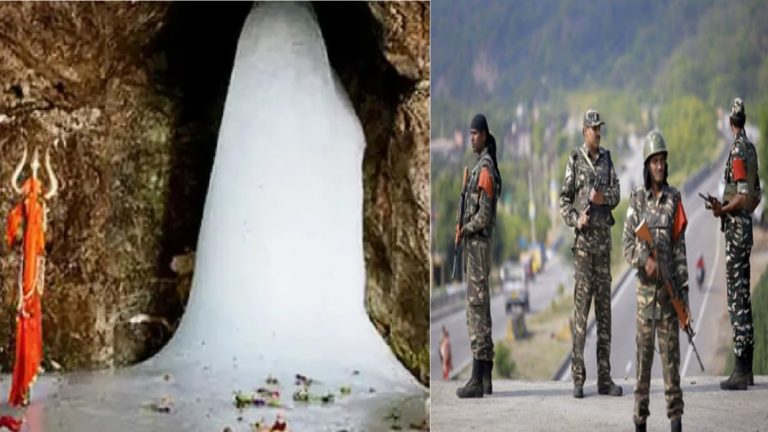
Every year, the Amarnath Yatra takes place under the watch of tens of thousands of armed personnel. Pilgrims wear RFIDs. Convoys are scanned, drones hover, movement is restricted. Why? Because terrorists have repeatedly attacked pilgrims, including in 2017. Even in the Jammu region, Vaishno Devi now operates under heightened alert. Is this what “normal” looks like?

No, it is not. A truly normal Kashmir would not require guns at every bend of a religious pilgrimage. The very fact that the Government of India must make such arrangements proves that the threat is not gone. It is merely sleeping and waiting. I am grateful to the forces that protect Amarnath Yatra and, as a matter of fact, provide extensive security at Vaishno Devi Mandir, but it is not a victory if, to ensure no terror attack happens, hundreds of armed soldiers must become shield for the Yatris.

The fact that the Shrines have to thrive under military cover is a compromise, to say at least. True victory against terrorism will be the day when Yatras require no rifles at all.

Performative tourism cannot replace deep reform

After every attack, including the Pahalgam terrorist attack, voices rise, “We must not be afraid, go to Kashmir, show the terrorists!” I understand the emotion. But it is just a symbol of strength. The strength that will vanish in tears the moment a terrorist with a gun march towards them. Symbolic defiance is not strategy. Sooner everyone understands it, the better.

Visiting Kashmir just to “prove a point” will not dismantle the terror ecosystem. It is, in fact, feeding it. It is feeding the terror network faith that they have their target walking towards them just like a pigeon with eyes shut.

Some metrics have improved. There is no doubt in that. For example, stone pelting incidents have completely vanished from the Valley since the abrogation of Article 370. It is a positive sign. However, terror groups still exist. They are just hiding in the shadows in the form of sleeper cells. You cannot defeat sleeper cells with slogans. They are rooted out by sustained intelligence and a zero-tolerance policy for sympathisers.

However, whenever government and armed forces go ballistic on terrorists, some so-called human rights experts rush to the courts to stop them. They do not rush to the courts against terrorism. They rush to the courts to protect the sympathisers, and that is the problem.

Tourism photos and reels with smiling faces does not mean there is peace. Reform means police reforms, education over radicalisation, economic opportunities, integration without alienation, and yes, accountability for separatists, their apologists, terrorists and their sympathisers.

Kashmir is not a prop in the theatre of nationalism. It is a fragile part of India sustaining only because there are hands to support it. The real patriotism lies in creating a Kashmir that neither needs performative tourism nor needs consistent presence of armed forces.

What real peace can bring for all communities

What would a peaceful Kashmir look like? Close your eyes. Imagine Kashmiri Pandits returning to their homes, welcomed by neighbours. A Dal Lake where locals and tourists laughing without suspicion. Schools where Hindu, Muslim, Sikh children sit together and dreaming the same dream.

The pony-walla, the shopkeeper, the hotelier, every single person who has some sense left wants peace. This is why they came out condemning the terrorist attack. Or did they come because there was looming fear that every one of them would be seen with same suspicion? This sense of proving “I am not with the terrorist” has to go. And it can only go if terrorists, their sympathisers and sleeper cells are weeded out completely and burnt down to ashes.

The Kashmir we must strive for is one where no one needs curfews, raids, or patrols. Where jobs and education replace the gun. Where cinema returns, art thrives, and culture flows free. Kashmir was a paradise. Kashmir is a paradise, but it is wounded. Kashmir wants to become the paradise again. It needs help to heal, for real. But it is only possible when guns become a thing of the past and tourists are just tourists, not testaments.

Post-370 gains are real, but much more needs to be done

The abrogation of Article 370 was necessary. It removed a barrier to integration. It allowed Indian laws to apply in full. Since then, terror incidents have dropped over 70%, investments have risen, IITs and medical colleges have come up. But that does not mean 100% normalcy has been achieved. Sleeper cells still operate. Radical sympathisers still exist, preaching hate in whispers.

These are the real battles now; ideological, psychological, social

Development and deradicalisation has to go hand-in-hand. Not only the government, but the political leaders of the opposition, the locals and every stakeholder has to understand the need of peace in the Valley. You cannot achieve it without monitoring locations where terrorist sympathisers can flourish. The overground terror workers have to be marked, caught, tagged and bagged to send to cells where they can harm no one. The peace-loving citizens must be rewarded. The local leaders who support national unity must be encouraged.

Elections were important, I agree, but there was no hurry to be honest. There is a need of the political voice in the Valley, but it could have waited. Following the Pahalgam terrorist attack, while Chief Minister Omar Abdullah said in the Assembly how he could ask for statehood after such an attack, he completely brushed aside the responsibility from his shoulders. Leadership cannot behave like that.

Even if the security is not his government’s responsibility, deradicalisation is. No matter what he says or believes, as a CM, he must work to ensure there are no radical elements in the Valley. The political voices must understand they are accountable, and their loyalty must remain to the Constitution.

The path ahead

Kashmir is on the path, but make no mistake, we are not at the destination yet. It is not fear. It is a plea for honest healing. Some may say I am scared. I have given in to terror. I reject that. I am not scared. I am angry. I am tired of reading and writing like a robot about the terror attacks. I am demanding more than photo-ops. I am demanding more than just counting the number of tourists. I want everyone to come together and stitch back the soul of Kashmir, not just its economy.

Do I want to visit Kashmir? Yes. Do I want to visit any time soon? No. I will visit Kashmir when I feel peace. Not when I am told to perform it. I want to walk in the gardens, look at Kesar fields and Tulip farms, walk around the markets, buy local and enjoy local food. I want to do all this without looking over my shoulder.

Let us not pressurise our own citizens into tourism as resistance. Instead, let us ensure that when someone says, “Come to Kashmir,” it feels like an invitation, not a dare. Until then, no sir, I am not going to Kashmir as a tourist to prove a point. I will go when no one has to prove anything anymore.

Former Congress MLA’s dramatic arrest, and a ₹500 crore housing scam: What is ED’s PMLA case against  Dharam Singh Chhoker

On the 5th of May, the Enforcement Directorate officials arrested money laundering-accused former Congress MLA Dharam Singh Chhoker from the Shangri-La Hotel in New Delhi as he was trying to escape. Chhoker is the former MLA from Samalkha assembly constituency in Haryana and is accused of defrauding 1500 home buyers and siphoning off ₹500 crore.

Once a prominent figure in Haryana politics and a close aide of Congress stalwart Bhupendra Singh Hooda, Chhoker has been evading the authorities for months. In October 2024, the Punjab and Haryana High Court had directed the Enforcement Directorate to apprehend Dharam Singh Chhoker within 24 hours if he fails to surrender. However, the former Congress MLA could not be arrested. Chhoker’s arrest marks a prolonged pursuit in the high-profile money laundering case that sparked outrage in the state. Despite the corruption allegations, the Congress party gave him a ticket last year, although he lost the election.  

ED acted on a tip-off to arrest Dharam Singh Chhoker

The Enforcement Directorate’s swift action against the former Congress MLA came after the probe agency received a tip-off at around 8:30 PM on 4th May 2025. The intel suggested that Chhoker, who had multiple non-bailable arrest warrants issued by the Special PMLA court and was declared a “proclaimed offender” by a Gurugram court, was at the Shangri La Hotel socialising with friends. Within minutes of the alert, Navaneet Agarwal, the Joint Director of the ED’s Gurugram Zonal Office, arrived at the hotel with his team. As the ED sleuths approached, Dharam Singh Chhoker sensed trouble and attempted to flee towards the hotel’s exit. However, the ED officers restrained him following a brief scuffle.

By around 9:30 PM, Chhoker was in ED’s custody, bringing an end to his months-long evasion of arrest. The accused will be produced before a Gurugram court.

The former Congress MLA and his web of fraud and money laundering

Dharam Singh Chhoker’s troubles began when a money laundering case was registered against him in 2023, wherein he was accused of involvement in alleged irregularities in real estate projects under the Deen Dayal Awas Yojana, a Haryana government housing scheme. Chhoker, his two sons, Vikas and Sikander, as well as their company, Sai Aaina Farms, are accused of defrauding more than 1500 homebuyers and siphoning off over ₹500 crore. Some estimates peg the scam at ₹1500 crore.

The accusations centre on the Chhoker family’s real estate ventures in Gurugram’s Sector 68, 103, and 104, where they allegedly collected over ₹616 crore from around 3,700 investors by promising affordable flats, plots and houses. However, the Chhokers never fulfilled their promises, leaving the buyers stranded.

The Enforcement Directorate stepped into the scene after multiple FIRs were filed by Gurugram Police against Dharam Singh Chhoker, his company, Sai Aaina and its associates. The ED investigation revealed that the Chhokers attached forged documents, including fake bank guarantees, to obtain licenses for development works. These fraudulent tactics allowed the former Congress MLA to amass huge wealth, which was then reportedly diverted for personal gains.

In March this year, the ED officials attached properties worth ₹44.55 crore belonging to the Chhoker family, including three acres of agricultural land, commercial and residential plots in Gurugram, Faridabad, Delhi and Panipat. Last year, assets worth ₹36 crore were seized by the ED.

The absconding period: Dharam Singh Chhoker was playing a game of cat and mouse with the ED

As ED began closing in on Chhoker in 2024, the former Congress MLA began evading the authorities. Despite multiple summons, he deliberately did not show up, prompting a special Prevention of Money Laundering Act (PMLA) court to issue 7 non-bailable arrest warrants against Chhoker and his sons. While in April 2024, Sikander Chhoker was apprehended, Vikas is still at large. Last year, the ex-Congress MLA and his sons were declared “proclaimed offenders”, ordering them to appear by May 19, 2024. However, Dharam Chhoker managed to escape summons and arrest.

Dharam Singh Chhokar first won the Samalkha seat on a Haryana Janhit Congress ticket in 2009, before joining the Congress party. While Chhokar won the 2019 assembly polls, he faced defeat in the 2024 elections, with the money laundering case severely tarnishing Chhokar’s image.

Notably, Dharam Singh Chhoker’s son Sikander was arrested by the ED in March 2024 after he was traced in Uttarakhand’s Haridwar while absconding. He was granted bail eventually; however, as CCTV footage showing him roaming freely outside a hospital in Rohtak surfaced online, it was said that he was faking an illness to avoid jail time. The visuals showed Sikander using a Fortuner SUV, staying in hotels, and even campaigning for Congress for the state assembly elections, flouting judicial protocols. Amidst the outrage, he was sent back to the ED’s custody.

Sikander Singh Chhokar seen in CCTV footage (Image via IndiaToday)

Playing a key role in tightening the noose around the former Congress MLA’s neck, just days ahead of the Haryana Assembly elections, the Punjab and Haryana High Court in October 2024, ordered Chhoker to surrender by 2nd October or face arrest. This order came in response to a plea moved by social activist Virender Singh, who pointed out that despite being a wanted offender, Chhoker was openly campaigning for a re-election in Samalkha while contesting on a Congress ticket. While the Congress party giving a ticket to a scam-tainted leader is not shocking, the court had expressed frustration over the delays in arresting Chhoker. Noting his continued evasion, the court later in October 2024 ordered Dharam Singh Chhoker’s immediate arrest.

While the former Congress MLA managed to evade arrest for months, the Enforcement Directorate has finally nabbed him. Following his arrest, the proceedings in the money laundering case would expedite, giving a fresh hope to all the defrauded homebuyers that they will get justice.

Increase in Gujarat’s coastline from 1600 KM to 2300 KM: Result of advanced measurement methods, use of technology including satellites – Understand why this ‘increase’ was recorded

Gujarat, the western state of India, is known for having the longest coastline in the country. According to recent data, the length of Gujarat’s coastline has increased significantly. Earlier, Gujarat’s coastline was estimated to be about 1,600 kilometers, but now it is recorded as 2,340.62 kilometers. That means an increase of about 700 kilometers.

It is worth mentioning that Gujarat’s coastline was measured at 1,214 kilometers in the year 1970, later it was increased to 1660 kilometers, then to 1945 kilometers. Thus, Gujarat’s coastline has almost doubled to 2,340 kilometers in the last 53 years. Why this significant increase? Has Gujarat’s coastline really increased geographically? Or is this just a result of measurement accuracy? Let’s find out the real answer to these questions.

Increase in the length of the coastline! How?

The increase in the length of Gujarat’s coastline is the result of new methods of accurate measurement and calculation rather than geographical expansion. The Government of India has used new technology and methods to calculate the length of the coastline. In which, technology, including the help of satellites, has been utilised. Lets look at all these methods in detail.

Geographic Information System (GIS): GIS software (such as ArcGIS, QGIS) was used to digitally trace the coastline. This method included fine details (such as the Gulf of Khambhat, the Gulf of Kutch) at a scale of 1:10,000.

Satellite Imagery (Sentinel-2, Landsat-9): High-resolution images from the Sentinel-2 and Landsat-9 satellites were used to delineate the land-water boundary. The boundary between water and land was identified using the Normalized Difference Water Index (NDWI). Sentinel-2 data provides an accuracy of 5-10 meters.

LiDAR (Light Detection and Ranging): LiDAR is a laser-based technology that delineates a precise line based on the topography of the coastline and the mean high water level (Mean High Water). The accuracy of 1-2 meters with it covers even small bends and estuaries.

Fractal Analysis: The fractal dimension (complexity) of the coastline was measured using box-counting and divider methods. This method includes more details at smaller scales, which helped measure the coastline accurately.

Inclusion of Gulfs and Islands: Gujarat’s coastline includes the Gulf of Kutch, the Gulf of Khambhat, and about 144 small islands. The new calculations also take into account the length of the coastlines of all these bodies.

More detailed measurements: In the previous calculations, the coastline was measured using a straight-line approximation. Now, every small bend, groove, and estuary of the coastline has been included.

Due to these advanced methods, the length of Gujarat’s coastline has increased by about 700 kilometers. This change is not limited to Gujarat, the total length of India’s coastline has also increased from 7,517 kilometers to 11,098.81 kilometers.

Features of Gujarat’s coastline

Gujarat’s coastline accounts for about 21% of India’s total coastline, making it the state with the longest coastline in the country. This coastline has various geographical features.

For example, the Gulf of Kutch in north-west Gujarat contributes significantly to the length of the coastline. Its numerous small islands and their complex coastlines contribute a lot to the length. The Gulf of Khambhat in south-east Gujarat has also contributed significantly to the length of the coastline.

In addition, there are many small and large islands near the coast of Gujarat, such as Diu, Bet Dwarka, and other small islands. The length of the coastlines of these islands has also been included in the count. Apart from this, rivers of Gujarat such as Narmada, Tapi, and Sabarmati meet the Arab Sea, which form estuaries. The length of these estuaries has also been added to the count of the coastline.

These variations make Gujarat’s coastline extremely complex, and new technology has made it possible to measure this complexity more precisely.

Why did the measurement change

Coastline Paradox
The process of measuring the length of a coastline is linked to a mathematical problem called the ‘Coastline Paradox’. According to this principle, the length of a coastline depends on the scale at which you measure it. If you use a 1:100,000 scale, the coastline appears smooth and the length is reduced.

But if you use a 1:1,000 scale, then every little curve, notch, and detail of the bay is included, which increases the length significantly. In the case of Gujarat, the new calculations used a much smaller scale, resulting in an increase in the length of the coastline.

Earlier, maps, field surveys and manual calculations were used to measure the length of the coastline. These methods had limitations in accuracy. Now, satellite imagery, drone technology and GIS software are used, which provide very precise and detailed measurements.

Does this mean that Gujarat’s land has shrunk

No, this increase in the length of the coastline is not the result of geographical land subsidence or coastal expansion. This is only the result of the accuracy of the calculations. Because here the question is about the increase in coastline. Here the coastline means the part where the sea and the land meet. It is a matter of common sense that the coastline increases only if both of them increase. But here again we will draw your attention to the same thing that no length has increased geographically, only the modern method of measuring length has brought these new distance figures to light.

What is the importance of accurate measurement of Coastline

This increase in the length of Gujarat’s coastline is not just a statistical change; it has many practical and policy implications. Gujarat’s coastline is important for ports, fisheries, and tourism. Accurate measurements will help in the planning and development of these activities. Knowing the exact length of the coastline will allow better plans to be made to deal with erosion, flooding, and the effects of climate change.

Accurate data for coastal development, protection, and management will help the government formulate more effective policies. Accurate measurements are important for geographical, environmental, and climatic studies of the coastline. It is noteworthy that the Government of India has also broadened the definition of coastline in the new census. For example, the length of estuaries, inlets, and tidal zones was also included, which was not considered much previously.

Increase in the coastline of other states as well

This increase is not limited to Gujarat alone, but there has been a significant increase in the length of the coastline of the entire India. According to the data, the total coastline of India has increased from 7,517 km to 11,098.81 km. This increase is also a result of new measurement methods, satellite imagery, and more accurate calculations, which include the complexities of the coastlines of all the coastal states and union territories of the country.

According to the data presented in Rajya Sabha, the coastline of Andhra Pradesh has increased from 973.7 km to 1,779.91 km, that of Tamil Nadu from 1,076 km to 1,346.16 km, that of Maharashtra from 652.6 km to 1,213.08 km, and that of Odisha from 480 km to 671.12 km. Among the Union Territories, the coastline of Andaman and Nicobar Islands has increased from 1,962 km to 2,316.30 km. This increase is also due to the use of accurate measurements and new technology.

All this just means that Gujarat’s coastline has not increased geographically, but its exact length is now recorded more accurately.

The original Gujarati report explaining this can be read here.

Former NSUI President-led-trust files petition in SC against Waqf Amendment Act, media passes it off as ‘Hindu organisation’ against the new law

On Monday (5th May), several media reports claimed that an alleged ‘Hindu organisation’ named Sree Narayana Manava Dharmam Trust filed a petition in the Supreme Court challenging the newly enacted Waqf Amendment Act of 2025.

In its petition, the so-called Hindu organisation claimed, “The ‘Sree Narayana Manava Dharmam Trust’ cannot be an idle spectator to the devastating impact of the impugned Act taken as a whole on the Muslim community of India and to social justice in our country.

The Trust alleged that the new legislation, enacted by the Union Parliament, somehow abolishes the existence of Waqf in India. It further claimed that the Waqf Amendment Act will leave Muslims in economic and financial ruin.

Screengrab of the news reports

The Impugned Act thus threatens the very existence of the Muslim community in India which depends for its survival on the Waqf mechanism which has been for centuries, and continues to be, the most important source of economic and financial resources essential for the practice and survival of Islam in India. As the Impugned Act will liquidate the economic and financial foundations of the Muslim community,” the Trust alleged in its petition.

The story of a Kerala-based ‘Hindu organisation’, opposing the Waqf Amendment Act and challenging it in the Supreme Court, was covered by the likes of Bar and Bench, Deccan Herald, Mint and Guwahati Plus.

The sensational story was also published on the website ‘India Legal.’

Screengrab of the news report by India Legal

Other publications such as Vartha Bharati and Gujarat Samachar English also lent credence to the so-called ‘Hindu organisation’ challenging the new Waqf law.

Screengrab of the news reports

All these media reports failed to mention one key and important detail, i.e. the President of the Trust is G Mohan Gopal.

The Kerala-based ‘Sree Narayana Manava Dharmam Trust’ came into existence only in 2023. And since then, it has been involved in activism, primarily against Hindu causes.

For instance, the Gopal-led Trust had opposed the lighting of lamps on 22nd January 2024, i.e. the day of the inauguration of the majestic Ram Mandir in Ayodhya. It lamented that a temple was built in place of a disputed structure.

The President of the Trust had previously opposed reservations for the Economically Weaker Section in the General category. G Mohan Gopal went on to call it a ‘cancer’ in the Constitution.

Screengrab of the 2016 tweet by NSUI

All his activism boils down to the fact that G Mohan Gopal was a member of the NSUI (National Students’ Union of India) – the student wing of the Congress party.

He was not just a member but the 2nd President of NSUI after its foundation in 1971. Coincidentally, his opposition to governmental policies aligns with that of the stance of the Congress party.

The grand old party was opposed to EWS, the construction of the Ram Mandir and the Waqf Amendment Act. Miraculously, G Mohan Gopal (the man heading the Sree Narayana Manava Dharmam Trust) is also opposed to the same policies.

He had previously made false insinuations about the Judiciary helping the ‘Sangh Parivar’ establish a Hindu Rashtra in India

It is unethical to pass off a Kerala-based organisation, headed by a politically motivated individual with ties to the Congress party, as an isolated ‘Hindu outfit’ opposing the newly enacted Waqf law. The disclosure of G Mohan Gopal’s political ties must have been made in the media reports.

Anees Khan arrested by Delhi Police after a cross-state search for kidnapping a 15-year-old girl, pregnant minor recovered from Madhya Pradesh

0

Delhi Police have successfully recovered a 15-year-old minor girl, who had been kidnapped and was found to be two months pregnant, from Madhya Pradesh.

The accused, identified as Anees Khan, was arrested following an intense investigation that included tracking leads through social media platforms like Instagram.

The ordeal began on 18th February, when a complaint was lodged at PS Geeta Colony regarding the kidnapping and disappearance of a 15-year-old girl. Delhi Police immediately registered a case under Section 137(2) BNS and began a search for the missing minor. Despite extensive efforts by the local police team, there was no initial breakthrough in locating the girl.

As the investigation progressed, Delhi Police officers spoke to the victim’s family and friends, while also leveraging secret sources for information. During their inquiry, the team discovered that the missing girl had been in contact with one Anees Khan, a local patty vendor. Family members of Khan were also contacted, and it was revealed that he had also gone missing on the same day as the girl.

Further probing revealed that Anees Khan, a married man with one child, had fled with the 15-year-old girl while his pregnant wife, was left behind. Despite conducting a raid in the village of Allahpur, District Joura, Morena, Madhya Pradesh, the police could not locate either the minor or the accused. Khan’s mobile phone, which had been switched off since the day of the disappearance, remained untraceable.

In March 2025, new information emerged from the family, leading the police to three Instagram accounts linked to the case. After careful analysis, one account was found to have been created on February 23, 2025, using a mobile number that had been switched off. Through further digital investigation, it was revealed that this mobile number was connected to a mobile hotspot linked to the name Ramlakhan Singh from Morena, MP. Singh had unknowingly shared his hotspot with an unidentified individual while traveling from MP to Gujarat. The police also discovered that another mobile number associated with the case had been used to access the Instagram account from Gwalior, MP.

With this lead, Delhi Police intensified their search and on May 3, 2025, a raid was conducted in Malghada Chowk, PS Hazari Bagh, Gwalior. The missing girl was safely recovered, and the accused, Anees Khan, was apprehended.

During questioning, it was found that the girl was two months pregnant, and the accused had kept her isolated, not allowing her to communicate with anyone. The minor girl’s mobile phone had also been deprived of a SIM card after she left her home. The girl was subsequently reunited with her family after all necessary legal formalities were completed.

Delhi Police’s swift action and diligent investigation highlight the crucial role of technology and teamwork in solving complex cases and ensuring the safe recovery of victims.

(This news report is published from a syndicated feed. Except for the headline, the content has not been written or edited by OpIndia staff)