Home Blog Page 4388

PTI spreads fake news, falsely claims 25 patients died at Sir Ganga Ram Hospital in Delhi due to low oxygen pressure

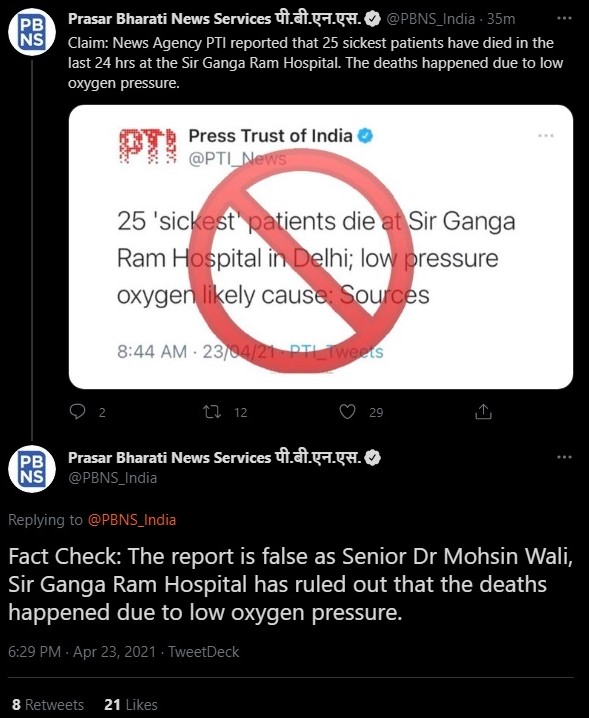
The Press Trust of India (PTI) reported on Friday that 25 people passed away at the Sir Ganga Ram Hospital in Delhi due to low pressure oxygen. In a tweet, PTI said that sources had told them that the cause of death of the 25 ‘sickest’ patient was low pressure oxygen. That claim has turned out to be false.

Prasar Bharti calls out fake news spread by PTI

Prasar Bharati said that a senior doctor at the hospital, Dr. Mohsin Wali, has clarified that the deaths were not due to low oxygen pressure. The Chairman at the hospital also clarified that the reports were false and they did not die due to lack of oxygen.

Meanwhile, the Indian Air Force has already started airlifting oxygen containers, cylinders, essential medicine, equipment and medical personnel for management of the pandemic. With rising number of Covid-19 cases in the country, acute oxygen shortage has been felt across numerous hospitals in the country.

Authorities are working towards ensuring the oxygen supply to hospitals remains hassle free. Also, Zydus Cadila, an Indian multinational pharmaceutical behemoth headquartered in Ahmedabad, Gujarat, has been granted emergency approval by the Drugs General Controller of India (DGCI) for its Pegylated Interferon alpha-2b, ‘Virafin’ in treating moderate COVID-19 infection in adults, which is expected to reduce the oxygen demand.

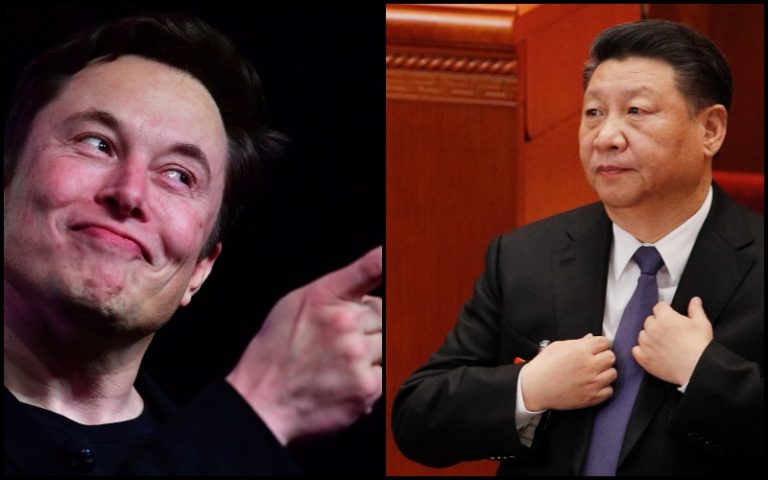
Paranoid China wants to tame Elon Musk, will it succeed? All you need to know about the brewing war between China and Tesla

For a week now, Elon Musk headed Tesla has been facing a pressure campaign in China with Chinese Communist state-backed media and regulators going after the electric automobile company for allegedly disregarding a Chinese Tesla customer’s complaints about her car. The issue blew into the mainstream after the allegedly aggrieved customer protested against Tesla at the Shanghai Auto Show on Monday.

China is a huge potential market for Tesla and any disruption in tapping that market could result in huge financial consequences for Tesla and its investors. Whilst the institutions in China are apparently attacking Elon on the pretext of car complaints, some critics have suggested that this Chinese pressure campaign on Tesla is because of the inherent paranoia and mistrust of CCP elites against foreign business, especially Western business.

On Monday, a woman who claimed to be an aggrieved Tesla customer, stood on top of a Tesla car at the Shanghai Auto Show wearing a T-shirt which read “brakes don’t work” in Chinese. She was protesting Tesla for the alleged brake failure of her Tesla car. This issue is somewhat viral in Chinese social media, with many Chinese social media users claiming to have brake issues with their Tesla cars.

A video of the incident at the Auto show event was released by Chinese state media The Global Times and went viral.

The woman was identified the very next day by Shanghai police and sentenced to 5-day detention for disturbing public order. After the incident, Tesla alleged that the woman got into an accident in February because of “speeding violations”. Tesla also revealed that they had been in negotiations with the woman for two months, alleging that the woman did not allow for a third-party investigation and instead wanted a refund for her car.

Tesla under attack from State Media and Communist Chinese State

In an interview with Chinese news publication Caijing, Tesla’s vice-president for China, Tao Lin claimed that the woman hoped for a high level of compensation which Tesla has no reason to give to her.

In a post on Chinese social media platform Weibo, Tesla said that it would not compromise with “unreasonable demands”.

The Chinese state media and the government reprimanded Tesla in tandem, with the State media publishing a string of critical editorials about Tesla and the central disciplinary commission of the Chinese government issuing a warning to Tesla.

“The arrogant and overbearing stance the company exhibited in front of the public is repugnant and unacceptable, which could inflict serious damage on its reputation and customer base in the Chinese market.”, an editorial in the Chinese-backed The Global Times reads.

According to American news broadcaster CNBC’s translation, another Chinese state media article titled “Three lessons Tesla ought to learn”, cautioned the U.S. electric automobile company to not be “arrogant” and “respect” the Chinese consumer market.

China has always been skeptical of foreign ventures opening up in China, being infamous for engaging in censorship and banning foreign businesses from opening up in China. In 2009-10, China banned three of the biggest websites on the planet, Google, YouTube, and Facebook, arguably in order to impede the free flow of uncensored information to the Chinese people. This is a classical example of the paranoia which is at the center of the Chinese Communist regime.

In two Weibo posts on Monday and Tuesday, Tesla apologized to the woman customer for not solving her car problems in a time-bound manner. Tesla also said that it is willing to co-operate with the authorities. The company has further stated that it will carry out “self-examination and self-correction” to “rectify” problems with its customer service process.

On Thursday, Tesla said that it has handed over the raw data vehicle 30 minutes before the crash to the aggrieved woman customer. The company is also in dialogue with two Chinese market regulators.

The rise of Tesla in China

Tesla has focused heavily on China in the past couple of years, with Elon Musk himself attending the groundbreaking ceremony of the first non-U.S. Tesla factory in Shanghai, China in 2019. In 2020, Tesla started delivering the Model 3 vehicles manufactured at the Shanghai factory to Chinese customers.

Tesla’s sales in China more than doubled in 2020, with Tesla’s Model 3 vehicle becoming the best-selling electric car in China.

Tesla’s CEO Elon Musk met with Chinese Premier Li Keqiang in 2019. But with all this success, also comes scrutiny, probing, and investigation.

Rising scrutiny by China of Tesla and Elon Musk

Negative press about Tesla has increased in China over the past few months. In January of this year, a Tesla Model 3 reportedly exploded in a Shanghai parking lot. A Chinese state media article reported that there have been at least 10 instances in 2020 of Tesla drivers losing control of their car in China.

China has also reportedly restricted the use of Tesla cars for official purposes among state and military personnel over concerns regarding the vehicle’s sensors which can record images of its surrounding areas. The Chinese military has banned the entrance of any Tesla car in military complexes, citing security concerns over vehicle cameras. This is another manifestation of the Communist regime paranoia, which must believe that Musk is some sort of Western intelligence asset using his Tesla cars to spy on China, instead of a bonafide businessman looking for mutual benefit.

In response to the spying allegations, Musk correctly said that his company would be shut down if it used Tesla cars to spy on people.

“There’s a very strong incentive for us to be very confidential with any information,” Musk told a prominent Chinese forum during a virtual discussion. “If Tesla used cars to spy in China or anywhere, we will get shut down.”

Back in February, China’s market regulator, the State Administration for Market Regulation, met with Tesla’s local subsidiaries over increasing consumer complaints of vehicle problems. On Wednesday, the same regulator issued a statement saying it places high importance on the Shanghai auto show incident. The authority also said that it has instructed local regulators to protect consumer interests.

Elon Musk has sought to fend off all of this scrutiny. In March, he gave an interview to China’s state broadcaster CCTV saying that the future of China is “going to be great” and that China will be Tesla’s “biggest market.”

However, it is difficult to tell if Musk’s charm offensive will bear fruit because the Chinese problem with Tesla has more to do with the Communist regime’s boundless paranoia and inherent mistrust of foreign business, rather than anything which Musk can actually solve. Chinese state apparatchik and Editor-in-Chief of the CCP propaganda Global Times, Hu Xijin perfectly explains that unless Musk ingratiates himself with the Chinese communist regime and its laws, China will always view him with an eye of suspicion.

“Our ultimate goal is to make foreign companies adapt to the Chinese market, seriously abide by Chinese laws and regulations, respect Chinese culture and consumers, and become a positive element in the Chinese economy. Whether it is a lesson or help, it all points to the same goal.” explains the Editor-in-Chief of CCP propaganda tabloid Global Times.


West Bengal: Another BJP worker found hanging from a tree in the poll-bound constituency of Bardhaman, party alleges murder

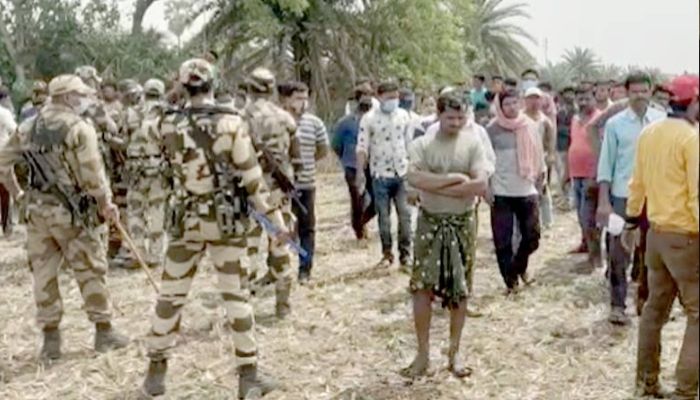
On Friday (April 23), the body of a BJP worker was found hanging from a tree in Alinagar village in Jamuria in Paschim Bardhaman district of West Bengal. The development comes ahead of the 7th phase of Vidhan Sabha polls in the State

As per reports, the victim has been identified as one Kiranjan Ghosh. According to his family members, Ghosh did not return home on Thursday night. It was only on Friday evening that his body was discovered hanging from a tree at a deserted place, near his house. Soon, locals gathered at the site and informed the police. On receiving information, Deputy Commissioner Abhishek Gupta reached the crime scene. A large team of police personnel from Pandabeshwar police station and central security forces has been deployed in the area.

It must be mentioned that Kiran Ghosh was renowned in his area as an active BJP worker. The BJP has alleged that it was a pre-planned murder and that the victim’s body had been hung after the victim was killed. Tapash Roy, the BJP candidate from the Jamuria Vidhan Sabha constituency, has demanded a complete investigation into the matter within 24 hours. He has also demanded that the culprits must be brought to justice.

The victim’s family has not yet registered a case of murder with the police. Nevertheless, the political atmosphere in the area has heated up, following Ghosh’s death. It must be mentioned that voting for the 7th phase of polls will take place in the Jamuria Vidhan Sabha constituency on April 26.

Dead body of BJP worker recovered after he went missing

Earlier on April 18, the body of a BJP worker was recovered from outside his residence in Mandal Para in Roaowari village in the Nadia district of West Bengal. The area falls under the Chakdaha Vidhan Sabha constituency, which went to polls during the 5th phase of Vidhan Sabha elections in the State.

As per reports, the victim was identified as one Dilip Kirtaniya. He was an active BJP worker, who was seen managing booth-level party work on Saturday. Reportedly, Kirtaniya was threatened during the day by some unidentified miscreants. Later, at around 11 pm, he was summoned by an unidentified individual and he left his home. He did not return home the whole night.

The BJP worker’s body was recovered on April 18 morning from the bushes in his home’s backyard. Eyewitnesses recounted that Dilip Kirtaniya was bleeding from his nose, ears and mouth. On seeing his condition, he was immediately rushed to the Chakdaha State General Hospital. The BJP worker was declared dead on arrival.

Maharashtra: Former FDA commissioner says he had warned state govt, proposed road map to handle Covid surge, but was ignored

0

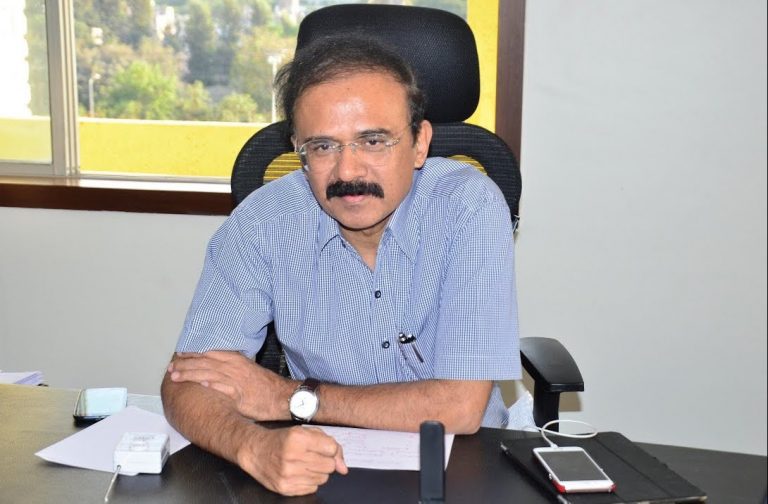
Six months before the second wave of the coronavirus outbreak hit Maharashtra, veteran bureaucrat Mahesh Zagade had reportedly warned the state government of a possible resurgence of the COVID-19 pandemic and had suggested measures to tackle it. But the government turned a blind eye to his suggestions, resulting in the crisis that is currently grappling the state.

Zagade, in his interview with the Times Of India, said that he had written a letter to chief minister Uddhav Thackeray and deputy chief minister Ajit Pawar detailing a comprehensive action plan to combat a resurgent coronavirus outbreak. He now believes that his pleas either fell on deaf ears or the bureaucracy held his letter back.

Zagade stated that he is keen to share his expertise even now without charging a dime for it, but there has been no response from the government.

“Six months ago, I had a long meeting with the Pune mayor, followed by a letter to the CM and other authorities. If we take stringent measures, it should not be difficult to win the battle against Covid-19,” Zagade said.

Had proposed a roadmap, but got no response: Zagade

In a two-page letter addressed to the CM and Deputy CM, Zagade had laid out an elaborate roadmap to combat the coronavirus outbreak. Pointing out the reshuffling exercise by the CM last year when incompetent bureaucrats were shunted out for their inept handling of the COVID-19 outbreak, Zagade said that the whole exercise now seems futile since the state is in the throes of the second wave of the pandemic. He pinned the blame of the recent spurt in the cases on local bodies not exercising their powers.

The veteran bureaucrat had earlier worked as Pune municipal commissioner during which he played an instrumental role in the fight against swine flu. He had also served as the Food and Drug Administration commissioner from 2011 to 2014, during which he had firmly insisted on the rigorous implementation of the Drugs and Cosmetics Act.

The former bureaucrat stated that last year, the state government had shifted a large number of officers for inefficient handling of the first wave of the pandemic. “Now, a year later, the cases have increased manifold. It clearly indicates the entire exercise of shuffling government officers was a futile exercise”, Zagade added. He asserted that the local bodies are not utilising their power.

Maharashtra is among the worst-hit state by the scourge of the second wave of the coronavirus outbreak. More than 50,000 cases have been reported in the state daily in the last two week. Over 67,000 new cases were registered from the state on Thursday. The state is also reportedly facing acute shortages of medicinal oxygen supplies as well as the scarcity of essential and life-saving drugs like Remdesivir.

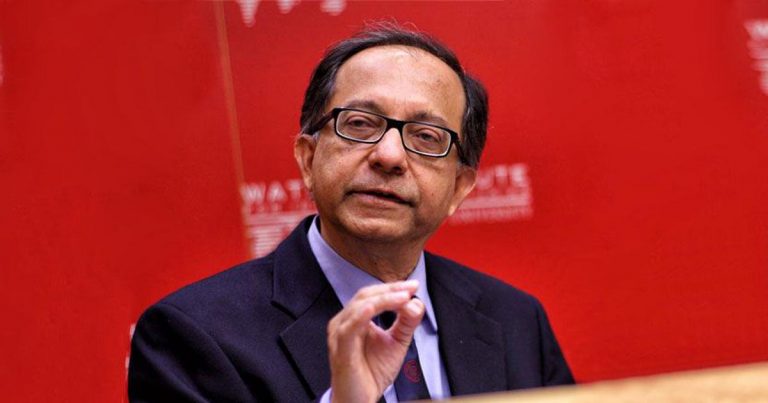
‘Economist’ Kaushik Basu attempts to spread panic, claims only 1.5% of the population vaccinated: Here is how he is wrong

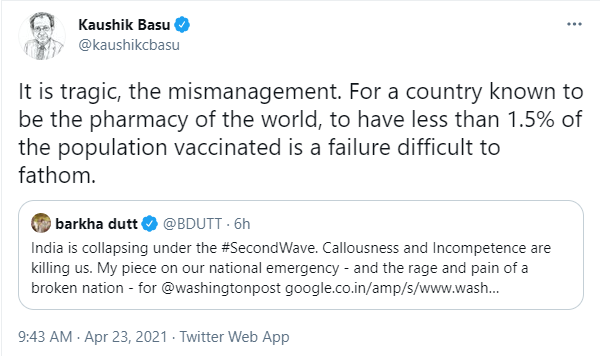
On Friday (April 23), Cornell University economics professor and Congress sympathizer Kaushik Basu sparked a controversy on social media after claiming that India has vaccinated only 1.5% of the population.

In a tweet, Basu wrote, “It is tragic, the mismanagement. For a country known to be the pharmacy of the world, to have less than 1.5% of the population vaccinated is a failure difficult to fathom.” He was responding to a propaganda piece, written by ‘journalist’ Barkha Dutt, and published in the Washington Post.

Screengrab of the tweey by Kaushik Basu

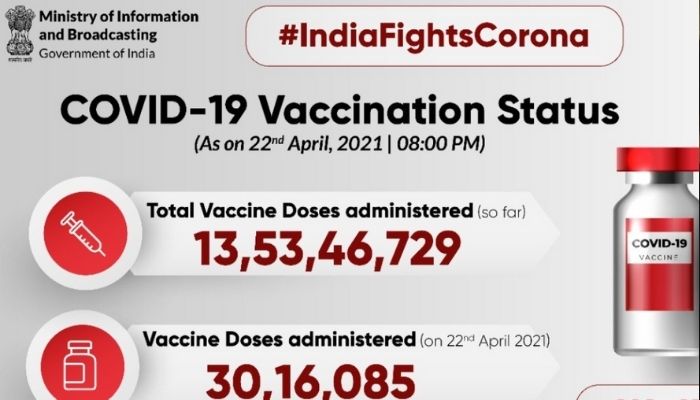
His claims run counter to the actual number of people vaccinated against the Wuhan Coronavirus. As of 8 pm on April 22, a cumulative total of 13,53,46,729 (~135 million) vaccine doses have been administered. On Thursday alone, over 30,16,085 (~3 million) doses have been administered.

Data via I & B Ministry as of April 22, 2021 Screengrab of the tweet by I&B Ministry

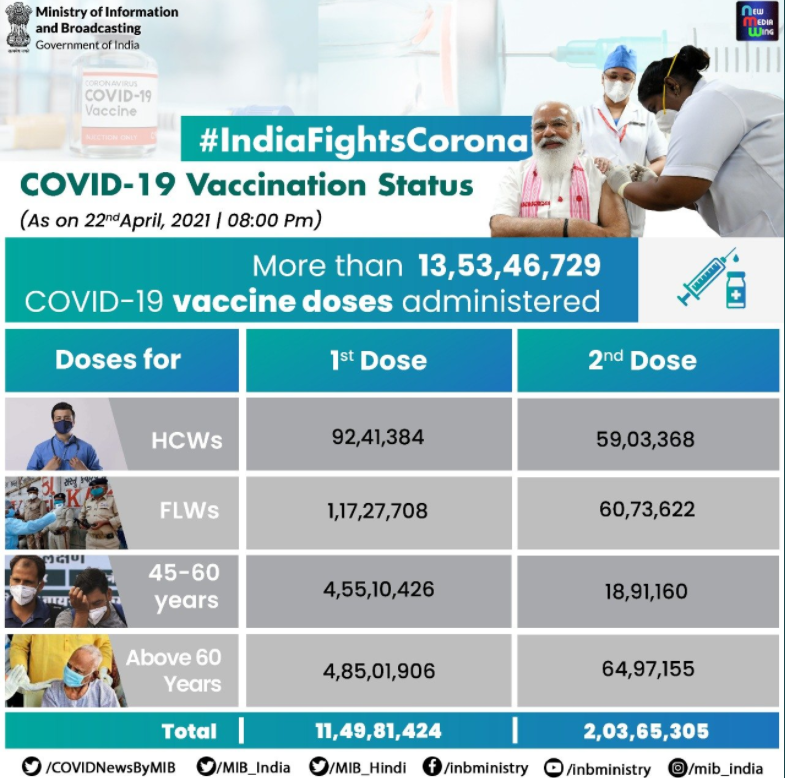
It must be mentioned that an individual needs to take two doses of the vaccine to develop complete immunity against the Wuhan Coronavirus. Only then an individual can be considered as ‘fully vaccinated’. As per the Ministry of Information and Broadcasting, a total of 11,49,81,424 (~114 million) individuals received the first dose while about 2,03,65,305 (~20 million) of them took the 2nd dose (as of April 22). As such, the government has inoculated a total of ~114 million individuals while about ~20 million of them have been fully vaccinated.

Data via I & B Ministry as of April 22, 2021

Given that India’s population roughly stands at 136 crore, it implies that 8.45% (114 million) of the population has been vaccinated. Similarly, around 1.49% (20 million) of the population has been ‘fully vaccinated’. While Kaushik Basu’s tweet, referring to 1.5% of the population, might seem closer to the ‘fully vaccinated’ individuals, it must be mentioned that his tweet makes no such reference.

His choice of words, particularly, ‘to have less than 1.5% of the population vaccinated’ makes no clear indication. It, however, suggests that the vaccination programme has been so slow that the government could only vaccinate just 1.5% of the population. This is however not the case. Given that the vaccination programme kickstarted in India on January 16, it has only been 3 months since the first phase. As India conducted the inoculation programme in several stages, most of the individuals are still not eligible for the 2nd dose.

It must be mentioned that there must be a gap of 4-6 weeks (referring to 1-1.5 months) between both doses. Since vaccination is being undertaken in distinct phases, a comparison must therefore be made on a phase-by-phase basis. Given that most individuals have not yet completed the mandatory lag period of 4-6 weeks, it is therefore not recommended for such individuals to take the 2nd dose. Although Kaushik Basu desperately tried to insinuate that the immunisation programme has been slow, nothing can be further from the truth.

It is also notable that while both the vaccines used in India needs two doses, they provide fair level of protection after the first dose also. Therefore, the people who have received the first dose only are not ‘unvaccinated’, as Kaushik Basu seems to be claiming.

Congress leader Chidambaram wants state governments to unionise to haggle over vaccine costs: Here is why that is a bizarre idea

P. Chidambaram, former Union Minister and senior Congress leader, has managed to come up with another spectacularly braindead idea that does not make any sense. It is quite probable that even he is keenly aware that his suggestion will cause great harm if implemented.

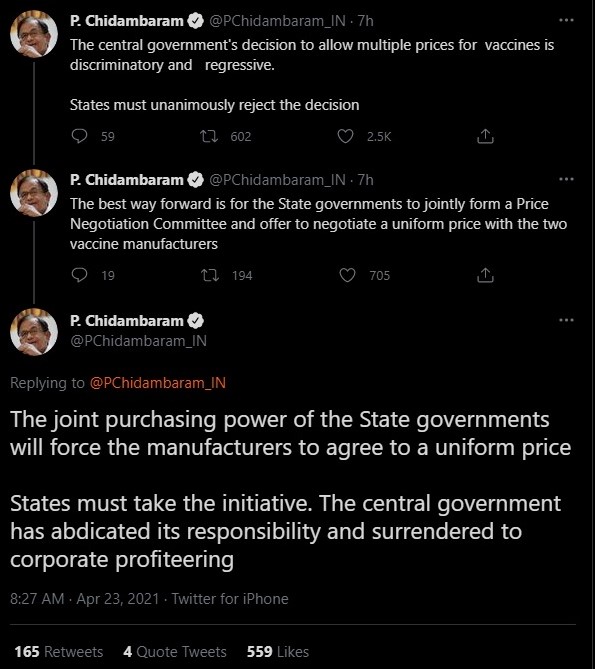
Chidambaram suggested that states should come together to reject the prices for the Covid-19 vaccines that have been set. He suggested that a price negotiation committee ought to be formed jointly by the states and a uniform price could be negotiated. He is basically asking state governments to unionise to haggle over vaccine prices.

P Chidambaram floats grand dumb idea
Chidambaram’s grand dumb idea

Chidambaram said further, “The joint purchasing power of the State governments will force the manufacturers to agree to a uniform price States must take the initiative. The central government has abdicated its responsibility and surrendered to corporate profiteering.”

The whole propaganda by opposition parties began after the Serum Institute of India announced the price of its Covid-19 vaccine for state governments and private hospitals. For the former, the price has been pegged at Rs. 400 per dose while for the latter, it is Rs 600.

There are multiple obvious flaws with the argument. Firstly, there is a uniform price for all the states. It is with the central government that the states have a difference in the cost of Covid-19 vaccines and that too, only for a limited number of doses.

The opposition parties and entertainers accused the SII of profiteering from the crisis. In reality, the cost of Covid-19 vaccines in India is extremely low and it is much higher in other countries. For instance, the cost of Moderna and Pfizer vaccines range from Rs. 2000 to Rs. 3000 per dose.

Currently, the SII is selling the vaccines at Rs. 150 per dose to the central government, incurring a loss in the process. The cost has been set to Rs. 150 for the first 110 million doses and following that, the centre will be charged Rs. 400 as well.

Even under such circumstances, opposition parties are creating a ruckus over the price. It is bizarre to expect a pharmaceutical company to continue to supply vaccines at a price where they are incurring losses. The business is unsustainable if this continues. They also have to pay royalty to AstraZeneca as well.

Nevertheless, Chidambaram first invents a false bogey of a price differential between the centre and states and then recommends an even more bizarre idea. Firstly, SII cannot supply vaccines at an even cheaper rate and continue to remain viable commercially.

Secondly, it does not make sense politically for states to embark upon such a misadventure. Forming a committee to negotiate prices means an inevitable delay in the procurement of vaccine doses. A delay in vaccine procurement will directly translate into jeopardising the health of their citizens. Consequently, such a delay will reflect extremely poorly on the states for haggling over prices that are already extremely low.

Furthermore, states where BJP is in power will not be on board with such theatrics. States can continue to provides vaccines to its citizens for free, as many states have already announced, but for that, they will have to procure the vaccines at the designated prices.

The BJP is currently in power in 17 states or Union Territories, that is, states where they are either the main ruling party or are in a ruling alliance. That leaves only 14 others where opposition parties are still in control. Even among them, it is unlikely that the YSRCP government in Andhra Pradesh, the KCR Government in Telangana or the Naveen Patnaik government in Odisha will go along with such harebrained ideas.

Then there is President’s Rule currently imposed in Jammu and Kashmir and Puducherry. That leaves only 9 states and Union Territories where the the governments may be willing to come together to form the price negotiation committee as suggested by Chidambaram. Even Delhi is unlikely to get on board with the proposal considering the pressure Arvind Kejriwal is in already.

Will they risk losing massive public support haggling over Covid-19 prices? It appears extremely unlikely. The failure by the states to procure vaccines for their citizens will reflect directly on the government’s performance in states. Any delay will build angst towards the government despite their posturing on social media.

Thus, while Chidambaram maintains a pretense of grave seriousness while dishing out the suggestion, it is unlikely to receive support even from states where his party is in power. He also appears to have forgotten that procuring vaccines is not like buying groceries from the market where people feel entitled to demand chilies worth Rs. 5 for every purchase worth Rs. 100.

After chancellor Angela Merkel’s snide remarks on India, German Embassy quickly moves to make amends

In stark contrast to Chancellor Angela Merkel’s unflattering remarks about India, the German Embassy in the country on Friday posted a series of tweets expressing sympathy and concern for the ongoing COVID-19 crisis and promising cooperation to fight the pandemic.

“German Embassy in India and the German government are following the Covid 19 pandemic in India with deep sympathy and concern. India is our strategic partner, and we share a strong conviction that the challenges of this global crisis can only be met through international cooperation,” the tweet by the German Embassy in India said.

Tweet by German Embassy

It also highlighted the collaboration between German company Linde and Tata to secure 24 oxygen transport tanks that will soon be airlifted to India to boost transport capacity from production sites to Covid19 hotspots.

Tweets by German embassy

Furthermore, the German mission stated that Germany is joining hands with the UNICEF to set up cold chains for the country’s vaccination programme. “Germany is partnering with UNICEF to set up cooling chains for the vax prog under GerIndi Corona Emergency Prog (€ 30 mn). Robert-Koch-Institut and the Min of Health are studying the possibility of the co-op in establishing Biosafety Level 4 Laboratories in India,” the tweet said.

German Chancellor Angela Merkel laments ‘they allowed India to become the pharmacy of the world’

The charm-offensive by the German Embassy in India came after Chancellor Angela Merkel lamented that they “allowed” India to become a major pharmaceutical producer in the world, while the industry has declined in Europe. She was worried that now EU countries will not receive enough medicines from India as there is a huge surge in Covid-19 cases in the country.

Angela Merkel said, “The truth is, we haven’t treated our pharmaceutical industry so well for many years…I am glad that we still have pharmaceutical production in Belgium, Holland, Germany.” Highlighting the issue of vaccine shortage, she said, “We now have a situation with India where, in connection with the emergency situation of the pandemic, we are worried whether the pharmaceutical products will still come to us.”

Furthermore, Merkel cautioned, “Of course, we have only allowed India to become such a large pharmaceutical producer in the first place, also from the European side, in the expectation that this should then also be complied with. If that is not the case now, we will have to rethink.”

Merkel’s comments have drawn sharp comments from geopolitics commentators and experts from around the world. Many have opined tha Merkel’s statement about India and its pharmaceuticals were tone deaf and patronising.

Mamata Banerjee skips third Covid-19 meeting called by PM, claims ‘not invited’ after sending chief secretary to represent her

West Bengal CM Mamata Banerjee skipped yet another meeting of the Chief Ministers called by the Prime Minister to review the alarming Coronavirus situation in the country. The PM held a conference of the CMs via video conference to discuss various aspects related to the current situation, especially the shortage of oxygen that several states are facing.

According to reports, West Bengal Chief Secretary Alapan Bandyopadhyay represented the state at the review meeting in place of the CM. With this, she maintained her record of not attending a single meeting on Covid-19 in the last three months.

However, while Mamata Banerjee didn’t attend the meeting and she was represented by the Chief Secretary, she claimed that she was not invited to the high-level COVID-19 review meeting chaired by PM Modi today, saying that if she was, she would’ve certainly gone. The 2-term CM also alleged that the Central government was diverting the oxygen supply chain from Bengal to Uttar Pradesh. Her comments were met with backlash, with people trying to correct the record.

In a press conference in Durgapur during her election campaigning, Mamata Banerjee said, ‘the PM never told us about planning for oxygen in any meeting. I have heard that even today there is a meeting, but we have not been invited. If we were invited I would have definitely gone. But I heard that only 10 states with high cases have been invited’.

The question arises, if West Bengal was not invited to the meeting, how the state’s chief secretary attended the meeting. While it is true that PM had invited CMs of 10 worst affected states, the fact is that West Bengal was part of the list. Delhi CM Arvind Kejriwal, Maharashtra CM Uddhav Thackeray, Rajasthan CM Ashok Gehlot, Karnataka CM BS Yediyurappa, Kerala CM Pinarayi Vijayan, Madhyra Pradesh CM Shivraj Singh Chouhan, Gujarat CM Vijay Rupani and Chhattisgarh CM Bhupesh Baghel attended the meeting.

Continuing with her rants against central forces deployed in the state during the elections, Mamata Banerjee said that 2 lakh central forces brought into the state from ‘outside’, along with around 1 lakh BJP workers from other states are spreading Covid-19 in the state.

‘Mamata’s comments captured the attention of BJP office holder Amit Malviya, with Malviya remarking, “Everyone knows Mamata Banerjee’s poor commitment to manage Covid pandemic in Bengal. She hasn’t attended a single PM-CM meeting called in recent past to work a common plan citing her campaign schedule. Even though she has failed WB, today’s meeting was only for high burden States.”

Over the course of the past three months, Mamata Banerjee has not attended even a single meeting between Chief Ministers and the Prime Minister. She had skipped the meeting held earlier this month also, and had kept herself busy in campaigning for the elections instead. Now, she has skipped another high-level meeting today, missing all the three high-level COVID-19 review meetings in the last three months.

Mamata has cited her electoral campaigning as the reason for skipping previous meetings, with Bengal Chief Secretary Alapan Bandyopadhyay attending in her stead. Therefore, it is understandable that people will take Mamata’s comments today about not being invited with a huge grain of salt.

While the ‘intelligentsia’ has been extremely critical of political rallies by the BJP, it has chosen to give other political parties a free pass. Thus, while Narendra Modi has canceled his rallies in West Bengal in light of the surging Covid-19 cases in the state, Banerjee appears to be at perfect ease to continue her campaign unabated.

Zydus gets emergency approval for the antiviral drug, may reduce oxygen demand among COVID-19 patients: Details

Zydus Cadila, an Indian multinational pharmaceutical behemoth headquartered in Ahmedabad, Gujarat, has been granted emergency approval by the Drugs General Controller of India (DGCI) for its Pegylated Interferon alpha-2b, ‘Virafin in treating moderate #COVID-19 infection in adults.

Zydus has claimed that 91.15 per cent of patients treated with PegIFN were RT-PCR negative by the seventh day. The treatment also significantly reduces the hours of supplemental oxygen needed by COVID-19 patients suffering from chronic health complications.

Zydus had applied for approval for the use of PegIFN earlier this month. In a statement released by the company, PegIFN was said to have reduced the duration for supplemental oxygen to 56 hours from 84 hours in moderate COVID-19 patients. The press release further added that the interim results of its trials indicated that PegIFN when administered early on, could help patients recover faster and avoiding much of the complications seen in the advanced stages of the disease.

“The treatment regimen would be less cumbersome and more affordable for patients as Pegylated Interferon Alpha 2b, is a single-dose regimen. It would also ensure better compliance,” the press release noted.

Regarding the reduced usage of medicinal oxygen by the patients, the press release said, “Patients on Pegylated Interferon Alpha 2b during the trial also showed a lesser need for supplemental oxygen, clearly indicating that it was able to control respiratory distress and failure which has been one of the major challenges in treating COVID-19.”

India is currently wracked by a resurgent wave of the coronavirus outbreak, with the daily number of cases crossing the 3-lakh mark. With infection rising at an alarming pace, several states across the country have reported depleted reserves of oxygen supplies as a large number of critical patients require the crucial life-saving gas.

Cafe on Kabristan: A restaurant in Ahmedabad where people dine among the dead and which was once frequented by painter M.F. Husain

People usually visit a graveyard or kabristan as called in Urdu on sombre occasions—bury the dead or commemorate those who have long gone. However, there is one such graveyard in Ahmedabad where people flock to meet their friends and have a cup of tea.

Lucky Tea stall known as ‘The New Lucky Restuarant‘, located in the old Ahmedabad region of Khamasha, is a cafe built on kabristan. It is one of the unique places where patrons get to dine with the dead. The cafe has evolved at a place where once a kabristan existed. Instead of clearing the graveyard to make way for his restaurant, the owner Krishnan Kutti decided not to disturb the dead from their resting place. He made sitting arrangements for his cafe by setting tables at the space available between the graves.

The New Lucky Restaurant has 26 graves in all, many of them hundreds of years old

Usually, people would have frowned on the idea of having tea or food in the graveyard. But not at the New Lucky Restaurant. The place has 26 graves in total. However, it does not bother the customers visiting this place as they spend long hours in the restaurant, feasting with the dead.

People in the New Lucky Restaurant dine among the dead (Source: Patrika.com)

Following India’s independence, when unoccupied plots were joined with the city for the development, an ancient graveyard was bought by two young men—K.H Mohammad and Krishnan Kutti Nair. They started a tea stall as a handcart under a neem tree next to the graveyard. Besides tea, they also sold creamy buns commonly known as ‘maska buns‘.

Within no time, their masala tea became well-known, and soon they had to build a structure around the tree to cater to the increasing number of customers. The restaurant started gaining popularity because of its masala tea served with a signature twist of cocoa powder. The combination of masala tea with maska bun became the star of this place. In addition to tea and maska bun, they also added other delicacies based on customer demand.

While the people of Ahmedabad had initially rejected the idea of consuming food in the graveyard, but when they realised that the graves belong to holy saints of the 19th century, the reluctance and the taboo of not visiting the restaurant eventually faded away. Every morning, the graves are cleaned, and fresh flowers are offered as a mark of tribute to them.

Famous painter MF Hussain frequented the restaurant during his stay in Ahmedabad

‘The New Lucky Restaurant’, is quite a famous place in Ahmedabad, both among the elderly and the young. People from far and wide come to the restaurant to undergo the surreal experience of dining among the dead. The place also held special significance for famous painter MF Hussain, who frequented the restaurant many times during his stay in Ahmedabad.

MF Husain painting hung on the wall of the New Lucky Restaurant, Ahmedabad

The popularity of the lucky restaurant attracted famous figures to the place. MF Husain, who was also a friend of one of the owners, Mr Mohammad, started frequenting the restaurant in the early nineties. He had reportedly made a painting while having tea and maska bun at the restaurant in 1994 and gifted it to the restaurant owner. The painting still adorns the restaurant and is hung on its wall. The painting depicts two camels and a castle-like construction in the foreground and a desert in the backdrop. It says: “There is only one God, and he is Allah, and Mohammad is his prophet.”