Home Blog Page 457

Al Mateen Mosque in Brahmapuri- Where is the money coming from for the expansion, person who donated land worth ₹40 lakhs runs a slipper shop

The issue of expansion of Al-Matin Mosque in Brahmapuri area of ​​Seelampur has heated up again. The Hindus here say that Muslims first come secretly, buy flats, then buy houses, build mosques, and gradually occupy the entire area. Then as soon as they get a chance, the whole community unites and attacks the Hindus.

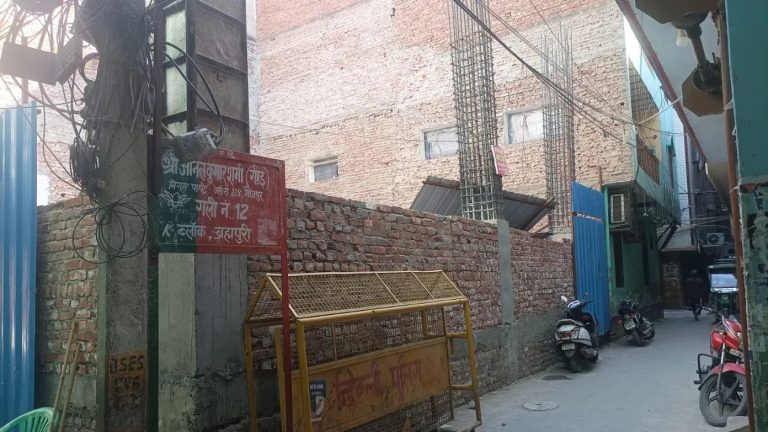
In the anti-Hindu riots of 2020, bullets were fired from this mosque, after which, the fear among Hindus deepened. Now an attempt is being made to extend the mosque in front of the Shiva temple in Gali No. 12. The work started without getting the map passed, flouting the rules of MCD. However, the biggest question is where is the money coming from for this? The person who donated land worth ₹40 lakh runs a slipper shop. Is it foreign funding that is financing it? This story is not just about the mosque, but about suspicious funding, conspiracy and fear of Hindus. Let us understand it in detail.

It is is necessary to understand the root cause, where the game started

The story of Al-Mateen Mosque in Brahmapuri begins in the year 2013. Local Pandit Lal Shankar Gautam says, “In 2013, Muslims bought a flat in Gali No. 13. Namaaz started there, no one said anything. However, gradually they converted that flat into a four-storey mosque.” Gautam says that all this was well planned. First they took a small space, then kept expanding it.

Gautam believes that Muslims enter the area in this way. First they buy a flat, then the houses around it, and build a mosque. Initially everything seems fine, but later the situation changes. Hindus in the area feel that all this is a preparation to take over their daily lives.

In February 2020, riots broke out in North-East Delhi. Violence in Brahmapuri and Seelampur took the lives of 53 people. During this time, the name of Al-Mateen Mosque came to the fore. Gautam says, “On February 25, a mob coming out of the mosque fired bullets. Video evidence is also available. Suddenly a crowd of thousands gathered. False rumours of setting the mosque on fire were spread. Then there was firing in lane number 13, in which three Hindu boys were injured.”

Hindus say that all this was premeditated. The entire Muslim community united and attacked the Hindus. Gautam says, “That day we understood that the mosque is not just for Namaz, it is a place to show their strength.” After the riots, fear gripped the Hindus. Many families left the area. People started feeling that some big game is going on in the name of the mosque.

The mosque is being expanded as per pre-meditated plan

After the anti-Hindu riots of 2020, efforts to expand the mosque started. In 2023, the mosque owners bought two plots in Gali number-12. Both plots were 75-75 yards, i.e. a total of 150 yards. One plot belonged to Kulbhushan Sharma, which was with his family since 1967. The other was Kuldeep Kumar’s. Gautam says, “First they bought the houses, then demolished them. Now a part of the mosque is being built there.”

The plan was to open a new gate of the mosque in Gali number-12, which falls right in front of the Shiva temple built in 1984. Hindus do not approve of this at all. About 60 Hindu families live in Gali number-12. Hindus fear that if the mosque is expanded, the crowd will increase and an attack like 2020 may happen again. Shankar Lal Gautam adds, “If the mosque becomes twice as big, then think, how many people will gather here. Then who will save us?”

The entire mechanism behind the expansion of the mosque shows a pattern

Now let’s talk about funding, which is the biggest question in this story. The method of purchasing two plots in Gali number-12 is suspicious. The first plot was purchased from Kulbhushan Sharma in January 2023. Syed Mubashshir Hussain, Obaid ur Rehman and Abdul Khaliq made a deal for Rs 40 lakh 70 thousand. Kulbhushan owned this property since 2013, which his father Kishan Chand bought in 1967. At that time, Hindus were in majority here. But in 2013, when Al-Mateen Mosque started in Gali number-13, then the eyes of Muslims fell on this land.

The breakdown of the deal was like this – Rs 13 lakh 50 thousand were given through bank transfer in three installments. Obaid ur Rehman transferred Rs 13 lakh 50 thousand from Union Bank on 30th December 2022, Abdul Khaliq transferred money from State Bank on 2nd January 2023, and Mubashshir Hussain transferred money from Bank of Baroda on 5th January 2023. Only Rs 20 thousand were given in cash. The registry was completed in January 2023. Then, on 20th March 2024, this land was donated to Al-Mateen Welfare Society, whose president is Abdul Aleem. His address is in Nizamuddin in Delhi, which is quite far from Brahmapuri.

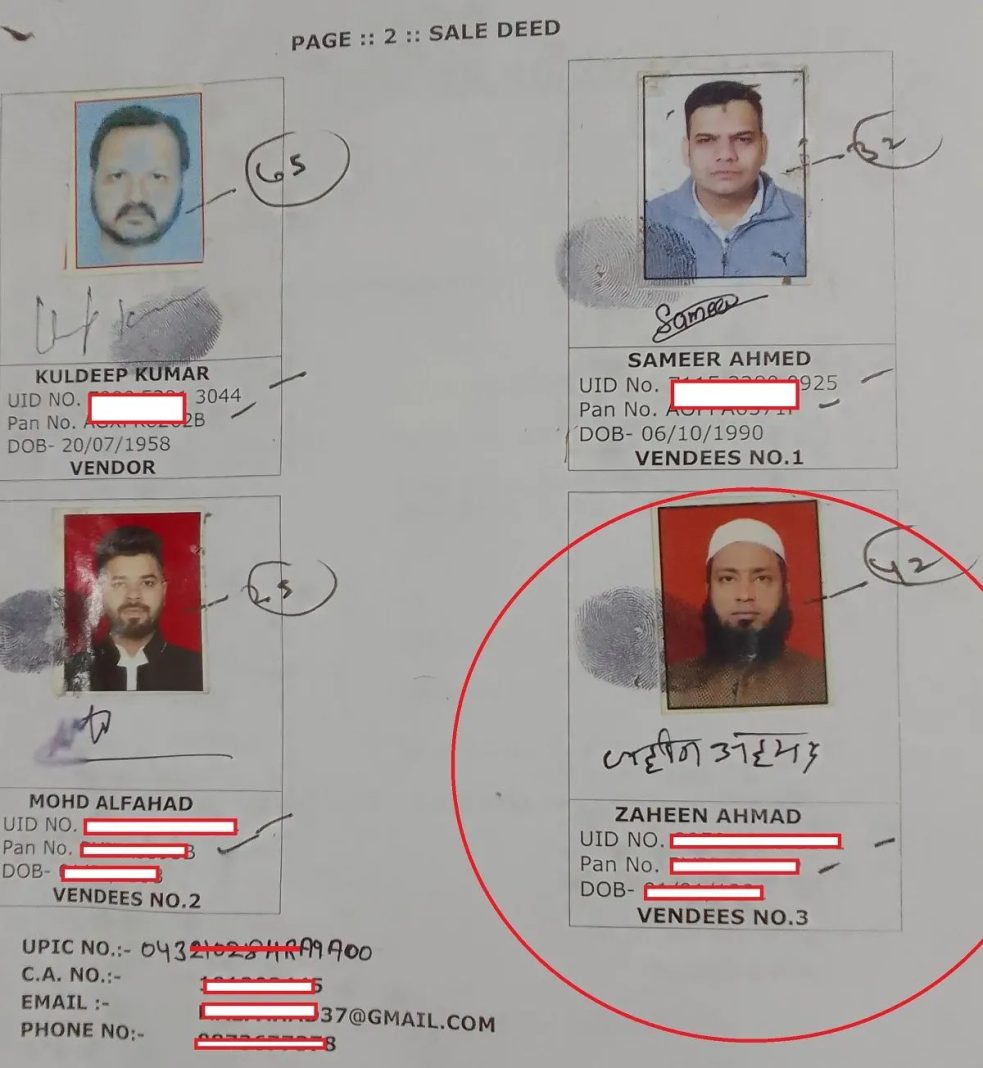
The second plot was purchased from Kuldeep Kumar in April 2023. Sameer Ahmed, Mohammad Alfahad and Zaheen Ahmed made a deal for Rs 40 lakh 70 thousand. Here too the pattern was the same. Rs 13 lakh 50 thousand were transferred from three accounts. Money was transferred from Union Bank on 3rd April 2023, from Central Bank of India by cheque on 5th April 2023, and from Punjab National Bank via RTGS on 27th April 2023. Rs 20,000 was given in cash.

Kuldeep and Kulbhushan got a total of Rs 81 lakh 40 thousand in both the deals. The stamp duty on the registry was 2 lakh 44 thousand and 200 rupees. While transferring the land through the gift deed, stamp duty of 2 lakh 85 thousand and 600 rupees was paid, which included Rs 2 lakh 4 thousand for 6% stamp and 81 thousand 600 rupees for 2% corporation tax. In this way, each property worth 40 lakh 70 thousand came in at around 45-46 lakhs. More than 90 lakhs combined were spent on both the plots.

It is being whispered that this property was bought for about Rs. 2.5 crores, since in land deals a large amount is paid in cash so that the taxes are minimized. However, we are currently talking only about the amount that is on record.
Zakat of 13.5 lakh from a slipper shop?

The most shocking thing about it is the role of Zaheen Ahmed alias Guddu. He has a slipper shop in the weekly market. He invested 13 lakh 70 thousand rupees in land and donated it in a year. Gautam says, “Where did a slipper seller get so much money? No one can digest this.” Zaheen’s signature is in Hindi, everyone else’s in English. The matter is not about language, but about his background. How can a person who runs his household by selling slippers give such a huge amount? Hindus suspect that there may be foreign funding behind this. The address of the president of Al-Mateen Welfare Society being in Nizamuddin also raises questions. Is this a big network?

Foreign hand in funding?

Where did the money come from to buy and donate this land worth more than 90 lakhs? It is suspicious that a slipper seller like Zaheen gave so much money. Hindus feel that there may be foreign funding. The connection between Al-Mateen Welfare Society and Nizamuddin raises suspicion. Gautam says, “It is necessary to get to the source of the money. What are government agencies doing? Children are given religious education in the mosque. They do not get help from the government. There is probably no registration either. Then where does so much money come from?”

All these things scare the Hindus living in Brahmapuri. They are understanding that Muslims in any area work in a pattern. In Brahmapuri, first flat, then house, then mosque. The tension of 2018, the attack of 2020 and now the expansion due to suspicious funding is proof of this. In such a situation, if the mystery of funding is solved, then the layers of conspiracy will unravel.
Protests erupt in Nepal demanding return of monarchy to the country, PM Oli says it is not possible

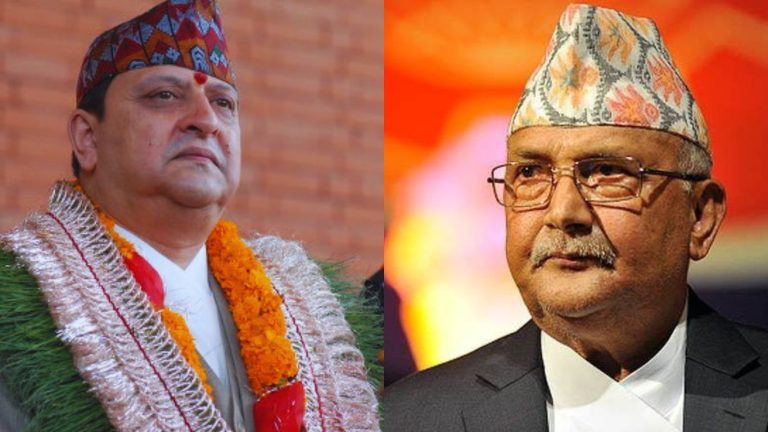
Pro-monarchy demonstrations have erupted across Nepal, demanding the restoration of the monarchy in the country. Demonstrations including bike rallies and sloganeering are being organised by the supporters of the former King of Nepal Gyanendra Bir Bikram Shah Dev. Disappointed with the current government led by Prime Minister K P Sharma Oli, the protestors led a motorbike rally from Babar Mahal to the erstwhile Royal Palace on Durbar Marg, chanting the slogan ‘Narayanhitki Khai gara, hamra raja aaudai chhan’ (vacate the Royal Palace, we are bringing our king back).

Speaking on the 75th Democracy Day on 19th February, King Gyanendra Shah sought public support for advancing the country to the path of unity, progress and prosperity during a pilgrimage in Galeshwar Dham and Baglung Kalika. He said that he gave up the throne in 2008 after Nepal was declared a Republic not out of weakness but to witness peace in the country.

On Tuesday (4th March), the King received a grand welcome in Pokhara with people chanting slogans in his support. He unveiled a statue of former King Birendra Bikram Shah Dev in Pokhara on Thursday. In a rally taken out in support of the monarchy in Kathmandu on Wednesday, the members of the Rashtriya Prajatantra Party (RPP) and the ‘Save the Nation, Culture and Dharma’ campaign also participated. The RPP reportedly announced the cancellation of all its scheduled programmes to offer a grand welcome to the former king on his return from Pokhara, where he has been staying for the past six weeks, to Kathmandu on 9th March.

PM Oli dismissed the possibility of restoration of the monarchy

Prime Minister Oli, who is also the chairman of the Communist Party of Nepal (Unified Marxist-Leninist), has been facing criticism from people for the alleged corruption of the government and its failure to fulfil the promises of improving the economy and infrastructure of the country. Oli found himself in the middle of a controversy recently after some people were arrested for raising slogans against him, and the press passes of two journalists were suspended for asking questions to him.

Speaking at a programme in Mahottari, Oli dismissed the possibility of the restoration of monarchy in the country. “Some people are shouting slogans to reinstate monarchy these days, which is not possible,” the PM said. He advised the former king to form a political party and contest elections. “If the former king thinks that he is popular, he has the freedom to establish a party and contest the election by honouring the constitution, “said Oli.

Speaking during his birthday celebrations on Friday, the former Prime Minister of Nepal and Chairman of the CPN-Unified Socialist, Madhav Kumar Nepal, also ruled out the possibility of restoration of the monarchy. “Monarchy has become a history of the past, so there is no possibility of its reinstatement,” said Nepal.

Chairman of the CPN-Maoist Centre, Pushpa Kamal Dahal ‘Prachanda’ also voiced a similar sentiment against the demands of the restoration of the monarch warning the former king against doing any ‘foolish’ things. Describing the former king’s rule as autocratic, Prachanda, who led the Maoist insurgency against the monarchy and served as the three-time Prime Minister of the country, said that the people of Nepal snatched power from the king. “The people had snatched power from the king by fighting against his autocratic regime and they know how to safeguard it,” he said.

The Oli government and its leanings towards China

After assuming the office of Prime Minister in July 2024 for the third time, Oli has openly shown his leanings towards China. He strengthened relations with China as opposed to the country’s traditional ties with India. In December 2024, Oli signed an agreement under the Belt and Road Initiative (BRI) with China. During his second tenure as the Prime Minister, Oli updated the map of Nepal to include its ‘disputed territories’ with India.

Following the footsteps of China, PM Oli’s political party laid claim over certain territories in India. In September 2020, the Communist Party of Nepal along with the Unified Nepal National Front launched a campaign named ‘Greater Nepal’ laying claim over the cities of Dehradun and Nainital in Uttarakhand. It also claimed certain parts of Himachal Pradesh, Uttar Pradesh, Bihar and Sikkim. This came months after the Nepalese government brazenly included Indian areas of Limpiyadhura, Lipulekh, and Kalapani in its new political map causing a huge uproar in India. It cited the Treaty of Sugauli Nepal signed in 1816 between the East India Company and the then-ruling establishment of Nepal to claim the Indian territories.

In July 2020, PM Oli, who is a communist, made a controversial claim saying that India had created a fake Ayodhya while the actual birthplace of Lord Ram is located in Birgunj village of Nepal. He claimed that Lord Ram was not Indian but Nepalese. Notably, the Prime Minister’s claims did not find support even with the opposition parties in Nepal which rejected his claims as baseless and unproven.

The ousting of the monarchy after the Maoist insurgency

Following the Maoist insurgency in Nepal, the king was suspended from exercising his powers on January 15, 2007, and an interim legislature was formed. On May 28, 2008, the kingship was officially abolished by the first constituent assembly and Nepal was renamed as the Federal Democratic Republic of Nepal. In the first government formed after the abolition of the monarchy in Nepal, Pushpa Kamal Dahal ‘Prachanda’ was elected as the Prime Minister by the Constituent Assembly in August 2008. Even since being declared a Republic, the political scenario in Nepal has been turbulent with no Prime Minister being able to serve for a full term of five years. Nepal has had 8 politicians serve as Prime Ministers since 2008 with some of them being re-elected.

Assam: Horse meat allegedly sold as beef in restaurants in Barpeta, angry locals nab 3 people and rescue 6 horses brought for slaughter

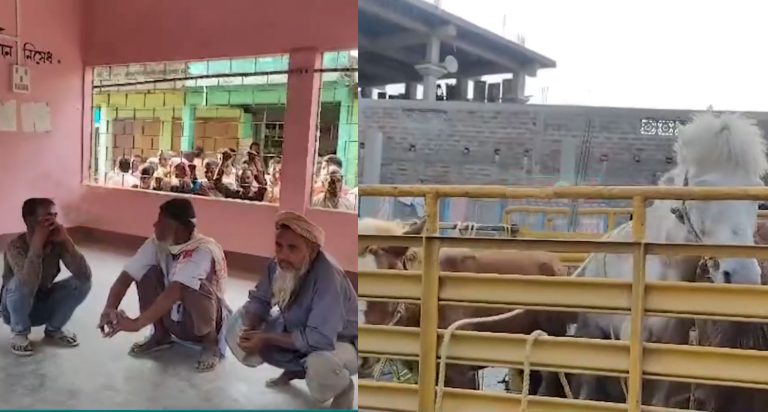
Tensions erupted in the Baghmara area of the Barpeta district in Assam on Friday after some people were accused of selling horse meat in the name of beef. A large number of Muslims gathered in the market, caught 3 persons and handed them to the police. They also rescued six horses allegedly brought for slaughter.

Notably, as the Assam government has imposed restrictions on the sale and consumption of beef, there is a shortage of beef in the state. Moreover, recently the govt banned consumption of beef in public places, including hotels and restaurants. But despite the ban, hotels and restaurants in Muslim majority areas, especially on the islands and sandbars of the Brahmaputra River, are still serving beef to customers.

But some people in Baghmara suspected that the meat they were eating in eateries were not beef. Then, on Friday, they spotted six horses brought to the area. As horses are not used in the area, they suspected that they had been brought for slaughter.

They stopped the vehicle carrying the animals and nabbed three persons. The three accused nabbed by the angry people have been taken into custody by police.

According to locals, the miscreants were mixing horse meat with beef, and eateries in the area were selling this mixed meat to customers for last six months. They said that the horses are slaughtered secretly in the jungle, and the meat is supplied to hotels and restaurants. As beef demand increases for iftar parties during Ramazan, the horses were brought to meet this increased demand.

People in the area say that in recent times, they have spotted parts of horses in the fields near the forest, leading to the conclusion that horses being brought to Baghmara were being slaughtered and sold.

Ram Janmabhoomi Mandir will be completed by 15 April: Construction Committee Chairman Nripendra Misra

0

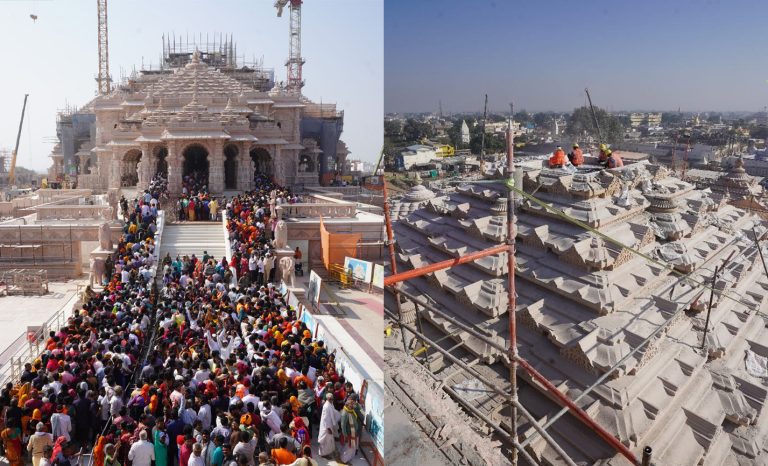
Shri Ram Janmabhoomi Temple Construction Committee Chairman Nripendra Misra said on Saturday that the Holi festival will affect the construction of the Ram Temple complex and it is likely to be completed by around April 15.

“Holi will affect the progress of the work as many workers will go home for the festival. Today we hope that the statue of Goswami Tulsidas will come to our premises and it is expected to be installed by tomorrow… About 20,000 cubic feet of stone is yet to be laid in the temple. The construction of the temple will be completed by around 15 April,” Mishra told the media.

“All of the statues in the temples that are outside or inside the rampart will be here by 30 April, and almost all of them will be installed between 25 March and 15 April,” the Committee Chairman said.

Earlier in January, Nripendra Mishra said that the construction work would be completed by March.

“We carried out a review yesterday. The temple (complex) construction will be concluded on the scheduled date, in March. Ram Darbaar will be set up on the first floor within this duration only. The works for establishing murtis of idols (iconography) will also be completed in this duration,” Nripendra Misra told reporters.

Apprising the mediapersons about the challenges, Misra said, “Approximately 20 acres of land will be beautified to remain in tune with nature. We are facing challenges to work on Parkota, which is the parikrama marg of the temple.”

In 2024, PM Modi had performed the rituals at the Pran Pratishta ceremony of the Grand Lord Ram Temple in Ayodhya on January 22.

The Shri Ram Janmbhoomi Mandir has been constructed in the traditional Nagara style. Its length (east-west) is 380 feet; width is 250 feet and height is 161 feet; and is supported by a total of 392 pillars and 44 doors.

The pillars and walls of the temple showcase intricately sculpted depictions of Hindu deities, Gods, and Goddesses. In the main sanctum sanctorum on the ground floor, the childhood form of Bhagwan Shri Ram (the idol of Shri Ramlalla) has been placed.

(This news report is published from a syndicated feed. Except for the headline, the content has not been written or edited by OpIndia staff)

Uttar Pradesh: Arbaz posed as Sunny to lure Hindu woman into relationship, blackmailed her after her marriage using intimate visuals; arrested

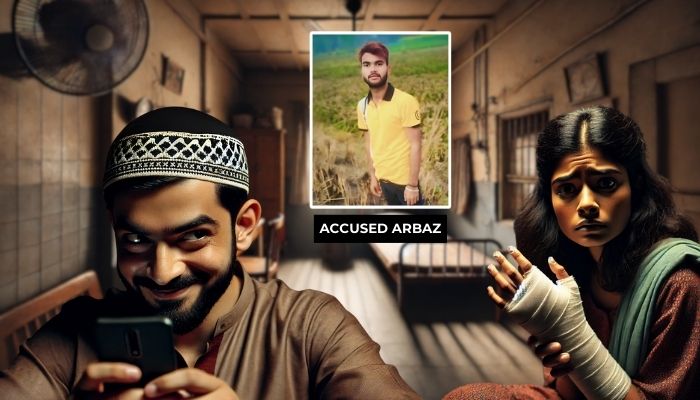
On 7th March, Shivgarh Police in Raebareli, Uttar Pradesh, arrested a man named Arbaz for allegedly blackmailing a married Hindu woman. His family members have also been booked in the case. According to media reports, the accused had posed as a Hindu man to lure the victim into a relationship. The accused introduced himself as Sunny and physically exploited her.

During the course of the relationship, the victim discovered his true identity and ended the relationship. Following this, her family arranged her marriage to a Hindu man. However, after the wedding, Arbaz allegedly continued to harass the woman. He pressured her to leave her husband, convert to Islam, and marry him. His family members were also involved in coercing her to convert to Islam.

Furthermore, the accused allegedly tried to blackmail the woman and threatened to send her intimate photos and videos to her husband if she refused to comply. Frustrated and distressed by the series of events, the victim’s father approached Shivgarh Police and filed a complaint against Arbaz and his family members.

Content of the FIR

OpIndia accessed a copy of the FIR registered on the victim’s father’s complaint. The FIR has been registered at Shivgarh Police Station under Section 351(3) of the Bharatiya Nyaya Sanhita and Sections 3 and 5(1) of the Uttar Pradesh Prohibition of Unlawful Religious Conversion Act against Mohammad Arbaz alias Sunny, his father Fakir Mohammad, mother, sister, and two brothers.

In his complaint, the father of the victim stated that the accused Arbaz, along with his family, manipulated and blackmailed his daughter. The FIR mentions that Arbaz had secretly recorded photos and videos of the victim before her marriage.

After the victim got married, the accused allegedly began to threaten her to leave her husband and parents. The accused demanded that the victim convert to Islam and marry him. He reportedly claimed that he would send her to Saudi Arabia after their Nikah and warned that no one could harm him. He also allegedly threatened to have her brother killed if she refused.

The complainant further stated that Arbaz’s father, Fakir Mohammad, and his two sons, who live in Saudi Arabia, might be linked to radical Islamic organisations involved in forced conversions.

Statement of the victim

Speaking to Sudarshan News, the victim said that she met Arbaz when she was in school. At that time, he identified himself as Sunny. Soon, their friendship turned into a relationship. During that time, he secretly clicked some intimate photos and videos of the victim.

One day, she discovered that his real name was Arbaz. When she confronted him, he did not give any clarification. After that, she ended the relationship.

Later, after completing her studies, her parents arranged her marriage to a Hindu man. She was living happily with her husband. One year after her marriage, Arbaz sent her a video and threatened her to come back to him, or he would send the video to her husband and put it on social media.

When she refused, he allegedly sent some photos to her husband, leading to fights between the couple. The victim requested Arbaz to stop. Arbaz threatened her and asked her to come back to him, otherwise he would get her husband killed.

He repeatedly asked her to come back to him and convert to Islam. She further stated that his family was also involved. Arbaz continued to send photos and videos to her husband as she categorically refused to agree to his demands. The fight between the victim and her husband turned violent, and the victim’s husband allegedly assaulted her, fracturing her hand. She accused Arbaz of the differences created between her and her husband. After that, she came back to her maternal home and told her parents about the incident.

In an official statement, police said that they acted on the complaint and apprehended Arbaz. He has been sent to judicial custody. Further investigation into the matter is underway.

The jihadist takeover of Bangladesh: How extremist groups are rising under the patronage of Muhammad Yunus

The rise of Islamist extremist groups in Bangladesh has taken a dangerous turn following the jihadist coup of August 5, 2024. Under the patronage of Muhammad Yunus and his Islamist allies, banned militant organizations such as Hizb ut-Tahrir (HuT) and Hamas are expanding their networks, posing a significant threat to regional and global security.

While the international community remains largely unaware of the growing crisis, recent developments indicate that Bangladesh is becoming a breeding ground for terrorism, with radical elements infiltrating key sectors of governance, judiciary, and law enforcement.

Following the jihadist coup of August 5, 2024 – blueprinted and executed jointly by Joe Biden, Barack Obama, George and Alex Soros, Bill and Hillary Clinton, and the Deep State, which ousted the democratically elected government of Prime Minister Sheikh Hasina – notorious terrorist outfits such as Hizb ut-Tahrir (HuT) and Hamas have been steadily expanding their networks and activities in Bangladesh.

This has been occurring under the direct patronage of Muhammad Yunus and his Islamist-jihadist allies, posing a serious security threat to the region and the world.

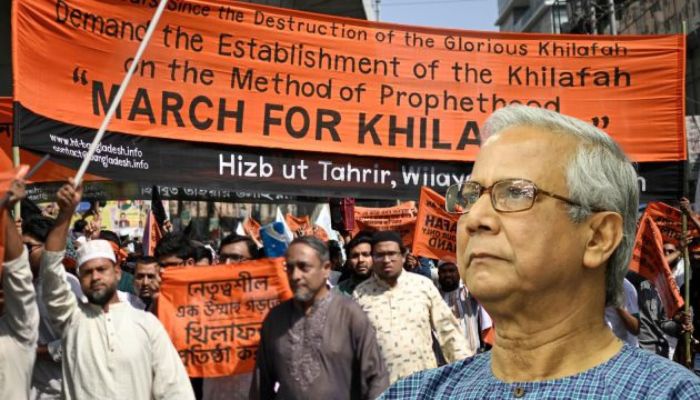
Although international media outlets reported that “hundreds of activists of the banned militant group Hizb ut-Tahrir, chanting ‘Khilafat, Khilafat’, gathered for the ‘March for Khilafat’ procession at the Baitul Mukarram Mosque after Friday prayers, defying police barricades”, the reality is far more concerning. This program was silently supported by influential figures within the Yunus regime.

Notably, Dilly Hussain, a leader of Hizb ut-Tahrir’s UK chapter, visited Bangladesh and held a series of meetings with key figures, including leaders of the ‘National Citizens’ Party (NCP)’, a party formed by Yunus loyalists; Shafiqul Alam, Yunus’s press secretary; the Amir of Jamaat-e-Islami; and Professor Shahiduzzaman, an anti-Hindu and anti-India academic from Dhaka University.

According to OpIndia, on October 30, 2023, Dilly Hussain, the Deputy Editor of the Islamist propaganda website ‘5 Pillars’, called for the targeted harassment and persecution of Israelis in Muslim-majority countries.

Dilly Hussain, a British-born Islamist of Bangladeshi origin, serves as the Deputy Editor of ‘5 Pillars’. In a tweet, he declared, “This is the kind of welcome all Israelis should be receiving at the airports of Muslim-majority countries”.

His tweet followed a violent incident at Dagestan Airport in Russia, where an Islamist mob stormed the premises, chanted anti-Semitic slogans, and prevented Israeli passengers from deboarding.

Beyond his explicit anti-Semitism, Hussain has a history of propagating anti-India and anti-Hindu rhetoric. On India’s Independence Day, August 15, 2023, he tweeted his hope that the Hindu-majority nation would “soon fall prey to Islamic rule”.

“On Indian Independence Day, I pray that Allah (swt): Liberates Indian-occupied Kashmir; Eases the suffering of Muslims and other oppressed minorities; For India to return to Islamic rule. Ameen”.

Following the jihadist coup in August 2024, Yunus’s associates facilitated the visit of Mohammed Delwar Hossain (Dilly Hussain), a key figure from Hizb ut-Tahrir’s UK branch, to Bangladesh in October 2024.

A high-ranking counterterrorism official in Dhaka, speaking anonymously, stated that the March 7 police crackdown on Hizb ut-Tahrir after Friday prayers was nothing more than a staged spectacle. He explained that radical Islamist factions within Yunus’s illegitimate government are desperate to convince the Western world that they have no links to Hizb ut-Tahrir. To achieve this, they orchestrated this political drama- a calculated deception designed to make foreign nations, particularly those in the West, believe that the illegal Yunus regime is taking action against extremist groups.

The expert further asserted that the March 7 incident was carefully designed by key policymakers of the Yunus regime as a means of remaining in power by staging a mock crackdown on Islamists and jihadists. The ultimate goal was to garner sympathy and support from Western nations, particularly the Trump administration.

In recent months, Bangladesh has come under the scrutiny of the U.S. intelligence establishment. Since August 2024, under the direct patronage of Muhammad Yunus and his Islamist-jihadist allies, several terrorist organizations – including Al-Qaeda, ISIS, Hizb ut-Tahrir, Hamas, Hefazat-e-Islam (HeI), and Ansar al-Islam – have been openly operating within the country. These groups have intensified their persecution of Hindus, Christians, and other religious minorities.

Additionally, taking advantage of the political instability, the Pakistani Army and its notorious spy agency, the Inter-Services Intelligence (ISI), have been providing financial and logistical support to various insurgent groups in India, including the United Liberation Front of Assam (ULFA). ISI has been actively assisting these groups in reestablishing training camps along the Bangladesh-India border. Furthermore, Pakistani intelligence is generating millions of dollars through drug and arms trafficking in Bangladesh.

The Yunus regime has even lifted mandatory post-landing inspections for cargo arriving from Karachi via Pakistani-flagged vessels, allowing illicit goods to enter the country unchecked. Transnational drug trafficking syndicates, including Dawood Ibrahim’s D-Company and cartels from Mexico and Colombia, have expanded operations in Bangladesh, forming direct alliances with ISI. As a result, narcotics are being smuggled to various destinations, including India, the Middle East, and Western nations such as the United States.

Following the jihadist coup of August 5, 2024, Muhammad Yunus, a well-known Trump critic and financial associate of Hillary Clinton and George Soros, has systematically placed Islamist radicals and suspected terrorists in key government, judiciary, and civil-military positions. For decades, Yunus has been a top donor to the Clinton Foundation, benefiting from hundreds of millions of dollars in funding from USAID and other U.S. agencies, secured through Hillary Clinton’s influence. Credible sources also suggest that Hillary Clinton maintains business ties with Yunus’s ‘Grameen America’ and various other profit-driven ventures in the United States, France, and beyond.

The ongoing patronization of Islamist and terrorist entities in Bangladesh under the Yunus regime not only threatens regional stability but also has far-reaching implications for global security.

The alarming rise of Hizb ut-Tahrir, Hamas, and other jihadist entities in Bangladesh under the patronage of Muhammad Yunus is not just a national crisis – it is a global security threat. The systematic infiltration of radical elements into governance, law enforcement, and strategic sectors of the country signals a calculated move to reshape Bangladesh into a hub for Islamist extremism. Meanwhile, foreign intelligence agencies, including those of the United States, are beginning to take note of the growing nexus between Yunus, Pakistani intelligence, and transnational terrorist networks.

If this trajectory remains unchecked, Bangladesh could soon become a breeding ground for jihadist activities, destabilizing South Asia and extending its influence far beyond the region. The international community must act swiftly by imposing targeted sanctions, cutting off financial support to entities linked to Yunus, and pressuring the regime to dismantle its ties with terrorist organizations. Failure to intervene now may result in irreversible consequences, making Bangladesh the next epicenter of global jihadist operations.

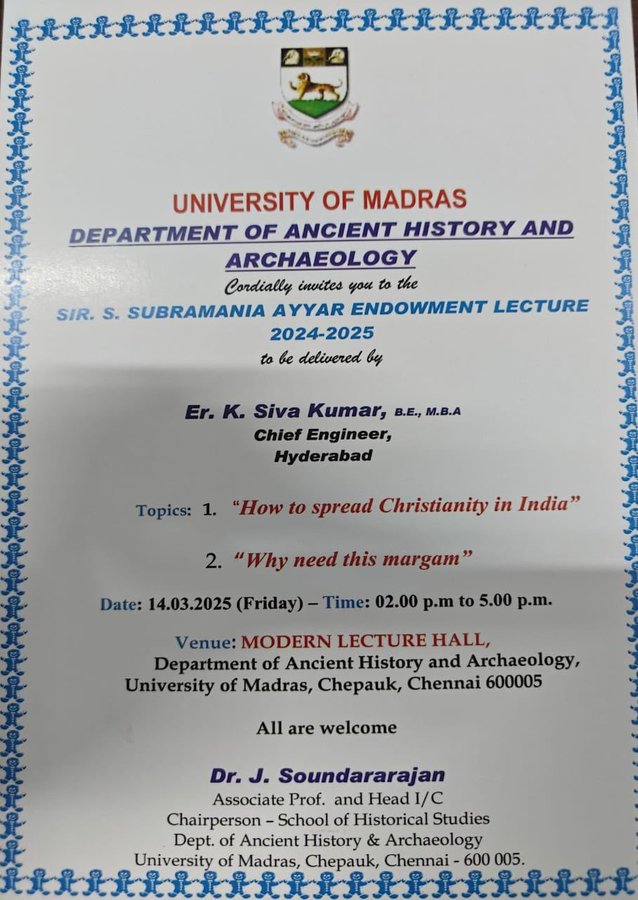
Pamphlet saying Madras University is holding lecture titled “How To Spread Christianity In India” goes viral, sparks online outrage

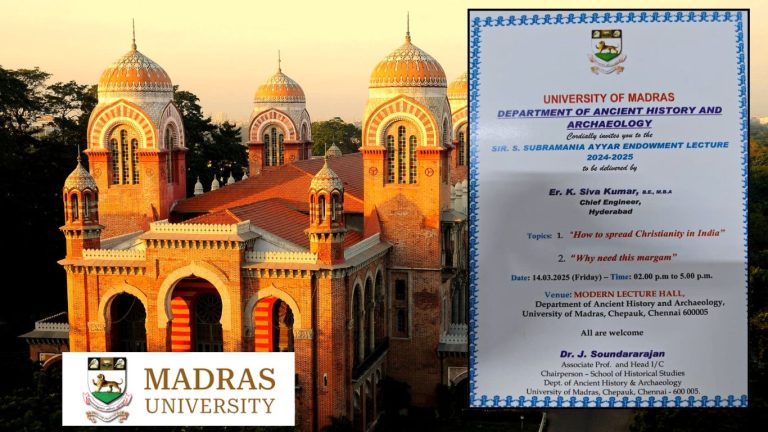
The University of Madras, a public funded University, has found itself at the center of a controversy after a pamphlet went viral on social media saying the university’s ‘Department of Ancient History and Archaeology’, under the Sir S. Subramania Ayyar Endowment Lectures, scheduled a lecture on the topic: How to Spread Christianity in India. The other topic to be covered in the lecture is Why Need This Margam which translates to Why this religion is needed.

A pamphlet of an event on spreading Christianity in India set to be held in the University of Madras in Chennai, Tamil Nadu, has gone viral on X (Formerly Twitter).

The pamphlet for the lecture, viral on social media, has drawn widespread criticism towards the University for encouraging Christian conversion in India. According to the viral message, the Department of Ancient History and Archaeology of the University of Madras will be organising Sir S. Subramania Ayyar Endowment Lecture 2024-25 on the topics of “How to spread Christianity in India” and “Why need this Margam” (meaning ‘why this religion is needed’). Er. K. Siva Kumar, B.E., M.B.A., Chief Engineer, Hyderabad, is named as the speaker at the event which will be organised on March 14, 2025, at Modern Lecture Hall in the Department.

Image via X

The scheduled lecture has sparked outrage among people on social media who are expressing shock over a state university allowing an event discussing ways to spread a particular religion in the country. Besides, the Department of Ancient History and Archaeology hosting a religious event, when the university has a separate department for Christian studies, seems a bit out of place.

BJP State Secretary Tamil Nadu, Dr SG Surya shared the pamphlet on X (formerly Twitter) with the caption, “Subramania Ayyar Endowment Lecture in “University of Madras” on “How to spread Christianity in India!” by one ‘Siva’ Kumar! Fundamentalism? Fanaticism? Anyone?”

Commenting on the event, S Gurumurthy said that the event does not add any merit to Christianity and that it only certifies that Christianity fraudulently converts not just individuals but intellectual institutions as well.

Questioning as to why the Department of Ancient History and Archaeology was hosting an event on spreading Christianity, another X user wrote, “S Subramaia Ayyar Endowment lectures are usually based on Archaeology and conducted by the Dept. How on earth these topics related to Archaeology? It’s being crazier by the day”.

Another X user demanded action against such events in the state. “There is a need for handling these things the hard way in Tamil Nadu. Unless it’s taken up in an organised hardcore way these elements will get ahead inch by inch, ” wrote the user.

The event has raised questions on the academic neutrality of the prestigious institution that has an envious list of distinguished alumni including great mathematician, Srinivas Ramanujan, Dr Sarvepalli Radhakrishnan who served as the President and the Vice-President of India, renowned Physicist C V Raman, and Hindu spiritual leader Swami Chinmayananda Saraswati.

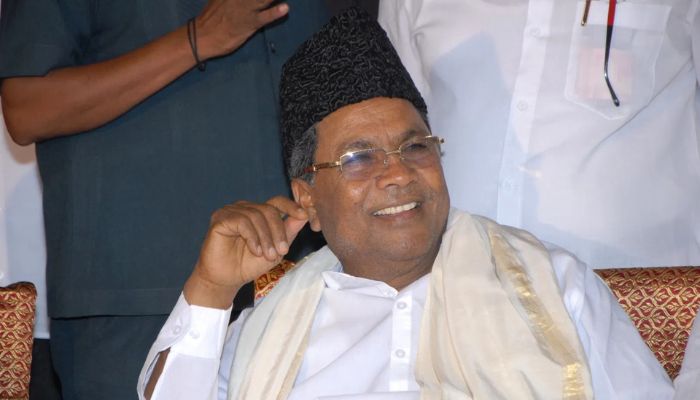
Strengthening urdu medium schools, funds for Waqf, honorarium for Muezzins and more: Karnataka Congress govt resorts to Muslim appeasement in Budget

On Friday (7th March), the Congress government in Karnataka, led by Chief Minister Siddaramaiah, brazenly appeased the Muslim community through its annual budget for the Financial Year 2025-2026.

OpIndia reviewed the 149-page [pdf] budget speech (English edition) of CM Siddaramiah and found glaring instances of appeasement and preferential treatment for minorities (and Muslims in particular).

The Congress government announced ₹500 crores for starting classes from pre-primary to PU (Pre-University) at 250 ‘Moulana Azad Model English Medium Schools’ on Karnataka public school mode. (Page 60 of the budget speech)

Strengthening of Urdu medium schools by Congress govt

Moreover, a sum of ₹400 crores was allocated to strengthen 100 Urdu medium schools in Karnataka. Ironically, the Congress government has facilitated an atmosphere of linguistic divide (Hindi Vs Kannada) while promoting Urdu medium schools at the same time.

Select 100 Urdu medium schools with the highest enrolment run by the Education Department will be strengthened by allocating Rs. 100 crore in the present year out of the total upgradation cost of Rs.400 crore for providing basic facilities in line with Karnataka Public Schools to enhance learning standard and these schools will be upgraded as Maulana Azad Public Schools(Page 60 of the budget speech)

Repair and renovation of Waqf properties

The Karnataka Congress government also laid down provisions for the repair and renovation of Waqf properties. A sum of ₹150 crore was set aside for the purpose.

For repair and renovation of Waqf properties and for providing infrastructure and protection of Muslim burial grounds an amount of Rs. 150 crore has been provided.” (Page 61 of the budget speech)

At the same time, ₹1000 crore has been earmarked for the action plan prepared under the Chief Minister’s Minority Colony Development Programme’

Development of Haj Bhavan by Congress govt

Karnataka Chief Minister Siddaramiah, in his budget speech, emphasised on the development of the Haj Bhavan. This included the construction of a new building for Hajj pilgrims and the establishment of KSOU for ‘deprived’ Muslim students.

For the benefit of minority students deprived of degree education, a regional centre of Karnataka State Open University (KSOU) will be established in Haj Bhavan and provided with various degree/ post-graduate degree courses.(Page 62 of the budget speech)

An additional building in Haj Bhavan at Bengaluru will be constructed to provide with facilities and amenities to Haj pilgrims and their relatives.” (Page 62 of the budget speech)

Freebies to appease Muslim community

The Karnataka Congress govt also announced ₹50,000 for couples belonging to economically backward Muslim communities.

To promote simple marriages amongst the economically backward minority communities, an amount of Rs.50,000 will be provided as expenses for each couple to NGOs who organise such Mass marriages.(Page 62 of the budget speech)

Siddaramiah informed that the honorarium for Muezzins will be increased to ₹5000 per month, while the honorarium for Pesh-Imams of mosques will be ₹6000 per month. (Page 63 of the budget speech)

Preferential treatment towards Muslim students

The Karnataka government also displayed preferential treatment towards Muslim students. This includes the construction of colleges for Muslim women on the land of Waqf institutions, infrastructure building for cultural and social activities etc.

Action has been taken to construct 15 women’s colleges in vacant plots of Waqf institutions to support higher education of minority women in the year 2024-25(Page 62 of the budget speech)

Multi-purpose halls will be constructed across the state for the minority communities to organize cultural and social activities. The halls will be constructed at a cost of Rs. 50 lakh at hobli and taluk level and Rs. 1 crore at district headquarters and city corporation areas.(Page 63 of the budget speech)

Moreover, the Congress government announced reimbursement of 50% fees for Muslim students and increase of foreign scholarship from ₹20 lakhs to ₹30 lakhs.

Page 64 of the budget speech make it clear – “Minority students will be reimbursed 50% of the fees for admissions availed through KEA into Professional Courses up to a limit of Rs.5 lakh.

National Foreign Student Scholarship amount given to the minority students will be enhanced from Rs.20 lakhs to Rs.30 lakhs.

Conclusion

Karnataka Chief Minister Siddaramaiah, through his budget speech, has clearly attempted to appease the Muslim community through freebies, preferential treatment, the development of Haj Bhavan, the renovation of Waqf properties and the strengthening of Urdu schools. As such, many netizens have labelled it as ‘halal budget.’

Madhya Pradesh: Riaz posed as Raja to marry a Hindu woman, assaults and threatens her with dire consequences for filing a complaint

On 6th March, a Muslim man identified as Riaz, allegedly assaulted and threatened a Hindu woman in Ujjain, Madhya Pradesh. The woman had filed a complaint against him for concealing his identity. Riaz had posed as a Hindu man to lure the victim into a relationship. Following the incident, another complaint has been filed by the victim against Riaz at Nanakheda police station.

Reportedly, the victim, who is from Indore, met Riaz in 2022. At that time, Riaz introduced himself as a Hindu man named “Raja.” As time passed, he developed a relationship with her. Later, they got married and even had a daughter.

However, after the wedding, the woman began to suspect that Riaz was hiding something from her. Upon investigating, she made a shocking discovery that her husband was not a Hindu named “Raja” but a Muslim man named Riaz. She also discovered that Riaz was already married and that his other family resided in Ujjain. Following the shocking revelation, she filed a complaint against Riaz at the Juni police station.

As Riaz was from Ujjain, the woman decided to file a complaint there as well and approached Khara Kuan police station for the same. When Riaz learned that she had filed a complaint, he lured her into meeting him on 6th March. He confronted her over the police complaint and allegedly assaulted her on a bus.

The matter caught the attention of Bajrang Dal’s district coordinator, Rishabh Kushwaha, who, along with other Bajrang Dal activists, including Ritu Didi, Ankit Thakur, and Sunny Devda, stepped in to assist the woman. They apprehended Riaz and handed him over to the Nanakheda police.

The victim filed a complaint against Riaz at the Nanakheda police station, based on which a case under Sections 64, 74, 206, 115(2), and 351(3) of the Bharatiya Nyaya Sanhita (BNS) 2023 has been registered.

Further investigation into the matter is underway.

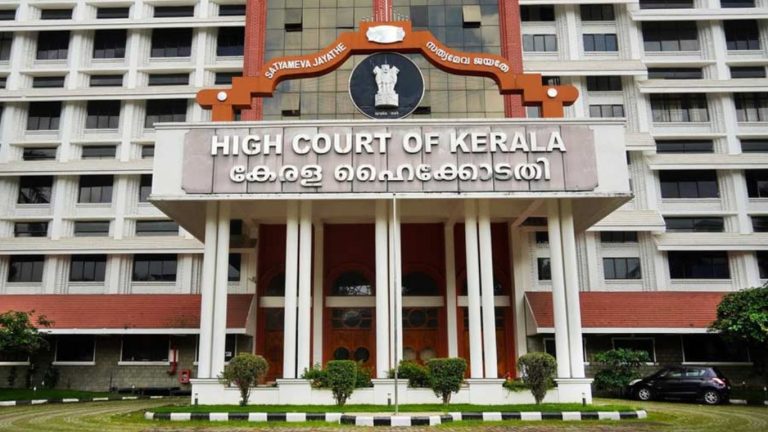
Kerala HC reduces the sentence of man convicted of unnatural sexual intercourse with a minor to one day

In a case of an attempt to commit unnatural sex with a minor victim, a single bench of the Kerala High Court reduced the sentence of the convict to one day. The court made the decision using its powers under section 4 of the Probation of Offenders (PO) Act, 1958, which allows the court to release certain offenders on probation of good conduct.

As per reports, the accused challenged his conviction in the case on the ground that he was just 19 when the incident took place in 2008 and therefore he is entitled to relief under section 360 of the Code of Criminal Procedure (Cr.P.C.) which allows a court to release an offender under the age of 21 years in certain cases.

High Court reduces sentence considering the age of the convict

Hearing the appeal, a single bench of Justice C.S. Sudha considered the offender’s age at the time of the offence while also expressing concern over the growing numbers of such cases. “Of late offences of this nature, that is, sexual offences against children and women are on the increase. Hence invoking the provisions of the PO Act may send a wrong message to society at large. However, considering the age of the accused at the time of the commission of the offence and the nature of the offence made out from the materials on record, a lenient view can be taken,” the Judge noted.

The incident happened in 2008 when the offender allegedly took the minor victim to a vacant building and attempted to commit unnatural sexual intercourse with him. He threatened the victim to harm his sister if he disclosed the incident to anyone. However, the victim’s aunt and others rushed to the spot after hearing his cries. The accused ran away on seeing them coming. He was charged under sections 377 (unnatural offences) and 506 (criminal intimidation) of the Indian Penal Code. He was convicted by the trial court which sentenced him to 4 years of rigorous imprisonment and a ₹10,000 fine (or three months imprisonment on default).

High Court ruled out the offence, saying only an attempt made out

The High Court ruled out the offence of unnatural sexual intercourse and observed that based on the evidence available an attempt to commit unnatural sexual intercourse was made. “There is no case of inserting/thrusting of the penis of the accused between the thighs of PM1 (victim) or rubbing it. The medical evidence on record shows that PW1 had complained of pain, and he had contusion on his scrotum. In the box, PW1 made a case that the accused had rubbed his genitals on his thighs. The materials on record do not make out an offence under section 377 IPC. At best the overt acts of the accused can only be termed as an attempt to commit the offence punishable under section 377, that is, section 511 of 377, and not an offence under section 377 IPC, “the High Court noted.

Clarifying section 511 IPC, the High Court said that when no specific punishment is provided for an attempt, the maximum sentence for the offence can be halved. Thus, the maximum sentence for an attempt to commit unnatural sexual intercourse will be half of the maximum sentence provided for the offence of unnatural sexual intercourse. The maximum sentence for the offence of unnatural sexual intercourse is 20 years hence the maximum sentence for its attempt will be 10 years.

The High Court also noted that section 19 of the PO Act overrides section 360 of the Cr.P.C. in Kerala making the latter ineffective. The offender was 21 years old at the time of conviction which made him ineligible for relief under section 6 of the PO Act which provides restrictions on imprisonment of offenders under 21 years of age. “It is true that one reason given by the trial court os that the accused is liable for imprisonment for more than 10 years and hence the benevolent provisions cannot be invoked, is not correct because the materials on record make out only an offence under section 511 of section 377. But in the light of the nature of the offences committed, I do not think that the benevolent provisions required to be invoked because not only was there an attempt to commit an offence under section 377 IPC but also threatening the victim with a dire consequence,” the court said observing that the trial court wrongly denied probation to the convict based on the incorrect legal provision.

The court also observed that Section 19 of the PO Act overrides Section 360 Cr.P.C. in Kerala, making the latter inapplicable. The appellant, 19 years old at the time of the offence but above 21 at conviction, was not eligible for relief under Section 6 (Restrictions on imprisonment of offenders under twenty-one years of age) of the PO Act. However, the court considered whether the provisions of Section 4 of the PO Act should be applied to release the accused on probation.