Home Blog Page 539

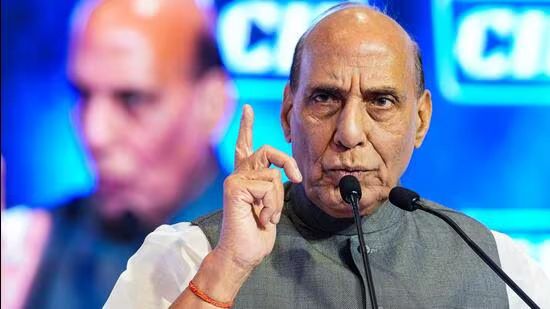
‘Wars will become more violent’: Rajnath Singh emphasises transforming Armed Forces into modern warfare machine

0

Defence Minister Rajnath Singh on Wednesday emphasised the need for the Armed Forces to transform into a modern warfare machine, citing the increasing use of unconventional methods in today’s warfare — dynamic geopolitical world order and the constantly-changing character of warfare.

He highlighted that conflicts and wars will become more violent and unpredictable, with the emergence of non-state actors and terrorism being major concerns.

Addressing senior Army officials and other personnel at ‘Gaurav Gatha’, an event organised in Pune as part of the 77th Army Day celebrations, he said, “Conflicts and wars will become more violent and unpredictable. The emergence of non-state actors in many countries and their resorting to terrorism is also a matter of concern. Due to rapid technological advancements, future wars witness a change to a great extent. Cyber and space domains are rapidly emerging as new war zones. Along with this, a war of narrative as well as perception is also being fought all over the world. The military must focus on holistic capacity building and reforms.”

Singh stressed the importance of a robust security system, strong military, and secure borders to achieve Prime Minister Narendra Modi’s vision of Viksit Bharat by 2047. He noted that the Ministry of Defence is working to bolster the strength of the Armed Forces by equipping them with the latest weapons and platforms, focusing on modernization through self-reliance.

“India is currently going through a phase of transition. We are moving forward from being a developing country to a developed one. To become Viksit Bharat, every section of society will have to contribute. But their contribution will only be meaningful when our security apparatus is fool-proof and borders are safe. The security system will be robust only when our military is strong. No nation can develop unless its military is powerful,” said Singh.

He echoed the government’s emphasis on the fact that a strong military is a must to ensure peace. He highlighted that India has always prioritised ‘Buddha’ over ‘Yuddha’, and the Armed Forces have, time and again, proved that peace is not a weakness, but a sign of strength.

The Defence Minister also emphasized the need for self-reliance in defence manufacturing, stating that without it, India cannot achieve strategic autonomy. He highlighted the progress made towards achieving ‘Aatmanirbharta’ in defence manufacturing, with domestic defence production reaching a record figure of Rs 1.27 lakh crore in the last financial year.

“A country like India cannot depend on other countries for its security. Today, we are not only manufacturing military equipment on Indian soil, but are exporting them. Domestic defence production touched the record figure of Rs 1.27 lakh crore in the last financial year, while defence exports, which were around Rs 2,000 crore a decade ago, crossed the record figure of Rs 21,000 crore,” he said.

He enumerated the steps taken by the Government to promote self-reliance, including the notification of positive indigenisation lists of over 5,500 items. He stated that MoD is moving ahead at an unprecedented pace and in a planned manner towards making the defence sector strong and ‘Aatmanirbhar’.

Singh also announced that 2025 will be the Year of Reforms in the Ministry of Defence, with efforts to bring in reforms that will ensure modernization of the Armed Forces. He expressed confidence that with concerted efforts, India will soon become Viksit Bharat and its military one of the strongest in the world.

Rajnath Singh virtually laid the foundation stone for the Army Paralympic Node, which will be established at Dighi, Pune and expressed confidence that the node will inspire the specially-abled soldiers of the country.

(This news report is published from a syndicated feed. Except for the headline, the content has not been written or edited by OpIndia staff)

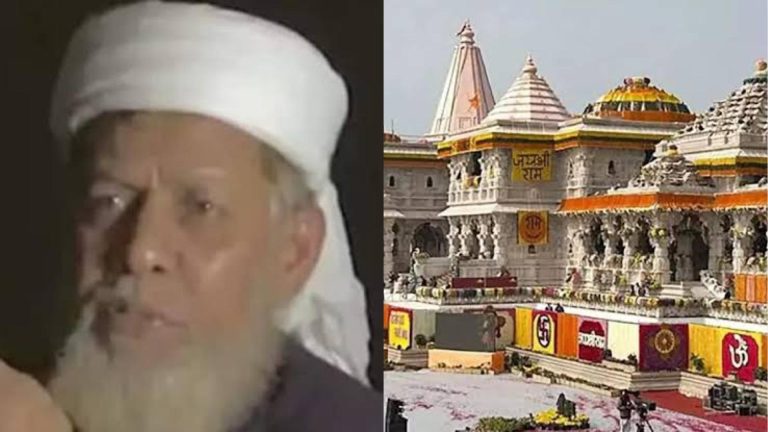
‘Babri mosque will be rebuilt, Ram Mandir will be reduced to rubble’: Pakistani terrorist Farhatullah Gori incites ‘Fidayeen War’ against India

Terrorist groups operating from Pakistan are once again striving to destabilize India by recruiting new members, exploiting the Babri Mosque issue to radicalize young Muslims. This recruitment campaign is being led by none other than Farhatullah Gori, the same terrorist who recently advocated attacks on India’s infrastructure.

As reported by India Today, Pakistani terrorists have created an online network, including a website designed to incite violence. This platform encourages jihad for the reconstruction of the Babri Mosque, calls for targeting Uttar Pradesh Chief Minister Yogi Adityanath, and promotes terrorism. The network extends its influence through social media platforms like Facebook, Instagram, WhatsApp, and others.

The use of encrypted messaging apps like Signal further complicates tracking their activities. According to the report, the website promoting terrorism among Indian Muslims was launched on December 3, 2024. It contains messages supporting the Babri Mosque’s revival and features propaganda videos by Farhatullah Gori.

In one such video, Gori speaks of demolishing the Ram Temple, stating, “With Allah’s will, the Ram Temple will one day be reduced to rubble. Muslims must act on Quranic teachings and commit to terrorist attacks in India—mere social media posts won’t change anything.”

Another video glorifies the terrorist responsible for the Rameshwaram Café bombing in Bengaluru. Gori admits that carrying out attacks has become more difficult since Prime Minister Narendra Modi assumed office.

In 2024, the website disseminated 19 videos aimed at recruiting extremists. It also funnelled users into a Signal group named Saut-Al-Haq, comprising 63 members advocating terrorism.

Previously, Gori had released a video instructing militants on bomb-making techniques for targeting trains, using devices like pressure cookers. Indian security agencies have since obtained this footage. Currently residing in Pakistan under the protection of ISI, Gori continues to plot against India. He is the chief architect behind both the Rameshwaram Café bombing and the Akshardham Temple attack in Gujarat.

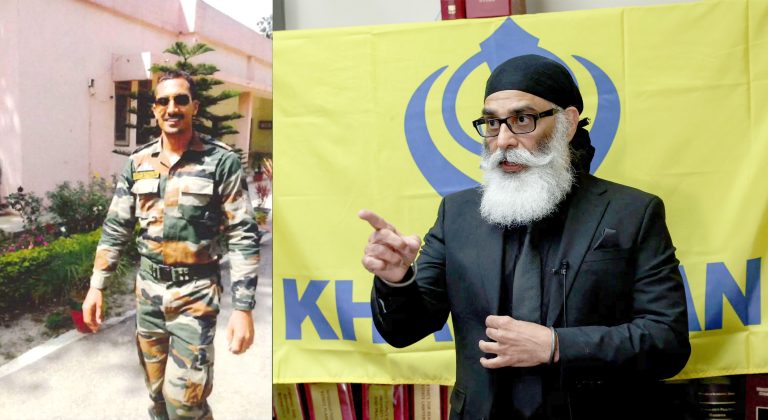
Plot to assassination Khalistani Gurpatwant Pannun: High Power panel submits report, recommends action against individual with ‘criminal links and antecedents’

In a press statement released on Wednesday, the Ministry of Home Affairs (MHA) informed that a high-powered committee that was formed by the central government to investigate the US allegations of an assassination attempt on Khalistani terrorist Gurpatwant Singh Pannun has submitted its report. The report has recommended legal action against an unnamed individual accused of the alleged plot.

“After a long enquiry, the Committee has submitted its report to the government and recommended legal action against an individual, whose earlier criminal links and antecedents also came to notice during the enquiry. The Enquiry Committee has recommended that the legal action must be completed expeditiously”, the MHA press statement said.

“The Enquiry Committee conducted its own investigations and also pursued the leads provided by the US side. It received full cooperation from the US authorities and the two sides also exchanged visits. The Committee further examined a number of officials from different agencies and also scrutinised relevant documents in this connection”, it added.

The Committee has further recommended functional improvements in systems and procedures as well as initiation of steps that could strengthen India’s response capability, and ensure systematic controls and coordinated action in dealing with matters like this.

The Indian government constituted the committee in November 2023 to investigate the inputs shared by the US on the alleged failed assassination plot of Pannun. The committee travelled to the US on October 15 last year as part of the investigation to take inputs from the US authorities concerning the matter.

The US authorities had named Vikash Yadav, said to be a former officer of the Indian intelligence agency RAW, in connection with the alleged assassination plot. The Indian government however clarified in October last year that the individual named by the US in the matter was no longer an employee of the government of India.

The US Justice Department had reportedly claimed in an indictment filed in a federal court in Manhattan that an unidentified Indian government employee named (CC-1) recruited an Indian national named Nikhil Gupta to hire an assassin to kill Pannu. Gupta was detained in Prague in June 2023 and was extradited to the US in June 2024.

The US allegations regarding the failed assassination of Khalistani terrorist Gurpatwant Singh Pannun in November 2023 came months after then-Canadian Prime Minister Justin Trudeau alleged the involvement of Indian officials in the murder of Khalistani leader Hardeep Singh Nijjar.

PM Modi dedicates three Made-in-India naval vessels – a destroyer, a frigate & a submarine – at Mumbai dockyard

Prime Minister Narendra Modi dedicated three frontline naval ships, INS Surat, INS Nigiri and INS Vaghsheer to the nation, during their commissioning at the Naval dockyard in Mumbai on Wednesday.

“It is for the first time that the tri-commissioning of a destroyer, frigate and submarine was being done,” highlighted the Prime Minister.

According to the Ministry of Defence, INS Surat is a destroyer, INS Nilgiri a frigate and INS Vaghseheer a submarine.

“This historic tri-commissioning reflected India’s rich maritime legacy and commitment to self-reliant defence under Aatmanirbhar Bharat. These vessels, built indigenously, enhance the Indian Navy’s operational capabilities and strengthen India’s role in the Indian Ocean Region,” the ministry’s social media handle said.

Emphasising the significant role of maritime nations like India in shaping global security, economics, and geopolitical dynamics, the Prime Minister highlighted the importance of protecting territorial waters, ensuring freedom of navigation, and securing trade supply lines and sea routes for economic progress and energy security. He also stressed on the need to safeguard the region from terrorism, arms, and drug trafficking.

On the occasion of Army Day commemorated today, PM Modi also saluted every brave warried who would sacrifice his life for the safety and security of the nation.

The PM further highlighted the connection of Chhatrapati Shivaji Maharaj giving a ‘new strength and vision’ to the Navy in India during his rule.

Prime Minister also emphasised that was a matter of pride that all the three frontline platforms were made in India. He congratulated the Indian Navy, all the stakeholders involved in the construction work and the citizens of India for the achievement.

“Today’s program links our glorious heritage with our future aspirations,” exclaimed Modi.

An official statement released by the Ministry of Defence added that the PM mentioned India’s rich history related to long sea voyages, commerce, naval defence and ship industry. Taking cue from this rich history, PM Modi remarked that today’s India is emerging as a major maritime power in the world.

According to the statement, INS Nilgiri is dedicated to the maritime prowess of the Chola dynasty, and the Surat warship, reminiscent of the era when Gujarat’s ports connected India to West Asia.

The PM remarked how Vagsheer submarine is aimed at enhancing both India’s security and progress.

“India is today recognised as a reliable and responsible partner globally, especially in the Global South,” the PM said, while also highlighting that the country has supported an open, secure, inclusive, and prosperous Indo-Pacific Region.

He noted that when it came to the development of coastal nations, India introduced the mantra of SAGAR (Security And Growth for All in the Region) and advanced with this vision.

Stressing on the importance of enhancing and modernising India’s military capabilities in the 21st century, PM Modi highlighted, “be it land, water, air, the deep sea or infinite space, India is safeguarding its interests everywhere.”

He further mentioned how the armed forces have identified over 5,000 items and equipment which will no longer be imported.

Modi noted the establishment of the country’s largest helicopter manufacturing factory in Karnataka and a transport aircraft factory for the armed forces. He highlighted the achievements of the Tejas fighter plane and the development of defence corridors in Uttar Pradesh and Tamil Nadu, which are accelerating defence production.

“The commissioning of three major naval combatants marks a significant leap forward in realising India’s vision of becoming a global leader in defence manufacturing and maritime security,” read the MoD’s statement.

INS Surat, the fourth & final ship of the P15B Guided Missile Destroyer Project, ranks among the largest and most sophisticated destroyers in the world. It has an indigenous content of 75% and is equipped with state-of-the-art weapon-sensor packages and advanced network-centric capabilities.

INS Nilgiri, the first ship of the P17A Stealth Frigate Project, has been designed by the Indian Navy’s Warship Design Bureau and incorporates advanced features for enhanced survivability, seakeeping, and stealth, reflecting the next generation of indigenous frigates.

INS Vaghsheer, the sixth and final submarine of the P75 Scorpene Project, represents India’s growing expertise in submarine construction and has been constructed in collaboration with the Naval Group of France.


(This news report is published from a syndicated feed. Except for the headline, the content has not been written or edited by OpIndia staff)

People accused of serious crimes becoming public representatives: Does India need a new law to bar criminals and separatists from becoming MPs and MLAs?

The announcement of the Delhi assembly elections in January has only intensified the political temperature of the national capital. The polls are now around the corner with the voting to commence on 5th February and the results scheduled to be declared on 8th February. All political parties are making their utmost efforts for victory. It is quite evident that all moral principles, which are quite glaringly absent in the political landscape, have been sacrificed for the sake of electoral support, notably from the minority community.

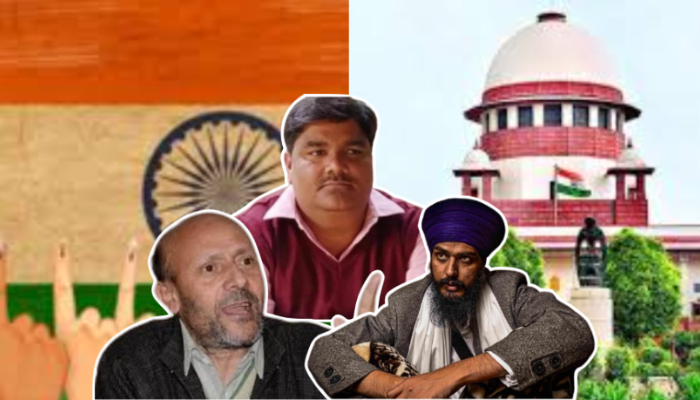
A prime case in point is the All India Majlis-e-Ittehadul Muslimeen (AIMIM), a party that claims to champion the cause of minorities but, in reality, only panders to extremist elements as its entire leadership has a long history of perpetrating divisive and hateful narratives against Hindus. Hence, the endorsement of former Aam Aadmi Party (AAP) councillor Tahir Hussain who has been involved in the 2020 anti-Hindu riots in Delhi, as a party candidate is not surprising. However, it is certainly a disappointing development for the democratic fabric of the nation.

Tahir Hussain has been identified as a prime accused of inciting the violence. His property was utilized to orchestrate the unrest and it served as a hideout for several rioters along with a depot for various weapons, including petrol bombs. He is currently facing several charges including murder, rioting and money laundering under the Unlawful Activities (Prevention) Act. However, the Delhi High Court provided him with custody parole to submit his nomination for the Mustafabad assembly constituency.

While the situation might appear demoralizing, the more pressing concern is that it is the norm and not an exception. The political parties award election tickets to such individuals to enhance their electoral prospects, especially those that predominantly depend on minority votes. They disregard the criminal backgrounds of these candidates because the latter wield a privileged position and considerable influence over the populace. Furthermore, as provisions of Indian democracy allows independent candidates to fight polls, such criminals exploit the opportunity as demonstrated in the recent Lok Sabha election.

Using the country’s democracy to pursue separatist agenda

The Lok Sabha election attracted widespread attention not only because of the surprise results, wherein the Bharatiya Janata Party was left a few seats short of 272, but also for certain people who had marked their presence in the respective constituencies with remarkable triumphs. The name of Amritpal Singh was especially in the headlines after he won from the Khadoor Sahib seat. He has not only advocated for the separation of Punjab from India but is also an outspoken supporter of the Khalistan movement.

The members of his organisation “Waris Punjab De” and supporters even attacked Ajnala police station to release one of their associates from custody. Amritpal Singh has ties to both international Khalistan terror groups and Pakistan’s Inter-Services Intelligence, according to Indian security officials. Photographs of Khalistani flags, symbols, money, firearms bearing the “A.K.F” (Anandpur Khalsa Fauj) and other incriminating proof was uncovered on the phone of one of his close aides.

There were suspicious deposits totaling around Rs 40 crore, primarily from overseas sources, found in the accounts of some “Waris De Punjab” members. According to information, he has been assembling his own army and “human bomb squads” consisting of young people who have been groomed to become suicide bombers like terrorist Dilawar Singh. Even his wife Kirandeep Kaur who lived in the United Kigdom has links with terror outfit Babbar Khalsa.

Amritpal Singh is presently incarcerated at Assam’s Dibrugarh Central Jail under the National Security Act (NSA). He was given a parole and flown to New Delhi for his oath-taking ceremony as an member of parliament. A man who had earlier vowed and left no stone unturned to undermine the sovereignty and integrity of India, as well as to violate the constitution, took an oath to uphold the very tenets he breached and more importantly, intend to do the same until his nefarious goal is achieved.

The electoral victory has fortified his confidence to such an extent that he has now proclaimed the formation of a political party. It was announced at a rally in Muktsar Sahib in the presence of his father Tarsem Singh and Faridkot MP Sarabjeet Singh Khalsa, the son of Beant Singh, one of the assassins of former Prime Minister late Indira Gandhi. Similar to the Shiromani Akali Dal (Amritsar), his party is also poised to manipulate the authority and rights granted by the Constitution with the aim to balkanize and undermine the country.

The next name defeated the present chief minister of the union territory of Jammu and Kashmir and a political royalty Omar Abdullah, from Baramulla. A vocal anti-Indian and anti-Hindu voice from the valley Abdul Rashid Sheikh, popularly known as Engineer Rashid who was arrested under the Unlawful Activities Prevention Act (UAPA) on terror funding charges and is serving his time in the Tihar Jail comfortably managed to defeat the Abdullah scion.

The former had also won the assembly election in 2008 and 2014 from the Langate constituency and even established the Jammu and Kashmir Awami Ittehad Party which joined forces with the radical Jamaat-e-Islami to fight the last Jammu and Kashmir assembly poll. He has a long history of involvement with secessionist outfits, including the People’s Conference led by Abdul Ghani Lone, which was a key participant in the Muslim United Front that contested the 1987 elections with an Islamist agenda. He gained further notoriety in 2015 for arranging a beef party on the lawns of the government circuit.

What does the law say: The right to vote vs the right to be elected

The Supreme Court acknowledged that free and fair elections are a component of the “basic structure” of the Indian Constitution, and that any legislation or policies that would contravene this principle could be overturned, in the 1975 case of Indira Gandhi v. Raj Narain. It also noted that the rights to vote and to be elected do not have the same standing as free and fair elections, despite the fact that they are regarded as the most important constitutional provisions.

In Kuldip Nayar v. Union of India, 2006, a five-judge constitution bench concluded that the right to vote (or the right to elect as it was known) is “pure and simple, a statutory right.” Voting is therefore not a fundamental right and is subject to repeal. The bench observed the same for the right to vote, concluding that both of these statutory rights could be governed by laws passed by Parliament.

“Disqualification on conviction for certain offences” is the heading of Section 8 of the Representation of People Act, 1951 (RP Act). Let us assume that a person is convicted of one of the offenses, which is mentioned in the broad list of offenses in the proviso. In that event, they shall be debarred from seeking election to a seat in the Parliament or State Legislature from the date of their conviction and further prohibited from seeking an election for a period of six years from the date of their release.

A Public Interest Foundation filed in 2011 petitioned to disqualify people who have affidavits which are false regarding their criminal background or who have manufactured criminal charges against them. Nonetheless, a five-judge panel unanimously agreed that the RP Act could be amended only by the legislature. The Election Commission of India (ECI) is authorized by Section 11 of the RP Act to “remove” or “reduce” the period of disqualification.

The former used its powers to reduce the disqualification period for Sikkim Chief Minister Prem Singh Tamang ECI. He was released from jail in 2018 after completing one year for embezzling funds meant to purchase cows. The head of the Sikkim Krantikari Morcha subsequently won the Poklok Kamrang assembly seat in the bye-election. A disqualified MP or MLA can challenge his conviction on the ground of stay of such verdict while his petition is before a higher court.

The Supreme Court pronounced, in 2019, “the disqualification which operates as a consequence of the conviction cannot take or remain in effect” in case of an order of deferment of such order. Former Bahujan Samaj Party MP Dhananjay Singh, convicted of abduction in 2020 by a district court, approached the Allahabad High Court and filed a petition for staying his seven-year sentence to permit him to contest the Lok Sabha election. However, the court refused to put off the judgment, stating, “it is the need of the hour to have purity in politics,” although granting him bail.

“No person shall vote at any election if he is confined in a prison, whether under a sentence of imprisonment or transportation or otherwise, or is in the lawful custody of the police,” reads subclause (5) of Section 62 of the RP Act, on the other hand, which places a number of restrictions on the right to vote. This provision effectively disenfranchises anyone who has been charged with a crime from voting unless they have been granted bail and/or acquitted except those under preventive detention.

A challenge to Section 62(5) was junked by the highest court in the 1997 case of Anukul Chandra Pradhan, Advocate, Supreme Court v. Union of India. It was contended that the rule denies undertrials and those detainees who are remanded for the inability to pay the sum of bail while the same was not applied to those who received bail and hence infringed on the right to equality.

The court dismissed this argument for four reasons. The court restated that voting rights are statutory rights that could be restricted by statutes. It then highlighted that there is a “resource crunch” since police would need to be deployed and infrastructure would need to be provided.

A prisoner then “cannot claim equal freedom of movement, speech, and expression” due to his actions. Last but not least, restrictions on inmates’ right to vote make sense because they are tied to preventing “persons with criminal backgrounds from being present at the election scene.” The judgments were lately cited by the Delhi High Court in the year 2020 and also by the Supreme Court in the year 2023 while rejecting pleas for voting rights for prisoners.

Ashwini Kumar Upadhyay, a Bharatiya Janata Party leader and advocate, had submitted a plea in 2016 for permanent disqualification of the guilty. In November 2023, the apex court ordered the chief justices of all high courts to register a suo motu case titled “In Re: Designated Courts for MPs/MLAs” with regard to the delays in criminal cases against MPs and MLAs. The matter is still under consideration, and the high courts are directed to issue guidelines to deal with such matters in a “expeditious and effective” manner. However, 4,472 such cases are still pending based on a report filed before the court in April 2024.

Threat to national security, law and order

For decades, the separatists opposing India and many criminal elements have taken advantage of the Indian Constitution and democratic processe for their benefit. Former Lok Sabha MP Simranjit Singh Mann is yet another startling example of it. Unfortunately, the issue doesn’t pertain to one or a few parts of the country but have been prevalent in other areas including Kashmir and the Northeast as well. Despite their overtly anti-India statements and criminal backgrounds, these individuals are not precluded from becoming lawmakers. Their participation in Indian polity is also a considerable waste of time and resources mainly because some of these individuals opportunity to participate in parliamentary functions or contribute as public representatives.

It is essential to recognize that this matter is intrinsically linked to the preservation of law and order, as well as the overall safety and security of the nation. When individuals with such egregious criminal backgrounds are elected to Parliament or State Legislature, it is unrealistic to expect that they will enforce laws aimed at ensuring the nation’s safety and security as their presence in such powerful places can only enhance their ability to inflict harm from within and damaging social cohesion and law and order while safeguarding themselves and their kind.

They also utilise the authority to further their ideologies and crimes. This even encourages others who are akin to them. The Babhubali culture and its influence on politics are a testament to this assertion. Gangsters such as Atiq Ahmed and Mukhtar Ansari exemplify how they exploited legal frameworks to advance their criminal enterprises and communal agendas. Political parties also need to stop catering to them and stop such elements from gaining political power.

It is also essential to emphasize that the polity alone cannot be held accountable for this situation, rather, the electorate must be educated and encouraged to look beyond narrow political interests, personal benefits and favoritism. There is an urgent need for increased education and awareness regarding this issue.

However, the realization of this objective could span decades or even generations. Hence, a preliminary step could involve imposing a law that prohibits such accused from engaging in the electoral process, which would allow for further developments to follow. This matter is of utmost importance and therefore, requires attention with the same level of proactivity and urgency.


Islamist in talks with Pakistani cleric admits stone-pelting on police in Sambhal, justifies violence accusing Hindus and administration of ‘disrespecting’ law

0

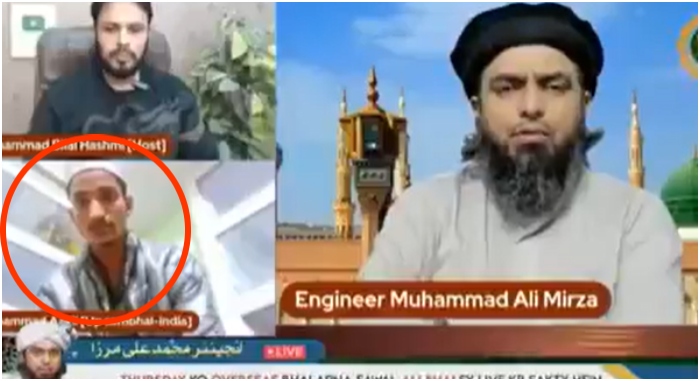
In a crucial development, an Islamist from the Sambhal district of Uttar Pradesh confirmed that the community he pelted stones at the Hindus and police in Sambhal. The attack took place after a court-ordered survey of Shahi Jama Masjid on the plea of petitioners contending that the disputed site was originally a Hindu temple dedicated to Lord Kalki. The Islamist identified as Muhammad Akil while in communication with Pakistan cleric Engineer Muhammad Ali Mirza on YouTube live said that it was Friday and the Islamist mob was furious over the claims of a temple beneath the 300-year-old Masjid.

“A survey was conducted of a 300 to 400-year-old Masjid here in Sambhal after the non-Muslims made claims of a temple beneath it. Following this, the Muslims got furious and pelted stones at the administration and the non-Muslims to protect the interest of the site,” he asserted as he furthered to ask whether the Muslims who lost their lives in the scuffle would be termed as ‘martyrs’.

The video of the question was posted by an X handle named ‘Angry Saffron’ who said that Akil confirmed that the stone-pelting was initiated by the Islamists in Sambhal. OpIndia also independently verified the YouTube live video and learned that Md Akil not only confirmed the stone-pelting but also justified the Islamist stone-pelting.

In the video, Akil could be heard saying that the Islamist stone pelting forced the police to initiate firing at the mob which resulted in the death of 3-4 Muslims. He also said that the non-Muslims were illegally claiming ownership of the Masjid and stating that it was a temple. Akil basically justified the stone pelting and said that the acts of Hindus and the local administration irked the Islamists who pelted stones on the former on Friday.

Islamists justified stone-pelting, accused non-Muslims of taking the law into their own hands

Engineer Muhammad Ali Mirza listened to the question posed by Akil asking whether 3-4 Muslims who died in the violence should be termed as ‘martyrs’. Answering this, Mirza said that every Muslim dying for religion shall be termed a ‘martyr’, however, he said that the Muslims should not take the law into their hands to protect any Islamic site. He said that the community must take the help of the local administration including the police to save the Islamic properties and not harm anyone for the claimed properties.

Responding to this, Akil argued that it was non-Muslims who allegedly took the law into their hands and eyed to encroach a ‘Muslim property’ claiming the presence of a temple beneath it. He said that even the state force was backing the non-Muslims which irked his community, forcing the latter to pelt stones at the administration and the non-Muslims.

What happened on 24th November?

It is crucial to note that on 24th November last year, massive violence erupted in the Sambhal district of Uttar Pradesh after Islamists rioted and pelted stones against the police injuring more than 20 officers. The First Information Reports (FIRs) of this incident revealed how the mob targeted the police. While on one hand, the people associated with the perpetrators played victim, the FIR stated that a group of 700-800 Muslims gathered about 100 meters away from the structure at around 8:45 that morning.

The crowd then began raising slogans before turning violent. The boys also hurled stones at the cops making the police target. The official complaint filed by a sub-inspector posted in Kotwali Nagar, Sambhal added that the mob was determined to drive out the police team that had arrived to survey the contested mosque.

According to the sub-inspector, it was illegal in the district for more than five persons to congregate given the survey of the disputed site was underway. As a result, the police repeatedly advised the people to return home. However, the raging crowd remained unaffected by the appeals and kept pushing the policemen as they moved forward. The culprits continued to abuse the police personnel and threw stones at them during this period. According to the sub-inspector’s accusation, the Muslim radicals were targeting the police as part of a conspiracy that took a violent turn after November 24th.

Violence mastermind has connections to Dawood, 60 arrested

In the latest update to the case, the state police have arrested around 60 Islamists, including 4 women for their involvement in the stone pelting against the administration on 24th November. The police are on the lookout for 89 more accused who are still absconding. It has also been learned that the suspected mastermind of the violence in the given case Sharik Satha, is a member of Dawood Ibrahim’s gang.

Reports suggest that he has over 50 cases registered against him in various states. A few years ago, he reportedly fled to Dubai. Police believe that he not only provided funding for the Sambhal violence that took place on 24th November but also supplied weapons used by his operatives to carry out the attack. The intelligence unit in Sambhal has identified five more suspected terrorists with links to the area. Two key names that have surfaced during the investigation are Shahid Akhtar and Usman Hussain, who are suspected of facilitating the delivery of weapons and funding for the violence.

It is further crucial to note that the non-Muslims did not take the law into their own hands as allegedly claimed by Md Akil. However, it was the Muslims who took the law into their own hands by attacking the local administration and the non-Muslims to protect the contested site.

The Islamists earlier played victim claiming that the police had initiated firing killing and injuring some of the Islamists. Several videos of families of rioters had gone viral over the internet in which they could be seen accusing the administration of allegedly killing their relatives. However, Akil unknowingly in the live video posted a month ago revealed that it was Islamists who initially pelted stones at the police and non-Muslims resulting in defensive firing by the police. (Time frame: 37:00 ahead)

Court-ordered survey at Jama Masjid in Sambhal

On 19th November, a court-mandated survey was conducted at Jama Masjid in Sambhal, Uttar Pradesh. The court ordered the survey in response to a petition filed by Supreme Court Advocate Vishnu Shankar Jain, and seven co-plaintiffs, asserting that the mosque occupies the site of a temple dedicated to Bhagwan Kalki. The site in question is a protected monument under the Ancient Monuments Preservation Act of 1904. A heavy police force was deployed in the area to ensure the survey proceeded peacefully.

However, on 24th November, during the second round of court-mandated survey at Jama Masjid, Islamist mobsters gathered outside the mosque and engaged in violence. They pelted stones at police, opened fire at police personnel, and set ablaze vehicles and shops. More than 20 policemen were injured.

Following this, the Supreme Court of India stayed the hearing in the District Court, Sambhal, in response to a plea filed by the Muslim side. Furthermore, the survey report submitted by the Advocate Commissioner has been ordered to be sealed and not to be opened till an order is passed by the High Court in the matter. A judicial committee was formed by CM Yogi Adityanath to investigate the cause of the violence.

Detailed coverage of the Sambhal violence and the Jama Masjid legal case can be read here.

Maha Kumbh becomes top keyword in Google Trends in Pakistan, Qatar and other Islamic nations

0

The grand Hindu festival of Maha Kumbh has attracted global attention for its spiritual aura and magnanimity. While the mega event is witnessing an influx of devotees from India and across the world including countries like Brazil, Germany, Japan, England, the United States, and Spain, Maha Kumbh has also piqued the interest of Islamic nations like Pakistan.

In an unusual trend, “Maha Kumbh”, “Maha Kumbh 2025”, “Prayagraj Maha Kumbh”, “Mahakumbh Mela” and similar terms have been among the top Google search keywords in Islamic nations like Pakistan, Qatar, the UAE, and Bahrain as per Google Trends as per reports.

Besides, the Hindu festival Maha Kumbh has also attracted immense interest among people in Nepal, Singapore, Australia, Canada, Ireland, Britain, Thailand, and the United States hinting at the grand event’s religious and cultural significance.

Notably, the Kumbh celebrations, renowned for their grandeur and vibrant spirit, take place every four years and are considered among the most significant events. However, this year’s Kumbh celebrations are considered even more important as it signifies the culmination of 12 Kumbh Mela cycles, taking place once every 144 years.

As per Uttar Pradesh Chief Secretary Manoj Kumar Singh, the Maha Kumbh that will be observed from January 13 to February 26 will witness 35 crore pilgrims visiting the holy Sangam – the confluence of rivers Ganga, Yamuna and Saraswati.

Karnataka: CM Siddaramaiah defers caste census report amidst mounting opposition from various communities

0

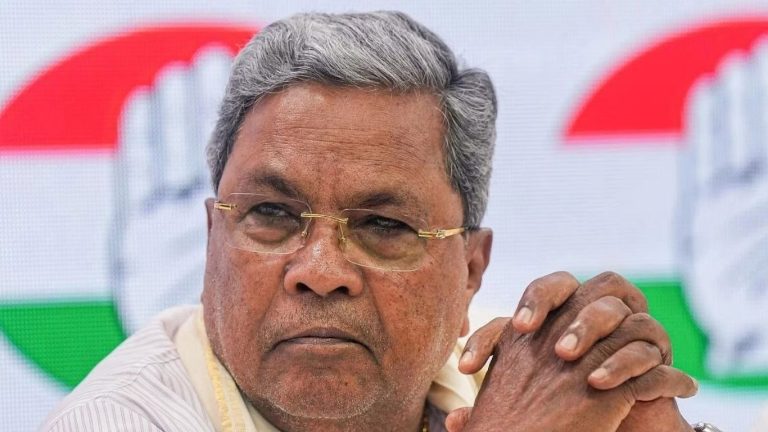
The tabling of the Karnataka Socio-Economic and Education Survey report, also known as the ‘caste census’ before the state cabinet has been deferred by one day. The census was reported to be presented in a state cabinet meeting on January 16. Karnataka Chief Minister Siddaramaiah confirmed that the report will now be tabled in a subsequent cabinet meeting.

State Home Minister G Parameshwara said that the state government will analyse the survey report and any decision to be taken based on the report will be the discretion of the government. “It was decided the sealed cover (of the report) will be opened before the cabinet, otherwise it may lead to leakage of information…whether there will be a discussion on it or not, I cannot speak about it now, once opened at least abstract information will be known to us”, Parameshwaram said.

The survey was commissioned by the previous Siddaramaiah-led Congress government in 2015. The Karnataka State Commission for Backward Classes, headed by Chairman K Jayaprakash Hegde, completed the survey in 2018. However, the report has not come out since. The commission submitted the survey report to the state government on February 29 last year. Vokkaliga and Lingayat communities of the state have questioned the accuracy of the report and called it unscientific. They demanded a fresh survey to be conducted.

A memorandum was submitted by the Vokkaliga community, which included signatures of Deputy Chief Minister DK Shivakumar who is a Vokkaliga, and a couple of other ministers, to the Chief Minister, requesting the report to be rejected. All India Veerashaiva Mahasabha, headed by Congress leader and MLA Shamanuru Shivashankarappa, also dismissed the survey report and demanded a fresh survey. The survey report reportedly contains numerical data that may alter the perception regarding the strength of certain communities in the state.

Delhi’s Chief Electoral Officer launches “Myth vs Facts Register” to combat fake news ahead of Assembly polls

Delhi’s Chief Electoral Officer (CEO) launched a “Myth vs Facts Register” on Wednesday to combat fake news and safeguard the integrity of the electoral process ahead of the Delhi Assembly elections.

With just 3 weeks left for the Delhi Assembly elections, CEO R Alice Vaz aims to provide Delhi voters and media organizations with a resource to counter false narratives and ensure factually correct information is readily available

She called the launch as “recognizing the growing threat of misinformation, disinformation and fake news, especially during Delhi Assembly elections.”

The Myth vs Facts Register, accessible at https://www.ceodelhi.gov.in/mythvsfacts.aspx, serves as one of the resources for Delhi voters and media organizations to counter false narratives and ensure factually correct information is readily available.

According to an official statement released by the Delhi CEO’s office, “any fake news or misleading information circulated on social media platforms during elections will be thoroughly analyzed, verified, and debunked on this portal.”

“This initiative is a significant step towards safeguarding Delhi voters from the harmful effects of fake news. By promoting transparency and accuracy, the Myth vs Facts Register empowers citizens to make informed decisions during the election,” CEO Vaz said.

The initiative’s goal is to bring timely updates on debunked, fake news during election periods, and also have a “trustworthy platform for verifying election-related misinformation, disinformation and fake news.”

As the election approaches, the triangular fight between the Bharatiya Janata Party, Congress and the ruling Aam Aadmi Party has intensified against each other.

Arvind Kejriwal, AAP’s national convenor and former Delhi Chief Minister also filed his nomination from the New Delhi seat for the Delhi Assembly Polls.

Kejriwal is in the electoral fray against BJP candidate Parvesh Verma and Congress’ Sandeep Dikshit. After filing his nomination, Kejriwal asserted that a lot of work is still left to be done in the national capital.

Delhi goes to polling on February 5 and the counting of votes will take place on February 8.

The ruling Aam Aadmi Party (AAP) has already announced its candidates for all 70 assembly seats. Bharatiya Janata Party (BJP) has announced its candidates for 59 seats.


(This news report is published from a syndicated feed. Except for the headline, the content has not been written or edited by OpIndia staff)

Lazarus Group and WazirX hack: Know how North Korean hackers have been linked to billions in cyber-theft and massive ransomware attacks

On 14th January (local time), three countries, the United States, Japan and South Korea, issued a joint statement warning the global blockchain and cryptocurrency industries of targeted attacks by North Korean government supported hackers. In the statement, the largest crypto exchange of India, WazirX, was mentioned, attributing a $235 million hack on the platform to North Korean hackers. The joint statement has linked the breach to the state-sponsored hacking organisation Lazarus Group based in North Korea.

WazirX, which faced severe scrutiny following the breach last year and is currently working with the authorities to recover the funds to pay back the investors, said in a statement that it will not leave any stone unturned to get back its stolen assets.

Nischal Shetty, Founder and CEO of WazirX, took to X and wrote, “Joint statement from the United States, Japan, and South Korea addressing the alarming cyberattacks by DPRK cyber actors, including the WazirX hack. This is a critical moment. We urge swift international action and support to recover the stolen assets. Rest assured, we will leave no stone unturned in our pursuit of justice.”

Joint statement warns of cyber threats

The three nations have warned the global blockchain and cryptocurrency industries of targeted attacks by North Korea. The statement read, “The Democratic People’s Republic of Korea’s (DPRK) cyber programme threatens our three countries and the broader international community and, in particular, poses a significant threat to the integrity and stability of the international financial system.”

It further outlined the collective efforts of the governments of the three nations to prevent such thefts, recover stolen funds, and deny North Korea illicit revenue. The statement has emphasised that these funds are believed to support North Korea’s weapons of mass destruction and ballistic missile programmes.

Widespread cyber-thefts attributed to North Korea

The statement highlighted multiple cyber thefts attributed to North Korea in 2024 alone. It included $308 million from Japan’s DMM Bitcoin, $50 million from South Korea’s Upbit, and $16.13 million from Bahrain-based Rain Management. WazirX, which suffered a breach of nearly 45% of its crypto holdings in July 2024 due to a compromised multisig wallet, was also listed among the victims.

Furthermore, the statement noted a $50-million theft targeting Radiant Capital, further highlighting North Korea’s involvement in a series of high-profile cyberattacks on virtual assets.

Details of the cases mentioned in the joint statement

In December 2024, Federal Bureau of Investigation (FBI), Japan’s National Police Agency (NPA), and the Department of Defense Cyber Crime Center (DC3) linked North Korean cyber actors to the theft of $308 million from Bitcoin, an incident that took place in May 2024. The attack was attributed to the TraderTraitor Group. It involved sophisticated social engineering. In March 2024, a North Korean operative posing as a recruiter on LinkedIn lured a Ginco employee into executing malicious Python code. By mid-May, the attackers exploited session cookies to impersonate the compromised employee, gaining access to Ginco’s systems. They later manipulated a legitimate DMM transaction, stealing 4,502.9 BTC. The stolen funds were transferred to wallets controlled by TraderTraitor.

In November 2024, South Korea’s National Police Agency (NPA) identified North Korea as the perpetrator behind a 2019 heist involving 342,000 Ethereum, valued at approximately $435 million at the time. This marked the first instance of South Korean authorities linking a cryptocurrency attack to North Korea. The investigation revealed the involvement of North Korean IP addresses, distinctive virtual asset flow patterns, and specific linguistic traces in communication, all pointing to North Korean actors. Collaborating with the FBI over four years, authorities determined that more than half of the stolen assets had been converted to Bitcoin at discounted rates via suspected North Korean exchange platforms, while the remainder was laundered across 51 foreign exchanges. In October 2024, South Korea successfully reclaimed 4.8 Bitcoin from a Swiss cryptocurrency exchange after demonstrating its connection to the stolen funds. The NPA has pledged to strengthen cybersecurity measures to prevent future attacks.

In September 2024, the FBI warned about North Korea’s aggressive social engineering campaigns targeting employees in cryptocurrency, decentralised finance (DeFi), and related industries. Using sophisticated tactics, North Korean actors impersonated recruiters or technology firms, leveraging fake identities and personal details to lure victims. They often initiated prolonged conversations to build trust and deliver malware, aiming to access cryptocurrency assets. Indicators included requests for code execution, unsolicited links, and suspicious investment offers. The FBI advised stringent identity verification, network safeguards, and prompt reporting of suspected incidents to mitigate risks.

In May 2022, the US Government issued an advisory warning about North Korean IT workers infiltrating international freelance and digital payment platforms. These workers reportedly generate revenue for North Korea’s weapons programs by misrepresenting their identities, often posing as foreign or US-based developers. They exploit platforms to secure IT contracts and use privileged access for malicious purposes. The advisory outlined red flag indicators, such as inconsistent profiles, cryptocurrency payments, and frequent logins from varying IP addresses, urging companies to conduct thorough identity verification and background checks to avoid inadvertent hiring.

Similar alerts, advisories and warnings were issued in October 2024, August 2024, May 2024, October 2023, and November 2022.

Measures to counter DPRK’s cyber activities

The United States, Japan, and South Korea reaffirmed their commitment to countering North Korea’s malicious cyber activities. They pledged to enhance collaboration through trilateral working groups, impose sanctions on DPRK cyber actors, and strengthen cybersecurity measures across the Indo-Pacific region. The statement read, “The United States, Japan, and the Republic of Korea reaffirm their commitment to combatting cyber threats posed by the DPRK and enhancing their coordination through the trilateral working groups.”

What is Lazarus Group

Lazarus Group is a North Korean state-sponsored cyber threat group active since at least 2009. It is infamous for high-profile attacks, including the 2014 Sony Pictures Entertainment hack, part of Operation Blockbuster. The group’s activities involve sophisticated malware linked to campaigns like Operation Flame, Operation Troy, DarkSeoul, and Ten Days of Rain. Lazarus Group also used the KillDisk tool in a 2017 attack on a Central American casino. The term often broadly encompasses North Korean cyber activities, although some organisations distinguish subgroups like Bluenoroff, APT37, and APT38.

The Sony Pictures hack in November 2014 was a high-profile cyberattack attributed to a group calling itself the Guardians of Peace which was linked to North Korea. The attackers infiltrated Sony’s corporate network, stealing terabytes of private data, erasing originals, and issuing threats to release the stolen information unless their demands were met. Sony’s operations were disrupted for days, forcing employees to resort to manual methods like using whiteboards.

Over the following months, the hackers leaked unreleased films, private conversations, and sensitive employee data to journalists. The attack escalated when the hackers targeted The Interview, a comedy about journalists plotting to assassinate North Korean leader Kim Jong Un. Threats referencing 9/11 were made, pressuring Sony to halt the film’s release. This led then-President Barack Obama to issue a statement, warning that shelving the film due to terrorists’ demands would set a dangerous precedent.

The same Lazarus Group was also reported to be behind a massive operation to steal 1 billion dollars from the Central bank in Bangladesh. They had exploited the vulnerabilities in the global inter-bank payment system, combined with the weekends and holidays across New york, Bangladesh and Manila to divert the stolen funds to obscure accounts and entities carefully planted across the world. The Group managed to siphon away $81 million before a spelling error in one of the transfer requests halted the operation. The seed for the heist was planted in a similar way, an innocuous email of a job seeker sending his resume to bank employees, carefully concealing malware.

Much has been said and written about the Lazarus Group. It is believed that talented students who do well in maths are picked up as young as 12-years-old in North Korea, and are then sent to the capital city of Pyongyang to be trained as hackers. An individual named Park Jin-hyok alias Park Kwang Jin, a former computer programer who worked in the Chinese port city of Dalian, is said to be the leader of the group. He faces multiple criminal charges and around 20 years in prison if the FBI ever manages to find him.

The heist had almost become successful, because the hackers were so careful that there was no way to stop the money transactions from Bangladesh Central bank’s reserve in new York to a set up account in Manila’s RCBC Bank. It was only a minor coincidence that stopped the transaction. The address of the RCBC Bank in Manila had the word ‘Jupiter Street. Jupiter was also the name of a sanctioned Italian ship that was red flagged by the Federal Reserve Bank in New York. So the system in New York had halted most of the money transfer requests, saving almost $950 million for the government of Bangladesh. The $81 million that was already lost was never recovered, except for a few million through various lawsuits.