Home Blog Page 5417

Coronavirus Lockdown: Central govt partially reopens the country with limited restrictions from 4th May, here is what will be allowed and not allowed

Two days before the Nationwide Coronavirus Lockdown was to expire, the Union Home Ministry issued a notification today which said that the lockdown will be further extended for two weeks. The lockdown was first imposed from 25th March to 14th April, which was later extended till 3rd May. Now the lockdown will continue till 17th May, as per the new order of the union govt, but the extended lockdown has large number of relaxations. Although the lockdown will continue for two weeks, lots of activities will be allowed, and the country will partially reopen from 4th May.

While the existing lockdown is uniform across the nation, barring few relaxations granted in last week, the extended lockdown from 4th May will vary in different areas depending on the zones that the places fall into. Different districts in the country has been classified as red zone, orange zone and green zone. While most restrictions will go away in green zone districts, the lockdown will continue in red zones, while orange zones will see limited relaxations.

The zone definitions have also undergone some changes, which were announced yesterday. Green Zones will be districts with either zero confirmed cases till date, or no confirmed case in the last 21 days.  Red Zones will depend on the total number of active cases, doubling rate of confirmed cases, extent of testing and surveillance feedback from the districts. While those districts which are neither classified as red not green will be classified as orange zones. The classification of districts as red, orange or green zone will be notified by the Union Health Ministry on a weekly basis, or as and when needed. The states and union territories can include upgrade additional districts to red or orange zones, but they can’t lower the classification of districts.

Withing red and orange zones, the areas with high risk of spread of the Coronavirus infection will be classified as containment zones. The containment areas would be defined by respective District Administrations, taking into account the total number of active cases, their geographical spread, and the need to have well demarcated perimeters from the enforcement point of view. 

For those districts having municipal corporations, they will be classified into two zones, one for the area under the corporation, and the other for the area outside it. If the area outside the municipal region sees no positive coronavirus cases in 21 days, it will be classified one stage below the municipal area. This means, if the municipal area is classified as orange zone, the area outside the municipal corporation in the district will be green zone if it had no positive cases in 21 days.

Here are the zone wise restrictions as per the Home Ministry order:

All Zones:

Despite the zone wise relaxations, some restrictions will continue all over the country. Air, rail, metro and inter-state movement by road will remain prohibited. Schools, Colleges and other educational, coaching and training institutions also can’t resume. Hospitality services including hotels and restaurants will remain closed, along with places of large public gatherings like cinema halls, malls, gymnasiums, sports complexes etc. Social, political, cultural and other kinds of gatherings, and, religious places / places of worship will also remain prohibited for public. But movement by air, train and road will be allowed for select purposes permitted by the MHA.

In all zones, there will be restrictions on movement of people from 7 pm to 7 am for all non-essential purposes. Local authorities will issue orders in this regard under respective provisions like section 144 of IPC. Moreover, in all zones, persons above 65 years of age, persons with co-morbidities, pregnant women, and children below the age of 10 years, have been asked stay at home, except for meeting essential requirements and for health purposes.

Out-Patient Departments (OPDs) and Medical clinics shall be permitted to operate in Red, Orange and Green Zones, with social distancing norms and other safety precautions; however, these will not be permitted within the Containment Zones.

Wearing masks has been made compulsory in all public places and workplaces. All places will have to ensure social distancing, regardless of the zone. Marriages will be allowed but the number of guests can’t be 50. Similar last rites of people can’t have more than 20 people. Spitting in public places will be punishable offence across the country, for which respective states will issue directives.

Use of Aarogya Setu will have to be made compulsory for employees of both private and public organisations, and large physical meetings will have to be avoided.

Red Zones

Apart from restrictions applicable to the whole country, red zones will have additional restrictions. These are plying of cycle rickshaws and auto-rickshaws, running of taxis and cab aggregators, intra-district and inter-district plying of buses, and, barbershops, spas and saloons. Movement of people using private vehicles will also be regulated in red zones. In cars maximum, 2 persons will be allowed beside the driver, and pillion riding will not be permitted on two-wheelers.

But the red zones will have significant relaxations compared to current lockdown. Construction activities are allowed in urban areas in red zones if the workers are available on the site, movement of workers from other places will not be permitted. Some industrial activities also have been permitted, which are manufacturing units of essential goods, including drugs, pharmaceuticals, medical devices, including their raw materials and intermediaries. IT hardware and jute industry also have been allowed to operate, along with packaging material manufacturing. Special Economic Zones (SEZs), Export Oriented Units (EOUs), industrial estates and industrial townships with access control also have been permitted to operate.

In red zones, shops for non-essential goods in malls, markets and market complexes will not be allowed. But all standalone shops, neighbourhood shops and shops located in residential complexes will be allowed to open in urban areas, for both essential and non-essential goods. E-commerce activities in red zones will be allowed for only essential items.

Private sector offices will be allowed to operate with 33% employee attendance. In govt offices, for officers in deputy secretary and above rank, everyone will attend, for the rest 33% of the staff will attend office. However, departments related to health, police, fire service, disaster management etc will function with full strength.

All industrial activities will be allowed in rural areas in red zones, including MNREGA works, food-processing units and brick-kilns. All shops in rural areas can open except shopping malls in red zones. All agricultural, animal husbandry, plantation activities will be allowed. Banks, financial services and public utilities will also operate in red zones, including courier and postal services. Print and electronic media, IT and IT enabled services, data and call centres, cold storage and warehousing services, private security and facility management services, and services provided by self-employed persons will also be allowed, except restricted activities like saloons.

Orange Zones

Orangs zones will have all the relaxations given in red zones, with some additional relaxations. Taxis and cab aggregators like Ola and Uber will be allowed to operate in orange zone areas, but they can have maximum of 2 passengers only. Pillion driving will be allowed on two-wheelers. Inter-district travel will be restricted to permitted purposes only.

Green Zones

Green zones will have the maximum relaxations. Except the activities prohibited nationally, all other activities will resume in green zone areas. Which means apart from inter-state movement and places of large public gatherings, all other places and activities will be allowed. But there is a restriction on buses, as buses can operate with upto 50% seating capacity, and bus depots can also operate with 50% capacity.

The home ministry also announced that liquor and paan shops will be allowed to operate in green and orange zones and rural areas, but more than 5 persons can’t be present at a time at a shop, and everyone will have to maintain distance of six feet.

List of what is allowed in various zones

The home ministry clarified that all goods movement will be allowed throughout the country, and no separate passes will be needed for that. All other activities which are not specifically prohibited will be allowed. But state govts may restrict additional activities if they feel the need.

No separate permission will be required for the activities for which permissions were already obtained during the ongoing lockdown.

As Hindu vegetable vendors are targeted for Bhagwa Flags, here is why the Indian State should be gravely concerned

A new phenomenon has emerged in recent times. Attempts are being made to target vegetable vendors who demonstrate their Hindu identity while they are going about their daily business. They are, of course, doing nothing wrong or breaking any law of the country, for the choice to display one’s faith publicly is one that has been granted by the Indian Constitution. Prior to this, an organized attempt was launched to target Hindus living in the Gulf. These two events came after the termination of the Shaheen Bagh protests in the wake of the Wuhan Coronavirus pandemic. The end of these Islamist protests were preceded by a cycle of violence that began after the passage of the Citizenship Amendment Act and culminated with the anti-Hindu riots in Delhi. These might come across as a disjointed set of events but in reality, they are not. These are symptoms of a disease that has gripped the heart of the country. The core of the Secular Republic of India is coming apart and the ideas of a certain German Jurist are becoming relevant again.

The targeted attempts at harassing Hindu vegetable vendors are only the latest in a series of attempts to target Hindus. While the Delhi Police and security personnel were able to ensure that the riots in Delhi did not spell absolute carnage, although far too many lives were lost, they were not in a position to do much when Hindus living in the Middle East were targeted and frankly, in the attempt to harass Hindu vegetable vendors, they have been complicit. If we are to be honest, we cannot blame the conduct of the Police on the novelty of the situation, the blame for it lies squarely on the manner in which political parties and Indian institutions of all hues have adopted a harsher stance towards Hindus while observing lenience during their interactions with the Muslim community.

The prevailing notion about the reason behind the saffron flags is that it is to identify Hindu vegetable sellers so that their Muslim counterparts can be boycotted effectively. Without going into the ethics of it, one thing is perfectly clear, it is an individual’s personal right to decide the person with whom he conducts his business transactions. Similarly, it is perfectly natural for sellers to integrate features into the business that would give them a competitive advantage over others. In this particular instances, Hindu vegetable vendors raised the Bhagwa in their stalls in order to gain a competitive advantage. Punishing them for it is just foolishness of the highest order. They were only acting in the manner as any rational actor in the market would.

In any stable country, such things do not concern the state and does not as it is not something that concerns the integrity of the state in any manner. Coercing an individual to conduct his business transactions in pursuit of some state sanctioned ideology only goes on to show that things are not as well as they are presumed to be on the surface. In order to gain an adequate understanding of who is to blame in the whole affair, we need only look at the circumstances that might have prompted the vegetable vendors to believe that the Bhagwa gives them a competitive edge in the market.

Numerous instances have come forward where members of the Muslim community have contaminated materials such as cash in act of delusion and animosity fuelled by their religious beliefs. Furthermore, limited evidence in the public domain also indicates that the spread of the Wuhan Coronavirus is disproportionately higher in Muslim localities. Members of the Tablighi Jamaat carried the virus wherever they went across the country and in most cases, they spread it in the near vicinity before being identified. Unfortunately, their near vicinity was a Muslim neighbourhood in almost all instances. In addition to all of this, the Muslim community has been greatly lax in taking the threat seriously and have often prioritised their religious faith over health concerns related to the virus. Individuals from the Muslim community could be observed making videos on Tiktok, the video sharing platform, where they hailed Namaz as the cure for the Coronavirus and hailed it as “Allah’s NRC”.

Thus, under these circumstances, in the age of a pandemic due to a virus that is highly contagious, people cannot be blamed for resorting to extreme measures in order to secure the health of themselves and their immediate family. Social Distancing is the only real solution to prevent the spread of the virus and it is only to be expected that individuals will distance themselves from a community that has proven to be more susceptible to the virus due to their religious faith. The life of one’s own and their families is infinitely more important than abstract morbid notions of secularism that fail to inspire any collective identity. The state coercing individuals to act against their instincts may very well be condemning them to their deaths.

As is clear, individuals are not to be blamed for trying to reduce interactions with a community whose members have made a mockery of social distancing norms. Consistent with this, Hindu vegetable vendors are not to be blamed for adopting marketing techniques that would give them a competitive edge in the market. Trying to criminalise either of these two groups only demonstrates the reluctance of the state machinery to address the root cause of the problem.

In normal circumstances, we would have witnessed prominent Muslim intellectuals and religious leaders and liberals and leftists come together to address the Muslim community and inspire them to conduct themselves responsibly. That, thus far, has not happened and the sociopolitical leaders of the Muslim community have been far more interested in playing the victim card. The Secular State of India, unable to address this fundamental issue, only demonstrates that it is far too over-willing to act out against the majority community and at the same time, become obsessively lenient while dealing with the Muslim community. It has been the feature of the Indian State since independence and not much has changed over the years despite the changes in government. Instead, the thought leaders of the Muslim community have lashed out against the Hindu community for prioritising their own life over abstract ideals.

That why thought leaders, who wield great political power, have chosen to attack the Hindu vegetable vendors instead of addressing the core issues within the Muslim community only further elucidates the split between the communities that has existed since eternity. The split was believed to have been repaired in 1947 after the partition of the country but when the Muslim Street Veto was crushed by the Hindu electorate, the wounds again have been opened. The attack on Hindu vegetable vendors ought not to be seen in isolation but as part of a cycle of events that began with the passage of the Citizenship Amendment Act and indeed, has its origins in the abrogation of Article 370.

This, again, brings us to the fundamentals of politics as elucidated by the German jurist Carl Schmitt. It needs to be mentioned here that Carl Schmitt later joined the Nazi Party of Adolf Hitler, however, he is universally recognised as one of the most important critics of liberalism, parliamentary democracy and liberal cosmopolitanism. According to Jan-Werner Müller, professor of politics at Princeton University in the United States, he is “the [twentieth] century’s most brilliant enemy of liberalism.” As such, he has continued to influence scholar both on the left and ride side of the isle such as the famous postmodern philosopher Slavoj Žižek and others.

Thus, to avoid any scope of misinterpretation, accounting for the relevance of a brilliant political theorist is not justifying or endorsing the crimes he committed. To give readers a further understanding of the importance of Carl Schmitt, legal scholars at the Beijing University in China used his arguments to justify the control of the courts by the Chinese Communist Party. François Bougon, author of a study of President Xi Jinping, said, “In Schmitt, Chinese authors have found arguments against liberal conceptions of western democracy.” Similarly, Alexander Dugin, a renowned political theorist from Russia who is often referred to as “Putin’s Brain”, wrote an essay titled “Carl Schmitt’s Five Lessons for Russia”.

The core of Carl Schmitt’s theory was simple. The defining distinction in morality is between good and evil, that in aesthetics is beauty and ugliness and the same in economics is between profit and loss. When it comes to politics, he postulated, the defining distinction is between the friend and the enemy. “The specific distinction to which political actions and motives can be reduced is that between friend and enemy,” declared the jurist. “The friend, enemy, and combat concepts receive their real meaning precisely because they refer to the real possibility of physical killing,” Schmitt wrote. Therefore, war was “an ever present possibility.”

The real relevance of Schmitt’s political theory is that it is applicable not only to international politics but also domestic politics. Consistent with his theory, the friend-enemy distinction exists in domestic politics as well and when these differences attain too much strength or exceed a critical mass of energy, then it could very well lead to civil war or the disintegration of the country itself. One such evidence of it is the partition of the country in 1947. And as we have observed in recent times, individuals inspired by Muhammad Ali Jinnah are once again casting their shadows over the country.

The ideology of Sharjeel Imam, who advocated what amounted to a war against the Indian State, was pivotal towards escalating this series of events that manifested itself with actual bloodshed in Delhi. The communal violence in Delhi was a consequence of the comrades’ desire to make the Indian State bend to their will with the threat of violence. Unfortunately for them, the effectiveness of the security personnel made it evident that the costs of such an attempt were too huge and all in all, it was a foolish endeavour. Consequently, tactics shifted to undermining the Indian State through other means which included the targeted campaign against Hindus living in the Gulf. Since then, comrades of Sharjeel Imam have moved in to openly declare propaganda warfare against India. Similarly, the recent attacks against Hindu vegetable vendors is, again, a manifestation of the friend/enemy distinction as elucidated by Carl Schmitt.

It is important for the Indian State to recognise that the relevance of the friend/enemy distinction in the current circumstances in India also mean that effective measures need to undertaken while there is still time to prevent the situation from escalating into conflict on a much greater scale. With the enormous capacities that the Indian State has at its disposal, preventive measures can be adopted to dissipate the escalating tensions. The recent riots in Delhi witnessed some of the most deprave crimes the Indian State has ever witnessed, such as the murder of Intelligence Bureau Constable Ankit Sharma. All of this will pale in comparison to the depravity that will be unleashed across the country should the state not take adequate measures to address the situation. However, it also needs to be borne in mind that pacifism never works. Therefore, some harsh measures might be in order. All things considered, India is experiencing a fundamental shift in the political landscape of the country. Thus, a smooth ride is not to be expected. Having said that, the Indian State needs to rise to meet the occasion if it is to come out at the other end without risking damage to its territorial integrity.

Kerala govt fudging numbers, hiding local RSP leader’s Coronavirus infection in Kollam: Former minister and RSP leader

Former Minister and RSP leader Shibu Baby John has accused Kerala government of fudging the number of coronavirus cases in the state.

According to the reports, the Revolutionary Socialist Party (RSP) leader alleged that the Pinarayi Vijayan-led Kerala government hid the details of RSP’s local secretary who had tested positive for coronavirus in Kollam. Baby John said that the Chief Minister during his daily press conference on Thursday did not reveal this particular case in Kollam.

Chief Minister lied in the press meet: RSP leader

The former minister alleged that even though a local RSP leader was under treatment in a hospital in Kollam district, the Chief Minister informed that there were no positive cases reported from Kollam. However, Shibu claimed that there are at least four positive cases in Kollam.

“I phoned the RSP leader who tested positive for the disease. His sample was collected for the test on April 28. It was on Wednesday night, his test results turned positive. But the officials did not report this case. Sources revealed that many districts, including Idukki, have been hiding the details of positive cases,” said John as he attacked the Kerala government for manipulating the data on coronavirus cases.

Further, Shibu Baby John added, “The RSP leader has an elderly father and bedridden aunt at home. His wife also was suffering and she lacks immunity. No health officials collected her to collect the samples. Sucha a lapse is not expected from a democratic government”.

Take action against officials who hid coronavirus cases: Shibu Baby John

The senior RSP leader demanded action against who have hidden the coronavirus cases from the Chief Minister. “If no action is taken against them, we won’t be convinced with the Chief Minister’s words,” added Shibu Baby John.

The RSP leader added that many other districts, including Idukki and Kottayam, have been underreporting the number of positive cases. The chief minister must make it clear that whether this under-reporting is part of a deliberate cover-up, he asked.
 
There have been serious allegations that the Kerala government was hiding the coronavirus cases.

Cover-up by Kerala government

The Kerala DGP Loknath Behera had exposed the cover-up of Kerala government by disclosing that around 284 Tablighis from Kerala who attended the Nizamuddin Markaz are still missing. Earlier, Kerala Chief Minister Vijayan had claimed that all the participants of the Tablighi Jamaat at the Nizamuddin Markaz from Kerala have been tracked and they were under observation in the state.

Even if the currently available numbers are to be believed, at least 284 Kerala Tablighis who had participated in the Tablighi Jamaat convention in Nizamuddin are missing. In Kerala, 496 people have been tested positive for the coronavirus and four people have succumbed to the deadly Chinese pandemic.
 

Supreme Court expressed displeasure over filing frivolous PILs, says the whole concept has been lost

Taking a strong objection on lawyers filing frivolous Public Interest Litigations (PIL) pleas, the Supreme Court expressed its displeasure against some of the PILs seeking wide-ranging directions to the centre on various issues involving the nationwide lockdown.

According to a report in New Indian Express, the Supreme court observed that the whole concept of the PIL has been lost.

A Supreme Court bench headed by Justice NV Ramana and comprising Justices SK Kaul and BR Gavai said the concept of the PIL has been forgotten, as lawyers keep filing petitions on “what they feel is possible”. “This is not public interest litigation,” observed the bench.

PIL filed in SC citing gaps in RBI loan moratorium circular

The observation from the apex court came after a batch of petitions were filed citing gaps in the RBI circular issued on March 27, granting a three-month moratorium on repayment of term loans by borrowers, which meant they would not have to pay loan EMI instalments during the moratorium period.

The bench junking the PILs said there was no aggrieved party before it. The court also asked how would the lawyer justify that it was a bad scheme. The court also noted that none of the lawyers represented the actual borrower.

“How can you file Article 32 petition? Are you an aggrieved party in this petition?” asked Justice Kaul.

The lawyer replied the scheme will affect everyone. “How are you saying you are an affected party?” Justice Kaul repeated his query.

Another petitioner argued that the banks were not implementing the RBI’s 27 March circular on EMI moratorium and many were aggrieved. The bench, however, said, “We direct the Reserve Bank of India to ensure implementation of the Circular on 27 March, in its letter and spirit.”

In a separate PIL, another petitioner sought direction from the top court to universalise the public distribution system and provide ration to those who do not have ration cards. The top court said it has already asked the Centre to examine the matter.

PILs becoming a tool to promote judicial activism?

In 1986, the then Chief Justice PN Bhagwati introduced PIL to the Indian judicial system. The original intent was to provide access to justice to aggrieved citizens. It allowed an individual or NGO to approach the top court seeking protection of rights of the downtrodden. But by the mid-1990s a flurry of high-profile cases was filed using the PIL instrument.

A section of activists-turned-lawyers has been misusing PILs to exert influence on the elected government. The activism through judiciary by certain members of the left-liberal ecosystem to hold the elected government into ransom has been criticised several times in the past.

Lawyers-turned-activists have been overburdening the courts by filing frivolous PILs to promote vested interests. The PILs have been largely used today to seek political and personal gains. The PIL is no more limited to problems of the poor and the oppressed.

The charges of ‘Judicial Overreach’ by the Judiciary and allegations of judiciary overstepping its jurisdiction by engaging in such frivolous PILs have also been made in recent times.

Coronavirus lockdown extended by two weeks beyond the 4th of May with significant relaxations, most activities to resume in declared green zones: MHA

Amidst the Coronavirus pandemic, the central government had first announced a 21-day lockdown and then, extended the lockdown till the 3rd of May. Now, the Ministry of Home Affairs had declared that the lockdown will be extended for two weeks effective from the 4th of May 2020. However, while the lockdown has been extended in India, significant relaxations have been allowed, and most activities will resume in the declared green zones. In fact the country will partially reopen from 4th May which restrictions on select activities that involve large public gatherings.

Ministry of Home Affairs issues order under the Disaster Management Act, 2005 to further extend the Lockdown for a further period of two weeks beyond May 4

Press note issued by MHA announcing the lockdown being extended in India

The note said that the MHA has issued new guidelines to regulate different activities in this period, based on the risk profiling of the districts of the country into Red (hotspot), Green and Orange Zones. The green zones are ones with zero confirmed cases till date or no confirmed cases for the last 21 days.

The circular also said that the classification of districts as Red, Green and Orange zones will be reviewed every week by the Ministry of Health with the States and Union Territories, as required.

Most of the commercial and private establishments have been allowed in Red Zones. These include print and electronic media, IT and IT enabled services, data and call centres, cold storage and warehousing services, private security and facility management services etc.

However, irrespective of zones, all travel by Air, Railways and interstate travel will continue to be banned. Movement of people between 7 PM and 7 AM will also be restricted for non-essential purposes.

How can I begin to feel alone when millions are grieving with us at the moment? Irrfan Khan’s wife Sutapa Sikdar pens an emotional note for her husband

Leaving millions of his fans, friends and family reeling in shock, actor Irrfan Khan died on April 29 in Mumbai’s Kokilaben Dhirubhai Ambani Hospital, where he was being treated for a colon infection. Irrfan Khan’s wife Sutapa Sikdar recently took to her Facebook page to pen an emotional post for her late husband. Changing her Facebook profile picture to one with him, she captioned it as, “I have not lost, I have gained in every which way”.

Irrfan Khan’s wife Sutupa Sikdar’s emotional post on Facebook

“How can I write this as a family statement when the whole world is taking it as a personal loss? How can I begin to feel alone when millions are grieving with us at the moment? I want to assure everyone that this is not a loss, it is a gain. It’s a gain of the things he taught us, and now we shall finally begin to truly implement it and evolve. Yet I want to try to fill in the things that people don’t already know”, wrote Sutapa, consoling the diehard fans of the actor’s whose death has left a huge void in their hearts.

Lamenting the sad demise of her husband, Irrfan Khan’s wife Sutapa Sikdar said that the only grudge she had against him is that he had spoilt her for life. She mentioned how Irrfan’s drive to achieve perfection made a lasting impression on her. “It’s unbelievable for us but I would put it in Irrfan’s words, “it’s magical” whether he is there or not there, and that’s what he loved, he never loved one-dimensional reality. The only thing I have a grudge against him is; he has spoiled me for life. His strive for perfection doesn’t let me settle for ordinary in anything. There was a rhythm which he always saw in everything, even in cacophony and chaos, so I have learnt to sing and dance to the music of that rhythm, even with my tone-deaf voice and two left feet. Funnily, our life was a masterclass in acting, so when the dramatic entry of the “uninvited guests” happened, I had by then learnt, to see harmony in the cacophony.

Irrfan Khans’ wife thanks doctors

Thanking the team of doctors who stood by the actor in his difficult journey, Sutupa wrote: The doctor’s reports were like scripts which I wanted to perfect, so I never miss any detail that he sought for in his performance. We met some amazing people in this journey and the list is endless, but there are some whom I have to mention, our oncologist Dr Nitesh Rohtogi (Max hospital Saket) who held our hand in the beginning, Dr Dan Krell (UK), Dr Shidravi (UK), my heartbeat and my lantern in the dark Dr Sevanti Limaye (Kokilaben hospital).

It’s difficult to explain what a wondrous, beautiful, overwhelming, painful and exciting this journey has been. I find this 2 and 1/2 years to have been an interlude, which had it’s own beginning, middle and culmination with Irrfan helming the role of the orchestra conductor, separate from the 35 years of our companionship, ours was not a marriage, it was a union. I see my little family, in a boat, with both my sons Babil and Ayaan, paddling it forward, with Irrfan guiding them “wahan nahi, yahan se modo” but since life is not cinema and there are no retakes, I sincerely wish my children sail this boat safely with their father’s guidance in mind and rockabye through the storm. I asked my children, if possible, they could sum up a lesson taught by their father that has been important to them;

Babil: ’Learn to surrender to the dance of uncertainty and trust your faith in the universe”
Ayaan: “Learn to control your mind and to not let it control you.”

Tears will flow as we will plant a raat ki rani tree, his favourite, to the place where you have put him to rest after a victorious journey. It takes time but it will bloom and the fragrance will spread and touch all the souls whom I won’t call them fans but family for years to come.

Irrfan’s son thanked everyone for the condolences

Not just Sutapa, Irrfan’s son Babli also took to social media on Thursday to thank everyone for the condolences. Taking to Instagram story, Babil Khan wrote, “I’m deeply grateful for all the condolences you beautiful friends are pouring in for me. Although, I hope you understand that right now I’m not being able to reply because my vocabulary is dizzy. I will get back to each one of you but just not right now. Thank you so much! I love you”.

Irrfan Khan son Babli’s Instagram post

Actor Irrfan Khan

Irrfan Khan was diagnosed with a neuroendocrine tumour in 2018 and underwent treatment in the United Kingdom for a year. The versatile actor, one of Indian cinema’s most respected thespians, battled a tumour for several months and had returned to Mumbai some months ago after being treated in London. A Padma Shri and National Award recipient, Irrfan Khan, was much admired for his work.

Irrfan is celebrated for his work in films such as Maqbool, Life in a Metro, The Namesake, Slumdog Millionaire, Life of Pi, The Lunchbox, and many others. He was last seen in Angrezi Medium, which is streaming online after its theatrical release took a hit due to the novel coronavirus pandemic.

Irrfan is survived by his wife Sutapa Sikder, and sons Babil and Ayan.

Coronavirus Lockdown: Indian Railways to run special trains for the movement of stranded people across states

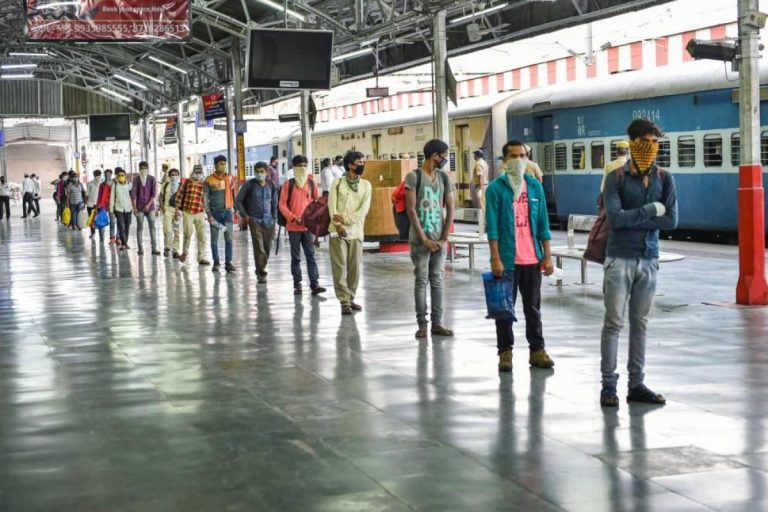
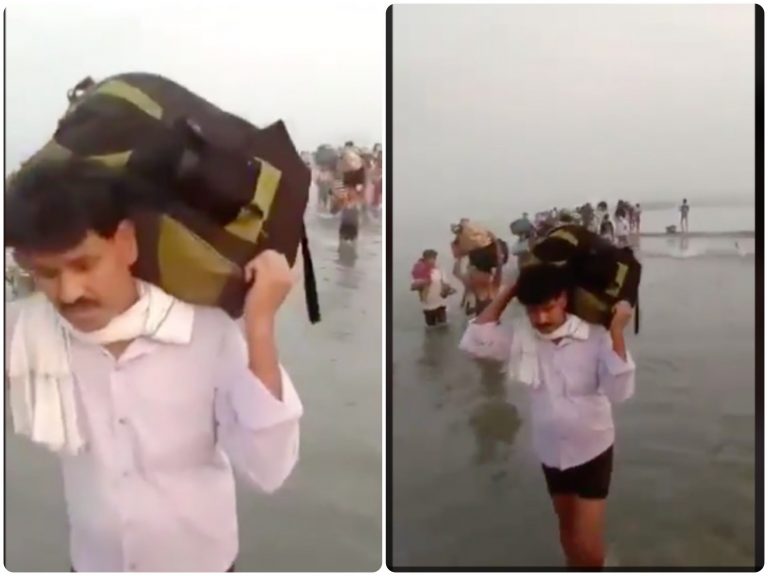
Further easing the movement of migrant workers, tourists, students, pilgrims stranded at different places, today the union govt allowed use of trains for transporting the stranded people to their home states. The Ministry of Home Affairs today announced that the migration will be allowed through special trains to be operated by Railway Ministry.

Earlier the Home Ministry had allowed the movement of stranded people to their home states using chartered buses. But due to do the huge number of people, especially migrant workers, stranded at various places, several states had requested special trains to transport them as buses will not be enough to handle such a massive migration.

Considering the matter and accepting the demand of the states, the Ministry of Home Affairs issued the order today allowing the use of special trains run by Indian Railways for transporting stranded people. The order states, “Movement of migrant workers, pilgrims, students, tourists and others stranded at different places is allowed by special trains to be operated by Ministry of railways. MoR will issue detailed guidelines for sale of tickets, and social distancing, and other safety measures to be observed at train stations, platforms, and within the compartments.”

Even as MoH announced the use of special trains, 1st such train already started its journey. A special train carrying about 1,200 labourers started the journey from Lingampalli in Telangana to Hatia in Jharkhand. The train was run as a pilot project on the request of Telangana govt. All necessary precautions such as prior screening of passengers and maintaining social distancing at the station and in the train was followed. The passengers have be provided with sanitisers, masks and gloves, and RPF personnel are also on board the train to ensure that rules are followed.

Chennai: Goondas Act invoked against 14 for violent protests denying burial of a doctor who died of Coronavirus

The Chennai police on Friday said that the stringent Goondas Act has been levelled against 14 people, including a woman, arrested recently in a case in connection with the alleged attack against health care workers while protesting against the burial of a doctor who died of coronavirus.

In a press release by the city police, Commissioner of Police A K Viswanathan said that the 14 people who have been slapped with the Goondas Act were a repeat offender and had a history of being involved in criminal activities. He said that they had been detained as a part of the police’s measures to curb criminal activities in the city.

The accused were earlier charged for attacking the ambulance driver and damaging the vehicle when the neurosurgeon Dr Simon’s body was taken for burial in a city area last month. A total of 20 people were hauled up in the case.

The mob violence by the 20 protesters had attracted widespread condemnation, triggering the government to promulgate an ordinance making acts such as preventing or attempting to block the burial or cremation of those who died of the deadly contagion a punishable offence. Besides having a fine, the ordinance carried a jail term from one to three year.

Mob violence in Anna Nagar over the burial of Coronavirus infected doctor

The local residents in Chennai demanded that the body be buried somewhere else, as the deceased died of Wuhan Coronavirus infection. They remained resolute in their stand, even after police intervention. When the body of Dr Simon was taken to Velangadu burial ground in Anna Nagar, the hospital staff were faced with similar resistance from the locals.

A group of 50 locals engaged in a verbal confrontation with the medics. Two staff members were assaulted and the ambulance was vandalised. Reportedly, a health worker sustained head injuries. The medics had to flee the burial site and take the body back to the hospital morgue. The injured staff members are now being treated at the KMC hospital. Around 1:40 am in the night, the deceased was laid to rest Velangadu burial ground in Anna Nagar.

Police Action against mob that indulged in violence over Coronavirus infected doctor

A total of 20 people have been arrested for mob violence by the Chennai police under the Epidemic Diseases Act and several Indian Penal Code Sections such as 147 (Rioting), 148 (Armed with Deadly Weapons), 307 (Attempt to Murder) and 332 (Obstructing a Public Servant).

“This is a shameful act. These fringe elements are robbing the chance of a dignified burial. The government should send a strong message to the public by taking severe action against the people who were involved in the brutal attack, they should be booked under the Goondas Act,” Tamil Nadu Government Doctor’s Association (TNGDA) secretary Dr N Ravishankar was quoted as saying.

Supreme Court seeks status report from Maharashtra govt in Palghar lynching case, asks how did mob assemble despite lockdown

The Supreme Court has sought a report from Maharashtra Police regarding the status of the investigation in the Palghar lynching case in which two Hindu sadhus and their driver were lynched by a mob on the night of April 16. The court was hearing a plea seeking a CBI probe into the case monitored by an SC monitored SIT or a judicial commission.

According to the reports, the apex court refused to stay the current investigation in the case by state CID and asked the petitioner to serve a copy of the plea to standing counsel for Maharashtra. The Supreme court ordered the Maharashtra government to file a report pertaining to investigation within four weeks.

How did such a mass gathering happen during lockdown: Supreme Court

A bench of Justices Ashok Bhushan and Sanjiv Khanna hearing the petition through video-conferencing said that it wanted to know the status of actions that have been taken so far by the police against the perpetrators of the crime. The court also asked how did the authorities allow such a mass gathering of people to violate the lockdown.

The plea said, “This happened despite the fact that the whole country is under Lockdown since March 25 and that no person is allowed to be out of their house and everyone has been asked to follow social distancing which raises a huge suspicion on part of local police.”

The plea, filed by petitioner Shashank Shekhar Jha through his counsel Rashi Bansal, has sought a direction to the authorities to constitute an apex court-monitored SIT or a judicial commission headed by a retired top court judge to deal with the case. The plea also sought CBI investigation into the matter.

Plea demands FIR against police for failure to prevent mob lynching

The plea also demanded filing of FIR against concerned police officials for their failure to prevent the incident. The plea stated that the incident was a failure on the part of the police as a mob had gathered there in violation of the lockdown rules. The petitioner referred to the media reports and claimed that police was complicit in the incident as they did not use force to prevent it. 

The plea alleged that the whole incident was “pre-planned and there could be police involvement as well” and urged the court to transfer the case from Palghar to a fast track court in Delhi.

Palghar Mob Lynching incident

On 16th April 2020, two Sadhus associated with the Juna Akhara, 70-year-old Kalpavrishka Giri Maharaj, and 35-year-old Sushil Giri Maharaj along with their driver 30-year-old Nilesh Telgadewere were on their way from Mumbai to Gujarat to give Samadhi to another Sadhu. At Gadakchinchale village, a wild and frenzied crowd of over more than 100 people attacked them. The villagers deemed them as thieves and started attacking them. The police claim that their team which had rushed to the spot to rescue the 70-year-old man also came under the attack of the violent mob.

But later videos emerged which completely debunked the claim of police, as it was seen that the sadhus were in the custody of the police, but the police personnel handed them over to the mob. The mob then proceeded them to beat them to death in front of the policemen.

Later, it was also revealed that the killing of the Sadhus was intentional and it was done due to political reasons and it was also suspected that Christian missionaries backed by NCP, left parties were behind the lynching of two Hindu Sadhus.

While Sharjeel Imam was a product of The Wire, here is how his counterpart, promoted by Newslaundry and others, is working against India

The ideological compatriot of Sharjeel Imam, Sharjeel Usmani, has announced his intentions of using Muslims as the fifth columns in the country to undermine Indian interests. Sharjeel Imam is the same individual who had urged Muslims to cut off North-East India from the rest of India by blocking the Chicken’s Neck, the vulnerability and the importance of which would have made his proposed action an Act of War. And now, it appears that Usmani, who shares his first name with the fan of Jinnah currently rotting in jail, wishes to wage a propaganda war against India. He is a student of political science at the Aligarh Muslim University, the university that was at the heart of violence during the protests against the Citizenship Amendment Act.

Sharjeel Usmani made the announcement on Friday that he, along with two of his friends, will put English subtitles on the videos of ‘hate crimes’ against Muslims in India in order to circulate them among social media influencers for wider global reach. While every crime is one too many, the objective of such an effort is quite clear: To weaponize the crimes committed against one particular community while ignoring all the rest in order to tarnish India’s reputation abroad. We have already seen the manner in which significant sections of Muslims in India have targeted Hindus living in the Middle East and thereby, ruin India’s growing partnership with Gulf countries. The effort launched by Sharjeel Usmani appears to be consistent with these attempts.

The announcement made by Sharjeel Usmani

Sharjeel Usmani links with Sharjeel Imam

After the incendiary speeches of Sharjeel Imam had gone viral on social media, Sharjeel Usmani had rushed in to defend him. He had urged Muslims to not disassociate themselves from the JNU scholar and declared that he was ‘in this together’ with the radical Ismamist. Sharjeel Imam also played a critical role in organizing the Shaheen Bagh protests and weaponizing blockades in order to make the state bend to Islamist demands was his idea. That Sharjeel Usmani threw his full weight behind him, although his weight is insignificant, only goes on to demonstrate his own ideological inclinations.

The unconditional support of Sharjeel Usmani towards Sharjeel Imam

Sharjeel Usmani calls Aysha Renna his ‘leader’

Sharjeel Usmani calls Aysha Renna his ‘leader’. Aysha Renna is one of the faces of the Jamia protests that were a contributory factor in the riots in North-East Delhi in the month of February. After she was hailed as a ‘shero’ by Barkha Dutt, it was revealed that she had called India fascist for executing 1993 Mumbai Blasts Terrorist Yakub Memon after a fair trial. Her friend, Ladeeda Farzana (Sakhaloon), another face of the Jamia protests hailed as a ‘shero’ by Barkha Dutt, had called for Muslims to wage Jihad against India which had initiated a vicious cycle of violence that culminated with the anti-Hindu riots in Delhi. Ladeeda had also glorified the genocidal maniacs who were responsible for the murder and pillaging of Hindus during the Moplah Massacre.

Sharjeel Usmani calls Aysha Renna his leader

Ladeeda farzana had spoken out in the defense of Sharjeel Usmani after the latter was booked in a case. “This witch-hunting of Sharjeel Imam and Sharjeel Usmani need to be stopped. If you share this witch-hunting psyche are equally dangerous at this juncture. I unconditionally stand with both our brothers who are at lead against this fascist government,” she had said.

The Media has learnt no lessons

As it so happens, Sharjeel Usmani writes columns for Two Circles, FirstPost, Newslaundry and DailyO. It isn’t surprising given that Sharjeel Imam also wrote for the far-left propagandist website The Wire. In a column for The Wire, Sharjeel Imam had whitewashed the crimes of Muhammad Ali Jinnah and asserted that the Father of Pakistan holds great relevance for Indian Muslims, insinuating his was the path that Indian Muslims needed to follow. Given the high regards in which Sharjeel Usmani holds Sharjeel Imam, it is only to be expected that he hold the same views as the latter.

The profile of Sharjeel Usmani on Twitter

The Ideological Inclinations of Sharjeel Usmani

The ideological inclinations of Sharjeel Usmani is abundantly clear from his tweets. In one tweet from November, he declares that he is from ‘Kashmir’ and “You’re from India” while quoting a tweet by filmmaker Vivek Ranjan Agnihotri, thus, insinuating that Kashmir is not a part of India. The Radical Islamic nature of the separatism in the Valley is well known to everyone. Thus, the underlying connotations of the tweet is abundantly clear to the keen observer. And yet, such individuals continue to write bylines for ‘esteemed’ ‘secular’ media portals.

Sharjeel Usmani insinuates that Kashmir is not a part of India

If all of this wasn’t enough, in another tweet from October 2019, Sharjeel Usmani glorified a woman who was carrying an axe to a protest in Kashmir. When people carry axes to a protest, it can be said quite safely that nonviolent protests are not what they have in their mind. And when it is happening at a place which has witnessed great terrorism and even a genocide, the motive could not be clearer. And yet, the scholar at AMU glorifies her nonetheless. In case anyone had any doubt about the ideological inclinations of Sharjeel Usmani, none should remain now. And it is interesting to note that Sharjeel Usmani had started writing for media portals long before this tweet and has been writing extensively since then as well.

Sharjeel Usmani had been booked earlier by the Police earlier for an objectionable post on Lal Krishna Advani. The post allegedly had a photograph of the veteran BJP leader with the caption “Punish those guilty of Babri Demolition”. Given the history of his support towards Sharjeel Imam and his devotion towards terrorist sympathizers and his own glorification of terrorists in Kashmir, his announcement of distributing videos among ‘social media influencers’ appear far more sinister than it looks on the surface. Having lost the battle on the streets with the refusal of the Indian government to rescind the Citizenship Amendment Act in any shape or form, the war appears to have moved on to social media and propaganda at the global level.

Sinister Designs

We have already witnessed one attempt to destabilize India’s relationship with Gulf countries through the use of social media as a weapon. The latest move by Sharjeel Usmani appears consistent with that initiative. In this context, it is important to remember that Sharjeel Imam had said in one of his viral videos that an ‘intellectual cell‘ had been established to carry forward the devious plans as laid out by him. We had speculated earlier that Jamia Coordination Committee, or at least a few of its members, might have links with this ‘intellectual cell’. Since then, a few people associated with the JCC have been arrested. In this regard, it is also quite possible that Sharjeel Usmani is part of this ‘intellectual cell’ although it cannot be claimed with any certainty as yet. The larger goal of these band of individuals on social media is to use Muslims as a fifth column in their war against the Indian State. And it appears that no attempts are being made to even hide their intentions.