Home Blog Page 560

Vande Bharat Sleeper Trains offering world class travel experience to long distance Rail commuters to be launched soon, peak speed of 180 km/h achieved in multiple trials

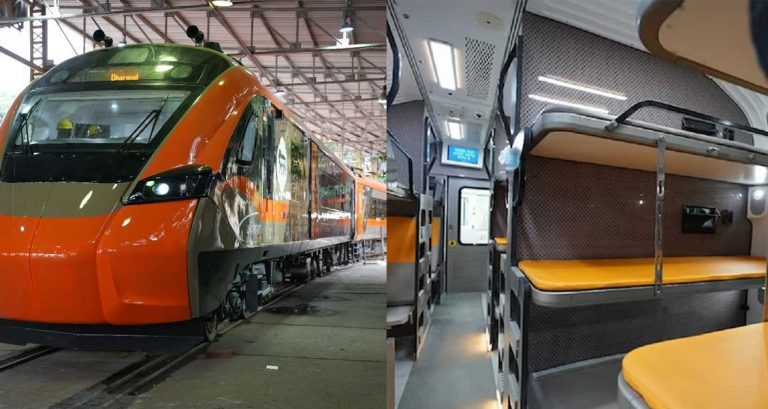
Indian Railways is set to launch the Vande Bharat Sleeper service soon, the long-distance version of the indigenously developed semi-high-speed train. The current version of the Vande Bharat train provides faster, safer & world-class travel experiences to people travelling short & medium-distance chair car trains, and now the Indian Railways is making this a reality for long-distance trains also.

In preparation for the launch, trials of the sleeper trains have been going on. According to a press release issued by Indian Railways, the Vande Bharat sleeper train has achieved a peak speed of 180 km per hour in its multiple trials in the last three days. The trails will continue till this month’s end before this world-class travel for long-distance travel is made available to rail commuters across the nation.

Sharing a video of a successful trial in Kota Division, Union Minister of Railways, Ashwini Vaishnaw on X mentioned the speed in his post.

The video shows a nearly full to brim glass of water adjacent to a mobile showing the speed on a plain surface inside a Vande Bharat sleeper train. The Water level remaining static can be seen in the video as the moving train achieves near constant peak speed of 180 km per hour exhibiting the element of comfort in the high-speed rail travel. The post came after 3 days of successful trials, which concluded on 2nd January, in which a Vande Bharat sleeper train in its loaded condition touched the peak speed.

On Thursday, during a 30 km long run between Kota & Laban in Bundi district of Rajasthan, the train reached a peak speed of 180 km/hour. A day earlier, i.e. on the first day of 2025, in a 40 km long trial run between Rohal Khurd to Kota, Vande Bharat sleeper train touched the peak of 180 km per hour. On the same day, peaks of 170 km/hr & 160km/hr were achieved on Kota-Nagda & Rohal Khurd-Chau Mahla sections. These trials will continue for the month of January under the supervision of RDSO, Lucknow.

Once these trials are over, the train will be evaluated by the Railway Safety Commissioner at the maximum speed. Only after passing the final stage, Vande Bharat trains will be officially certified & handed over to Indian Railways for induction & regular service.

Vande Bharat: Transforming Long-Distance Rail Travel with Speed and Luxury

These Vande Bharat sleeper trains are designed with features like automatic doors, ultra comfortable berths, on board WiFi & an aircraft-like design. Passengers in India are already enjoying reclining seats & world class travel experience through 136 Vande Bharat trains running across the country on the medium & short distances.

The real challenge for Railways was to add berths & test the trains for full passenger & luggage load conditions in order to convert them into Vande Bharat sleeper coaches while achieving the peak speed of 180 km/ hour. With these successful trials, rail commuters can hope for world class travel experience in long distance travel like Kashmir to Kanyakumari, Delhi to Mumbai, Howrah to Chennai and many other routes also. They will benefit as travel time will come down considerably. The current average speed of Mumbai Delhi long-distance travel is 90 km/hr with maximum permissible speed of 140 km/h for Tejas Rajdhani Express, which is fastest among all Rajdhani train services in India.

Vande Bharat trains are now available in many Shatabdi train routes. Vande Bharat Express is India’s fastest train and capable of reaching speeds up to 180 km/h. As of now, it connects major cities at short & medium distance apart like Delhi and Varanasi and offers a luxurious travel experience. Vande Bharat trains provide a seamless blend of speed and comfort. It’s not just a mode of transportation but an experience of modern Indian engineering.

Indian health agency takes cognisance of new virus scare: What we know about the HMPV outbreak in China so far

Five years after the COVID-19 virus erupted in China and subsequently had the world in its throes, another potential epidemic seems to have gripped the nation as infections indicate a steady uptick.

A new and mysterious virus, Human Metapneumovirus (HMPV), is spreading through China and threatens to turn the wheels in the backward direction, evoking the horrors of the early days of the COVID-19 pandemic when the virus had spread like wildfire, causing deaths in lakhs and bringing the world to a grinding halt. 

Given the lingering effects of the pandemic in public memory, the Indian government has recognized the importance of applying the lessons learned during the coronavirus outbreak. This proactive approach aims to prepare for any potential spread of the HMPV virus, should it follow a trajectory similar to that of COVID-19.

Indian health agency says HMPV outbreak not a cause for alarm

A senior official from the Directorate General of Health Services (DGHS), Dr Atul Goel, has urged the public not to panic over reports of the spread of Human Metapneumovirus (HMPV) in China. Emphasizing general precautions against respiratory infections, he assured that the current situation is not alarming.

Dr. Goel clarified, “There has been news about a Metapneumovirus outbreak in China. To be clear, Metapneumovirus is similar to other respiratory viruses that cause the common cold. In very young and elderly individuals, it might present flu-like symptoms.”

While there is no specific antiviral treatment for HMPV, prevention remains critical. “Winter generally sees an increase in respiratory infections, and hospitals are well-prepared with necessary supplies and beds,” Dr Goel said.

He advised people to follow basic hygiene practices, such as using separate handkerchiefs for coughing or sneezing, avoiding crowded places if symptomatic, and taking over-the-counter medications for cold or fever as needed.

Dr Goel also noted that an analysis of respiratory outbreak data within India for December 2024 showed no significant increase or widespread cases. The National Centre for Disease Control (NCDC) continues to monitor respiratory and influenza cases in coordination with international agencies, ANI reported.

The government’s response follows unverified reports from China of a marked rise in viral infections concerning the spread of the human metapneumovirus (HMPV), with videos showing overcrowded hospitals and crematoriums. However, reports state there is no evidence supporting these claims, and neither Chinese health authorities nor the WHO have released an official statement about the alleged crisis.

The situation is compounded by social media hysteria, with social media users claiming multiple viruses, including HMPV, Influenza A, Mycoplasma pneumonia, and COVID-19, are simultaneously circulating in China. The reports and social media discussions have nevertheless fueled concerns and public anxiety over the outbreak, especially after China downplayed the surging infections—an eerily similar denial that preceded the eventual outbreak of COVID-19. 

As per reports, multiple respiratory viruses are concurrently spreading in China, leading to significant strain on healthcare systems. Children’s hospitals, in particular, are experiencing a rise in severe pneumonia cases, including those described as ‘white lung.’

Meanwhile, a Reuters report notes that China’s disease control authority has launched a surveillance system to monitor unknown pneumonia cases. This initiative aims to prepare for potential increases in respiratory diseases during winter, addressing gaps in early pathogen detection observed during the initial COVID-19 outbreak.

What is Human Metapneumovirus (HMPV) and what are its symptoms?

HMPV is an RNA virus from the Metapneumovirus genus, first identified in 2001. Research suggests it has been circulating for over 60 years and is now recognized as a common respiratory pathogen globally. It spreads via respiratory droplets, close contact with infected individuals, or contaminated surfaces. 

The Chinese CDC reports an infection period of 3–5 days. While it can occur year-round, the virus is most prevalent in winter and spring. Notably, HMPV does not generate a robust immune response, allowing for reinfection.

HMPV symptoms are similar to those of the common cold and coronavirus, including cough, fever, and cold-like signs. Officials advise wearing masks and frequent handwashing to curb the spread.

Among those most vulnerable to the virus are children and the elderly. Officials recommend wearing masks, avoiding crowded spaces, and maintaining hygiene to reduce infection risks. 

Also, it is worth noting that though it is quite prevalent, there is no vaccine for HMPV, and its symptoms are often mistaken for those of a common cold.

Though experts say the threat of HMPV transforming itself into a COVID-19 outbreak is slim, China’s characteristic reticence and the suppression of public discussion over the outbreak have stoked fears among other nations and governments, forcing them to treat the situation with caution and account for a possibility where a mutated version of the virus could be both more infectious and virulent. 

Scum of the orient is Hindu, stealing our jobs: Article published by American newspapers in 1910 exposes history of Hinduphobia in the US amid H-1B visa debate

The recent discussions surrounding the H-1B visa have exposed the underlying sentiments of neo-Nazis and white nationalists, who have never truly hidden their racist ideologies. These groups have resorted to despicable tactics to demean Indians, Hindus, and Hinduism, all while masquerading as advocates for American rights. Notably, this blatant racism directed at Indians, in specific Hindus, has become increasingly apparent in last few years, which might lead some to be deceived into believing that it is a recent development.

The phrase “The more things change, the more they remain the same” is particularly relevant to the United States and the West, especially in relation to the racists within these countries. Interestingly, an article from 1910 which was carried by multiple American newspapers has been making the rounds online affirming the same. It reflects a similarly outrageous and whiny sentiment that has been observed throughout social media in recent weeks concerning the surge of Indians especially, Hindu immigrants coming to the United States, accompanied by insulting remarks.

The racist article was first highlighted by archival project HindooHistory in a post on X (Now Twitter) in 2021. It is attracting a lot of attention now after the flood of blatant racism during the H1B Visa debate. Following that, OpIndia dug into the archives to find the original piece.

The work titled “Hindoos (Hindus) Continue to Flock to the US” can be described as a vehement diatribe that appears to emanate from the mindset of a member of the Ku Klux Klan or an equally radical white supremacist. The piece began by referring to Indians as unwanted and complained, “No Effort Made at Frisco to Stop Entry of Undesirables, Although Other Ports Bar Them.”

Undesirable to whom? Only, to the likes of the author since it is obvious that these individuals were not considered undesirable by the job creators or the economy of the country otherwise they wouldn’t be allowed or employed there. The article then lashed out, “The dumping place for the scum of the Orient and India is San Francisco.”

The piece merited recognition for its unwavering disdain towards individuals of non-white backgrounds, regardless of their specific ethnicity. The term “Oriental,” used to describe East Asians, has been regarded as a derogatory slur, a fact that obviously held no significance for the xenophobic writer. “From this port the scum is distributed throughout California, Washington and Oregon. The scum of the Orient is the Hindu. Dirty, dressed with yards of filthy white, green or blue cotton bound around the head the Hindu stalks through the streets of the coast cities,” it conveyed.

The writer’s profound contempt for Hindus, perceived as being of lower status than East Asians, was prominently showcased without any reservations. Additionally, the remarks regarding Indian attire exemplify how demeaning terms such as “dot heads” have been normalized by individuals with narrow mindset who are unable to accommodate anything that deviates from their European-centric worldview.

The article, which embodied American values of inclusivity and tolerance, subsequently identified and criticized the individual responsible for allowing Hindus to enter the United States. “He is worst type of immigrant. He is not fit to become a citizen. His very mode of life makes him entirely foreign to the people of the United States, yet thanks to the leniency of the immigration commissioner at the port of San Francisco, Hart H. North, this class of undesirables is flocking by the hundreds into the United States, through San Francisco, with the arrival of every boat from the Orient.”

Overt racism and Hinduphobia disguised as advocacy for American workers

The narrative perpetuated by racists has endured for over a century, as highlighted in the article that accuses Indians and Hindus of usurping American jobs due to the desire of the companies to reduce labor costs. “Why? Because the importation of the Hindu fits in well with the general scheme of the railroads, the big manufacturing plants and big business, to down labor on the coast. If a corporation can get a Hindu to work for $1.50 a day, what’s the use of paying twice that for an American? No use at all, is the answer of the corporations, and so the Hindus continue to arrive in bands. Some of them are deported to their native states in far away India, but the big majority remain here to work for railroads or the labor union baiters.”

The writer suggested that American workers were being systematically sidelined. Unsurpsingly, the racists in 2024 also echoed these same allegations. Although times have changed, the conspiracy theories and victimhood narratives, steeped in blatant racism, remain constant for the xenophobes.

The article then warned, “But the great danger is not so much those who are here; it is those who are coming. India is a large country. It is a country fairly teeming with millions upon millions of emaciated, sickly Hindus who are living, or rather existing, on starvation wages. Therefore the reports from the United States of huge wages to be earned, compared to those paid in their country, has resulted in a steady influx of these Orientals which promises to re-sult in a problem harder to solve than that of the Chinese or the Japanese.”

It is crucial to remember that the piece was published when India was under British occupation and rather than demonstrating empathy for the nation that was subjected to colonization and exploitation in the most brutal manner, it ridiculed the immense suffering endured by Indians, perpetuated by individuals who espoused the same racist beliefs as the author. The hardships and challenges faced by India and its citizens was the legacy of British Raj, the effects of which persist even in the present day and age.

“In India a clerk can be had for $10 a month; a man cook for $3 a month; a maid servant for $1 a month; carpenters, bricklayers, etc. 33 cents a day, etc. The scale of wages is less for a day’s work in India than the average American mechanic or laborer receives per hour. These are the people who are flooding the western states, the people that railroads are welcoming with open arms and furnishing employment to, because they help them solve the problem of paying the American workman starvation wages,” the article reiterated while willfully neglecting to recognize that the issues in India stem from British colonialism and simultaneously failing to regard them as worthy of equal opportunities or even as human beings.

It further expressed, “Charges have been made against the commission of immigration at San Francisco. These charges have resulted in nothing. Demands have been made that this port be closed to the Hindu as are the other ports of the Pacific coast on the grounds that the Hindu is apt to become a public charge and that he practices polygamy. But although this has been found sufficient to stop their entry in other coast ports they continue to flock to San Francisco, where they are distributed around the country in railroad camps, vineyards, foundries, etc.”

Charges of polygamy and more racism

The author selectively attributed the practice of polygamy only to Hindus, neglecting to acknowledge its presence within American society. This practice continues to exist in the country, despite lacking legal recognition. Furthermore, it is noteworthy that other communities, particularly Muslims, also engage in polygamy (even today), yet the author chose to focus exclusively on Hindus. Moreover, while Americans might not officially be polygamous, they including US Presidents have a reputation for extramarital affairs and maintaining multiple romantic relationships.

“When the legislature of California convenes at the next session there will be a big row on over the Hindu. Not only will the Labor party demand that they be excluded but they will also demand that laws be passed prohibiting Asiaties from owning land within the state. California tried to stop Asiatic immigration when she faced the Japanese problem, but the federal government demanded that it be allowed to cope with the situation,” the article complained while promoting the idea of ousting Hindus from the United States, showcasing a glaring example of Hinduphobia intertwined with racial prejudice against all non-Whites.

It then gleefully concluded, “But since the federal government failed to stop that which the laborers think is a menace to them and their families, they are going to take matters in their own hands and fight it out to the bitter end – either to victory or defeat. ‘The Hindu, the Jap, the Chinaman and the rest must go,’ is the slogan of labor. And labor is going to see that they do go, or know the reason why,” while placing its hopes in Labor Party which was equally committed to racist ideologies and hence, promised to deport all non-Americans from the country.

Similar theories being perpetuated in the present day

Numerous white nationalists were observed expressing their distress on social media regarding the perceived loss of American jobs to individuals of Indian descent, revealing their explicit racism and a lack of understanding of the complexities surrounding the issue. Even senior United States senator from Vermont, Bernie Sanders, didn’t hesitate from turning into an ignorant social media troll to condemn Elon Musk for his support of legal immigration for highly skilled Indians and others to the country.

He claimed, “The main function of the H-1B visa program is not to hire ‘the best and the brightest,’ but rather to replace good-paying American jobs with low-wage indentured servants from abroad.”

Vince Dao, an American conservative political commentator who is of Vietnamese and Italian descent called H-1B immigrants as “foreign guest workers” and asked, “So the debate is, should we be importing massive numbers of guest workers to take potential American jobs?”

Alex Schultz could not restrain his latent racism, going so far as to label H-1B visa as a virus and added, “Some sort of deadly contagion you don’t want infecting your body and giving you diarrhea,” in yet another offensive statement against Indians.

Certain individuals, such as Lauren Witzke, did not hid behind to any veiled explanations and openly expressed their racist views.

“American workers are being sold out to India with 85,000 H-1B visas to the tech sector is a massive amount of applicants against Americans,” is how another American conspiracy theorist registered his protest over the issue. “H-1B visas are 72.6% of the time given to Indians,” he further voiced and complained that this was not the outcome he desired when voting for President-elect Donald Trump during the elections.

H1-B visa debate was ignited by Laura Loomer and racists after Donald Trump nominated American-born Indian Sriram Krishnan as senior policy advisor for Artificial Intelligence at the White House Office of Science and Technology Policy. Initial conspiracy theories about him were disseminated, which rapidly transformed into a strong opposition against the H-1B visa for Indians. This was followed by derision and insults directed at Hindus and Hinduism. However, a significant number of professionals from the tech industry and other fields voiced their support for Indians, with Donald Trump also lending his support to the H-1B visa and high-skilled immigration.

Conclusion

While societal advancement which occurred over time and the introduction of human rights might have provided a facade to conceal the West’s violent legacies and the crimes committed against others, the fundamental bigotry remained unaltered, rather, it intensified with the passage of time to the point of demented and disturbing behaviour.

Just as colonization is a permanent state of mind instead of merely a spatial idea, superiority complex is likewise deeply rooted. The introduction of new legal frameworks and rapidly changing world cannot improve this prejudicial outlook. A society that condoned acts of murder, rape and subjugation against those with different skin colors does not inherently or completely evolve into a more inclusive and accepting entity, despite any assertions to the contrary.

There will invariably be elements that take pride in and glorify their violent history and perceive others as inferior as well as harbor profound animosity towards them. Remarkably, the events of the past few weeks have starkly illustrated this behavior, even though not all Americans share the same views, as evidenced by those who advocated for the Indians and condemned the racists.

Moreover, not generalizing all H-1B visa protestors, however, it is noteworthy that none of the detractors have tried to address the nitty-gritty of the issue. Their outright complaints, which aim to restrict Indian nationals, especially Hindus, from entering the United States while targeting an entire demographic, reveal much about their underlying sentiments.

India urges China to ensure that dams on Yarlung Tsangpo river don’t harm downstream regions of Brahmaputra

0

India has urged the Chinese side to ensure that the downstream states of the Brahmaputra river are not harmed by activities in upstream areas, the Ministry of External Affairs said on Friday.

The remarks came close on the heels after reports emerged that the Chinese side is constructing a mega dam upstream of Brahmaputra on Chinese soil. The river Brahmaputra is locally known as ‘Yarlung Tsangpo’ in the Tibet region of China.

“The Chinese side has been urged to ensure that the interests of downstream states of the Brahmaputra are not harmed by activities in upstream areas,” MEA spokesperson Randhir Jaiswal told reporters today, at a weekly presser here in the national capital.

Soon after the reports of the dam construction emerged in the media, many, including citizens and strategic experts, raised concerns about its impact on the downstream region of India, along with neighbouring Bangladesh. Such concerns were also raised earlier from time to time when China indicated the building of hydropower projects on the upstream.

MEA spokesperson Jaiswal said the Indian government has seen the information released by Xinhua on December 25, 2024, regarding a hydropower project on the Yarlung Tsangpo River in the Tibet Autonomous Region of China.

Addressing the weekly presser, MEA spokesperson Randhir Jaiswal said India will continue to monitor and take necessary measures to protect its interests.

“As a lower riparian state with established user rights to the waters of the river, we have consistently expressed, through expert-level as well as diplomatic channels, our views and concerns to the Chinese side over mega projects on rivers in their territory,” Jaiswal said.

“These have been reiterated, along with the need for transparency and consultation with downstream countries, following the latest report,” Jaiswal added.

On January 1, Assam Chief Minister Himanta Biswa Sarma, addressing a presser in Guwahati, told reporters he was concerned by the building of large dams over Brahmaputra by China and has also expressed its concerns to New Delhi, He had asserted that the central government will take up the matter with the Chinese counterpart.

The Brahmaputra river runs through the length and breadth of Assam and is a lifeline for the state, and the region.


(This news report is published from a syndicated feed. Except for the headline, the content has not been written or edited by OpIndia staff)

Muhammad Yunus is distorting history of Bangladesh, re-writing the Independence movement to appease Islamists

The interim government of Bangladesh, led by ‘Nobel laureate’ Muhammad Yunus, is distorting the country’s history to suit the agenda of radical Islamic groups and political parties.

Following the undemocratic ouster of Sheikh Hasina as Prime Minister of Bangladesh, a concerted attempt is being made to re-write the independence movement of the country.

As part of that mission, the academic curriculum is being manipulated to lower the stature of Bangladesh’s founding father Sheikh Mujibur Rehman.

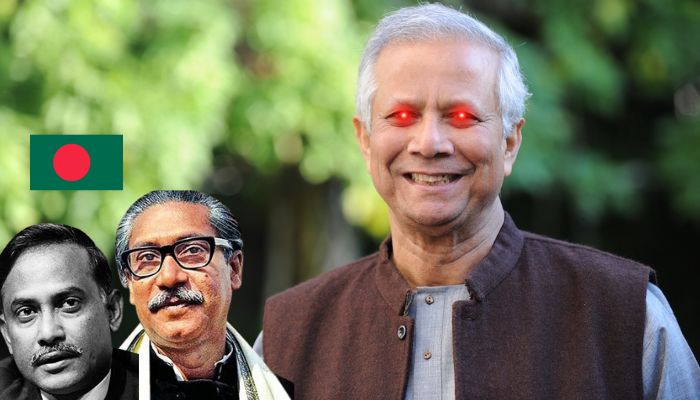
The Yunus regime has introduced new textbooks for primary and secondary students which falsely claim that the first declaration of independence of Bangladesh was made by Ziaur Rehman.

NCTB Chairman Reazul Hassan told The Daily Star, “The new textbooks for the 2025 academic year will state that ‘on March 26, 1971, Ziaur Rahman declared the independence of Bangladesh, and on March 27, he made another declaration of independence on behalf of Bangabandhu’.”

The distorted textbooks have been distributed among primary and secondary students since 1st January this year.

The Truth about the declaration of Independence

Sheikh Mujibur Rehman, the founding father of Bangladesh, was arrested by the Pakistan army on 26th March 1971.

Before his arrest, he declared the independence of Bangladesh through a wireless message. The message read [pdf]

“This may be my last message, from today Bangladesh is independent. I call upon the people of Bangladesh wherever you might be and with whatever you have, to resist the army of occupation to the last. Your fight must go on until the last soldier of the Pakistan occupation army is expelled from the soil of Bangladesh and final victory is achieved.

This very message is a part of the 6th Schedule of the Constitution of Bangladesh. The declaration of Independence by Sheikh Mujibur Rehman was broadcast twice on 26th March 1971.

The original message was broadcast in the morning by an unidentified wireless station while another broadcast was made by the ‘Swadhin Bangla Betar Kendra’ (Free Bengal Wireless Station).

Both the broadcasts were intercepted and monitored in Shillong and Calcutta. They were reported by The Statesman, The Times of India, The Los Angeles Times and others.

Despite this, the National Curriculum and Textbook Board (NCTB) under the Yunus government is falsely attributing the first declaration of Independence to Ziaur Rehman.

In fact, there is no evidence that he made any such announcement on 26th March 1971. It is however documented that Ziaur Rehman made a second declaration of independence from Kalurghat (located north of Chittagong city) a day later.

On 27th March 1971, he had announced on radio, “I, Major Ziaur Rahman on behalf of Bangabandhu Sheikh Mujibur Rahman, hereby declare that the independent People’s Republic of Bangladesh has been established. I have taken command as the temporary Head of the Republic. I call upon all Bangalis to rise against the attack by the West Pakistani Army. We shall fight to the last to free our Motherland. By the grace of Allah, victory is ours.

It is thus evident that Sheikh Mujibur Rehman made the first declaration of Independence of Bangladesh on 26th March 1971 and the message was reiterated by Ziaur Rehman on the following day at the former’s behest.

As such, the changes made in the academic curriculum are based on lies and distortion.

The ulterior motives of Muhammad Yunus

Ziaur Rehman, who was in the Army at the time of Bangladesh’s independence, went on to lay the foundation of the Bangladesh Nationalist Party (BNP). He also became the 6th Prime Minister of Bangladesh.

Unlike Sheikh Mujibur Rehman who kept the Bengali identity at the forefront of his secular politics in Bangladesh, Ziaur Rehman promoted a ‘Bangladeshi identity’ based on Islam.

His majoritarian form of Islamic nationalism had no place for Hindus and other religious minorities in the story of Bangladesh.

A ‘Minorities at Risk’ report by UNHCR makes it crystal clear –

The founder of Bangladesh, Sheikh Mujibur Rahman, enshrined secularism in the country’s first constitution. But in 1977, the country’s military ruler, Ziaur Rahman, removed this principle as Bangladesh turned toward the Middle East for political, economic, and cultural reasons.

After his death, Ziaur Rehman’s wife Begum Khaleda Zia became the chairperson of BNP. Under her Prime Ministership, there was severe mushrooming of radical Islamic outfits in Bangladesh, increased infiltration in India’s North-east region and systematic persecution of the Hindu community.

Ziaur Rehman and his family thus represent the ideology of radical Islamism in Bangkadesh, which is premised on anti-Hindu and anti-India sentiment.

The appropriation of Ziaur Rehman by Muhammad Yunus and his attempt at trivialising the contribution of Bangabandhu is thus strategic and aligns with his broader interests.

Interm govt of Bangladesh panders to Islamists

Given the rising Islamism in the country, Yunus found a two-pronged way of further solidifying his space in the country’s political sphere.

He revoked the ban on the radical Islamist outfit ‘Jamaat-e-Islami’ and released the leader of the radical outfit ‘Ansarullah Bangla Team (ABT)’ Muhammad Jasimuddin Rahmani.

At the same time, Muhammad Yunus began discounting the religious angle in the targeted attacks on the Hindu community.

He has gone on record from lamenting about attacks on Hindus to saying that the claims of atrocities are ‘exaggerated‘.

They are now led to believe that Bangladesh will witness full-scale implementation of Sharia law in the absence of Sheikh Hasina and the emergence of their new Messiah aka Muhammad Yunus.

The two decisions by the head of the interim government elated the Islamists in the country. Yunus also attempted to ban the export of Hilsa fish to India but it was in vain.

His advisors had also threatened to ‘annex India‘ and demanded the handover of Sheikh Hasina.

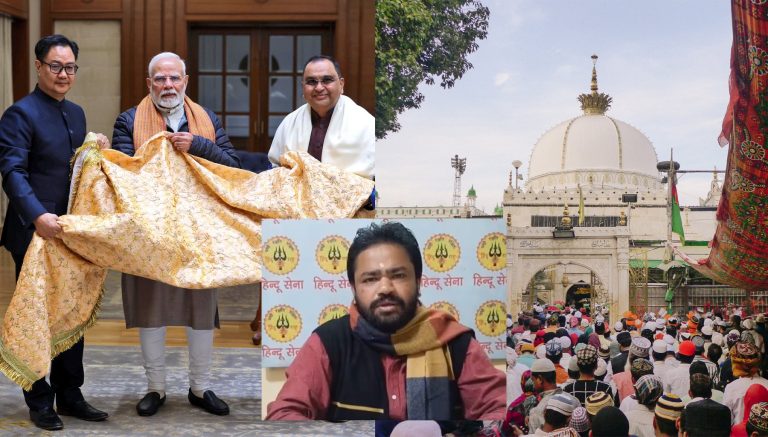
Hindu Sena files plea to halt offering of chadar sent by PM Modi at Ajmer Sharif Dargah, says this will hamper the temple suit

0

A day after PM Narendra Modi handed over a Chadar to be offered on his behalf at the Ajmer Sharif Dargah, a plea has been filed to temporary halt the offering. The application was filed at a court in Ajmer in a pending suit before the court claiming that the Ajmer Sharif Dargah was built over the remains of a Shiva temple.

The application has been filed by Hindu Sena President Vishnu Gupta, who also filed the original suit. This comes after PM Modi handed over a ceremonial ‘chadar’ to Union Minister for Minority Affairs Kiren Rijiju on Thursday, January 2. The chadar is to offered at the Ajmer Sharif Dargah on the Urs of Khwaja Moinuddin Chishti.

In the petition, Vishnu Gupta argued that by sending the chadar to the ‘disputed’ structure while a suit challenging it is pending before the court, the central govt is undermining the independence if judiciary and the right to a fair hearing.

PM Modi has been sending chadar to Ajmer Sharif Dargah every year since 2014 after he became the Prime Minister, and this is the tenth time he has made the offering. On Thursday, he handed over the chadar to Union Minister of Parliamentary Affairs and Minister of Minority Affairs, Kiren Rijiju, to be offered at the Dargah on his behalf.

The application stated, “giving any political legitimacy to the disputed structure by sending a Chadar will not only hamper the court process but will also taint the court’s independence, due to which the entire case will become baseless.”

According to the Hindu Sena president, the matter will be heard by Civil Judge Manmohan Chandel at 10 AM on 4th January.

Notably, Gupta has filed the main suit as the next friend of Bhagwan Shri Sankatmochan Mahadev Virajman, where it has been claimed that Dargah has been built by converting old Hindu temples. The petition seeks an ASI survey of the Dargah and the reconstruction of Bhagwan Shri Sankatmochan Mahadev Temple at the site after the removal of the present structure.

The plea further adds that there is a Shiva Linga beneath the underground passage to the cellar within the Dargah complex.

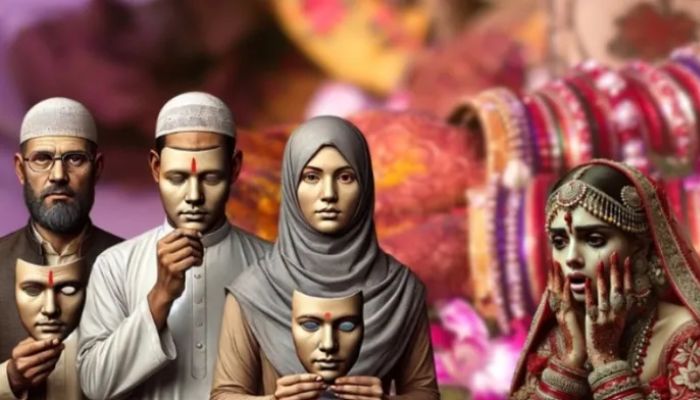
‘You are of no use now, infidel’: Jabir poses as Suraj to lure a Dalit Hindu woman into a sexual relationship, abandons her after duping her of jewellery, money

In Uttarakhand’s Udham Singh Nagar, a Muslim man named Jabir Ali befriended a Dalit Hindu woman by introducing himself as Suraj. After that, he had physical relations with her several times on the pretext of marriage. During this, Jabir made an obscene video of the girl and forcibly married her by threatening to defame her. Jabir enjoyed the woman’s money and when his money ran out, he left her after 6 years.

The matter pertains to the Kichha area in Udham Singh Nagar wherein a woman has complained to the police in this regard. In her complaint, the woman said that her husband Jabir hid his identity from her and told her his name was Suraj. He became acquainted with her by posing as Suraj. After some time, Jabir pretended to love her and had physical relations with her in the name of marriage.

In her complaint to the police, the 33-year-old victim, a Scheduled Caste resident of Gaughat in Katharra, said, “He (Jabir) pretended to love me and even made an obscene video. He used it to blackmail me and force me to marry him.” The victim was scared of the possibility of defamation, however, Jabir Ali continued with his blackmailing and harassment.

One day, Jabir Ali took the victim to his elder sister’s house in Jehanabad and started forcing her to marry him. The victim said, “When I refused, Jabir and his brothers – Abbas Ali, Riyasat, Zakir and Shakir – started threatening to make the video viral and kill me.” Eventually, the victim was forced to marry.

The victim said that before forcing him to marry her, she thought Jabir Ali was a Hindu. However, it was too late when she came to know the truth. Jabir used to beat the woman and pressurise her to convert to Islam. When the victim did not agree to this, Jabir and his family members started threatening to kill her.

The victim has said in her complaint that at the time of marriage, she had many items including a two-tola gold chain around her neck, two earrings of one tola each, and a laptop. Along with this, she also had one lakh rupees. The victim says that after some time of marriage, when her property got exhausted, she was pressured to bring a dowry. Eventually, the victim was thrown out of the house along with her 6-year-old child.

Based on the woman’s complaint, the police have registered a case against Jabir Ali and his brothers. The accused have been booked under sections 3 and 4 of the Dowry Prohibition Act, 1961, as well as sections 323 (voluntarily causing hurt), 498A (cruelty by husband or relatives) and 506 (criminal intimidation) of the Indian Penal Code (IPC).

Speaking to the Organiser, the victim said that Jabir is a fakir and does exorcism. “He hypnotised me by pretending to be the sun. He did black magic and manipulated me to such an extent that I could not even think properly. Whatever he said or did, I felt right at that time,” the woman said.

The victim said that when she became pregnant, Jabir forced her into a forced marriage. “I never changed my name or religion and continued to follow Hindu practices like fasting during Navratri, reciting Durga Saptashati and organising Kanya Bhoj. After the marriage, Jabir threw away all my idols and religious books ,” the victim said.

The victim said that it was only after the birth of her son that she came to know that Jabir was already married and had children. The victim alleges that Jabir did all this to grab her jewellery and money. The victim also said that during this time Jabir and his family members used to call her a Kafir and abuse her regarding her caste.

According to the victim, “Jabir threw me out of the house and said that I have done my work. Now I have no use for you.” The victim also said that soon after the birth of her child, Jabir got him circumcised and started raising him according to Muslim customs, talking of teaching him namaz etc. However, when the woman opposed this, he threw her out of the house.

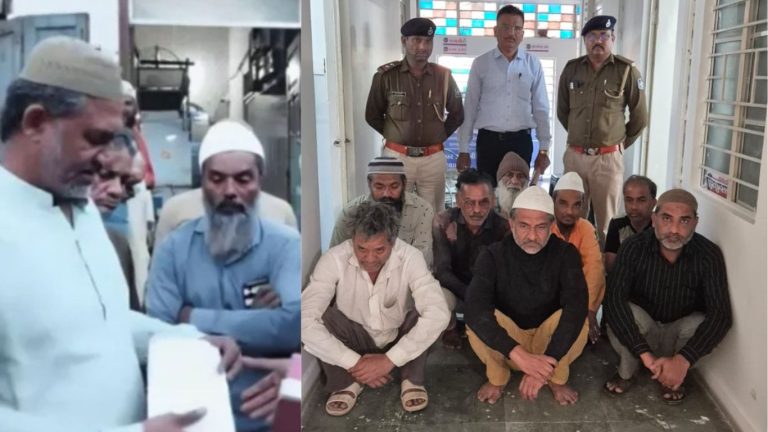
Rajkot: 9 people including Nawab Mosque trustee arrested for vandalising and evicting shops owned by Hindus claiming to be Waqf property

The Gujarat police have arrested 9 people for vandalising two shops belonging to Hindus in Rajkot, Gujarat on Dec 31, 2024. The attackers had also illegally evicted the shop owners, claiming the shops to be Wawf property. The arrested accused include the trustee of Nawab Mosque in the Danapith area in the city. The miscreants had vandalised the shops next to a mosque claiming them to be Waqg properties, and asked the shopowners to vacate the establishments.

The arrested individuals include Nawab Mosque’s trustee Farooqbhai Ibrahimbhai Musani, Zakirbhai Habibbhai Musani, Gafarbhai Satarbhai Alani, Irfanbhai Abdulbhai Solanki, Fareedbhai Tayabbhai Shikar, Yunusbhai Haji Bhai Musani, Ameenbhai Mahmoodbhai Chauhan, Ikbalbhai Kamalbhai Setani, and Sarfaraz Mahmadbhai Sheikh.

The Hindu traders have been given back the possession of the shops by the police. Minister of State for Home, Industries, Transport and Youth & Sports, Harsh Sanghavi shared the development on Twitter.

What was the incident?

A group of 25 people including one Farooq Musani, trustee of Nawab Masjid, had broken into two shops belonging to Hindu traders on the night of December 31, 2024. They vandalised the shops and threw the merchandise on the street. The shops located in the Old Danapith area of Rajkot were claimed to be Waqf properties by the accused. Farooq Musani was carrying a Gujarat State Waqf Board order instructing the shops to be transferred to the mosque. “The Waqf Board has ordered that your shop, which is under an old rent agreement, must be vacated,” he had told the shopowners.

However, one of the traders, Virendrabhai Kalyanjibhai Kotecha, approached the police and lodged a complaint against the illegal eviction. Based on the complaint, the police registered a case and arrested nine individuals.

An FIR was lodged at the Rajkot A-division police station on 1st January the complaint of victim traders under sections 189(3), 190, 329(3) and 351(2) of the Bharatiya Nyaya Sanhita, 2024. The arrested trustee said that they will go ahead with the legal process to take over the shops as waqf property.

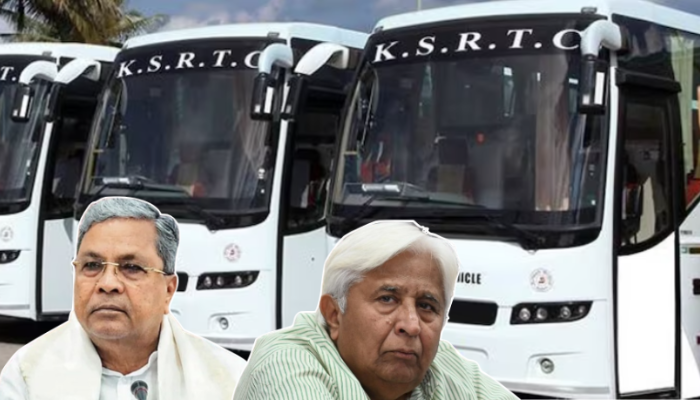
Congress’ new year gift to voters: Karnataka govt announces 15% increase in bus fares, read how the party’s freebie politics is damaging the state’s economy

The Indian National Congress stormed to power in Karnataka after the state legislative assembly elections in 2023 promising to deliver better governance, comfortable lifestyle and economic relief for the voters. However, the government has dramatically shifted its stance to regularly burn holes in the pockets of the citizens of the state. The continuous rise in prices of even essential amenities has been implemented to replenish the dwindling funds of the treasury, which has consequently imposed a greater financial strain on the common people.

Now, the Congress-led administration has bestowed a New Year’s gift upon the citizens on 2nd January by deciding to elevate bus fares (city, ordinary, express, and deluxe/premium services) in state-owned transport corporations by 15 per cent in a cabinet meeting. According to Karnataka Law and Parliamentary Affairs Minister HK Patil, the decision was reached in light of the considerable escalation in operational costs, particularly the rise in fuel prices and staff expenditures. The fare hike will take effect from 5th January. 

The cabinet has decided to revise the bus fare of the four state transport corporations Karnataka State Road Transport Corporation (KSRTC), Bengaluru Metropolitan Transport Corporation (BMTC), North Western Karnataka Road Transport Corporation (NWKRTC), and Kalyana Karnataka Road Transport Corporation (KKRTC) by 15 per cent,” the minister declared. The move is anticipated to yield a monthly revenue of Rs 74.85 crore and an annual total of approximately Rs 784 crore.

He stated that this is the first fare adjustment for KSRTC, NWKRTC and KKRTC since 2021 and for BMTC since 2015. Patil added that the last fare increase for BMTC occurred on 10th January 2015, when diesel was priced at Rs 60.90 per litre. Since then, the daily diesel costs for the four corporations have grown from Rs 9.16 crore to Rs 13.2 crore and daily staff salaries have spiked from Rs 12.95 crore to Rs 18.36 crore.

He claimed that the surge in fares was necessary in light of these developments, offering justification for the decision. Patil confirmed that the ‘Shakti’ initiative, which offers free travel for women, will persist, with the state government allocating Rs 417 crore each month to sustain it.

According to sources, the four corporations are struggling with increasing financial losses, having accumulated a total debt of Rs.6,244.29 crore and cumulative losses reaching Rs.5,209.35 crore. The Bharatiya Janata Party (BJP) also lashed out at the Congress party, emphasizing that while the government claims bus travel is free for women, this policy will undoubtedly impose a financial burden on men, suggesting that households will not receive any genuine financial relief.

BJP MLA Dheeraj Muniraj intensified the criticism by asserting that the government was “exploiting” the public through fare increases, particularly in light of its provision of complimentary bus rides for women while simultaneously raising costs for men.

The cabinet has resolved to permit the four state-owned transportation utilities to secure a loan of Rs 2000 crore from banks and financial institutions in order to settle their employee provident fund and fuel obligations. The government also opted to extend its guarantee for this debt.

Meanwhile, a decision to lift the Karnataka Industrial Area Development Board’s (KIADB) borrowing ceiling from financial institutions from Rs 500 crore to Rs 5,000 crore was also approved by the Karnataka cabinet on 2nd January. After the cabinet meeting, Patil explained that the decision was reached because the board is purchasing 28,741 acres of land for the construction of 24 industrial districts throughout the state and added that at least Rs 32,380 crore, including Rs 26,505 crore for land acquisition, will be needed to develop these industrial regions.

According to an official statement, KIADB has projected that an additional Rs 5,875 crore will be necessary, along with approximately Rs 2,000 crore to fulfill these obligations. Importantly, the recent declarations reflect the financial mismanagement and deficiency of funds under the rule of Congress.

Price hikes: Financial policy of Congress

It is superfluous to state that the Congress government’s decisions to increase prices is neither a novel occurrence nor an isolated incident, as this trend has been consistent since they came into power in the state. They were regularly in the spotlight for analogous reasons last year.

Karnataka raised electricity tariffs by Rs 2.89 per unit for consumers exceeding 200 units of usage per month to support the Griha Jyoti scheme, which guarantees free electricity supply for eligible households consuming up to 200 units. The revised rates took effect from 1st July 2024. This announcement followed the increase in electricity tariffs by 70 paisa per unit that occurred in May.

Karnataka announced an increase in petrol and diesel prices in July 2024. The price of petrol rose by Rs 3 per litre, elevating the cost from Rs 99.84 to Rs 102.84. Similarly, diesel prices increased by Rs 3.02 per litre, resulting in a new price of Rs 88.95. The Petroleum Dealers Association attributed the development to the state government’s adjustment of the sales tax on petroleum products. According to the notification, the sales tax on petrol was raised from 25.92 per cent to 29.84 per cent, while the tax on diesel was increased from 14.3 per cent to 18.4 per cent.

The considerable escalation in sales tax directly influenced the retail prices of petrol and diesel throughout the state. The finance department decided to hike the sales tax with the objective of boosting state revenue. However, the move had potential extensive implications for various sectors, such as transportation and goods distribution, which could eventually lead to higher expenses for consumers.

Last November, the Karnataka government hospitals linked to the Bangalore Medical College and Research Institute (BMCRI) implemented an increase in ward charges and fees for various services, which encompassed outpatient department (OPD) facilities. The Karnataka government announced a circular that presented the updated fee structure. Key modifications included the outpatient department (OPD) registration fees, which increased from Rs 10 to Rs 20, and inpatient admission fees, raised from Rs 25 to Rs 50. Blood test charges were risen significantly, from Rs 70 to Rs 120, while ward fees adjusted to Rs 50 from Rs 25. Notably, the cost for hospital waste management experienced the most substantial hike, increasing from Rs 10 to Rs 50.

The price for a single-bed special ward was also set at Rs 2,000 per day from the earlier charge of Rs 750. The rate for a twin-occupancy special ward was elevated from Rs 750 to Rs 1,000. Interestingly, Karnataka Health Minister Dinesh Gundu Rao stated that the increase in user fees at hospitals affiliated with the Bangalore Medical College and Research Institute (BMCRI) is considered “minimal,” ensuring that it will not impose a significant burden on the public.

On the other hand, patients seeking treatment at the state-operated Victoria, Minto, Vani Vilas, PMSSY Super Speciality, and Trauma and Emergency Care hospitals, which are associated with Bangalore Medical College and Research Institute (BMCRI) were already subjected to increased user fees for various medical services, including treatments, surgeries, blood tests and scans. As of 1st November, the fees for treatments, surgeries, blood tests, scans, and other services had been increased by 20%.

The rise in prices even extended to alcoholic beverages, with an increase in domestic liquor prices last year followed by plans to raise excise duties on beer. A draft notification was issued by the government to invite objections concerning the proposed rise in excise duty on beer, in August. The government collected responses from various stakeholders, including beer manufacturers, liquor shop owners, and consumers.

After careful consideration of the feedback received, the government chose to implement the increase. As a result, beer prices were projected to experience a significant rise, marking the fourth increase in a mere year and a half. According to sources, the Additional Excise Duty (AED) was raised from 175% to 185% in July 2023, which caused an increase of Rs 10 to Rs 15 for a 650 ml bottle of beer.

Consequently, manufacturers raised their prices by at least Rs 10 per bottle to offset the escalating production costs. As of 1st February 2024, the AED will be further expanded from 185% to 195%, which will lead to an additional 10% rise in prices. The Beer Association of India (BAI) also urged Karnataka Chief Minister Siddaramaiah to withdraw the draft notification, citing potential difficulties for beer makers as the proposed notification suggested a price increase of 10-20% on beers with higher alcohol content. Noatbly, liquor is most expensive in Karnataka compared to all other south Indian states.

Moreover, the water tariff is also expected to rise by Rs 2 to Rs 3 in Karnataka should the government approve the Forest and Environment Department’s proposal to impose a green cess on water bills aimed at safeguarding the catchment areas in the Western Ghats. Minister Eshwar B Khandre of the Forest, Environment and Ecology Department requested that the forest and environment department present a proposal for the green cess on water bills within a week, after which it will be submitted to the Chief Minister for review, in November of last year.

Citizens and opposition parties, including the BJP, among others have consistently challenged these decisions and criticized the Congress government, but to no avail.

What’s behind Karnataka’s poor financial health

The Congress party and the state of Karnataka are currently grappling with the severe consequences of the five guarantees it promised during assembly elections. The five guarantees promised by the Congress in Karnataka were Gruha Lakshmi (Rs 2,000 to every woman head of a family), Gruha Jyoti (200 units electricity free to every household), Shakthi (free travel for women across Karnataka in state buses), Anna Bhagya (10 kg rice to every member of Below Poverty Line-BPL families every month) and Yuva Nidhi (Rs 3,000 dole to unemployed graduates and Rs 1,500 to unemployed diploma holders for 2 years in the 18-25 age group).

Faced with the challenge of meeting the five guarantees, the Karnataka government, even hired the Boston Consulting Group (BCG) as a consultant last year which even resulted in a conflict within the party. BCG which was paid 9.5 crore fee for 6 months was assigned the responsibility of developing strategies aimed at enhancing revenue and addressing inefficiencies in revenue collection. The five guarantees cost the exchequer a staggering Rs 36,000 crore in 2023-24. Chief Minister Siddaramaiah had allocated around Rs 52,000 crore for the five schemes last year, which benefit roughly 5.10 crore people.

Leaders within Congress have exposed how the party’s freebies politics is adversely affecting the state’s coffers. Sharanabasappa Darshanapur, the Karnataka Minister of Small-Scale Industries and Public Enterprises, acknowledged in June of the previous year that the guarantee schemes introduced by the party would have a direct impact on the state’s infrastructure development.

He conveyed that infrastructure development in the state would face certain challenges during the first year of the Congress government. He asserted that these challenges would arise as a result of the guarantee schemes implemented by the Siddaramaiah administration. He further noted that the financial implications of these guarantee schemes would place a burden of approximately Rs 40,000 crore to Rs 50,000 crore on the state’s finances. “We need more than ₹50,000 crores annually for the implementation of our five guarantees. This may affect the development works to some extent,” the minister added.

Basavaraj Rayareddy, who serves as the financial advisor to Karnataka Chief Minister Siddaramaiah, also mentioned that the state is facing a shortage of funds for development initiatives due to guarantee schemes, last July. This financial predicament emerged as substantial sums of money must be allocated for the Congress party’s welfare programs.

“Many MLAs are demanding funds for development works in their constituencies, however, there is no money with the government. We are spending approximately Rs 65,000 crore on guarantee schemes. Since I am the financial advisor, I somehow manage to get the grant for lake development project. People want development. But believe me, there is absolutely no money. Since I am the financial advisor, I managed to get funds for the lake development project here,” he highlighted.

Karnataka’s MLAs are encountering considerable difficulties in obtaining funding for projects at their constituencies. “I am fully cognizant of the financial strain we are under,” the lawmaker from Yelburga remarked, “Internally, I know the financial stress.”

Meanwhile, Prime Minister Narendra Modi attacked the Congress party after its president, Mallikarjun Kharge, advised the party’s state branches to focus solely on promises that are “fiscally achievable.” He took to X and wrote, “The Congress Party is realising the hard way that making unreal promises is easy but implementing them properly is tough or impossible. Campaign after campaign they promise things to the people, which they also know they will never be able to deliver. Now, they stand badly exposed in front of the people. Look at any state where Congress is currently in power, Himachal Pradesh, Karnataka and Telangana, their development path and financial health are worsening.”

Congress government projected to borrow Rs 48,000 crore

Following the detrimental impact of their freebie policies on the state’s budget and financial reserves, Karnataka Congress administration is expected to incur borrowings of Rs 4,000 crore weekly during the fourth quarter of the financial year 2024-2025, reported The Hindu. The Reserve Bank of India has released its indicative borrowing calendar for the upcoming quarter, revealing that the state is scheduled to undertake a market borrowing of Rs 48,000 crore within the 12-week timeframe from January to March.

A weekly schedule for the auctions planned for the January-March quarter has been established, detailing the participation of Karnataka and other States/UTs (Union Territories) that have confirmed their involvement and provided tentative amounts. The Reserve Bank of India (RBI) announced that it will carry out the auctions in a manner that minimizes disruption, taking into consideration prevailing market conditions and other pertinent factors, while ensuring an equitable distribution of borrowings throughout the quarter. The RBI retains the authority to adjust the auction dates and amounts in consultation with the state government, as mentioned in the release.

State governments source market borrowings from the public, which are managed by the RBI through the issuance of marketable securities. Chief Minister Siddaramaiah, who also serves as the finance minister, has projected that the government will borrow Rs 1,05,246 crore, in the state budget for 2024-2025. He is expected to present his 15th Budget in March.

Karnataka’s borrowings have seen a significant increase in recent years, primarily due to the rollout of social welfare schemes, especially the five guarantees initiated by the Congress government. The state’s borrowings were recorded at Rs 44,549 crore during the fiscal year 2022-2023, which rose to Rs 85,818 crore in 2023-2024.

According to projections, the government is expected to invest nearly Rs 60,000 crore in the implementation of these guarantee schemes. Basavaraj Rayareddy, a Congress MLA and economic adviser to the Chief Minister, has indicated that the government is likely to borrow Rs 85,000 crore in the current fiscal year (2024-25). He further elaborated that approximately 50% of these borrowings would be directed towards repaying interest and principal on loans taken in the past.

Karnataka, akin to other states, has as progressively turned to the open market for its borrowings. Its total outstanding liabilities, which encompass public debt, public account liabilities, and off-budget borrowings, have seen an increase over the past few years. As reported by PRS Legislative Research, it is projected that by the end of the 2024-25 fiscal year, the state’s outstanding liabilities will reach 24% of the Gross State Domestic Product (GSDP), surpassing the revised estimate of 23% of GSDP for the 2023-24 fiscal year.

Conclusion

The government appears to have failed to learn any lessons and intends to allocate funds to support its policy of providing free benefits, ultimately jeopardizing the long-term economic stability of the state. It would indeed be unfair to target a specific party or state government, as other parties, such as the Aam Aadmi Party (AAP), are similarly engaged in these practices. In reality, no political party is exempt from the influence of these freebie schemes, which might entice voters and contribute to electoral success.

Nevertheless, such measures are fundamentally parasitic, which lead to considerable economic damage and only deliver short-time benefits to the citizens. Unfortunately, as effectively illustrated by Congress, no political party is willing to alter their approach regarding freebies owing to their narrow vision and prioritizing immediate electoral rewards. Clearly, a state has a responsibility to support its citizens, however, there exists a delicate balance between welfare and handouts that political parties have frequently overlooked.

Most importantly, such decisions end up affecting the common citizens, as demonstrated in Karnataka. The government imposes greater financial burdens on taxpayers to sustain such schemes, aiming to facilitate electoral success. The harsh reality is that the law-abiding and tax-paying voter bears the brunt of these policies as politicians focus solely on obtaining votes by any means necessary.


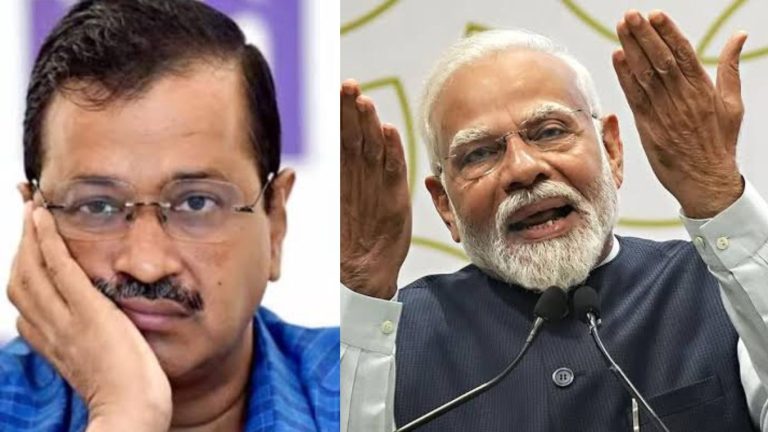
‘No Sheeshmahal for myself, I chose to build houses for the poor’: PM Modi’s jibe at Kejriwal

Taking a jibe at Delhi CM Arvind Kejriwal, Prime Minister Narendra Modi remarked that he could’ve built himself a ‘Sheeshmahal’ but instead he built housing for the poor.

PM Modi was speaking at the inauguration of several development projects in Delhi today when he said, “The country know that Modi never built a home for himself. But in the past 10 years, I fulfilled the dreams of the poor by constructing houses for more than 4 crore poor people”. He added, “I could also have built a ‘Sheeshmahal’ for myself but my dream was to give parka house to my countrymen”.

The Prime Minister inaugurated development projects worth Rs. 4,500 crore today including Ashoka Vihar EVS flats, Sarojini Nagar government quarters, World Trade Centre and campuses and colleges of University of Delhi.

Kejriwal’s Sheeshmahal

Delhi CM Arvind Kejriwal who once claimed that he and his AAP ministers would never occupy government bungalows, is said to have renovated his official residence at a cost of around Rs. 45 crore. Kejriwal who lives in a sprawling mansion with ultra luxury furnishings and allegedly even a toilet seat made of gold, faced criticism for splurging taxpayer’s money on personal luxury.