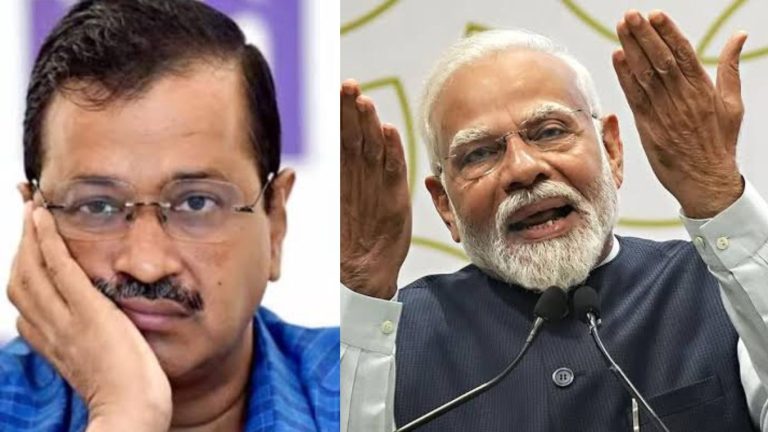
Taking a jibe at Delhi CM Arvind Kejriwal, Prime Minister Narendra Modi remarked that he could’ve built himself a ‘Sheeshmahal’ but instead he built housing for the poor.
PM Modi was speaking at the inauguration of several development projects in Delhi today when he said, “The country know that Modi never built a home for himself. But in the past 10 years, I fulfilled the dreams of the poor by constructing houses for more than 4 crore poor people”. He added, “I could also have built a ‘Sheeshmahal’ for myself but my dream was to give parka house to my countrymen”.
#WATCH | "I could have also built a 'SheeshMahal' for myself, but my dream is to see my countrymen living in permanent homes," said PM @narendramodi in his address.
The Prime Minister inaugurated development projects worth Rs. 4,500 crore today including Ashoka Vihar EVS flats, Sarojini Nagar government quarters, World Trade Centre and campuses and colleges of University of Delhi.
Kejriwal’s Sheeshmahal
Delhi CM Arvind Kejriwal who once claimed that he and his AAP ministers would never occupy government bungalows, is said to have renovated his official residence at a cost of around Rs. 45 crore. Kejriwal who lives in a sprawling mansion with ultra luxury furnishings and allegedly even a toilet seat made of gold, faced criticism for splurging taxpayer’s money on personal luxury.
A recent incident of sexual assault that happened at Anna University in Chennai has sent shockwaves across the community, with the students demanding justice and enhanced safety measures at the campus. The police have arrested the accused identified as Gnansekaran, though as investigations are underway, shocking facts continue to emerge by the day.
As per the reports, the arrest of the accused has uncovered links to several crimes involving him like robbery, abduction, and the use of stolen funds to acquire assets like a huge farmhouse near Chennai. The accused is a serial offender and has been involved in several criminal cases like theft and sexual assault, as revealed by the police.
The police have implicated him in over 20 cases, including a high-profile robbery and kidnapping in 2018. During the investigation, the police revealed that the accused in the past along with his brother Suresh, two wives, and mother, kidnapped a businessman in Madurantakam near Kanchipuram. The victim was then looted for jewels and cash worth Rs 25 lakh. The family members of Gnansekaran then who were involved in the crime were arrested after which the police launched an investigation. After the current case, the police revealed a pattern of criminal behaviour stretching past several years.
As reported by Commune Mag, the accused targeted unoccupied homes in prosperous areas like Mylapore, ECR, and Abhiramapuram between 7 and 9 pm. The areas facing busy traffic helped him conceal his actions, avoid leaving traces and mislead the security authorities if any. He would also make use of chilli powder to flee the dogs. However, he was caught by the police in one such incident where he mistakenly used chocolate drink mix instead of chili powder resulting in his capture by sniffer dogs.
37-year-old Gnanasekaran, a biriyani vendor from Kotturpuram was arrested in December after he sexually assaulted a second-year student at Anna University. The Kotturpuram police have registered a case under BNSS Section 64 and are continuing their investigation.
In the midst, it has come to the fore that the accused is a history-sheeter and that he was wanted by the police in several cases. He has looted 37 and 45 sovereigns of gold jewellery in two separate incidents in the past from the city’s Abhiramapuram locality. Using the money looted from the crimes, he also purchased a 3.5 farmhouse in Thandaripet, Chengalpattu district, near Madhuranthakam.
#JustNow || கொள்ளை அடித்த பணத்தில் 3.5 ஏக்கரில் பண்ணை வீடு வாங்கிய ஞானசேகரன்..
— Saravanaprasad Balasubramanian (Modi ka Pariwar) (@BS_Prasad) January 2, 2025
As per the reports, the 37-year-old accused jumped onto the university campus on Monday, 23rd December evening and sexually assaulted the second-year student at around 8 pm. The accused executed the assault behind one of the university buildings after brutally bashing a fourth-year male student who had accompanied the girl at that time.
The police investigating the case revealed that the accused initially threatened the male student to leave the spot. However, later he thrashed him and then sexually assaulted the girl. As per the police officials, the accused operated a biryani stall near the university and was well aware of the campus areas. After being arrested, the accused Gagansekaran gave a confessional statement agreeing to the accusations.
The police meanwhile also stated that the accused had threatened the victim before he assaulted her. “Gnanasekaran approached the students and threatened them by saying he had taken their video. He then threatened the male friend of the victim to leave. The victim was assaulted thereafter. We have recovered his cell phone with evidence of his recorded crime. We are now examining the device to find if there were more such crimes he committed and deleted evidence,” the police said.
“He also threatened the survivor by taking her phone number, saying she must meet him whenever he called her,” the official added. The woman victim was also filmed without her consent, as per her complaint.
The police are probing into the case as it is probing the accused’s involvement in any other assault cases if any.
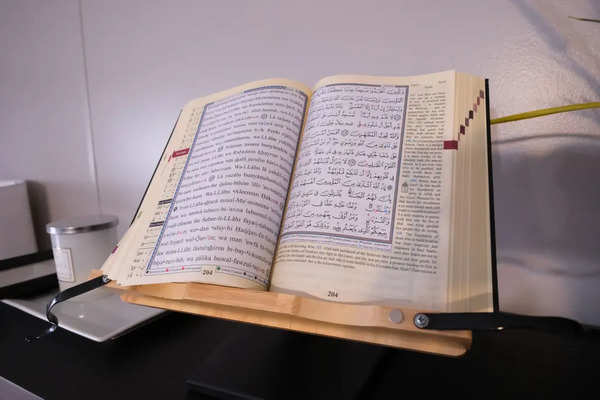
As the investigation is underway into the ghastly terrorist attack that happened in New Orleans city of United States on Wednesday, federal authorities have found incriminating materials in the slain attacker’s trailer home in North Houston. The authorities reportedly found bomb-making material in his bedroom along with a Quran opened at verse 9:111 which reads, “They fight in Allah’s cause, and slay and are slain; a promise binding…”. ,
Image credit: TOI
The attacker, identified as Shamsud-Din Jabbar, 42, had rammed a pickup truck into a crowd of people celebrating new year, taking lives of around 15 people and leaving around 30 people injured. Jabbar was killed in an exchange of fire with the police after carrying out the attack.
Image credit: TOI
The Federal Bureau of Investigation (FBI) recovered two Improvised Explosive Devices (IEDs) planted in the ice coolers at the French Quarter. The attacker was not acting alone as the surveillance footage shows three men and a woman planting those IEDs. He was carrying the remote detonator to the IEDs in his vehicle. The authorities have also recovered a handgun, AR-style rifle guns and multiple Improvised Explosive Devices (IEDs) including pipe bombs from his car.
Jabbar served a decade with the US Army Staff and was deployed in Afghanistan from 2009 to 2019. He left the active duty in 2015 and the reserves in 2020. Before carrying out the attack, he posted some videos online declaring his allegiance to ISIS. In the videos, he threatened to kill his own family.
Two people sustained burn injuries after some of the protestors attempted self-immolation during protests against the shifting of toxic waste materials from Bhopal Gas tragedy site to Pithampur in Dhar district for its disposal on Friday, according to eyewitnesses.
After four decades of the tragic incident, “Bhopal gas tragedy”- touted as the world’s worst industrial disaster, the toxic waste materials from the Bhopal’s Union Carbide factory site were transported to Pithampur for its safe disposal on the night of January 1.
The Bhopal gas tragedy had claimed the lives of several thousand people after deadly gas leaked from the Union Carbide India Limited pesticide plant on the intervening night of December 2 and 3, 1984.
One of the injured persons, Rajkumar Raghuvanshi told ANI, “I have done this (self immolation) against the toxic waste brought here.”
The crowd were staging the protest for their demand to send back the containers carrying the hazardous waste from Pithampur.
After the incident, the police present on the spot immediately shifted some of the protestors and sent them to the hospital. Earlier, the police also used mild lathi charge to disperse the crowd staging the protest.
Pithampur SDM, Vivek Gurjar said, “Currently, people are protesting in view of the waste materials at the Pithampur bus stand and we are trying to convince them that the process (incineration of waste) is being done scientifically. The entire process will be performed under full supervision and in a scientific manner. I appeal to the people to maintain peace and cooperate with the administration.”
Earlier, among the protesters, a social worker Sandeep Raghuvanshi demanded that they had only one request from the state government that the containers of the toxic waste should be sent back from Pithampur.
“There is anger among the public and the local administration is presenting false reports at higher ups that there wasn’t any anger but it is. We have only one request from the state government that the containers of the toxic waste should be sent back from Pithampur. My strike would be continued till the 12 containers of waste brought from Bhopal were sent back from here,” Raghuvanshi told ANI.
Locals also called for a ‘Band’ and closed their shops to mark their protest against the incineration of the toxic waste in Pithampur.
A local shopkeeper told ANI, “The reason for shutting down the shop is that the 40-year-old toxic waste from Bhopal has been brought here in Pithampur for its disposal. We will not let the waste be incinerated here. We are with the people of Pithampur. In order to protect our people, we have voluntarily shut down our shops to mark our protest. We want from the government that this waste should not be incinerated in Pithampur.”
Earlier on Thursday, Madhya Pradesh Chief Minister Mohan Yadav clarified that the disposal of waste would have no impact on the environment at all.
“For the last 40 years, the people of Bhopal have been living with this waste. Many of the Government of India’s organisations were involved in the disposal of this toxic waste. Earlier, the 10 MT waste was incinerated in Pithampur as a trial run in 2015 and the report of it prepared in the presence of scientists was presented before the Supreme Court. It was revealed in the report that the disposal of the hazardous waste has no impact on the environment. After detailed analysis of the reports, the MP High Court directed to incinerate the remaining hazardous waste,” the CM said.
He added that the state government’s attempt was to move forward by taking everyone and presenting information with transparency before them. He had instructed cabinet minister Kailash Vijayvargiya to hold a meeting in Dhar with local representatives and make them understand about it with transparency.
(This news report is published from a syndicated feed. Except for the headline, the content has not been written or edited by OpIndia staff)
After 144 years, the Maha Kumbh will be held in Prayagraj, at the confluence of the Ganga, Yamuna, and Saraswati rivers. Sadhus and seers have reached the Kumbh Kshetra. The Hindu holy scriptures describe Maha Kumbh’s great splendour. This is why every Sanatani wishes to take a dip in Prayagraj Kumbh at least once in his lifetime. As per Hindu beliefs, not just bathing at the Triveni Sangam, but the darshan of Akshayvat is also essential for the fulfilment of the Maha Kumbh pilgrimage.
Kumbh Mela is the world’s largest religious and cultural gathering based on scientific concepts. According to astronomy, Ardha Kumbh, Purna Kumbh and Maha Kumbh are organised when the planets and stars are in a particular position. Although the oldest written information about the Kumbh is found in the travel accounts of Chinese traveller Huen Tsang, in religious texts it is considered as the beginning of the universe.
The Atharva Veda mentions the Kumbh Mela. The Atharva Veda mentions ‘Chaturtha Dadami’ and ‘Poorna: Kumbhoshadhikaal Aahitastam’. However, the 14th-15th century scholar Sayana and the 17th-century scholar Udgeethas point out that the first verse belongs to a hymn in praise of the Vishtari Yajna and the second to ‘divine time’. Here, Kumbh means ‘water pot’, not the festival.
Puranas describe Kumbh in detail
Whatever it is, Kumbh is mentioned in the Puranas. The story is told in the Matsya Purana. When the ocean was churned, a pot of Amrit (nectar) emerged as a jewel. To prevent the Asuras (demons) from drinking the Amrit, the Devtas fled with it, and the demons pursued them. Meanwhile, Amrit drops fell in Prayagraj, Haridwar, Ujjain, and Nashik. Kumbh Melas are being held wherever Amrit drops have fallen.
Similar descriptions are found in the Skanda Purana and the Padma Purana. The Padma Purana states, “पृथिव्यांकुम्भयोगस्यचतुर्धाभेदउच्चते।चतु:स्थलेनितनात्सुधाकुम्भस्थभूतले।।चन्द्रप्रस्रवणारक्षांसूर्योंविस्फोटनात्दधौ।दैत्येभ्यश्चगुरुरक्षांसौरिदेवेंद्रजात्भयात्।।”This means that there are four types of Kumbha Yoga on earth. Nectar (Suddha) flows in four places at all times. Here, protection flows through the sun and moon.
Regarding Kumbh, it is said in the Skanda Purana, “माघेमासेगंगेस्नानंयःकुरुतेनरः।युगकोटिसहस्राणितिष्ठंतिपितृदेवताः।।”That is, the ancestors of a person who takes a bath in Ganga in the month of Magh reside in heaven. Whereas, in the Padma Purana it is said, “त्रिषुस्थलेषुयःस्नायात्प्रयागेचपुष्करे।कुरुक्षेत्रेचधर्मात्मासयातिपरमंपदम्।।”This means, the righteous person who takes a bath in Prayag, Pushkar and Kurukshetra goes to the supreme abode.
It is said in the Garuda Purana, “अग्निष्टोमसहस्राणिवाजपेयशतानिच।कुंभस्नानस्यकलांनार्हंतेषोडशीमपि।।” (Even thousands of Agnistomas and hundreds of Vajpeyi sacrifices are not equal to one-sixteenth of a Kumbha bath.) According to the Brahma-vaivarta Purana, “प्रयागेमाघमासेतुस्नात्वापार्थिवमर्दनः।सर्वपापैःप्रमुच्येतपितृभिःसहमोदते।।”That is, by taking a bath in Prayag in the month of Magh, one is freed from all sins and his ancestors are pleased.
According to the Agni Purana, “कुंभेकुंभोद्भवः स्नात्वाप्रायच्छतिहिमानवान्।ततःपरंनपापानितिष्ठन्तिशुभकर्मणाम्।।” That is, taking a bath in Aquarius frees one from sins and leads one to good deeds. According to the Vishnu Purana, “अयंकुंभःपरंपुण्यंस्नानंयेनकृतंशुभम्।सर्वपापक्षयंयातिगच्छतेविष्णुसन्निधिम्।।”That is, bathing in Kumbh is extremely pious and one goes to Vishnu world.
Meanwhile the Srimad Bhagavat Purana says, “तत्रापियःस्नानकृत्पुण्यकाले।गंगाजलंतीर्थमथाधिवासम्।।पुण्यंलभेत्कृतकृत्यःसगत्वा।वैकुण्ठलोकंपरमंसमेति।।” That is, a person who takes a bath in Ganga in holy times attains merit and goes to Vaikuntha Dham. In the Vana Parva of the Mahabharata it is said, “त्रिपुरंदहतेयज्ञःस्नानंतीर्थेतुदहते।सर्वपापंचतीर्थेस्नात्वासर्वंभवतिशुद्धये।।”
This implies that Yagya purifies the three worlds, but by bathing in the Tirtha, all sins are destroyed and the person becomes completely pure. It is said in the Kurma Purana that all sins are destroyed by taking a bath in Kumbh. In order to destroy the sins in Kumbh and make the bath fruitful, one should also take a pledge not to commit sins.
Chinese travellers mentioned Kumbh during the time of Emperor Harsha
Besides Mastya Purana and Padma Purana, Kumbh is also mentioned in Skanda Purana, Agni Purana, Bhavishya Purana, Brahma Purana, Kurma Purana, Padma Purana, Bhagwat Purana, Vishnu Purana, Garuda Purana and Valmiki Ramayana. According to beliefs, Kumbh has been organised since time immemorial. Some say that it is even older than the Indus Civilization. It is said that it is 1,000 years older than the Harappa and Mohenjodaro civilisation.
Kalidas, who was one of the nine gems (navratna ministers) of Emperor Vikramaditya of the Parmar dynasty who lived 500 years before the birth of Christ, has also mentioned it in his immortal work Raghuvansham. Chinese traveller Huen Tsang (or Xuanzang), who stayed in India from 629-645 AD during the reign of Emperor Harshvardhan Bains, who is also known as Emperor Harsh in history, has also described Kumbh. There are many descriptions of it in the Mughal period.
It is believed that most of the Puranas were written in a later period. Many were even written in the 15th and 16th century. It is said in some religious texts that the Kumbh Mela was first started by Emperor Harshvardhan. Huen Tsang came to Prayagraj during his journey and he has written in his travelogue that Emperor Harshvardhan used to organize a fair at the confluence of rivers every five years and used to give donations to the poor there.
The significance of Akshayvat, CM Yogi removed the restrictions imposed during the Mughal period
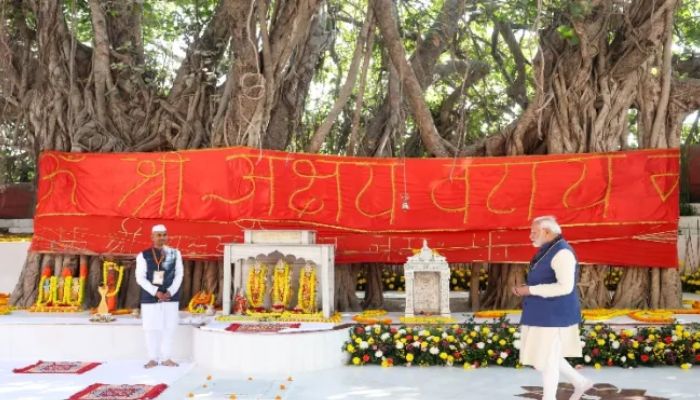
It is said that the benefits of bathing in Prayagraj Kumbh are obtained only when one visits the Akshayvat tree located there. There is an ancient fort on the banks of Sangam, in which this Akshayvat is located. Akshayvat is also mentioned in the Puranas. It is said that this vatvriksh has been a witness to the development and destruction of the universe. It never gets destroyed. Mughal tyrant Akbar had banned the darshan and worship of Akshayvat.
After this, the late CDS General Bipin Rawat came here and visited the Patalpuri temple and later due to his efforts, Chief Minister Yogi Adityanath lifted the ban on the visit of common people here in the year 2018. Later, Prime Minister Narendra Modi also came here and visited this eternal Akshayvat.
It is said about this Banyan tree that Mata Sita blessed this tree that it will remain green even when the earth will submerge in water and everything will be destroyed during the Pralaya Kaal. Apart from this, there is also a belief that Lord Krishna had sat on this Banyan tree in his childhood form. Since then, Shri Hari sleeps on its leaves. In Padma Purana, Akshayvat has been called the umbrella of Tirtharaj Prayag.
Hwen Tsang has written about Akshayvat that there is a temple in the city and there is a huge banyan tree in it. Its branches and leaves are spread far and wide. The description of this banyan tree is also found in Valmiki Ramayana. It is said that Bharadwaj Muni had told Lord Shri Ram that both the brothers should go to the confluence of Ganga-Yamuna and a very big banyan tree will be found there. From there, both the brothers should cross the Yamuna.
Bharadwaj Muni tells Lord Ram about Akshayvat that other trees from all sides will surround it. Many Siddha Purushas will be living in its shade. After reaching there, one should seek blessings from the Banyan tree. It is said that Mother Sita did the same and also blessed Akshayvat that whoever worships Akshayvat after taking a bath in Sangam will get the fruits of the bath.
It is said that Brahma started a yagya at the Sangam of Prayagraj at the beginning of creation. In this, Lord Vishnu became the host and Lord Shiva became the deity. At the end of the Yagya, the three gods produced a tree from their power, which is today called Akshayvat. According to scientists, the age of this banyan tree is said to be 5270 years. It is said that the roots of this Akshayvat are located in the netherworld.
It is said that attempts were made to destroy Akshayvat during the Mughal period. Apart from this, many Muslim invaders also tried to destroy it by cutting and burning it, but they failed. It is believed that there are five such Vat trees on the earth. First Akshayvat in Prayagraj, second Siddhavat in Ujjain, third Vanshivat in Vrindavan, fourth Mokshavat in Gaya and fifth Panchavat in Panchvati.
When is Maha Kumbh, Kumbh and Ardh Kumbh organised?
This time Kumbh is being held in Prayagraj after 144 years. Interestingly, Kumbh is of five types – Maha Kumbh, Poorna Kumbh, Ardh Kumbh, Kumbh and Magh Kumbh, which is also called Magh Mela. The Maha Kumbh, which is being held after 144 years, is organised only at the Sangam of Prayagraj. According to the scriptures, when Jupiter enters Taurus and the Sun enters Capricorn, then Kumbh Mela is organised in Prayagraj.
The Poorna Kumbh is held every 12 years. The full Kumbh is held at 4 pilgrimage sites – Haridwar, Ujjain, Nasik and Prayagraj. Haridwar is situated on the Ganga river, Ujjain at the Shipra river, Nasik at the Godavari river and Prayagraj at the confluence of the Ganges, Yamuna and Saraswati rivers. When the Sun enters Aries and Jupiter enters Aquarius, the Kumbh Mela is held at Haridwar.
Meanwhile, Ardh Kumbh is organised every 6 years only at two places- Prayagraj and Haridwar. Magh Kumbh is organised every year only at Prayagraj. When the Sun enters the Leo, the Kumbh celebrated in Ujjain is called Simhastha Kumbh. When the Sun and Jupiter enter the Leo sign, then this Kumbh Mela is celebrated in Nashik.
Bangladesh has been descending into the jaws of Islamism ever since Sheikh Hasina was democratically ousted as the Prime Minister. The situation has been further worsened by the Muhammad Yunus-led interim government pandering to radical groups.
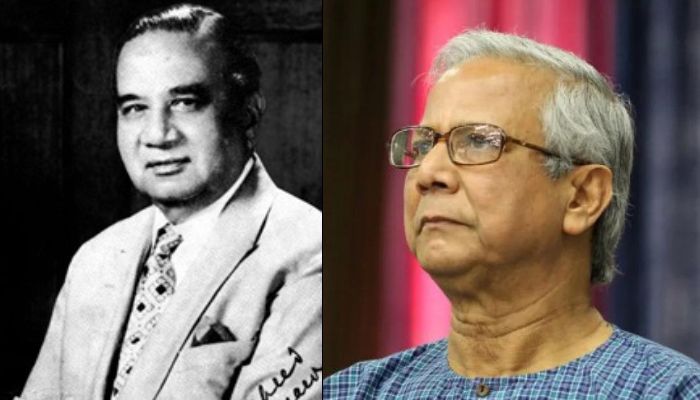
In its latest attempt to mainstream Islamism in the country’s academic curriculum, a special chapter on Huseyn Shaheed Suhrawardy has been incorporated in the Std 3 textbook ‘Bangladesh and the World.’
For the unversed, Suhrawardy was the Prime Minister of the Bengal province between April 1946 and August 1947. He later became the Prime Minister of Pakistan in 1956 and continued in office till 1957.
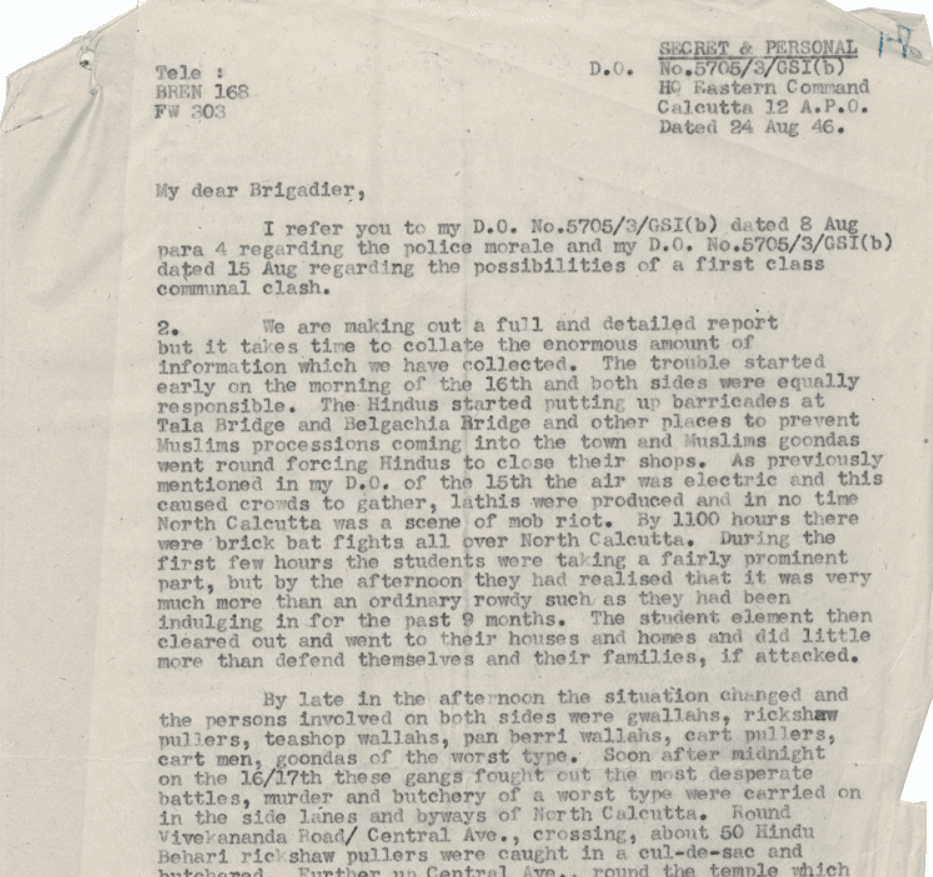
He had earned the moniker of ‘Butcher of Bengal’ for his crimes against humanity. Huseyn Shaheed Suhrawardy exacerbated the 1943 Bengal famine, and facilitated the Great Calcutta Killings of 1946 and oversaw the Noakhali massacre.
At a time when Bangladesh is witnessing a spate of attacks against the minority Hindu community, the Yunus government is glorifying Suhrawardy and rationalising his extremist views.
This is part of the ploy to indoctrinate young minds with Islamism and set the foundation for more atrocities against Hindus at the hands of radical Muslims.
Suhrawardy and the Great Calcutta Killings of 1946
On 16th August 1946, Kolkata became the epicentre of one of the most brutal episodes of anti-Hindu violence in Indian history. It came to be known as the ‘Great Calcutta Killings.’
The fateful day marked the onset of a 5-day long massacre that claimed approximately 5,000 lives. Tens of thousands of Hindus were injured and an estimated 120,000 became homeless.
The call for ‘Direct Action’ was made by Muslim League supremo Muhammad Ali Jinnah. He set the stage for the orgy of loot, murder, and sexual violence against the Hindu population of Calcutta.
Newspaper cutting of Amrita Bazar Patrika from 17th August 1946
Jinnah had made it clear that the Muslim League would “stop cooperating with the (British) government and bid goodbye to Constitutional methods”. He had even hinted at creating trouble and having India partitioned or burnt.
The man who facilitated this fantasy of Jinnah by massacring the Hindu community was none other than Huseyn Shaheed Suhrawardy.
In the years leading up to 1946, Bengal was a Muslim-majority province. Hindus accounted for only 42% of the total population. However, the case of Calcutta was unique. The city had a significant Hindu majority of 64%.
This ‘demographic imbalance‘ made Calcutta a prime target for Suhrawardy and the Muslim League. They wanted to intimidate the Hindus into accepting the integration of the Bengal into Pakistan.
When the then British Prime Minister Clement Attlee sent a Cabinet Mission in June 1946 to negotiate the transfer of power, the Indian National Congress rejected the proposal of partition of British India.
British correspondence about the 1946 Great Calcutta Killings
Jinnah wanted two separate nations in the form of a Hindu-majority India and a Muslim-majority Pakistan. When Congress refused to give in to his plans, he decided to use violent methods to force the British government into accepting his proposal.
The Muslim League supremo declared 16th August 1946 as ‘Direct Action Day.’ It was strategically timed to coincide with the 18th day of Ramzan.
That particular day marked the beginning of the Battle of Badr wherein Prophet Muhammad defeated the Quraysh tribe. The war had proven decisive in the forced capture of Arabia by Muslims.
This key connection was not lost on Huseyn Shaheed Suhrawardy and other Muslim League politicians.
They delivered provocative speeches urging Muslims to attack Hindus. “Maar ke lenge Pakistan, lad ke lenge Pakistan, le kar rahenge Pakistan, Allahu Akhbar, nara-i-takhbir,” Suhrawardy had declared.
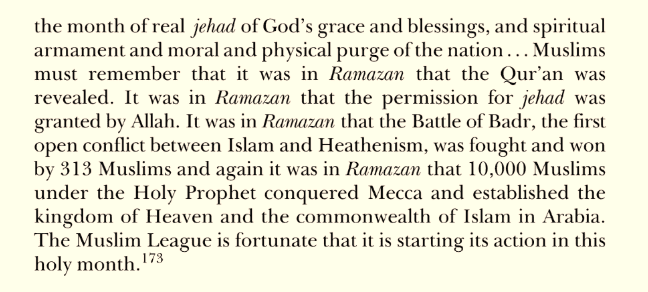
The Star of India, which was a mouthpiece of the Muslim League declared on 13th August 1946 –
“Muslims must remember that it was in Ramzan that permission for jehad was granted by Allah. It was in Ramzan that the Battle of Badr, the first open conflict between Islam and heathens, was fought and won by 313 Muslims and again it was in Ramzan that 10,000 Muslims under the Holy Prophet conquered Mecca and established the Kingdom of Heaven and the commonwealth of Islam in Arabia. The Muslim League is fortunate that it is starting its action on this Holy month and day.“
Excerpt from The Star of India, published in India’s Partition: The Story of Imperialism in Retreat by Devendra Panigrahi
On the morning of 16th August 1946, violence erupted in Calcutta. They were fueled by the inflammatory speeches of Muslim League leaders.
Huseyn Shaheed Suhrawardy had instructed all Islamic clerics to deliver sermons telling Jumma Namazis to do everything possible for the creation of Pakistan. It was a clear dog whistle to start attacking the Hindu community.
At the same time, he assured violent Muslims that they would enjoy legal immunity and that the police would not intervene. This further emboldened armed mobs to unleash mayhem in Hindu neighbourhoods.
Suhrawardy effectively restrained the law enforcement authorities, allowing the Muslim goons to carry out their attacks without fear of reprisal. As the day progressed, the situation deteriorated rapidly.
Muslim mobs armed with iron rods, swords, and other weapons began targeting Hindu homes and businesses across the city of Kolkata.
Areas such as College Street and Barabazar became battlegrounds for Muslims to carry out mass killings, rapes, and arson.
Suhrawardy facilitated the Great Calcutta Killings in another way. He manipulated the police force a few years before the massacre to include Punjabi Muslim men and Pathans.
The Calcutta police traditionally composed of Hindus from Arrah, Balia, Chhapra and Deoria. Suhrawardy oversaw the democratic overhaul of the police force.
This well-thought-out change ensured that the police would turn a blind eye to the atrocities committed against Hindus.
Evidence suggests that the violence was not spontaneous but rather a well-orchestrated plan. Special coupons for petrol were issued to Muslim League ministers for making petrol bombs.
Food and grains were stockpiled to sustain thousands of Muslim goons, who perpetrated the Great Calcutta Killing of 1946.
The British government intervened only after 6 days of violence by deploying military forces to restore order. The violence left the Hindu community in Kolkata in ruins. It later spread to other regions including Bihar and Punjab.
Months after the Direct Action Day, Muslims orchestrated the Noakhali massacre in October and November 1946. Suhrawardy’s aide and fellow Muslim League leader Gholam Sarwar Husseini was the mastermind behind the carnage.
About 5,000 Hindus were killed in Noakhali. Thousands of Hindu women were raped and forcibly converted to Islam.
Historical revisionism in Bangladesh surrounding the legacy of Suhrawardy
Attempts are now being made to downplay Suhrawardy’s role in the Direct Action Day. He is not only being glorified but also portrayed as a ‘respectable historic figure’.
In reality, Suhrawardy had a reputation as the ‘king of the goondas’ in Kolkata. His legacy as ‘The Butcher of Bengal’ has been documented by various historians and yet the Bangladesh government led by Muhammad Yunus is trying to wrap it under covers.
As Bangladesh witnesses an Islamist onslaught on the Hindu community, the lessons from the Great Calcutta Killings remain painfully relevant.
Attack on Hindus in Bangladesh since the fall of Dhaka
OpIndia has been vetting and reporting cases of atrocities on Hindus since the ouster of Sheikh Hasina on 5th August 2024.
There have been at least 205 attacks on Hindu temples, shops and businesses within 3 days of the fall of Dhaka.
We previously exposed how Muslim students have forced as many as 60 Hindu teachers, professors and government officials to resign from their positions.
Human rights activist and exiled Bangladeshi blogger, Asad Noor, has recently revealed that the minority community is now being coerced into joining ‘Jamaat-e-Islami’.
On 6th September, a procession of Hindu devotees carrying the idol of Lord Ganesha came under attack in the Kadam Mubarak area in Chittagong city of Bangladesh.
Ahead of the Durga Puja celebrations, a radical Muslim man named Yasin Mia vandalised the idols of Goddess Durga and other Hindu deities in Gouripur town in the Mymensingh district of Bangladesh on 25th September.
In the latest series of attacks, idols of Goddess Durga and other Hindu deities were vandalised at the Rishipara Barwari Puja Mandap and the Manikadi Palpara Barwari Pujamandap on 28th September and 1st October respectively.
The attacks were carried out in Sujanagar upazila in Pabna district in Rajshahi Division of Bangladesh. While a total of 4 idols were defaced at the Rishipara Barwari Puja Mandap, another 5 Hindu idols were destroyed at the Manikadi Palpara Barwari Pujamandap.
On 3rd October, 7 idols of Hindu deities were destroyed at the Gopinath Jiur Akhara Durga Puja mandap in Kishoreganj, Dhaka Division, Bangladesh.
On 5th November, the Hindu community came under attack from police and law enforcement authorities in Hazari Goli in Chittagong city of Bangladesh.
On 29th November, a violent Muslim mob attacked Hindu minorities and vandalised 3 temples in Patharghata in Chittagong district of Bangladesh.
The Hindu religious sites that the Muslims targeted included the Shantaneshwari Matri Temple, the Shoni Temple, and Shantaneshwari Kalibari Temple. The attack took place immediately after the conclusion of Jumma Namaz.
On 30th November, a prominent Hindu journalist named Munni Saha was arrested by the police from Karwan Bazar in Dhaka city of Bangladesh.
A group of extremists attacked the Mahashmashan Kali Mata Mandir, vandalised 7 idols of deities and stole gold ornaments on 13th December 2024.
On 19th December, a Muslim man identified as Alal Uddin vandalised an idol at the Polashkanda Kali Temple and then attempted to create a fake alibi. The incident occurred in Haluaghat upazila in the Mymensingh district of Bangladesh.
Another 37-year-old Muslim man identified as Azharul vandalised several idols of deities in Haluaghat Upazila in the Mymensingh district of Bangladesh.
The recent arrest of Chinmoy Krishna Das Prabhu and his aides, attempts at banning Hindu organisation ISKCON and stiffling Hindu protests with cases of ‘sedition’ highlight systematic persecution under the interim government of Muhammad Yunus.
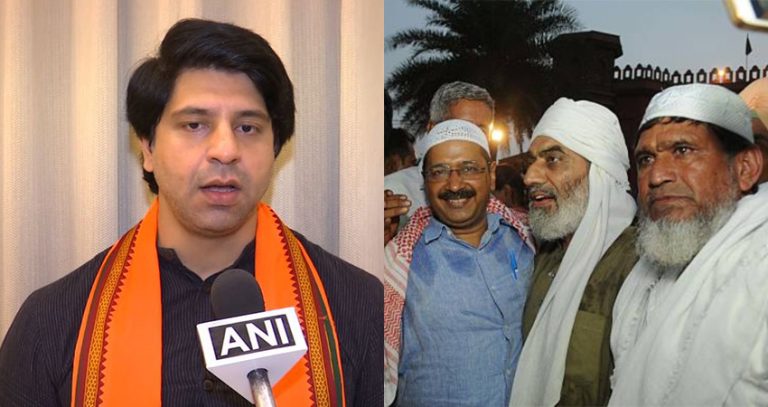
Bharatiya Janata Party (BJP) national spokesperson Shehzad Poonawalla on Friday accused the Aam Aadmi Party (AAP) of ordering the demolition of 24 temples in Delhi between 2016 and 2023.
Citing documents, Poonawalla said that from 2016 to 2023, AAP leaders had issued orders to demolish 24 temples in the national capital.
Speaking to ANI, Poonawalla said, “The documents that have come into the public domain through the media clearly show that there is no party more deceitful in this country and the world than the Aam Aadmi Party (AAP). Those who accuse others, what is their own history? From 2016 to 2023, documents with signatures show how the AAP Chief Minister and Ministers issued fatwas to demolish nearly 24 structures.”
Poonawala alleged that in 2016, the then Home Minister Satyendra Jain had signed orders to demolish eight temples while intervening to save two unidentified mosques that had no historical significance.
“In 2016, a fatwa to demolish 8 temples was issued under the signature of Satyendra Jain, who was the Home Minister at the time. The interesting thing is that Satyendra Jain intervened to save two unidentified mosques that had no historical background, but he never spoke out about the temples,” he said.
Poonawala accused the Aam Aadmi Party of being the “biggest anti-Hindu party” in India and criticised its silence on the attacks on Sanatan Dharma by its alliance partners such as the DMK, TMC and the Congress.
“Today, the biggest anti-Hindu party is the Aam Aadmi Party. They and their alliance partners, DMK, TMC, Left and Congress, always speak against Sanatan Dharma, however, AAP says nothing in response. And now they claim they will give compensation to the priests,” he said.
On January 1, Delhi Chief Minister Atishi accused the BJP of ordering the demolition of several temples in the national capital. She accused the BJP of pretending to protect Hinduism while secretly instructing officials and the LG to destroy temples.
Addressing a press conference, Atishi said, “The dual face of the BJP is revealed through such orders. On the one hand, they pretend to protect Hinduism, while on the other, they secretly instruct their appointed officers and LG to demolish temples.”
She stated that during a meeting of the Religious Committee on November 22, it was decided to demolish several temples located in West Patel Nagar, Dilshad Garden, Seemapuri, Gokalpuri, New Usmanpur, and Sultanpuri, as well as a Buddhist temple in Sundar Nagari.
(This news report is published from a syndicated feed. Except for the headline, the content has not been written or edited by OpIndia staff)
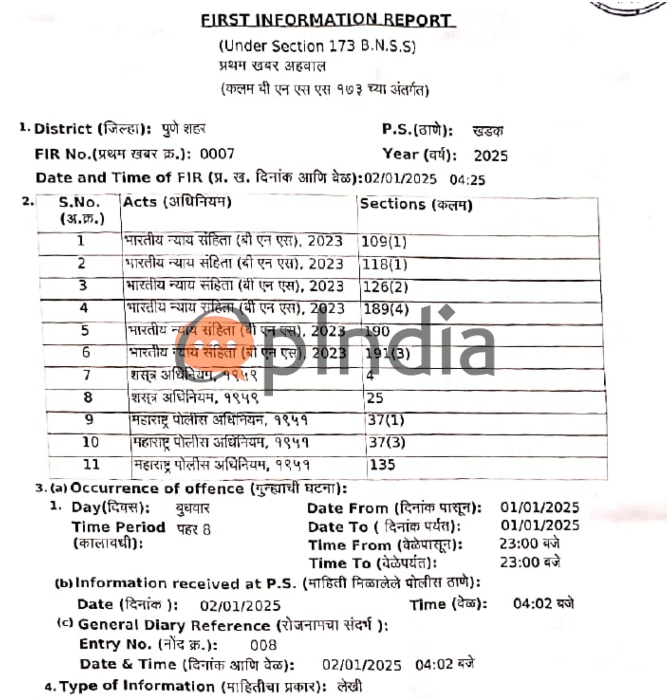
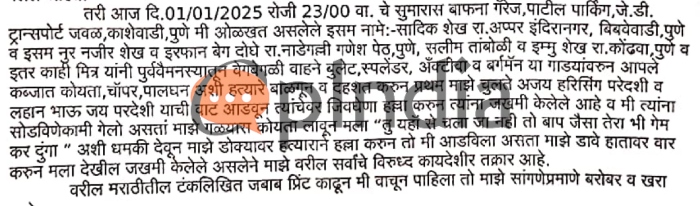
On Thursday, 2nd January, Maharashtra Police in the city of Pune booked 5 individuals named Sadik Sheikh, Nur Sheikh, Irfan Beig, Salim Tamboli, and Immu Sheikh for assaulting 3 Hindu individuals out of elongated personal enmity. The accused persons also threatened the victims to death as they attacked them with sharp weapons like knives and curved blades. The sections imposed against the accused persons are 109(1), 118(1), 126(2), 189(4), 190, 191(3) of the Bharatiya Nyay Samhita, 2023; sections 4 and 25 of the Arms Act, 1959; and 37(1), 37(3) and 135 of the Bombay Police Act, 1951.
OpIndia has exclusively obtained the FIR copy of the incident. As per the document, the incident is said to have happened on the night of January 1st when the accused persons were celebrating the birthday of the primary accused person identified as Sadik. The complainant identified as Anil stated that the accused persons in an inebriated state arrived in his residential locality late at around 11 pm and attacked his uncle, Ajay, and his younger cousin accompanying him. The accused persons, as per Anil, used sharp weapons like knives to launch a deadly attack on his uncle. He also stated that the accused persons threatened them and said that they would be killed soon.
As per the FIR copy, the accused persons are known to the victims and they hold personal enmity out of which the recent attack was launched. The accused Sadik had in the year 2005 murdered his father, as per the complainant. The accused persons had also launched a murderous attack on the complainant’s uncle, Ajay in the years 2001 and 2011. Following this, Sadik, and his associates identified as Salim and Immu, had been jailed by the police. They were later released. However, they continued to hold enmity against the complaint and his family.
Anil, who has filed an FIR in the case stated that the incident happened when he was roaming around in the area on the night of 1st January while talking to one of his relatives over the phone. Meanwhile, he saw his uncle, Ajay, and cousin accompanying him returning from their workplaces. In the meantime, the accused persons including Sadik arrived at the locality on various bikes and began abusing Ajay and his son. They then removed the sharp weapons that they were carrying and attacked the duo out of personal elongated enmity.
On seeing this, the complainant rushed to help his uncle and cousin. However, the accused Sadik launched a deadly attack on the complainant and threatened him saying that he would be murdered just like in father in the year 2005. The accused persons asked the complainant to stay away, however, on refusal, they assaulted him resulting in minor injuries. The accused persons also used weapons resulting in severe injuries to Uncle Ajay and his son.
The victim persons then hurriedly rushed to the police station to launch a complaint. On seeing this, the accused persons fled from the spot on their bikes. Later the victims went to the hospital for immediate treatment after which the complainant called the police from within the premises and narrated the entire ordeal.
OpIndia talked to complainant Anil in the case. Confirming the entire incident, he said that the accused persons have been constantly threatening and assaulting him and his uncle for years. He said that his father was murdered in 2005. Since then the accused have been threatening and following his family. He said that they had previously attempted to attack his uncle twice, once in 2001 and the next time in 2011. “At that time we lodged a complaint resulting in the arrest of Sadik, Nur, and Immu. They were jailed and also released. Not only this, but they also launched an attack on us three months back. During this, we attempted to resolve the matter out of the police station. But the recent one has left us severely injured. The police have now arrested 4 accused in the case,” he said.
On asking the reason for the enmity that led to the murder of his father, the complainant said that he was very small at that time and didn’t exactly know what had happened back then. He also added that he didn’t know why they were behind his Uncle now. “We all stay in one area. They (the accused) keep watch on us, they threaten us constantly and also abuse us. This has been happening for years. At times we have tried to resolve the matter, whatever it may be, but they continue to hold enmity against us,” the complainant added stating that they have been staying in fear for all these years.
OpIndia tried contacting the police station for an official statement, but the calls remained unanswered. The report will be updated once the details are obtained.
However, the complainant has confirmed that 4 of the accused persons identified as Sadik Sheikh, Nur Sheikh, Irfan Beig, and Salim Tamboli have been arrested by the police under sections 109(1), 118(1), 126(2), 189(4), 190, 191(3) of the Bharatiya Nyay Samhita, 2023; sections 4 and 25 of the Arms Act, 1959; and 37(1), 37(3) and 135 of the Bombay Police Act, 1951.
On Thursday (2nd January), the Supreme Court lambasted a man for attempting to “sensationalise” the observations made by the Bareilly Court wherein the district court had warned against Pakistan and Bangladesh-style religious conversions while convicting one Mohammed Alim in a Love Jihad case. The PIL to expunge the statements was filed by one Anas. The PIL said that the comments made by the Bareilly court were against the Muslim community.
A bench of Justices Hrishikesh Roy and SVN Bhatti dismissed the petition by Anas as unpressed, observing that the petitioner had no jurisdiction (was not a party before the UP court) and was “sensationalising” the subject. During the hearing, Advocate Manas P Hameed (representing the petitioner) admitted in response to a court question that the petitioner was not a party to the proceedings before the UP Court.
Responding to this, Justice Roy said, “You are a busybody… just interfering with something which is absolutely of no business to you. You can’t be filing an Article 32 petition for a matter like this”.
Expressing a similar sentiment, Justice Bhatti questioned how the court could expunge remarks in independent litigation like the instant one: “Assuming a particular conclusion is warranted from the evidence before the Sessions court, and a conclusion is recorded which is not [relatable] to the petitioner before us, should it be expunged in an independent matter like this? We can’t also examine that. Sensationalizing matter in this fashion is not correct”.
The court therefore made it clear that observations made on the basis of evidence can’t be expunged on the basis of Article 32 petition. Article 32 of the constitution essentially says that citizens can approach the court to enforce their fundamental rights. Anas, therefore, approached the Supreme Court claiming that the observations made by the Bareilly Court in a ‘Love Jihad’ case, based on evidence, infringed upon his fundamental rights as a Muslim. The court made clear that first, he had no locus standi in the case and second, he cannot claim that observations based on evidence infringed upon his fundamental rights.
The PIL challenged an order by an Uttar Pradesh court that defined ‘Love Jihad’ as an act in which Muslim men systematically target’ Hindu women for conversion to Islam through marriage and fraudulently marry Hindu women ‘under the pretence of love’ in order to convert them.
As reported, on 30th September 2024, in a landmark judgment, one Mohammed Alim was convicted in a “love jihad” case by a Bareilly court for deceiving a woman into a relationship under the false pretence of marriage, subsequently coercing her into sexual relations, and subjecting her to violence and threats. Notably, Alim had introduced himself as “Anand” and appeared to be a Hindu.
The court observed that incidents like this contribute to attempts to create conditions similar to those in Pakistan and Bangladesh, where illegal religious conversions through coercion are rampant. OpIndia accessed the copy of the judgment. Mohammed Alim has been convicted under Sections 376(2)(n), 323, 504, and 506 of the Indian Penal Code.
In its detailed judgment, the court categorically labelled the case as an example of “Love Jihad.” The court observed that Alim posed as a Hindu to lure the victim into a relationship under false pretences. The court further observed that Alim’s actions, using deceit to coerce the victim into sexual relations and later pressuring her to convert to Islam, were part of a larger and disturbing trend. The judge remarked, “This is not just a matter of personal deceit; it is an orchestrated attempt to manipulate and exploit vulnerable individuals in the name of religion.”
The court further compared this incident to the situation in Pakistan and Bangladesh, where cases of forced religious conversions are rampant. The judge warned that such incidents need to be curtailed; otherwise, it could lead to a breakdown of the secular fabric of Indian society. The court said, “By allowing such practices to continue unchecked, we risk creating conditions in India similar to those in Pakistan and Bangladesh, where religious freedom is curtailed, and women are systematically targeted for conversion.”
The judgment also criticised the failure to invoke the Uttar Pradesh Prohibition of Unlawful Religious Conversion Act, 2021, in the case. The court noted, “Despite clear evidence of coercion and deceit with the intent of religious conversion, no action was taken under the specific provisions of the law designed to prevent such conversions. This oversight must be corrected in future cases.”
The court also raised concerns about potential foreign funding behind such activities. The court noted that the systematic targeting of vulnerable women for religious conversion through deceit may not be an isolated phenomenon. The judge remarked, “The possibility of foreign funding in such cases cannot be ruled out, as these actions appear to be part of a larger conspiracy aimed at destabilising the social fabric of the country.”
The court made stern observations asserting that incidents like these represent more than individual wrongdoings and pose a serious threat to harmony and secularism. The court said, “The systematic targeting of women under the guise of love to fulfil larger demographic and religious goals is not only a crime against the individual but against the nation’s unity.”
A group of female students at a private engineering college in Telangana’s Medchal Malkajgiri district staged a protest on Thursday, accusing hostel staff of recording them in the bathroom, police said.
According to officials, the female students approached the Medchal police and lodged a complaint.
“Female students of CMR Engineering College in Medchal Malkajgiri have alleged that hostel staff recorded videos of them in the bathroom,” a senior police officer said.
He said that a case has been registered under relevant sections.”An investigation is underway to verify the allegations,” he said, adding that a thorough probe would be conducted and legal action would be taken against those found guilty.
Medchal-Malkajgiri, Telangana | Visuals from CMR Engineering College, where female students are protesting against hostel authorities alleging that hostel staff recorded videos of the women students in the hostel bathroom. A case has been registered in the matter. pic.twitter.com/ZDDjBIDXzJ
The students have reportedly alleged that over 300 recordings of college students exist in the possession of some staff members in the CMR Engineering college.
“It is extremely horrible and a serious case of misconduct and assault on women and women’s dignity…It is indeed heartening that the Telangana Women’s Commission has already taken suo moto cognizance of it and has asked for a detailed inquiry including all the recordings. There is an FIR also that has been registered and an investigation has started. But whoever, whichever staff member is responsible for this shocking incident where women are not safe, where young girls studying and educating themselves are not safe in their living spaces within the campus and have to be subjected to such extreme intrusion of their privacy cannot be dealt with lightly”, BJP’s Telangana spokesperson Rachna Reddy told ANI.