Home Blog Page 6268

Kerala: Communist govt to withdraw award given to cartoonist for mocking rape accused Bishop Franco

The ‘liberal’ Kerala communist government led by Pinarayi Vijayan has created a massive controversy after it chose to withdraw its decision to award a cartoonist, who had expressed his opinion on rape accused Bishop Franco through his art form.


According to a report in Times Now, cartoonist KK Subhas had published a cartoon depicting rape accused Bishop Franco Mulakkal as a cockerel, while a ladies’ undergarment is seen at the end of the bishop’s staff. The Kerala Lalit Kala Academy had awarded him with the best cartoonist award for the cartoon yesterday.

However, the Kerala Catholic Bishops’ Council was not amused, and the KCBC spokesperson Varghese Vallikkat, a priest, said the decision to give the award to the cartoon was “highly provocative and objectionable”. The KCBC had also alleged that the Left Democratic Front (LDF) government had undermined priesthood in a vulgar manner.

The KCBC also questioned the LDF government whether they were taking ‘revenge’ on the community after their humiliating loss in the Lok Sabha elections. The CPM had just won one seat out of 20 seats from Kerala in the recent elections.

As supporters of the rape accused Bishop Franco has begun to criticise the government for awarding a cartoonist for expressing his opinion, the state government has now decided to withdraw the award given to the cartoonist Subhas. State Culture Minister AK Balan has examined the cartoon and confirmed that it hurts religious sentiments and that he does not agree with it.

“The state government has no role in it as the award winners were selected by a group of experts. After protests surfaced, we examined it and we found it was not right to hurt religious sentiments,” said Balan.

Franco Mulakkal, Bishop of the Roman Catholic Diocese of Jalandhar, was accused of raping a 44-year-old nun at a guest house in Kuravilangad in May 2014 and subsequent sexual exploitations afterwards. The nun had registered a complaint in June 2018 and has also claimed that despite her complaints, the church took no action on the bishop.

The congregation had also stood by the rape accused and referred to him as an “innocent soul”. The Malankara Orthodox Church had been supporting the rape accused Bishop and attempts were also made to vilify the victim nun.

Despite the initial delay in the arrest of the Bishop, Kerala police acted subsequently upon the incriminating pieces of evidence present against Bishop Franco Mulakkal of the Archdiocese of Jalandhar, Punjab, for allegedly raping a nun from Kerala on multiple occasions. Rape accused Bishop Franco was granted conditional bail in the case on October 15 in the case.

After his release, Bishop Franco was given a grand welcome in Jalandhar where people had arrived in large numbers. Since his release, the Missionaries of Jesus has attempted to silence those four nuns for supporting the victim nun who had accused Bishop Franco of rape.

The four nuns who had supported the rape survivor nun were asked to leave the Kuravilangad convent, and go to convents, previously assigned to them. Shockingly, apart from threats and intimidation, Father Kuriakose who had testified against Bishop Franco was found dead under mysterious circumstances.

India’s second moon mission Chandrayaan-2 to be launched on 15th July, ISRO releases first pictures

ISRO today released the first pictures of Chandrayaan-2, India’s second mission to the moon and have scheduled July 15 as the launch date. ISRO’s Chief K Sivan announced that launch would take place at 2:51 am on 15th July from Sriharikota. Earlier ISRO had kept a launch window from July 9 to July 16 open for the launch.


The Chandrayaan-2 would comprise of three parts namely: the Orbiter, the Lander (Vikram) and the Rover (Pragyan). The Rover would be housed within the Lander. The Orbiter and the Lander would be an integrated module weighing about 3.8 tonnes. This module would be launched using a Geosynchronous Satellite Launch Vehicle Mark III (GSLV MK III) designed to launch satellites into geostationary orbit.

Once launched the integrated module would propel towards the moon after which the Lander will detach and land on the South Pole on 6th September as per schedule. The Rover would then conduct experiments on the lunar surface.

Earlier this month ISRO tweeted the challenges of the Moon landing procedure.


The agency had also released the first pictures of the Chandrayaan-2 mission today.


Reportedly, the Chandrayaan-2 mission would cost Rs 603 crore while the GSLV MK III would cost Rs 375 crore. There are also reports that the mission would carry several foreign payloads as well, including that of NASA.

Chandrayaan 2 being prepared by ISRO

Talking about the mission, ISRO Chairman K Sivan said: “The 15 minute operation that will see the Lander (Vikram) make the final descent will be the most terrifying moments for the agency as it has never attempted such a complex mission.”

Once launched by the GSLV rocket, the composite structure—Orbiter, Lander and Rover together—will use five orbit raising manoeuvres over 16 days. “The propulsion systems of the orbiter will be used for manoeuvres. Then we will have the translunar burns to take the composite structure closer to the Moon. After this the spacecraft will cover 3.5 lakh-km and travel there for five days,” Sivan said.

The Chandrayaan-1 mission which was launched 10 years ago was credited for the discovery of water on the lunar surface.

ISRO recently signed an MoU with the Indian Air Force (IAF) to select and train astronauts for India’s first manned mission, the Gaganyaan project. An all-weather earth observation spy satellite RISAT-2B was launched greatly boosting the country’s space capability.

No Deepika, you have no right to talk about the Kathua victim, you should hang your head in shame and shut up

It requires special kind of talent to be as shameless as Deepika Singh Rajawat, the ‘celebrity’ lawyer who shot to fame for taking on the Kathua rape case last year only to be kicked out by the victim’s family for not attending the hearings in Pathankot sessions court.

The day Kathua verdict was pronounced, convicting six and acquitting one accused, Deepika Rajawat took to Twitter to make a little announcement for herself.


In November last year, in an affidavit filed at the Pathankot sessions court by the victim’s father Mohammad Yousaf, who is also the main complainant of the FIR, said Deepika will no longer be his advocate in the case and he is withdrawing the power of attorney issued to her.

Kathua rape case was top news for several weeks in the country, and Deepika was hailed as a hero of the case. It was argued that if Deepika Singh had not joined the case, the victim would have never got justice. And she became a superstar after she got a thumbs up from Hollywood star Emma Watson. In April this year, Watson tweeted “All power to Deepika Singh Rajawat”.


Deepika also had won the ‘Woman of the Year’ award by the Indian Merchants Chamber of Commerce & Industry Ladies Wing.

However, in November last year it came to light that Deepika had attended only 2 hearings in the case that was being heard by Pathankot session court. Sessions Judge Dr Tejwinder Singh was hearing the case on a daily basis as per Supreme Court order, and a total of 110 hearings had taken place already in the five and a half months. But the celebrity lawyer, who was supposed to lead the fight for justice of the victim, attended only 2 of these hearings.

According to Yousaf, the victim’s father, Deepika Rajawat had said that there was a threat to her life in Pathankot, which was why she could not go there for hearings. In view of this, Yousaf had informed the court that he was removing Deepika Rajawat from the case.

Interstingly, when the Supreme Court had moved the case to Pathankot, Deepika had projected it as a victory for her. She had also expressed her happiness at the case being transferred to a ‘safe and peaceful’ place and thanked the top court for the same. However, suddenly Pathankot became ‘unsafe’ for her.

It may be noted the Kathua rape and murder case was a criminal case, and as per law, the state fights the case against the accused. The victim need not appoint any lawyers. But often victims choose to engage private lawyers if they feel that the public prosecutors may not be able to present the case properly. But even in such cases, the private lawyers work only as assistants of the public prosecutors, they can’t work in the case independently.

Mohammad Yousaf had retained his other private advocates assisting in fighting the case but removed Rajawat. To top it, Deepika shamelessly said that she did not betray the Kathua victim and her family but her family betrayed her (for firing her for not doing her work properly).

Deepika Singh Rajawat blaming parents of Kathua victim for removing her from the case

Deepika showed off her magnanimity by claiming how she was there with them “when no one was” but now “since the rainy days have passed”, they are winding up with her “just because” she could not regularly attend the trial. She attended 2 out of 110 hearings, skipping 108 hearings. Perhaps she was too busy collecting awards and giving interviews to international publications for her ‘great work’ of skipping hearings.

And “rainy days have passed” in the above tweet probably meant the compensation from the general public who donated out of the goodness in their hearts as well as government. She very generously put up another disclaimer that she does not blame the grieving parents for removing her owing to her lack of attendance. Because it is “the human tendency which travels in genes.” Extremely classy way of blaming the victims for not doing your own duty. Wonder if all this is also covered in her book.

And now, after all this, she has written a book where she talks about her ‘journey as a lawyer who took up Kathua case as challenge in the face of threats and intimidation.’ She says the book comes out next month. We shall wait and see if she mentions the part where she abandoned the family. Or the part where she went on a wanderlust collecting awards across the world in name of Kathua victim while she could not go to Pathankot to attend the hearing.

The entire Kathua case was mired in controversy from the word go where the self-proclaimed champions of human rights took it upon themselves to get justice for the little girl. Except, the said crusaders ended up being shady characters themselves.

Advocate Talib Hussain, who was a prominent activist demanding justice for the victim, was  later accused of rape by two women. He was also accused of domestic violence and attempt to kill his wife over dowry. And then there was Rajawat, who played victim after she was fired for not doing her work.

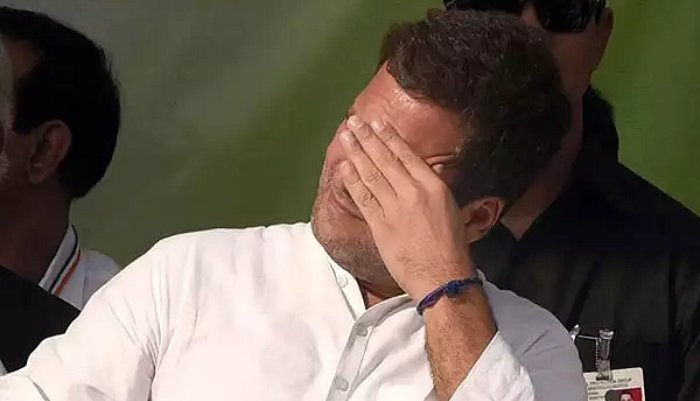
Massive ‘surprise’! Rahul Gandhi to remain Congress president and not take responsibility for the 2019 Election debacle

In a massive “surprise”, Rahul Gandhi is set to continue as the Congress President and not take any responsibility for the 2019 Election debacle that saw Congress being wiped out in the Modi wave that gave BJP 303 seats. According to reports, the Congress Core Committee had been dissolved after the rout in the Lok Sabha elections.

After weeks of speculation regarding whether or not the Congress party will finally mend its ways and assign blame to the reluctant Dynasty who has managed to reduce the party to ashes, Randeep Surjewala clarified to the media that Rahul Gandhi was, is and will remain the President of the Congress party.

These remarks were made after the party met, under the leadership of AK Antony to discuss the party’s strategy and preparation for the upcoming assembly elections in Haryana, Jammu and Kashmir, Jharkhand and Maharashtra.

Interestingly, Rahul Gandhi, who wanted to resign as the party president earlier and had tendered his resignation to the Congress Committee, of which, he is the Chairperson too, was not present at this strategy meeting and neither was his mother and former Congress president Sonia Gandhi.

Senior leaders Ahmed Patel, Mallikarjuna Kharge, Ghulam Nabi Azad, P Chidambaram, KC Venugopal, Surjewala, Jairam Ramesh and Anand Sharma were present in the meeting.

For weeks after the Congress failed to stop PM Narendra Modi’s electoral march, Rahul Gandhi had played out an elaborate drama where he had pretended to want to take responsibility for the poll loss. He had tendered his resignation which was rejected. He had then reportedly said that he was steadfast in his decision to resign. However, now it is apparent that the Congress party doesn’t seem to mind sacrificing its electoral relevance as long as a member of the Gandhi Dynasty is spearheading the loss.

CBI raids 22 locations connected to mining scam, Ex-UP minister Gayatri Prajapati, SP MLC raided

The Central Bureau of Investigation (CBI) conducted raids at 22 locations in Uttar Pradesh and Delhi connected with the mining scam. Samajwadi Party leader and former Uttar Pradesh Minister Gayatri Prajapati, and Samajwadi Party’s MLC Ramesh Mishra were raided. The raids were conducted in connection with an illegal mining case.


The CBI also conducted raid at the residence of Samajwadi Party MLC Ramesh Mishra situated at Hamirpur. As per reports, Prajapati’s residence and office in Amethi were raided too.

Prajapati held the mining portfolio in Uttar Pradesh under the previous Samajwadi Party government. A case was registered by the Enforcement Directorate (ED) under the Prevention of Money Laundering Act (PMLA) after the FIR was filed by the CBI against eleven people including former CM Akhilesh Yadav for alleged illegal allotment of sand licenses in Hamirpur between 2012 and 2016.

Prajapati is lodged in prison since March 2017 on the charges of the gang rape of a woman. The woman had accused Prajapati of inviting her and her daughter to his residence on the pretext of granting a mining contract and instead raped them both along with his men.

The Allahabad High Court had ordered an investigation in the illegal mining cases in 2016 during the Samajwadi Party government. The Allahabad High Court had received a complaint of illegal mining in seven districts of Uttar Pradesh.

Kolkata: Police uses water cannons and tear gas on BJP workers protesting peacefully against political violence in the state

Kolkata police used water cannons and tear gas on BJP workers who were protesting against the killings of their party workers across the state this afternoon. Police stopped a group of BJP workers marching peacefully towards Kolkata Police headquarters in Lal Bazar.


The protestors were marching peacefully until they were stopped by police barricades. As the protestors attempted to climb over the barricades, police resorted to water cannons and tear gas shells to disperse the crowd resulting in chaos.

Several BJP workers have been arrested including five supporters of BJP Mahila Morcha for violating CrPC Section 144, which was imposed near the headquarters. Roads to and from Lal Bazar were barricaded. Rapid Action Force (RAF) was along with about 3,000 personnel from Kolkata Police were also deployed.

Reportedly, the Kolkata police also charged BJP workers with batons on Bipin Behari Ganguly Street. Now, leaders including Kailash Vijayvargiya, and Locket Chatterjee among others have started a sit-in protest near Kolkata Police headquarters.

The BJP had previously announced they would protest against the TMC government for the dismal failure of ensuring law and order in the state. The state has been witnessing a spate of post-poll violence. On Sunday, clashes erupted between TMC and BJP workers in Basirghat killing several BJP workers. BJP leader Mukul Roy has accused Mamata Banerjee of giving a go-ahead to TMC workers to attack BJP workers. In the wake of recent incidents of violence in the state, Roy had demanded Banerjee’s resignation as Home Minister of West Bengal.

Today, another BJP worker from Malda was reportedly found brutally murdered.

Here is how Arvind Kejriwal is lying about Delhi having uninterrupted electricity supply and lowest power rate

I hope that the residents of Delhi are enjoying the cheaper power without any power cuts in this scorching heat. Ultimately, what matters is the “Imaandaar Sarkaar” (an honest Government) after all.

In DESU (Delhi Electric Supply Undertaking) days, the power cuts, power failures, and arbitrary billings were routine in Delhi. We heard that Sheila Dixit made them a thing of the past. But since ‘honesty’ happened to Delhi, it took the power supply concerns of Delhi to another level – to the level of Twitter Challenges.

One of the primary reason why people voted for AAP and my sympathies for them, was of course, free to choose between ‘cheap’ and ‘reliable’ power!

I do not have an accurate report to conclude anything about the uninterrupted 24×7 power supply in Delhi as Kejriwal Sir claims here in this Times of India report. But I do witness on SM, the regular cry over regular power cuts. If we believe in the personal account of the Delhi residents on social media, the claim is exaggerated. Read this piece.

However, nothing can be concluded and only the residents would actually know their plight, based on their individual experiences. My sympathies for those who are still waiting for “Purn-Swarajya,” and bearing the heat, summer after summer, tight-lipped, also providing excuses.

For example: “In Delhi, people suffering frequent power-cuts are also happy, because of power subsidies and lower electricity bills.”

I am yet to decipher how one can agree to pay Rs 15/unit for diesel generator power (also generating fumes) during the time of power cut, instead of a much lesser rate even without subsidies? This cannot be the lure of cheaper power but lack of reasoning.

Let us have a fact-check on Raghav Chaddha’s tweet about Delhi Domestic Electricity Tariff, which he claims to be a gift from Almighty.


A comparative reference [rate before subsidy] with states he enjoys to compare. For complete Tariff details, check here.

Let us assume that Mr. X‘s average consumption is 800 Units, and Mr. Y‘s average consumption is 2000 units, their electricity bills and the average per unit rate (check the second table) in the three states would be:

Domestic tariff slabs for electricity
Domestic tariff for electricity for Delhi, Goa and Gujarat

This is the crux! Now read the rant of Delhi CM’s here:


The sweet irony is that he lies from his teeth to the same people who voted him to power. I hope that those who voted for cheaper, uninterrupted power do check their own monthly electricity bills, and have a track of power-cuts in their area instead of relying on Delhi Chief Minister Arvind Kejriwal’s claims, who is an incorrigible liar.

RJD MLA’s son beats up a food vendor because he did not like the food prepared by him

In a shocking incident, Ankur Kumar, son of Rashtriya Janata Dal (RJD) MLA Ashok Kumar, allegedly thrashed a food vendor for the simple reason that he did not like the food prepared by the vendor. The incident took place yesterday at a residential hotel owned by the MLA situated at Dharamshala Chowk of Sasaram city police station, Bihar.


It is alleged that Ankur Kumar ordered the victim named Rajat Kesari who ran a food stall at the Station road, to deliver some food at the residential hotel named ‘Ankur Hotel’, that is owned by his father. But he did not like the food and broke into a fight with Kesari. He then called his friends and they all brutally thrashed the victim inside the hotel.

The victim was admitted to a hospital in Jamuhar where he was operated for some head injuries. Police took the statement of the victim after he gained consciousness.

Sasaram SSP Rajesh Kumar told that a case has been based on the statement of the victim and that an investigation will be carried out in the case. All the four accused including Ankur Sharma are absconding. Ankur Sharma is alleged to have been involved in similar activities earlier too.

Govt of India decides that PM Modi’s aircraft won’t use Pakistan airspace to fly to Kyrgyzstan for the SCO meet

According to reports, the aircraft carrying PM Modi will not fly over Pakistan airspace during his visit to Kyrgyzstan for the SCO summit. The decision comes after Pakistan had approved in principle to let PM Modi’s aircraft fly over its airspace to Bishkek in Kyrgyzstan.


Instead of flying over Pakistan, PM Modi’s aircraft will fly over Oman, Iran, and central Asian countries on its way to Bishkek, the official spokesperson said.


India had earlier requested Pakistan to allow PM Modi’s aircraft to fly over its airspace to attend the Shanghai Cooperation Organisation(SCO) meet to be held on June 13-14. Pakistani officials confirmed Imran Khan government’s approval to allow PM Modi’s travel through its airspace to Bikshek.

Since the retaliatory airstrikes carried out by the Indian Airforce on the JeM terror camp in Pakistan’s Balakot, it has closed down its airspace fearing another such attack from the Indian Airforce. They have opened only 2 of the 11 routes since then that passes through southern Pakistan. Apart from these two routes, the neighbouring country’s airspace remains closed for other commercial flights. Due to this, the international flights that used to fly over Pakistan are having to use longer routes, and most airlines have chosen to fly over the Arabian Sea and Gulf of Oman, while some flights connecting Chinese cities are bypassing Pakistan from the northern side.

Earlier this year, Pakistan had permitted External Affairs Minister of India, Sushma Swaraj to fly through its airspace to attend the SCO Foreign Ministers’ meet in Bishkek, Kyrgyzstan, on May 21.

The government of India had received flak for seeking permission to fly through Pakistan airspace. Many political analysts observed that Indian Prime Minister’s visit through Pakistan airspace would undo India’s assiduous measures to single out Pakistan internationally.

The current move of bypassing Pakistan airspace and flying through central Asian countries reaffirms India’s policy of isolating Pakistan for its support to terror outfits against her.

Radicalization in three high security UK prisons on the rise as Muslim gangs force inmates to embrace Islam

There is a growing hegemony of Muslim gangs at three high-security prisons in the United Kingdom. The latest report by the UK Ministry of Justice touches upon this alarming situation along with how these groups are foisting their Islamic beliefs on other inmates. The report suggests these groups aim at bringing other inmates under the fold of Islam to strengthen their ‘Muslim Brotherhood’ in the prison.


According to the study, there is a significant presence of Muslim prisoners in three high-security prisons in England. About 12847 prisoners in these prisons are Muslims. Out of the total number of prisoners lodged in for the charges of terrorism, 90% are Muslims. The preponderance of Muslim detainees has resulted in the formation of groups and gangs within jails with ‘Muslim Brotherhood’ being a uniting factor for these seemingly diverse and heterogeneous groups of individuals.

The study entails how the Muslim prison gangs, which are often formed for criminal purposes, present both a management challenge due to criminal behaviour and sometimes through the risk of radicalization. Though these gangs and groups are not highly structured, they have an established hierarchical system.

The Muslim Brotherhood has allowed them to surround themselves with like-minded individuals with whom they share a common interest and focus. The study conducted by the Ministry of Justice revealed that individuals of the Muslim Brotherhood groups connected through a shared Muslim faith wielded more influence and dominance in the prison than other groups. The membership offered many supportive benefits including friendship, support, and religious familiarity.

The gang has clearly defined membership roles including leaders, recruiters, enforcers, followers, and foot-soldiers. Violence, bullying, and intimidation were prevalent with the gang, and religion is used to terrorize non-believers.

Most of the contraband goods circulated in the prisons were credited to these Muslim gangs. There were varied motivations for people to join groups such as- protection, safety, criminality, and power. Brotherhood provided lone vulnerable prisoners with a social setting. Many were proselytized to Islam by the leaders of the Muslim Brotherhood, who were often hailed by the gang members as scholars of Islam. The prisoners converted to Islam citing social acceptability and Islam offering them a ‘stricter’ way of life as primary reasons for the same.

An elaborate hierarchy was formulated to regulate and expand the group in the prisons. The roles assumed by gang members divided into leaders, recruiters, enforcers, and followers. Leaders, often the senior members in the gang, incarcerated in jail on terror charges generally spoke Arabic and claimed to be scholars of Islam. The younger ones were usually in awe of such leaders, often displaying excessive deference to their position and authority.

Recruiters were considered fundamental to the continuing dominance of Muslim gangs in the prisons. Prisoners, most vulnerable ones were approached to embrace Islam and join their Brotherhood. Coercion, pressure, violence were some of the themes adopted by the recruiters to increase the membership and continued dominance of their gangs. Indirect aggression was also employed as a psychological means to coerce inmates to convert.

Followers and foot-soldiers converted to Islam for criminality or under duress. They were expected to carry out criminal or violent activities directed by their leaders. Some foot-soldiers assumed the roles of Enforces to ensure strict adherence to Islamic doctrines and commitment towards the Brotherhood leaders.

Though the gang members appeared outwardly compliant to the prison staff, the rising amount of radicalization perpetuated by them is increasingly subversive of the prison management. The rampant radicalization within UK prisons is only set to worsen as the prison mates’ desire to command more authority, wield more influence and accumulate greater power intensifies. Prominent political commentators like David Vance had suggested building a Guantanamo kind of prison to contain the toxic radicalization in the UK prisons.