Home Blog Page 6728

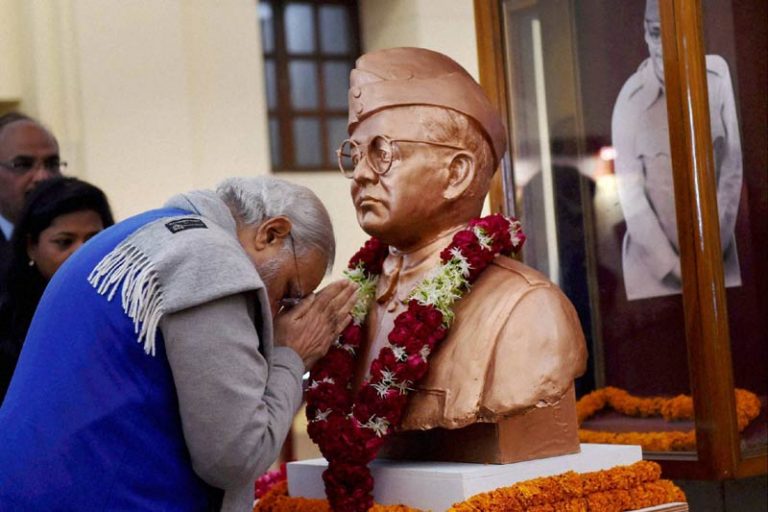
PM Modi inaugurates Netaji Subhash Chandra Bose museum at Red Fort

PM Modi today inaugurated a museum at Red Fort, to commemorate the 122nd birth anniversary of Netaji Subash Chandra Bose. He was accompanied by Netaji’s grand-nephew and BJP Bengal vice-president Chandra Kumar Bose, Minister of Culture Mahesh Sharma and also members of the Archaeological Survey of India. The declaration to construct this museum had come in October, last year, from PM Modi himself.


The museum showcases the artefacts like medal, badges, uniforms and chequebooks of the Indian National Army so that visitors can have a look at the working of the INA and also the efforts put by them to defeat the imperialist forces of Britain. The museum is made on the first floor of the Red Fort barracks, the place where infamous trials against the soldiers of the INA were carried out by the British.

The museum will also contain digitised documents, narrating the childhood of Netaji and his efforts to form the INA. The visitors will also get a glimpse of how Swami Vivekananda and Sri Aurobindo influenced the thoughts of Netaji and also about his initial days at the Indian National Congress.

PM Modi also inaugurated the Yaad-e-Jalliaan Museum, which provides an account about the infamous massacre of 13th April 1919 of Jalianawala Bagh. In addition to this, he also inaugurated a museum constructed to mark the valour of Indian Soldiers who were made to participate in the First World War. The First War Of Independence fought in 1857, is also was inaugurated at the occasion.

PM Modi has undertaken various measures to immortalise the legacy of Netaji and the INA. In December, last year, PM Modi renamed three Island of the Andaman & Nicobar Islands, on the occasion of the 75th anniversary of Bose having hoisted the national flag at Port Blair. The Ross Island was renamed to Netaji Subhas Chandra Bose Island, Neil Island to Shahid Dweep and Havelock Island to Swaraj Dweep. A Rs 75 commemorative coin was also released to mark the 75th anniversary.

He also had hoisted the national flag at the Red Fort to commemorate the 75th anniversary of the Azad Hind Government formed by Netaji Subhas Chandra Bose. The historic event was attended by few survivors of Azad Hind Fauz and other veterans who had served in Indian Armed forces.

Naroda Patiya case: ‘Convictions debatable’, Supreme Court grants bail to 4

0

The Supreme Court on Tuesday granted bail to four convicts in the 2002 Naroda Patiya case. A Supreme Court bench headed by Justice AM Khanwilkar granted bails on the ground that the conviction order of Gujarat High Court was ‘debatable’ and the accused should be released on bail since their appeal would take time. One of the convicts was granted temporary bail for his daughter’s wedding.

On 28th February 2002, following the Sabarmati Express carnage, widespread riots took place in Gujarat. About 97 Muslims were killed in Ahmedabad’s Naroda Patiya area, making it one of the worst mob-violence during the riots. Gujarat High Court had last year convicted Bajrang Dal leader Babu Bajrangi but acquitted former Gujarat minister Maya Kodnani for want of evidence.

Also read: 2002 riots case against Maya Kodnani takes a new turn with video evidence and Amit Shah’s testimony

The four convicts, Umeshbhai Bharwad, Rajkumar, Harshad and Prakashbhai Rathod, who are granted bail were held guilty under section 436 (mischief by fire or explosive substance with intent to destroy house) of the Indian Penal Code along with other provisions related to unlawful assembly. The Supreme Court noted that the Gujarat High Court had primarily relied on police officials’ identification and in some cases, no identification parade was conducted. This raised doubts over identification in a group of around 15,000 people. The Bench noted that prima facie the High Court’s approach was debatable.

Edelman Trust Report 2008 vs 2014 vs 2019: Here is how the Modi govt did vs the Congress govt

In an all-important election year, the Edelman Trust Barometer Global Report signals cheer for the central government led by Prime Minister Narendra Modi. In 2019, when Congress’ rhetoric is at its shrillest, India’s trust in 2019 is higher than 2018 by 4 points. The Edelman Trust Barometer stands at 74% in 2019.

While the global average of trust in the government stands at 47, which is three points up from 2018, India’s trust index in the government stands at a whopping 74, 4 points up from 2018.

Trust in Government : 2019

While the majority of countries across the world have displayed distrust in their respective governments, India is in the top 3 countries of the world with the highest trust factor in the government.

Since these ratings have come on an all-important election year, it bodes well to go back in time and analyse what the trust rankings in the government were in 2008, 2009 when the Congress government was elected to power and 2013-2014, right before Prime Minister Modi was elected.

Trust in government: 2008 vs 2009

In 2008 the trust in the government was an abysmal 49%. However, in 2009, year when the Congress government came into power, the trust in the government fell further to 43%.

In 2013, right before the Congress was voted out of power, the trust in the government, according to Edelman Trust Barometer was 57%.

Trust in government: 2013

In 2014 January, right before the Congress government was booted out and the Narendra Modi government was elected, the trust in the government fell even more.

Trust in government: 2014, before general elections

As one can see from the chart, same time in 2014, the Congress government inspired a trust of 53%. Down from 57%.

In essence, India’s trust barometer in the Congress government right before Modi government was elected to power was 53%. Today, in the same month of January when the report has been released, right before India goes to election as is poised to exercise their franchise in 2019, the trust in the Modi government is at a whopping 74%.

Trust in the Media was up by 3 points, standing at 64 in 2019, however, it remained the least trusted institution in India and Globally.

India remained highly optimistic about the future as well. While the world remained largely pessimistic, India’s optimism about the future stood at an encouraging number, ranking third in the world. While the mass population was 79% optimistic about the future, the informed public was 88% optimistic about the future.

Optimism about the future: 2019

The difference between the mass population and informed public was a glaring problem throughout the world and even in India. While the informed public’s overall trust quotient stood at 83 (Top three in the world), that of the mass population stood at 66. Even with the disparity, the Modi government seems to be doing far better than the Congress government of the past.

Interestingly, despite Rahul Gandhi shrill anti-industry rhetoric, the faith that companies can take actions that improve society while making a profit too stood at a high level for India. India ranked the 4th in the world with an 81 score, 5 points up from 2018.

Trust in Companies: 2019

Trust in NGOs too remained high in India with a score of 72. Among most of the parameters, one of the worst performing barometers was India’s faith in the Media. This was the parameter that stunted the overall trust score more than any other parameter.

With the approval ratings for this government looking optimistic, far more than the Congress government’s rating right before the election when they were voted back to power, the Modi government certainly has a reason to cheer.

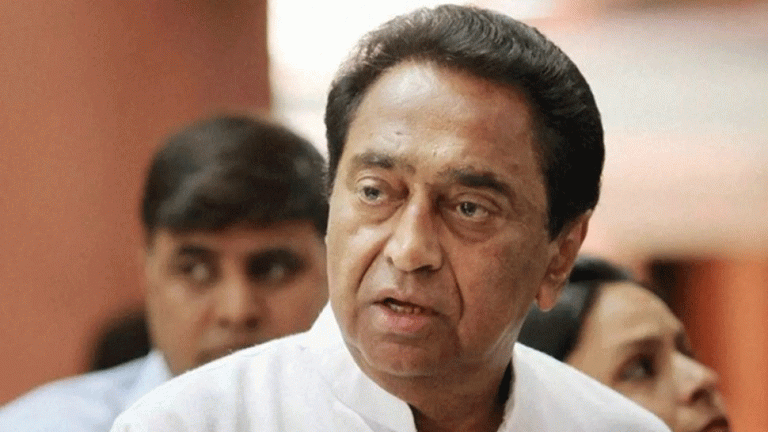
BSP MLA threatens ‘Karnataka like situation’ if Kamal Nath does not make her minister

BSP MLA Ramabai Ahirwar has stated that the Congress-led government in Madhya Pradesh will face a Karnataka-like situation if she is not given a ministerial post. According to reports, the Pathariya MLA has stated that she was promised a ministerial position when Congress and BSP agreed for a post-poll alliance to form the government in Madhya Pradesh.


As per reports, the BSP MLA has stated, “Mayawati had supported the Congress-led government, so we cannot go against that. But Congress has to think about the stability in such a situation. Their government is leaning on crutches, independent MLAs cannot be trusted. I do not want a Karnataka like situation here but we were promised ministerial berths which did not happen.”

She has also reportedly added that the people in her constituency want her to become a minister.

It is notable here that BSP has 2 MLAs in the 230 seat Madhya Pradesh assembly. BSP Supremo Mayawati has already declared that she has only supported Congress to keep BJP out of power and BSP will not enter into an alliance with Congress in MP for the 2019 general elections.

Recently, Mayawati had also threatened the Congress governments in Rajasthan and Madhya Pradesh to drop all cases against BSP workers lodged during the Bharat Bandh protests in April, which Congress had hurried to obey.

Also read: Mayawati dampens Rahul Gandhi’s Mahagathbandhan plans, to contest all Lok Sabha seats in Madhya Pradesh in 2019

The Congress-JDS alliance in Karnataka is also facing constant turmoils over political tug of war and ministerial ambitions of Congress and JDS leaders in the state. Recently, many senior Congress leaders like Ramesh Jarkiholi and Ramalinga Reddy had openly expressed their displeasure at being denied ministerial posts as the party had to keep JDS leaders happy. JDS, With just 37 MLAs in the 224 seat assembly, holds the CM position and many cabinet berths.

The art of propaganda: The articles associating Kumbh Mela with unemployment is the latest step in a civilizational war

As we have reported earlier, Business Standard published an Op-Ed where the author makes the assertion that the Kumbh Mela witnessed such a huge sea of devotees due to an unemployment problem in the country. It’s not the first time that they had done such a thing. Earlier, they had attempted to associate Kanwar Yatra with joblessness as well.

A simple way to look at it would be to dismiss it as sheer bigotry. However, the mainstream media is one of the greatest vehicles for propaganda in the current century. Therefore, when a pattern of behaviour emerges, we ought to pay it greater attention.

Given the continuous barrage of negative news regarding Hindu festivals we are hit with every day, it is natural for one to suspect a greater agenda behind it. As a wise man once observed, “Once is happenstance. Twice is a coincidence. Three times is enemy action.” Thus, it becomes imperative for us to understand how propaganda works. And it is important to remember that propaganda becomes necessary when facts are not exactly in one’s favour.

Most modern propaganda works via what is called conditioning. There are two types of conditioning: Classical and operant. In the first case, an attempt is made to modify behaviour by inducing the organism to associate certain objects or actions with a certain emotion by repeated exposures to both simultaneously. The second functions by modifying behaviour through the use of rewards.

In modern propaganda, where attempts are made to modify human behaviour and opinions, classical conditioning is the preferred method. To provide an instance of classical conditioning, there is no better than Pavlov’s dog. Pavlov, who came up with the theory, devised a situation where a bell was rung every time before a dog was provided food. When the food was provided, the dog naturally began to drool. After the process was repeated several times, it was observed that the dog started drooling as soon as the bell was rung in anticipation of the food.

Pavlov summed it up thus: there’s a neutral stimulus (the bell), which by itself will not produce a response, like salivation. There’s also a non-neutral or unconditioned stimulus (the food), which will produce an unconditioned response (salivation). But if you present the neutral stimulus and the unconditioned stimulus together, eventually the dog will learn to associate the two. After a while, the neutral stimulus by itself will produce the same response as the unconditioned stimulus, like the dogs drooling when they heard the bell. This is called a conditioned response.

In a rather unethical experiment with a human baby, it was discovered that the findings hold true for humans as well. In what has become known since then as the ‘Little Albert Experiment’, the infant was conditioned to be scared of a little white rat by coupling the sighting of the rat with hitting a hammer loudly on a steel bar. Initially, the baby was not scared of the white rat but it was scared of the sound that the hammer made. After the baby was exposed to both simultaneously on several occasions, the baby burst into tears at the mere sight of the rat, even when the hammer was not hit against the steel bar.

In Propaganda, attempts are made to shape public opinion which would then impact their behaviour. The principle is similar to Classical Conditioning. A neutral stimulus is coupled with a positive or negative stimulus so that the person develops the same attitude towards the neutral stimuli.

Now, let us evaluate the constant negative coverage of Hindu festivals keeping in mind how propaganda works. Diwali has been associated firmly with noise and air pollution despite no evidence as such that Diwali is the primary cause of the said pollution. Attempts have been made to associate Holi with wastage of water and sexual harassment despite no clear cut reason to suggest that the festival makes any significant contribution to the said negative things.

In a similar fashion, Business Standard has attempted to associate Kumbh Mela and Kanwar Yatra with unemployment and joblessness. It was portrayed as if people who do not have jobs are the primary ones responsible for the humongous participation in such festivals. In our minds, we associate unemployment and joblessness with crime and incompetence and inadequacy which are all negative things.

Therefore, the attempt is to induce us into believing that only people who are inferior to others participate in Kumbh Mela and Kanwar Yatra. The subtle message appears to be, “Now now, you do not want to be seen as someone who is inferior in your social circles, do you?” And of course, quite naturally, we do not want to be perceived that way. And therefore, if the message is hammered strongly enough and for long enough, we will come to associate the negative feelings with Kumbh Mela and Kanwar Yatra themselves.

All propaganda is engineered towards achieving a certain objective. Thirty years ago, or maybe even a couple of decades ago, people would have brushed aside those claims. And if anyone had even attempted to ban firecrackers during Diwali, the order would have been unimplementable. There would have been great protests with the possibility of violence even. But here we are in 2019 when firecrackers have been effectively banned across the country and people have hardly registered any significant protests although there were certainly lots and lots of firecrackers during Diwali last year.

The great amount of firecrackers that were observed during Diwali last year was more due to the fact that Hindus had seen through the propaganda and decided to revolt against it. Therefore, it was a revolt against the propaganda as much as it was in support of tradition.

The events at Sabarimala should also serve as a caution for what the possible objective of the propaganda against Kumbh Mela and Kanwar Yatra could be. The powers that be were under the impression that they could simply ban the traditions of Sabarimala without any adverse consequences due to the massive propaganda that was carried out against it. The only reasons the Sabarimala verdict has elicited such great protests is the general Hindu awakening that has been happening across the country and the fact that social media has very effectively undermined the monopoly that mainstream media enjoyed over narratives.

It is important to remember that propaganda is meant to serve an already reached decision. Its goal is to condition the public to either completely support or accept without any major protests the decision that has already been made by the powers that be.

If one wonders whether propaganda really works, then we need only review the effects of the work of the Father of Modern Propaganda, Edward Bernays. Bernays was tasked with the responsibility of increasing the sales of a tobacco company. After taking into account the customer base of tobacco companies, it was concluded that there was whole untapped demography that no tobacco company had been able to penetrate. The demography was, of course, women.

Until then, there was a great social taboo against women smoking cigarettes. Therefore, Bernays observed that the company could greatly increase its profits by eliminating the social taboo against women smoking cigarettes. To achieve it, Bernays devised a plan which has since then become popularly known as ‘Torches for Freedom’.

Bernays concluded that the best way to achieve this would be to project cigarette smoking as a revolt against male dominance, which is now popularly called patriarchy. Therefore, at the Easter Sunday Parade in 1929, pretty women gathered and smoked cigarettes as a revolt against patriarchy. Thus, by associating smoking with freedom and a noble objective, he had effectively made it more desirable in the eyes of women. The effects of Bernays’ strategy was quite clear. From 5% in 1923, the percentage of cigarettes sold to women increased to 12% in 1929, 18.1% in 1935 and peaked at 33.3% in 1965 and remained at the same level until 1977. It was not just observed in the United States, the effects of advertising targeted towards women were observed all across the globe.

Thus, propaganda works. There is no doubt it. Everyone knows it and uses it. Political parties use it, every consumer based company uses it (advertising is merely another form of propaganda).

Therefore, we may dismiss the Business Standard articles as garbage. In reality, it’s a propaganda war against the very existence of our civilization. Liberals hate Hinduism, they would much have it relegated to history books. If people are not made aware of the insidious propaganda against Kumbh Mela and Kanwar Yatra, they might actually accept completely swallow the toxic narrative that is peddled by the mainstream media.

Thus, when a decision is made by the powers that be to put restrictions on the Hindu festivities that unite Hindus across the barriers of caste, class, creed and language, Hindus might not be motivated enough to resist it. Like how it has been in the case of Diwali. Should we lose the Kumbh and Kunwar Yatra as well, then the effects could be devastating for our civilization? It is a civilizational war after all, and we cannot afford to dismiss such motivated propaganda as mere incompetence and malice.


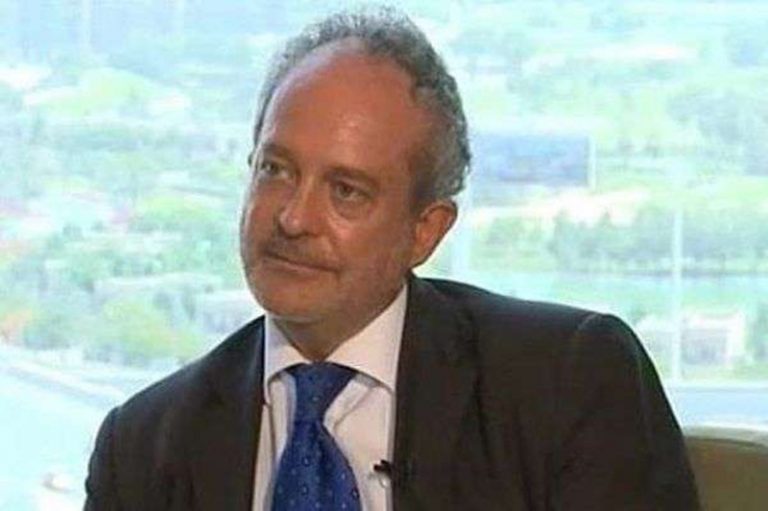
VVIP chopper scam: Christian Michel moved ‘unused’ Agusta funds to the UK

0

According to a report by Times of India, the CBI has learnt that AgustaWestland middleman Christian Michel made several transfers to London-based accounts when India was preparing for his extradition. The agency believes that Michel transferred the ‘unused bribe’ money for AgustaWestland to the UK. A request has been made with the British authorities to seek information regarding these transfers.

According to the report, the agency claims that Michel was paid 42.27 million euros (approximately Rs 300 crore) by AgustaWestland to further pay Indian politicians as well as defence personnel, a major chunk of which is untraceable. As per the report, while Michel brought huge amount of cash to India, he still had a lot of it in bank accounts of his two companies, Global Services FZE, Dubai and Global Trade and Commerce Services, London. When the Indian authorities were pursuing his case and closing in on him, Michel perhaps realised that it is a matter of time before the Indian authorities get him and hence, he made several transfers to the accounts in the UK.

Michel was extradited to India on 4 December from United Arab Emirates (UAE). Recently it was also unearthed that, Christian Michel’s involvement was not only restricted to AgustaWestland scam. He had also lobbied against France-based Rafale in order to enable Eurofighter, its rival, to grab the MMRCA deal. On 5th January, the Patiala House Court had extended Michel’s judicial custody till February 26.

Christian Michel is accused of money laundering, bribery, and fraud in connection with the Rs 3,600-crore worth AgustaWestland scam.

There have been some big revelations made in the ongoing investigation after Christian Michel was extradicted. Earlier, it was reported that son of a senior Congress leader had arranged kickbacks and that Michel may be charged under the Official Secrets Act. During the investigation, cryptic names like “Mrs Gandhi”, “Italian Lady’s Son R” and AP (which might be Ahmed Patel) were also revealed. It was also found that Christian Michel was in India several times and he was also lobbying against the Rafale deal in India and for the Eurofighter deal during the Congress regime.

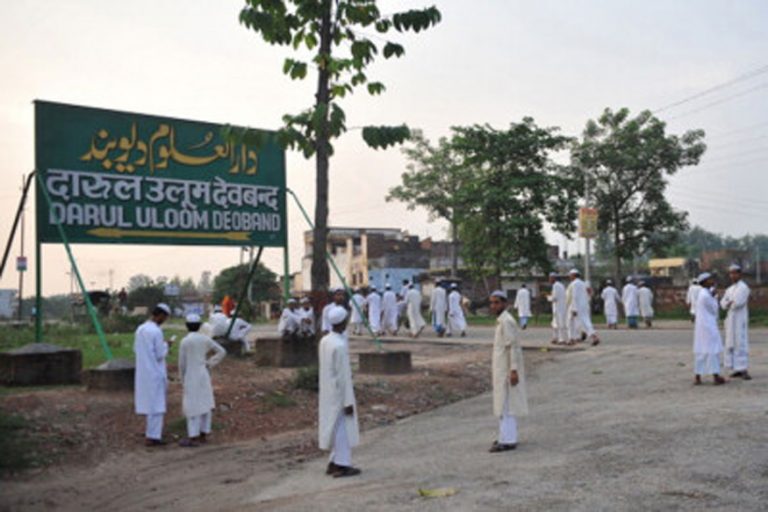
Darul Uloom Deoband asks students not to travel on Republic Day because security checks create ‘an environment of fear’

0

Just three days ahead of the country’s Republic Day celebrations, Islamic organisation Darul Uloom Deoband has issued a bizarre diktat asking students to avoid unnecessary travel on Republic Day as “there is checking at several places and a feeling of uneasiness is caused”, resulting in an “environment of fear”.

Reportedly, the controversial order has been issued by the hostel-in-charge of the Darul Uloom, which says that if at all travelling is unavoidable then students should display restraint and stay clear of “any kind of argument” and return to the seminary immediately after completing their business.

The notice in Urdu reads, “Dear students, on Republic Day, you travel to different places. There is checking at one place after the other. A feeling of uneasiness is caused. An environment of fear is created. Keeping these circumstances in mind, you are advised to avoid travelling unless necessary. Avoid indulging in unnecessary arguments.”

“Talaba-e-Aziz, Yaum-e-Jamhuriya ke mauqe par aap mukhtalif muqaamat ka safar karte hain. Jagah jagah checking hoti hai. Izteraabi kaifiyat paida ki jaati hai. Darr wa khauf ka mahaul bann jaata hai. In halaat ke pesh-e-nazar aap ko hidayat di jaati hai ki bila zarurat safar se bachein. Bila zarurat bahas va mubahis se gurez karein,” the diktat order in Urdu as reported by Indian Express.

Reportedly, a senior staff member at the Islamic institution said as Republic Day is on Saturday and Friday is a holiday at Darul Uloom, the students have been granted two-day leave. Hence, the notice has been issued to prevent them from going out as a large number of students visit their home during holidays and return in 10-12 days.

He further said the notice is not applicable to any particular community but that there is heightened security in the country usually during this time.

“This should not be misunderstood as if we are feeling that a particular community is being targeted. We would have made it public and would have issued a press note. We only have issued a simple advisory notice to our students. This is nothing to do with us being an Islamic institution,” he said.

Muneeruddin Usmani, the person who had issued such orders speaking to the media said that they have asked students to avoid travel by trains and outings during the holiday in order to avoid problems arising ‘due to excess checking’.

Darul Uloom Deoband is often known for issuing such outlandish fatwas as recently it had issued a Fatwa, that had decreed stating women are forbidden to participate in marriage processions with men. Earlier in February, the Islamic seminary had decided to issue a fatwa against Muslim women taking help of men while trying out bangles in shops.

It was also reported that Deoband clerics had issued a fatwa against life insurance, as they claimed that Life and death are in the hands of Allah and no insurance company can guarantee a man’s longevity. In the past, a cleric associated with the Darul Uloom Deoband university had issued a fatwa against women watching football games, as watching men playing with bare knees is forbidden for women.

In another instance of a bizarre fatwa, a fatwa was issued asking Muslim families to not marry men or women who work in banks. Posting photos of self and family on social media websites have also drawn Fatwas in the past. New Year Celebrations and designer burqas, too had the same destiny.

Key takeaways from PM Modi’s speech at the Pravasi Bharatiya Divas

0

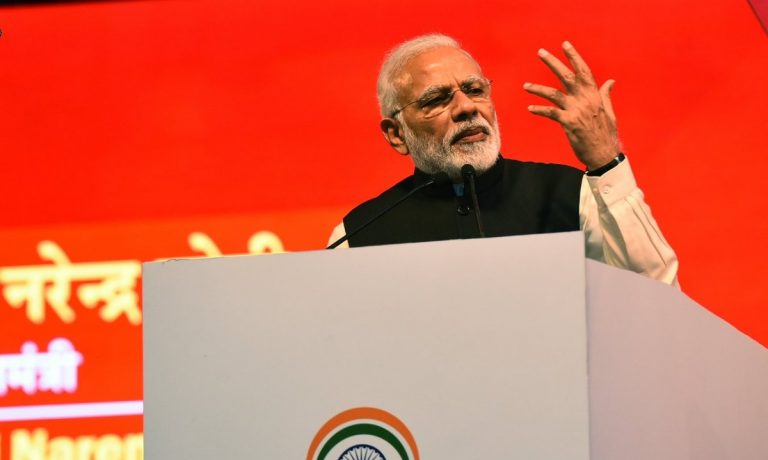
PM Modi today inaugurated the 15th Pravasi Bharatiya Divas convention in his parliamentary constituency of Varanasi. He commenced his speech by expressing his tributes to Late Atal Bihari Vajpayee.

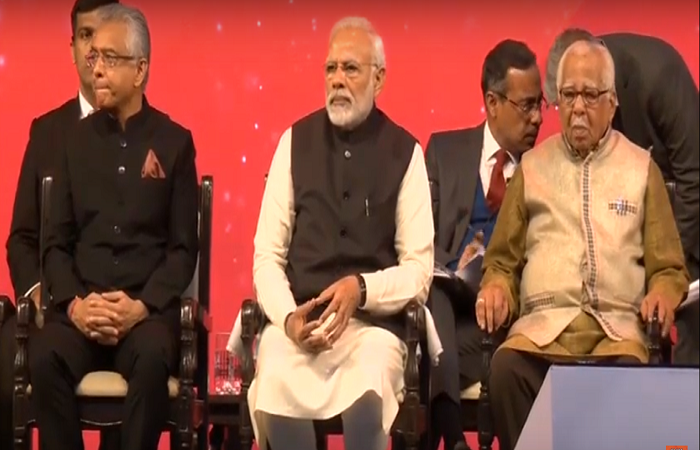
As per the Prime Minister, the theme of this year’s convention is ‘role of Indian diaspora in building new India’. The Prime Minister of Mauritius Pravind Jugnauth was the chief guest of the Pravasi Bharatiya Divas convention.

Extolling about his government’s work, PM Modi utilised the platform to list down in detail about his government’s developmental work in the past 4.5 years and the benefits reaped from it. Here are some of the takeaways from his speech:-

Eliminated 7 crore non-existent people from the system

PM Modi claimed that his government has eliminated almost 7 crore non-existent people from the system who were fraudulently reaping the benefits of government schemes. He claimed that these people had no existence in reality but only in government papers and they were receiving various benefits based on it.

The government had spent about 80 billion dollars through DBT

PM Modi also said that his government had transferred about 5.78 lakh crore rupees directly in the accounts of beneficiaries of different schemes, thereby eliminating the middlemen and bringing in the transparency in the system.


He added that the government had harnessed new technology to curb the leakages that earlier happened due to lack of transparent methods.

Passport and Visa processes simplified

While talking about the difficulties faced by Indians abroad, PM Modi asserted that his government’s proactive approach in solving visa-related issues and initiatives such as e-visa have considerably reduced the problems and saved time wasted in fixing the issues. He further reassured that steps are being taken in this direction to reduce the problems faced by the people.


In addition to this, Embassies and Consulates are being connected to the Passport Seva Project worldwide. This will provide a centralised system connected to the passport services. Along with this, Indian government will be soon issuing chip-based e-passport.

Startup Ecosystem being nurtured in India

Talking about the remarkable improvement in the ease of business rankings for India, PM Modi stated that India is poised to become the world’s largest Startup Ecosystem. PM Modi also claimed the success of Ayushmaan Bharat Yojana which is world’s largest healthcare initiative.

India’s significance in World order has increased

PM Modi asserted that India is now in the position to lead the world on various fronts. He highlighted Solar Alliance as one such platform where India can display its prowess and develop synergies with important players to harness solar energy.

Modi further alleged that the world pays heed to India’s suggestions with utmost seriousness. India’s contribution to developing a renewable source of energy and environment preservation has been acknowledged across the world.

Every Indian outside India is our brand ambassador

Talking about the remarkable contribution Non-Resident Indians have had in shaping the global narrative about India, PM Modi called them as India’s brand ambassador. According to him, Indians living abroad have not only brought laurels for their resident country, but have also acculturated themselves, and played a significant role in enriching their culture.


PM Modi claimed Indians living abroad have assumed leadership roles in their respective societies and are constantly endeavouring to achieve excellence in different fields.

PM Modi takes a dig at Rajiv Gandhi at the 15th Pravasi Bharatiya Divas at Varanasi

0

At the inauguration of the 15th Pravasi Bharatiya Divas at Varanasi today, Prime Minister Narendra Modi took a dig at Former Prime Minister Rajiv Gandhi’s infamous remark that only 15 paise of Re 1 reach people. He also slammed Congress for doing nothing throughout their regime to stop the leakage.

“You would remember the remark by one of our farmer prime minter on corruption. He had asserted that whatever amount Centre government sends to its people, only 15% gets reach to recipients and 85% gets disappeared.” PM Modi said. “The remark was a confession about the plight that country was suffering from” He added.

He then slammed Congress for its inability to solve the issue. PM Modi said that even decades after former PM’s remark, the governments did nothing to solve the issue and the 85% loot continued, and on the other hand the common man continued paying taxes. He then contrasted the UPA years with his government’s efforts towards plugging the leak.

PM Modi said that so far, Rs 5 lakh 80 thousand crores have been transferred to bank accounts of citizens, for schemes related to housing, scholarship and gas cylinders.

“If the 85% loot had continued in this government, nearly 4 lakh 50 thousand crores would have disappeared without reaching the common citizen” He added. PM Modi also said that by the implementation of Direct Benefit Transfer, nearly 7 crore ghost beneficiaries have been weeded out of the system.

The event was attended by Miniter of External Affairs Sushma Swaraj, Governor of Uttar Pradesh Ram Naik, and Chief Miniter of the state Yogi Afditynath.

The chief guest at the convention was PM of Mauritius Pravind Jugnauth, who delivered his speech in Hindi.  He praised PM Modi and his schemes like Skill India and the Beti Bachao Beti Padhao. He announced his decision to organise a Bhagwad Gita Mahotsav next month and a Bhojpuri Festival next year.

In addition to this, nearly 5000 delegates from the overseas Indian community were also present.

The convention was earlier slated to be organised on 9 January. But, it was delayed so as to grant opportunity to delegates to attend the Kumbh Mela going on in Praygraj, and also later attend the Republic Day Rally in Delhi. The idea behind the event was proposed by Former Prime Miniter Atal Bihari Vajpayee and is held every two years.

PM Modi also lauded the Non-Residential Indians and said that they are the country’s ambassadors in the world. He also said that his government is working hard to ease the norms for passport and visa for the foreign nationals. PM Modi also emphasised on the importance of solar energy and talked about the concept of “One World, One Sun, One Grid”.

OpIndia Evening Dispatch: Tuesday, 22nd January 2019

0

In the hustle and bustle of the day, it is only natural to miss some of the biggest developments that impact the nation. The OpIndia Evening Dispatch will catch you up on the day’s event even if you have been busy thus far.

1. PDP leader’s car used in 2017 Amarnath Yatra attack, ‘integrity report’ sought after suspicions of ‘sympathy towards separatists’: NIA

In a letter written to the Jammu and Kashmir police, the National Investigation Agency (NIA) has sought an ‘integrity report’ on former PDP legislator Aijaz Ahmad Mir, saying that “it is believed that he has a soft corner towards the separatists.”

According to reports, a vehicle belonging to the former PDP legislator, Aijaz Ahmed Mir was used in the 2017 sensational attack on Amarnath pilgrims that left seven dead. Earlier a police officer named Adil Bashir Sheikh deployed with Aijaz Ahmad Mir had absconded with seven assault rifles of colleagues from a Police post guarding his residence. Later Sheikh had joined the Hizbul Mujahideen.

2. Maharashtra: Cow smugglers crush police constable Prakash Meshram to death, arrested

In a horrific incident, two Muslim cow smugglers have mowed down a police constable, Prakash Meshram and injured two others after they tried to stop these cattle smugglers near Warora late on Sunday night, reported Times of India.

According to the reports, two Muslim youth- Imtiyaz Ahmed Faiyyaz (19) and Mohammad Raza Abdul Qureshi (20) were present in one of the two pickup vehicles smuggling cattle from Wani in Yavatmal district to Nagpur. The police officials had barricaded the road to carry out the routine checks. The cattle smugglers, afraid of getting caught drove past the first check post while injuring two cops who tried to stop them. At the second check post, two police constables stood behind the barricades and signalled the drivers using torchlight to stop. instead of stopping, the smugglers drove their trucks over barricades killing one constable on the spot.

3. In Congress-ruled Madhya Pradesh, third BJP leader found murdered within a week

Chhatrapal Singh Rawat, a BJP worker from Madhya Pradesh, was found murdered in Gwalior on Monday. This is third such murder of a BJP worker in Madhya Pradesh within a week. Another BJP office-bearer, Magan Siddiqui was seriously injured after he was reportedly attacked in Jabalpur on Sunday.

Earlier on Sunday, Balwadi BJP leader Manoj Thackeray was found murdered in a field after he had gone for a morning walk. Prior to that, Mandsaur BJP leader Prahlad Bandhwar was shot dead in full public view

4. After threatening to thrash BJP workers publicly, BSP leader now offers 50 lakh reward for MLA Sadhna Singh’s head

Reacting to the remarks made by the BJP MLA Sadhna Singh on BSP  supremo Mayawati, a former BSP MLA Vijay Yadav has announced a 50 lakh bounty on Sadhna Singh’s head. Yadav has offered to award Rs 50 lakh to whoever brings Singh’s head. Sadhna Singh had made certain insulting remarks about Mayawati relating to the 1995 Lucknow Guest House incident when Mayawati was assaulted by Samajwadi Party workers in a Lucknow guest house and was rescued by an RSS Swayamsevak.

Few says ago Vijay Yadav had remarked in a public meeting that once the BJP is out of power, they (BSP-SP alliance) will thrash BJP workers publicly.

5. Trouble mounts for AAP: BJP Delhi files defamation case, demands de-recognition of AAP as political party

The BJP Delhi unit on Monday filed a criminal defamation case against Delhi Chief Minister Arvind Kejriwal and other AAP members. The case has been for allegations levelled by Kejriwal against the BJP of deliberately deleting names of lakhs of voters from the electoral roll in Delhi. In December 2018, Kejriwal had alleged that the BJP got 30 lakh votes deleted.

Other than Arvind Kejriwal, AAP Rajya Sabha member Sushil Kumar Gupta, MLA Manoj Kumar and AAP spokesperson Atishi Marlena have been named in the case. The Court has accepted the plea and the matter will be heard on 5th February.

6. Shut down madrasas across India as ISIS ideology is being promoted to influence students: Shia Waqf head Waseem Rizvi to PM Modi

Uttar Pradesh Shia Waqf Board Chairman Waseem Rizvi has written to Prime Minister Narendra Modi seeking a shut down of all madrasas across India stating that ISIS ideology is being promoted there to influence the students, reports ANI.

Reportedly, in a letter addressed to PM Modi dated January 21, Shia leader Rizvi said that if madrasas in the country are not shut down with immediate effect, then within the next 15 years half of the country’s Muslims will get influenced by Islamic State ideologies.

7. Business Standard bigotry: After Kanwar Yatra, the Kumbh Mela gets linked to ‘unemployment’

The Business Standard’s bigotry towards Hindu festivals is scarcely ever hidden. Earlier, it had insinuated that the Kanwar Yatra was so popular because of unemployment in the country. And now, it has again made the assertion that the Kumbh Mela attracts millions of people because they are unemployed.

8. Here is why #DarpokAbhisar is trending on Twitter

When he is not busy making embarrassing videos ‘investigating’ train tragedies, the Ramnath Goenka award-winning journalist Abhisar Sharma is busy sending abusive direct messages to Twitter users who make fun of him. Turns out, the journalist went on a blocking spree because people dig out his old embarrassing tweets and Sharma could not take a joke or two. It all started when a Twitter user @firkiii made fun of him.

9. NIA and EVM Hackathon organisers rubbish sensational claims made by the ‘EVM Expert’

The Foreign Press Association, which was a co-organiser of the London EVM hackathon event, has rubbished hacker Shuja’s claims and termed them unsubstantiated. The FPA disassociated itself from the claim made by the masked hacker Syed Shuja and said that not a single claim made by the hacker has been corroborated. The Italian journalist moderating the event also said that the hacker had no solid proof for the “serious allegations” that he made about the elections in India and in London.

NIA has also ruled out any link between investigation into Gopinath Munde’s death and the death of NIA officer Tanzil Ahmed. The agency has said that the officer was shot dead over a property dispute, and his killer Muneer had also admitted to his crime

10. Did Congress just concede defeat after Court took cognisance of Vivek Doval’s defamation case against Jairam Ramesh?

On 16th January 2019, the Caravan Magazine published an article targetting Ajit Doval’s son Vivek Doval. The article insinuated wrongdoing on the part of Vivek saying that he heads a hedge fund in Cayman islands. Promptly the Congress had picked up the malicious article and conducted a press conference where allegations were hurled upon Vivek Doval, NSA Ajit Doval’s son.

After that, Vivek Doval flew down to Delhi to file a criminal defamation case against not just Caravan Magazine editor and journalist, but also Congress leader Jairam Ramesh for malicious and defamatory allegations.

After the massive blowback by Vivek Doval, the Congress seems to have developed cold feet, one would imagine. In a Congress press conference today, which was held by Anand Sharma, a journalist began to ask him a question regarding Vivek Doval. Immediately, Anand Sharma said that he doesn’t know “who this person is”.