Home Blog Page 7176

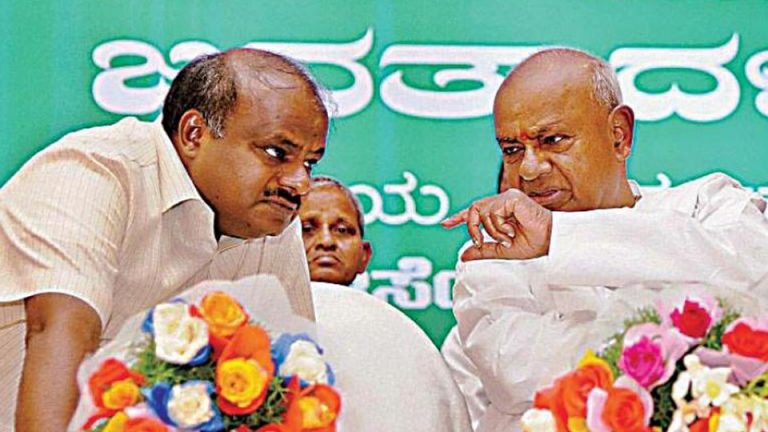
The Gowdas : From the accidental Prime Minister to the accidental Chief Minister, history repeats itself

0

The Karnataka state assembly election results and what ensued thereafter is eerily similar to what happened in Loksabha elections in 1996. In both cases the Gowda Family played an important role and both times, it is Congress which played the second fiddle.

After Congress became Indira’s Congress, political subversion and manipulation of the electorate became the regular norm and Indira’s Congress went to great lengths to ensure retention of power at the Central level. We all now talk about Dr Manmohan Singh being the accidental Prime minister but it was actually the father of the newly sworn-in Chief Minister of Karnataka, Deve Gowda who is the original Accidental Prime Minister of India.

In 1996 general elections the mandate produced a hung assembly just like in Karnataka assembly polls, 2018. Similarly, then also BJP came out as the single largest party bagging 160 odd seats, the Congress won 140 seats, their worst till that point in history. The Janata Dal won 45 seats and other parties won around 100 seats. No party or coalition had the required numerical strength to form the government.

The then President Shankar Dayal Sharma asked the largest party leader, Mr Vajpayee to form the government, Mr. Vajpayee was sworn in as the Prime Minister of India but he resigned right before the floor test. The Karnataka fiasco saw the exact same scenario, BJP’s Yeddyurappa was asked by the Karnataka Governor to form the government and after the swearing in Ceremony, Yeddyurappa also tendered his resignation before the house with minutes remaining till the commencement of floor test.

In both instances, The Congress manipulated and subverted the people’s mandate. It was Congress who provided support to the then coalition helping it to assume power. In 2018, It’s the same Congress which helped junior Gowda to assume power.

If one is to do a comparative study of the 1996 general elections and the 2018 Karnataka elections, it becomes apparent that neither Deve Gowda nor Kumaraswamy was ever meant to hold the posts they assumed, even they themselves never thought about assuming such positions.

The 1996 14-party coalition wanted V.P.Singh at first to become the Prime Minister when that idea sank, they opted for Jyothi Basu, whose party did not allow him to assume the position only after then, The Congress-led coalition panic-stricken and desperate opted for Deve Gowda, who then had just completed two years of his chief ministership of Karnataka. A completely unknown and untested Deve Gowda was made the Prime Minister only to ensure The Grand old party stays a part of the ruling class.

In 2018, the Congress party campaigned viciously against H.D. Kumaraswamy and the JD(S), and never did talk about consolidating their differences and coming together but it was only when it became clear that there is no other way for them to cling to power, they approached their old political mule to carry them to the altar of power. There they proceed to sacrifice the people’s mandate just like they did back in 1996.

History is repeating itself as H.D.Kumaraswamy becomes the new chief minister despite having won only 37 seats in Karnataka Assembly just like His father became the Prime Minister despite securing the nominal amount of seats in 1996 general elections.

If we go by the precedence of the 1996 Gowda government then the future looks bleak for the Kumaraswamy government in Karnataka. The Kumaraswamy government’s days are numbered, the last time it was less than a year before The Congress pulled the plug and withdrew its support bringing down the Gowda government. The only real question now is Who will be the Kesri in today’s Congress.
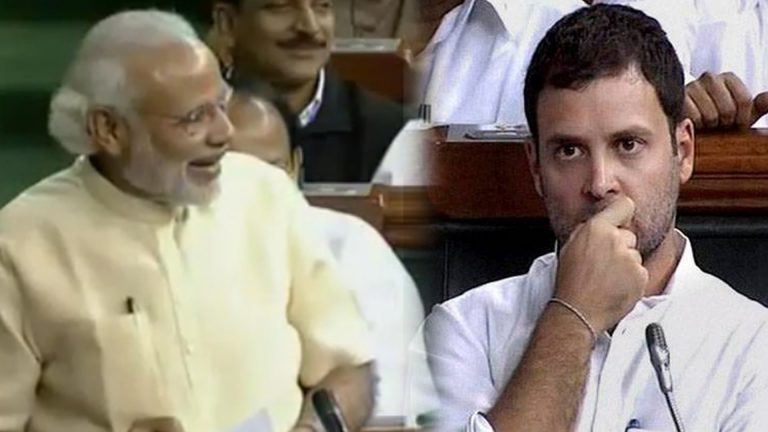
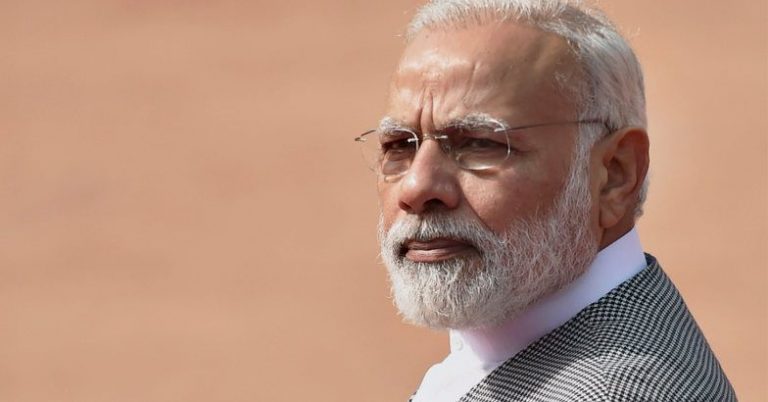
Performance vs hollow rhetoric. What will the voters choose?

0

The year 2014 was a watershed moment in Indian politics. After a long time, the nation had elected a government with a full majority. And Indians felt they had a leader after almost a decade. As I had narrated in my very first article on this website, social media and internet drastically changed the views of public (especially the youth) about politics and Narendra Modi. His stature in the eyes of the public is growing day by day. And it is likely to peak when he steps out to campaign for his re-election.

The urgency and desperation of the Congress ecosystem to oust Modi are visible. Logically speaking, election conversations should start three or four months before the end of Modi’s term. But journalists have set a new norm where the possibility of re-election of Modi is discussed during every assembly election (or even a bypoll). Every action of the opposition and every regional/by-election outcome is discussed in the context of 2019 elections by media. This irrational and illogical obsession of the media with this subject is hard to miss. Is the Congress ecosystem afraid of Modi’s re-election? Is there a strong desire to ingrain anti-Modi sentiments in the viewers by this ecosystem?

How has the Modi Sarkar fared in the past four years?

The performance of the government on various areas like national security, infrastructure, economy, foreign policy, farm policies and welfare schemes can be debated using statistics and comparing it with the record of past governments. Key achievements of Modi Sarkar in the past four years can be listed as below.

National security

  • Successful surgical strike against Pakistan
  • Handling of Doklam crisis.
  • No major terror attacks in past four years
  • The red corridor is reducing in the area. Maoist affected areas fell from 75 districts in 2015 to 58 districts in 2017.
  • Tough action against militants in Kashmir ( number of militants killed in last two years:  2016 – 150, 2017 -213) [ pdf ]

Economy

Social sector schemes

Agriculture

  • 10 crore soil health cards issued. The scheme will enable farmers to choose appropriate fertiliser inputs thereby reducing input costs.
  • Neem coating of urea which has helped in curbing diversion of subsidised fertilisers to non-farm uses
  • E-NAM (electronic – National Agriculture Market) scheme for better market access to farmers.
  • Effective implementation of Pradhan Mantri Fasal Bima Yojana to provide insurance cover to farmers.

Anti Corruption front

  • No charges of corruption against any minister in the centre.
  • Passed strong legislation against holders of Benami property.
  • Passed strong ordinance against Fugitive Economic offenders.
  • Eliminated loopholes in double taxation treaties with countries that help black money holders (Cyprus, Singapore and Mauritius).
  • Direct benefit transfer of subsidies through Aadhar have contained pilferage to a large extent. 57,000 crore which was earlier pocket by middlemen saved (as of 2017) through this strategy as per the IT minister Ravi Shankar Prasad.
  • Cancelled registration of  2.24 lakh shell companies.

For the purpose of propaganda, Modi’s opponents know that they will fail if they attack statistics of Modi Sarkar. They will strive hard to exploit caste, religion and regional differences to manufacture an atmosphere of anti-incumbency. The details of this conundrum were covered in an earlier article titled ‘Data versus Mahaul. Can Modi win the perception battle?‘ In addition to the natural opposition to Modi, there seems to be a group with the right wing which is impatient and unsatisfied with his actions on Hindutva issues. The size of this group may not be huge, but their concerns seem to be genuine. Apart from these two aspects, it would be hard to identify a visible cause for concern about a strong anti-Modi force in India.

Can ‘educated’ Hindus overlook the bigotry of sections of the ‘minorities’?

Pro-Modi voters know why they must bring him back. Anti-Modi forces are clear as to why they have to vote him out. The swing voters are the ones who are confused. They are concerned about ‘Idea of India’ and ‘secularism’ because of the persistent media propaganda.

Educated ‘liberal’ Hindus speak about the performance of governments on real issues rather than ‘divisive agenda’. They not only fail to recognise the achievements of Modi but also fail to recognise the bankruptcy of opposition parties. They are silent on the fact that religious leaders of minorities are actively campaigning against Modi government on the basis of religion alone. The recent comments by an Archbishop and a Maulana against Modi government cannot be ignored.


Talks of united opposition after the failure of BJP to secure a majority in Karnataka have gained momentum, despite BJP emerging as the single largest party with 104 seats. The reason for opposition unity is to save ‘democracy’ and ‘secularism’ in India. Apart from vague slogans, the opposition has no clear vision or program to take India forward. Will the public prefer a ragtag opposition whose sole agenda is to remove Modi from Prime Minister’s Office? Or will they stand with a politician with impeccable credentials and burning desire to make India a prosperous nation? The answer to this question seems to be obvious.

Personal biases will take precedence over objectivity and facts in some sections of the society during general elections of 2019. They simply do not care about the report card of Modi government. This should worry fence sitters and ‘secular’ Hindus who constantly evaluate Modi government on ‘performance’ issues alone. Many educated Hindus claim that BJP is not ‘secular’ enough. But the blatant anti-Modi rhetoric based on religion does not alarm secularists in India. This is ironical and tragic. The future of the country lies in the hand of those sane voters who can think objectively and vote based on the performance of Modi Sarkar rather than vague slogans of the ‘united’ opposition.

As the Modi govt completes 4 years, Times Group survey shows huge support for PM Modi

An online poll conducted by the Times Group revealed that an overwhelming number of participants want Narendra Modi as PM again in 2019. The poll, titled ‘Pulse of the Nation’ survey saw 8,44,646 respondents taking part and were conducted between May 23 to May 25. During the poll duration, the results were reportedly concealed from the respondents to rule out any motivated voting.

The online poll was reportedly carried out in 9 languages across 9 media properties owned by The Times Group. The final poll results show 71% of the respondents willing to vote for PM Modi again if general elections were to be held now and 73.3% of the respondents stated that 2019 will again see a Modi led government.

According to the poll, Rahul Gandhi was the third choice among respondents with only 11.93% votes while 16.1% stating they want a candidate other than PM Modi and Rahul Gandhi.

When asked to rate the four years of Modi Sarkar, 47.4% reportedly rated it as ‘very good’ while 20.6% rated it ‘good’. 11.38% of respondents rated it as ‘average’ while 20.55% rated it as ‘poor’. Among the successes of the Modi government, implementation of GST was selected by 33.42% participants while 21.9% chose demonetisation. 19.89% named the surgical strikes while 9.7% selected the Jan Dhan Yojna.

On being asked to name the biggest failure of the Modi government, 28.3% reportedly said it is the lack of enough employment while 14.28% said it is the Kashmir policy, 22.2% chose Demonetisation as the biggest failure. However, 58.4% of the respondents stated that the government’s efforts for reducing unemployment are either very good or satisfactory.

59.41% of the poll respondents reportedly stated that minority groups do not feel insecure under the Modi government while 30.01% think they do. 10.58% of participants were undecided on the issue.

Modi sarkar’s foreign policy reportedly received an overwhelming support from the respondents. 80% of the voters rated it ‘very good’ or ‘good.’

On the question of a combined opposition against the Modi government, 57.1% reportedly replied that a combined non-BJP alliance will not be effective against the BJP. While 28.96% were of the opinion that such an alliance will be effective against the BJP, 13.92% stated that they could not decide.

On being asked about the most likely political scenario after the 2019 Lok Sabha polls, 73.37% stated that they see a Modi government again coming to power while 16.04% predicted it will be a third front led government. Only 10.59% participants predicted a Rahul Gandhi led government.

Finally, on being asked whether their quality of life has improved after the BJP government came to power in 2014, 55% of voters replied in positive while 33.92% replied in negative. 11.08% were undecided.

Earlier, a Local Circles poll conducted by the Economic Times had also found out that public support is still heavily in support of Modi Sarkar. As the Modi-led government completes 4 years today, the strong public support and positive opinion on the government reflect a favourable mood of Indians for the Modi led BJP.

Operation 136 : What the Cobrapost stings reveal and conceal

0

Cobrapost today released Part 2 of its Operation 136 on YouTube. In Part 1 of the series, they had stung media houses such as Dainik Jagran, Amar Ujala, DNA, Punjab Kesari, ScoopWhoop, India TV, Rediff and UNI. In Part 2, videos show staff of prominent media houses such as Times of India, India Today, Hindustan Times, Zee News, Network 18, Star India, ABP News, Dainik Jagaran, Radio One, Red FM, Lokmat, ABN Andhra Jyothy, TV5, Dinamalar, Big FM, K News, India Voice, The New Indian Express, MVTV and Open magazine.

The main point of all these stings is to show how media houses agreed to run “Hindutva” content in various forms and stages. Based on this, Cobrapost asserts:

In fact, our investigation establishes the fact that the RSS, and as a corollary, Hindutva, has made deep inroads into not only the newsrooms but also the boardrooms of Indian media houses where even owners either blatantly admit their allegiance to the party in power and its parent organization or are eager to have an association with them.

On the face of it, this assertion may be valid. But to come to a conclusive view on this, an important question needs to be answered:

Would the answers of the persons in the sting have been the same, if an anti-BJP party had made similar offers of crores of rupees in exchange of what is essentially paid news?

Based on the answer to the above question, another point emerges:

Can it be then said that “RSS” has made deep inroads into media, or is the media ideology-agnostic and just cares about the ideology of money?

These questions need to be asked since we have time and again seen how the very media houses named above, have been partial to anti-BJP parties especially Congress and the Left, and at the same time have been highly aggressive towards the BJP.

Hindustan Times ran the biased “Hate-Tracker“, ABP News is run by the same group which runs The Telegraph and publishes coarse anti-BJP routinely, Lokmat is owned by a Congressman. Is Cobrapost trying to tell us that these media houses, besides others who have regularly posted false and biased anti-BJP content, have now suddenly turned “Sanghis”? Or is it just the power of money?

There is absolutely no question that the moral standards of Indian media, by and large, are very low. Many have covert links to political parties, but India has not yet evolved to a stage where channels can openly flout their political ideology, yet continue to report the news. In the USA for example, the audience knows which media house tilts on which side. This honesty helps the audience judge the content. In India, dishonest channels brand themselves as “neutral” while misguiding the audience.

Coming back to Cobrapost, it also does not have any sting on some media houses which are quite clearly pro-Right Wing such as Republic. Or some which are quite clearly aligning to the Left, such as NDTV or Mirror Now. Was it the case that these houses refused to fall for the sting? or did they not give answers favourable to the narrative? Or will there be a Part 3 featuring these houses?

One would also wonder whether these sting operations are actually a mere ploy to keep media left-leaning. Now that some reports and opinions, which don’t conform to the radical leftist narrative, are making their way to some corners in the old media, this sting aims to tar all such views as “paid”.

After all reports or allegations about “paid news” is hardly new. This sting tries to make it political and ideological, thus giving a leeway to those who indulge in paid news.

Cobrapost also needs to be questioned regarding one extremely pertinent point that most seem to be missing. What is the credibility of the portal and the report, when the journalist at the helm is Pushp Sharma of fake RTI document fame? Pushp Sharma is a journalist who had been arrested for spreading fake news. He had fabricated an RTI reply which claimed that there was no recruitment of Muslims in AYUSH ministry. Since Cobrapost is casting aspersions on media as a whole, and since media ethics is at an all-time low, their assertions are actually plausible, will they also reveal why their own journalist was arrested earlier for spreading fake news and whether he peddled that information at the behest of some leftist entity?

When they came out with the part 1 of their sting operation, Zee News had stung the stingers. Will Cobrapost also reveal which media houses didn’t fall for their sting, in all fairness?

Cobrapost can also add to the credibility of the stings by releasing the raw footage of the videos. The videos have been sliced and diced at multiple places, thus giving leg-room to the channels to claim they have been misquoted. Further, in some cases, they may truly have been misquoted by Cobrapost. One example is the conversation with Ajay Shekhar of PayTM. He does flaunt his closeness to RSS etc. but expresses his surprise when he learns that such a campaign is planned and he is not aware of it from his sources. He then states that he can undertake the campaign only after confirming from his sources.

Cobrapost takes this surprise as an admission that Shekhar is in the close circles of RSS and hence is dismayed at being left out. It can also be that Shekhar had gauged that he may be getting conned by someone posing as a person related to the Sangh, and by saying that he will verify with his sources, he may scare the possible imposter out of such a deal.

Nevertheless, if the tapes stand forensic scrutiny, and the raw footage proves that the victims are not misquoted, a serious investigation needs to be launched into the activities of the media houses. The question of corruption may be answered, but as mentioned earlier, is this ideological corruption or purely financial corruption?

Congress gets a taste of its own medicine as BJP threatens a ‘bandh’ if farm loans are not waived

The Karnataka man of the match DK Shivakumar issued a statement saying that the BJP cannot “waste money” and the Karnataka won’t work according to the whims of the BJP when it comes to governance. This was in response to BJP calling a state bandh (strike) in Karnataka if the new government fails to deliver on its promise on waiving off farmer loans as they had promised in their pre-poll manifesto.


This pussyfooting on farm loan waiver issue is a hilarious u-turn on the part of the Congress party since its President and Prime Ministerial candidate has repeatedly targeted the Narendra Modi led BJP government about the issue of farm loan waiver. In fact, in his quest to undermine the prime minister, he had even lied and conflated the meaning of ‘loan waiver’ and ‘loan write off’. 

Just a few days ago on 17th May 2018, Rahul Gandhi had again lied and asserted that if “loans worth 2.5 Lakh crores owned by 15 people can be foregone, the loan of all farmers of India can be waived”. Of course, he again lied and implied that the Modi government is “waiving off” loans of Industrialists when in actuality, write off doesn’t mean the loans won’t be recovered and the Modi government has nothing to do with it.


These statements were also made on the same day when Rahul Gandhi was addressing the Jungle Satyagraha Adivasi Rally in Bilaspur.


Rahul Gandhi had also hurled allegations of the Central Government not pitching in for farm loan waiver in Karnataka, another lie we had comprehensively debunked.

On 12th February 2018, Rahul said he had met Modi at his office and requested him to waive farmers’ loans. “Modi did not utter a word. Then I asked CM Siddaramaiah and Punjab CM Captain Amarinder Singh if they can waive farm loans in their states. Within no time, they did it. Such is the commitment of the Congress towards farmers.”

The promise to waive off farmer loans has been repeated by Rahul Gandhi umpteen times while campaigning in Karnataka before the state went for polls. On 20th March 2018, during his third visit to Karnataka, he had assailed PM Modi and FM Jaitley for not forming a policy for farmer loan waiver. On 4th May 2018, Rahul Gandhi had said, “When the current NDA government is waiving loans of big business magnates, it will not be difficult to waive loans of poor farmers who are the ‘annadatas'”.

Congress’ newly minted allies and the current Chief Minister of Karnataka had also promised farm loan waiver in their Karnataka manifesto. Kumaraswamy, after being sworn in as the Chief Minister reiterated his commitment to waiving off farm loans.

Then Chief Minister Siddaramaiah had also repeatedly spoken of Farm loan waiver.


However, it seems like Congress is now getting a taste of its own medicine. Congress and its President, Rahul Gandhi had demanded maggi noodles instant solutions from the Modi government as far as farm loan waiver was concerned and resorted to the exact same pressure tactics that the Karnataka BJP seems to be resorting to now.

Hindu Temple vandalized in notorious Muslim suburb in the Netherlands: Local media report

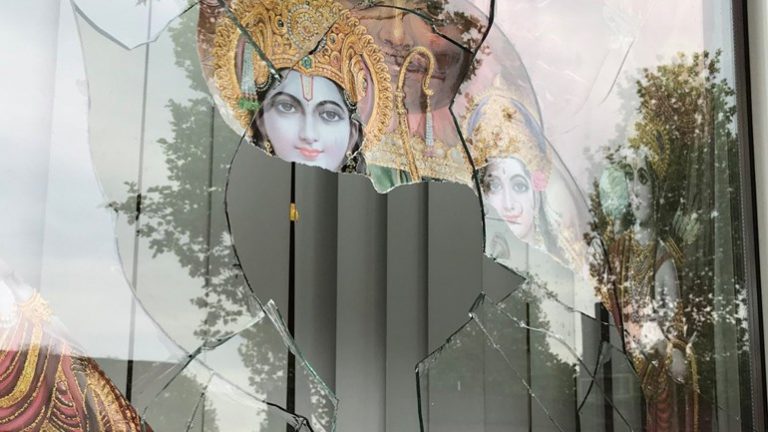
A Hindu Temple was vandalized in a Muslim suburb in the Netherlands, a local regional broadcaster reports. According to the Chairman of the Temple, Siddharth Ramdhani, the act was deliberate. He said that Hindus were harassed even during their own festivals, not only during Ramzan.

He went on to add, “The temple is a mess. The windows were broken by several large stones that were found inside. They were probably thrown from a fairground opposite the temple. They had to make a considerable effort because both windows are double glazed.”

The same agency had earlier reported a pro-ISIS demonstration in the area back in 2014.
[youtube https://www.youtube.com/watch?v=3tRF2FxPrj8]

The attack on the Temple in the Netherlands appears consistent with some radical Islamist attacks in India. There have been several incidents in the past where Hindu Temples and property have been attacked by members of the Muslim community in a fit of religious fervour.

For instance, it was reported last year that a man named Sikandar Ansari had entered a Temple in the Saria region in Giridih district in Jharkhand late night and ‘damaged some things there.’ In Uttar Pradesh’s Bahraich region, an Eid Milad Ul Nabi procession turned violent after participants began resorted to looting and vandalism.

In West Bengal, Muslim groups had entered a school without permission, roughed up students and teachers and forcibly celebrated the prophet’s birthday. The same school was vandalized as it prepared to celebrate Saraswati Puja.

More recently, communal clashes had erupted in Bihar after the desecration of a Hanuman idol. There have been numerous reports of Ram Navami processions being attacked as well. In another instance, a Sadhvi had decided to sell her Temple due to constant harassment from a particular community and throwing of meat near the Temple.

Now get a 5% discount on Railway tickets if you book them via the UTS app

The Southern division of Indian Railways has announced a 5 per cent discount on tickets booked via the UTS mobile app to encourage paperless transactions, Financial Express has reported.

This 5 per cent discount would be applied on the new recharges done to the internal Railway Wallet also known as R Wallet. For example if you recharge the wallet by Rs 100, the total amount credited for the usage would be Rs 105. The wallet can either be recharged online via the app or via a railway ticketing counter.

Going by a Times of India report, this discount effective from 24 May has been approved by the Railway board and would remain in place for the next three months.

The UTS app which is available for Android, and IOS powered smartphones can be used in select locations for booking unreserved train tickets tickets. We had reported during demonetisation how the app could be an excellent vehicle to help the poor learn cashless transactions, if it was improved by the railways.

Currently going by reports, the service is used by 3 per cent of the total unreserved passengers – a number which might go up owing to the available discounts. The factor which might also help encourage such transaction is that, the service has now been extended to all the railway stations in the southern division.

Commuters are warming up to this app, which can be gauged by the fact that out of the 11.90 lakh passengers who used the train service in Chennai between 14 April to 14 May, 2.08 lakh booked tickets via the UTS app.

Even though the above reports claim that the discount has only been offered by the Southern Railways, the official website of UTS, carries a notification that “Indian Railways offers bonus on recharge of Railway Wallet (R Wallet) effective from 24.05.2018”:

Now get a 5% discount on Railway tickets if you book them via the UTS app
Indian Railways offers discount on UTS tickets

Hence it raises the question whether the said offer is applicable not just for the Southern Railway, but for all the railway divisions where this service is available.

BJP MLAs walk out of assembly, Kumaraswamy wins floor test

The long-awaited floor test in the Karnataka assembly was held today. HD Kumaraswamy and his coalition government have won the floor test with 117 votes cast for them. According to reports, all the MLAs od the BJP staged a walkout before the floor test.


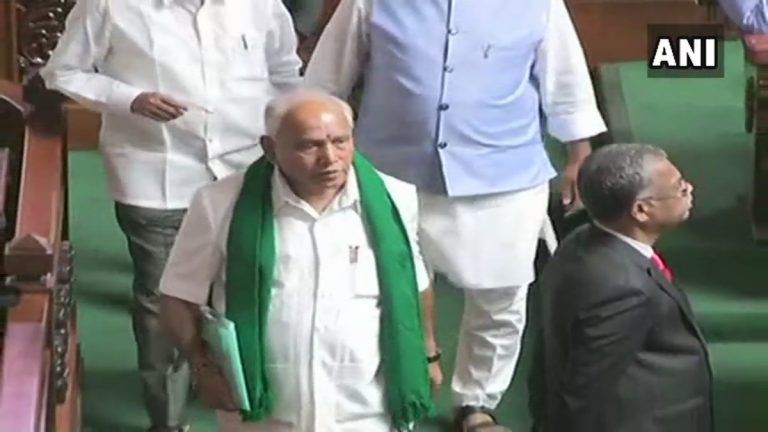
JD(S) leader and newly sworn-in CM of Karnataka HD Kumaraswamy moved a motion of confidence in the assembly today. Earlier, Congress leader Ramesh Kumar was appointed speaker of the assembly. BJP had reportedly withdrawn the nomination of its candidate Suresh Kumar and Yeddyurappa had stated that they had withdrawn the nomination to maintain the dignity of the post, they want the speaker to be elected unanimously. After the motion of confidence, leader of the opposition BS Yeddyurappa in his speech declared that from now on his struggle will be against the corrupt father-son duo of HD Devegowda and HD Kumaraswamy.

Yeddyurappa asserted his commitment to the farmers of the state and stated that the BJP will start statewide bandh if Kumaraswamy does not waive of farmer loans. Yeddyurappa has given a 24 hour time for the new state government to waive off farmer loans and declared that the BJP will organise state-wide bandh on Monday.


According to reports, HD Kumaraswamy has reacted to the BJP’s bandh call by saying that he is not deterred by threats of bandh and alleged that the BJP is trying to play with the emotions of the people with such statements.

Earlier today, Congress leader and the new deputy CM G Parameshwara had stated that the Congress has not taken any decision on whether to support HD Kumaraswamy for a full five-year term.

BJP is set to lose MP and Rajasthan, says CSDS. Here is their track record

According to the latest CSDS survey on the Madhya Pradesh and Rajasthan Assembly elections to be held later this year, the Congress leads the BJP in the two states by a healthy margin. In Madhya Pradesh, Congress has a lead of 15 percentage points while in Rajasthan, it has a lead of 5 points over the Bharatiya Janata Party.

The survey has given the detractors of the BJP something to cheer about.


However, the track record of the CSDS has been sketchy at best. The agency’s pre-polls got it wrong big time in Punjab, Uttar Pradesh, Bihar and Karnataka while its survey for Uttarakhand was pretty accurate but in Gujarat, the agency underestimated the BJP’s vote-share by a healthy margin.

Punjab

In Punjab, the pre-polls conducted in December 2016, two months before the Assembly Elections in February 2017, the agency gave the BJP-SAD alliance the advantage by a vote-share of 34%-31% over the Congress. When results were finally out, the Congress had secured 38.5% votes while the SAD+ alliance managed only 25.2% of the vote-share. However, it appears that the agency did manage to recover some sort of respectability for their predictions by predicting Congress to be the single largest party by January with 51 seats, which is still woefully off target from the 77 that Congress won eventually.

Bihar

In Bihar, a pre-poll survey conducted by the CSDS in the month of September for elections that began on the 12th of October gave the BJP and its alliance partners a 4-point lead over the Mahagathbandhan with the expected vote-share being 42% and 38% respectively. However, the Mahagathbandhan gave the BJP a sound thrashing by securing a vote share of 41.9% while BJP+ managed only 34.1% of the votes.

Uttar Pradesh

In Uttar Pradesh, the agency got it wrong even more spectacularly. The CSDS predicted in its pre-poll 192 seats for the Rahul-Akhilesh alliance while giving the BJP and its alliance partners only 123 in an election. The saffron party won over 300 seats and the Congress was reduced to 7.

Karnataka :

Even in Karnataka, CSDS’ pre-poll predicted Congress to emerge as the single largest party with 92-102 seats for the Congress and 79-89 seats for the BJP. However, according to final results, the BJP won 104 seats while the Congress managed only 78.

Uttarakhand

In its Uttarakhand pre-poll survey conducted in December, although the agency correctly predicted the BJP to win the elections with a 40% vote-share, it underestimated BJP’s vote-share by a significant margin as the saffron party secured over 46% of the votes.

Gujarat

In Gujarat, its final round of pre-poll surveys for the state pegged the BJP at 43%, tied with the Congress in terms of vote-share. However, the BJP secured a vote-share of over 49% according to final results.

Thus, the track record of the CSDS indicates that its current pre-poll surveys in Rajasthan and Madhya Pradesh are most likely to be inaccurate. In this report, we have ignored assembly election results of other states as the agency had either not conducted any pre-poll results or the Congress and the BJP were not significant contenders for the formation of the government.

All 5 accused in Bodh Gaya blast case convicted by Special NIA Court

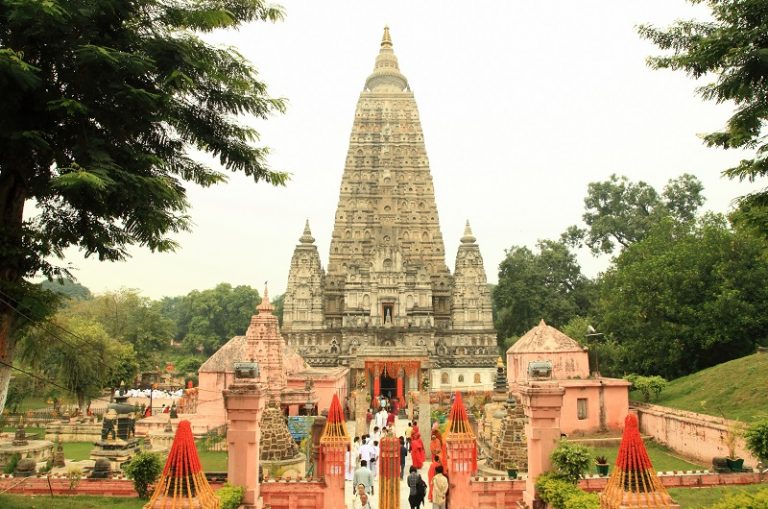
All five accused in the Bodh Gaya blast case was declared guilty by the Patna Court on Friday by special NIA court. On the 7th of July, 2013, the Maha Bodhi Temple, situated where Gautama Buddha attained enlightenment, was rocked by a series of 10 explosions in which five people, including two Monks, were injured. Judge Manoj Kumar pronounced Haider Ali alias Black Beauty, Imtiaz Ansari, Umar Siddiqui, Azharuddin Quraishi and Mujibullah Ansari guilty of planting the bomb.

Earlier, it was reported that the attacks were in response to the alleged Buddhist atrocities against Rohingya Muslims in Myanmar. “Buddhists from all over the world used to come there and a message will be sent to all,” a juvenile court’s order that convicted an 18-year old of planting the bombs at the site said.

In January this year, a low-intensity explosion had occurred near the Kalachakra grounds at Bodh Gaya during Dalai Lama’s visit. Two cane bombs were also recovered during a search operation by the Police. The motive behind the incident too was believed to have been vengeance against Buddhists for their alleged persecution of Rohingyans.

The Maha Bodhi Temple Complex is a UNESCO World Heritage Site in Bihar. The National Investigation Agency (NIA) had declared that the Indian Mujahideen was responsible for the bombings in November 2013. The quantum of sentence shall be announced on the 31st of May.