Home Blog Page 952

Aam Aadmi Party’s Saurabh Bhardwaj raises questions on judiciary after stay on AAP Supremo Arvind Kejriwal’s bail, says that Court was prejudiced

The Delhi High Court on Tuesday, June 25th, granted the Enforcement Directorate’s request to stay the trial court’s bail ruling for Delhi Chief Minister Arvind Kejriwal in the money laundering case in the liquor policy excise scam.

On June 20th, a High Court bench led by Justice Sudhir Kumar Jain suspended a bail order given by the trial court. The bench reserved the order on June 21st after the agency challenged the trial court’s verdict, which was placed on hold until the ruling. Delhi CM Arvind Kejriwal later filed an appeal with the Supreme Court on Saturday, challenging the High Court’s interim stay ruling. The Supreme Court postponed the hearing on Kejriwal’s petition, indicating that it wanted to wait for the High Court’s verdict on the subject.

Meanwhile, commenting on the Delhi High Court’s decision to stay the trial court’s order granting bail to CM Arvind Kejriwal in the excise policy scam, AAP leader Saurabh Bhardwaj said that the High Court judge didn’t know what was written in the lower court order and that he did not know the basis on which the bail was granted.

“He already stayed that (trial court) order, we have never heard or seen this. Even the Supreme Court asked how can this happen. I believe that court was already prejudiced,” Bhardwaj said.

“It is very unusual that without reading the order of the trial court, Delhi High Court stayed the court order granting bail to Kejriwal…We will make a legal strategy regarding it,” the AAP leader added.

The Delhi High Court today, June 25, remarked that the trial court has not applied its mind and has not considered the material in the case. “Trial court observation not correct, need more time to consider ED plea,” the higher court said.

Arvind Kejriwal, who was arrested by the Enforcement Directorate on March 21, was set to be released from Tihar Jail on Friday, June 21, if the High Court had not intervened. The High Court stopped the implementation of the challenged order, saying, “Until the pronouncement of this order, the operation of the impugned order shall remain stayed.”

The court ordered all parties to provide written arguments by June 24th. The court stated that it would postpone its decision for two to three days to thoroughly analyse the case files.

MP: Muslim man pronounces triple talaq to his wife for voting BJP in Lok Sabha elections

In Madhya Pradesh’s Chhindwara district, a 26-year-old Muslim woman has alleged that her husband gave her “triple talaq” after he was enraged with her for voting for the BJP in the Lok Sabha election. According to an ETV Bharat report, the Muslim man pronounced triple talaq on his wife after she joined the Bhartiya Janata Party.

On Sunday (23rd June), the woman who filed a police complaint against her husband accused him and her in-laws of physically and mentally torturing her for dowry.  However, the woman’s husband has refuted the allegations, accusing her of having extramarital affairs.

Meanwhile, Kotwali police station in-charge Umesh Golhani said that the complainant got married to her husband eight years ago. Their relations were normal for some time, but subsequently, her husband, mother-in-law, and sisters-in-law allegedly started insulting and assaulting her over some sort of issue.

The woman claimed she was booted out of the house around one and a half years ago and lived with her husband in a rented room. The officer went on to say that the complaint woman supported and voted for a political party, which infuriated her husband, who then gave her a ‘triple talaq’.

On the victim’s complaint, the police have filed a case against her husband, mother-in-law, and four sisters-in-law under the Dowry Prohibition Act, the Muslim Women (Protection of Rights on Marriage) Act, and the Indian Penal Code. The victim’s statement was recorded, and additional legal action is being pursued.

Meanwhile, the victim woman claimed that her husband had earlier sent her the talaq notice and that his family had falsely accused her of being ‘characterless’.

“I responded to the talaq notice through my lawyer.” Later, I supported and voted for the BJP. When my husband, his mother, and sisters learned of this, he gave me triple talaq. His family members asked him to either leave them or give triple talaq to me,” the victim said.

However, the woman’s husband said she had affairs that created the “disturbance” and that he offered her multiple chances to the complainant for reconciliation keeping in mind the future of their children. He said that there were no elections in 2022, so this is not a question of “instant triple talaq” or backing any political party. He claimed that he first gave talaq to his wife on the 30th of March 2022, and then twice again in October and November 2023, per Muslim law. He also accused the complainant of slandering his name to conceal her extramarital affairs.

Asaduddin Owaisi raises pro-Palestine slogan inside Parliament while taking oath as an MP, defends it before media

On Tuesday, the 25th of June, AIMIM MP Asaduddin Owaisi took the oath as a Member of Parliament, and raised the ‘Jai Palestine’ [hail Palestine] slogan inside the Lok Sabha. The All India Majlis-e-Ittehadul Muslimeen (AIMIM) leader was sworn in as a member of Lok Sabha for the fifth time from Hyderabad.

After taking the oath on Tuesday, Owaisi said, “Jai Bhim, Jai Meem, Jai Telangana, Jai Palestine”.

Asaduddin Owaisi expressed solidarity with Palestine at a time when the territory is engaged in a violent conflict with Israel after the Palestinian terrorist group Hamas launched a brutal attack on Israeli civilians in October last year.

Right after Owaisi raised the pro-Palestine slogan in the Parliament, BJP MP Shobha Karandlaje lodged a complaint against Asaduddin Owaisi. In a written complaint to the Speaker and the Home Minister, Karandlaje has reportedly asked that Owaisi’s speech be removed from the parliamentary record and that he retake his oath without the controversial slogan.

Earlier, in 2019, Owaisi ended his oath as a member of the Parliament with the words “Jai Bhim, Allah-o-Akbar, and Jai Hind”. In the 2024 Lok Sabha election, Owaisi defeated BJP candidate Madhavi Latha in the Hyderabad constituency by 3.3 lakh votes.

After a controversy erupted over his remarks, Owaisi defended himself saying that there was no clause in the Constitution prohibiting him from chanting “Jai Palestine”.

“Other members are also saying different things… I said ‘Jai Bheem, Jai Telangana, Jai Palestine’. How is it wrong? Tell me the provision of Constitution? You should also listen to what others said. I said what I had to. Read what Mahatma Gandhi had said about Palestine,” Asaduddin Owaisi said.

Earlier, Asaduddin Owaisi had said that the situation in Palestine concerned not only Muslims but also humanity. He also referred to Israeli Prime Minister Benjamin Netanyahu as “the devil”.

It is pertinent to recall that it is the same Owaisi who had outrightly refused to raise the “Vande Mataram” slogan. He has even claimed that Muslims were being assaulted for not raising Vande Mataram and Jai Shri Ram slogans. His brother and controversial AIMIM leader Akbaruddin Owaisi had also opposed a Telangana government circular in 2019 which made singing Vande Mataram in schools mandatory.

Mumbai: Amir arrested for molesting a Hindu minor girl after luring her into a relationship, booked under POCSO and other IPC sections

On Monday, 25th June, the Mumbai Police arrested an individual identified as Amir Chaudhari Sayed Chaudhari after he trapped a Hindu minor girl into a love affair and molested her twice. The incident is said to have happened in the JP North society in Mumbai’s Mira Road region. The accused aged 18 has been booked and arrested by the Navghar Police Station under section 354 of the Indian Penal Code, 1860, and sections 8 and 12 of the POCSO, 2012.

As per the FIR copy obtained by OpIndia, the victim had visited the society with her resident friend for a photo shoot. The accused happened to see the girl after which he extended the hand of ‘friendship’ to her. The duo exchanged their Instagram ids and began staying in touch.

The accused used to call the girl and also initiate chats with her on social media platforms. He also used to frequently call her to meet her. In March this year, the accused called the girl to meet him near the Max Pro gym where he tried to forcefully kiss her. He pulled her closer without her will and attempted to molest her. The girl pushed him away and escaped to reach home.

Recently, on 24th June, the accused again called the girl to meet in the garden close to Seven Square. He again tried to molest the girl by forcefully kissing her. The girl then managed to call her mother who came to rescue.

The duo then reached the police station and filed a police complaint.

Mira Road and the Bhayander area in Maharashtra’s Mumbai district have been in the news for all the wrong reasons in the recent past. Recently, in the month of February 2024, OpIndia reported 15 similar cases in which the Islamists harassed Hindu women, molested then, raped and forced them to convert to Islam. The detailed report in this case can be read here.

The Sakal Hindu Samaj members earlier in an exclusive conversation, informed OpIndia that the Mira Road region in Mumbai is dominated by the Muslim majority population and that the community which claims to be a minority and oppressed is moving to become a problem for the other community residents.

Explaining the changing demography of the region, Kishor Sant (name changed for security reasons) of the Sakal Hindu Samaj had said, “Earlier this Mira Bhayander region, Nayanagar area was dominated by the Hindu population. In the past few years, several Muslims from the Mumbra region or even from different cities migrated to this area claiming their dominance. Later in the Nayanagar and Mira road region these people began deliberately harassing Hindus. They began harassing their daughters, disturbing them in their businesses and even there are many cases where these people have demanded ransom money from Hindus. As a result of this, several Hindus began migrating to other regions of Mumbai and Thane.”

As per Pratap Deokate (name changed for security reasons), another Hindu activist, the Muslims deliberately harass the Hindu businessmen in the Bhayander area which still is a Hindu-dominated locality. “They install hawkers in the areas which are literally ‘no-hawkers’ zones and indirectly block the customers from reaching into the Hindu shops. Then they slowly start trapping the daughters of the Hindu shopkeepers leading to the incidents of Love Jihad,” he said.

Further, while pressing for a stringent law against the Love Jihad, Deokate also opined that the police need to look into these cases seriously. “When a Hindu girl is harassed, sexually assaulted or murmured, these people in the administration don’t look at it from the perspective of Love Jihad. They don’t doubt the intentions of the Islamists accused. They just treat these cases like other normal criminal cases and that’s why these Islamists most of the time get a free pass. The police and the local administration should understand the intention of the accused Islamists behind targeting the Hindu girls. Only then they will be able to provide justice to the victims in such cases,” he was quoted as saying.

In the given case, OpIndia talked to the victim who confirmed the incident. However, she also mentioned that the accused tried to molest her but never talked about religion or conversion. Further investigations are underway.

Pune: Ismail Riyaz Shaikh fatally stabs a 60-year-old man in Yerawada over interfaith relationship of victim’s son with his sister

On Monday (24th June), a 60-year-old man was brutally murdered with a sharp weapon in Rajiv Gandhi Nagar in Pune’s Yerawada area over a relationship of his son with Ismail Riyaz Shaikh’s sister, Pune city police officials said. As per some local media reports, the accused beheaded the victim.

Police identified the deceased as Katalu Kachru Lahade. They also arrested two accused in this matter. The main accused was identified as Ismail Riyaz Shaikh (25) while his aide was identified as Sanket Umesh Gupta (21). Police stated that both Shaikh and Gupta are labourers and Lahade was unemployed.

According to reports, Lahade was attacked with a sharp weapon, allegedly a machete. At the time of the incident, Lahade was sitting under a tree in the open space of the Mental Hospital in Yerwada along with the staff, following lunch. Two attackers on a bike approached him and one of them launched the fatal attack. Lahade sustained severe injuries to his head and hand which resulted in his immediate demise. 

Pertinent to note that Lahade’s religious identity is unknown. As per reports, the ‘Interfaith marriage’ of Shaikh’s sister with the victim’s son is said to be the motive behind the brutal murder. On the day of the incident, Shaikh’s sister reportedly ran away with Lahade’s son without informing her family. 

Yerawada police station in-charge, senior inspector Ravindra Shelke said, “Initial investigation points to this murder being a fallout between Lahade and Shaikh over the relationship between Lahade’s son and Shaikh’s sister. On Monday morning, it came to light that Shaikh’s sister left her home with Lahade’s son without informing her family. Probe suggests that this was the reason behind the fatal attack on Lahade.” 

Shelke added, “Shaikh used a sharp weapon and attacked Lahade on his face… Gupta was with Shaikh when he attacked Lahade. We have deployed police teams in the area after the incident.” 

The body of the deceased victim was sent for post-mortem examination. Inspector Shelke stated that appropriate measures have been taken at the spot, and there are no concerns regarding law and order at this time.

‘Temples meant for deities, not individuals considered godmen’: Petition before Madras HC to remove Sai Baba idols from Tamil Nadu HR&CE temples

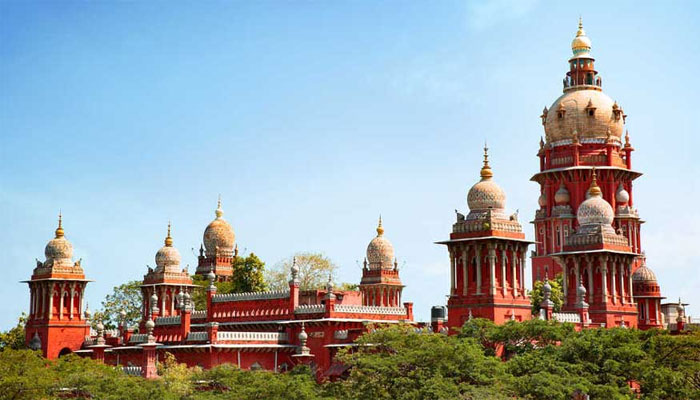
On Tuesday (25th June), the Madras High Court issued a notice to the Tamil Nadu Hindu Religious and Charitable Endowments (HR&CE) Department in connection to a petition to remove idols of Sai Baba from government-controlled Hindu temples. 

A Public Interest Litigation (PIL) was filed before the Madras High Court by a resident of Coimbatore named D Suresh Babu. He cited a previous judgment and contended that devotees of Sai Baba belonged to all Faiths and not just Hinduism.

He argued that Sai Mandirs are not exclusively meant for worship by Hindus. D Suresh Babu stated that Sai Baba preached both Islam and Hinduism and that the installation of his idol in a Hindu temple contradicted 8th-century Shaivite principles.

The petitioner further added that keeping idols of Sai Baba in 7-8 temples, run by the HR&CE Department, alongside that of Hindu deities violated Agama principles and hurt the sentiments, beliefs and customs of the Hindu community.

In his petition, D Suresh Babu pointed out that the HR&CE Department should have taken appropriate steps to prevent the installation of idols of individuals who are considered Godmen.

He sought the removal of Sai Baba idols from temples, which are under the direct and indirect control of the Tamil Nadu Hindu Religious and Charitable Endowments Department.

“My prayer is that all idols of godmen, including Sai Baba, in temples under HR&CE should be removed. Private temples can do whatever they want. But can HR&CE temples have idols of godmen,” the counsel for the petitioner argued,” the PIL read.

On hearing the arguments in the case, a 2-judge Bench of Justice Mohammed Shaffiq and Acting Chief Justice R Mahadevan and Justice Mohammed Shaffiq issued notice to the Department.

The Tamil Nadu government controls 36635 temples, 45 mutts, 68 temples attached to mutts, 189 charitable endowments, 1721 specific endowments and 17 Jain temples.

‘Look at us, cameras on us, ignore the public’: How AAP leaders, from Kejriwal to Atishi all thrive on narcissistic media hogging and blame shifting

There is a saying in Hindi, “Kaam karo na karo kaam ki fikr zaroor karo” [Work or not, be ‘concerned’ about work]. This seems to have been a fundamental principle of the Aam Aadmi Party government in Delhi. While the national capital is grappling with its worst water crisis, the AAP ministers instead of taking steps to resolve the issue are staging a dramatic indefinite fast—“Pani Satyagraha”. If the government itself is indulging in such theatrics who will provide adequate water supply to the people of Delhi?

Atishi Marlena, Delhi’s Water Minister, initiated an indefinite fast on the 21st of June 2024, accusing the Haryana government of not releasing Delhi’s rightful share of water. Atishi claims this has affected around 2.8 million residents due to the shortfall in water supply​.

On the fourth day of her indefinite strike, Atishi continued with AAP’s usual blame game and said that the Haryana government has reduced Delhi’s water supply by 100 million gallons per day (MGD) over the last three weeks.

Even in its attempt to appear ‘concerned’ about the plight of the Delhi people, AAP could not avoid drama. On Monday, a video surfaced online wherein Delhi Water Minister Atishi was supposedly seen reminding a doctor who probably forgot the ‘script’, to tell people about her increasing ketone levels.

It is amusing that in just four days of her ‘Anshan’, Minister Atishi’s health deteriorated to the point that she had to be admitted to the LNJP hospital. The Aam Aadmi Party claimed that Atishi during the course of her four-day fast has been losing weight and her blood pressure is also decreasing. Doing ‘Anshan’ or claiming health deterioration is a tried and tested tactic of AAP to garner media attention and public sympathy.

But all this raises a question. How is Atishi’s Anshan going to get water into Delhi homes? She is the water minister. She is supposed to be in her office working, not on stage doing theatrics.

Recently, it was seen how Delhi CM Arvind Kejriwal who was arrested in connection with the Delhi liquor scam case, claimed that his sugar levels his body weight dropped by 7 kgs suggesting that he might be suffering from a “serious disease”. He also claimed that his sugar levels have increased during his time in jail and he was deprived of insulin by the Tihar jail authorities. The self-proclaimed modern-day Bhagat Singh, Kejriwal blatantly played the victim card despite the fact that the Tihar Jail administration comes under Delhi Prison Department. The idea behind such tactics is to establish a narrative that somehow the central government is acting against Kejriwal due to political vendetta and a ‘fearless’ Kejriwal is going to jail to ‘save’ democracy. With this, the media and public would focus more on the “how” than “why” Kejriwal was jailed.

It must be noted how such theatrics help AAP build a narrative in its favour and deflect attention from the actual issue. Just days before, the mainstream media showed the people of Delhi after a long wait running behind water tankers to get their buckets filled. But now, the entire media attention is on Atishi’s ‘Pani Satyagraha’ and her ketone levels.

The visuals of Delhi residents running behind a water tanker in Chanakyapuri’s Vivekananda Camp have now been replaced with Minister Atishi being taken to the hospital after her health reportedly ‘deteriorated’ due to the fast.

Basically, the only thing Atishi’s Pani Satyagraha has achieved is that it has successfully shifted the media focus from the public suffering for something as basic as water to an entitled, powerful woman, a minister no less, highlighting her own ‘suffering’.

Notably, the water tanker mafia in Delhi has been a persistent issue, contributing significantly to the ongoing water crisis in the capital. Despite the Delhi government’s promises to curb this illegal activity, little effective action has been taken, leading to criticism from various quarters, including the Supreme Court.

Before the AAP government launched its ‘Pani Satyagraha’ gimmick, the Supreme Court recently reprimanded the Delhi government for its inaction against the water tanker mafia, emphasising that the failure to address this problem exacerbates the city’s water shortages.

“There are visuals on every channel that the tanker mafia is working in Delhi. What measures have you taken in this regard?… What measures have you taken to control water waste coming through the two barrages if this is a recurring problem?,” the Supreme Court asked.

Minister Atishi, however, instead of taking responsibility for her inaction resorted to blaming the Delhi Jal Board (DJB) officials for colluding with the tanker mafias. She claimed that the senior DJB officials reduced the number of tankers without her knowledge. It must be noted here that the DJB comes under the administration of the AAP-led Delhi government.

Minister Atishi called for an inquiry into potential collusion between these officials and the tanker mafia. Atishi also directed quick response teams to inspect major pipelines and prevent leakages, although these measures seem reactive rather than proactive. Again, little action more drama and a blame game keep the AAP government going whenever Delhi faces a crisis.​

Falsely blaming Haryana, and Himachal Pradesh

Interestingly, while Atishi blamed the neighbouring Haryana and Himachal Pradesh for not providing Delhi its fair share of water, the Delhi Jal Board data exposed AAP’s lies indicating that Delhi has been receiving more than its allocated share of water from sources in Haryana and Uttarakhand. Wazirabad was already getting around 85 Million Gallons per Day (MGD) more than the allocated water from the Yamuna stream coming from the Hathnikund barrage to the pond.

The question that arises here is then where did the water go? Is the AAP government shielding tanker mafias as alleged by the BJP?

Perhaps, the ‘Pani Satyagraha’ is a coverup to this question while the people of Delhi have been pushed into perdition struggling to get even a bucket full of water.

Atishi’s “Pani Satyagraha” is apparently a strategic move to draw media attention and sway public sentiment, diverting focus from the actual crisis. AAP’s theatrics are aimed at gaining political mileage and constant media attention rather than addressing the underlying problems. Engaging in a fast might generate headlines and win some sympathy, but it doesn’t resolve the pressing issues of water management and stringent action against the tanker mafias. The residents of Delhi deserve pragmatic solutions, not political theatrics.

This, however, is not the first time that the AAP government has resorted to hogging media attention and blaming others when faced with a crisis. AAP has a history of doing so to hide its own incompetence.

The conduct of AAP leaders over the years demonstrates that they want to make everything about themselves, how they are the sole ‘voice of people’, ever concerned, always striving when convenient and shifting the blame on others when in a difficult spot.

AAP leaders seeking attention from incidents of sexual assault

Former Delhi Commission for Women (DCW) chairperson and Rajya Sabha MP Swati Maliwal who recently accused CM Kejriwal’s secretary Bibhav Kumar of assaulting her, also has often been seen doing ‘dharna’ etc in rape or molestation cases. Last year, she staged a Dharna outside the hospital where a minor rape survivor was admitted who was allegedly raped by a Delhi government official Premoday Khaka. Maliwal claimed that the Delhi Police did not allow her to meet the victim. Here, instead of the heinous crime allegedly committed by the deputy director in the Delhi government’s women and child development department, Maliwal being ‘stopped’ from meeting the victim became a bigger issue comfortably diverting the media and public attention.

AAP leaders have a knack for coming up with unique (read absurd) methods to ‘protest’ and grab attention in the wake of serious issues affecting lives and the law in Delhi and other states. Back in 2019, AAP leader and Swati Maliwal’s ex-husband Naveen Jaihind performed ‘Tapasya’ in the wake of the incidents of child sexual abuse in the country. Maliwal had vehemently defended Naveen’s theatrics when people called out his “nautanki”.

AAP’s perennial ‘blame Haryana’ argument in its defence against Delhi air pollution

Delhi’s air pollution crisis has been a persistent issue, severely affecting the health and quality of life of its residents. The Kejriwal-led Aam Aadmi Party government in Delhi has for years been blaming the neighbouring Punjab and Haryana and the central government for the pollution caused by stubble (Parali) burning in these states. However, after forming a government in Punjab, the Delhi government has miraculously stopped blaming Punjab for air pollution even though stubble burning in Punjab remains a major source of Delhi’s hazardous air quality in the winters. After winning Punjab in the 2022 elections, the AAP government in Delhi now blames BJP-ruled Haryana and cracker bursting on Diwali for pollution.

AAP has turned stubble burning in Haryana into a convenient scapegoat, even to the extent of pretending that stubble burning in Punjab doesn’t affect them, just the Haryana fires cause pollution.

Last year OpIndia reported how the Delhi government blamed Haryana for the alarmingly bad air quality in Delhi even though the stubble-burning incidents tripled in Punjab, while similar incidents in Haryana were limited. Other than blaming Haryana, AAP has also relied on advertisements to polish its image continuously ‘working’ to curb pollution in reality doing little to nothing. It has been reported that the AAP government spent more money on pollution mitigation advertisements than on actual pollution reduction measures.

It was also reported how some smog towers the Delhi government boasted as a weapon against air pollution were either locked up or their operations stopped for some or other reasons during the peak pollution season forcing Delhi residents to live in a gas chamber-like atmosphere.

AAP’s blame game over Yamuna water pollution

Delhi’s 70% of water supply comes from the Yamuna River. The Kejriwal government has over the years blamed Haryana and Uttar Pradesh for the pollution in the Yamuna River. In the winter season every year, the Yamuna River froths with toxic white foam. This toxic foam is formed due to the industries discharging effluents containing a high concentration of ammonia and phosphate along with other chemicals.

The assertion that neighbouring states are primarily to blame for Yamuna’s pollution downplays the significant contribution of Delhi’s own pollution sources. Industrial discharge, untreated sewage, and improper waste management within Delhi itself are major factors contributing to the river’s degradation. The city’s numerous unauthorised colonies often lack proper sewage treatment facilities, leading to direct discharge into the Yamuna.

In November last year, ahead of the Chhath Pooja festival, it was reported how Delhi Water Minister Atishi accused the Uttar Pradesh government of releasing polluted water into the Yamuna river. In 2021, AAP MP Raghav Chadha had blamed Uttar Pradesh and Haryana for Yamuna pollution. However, OpIndia reported how there is a lack of common effluent treatment plants (CETPs) while Delhi Jal Board’s Sewage Treatment Plant (STPs) have been operating below their capacities as the DJB failed to set up a system to carry enough sewage to the STPs. AAP government blamed Haryana and UP for Yamuna pollution without a smidgen of shame, while 60% of STPs in the national capital were not in compliance with prescribed parameters.

Blaming neighbouring states serves as a convenient tactic to deflect criticism and accountability from the Delhi government’s own shortcomings in environmental management.

When AAP blamed the Centre for oxygen shortage during the Covid pandemic

When the nation was grappling with the Coronavirus outbreak, the national capital witnessed an oxygen crisis and the Delhi government was accused of disrupting the oxygen supply chain. After this, the High Court slammed the AAP government for its crisis mismanagement. A Supreme Court audit report said that the Delhi government exaggerated the oxygen requirement in the national capital by more than four times during the April 25-May 10 peak period of the COVID-19 second wave. The report also stated that the supply of excess oxygen to the national capital could have caused supply constraints shortage for at least 12 states that needed it. The then Deputy CM (now jailed) Manish Sisodia has trivialised the report claiming it to be made in the BJP headquarters.

It was rather disgraceful on the part of the Delhi government to play politics when the city was battling a serious health crisis. From the creating migrant crisis by spreading rumours of buses waiting at UP borders to take them, lobbying for American vaccine, blaming the Centre for the lack of hospital beds and other infrastructure, inaction against Tablighi Jamaat super-spreaders, banning outsiders from getting treatment at Delhi hospitals, to openly supporting farmers protest the Delhi government demonstrated a colossal failure in handling covid crisis prioritising politics over innocent lives.

However, the Delhi government ran a rigorous PR campaign spending Rs 150 crores from January 2021 to March 2021 on advertisements and publicity through various mediums to polish its image and cover up its failures.

When the Delhi government lamented the coal shortage and power crisis after banning coal-based plants

Back in 2021, the then deputy CM Manish Sisodia accused the central government of ‘ignoring’ the coal shortage in Delhi. This came after CM Kejriwal urged PM Modi to intervene in the matter. Sisodia held a press conference attacking the Modi government insinuating that while the Delhi government was overwhelmingly ‘concerned’ about the coal crisis, it was the central government which was indifferent towards Delhi and was being “irresponsible”.

In a classic AAP-style hypocrisy, on one hand, the AAP government blamed the Centre for the coal shortage in Delhi and built a narrative that CM Kejriwal is trying his level best to procure coal for the thermal power plants, on the other, the Kejriwal government had in 2019 completely banned coal-based power plants. It also imposed a ban on the industries that were using coal as a power source.

Conclusion

The AAP-led Delhi government has often resorted to blaming other state governments and the central government for its own policy failures and administrative shortcomings. This trend is not only counterproductive but also has alarming and sinister implications for governance and public welfare. By blaming external entities, the Delhi government effectively evades responsibility for its own failures. Whether it’s the handling of the COVID-19 crisis, pollution in the Yamuna River, or the management of public infrastructure. AAP’s politicisation of covid crisis not only hampered effective crisis management but also sowed confusion and panic among the public. Moreover, AAP’s constant blame game against other state governments and the Centre undermines cooperative federalism.

For effective governance and real progress, the Delhi administration must focus on addressing its own shortcomings and working collaboratively with other stakeholders rather than engaging in counterproductive blame games, and headline hogging to pretend they are working.

Delhi Excise Policy Scam: Delhi High Court rejects bail to Arvind Kejriwal, criticises trial court for mishandling the case

On 25th June, the Delhi High Court set aside the trial court’s order granting bail to Chief Minister of Delhi, Arvind Kejriwal, in the alleged Delhi Excise Policy Scam case. The matter is under investigation by the Enforcement Directorate (ED) and Central Bureau of Investigation (CBI).

In the order, Justice Sudhir Kumar Jain criticised the trial court for mishandling the case. Justice Jain stated that the trial court did not consider the material submitted by the ED properly and failed to provide adequate opportunity for the ED to argue its case. Justice Jain said, “The observation by the trial court that voluminous material cannot be considered is unjustified and shows that the trial court has not applied its mind to the material.”

On 20th June, a vacation bench of the Trial Court granted bail to Arvind Kejriwal. The decision was challenged in the High Court by the ED seeking a stay on the bail order. The High Court noted that the trial court did not address the twin conditions for bail properly under Section 45 of the Prevention of Money Laundering Act (PMLA). “There was a strong argument that the twin condition of Section 45 PMLA was not deliberated by the vacation judge. This court thinks that Section 45 PMLA has not been properly discussed by the trial court,” the High Court said. 

Furthermore, the High Court pointed out that the Trial Court’s findings of malafides on the ED’s part were incorrect. The court referred to the previous order of the High Court that rejected Kejriwal’s claim of malafides. Justice Jain said, “The trial court should not have given any finding which is opposite to the finding of the High Court.”

In its order, the Trial Court had granted bail to Kejriwal on a bail bond of Rs 1 lakh. Special Judge (PC Act) Niyay Bindu of the Rouse Avenue Court had stated that the ED failed to provide direct evidence linking Kejriwal to the crime proceeds and did not show that another accused, Vijay Nair, acted on Kejriwal’s behalf. However, the ED argued that Kejriwal was involved in a conspiracy to manipulate the Delhi Excise Policy for 2021-22 that benefitted the liquor sellers. ED also stated that kickbacks from the sellers were allegedly used by AAP in the election campaign in the Goa State Elections.

The Delhi High Court’s interim stay was challenged by Kejriwal in the Supreme Court on 24th June. The Apex Court termed the stay order as “unusual” but decided to wait for the final order by the High Court. The matter will be heard in the Supreme Court on 26th June.

Arvind Kejriwal was arrested in the Delhi Excise Policy Scam case on 21st March after he failed to appear at the ED office for questioning nine times. Nine of the ED’s notices to appear were ignored by Delhi’s CM and they were challenged in the court. The court questioned ED why AAP, the political party, was not made a party in the matter and refused to grant any relief to Kejriwal. ED then went to his residence for questioning and subsequently, Delhi CM was arrested in the matter. Apart from Kejriwal, Delhi’s former Deputy CM Manish Sisodia is also currently lodged in jail in the matter. Rajya Sabha MP Sanjay Singh however was granted bail.

Nuh: Mausam, Shahid and Arfat attack Hindu family allegedly for voting BJP in Lok Sabha Elections, police investigation underway

On 21st June, a Hindu family was attacked at their shop in village Akerda of district Nuh, Haryana allegedly for voting for the Bharatiya Janata Party (BJP) in the recent Lok Sabha elections. As per the NBT Navbharat Times report, Manoj, one of the victims, was working at the family shop where the family runs a cosmetics and Common Service Centre (SCS) in front of their house. Three villagers identified as Mausam, Shahid and Arfat came and started discussing the Lok Sabha Elections with him.

During the discussion, Manoj told them that he voted for BJP which enraged the trio. They accused Manoj of contributing to the defeat of the Congress candidate in the region and began assaulting him. They also abused him using casteist slurs. Manoj cried for help. His family members including his father Ramkishan rushed to help him but they were also attacked. Ramkishan’s 8-month-old pregnant daughter-in-law was also physically assaulted during the attack.

People nearby heard the cries of the victims and rushed to the scene. They intervened and rescued the family members from the attackers. The injured pregnant woman was rushed to Nalhad Medical College for treatment. The incident was reported to the police by the victims. However, after three days of the incident, the police did not take any strict action against the attackers. The family said in a statement that they were living in fear and alleged that police were pressuring them to change their statement.

The investigating officer told NBT Navbharat Times that a complaint was received from the victims. He added that the police called both sides for an inquiry and assured appropriate action would be taken once the investigation was over.

BJP district chief gets threat to leave Nuh

Nuh has been consistently in the news for all the wrong reasons. Apart from family getting attacked allegedly for voting BJP in Lok Sabha Elections, BJP district chief Narendra Patel received a threatening letter via mail to leave Nuh. On 24th June, BJP leaders and workers visited the District Secretariat and submitted a memorandum addressed to the Chief Minister, DC and SP regarding the threat.

A complaint in the matter has been filed at City Police Station Nuh. The police have registered a case against the accused in the matter and further investigation is underway.

The letter was received by Patel on 23rd June in which the sender identified himself as Tehmur. The letter, which was written in very bad handwriting, read, “BJP’s Narendra Patel, either leave Nuh or you will be shot. You have troubled the people of our Mewli village a lot. You have implicated many people in the riots as well. I, Sakir Abrar from Mewli village, will run you over with a car one day. I will not spare you, Mewli is not afraid of anyone. Sahid Torif Khusid says your death is certain… Tehmur.”

Source: Bhaskar/citytehelka

District officials have assured BJP leaders and workers that strict action will be taken against those who sent the letter.

Hindus in UP village protest over a Muslim family slaughtering a buffalo near a Shiva temple, to patrol streets from next Bakrid to prevent ‘new custom’: Report

On the occasion of Bakrid which fell on 17th June, communal tensions flared up in Jogidher, a small Hindu-majority village in the Bareilly district of Uttar Pradesh. Notably, the Hindu community was outraged after a Muslim family publicly slaughtered a buffalo near a Shiva temple which according to residents marked a departure from the village’s custom. According to protesters, Muslim villagers had not sacrificed buffalo on Bakrid in the past. Consequently, Hindu villagers asserted that they would patrol streets during the next Bakrid to prevent the slaughter of large animals.

As things escalated, the Police had to intervene to bring the situation under control. They also booked eight men from the Muslim family involved, under charges of animal cruelty. They also arrested two accused who were released on bail the following day. 

The incident unfolded on the morning of the Islamic festival of Eid-al-Adha, commonly known as Bakrid. Sangram Singh, a resident, captured a video of his neighbour, Mohammed Israr in which he was slaughtering a buffalo in an open space outside his home. According to Singh, this was done close to a Shiva temple. In the video accessed by Swarajya, several men were seen moving the dead remains of the buffalo inside a house.

Narrating the incident, Singh (60) told Swarajya, “It was around 11 am. We were inside our house when we were overwhelmed by an unbearable stench. My wife, covering her mouth, went outside to find the source. She was horrified to see our neighbours slaughtering a buffalo.” 

He then recorded the act and shared the video among the villagers. Notably, the village has about 2,500 Hindus and nearly 300 Muslims.

(Screengrab from video, Source – Swarajya)

The video soon started doing rounds among the villagers, sparking an outrage over the act. Soon, residents gathered and surrounded the local police station. They raised slogans that they would oppose the “initiation of a new tradition on Bakrid”. They said that the slaughter marked a departure from the village’s custom. They demanded that the family involved in the act should be arrested.

(It is alleged that the buffalo was slaughtered publicly, near a Shiva temple, outraging the Hindu community, Image Source – Swarajya)

Initially, Police were reluctant to intervene

The village Pradhan, Ram Swaroop Kashyap told Swarajya’s Swati Goel Sharma that although police arrived quickly at the scene, they initially declined to intervene. They cited the incident as part of the Muslim festival of animal sacrifice.

The officers argued that if the animal had been a cow or its progeny, they would have proceeded under the Cow Protection Act. Dissatisfied with the officer’s response, the villagers threatened to escalate their protests.

Some villagers told the police that the slaughter was conducted openly which was against the state guidelines that prohibit such visible acts of animal sacrifice. They also highlighted that it was carried out just twenty meters from a Hindu temple.

Kashyap said that the police acknowledged the validity of the villagers’ complaints. Subsequently, the Police filed an FIR that evening at the Collector Bukganj Police Station in the CB Ganj area against eight family members (FIR number 213).

The accused named in the FIR include Mohammed Israr, Mohammed Islam, Mohammed Shafi, and Mohammed Akhlaq, along with Israr’s four sons but their names were not disclosed. The accused were charged under IPC section 429 for harming or destroying livestock and under Section 11 of The Prevention of Cruelty to Animals Act, 1960, for cruelty like mutilation or unnecessarily killing animals.

(FIR copy, Credit – Swarajya)

Two accused were detained that evening. But according to Kashyap, they were released on bail the following day. 

The complaint was given in the name of Sangram Singh and over 30 Hindu residents are named as co-complainants in the case. The complaint stated that although Muslim residents sacrificed goats in the past, buffalo sacrifice on Bakrid is an attempt to start a new custom and it has created communal tensions in the village. 

Hindu villagers assert that they will not allow new customs in the village

The Hindu community which is in majority, including the Pradhan, Ram Swaroop Kashyap, has openly opposed the practice of animal slaughter on Bakrid, which according to them is an introduction of a new religious custom.

However, the Muslim villagers alleged that it was an infringement on their religious rights. 

Kashyap (65) stressed that the issue transcends religious lines. He said, “This is not about Hindu versus Muslim. It’s about maintaining our traditional practices. If Hindus introduced a new ritual, we would oppose that just the same.”

The former Pradhan, Mohammed Kamruddin alleged that the Hindu majority is leveraging their greater numbers to suppress Muslim practices. He also alleged that the villagers were under “the influence of RSS and Bajrang Dal”. 

Speaking with Swarajya, he refuted the claim that animal sacrifice on Bakrid is a new custom. He said, “In families that can afford it, animal sacrifice has always been part of Bakrid. I have sacrificed goats every year.” 

He added that families who can afford it typically opt to slaughter larger animals, such as buffaloes.

He claimed that Hindu nationalist groups like the RSS and Bajrang Dal have become active in the village which is leading to such an opposition. He alleged, “The villagers are causing disturbances under their influence.”  

Regarding the next Bakrid, Kamruddin advised his community to consider conducting their sacrifices in a neighbouring Muslim-majority village to avoid conflict.

Meanwhile, Sangram Singh and other Hindu residents maintained that no new customs would be allowed in the village. Singh said they plan to ensure that “no new practices are established”. He declared, “Next year, we’ll patrol the streets of Bakrid to ensure there’s no deviation from our village’s customs.”