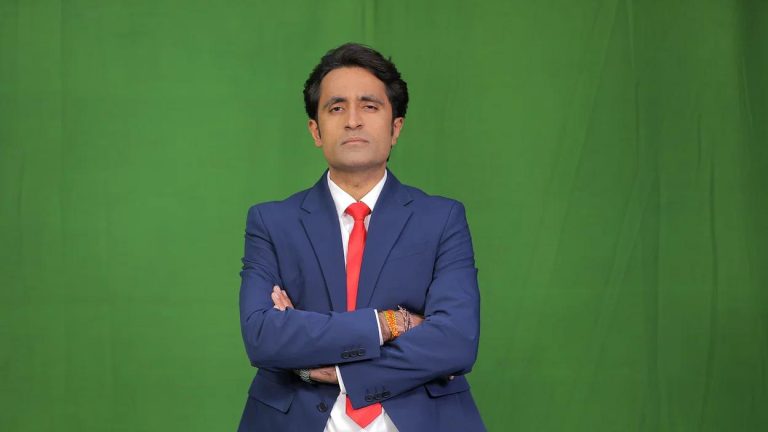
Popular psephologist Pradeep Bhandari on Wednesday (May 8) took to X, formerly known as Twitter, to announce he has resigned from Zee News.
“I have resigned from Zee News. I will not be hosting your favourite shows Taal Thok Ke at 5 PM, Aapka Sawal at 8 PM, & 24 Ki Sarkar at 10 pm, or present Exit Poll on Zee this election season,” Bhandari tweeted.
Dear Friends,
I have resigned from Zee News. I will not be hosting your favourite shows Taal Thok Ke at 5 PM, Aapka Sawal at 8 PM, & 24 Ki Sarkar at 10 pm, or present Exit Poll on Zee this election season.
Gratitude for your love. ??
— Pradeep Bhandari(प्रदीप भंडारी)?? (@pradip103) May 8, 2024
Notably, Bhandari’s resignation came days after Zee Media Corporation terminated the services of former chief executive officer (CEO) Abhay Ojha. Ojha was terminated on May 4, 2024. The company, however, did not elaborate on the reasons for his termination.
Bhandari’s resignation coincides with rumours of a purported blackout imposed by Zee News on live coverage of PM Modi, Amit Shah, and Yogi Adityanath. While Zee News has not responded to the rumours, several social media users claim that Zee News has allegedly placed a ban on the speeches of PM Modi, Yogi Adityanath, and Amit Shah.
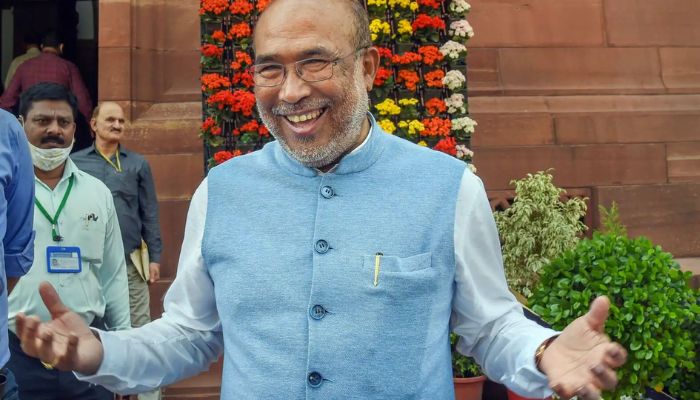
On Wednesday (8th May) Manipur Chief Minister N Biren Singh informed that the government has identified 5457 illegal immigrants in the state.
In a post on X (formerly Twitter), CM Singh stated that his government has identified a total of 5457 illegal immigrants in Kamjong district, Manipur, as of the 7th of May 2024.
“???? ??????? ?????????? ????????, ????????? ???? ?? ???? ?? ???? ???? ???? ??????????. The Government has detected a total of 5457 illegal immigrants in Kamjong District, Manipur as on May 7th, 2024. Out of the total, the biometric data of 5173 such illegal immigrants have been collected so far. Deportation process is underway,” the Manipur CM wrote.
CM Singh further stated that the government is providing humanitarian aid to the illegal immigrants adding that despite the alarming situation, the government is handling the matter with sensitivity.
The Government has detected a total of 5457 illegal immigrants in Kamjong District, Manipur as on May 7th, 2024. Out of…
— N.Biren Singh (Modi Ka Parivar) (@NBirenSingh) May 8, 2024
“We have been giving humanitarian aides to all the illegal immigrants who were detected so far. Despite being an alarming situation, we have been handling it with utmost sensitivity,” Singh added.
Last week, 38 illegal immigrants were deported to Myanmar from Manipur, bringing the total number of illegal Myanmarese migrants deported to 77 since 8th March.
Without any discrimination, we have completed the first phase of deportation of illegal immigrants from Myanmar with 38 more… pic.twitter.com/KSXZtZeGVV
— N.Biren Singh (Modi Ka Parivar) (@NBirenSingh) May 2, 2024
Informing about the action on 2nd May, CM Singh wrote: “…Without any discrimination, we have completed the first phase of deportation of illegal immigrants from Myanmar with 38 more immigrants leaving Manipur, India today through Moreh. A total of 77 illegal immigrants have been deported in the first phase. One Indian national was also brought back from Myanmar during the handover ceremony. The State Government is continuing the identification of illegal immigrants and at the same time biometric data are being recorded. Let’s keep our borders and country secure.”
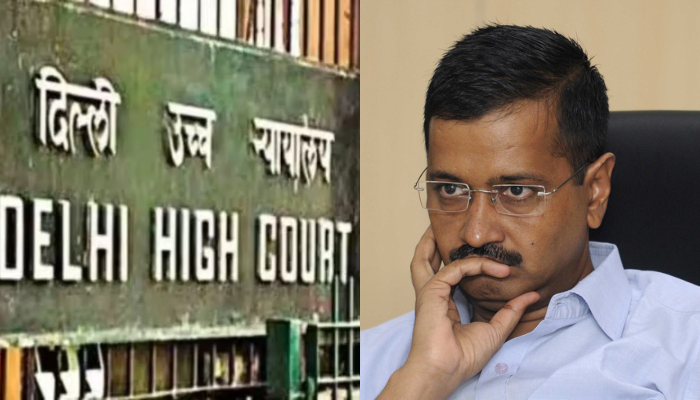
Delhi High Court on Wednesday, May 8, came down heavily on advocate Shrikant Prasad, who filed a PIL in court, seeking directions to restrain media channels from reporting against Delhi CM and AAP supremo Arvind Kejriwal, currently lodged in Tihar jail for his alleged involvement in the Delhi Liquor scam. Dismissing the PIL seeking the media gag, the Division Bench of Acting Chief Justice Manmohan and Justice Manmeet Pritam Singh Arora slapped a fine of Rs 1 lakh on the petitioner.
Notably, the PIL was filed by advocate Shrikant Prasad. He had submitted before the court that the media was creating “pressure and airing sensational headlines” regarding Arvind Kejriwal’s resignation and imposition of presidential rule in Delhi. He urged the court to restrain the media from reporting on Kejriwal.
The PIL also asked the court to issue orders to give Kejriwal proper facilities in Tihar jail so he could interact with members of the legislative assembly and his cabinet colleagues and ensure the smooth operation of the Delhi government.
“The conduct of Media as of today in this particular issue is very much prejudiced to the citizens and public of Delhi and making interference in the democratic process and a Chief Minister appointed by a setback majority of 62 seats in Delhi assembly elections of 2020,” the plea argued.
Advocate Shrikant Prasad in his PIL, further urged the court to refrain Delhi BJP President Virendra Sachdeva from “making any undue pressure by protest or statement by illegal means for resignation of current Chief Minister of Delhi”.
Shrikant Prasad contended that the initiatives of the Delhi government have benefited the citizens of Delhi and have received recognition from several other reputable institutions as well as the international media.
The court, however, remarked sternly while dismissing the plea. “You keep a bank draft of ₹1 lakh ready. This is not public interest… what have we been reduced to? What do we do? Do we impose emergency or martial law? How do we gag the press or political rivals? Your prayer is… Do we say no one will speak against Mr A or Mr B,” the Court questioned while rejecting the plea.
The Delhi Chief Minister was arrested on 21st March this year after having skipped 9 summons from the Enforcement Directorate (ED). He is being held at the Tihar jail at the moment.
On Tuesday (7th May), the Supreme Court of India denied interim bail to incumbent Delhi Chief Minister Arvind Kejriwal in connection to the liquor policy scam case. Kejriwal has not been granted any relief by the Delhi High Court or the Supreme Court since his arrest in March this year.
Notably, the Aam Aadmi Party has announced that the Chief Minister will continue to lead the government from prison and wouldn’t resign from office.
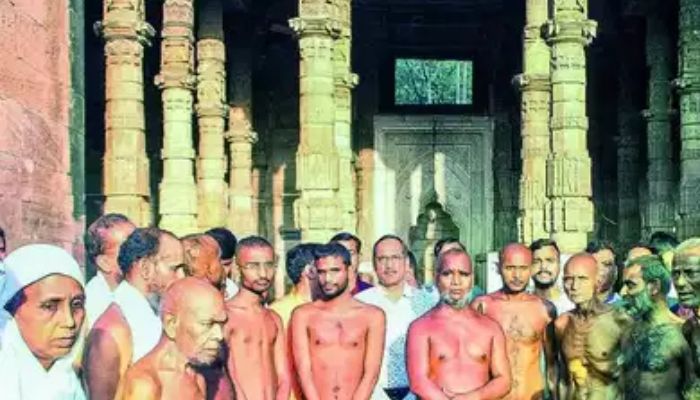
On Tuesday (7th May) morning, the Jain community, led by Muni Sunil Sagar, marched barefoot to the 12th-century mosque Adhai Din Ka Jhonpra in Rajasthan’s Ajmer district. They stated that it has been their custom for centuries to perform prayers at the ASI-protected site.
The ASI has declared the property as a protected monument. Locals argued that monks could not enter the mosque without wearing clothes. The monks contended that it was their right as Jain faith followers to visit government buildings.
The Jain monks were joined by the Vishwa Hindu Parishad activists. They said that the site was once a Sanskrit school before being converted into a mosque in the 12th century.
The Jain monks and their adherents did not enter the mosque’s central area during their visit. Muni Sunil Sagar spoke for ten minutes on a stone platform at the site. “The structure should be under the control of its rightful owners. If it has been our tradition to offer prayers here, so it should be done. It should not lead to the intention of the right of upmanship. We should be careful. When we assert our rights over another’s property without acknowledging the facts, it fosters enmity. We must strive for harmony and move forward)”
Speaking to TOI, Muni Sunil Sagar said: “Today, I visited Adhai Din Ka Jhopra and discovered that it is not a mere shanty (jhonpra) but a palace. I observed many symbols from the Ramayana and Mahabharata. I even found broken statues from the Hindu faith, yet ironically, it is called a mosque.”
“We must acknowledge rightful ownership over possessions. We also have the right to worship, and no one holds a monopoly over such rights. History evolves, and so do circumstances. Religion teaches us kindness, love, and non-violence,” the Jain monk added.
History of Adhai Din Ka Jhonpra
Originally a magnificent Sanskrit College (Saraswati Kanthabharan Mahavidyalay) with a temple dedicated to Mata Saraswati, the Hindu Goddess of Knowledge and Wisdom, the building was commissioned by Maharaja Vigraharaja IV. He was a king of the Shakambhari Chahamana or Chauhan dynasty.
As per several documents, the original building was square-shaped. It had a tower at each corner. There was a temple of Mata Saraswati on the western side of the building. In the 19th century, a tablet was found at the site that dated back to 1153 CE. Experts believe that based on the tablet, it can be inferred that the original building was constructed sometime around 1153.
Some local Jain legends, however, state that the building was commissioned by Seth Viramdeva Kala in 660 CE. It was constructed as a Jain Shrine and celebrated Panch Kalyanaka. It is noteworthy that the site has elements of both Jain and Hindu architecture of that time. A detailed OpIndia report on the history of Adhai Din Ka Jhonpra can be read here.
On Saturday (4th May), Mumbai Police in Maharashtra booked an individual identified as Ibrahim Khan for brutally raping a 14-year-old Hindu girl and threatening her to death. The accused first trapped the minor girl into a ‘love’ affair and then forcefully established sexual relations with her.
The police have filed an FIR under sections 376 and 376(3) of the Indian Penal Code, 1860, and sections 4 and 8 of the Protection of Children from Sexual Offences Act (POCSO), 2012. Also sections 3(1)(w)(i) and 3(1)(w)(ii) of the SC/ST Act, 1989 have been imposed against the accused.
As per the FIR copy obtained by OpIndia, the incident is said to have happened in the Kashigaon area of Mumbai in November 2023. The victim had recently shifted to the locality with her sister after her parents died. Accused Ibrahim Khan stayed in the neighborhood of the victim and used to watch the victim daily.
On 8th November, the accused approached the victim and told her that he liked her and that he wanted to spend his life with her. He also proposed to the girl for marriage. The girl took some time to respond. Meanwhile, on 11th November, he barged into her home when she was all alone and harassed her.
Later he forced himself upon the girl saying that he intended to marry her. Though the girl refused, he forcefully established sexual relations with the girl. “He told me that he did not want to stay with his parents and that he liked me. He also said that he would take a room on rent and would keep me there happily. I refused. But later he forced himself upon me and told me that nothing was wrong,” the girl was quoted as saying in the FIR.
As per the complaint, the accused is also said to have sexually assaulted the girl in December 2023. He also abused the girl and threatened her saying that if she failed to fulfill all his desires, he would kill her. He also once took the girl to a nearby Masjid and asked her to observe Roja (fast as per Islamic ritual) and follow Islamic traditions. The girl, as per the FIR, had a suspicion that she was being trapped in ‘love jihad’ so she would stay away from the accused.
The threats continued in the meantime. However, the complaint was filed by the victim on 3rd May 2024 only after the accused again barged into the home of the victim, abused and threatened to kill her.
The police have filed an FIR under sections 376 and 376(3) of the Indian Penal Code, 1860, and sections 4 and 8 of the Protection of Children from Sexual Offences Act (POCSO), 2012. Also sections 3(1)(w)(i) and 3(1)(w)(ii) of the SC/ST Act, 1989 have been imposed against the accused.
Further investigations are underway. FIR copy of the case has been obtained by OpIndia.
India’s dedication to democratic processes is demonstrated by its efforts to ensure that every individual gets an opportunity to exercise his/her right to vote. This includes setting up polling booths in some of the most distant and inaccessible areas of the country. From high-altitude Himalayan settlements to deep forests inhabited by indigenous tribes, these polling booths demonstrate the country’s commitment to inclusivity in the democratic process.
One such polling station is set up every election at Raireshwar fort located near the Pune district of Maharashtra. The polling station is set up at the highest location of all the polling stations where the ECI officials and even some voters are expected to undertake a trek for an hour railing against the iron ladder to reach. The station is set up reportedly only for around 160 voters.
#WATCH | Pune, Maharashtra: The highest polling station in Raireshwar has been set up for 160 voters. The polling team trek for an hour with the help of an iron ladder to reach the polling station.
In the recently conducted voting on 7th May, the polling team drove to the foothills of Raireshwar to reach the voting location, which is located 30 kilometers from Bhor taluka in rural Pune. From there, an 18-kilometer journey via Rairi goes to the base of Raireshwar, where polling teams walk for an hour to the polling booth using an iron ladder.
As per the reports, the election officials were dispatched to the fort, armed with necessary voting equipment such as Electronic Voting Machines (EVMs), control units, and Voter Verifiable Paper Audit Trail (VVPAT) devices. Despite the tough terrain, poll workers successfully brought all essential materials to the polling location, allowing every qualified voter to participate in the democratic process.
Nongrait Polling station in East Khasi Hills, Meghalaya
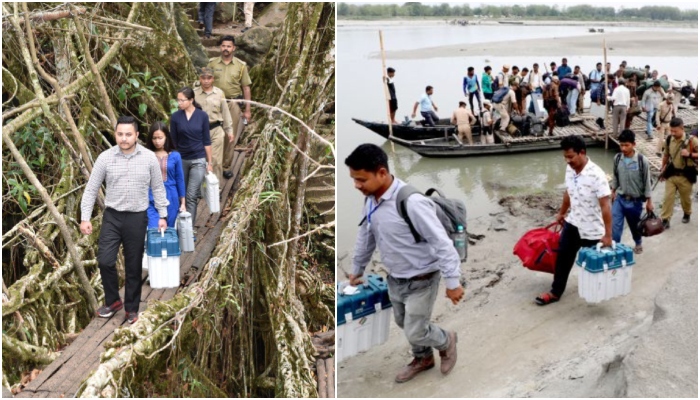
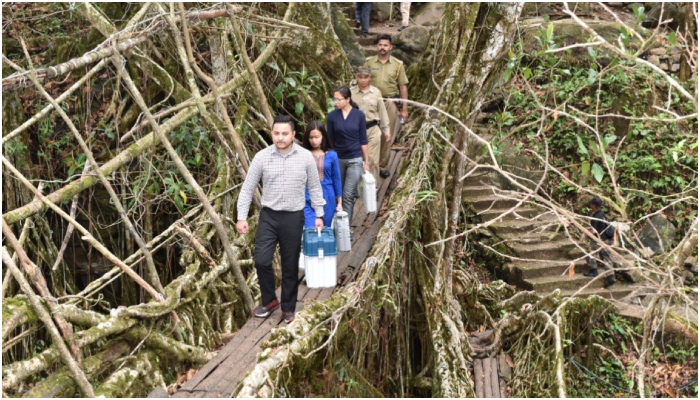
Another such tough, unmotorable polling station is Nongrait in Meghalaya which underwent voting in the first phase of the Lok Sabha election on 19th April. Meghalaya has about 74 non-motorable polling booths. Nongrait Polling Station specifically which lies in the East Khasi Hills has 140 voters and is located near a culturally distinctive, bioengineering wonder and world-famous double-decker living root bridge that can only be reached by foot.
The officials and voters must ascend two mountains and descend 3,400 steps to an inaccessible and pathless site.
Nongrait is perhaps most renowned for its live root bridge, a stunning double-decker suspension structure. The polling station can only be reached by crossing the double-decker root bridge.
Tyrna village, 60 miles from Shillong, is the last motorable place on the way to reach the Nongrait Polling station. After reaching Tyrna, one has no choice but to walk. The polling place is 50 yards away from the root bridge.
Gir Forest, Gujarat polling booth for lone voter
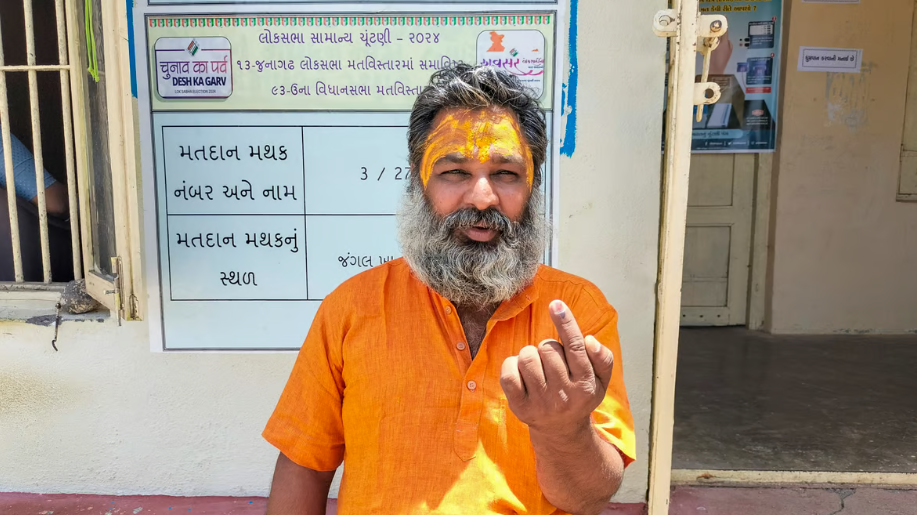
A unique polling booth for a single voter is set up every election in Gir’s deep forests, which are home to the Asiatic lion. This booth ensures that Mahant Haridasji Udasin, a monk living in the forest, is not excluded from the political and democratic process. Every election, the Commission sets up a particular booth at the Gir forest to represent the notion that every vote counts.
This time also, on 7th May, the polling booth set up at Banej in Gujarat’s Gir Somnath district ensured that lone voter Mahant Haridas, a temple priest of Banej, located deep inside the Gir forest region exercised his right towards the democratic country.
“He came around 11 am to cast his vote. With it, we have registered 100 percent voting at the booth,” the election commission officer could be quoted as saying. Meanwhile, Udasin appealed that every voter must cast a vote and exercise his/her right and duty towards the nation.
Tashigang, Himachal Pradesh: 52 registered voters
Tashigang in Himachal Pradesh, at an elevation of 15,256 feet, is the world’s highest polling station. The election officials and the voters here face the thin air and frigid conditions while casting their ballots. The polling booth serves a tiny group of villagers who frequently travel long distances through harsh terrain to vote.
Tashigang in Himachal’s Lahaul-Spiti district, which is part of the Mandi parliamentary constituency, has 52 registered voters. The area specifically located in Spiti Valley is snow-covered for six months and there is also a lack of oxygen in the area.
Prior to 2019, the highest polling station was Hikkim (14,400 feet), located near Tashigang. But in 2019, Tashigang was designated as a polling station as a part of the Mandi constituency.
Reports mention that the Election Commission always sets up a replica polling station with a selfie spot and the Himalayas in the background. The majority of the voters arrive at the polls dressed in traditional attire.
Tangnikot and Gurmaiguda, Odisha
Voters from villages such as Tangnikot and Gurmaiguda have stopped crossing the Indravati Reservoir to vote on the mainland as new booths have been set up near the reservoir to shorten voters’ travel time. Previously, voters had to travel 10 to 15 km by boat and car to reach a polling station. But now, the poll officials cross the reservoir on motorboats and conduct voting at these new booths, which are armed with generators due to a shortage of power.
Two additional booths have been built in the Nabarangpur Assembly constituency, which is reserved for ST, to provide services to the five villages in Tentulikhunti block. There are 431 voters in the villages located near one other within the reservoir. While one booth (no 268) has been built up at Tangnikot to serve 158 voters from Jholaguda, Bagra, and Tangnikot, another (no 269) has been set up at Gurmaiguda to serve 273 voters from both Gurmaiguda and Talang. Previously, voters had to travel 10 to 15 kilometers by boat and car to reach a polling station.
To protect voters’ right to vote, the chief electoral officer and the state administration established 203 new booths, similar to those in the Nabarangpur segment, this year in a variety of areas across the state, including topographically diverse and geographically challenging locations, to reduce the distance voters had to travel to their nearest polling booths.
Officials in the CEO’s office stated that in previous elections, voters in the cut-off villages within the Indravati reservoir in Nabarangpur had to take boats to Kenduguda to vote. However, this time, the polling party had made all the arrangements at the new booths so that the voters could vote effortlessly.
After a 40-minute boat voyage through Indravati, the route goes 1.5 km by road to the Gurmaiguda booth, then another 5 kilometers to the next booth at Tangnikot. Both booths have now been outfitted with minimal amenities for voter convenience. Generators also have been erected in the booths given that there is no electricity in the surrounding area.
Majuli Polling Station, Assam
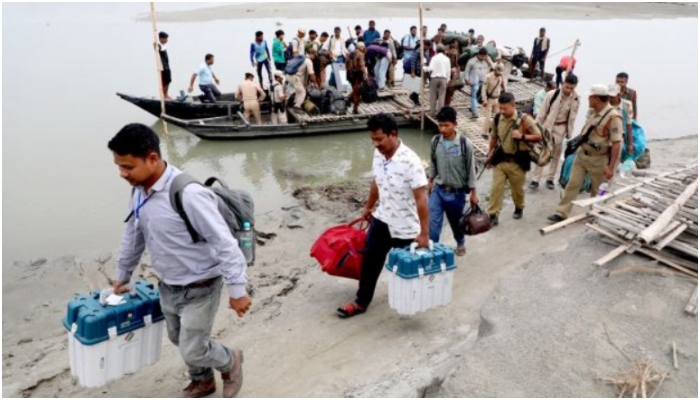
Majuli, the world’s largest river island, located in the Brahmaputra River, contains multiple polling booths that are distinct due to their physical location. The island is part of the Jorhat Lok Sabha constituency and has a multitude of voting stations to serve its diverse population. During elections, officials must use boats to carry electronic voting machines and other supplies to the island. Due to seasonal flooding and erosion, these voting booths are among the hardest to access and administer.
Image- Polling officials carry election material after disembarking from a boat in Majuli district, Assam, April 18, 2024 (Reuters)
Dugong Creek, Andaman and Nicobar Islands
On the secluded little Andaman Island, the Dugong Creek polling booth serves the indigenous Onge and Shimpe tribes. The booth is set up in an area that is normally off-limits to outsiders, allowing the tribe to participate in the election process while preserving their solitude.
This year, as per the data, nearly 91% of the voting happened at the Dugong Creek where Onge primate tribes live exclusively.
Nagada, Odisha Nagada
Nagada, a secluded village in Odisha’s Jajpur district, is located deep in the Sukinda valley and surrounded by extensive forests and hills. The polling booth here serves the Juang tribe, which is one of India’s most vulnerable tribal tribes. Nagada involves a dangerous trip through the forest and hilly terrain, making it one of the most difficult polling booths to reach. The Election Commission ensures that the polling team, along with electronic voting machines, arrives at this remote village to allow tribal residents to participate in the electoral process.
General elections are being held in India from 19th April 2024 to 1st June 2024 to elect the 543 members of the 18th Lok Sabha. The elections are being held in seven phases and the results will be announced on 4th June 2024.
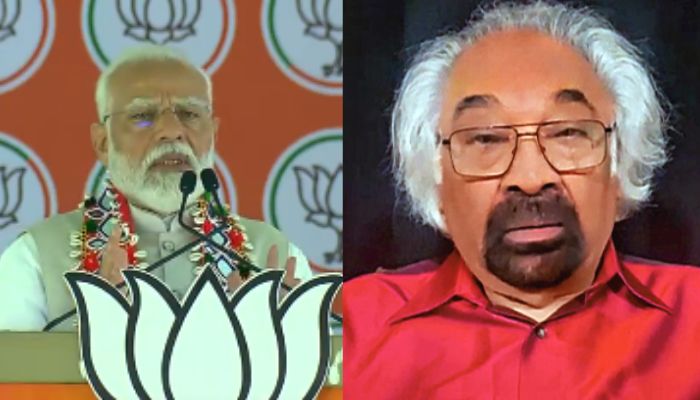
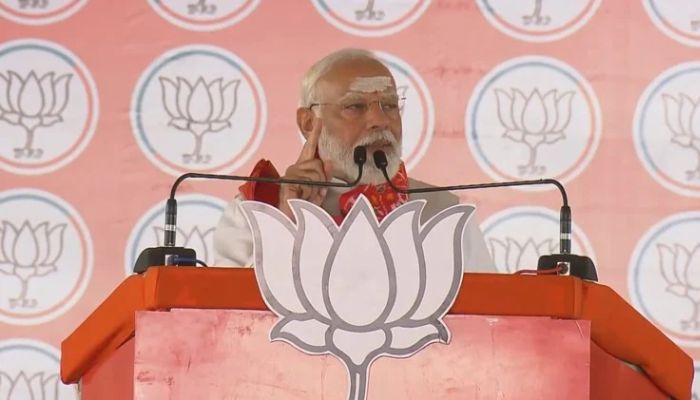
On Wednesday (8th May), Prime Minister Narendra Modi lashed out at the Congress party and its leader Rahul Gandhi over Sam Pitroda’s racist remarks about Indians. Addressing a rally in Warangal, Telangana, PM Modi asserted that he has now realised why the Congress party opposed the Presidential candidature of Droupadi Murmu. He added that for the Congress party, people who have black skin colour must be from Africa, and based on her skin colour, they assumed Droupadi Murmu was also African. Congress thought that her skin tone was black so she should be defeated, he noted.
PM Modi emphasised that while he never gets angry when the opposition leaders insult and abuse him, he won’t let them abuse Indians based on skin colour. Slamming the Congress party for judging people based on skin colour, he added that for Indians skin colour is immaterial adding that we are the worshippers of Lord Krishna who had the same skin colour as we do.”
The Prime Minister stated that he could not understand why was Congress opposing Droupadi Murmu’s candidature and upsetting the Adiwasi community. He added that I thought they were opposing it because this is how Shehzadey’s mind is (a reference to Rahul Gandhi but after Sam Pitroda’s remark it has become clear that based on her skin colour they assumed her to be African and wanted to defeat her as her skin tone is black, the Prime Minister added.
Referring to Sam Pitroda’s racist remarks against Indians, PM Modi said, “I was thinking a lot that Droupadi Murmu who has a very good reputation and is the daughter of the Adiwasi family, then why is Congress trying so hard to defeat her but today I got to know the reason. I got to know that there is an uncle in America who is the philosophical guide of ‘Shehzada’ and just like the third umpire in cricket this ‘Shehzada’ takes advice from the third umpire. This philosophical uncle said that those who have black skin are from Africa. This means that you are abusing several people in the country on the basis of their skin colour…Skin colour is immaterial to us. We are the worshippers of Lord Krishna who had the same skin colour as we do.”
#WATCH | Addressing a public gathering in Warangal, Telangana, PM Modi says "I was thinking a lot that Droupadi Murmu who has a very good reputation and is the daughter of Adiwasi family, then why is Congress trying so hard to defeat her but today I got to know the reason. I got… pic.twitter.com/nPJLQ6DQ3Z
The Prime Minister expressed anger arguing that will the Congress party judge the potential of Indians based on their skin colour and slammed Rahul Gandhi asking who gave him this right.
PM Modi added, “I want to ask a serious question today…I am very angry today, if someone abuses me I can take it but this philosopher of ‘Shehzada’ has given such a big abuse that has filled me with anger. Will the potential of the people of the country be decided by their skin colour? Who gave this right to ‘Shehzada’? The people dancing with the Consitution on their head are insulting my countrymen based on their skin colour…”
#WATCH | Addressing a public gathering in Warangal, Telangana, PM Modi says "I want to ask a serious question today…I am very angry today, if someone abuses me I can take it but this philosopher of 'Shehzada' has given such a big abuse that has filled me with anger. Will the… pic.twitter.com/tnEbj8Ex2K
He pressed, “…’Shehzade aapko jawaab dena padega’. (Prince of Congress party you will have to answer for this.) My country will not tolerate the disrespect of my countrymen on the basis of their skin colour and Modi will never tolerate this…”
#WATCH | Addressing a public gathering in Warangal, Telangana, PM Modi says "…'Shehzade aapko jawaab dena padega'. My country will not tolerate the disrespect of my countrymen on the basis of their skin colour and Modi will never tolerate this…" pic.twitter.com/e22GgRbctj
Notably, the development comes after a video of Rahul Gandhi’s adviser and President of Overseas Congress, Sam Pitroda went viral in which he can be heard making racist comments about Indians.
People of East India look like Chinese, South Indians look like Africans: Sam Pitroda’s racist remarks sparks outrage
Congress leader and close associate of Rahul Gandhi, Satyanarayan Gangaram Pitroda popularly known as Sam Pirtoda claimed that Indians native to the Eastern side of the country resemble Chinese people, those living in the West appear Middle Eastern while North Indians look like ‘white people’ and the ones in the South are similar in appearance to the people of ‘Africa’.
"We could hold together a country as diverse as India, where people on East look like Chinese, people on West look like Arab, people on North look like maybe White and people in South look like Africa" ??
Pitroda stated, “We could hold a country together as diverse as India where people on the East look like Chinese, people on the West look like Arab, people on the North look like maybe White, and people in the South look like Africa. Doesn’t matter. We are all brothers and sisters. We all respect different languages. We all respect different religions, different looks, different customs. different food and as a Gujarati, I love dosa, I love idli. That’s my food. That’s no longer South Indian food. Okay, that’s the India I believe in where everybody has a place and everybody compromises a little bit.”
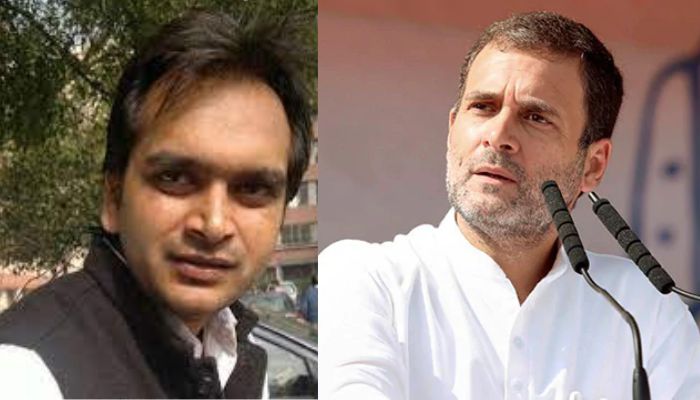
In a recent interview with The Lallantop, Congress loyalist ‘journalist’ Aadesh Rawal claimed that Congress leader Rahul Gandhi who is contesting from two Lok Sabha seats—Wayanad in Kerala and Rae Bareilly in Uttar Pradesh, if he wins both, would resign from Rae Bareli.
Rawal claimed that Rahul Gandhi had put forth a condition before agreeing to contest from Rae Bareli. Congress President Mallikarjun Kharge had, as per Rawal, said that if Congress abandons both Rae Bareilly and Amethi, then it will send a wrong message to the public as polling of five phases has yet to commence.
"Rahul Gandhi said, I will dump Raebareli if I win both Raebareli & Waynad. He's contesting from Raebareli just to get some benefits in North India" – Reveals Congress's loyalist journalist Adesh Rawal
— Mr Sinha (Modi's family) (@MrSinha_) May 8, 2024
“Rahul Gandhi said that he has no problem in contesting the election, but if I [Rahul Gandhi] win from both the seats, then I will not leave the Wayanad seat. And if during the poll campaign, the media asks about which seat I will retain, then I will not be able to lie to them. I will tell them that I will give up Rae Bareli,” Rawal said adding that a final decision on this will be taken by the party only after the 4th of June and taking the national standing of I.N.D.I Alliance and Congress in the election results. He said that Rahul Gandhi agreed to contest from Rae Bareli only after this discussion.
It is worth noting that during the run-up to the 2019 Lok Sabha elections when Congress was desperately searching for a “safe seat” after an internal party survey allegedly predicted defeat against Smriti Irani in Amethi, a Times Now report said the reason for the Congress party to choose Wayanad for Rahul Gandhi. In a sting video, a senior Congress Party leader said Congress President Rahul Gandhi is facing pressure in Amethi and has to find a safe seat, implying that he should contest from Wayanad as Hindus form a minority in the Wayanad constituency which will ensure an easy victory for Rahul Gandhi.
Notably, Aadesh also said that the saga began when Sonia Gandhi decided to go to Rajya Sabha and Priyanka Gandhi decided not to contest elections since the Gandhi family has always been accused of dynastic politics and the party has suffered losses due to this.
Notably, on May 3, the last day of filing nominations, Congress announced Rahul Gandhi’s name as the candidate for Rae Bareli. seat. Sonia Gandhi had vacated the Rae Bareli seat recently, choosing to go to parliament via the Rajya Sabha route. BJP has already announced UP minister Dinesh Pratap Singh as a candidate for the Rae Bareilly seat.
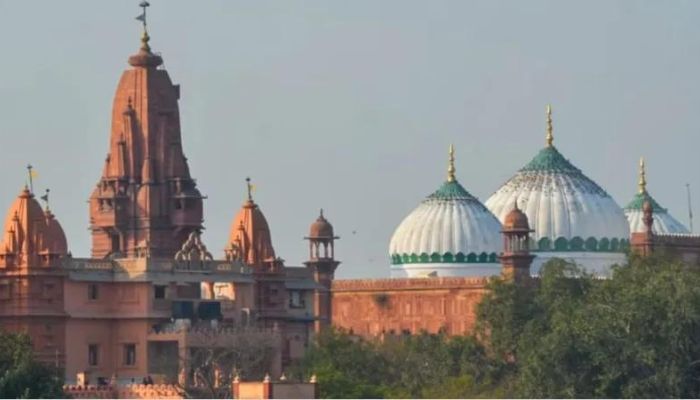
On May 7, Tuesday, the Hindu side in the Shri Krishna Janmabhoomi-Shahi Idgah disputeargued before the Allahabad High Court how its Waqf Board’s general practice to encroach upon any property and declare it as its own asset. Rina N Singh, the counsel for the Hindu side, urged the court not to grant permission to the Waqf Board to carry out such a practice.
The argument was made while the Allahabad HC was hearing the plea challenging the suit seeking the removal of the Shahi Idgah mosque adjacent to the Krishna Janmabhoomi temple in Mathura. Justice Mayank Kumar Jain was hearing the case in response to petitions moved by the Muslim side contesting the maintainability of eighteen consolidated lawsuits concerning the Krishna Janmabhoomi-Shahi Idgah Masjid dispute.
Rina Singh, the attorney for the Hindu side informed the Allahabad High Court that the Muslim side asserted that a 1968 agreement between the two parties turned the property into a waqf asset. But the god who “owns” the property, she asserted, was not a party to the agreement, rendering it null and void.
Singh further asserted that the Waqf Act and the Places of Worship Act’s provisions weren’t relevant in this case.
Notably, the Hindu side argued during the case’s previous hearing on May 2 that Krishna Janmabhoomi is both a protected monument and a monument of national significance, and that as such, it will be subject to the rules of “The Ancient Monuments and Archaeological Sites and Remains Act, 1958” rather than the Places of Worship Act.
This dispute in Mathura concerns the ownership rights of 13.37 acres of land. Shri Krishna Janmabhoomi owns 10.9 acres of land, while Shahi Idgah Mosque owns two and a half acres of land. The entire land belongs to the Hindu side. The long-running conflict took a major turn with the Allahabad High Court’s decision to permit the inspection of the disputed mosque.
On Wednesday (8th May), Prime Minister Narendra Modi launched a scathing attack on Congress leader Rahul Gandhi, charging him with ‘corruption’ and cutting a deal with top industrialists. He asserted that the Congress leader, who constantly abused industrialists and chanted ‘Ambani-Adani’, had gone silent against them after the elections were announced. Accusing the Congress leader of cutting a deal, PM Modi insisted, Shehzada ye ghoshit karein ki Ambani-Adani se kitna maal uthaya hai. (Shehzada of Congress should declare how much black money Congress has received from them.)
PM Modi made these remarks while addressing an election rally in Karimnagar, Telangana. Referring to Rahul Gandhi as ‘Shehzada’, PM Modi said, “You must have seen that Shehzada of Congress, for the past five years, had been chanting as soon as he woke up in the morning. Ever since his Rafale issue got grounded, he started a new chant. For five years, he was chanting – five businessmen, five businessmen. Then he started saying Ambani-Adani, Ambani-Adani. But ever since elections have been announced, he has stopped abusing Ambani-Adani.”
#WATCH | In his address to a public meeting in Telangana's Karimnagar, PM Narendra Modi says, "'Shehzada' of Congress, since his issue of Rafale grounded, he started talking about '5 industrialists' all the time in the last five years…later he started saying 'Ambani-Adani', but… pic.twitter.com/lIbSURkY1C
He added, “I want to ask from the land of Telangana today, how much has the Shehzada taken from Ambani-Adani this election? How many bags of black money has he got? Has a tempo filled with notes reached for the Congress? What deal has been made that you have stopped abusing Ambani-Adani overnight? For five years, you abused Ambani-Adani. And now you have stopped abusing them suddenly. That means you have got something. You will have to answer to the people of the country on this.”
PM Modi asserted that corruption and appeasement politics are the only glue that binds Congress and BRS together. Slamming opposition parties, PM Modi said, “The only ‘glue’ that binds Congress and BRS together is corruption. Appeasement politics is what’s their agenda. Congress and BRS follow the ‘zero governance model’. Therefore, we need to save Telangana from the corrupt clutches of these parties.”
During his rally, PM Modi stated that the fuse of the Congress and I.N.D.I. alliance had blown off after the three-phase of voting concluded. Stating that the people are driving BJP’s victory chariot, he asserted that this time, Congress will need a microscope to search for its seats.
PM Modi said, “Yesterday, the third phase of voting (for Lok Sabhal elections) took place in the country. In the third phase, the third fuse of the Congress and the I.N.D.I. alliance has blown up. Four phases of voting are still left, people’s blessing is pushing the victory chariot of the BJP and NDA with great pace.”
He further stated that two things have become clear after the third phase of elections, first- the public is taking NDA’s ‘Vijay Rath’ forward at a fast pace. Second, Congress is searching their seats with magnifying glasses. After seeing your enthusiasm in Telangana, I can say one more thing: Congress’s usual magnifying glass will not be sufficient to find seats in the fourth phase. Congress will have to use a microscope to find its seats, the Prime Minister added.
Meanwhile, after his election rally in Karimnagar, PM Modi will address rallies in Warangal and Rajampet – and attend a roadshow in Vijayawada later in the day.