Home Blog Page 1168

Congress to fight on 9, RJD on 26: As Congress is reduced to single-digit seats in Bihar, read how it is grasping at the straws ahead of LS polls

Congress and RJD partnered INDI alliance has sealed a seat-sharing agreement in Bihar, with the Congress party stated to contest on nine seats while the lion’s share of the seats, 26 to be precise, going to Lalu Prasad Yadav’s RJD.

Five of the 40 Lok Sabha seats have been allotted between three left parties, namely CPI-ML, CPI, and CPM.

RJD, Congress, and Left leaders held a joint press conference on Friday, March 29, and announced seat allocation.

Congress will be fielding candidates on seats such as Kishanganj, Muzaffarpur, Patna Sahib, and Maharajganj, the RJD will be fighting on Purnea, Hazipur, Gaya, Aurangabad, Darbhanga, Siwan, and Patliputra besides others.

CPI-ML will contest from Aarh, Karakat, and Nalanda, CPI from Begusarai, and CPM from Khagaria.

While it is a significant breakthrough for the opposition parties to come together and forge an alliance, given reports of disagreement over seat sharing between Congress and RJD as the grand old party reportedly sought more seats in the state while its alliance partner, RJD, agreeing to offer only 9 seats to them.

Congress and RJD seem to have buried the hatchet as they agreed with the formula of 9 and 26 seats each respectively.

The seat sharing sealed in Bihar underscores the predicament of the Congress party, which had to meet the demands of a relatively younger political party, RJD, and reduce itself to a single-digit party in a state, epitomising its decline from the national political landscape.

The Congress party has been forced to play second fiddle in Bihar owing to the emergence of RJD as a formidable regional force, winning 74 seats in assembly elections, second only to the BJP which had won 85 out of the 243 Vidhan Sabha seats. The Congress had bagged a paltry 17 seats, chipping away at its ability to mount a strong case for an increased number of seats for the Lok Sabha elections.

Another striking facet of the seat sharing announced by the INDI alliance in Bihar reveals that Congress leader Kanhaiya Kumar, who was hailed by the Congress IT cell members, as the next big leader from the party, may likely not be fielded by the party for the Lok Sabha elections. In 2019, Kumar was in CPI, which had fielded him from Begusarai. Kumar, however, came as a cropper against BJP’s Giriraj Singh and suffered a humiliating defeat, following which he joined the Congress party.

This year, CPI will be fielding its candidate from Begusarai, so Kumar’s candidature from the constituency is not possible unless he quits Congress and decides to fight as an independent candidate. It is also unlikely that Congress will field him from other seats in Bihar where the competition seems to be stiff from the NDA alliance, which is expected to sweep the country with over 350-390 parliamentary seats and elect Modi back to power for a third term.

The Congress had to face a similar ignominy during the seat-sharing finalisation in Uttar Pradesh, making peace with only 17 seats while Akhilesh Yadav’s party, SP, and other INDI alliance partners got the remaining 63 seats. This is a remarkable climbdown for a national party that had fielded candidates on 67 of the 80 Lok Sabha seats in Uttar Pradesh in 2019. However, it is worth mentioning that 63 of the 67 candidates fielded by Congress in Uttar Pradesh in 2019 had lost their deposits.

The humiliating drubbing of 2019 is perhaps still playing on the minds of the Congress leadership, which partly explains their conservative approach to negotiating seats in this year’s Lok Sabha elections. On the contrary, PM Modi, finds himself on a stronger footing, thanks to his government’s development agenda and infrastructural advancement goals, which are bearing fruits in terms of rapid economic growth as reflected in the soaring GDP numbers among other indices. In addition to this, the ever-growing popularity of PM Modi, especially after the conclusion of the Ram Mandir Pran Pratishtha ceremony where he was invited as the chief Yajman.

His zero-tolerance approach to terrorism and commitment to integrate Kashmir with India with the abrogation of Article 370 have indubitably also added to his soaring nationalistic credentials, as opposed to the opposition parties who have opposed his decision, just for the sake of it, without offering cogent and cohesive reasoning.

Everywhere around the country, Congress is grappling with the challenges of mounting a credible alternative to state governments, either by the BJP or strong regional parties. In Delhi, for instance, Congress is supporting its INDI alliance partner, Arvind Kejriwal’s AAP, the same party that rose to power in the national capital after riding on the anti-corruption plank it had launched against the Congress party.

On March 31, the entire INDI block, including the Congress party, will convene a massive rally at Delhi’s Ramlila Grounds to protest the arrest of AAP leader Arvind Kejriwal by the ED in connection to a money laundering scandal linked to the liquor policy. Incidentally, it marks the birth anniversary of the late Sheila Dikshit, one of the most towering leaders of the Congress party who was Delhi CM for 15 years before losing to Arvind Kejriwal, who had accused her of being complicit in corruption.

This desperation demonstrates that Congress is clutching at the straws as the country gears up for the Lok Sabha elections. It won’t be a surprise if Congress ends up with the lowest tally of Lok Sabha seats this time around.

“I finally found peace”, says wife of deceased contractor Manna Singh killed by Mukhtar Ansari in 2009, family garlands photo after 14 years

The deceased mafia Mukhtar Ansari was responsible for the murder of Manna Singh also known as Ajay Prakash Singh, a contractor from the Mau district of Uttar Pradesh, and his gunner Rajesh Rai. The two were shot dead in broad daylight in 2009. Afterwards, Manna Singh’s son Vikas Singh and his family members were engaged in a relentless battle against the dreaded don.

Now, after Mukhtar Ansari died due to cardiac arrest on 28th March, Vikas Singh paid floral tribute to his father and garlanded his picture as well as shed happy tears. Manna Sigh’s wife stated, “I got peace. My husband’s soul has also found peace. I had faith in God and today justice has been delivered.” They informed that they received the news at around 9.30 in the evening.

She added, “When my husband was killed, my children were young. I continued to worry until they returned home from school.” She mentioned that Mukhtar Ansari murdered her spouse because he was not afraid of him.

On 29th August 2009, gunmen riding bikes shot and killed Manna Singh and his companion Rajesh Rai in the Ghazipur area. His brother Harendra Singh had filed a case against Mukhtar Ansari, Hanuman Pandey, Kallu Singh and Umesh Singh. Ansari was the Mau MLA at the time. An eyewitness to the crime, Ram Singh Maurya was killed in Mau city on 19th March 2010 during the hearing along with constable Satish who was serving as his guard.

However, seven years ago, eight people including Mukhtar Ansari were acquitted, while three accused individuals were convicted and given life sentences and penalties were also imposed on them. Manna Singh’s family is at present relieved that Mukhtar Ansari has left this world and that his criminal empire has been destroyed.

Last year, OpIndia conducted on-the-ground reporting and talked to the victims in the region which was under Mukhtar Ansari’s influence. There we met Ashok Singh, cousin of Manna Singh who told us how the gangster killed the gunner who was with his brother and the witnesses as well. Furthermore, Ashok Singh provided us with information about a person named Shabbir who was a driver.

Ashok Singh disclosed that Shabbir who Manna Singh hired was also hurt along with the gunner at the time of his brother’s murder. However, when it came time for Shabbir to give a statement in court, he turned hostile and sided with Mukhtar Ansari.

Mukhtar Ansari, a gangster turned politician, passed away on 28th March following a decline in his health while incarcerated. After complaining of abdominal pain, he was transferred to the Banda Medical College Hospital. According to the hospital, he had a heart attack and passed away while receiving treatment.

2005 BSP MLA Raju Pal murder case: 6 accused sentenced to life, 7th accused sent to 4 years jail, slain mafia Atiq Ahmed and Ashraf also accused in the case

On Friday, March 29, the CBI Special Court in Lucknow brought an end to a case that has been lingering for more than 2 decades by holding all seven accused guilty in the murder case of BSP MLA Raju Pal.

The court has awarded life imprisonment to 6 accused. The 7th accused- Farhan has been awarded 4 years of rigorous imprisonment and a Rs 20,000 fine for the possession of weapons.

Slain criminal-turned-politician Atiq Ahmed and his brother Ashraf were also accused in the case. The remaining accused, now convicted, include Abid, Farhan, Javed, Abdul Kavee, Gul Hasan, Israr, and Ranjit Pal.

Raju Pal murder case

After slain gangster-turned-politician Atiq Ahmed was elected as a member of Parliament from Phulpur on Samajwadi Party ticket in 2004, Raju Pal of the BSP defeated Atiq Ahmed’s brother Ashraf Ahmed alias Khalid Azim in the Allahabad West by-election. On January 25, 2005, Raju Pal and his companions were attacked by armed assailants in the vicinity of the Dhoomanganj police station in Prayagraj.

In addition to Ruksana, Saif alias Saifulla, and Om Prakash Pal suffering injuries, the tragedy claimed the lives of Raju Pal and his two associates Devilal Pal and Sandeep Yadav. An FIR was filed at the Dhoomanganj police station regarding the murder and other charges against Atiq Ahmed, his brother Ashraf, and seven unnamed people based on the complaint submitted by Raju Pal’s wife Pooja. 

Later, when Atiq Ahmed was ousted from the SP, the BSP refused to offer him a ticket because of his involvement in the murder of the party’s MLA. Ashraf Ahmed contested again in the by-election that was held as a result of the murder of Raju Pal.

On February 24, 2023, the primary witness in the 2005 BSP MLA Raju Pal murder case, Umesh Pal, was fatally shot in Prayagraj, Uttar Pradesh, close to his home. The attack took the lives of two policemen assigned to guard the lawyer. The entire incident was recorded on a CCTV camera. Umesh Pal had also disclosed that he had been kidnapped on February 28, 2006, under fear of force, since he refused to back down and submit to Atiq Ahmed’s pressure.

Who asked US spokesperson about Arvind Kejriwal’s arrest: Bangladeshi politician-journalist Mushfiqul Fazal Ansarey, columnist at The Wire, and regularly pushing anti-India content

On 27th March (local time), the US States Department once again said that the US is keeping an eye on Arvind Kejriwal’s arrest. They further added that they were monitoring the allegations levelled by Congress that the Government of India froze their bank accounts ahead of Lok Sabha polls. While India has strongly objected for the second time to the comments made by the State Department spokesperson Matthew Miller, it is essential to know who the journalist who raised the question during the press briefing was.

After digging into the briefing, OpIndia found that the journalist who asked the question was Mushfiqul Fazal (Ansarey), a Bangladeshi journalist working for SA Perspectives and Just News BD as a White House/UN correspondent.

He asked, “What is your response to India’s summoning of the U.S. diplomat over comments regarding the arrest of Delhi’s Chief Minister Kejriwal, and how do you view the recent political turmoil in India, in the fazing of the opposition party’s bank account? As Amnesty International described the situation, “Crackdown on opposition reaches a crisis point ahead of national elections.”

To his question, Miller said, “So concerning the second question, we continue to follow these actions closely, including the arrest of Delhi Chief Minister Kejriwal. We are also aware of the Congress Party’s allegations that tax authorities have frozen some of their bank accounts in a manner that will make it challenging to campaign in the upcoming elections effectively, and we encourage fair, transparent, and timely legal processes for each of these issues. Concerning your first question, I’m not going to talk about any private diplomatic conversations. But of course, what we have said publicly is what I just said here: that we encourage fair, transparent, and timely legal processes. We don’t think anyone should object to that, and we’ll make the same thing clear privately.”

Mushfiqul Fazal also asked the same question to the spokesperson of the UN Secretary-General during a daily press briefing on 28 March. He asked via video link, “How do you perceive the political unrest in India just before the national election, with the arrest of Delhi’s chief minister and the freezing of the opposition Congress Party’s bank accounts?  The right groups describe the situation as a crackdown on opposition, reaching a crisis point ahead of the national election.”

To this, Spokesman Stéphane Dujarric replied, “What we very much hope that in India, as in any country that is having elections, that everyone’s rights are protected, including political and civil rights, and everyone is able to vote in an atmosphere that is free and fair.”

Who is Mushfiqul Fazal (Ansarey)?

Mushfiqul Fazal (Ansarey) is a Bangladeshi journalist living in the US. According to his Facebook profile, he is the executive editor at South Asia Perspectives, executive director at Right to Freedom, White House correspondent for Just News BD and more.

Source: X

OpIndia found a report from Just News BD, the media house he works for, where it was mentioned that the Government of Bangladesh had sued him under Digital Security Act along with France-based activist Dr Pinaki Bhattacharya. As per the report from November 2022, Mushfiqul was booked by the Counter Terrorism and Transnational Crime (CTTC) department of Dhaka Metropolitan Police (DMP), and Mushfiqul was marked as ‘absconding’ in the matter. In short, the person asking questions about India is an absconder in his own country.

The same report mentioned that Mushfiqul used to run a web portal that was banned by the Bangladeshi government in 2015. He has been accused of spreading disinformation about the government on multiple occasions. Mushfiqul is pro-Bangladesh Nationalist Party (BNP), a political party in Bangladesh in opposition to Sheikh Hasina’s Awami League. During the time his portal was banned, Mushfiqul was serving as BNP’s Foreign Affairs Committee member.

Bangladesh’s mission to the UN had objected to his participation in various programmes as a “journalist” despite his “active” political roles and affiliation. Speaking to BD News 24, then-Press Secretary of the mission, Bijob Lal Deb, had said, “If active politicians are given media cards, there will be nothing left to say.” He confirmed that the mission sent a letter to the UN objecting to Mushfiqul’s presence at the UN and US State Department events as a journalist. Interestingly, Mushfiqul spoke to BD News 24 and claimed there was nothing wrong with simultaneously being a journalist and supporter of a political party.

Mushfiqul Fazal Ansarey and his fixation over India

Mushfiqul has a long history of using his credentials to push the United States to meddle in India’s affairs. Interestingly, on 14th March, he questioned White House NSC Senior Director for Democracy & Human Rights Kelly Razzaouk in India’s democracy position. To his question, Razzaouk categorically said that the US was keeping an eye on the elections happening worldwide, including in India.

Earlier, during the same briefing, Mushfiqul was baffled by the fact that the US “did not meddle” in the elections that took place in Bangladesh. He stressed that the Biden administration promised to take all necessary steps to ensure a “free, fair, and credible election” as in other countries like Nigeria and Bulgaria.

Mushfiqul’s collaborations with The Wire

Interestingly, Mushfiqul Fazal (Ansarey) is also a columnist at the propaganda portal The Wire. There are three articles under his name. In the first article he wrote in February 2024, Mushfiqul ranted against the US as Sheikh Hasina became Prime Minister again. He called the elections “dummy” because the ruling party did not have to face any competition. He further claimed that there was “Indian” influence during the elections. He wrote, “The common sentiment towards India among the people is not favourable for the neighbouring country. Regardless of the significant backsliding of democracy in Bangladesh, attributing India as the enabler of that decline is certainly not a public relations boost. Thus, Delhi will have to face the consequences for the action or inaction of the US or China in Dhaka.”

His most recent article on The Wire was on the question he asked the US State Department Rep about Arvind Kejriwal and Congress. It was a basic report without much rants or glee.

Mushfique Fazal Ansarey’s links to Jamaat-e-Islami

Multiple resources have alleged that Jamaat-e-Islami and BNP fund Mushfique Fazal Ansarey’s organisation Right To Freedom. A report in Somoy News stated that Mushfique vigorously promotes Jamaat on social media. Another report from Weekly Blitz stated Right To Freedom is funded by Jamaat. According to a report in IPA News Pack, Hunter Biden was allegedly using his influence against the Awami Party using BNP. As per the report, BNP attempted to hire Hunter Biden as its lobbyist and “succeeded” in reaching an agreement via William B Milam, who is an influential figure of the Democratic Party and a retired diplomat who runs Right To Freedom with Mushfique. Interestingly, he regularly features reports linked to Jamaat on his news portal Just News BD.

Karnataka: Congress leader files complaint against Republic TV’s Arnab Goswami and Niranjan for alleged fake news against CM Siddaramaiah, case registered

On Thursday (28th March), Karnataka Congress leader Ravindra filed a case against Republic TV‘s Arnab Goswami and the editor of Republic Kannada Niranjan for allegedly broadcasting false news against the state CM Siddaramaiah. A case in this regard was registered at the SJ Park police station in Bengaluru on Thursday.

In his complaint, Congress leader Ravindra said that around 7.15 pm on Wednesday, Republic Kannada aired a news report claiming that traffic was stopped on MG Road to make way for Chief Minister Siddaramaiah’s vehicle and that an ambulance got stuck in the traffic. Ravindra claimed in his complaint that CM Siddaramaiah was in Mysuru, not Bengaluru, at the time as told in the Republic Kannada reporting. Ravindra accused the channel of propagating false news ahead of the general elections to wrongly influence the people’s opinion about the chief minister.

Congress spokesperson Lavanya Ballal Jain wrote on her X handle, “Case has been filed against Arnab Goswami and the Republic Kannada channel editor Niranjan J for telecasting false news against CM Siddaramaiah. They telecast a video clip claiming CM stopped vehicular traffic and obstructed the ambulance while travelling in Bangalore. But the CM had not travelled on the said date, he was in Mysore.”

In the meanwhile, Republic Kanada has said that the report was based on a video shot by a member of the public, and later the claim was found to be false. The channel has issued an apology and expressed regret over the report.

On 29th March, Republic Kannada posted on its X handle, “There was a news broadcast yesterday evening where there was an allegation that the ambulance traffic was obstructed due to the CM’s escort vehicle. The allegation was based on a video recorded by the public. Republic Kannada did a fact check of this news and during the fact check the truth was found. It is confirmed that the allegations against the CM are false and therefore Republic Kannada apologizes and regrets this news broadcast.”

Income Tax department issues 1700 crores demand notice to Congress Party

0

In mounting troubles for Congress amid Lok Sabha poll campaign, the Income Tax Department has issued a demand notice of about Rs 1700 crore to the party, sources said.

They said the fresh demand notice is for assessment years 2017-18 to 2020-21 and includes penalty and interest.

The Delhi High Court had earlier this week dismissed the party’s plea, challenging the Income Tax Department’s order opening of reassessment proceedings against it for 2017-18, 2018-19, 2019-20, and 2020-21.

The Division Bench of Justice Yashwant Verma and Justice Purushaindra Kumar Kaurav on Thursday dismissed four pleas filed by the Congress on similar terms as its earlier judgement, whereby identical pleas of the same political party were dismissed regarding the reassessment proceedings for three years.

Recently, the Delhi High Court upheld the Income Tax Appellate Tribunal (ITAT) order refusing to stay on the Income Tax notice for recovery of more than Rs 105 crore as outstanding tax against the Congress. The Court while upholding the ITAT order, granted liberty to the petitioner’s Congress party to move the appellate tribunal afresh with the grievance.

The Congress has recently approached the Income Tax Appellate Tribunal (ITAT) against the recovery and has filed a complaint and sought a stay against Income Tax Department proceedings of recovery and “freezing” of their Bank accounts.

(This news report is published from a syndicated feed. Except for the headline, the content has not been written or edited by OpIndia staff)

2,000 workers laid off, operations suspended: Chinese firm halts activities in Pakistan after suicide attack in Khyber Pakhtunkhwa

0

Following a tragic suicide bombing that killed five Chinese nationals in Khyber Pakhtunkhwa province, a Chinese company halted its civil construction operation, laying off hundreds of employees at a hydropower project in Pakistan. The event occurred at the Dasu hydropower plant in Khyber Pakhtunkhwa province, where an explosives-laden vehicle struck a bus carrying personnel, killing six people. This was the second suicide attack on those involved in a China-backed project in the region since 2021.

According to the reports, the Power Construction Corporation of China (PCCC), which oversees the Tarbela 5th Extension Hydropower Project in the same province, has decided to suspend operations and lay off over 2,000 workers due to security concerns raised by the recent attack. 

Despite the work suspension, the general secretary of the Awami Labour Union at the project guaranteed that any delays in the project’s completion timeframe would be negligible. The World Bank and the Asian Infrastructure Investment Bank will offer financial support for the Tarbela expansion project (T5), which is expected to be completed by May 2026. Workers affected by layoffs are entitled to half of their pay until they are called back to resume their jobs, according to labour legislation.

The Dasu hydroelectric project, where the tragic attack occurred, is located around 300 kilometres north of Islamabad and is being developed by China Gezhouba with World Bank support. Chinese nationals working on this project have been attacked before, with a similar attack in July 2021 resulting in casualties among both Chinese and Pakistani workers.

Meanwhile, China strongly denounced the suicide bomb attack and urged an investigation into the incident. “China asks Pakistan to investigate the incident as soon as possible thoroughly, hunt down the perpetrators, and bring them to justice,” Chinese Foreign Ministry spokesperson Lin Jian said on Wednesday (27th March).

“China firmly supports Pakistan in fighting terrorism. China and Pakistan have the resolve and capability to make the terrorists pay the price. Our two countries are all-weather strategic cooperative partners. Our iron-clad friendship is deeply rooted in the two peoples. No attempt to sabotage China-Pakistan cooperation will ever succeed,” he added.

Pakistan’s Prime Minister Shehbaz Sharif is said to have ordered a comprehensive joint inquiry to identify the criminals and safeguard the safety of Chinese staff working on various national projects. The presence of Chinese labourers in Pakistan is part of the China-Pakistan Economic Corridor (CPEC), a multibillion-dollar plan to improve connectivity and economic cooperation between the two countries.

Concerns over the safety of hundreds of Chinese staff working on the USD 60 billion CPEC are growing, as this is the third significant attack on Chinese projects in Pakistan in a week.

Previously, assailants struck a naval airbase and the important Gwadar port, a key CPEC project connecting China’s Xinjiang.

According to Chinese analysts, Islamic religious extremist groups, as well as the Balochistan Liberation Army (BLA), are carrying out attacks in the region. The BLA is opposed to China’s involvement in Balochistan and accuses China and Pakistan of exploiting its resources.

Dumka murder case: Stalker Shahrukh Hussain and aide Nayeem Ansari awarded life sentences for setting 15-year-old Ankita on fire

Shahrukh Hussain and Nayeem Ansari, also known as Chotu were sentenced to life in prison by a court in the Dumka district of Jharkhand on 28th March (Thursday) for setting Ankita Singh on fire in her sleep. The incident which resulted in the death of the victim happened in the year 2022. According to reports, Shahrukh Hussain was infuriated because the deceased ignored his advances, which is why he along with his aide, burnt her alive.

The accused were also directed to pay a penalty of Rs 1.05 lakh which will be handed over to the deceased’s father, according to public prosecutor Champa Kumar.

The sentence was handed out by Additional District Judge/Special Judge Ramesh Chandra of POCSO, Dumka. After hearing arguments from both parties, the case’s hearing ended on 19th March and the order was reserved.

The city police station case number 200/2022 was registered on the statement of the victim. Sections 302, 307, 326 A, 354, 504, 506, 509, 34, and 120 B of the Indian Penal Code (IPC) along with the Protection of Children from Sexual Offences (POCSO) Act were invoked and 51 witnesses testified in court during the expedited trial. Afterwards, the court found both of the culprits guilty in this instance.

Public Prosecutor Champa Kumari stated that after taking into account 51 witnesses and documents, Judge Ramesh Chandra pronounced the accused culpable in this case. According to Section 302 of the IPC, the offenders have been sentenced to life in jail as well as a fine of Rs 25,000 each. There will be an additional year of penalty for nonpayment of the penalty. Section 120B of the IPC imposed a life sentence and an extra fine of Rs 25,000 each for conspiracy to murder. A one-year further term will be enforced if the fine remains unpaid.

Shahrukh Hussain was also found guilty by the judge of intimidating the victim, and Section 506 of the IPC was used to condemn him to two years in prison. In compliance with the POCSO Act, he received a two-year sentence and a Rs. 5000 fine. A three-month jail sentence will be implemented if the amount is not submitted. All the collected money will be given to the family of Ankita Singh.

It may be recalled that on the morning of 23 August 2022, the victim was sleeping in her room when she was burnt alive by two accused named Shahrukh and Naeem. The 17-year-old victim, a student of class 12 had received 90% burns. She was initially brought to Phulo Jhano Medical College and Hospital in Dumka. She was then transferred to Rajendra Institute of Medical Science (RIMS) in Ranchi, where she passed away on 27th August 2022.

The reason behind the heinous act was the perpetrator’s unrequited love. In her severe condition, Ankita Singh reported to the police that Shahrukh Hussain, her neighbour had been harassing her daily. He used to come up to her and ask to be friends. Furthermore, he acquired her phone number and would frequently call her, pleading for her friendship. He threatened to kill the minor when she reprimanded him for his objectionable behaviour. She also informed her father about it.

Heart-rending last statement of Dumka girl Ankita Singh who was set on fire by Shahrukh Hussain surfaces

Days after Ankita’s death, videos of her last words went viral over social media where she could be heard demanding a painful death for the accused who set her on fire. “He should die the way I am dying today,” the Dumka girl had said who breathed her last at 2.30 am on Sunday.

Closing Sterlite Copper caused losses of over ₹14,000 crores to economy till 2021, over 400 downstream businesses affected: Industry bodies urge SC to reconsider order

0

After the Supreme Court dismissed the plea moved by Vedanta group to reopen its Sterlite copper smelter plant in Tamil Nadu last month, the mining conglomerate is planning to file a review petition. As Vedanta Group is likely to file a review petition in the Supreme Court, the copper and dependent industries are hoping that the apex court will consider the demand-supply situation in the country.

According to the International Copper Association, over the last five years since the plant’s closure, India has lost nearly $1 billion per year in net foreign exchange inflows from copper exports, while also spending nearly $1.2 billion per year on copper imports to fill the supply gap. Furthermore, at the corporate level, it is a significant loss for Vedanta. On the other hand, demonstrators believe the Supreme Court is unlikely to rethink its reopening, Business Standard reported.

Notably, India’s copper demand has grown significantly, rising from 1.31 million tonnes (mt) in 2021-22 to 1.52 mt in 2022-23. India’s copper demand has grown by 16% in the fiscal year 2023.

Infographic source: ICAI website

Industry experts say that Sterlite’s vacuum is being compensated through imports, causing huge outflow of foreign exchange. International Copper Association India data suggests that a constrained refined copper capacity in FY23 resulted in a surge in Copper cathode net imports by 180%. Moreover, the usage of secondary copper grew by 22% in the last financial year.

“Sterlite’s vacuum is being compensated by imports. The industry adjusted by importing copper, which may be expensive and have few logistic challenges. Not only copper production, but the Sterlite plant shutdown has also led to a loss of production of various by-products including sulphuric acid,” Mayur Karmarkar, managing director, International Copper Association India told Business Standard.

The ICAI managing director added that even though the installed capacity of copper smelting is 950,000 tonnes per annum, the current operational capacity is 500,000 tonnes per annum.

Similarly, the installed refining capacity is 985,000 tonnes per year, however, the operational capacity is 785,000 tonnes. This is causing a supply deficit and reliance on imports, owing to the closure of Vedanta’s copper smelter.

Prior to the closure of the Sterlite Copper manufacturing plant in Tuticorin, India was a net copper exporter for nearly two decades. For the first time in 2018, India became a net copper importer, and new trade partners for India include Southeast Asia, Japan, and West Asia.

As per a study conducted by research and advocacy firm CUTS International (Consumer Unity & Trust Society) with funding from NITI Aayog, the closure of the Sterlite Copper unit resulted in an overall economic loss of approximately Rs 14,749 crore until May 2021 alone, with an impact on government revenues of Rs 7,642 crore. Furthermore, the net loss of employment (both direct and indirect) totalled nearly 30,000 jobs.

“Thus, through the data collected and analysed for the purpose of this report, the consolidated loss to the economy owing to closure of the Copper Plant on all stakeholders is estimated to be around Rs. 14,749 crore since its closure in May 2018. The cumulative loss for the entire period of plant closure is roughly around 0.72% of the State Gross Domestic Product (SGDP) of Tamil Nadu,” the CUTS report states.

Excerpt from CUTS report outlining the impact of Sterlite Copper’s closure

Notably, the unit’s closure in 2018 affected over 400 downstream units, 40 contractors, and even transport businesses.

“The downstream industries got affected a lot. I was buying their acid called fluorosilicic acid (a waste material), which allegedly caused environmental pollution at the unit. Both my company and Southern Petrochemical Industries Corporation were dependent on this plant for this acid. Now, I have lost crores of rupees and had to shift the unit to Odisha now, after five years. Even equipment was a loss to me,” said N P Gopalakrishnan, a partner of Amrita Chemicals which used to convert fluorosilicic acid into sodium silicofluoride, which is used in industries including glass, rubber, and metal fluxes.

Notably, on May 22, 2018, a tragic incident occurred where at least 13 individuals lost their lives, and many others were injured as the police fired upon a large gathering protesting pollution allegedly stemming from the copper smelting unit. Responding to the violent protests regarding pollution concerns, the Tamil Nadu government, on May 28, 2018, directed the state pollution control board to seal and “permanently” close the mining group’s plant.

However, the domestic copper production is set to recover with the commencement of operations at Kutch Copper, the copper greenfield copper refinery of Adani Enterprises in Mundra. The plant is starting with a capacity of 0.5 million of tonnes per annum (MTPA). The capacity will be doubled in the second phase, after which it will become the world’s largest single-location custom smelter. As per the company, the plant boasts cutting-edge technology and digitalization while adhering to exemplary environmental, social, and governance (ESG) standards. At present the only major copper producer in India is KM Birla promoted Hindalco Industries.

From women empowerment, vaccines, drones to AI, PM Modi discusses India’s development path with former Microsoft boss Bill Gates: Details

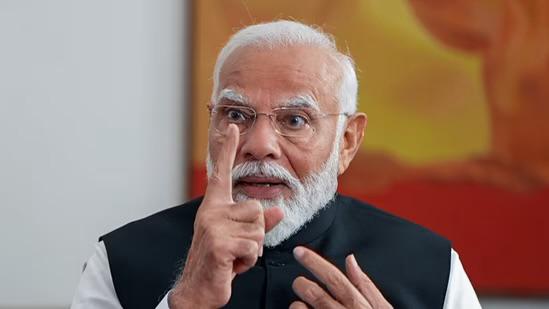
On Friday (29th March), Prime Minister Narendra Modi and former CEO of Microsoft Bill Gates engaged in a comprehensive discussion covering a wide range of critical subjects, including Artificial Intelligence and India’s notable advancements in digital technology. Their dialogue delved into the significant impact of technology in healthcare, exemplified by India’s innovative utilisation of drones to empower women and its effective strategies in combating the COVID-19 pandemic through domestically developed vaccines, highlighting the nation’s self-sufficiency in crucial healthcare solutions.

Additionally, they discussed India’s proactive approach towards addressing climate change, emphasising the country’s dedication to sustainable development.

PM Modi said, “When I went to the G20 Summit in Indonesia, the curiosity of all the countries of the world was how you brought about this Digital Revolution. Then I used to explain to them that firstly I have democratized this technology so that no one will have a monopoly on it. This will be of the public and by the public.”

He added, “The technological advancements I am most excited about are in the sectors of health, agriculture, and education. I have built around 2 lakh Ayushman Arogya Mandirs in villages. I directly connect these health centres with the best hospitals keeping modern technology as a bridge between the two.”

He further said, “I want to provide the best education to children. I want to undo the shortcomings of teachers with technology. Additionally, we are working towards aligning content with children’s interests whether that be in visuals or storytelling. I am ensuring technological advancements in agriculture too. We are bringing a big revolution, and I want to change the mindset.”

‘Digital villages, Lakhpati Didis and Drone Didis’

Telling more about the digital revolution in India, PM Modi said, “When I used to hear about the digital divide in the world, I did decide that I would not let anything like that happen in my country. Digital public infrastructure is a big requirement in itself. Today, I am extending the digital facilities to all our villages.”

Detailing his efforts to empower the women in the country, PM Modi said, “I have launched a programme – NaMo Drone Didi. I have two goals behind this programme- 1). To make 3 crore ‘Lakhpati Didis’ in the country i.e. making 3 crore women of the country to earn Rs. 1 lakh annually, that too from underprivileged families. 2). I want to modernise agriculture, and I want to ensure women’s participation in the same. Today, Drone Didis say – ‘We didn’t know how to ride a bicycle, but today, we have become pilots, we’re operating drones!'”

‘Need to establish Dos and Don’ts in case of AI tech’

PM Modi said, “I think that there is a significant risk of misuse when a powerful technology like AI is placed in unskilled hands, in untrained hands. I suggest that we should start with clear watermarks on AI-generated content to prevent misinformation. This isn’t to devalue AI creations but to recognise them for what they are. Also, in the case of deepfakes, it is crucial to acknowledge and present that a particular deepfake content is AI-generated along with the mention of its source. These measures are really important, especially in the beginning. We, thus, need to establish some Dos and Don’ts.”

PM Modi further, “In the coming days, I want to give my scientists a budget for cervical cancer – especially for the girl child. I want to tell them that you do research in this too, make vaccines and with very little money we want to vaccinate all the girls of our country.”

PM Modi told Bill Gates about the Statue of Unity. He said, “I have collected pieces of iron from farmers of 6 lakh villages of India, melted them and used them in the statue. I brought soil from every village, with that soil I made a unity wall, it contains soil from 6 lakh villages of India. There is a feeling of our unity behind it. I created the ‘Statue of Unity’ to show how we created unity amidst the diversity of such a big country. This is the tallest statue in the world which was built in the shortest time.”

PM Modi on spirituality

Talking about his sources of energy and inspiration, PM Modi said, “I find my inner peace through a spiritual practice instilled in me by my teachers. This energises me greatly. This energy doesn’t stem from physical strength but from my dedication and from my emotional connection to the mission at hand.”

Detailing more on his views on running a government and the extent of the interference in lives of people, he said, “I want to lead a government in which any unnecessary governmental intervention from the lives of the middle class people gets eliminated. For those in poverty, who genuinely require government assistance, the assistance should be readily available in abundance.”

During this conversation, Bill Gates also lauded India’s growth and progress in the technological sector especially the AI. He said, “I think the key point is that the digital infrastructure keeps getting richer. A lot of people know about the identity system and the payment systems… But as you are moving into the different areas for farmers, registering their land, tutoring for kids and the health records, that’s kind of a second phase. And we are just at the beginning now of the third phase where these advances in artificial intelligence will come on top of that and make the value even better.”