Home Blog Page 124

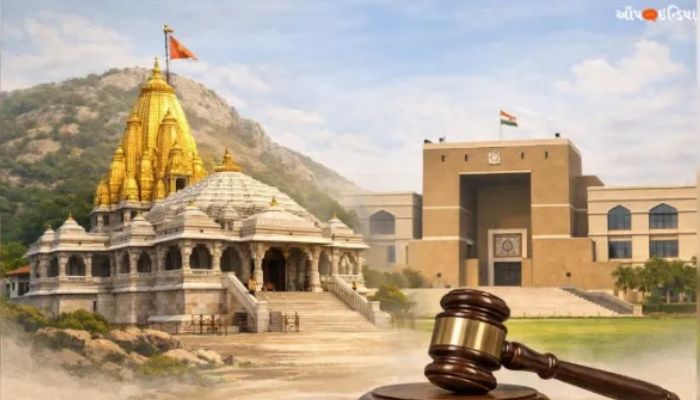
Aligarh horror: Asad slits Karan’s throat, stabs him 15 times over, old temple built by Hindu family and a Facebook post suspected motives behind murder

A shocking murder took place in the Jawan town of Aligarh, Uttar Pradesh, in which 20-year-old Karan was brutally killed, reportedly over a Facebook status update. The prime accused, Mohammad Asad, and seven others have been arrested after he entered a police station and admitted to having committed the crime.

The entire incident occurred on Saturday night, 11th October. Maharani, Karan’s mother, reported that her son was called out of their home at about 9:30 PM. After a dispute, Karan was taken to a nearby abandoned house where he was brutally attacked by the asad and his friends. They hit his head on the wall and then used a knife to cut his neck and stab him until he was dead.

After hearing his elder brother’s screams, the 12-year-old younger brother came outside and raised an alarm, and all the accused fled from the spot. The surprising thing is that after killing Karan. Asad directly reached the police station after the murder, then he allegedly washed his hands and feet stained with blood at a tap of the police station and then calmly informed the police that he had murdered someone. The police immediately arrested him and went to the spot. On the basis of the complaint registered by Karan’s mother, all eight accused were apprehended.

By Sunday morning, anger spread among the Hindu community. Karan’s family, led by a crowd of thousands, refused to burn his body. They blocked the Moradabad Highway, seeking financial assistance and demanding that the buildings of the accused should be demolished by a bulldozer. The protest turned violent, with some individuals raining stones on police vehicles. The scene only began to normalise in the evening after police issued a written promise to consider their demands.

Karan’s mother said that the killing was not merely for the Facebook post but was the culmination of older tensions. She explained that three years ago, the local Aheria community (to which Karan belonged) constructed a temple in the locality, which Asad’s family and a few other Muslim families opposed. She says they nursed a grudge ever since. The police have sent a heavy contingent to the town to ensure peace, but they have not yet declared the precise motive behind the murder.

Trump turns Gaza peace summit at Sharm el-Sheikh into a personal glorification spectacle, treating world leaders like stage extras

On 13th October, a historic moment for Middle East peace came at the “Shamashir Peace Summit” in Sharm el-Sheikh as the world leaders signed a peace pact. However, peace was not the centre of the summit in reality, as it quickly turned into a spectacle of self-congratulation led by the President of the United States, Donald Trump. The President, who stood at the centre of the event like a director on his own movie set, appeared less interested in diplomacy and more in stagecraft.

Before the signing of the Gaza peace accord, Trump took to the stage with his trademark flourish. He declared the accord “a tremendous day for the world, and a tremendous day for the Middle East”. Trump described the gathering as “the greatest assemblage of countries in terms of wealth and power ever gathered”. He set the tone for the show, which later became more about his triumphalism than diplomacy.

In his initial address, Trump spoke of the “granddaddy of all deals” and praised his team and the nations involved. He noted that the hostages had been released “on schedule” and that “things were working out incredibly well”. Trump credited countries like Qatar and Turkey for their cooperation, personally thanking their leaders with familiar informality, before acknowledging Egypt’s role as host. With cameras clicking and delegates watching, he called for the documents to be brought in, ready to sign what he proclaimed was a peace deal “3,000 years in the making.”

While the show began as an international gathering to celebrate the so-called Gaza peace accord, what came after was, well, kind of expected. Trump’s oratory took on the tone of a curtain call. He praised himself for ending the war, credited his “talent-packed” team, and accepted Egypt’s highest civilian honour, the Order of the Nile, with the solemnity of a coronation.

Around him, leaders from every major power bloc stood as he praised himself as the centrepiece of the peace accord, including Egypt, Italy, Turkey, Qatar, Pakistan, the United Kingdom, and the EU. Each one of the leaders was reduced to background cast in a performance only one man seemed to be headlining.

Pakistan’s Prime Minister sings praises

Pakistan’s Prime Minister Shehbaz Sharif’s speech at the summit sounded less like a leader’s address and more like a public show of praise for Donald Trump. He called Trump “the man the world needed most” and even nominated him again for the Nobel Peace Prize, saying, “Pakistan had nominated President Donald Trump for his extraordinary efforts to stop war between India and Pakistan and achieve a ceasefire.” His tone was almost worshipful as he spoke about Trump’s “untiring efforts” and “relentless work to make the world a place of peace and prosperity.”

In what felt more like flattery than diplomacy, Sharif went on to say, “Mr President, I salute your exemplary and visionary leadership. History will remember you as the man who stopped seven and today eight wars.” By the time he ended with, “God bless you and give you long life to serve humanity,” it seemed less like a formal statement and more like a man rolling in gratitude at Trump’s feet.

The world’s leaders as supporting actors

Even as Pakistan’s Prime Minister Shehbaz Sharif took the microphone to nominate Trump again for the Nobel Peace Prize, the President looked pleased but unsurprised. His smile stretched wider as he listened to a near-eulogy describing him as “the man the world needed the most”.

Across the stage, leaders stood lined up behind him, silent, still, and awkward. General Asim Munir of Pakistan, positioned right behind Trump, wore an expression that needed no words. His fixed stare and rigid posture said enough, somewhere between protocol and compulsion. It was the kind of image that conveyed authority enforced by circumstance, not shared by consent.

Later, when Trump looked for Britain’s Prime Minister Keir Starmer, who was standing just next to Sharif behind him, Trump theatrically looked for him, virtually forcing him to raise his hand like a schoolboy before calling him to the dais and promptly sending him back. The moment, half comical and half telling, summed up the dynamic of the evening, that world leaders assembled not as peers but as props in Trump’s grand tableau.

In between, he turned to the Prime Minister of Italy, Giorgia Meloni, and bluntly asked her, during the speech at a peace accord, if he could call her “beautiful”. While Meloni could only smile, diplomacy, decorum, and dignity quietly left the room.

‘I did what no one could’

The speech Trump delivered was long and looping. It felt more of a campaign rally than a summit address. “At long last, we have peace in the Middle East,” he declared, as if resolving millennia of history in one afternoon. He reminded the audience of his achievements, from the Abraham Accords to hostages’ release, and thanked nations for “truckloads of aid” before swiftly pivoting to the US’s “strongest military in the world.”

The tone of his speech circled between self-admiration and unsaid parody. “We know how to rebuild, and we do it better than anyone,” he said, turning a post-war humanitarian task into a business pitch. Even his thanks to Egypt came wrapped in transaction-speak, “You paid a lot for those planes, but you got a good deal.”

The tone oscillated between self-admiration and inadvertent parody. “We know how to rebuild, and we do it better than anyone,” he said, turning a post-war humanitarian task into a business pitch. Even his thanks to Egypt came wrapped in transaction-speak, “You paid a lot for those planes, but you got a good deal.”

The peace deal that became a monologue

Every few minutes, Trump shifted the spotlight to himself rather than Gaza. When he wasn’t recounting global investment numbers, he was listing every leader present, adding unscripted commentary like “beautiful,” “fantastic,” or “great guy” as if auditioning them for his approval.

In short, the world leaders were there to celebrate a fragile truce, with Trump coming to celebrate himself. The message was unmistakeable. Peace in Gaza came with an agenda, the agenda to propagate Trump as the only hope for world peace.

While CM Mamata Banerjee downplays crimes against women as ‘minor’ issue, NCRB report exposes grim reality: Over a decade of betrayal for Bengal’s women

Ruled by a woman Chief minister, West Bengal should have been an ideal for other states in respect to women safety and rights; however, the Trinamool Congress-ruled state has become disturbingly unsafe for women. The frequent cases of sexual assault and the recently published National Crime Records Bureau (NCRB) report reflect the state government’s nonchalant handling of women’s safety.

In a horrifying incident in West Bengal’s Durgapur, a second-year MBBS student from Odisha was allegedly gang-raped by Apu Bauri, Firdos Sekh, and Sekh Reajuddin and two others in a jungle area near the city on Friday (10th October) night. The rape survivor’s father fears that his daughter is not safe in West Bengal. “Trust has been lost. We don’t want her to stay in Bengal. She will pursue her education in Odisha,” he said.

This loss of trust is not shocking. The incident comes just months after the brutal rape and murder of a female doctor at Kolkata’s RG Kar Hospital, raising fresh fears for the safety of medical professionals and female students in the state. What further exacerbates the situation is how Mamata Banerjee, the Chief Minister of West Bengal, forget ensuring swift action, resorts to victim blaming and downplaying crimes against women in the state.

Victim blaming to dodge accountability? West Bengal’s woman chief minister insensitive to the ordeal women

CM Banerjee expressed shock over the assault and even promised “strict action” against the perpetrators, however, she ended up blaming the victim for the brutality she was subjected to. “How the victim was allowed to leave the campus at 12.30 a.m. The private institution should not allow it…The girls should not be allowed to go outside (college) at night. They have to protect themselves also.”

The West Bengal Chief Minister, however, has an opprobrious record of making remarks that appear to downplay sexual assault cases. Over the years, both Banerjee and senior members of her Trinamool Congress have faced criticism for their insensitive responses to rape incidents.

One of the most infamous cases was the 2012 Park Street gangrape case. An Anglo-Indian woman, Suzette Jordan, was raped in a moving car by five men on February 6, 2012, when she was returning home from Park Street in Kolkata. Soon after the news surfaced, TMC supremo Mamata Banerjee absolved the accused of all charges. She had dubbed the incident as ‘shajano ghotona‘ (concocted incident), which was allegedly ‘designed to malign the government.’

Her party leaders, including TMC MP Kakoli Ghosh Dastidar, publicly questioned the victim’s character, calling the incident a “misunderstanding between a lady and her client.” Years later, in 2015, a Kolkata court convicted three of the accused, proving the assault had indeed taken place.

In 2013, during a debate in the West Bengal legislative assembly about the rising cases of rapes in the State, the CM had insinuated that it was due to an increase in the population of the State. She had also blamed modernisation, an increase in shopping malls and multiplexes for rising rape cases.

Even during the 2024 Sandeshkhali unrest, Mamata Banerjee attempted to downplay the harassment and sexual exploitation of women at the hands of Trinamool Congress goons by calling it as “minor incident”. “After that, some media houses capitalised on the incident. Made a hue and cry out of a minor incident,” Mamata Banerjee said.

West Bengal CM dubs crimes against women as ‘minor incident’, NCRB data reveals the grim reality

The National Crime Records Bureau (NCRB) recently released its “Crime in India” report for the year 2023. The report revealed that West Bengal recorded 34,691 cases of crimes against women under the Indian Penal Code (IPC) and Special and Local Laws (SLL). While this marks a marginal decline from 34,738 cases in 2022, the number is one of the highest in the country.

The statistics translates to a crime rate of 71.3 cases per lakh female population. The estimated female population in the state is 48.64 million.

Despite an overall dip, the TMC-ruled state leads the nation in specific categories of violence. The state recorded highest number of crimes committed by foreigners in 2023, with the greatest number of cases registered under the Foreigners Act, 1946 and Registration of Foreigners Act, 1939. In the year 2023, West Bengal registered 1,021 criminal cases perpetrated by foreigners, with 989 cases filed under these two acts while 7 cases were registered under the Narcotic Drugs & Psychotropic Substances Act, 1985 and two under The Arms Act, 1959. Some other cases involving foreigners were registered under offences like cheating, causing grievous hurt and human trafficking.

In 2023, India recorded 207 cases of acid attacks with West Bengal alone accounting for 57 acid attack cases under Section 326A of IPC. The NCRB data showed that in 57 cases of acid attacks, there were 60 victims/survivors in West Bengal while in 207 cases nationwide, there were 220 victims.

The NCRB data shows that West Bengal alone accounted for 27.5% of all acid attacks in the country in the year 2023. In 2022, West Bengal recorded 48 acid attacks with 52 victims, out of 202 cases nationwide. In this crime category, the TMC-ruled state is leading the country since 2018. As per the NCRB data, in all cases of acid attacks across the country, 267 arrests were made and of those arrested, 246 were men and 21 women.

West Bengal recorded 7 cases of murder with rape/gangrape, 350 dowry deaths and 419 incidents of abetment to suicide of women in 2023.

Among the crime categories, the most cases were recorded under Section 498 A of the IPC, which deals with cruelty by a husband or his relatives. West Bengal has the second-highest number of Section 498 A of the IPC cases in the nation, with 19698 cases and 20462 victims. The total number of cruelty by husband or his relatives-related cases recorded across the country stood at 128814 with Uttar Pradesh leading with 19889 cases.

Overall, cases of ‘cruelty by husband or relatives’ accounted for the largest share at 29.8% (1.33 lakh cases) involving 1.35 lakh victims. This marks a slight dip as in the year 2022, this category under IPC section 498A made up 31.4% of all such crimes.

Meanwhile, West Bengal recorded 17 cases of kidnapping for ransom under Section 364A, 515 cases of Kidnapping & Abduction of Women to compel her for marriage (Sec. 366 IPC), above 18 years of age, in the year 2023. For minors, this number in West Bengal stood at 390. In this category, Uttar Pradesh and Bihar recorded highest number of incidents.

In the category of kidnapping and abduction of women – others (Sec.363A, 365, 367, 368, 369 IPC), West Bengal recorded the highest, 2054 incidents out of the 7964 cases nationwide. Meanwhile, the total number of kidnapping and abduction of women in West Bengal stood at 6544, one of the highest in the country.

The statewise data of the NCRB report showed that West Bengal recorded 1110 incidents of rape with 1112 victims. Of these, in 917 cases offenders were known to victim, in 27 cases offender were family members, 11 friends/online friends/live-partners, and in 193 cases the offenders were stranger/unknown to the victims.

In the ‘Attempt to Rape’ crime category, West Bengal was only second to Rajasthan (845 cases), to record 825 cases with all victims being women above 18 years of age.

In the ‘Assault on Women with Intent to Outrage her Modesty’ category, West Bengal recorded 2479 cases involving 2487 victims in 2023. Meanwhile, the West Bengal figures for ‘Insult to the Modesty of Women’ category stood at 412 cases. The total IPC crimes against women stood at 31928, one of the highest in the country.

The state of West Bengal recorded 2721 cases under the Protection of Children from Sexual Offences Act (POCSO) in 2023. There were 1798 cases related to child rape (Sec.4 & 6 of POCSO Act/ Sec 376 IPC), 644 incidents pertaining to sexual assault of children (Sec.8 & 10 of POCSO Act) / Sec.354 IPC) and 244 incidents under sexual harassment (Sec. 12 of POCSO Act) / Sec. 509 IPC).

West Bengal recorded 29 cases under the offence of use of child for pornography/storing child pornography material (section 14 and 14 of POCSO Act).

Regarding the police disposal of crime against women, there were 125 incidents wherein cases ended as final report false and 1165 cases as cases ended as mistake of fact of law or civil dispute. The West Bengal Police disposed off 34344 cases of crime against women in 2023 with pendency rate standing at 23.2%.

The facts and figures detailed in the NCRB report indicate that domestic violence and abduction remain dominant, comprising over 75% of the reported incidents in 2023. The experts, however, opine that the actual numbers could be way higher, not only in the context of West Bengal but also in respect to situation in other states. The data showed low conviction rate, just 3.7% in West Bengal while national rate stood at 21.3%. What further exacerbates the situation high number of pending cases, over 3,68,000, although West Bengal has a good chargesheeting rate.

However, as per the NCRB’s Crime in India 2023 report, West Bengal’s rate of crimes against women stands at 71.3 cases per lakh female population, which is significantly high compared to the national average of 65.3 cases per lakh female population.

Despite the disturbing numbers, the West Bengal government audaciously decided to pat its back and declare Kolkata as the ‘safest city’ for women. However, the National Commission for Women, chairperson, Archana Majumdar called out the Trinamool Congress for “misrepresenting” NCRB data and said that West Bengal has nearly 4 lakh pending cases pertaining to crimes against women, highest in India, with no action or convictions.

“This is half explanation and misinterpretation of the NCRB data… In 2023, the state government submitted their report on crime against women, in which over four lakhs of pending cases, in which no one is convicted or action is not taken, in West Bengal, which is the highest in the country… Police administration is not working on them. The judiciary is also failing because of non-cooperation by the administration and the police. They are not submitting the charge sheet in time. This thing is going on in West Bengal, and they are hiding facts… This is the tip of the iceberg… These are a few cases,” she said.

The wounds of RG Kar case are yet to heal, and a young girl was gangraped in Durgapur, similar cases was reported in Birbhum with reported inaction of the local police, yet TMC indulges in self-praise. Apparently, women safety is a major issue when TMC has to attack the BJP and it becomes ‘minor issue’ when demanded accountability in the state it rules.

Regimes are temporary, geography is permanent: Why India needs to play the Great Game, and engage with Taliban, or whoever holds power in Afghanistan

India hosted Taliban foreign minister Amir Khan Muttaqi in Delhi last week, and a lot of people, politicians, journalists, and social media users had a meltdown. The Opposition saw an opportunity when there was a social media buzz that the Taliban press conference inside the Afghan Embassy ‘excluded’ women journalists. Rahul Gandhi and his sister joined in to attack the Modi government for ‘allowing’ the exclusion, ignoring the fact that the government of India does not, and should not, interfere in the administrative affairs of a foreign embassy. 

Then there was the outrage of women journalists, who started blaming the government of India for welcoming the Taliban, along with their practices of misogyny. The Taliban later did invite them to their presser, after clarifying that the earlier lack of invitation was due to time and number constraints, not any other reason.

“What is even more ridiculous is that the Taliban FM is allowed to bring their abhorrent and illegal discrimination against women to India, as the government hosts the Taliban delegation with full official protocol. This isn’t pragmatism, this is supplication”, posted The Hindu’s Suhasini Haider.

Muttaqi’s visit to Darul Uloom Deoband on Saturday, 11 October, triggered even the fence sitters who were yet to react over the visit. Deoband, long associated with Islamic radicalism in India and abroad, and the Taliban’s ideological alma mater, has been linked to the rise of Wahabi Sunni Islam that has become the driving force behind many militant powers, the Taliban included.

Many voices in India and abroad have raised concerns over the Indian government platforming, engaging and welcoming the Taliban as the legitimate rulers of Afghanistan. For many, the very idea is jarring, to see representatives of a regime that many view as repressive, especially toward women and minorities, being treated with diplomatic courtesy. 

Some voices, rather emotional ones, have even argued that India should shun any formal engagement with the Taliban. Even more voices call for confrontation, at least at diplomatic levels, about their internal affairs. That moral aversion is understandable, but it must contend with the harsh arithmetic of regional security, diplomacy, and influence.

Afghanistan is not today’s game. It is a game that has been afoot for centuries. 

India not only has a millennia-old cultural connect with the land, but also has shared border, trade routes and much more. India will always needs a good relationship with whoever is in power in Kabul, because of multiple reasons.

The Great Game: Clashing of empires over influence on a coveted land

The Russian Empire and the British Empire engaged in a rivalry of influence over Central Asia for decades, referred to as ‘The Great Game’ in world history. The Game stemmed from Afghanistan’s strategic location and the geopolitical ambitions of both powers. Both powers knew that they can never exert control over the vast, resource-rich landscape of Central Asia, without gaining a foothold in Kabul.

Scenes from the Anglo Afghan war, image via Explorethearchive

Afghanistan lies at the crossroads of Central Asia, South Asia, and the Middle East, bordering British India to the southeast, Russian-controlled Central Asia to the north, and Persia (modern Iran) to the west. It is a critical buffer zone and a potential staging ground for military or economic incursions. 

In 1830, The Great Game started with Lord Ellenborough asking Lord Bentinck to establish a trade route to Bukhara. It was the first step by Britain to counter Russian influence. At that time, it was about trade routes, political influence, and resrouce utilisation. What followed was multiple wars, bloodshed, and brutality at the cost of thousands of lives.

Ages have passed, but the significance of Afghanistan has still not diminished. It is still a crucial gate to power in Central Asia. 

The British established the Durand Line in 1893 to delineate the Afghan-Indian frontier, supporting the independence of Afghan rulers on the condition that they would not allow Russian encroachment. But they did not know at the time that the Durand Line itself would be contested heavily, and would one day become questionable because of India’s partition. The Afghans then had accepted a border with India, not with Pakistan. 

Central Asia map, showing the boundaries of British India and Afghanistan, wiki

Caught in a conflict between two great powers, Afghanistan gradually became a battleground, rather than a colony. That holds true in different contexts till date. The great powers have changed their shape and form, the Russian Empire morphed into the Soviet Union and eventually the Russian Federation, and the British Empire gradually gave way to the capitalist military state of the USA. In recent decades, another power has emerged in the East, that follows an entirely different way to establish its presence and seek influence. China. 

Geography, influence and riches 

Its location at the intersection of South Asia, Central Asia, Iran, and China, makes Afghanistan a land bridge, a buffer zone, and staging ground for ideas, people, weapons, and influence. Any power that can wield influence in Kabul gains leverage over routes, connectivity projects, downstream security threats, and the balance of influence in South Asia.

For India, deep engagement with Afghanistan has historically had multiple strands, cultural, educational, humanitarian ties among people, infrastructure projects in the form of roads, power, dams, and containment of hostile influence, especially from Pakistan. A warm regime in Afghanistan, especially one that is not servile or overtly supportive of Pakistan, is the best bargain India can get.

Despite ongoing hostilities, border disputes, Pashtun demands and a multitude of conflict points, Pakistan still holds a significant influence in Kabul. China, Iran, Russia, Pakistan, are all expanding their footprint in Afghanistan, and India can not afford to stay aloof.

India cannot afford to play a zero-sum game on Taliban engagement, it must try to shape the internal dynamics in its favour, even as it demands better behaviour on counterterrorism, human rights, and women’s freedoms. 

The race for resources: It is a ‘Material World’

Afghanistan is endowed with mineral deposits valued at over $1 trillion to $3 trillion, according to the U.S. Geological Survey and other data. There is untapped lithium, copper, iron ore, gold, rare earth elements, and precious stones. It holds natural gas and petroleum deposits, though mostly untapped because of conflicts. With over 1000 mineral fields identified, Afghanistan’s mining industry, overseen by the Ministry of Mines and Petroleum, offers opportunities for industrial minerals for nations that are willing to collaborate.

While the Taliban regime may be seen as illegitimate by many, the truth is that they are the ones currently in power in Kabul. The land, left broken and undeveloped, facing war after war, is sitting atop a vast area of untapped mineral wealth, making it a strategic prize no major Asian power can truly afford to ignore. The Taliban have declared that they are willing to negotiate, monetise their resources and work with willing nations to develop their land. India, with its ambitions of growth, cannot just let that pass. 

Governing regimes are temporary, Geography is permanent: The Great Game will go on 

Regimes may rise and fall in Kabul, but Afghanistan’s geography, its commanding position at the crossroads of Central, South, and West Asia, will always remain a strategic constant for India. That is a blunt, objective truth.

Afghanistan’s plains, rivers, mountains and passes will continue to shape the balance of power across the subcontinent, whether under monarchs, democracies, or even the Taliban. For India, this objective truth means disengagement is not a luxury it can afford. A diplomatic retreat would amount to abandoning influence in a region that directly affects India’s security, connectivity, and continental reach.

The Taliban may be a temporary political reality, but Afghanistan’s position as India’s gateway to Central Asia and the broader Eurasian landmass is timeless. Governments do not last. But the land will be there forever. Afghanistan offers routes for energy pipelines, trade corridors, and strategic depth in a region where China and Pakistan are steadily consolidating ground.

Geopolitics works on a simple fundamental: there are no permanent friends, only permanent interests. If India isolates itself out of moral or political discomfort, China, Russia, Iran, Pakistan and most importantly USA, will not be sitting quiet. It is a material world, and every nation that takes itself seriously, has to pursue its material interests relentlessly. 

If India hesitates to engage with the Taliban, there are half a dozen other nations ready and willing to fill that vacuum. They will lock India out of both the resource networks and security architecture that are emerging around the dynamic region.

An objective, pragmatic engagement does not mean endorsement, it means acknowledging irrevocable geopolitical realities over ephemeral regimes.

By maintaining a calibrated, careful, and pragmatic relationship with Kabul, India preserves a foothold in a region whose geography, not its government, will determine its long-term strategic value. In essence, India’s Afghanistan policy must be rooted not in who sits in the offices of Kabul today, but in the immutable fact of where that land sits on the map of the world.

As Punjab police lodge case against journalist Anjana Om Kashyap over comments on Maharishi Valmiki, read what scriptures reveal about the past of the Hindu sage

The Ludhiana Police lodged an FIR against Aaj Tak anchor Anjana Om Kashyap and India Today Group chairman and editor-in-chief Aroon Purie, and the media company Living Media India Limited (India Today Group). The case was registered upon complaints filed by members of the Valmiki community that the journalist had used insulting language for Saint Valmiki during one of her programmes.

The complaint was filed by the Bharatiya Valmiki Dharam Samaj (BHAVADHAS), a community organisation that said Kashyap’s comments were “deeply insulting” and hurt the sentiments of Valmiki devotees across India. The organisation said that the remarks were made during a show aired on Aaj Tak’s official social media handles, including Facebook.

Responding to the allegations, Anjana Om Kashyap and the India Today Group have denied any wrongdoing. In a statement, Kashyap said, “TV Today Network Limited strongly denies the allegations made in the FIR registered in Ludhiana about derogatory remarks regarding Bhagwan Maharishi Valmiki Ji. The programme in question was respectful and balanced, conducted in full adherence to journalistic ethics and with complete respect for all faiths and communities.”

The centuries-old debate around Maharishi Valmiki’s life

For centuries, the biography of Maharishi Valmiki, the author of the Ramayana and among India’s greatest sages, has been filled with myth, reverence, and controversy.

The Adikavi, his name and fame are established deep within the Indian religious and cultural consciousness. It is believed that Maharishi Valmiki was a dacoit who later became a sage. It still generates debate among historians, scholars, and followers even today.

The tale of Valmiki is not limited to India alone. Across several South and Southeast Asian countries, the Ramayana continues to be narrated, performed, and revered through traditions like Ramlila. But while his epic poem remains timeless, the question of Valmiki’s early life, whether he was once a bandit, has invited both belief and scepticism.

Maharishi Valmiki’s real name appears in most literature as “Agnisarma,” not “Ratnakara.” According to the book written in 1585 by the famous by the popular poet Nabhadas, “Bhaktamal,” Valmiki, who was forced to flee due to famine. He was once a bandit named Ratnakara who lived in a forest and looted travellers to support his family. One day, he tried to rob a group of sages known as the Saptarishis. 

Among them, one sage, believed to be Atri, asked him a question that changed his life forever: would his family share in the sin of his crimes? When Ratnakara asked them, they refused. Shocked and remorseful, he began to repent.

He then went into deep meditation. So long and still was his penance that a mound of termites (valmik in Sanskrit) grew around him. When the sages returned and found him encased in the termites, they named him “Valmiki.” It is said that after this transformation, he devoted his life to spiritual reflection. Later, He worshipped Shiva and composed the “Ramayana.”

Some variations of the story replace Atri with Narad Muni and claim that Ratnakar began chanting “Mara Mara”, which over time transformed into “Rama Rama.” However, Sanskrit scholars argue that the word Mara did not exist in that form in ancient Sanskrit, making the tale linguistically doubtful.

Despite the popularity of the dacoit tale, ancient texts and scholars suggest there is little evidence to support it. The Ramayana itself, written by Valmiki, contains no mention of him ever having been a bandit. 

Shri Bhagavatananda Guru has written that Maharishi Valmiki alludes to the Uttara Kanda in the Bala Kanda; thus, it is not an interpolation. In his Uttara Kand, while praising the purity of Mata Sita, Maharishi Valmiki introduced himself to Lord Rama as “the tenth son of sage Pracheta,” saying he has never sinned “in thought, word, or deed.”

प्रेचेतसोऽहं दशमः पुत्रो राघवनंदन।
मनसा कर्मणा वाचा भूतपूर्वं न किल्विषम्।।

Pracheta, according to scriptures, was the son of Lord Brahma, which would make Valmiki Brahma’s grandson. This version strongly establishes Valmiki as a Brahmin sage, not a reformed bandit.

The Taittiriya Pratishakhya, one of the Vedic texts, also mentions three individuals named Valmiki, suggesting that the name might have been used more broadly in ancient times. Historians believe this could explain how confusion arose between different figures named Valmiki.

The late writer and famous Dalit researcher Omprakash Valmiki, known for his groundbreaking book “Safai Devta,” rejected the popular claim that Valmiki was ever a robber. 

Citing both linguistic and textual evidence, he argued that the story of Valmiki’s transformation first appeared in a developed form in the Skanda Purana, which was compiled around the 8th century, centuries after the Ramayana.

According to Omprakash Valmiki, “There is no logical or historical basis to the story that Maharishi Valmiki was once a robber. It appears to be a later addition, not an authentic part of his life.” He explained that many Puranas were edited and expanded over time, with new episodes being added by later authors, and the bandit story might have been one of these interpolations.

Even Punjab and several other parts of India are home to many Valmiki temples, where the sage is worshipped as the spiritual ancestor of the community. Even among the Valmiki diaspora abroad, his image as a poet-saint, not a reformed criminal, is revered.

Further evidence supporting this perspective comes from the work of researcher Dr Manjula Sahdev. In her study of early Indian literature, she found that no text before the 6th century mentions Valmiki as a bandit. Her findings suggest that the image of Valmiki as a dacoit-turned-saint was a much later creation.

Dr Sahdev’s work highlights that the original descriptions of Valmiki portray him as a visionary sage and philosopher who lived by the banks of the Tamasa River, where he composed the Ramayana. Her findings are consistent with a 2008 judgment by the Punjab and Haryana High Court, which acknowledged that there was no historical basis to the claim that Maharishi Valmiki had ever been a dacoit.

However, as modern researchers continue to examine early Sanskrit and Puranic literature, the “dacoit Valmiki” legend appears to have more roots in folklore than in fact.

In Bhaktamal, a devotional text written by poet Nabhadas in 1585, the story of Valmiki as a reformed thief appears in a detailed form, centuries after Valmiki’s era. This timeline further supports the argument that the tale was a symbolic addition to highlight moral transformation rather than a literal biographical detail.

Liladhar Sharma “Parvatiya” writes in his book ” Bharatiya Sanskriti Kosh ” that the sage Bhrigu was also Valmiki’s brother, and both were highly learned. He notes that Valmiki, who is said to have been a bandit, was a different person, and mythological belief holds that he was different from the author of the Ramayana. Some later stories have also been distorted that the bandit Angunlimala, said to have lived during the Buddha’s time, is also often mistaken for Valmiki.

Previous controversies over remarks about Valmiki

The FIR against Anjana Om Kashyap isn’t the first time controversy has erupted over comments about Maharishi Valmiki. Over the years, several celebrities and TV shows have faced legal cases and protests for repeating the story of Valmiki as a dacoit.

In 2017, actress and TV host Rakhi Sawant landed in legal trouble for calling Valmiki a “murderer” during a television appearance. While she said it to make a point about personal transformation, comparing singer Mika Singh’s behaviour to Valmiki’s alleged past, the Valmiki community saw it as a grave insult. 

A case was registered under IPC Section 295 for hurting religious sentiments. Protests broke out in Punjab, with community members even stopping a train demanding her arrest.

Reports said a Punjab Police team later travelled to Mumbai to arrest her after a Ludhiana court issued a warrant due to her repeated absence at hearings.

Similarly, way back in 2009, a case was registered against TV channel Star Plus and producers of a serial Bidai, where this story was repeated, even though approvingly. Even though the reference was made positively, activists said it was offensive and misleading. The case is still pending, and activists have vowed to pursue it to the end.

During hearings, the Punjab and Haryana High Court stated that there was “no credible evidence to suggest that Maharishi Valmiki was a dacoit in his earlier life.” The judge noted that “from Vedic literature up to the 9th century AD, there is no reference as such that Maharishi Valmiki led a life of a dacoit or highwayman.”

Apart from these cases, Valmiki community protesters had got the Arshad Warsi starrer The Legend of Michael Mishra banned in Punjab as the movie too had a dialogue that repeated the story about Maharishi Valmiki being a dacoit once.

Rajdeep Sardesai issues another apology for 2011 fake news against ex-BJP Councillor Ajit Tokas: A long history of lies, propaganda, and suppressed truths

0

On October 13, 2025, senior journalist Rajdeep Sardesai issued yet another public apology. This time for a 2011 programme aired on IBN7 in collaboration with Cobrapost, titled Dilli’s Double Agents. The show had falsely alleged that Ajit Singh Tokas, a former BJP councillor from Munirka, had demanded money in connection with unauthorised constructions in the area.

Taking to Instagram, Sardesai quietly released a video apologizing to Mr Ajit Singh Tokas, for the lies peddled by him in the 2011 programme.

On X, formerly Twitter, Sardesai issued a similar apology note. The clarification, posted by Sardesai, conceded that no evidence existed to substantiate the claim. The apology read that Mr. Tokas had “rejected multiple offers of gratification” and that there was “no evidence on record” to prove that he demanded money. Sardesai extended an apology for the “social and political reputational harm” caused to Tokas and clarified that the sting investigation was “undertaken by an external agency,” while his own role was “limited to anchoring.”

While this may seem like an isolated instance of journalistic overreach corrected after due process, it is, in fact, part of a larger pattern, one that has followed Rajdeep Sardesai throughout his career. This latest apology joins a long list of retractions, misreports, and controversies, most of which have shared one thing in common: they invariably target one political party: the BJP.

The Suppressed “Cash-for-Vote” Sting Operation

Ironically, Sardesai has long faced allegations of deliberately suppressing the 2008 “Cash-for-Vote Scam” sting operation, which, according to many observers, could have sounded the death knell for the UPA government had it been aired.

Years later, senior journalist Manoj Ranjan Tripathi revealed about the incident while speaking on Shubhankar Mishra’s podcast, in the segment between 1 hour 22 minutes and 1 hour 26 minutes. He disclosed that before the scandal broke in Parliament in 2008, a sting operation had already been conducted. However, Sardesai, who was his boss at the time, chose to bury the footage.

“If that CD had been aired,” Tripathi said, “big names like Amar Singh and several other top leaders would have been caught. But Rajdeep was the boss.” He added that he stood by his words even if Sardesai himself watched the podcast, asserting, “What I am saying is the truth.” Tripathi emphasized that he personally knew “at least a hundred people” in the media industry who were aware of this suppression.

Following the revelation, public outrage erupted online, with many demanding answers from Rajdeep Sardesai. Notably, this is not the first time such an allegation has surfaced. Veteran Doordarshan anchor Ashok Shrivastav had earlier accused Sardesai of burying the same sting during the UPA era.

Shrivastav explained that when the Cash-for-Vote scam unfolded, Sardesai was heading a television channel. The sting operation had captured money transactions allegedly made to save the Manmohan Singh-led government. After viewing the footage, Sardesai decided to “review it before telecasting.” Under the guise of this “review,” he withheld the footage for several months, and the UPA government survived. Soon after, Rajdeep Sardesai was awarded the Padma Shri.

Manoj Ranjan Tripathi, who worked closely with Sardesai and other major media houses, also spoke more broadly about the rot within India’s TV news industry. He narrated an incident from his field reporting days, saying that even when surrounded by corpses, he was instructed to “wear a tie” before coming on air, a stark symbol of how television journalism had come to prioritize optics over truth.

The Sohrabuddin encounter case: Sardesai apologises after 12 years

In November 2019, Rajdeep Sardesai offered an unconditional apology in connection with a 2007 CNN-IBN programme titled 30 Minutes – Sohrabuddin, the Inside Story. The report had falsely accused IPS officer Rajiv Trivedi of helping Gujarat police abduct Sohrabuddin Sheikh and his wife Kauserbi, alleging that Trivedi provided cars with fake number plates for the operation.

Following the broadcast, Trivedi filed a criminal complaint against Sardesai and others, leading to prolonged legal proceedings through multiple courts. Both the Andhra Pradesh High Court and the Supreme Court refused to quash the criminal case, observing that individual reputation cannot be trampled in the name of press freedom.

Eventually, in 2019, after 12 years, Sardesai submitted an affidavit admitting the allegations were false, offering an unconditional apology to the IPS officer. The Hyderabad sessions court accepted the apology and dismissed the case.

Platforming Pakistan’s propaganda

In 2019, following Pakistani Minister Fawad Chaudhry’s admission in Parliament that the Pulwama attack was Pakistan’s “great victory,” Rajdeep Sardesai invited him to his show to “clarify” his statement. Instead of confronting the minister, Sardesai provided him space to attack Indian media, in what critics described as a shocking abdication of journalistic responsibility.

The CAA Riots and the Habit of twisting facts

During the Citizenship Amendment Act (CAA) protests, Sardesai claimed that “debates were invited after the law was brought in.” This was demonstrably false as discussions over protecting persecuted minorities from neighbouring countries had been ongoing for decades, with even the Congress party supporting similar provisions in the past.

The Statue of Unity “Made in China” lie

Sardesai had also claimed that Gujarat’s Statue of Unity was “Made in China.” Engineering firm Larsen & Toubro (L&T) had clarified way back in 2015 that only the bronze cladding plates, worth less than 9% of the project, were sourced from China, while the entire statue was built in India.

“It was a great day”: The 2001 Parliament attack remark

In a 2018 interview, Rajdeep Sardesai recounted the 2001 Parliament terror attack as a “great day,” calling journalists “vultures who feed on such moments.” The grotesque remark drew widespread condemnation, further underscoring his lack of professional decorum.

The Sachin Pilot rebellion

In 2020, during Sachin Pilot’s rebellion against the Congress leadership in Rajasthan, Sardesai insinuated that the revolt was sponsored by the BJP. Pilot himself rebuked the claim on-air, clarifying that his faction had borne all travel and lodging expenses. Sardesai also faced criticism for tweeting that a Supreme Court verdict was biased because Justice Arun Mishra had once praised PM Modi, a tweet he later deleted.

Lies during COVID-19 crisis

Falsehoods During the COVID-19 Crisis Rajdeep Sardesai continued his pattern of agenda-driven misinformation even during the Coronavirus pandemic. He claimed a medical college in Karnataka hadn’t paid stipends for 16 months, attempting to blame the Modi government.

It later emerged that the college was owned by a Congress leader, and the BJP state government had already directed payment. He falsely claimed a man in Banda (UP) had died of starvation. The District Magistrate fact-checked him, revealing that the family was receiving food grains under government schemes. He alleged that Punjab had received only ₹71 crore from the Centre to fight COVID-19, when the state had, in fact, received hundreds of crores.

Politics over dead bodies

Ironically, Rajdeep once urged others not to “do politics over dead bodies.” Yet his career trajectory owes much to precisely that from the 2002 Godhra riots, where he helped shape a highly polarised narrative, to selective empathy in later killings. When journalist Shujaat Bukhari was murdered, he penned an emotional piece; when Hindu activist Prashant Poojari was murdered, he downplayed it as having a “political context.”

Over the years, Rajdeep Sardesai has earned the reputation of being a serial abuser of facts, repeatedly forced to issue clarifications and apologies after spreading misinformation. In 2017, he falsely claimed that the Vice-Chancellor of Banaras Hindu University (BHU) had attended a Narendra Modi rally, later retracting it as a “case of mistaken identity.” He also had to apologise to Sri Sri Ravi Shankar after airing a manipulated interview, acknowledging on-air that systems would be put in place to prevent such “errors” in future.

During the Delhi riots, Amit Shah’s election rallies, and the Amritsar train tragedy, he shared and deleted false claims multiple times after being called out by viewers. The pattern has been painfully consistent: spread misinformation, let it fester in public discourse, face outrage, and finally issue a belated apology couched in professional regret. Each of these incidents, viewed in isolation, could be dismissed as lapses in judgment; but together, they form a compelling portrait of a journalist who has built an entire career around reckless sensationalism followed by ritualistic contrition.

Across two decades, Sardesai’s “errors” have shown remarkable directional consistency. Every misreport, every insinuation, every “mistake” somehow damages one political party and its supporters. If incompetence were the cause, the errors would at least be politically random. They are not.

The apology issued on October 13, 2025, is not an isolated act of contrition. It’s a continuation of a career built on selective narratives, political spin, and post-facto corrections. Public memory may fade, but Rajdeep Sardesai’s record of serial misinformation stands as a testament to what journalism becomes when activism replaces accuracy.

Kerala’s drug crisis: ‘God’s Own Country to ‘Ganja’s Own Hub’. Coastal trafficking, rapid spread and rising NDPS cases, explained

When the name ‘Kerala’ comes up, education and health often come to mind, thanks to extensively positive reporting on these two sectors by the left-leaning media. But is Kerala such a model state? Behind the curtains, and not in a hidden manner, Kerala is struggling with a drug epidemic. From cities to villages, not a single corner of the state is free from the problem. Hundreds of lives have been shattered, and families across the state have been broken as an outcome of the growing drug problem.

Traditionally, Punjab is seen as India’s drug epicentre. However, recent reports paint a grim picture of Kerala. In 2024 alone, the state registered 27,700 narcotics cases, which is three times more than Punjab, which registered just over 9,000 cases. Considering the population of the southern coastal state, Kerala is reporting 78 cases per lakh people. Reportedly, all 14 districts of the state are affected. In the first two months of 2025, there were 30 murders reported in the state, half of which were related to drug abuse.

According to data tabled in the Rajya Sabha on 12th March this year, Kerala has consistently topped the list of NDPS Act cases over the past three years. The state reported 26,918 cases in 2022, rising to 30,715 in 2023, and 27,701 in 2024. Punjab followed with 12,423, 11,564 and 9,025 cases respectively, while Maharashtra, Rajasthan and Madhya Pradesh reported fluctuating but lower figures. The trend indicates Kerala’s dominance in narcotics-related offences, far exceeding traditional hotspots like Punjab.

Source: Ministry of Home Affairs, Rajya Sabha

Kerala, the picturesque state often called “God’s own country”, is in the grip of a drug crisis that is widespread and escalating. While law enforcement agencies are reportedly working extensively to control the drug problem, the path ahead seems dark and demands immediate attention.

The rise of ‘420’ culture among youth

In 1971, five high school friends used 4:20 PM as code for their cannabis-fuelled adventures. Over half a decade down the line, the “420 culture” boomed among youth worldwide, and Kerala’s young generation got hit as well. The “420 culture” has been adopted as a badge of rebellion by a section of Kerala’s young generation.

As per media reports, slang and hashtags celebrating “420” are often seen on social media accounts of Kerala’s youth, reflecting a growing normalisation of cannabis use. Random posts and internet memes on social media platforms propagate the laid-back lifestyle of “stoners”, which is a clear signal that “420 culture” has become extremely popular among youth.

Source: Instagram

Cannabis, which is also known as ganja in local circles, is often treated as a mild drug. However, ground reports reveal it has become the gateway to deeper addiction. Many adolescent addicts said in their statements that their journey of becoming an addict began with casual ganja smoking in their school days, which rapidly turned into dangerous substances including MDMA, cocaine and marijuana.

According to the authorities, the 420-driven drug culture is cheating Kerala’s children of their childhood and future. While parents assume school and college campuses are safe, they are quickly becoming the frontline of the epidemic. In one incident, excise officers in Idukki were stunned when a group of high school boys on a field trip wandered into their office asking for a matchbox to light a ganja-laced beedi.

Several surveys have found shockingly high rates of experimentation among young school-going children. One government study indicated that over 37% of 10th graders and 23% of 8th graders in Kerala have tried an illegal drug or inhalant at least once. Cannabis is among the first choices. The local media has dubbed the epidemic “Udta Kerala”, taking inspiration from the movie Udta Punjab that depicted the rapidly increasing drug problem in the northern state.

While drug addiction among Keralites begins with cannabis in most cases, it is still widely available. According to law enforcement agencies in the state, high-strength “hydroponic” cannabis with THC >40% has flooded Kerala’s market, making the 420 culture even more potent. This hybrid ganja does not grow in fields but in labs. It is often smuggled in from Southwest Asia. In fact, the smuggling of this type of ganja was essentially nil in 2022, but in 2024–25 alone, authorities seized over 89 kg from airports. In just seven months of 2025, the seizure rose to 129.7 kg.

Notably, Thai-grown hydroponic cannabis is highly potent and can fetch as high as Rs 1 crore per kg in the international market. Interestingly, because there is high scrutiny by law enforcement agencies to stop cannabis from entering India, smugglers have reportedly shifted to Middle Eastern routes. The 420 culture may romanticise ganja, but today’s reality is a booming international trade in ultra-strong cannabis, ensnaring Kerala’s youth in a cycle of addiction.

Why Kerala? Root causes of the drug menace

The drug problem in Kerala did not appear overnight. There are multiple interlocking factors that have made the state deeply vulnerable. Geography is a double-edged sword. Kerala has a 590 km long coastline that opens onto the Arabian Sea. It facilitates global trade but also provides an inviting gateway for narcotics.

Traffickers have exploited the international shipping lanes close to Kerala’s shores with increasing audacity. The state’s proximity to other transit hubs, including Bengaluru and Chennai, has created overland supply chains of contraband.

Let’s discuss some examples. Bengaluru is the nearest metropolis from where MDMA, also known as ecstasy, and methamphetamines are supplied to Kerala. Cannabis comes from the hills of Andhra Pradesh and Odisha via Tamil Nadu. The problem is so deeply rooted that police have mapped around 1,300 drug-peddling “black spots” across Kerala, covering neighbourhoods in city and rural regions alike.

Another problem is internet usage in the state. Drug cartels leverage this, and dealers operate through encrypted messaging apps and the dark web to accept payments in cryptocurrency, making it even harder for law enforcement agencies to track deals and bust networks.

Some media outlets have even claimed that, just like ordering pizza, one can order drugs in Kerala and get them delivered in just 15 minutes. On the ground, networks of bike-riding delivery agents ferry drugs to customers’ doorsteps. Using superbikes with fake number plates, some peddlers even pose as young couples to avoid suspicion.

The e-commerce-like drug trade has become a serious problem for law enforcement agencies as they must keep evolving their investigative techniques to keep up with the drug peddlers.

Beyond these supply-side factors, social and cultural dynamics within Kerala have contributed to a fertile market for drugs. A glamorisation of gangsterism and hyper-macho “cool” in popular media has influenced some young people to emulate gang culture. Drug cartels have identified this phenomenon. Local goons and organised gangs lure and groom students, treating them as protégés. These students then become low-level peddlers, further expanding the drug network while minimising risk for the kingpin.

According to excise officers, traffickers deliberately recruit school and college students as dealers precisely because juveniles attract less police suspicion. In one recent bust at a Kochi polytechnic, police found multiple students selling ganja on campus. First-time offenders were spared charges, but the incident laid bare how deeply drug networks have penetrated student communities.

Lack of job opportunities in the state is another problem. Thousands of young graduates with dreams that exceed available opportunities grow frustrated as they remain idle without any source of income. The vacuum created by joblessness gets filled by drug addiction, and in many cases, they become peddlers themselves.

Furthermore, Kerala is also known for migrant workers who choose to go abroad, mostly to Gulf countries, to earn a better livelihood. Children often stay back. The absence of parents creates an emotional void. The guidance that parents can provide cannot be expected from guardians taking care of the children. Such vulnerable teenagers often get pushed towards substance abuse as a form of escape or rebellion.

The drug problem is not limited to those who live in Kerala but also to those who have returned after doing work abroad. For example, at a de-addiction centre in North Kerala, a 28-year-old returnee from Abu Dhabi described how fellow Keralites overseas introduced him to “kallu” (crystal meth). His story mirrors the new trend of expatriate links in Kerala’s drug chain, where exposure abroad and easy digital access fuel cross-border addiction patterns.

Expanding smuggling routes and international networks

Intelligence agencies note that 95% of India’s narcotics trade is controlled by the Pakistan-linked D-Company (Dawood Ibrahim syndicate), which traditionally funneled drugs into north India. Since 2024, the state has scaled up its anti-drug operations. Under Operation D-Hunt, specialised squads conducted surprise checks. Reportedly, between 22nd February and 1st March 2025, they inspected 17,256 suspects, registered 2,762 NDPS cases and arrested 2,854 people.

In that particular week, law enforcement agencies seized 1.3 kg MDMA, 153.5 kg cannabis, and small quantities of heroin and hash oil. Then, on 11th September 2025, a statewide sweep led to 146 arrests and 140 new cases. MDMA and ganja were recovered. High-profile actions included an August 2024 MDMA lab in Hyderabad fronted as a pharma unit, and a September 2024 arrest of a Kerala native running ganja farms in Odisha.

However, the arrest patterns remain skewed. NCRB data show that in 2022, about 93.7% of NDPS arrests in Kerala were for possession for personal use. Of roughly 26,600 arrests, about 1,660 were peddlers, while about 24,959 involved small-quantity consumers. Networks often split stock below “commercial quantity” thresholds (for example, under 0.5 g MDMA, under 1 kg ganja), making possession bailable and complicating deterrence. Police report using follow-up searches to aggregate quantities and have argued for revisiting small-quantity definitions.

There is some discretion when it comes to juvenile and first-time users. For example, in a 2023 Kochi hostel case, several students were caught with small amounts of drugs. They were monitored by law enforcement agencies rather than being charged. Reported conviction rates are high, with thousands of NDPS convictions annually. However, most arrests still target users and low-level sellers.

Notably, communities and religious groups have come forward to help curb the situation. De-addiction services report more than a lakh outpatients and thousands of inpatients treated, which is a good sign. However, that does not mean the drug problem in the state is coming under control.

From crisis to collective action – The way forward

There is no doubt that Kerala’s drug problem needs a broad, coordinated approach and not just policing alone. In fact, both experts and policymakers agree with this. The central objective of programmes to tackle the drug problem should revolve around prevention and awareness. As schools and colleges have become prime targets of drug peddlers, it is essential to have structured drug education and peer-led programmes to help students stay away from the problem.

Furthermore, social media can play a vital role in educating youth against drugs. Reportedly, teachers and parents are being trained in the state to spot early signs of addiction, which helps in controlling substance abuse at the initial stage. There are also proposals for random drug testing in schools. Though such proposals are controversial, they indicate concerns over the reach of drugs into campuses.

The enforcement strategies focus on major supply chains and synthetic drugs like MDMA and methamphetamine. However, there is only one Coast Guard vessel currently patrolling the long Kerala coastline. The state is investing in scanners, drones and cyber surveillance to track smuggling and darknet transactions. Projects such as a WhatsApp-based citizen tip line, Project Yodhav, have yielded some leads, though the scale of trafficking remains largely unchecked.

The concerning aspect is that rehabilitation capacity is limited in the state despite rising demand. Government centres and NGO partnerships have reportedly treated 1.47 lakh people, yet mental health support and vocational reintegration remain patchy. Unless preventive education and social interventions expand faster than arrests, the “drug-free Kerala” goal will remain aspirational rather than achievable.

Uttar Pradesh: Chitrakoot Police bust Christian conversion racket; Bajrang Dal says 40% of poor Hindus converted to Christianity

0

On 11th October, Chitrakoot Police in Uttar Pradesh foiled a Christian religious conversion racket in Ghunuwa village under the Raipura police station area. The action was taken after Vishwa Hindu Parishad and Bajrang Dal activists alerted the authorities about the ongoing forced conversion activities in the region. Two men were detained by the police while one of the accused managed to escape. Police seized Christian religious literature. Notably, while speaking to OpIndia, Bajrang Dal’s district co-convenor Shivendra Pratap Singh said 40% of poor Hindus in the region have already converted to Christianity.

Conversion activity reported in Ghunuwa village

According to media reports, Bajrang Dal district co-convenor Shivendra Pratap Singh received information that conversion meetings were being held at the residence of one Bharat Verma in Ghunuwa village. Shivendra and his fellow activists from VHP and Bajrang Dal reached the village and informed Raipura Police Station. Police immediately conducted a raid at the house, which led to several people fleeing from the scene.

Initially, police detained seven individuals for questioning. However, four of the villagers were released after preliminary interrogation. Three of them were accused of offering money to local residents to adopt Christianity. Police recovered several notebooks and religious materials related to the Christian faith from the scene.

Villagers allege monetary inducement and insults to Hindu deities

Local villagers filed a complaint following the raid, in which they accused Bharat Verma and Ramvishal, both residents of Ghunuwa, along with Mahesh from Hatwa village under Mau police station, of coercing them for nearly a year to convert to Christianity. The accused were offering money and making derogatory remarks against Hindu gods and goddesses. The accused organised prayer meetings and Bible storytelling sessions to influence poor Hindu families.

‘40% poor Hindus converted’ says Bajrang Dal’s Shivendra Pratap Singh

Shivendra Singh and Ashwini Tiwari of Bajrang Dal also filed a complaint in the matter, which was accessed by OpIndia. In the complaint, they said that Bharat had been organising prayer meetings with the help of Ramvishal and Mahesh for over one year. They had converted several poor Hindu families by offering them money. During the meetings, they used derogatory language against Hindu gods and goddesses while praising Jesus Christ.

Speaking exclusively to OpIndia, Shivendra said that a lot of Christian and Islamist groups have been involved in conversion rackets in Chitrakoot. “Around 40% of the local poor Hindu population has already converted to Christianity. We are working hard to do ‘ghar-wapsi’ for them,” he said.

“Bajrang Dal has been taking action against these groups and individuals. Whenever we get a tip-off, we confirm that such prayer meetings are happening to coerce Hindus to convert to Christianity. Once confirmed, we approach the local police station for immediate action. In most of the cases, local police act swiftly and shut down these conversion rackets. Not only Christian groups but Muslim groups are also coercing Hindus to embrace Islam,” Shivendra added.

He further said that only Bajrang Dal and VHP cannot make a difference. “We are working extensively to stop conversions from happening. However, we alone cannot stop everyone. It is the duty of every local Hindu to come together and raise their voice against such activities in the region.”

Shivendra confirmed that an FIR has been registered in the matter on Sunday morning and a hunt for the third accused is underway.

Police investigation underway

Speaking to the media, Inspector Vinod Shukla, Station House Officer of Raipura Police Station, confirmed that two accused, Bharat Verma and Ramvishal Savita, were taken into custody for questioning. The third accused, Mahesh, managed to flee. A search has been launched to trace him. The seized literature is being examined, and statements from the villagers have been recorded.

Authorities have assured that appropriate legal action will be taken once the investigation confirms the allegations. The case has sparked local concern, with right-wing groups demanding strict enforcement against unlawful conversion activities in the district.

Trade agreement between India and European Free Trade Association becomes effective, to generate $100 billion in investments and 1 million direct jobs in India in 15 years

In a landmark development for India’s global trade landscape, the Trade and Economic Partnership Agreement (TEPA) between India and the European Free Trade Association (EFTA) has officially taken effect as of October 1, 2025, ushering in a new era of economic collaboration with Iceland, Liechtenstein, Norway, and Switzerland. This agreement, signed on March 10, 2024, in New Delhi, promises to channel $100 billion in investments into India over the next 15 years while creating one million direct jobs. This is India’s first free trade pact with these four developed European nations and highlights a strategic push toward resilient partnerships amid global uncertainties.

EFTA, an intergovernmental organization established in 1960 to promote free trade and economic integration among its members, now consists of Iceland, Liechtenstein, Norway, and Switzerland, four nations not part of the European Union. These countries are renowned for their robust economies, high standards of living, and emphasis on innovation, with Switzerland serving as India’s primary trading partner in the group, followed by Norway. Together, they provide a gateway for Indian goods and services while offering access to cutting-edge technology and capital inflows. EFTA is one of the three important economic blocs of Europe, the other two are the UK and the EU.

TEPA is a comprehensive and forward-thinking accord comprising 14 chapters that address critical aspects of trade, including market access for goods, rules of origin, trade facilitation, remedies against unfair practices, sanitary and phytosanitary standards, technical barriers to trade, investment promotion, services, intellectual property rights, sustainable development, and mechanisms for dispute resolution. It is one of the most ambitious trade agreement in scale and intent. 

For the first time in any Indian free trade agreement, it incorporates binding commitments on investment and employment generation, aligning seamlessly with India’s “Atmanirbhar Bharat” initiative for self-reliance and EFTA’s pursuit of diversified, dependable economic alliances. At its core, the agreement envisions unlocking $100 billion in investments and creating one million direct jobs in India over the next fifteen years, marking it as one of the most forward-looking trade partnerships in the country’s economic history.

At the heart of TEPA lies a robust investment framework, where EFTA nations have committed to injecting $50 billion in foreign direct investment into India during the initial 10 years, followed by an additional $50 billion over the subsequent five years. These funds are earmarked for long-term, capacity-enhancing projects in manufacturing, innovation, and research, rather than fleeting portfolio investments, and are projected to generate one million direct jobs by linking India’s talented workforce with Europe’s advanced technological networks. To facilitate this, an India-EFTA Desk was established in February 2025 as a centralized hub for investors, prioritizing sectors such as renewable energy, life sciences, engineering, and digital transformation, while fostering joint ventures and collaborations among small and medium-sized enterprises.

The agreement ensures balanced market access by reducing or eliminating tariffs strategically. EFTA has conceded tariffs on 92.2 percent of its product lines, encompassing 99.6 percent of India’s exports, which include all non-agricultural items and processed agricultural goods. In reciprocity, India has provided concessions on 82.7 percent of its tariff lines, covering 95.3 percent of EFTA’s exports, but with protective measures in place. Notably, over 80 percent of EFTA imports to India involve gold, where effective duties remain unchanged. Sensitive domestic sectors like dairy, soya, coal, pharmaceuticals, medical devices, and certain food products are either excluded or subject to gradual tariff reductions over five to ten years, allowing Indian industries under programs like Make in India and the Production Linked Incentive Scheme ample time to adapt and compete.

In the realm of services, which account for more than 55 percent of India’s gross value added, the TEPA paves the way for expanded opportunities in knowledge-driven and digital domains. India has committed to opening 105 sub-sectors, while EFTA members offer access ranging from 107 in Liechtenstein to 128 in Switzerland, emphasizing Indian strengths in information technology, business services, education, media, cultural activities, and professional fields.

A standout feature is the provision for mutual recognition agreements in professions such as nursing, chartered accountancy, and architecture, facilitating easier mobility for skilled professionals. Furthermore, the pact enhances market entry through digital service delivery, establishment of commercial presences, and assured temporary stays for key personnel, poised to elevate India’s exports in areas like information technology, business consulting, cultural and recreational services, education, and audiovisual content.

On intellectual property rights, the TEPA upholds standards consistent with the global Trade-Related Aspects of Intellectual Property Rights agreement, delivering strong protections while safeguarding India’s flexibility in public health and generic medicine production. This includes measures against patent evergreening to maintain affordable access to pharmaceuticals, fostering mutual trust—particularly with innovation powerhouse Switzerland—and positioning the pact as a bridge between creative advancement and equitable inclusion.

Sustainability forms a cornerstone of the Trade and Economic Partnership Agreement, with commitments to environmental protection, inclusive growth, social advancement, and transparent trade practices that promote efficiency, simplification, harmonization, and procedural consistency.

Sector-specific gains under TEPA span a broad spectrum. In agriculture and allied products, India’s exports to EFTA reached $72.37 million in fiscal year 2024-25, featuring items like guar gum, processed vegetables, basmati rice, pulses, fruits, and grapes, with Switzerland and Norway handling over 99 percent of this trade. The agreement eliminates or reduces tariffs, such as in Switzerland where duties up to 272 Swiss francs per 100 kilograms on fresh grapes, nuts, seeds, and vegetables are removed, alongside eliminations on food preparations, confectionery, and biscuits. In Norway, duty-free access extends to select food preparations, condiments, non-feed rice, processed vegetables and fruits, biscuits, malt extracts, and beverages, while Iceland sees high tariffs up to 97 Icelandic krona per kilogram on processed foods, chocolate, confectionery, and fresh or chilled vegetables slashed to zero. Coffee benefits from zero duties across EFTA, tapping into a $175 million import market, and tea exports have already shown improved realizations, rising to $6.77 per kilogram in 2024-25 from $5.93 the prior year.

Marine products also stand to gain, with Norway exempting duties up to 13.16 percent on fish and shrimp feed, Iceland eliminating tariffs up to 10 percent on frozen, prepared, and preserved shrimps, prawns, squid, and cuttlefish alongside reductions up to 55 percent on fish feed, and Switzerland imposing zero duty on fish fats and oils excluding liver oil, enhancing the competitiveness of Indian exports.

In industrial and manufacturing realms, engineering goods exports climbed 18 percent to $315 million in 2024-25, with expanded access for electric machinery, copper products, energy-efficient systems, and precision engineering. Textiles and apparel, valued at $0.13 billion, along with leather, footwear, sports goods, and toys, benefit from stable duties and streamlined standards, while gems and jewellery secure predictable duty-free entry for diamonds, gold, and colored gemstones.

The electronics and software sector receives a strategic impetus from the $100 billion investment pledge, particularly aiding micro, small, and medium enterprises and original equipment manufacturers in scaling globally. Opportunities include medical electronics, diagnostic devices, wearables, smart sensors, and secure communication modules in Switzerland, leveraging the intellectual property chapter for technology protection; electric vehicle components, battery management systems, marine electronics, navigation tools, sonar, Internet of Things buoys, smart grids, and energy monitoring devices in Norway, aligning with its climate technology objectives and public procurement; compact medical devices, diagnostics, smart home and energy-efficient electronics, and educational technology hardware like tablets and sensors in Iceland, targeting niche distributors and health initiatives; and industrial control systems, secure embedded electronics for banking, and high-precision components for original equipment manufacturers in Liechtenstein, positioning India as a trusted electronics manufacturing services partner.

Chemicals, plastics, and allied products see zero or reduced tariffs on 95 percent of India’s exports, lowering pre-agreement duties up to 54 percent and projecting growth from $49 million to $65-70 million, encompassing pet food, rubber, ceramics, glassware, plastics, and shellac-based items, thereby diversifying into premium European markets and reducing dependence on high-tariff regions like the United States.

TEPA embodies a foundation of mutual confidence, serving as more than a mere trade deal for India by acting as a tool for strategic alignment with transparent, rules-based economies that prioritize innovation. It exemplifies prudent liberalization, shielding domestic priorities while elevating India’s stature in international supply chains through inflows of capital, jobs, technology, and sustainable practices.

In implementation terms, the pact’s activation on October 1, 2025, initiates immediate tariff reductions, investment facilitation, and benefits, supported by the India-EFTA Desk operational since February.

For India, TEPA is more than a trade pact, it is an instrument of strategic trust with like-minded economies that value transparency, rule-based trade, and innovation. It also demonstrates a mature approach to trade liberalisation, one that protects domestic interests while projecting India as a reliable partner in global supply chains. By opening doors to investment, employment, technology and sustainability, TEPA captures the essence of a modern economic partnership, ambitious, balanced, and forward-looking.

In conclusion, the India–EFTA Trade and Economic Partnership Agreement (TEPA) represents a historic milestone, establishing India’s first FTA with four developed European nations. It brings with it commitments of USD 100 billion in investments and the creation of 1 million direct jobs over the next 15 years. The agreement enhances market access for goods and services, strengthens intellectual property rights, and promotes sustainable and inclusive development, while advancing the objectives of Make in India and Atmanirbhar Bharat.

What is the Taliban’s connection with Darul Uloom Deoband in UP’s Saharanpur? Taliban means ‘students’ and Deoband is their ‘school’

Today, on 11 October, Afghanistan’s acting Foreign Minister Amir Khan Muttaqi of the Taliban government visited the Darul Uloom Deoband seminary. Muttaqi’s India visit is already under the spotlight, because it is first ‘diplomatic’ visit of the Taliban government after their 2021 takeover of the country. 

Muttaqi even got a temporary relief from the UNSC sanctions against him, for his visit to India. Muttaqi had arrived in Delhi on Thursday, October 9, after UN Security Council granted him a temporary waiver from travel sanctions from 9 to 16 October.

Muttaqi has been meeting with Indian diplomats, including EAM Jaishankar, and even hosted a press conference in the Afghan Embassy in Delhi. Just before Muttaqi’s visit India had upgraded the status of its Kabul mission to ‘embassy’. 

At the Darul Uloom Deoband in Saharanpur, Uttar Pradesh, Muttaqi was welcomed by hundreds of Muslims, clerics, students and Islamic leaders. The five-hour visit included meetings with seminary rector Mufti Abul Qasim Nomani and Jamiat Ulama-e-Hind president Maulana Arshad Madani, alongside interactions with Afghan students and a tour of the campus library.

Muttaqi addressed a public gathering, reciting verses from the Quran and praising Deoband’s “deep-rooted ties” with Afghanistan’s Islamic heritage. He emphasised the seminary’s role in shaping Taliban ideology, drawing parallels to its anti-colonial origins in 1866.

Speaking to the media after meeting Muttaqi, Jamiat Ulema-e-Hind President Maulana Arshad Madani  stated, “I told him that our ties with you are not just academic. You contributed to the independence of India. Our forefathers chose the land for Afghanistan to fight for India’s independence… For your independence, you defeated powers like America and Russia. You learnt from us how to do that when we defeated Britain. I told him (Afghan FM Amir Khan Muttaqi) that this meeting shows how the Muslims of India and the Darul Uloom Deoband have deep ties with you. There should be harmony within the nations of the world, irrespective of their religion. We had no political discussion. The relations between the two nations will improve. India has had complaints that Afghanistan sent terrorists to India. Now, after this meeting, it is confirmed that no terrorists will come to India from Afghanistan.”

The Darul Uloom Deoband is the ideological alma mater of the Taliban. Taliban was founded on the Deobandi school of Sunni Islam, an ideology that started from the very seminary in Saharanpur, founded in 1866. 

Established in the aftermath of the 1857 Indian Rebellion against British colonial rule, the seminary aimed to preserve orthodox Hanafi ideals, theology, and traditional Islamic teachings amid cultural and political pressures in the colonial times. 

The founders of Deoband, including Muhammad Qasim Nanautavi and Rashid Ahmad Gangohi, emphasized returning to core Islamic principles to resist foreign influence, which later influenced anti-imperialist and jihadist strains of the movement.

In between 1913 and 1920, Deobandi scholars engaged in ideological diplomacy, establishing connections with Afghanistan, the Ottoman Empire, and the German Empire to challenge the British in India. From the early twentieth century period itself, Afghan students thronged to UP, getting their Islamic qualifications here and going back to establish madrasas and other institutions in Afghanistan.

Before and after India’s partition, the Deobandi began spreading to other parts of South Asia, especially Pakistan and Afghanistan. Deoband clerics went to estabilish madarsas in both nations, training generations of Sunni Muslim children with their ideology.

In Pakistan, Muhammad Zia-ul-Haq’s Islamisation policies in the 1980s resulted in Deobandi institutions proliferating along the Afghan border, blending with Wahhabi influences from Saudi funding during the Soviet-Afghan War in the same period.

This particular period, and blending of Deobandi ideologies with Saudi Arabian Wahabi influence, is what created the Taliban in the coming years. 

Taliban’s strict interpretation of Sharia, combining Deobandi fundamentalism with Pashtun tribal codes, emphasises absolute clerical authority, strict gender segregation, and violent enforcement against perceived deviations from Islam.

Many Taliban leaders have been students of Deobandi madrasas

The Taliban’s direct connection to Darul Uloom Deoband is through a network of affiliated madrasas in Pakistan, rather than the Indian seminary itself. Many Taliban leaders, including founder Mullah Mohammed Omar, studied at Deobandi institutions like Darul Uloom Haqqania in Akora Khattak, Pakistan.

The Darul Uloom Haqqania in Pakistan is often called the ‘University of Jihad’. This madrasa was founded by Maulana Abdul Haq, a pre-partition alumnus and teacher at Darul Uloom Deoband, and led by his son, Sami-ul-Haq, a key Taliban supporter who mobilised students for the Afghan ‘jihad’ in the coming years.

The proliferating madrasas along the Pakistan-Afghan border were further helped by the Pakistan’s ISI. As per reports, Pakistan’s Inter-Services Intelligence (ISI) trained around 90,000 Afghans, including dozens of Taliban precursors, at these madrasas, fostering the group’s origins as a student militia organisation. Funds received from US CIA under Operation Cyclone were used in these trainings.

The word Taliban literally means ‘students’ in Pashto. 

By 1994, Taliban fighters, educated in Deobandi madrasas, captured Kandahar and expanded to control 90% of Afghanistan by 2000, establishing the Islamic Emirate.

For decades, Afghan Sunni Muslims have been coming to Darul Uloom Deoband to study Islamic theology. Even now, Taliban’s official documents and advisories cite Deobandi texts. Grand Mufti Rashid Ludhianvi, one of the most vocal Islamic supporters of the Taliban, was a Deobandi scholar too.

After visiting Taliban-ruled Afghanistan in the 1990s, he had authored several books, formatted as Fatwas’ that sanctified and validated Mullah Omar’s rule. His fatwas and texts, which taught Muslims about absolute loyalty to the Amir (Taliban supreme leader) were translated into Dari and Pashto on Omar’s orders, and became the framework for the Taliban’s Sharia rule.

When the Taliban bombarded the Bamiyan Buddhas into oblivion in 2001, Deoband had supported the act.

Deoband has been hailing Taliabn as valiant fighters who have successfully kicked out foreign powers from their land, often comparing it with India’s fight against British colonialism.

Deoband, however, distances itself from the Taliban’s extremism and brutalities against civilians, emphasising peaceful Deobandism in India. It has remained silent on controversial policies like the 2021 ban on women’s education too.