Home Blog Page 140

TMC MP Saket Gokhale comes up with fresh false claims, alleges COVID-19 vaccines were not free and calls PM CARES Fund a ‘personal scam’: Here is the truth

Trinamool Congress MP Saket Gokhale, known for peddling fake news who is also accused of Money laundering scam, sparked another controversy with a fresh claim against the Modi government. On Friday, 19th September, in a long post on X (formerly Twitter), he alleged that Prime Minister Narendra Modi lied to Indians during the COVID-19 pandemic by presenting vaccines as “free” when, according to him, they were not. 

Gokhale claimed that the Government of India had borrowed billions of dollars from foreign banks to procure vaccines, and therefore, citizens were now repaying those loans through their taxes. He went further and described the PM CARES Fund as a scam, accusing the government of creating a “personal fund” for Modi that was kept away from public accountability.

This is not the first time that the TMC leader has attacked the Modi government on sensationalized charges. Gokhale, over the years, has acquired a reputation for distorting facts, producing doctored documents, and combining half-truths with speculation.

His latest post is no different. By selectively presenting details about India’s pandemic borrowings, he attempted to give the impression that citizens were tricked into believing the vaccines were free, while in reality, the government had simply followed a path taken by almost every country in the world facing a once-in-a-century health crisis.

Gokhale’s claim about free vaccines

In his post, Saket Gokhale wrote that the Modi government misled the nation by claiming vaccines were a “gift from Modi.” He pointed to foreign loans worth $3 billion (₹26,460 crore) that India borrowed specifically for vaccines, and another $7.25 billion (₹64,000 crore) borrowed for the wider COVID-19 response. 

He then argued that these borrowings were ultimately being repaid by taxpayers, thereby proving that the vaccines were never really free. To give his claim more weight, Gokhale posted screenshots of official documents listing loans taken under the COVID-19 Active Response and Expenditure Support Programs and the Responsive Vaccines for Recovery Projects.

He also dragged the PM CARES Fund into his allegations, questioning why the government had to borrow money if such a large amount was collected through donations in the fund. According to him, PM CARES is nothing but a “personal and secret” fund that serves the BJP’s political interests.

In first instance, Gokhale’s post may appear convincing to those unfamiliar with government finance. But a closer look shows that his argument is misleading on multiple counts. Borrowing for public health emergencies is a common global practice, and free vaccines meant that citizens did not have to pay anything when they went to government vaccination centres. The fact that the government used its resources, whether through revenue or loans, does not change the fact that for ordinary Indians, vaccination remained completely free.

The global context: Many countries borrowed loan during COVID-19

The world’s biggest economy, the United States, borrowed a record amount during the COVID-19 pandemic. As of the latest available data, the U.S. Government Accountability Office (GAO) reported that, as of 31st January, 2023, the federal government had provided approximately $4.6 trillion in relief funds to respond to and recover from the COVID-19 pandemic. 

These comprised the CARES Act of 2020, valued at $2.2 trillion, the Consolidated Appropriations Act of 2021 valued at $900 billion, and the American Rescue Plan Act of 2021, valued at $1.9 trillion. The national debt of the U.S. rose by close to $7.8 trillion between 2019 and 2022, with approximately $5-6 trillion associated directly with the management of COVID-19.

Similarly, the United Kingdom, Japan, Germany, and almost every developed country borrowed heavily during the pandemic to fund healthcare, support citizens, and revive their economies. No government had “free money” lying around to deal with such a massive crisis. Borrowing was the only way to ensure immediate relief and health support.

What “free vaccine” actually means

The most misleading part of Gokhale’s narrative is his twisting of the word “free.” When the government announced free vaccines, it clearly meant that vaccines would be free for Indian citizens at the point of delivery. Millions of people walked into government hospitals and vaccination centres, received their shots, and were not asked to pay a single rupee. That is what free means in public policy, citizens are not directly charged for the service.

The government naturally has to bear the cost of such large-scale programmes, and it does so either from its revenue, from borrowing, or from special funds such as PM CARES. This is how governments across the world provide free healthcare, free education, or free welfare benefits. Citizens do not pay directly at the counter, but the government covers the expenses. To argue otherwise, as Gokhale has done, is nothing but playing with semantics to confuse the public.

If Saket Gokhale’s argument is accepted, that will mean there is no free service by any government, including West Bengal. All governmemt services like health, education, sanitation etc are funded by revenue earned by government from different sources, including taxes paid by citizens. Ministers in the government or the political party in power do not fund public welfare schemes from their own pockets, as Gokhale wants people to believe.

The details of vaccine procurement

The Ministry of Health and Family Welfare has already placed these details on record. In its official record, the ministry confirmed that between January and July 2021, the government had placed orders for over 100 crore doses of vaccines. This included 64.1 crore doses of Covishield and 36.5 crore doses of Covaxin. All of these were procured centrally by the Government of India and distributed free of cost to states.

Screengrab of the Ministry’s official record

By the end of the vaccination drive, India had administered more than 220 crore doses, a remarkable achievement given the size of the population. The loans highlighted by Gokhale were part of the government’s financing strategy to ensure timely procurement, not evidence of a scam.

Gokhale’s history of half-truths and misinformation

This episode is not an isolated one. Saket Gokhale has often been caught spreading false or misleading claims against the Modi government. 

On Wednesday, (17th September), Saket Gokhale, in his long post on X, he alleged that the Modi government had borrowed a massive ₹8 lakh crore from foreign banks in just seven years, presenting it as if the entire debt burden lay on the Centre alone. 

But fact-checks soon revealed how Gokhale had twisted facts by quoting selectively from the Finance Ministry’s 2023 Rajya Sabha reply. Official records easily revealed that the cumulative figure he had mentioned also included loans borrowed by several state governments, including West Bengal, ruled by his own party, the Trinamool Congress.

In September 2024, Gokhale claimed that the cost of construction of these trains has been increased to 50%. He alleged a ‘quid pro quo corruption’ on the part of the Modi government. He claimed that the number of trains has been decreased to 133 in the new contract and that the cost of making one train has increased to ₹436 crores from ₹290 crores. However, the lies of Saket Gokhale were soon debunked by the Ministry of Railways, which highlighted a missing fact in his propaganda-laden tweet.

In June 2020, Saket Gokhale peddled wild conspiracy theories about a ‘ventilator scam’ after the first batch of ventilators procured using the PM CARES fund was made available to hospitals.

In a seven-part thread, Gokhale alleged that ₹750+ crore had gone ‘missing’ from the funds allotted for procuring ventilators under the PM CARES fund.

Soon, other Congress minions spread the same as gospel truth and claimed that there was a ‘ventilator scam’ underway.

All the fake claims were then debunked by the CMD of BEL (Bharat Electronic Limited), a professional Defence electronics company in India. In February 2021, BEL filed a ₹1 crore defamation suit against the RTI activist for spreading lies.

He also misused photographs to falsely accuse Facebook’s public policy director Ankhi Das of links with the RSS, going so far as to use a picture of her twin sister to push his theory. On another occasion, he misled the public by twisting data about Remdesivir supplies in Maharashtra, defending the state government despite clear evidence of mismanagement.

In April 2021, he was caught peddling lies to defend the Maharashtra government’s harassment of Bruck Pharma director over Remdesivir supply. He later complained with Maharashtra Home Minister about how Leader of the Opposition Devendra Fadnavis or the BJP, as private players, could obtain a crucial drug when its sale is allowed only to the state government. 

These repeated instances show that Gokhale relies on creating viral noise rather than presenting facts. His latest claim about vaccines fits neatly into this pattern.

Muslims unleash chaos alleging FIR on putting up ‘I love Muhammad’ banner in Kanpur, conveniently hide the fact that they destroyed Hindu religious posters: Details

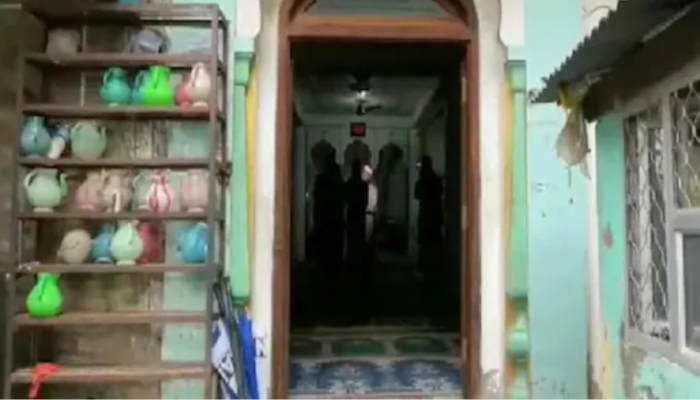
A significant controversy has emerged following the alleged removal of an “I Love Muhammad” banner in Uttar Pradesh’s Kanpur. The members of the Muslim community have launched agitations in multiple regions across the country, from Bihar to Hyderabad. The incidents have even led to violence in Godhra, where extremists have vandalised a police station.

Furthermore, an organised campaign is taking place on social media with Muslim youths disseminating posts under the hashtag ‘I Love Muhammad.’ The occurrence has been labelled as an “insult to the Prophet” of Islam and is cited as the reason behind the protests in the nation.

The authorities have initiated legal proceedings against approximately twelve young men related to the unrest. Meanwhile, attempts have been made to convey that the dispute revolves exclusively around the “I Love Muhammad” poster.

What is the truth

While a disagreement arose regarding the installation of an “I Love Muhammad” poster, the complete narrative extends beyond this row. The official complaint disclosed that the conflict commenced on 4th September when the Muslim community set up an “I Love Muhammad” light board in front of Zafar Wali Gali within the Syed Nagar area of the Rawatpur police station for an event.

OpIndia has a copy of the FIR submitted by the police and it revealed, “This had never occurred before and it was a new tradition initiated by the organizers of the Muslim community’s Barawafat program.” Barawafat denotes the observance of both the birth and the death of Prophet Muhammad which occurs in the third month of the Islamic calendar.

Local residents expressed their discontent in relation to the development which resulted in a confrontation between the opposing sides. The cops intervened by removing the board and relocating it to a different site. The issue was resolved. The FIR explicitly mentioned that the board remained in place when the resolution was reached.

However, the conflict commenced on 5th September coinciding with the scheduled Barawafat procession. “During the procession, certain unidentified Muslim youths who were in a vehicle participating in the event, intentionally used sticks to destroy the religious posters belonging to the Hindu community that had been placed along the road in the Hindu locality of the Rawatpur village with the aim to create communal disturbance,” highlighted the FIR.

On 10th September the authorities also acquired CCTV footage pertaining to the instance. The FIR indicated, “The CCTV recording clearly showed that on the day of the incident, the young individuals from the Muslim community who participated in the event, deliberately engaged in such actions with the intention of disrupting the communal harmony and inciting chaos as well as communal discord in the region.”

Image via OpIndia Hindi

This matter is not limited to the “I Love Muhammad” poster, which represents only a fraction of the issue. The core matter is related to the destruction of Hindu religious posters at the hands of the Muslims. In an interview with OpIndia, Krishna Mishra, the Station House Officer of Rawatpur police station, verified that the FIR was not filed for the display of the “I Love Muhammad” poster. He stated that the accused implicated in the case tried to undermine communal harmony.

Therefore, it has been clarified that the FIR was not lodged because of the reason prompting Muslims to protest across the nation. However, the reality is being obscured and half-truths have been circulated to escalate the controversy in the name of these demonstrations. Given the violence that has erupted in Gujarat, it is crucial to be more vigilant regarding such protests in the future.

What are Trump’s Gold, Platinum, and Corporate cards? Costs, benefits, eligibility, and why critics call it ‘residency for sale’

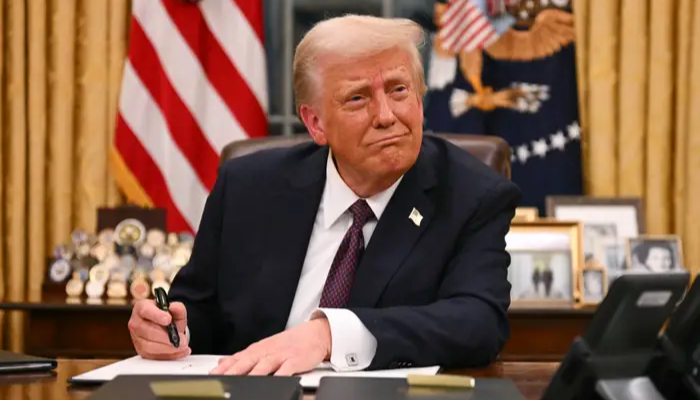
US President Donald Trump on Friday unveiled the “Trump Gold Card”, a new immigration initiative designed to attract wealthy individuals and corporations by offering them a fast-tracked pathway to lawful permanent residency in the United States. Marketed as a bold reform of the legal immigration system, the programme is aimed at raising billions in revenue while simultaneously tightening rules for skilled worker visas like the H-1B.

“It’s going to raise billions of dollars, billions and billions of dollars, which is going to go to reduce taxes, pay off debt and for other good things,” Trump said at the Oval Office launch.

What is the Trump Gold card?

The Trump Gold Card is essentially a residency-by-investment programme.

  • Price: $1 million for individuals; $2 million per employee for corporations.
  • Benefit: Provides accelerated processing and lawful permanent residency (Green Card) through existing EB-1 or EB-2 visa categories, after standard vetting.
  • Design: The physical card features a gold background with Trump’s portrait, the Statue of Liberty, and the American flag, prominently labelled “Trump Gold Card.”
Trump Gold card
Trump Gold Card (Trumpcard.gov)

Trump described the initiative as a way for American taxpayers to finally “benefit from our LEGAL immigration system.”

How to apply

Applicants must follow a five-step process outlined on the official website (trumpcard.gov):

  1. Pay the non-refundable processing fee to initiate the application.
  2. Submit supporting documents including identity, financial records, and other details.
  3. Undergo vetting by USCIS and the Department of Homeland Security, including security, criminal, and health checks.
  4. Make the $1 million contribution (for individuals) once approved. This “gift” to the US government is treated as proof that the applicant substantially benefits the country.
  5. Receive permanent residency under EB-1/EB-2 categories, along with the Trump Gold Card for nationwide use.

Corporate gold card

For businesses, the Trump Corporate Gold Card offers residency for employees at a cost of $2 million per employee.

  • Companies may transfer the card from one employee to another, subject to a transfer fee and renewed vetting.
  • An annual maintenance fee also applies.
  • Corporations can apply for multiple cards simultaneously.

Who is eligible?

Applicants must:

  • Qualify for lawful permanent residency under EB-1/EB-2 visa categories.
  • Pass security, criminal, and health screenings.
  • Ensure a visa number is available at the time of adjudication.
  • Provide proof of identity, source of funds, and the $1 million (or $2 million) contribution.

Only individuals and companies that meet both legal and financial requirements will be approved.

Platinum card coming soon

Trump also announced a forthcoming Trump Platinum Card, priced at $5 million.

  • Holders may spend up to 270 days a year in the US.
  • Crucially, they are exempt from US taxation on non-US income, making it especially attractive to ultra-high-net-worth individuals.
  • Applications will open later, with DHS conducting vetting.

Revenue target

Commerce Secretary Howard Lutnick projected that the Gold Card programme could raise $100 billion in the short term. Trump remains optimistic despite expert warnings that parts of the plan may require congressional approval.

“The main thing is we’re going to have great people coming in, and they’re going to be paying,” Trump said.

Revocation risks

Like all US visas, the Trump Gold Card can be revoked if the holder:

  • Poses a national security threat.
  • Commits fraud, misrepresentation, or criminal activity.
  • Violates visa conditions or becomes otherwise inadmissible

Gold card announced amidst executive order to kill H1B visa program

The announcement of the Trump Gold Card came just hours before President Trump signed a sweeping executive order on H-1B visas, dramatically raising the annual fee for skilled foreign workers from $215 to $100,000. The move, which the White House said was aimed at “protecting American jobs,” is expected to hit Indian IT professionals and US-based tech firms the hardest.

While the Gold Card opens America’s doors to the ultra-wealthy, the sharp hike in H-1B fees signals Trump’s intent to discourage companies from relying on cheaper foreign talent. Instead, the administration is positioning wealth-based immigration as the preferred model—offering Green Cards to those who can pay millions, while making it prohibitively expensive for skilled professionals to enter through traditional employment routes.

Immigration analysts noted the stark contrast: on the same day that Trump announced a “fast track” for millionaires and corporations willing to contribute financially, he imposed one of the toughest financial barriers ever on skilled workers, fundamentally reshaping the US immigration landscape.

Debt of AAP-ruled Punjab reaches 40% of its GSDP, West Bengal under Mamata continues to suffer from massive liabilities: Here are the revelations made in CAG report

The Comptroller and Auditor General of India (CAG) has released a first-of-its-kind report that shows how India’s states are managing their finances. The report was released on Friday (19th September) by CAG K. Sanjay Murthy during the State Finance Secretaries Conference. 

The total public debt of all 28 states has increased more than threefold in the past decade, rising from ₹17.57 lakh crore in 2013-14 to ₹59.60 lakh crore in 2022-23. The states possess among the highest debt-to-GSDP ratios in India, meaning debt is perilously huge relative to the scale of their economies.

As of 31st March 2023, eight states had a public debt liability of over 30 per cent of their GSDP; six states had a public debt liability of below 20 per cent of their GSDP, and the remaining 14 states had a public debt liability between 20 to 30 per cent of their respective GSDP during FY 2022-23,” the report added.

Punjab worst hit with 40% debt-to-GSDP ratio

According to the report , the AAP-ruled state of Punjab is the most burdened, with a debt-to-GSDP ratio of 40.35%, the highest among all states. To put it simply, Punjab owes money worth nearly half of its annual economic output.

This problem is not new. Punjab has been battling a lean revenue base and increasing expenditure for a long time, and the CAG report confirmed that the situation is becoming unsustainable. For a state already facing unemployment, distress in agriculture, and few options for industrial growth, such a high debt cripples its capacity to invest in development enormously.

Instead of focusing on capital expenditure, spending on things like infrastructure that create future growth, Punjab is now forced to use large portions of its borrowed money just to cover day-to-day expenses.

West Bengal follows close behind

The situation is no different in Mamata Banerjee’s Trinamool Congress (TMC)-ruled West Bengal either. The state’s debt-to-GSDP ratio now touches 33.7%, one of the highest in the country, the CAG report said.

In the last decade, West Bengal has seen a sharp jump in its debt burden. Like Punjab, West Bengal also falls into the category of 11 states that are using borrowed funds to finance routine expenditure, such as salaries, subsidies, and administrative costs, rather than creating assets that could improve the state’s financial health in the long run.

Public debt has fluctuated by an average of 20% of the GSDP: CAG

The report further said, “On average, public debt of the states has been about 150 per cent of their revenue receipts / total non-debt receipts. Similarly, public debt has fluctuated between 17-25 per cent of the GSDP and, on average, 20 per cent of the GSDP. The major increase of 4 per cent, from 21 per cent of GSDP in FY 2019-20 to 25 per cent in FY 2020-21, is due to a decline in GSDP in FY 2020-21 being a Covid year. The rise in loans of the Union Government between 2020-21 to 2022-23 was due to back-to-back loans rather than GST compensation shortfall and special aid as loans to states for capital spending.”

The situation is worst in Punjab, Nagaland, and West Bengal, but most other states are not much behind. Conversely, some states, such as Odisha, Maharashtra, and Gujarat, have been able to maintain their debt ratios relatively under control, displaying a diametrical difference in fiscal prudence.

The other concerning indicator brought to the fore by the report is that in 11 states, such as Punjab, West Bengal, and Nagaland, capital spending was less than the net borrowings during 2022–23.

In Andhra Pradesh and Punjab, for example, capital expenditure was only 17% and 26% of their net borrowings, respectively. This means most of the money borrowed went into plugging deficits instead of creating new assets.

Calcutta High Court claims ‘lack of evidence’ to turn down petition against TMC supporter Nachiketa despite viral video of him abusing Lord Ram

0

The Calcutta High Court on Friday (19th September) dismissed a petition accusing Bengali singer, composer and musician Nachiketa Chakraborty of hurting the religious sentiments of Hindus by making objectionable remarks about Lord Ram during a live performance. The criminal revision petition filed before the High Court challenged the order of dismissal of the trial court for want of jurisdiction.

The petitioner contended before the High Court that the Learned Magistrate erred in law by failing to appreciate that the complaint against the singer was filed within the jurisdiction of the complainant’s place of residence. A single bench of Justice Ajay Kumar Gupta of the High Court, however, dismissed the petition, citing a lack of evidence. “This court endorses such findings of the Learned Magistrate because the petitioner failed to satisfy the learned court as well as this court, as regards the whereabouts of the alleged concert that was performed,” noted the High Court.

A complaint was filed by the Secretary of the Bishwa Hindu Parishad, before the Officer-in-Charge, Shyampukur Police Station, on May 5, 2023 and before the Deputy Commissioner of Police on May 10, 2023, alleging that “Nachiketa Chakraborty (a Bengali singer, composer and musician) during a live concert, tried to provoke the common people, particularly citizens of India and outraged the religious sentiments of the followers of Lord Ram” by making certain insulting remarks. However, the case was dismissed by the Learned Additional Chief Metropolitan Magistrate, Court – I.

Notably, a video of the said live performance went viral on social media, in which the singer, who is a TMC supporter, can be heard making objectionable remarks against Ram Janmabhoomi in Ayodhya. He same the song before the inaguration of the Ram Mandir.

During the performance, Nachiketa Chakraborty said, “There is a lot of fuss about this Ram Janmabhoomi in our country, it is not a matter of religion, it is actually a political game.” Then he sang, “If we believe in Ram, then why not Dashrath? If we want to know the birthplace of Ram, Dashrath should be called on a planchette. Only he can tell where Ram was born! Otherwise Ram will continue to be born every hour sometimes in Ayodhya, sometimes Kishkindha and sometimes Dharmatala.”

Cannot take cognisance of the offence based only on social media content: HC

The High Court acknowledged that the allegation was serious in nature, however, it said that solely social media content without any mention of the date, time and place of the concert cannot be a ground for taking cognisance of such offence. “This Court also finds upon perusal of the application filed u/s 156(3) of Cr.P.C. that only the contents of social media mentioning, without any date, time and place of the concert and without any authenticity, cannot be the ground to take cognisance of such offence even though the allegation of offence is serious in nature. This Court also notes that even the record does not reflect any other allegation(s) or any incident of riot in this regard from any corner to date. No other complaints were found in the records either,” the judge said.

“In the backdrop of the aforesaid facts, and due to lack of sufficient materials placed on the part of the Petitioner, this Court does not find any illegality, infirmity or perversity against the order dated 04.08.2023 passed by the Learned Additional Chief Metropolitan Magistrate for rejecting the application under Section 156(3) of Cr.P.C. filed by the petitioner before him. Therefore, this present revisional application is devoid of merit,” it added.

Donald Trump kills H1B visa program with $100,000 annual fee impacting the Indians most, companies ask H1B visa holders outside US to return within 24 hours

In a sweeping move, President Donald Trump signed a proclamation late Friday imposing a staggering additional $100,000 annual fee on H-1B visa applications. The new fee is effective immediately for new filings and will be effective from 12:01 a.m. eastern daylight time on September 21, 2025 for renewals.

White House said that the visa fee has been hiked as a “crackdown on systemic abuse” of the H1B vista system. It stated that “the key facilitator for this influx of foreign STEM labor has been the abuse of the H-1B visa.” The presidential order further claims that American companies are laying off American workers to hire aliens on H1B visa on lower salaries.

The Executive Order by President Trump claims that “Information technology (IT) firms in particular have prominently manipulated the H-1B system, significantly harming American workers in computer-related fields.”

The H1B is already an expensive visa, costing around $1,700 to $4,500, depending on whether the visa is expedited. Now an amount of $100,000, around ₹88 lakh, will be added to this fee. The H1B fee is paid by employers, who consider this as a business expense. The Executive Order states a new or renewal application for H1B visa must be accompanied by the additional $100,000 fee, without which the application will be rejected. The additional fee is effective for 12 months, unless extended later.

The EO states, “Employers shall, prior to filing an H-1B petition on behalf of an alien outside the United States, obtain and retain documentation showing that the payment described in section 1 of this proclamation has been made.”

The hiked fee makes it almost impossible for companies to hire foreign skilled workers under this visa, it is higher than the average salary of an H1B visa holder. Only few top companies may be willing to pay this astronomical amount, that too for their most valuable foreign employees. Mid-level companies will stop hiring foreigners altogether, and big companies may hire only a handful of foreigners.

Notably, while the presidential proclamation said that $100,000 must be paid at the time of new or renewal visa application, implying it to be an annual fee, Commerce Secretary Howard Lutnick said that it is an annual fee. Therefore, if a company retains a foreign employee for 6 year, the maximum validity of H1B visa, the company will have to pay a staggering $600,000 fee.

India set to hit most hard by this move, as around 70% of H1B visa holders are Indians, with approximately 300,000 of its citizens currently working in the U.S. on H-1B visas—predominantly in IT, engineering, and healthcare fields. Indian firms like TCS, Infosys, Wipro, and HCL Technologies, which sponsor a significant portion of these visas, could face billions in added costs, potentially jeopardizing thousands of offshore jobs.

Similarly, global tech giants like Google, Amazon, Meta, IBM, Microsoft, Apple etc are also set to hit hard, as they have relied on the visa program to hire skilled employees from India and other countries.

“Trump’s $100K H-1B visa fee hits Indian IT firms hard: 13,000+ jobs at risk, soaring costs for TCS, Infosys, Wipro. US talent crunch forces major shift in India’s global tech strategy,” said investor Pariman Ade in a widely shared ? post that garnered hundreds of engagements.

It is expected that a large number H1B visas will not be renewed by the companies after their expiry, and the affected people will return to their countries. As a result, remittances from Indian H-1B workers, which topped $37 billion last year, can come down drastically within months.

Exemptions

The new rule is exempt for all foreign employees working in a company or in an industry considered to be of national interest by the administration. The text of the EO says, “The restriction imposed pursuant to subsections (a) and (b) of this section shall not apply to any individual alien, all aliens working for a company, or all aliens working in an industry, if the Secretary of Homeland Security determines, in the Secretary’s discretion, that the hiring of such aliens to be employed as H-1B specialty occupation workers is in the national interest and does not pose a threat to the security or welfare of the United States.”

However, it does not elaborate on this, which may be clarified separately. However, it is expected that healthcare, critical infrastructure, defence etc could be among the exempted industries.

Visa holders outside USA asked to return within 24 hours

While existing H1B holders are not impacted by the fee hike, the situation is different from those who are currently outside USA. As the Presidential Proclamation is structured as a travel restriction, it has been interpreted by companies to mean that it also applies on H1B visa holders currently not in the USA.

The order states, “The Secretary of Homeland Security shall restrict decisions on petitions not accompanied by a $100,000 payment for H-1B specialty occupation workers under section 101(a)(15)(H)(i)(b) of the INA, who are currently outside the United States, for 12 months following the effective date of this proclamation as set forth in subsection (a) of this section.”

As per the order, beginning at 12:01 am eastern time on September 21, 2025, individuals will not be able to enter/return to the U.S. in H1B status unless their petition is accompanied by an additional $100,000 payment. Therefore, major companies have asked their employees to return before the deadline expires, which means within 24 hours, which may not be possible for many.

The timing of the proclamation, mere hours before the weekend, has triggered a frantic scramble among affected employees and employers. Several companies including Microsoft, Meta, Amazon, JPMorgan Chase, Apple, TCS and others have sent messages to its global workforce explicitly urging all H-1B visa holders currently outside the U.S. to “promptly return before the September 21 deadline” to secure stamping and avoid renewal complications.

Moreover, they have asked the foreign employees to not leave USA, to avoid complications in return. “Do not leave the U.S. for the foreseeable future,” one Amazon executive reportedly advised in a company-wide Slack message, according to leaked communications shared on social media.

Notably, while the Presidential order mentions only H1B visa, the companies have asked the H-4 dependent visa holders also to follow the same instructions.

One such memo shared on X states, “If you are in H-1B or H-4 status and are currently outside the U.S., we strongly recommend that you do what you can to return to the U.S. tomorrow before the deadline. The Proclamation was released within the last 30 minutes, so we realise that there isn’t much time to make sudden travel arrangements. But again, we strongly encourage you to do your best to return.”

Apple and Tata Consultancy Services (TCS), which rely heavily on Indian talent, are also reportedly mobilising logistics teams to facilitate rapid returns, fearing a cascade of visa denials that could sideline key projects.

Social Media posts also show that many H1B visa holders who were about to travel outside the USA for personal or work-related reasons disembarked from flights in the USA after boarding as soon as they got information about the new rule. They stayed back as they feared that they won’t be allowed re-entry without the $100,000 fee.

With this steep fee hike, Donald Trump has effectively killed the famed H1B program. Now hardly any company will be willing to pay this steep fee to hire foreign talent. U.S. tech behemoths, which secured roughly two-thirds of H-1B visas in recent years, now will have to grapple with a talent crunch that could stifle growth. Smaller firms and startups, already cash-strapped, may abandon international hiring altogether. However, question remains on whether they will able local workers with similar skills.

It is almost certain that there will be no new H1B visa applications. Moreover, as the visa comes with a validity period of 3 years, which can be extended to maximum 6 years, the existing visa holders will gradually have to leave the country as and when their visa expires. President Trump has also tightened the Green Card regulations, which means the dream of graduating to Green Card from H1B visa is also killed.

It will be interesting to see how US-based companies deal with this, whether they will hire more locals as Trump intends, or whether they move operations overseas to hire foreign workers.

From spiritual discipline to political transformation: The story of Ajey, a cinematic tribute to Yogi Adityanath’s journey from monk to leader

Drawing from Shantanu Gupta’s insightful book, this film celebrates Yogi Adityanath’s spiritual journey and his mission to build a stronger Uttar Pradesh.

Ajey: The Untold Story of a Yogi is a remarkable cinematic effort that goes beyond a typical biopic to celebrate the life of a leader who has transformed India’s largest state, Uttar Pradesh, through determination, vision, and a deep spiritual foundation. Directed by Ravindra Gautam and based on Shantanu Gupta’s bestselling book The Monk Who Became Chief Minister, the film offers audiences an inspiring look into the life of a man who rose from the serene hills of Uttarakhand to the forefront of Indian politics.

The story follows Ajey, played with exceptional dedication by Anant Joshi, a character inspired by Yogi Adityanath. Joshi fully immerses himself in the role, embodying the calm wisdom of a monk and the commanding presence of a political leader. From his early days of spiritual pursuit to his later life as a reformer and administrator, Joshi’s performance captures the many dimensions of Yogi ji’s persona. The legendary Paresh Rawal shines as Mahant Avaidyanath, Ajey’s spiritual mentor, delivering a powerful performance that brings depth to the guru-disciple relationship central to the narrative.

The opening act of the film beautifully depicts Ajey’s childhood and his calling to spiritual life. The breathtaking visuals of Uttarakhand’s rivers, forests, and temples set the stage for a journey rooted in faith and service. The film captures the rigorous discipline of the Nathpanthi tradition, showing how Ajey’s spiritual training shaped his character, values, and vision for society. These sequences are emotionally stirring and establish a strong foundation for the later political chapters.

As the narrative progresses, Ajey’s transition from monk to public leader is handled with care and nuance. Under Mahant Avaidyanath’s guidance, he begins addressing real-world challenges like lawlessness, corruption, and social discord. The film skillfully portrays how spiritual values can translate into effective governance and public service. Paresh Rawal’s scenes with Anant Joshi are among the film’s most memorable, providing wisdom and gravitas that anchor Ajey’s transformation.

Visually, the movie is stunning. The cinematography captures both the serene spirituality of Ajey’s early life and the dynamic, often chaotic energy of political rallies and public meetings. The production design is meticulous, especially in depicting the Gorakhnath Math and the cultural and religious heritage of Uttar Pradesh. These elements ground the film in authenticity and give it a strong sense of place. The background score is subtle yet uplifting, supporting the film’s emotional core without overpowering it.

One of the film’s greatest strengths is its faithful adaptation of Shantanu Gupta’s well-researched book. Gupta’s writing has long been praised for presenting Yogi Adityanath’s life with accuracy, depth, and respect. The screenplay draws heavily from the book’s detailed accounts, making the film not only inspiring but also informative. For audiences unfamiliar with Yogi Ji’s life, the movie offers clarity on how his spiritual ideals have influenced his political decisions.

The second half of the film focuses on Ajey’s rise as the Chief Minister of Uttar Pradesh and his vision for transforming the state. These sequences highlight the incredible work done under Yogi Adityanath’s leadership. From drastically improving law and order to modernizing infrastructure and promoting industrial development, the film paints a picture of a leader dedicated to progress. It showcases landmark achievements such as new expressways, airports, and ambitious tourism projects like the Kashi Vishwanath Corridor and Ayodhya’s Ram Mandir redevelopment, symbolizing a revival of cultural pride and economic growth.

The movie also highlights initiatives like women’s safety programs, better healthcare facilities, and increased investment in education, showing how Uttar Pradesh has moved toward becoming a more developed and empowered state. The depiction of these reforms feels authentic and inspiring, especially when contrasted with the challenges the state faced in the past. These moments celebrate Yogi Ji’s commitment to both spiritual values and practical governance.

Anant Joshi’s performance in these later portions is commanding. His portrayal of Ajey in the political arena, addressing massive rallies, meeting common citizens, and making tough administrative decisions, feels natural and compelling. He successfully conveys the calm strength of a leader who draws power not from personal ambition but from service to society. Paresh Rawal continues to shine in supportive moments, reminding Ajey (and the audience) that true leadership is rooted in humility and duty.

The film’s message is clear and powerful: that spirituality and politics, often seen as separate, can come together to create meaningful change when guided by integrity and vision. By showing Ajey’s journey, the movie offers hope and inspiration at a time when people often feel disillusioned with leadership.

While the film is largely celebratory, it does not feel hollow or forced. Instead, it reflects the optimism of a state undergoing rapid change under a leader determined to break old patterns of corruption and stagnation. Yes, the film takes a largely positive view and does not dwell deeply on controversies, but this is fitting given its purpose as a tribute rather than a critique.

Technically, the film is polished and ambitious. The editing ensures that the story flows smoothly, and while a few political sequences could have been trimmed, the overall pacing keeps the audience engaged. The music, though understated, complements the themes of faith and determination.

Before its release, the film faced controversies with the CBFC (Central Board of Film Certification), with demands for cuts that were ultimately overturned by the Bombay High Court. This victory allowed the film to be released without edits, symbolizing a triumph for creative freedom. The publicity around this case only added to the film’s buzz and brought more attention to its message.

In conclusion, Ajey: The Untold Story of a Yogi is more than just a movie; it is a celebration of leadership, service, and transformation. By blending spirituality with politics, it reflects the philosophy that has guided Yogi Adityanath’s life and work. Through powerful performances, especially by Anant Joshi and Paresh Rawal, and through its faithful adaptation of Shantanu Gupta’s book, the film inspires audiences to believe in the possibility of change.

For those who admire Yogi ji or are curious about Uttar Pradesh’s remarkable progress in recent years, this film is a must-watch. It stands as both a tribute to a leader and a cinematic reminder of what visionary governance can achieve.

Gujarat: Violent Muslim mob ambushes police station, resorts to stone pelting, cops use lathi charge and tear gas in self-defence

A violent Muslim stormed into the B Division police station in Godhra town of the Panchmahal district in Gujarat on Thursday (18th September) and pelted stones on police police personnel.

The police had to use lathicharge and tear gas to disperse the mob. Several police personnel were injured in the stone pelting.

As per reports, the incident occurred after the police brought a Muslim social media influencer to the police station to counsel him. The Muslim influencer used to post provocative reels on social media, some of which went viral.

The police cautioned him against posting religiously sensitive content as the festival of Navaratri is approaching, and such posts may lead to a law and order situation.

However, the man claimed in a video that the police had beaten him. According to Panchmahal Superintendent of Police Haresh Dudhat, a rumour spread that the police had summoned the man for uploading a religious poster.

“But it was wrongly believed that we had called him regarding a recent video he made with a religious poster,” said SP Dudhat.

Soon after, a violent Muslim mob surrounded the police station and started shouting slogans of ‘Allahu Akbar’. The mob also attacked police post No. 4 and pelted stones.

As a result, police resorted to a lathi charge and tear gas bombs to disperse the mob. A team of police, including the Range Inspector General and the Superintendent of Police, arrived at the scene to take control of the situation.

The mob was dispersed and the situation was normalised following police action.

The National Maritime Heritage Complex at Lothal: Modi govt’s tribute to the Indus Valley Civilisation’s rich maritime and engineering legacy

PM Modi on 20 September is scheduled to visit Gujarat. Among other engagements, the Prime Minister will also oversee the construction of the National Maritime Heritage Complex at Lothal, in the Ahmedabad district.

PM Modi will check the progress of the project and will hold a review meeting to track the NMHC project.

What is the NMHC project at Lothal?

The National Maritime Heritage Complex (NMHC) at Lothal, Gujarat, is an initiative by the Modi government to honour the maritime and engineering achievements of the Indus Valley Civilisation, or, the Sindhu Saraswati Civilisation.

Lothal was a key port city of the IVC around 2400 BCE. The NMHC, a ₹4,500 crore project spanning over 400 acres allocated by the Gujarat government, aims to preserve and showcase this ancient site’s historical significance while promoting tourism and education for future generations.

The NMHC, approved by the Union Cabinet in October 2024 under the Sagarmala Programme, seeks to highlight this legacy as an ancient maritime engineering marvel. It aligns with the government’s focus on balancing development and heritage preservation, and the reinvigorated focus in highlighting India’s ancient maritime trade.

The complex, developed in two phases, includes a National Maritime Heritage Museum with 14 galleries covering India’s maritime history from the IVC to modern times. Phase 1A, over 60% complete and set to open by year-end, features six galleries, including an Indian Navy and Coast Guard exhibit with artefacts like the INS Nishank missile boat, a Sea Harrier, and a UH-3 helicopter. It also includes a recreated Lothal township and a jetty walkway.

NMHC under construction at Lothal, Gujarat, image via Desh Gujarat

Phase 1B will add eight galleries, a 77-meter Lighthouse Museum, planned to be the tallest in the world, a 5D dome theatre, and the Bagicha Complex with parking for 1,500 vehicles, food courts, and medical facilities. Phase 2, funded through public-private partnerships, will include coastal state pavilions, eco-resorts, a fully recreated model of the Lothal city, a Maritime Institute, and four theme parks focusing on maritime history, climate change, monuments, and adventure.


The project is supported by the Ministries of Ports, Shipping & Waterways and Culture, with funding from major ports, defence, the National Culture Fund, and ₹3,000 crore in private investment. The Lighthouse Museum will be funded by the
Directorate General of Lighthouses and Lightships (DGLL).

Economically, the NMHC is expected to attract 25,000 daily visitors, generating 22,000 jobs directly and indirectly, while boosting local industries in the region. It aims to position Lothal as a major tourism destination, comparable to India’s top heritage sites.

The significance of Lothal: How it is the testament of India’s rich maritime history

Lothal is a key site on the map of Sindhu Saraswati Civilisation that traces how the rich civilisation of ancient Indians spread from the Sindhu river, flourished along the Saraswati and progressed over North-Western India, marking the continuity in our legacy through trade, craft, city planning and culture.

Located in Gujarat’s Bhal region near the Gulf of Khambhat, it features the world’s oldest known man-made dockyard, a 214 metre long and 36 metre wide trapezoidal basin with vertical brick walls, connected to the Sabarmati River via inlet and outlet channels.

The people of the Sindhu Saraswati Civilisation possessed sophisticated knowledge of water management and planning. The dockyard of Lothal was engineered to manage the region’s high tides, with a spill channel to prevent silt buildup.

The initial excavations at Lothal happened between 1955 and 1962. The excavation project was led by SR Rao, the man credited with discovering 30 Harappan sites in his lifetime. Rao had written about Lothal in Penn Museum’s Expedition Magazine, describing the significance of Lothal.

“The largest structure of baked bricks ever constructed by the Harappans is one laid bare at Lothal, to serve as a berth for docking ships and handling cargo….Originally, the dock was designed to sluice ships 18m to 20m in length, and 4 to 6m in width… At least two ships could pass through the inlet simultaneously…”

Some Western experts were unconvinced with the idea that Lothal could have been a dockyard. However, a recent study by IIT Gandhinagar used satellite imagery to explain why the dockyard and port theories are more accurate. Satellite imagery revealed the old channels of the Sabarmati which flew right next to Lothal, reported Indian Express. The river gradually shifted course and moved away from the site, leaving the dockyard at Lothal at an odd orientation. When the old channels flew, boats could have easily sailed via Lothal to as far as Dholavira, another key IVC site on the Rann of Kutch.

The IIT Gandhinagar study, by Professor VN Prabhakar, Professor Vikrant Jain and Ekta Gupta, concurred with what Rao had written. The old flow of channels of the Sabarmati put Lothal at a convenient geographical position, at the heart of a thriving trade network, extended from the Indian ports on the Arabian Sea, especially on the Gulf of Khambhat, all the way to ancient Mesopotamia.

IIT Gandhinagar study found satellite evidence of Sabarmati’s old channels

This theory is further bolstered by the sheer number of ancient seals that have been excavated in the general area, more than any other site in Saurashtra, the Indian Express report added. The seals could have been used to mark cargo packages, and trade documents and letters.

Lothal saw settlements and resettlements in several phases. The gradual decline of the area was mainly due to catastrophic floods on the Sabarmati and the river changing course eventually, leaving the dockyard dry. Rao had written that after a major flood somewhere around 2000 BCE, the flourishing city was levelled, and what remained was an ill-planned village with a few people living. Then in 1900 BCE, another major flood destroyed the settlement for good.

The NMHC will preserve the legacy of the Indus Valley Civilisation’s maritime and engineering prowess while fostering economic growth and cultural awareness. To a population that has largely grown detached from its own maritime past, the NMHC will be a portal to our rich heritage of shipbuilding and maritime trade. Through state-of-the-art technology and thoughtful design, the NMHC will ensure that Lothal’s historical significance remains accessible to future generations of Indians, the descendants of the Sindhu Saraswati people.

Rahul’s imaginary villains and PM Modi’s stature: Why the ‘Priest King’ leader is the choice of Indian GenZ

Indian politics in 2025 continues to unfold like theatre, and the contrast between its two leading men could not be more vivid. On one side, Rahul Gandhi plays the excitable raconteur, insisting that shadowy conspiracies lurk just behind the curtain but forgetting to provide either evidence or a plotline.

On the other side, Narendra Modi strides onto the stage not merely as a Prime Minister, but as what many admirers now describe as a “priest king”—an ancient Indus Valley archetype reborn in modern politics, where governance blends with ritual authority and statesmanship becomes a way of shaping destiny.

Rahul Gandhi’s Conspiracy Monologues

Rahul’s attempts to rally the youth often resemble a one-man show of political folklore.

One moment he warns of invisible hands manipulating democracy, the next he announces dramatic revelations that feel suspiciously like unfinished Wikipedia entries.

His speeches can sound less like politics and more like bedtime stories told with grave expressions: intriguing, dramatic, yet missing the climax.

The result? The youth, armed with instant fact-checks and a radar for exaggeration, listen politely before drifting back to the leader whose words inspire action rather than amusement.

Rahul’s endless conjuring of villains has made him less a knight in shining armour and more the parable-writer of a parallel theatre the audience is no longer seated in.

Modi and the Priest King Archetype

But why “priest king”? To answer that, we must travel back several millennia to the seals and relics of the Indus Valley civilisation, where the so-called Priest King figurine was unearthed in Mohenjo-daro.

The image was of a dignified man draped in patterned cloth, serene but commanding, embodying both spiritual guardianship and temporal power. He was not merely a ruler—he was the custodian of culture, ritual, and social order.

This archetype resonates with the way Modi is viewed by much of India’s youth. He is not cast as just an administrator passing laws, but as a custodian of heritage who also charts the nation’s modern path.

Much like the Indus Priest King straddled sacred symbolism and civic authority, Modi blends ritual and governance: inaugurating high-tech projects with Vedic chants, addressing development in the language of both tradition and modern entrepreneurship.

Why Youth Revere the “Priest King”

India’s young generation finds this fusion magnetic for several reasons:

  1. Cultural anchor: Many youth see Modi as reconnecting India’s present with its deep civilisational roots, much like the priest king was a symbol of cultural unity.
  2. Authority with reverence: He represents clear, disciplined leadership that feels both strong and sacred.
  3. Tradition meets technology: By merging rituals with innovation, he appears to bridge India’s dual soul—ancient and modern.
  4. Personified archetype: In an era hungry for icons, Modi’s image projects the enduring power of the priest king, giving youth a mythic figure to rally around.

For young Indians, caught between global aspirations and local identity, Modi embodies both. His leadership reassures them that progress does not mean rootlessness, and tradition does not mean stagnation.

Curtains on Rahul, Spotlight on Modi

While Rahul Gandhi continues to warn of invisible cabals that no one can locate outside his speeches, Modi commands the stage with the authority of a modern sage-ruler.

One offers unrest wrapped in conspiracy; the other offers continuity steeped in ancient archetypes.

The Indian youth, pragmatic and proud, have chosen where their gaze rests. They have crowned the priest king—not in blind obedience, but in recognition of a leader who reflects India’s civilisational self-image while guiding it into the future.

Rahul may keep rehearsing his ghost stories, but the stage lights—and the audience applause—belong firmly to the priest king of India’s modern saga.