Home Blog Page 155

Kolkata ‘birthday’ rape case: Police nab accused Chandan Malik, another accused TMC worker Debangshu Biswas remains absconding

0

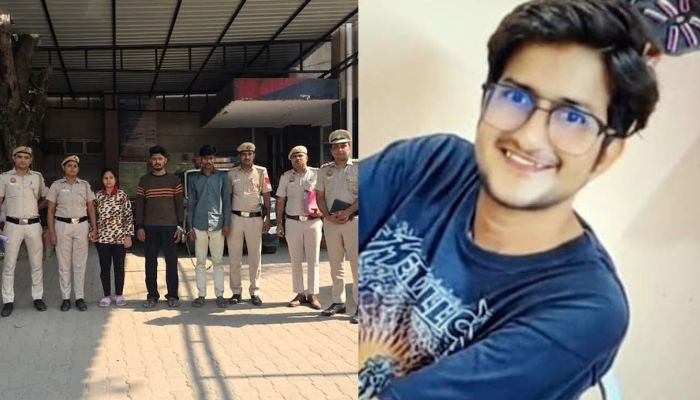
One of the accused in the rape case of a 20-year-old woman last week, after being called for a birthday party, has been arrested by the Kolkata Police. The arrested man is Chandan Malik, who was detained by Kolkata police on Tuesday, 9th September, at Burdwan Station. The police added that another accused in the case, Debangshu Biswas, is still on the run.

As per the media reports, the crime was committed on Friday (5th September) in Haridevpur locality of Kolkata. A young woman was raped by a Trinamool Congress (TMC) worker and his aide. The victim went to a house with Malik after being told about a ‘birthday party.’ She had known the accused for a few months before then.

“The woman’s birthday was on Friday. On that occasion, the accused Chandan and Deep took the victim to the latter’s flat. There, they had a meal. She said that when she wanted to return home, the accused stopped her. They allegedly locked the door and gang-raped her,” a cop informed

In her complaint, the woman said that both Malik and Biswas took turns to rape her around 10:45 pm that night. She further said that she was confined in the house through the night and was able to escape only the next morning, on Saturday (6th September). She then went to the Haridevpur police station and lodged a formal complaint.

A case was registered under several sections of the Bharatiya Nyaya Sanhita (BNS), including kidnapping, rape, stalking, voluntarily causing hurt, causing grievous hurt, and wrongful confinement. 

Investigators have also spoken to the owner of the house, who said that the property had been rented to Biswas. He informed the police that Biswas introduced himself as a government employee who would be staying there with his mother.

It has come to light that Biswas is not only a government employee working as a revenue inspector with the state’s land reforms department but is also a worker of the ruling Trinamool Congress (TMC). Local reports suggest that the ground floor of the building where the crime took place had been rented to Biswas. 

Myanmar, Sri Lanka, Bangladesh, Pakistan and now Nepal: How India has remained a strong, stable democratic force in an increasingly chaotic and unstable neighbourhood

In the recent past, South Asia has become a hotspot for political upheaval. India’s neighbours have witnessed protests-driven regime changes. Nepal has descended into chaos after a Gen-Z uprising toppled the Prime Minister KP Sharma Oli-led government on 9th September 2025. While a social media ban became an immediate trigger, the Nepali youth have been protesting against rampant corruption in the now-overthrown government.

 Prime Minister KP Sharma Oli’s resignation, after one of the deadliest crackdowns in years that left 19 young protesters dead, has plunged the country into political turmoil. His Bhaktapur residence was set ablaze, the homes of former prime ministers Pushpa Kamal Dahal “Prachanda” and Sher Bahadur Deuba vandalised, and three of his ministers forced to resign.

The protests in Nepal have taken a violent turn as angry mobs storm into official residences of ministers. At least 17 people were killed in clashes in Kathmandu alone, police confirmed, while two more deaths were reported in Sunsari district. On Tuesday, protesting mobs stormed into the residence of Foreign Minister Arzu Rana Deuba, who is the wife of former PM Sher Bahadur Deuba. The Deuba couple have also been physically attacked by the mob after angry protestors stormed into their residence.

Nepal’s parliament, the famous Hilton Hotel and many buildings were set ablaze. The protestors also broke into the Singha Darbar premises, a large complex in Kathmandu which houses Nepal’s administrative offices, and set its gate on fire while forcing their way into the central administrative complex. The ancient Pashupatinath Temple is being protected by the Nepalese Army as hooligans attempted to enter the Hindu temple. The wife of former Prime Minister of Nepal, Jhalanath Khanal, succumbed to burn injuries on Tuesday after Khanal’s residence was set on fire by protestors.

Nepal government’s ministers are being chased and assaulted by mobs. Protestors even said that they want to beat up KP Sharma Oli but he is nowhere to be found. Now the army has taken over control and enforced curfew.

Amidst the chaos, Nepali GenZ protestors have issued statements claiming that they have fallen back and those indulging in arson and destruction of public property are not a part of their anti-corruption agitation.

Meanwhile, political manoeuvring has intensified in the unrest-hit Himalayan nation, as former PM Oli is likely to flee. Names of rapper-turned-politician and Kathmandu mayor, Balen Shah, Hami Nepal founder Sudan Gurung, who led the anti-government protests, are emerging as the popular choices to fill the power vacuum. OpIndia earlier reported about their activities, controversies and US connection.

What is happening in Nepal has become so ‘normal’ in South Asia that it no longer surprises those closely following geopolitics. Such regime changes stem from economic crises, allegations of corruption, authoritarian crackdowns, and youth-led agitations demanding ouster of the ‘corrupt’ and accountability. Although in Afghanistan’s case, the regime change stemmed not only from economic factors and domestic power tussle but also from the US military withdrawal in 2021, resulting in a Taliban takeover.

Myanmar: The first successful regime change in the region in the recent past

In February 2021, the military of Myanmar staged a coup d’état and ousted the democratically elected government led by popular leader Aung San Suu Kyi. The National League for Democracy (NLD) government was illegally ousted from power after it emerged victorious again in the 2020 elections receiving even more votes than in 2015. The military in its coup orchestrated a crackdown in which several political leaders including Aung Suu Kyi were arrested.

In no time, massive nationwide protests, strikes and civil disobedience erupted, which evolved into the ‘Spring Revolution’. Much like Nepal, this spring revolution was led by Gen Z. These youths and civil servants demanded release of Suu Kyi and sought restoration of democracy. However, the military junta employed brutal force to crush the agitation and killed over 1,500 people and arrested thousands.

Protestors in Bago in 2021 (Image source: KenRoth/X)

The chaos magnified into armed resistance and People’s Defence Force and other armed groups came into existence. By 2025, the pro-democracy protest has escalated into a full-scale civil war. Millions have been displaced, thousands have died. Junta’s violent crackdown, suspension of constitutional rights and internet shutdowns have entrenched the authoritarian rule.

The Military had ruled Myanmar for five decades before the power was handed over to democratically elected leaders. However, with Suu Kyi ousted from power, Myanmar has neither seen democracy nor normalcy, return.

‘Aragalaya’ in Sri Lanka ousted the Rajapaksa family from power in 2022

Economic crisis, soaring debt, tax cuts, COVID, failed organic farming policy, fuel shortage, food and medicine scarcity, depleting foreign exchange reserves and a increase in inflation to 70 percent, prompted Sri Lanka’s first sovereign default in April 2022.

President Gotabaya Rajapaksa and his family were accused of corruption and mismanagement and citizens demanded his resignation.

In July 2022, Sri Lanka erupted. Protesters, mostly youth, stormed President Gotabaya Rajapaksa’s official residence in Colombo, sending him fleeing to safety. Images of citizens swimming in his pool and cooking in his kitchen captured global imagination. Later that day, the private residence of Prime Minister Ranil Wickremesinghe was set ablaze. Both leaders were forced to resign as the “Aragalaya” (struggle) movement brought down a political dynasty amid the island’s bankruptcy.

Pakistan: Imran Khan ousted from power under a US-backed regime change operation

Cricketer-turned-politician, former Prime Minister of Pakistan, Imran Khan was ousted from power in April 2022, through a no-confidence vote. This came amidst allegations of economic mismanagement and a fallout with Pakistan’s de facto ruler­—Pakistan Army. Imran Khan had openly accused the US of orchestrating a regime change conspiracy against him. Khan was trying to curb military interference in governance; however, this did not go well the military. Interestingly, Khan had cited a diplomatic cable “Cypher”, to back his claim of US involvement in his ouster.

In May 2022, Imran Khan called for a Azadi March, drawing thousands of Pakistan Tehreek-e-Insaf (PTI) supporters to Islamabad demanding early elections. The protests turned violent and were brutally crushed down by the police. While Shehbaz Sharif became Army-backed Prime Minister, Imran Khan was arrested in May 2023. His arrest sparked nationwide riots, including attacks on military establishments. Imran Khan continues to be confined in jail in corruption cases, while Pakistan’s military-backed government which grabbed power after farcical elections were conducted, has now signed a deal with the US to squeeze natural resources of occupied Balochistan and make billions while Baloch people get tormented, kidnapped and killed by the army.

 Image Source: Dawn

Meanwhile, once harboured by Pakistan Army itself, the Pakistani Talibans have been creating ruckus in northwest Pakistan. While Pakistan was never a quite politically stable and economically sound nation, toppling of Imran Khan government has not proven very beneficial for common Pakistani populace. Their economy is still in shambles, Islamabad is still breathing on IMF’s loan ventilator, Army still attacks its own civilians, be it Balochs, Pashtuns or PTI supporters.

Bangladesh: Sheikh Hasina illegally ousted from power by Gen Z ‘student’ protestors months after she alleged US regime change plot

On 5th August 2024, Bangladesh witnessed its own “Bangla Spring.” What began as student protests, led by the Students Against Discrimination movement, against a controversial job quota system escalated into nationwide violence. Jubilant protesters carrying flags, chanting slogans, and even dancing atop captured tanks stormed Sheikh Hasina’s official residence. By then, Hasina had already fled. Army Chief Waker uz Zaman confirmed her resignation, announcing an interim government would assume power.

According to reports, Hasina’s helicopter landed in Agartala, India, after New Delhi allowed her emergency entry.

Protesters ransacked her residence, looting sarees, utensils, and other personal items, brandishing undergarments, celebrating what they called the “reclaiming” of the palace from which “illegal orders to murder citizens” were issued. The scale of violence was staggering: on just one Sunday, 91 people were killed, making it the deadliest day of the uprising. By early August, at least 300 people had died since the protests began in July.

Hasina’s son, Sajeeb Wazed Joy, based in the US, had desperately urged the security forces to prevent the fall of his mother’s 15-year rule. “You must keep our people and country safe and uphold the constitution,” he pleaded on Facebook. But the army, much like in 2007 when it installed a caretaker government, chose to “stand by the people.”

While protests turned violent as conflicts between protestors and police became frequent, the violence worsened when the Jamaat-e-Islami (JeI) and the Bangladesh Nationalist Party (BNP) started to magnify the mayhem, using it to undermine the ruling Awami League government. Both Jamaat and BNP are notorious for their anti-India agenda and Islamist jihadist activities.

The sequence of events and Sheikh Hasina’s statements regarding attempts being made to destabilise Bangladesh and oust her from power illegally, fuel the speculation that the Awami League leader’s forced resignation and escape from her homeland was not simply a consequence of student protests but that of a US-orchestrated regime change operation.

Months before her resignation, Sheikh Hasina had alleged that the United States is attempting regime change in Bangladesh via the opposing BNP and Jamat-e-Islami. Last year, the US also extended support to the Islamist Bangladesh Nationalist Party (BNP) and its ally Jamaat-e-Islami during its protests against the PM Hasina-led government.

In September 2024, Sheikh Hasina accused the United States of orchestrating her removal from the post of PM because she refused to hand over Saint Martin Island to the US, which would have enabled the western superpower to have “sway over the Bay of Bengal”. Sheikh Hasina’s attempts to thwart an alleged US orchestrated regime change failed and she had to flee her homeland.

One year after Sheikh Hasina’s ouster, Bangladesh has fallen into the hands of Islamists and remains mired in instability, economic crisis and persistent Islamist crimes against Hindu minorities.

Myanmar, Sri Lanka, Pakistan, Bangladesh and now Nepal: Surrounded with countries grappling chaos and democratic collapse, India stands strong

In a stark contrast to its neighbours, who have undergone violent protests that resulted in regime change, violence, democratic collapse and economic pushback, India has braved all storms displaying its resilience as a stable democratic force. Vast in size, population and regional, religious, socio-political and linguistic diversity, India has maintained remarkable democratic stability and takes pride in being the world’s largest democracy.

India continues to have a stable and functioning democracy, a popular prime minister who has been in power for three consecutive terms, a free media and free social media. India has not only enjoyed internal stability but has also become a leader of the Global South. India’s economic growth, defence robustness and potential as massive market has impressed the world. However, it is not that India has never faced foreign entity-backed regime change operations or violent massive anti-government protests.  

While I.N.D.I. Alliance parties, particularly, Congress has been trying to sow public distrust in India’s electoral system by repeatedly casting aspersions on the integrity of the Election Commission, the nation conducts regular, free, fair and peaceful elections, as prescribed in the constitution.

In the past, India braved emergency imposed by Prime Minister Indira Gandhi, fragile coalition eras without complete collapse. In the recent years, particularly, after 2014, the general election which positively altered India’s growth trajectory, the country has faced large-scale protests which were either meant to or had the potential to cause a regime change.

The 2019-2020 protests against the Citizenship Amendment Act (CAA), which granted Indian citizenship for persecuted Hindus and other non-Muslim minorities from neighbouring countries, snowballed into anti-Hindu riots in Delhi and in other states. However, the Central government tackled the situation well and the common public also saw through the conspiracy at play and did not significantly back the anti-CAA/NRC protests.

Soon after, the farmers protest erupted against three farm laws passed in September 2020. What began as a protest against alleged ‘dismantling’ of minimum support price (MSP) and state procurement, magnified into a massive anti-government agitation. While farmers from other states backed the reforms, farmers from Punjab and a section of Haryana farmers blockaded Delhi borders. Tractor Rally was taken to Delhi and religious flags were hoisted near the Red Fort. Violent incidents were reported. It also emerged that the farmer’s protest was being hijacked by Khalistan separatist elements.

However, unlike the Nepalese, Bangladeshi, Sri Lankan or Pakistani government, the Modi government did not resort to violent crackdown on the protestors. It would not be an exaggeration to say that the Modi government was one bullet fire on protestors away from a regime change. PM Modi, showed political tact and repealed the farm laws and appealed to the protestors to retreat.

Now, the opposition is peddling the ‘vote chori’ (vote theft) bogey to accuse the Election Commission and the BJP of colluding to steal the mandate in their BJP’s favour. Such attempts have seen a renewed intensity after the 2024 Lok Sabha elections. The Congres party and its leftist media allies, who have been mindlessly alleging EVM hacking, VVPAT tampering, is now alleging that the BJP supportive ECI is arbitrarily adding and removing names from electoral rolls. These claims, however, have been debunked by the ECI with facts.

The way the opposition is going about its sinister ‘vote chori’ narrative, it may be considering replicating the Khaleda Zia playbook: sow distrust in public’s mind against electoral process, boycott the elections, incite violent protests and oust the democratically elected leader, to become the sole runner in the race of power and come first.

OpIndia has reported many a times how Rahul Gandhi during his foreign trips has been seeking foreign intervention in India’s internal affairs, levelling ‘Democracy khatre mein hai’ allegations, casting aspersions on the integrity of the ECI while on foreign soil. From seeking foreign interference to relying on dubious foreign reports often prepared by outfits funded by the likes of regime change specialists, George Soros, to attack Indian businessmen like Gautam Adani, eulogising China to even recently parroting US President Donald Trump’s ‘India’s a dead economy’ jibe, the leading opposition party of India has been toeing the line of those foreign players who want to destabilise India.

So far, these forces have failed to incite Indians into going the Bangladesh, Nepal, or Pakistan way, rather, they have faced strong backlash. It reflects the faith people have in PM Modi’s leadership. No wonder, even some of the protesting Nepali youth have said that had there been a leader like PM Modi in Nepal, the country would have progressed way better and the need for street protests would never have arose.

Under a stable and strong government, India has transformed itself into an economic giant becoming fourth largest and one of the fastest-growing economies in the world. Bharat is an ancient civilisation yet a young nation, with its young workforce, digital innovation, thriving trade relations with other countries, and timely economic reforms, contrast with economic instability of its neighbours.

As a leader of the Global South, India has also been a peacekeeping forced in the chaotic world. India provides humanitarian assistance as seen during Covid era (Vaccine Maitri) to its partners or disaster relief aid, be it to Nepal or Turkey. India also provides financial and infrastructure support to allies in need as seen in the case of $4 billion financial aid to crisis-hit Sri Lanka in 2022, and $50 million aid to Maldives. India is also a top contributor to UN peacekeeping missions. Indian navy ensures maritime security in the Indian Ocean, securing trade routes and countering piracy.

Despite the internal challenges and foreign threats, India has managed to sail through all the storms. The credit not only goes to the government but also to the India’s largely nationalist populace that has believed in responding vote not violence, dissent not destruction, and legal recourse than lawlessness.

Assam tightens immigration rules, district officials can deport suspected illegal infiltrators within 10 days if they fail to prove citizenship under new SOP

If anyone is caught on suspicion of being an illegal infiltrator in Assam, he will now have just 10 days to show proof of his Indian citizenship. Chief Minister Himanta Biswa Sarma announced this on Tuesday, 9th September, after the state Cabinet meeting in Guwahati. He also revealed that Assam has already deported 30,128 infiltrators to Bangladesh so far.

The Assam Cabinet has approved a new Standard Operating Procedure (SOP) to deal with the long-standing problem of illegal infiltration. Sarma said this move is a “big and historic step” to push back intruders and safeguard Assam’s cultural identity and demographic balance.

The new SOP has been brought under the Immigrants (Expulsion from Assam) Act, 1950. It gives more power to the local administration. According to CM Sarma, “Now we don’t have to go to court every time. The District Commissioner can directly identify infiltrators and issue orders for their expulsion or deportation.”

This means that earlier, every suspected case had to go through the Foreigners’ Tribunals, which led to huge delays. But now, the administration can act much faster and more directly.

What the new SOP says

According to the new SOP implemented in Assam, if a person is found to be a suspected intruder, he will be given 10 days to prove his Indian citizenship. If he is unable to prove his citizenship in 10 days , the district administration can issue a deportation order for him within 24 hours.

After this, the person will either be sent to a holding center or deported out of the country with the help of the Border Security Force (BSF). This process can now be done directly at the administrative level, bypassing the Foreigners’ Tribunals.

Chief Minister Himanta Biswa Sarma called the decision ‘historic and decisive’. He said, “More than 82,000 cases are pending in our tribunals and this SOP bypasses that system.” He also said that this SOP will also apply to those whose citizenship is doubtful even after their name is included in the NRC.

If caught entering the border, to be sent back in 12 hours

Another key decision taken by the Cabinet is that if a person is caught trying to cross the border illegally, they can be sent back within 12 hours. There will be no need for any long legal process in such cases.

The government has also ordered that biometric and demographic details of all suspected infiltrators must be recorded on the Foreigners Identification Portal. This will help in monitoring such individuals and making sure they cannot come back easily.

Supreme Court’s 2024 ruling and a ‘forgotten’ law

The Assam government has taken this step after a Constitution Bench of the Supreme Court, in October 2024, gave the state full freedom to use the 1950 law for handling infiltration. This ruling cleared the way for the state to take strict action directly through administrative powers.

Before this, it was assumed that every case of illegal infiltration has to go through the Foreigners Tribunal. It takes years and decades to resolved through the Tribunal system. But now the Supreme Court has clarified that there is no such requirement, and the administration can directly deport illegal infiltrators.

In June this year, CM Sarma said that the provision of the Immigrants (Expulsion from Assam) Act, 1950 was actually forgotten. During hearing on Section 6A of the Citizenship Act, the constitutional bench of the Supreme Court said that this Act is still valid. Under its provisions, even a District Commissioner can issue an order for immediate pushback of illegal immigrants.

While upholding the validity of Section 6A of the Citizenship in Assam in the judgement issued in October 2024, the Supreme Court said, “The provisions of the Immigrants (Expulsion from Assam) Act, 1950 shall also be read into Section 6A and shall be effectively employed for the purpose of identification of illegal immigrants.” The Supreme Court also stated the Immigrants Expulsion law is not contradictory to the of Section 6A of the Citizenship Act, and both can co-exist.

The court had said that the fact that the parliament had enacted the law in 1950 shows that “the huge influx of migrants from Bangladesh to Assam has always been a ‘cause for concern’ and Parliament has taken steps to address the issue previously.” The Supreme Court also said that the Immigrants (Expulsion from Assam) Act 1950 was enacted because the Foreigners Act did not include immigrants from Pakistan.

Notably, a similar law for the western border, the Influx from Pakistan (Control) Act, was repealed in January 1952. But the law for the eastern border that applied only in Assam remained in force. The Act was applicable to undivided Assam at that time, therefore it is also applicable to Meghalaya, Nagaland and Mizoram.

After the Supreme Court verdict, the state government thoroughly studied the provision, and accordingly issued the SOP, allowing district administration to push back illegal immigrants, without filing any case at the Foreigners Tribunal.

Now, only those cases that can’t be resolved by administration, for example suspected foreigners holding suspicous citizenship documents, will be sent to the Foreigners Tribunals. Therefore, the workload and pending cases in the Tribunals will come down drasitcally.

CM Sarma said that while the 42,000 cases already pending in Foreigners’ Tribunals will continue to be heard, the new SOP will apply to fresh cases where no tribunal case is registered yet.

A decades-long problem

Illegal immigration has been a sensitive issue in Assam for decades. According to old records, around 1,68,000 cases were filed in Foreigners’ Tribunals. However, many of the accused have disappeared and their cases remain unresolved. This has become a huge challenge for the state.

With the new SOP, the government believes it can move much faster and keep infiltration under check. CM Sarma said the state will not compromise when it comes to protecting the rights of its people, their cultural identity, and the state’s demographic balance.

He had earlier said that the detection process of illegal immigrants had slowed down during the updation of the NRC, and now that same is accelerated.

Uttar Pradesh: Yogi government launches ‘Farm Stay’ initiative to establish villages as hubs of Agri-tourism

The Yogi government in Uttar Pradesh has launched a first-of-its-kind initiative to transform villages into hubs of Agri-tourism. The government has invited proposals from investors to develop and operate farm stay accommodations in rural areas in the state. The initiative is intended to boost Agri-tourism in the state and establish it as a pioneer of Agri-tourism in the country. It celebrates rural life and proposes to provide an experience of farming life, village culture and rural hospitality to tourists.

Welcoming the initiative, Uttar Pradesh Tourism Minister Jaiveer Singh said, “Uttar Pradesh is taking rural tourism to the next level with a vision that is entirely new. This initiative is not just about creating farm accommodations – it is about turning our villages into vibrant centres of culture, livelihood, and learning. Tourists today are eager to escape concrete jungles and experience authentic farm life – from milking cows at dawn to sharing meals in rural kitchens. We are ready to provide that warmth, simplicity, and authenticity.”

Principal Secretary Tourism, Mukesh Meshram said that the project aims to bolster rural economies by relinking urban tourists with the country’s agrarian roots. “Our focus is clear — this new farm stay initiative must translate into real benefits for rural households. From ensuring authentic farm-based experiences to providing modern facilities, every project will be guided to meet global standards while staying true to local culture. With strong incentives and transparent processes, this initiative will not only strengthen rural economies but also reconnect urban visitors with India’s agrarian roots,” said Meshram.

What the Farm Stay scheme offers

The scheme envisages setting up farm stays, as tourist accommodations, on or close to a working farm. It lays down certain requirements for the farm stays, such as the farm stay should be separate from the residence of the owner, it should have two lettable rooms and a reception area. The scheme aims to attract tourists by ensuring that the farm stay offers a first-hand rural experience, like Agri-farming, horticulture, fishponds, dairy farming, animal husbandry, farm tours, or other approved rural activities.

The initiative offers financial incentives and subsidies to attract investors. Here are the key incentives offered by the Uttar Pradesh government under the scheme-

  • Capital Investment Subsidy: The state government will provide varied amounts of subsidies under the scheme for different categories of projects. For projects between ₹10 lakh–₹10 crore, the government will offer a 25% subsidy (up to ₹2 crore), while a 20% subsidy (up to ₹7.5 crore) will be provided for a project up to ₹50 crore (up to ₹20 crore). For projects up to ₹200 crore and ₹500 crore, the government will offer 15% (up to ₹20 crore) and 10% (up to ₹25 crore), respectively. And for projects above ₹500 crore, a subsidy of 10% (up to ₹40 crore) will be provided.
  • Additional Subsidy:  The Uttar Pradesh government will provide an additional subsidy for certain categories of investors. Up to 5% extra subsidy will be offered to women entrepreneurs, SC/ST/Backward Class investors, or for projects located in focus tourism destinations, with an overall ceiling of 30%.
  • Interest Subsidy: An interest subsidy of 5% will be offered on bank loans up to ₹5 crore, with a limit of ₹25 lakh per year for 5 years (in place of capital subsidy).
  • 100% Exemption: There will be a total exemption of stamp duty, land conversion fees, and development charges for eligible projects.
  • Employment Subsidy: The employer’s EPF contribution for 5 years will be reimbursed for units employing 50+ local workers.
  • Support for Differently-Abled Friendly Units:  ₹1,500 per month per worker will be provided to units employing disabled workers, with a limit of 5 workers per unit.

State government identified villages for the initiative

Taking swift steps, the Yogi government has already identified villages with high tourism potential. The scheme will add to the existing network of homestays and B&Bs. It will empower farmers and rural entrepreneurs by offering them an opportunity to diversify their income sources and, at the same time, preserve their traditional lifestyle. The initiative will also help in promoting local crafts by linking rural culture with tourism.

France comes to a standstill with ‘Block Everything’ protests: As Macron govt is paralysed by blockades, fires, and clashes, is the nation reckoning with another Yellow Vest moment?

France is once again in turmoil. On Wednesday, the Bloquons Tout (“Block Everything”) movement erupted across the country, with protesters blocking highways, setting fires, occupying gas stations, and clashing with police. What began as an online call to shut down France has now morphed into a nationwide wave of unrest reminiscent of the Yellow Vest uprising of 2018.

Here’s a breakdown of why the protests are happening, what demonstrators want, how they are disrupting daily life, and how the government is responding.

Why are the ‘Block Everything’ protests taking place?

The unrest is rooted in the collapse of Prime Minister François Bayrou’s government earlier this week. Bayrou had unveiled a controversial austerity budget that proposed slashing more than $50 billion in spending, freezing pensions for 2026, cutting billions from healthcare, and even striking two national holidays from the calendar. The backlash was swift and cut across party lines, uniting both left and right in outrage.

Although Bayrou was toppled by a no-confidence vote, the anger did not subside. Instead, Macron’s swift appointment of Sébastien Lecornu, his fifth prime minister in under two years and a longtime loyalist, fueled perceptions of arrogance and “business as usual.” Critics saw Lecornu’s rise not as a solution but as a provocation. The protests are therefore not just about austerity, but about widespread mistrust of Macron’s leadership, disillusionment with the political class, and calls for systemic change.

What do the protesters want?

The Block Everything movement is leaderless, decentralised, and deliberately broad, but its demands converge on a few key themes. Demonstrators want the scrapping of austerity measures such as pension freezes and healthcare cuts. They are demanding stronger public services, higher taxes on the wealthy, and action against media concentration. Many also call for greater accountability of elites and openly question the legitimacy of current institutions.

A recent survey found that most participants are highly politicised left-wing sympathisers, but the movement also attracts support from the far-right National Rally and disenchanted workers. This unusual coalition underscores a simple but powerful rallying cry: anger at a ruling class seen as detached and unaccountable.

How are protesters disrupting daily life?

Instead of staging massive marches, the protesters have chosen chaotic, fluid actions designed to paralyse the country and frustrate authorities. Across France, they have blocked highways, bridges, and roundabouts in cities like Paris, Lyon, Marseille, Nantes, and Toulouse. In Rennes, they even set a bus on fire, while in Bordeaux, they attempted to halt tram lines.

Transport chaos has been central: train traffic was disrupted after cable arson in the southwest, protesters repeatedly tried to choke Paris’s ring road during rush hour, and tram services were briefly halted in Bordeaux. Schools were also targeted, in eastern Paris, students blocked entry to a high school, sparking clashes with police who used tear gas to break up the blockade. Meanwhile, workers staged pickets outside an Amazon depot in northern France.

In total, unions claimed over 700 separate disruptions nationwide, ranging from burning barricades to small-scale street actions where demonstrators overturned bins, lit fires, and regrouped after police dispersals. The result has been a game of cat-and-mouse between protesters and security forces, leaving daily life in several regions severely disrupted.

What is the government doing?

The Macron administration has responded with one of the largest domestic security operations in recent memory. Eighty thousand police and gendarmes were deployed nationwide, with 6,000 stationed in Paris alone. Outgoing Interior Minister Bruno Retailleau gave security forces a “zero tolerance” mandate: no blockades of critical infrastructure such as airports, power plants, or water treatment facilities would be allowed.

Police have fired tear gas, dismantled barricades, and carried out hundreds of arrests, including more than 130 in Paris by Wednesday afternoon. Retailleau stressed that no violence, vandalism, or occupation of essential infrastructure would be tolerated, as officers moved quickly to clear blockades and reopen transport routes.

Despite this overwhelming show of force, authorities admit that the leaderless, decentralised nature of the movement makes it hard to contain. Protesters disperse when confronted, regroup elsewhere, and keep authorities stretched thin.

Could this become another Yellow Vest uprising?

The comparisons are unavoidable. Like the Yellow Vests, Block Everything began online, spread rapidly through social media, drew participants from both political extremes, and lacked formal leadership. The 2018 protests ultimately forced Macron’s government to spend nearly €20 billion on concessions. Whether this new movement builds similar momentum remains to be seen, but the ingredients are there: austerity anger, political instability, and leaderless mobilisation.

For many, the Block Everything unrest recalls the Yellow Vest movement of 2018, which became the biggest challenge of Emmanuel Macron’s presidency. What began with anger over fuel tax hikes soon grew into a nationwide revolt against inequality and Macron’s perceived elitism.

Paris saw its worst rioting in decades: tear gas shrouded the Arc de Triomphe, cars and shops were set ablaze, hundreds were injured, and the monument itself was vandalized. At its peak, around 300,000 people joined protests across the country, causing billions in economic losses and forcing Macron into his first major U-turn, suspending planned tax hikes.

The parallels with today are clear. Both movements are leaderless, decentralized, and spread online, both use blockades and barricades as tactics, and both reflect a deeper anger at France’s political elite. The difference is that while the Yellow Vests were rooted in rural motorists and workers, Block Everything is being driven more by students, unions, and radicalized left-wing groups.

Already, some protesters are demanding not just policy reversals but Macron’s resignation before his term ends in 2027. His critics argue that his reliance on loyalists like Lecornu proves he has no intention of listening to the people.

France follows into footsteps of Nepal as it hurtles towards chaos

France is once again caught in the grip of spontaneous, street-driven unrest. The “Block Everything” movement may not yet have paralysed the country, but it has exposed Macron’s vulnerability and deepened public mistrust in his presidency.

And this phenomenon is not confined to France. Just a day earlier, Nepal too witnessed protests that toppled Prime Minister KP Sharma Oli and spiralled into deadly violence. On Friday (5th September), the Nepalese government ordered a ban on 26 social media platforms, including Facebook, WhatsApp and X, citing concerns of misinformation and hate speech. What followed was a surge of violent demonstrations, led by the ‘Gen Z’, which brought the collapse of an unprepared government.

Started as a unified demonstration against government excesses and corruption, it soon took a deadly turn as thousands of protesters resorted to violence, arson, and vandalism, bringing the entire Himalayan nation to a standstill. Several politicians were targeted, including former PM Jhalanath Khanal, whose house was set on fire by an angry mob of protesters. His wife, Rajyalaxmi Chitrakar, tragically died after being caught in the blaze set by protesters at the couple’s residence in Dallu, Kathmandu.

Pappu Yadav’s viral audio threatening a govt official is remnant of the same Jungle Raaj that killed NHAI engineer Satyendra Dubey in 2003

In the year 2003 in Bihar, NHAI engineer Satyendra Dubey was killed because he had dared to raise his voice against rampant corruption in road construction in the state. In a recent audio clip that has gone viral, MP Pappu Yadav is reportedly heard threatening an NHAI official in an abusive, threatening manner.

In the audio clip, a voice that is said to be of MP Pappu Yadav is heard pressurising a NHAI official to hire an ambulance driver who is known to him. “I will end your ‘Latkhori’ in 2 minutes”, Pappu Yadav is heard saying in the clip. When the official requests him to speak as an honourable member of parliament and be careful of his mannerisms in language, Pappu Yadav asks his associates about the address of the said NHAI official.

What is the viral audio?

OpIndia cannot confirm the veracity of the viral audio, or if the voice in the video actually belongs to the MP Pappu Yadav. The clip has been viral in the last couple of days and has been widely reported as a call recording featuring Pappu Yadav’s conversation with a NHAI official.

In the clip, Pappu Yadav first addresses the official as ‘Shekhar ji”. When the NHAI official acknowledges his name, the caller saying that he is Pappu Yadav, tells him, ‘Itna loose mat hoiye, tight rahiye” (don’t become so loose, maintain your composure and due respect). Yadav then asks the official to hire a man named Manish, who used to be an ambulance driver. When the official says he cannot decide the hiring process, Yadav retorts rudely, “Do what you are told”.

The NHAI official then expresses his inability to hire the man recommended by Yadav, however, Yadav refuses to take no for an answer. He starts a threatening, abusive tone with the official and asks where he is currently. When the official says that he is currently in Delhi getting treatment, Yadav tells him that he can cure him of his ‘Latkhori'(headstrong behaviour) and habit of funds misappropriation ‘in two minutes’.

In the audio clip, the voice that is reportedly Pappu Yadav then asks his associates where the official lives. When he was told that he works in a hospital in Purnia, he then asked what post he holds.

Further in the conversation, Yadav asks the official when he is coming back. When the official refuses to share his travel plans with Yadav, Yadav loses his cool again. He asks the official ‘are you mentally ok’, adding abusive words. He says ‘we will get you cured of your disease’ and despite requests by the official to speak politely, he continues the usage of expletives and abuses.

Who was Satyendra Dubey?

Satyendra Dubey was an NHAI engineer who had written a complaint letter to the PMO highlighting the rampant corruption in road construction works in Bihar and Jharkhand. Dubey had not kept his identity hidden in the letter, and as a result, he became the target of a corrupt system in 2003.

Dubey was brutally shot to death inside the Circuit House in Bihar’s Gaya, on November 27, 2003.

Dubey’s murder had caused fear and apprehension among government engineers all over the country, over speaking against corruption. Though the main accused Uday Mallah was arrested eventually, Dubey’s family believes that the actual culprits who had ordered the murder are still at large and the CBI investigation failed to punish the real criminals behind the murder.

Though Pappu Yadav is an independent MP, he calls himself a ‘Congress’ leader and recently he had termed Tejashwi Yadav as ‘leader of the people’. The Jungle Raaj that ruled Bihar in the 90s and subsequent years is still lurking beneath the surface. Leaders like Pappu Yadav, who promote themselves as the saviours of the poor, are the products of the same Jungle Raaj and Lalu Yadav’s political legacy.

UP: Bulldozers roll in Meerut’s Abdullah Residency after Energy Minister demands action, highlighting ‘Muslim only’ policy

After reports of a ban on the entry of Hindus in Abdullah Residency of Meerut district in Uttar Pradesh, the administration has now taken bulldozer action and demolished the parts of the settlement that were found to be illegally built. The action came after State Minister for Energy and local MLA Somendra Tomar wrote letter to the District Magistrate, demanding an investigation into the matter.

300 metres of illegal construction brought down

According to the media reports, following the minister’s complaint, the Meerut DM formed a three-member inquiry committee headed by Joint Magistrate and SDM Sadar Dr. Diksha Joshi. On Tuesday, 9th September, a joint team of police, administration, and Housing Development Council reached the spot and carried out an inspection.

During the inspection, around 300 metres of construction was found to be outside the approved layout map. Soon after, bulldozers were brought in, and the boundary wall was demolished. Officials stated that the colony had approval for only 22,000 square metres of land, but the builder had encroached on an additional 300 metres.

The team, comprising CO Civil Lines Abhishek Tiwari and Housing Development SE Rajeev Kumar, are investigating the construction of the colony. Officials, however, refused to comment on the matter till the completion of the investigation.

Colony built on gangster’s land

Media reports had claimed that the colony was constructed on the land of jailed gangster Shariq. A mosque was also built in this colony. Tomar had questioned this, saying that Abdullah Residency has been developed for the last 10 years, in which only Muslim people have been planned to settle.

He also questioned whether the map of the mosque built in the colony had been validly approved. On the involvement of gangster Shariq’s land, he said that it will be thoroughly investigated. Tomar said that the effort to distribute on religious lines will not be successful in any way.

According to media reports, 90 per cent of the plots in Abdullah Residency have been sold to Muslim people. There are a total of 75 plots in the colony, of which only four plots belong to Hindus. The project has two partners, Major General Javed Iqbal and Mahendra Gupta. 

Following these allegations, Minister Tomar officially wrote to the District Magistrate, demanding strict action. Following that, the inspection was carried out, and illegal construction was demolished with bulldozers.

Trump’s olive branches and Navarro’s rants: How India has been dealing with a confused, dual-faced US leadership amid trade talks and tariff chaos

On 9th September, Prime Minister Narendra Modi and United States President Donald Trump exchanged messages that, at least on the surface, looked like a renewal of old camaraderie. PM Modi described India and the US as “close friends and natural partners” and stressed that trade talks could unlock “limitless potential” in the partnership. His message came in response to Trump’s post on Truth Social where he said he was “pleased” about negotiations to resolve trade barriers and called PM Modi his “very good friend”. He also predicted that there would be “no difficulty” in reaching a successful conclusion.

This rosy language from the US President came even as Washington has doubled tariffs on Indian goods, with threats of more to come. Interestingly, while posting messages in an attempt to woo New Delhi, Trump reportedly urged the European Union to follow suit and slap tariffs of up to 100% on imports from India and China, claiming that it would weaken Russia. So, while Trump speaks the language of friendship, the policies his camp advances look very different.

Navarro’s tantrums on social media

Trump’s trade aide Peter Navarro, who has turned his social media feed into an extended rant against India, recently labelled India the “Maharaja of tariffs”. He accused India of fuelling Russia’s war chest by buying discounted oil and mocked Indian students for “flooding” American schools. He even claimed that Indian users were hijacking X’s Community Notes feature to bury facts, a conspiracy theory he floated without any basis.

Navarro’s attacks are not just about economics. They drip with the kind of rhetoric that has been seen exported from sections of the Indian opposition. Navarro even dabbled in caste politics, parroting tropes about Brahmins profiteering, rhetoric that has little to do with trade policy but plenty to do with resentment. In short, while Trump is offering olive branches, Navarro is busy lashing out at India in ways that sound more like propaganda than policy.

India refuses to bend on core issues

What explains the anger? The answer lies in New Delhi’s refusal to compromise where it matters most. India has made it clear that its energy security cannot be dictated by Washington’s sanctions regime. Imports of Russian crude have jumped since 2021, reaching over $67 billion in 2024, with about $53 billion of that being oil. Navarro cites this as evidence of profiteering. However, India has consistently argued that Western nations themselves continue to trade with Russia and it cannot be expected to jeopardise its development trajectory because of someone else’s war.

The same principle applies to tariffs. India has always maintained that trade must be balanced, not one-sided. Agricultural imports, dairy, and digital services taxes are not bargaining chips to be surrendered under American pressure. New Delhi has insisted on protecting domestic industries, which has been portrayed by Washington as protectionism. India, on the other hand, sees it as common sense. But common sense is not so common, which is visible in the frustration Washington has shown towards India in the past few months.

The double-speak of American leadership

The contrast could not be clearer. Trump’s conciliatory posts emphasise friendship and a brighter future, yet his administration’s actions while Navarro continues with his inflammatory rhetoric tell a story of threats, coercion, and disdain. It is evident that the US wants India to reduce duties and open its markets wider, but at the same time pushes for punitive tariffs of its own. It wants India to cut Russian oil imports, yet its European allies continue buying Russian energy quietly. It complains about a trade deficit, but conveniently ignores the billions earned from Indian students and tourists in America each year. It wants India to leave BRICS claiming it is anti-America but India has bluntly rejected it.

This cannot be seen as diplomacy but as double-speak. On one hand, Trump wants to appear the statesman capable of resolving trade disputes amicably. On the other hand, his aides and his policy announcements keep the stick raised, hoping India will blink first, which has not happened despite immense pressure from the Trump administration.

India’s counter-strategy

The US has failed to force India to bend. Instead, India is rolling out relief packages to cushion exporters, adjusted GST rates to stimulate demand, and accelerated negotiations for free trade agreements with partners in Europe, Latin America, Africa, and Southeast Asia. The message is deliberate, that India will not get cornered into submission and will continue diversifying its markets to reduce reliance on any one partner.

Markets may feel the short-term pain, with sectors like textiles and agriculture hit hardest by US tariffs, but India’s broader strategy is to play the long game. By maintaining energy stability through Russian imports and forging new trade corridors, it ensures resilience even in the face of American hostility.

The obsession with tariffs and deficits

Navarro has repeatedly cried about tariffs costing American jobs or deficits hollowing out US industries while ignoring an obvious reality. Trade deficits are not proof of exploitation. They are part of global supply chains in which consumers benefit from lower costs and businesses thrive through expanded markets. Yet, Navarro continues to spin the narrative as if every dollar India earns is a dollar stolen from American workers. It is rhetoric designed to inflame, not to inform.

What makes his attacks even more hollow is that Trump himself has admitted in the past that India is a “tough negotiator,” even if a friend. If toughness in negotiation is a crime, then surely every nation that protects its interests is guilty.

Russia, tariffs and the real irritation

What angers Washington most is not just tariffs but India’s independent streak. New Delhi has made it clear it will not be dragged into blocs or dictated to on its foreign policy. India has refused to toe the Western line on Russia and insisted on its right to craft trade policy in line with national priorities. By doing this, India has sent the unmistakable message that it is a partner, not a client state.

This is what Navarro cannot digest, and what Trump tries to cover up with sugary words. The very fact that both messages are being delivered simultaneously, one of friendship, the other of fury, shows a leadership torn between recognising India’s importance and resenting its autonomy.

Conclusion

What is being seen today is a confused American posture. One hand extends an olive branch, the other wields the tariff stick. One voice speaks of friendship, another rants about India profiteering. Through it all, India has remained consistent, that is, protect sovereignty, secure energy needs, and negotiate from strength, not fear.

For Washington, this duality may serve short-term political goals. However, for India, it only reinforces the importance of sticking to principle. The US may rant about deficits and tariffs, but New Delhi will not barter away its autonomy. Trump’s olive branches may soften the rhetoric, Navarro’s rants may sharpen it, yet neither changes the simple reality that India will chart its own course, on its own terms, no matter how chaotic the American messaging becomes.

As Nepal continues to grapple with violence even after fall of Oli government, here are the highlights of what transpired during the protests

Nepal has been engulfed by a wave of violent protests for the past few days, which were apparently triggered after a social media ban by the Nepalese government. On Friday (5th September), the Nepalese government ordered a ban on 26 social media platforms, including Facebook, WhatsApp and X, citing concerns of misinformation and hate speech. What followed was a surge of violent demonstrations, led by the ‘Gen Z’, which brought the collapse of an unprepared government.

8th September: Violent protests erupted in Nepal

What started as a unified demonstration against government excesses and corruption soon turned into an outbreak of violence, arson, and vandalism, bringing the entire Himalayan nation to a standstill. Thousands of protestors flocked to the streets against the ban on social media platforms and government corruption. Protests spread across multiple cities, including Kathmandu, Pokhara, and Chitwan. On Monday (8th September), during a protest march, some protestors broke the barricades in Baneswar and tried to storm the Parliament.

Police first tried to dissuade the protestors from infiltrating the Parliament by firing tear gas and water cannons, followed by the firing of live ammunition. The ensuing violence resulted in the death of around 22 people and over 300 people getting injured, which further intensified the protests. The violent protestors targeted the politicians, ministers, their residences and government offices during the protests. Many politicians, including PM Oli are said to have fled the country as the situation in Nepal slipped out of the government’s control.

Protestors set the Parliament building and the Singha Darbar on fire

Angry protestors barged into the Parliament and set the entire building on fire. The startling visuals showed a plume of grey and black smoke covering the sky over the Parliament building.

The protestors also broke into the Singha Darbar premises, a large palace complex in Kathmandu which houses Nepal’s administrative offices, and set its gate on fire while forcing their way into the central administrative complex. An emergency cabinet meeting was convened late on Monday, after which the ban on the social media platforms was lifted. However, the protests continued to get fiercer on the second day as the lifting of the ban on social media platforms failed to pacify the protestors.

9th September: Protestors torched PM Oli’s private residence, he resigned

On Tuesday (9th September), protestors targeted the homes of several politicians and ministers, including Prime Minister KP Sharma Oli and President Ramchandra Poudel. Visuals of Oli’s private residence in the Balkot area of Bhaktapur, set on fire by protestors was doing the rouds on social media.

The protestors were seen cheering and celebrating after the setting abaze Oli’s house.

The demonstrators also burned down the Supreme Court building in Kathmandu.

‘Sital Niwas’, the official residence of the President of Nepal was vandalised and torched by the violent protestors.

As the protests escalated Prime Minister Oli, who assumed the office for the fourth time in July 2024, tendered his resignation on Tuesday “to facilitate a solution to the problem and to help resolve it politically.”

Home Minister Ramesh Lekhak also stepped down taking moral responsibility for the deaths. Lekhak’s house in Naikap, Kathmandu, was also torched by protestors. The agitators reportedly pelted stones at the residence of Communication Minister Prithvi Subba Gurung in Sunakothi at the Lalitput district.

Nepal’s former PM’s wife burn alive by protestors, Finance Minister chased

The wife of former Prime Minister of Nepal, Jhalanath Khanal, succumbed to burn injuries on Tuesday after Khanal’s residence was set on fire by protestors. As per reports, Rajyalakshmi Chitrakar, was in her house when the protestors set the house on fire. She was rushed to Kirtipur Burn Hospital but succumbed to her injuries.

In another incident, a violent mob of protestors, thrashed and chased the Finance Minister Bishnu Prasad Paudel through the streets of Kathmandu.

Several other Nepalese leaders, including Foreign Minister Arzu Rana Deuba, her husband and former PM Sher Bahadur Deuba were also assualted by a violent mob before they were rescued by the Army.

Army takes over, curfew in force

On Tuesday, the Nepal Army announced that it would take control of the security operation from 10 pm, hours after the PM Oli resigned. It took control of the he Tribhuvan International Airport here after the agitators tried to enter its premises in the evening. The Army has been conducting patrols and has imposed curfew in several areas, which has been extended till Thursday (11th September).

Urging people to abstain from violence and restore public order, the Aarmy warned that if the violence continued, all security agencies, including itself, would be fully mobilised.

Protestors broke into jails, set inmates free

During the protests, several protestors broke into jail and set free hundreds of prisoners. Around 900 inmates were allowed to escape by the protestors from a local jail in Pokhra. Atb the Nakhu Jail in Kathmandu, protestors reportedly set parts of jail facility on fire leading prisoners running free.

Several Indians stranded in Nepal, high-alert in areas close to India-Nepal border

The sudden violent protests in Nepal have led to several Indian nationals being stranded in the country as Air India, IndiGo, and Nepal Airlines cancelled flights to Kathmandu on Tuesday. Videos of stranded Indian nationals in Nepal seeking help have emerged on social media. The Ministry of External Affairs has advised Indian citizens to defer their travel to Nepal till the situation there normalises.

Authorities in the Indian districts of Uttar Pradesh and Bihar, located close to the India-Nepal border have been put on high alert. Additional police forces hyave been deployed, which are conducting patrols and surveillance to ensure security at the border.

Israel strikes Hamas leadership in Doha in a bold escalation, Qatari PM says their radar didn’t detect the missiles, Hamas claims top leaders still alive

0

Israel carried out an unprecedented attack on Hamas leadership in Qatar’s capital city, Doha, on Tuesday, 9th September. While Qatar has been key negotiator in the Gaza ceasefire talks, top leaders of Hamas have been staying in the country since the Israel launched operation against the terror group in Gaza after the terror attack. Israeli forces struck a residential area in Doha where Hamas leaders reside.

The attack came at a time when Qatar, one of the lead mediators between Israel and the United States, on the one hand, and Hamas on the other, had been trying to broker a ceasefire in Gaza. The Gulf state, an US ally, has been a central location for prisoner exchanges and truce talks since the Gaza conflict heated up in October 2023.

The attack took place in the West Bay Lagoon area in Doha, home to many foreign embassies, schools, supermarkets and residential compounds. The region is home to Qataris as well as residents from around the world.

Image via The Economist

Qatar termed the attack as “cowardly Israeli attack”

According to the media reports, the initial series of explosions was just after 3 pm (IST), while additional confirmed missile attacks came a little after 4 pm (IST). At around the same time, the Israeli army took responsibility, stating that the attack was focused on a compound where Hamas leaders were supposed to have been.

Qatar has condemned the attack, terming it as “cowardly Israeli attack” on the political headquarters of Hamas. 

Qatar’s Foreign Ministry quickly issued a statement condemning the attack, calling it a “blatant violation” of international law. This was the first time Israel had directly targeted Qatar, a country where its own representatives have engaged in negotiations in recent years.

Notably, the location of Hamas leaders in Doha was not a secret. There was an unwritten understanding that while Israel will target Hamas and its leaders, they won’t carry out any such operation in Qatar, given its role in negoations. Moreover, as Qatar is an ally of US, there is large US military base in the country, it was belived that the country is safe from Israeli attack.

Qatari Prime Minister Al Thani said that weapons used by Israel were not detected by Qatari air defence radar. Moreover, US informed Qatari officials about the attack 10 minutes after it began.

Senior Hamas leaders survive

Hamas confirmed later in the evening that its senior political leaders had survived the strike in Doha. In its first official statement, the group said Israel’s real intention was to derail ongoing prisoner exchange talks and ceasefire negotiations. Hamas also confirmed that the members of nogiation delegatoin were unharmed.

While the top leaders escaped unharmed, at least six people were killed in the attack. Among the victims, one was the son and one aide of Hamas leader Khalil al-Hayya, along with a Qatari security officer, according to the country’s Ministry of Interior. Hamas described the assault as a “heinous crime” and “a flagrant violation of all international norms and laws.”

The group also accused Israel of trying to undermine every possible effort to end the war in Gaza, where more than 64,600 Palestinians have been killed since October 2023.

Reactions from Hamas and Qatar

The Palestinian group described the attack as “a heinous crime, a blatant aggression, and a flagrant violation of all international norms and laws.”

A member of Hamas’s political bureau, Suhail al-Hindi, said the Palestinian group holds the United States administration responsible for the attack, which the Qatari Ministry of Foreign Affairs condemned “in the strongest terms.”

Qatar’s emir, Sheikh Tamim bin Hamad Al Thani, has also condemned Israel’s “reckless criminal attack” in the capital Doha in a phone call with US President Donald Trump. The attack is “a flagrant violation of its sovereignty and security…,” Sheikh Tamim said in a statement on Tuesday (9th September). 

“Israel’s attack is a clear breach of Qatar’s sovereignty and security,” Sheikh Tamim said in his own statement, terming Israel’s move as risky and destabilizing.

Israel defends the strike

Israel, meanwhile, has stood by its decision. Prime Minister Benjamin Netanyahu’s office released a statement on social media insisting that the attack was “a wholly independent Israeli operation.”

“Israel initiated it, Israel conducted it, and Israel takes full responsibility,” the post read. Both Netanyahu and Defence Minister Israel Katz later issued a joint statement saying the strikes were justified. They tied the operation to a shooting in occupied East Jerusalem on Monday, 8th September, in which six Israelis were killed.

“The IDF (Israeli military) and ISA (security agency) conducted a precise strike targeting the senior leadership of the Hamas terrorist organisation,” the military said.

“For years, these members of the Hamas leadership have led the terrorist organisation’s operations, are directly responsible for the brutal October 7 (2023) massacre, and have been orchestrating and managing the war against the State of Israel,” it added.