Home Blog Page 1561

Karnataka: Woman stripped, tied to a pole, brutally assaulted after her son elopes with his girlfriend, seven arrested

0

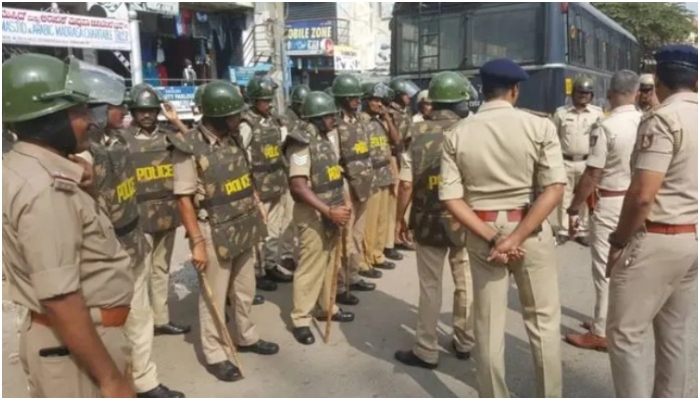
On Sunday (10th December) a woman was dragged out of her residence, stripped naked, tied to a pole, and beaten in Karnataka’s Belagavi by the relatives of a girl with whom her son had eloped. The incident reportedly happened in the Vantamuri village near Belagavi city. Chief Minister Siddaramiah and Home Minister G Parameshwara both took cognizance of the event and reacted to the incident. According to police, the woman’s son had an affair with the girl for some time.

The girl’s family raced to the boy’s house after learning that their daughter had eloped with the woman’s son. The girl’s family is said to have dragged the man’s mother outside her home, stripped her naked, tied her to a pole, and assaulted her.

Responding to the horrific incident, Chief Minister Siddaramaiah said, “Not just Belagavi, our government is strict everywhere. No matter what offence, we’ll take stringent action against those who commit a crime.”

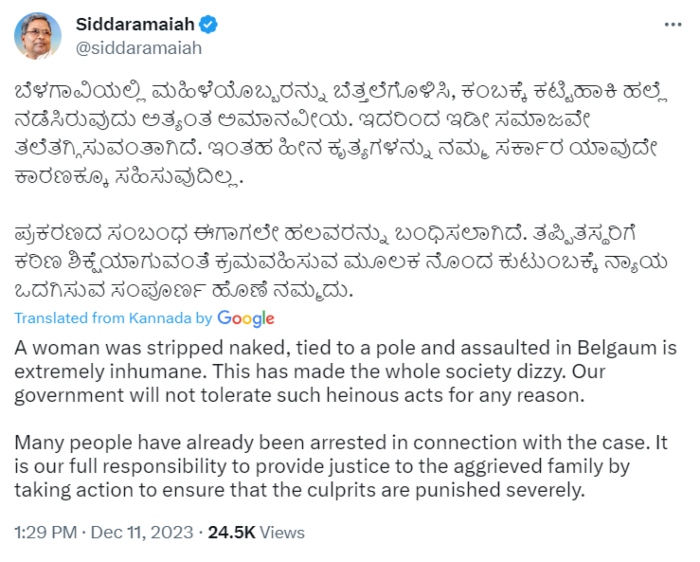
“A woman was stripped naked, tied to a pole, and assaulted in Belgaum is extremely inhumane. This has made the whole society dizzy. Our government will not tolerate such heinous acts for any reason,” the Chief Minister added on X.

Screenshot from X

“Many people have already been arrested in connection with the case. It is our full responsibility to provide justice to the aggrieved family by taking action to ensure that the culprits are punished severely,” he added.

Meanwhile, Karnataka Home Minister G Parameshwara also commented on the matter and said that seven persons who were actively involved in the crime had been arrested by the police and were about to be produced in court soon. The victim is undergoing treatment at the hospital and the Home Minister said that he would be visiting the victim.

“We will take action against the accused. A young couple had eloped. The girl’s family went to the man’s house, dragged the mother out, stripped her naked, and tied her to a pole before thrashing her. As soon as we got to know about it, police reached the spot, rescued the woman, and took her to a nearby hospital. She’s now in the hospital,” he was quoted as saying.

Reports mention that the incident happened at around 3 am on Monday (11th December). The Police immediately reached the spot after being informed about the incident. Seven people have been arrested so far in the case while 2 others are still absconding. Efforts are being made to nab the absconding accused.

The incident has been registered under the jurisdiction of the Kakati Police Station. The situation continues to remain tense in the Vantamuri village near Belagavi city as several policemen have been deployed at a village. A Karnataka State Reserve Police (KSRP) team, ACP and two Sub-Inspectors, and several policemen have also been deployed at the location to avoid any untoward incident.

Madhya Pradesh: Mohan Yadav to be new CM, 2 deputy CM names also announced

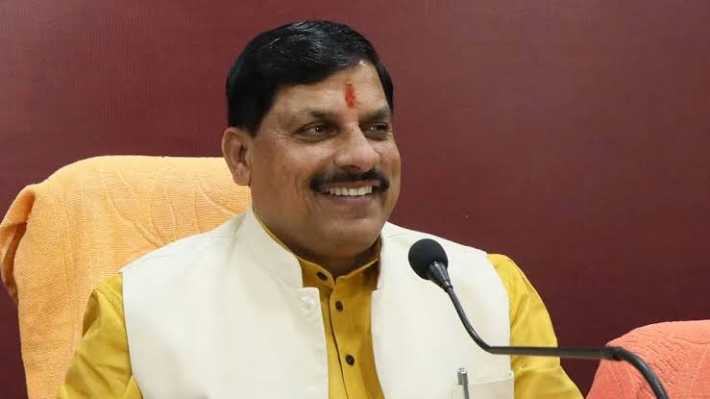
Mohan Yadav, who was a cabinet minister in the Madhya Pradesh Government headed by Shivraj Singh Chouhan, is the Bharatiya Janata Party’s (BJP) pick as the new Chief Minister of Madhya Pradesh.

Meanwhile, the state will have two Deputy Chief Ministers namely Jagdisgh Devda and Rajesh Shukla.

Union Minister Narendra Tomar will be Madhya Pradesh Assembly Speaker.

Yadav became MLA for the first time in 2013 from Ujjain Dakshin’s seat. In the 2018 Madhya Pradesh Legislative Assembly elections, he was once again elected and became MLA from the Ujjain Dakshin seat.

Earlier on July 2, 2020, he took the oath as cabinet minister in the Madhya Pradesh Government headed by Shivraj Singh Chouhan.

Earlier in the day, BJP central observers Manohar Lal Khattar, Dr K Laxman and Asha Lakra of Madhya Pradesh held a legislative party meeting.

The BJP on Thursday announced the three central observers, which include Haryana CM Manohar Lal Khattar, K Laxman, National President, OBC Morcha and Aasha Lakda, National Secretary for the state.

During the 2018 assembly polls, the Congress returned to power with veteran leader Kamal Nath taking the oath as the chief minister but a political upheaval rocked the state in 2020 after then-Congressman Jyotiraditya Scindia, along with 22 loyalist MLAs, switched over to the BJP camp.

The Congress government fell after being reduced to a minority and the BJP formed the government, with Shivraj Singh Chouhan returning as chief minister.

But this time again, when the BJP emerged victorious with a thumping majority, the party has appointed central observers so speculations are being made in the political corridor that the party may bring a new CM face in the state.

Madhya Pradesh went to poll for 230 assembly seats in a single phase on November 17 and the counting of votes was done on December 3.

The BJP, which had been battling close to 20 years of incumbency in the state, won a resounding mandate, bagging 163 seats, while the Congress finished a distant second at 66 seats. 

(This news report is published from a syndicated feed. Except for the headline, the content has not been written or edited by OpIndia staff)

Meet the 5 Supreme Court judges, led by CJI Chandrachud, who gave the historic judgement to uphold the decision to abrogate Article 370 

0

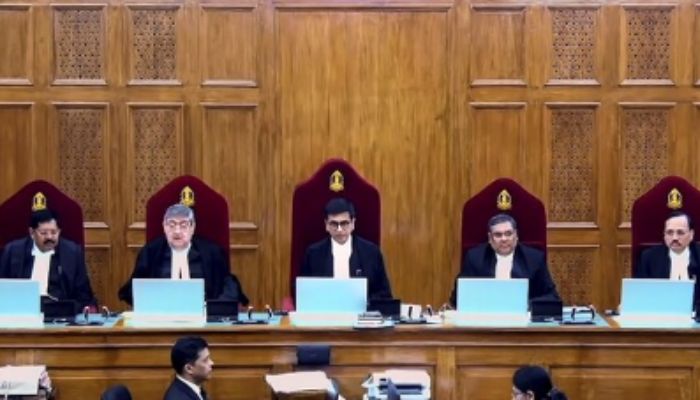
On 11th December (Monday), the five-judge Constitutional bench of the Supreme Court upheld the Center’s decision to abrogate Article 370. Chief Justice of India Justice DY Chandrachud, Justices BR Gavai, and Surya Kant gave a joint judgment, while Justices Sanjeev Khanna and Sanjay Kishan Kaul authored separate but concurrent judgments.

The apex court in its verdict held that the challenge to the proclamation of the presidential rule was not valid and that Article 370 was a temporary provision among others. In his judgment, CJI Chandrachud held that Jammu and Kashmir does not hold any internal sovereignty after accession to the Union of India. A detailed report of the Supreme Court verdict in this case can be read here.

Brief profile of the Justices comprising the 5-judge Constitutional bench that delivered this landmark verdict

  1. Justice DY Chandrachud is currently the Chief Justice of the Supreme Court of India, the master of the roaster, and the first among equals. 

Justice Chandrachud was born on 11th November 1959 in Mumbai. His father Yashwant Vishnu Chandrachud (YV Chandrachud) served as the 16th and longest-serving CJI. His father held the top post in India’s apex court from 22nd February 1978 to 11th July 1985.

DY Chandrachud completed his BA (Economics Honors) from St. Stephen’s College, New Delhi. He did his LLB from Campus Law Centre, University of Delhi in 1982. He then secured an LLM degree and Doctorate of Juridical Sciences (SJD) from Harvard Law School, USA in 1986.

He practiced law at the Supreme Court of India and the Bombay High Court. In June 1998, he was designated as a Senior Advocate by the Bombay High Court. From 1998 until he was appointed a Judge, he was the Additional Solicitor General of India. 

On 29th March 2000, he assumed the role of Additional Judge at the Bombay High Court. Subsequently, on 31st October 2013, he took the oath as the Chief Justice of the Allahabad High Court. Later, on 13th May 2016, he was elevated to the Supreme Court of India. He is slated to retire as the CJI on 10 November 2024 attaining the retirement age of 65 years. 

  1. Justice Sanjay Kishan Kaul – (Born on 26th December 1958), Justice Kaul is the second most senior judge of the Supreme Court and hails from a Kashmiri family. He did his schooling at Modern School, New Delhi till 1976 and graduated from St. Stephen’s College in 1979. 

He secured his LL.B. Degree from The Campus Law Centre, Delhi University in 1982. He remained Advocate-on-Record of the Supreme Court of India from 1987 to 1999 and was designated as a Senior Advocate in December 1999. 

On 3rd May 2001, he was elevated to Additional Judge of the Delhi High Court and appointed as a permanent judge on 2nd May 2003. In 2013, he became the Chief Justice of Punjab and Haryana High Court. 

A year later on 26th July 2014, he assumed the duty of the Chief Justice of Madras High Court. Afterward, on 17th February 2017, he was appointed as a judge in the Supreme Court.

  1. Justice Sanjeev Khanna – (Born on 14th May 1960) Justice Sanjeev Khanna completed his schooling at the prestigious Modern School of Delhi. He studied law at the Campus Law Center of Delhi University. After graduation, he enrolled as an advocate with the Delhi Bar Council in 1983.

As an Additional Public Prosecutor in the Delhi High Court, he argued several criminal cases and was appointed by the Court as Amicus Curiae. For about seven years, he worked as Senior Standing Counsel of the Income Tax Department in the Delhi High Court.

In 2005, he was elevated as an Additional judge of the Delhi High Court and was made a permanent judge in 2006. He has been a Supreme Court judge since 18th January 2019 and is scheduled to retire on 13th May 2025.

  1. Justice Bhushan Ramkrishna Gavai – He was born on 24th November 1960 in Amravati. Justice Gavai joined the Bar on 16th March 1985. He worked with former Advocate General and High Court judge Raja Bhosle until 1987. 

From 1987 to 1990, he practiced independently in the Bombay High Court. After 1990, he practiced mainly before the Nagpur bench of the Bombay High Court.

On 17th January 2000, he was appointed as Government Pleader and Public Prosecutor for the Nagpur Bench. Subsequently, on 12th November 2005, he became a permanent judge of the Bombay High Court. He was then elevated as Judge of the Supreme Court of India on 24th May 2019 and is scheduled to retire on 23rd November 2025.

  1. Justice Surya Kant – He was born on 10th February 1962 in a middle-class family in Hisar (Haryana). Justice Surya Kant graduated from Government Post Graduate College, Hisar in 1981. 

He obtained his Bachelor of Laws degree from Maharishi Dayanand University, Rohtak in 1984. He then practiced law in the District Court, Hisar from 1984. He shifted to Chandigarh in 1985 to practice in the Punjab and Haryana High Court. 

Later on 7th July 2000, he became the youngest Advocate General of Haryana to be appointed to that post. In March 2001, he was designated as a senior advocate. 

He was the Advocate General of Haryana before becoming a permanent judge at the Punjab and Haryana High Court in January 2004. Later, on 5th October 2018, he was appointed as the Chief Justice of Himachal Pradesh High Court. He became a judge in the Supreme Court of India on 24th May 2019 and is scheduled to retire on 9th February 2027.

In 1954, Article 35A was introduced under Article 370, empowering the Jammu and Kashmir government to define permanent residents. The said article, which has now been revoked alongside Article 370, prohibited individuals outside the state from establishing permanent residence, buying land, or holding certain positions in government offices.

Following the abrogation of Article 370, two Union Territories named Jammu and Kashmir (with a legislative body) and Ladakh (without a legislative body) were created. As assembly elections have not taken place in either of the UTs, they are currently being administered by Centre-appointed lieutenant governors.

In May 2022, the Jammu and Kashmir Delimitation Commission redefined electoral boundaries, names, and the number of assembly seats. Delimitation is a precursor to future assembly elections. Reserved seats for scheduled tribes and representation for Kashmiri migrant communities were introduced alongside the delimitation process.

Furthermore, following the abrogation of Article 370, elections in Jammu and Kashmir opened for those who settled in the region and were previously deemed as “outsiders”. This inclusive move allowed West Pakistan refugees residing in the UT for 70 years to participate actively in the local elections.

The socio-political landscape of the region has changed extensively over the past four years. Almost zero incidents of stone pelting, paced-up infrastructure, and introduction of government schemes in the region are some of the examples of changes brought to J&K following the abrogation.


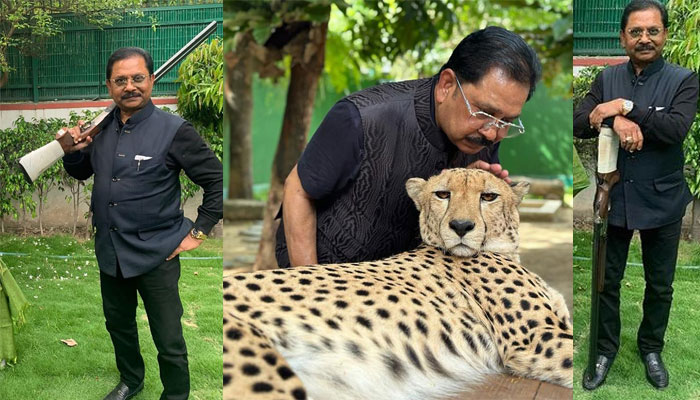
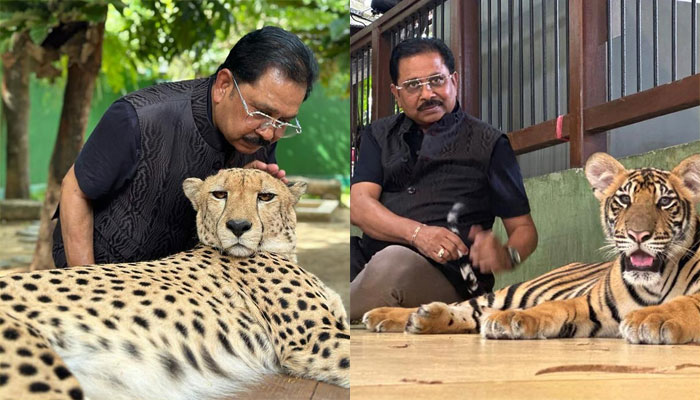
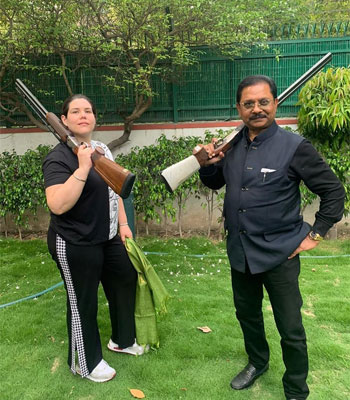
Dhiraj ‘Shaukeen’ Sahu – From tigers to rifles, photos of Congress MP caught in the biggest ever IT raid go viral on social media

Congress’s Rajya Sabha MP Dhiraj Prasad Sahu is at the centre of the biggest IT raid ever in the country. So far, over 400 crores of unaccounted cash has been recovered from the premises of Odisha-based Boudh Distillery Private Limited and its related organisations, where Sahu is a partner. Amidst the controversy around recovery of such a massive cache of cash, old photographs of Dhiraj Sahu posing with tigers and guns have gone viral on social media.

Undated photographs of Sahu posing with a tiger and a cheetah at a zoo in Singapore are making rounds on social media. It is unclear when these photos were taken.

Source: Aaj Tak

Apart from photos with tigers, Sahu’s photographs posing with rifles have also gone viral. These photographs were posted on Facebook in March this year when Olympic Athlete and world champion in shooting, Alejandra Zavala, visited his residence in Delhi. 

Source: Facebook/Dhiraj Sahu

Earlier, his old tweets criticising the Modi government went viral, where he claimed the Indian economy was in a bad shape.

Who is Dhiraj Prasad Sahu

Dhiraj Prasad Sahu is a Rajya Sabha MP for Congress from Jharkhand. His family has been associated with the Congress party since independence. He became Rajya Sabha MP in by-polls in 2009 for the first time. In 2010, he was re-elected as RS MP for the second time; in 2018, he was re-elected for RS by Congress for the third time.

Dhiraj Sahu actively participates in parliamentary proceedings. Sahu was also part of Rahul Gandhi’s Bharat Jodo Yatra. In recent raids at Odisha-based Boudh Distillery Pvt Ltd, where Dhiraj Prasad Sahu is a partner, the Income Tax Department recovered over 400 cr of unaccounted cash. Congress Party has distanced itself from their own MP after the recovery of the cash.

Historic tax raid recovers Rs 454 crore linked to Congress MP Dhiraj Sahu. A look at 7 of the biggest cases of cash recoveries in raids in India

0

Cash, wades of cash and more cash. It’s as if Congress MP Dhiraj Sahu has hit a secret lottery whose source no one knows. It is being called the highest cash haul of all time.

On 7th December, the Income Tax Department conducted raids at Boudh Distilleries Private Limited (BDPL) in Odisha and Jharkhand. The firm is reportedly linked to Congress Rajya Sabha MP Dhiraj Sahu.

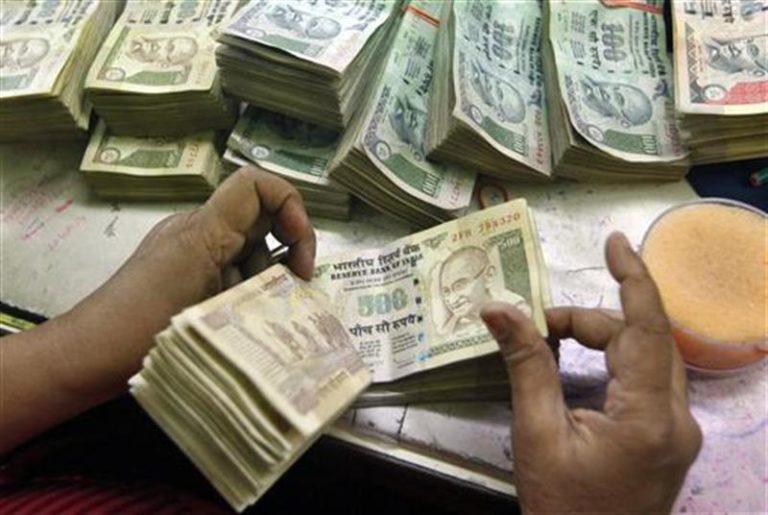
A total of Rs 454 crore cash has been seized in the raids conducted by the Income Tax Department across multiple locations. Trucks were called in to carry the heaps of cash to the bank. Cash-counting machines malfunctioned owing to the overload of cash.

Besides the cash, 60 gold, ornaments and biscuits has also been seized. The 4-day long marathon cash seizure concluded on Monday (11th December) morning.

More than half a dozen companies have been raided by the agency including S Shiw Ganga and Company and Ranisati Paddy Procession Private Limited on suspicion of tax evasion.

Raids were also carried out at the residences of two prominent liquor entrepreneurs, Deepak Sahu and Sanjay Sahu, in Titilagarh, Odisha.

In Bolangir, the liquor making units (bhattis) of Baldeo Sahu & Group of Companies and their offices were raided by dozens of I-T sleuths with CISF personnel.

Dhiraj Prasad Sahu is a partner in Baldev Sahu Infra Pvt Ltd, a group company of Budha Distilleries. He has been a Rajya Sabha MP from Jharkhand since 2009. Sahu’s family has been linked to Congress for a long time.

Sahu is a Rahul Gandhi loyalist. In November 2022, he participated in Rahul Gandhi’s Bharat Jodo Yatra.

Later, in February 2023, Sahu published a video from the Yatra and wrote, “Historic Bharat Jodo Yatra ended up winning the hearts of Indians. Honoured to be a part of this historic journey.”

Meanwhile, the Congress has distanced itself from the leader and has demanded an explanation from him.

Ironically, during the raids, an old post of the Congress leader did the rounds on social media wherein he was critical of the demonetisation.

PM Modi and Union Home Minister Amit Shah have both hit out at the Congres. The PM in a post on X said that every penny will have to be returned, this is Modi’s guarantee.

Dhiraj Sahu has broken the records of the likes of Piyush Jain, the Kanpur-based perfume merchant raided by the DGGI and IT Dept.

In December 2021, the Directorate General of GST Intelligence (DGGI) had unearthed more than Rs 196 crore and 23 kg of foreign gold at his premises in Kannauj and Kanpur over a four-day long raid.

600 litres of sandalwood oil was also recovered. Of the total amount, Rs 19 crore cash was recovered from his Kannauj residence and Rs 177.45 crore cash was recovered from his house in Kanpur.

DGGI and IT authorities had to take the help of SBI for machines and manpower to count mounains of Rs 500 and Rs 200 notes.

In February 2022 in Jharkhand, ED recovered crores of rupees in cash from the residence of the CA of IAS Pooja Singhal, who is considered a close aide of CM Hemant Soren.

Rs 25 crore were seized in raids which spread to the New Delhi, Mumbai, Jaipur, Faridabad, Gurugram, Muzaffarpur, Ranchi, and other cities. Singhal is accused of misappropriation of MGNREGA funds along with other shady financial activities in the Khunti region. The MGNREGA scam case amounts to about Rs 18.8 crore in Khunti and irregularities in Chatra amount to Rs 6 crore in Jharkhand.

In 2022, the Enforcement Directorate seized cash amounting to over Rs 50 crores and Rs 4.31 crore worth of gold from locations linked to Arpita Mukherjee, a close associate of former Bengal minister Partha Chatterjee in the Bengal SSC recruitment scam.

As per reports, stacks of cash began to flow out when the central agency broke open the cupboard inside Mukherjee’s bedroom. Cash was also hidden in a loft over the attached washroom.

Besides the cash, gold bars, jewellery, luxury cars, diamond rings and property papers were also recovered by the ED.

The extent of the scam is so big that a fresh recovery has been made as recently as last week this time by the CBI. Rs 34 lakh cash and 1.2 kg gold was seized by the agency from the residence of TMC MLA Jafikul Islam.

In Hyderabad in 2021, the IT conducted raids at the premises of a pharma company named Hetero pharmaceutical and recovered unaccounted income of Rs 550 crore. It seized Rs 142 crore cash.

Voting in Tamil Nadu’s Vellore constituency was cancelled in 2019 due to seizure of at least Rs 12 crore cash from the associate of a DMK leader Durai Murugan, the then MLA from Vellore and DMK treasurer.

In 2018, a whopping Rs 163-crore cash and 101-kg bullion was seized in raids by the Income Tax department in Tamil Nadu at several premises of a road construction company.

The firm reportedly had admitted to tax evasion and came forward to pay tax and penalty and return. The accused had kept Rs 24 lakh cash in his house whereas the rest was stored at 10 different places belonging to his employees and associates.

In 2016, the Election Commission seized unaccounted cash amounting to Rs 104 crore during the assembly elections. The staggering amount reportedly surpassed cash seizures made in West Bengal, Assam, Kerala and Puducherry.

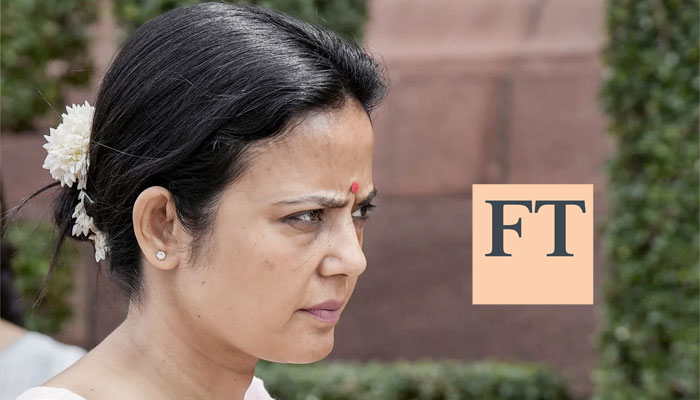
FT comes to Mahua Moitra’s rescue, plays the ‘woman’ victim card to gloss over bribery charges and misuse of parliamentary privilege

On 8th December, Lok Sabha expelled Trinamool Congress’s MP Mahua Moitra based on the recommendations of the Ethics Committee in a cash-for-query case. Moitra was expelled hours after the Ethics Committee report was tabled in Lok Sabha. Following her expulsion, the left ecosystem, including the Western media, came to her rescue.

Financial Times published a report titled “Indian parliament expels firebrand female critic of Modi and Adani”, where Moitra was painted as a female victim. The report’s title projected a narrative that she was expelled for being a critic of Prime Minister Narendra Modi and businessman Gautam Adani.

FT projected Moitra as a prominent female opposition MP known for her “criticism of PM Modi and Adani conglomerate”. The report further claimed that she was expelled for “immoral and indecent” conduct, which was, according to Moitra, trumped-up allegations. The report had a vague mention of the actual allegations, which was asking questions in the Parliament on behalf of Dubai-based Indian businessman Darshan Hiranandani in exchange for gifts.

The report further mentioned that the matter came to the fore out of the “bitter custody battle” between pet rottweiler Henry and her ex-partner, Jai Anant Dehadrai. However, FT completely ignored the fact that Moitra not only shared her Lok Sabha credential with unauthorised personnel but also allegedly received benefits in the form of expensive gifts, cash and renovation of her house.

The Ethics Committee report stated her account was accessed from Dubai.

On 9th November, the Ethics Committee’s draft report accused Moitra of “unethical conduct”. The report stated that she shared her login credentials with unauthorised individuals. The draft revealed that Moitra made multiple trips to UAE, and her account was logged in 47 times from Dubai. The Ethics committee sought a report on IP addresses and emphasised the legal consequences of the MP’s action. The committee recommended her expulsion from the Lok Sabha. In the parts of the conversation that OpIndia accessed, Moitra accepted twice that she had shared credentials with Darshan Hiranandani.

Hiranandani revealed he paid Moitra to ask questions in Lok Sabha.

Hiranandani, in his affidavit, accepted paying for most of the questions asked by Moitra in the Lok Sabha in the form of cash and gifts. He also acknowledged that the TMC MP provided him with her Parliamentary login credentials, which he used to ask questions from the central government on her behalf. Hiranandani further revealed that the TMC MP was “over-ambitious”, and in her desperation to shoot to fame, she took the advice of her few friends who told her that the only way to be recognised at a national level is to target PM Modi and since the PM had an impeccable reputation, the only tenable way to do that was to malign Gautam Adani.

Mahuagate: TMC MP Mahua Moitra faces allegations of ‘cash for query’

On 14th October, the Indian political scene experienced a major tremor as BJP MP Nishkant Dubey wrote to the ethics committee seeking an inquiry against TMC MP Mahua Moitra in the ‘Cash for Query’ matter. He based his complaint on the letter written by Supreme Court lawyer Jai Anant Dehadrai, who alleged that most of the questions asked by the TMC MP in Lok Sabha directly or indirectly benefit businessman Darshan Hiranandani. Dehadrai also accused Moitra of “kidnapping” his pet dog Henry, adding another layer of complications to Mahuagate.

Moitra filed a case against Dubey and Dehadrai but never denied accepting gifts. Interestingly, she has also been accused of sharing her Lok Sabha credentials with Hiranandani so he can post questions independently. Hiranandani has reportedly turned approver in the case and submitted an affidavit suggesting the allegations against Moitra are true.

Dehadrai and Dubey were called to submit evidence of Moitra’s alleged wrongdoings in front of the ethics committee on 26th October. When the Ethics Committee initially called Moitra, she refused, claimed to have prior engagements and sought another date. She got another date for the hearing, and on the day of the hearing, she played the victim card while coming out, claiming she faced “cheerharan” like Draupadi from Mahabharat. Henry was later returned to Dehadrai.

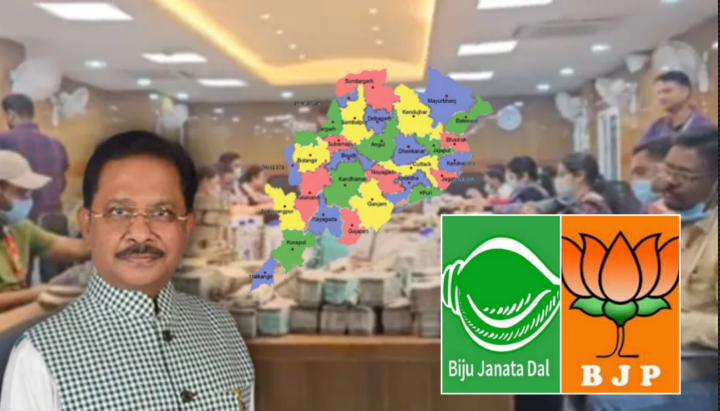
‘Dhiraj Sahu is from Jharkhand, but BJD govt in Odisha is running his liquor empire’, says BJP: How the I-T raids may impact Odisha politics

The Income Tax raids on the liquor empire of Jharkhand MP Dhiraj Sahu have entered the 6th day today. The biggest cash haul was found in Odisha’s Balangir, in a Bhatti (liquor manufacturing unit) in Balangir, Odisha. Cash was loaded in 176 bags and brought to the main SBI branch in the city where counting was going on for 5 days. Even after the initial haul, raids are still ongoing on several office and factory premises of Baldev Sahu and Sons Ltd, and on the residences of the company’s owners.

Balangir is a town in the western part of Odisha. Most people in India had probably never heard of its name until news flashed that over 300 crores in cash have been seized from a liquor manufacturing unit in this town. Those viral videos of almirahs full of currency notes are from the office of Baldev Sahu and Sons Ltd located in Sudpada, Balangir.

The viral videos of people busy counting currency seen on social media and TV news are not from Jharkhand but from Balangir. While Congress MP Dhiraj Sahu is from Jharkhand, and the raids include his Lohardaga and Ranchi properties, it is notable here that most of the cash has been seized not from Jharkhand, but from towns in Western Odisha like Balangir, Sambalpur, and Titilagarh.

One of the companies raided by the I-T department was Boudh Distilleries Pvt Ltd. Balangir’s Baldev Sahu and Sons Pvt Ltd was in a partnership with BDPL. As per reports, S Shiw Ganga and Company, BDPL, Baldev Sahu Infra Private Limited, Kwality Bottlers Private Limited (IMFL Botting), Kishore Prasad Vijay Prasad Beverages Private Limited, and other such companies are all linked with Dhiraj Sahu, who hails from Lohardaga in Jharkhand.

Boudh is a tribal-dominated district in central Odisha. Dhiraj Sahu’s son Ritesh Sahu is the MD of Boudh Distilleries Pvt Ltd, while his elder brother Uday Shankar Prasad is the chairman.

The Congress MP from Jharkhand has a multi-billion liquor empire spread across several districts of Odisha. Now that the shocking amount of cash seized has jolted the I-T officials and the public in general to the enormity of the liquor empire, there are questions rising on Odisha’s ruling party.

“Can a Jharkhand businessman-turned-politician operate such a vast liquor business without active political patronage from ruling party politicians in Odisha”?

This question is slowly heating up Odisha politics as visuals of unprecedented amounts of cash, almirahs full of currency notes and bank branches running out of cash-counting machines dominate the news space.

BJP MP from Sundargarh, Kusum Tete, has been openly saying that the liquor empire spread across Odisha has links to local BJD leaders. She stated that she has raised the issue several times in the assembly, but the BJD government has not paid heed to her concerns.

Naming BJD’s former MLA Jogesh Singh, Kusum Tete stated that he has links to Dhiraj Sahu’s liquor empire. Tete stated that the liquor manufacturing units were earlier registered in the name of Singh’s mother. Tete stated that she has raised the issue several times in the assembly but the government took no action.

MP from Jharkhand, liquor empire working in several districts of Odisha

The largest amount of cash was found from the liquor manufacturing units of Baldev Sahu and Sons, in Sudpada, Balangir, a town in Western Odisha. As of 10th December, the SBI branch in Balangir declared that all the 176 bags of cash brought from the premises of Baldev Sahu and Sons were counted. This counting took 5 days, and involved dozens of bank staff, and counting machines. Reports in Odisha have stated that the total amount of cash seized from Odisha is over 400 crores and nearly 60 kgs of gold.

2 more liquor traders, reportedly the relatives of Dhiraj Sahu, named Deepak Sahu and Sanjay Sahu, were raided in Titilagarh, a town in Balangir district. I-T seized 11 crores of cash from the premises of the Sahu brothers. Raids at the Sambalpur unit of the company found 37.5 crores.

The political implications of the case were hinted at by Union Minister Dharmendra Pradhan in Odisha yesterday. Without taking names, he stated that the money has been looted from the poor people from Odisha and Modi government will ensure that the powerful people linked with the ‘family business’ of the Congress leader (Dhiraj Sahu), will have to answer before the public of Odisha.

The BJP held a press conference in Bhubaneswar yesterday. State spokesperson Lekhashree Samantsinghar took names of senior leaders and ministers in the BJD government and stated that the Jharkhand MP Dhiraj Sahu is just the owner of the companies, but his liquor empire in Odisha was being ‘managed’ by the ruling BJD.

“Jharkhand Congress MP is only the owner of the company. BJD govt was managing it in Odisha. What was the Vigilance, Crime Branch, Excise, EOW doing when the company was amassing such wealth, and how the state govt had no information about it? This liquor business is the source of money for BJD during elections”, she stated.

Meanwhile, local news channels in Odisha are abuzz with political whispers and concerns from the public. Claiming that the liquor empire money was a major source of political funding in the state, some have alleged that the Odisha government has not issued fresh tenders for liquor outlets in the last 25 years. Some select traders have been getting renewed licenses every year. Allegations have been raised that the Naveen Patnaik government’s liquor policy has been designed to favor the manufacturers of country liquor, because the money from these businesses funds the ruling party.

The names of several BJD leaders are being cited in links with the Sahu brothers. The names of Ministers Tukuni Sahu (Titilagarh), Niranjan Pujari (Sonepur), Rajendra Dholakia (Nuapada) and Pradip Amat (Boudh) are being cited by BJP and many local news outlets as the alleged benefactors of the massive liquor trade and country liquor manufacturing units flourishing across the state. Odia channel Argus News reported that the liquor traders were regularly paying the BJD leaders and were supplying vehicles, cash, and liquor during the election campaigns of these leaders.

The BJP, meanwhile, has stated that it will organize protests in every subdivision of the state and will demand answers from the BJD leaders. The I-T raids have reportedly also seized a ‘red diary’ from the premises of liquor traders that mentions the names of many government officials, politicians and powerful individuals who were in the payrolls of the liquor empire.

At the national level, PM Modi’s tweet stating that every paisa looted from the people will be accounted for had displayed the government’s intention that the political angles of the liquor trade are to be uncovered. The BJP has already started protests against the Congress. There are reports that the ED might start investigations into the case considering the massive amount of money and political links involved.

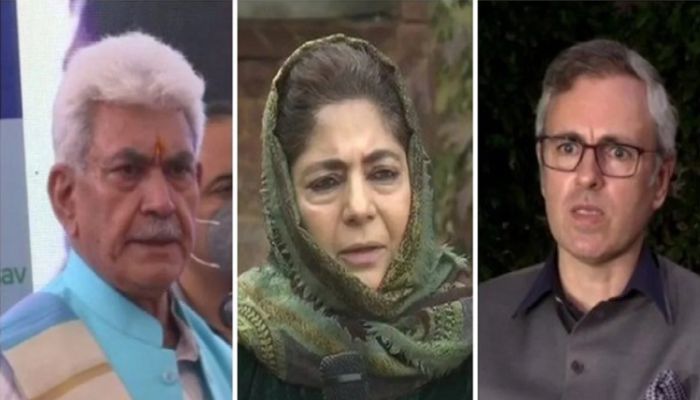
“Totally baseless”: Jammu-Kashmir LG refutes the claim that Mehbooba Mufti and Omar Abdullah are under house arrest

On 11th December (Monday), the Supreme Court, while announcing its judgement on petitions related to the Abrogation of Article 370, upheld the Centre’s decision from August 2019. However, hours before the pronouncement of the judgement, People’s Democratic Party (PDP) chief and National Conference (NC) leader Omar Abdullah alleged that they had been put under house arrest, a claim that has been categorically denied by the Jammu and Kashmir Lieutenant Governor Manoj Sinha and Srinagar Police. 

The Jammu and Kashmir-based leaders had claimed that the police had illegally locked them up inside their homes before the Supreme Court was set to deliver its verdict on Article 370. 

Alleging that Mehbooba Mufti’s doors had been sealed, PDP tweeted, “Even before Supreme Court judgement is pronounced, Police has sealed the doors of the residence of PDP President Mehbooba Mufti and put her under illegal house arrest.” 

Likewise, the National Conference, in a tweet, said, “Early this morning, JKNC VP Omar Abdullah was locked up inside his house. What a shame!” 

However, J&K LG Manoj Sinha refuted their allegations terming it “baseless”. Reacting to their claims, the LG said, “This is totally baseless. No one has been put under house arrest or arrested due to political reasons in Jammu and Kashmir. It is an attempt to spread rumours.”

Additionally, the Srinagar Police took to their official handle and denied the allegations of PDP and NC leaders’ house arrest. The Police asserted, “No person has been put under house arrest.”

In another post, the Srinagar Police asked the common public to desist from spreading misinformation and rumour-mongering on social media. 

The post read, “Common public is appealed to desist from posting/sharing/propagating instigative/provocative content, misinformation & rumour mongering across social media platforms.”  

However, despite the categorical denial of their allegations by LG and Srinagar Police, NC leader Omar Abdullah repeated the claims of being locked in his own house.

Reacting to media reports in which Former Congress leader Ghulam Nabi Azad gave his response to the SC verdict on Article 370, Abdullah further claimed that media persons have not been allowed to take his reaction. 

Notably, on 5th August 2019, several Jammu and Kashmir-based leaders, including Mehbooba Mufti, Omar Abdullah, Farooq Abdullah, and other Kashmiri leaders were kept under house arrest. 

Subsequently in the afternoon, the Centre passed bills to strip Jammu and Kashmir of its special status and bifurcate the erstwhile state into two Union Territories (UTs) — Jammu and Kashmir and Ladakh which has been upheld by the Supreme Court in its verdict today. 

OpIndia Exclusive: Niyaz, Saddam, Arbaaz and 13 others booked for assaulting Gorakshaks with swords and iron rods in Ahmednagar

On 7th December, Maharashtra Police booked 16 persons for launching a brutal attack on Gorakshaks and threatening them with death in the Loni region of Ahmednagar district. The accused attacked local Hindus after the latter called the police and exposed the accused who were caught slaughtering bovines in the Mamdapur village near Loni. The accused attacked the Hindu Gorakshaks using swords and iron rods, causing severe injuries to them. The victims were immediately shifted to the local hospital and are undergoing treatment.

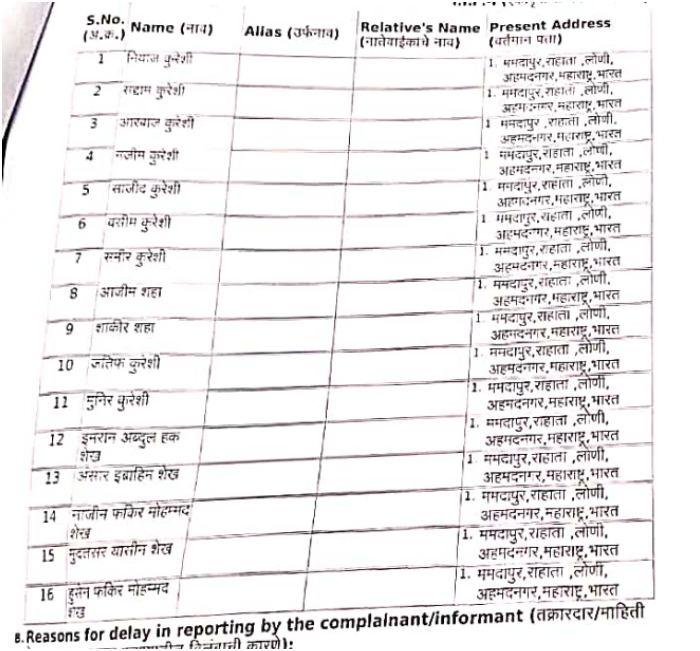
The accused persons have been identified as Niyaz Qureshi, Saddam Qureshi, Arbaaz Qureshi, Sajim Qureshi, Saajid Qureshi, Wasim Qureshi, Samir Qureshi, Ajim Shah, Shakir Shah, Jatif Qureshi, Munir Qureshi, Imran Abdul Haq Sheikh, Ansar Ibrahim Sheikh, Najim Fakir Mohammed Sheikh, Muddasar Yasim Sheikh and Hussain Fakir Mohammed Sheikh.

FIR copy obtained by OpIndia

These persons have been booked under sections 307 (punishment for attempt to murder), 323 (punishment for voluntarily causing hurt), 324 (causing hurt using dangerous weapons), 427 (mischief), 506 (criminal intimidation), 143 (unlawful assembly), 147 (rioting), 148 (Rioting, armed with deadly weapon), 149 of the Indian Penal Code, 1860, sections 4 and 25 of the Arms Act and 37(1) and 135 of the Maharashtra Police Act, 1951.

As per the FIR copy obtained by OpIndia, the incident is said to have happened on 6th December 2023 at around noon when some of the local Hindus and Gorakshaks learned that some smugglers were illegally transporting the bovines from Loni market to Mamadpur village for illegal slaughter. The Gorakshaks immediately informed the local police who reached the spot.

The Hindu gorakshaks identified as Appa Naikwade, Ishwar Tilekar, Sairaj Bendre, and others then assisted the Police and showed them the Mamdpur location where the cows were being illegally slaughtered. “I along with Ishwar, Sairaj went with the police in our private vehicle to Mamadpur spot to show the police the location of illegal cow slaughter. The Police saw some of the Bovines tied to a rope for illegal slaughter. However, the accused persons saw us and they launched a brutal attack on us,” Appa Naikwade, one of the victims said.

As per the complaint, the 16 identified accused and 10-12 other unidentified accused arrived at the spot with sharp weapons and threatened the gorakshaks as they attempted to release the bovines with the help of the police. The bones and other body parts of the already slaughtered bovines could be spotted at the location. The accused saw the gorakshaks and launched a brutal attack.

The 16 identified accused used swords, iron rods, and sticks to assault the gorakshaks resulting in severe injuries. The accused also threatened the gorakshaks saying, “We won’t leave you this time, kill them all.” The Police then tried to settle the matter and rescued the gorakshaks to a nearby farm. However, the victims had attained severe injuries by then.

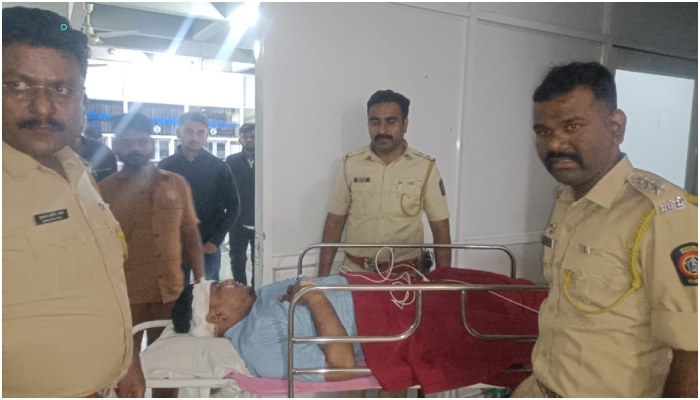
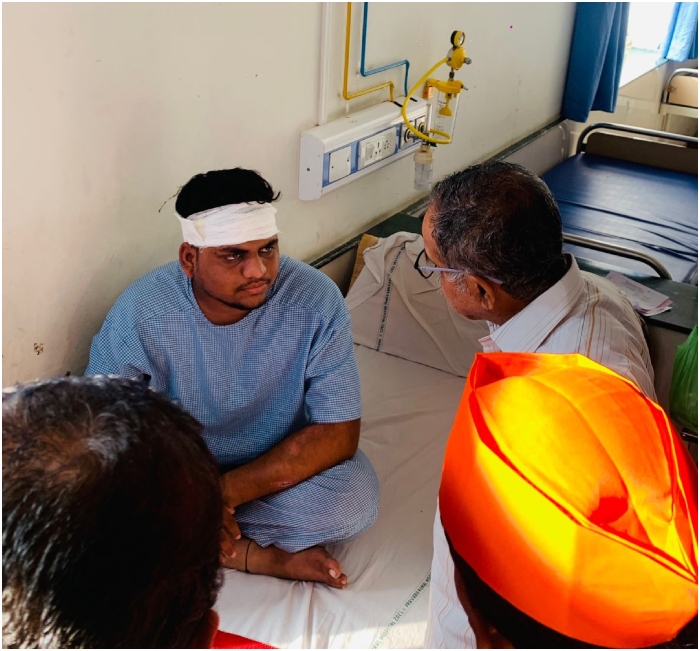
One of the victims identified as Sairaj has been admitted to the hospital and has attained severe injuries. OpIndia tried to contact the victim but the latter could not speak. He has been advised to take rest by the doctors. OpIndia also tried to contact the Loni Police station where the complaint has been filed, but the calls remained unestablished. Further probe is underway.

Victim Sairaj has been admitted to the hospital (Image exclusively obtained by OpIndia)

Cow protection has been painted as a ‘communal’ issue where Gorakshaks are depicted as rogue groups that attack ‘innocent’ Muslims transporting cows to slaughterhouses. Cattle are a source of livelihood for millions in rural India and are loved as their family members. Cows, especially, are also considered holy by Hindus, Jains, and Sikhs alike, and slaughtering them is considered to be a sin.

The government has imposed a ban on cow slaughter as per the Animal Welfare Act. Despite this, numerous cows, bullocks, cattle, and other animals are smuggled across Telangana state at night in both large and small vehicles from the state of Maharashtra.

Earlier on 20th November, a similar incident was reported from the Satara district of Maharashtra. A 29-year-old Gorakshak identified as Wagheshwar Adake was brutally assaulted by a group of ‘smugglers’ who were illegally transporting cattle for slaughter from the Barad Marketyard area of Phaltan in Maharashtra’s Satara district. The victim was attacked by a sharp knife after he stopped the truck carrying around 35-40 buffaloes illegally on the Phaltan-Pandharpur road.

On Tuesday (10th October) Gorakshaks in Pune saved two cows from the clutches of cow smugglers who were taking the cows to a slaughterhouse in Pune. Iqbal Alam and other two smugglers were arrested in this case based on the complaint filed by Gorakshak Upendra Balkavde. In another incident in the Pune district, cow meat was seized from a car in Manchar on 9th October.

‘Resounding declaration of hope, progress and unity’ – PM Modi reacts to Supreme Court’s decision on abrogation of Article 370

0

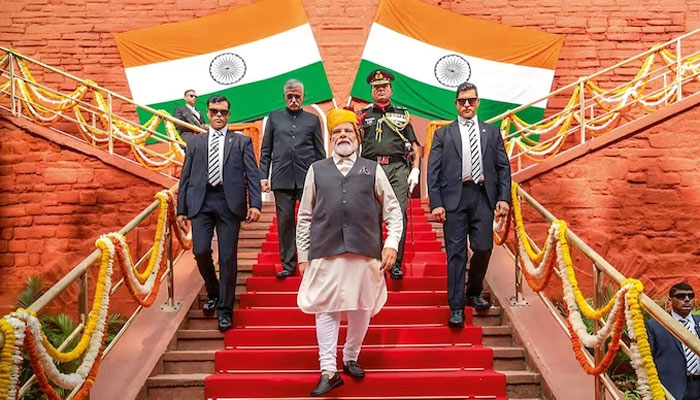
On Monday, 11th December, Prime Minister Narendra Modi reacted to the Supreme Court’s judgment to uphold the abrogation of Article 370 in Jammu & Kashmir and Ladakh. In a post on X (formerly Twitter), the PM said, “It is a resounding declaration of hope, progress and unity for our sisters and brothers in Jammu, Kashmir and Ladakh.”

PM Modi further assured the people of Jammu, Kashmir, and Ladakh that India’s government is committed to fulfilling their dreams. He added that his government will ensure that “the fruits of progress not only reach you but also extend their benefits to the most vulnerable and marginalised sections of our society who suffered due to Article 370.”

The Prime Minister said, “Today’s Supreme Court verdict on the abrogation of Article 370 is historic and constitutionally upholds the decision taken by the Parliament of India on 5th August 2019; it is a resounding declaration of hope, progress and unity for our sisters and brothers in Jammu, Kashmir, and Ladakh. The Court, in its profound wisdom, has fortified the very essence of unity that we, as Indians, hold dear and cherish above all else. I want to assure the resilient people of Jammu, Kashmir and Ladakh that our commitment to fulfilling your dreams remains unwavering. We are determined to ensure that the fruits of progress not only reach you but also extend their benefits to the most vulnerable and marginalised sections of our society who suffered due to Article 370. The verdict today is not just a legal judgment; it is a beacon of hope, a promise of a brighter future and a testament to our collective resolve to build a stronger, more united India.”

Supreme Court upheld abrogation of Article 370

On 11th December, the Supreme Court of India upheld the Centre’s decision to abrogate Article 370. In his judgment, CJI Chandrachud held that Jammu and Kashmir does not hold any internal sovereignty after accession to the Union of India. Furthermore, CJI said that Article 370 was a temporary provision, and it was introduced to serve a transitional purpose to serve an interim process. It was introduced due to the war-like conditions in the state. CJI added that the textual reading showed it was a temporary provision, and thus it was placed in part 21 of the constitution.