Home Blog Page 169

CJI Gavai’s mother attacks Dussehra as a festival ‘harming social consciousness’: Turns RSS Vijaydashami invite into a Hinduphobia rant, but son Rajendra insists ‘she will attend’

The Rashtriya Swayamsevak Sangh (RSS) recently invited Kamaltai Gavai, mother of the Chief Justice of India (CJI), B R Gavai, to an event organised to mark Vijayadashmi and centenary of the organisation in Maharashtra’s Amravati district. The program is scheduled for 5th October 2025. Kamaltai Gavai, however, has not only rejected the invite but also expressed her Hinduphobic opinions while asserting that she is an ‘Ambedkarite’.

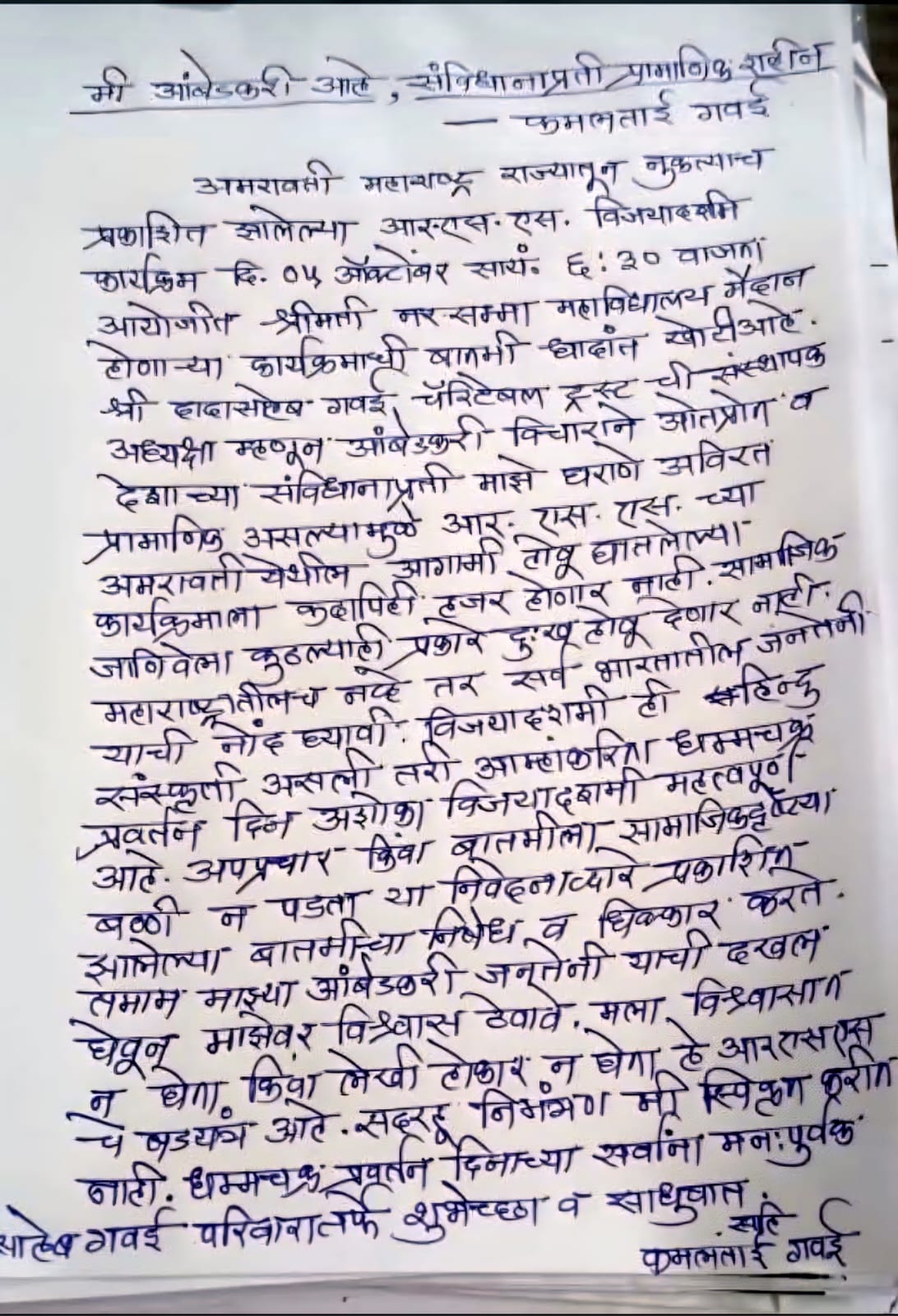
Dismissing the media reports claiming that she would be attending the RSS Vijayadashami program, Kamaltai Gavai stated in a letter written in Marathi, that she is deeply rooted in Ambedkarite ideology, and is committed to the Indian Constitution. Thus, she would not attend the RSS-organised event “under any circumstances”. She further suggested that attending an event celebrating a Hindu festival would “harm social consciousness”.

“The news recently published about the RSS Vijayadashami program scheduled for October 5 at 6:30 PM at the Shrimati Narsamma Mahavidyalaya Ground in Amravati, Maharashtra, is utterly false. As the founding president of the Dada Saheb Gavai Charitable Trust, deeply rooted in Ambedkarite ideology, and with my family’s unwavering commitment to the Constitution of India, I will never attend or support the upcoming RSS program in Amravati under any circumstances. I assure you that I will not cause any harm to social consciousness in any way,” Gavai’s letter reads.

Kamaltai Gavai further stressed that while Vijayadashami holds significance in Hindu culture, for Buddhists like her, ‘Ashok Vijadashami’ or the commemoration of Maurya emperor Ashoka’s embrace of Buddhism and renunciation of violence following the Kalinga War. It, however, is crucial to mention that a section of historians and even archaeological evidence indicate that Ashoka’s conversion to Buddhism predates the Kalinga War.

Kamaltai Gavai went to ‘condemn’ the media reports, calling them “RSS’s propaganda” even as most of the reports were simply about RSS inviting the CJI’s mother and not essentially about her agreeing to attend the event.

“I urge the people of Maharashtra and all of India to take note of this. While Vijayadashami holds significance in Hindu culture, for us, Dhammachakra Pravartan Din, also known as Ashok Vijayadashami, is of utmost importance. I strongly condemn the recently published news as misinformation and urge the public not to fall prey to such propaganda from a social perspective. I call upon my fellow Ambedkarites to take note of this and place their trust in me. Spreading this news without my consent or written approval is a conspiracy by the RSS. I do not accept this invitation,” the letter adds.
Kamaltai’s other son, Rajendra Gavai, claims he and his mother would attend RSS event

However, soon after Kamaltai’s response sparked a fresh controversy, her other son came forward to insist she would attend the RSS event. Republican Party leader and Kamaltai’s son, Dr. Rajendra Gavai, released a video stating that Kamaltai will indeed attend the RSS event and that he himself had also accepted the invitation.

Late former Governor R.S. Gavai had been the President of the Dr. Babasaheb Ambedkar Memorial Committee at Deekshabhoomi and had played a key role in its development. His son, Dr. Rajendra Gavai, is currently a member of the Memorial Committee.

Interestingly, Kamaltai Gavai’s initial response that she would never attend an RSS organised event or any such event celebrating the Hindu festival of Vijayadashami — was rationalised on the basis of her unwavering commitment to ‘Ambedkarite ideology’ and the Constitution of India — as if the Indian constitution prohibits Buddhists or ‘Ambedkarites’ from attending RSS events or celebrating Hindu festivals.
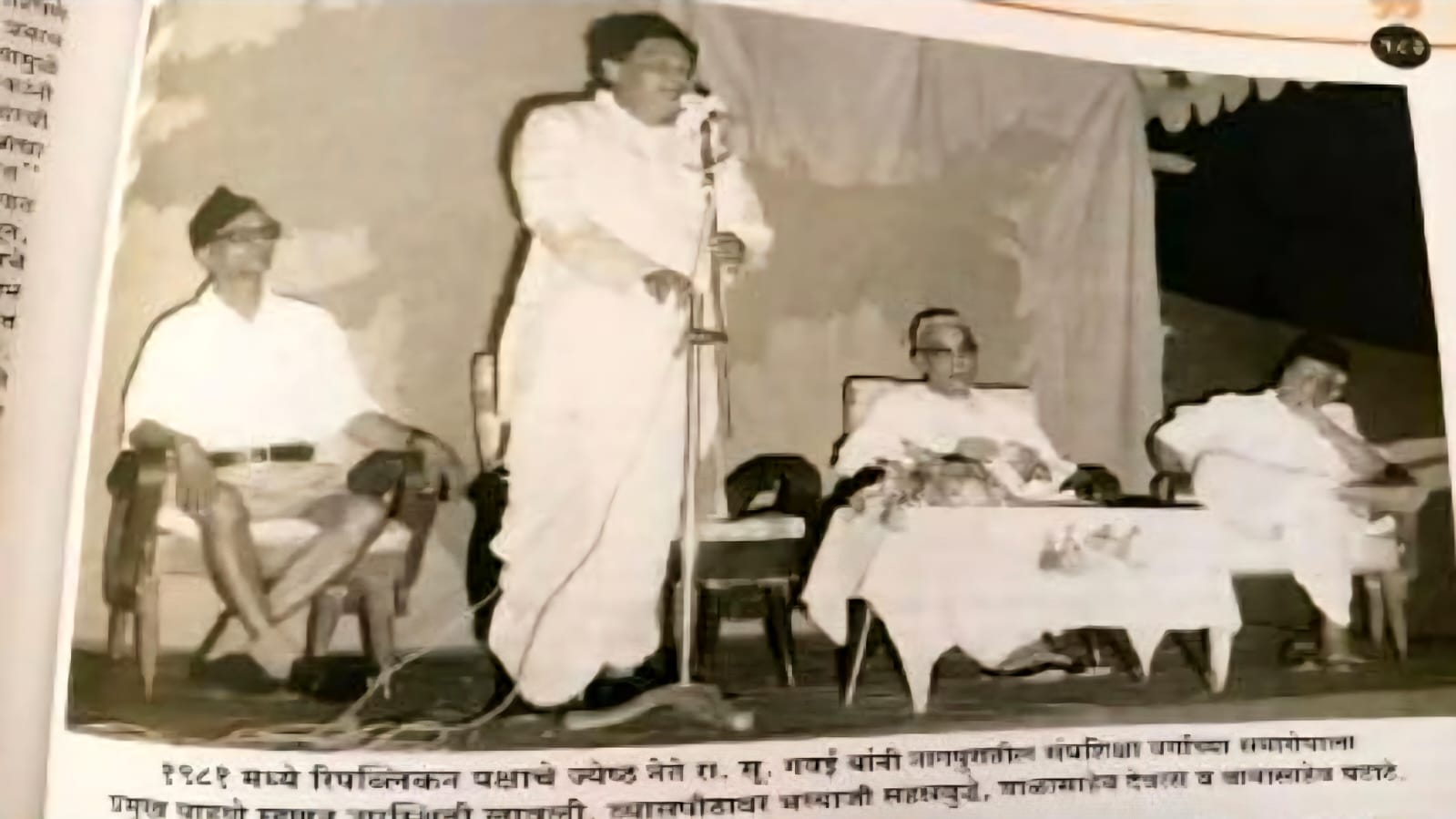
RS Gavai at an RSS event in 1981, alongside Bhayyaji Sahasrabuddhe, Balasaheb Deoras, and Babasaheb Pathade.

However, her late husband Ramkrishna Suryabhan Gavai also known as Dadasaheb Gavai, a senior leader of the Republican Party of India (RPI), attended the valedictory ceremony of the Sangh Shiksha Varg in Nagpur as the chief guest in the year 1981.

Notably, R S Gavai worked as a close associate of Babasaheb Ambedkar, and chairman of the Deekshabhoomi Smarak Samiti in Nagpur. In 1998, R S Gavai was elected to Lok Sabha from Amravati constituency as a Republican Party candidate. Later, Governor of Bihar, Sikkim, and Kerala between 2006 and 2011, when the Congress-led UPA was in power at the Centre.

As the Governor of Kerala back in 2009, R S Gavai defied the recommendation of the Chief Minister Achuthanandan-led state cabinet and granted permission to the CBI to initiate prosecution proceedings against communist leader and now CM, Pinarayi Vijayan, in the SNC-Lavalin corruption case. The Congress-UDF was in opposition in Kerala at that time. Meanwhile, the Congress-led UPA government in Centre welcomed Governor Gavai’s decision.

In his own admission, CJI Bhushan Ramakrishna Gavai said that his father Dadasaheb Gavai was associated with the Congress party for more than 40 years. He had been a Member of Parliament, Member of Legislature, with support of the Congress. CJI Gavai’s brother, Rajendra Gavai, a Republican Party leader, is also associated with Congress.

While Kamltai Gavai’s letter has sparked a row, a few days back, CJI B R Gavai stirred national outrage with his remarks mocking the Hindu deity, Lord Vishnu, while hearing a plea. On 16th September 2025, a Supreme Court bench headed by CJI Gavai and Justice Augustine George Masih heard the matter.

The petitioner, a devotee named Rakesh Dalal, argued that restoring the idol was not merely about archaeology but about faith, dignity, and the fundamental right of Hindus to worship their deities in wholeness. While dismissing the plea, CJI Gavai made unnecessary oral remarks against the Hindu faith by blending sarcasm and mockery.

“This is purely publicity interest litigation. Go and ask the deity itself to do something now. You say you are a staunch devotee of Lord Vishnu. So go and pray now,” the CJI told the petitioner.
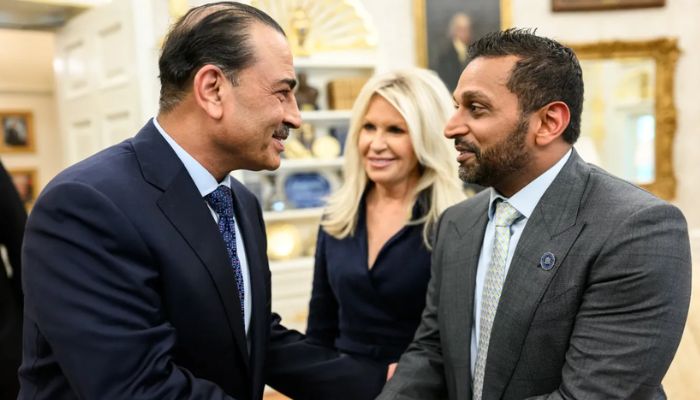
Kash Patel shakes hands with Asim Munir: Dear Hindus of India, wake up to the realities of the world, and stop expecting the impossible

0

On 25th September, the President of the United States, Donald Trump, met Pakistani Prime Minister Shehbaz Sharif and Pakistan’s Field Marshal Asim Munir. Federal Bureau of Investigation (FBI) chief Kash Patel was also present during the meeting and a photograph of him shaking hands with Munir has gone viral on social media.

When the image of Patel, son of Indian origin, Hindu by heritage, was seen greeting Munir in the White House, it sent ripples through the Indian diaspora and people in India alike. Some saw it as a sign of betrayal, others saw hypocrisy. Yet others saw complicity. The moment became a mirror of the complexities of the situation not just for Patel but also for the expectations that Indians have of diaspora icons.

However, a more tempered reading is overdue. Instead of indicting Patel, perhaps it is time Indians should carry out a quiet reckoning. It is time to understand that our hopes for diaspora Hindus may be less about them, and more about us.

The optics, and why they matter

As the media has pointed out, Patel’s handshake with Munir did not go unnoticed. Many questions were raised over the “gesture”, especially given Munir’s recent remarks emphasising the religious divide between Hindus and Muslims and his endorsement of the Two-Nation Theory.

Netizens invoked Patel’s Hindu identity, his past invocation of “Jai Shree Krishna”, and the contrast between his roots and his public office, accusing him of abandoning an assumed moral duty. However, the image published by the White House was only a snapshot. It is political theatre, and one must understand that the person in the image shaking hands with Munir is bound by constraints, institutions and roles. The question here is: did Patel betray his identity, or was he simply enacting the chores of his office?

The burden of mythical expectations

Many times, we heap impossible expectations on diaspora figures. It is a common expectation that because they have ancestral roots, they must act as emissaries, defenders, or guardians of India’s interests. We expect Sundar Pichai to always favour Indian developers, Satya Nadella to tilt Microsoft toward India, Patel to reject any official engagement that telegraphed weakness against Pakistan.

Take Tulsi Gabbard for instance. Despite invoking Hindu imagery and chants in her political journey, she has always acted as an American politician, not as an envoy of India. Her duty is to her constituents and to the United States Congress where she served, not to India or Hindus globally. Expecting otherwise is to confuse cultural symbolism with political allegiance.

However, that is not the logic of civic office or corporate governance. It is the logic of myth that we carry around and expect to become a reality when we see members of the Indian diaspora in important office, just like Kash Patel.

Rishi Sunak, former Prime Minister of the United Kingdom, will further the interests of his country despite having ancestral roots in India. In the same way, Patel, in his capacity as FBI Director, will further US interests and not India’s. Sundar or Nadella will steer their companies toward profit, regulatory compliance, and global markets, not national mythology.

There is no betrayal in their actions. It is, in fact, how the real world runs. However, this is not to excuse every misstep or realpolitik compromise. It is to ask us to recalibrate, to stop demanding that every diaspora Hindu live a dual citizenship of identity and destiny.

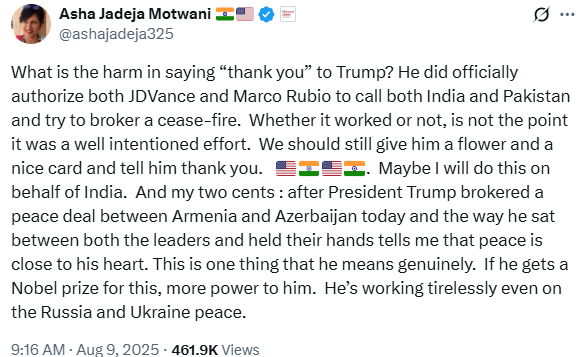
Take another example of Asha Jadeja Motwani, an Indian-American venture capitalist and GOP megadonor. She has publicly advised India on Donald Trump’s mindset several times, urging Prime Minister Narendra Modi to engage and appease Trump to ease trade frictions, even demanded India should thank Trump for mediating ceasefire between India and Pakistan.

Source: X

While her mindset and language were problematic, her position was a clear indication that those who live in a foreign country and have established their lives there will obviously perform their duties for that country, and not for India. Her advice was just advice and not foreign policy. She cannot compel India to act. In the same way, expecting her, an American with Indian roots, to side with India is too much to ask for.

Duty, identity and institutional loyalty

In Indian philosophy, the Shrimad Bhagavad Gita speaks of svadharma, which means performing one’s duty without attachment to outcomes. Patel is bound by an oath to serve the US Constitution, which he did with his hand on the Shrimad Bhagavad Gita. He must serve American institutions, constrained by law, bureaucracy and security imperatives. If that duty leads to uncomfortable optics, the question is not betrayal, it is the mismatch between our expectations and institutional reality.

Patel could not have refused to shake hands with Munir, as that would have brought consequences for him. Undermining institutional norms is not something that the US government would have expected from its FBI Director.

On comparisons – Jews, Israel, and why the analogy misfires

There have been many conversations around diaspora loyalty that invoke the Jewish diaspora and Israel, a rhetorical shorthand which basically says, “See how Jews anywhere rally for Israel; why can’t Hindus rally for India?” But this analogy is tenuous, even misleading.

Israel is a modern state that exists as a homeland. It was established after centuries of displacement and persecution. The Jewish diaspora often sees Israel as an existential refuge, a national anchor. For many Jews, their identity and Israel’s destiny are inextricable.

In contrast, Hindus have lived continuously in India for millennia. Though migrations, invasions, conversions, and partition transformed histories, Hindus as a collective identity were never wholly expelled or exiled. Migration for economic or social reasons has been part of the Hindu story. Diaspora Hindus often carry cultural and spiritual ties, not necessarily political or national ones.

So, when we expect diaspora Hindus to act as if they were always representatives of India, we flatten a historically richer and more complex set of identities. We turn people into symbols, rather than persons with jurisdictional allegiance.

Realism, not cynicism

There is a need to recalibrate the lens we see through and approach it with realism, to avoid both blind cynicism and naïve faith. It is certainly a point of pride when a person of Indian heritage rises to become Director of the FBI, or when Sundar Pichai shapes how billions of people access information, when Rishi Sunak becomes Prime Minister of the UK, or when Satya Nadella drives the direction of global enterprise. These achievements deserve to be celebrated for what they are, rather than weighed down with contingent expectations about ancestral loyalties.

At the same time, it remains entirely valid to critique actions when they are harmful. If Patel misuses his authority, or if Nadella’s policies consistently disadvantage Indian interests, then criticism is both warranted and necessary. But such critique should rest on concrete grounds of governance and impact, not on genealogical or sentimental premises.

This also means recognising that India cannot outsource its aspirations to its diaspora. The myth of diaspora saviourhood loses its allure when India builds its own capacity at home. When power, influence, and infrastructure grow from within, it becomes clearer where India should put its expectations. Influence is always more durable when it is exported by design, not merely inherited from the success of individuals abroad.

Finally, there must be an acknowledgment of limits. The diaspora’s role is best understood as soft power, as connections, as cultural bridges across nations. It is not a substitute for diplomatic sinecure, nor should it be mistaken for foreign policy oversight. Their successes enrich the global Hindu and Indian identity, but their duty lies in the jurisdictions they serve.

Treat it as a wake-up call

It is time to lower a bit of the sentimental burden that we place on diaspora icons. They must be seen in their human roles and not as mythic emissaries. It is important to understand that their loyalties belong to the country and the office they are in, not with India, even if those duties sometimes diverge from our emotional geography.

Expecting Patel to be India’s champion is a burden any public servant would resist. Expecting Sundar or Nadella to always toe a nationalist line is a mismatch with how global institutions function. Let us be a little mindful and let them act according to their roles.

India’s future should not depend on diaspora believers. It depends on India’s strength, resilience, credibility, in diplomacy, in economy, in soft power, in moral character. When those foundations are strong, diaspora pride becomes an echo, not a burden.

It is time to wake up. Stop expecting the impossible. Let the diaspora serve their offices and let us serve the India we imagine with clarity, agency and less naïve hope.

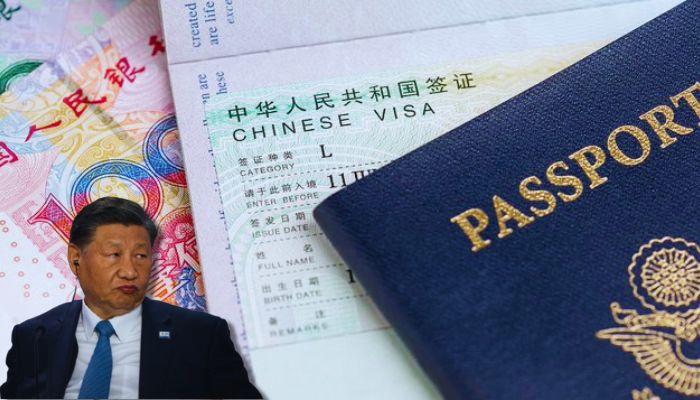
As US shuts doors to H1-Bs, China rolls out K visa program to attract international STEM talent: All you need to know

On 19th September 2025, US President Donald Trump, signed a proclamation titled Restriction on Entry of Certain Non-immigrant Workers. Under the new rule a US $1,00,000 payment on new H-1B visa petitions is to be submitted by aliens outside the US. Talent, however, always finds takers. While Trump chose to placate his MAGA support base, China has opened its doors for global STEM talent by introducing the K-Visa program.

In a recent press conference, China’s Foreign Ministry Spokesperson, Guo Jiakun, stressed the significance of cross-border talent exchange in a “globalised world”. He emphasised that China intends to foster innovation and career opportunities for talented international professionals across various sectors.

“In a globalised world, cross-border flow of talents is instrumental in global technological and economic advancement. China welcomes talents from various sectors and fields across the world to come and find their footing in China for the progress of humanity and career success,” Guo Jiakun said.

What is the K visa program?

In August this year, China announced a new visa category aimed at attracting young professionals in the STEM  (Science, Technology, Engineering, Mathematics) fields and foreign professionals involved in education and research in STEM-related fields would qualify. This came after the approval by the State Council of an amendment to the country’s entry and exit regulations.

Notably, the new K visa rules will take effect on 1st October 2025.

Premier Li Qiang has signed a decree to implement the new policy. The K Visa will be introduced under China’s ordinary visa classifications.

Eligible young sci-tech professionals who meet the criteria laid out by the relevant Chinese authorities and provide the required documentation can access this visa. In comparison to China’s existing g 12 standard visa types, the K visa will provide more flexibility, including multiple entries, extended validity periods, and longer permitted stays.

K Visa holder in China will be allowed to partake in academic and cultural exchanges, scientific research, technology development, entrepreneurship, and related business activities.

Moreover, the K Visa applicants will not be required to be invited by a Chinese employer or institution. If the applicants fulfil the age, education, and work experience criteria, they can apply independently through a simplified process.

Be it Artificial Intelligence, quantum or bio-tech, China cannot solely rely on domestic talent and needs to attract top-tier international talent. Welcoming the K visa program, Yin Chengzhi, Associate Professor & Associate Dean, School of Public Policy and Management, Tsinghua University, said, “For universities like us, it will be much easier in the future to attract top tier, international faculty researchers and post doctoral fellows. It may also accelerate innovation in critical fields like AI, biotechnology for the research institutes, especially in the private sector. In the long term, it could enhance the research and development capabilities, foster the creation of new high growth industries and improve the competitiveness of China’s industries”.

Notably, before K visa this year, China had introduced an R visa in 2013, for high-level talent.

China is trying to benefit from Trump’s policies, by attracting talents that would have gone to the US

As Donald Trump is antagonising allies and partners just to mollify his MAGA support base and arm-twist these nations into agreeing to his terms, China is using Trump’s high-handedness to its benefit.

With K visa program, China not only seems to have intentions of promoting scientific exchanges but also foster soft diplomacy and position Beijing as an open hub amid global visa tightening. This could redirect talent flows from South Asia and beyond. Apparently, China wants to siphon high-skilled workers from countries like India, given 70% of H1-B visa holders in the US are highly-talented Indians. This, however, might trigger geopolitical tensions since this move will exacerbate talent shortages in tech sectors of ‘rival’ countries.

China, however, has its own set of issues like economic slowdown, high youth unemployment, and real estate crisis. It remains to be seen how successful the K visa program becomes in the coming times.

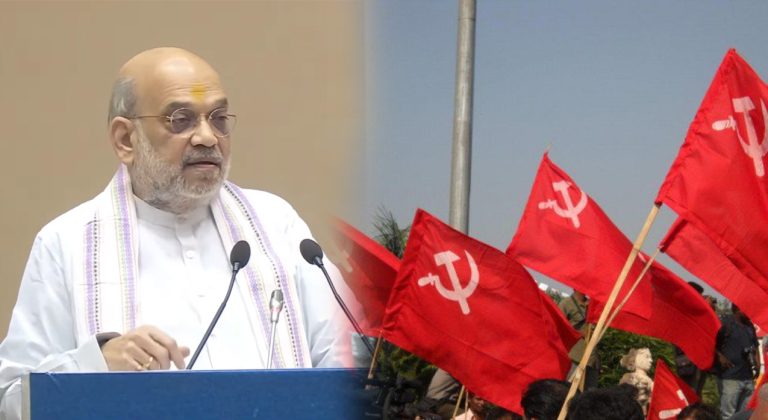
Home Minister Amit Shah rejects ceasefire offer from Maoists, asks them to surrender, says “bullets must be answered with bullets”

Union Home Minister Amit Shah on Sunday rejected the ceasefire offer of Maoists, and asked them to surrender instead by laying down their weapons. The home minister said that if the leftist extremists want to surrender and lay down arms, they are most welcome to do so and security forces would not fire a single bullet on them.

Shah made the comments while addressing the valedictory session of a seminar on ‘Naxal Mukt Bharat: Ending Red Terror Under Modi’s Leadership’ in Delhi. He was referring to a purported letter issued by the outlawed Communist Party of India (Maoist) expressing readiness to give up arms. The letter asked the Central government to announce a one-month ceasefire and pause the ongoing anti-Naxal operations.

The home minister said, “Recently, to spread confusion, a letter was written stating that what has happened so far has been a mistake, that a ceasefire should be declared, and that we (Naxals) want to surrender. I want to say there will be no ceasefire. If you want to surrender, there is no need for a ceasefire. Lay down your arms, not a single bullet will be fired.”

He said that if the Naxals surrender, government is ready with a good rehabilitation policy for them. He said, “The government’s approach is that we make every effort to arrest Naxalites and get them to surrender. We also give them a chance. We have also introduced a good surrender policy. But when you take up arms and set out to kill innocent citizens of India, the security forces have no other option. Bullets must be answered with bullets.”

Shah further slammed leftist political parties and activists for supporting the Naxals. He said, “Why do they need to protect them…why don’t NGOs come forward to protect human rights of victim tribals? Have all the people who write these lengthy articles and advise us ever written an article for the tribal victims? Why are they not concerned about this?” 

Amit Shah reiterated the government’s goal of making India free of Naxalism by March 31, 2026. He said, “This country will be free of Naxalism by March 31, 2026. Many people believe that the Naxalite problem will end with the end of armed activities. But this is not the case. Why did the Naxalite problem arise, grow, and develop in this country? Who provided its ideological support? Until Indian society understands this theory, this idea of Naxalism, and the people in society who provided ideological support, legal support, and financial support, the fight against Naxalism will not end.”

He further stated, “We can make Naxalits surrender or our security forces can neutralise them, but on the ideological front, we have to make a lot of efforts. Regarding this, the discussion that took place here is relevant and important to me as well.”

A 73-year-old ‘granny’ deported by the US after three decades: asylum claims, overstaying alien and possible use of the ‘Khalistan card’

0

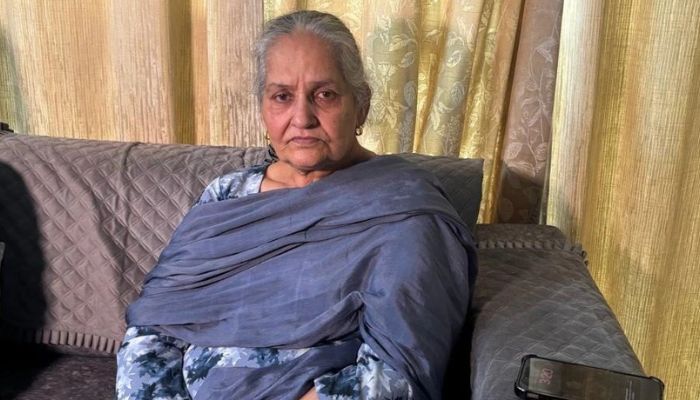
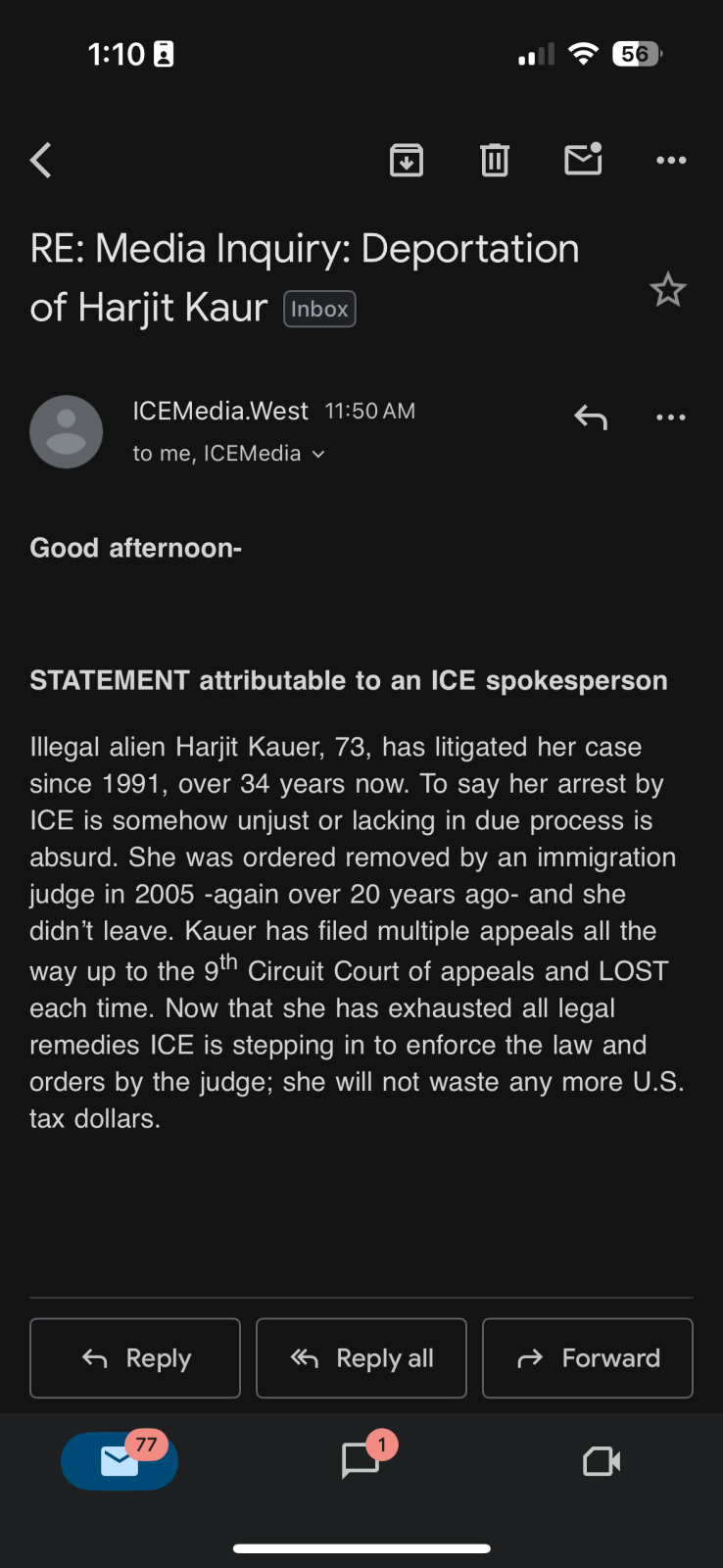
On 23rd September, 73-year-old ‘granny’ Harjit Kaur landed at Indira Gandhi International Airport in Delhi and then moved to Punjab after being deported from the United States. Kaur stayed in the US for 33 years. While mainstream media in India and the US painted her story as a tragedy, it is essential to understand the circumstances under which she was handcuffed and sent back to India after being detained by Immigration and Customs Enforcement (ICE) on 8th September.

Harjit Kaur went to the US in the early 1990s with her two sons. In the US, she made an asylum claim to get citizenship. For almost a decade, she fought with the system in the US to get her application accepted but all the available legal remedies were exhausted by 2005 when a US court ordered her deportation. In 2012, another set of appeals was rejected, and she was bound to be sent back after illegally living in the US for around two decades.

It took US authorities another 13 years to deport Harjit Kaur, who is now 73. Her story must not be seen as some tragedy, but it is a classic case to examine how asylum processes are manipulated, immigrant burdens tolerated, and political narratives exploited.

The deportation unfolds

Harjit Kaur tried her level best to be a model resident of the United States to claim citizenship. She regularly went to the ICE office every six months to ensure she could continue to stay in the country. However, on 8th September, during what was supposed to be a routine check-in with US ICE in San Francisco, she was arrested, handcuffed and chained. She was transferred across multiple detention centres and ultimately deported to Delhi before returning to her native Punjab.

According to her statements given to the media, during the intervening days between her arrest and deportation, she endured indignities. She was forced to sleep on concrete floors without a bed cover or shower. She was denied access to medicines, served non-veg meals despite her religious conviction, and even given a plate of ice when asked for water. While her family bought a ticket for her to travel to India and requested the authorities to let her fly commercial, she was deported before the family could meet her and say goodbye.

In a reply to the question on Harjit Kaur, the Ministry of External Affairs confirmed that since January 2025, over 2,400 Indians have been deported or repatriated from the US. MEA Spokesperson Randhir Jaiswal said, “In the last several months, since January 2025, so far, we’ve had 2,417 Indian nationals deported or repatriated from the United States. In the case of Harjeet Kaur, she also returned recently. We want to promote legal pathways of migration. At the same time, India stands against illegal migration. Whenever there is a person who does not possess a legal status in any country, and he or she is referred to us with documents if there are claims of being that he or she is an Indian national, we do the background check, we confirm the nationality, and then we are in a position to take them back. And this is what has been happening with deportations from the United States.”

The US authorities, for their part, do not appear to have disputed that Kaur’s removal was legally executed, as she had long since exhausted her appeals.

From unchecked asylum to indefinite limbo

Kaur arrived in the US in the early 1990s, alongside her two sons. She applied for asylum, implicitly invoking fears of persecution she claimed from India. Over the years, her pleas were dismissed repeatedly. In 2012, the final rejection came at the federal appeals court level. After that, she was under a deportation order but lacked a valid passport or travel documents. She remained in the US in a precarious, undocumented status.

Reports suggest that for over a decade, she religiously complied with ICE requirements that included reporting every six months, paying taxes, trying to obtain travel documents, never involving herself in criminal activities and more. Yet despite her cooperation, the machinery of the US immigration system allowed her stay to persist until the enforcement blitz under the Trump administration.

Her case illustrates how an asylum seeker, who lost her rights long ago, leveraged the ambiguity and inertia of the system to remain in the US for decades. The delay in executing her removal speaks louder than her final deportation.

The possibility of using the infamous ‘Khalistan card’ and asylum abuse

Her deportation raises a thorny question. To what extent have asylum frameworks been weaponised by those invoking the Khalistan narrative? In recent years, multiple cases have surfaced, specifically in Western countries, where Sikh migrants claiming persecution are denied refugee status. However, they manage to stay in the host country for years, and sometimes decades, undocumented before getting deported to India.

Consider the case of Pardeep Singh, whose asylum plea in Ontario was recently rejected by a court that explicitly called out the abuse of the “Khalistani card”. The court held that claims of persecution anchored solely in political or separatist narratives without independent corroboration cannot satisfy genuine refugee thresholds. Similarly, in Florida, authorities investigating a crash involving a Punjabi migrant named Harjinder Singh suggested that the individual may have entered using the so-called “Dunki” route and was attempting to leverage a Khalistan persecution narrative as a backdoor to settlement.

These cases, and many others, reflect a clear pattern. Many asylum claims, especially from people going to these countries from Punjab, rooted in generalisation and politically charged narratives, are used to bypass the legal immigration system and get access to citizenship.

The system is strained by such cases because it must parse genuine fear from opportunistic claims, a line that is inherently blurry when political, religious, or separatist identity is the fulcrum of one’s narrative.

In the case of Harjit Kaur, it has been clearly mentioned by US-based and Indian media houses that she claimed asylum in the US to get citizenship but failed. While the base of asylum, which is persecution from the parent country, has not been mentioned in any news report, it is safe to assume that she might have used the Khalistan card, claiming she supported the separatist narrative and ‘feared’ for her life if she came back to India.

Political reactions – empathy or oblivion?

The Indian political establishment has rushed to condemn Kaur’s deportation as inhumane, using emotive rhetoric about her being shackled, the indignities inflicted, and the lack of Indian governmental support abroad. Congress leaders castigated India’s foreign policy for alleged passivity, while regional voices in Punjab decried the humiliation of an elderly diaspora member.

Yet this outrage ignores the inconvenient truth. Kaur was undocumented, had no valid appeal left, and had lived in the US in violation of immigration orders for years. While the Indian government has traditionally extended a soft hand in such cases, the deeper betrayal lies with those who manipulate asylum frameworks by portraying India as unsafe, often invoking Khalistan or persecution narratives. In doing so, they malign their own country abroad, only to seek sympathy decades later when deportation finally arrives.

The US crackdown in context

Harjit Kaur is not an isolated case. Since Donald Trump assumed office for the second term as the President, the immigration enforcement push has seen thousands of long-residing Indians or Indian-origin persons deported or repatriated this year. There was de facto tolerance towards undocumented immigrants who kept a low profile for years, not anymore.

While being empathetic considering Harjit Kaur’s age is fine, the question remains, what exactly did she write in her asylum application? Did she claim she feared for her life because she supported the Khalistan movement? Another question arises, if she lacked proper travel documents, how did she enter the US in the first place? Why did they fail to secure the documents from the Indian government for over a decade?

Not to forget, hardcore terrorists like Hardeep Singh Nijjar had also sought asylum in the 1990s in Canada but failed for decades. It was only after his death that the Canadian government revealed they had granted him citizenship. The asylum mechanism is being misused in almost every country that is sympathetic towards the separatist narrative.

The moral and legal fault lines

Kaur’s ordeal raises moral, legal and political questions that go beyond her personal story. There is the moral dilemma of deporting elderly, non-criminal woman who has spent decades building her life around family in the US, only to be uprooted without notice. There is also the legal problem of how immigration systems allow such multi-decade limbos, where deportation orders remain pending and travel documents are indefinitely delayed.

Source: richmondside

Politically, the case underscores how asylum provisions, meant to protect the genuinely persecuted, are often manipulated by narratives of separatism or exaggerated claims of persecution abroad. At an institutional level, both the US and Indian governments tend to respond with symbolic outrage rather than addressing the deeper inconsistencies that allow such cases to fester. In that sense, Kaur’s journey exposes how legal loopholes and political posturing can sustain undocumented lives for decades, only to end in sudden deportation cloaked in emotion where no one dares to ask the real question, “What was in her asylum application?”.

Madhya Pradesh: Severed body parts of a cow found by locals in a river in Rewa, FIR lodged

0

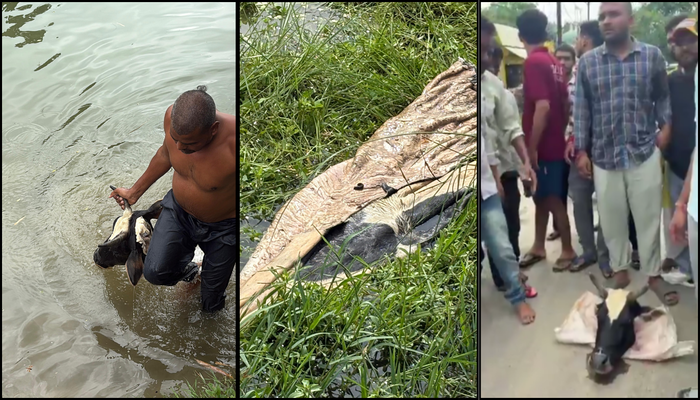
Tensions flared up in the Lakshman Bagh colony of the Bichhiya police station area in Rewa, Madhya Pradesh, on Saturday (27th September) after locals found the severed body parts of a cow in a river, amid the festival of Navratri.

Angry locals placed the severed head of the cow on the road and protested. Members of the Vishwa Hindu Parishad (VHP) demanded stringent action against the culprits. Condemning the incident, VHP member Balkrishna Dwivedi said, “Our religious sentiments are hurt. The administration should not neglect such incidents. If the accused are not caught soon, we will protest”.

Police assured strict action

An FIR, accessed by OpIndia, was filed by the police on the same day against unnamed persons under sections 196(2), 299, and 365 of the BNS, section 11(1) of  the Prevention of Cruelty to Animals Act, 1960, and rule 6/9 of the Madhya Pradesh Govansh Vadh Pratishedh Rules, 2004. Police are looking for the culprits. Chief Superintendent of Police Rewa, Rajiv Pathak, took stock of the situation and assured the locals of swift and strict action.

Police are examining the CCTV footage to identify the culprits. SHO Bichhiya, Manidha Upadhyay, said that the police are looking for the culprits and that legal action will be taken against them. She appealed to the locals to cooperate with the police and maintain peace. Two suspects, Mohammad Ismail and a minor, have reportedly been detained by the police in connection with the incident.

Several such incidents have happened in the area in the past: Locals

Locals said that some suspicious people were seen roaming in the area at night. OpIndia spoke to a local named Vishal Singh, who said that this is not the first time that such an incident has taken place in the area. He said that many such incidents have happened in the area in the past and that complaints were filed regarding the same, but the incidents have not stopped.

Narrating the entire incident, Singh said that last night, the culprits slaughtered the cow at the bank of the river. When the locals noticed their activities, they informed others. However, by the time people arrived, the culprits had run away. Thereafter, they informed the police and started looking for the chopped body parts of the cow in the river. After searching, the severed head of the cow was recovered from the river and her skin found nearby.

Vishal Singh said that there is a gang of around 15-18 people who roam around in the area looking for cows to slaughter. He added that these people sell beef after slaughtering cows. Singh demanded strictest action against the culprits, who have become a menace in the area.

UK-based ‘The Guardian’ backs Sonam Wangchuk while questioning the Modi government’s handling of violence

0

Foreign media outlets often wait for opportunities to paint India in a negative light. This time, the UK-based newspaper The Guardian has reported the recent violence in Ladakh and the arrest of climate activist Sonam Wangchuk in its own way.

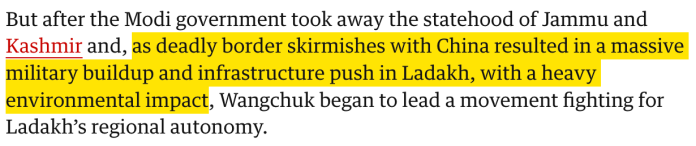
On 24th September, violence broke out in Ladakh, leading to the deaths of four people and over 60 were injured. Following the clashes, Wangchuk was detained under the provisions of the National Security Act (NSA) on Friday (26th September). But instead of presenting the violence and its aftermath in context, “In a report, The Guardian has blindly condemned the arrest of the Ladakh violence as part of action against the “dissent” of the Prime Minister Narendra Modi’s government.”

Right from the beginning of The Guardian’s report, it is clearly visible that it is not a report, but propaganda against India and the Prime Minister Narendra Modi. The Guardian tried to portray the arrest as an attack on free speech.

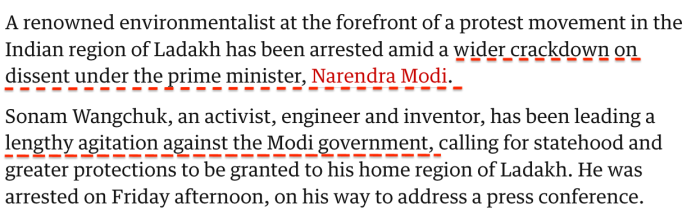
Screengrab from The Guardian’s report

The initial part of the report has tried to show that the Modi government, cannot hear its protest, implying that Wangchuk was jailed only because he had raised his voice against the authorities.

After this claim, the Guardian also introduced Wangchuck and wrote that he was leading the ‘long agitation against the Modi government’. He was leading the long agitation, but even after his long protests he was not jailed by the government. In fact, rather than suppressing his movement, the Modi government had formed a high-level committee to engage with his concerns.

The Indian government’s attempt was not to suppress the voice of dissent, but that their voices should be heard, action should be taken. He has been arrested after the violence in Ladakh, in which 4 people have died. The Guardian has deliberately concealed the beginning of its news in the information.

And it is not just the only propaganda. There has been an attempt to write a fabricated story.

The report also argues to justify violence. “This territory(Ladakh) was part of the Jammu and Kashmir before it was unilaterally dissolved by the Modi government and brought fully under its control, to the anger and frustration of the local population,” the Guardian wrote.

Screengrab from The Guardian’s report

The Guardian saw the anger and disappointment of the people, but the newspaper  forgot to highlight that there were demonstrations in this Ladakh for decades to become a Union Territory. When the decision was finally announced in 2019, residents celebrated with drums and dancing. Even Wangchuk himself had publicly thanked the government at that time. Today, his demands are for full statehood and greater autonomy, but that doesn’t mean the UT status was imposed against the will of the people of Ladakh

It is clear that the aim of the Guardian’s piece was less about reporting facts and more about pushing a narrative that life in Ladakh has worsened under Modi’s leadership.

The Guardian report further criticised over India’s military construction and infrastructure construction in Ladakh. The Guardian is concerned that India’s military construction is having an impact on the environment. While environmental concerns are valid, what the piece ignored is the reason behind these projects, the military needs and the growing threat from China.

Screengrab from The Guardian’s report

Foreign media outlets like the Guardian repeatedly target India’s military construction and infrastructure as an environmental crisis. But this media rarely raises questions about the construction of large military bases, roads, tunnels and airbases of other countries.

PM Modi launches BSNL’s indigenous 4G stack: What is Bharat Telecom Stack, and why it is strategically important for Atmanirbhar India

In a landmark moment for India’s technological sovereignty, Prime Minister Narendra Modi on Saturday inaugurated Bharat Sanchar Nigam Limited’s (BSNL) fully indigenous 4G stack, propelling the country into the select league of nations that build their own telecom infrastructure. The launch, coinciding with BSNL’s silver jubilee, also saw the commissioning of over 97,500 new 4G towers of BSNL, including 92,600 advanced sites, at an investment of around ₹37,000 crore.

While BSNL is late to introduce 4G, private telecom operators in India are already running 5G networks, the introduction is important because the entire network is based on equipment and technology developed in India, not based on foreign network equipment.

This indigenous full-stack 4G network solution, known as Bharat Telecom Stack, marks India’s entry into the elite club of nations capable of designing and manufacturing their own complete telecom infrastructure, joining Denmark, Sweden, South Korea, and China as the fifth member. Developed entirely within the country, the Bharat Telecom Stack embodies the spirit of Atmanirbhar Bharat, by reducing dependence on foreign technology and fostering innovation in critical sectors like telecommunications.

What is the Bharat Telecom Stack

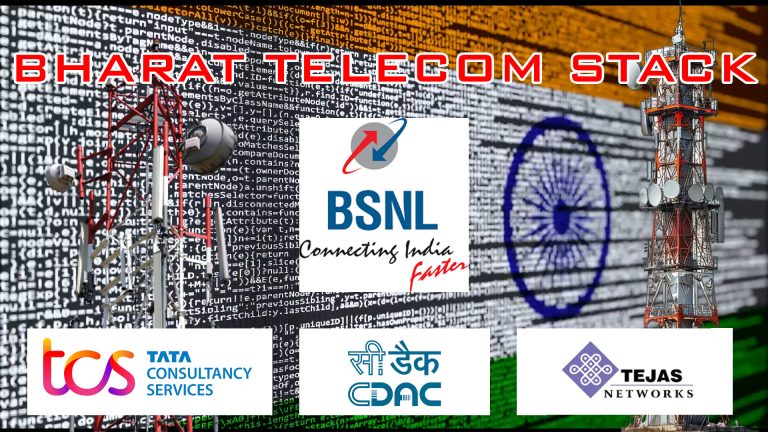
The Bharat Telecom Stack is a comprehensive, homegrown telecommunications ecosystem designed, developed, and deployed in India. It represents a “Swadeshi” 4G network stack that operates on a cloud-based architecture, enabling seamless scalability and future upgrades to 5G without overhauling the entire system. Unlike traditional telecom setups that rely on imported hardware and software from global vendors, this stack integrates every layer, from core network functions to radio access and edge computing, using Indian intellectual property and manufacturing.

At its heart, the stack prioritises security, efficiency, and inclusivity. It is the first time India has achieved a “full-stack” telecom solution, meaning it covers the end-to-end process of signal transmission, data processing, and user connectivity. This innovation is the result of a collaborative effort between public and private entities, including Bharat Sanchar Nigam Limited (BSNL), Tata Consultancy Services (TCS), the Centre for Development of Telematics (C-DOT), and Tejas Networks.

While C-DOT developed the core technology, TCS set up data centres, deploying base stations and radio infrastructure developed by Tejas Network. The entire network has been integrated under AI-driven Cognitive Network Operations (CNOPS) platform Cognitive Network Operations (CNOPS) for round-the-clock monitoring.

The development of the Bharat Telecom Stack is a testament to India’s evolving R&D capabilities in telecom. Initiated under the Atmanirbhar Bharat initiative, the project addressed long-standing vulnerabilities in India’s telecom sector, which has historically imported over 90% of its equipment from foreign suppliers. The stack’s creation involved rigorous testing and integration, culminating in a Rs 37,000 crore investment to commission over 97,500 towers nationwide.

The entire system was completed within just two years, making it one of the fastest 4G deployments globally. 

The rollout is ambitious and targeted. Initial deployment focuses on underserved regions, with over 18,900 sites funded under the Digital Bharat Nidhi scheme. These include solar-powered towers in remote, border, and insurgency-affected areas, aiming to connect 26,700 villages that previously lacked reliable internet access.

Why is the Bharat Telecom Stack Crucial for Atmanirbhar Bharat

The Atmanirbhar Bharat campaign, launched in 2020 amid global supply chain disruptions caused by the pandemic, emphasizes self-reliance across five pillars: economy, infrastructure, systems, demography, and demand. The telecom sector, vital for all these pillars, has been a prime target for indigenization. The Bharat Telecom Stack aligns perfectly with this vision, offering multifaceted benefits that extend far beyond connectivity.

Enhancing National Security and Digital Sovereignty

In an era of escalating cyber threats and geopolitical tensions, reliance on foreign telecom gear poses significant risks. The stack eliminates these vulnerabilities by ensuring that core infrastructure is “Made in Bharat,” free from backdoors or supply chain interruptions. This is particularly critical for border regions and defence applications, where secure communication can be a matter of national security.

As Prime Minister Modi noted, the project “symbolises the strength of Atmanirbhar Bharat” by guaranteeing resilience and control over India’s digital backbone. It echoes the other successful indigenous stack, India Stack, which has resulted in services like Aadhaar, FASTag, DigiLocker, UPI etc, creating a unified ecosystem of sovereign tech.

Driving Economic Growth and Job Creation

Economically, Bharat Telecom Stack is a game-changer. Instead of importing expensive telecom technology and gears, India can now export this technology globally, potentially generating billions in revenue. This initiative represent a giant leap towards Atmanirbhar Bharat, transforming India into a global telecom equipment manufacturing hub and boosting the GDP through value-added exports. India has already become a major producer of mobile phones, now the country will also produce the equipment that connect those phones.

Bridging the Digital Divide for Inclusive Development

The stack is also about empowerment. By connecting rural villages not served by private operators, it brings high-speed internet to millions, enabling rural entrepreneurs to access e-commerce, farmers to use precision agriculture apps, and students to pursue online learning. This digital inclusion aligns with the Viksit Bharat goal by 2047, ensuring that no citizen is left behind in the digital revolution.

As the stack is 5G ready, BSNL will be able to upgrade its network from 4G to 5G without large investment. The public telecom company plans to rollout 5G network by the year-end.

Looking forward, the Bharat Telecom Stack sets the stage for India to lead in 6G research and beyond. With its export-ready design, it could soon power networks in developing nations.

The Bharat Telecom Stack is more than a technical achievement, it’s a declaration of India’s arrival as a technology powerhouse. It fortifies Atmanirbhar Bharat against external shocks and unlocks unprecedented opportunities for growth and equity. As Prime Minister Modi aptly said, this is India’s journey “from dependence to confidence,” ensuring a digitally empowered future for the nation.

In an interconnected world, a sovereign telecom stack isn’t just strategic, it’s essential.

The tragedy of India: Leftist rag The Wire gives space to former J&K CM Mehbooba Mufti to whitewash two Islamic terrorists

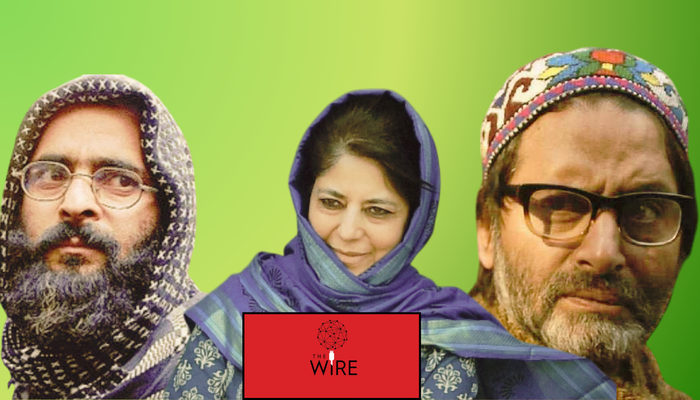
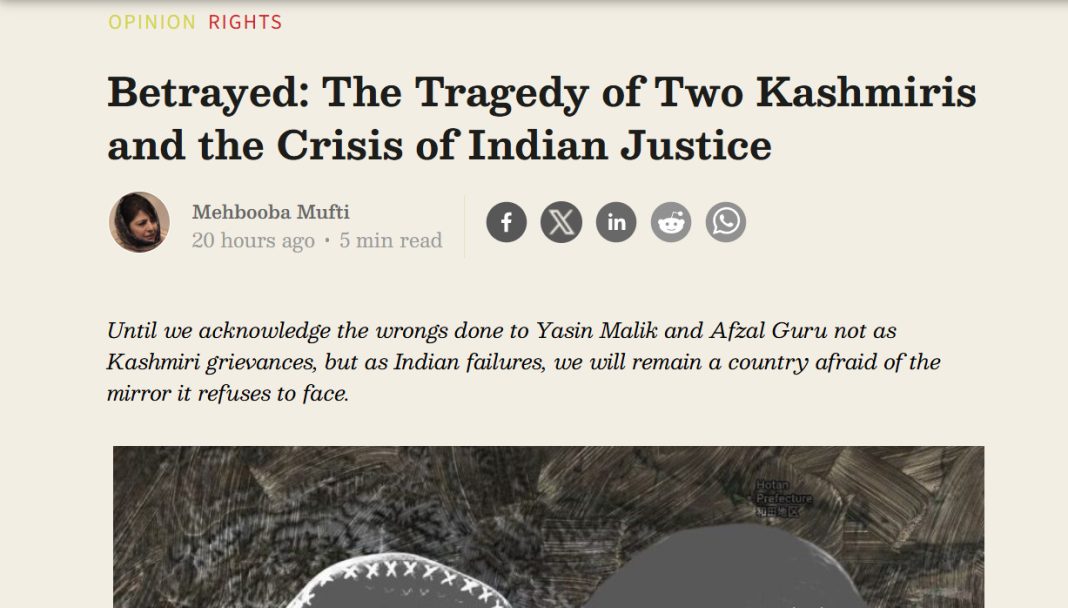
Jammu and Kashmir’s People’s Democratic Party president, and former J&K Chief Minister, Mehbooba Mufti, wrote an article published in the leftist media portal The Wire on September 22, 2025, whitewashing the heinous acts of terrorists Afzal Guru and Yasin Malik and putting the blame on the Indian state. The politician accused the Indian state of showing “institutional duplicity” in dealing with terrorists Afzal Guru, who was executed for attacking the symbol of India’s sovereignty, the Indian Parliament, and Yasin Malik, who was convicted of waging war against the Indian state.

Screenshot from the Wire

Describing the convicted terrorists as “whistleblowers” and “peace-builders”, Mufti accused the Indian state of convicting the two terrorists through “a deeply flawed legal process”. She alleged that the Indian state did not properly investigate the case against Afzal Guru and “executed him to satisfy the collective conscience of the country”. She further alleged that Jammu Kashmir Liberation Front (JKLF) terrorist Yasin Malik was convicted not for waging war against India, but for a “peace process”, which the state allegedly directed him to be a part of.

“This is not just about two men; it is about how we, as a nation, choose to confront our past and whether we’re willing to learn from it. Do we want peace or permanent punishment? Do we seek truth or only what is politically convenient?” wrote Mufti, who once refused to unfurl the Indian flag. Drawing a parallel between Afzal Guru and Yasin Malik, she wrote, “Separated by time, context, and ideology, both men now stand united not only in memory, but in what their cases expose: how the Indian state has used individuals to serve short-term goals and then discarded or punished them once they outlived their usefulness”.

Afzal Guru was a whistleblower: Mufti

In her article, Mufti expresses her deep sympathies for Afzal Guru, who was hanged in 2013 after being convicted in connection with the 2001 Parliament attack. Mufti said that Afzal had written a letter from jail, in which he named a senior officer in the Special Task Force, Davinder Singh, who allegedly forced Afzal into “helping the very people later accused of the parliament attack”. According to Mufti, the fact that Davinder Singh was later caught by the Indian agencies while transporting terrorists in Kashmir should absolve Afzal of his crime. She accused the Indian government of giving differential treatment to “whistleblower” Afzal Guru and Davinder Singh just because the former was caught before the latter.

“Afzal was branded a terrorist. Singh was quietly sidelined. One was executed and the other, protected,” Mufti lamented. Completely ignoring the fact that Davinder Singh is facing the same judicial system as did Afzal Guru, Mufti questioned the Indian justice system, saying, “What does it say about our justice system when a man names a police officer who is later arrested for terrorism, and yet, it is the whistleblower who is hanged, while the officer remains shielded?” It is Mufti’s logic that a criminal who discloses the name of another criminal should not be considered a criminal merely for naming the other criminal. The fact that Davinder Singh is undergoing a fair judicial trial, as did Afzal Guru, does not matter to Mufti, or rather doesn’t help her narrative. Afzal Guru was hanged for his acts, and Davinder Singh is being tried for the charges levelled against him and will face punishment if convicted.

Yasin Malik is a peace-builder: Mufti

Mufti also feels for convicted terrorist Yasin Malik, who had kidnapped her sister Rubaiya Sayeed in 1989 and was charged in the killings of four Indian Air Force personnel, besides being convicted under the Unlawful Activities Prevention Act (UAPA) in a terror funding case. Mufti claims that Yasin Malik was ‘used’ by the Indian government for some peace outreach program. “Yasin Malik, once a militant, renounced violence in 1994 and committed himself to political dialogue. For more than two decades, he was embraced by the very state that would later condemn him,” Mufti wrote. She believes that Yasin Malik “was asked by Indian Intelligence Agencies” to meet Pakistan-based terrorist Hafiz Saeed in Pakistan to convince him “to urge a shift from violence to dialogue.” And therefore, as per Mufti, his conviction under UAPA, which was based on evidence, including his links with Hafiz Saeed, was unfair.

Mufti wants the Indian state to believe terrorist Yasin Malik, whose criminal acts were proved in a court of law, when he says that he has renounced violence and has chosen the path of dialogue. Using the examples of convicted terrorists Afzal Guru and Yasin Malik, Mufti tries to prove that it is the Indian state and the Indian judicial system which are at fault for convicting these terrorists, and not the terrorists who engaged in anti-national and terrorist activities when they liked and later adopted the path of dialogue when it looked convenient. Mufti, who said that she wouldn’t raise the Indian flag until the flag of Jammu & Kashmir was restored, wants the Indian State to see the so-called “wrongs” alleged by her, “not as Kashmiri grievances but as Indian failures”.

Mufti is right that something unites Afzal Guru and Yasin Malik, but it is not their alleged “use” by the Indian state, but by the fact that they were both terrorists who saw the Indian state and the Indian people as enemies and attacked India’s integrity and sovereignty.

Terrorists Afzal Guru and Yasin Malik

On the 13th of December, 2001, around 24 years ago, India witnessed one of its darkest days when a terrorist attack was carried out on the Indian Parliament. Nine people, including eight security personnel and one gardener, lost their lives in the attack, and 16 people, including 13 security personnel, sustained injuries. Among those arrested in connection with the attack was Afzal Guru. After about a year-long trial, Afzal Guru was granted capital punishment in August 2002. He was executed in February 2013.

JKLF leader Yasin Malik is in prison after being sentenced to life imprisonment by the Special NIA court for terror funding activities in Jammu and Kashmir in May 2022. He was convicted under the UAPA after he pleaded guilty in the case. He was awarded two life imprisonment sentences, in addition to five 10-year sentences, all to run concurrently. Malik is also facing charges for the kidnapping of Mufti’s sister, Rubiya Saeed, and killing 5 IAF personnel in early 1990. He is also allegedly involved in the killing of Justice Neelkanth Ganju, the judge who had ordered the death sentence for JKLF terrorist Maqbool Bhatt, and the murder of the former director of Doordarshan Kendra in Srinagar, Lassa Kaul.

Congress leader Rahul Gandhi goes on a foreign trip yet again before crucial Bihar Assembly election: Read why this unserious, part-time politician cannot be trusted to serve the masses

Opposition leader in Lok Sabha and senior Congress leader Rahul Gandhi has embarked on yet another foreign trip. This time, he has gone on a four-nation tour in South America, where he will be meeting political leaders, university students, and members of the business community.

Gandhi will be travelling to Brazil and Colombia, as informed by the  Congress’s media and publicity department head, Pawan Khera. There, he will be addressing students in universities, meeting with presidents and top leaders, and talking to businessmen on topics like trade and technology.

The Congress party has described this tour as an important step to strengthen India’s ties with South America, especially as the region and India share a historical connection through the Non-Aligned Movement and the Global South.

While the Congress party is presenting this trip as an effort to build democratic and strategic partnerships, the timing of Rahul Gandhi’s tour has once again raised questions back home.

A foreign visit when Bihar elections are around the corner

Rahul Gandhi, the Opposition Leader in the Lok Sabha, but he is not the Prime Minister of India nor a government delegation. Yet, he has assumed the function of giving talks overseas at a time when an important Bihar poll is at hand.

This has also triggered criticism that his priorities are in the wrong place. A responsible leader would, under normal circumstances, use his time to prepare for strategies, relate to the people on the ground, and consolidate his party ahead of a large election. Rahul Gandhi, however, has opted to go on another foreign trip.

His choice to engage with overseas university students also seems questionable. He is neither an academic nor a subject expert, yet he has scheduled lectures and debates with overseas students and thinkers. Critics allege that rather than giving speeches in Colombia and Brazil, he ought to be addressing the voters in Bihar, where the Congress is struggling hard to stay relevant.

This yet again brings forward the criticism levelled regularly against Rahul Gandhi, that he does not take politics seriously as a politician and tends to approach politics as a part-time activity instead of a full-time one.

Seen chilling in Malaysia just weeks ago

Adding to this impression is his recent vacation in Malaysia. Earlier this month, Rahul Gandhi had just finished his so-called Voter Rights Yatra in Bihar. But instead of continuing his political outreach, he flew off to Malaysia soon after the yatra ended.

His trip became a matter of controversy after pictures surfaced on social media showing him vacationing in Langkawi, Malaysia. BJP leaders and people on social media slammed him for once again disappearing during an important political season.

Amit Malviya, head of the BJP’s IT cell, posted on X, “Rahul Gandhi has slipped away yet again—this time on a clandestine vacation in Langkawi, Malaysia. Looks like the heat and dust of Bihar’s politics was too much for the Congress Yuvraj, who had to rush off for a break. Or is it another one of those secret meetings that no one is supposed to know about? Either way, while people struggle with real issues, Rahul Gandhi is busy perfecting the art of disappearing and vacationing.”

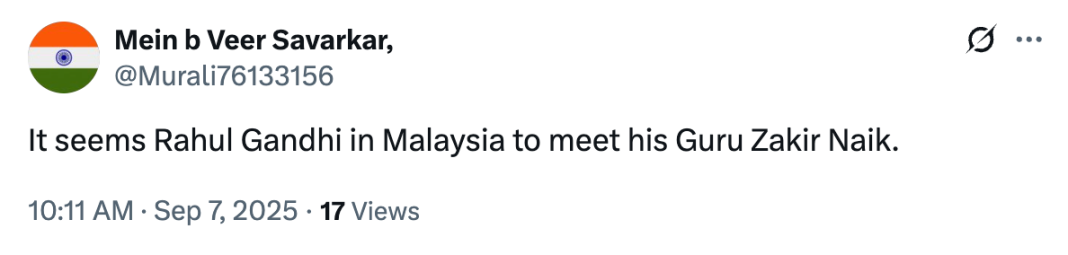
Besides, Gandhi’s Malaysia trip is surrounded by controversy because Islamic fundamentalist Zakir Naik took Malaysian citizenship after leaving India. This had led to speculations that Gandhi might have gone to Malaysia for a ‘special meeting’. An X user wrote, “He has gone to Malaysia to meet his guru, Zakir Naik”.

The Malaysia trip, which came immediately after his Bihar yatra, only reinforced the view that Rahul Gandhi treats political events like assignments, something to be quickly completed before heading abroad to relax.

A secret trip to Uzbekistan before state polls

This is not the first instance Rahul Gandhi has opted to travel out of the country before elections. In October 2023, he clandestinely left India for a visit to Uzbekistan ahead of crucial Vidhan Sabha elections in several States. 

When he did come back, the media learned about it only when he was seen at Delhi International Airport. He still did not reveal what the purpose of the trip was. This secrecy has been a habitual aspect of his foreign trips, which are usually done under a veil of secrecy.

This kind of conduct, critics argue, is not fit for a senior Opposition leader who ought to be showing the way, particularly in the midst of critical political seasons.

The Congress prince has a history of going abroad during elections

Rahul Gandhi has a track record of going on holidays without informing the public, either during election season or at a time when his party needs him the most. Gandhi is famous for his foreign travels during a crisis in his party, and also for promoting foreign interference in India’s internal affairs.

His Bangkok trip in 2019 was equally controversial. At that time, too, he left in the middle of the elections and went on a trip. The questions raised on his foreign trips are not without ground, as many times during his foreign trips, he has met anti-India elements. 

For example, in 2023, during his visit to the US, he met Sunita Vishwanath, co-founder of Hindu for Human Rights (HfHR). HfHR is an Islamist advocacy group which accuses Hindus of indulging in discrimination in India.

In April 2022, when the Congress party needed leadership and there were rumours of including Prashant Kishor in the Congress, Gandhi went abroad, showing a lack of concern. And, soon after Prashant Kishor refused to join the party, Rahul Gandhi again suddenly disappeared for about 10 days, without giving any information. During that time, despite being in a deep crisis, the Congress party had to work without any leadership.

Earlier, in December 2021, when the Congress party was defeated very badly in assembly elections held in five states, Rahul Gandhi was on a personal trip to Italy. Due to his trip, election activities in Punjab were dealt a significant setback as a majority of rallies were postponed until his return. This trip of his became the cause of the Aam Aadmi Party’s victory and the defeat of his own party.

In September 2021, when the Congress was in trouble because of Captain Amarinder Singh’s resignation in Punjab, the Gandhi family was on leave in Shimla. 

In December 2020, when the 136th foundation day of the Congress Party was being celebrated, Rahul Gandhi once again flew to Italy. Likewise, in October 2019, only 15 days before the elections in Haryana and Maharashtra, he flew off to Bangkok.

Similarly, soon after the 2019 Lok Sabha polls, he flew off to London and began vacationing, without holding back for the outcomes. He did not even join a crucial meeting convened by his mother, Sonia Gandhi.

 Apart from this, Rahul Gandhi often did not take SPG security (Special Protection Group) during his foreign trips and kept violating security rules. Due to this, the government withdrew his SPG security. Defence Minister Rajnath Singh also raised questions on this in Parliament.

A pattern that shows misplaced priorities

With the Bihar elections around the corner, Rahul Gandhi’s decision to go on a South American tour has only revived these old criticisms. Instead of spending time in Bihar, where his party has a lot at stake, he is once again abroad, speaking to foreign students and leaders.

For many observers, this reflects misplaced priorities. At a time when the Congress party is struggling to find its feet in one of India’s most politically important states, its leader is thousands of miles away. Rahul Gandhi’s pattern of vanishing abroad before major elections raises serious doubts about his seriousness as a politician and whether he truly sees himself as a full-time leader.