Home Blog Page 1849

Saudi guards killed hundreds of Ethiopian migrants and asylum seekers at Yemen border: Human Rights Watch Report

Between March 2022 and June 2023, Saudi Arabian border guards allegedly killed hundreds of Ethiopian migrants, and asylum seekers who tried to enter their nation through the Yemeni border. A new report by Human Rights Watch has levelled these serious allegations against Saudi border guards. In the 73-page report titled “They Fired on us like Rain”, HRW has shared graphic testimonies of those who somehow came out of harm’s way alive to share their harrowing experience.  

According to a report issued by Human Rights Watch today, Saudi border guards have been responsible for the deaths of several hundred Ethiopian migrants and asylum seekers attempting to cross the Yemen-Saudi border during the period spanning from March 2022 to June 2023.

One 14-year-old survivor Hamdiya said, “We were fired on repeatedly. I saw people killed in a way I have never imagined. I saw 30 killed people on the spot. I pushed myself under a rock and slept there. I could feel people sleeping around me. I realized what I thought were people sleeping around me were actually dead bodies. I woke up and I was alone.” 

As per the HRW report, Hamdiya shared her story after she arrived in the Yemeni capital, Sana’a with the help of other migrants. Further, on the basis of the testimonies of ten other interviewees, the HRW report claimed that around 1,278 migrants attempted to cross the border in 11 large groups. Out of them, they claimed that at least 655 migrants were killed.

One survivor told HRW that there were more than 170 people in his group and 90 of them were killed. 

Nadia Hardman is a researcher in the refugee and migrant rights division at HRW. While speaking to Euronews, she said, “There are definitely many more deaths because it’s impossible to get an accurate figure. It’s an inaccessible area and we are interviewing people who have just fled a scene of absolute horror, they’re devastated.”

The HRW report claimed that Saudi border guards allegedly even used “explosive weapons” to kill many migrants at close range. As stated in the HRW report, the interviewees gave varied responses on the use of explosive weapons. Some described explosive weapons “like a bomb,” mortar or rocket launchers being fired from the “back of cars.”

Some of the survivors alleged that in some instances, Saudi border guards first asked survivors in which limb of their body they preferred to be shot, before shooting them at close range in that limb.

HRW researcher Hardman claimed that earlier the incidences of killing were irregular but it now seemed that it is widespread and systematic. 

She said, “HRW has been documenting killings since 2014, but they were irregular and infrequent. When we started investigating, we didn’t expect this to be so gore. We didn’t expect to say that (the killings) are widespread and systematic and could amount to a crime against humanity because the scale is incredible.”

Saudi Arabia denies HRW’s serious allegations

However, Saudi Arabia has outrightly denied these allegations. The Saudi government stated that it took the allegations seriously but strongly reject the UN’s characterisation that the killings were systematic or large-scale, as reported by BBC.

In its reply, the Saudi government said, “Based on the limited information provided, authorities within the Kingdom have discovered no information or evidence to confirm or substantiate the allegations.”

The heavy influx of migrants

Yemen is currently facing one of the most severe humanitarian crises globally, where the majority of its people depend on aid for their survival. An armed conflict began in Yemen in 2014, and since then it is alleged that both the government and the Houthi armed group have detained migrants in poor conditions. 

Further, it is alleged that Houthi forces often “extort bribes” from the migrants “abusing people until they could pay an exit fee”.

In its report, HRW highlighted that in 2014 it reported instances of abuses, including torture of migrants in detention camps in Yemen. These camps were operated by traffickers who aimed to extort money from the migrants.

In 2018, HRW highlighted instances where Yemeni guards tortured and allegedly raped Ethiopian and other migrants and asylum seekers from the Horn of Africa at a detention centre in Aden. These guards reportedly worked in collaboration with smugglers to deport migrants in large groups to dangerous conditions at sea. 

Further, the HRW report highlighted that in 2021, many migrants, the majority of whom were Ethiopian migrants were burned to death after Houthi forces launched projectiles into an immigration detention centre in Sana’a, which they controlled, causing a fire. 

(Image Source – Euronews)

Furthermore, for many years, Ethiopian migrants have been taking the dangerous “Eastern Route” or “Yemeni Route” to move from the Horn of Africa, crossing the Gulf of Aden and Yemen, and eventually reaching Saudi Arabia. Over 90 per cent of these migrants using this route are Ethiopian. While migrants from Somalia, Eritrea, and occasionally other East African countries also utilize this route, Ethiopians make up the majority. Notably, there has been a rise in the number of women and girls taking this route in recent times.

Congress stalled Ram Temple construction: Amit Shah recalls Kalyan Singh’s contributions

0

Union Home Minister Amit Shah appealed to people in Uttar Pradesh to vote BJP to all 80 seats in Uttar Pradesh in the ensuing 2024 Lok Sabha polls, which he said will be a fitting tribute to the late party stalwart Kalyan Singh.

Addressing a gathering in Aligarh on the second death anniversary of Kalyan Singh, a prominent OBC leader and Chief Minister of the state said, “Let the lotus (BJP’s election symbol) bloom on all the 80 seats in UP in 2024, this will be your true tribute to Babuji.”

The BJP is organising ‘Hindu Gaurav Diwas’ in Aligarh as a mark of respect for the former chief minister whose birthplace is Aligarh and who passed away on August 21 in Lucknow in the year 2021.

Kalyan Singh was chief minister during the time of the 1992 Babri Masjid demolition.

The Union Minister lashed out at the previous Congress regime in the state for stalling and diverting the construction of the Ram Temple in Ayodhya since the time of Independence. However, he said, Prime Minister Narendra Modi did not delay the ‘Bhoomi Pujan’ of the temple.

Shah further said, “Today I have come to pay my homage to a senior BJP leader, a devotee of Ram, a person who pioneered the welfare of the backward.”

Shah said that the late leader had told him that he had achieved his life’s goal the day the foundation stone of the Ram Temple was laid.

“I was in the hospital due to Corona that day when Prime Minister Narendra Modi laid the foundation stone of Shri Ram Mandir. That day I called Babu Ji, and he told me that his life’s goal has been fulfilled,” the union minister said in his address.

“Kalyan Singh ‘Babuji’ insisted on three goals. The first was to speed up the Shri Ram Janmabhoomi movement, the second was the welfare of the poor and the third was the welfare of the backward society without disturbing the social harmony,” Shah said.

“Since Independence, the Congress party was stalling the issue of Shri Ram Janmabhoomi, was diverting it, but PM Modi, after the decision of the court on the issue of Shri Ram Janmabhoomi, without delay performed the Bhoomi Pujan of Ram Temple,” Shah said.

Lauding the efforts of PM Modi, the union minister said, “Today we are happy that under the leadership of Prime Minister Modi, in the beginning of 2024, we will get to see Lord Ram sit in his grand temple after 550 years.”

Uttar Pradesh Chief Minister Yogi Adityanath, both Deputy Chief Ministers Keshav Prasad Maurya, Brajesh Pathak and BJP state unit chief Bhupendra Singh Chaudhary were present on the occasion.

Earlier today, Amit Shah took to the microblogging app X, to post in Hindi, “For the first time, Kalyan Singh ji started a fear-free and corruption-free governance in Uttar Pradesh. Babuji was a huge banyan tree, under whose canopy the organization flourished in Uttar Pradesh and the BJP reached the masses. His unique contribution to the Ram Janmabhoomi movement cannot be forgotten. Babuji, who dedicated his whole life to the country and countrymen, will always be a source of inspiration for the workers. Hundreds of salutes to him on his death anniversary.”

(This news report is published from a syndicated feed. Except for the headline, the content has not been written or edited by OpIndia staff)

Bank of Baroda withdraws auction notice for Sunny Deol’s Juhu villa citing ‘technical reasons’, Gadar-2 actor says process ongoing for resolving the issue

A day after the news of the notice to Bollywood actor Sunny Deol spread like wildfire, the Bank of Baroda withdrew its notice on Monday (21 August). They have retracted their statement citing ‘technical reasons’ through their official X handle.  

The statement said, “Corrigendum to e-auction sale notice dated 19.08.2023 published in The Times of India Mumbai edition dated 20.08.2023 with regards to sale notice in respect of Mr. Ajay Sing Deol Alias Mr. Sunny Deol stands withdrawn due to technical reasons.” 

The bank issued a notice on 19th August which was widely reported in the media on the 20th of August. The notice pertained to Sunny Deol’s Juhu bungalow in which the bank claimed that in case of non-payment of outstanding dues worth nearly Rs 56 crores, the bank will conduct a virtual auction of the actor’s property in September. 

(Image Source- The Economic Times)

Without providing specific details or timelines, a senior official from the Bank of Baroda said that the issue of repayment would be addressed.

Why Bank of Baroda withdrew their earlier notice against Sunny Deol

Taking to X (formerly Twitter), the Bank of Baroda shared the technical reasons for which the earlier notice dated 19 August was withdrawn. The official statement pointed out that the total dues did not specify the exact quantum of dues to be recovered.

The bank in its statement highlighted that its application for getting physical possession is still pending before the Chief Metropolitan Magistrate and the sale action could only be initiated once they get physical possession, as mandated under SARFAESI Act.  

The statement further read, “Secondly, the sale notice was based on a symbolic possession of the property as per Rule 8(6) of The Security Interest (Enforcement) Rules 2002. An application has been made for physical possession by the Bank with the Chief Metropolitan Magistrate on 01st August 2023, which is pending permission. Since the unit is running as conveyed to us by the borrower, sale action will be initiated as per the provisions of the SARFAESI Act, once the physical possession is taken.” 

Apart from the technical reason, the bank also highlighted that the borrower (Sunny Deol) has approached the Bank for settling the dues as per the sale notice published on 20th August 2023. As per the notice, the borrower/guarantors were notified that they are entitled to redeem the securities by paying the outstanding dues/costs/charges and expenses at any time before the sale is conducted. 

In the wake of these technical reasons, the statement added that the sale notice is withdrawn as per the normal industry practice followed in other cases as well.

Sunny Deol responds to the notice row

Following the circulation of the news, Sunny Deol said that they are in the process to resolve the issue with the bank. The actor also requested that speculations in this regard should be stopped. 

Through his team, Sunny Deol conveyed, “We are in the process of resolving this issue and the issue will be resolved. We request for no further speculation on the same.” 

Sunny Deol’s property in Juhu is known as Sunny Villa and it occupies an area of 599.44 square metres on Gandhigram Road in Juhu, Mumbai.

Will Ariz Khan, convicted in the Batla House attack, get the death penalty? Here is what we know about the attack and the police encounter for which Sonia Gandhi shed tears

On 18th August, the Delhi High Court reserved its judgment on confirming the death penalty awarded to terrorist Ariz Khan in the Batla House encounter case of 2008. Decorated Delhi Police Inspector Mohan Chand Sharma lost his life in the incident.

Terrorist Ariz Khan was given the death penalty by Additional Sessions Judge Sandeep Yadav of Saket Court in Delhi in March 2021 after the court found him guilty of killing a police official. Khan challenged the sessions’ court judgment in the High Court in July 2021. The bench of Justice Siddharth Mridul and Justice Amit Sharma heard the matter.

Observations and judgment by sessions court against Ariz Khan

The death penalty is awarded in India in the rarest of rare cases. While announcing the death penalty for Khan, the Trial Court said, “The convict had forfeited his right to live on account of his despicable act of killing a police officer on duty.” After hearing the matter, the court concluded that the act of the accused came under the rarest of the rare cases, and thus, he deserved the maximum sentence provided under the law. The court held Khan guilty under Sections 186, 353, 333, 307, 302, 34, and 174 of the Indian Penal Code (IPC) and 27 of the Arms Act.

During the hearing in the sessions court, Khan’s counsel argued that another convict in the matter Mohammed Shahzad was awarded life imprisonment and as the role of both convicts were similar, Khan should be awarded life imprisonment too. Furthermore, he claimed Khan’s actions were not “pre-mediated”, and it happened suddenly. The counsel also tried to play the age card and said Khan was 24 years at the time, insinuating he was very young at the time of the crime.

The court categorically said that considering the factors, including the degree of brutality and mindset of the wrongdoer behind the crime, made the offence committed by Khan very severe. The justice in the case would be met only if Khan was awarded punishment in accordance with the gravity of the offence, which was no less than the death penalty. The court further added that the hateful and brutal act of firing on the police party without any provocation showed Khan was a threat to society and deemed him the State’s enemy.

Furthermore, a fine of Rs 11 lakh was imposed on Khan, out of which 10 lakh was directed to be paid to the wife of the deceased police official’s wife. The sessions court pointed out that Khan could pay the fine as his mother owned 1,380 square meters of land in the village Haripur of Tensil Sagri in the district Azamgarh of Uttar Pradesh.

What happened on the day of the Batla House encounter?

The Batla House encounter occurred in 2008 in Delhi’s Dalmia Nagar between Delhi Police and Indian Mujahideen terrorists on 19th September 2008. A team of Delhi Police had gone to the Batla House in response to a tip-off about terrorists behind the Delhi serial blast on 13th September 2008. On the fateful day, five serial blasts shook the National Capital, killing at least 30 people and injuring over a 100.

Two terrorists named Atif Amin and Mohammad Sajid were killed in the encounter while 3, including Ariz, had escaped. Inspector MC Sharma was martyred. Ariz was arrested near the Nepal border in 2018. He had a reward of 10 lakh rupees from the NIA and 5 lakh from the Delhi Police on any information leading to his arrest. Another terrorist, Shahzad, is facing life imprisonment for the case. Junaid, another terrorist who had escaped, is still at large.

Per the session’s court judgment, a police team led by deceased Inspector Mohan Chand Sharma had gone to the Batla House to arrest the persons involved in the Delhi blast case. There was no intention to kill the occupants of the flat, which was clear from the fact that the late Inspector Sharma knocked on the door at the flat and disclosed his identity saying, “Darwaza kholo police hai”.

Some of the team members were not even carrying arms. Furthermore, the police did not open fire on Mohammed Saif, who had locked himself inside the washroom and later surrendered before the police.

Based on the information that was proved on record in the court, the court concluded that Ariz Khan and his accomplices opened fire at the police officials without being “challenged, instinctively and while doing so killed one of the raiding police officials.” Head constable Balwant was injured in the shooting.

The court noted that deadly weapons, including AK47 and two pistols, were recovered from the flat. The defence failed to clarify why the convict and his accomplices kept the weapons. The court found substance in the submission of the public prosecutor for the State that Khan and his associates were carrying deadly weapons with the aim to kill anyone.

Ariz Khan was proclaimed offender

Notably, Ariz Khan managed to escape the crime scene after the shootout. He was declared proclaimed an offender in 2009. He was ultimately arrested in 2018. The court noted that Khan showed no signs of reformation or repentance during the investigation and trial.

Ariz Khan was involved in several terrorist activities

The court noted that Ariz was not only a threat to society but was also an enemy of the state. He was involved in various blast cases, including Delhi, Jaipur, Ahmedabad and UP, killing hundreds of innocent people and injuring many.

Sonia Gandhi cried over ‘visuals’ of Batla House encounter

In one of his rallies during the 2012 Uttar Pradesh Assembly elections, Salman Khurshid, a senior Congress leader, had said that Sonia Gandhi, the then Congress President, cried bitterly after seeing the images of the slain terrorists.

Khurshid had said, “When we showed Sonia Gandhi the images of the ‘incident’, she started crying bitterly and with folded hands, she said, please do not show me these pictures. Immediately go and speak to the Wazir-e-Azam (Dr Manmohan Singh) and discuss the matter. I talked to the PM, and it was decided that the matter will be further investigated.”

However, in 2019, Salman Khurshid retracted his statement and claimed that he was quoted out of context. He said, “I never said that. In fact, I was misquoted. There was a difference between what I had said and what the media projected. I had said that the then Congress President didn’t wish to see visuals of an encounter (as the images are painful in nature).” Except, it does not appear so.

While political opportunism is not new to Indian politics, the Batla House encounter was a glaring example of putting vote bank politics over the country’s interests. By insinuating that the probe was not independent, stirring sympathy for the terrorists, mocking the martyrdom of MC Sharma, and casting aspersions about the genuineness of the encounter, Congress, AAP and TMC have let the country down.

Arvind Kejriwal, Digvijay Singh and Mamata Banerjee’s reaction to the encounter

Arvind Kejriwal has a habit of questioning the actions of security forces. The habit goes back to the time when he was not Chief Minister of Delhi. 2013 Arvind Kejriwal demanded an ‘independent investigation’ into the Batla House encounter. Casting aspersions on the authenticity of the encounter, he said, “The court has said the youth (killed in the Batla House incident) were terrorists. I had said that even if they were terrorists, it was extremely important to catch them alive to know who their real handlers were. There needs to be an independent investigation to know if it was necessary to kill them.”

He had also insinuated that the martyrdom of Mohan Chand Sharma was an inside job. “It must also be probed under what circumstances the police officer (Mohan Chand) was killed,” Kejriwal emphasized. In a bid to draw Muslim voters, he said that his party members, such as Prashant Bhushan, have been fighting battles for Muslims like in a ‘fake Batla House encounter.’

Back in 2008, Trinamool Congress (TMC) supremo Mamata Banerjee had even vowed to quit her political career if her claim that the ‘Batla House encounter was fake’ turned out to be false. “The encounter was fake. If it turns out to be false, then I will leave politics.”

While addressing the media in July 2013 during his visit to Indore, Congress heavyweight leader Digvijaya Singh refused to apologise to the BJP over his claims that the Batla House encounter was fake. Singh stated, “I will never apologise. I still maintain that encounter was fake.” He further reiterated that those unhappy with the verdict in the Batla House case can appeal to the Court.

Singh, who had been demanding a judicial probe in the Batla House encounter, said, “I have not seen the court order, nor am I one of the parties in the case. The parties in the case can accept it or appeal against it. It will be their decision.”

Bihar government renames ‘Atal Bihari Park’ to ‘Coconut Park’, BJP terms it an insult to former PM, demands revocation of decision

On Monday, August 21, a fresh row erupted in Bihar’s Patna region after Dy CM Tejashwi Yadav changed the name of ‘Atal Bihari Park’, named after the former Prime Minister of India, to ‘Coconut Park’. The incident is said to have happened in the Kankarbagh region of Patna.

According to the reports, the name of the park was ‘Coconut Park’ but was changed after the demise of the former Prime Minister to be named in his memory. Yadav organized an official program in the Kankarbagh area and renamed the park back ‘Coconut Park’. The BJP took cognizance of the issue and slammed the state further demanding revocation of the said decision.

Union Minister and BJP MP Nityanand Rai said that the step taken by the state is highly ‘objectionable’ and a ‘big offense’. Urging CM Nitish Kumar to not let Deputy CM Tejashwi Yadavi do the said change, Rai stated that if Yadav is not stopped, he might change his (Nitish Kumar) name too.

“The renaming of Atal Bihari Vajpayee Park to Coconut Park in Kankarbagh, Patna is objectionable and a big offense. He is Bharat Ratna. I urge Nitish Kumar to stop Tejashwi Yadav from renaming it,” the Union Minister said.

“The government named the part after the former PM, the government got his statue installed here. Atal ji is in the hearts of all Indians and Bihars. People of Bihar will tell Nitish ji what big crime Tejashwi is doing,” he added.

BJP’s state president Samrat Chaudhari also slammed the state and said that the love and respect shown by the JDU leaders towards Atal Bihari Vajpayee was all fake and that the JDU leaders had no respect for Vajpayee. “This is a great insult to Atal ji. JDU leaders have no love and respect for the former PM,” he said.

The BJP has demanded the renaming of the said park back to ‘Atal Bihari Park’.

Meanwhile, the Environment, Forest and Climate change department’s Bandana Preyashi has said that the name of the park has not been changed and it was ‘Coconut Park’ since being looked after by the Forest department. The park was taken over by the department in the year 2021.

Delhi police arrest Premoday Khakha, Deputy Director of Delhi govt’s women and child development department, accused of raping a minor: Details

Delhi Police on Monday detained the Delhi government official Premoday Khakha who has been accused of raping a minor over several months. 

“We have detained the accused and are interrogating him,” The Deputy Commissioner of Police (North) Sagar Singh Khalsi told ANI.

The DCP North District Sagar Singh Kalsi said that a case was registered at Burari Police Station of North District.  

The senior government official has been booked under POCSO Act for allegedly raping his deceased friend’s minor daughter for several months, resulting in her pregnancy. The accused is a Deputy Director of the Women and Child Development (WCD) Department of the Delhi government. 

Chief Minister Arvind Kejriwal today ordered the suspension of the official accused of rape and has sought a report from his Chief Secretary by 5 pm today.

Background of the case: Deputy Director posted at Delhi’s Women and Child development raped minor victim, preyed on her during Church visit, wife gave victim abortion pill

On 11th August, Delhi Police booked Premoday Khakha, a deputy director posted at the Women and Child Development Department of the Delhi Government for raping a minor girl. The incident came to light after the victim was admitted to St Stephen’s Hospital to treat an anxiety attack. During counselling at the hospital, the victim revealed that the deputy director raped her several times.

The hospital informed Burari Police Station and an FIR was registered. The victim is not in a position to submit her statement in front of a Magistrate under Section 154. The police have questioned the accused and FIR has been registered under Sections 376(2), 506, 509, 323, 313, 120B, 34 of the Indian Penal Code (IPC) and POCSO Act.

In the FIR, the 14-year-old victim accused the deputy director’s wife of involvement as well. As per the police, the victim’s parents were principals in government schools. She is currently studying in class 12th in a school situated in the civil lines area. The victim said in her statement that she often visited the Church with her family, where the deputy director used to come as well with his family. As they were from the same state, the families became friends.

On 1st October 2020, the victim’s father passed away, after which she used to stay stressed. The deputy director brought her to his house. During her stay at his house, he raped her multiple times between November 2020 and January 2021. When the victim got pregnant during that period, his wife asked her to keep quiet. Couple’s son brought medicine from the market to abort the child, which she gave to the victim. 

(With inputs from ANI)

Congress leader Acharya Pramod Krishnam, who sang ‘Nahi hai jo Mohammad ka humara ho nahi sakta’, now slams Congress, says some leaders against Hinduism

On Monday (August 21), controversial Congress leader Acharya Pramod Krishnam hit out against his own party over its anti-India and anti-Hindu antecedents.

While speaking about the matter, he said, “There are some people, who have infiltrated the Congress party and are against Hindu religion, Hindu names, saffron (bhagwa). They are also opposed to chants of ‘Bharat Mata ki Jai’, and ‘Vande Mataram.'”

Those who talked about breaking India into pieces have now occupied high positions within Congress. They want to take the party away from the ideals of Gandhi, Nehru and Indira to the path of Communism.”

Acharya Pramod Krishnam, who wants Priyanka Gandhi Vadra to be the Prime Minister, has now stirred the hornet’s nest with his comments about the anti-Hindu, anti-India antecedents of the Congress party.

In June 2017, he made a shocking claim that “people who are not followers of Prophet Mohammad cannot be together with us (Nahi hai jo Mohammad ka humara ho nahi sakta)”. Acharya Pramod had alleged to be an ardent follower of Hazrat Ali, the son-in-law of Prophet Mohammad.

In the past, he had also attempted to polarise the elections by seeking votes on the basis of religion. In the run-up to the 2019 elections, Acharya Pramod Krishnam appeased the Shia community of Lucknow by making recitations of songs and prayers on Hazrat Ali.

USA’s Pakistan caucus member Ro Khanna directly interfering in India? Meets Muslims of Nuh, parrots Al-Qaeda-linked IAMC’s propaganda, meets ex-SIMI Ilyasi and more

US Democrat Congressman Rohit Khanna’s India visit has been marred with controversies. Known as Ro Khanna, the Indian-origin American politician on Wednesday (16th August) met “Muslims from Nuh and Gurugram” to lend them an ear about the violence in Nuh which was perpetrated by Muslims against Hindus. The prejudiced Congressman was in Indian leading the US delegation to participate in the Independence Day celebrations.

Khanna was quick to speak to India Today about his appeasement interaction with the Muslim community. He said, “One of the first things they said to me was that they love India and lived here for generations. They just want to be able to live in India with dignity and respect. In many cases, they have that experience with ordinary society, but they wanted to share their perspective because of their love for India. It was important for me too to hear from the people on the ground. I always do that back home in my constituency.”

The report was then tweeted extensively by Khanna’s patrons including the IAMC. The IAMC tweeted, “Congressman @RoKhanna, who was leading a bipartisan delegation to Delhi, met Muslims from Haryana, who explained to him what happened during the anti-Muslim violence and added that “We love India, and we want to live with dignity.” And the tweet then was retweeted by Khanna.

Khanna turned to his regular anti-India coterie which earned him extensive PR coverage. Not only did he meet Muslims, encouraging the lie that Muslims were the victims of Nuh violence, but also met anti-Hindu riots accused Umar Khalid, Gandhi’s great-grandson Tushar Gandhi who is generally seen loitering around on Twitter spewing hate, and Kukis from Manipur; he did not meet Meities when he should have met both communities in the capacity of a foreign politician.

Why is Ro Khanna’s meeting with Muslims on Nuh controversial?

On 31st July, a heavily-armed Muslim mob in Nuh, unprovoked, attacked devotees during a peaceful Hindu Brijmandal Jalabhishek Shobha Yatra. Stones were pelted on the devotees, shots were fired from Muslims stationed strategically on the surrounding hills, and weapons were wielded at Hindus who sought shelter in the nearly Nalhar Shiva Temple. Nearly 3,000 Hindus sought shelter in the temple as the Muslims waged an all-out attack.

Five including two home guards were killed in the Muslim violence. Blunt force impact, large-scale injuries on the body, and injuries on the liver were some of the initial findings published in the post-mortem reports of two Homeguards who lost their lives in the anti-Hindu violence by Muslim mobs in Nuh in Haryana on 31st July.

One of the Hindus who fell prey to this barbarity unleashed by the bloodthirsty Muslims was a Bajrang Dal activist named Pradeep Kumar. As per an eyewitness account, Pradeep was rescued safely from the Nalhar Shiva Temple where several Hindus were hiding to save themselves from the Muslim mob and brought to the Nuh police lines. The Muslims, however, ruthlessly killed him on Tuesday (1st August) while he was returning from the police station.

A Bajrang Dal activist named Abhishek Rajput was also shot dead by the mob. After that, his throat was slit with a sharp weapon and his head was crushed with stones, the extent of brutality which is normally associated with terror outfits like the Taliban. OpIndia spoke to Bharat Bhushan, who lives in the Hathin area of Mewat. On 31st July, the day of the incident, Abhishek had come from Panipat to offer water to the Nalhar Shiva Temple, he said. During this time, he was attacked by a Muslim mob. According to Bharat Bhushan, the rioters first shot Abhishek and later slit his throat. He said that Abhishek’s family has come to Nuh to collect the body.

Another account reveals the preparedness of the Muslim mob to unleash brutality on the Hindu devotees. OpIndia spoke to a VHP member and one of the victims of the violence, who shared stark details of how Islamists had planned to trap Hindus and finish them off in the dead of night.

“The attack on us was preplanned. They (Muslims) were waiting for Hindus to reach the temple. As soon as most Hindus had reached the spot and began proceeding towards the temple, they started attacking the remaining ones who were beginning to march towards Ferozepur Jhirka,” one of the eyewitnesses of the attack narrated.

“During that time, we received a call that Islamists had started attacking the devotees. When we reached the spot, the vehicle we had travelled in was under attack, with shots fired at its glasses and stones pelted at it. We saw our Hindu brothers lying on the road injured. Just then, a mob of 50-60 assailants from a narrow alleyway across the road started pelting stones at us,” he said.

A Haryana Police SPO, who was injured during the Nuh violence revealed how the violence started and who was responsible for it. The SPO narrated the incident to a local news channel with his head bandaged after he was injured during the stone pelting by Islamists at Nuh. Talking to Haryana Tak, the SPO said that he was injured when the stone pelting started at Tiranga Chowk. He said that the Yatra of the Hindu devotees was going on normally and without incident. As soon as the crowd of Hindus swelled, stone pelting started.

On being asked who started the stone pelting, he says that while the Hindu devotees were walking, the Muslim mob started coming out and started taking out a rally of sorts. That is when the stone pelting started. He says he was hurt at about 4:30 when the Hindus started going back from Nuh after coming under attack.

But the Muslim violence did not stop at Nuh. Several Hindu groups in different areas of the country organised peaceful protest rallies against the anti-Hindu violence which too were met with attack by Muslim mobs. Even the victims of the Nuh violence who were undergoing medical treatment were not spared as the mobs barged into hospitals and attacked them after identifying that the patients were Hindus.

And yet the national and global coverage of the incident by the mainstream media was highly biased and blatantly anti-Hindu in nature. Al Jazeera, BBC, and the like declared that Muslims, and not Hindus, were the victims of the mob violence. The Islamist media organisations jumped at the opportunity to twist facts and outright lie about the series of events that ensued in order to portray Muslims as victims and Hindus as perpetrators.

In accordance with the ideological imperative of Islamist appeasers who portray Hindus as oppressors and Muslims as oppressed people, “journalist” Puneet Kumar Singh, who runs the propaganda portal “Bolta Hindustan,” posted a tweet on 1st August in which he shared a BBC ground report video and claimed that a Hindu man’s shop was vandalised by ‘Bhagwa Goons’ who mistook Vikas Garg’s shop as that of a Muslim.

Contrary to the claims by ‘journalist’ Puneet Kumar Singh, the “Hindu” shop owner did not accuse any ‘saffron goons’ of vandalising and plundering his shop. In fact, his claim that the ‘Bhagwa goons’ mistook Vikas Garg’s shop as that of a Muslim is also fake as the board placed outside the shop clearly mentions the name of the shop owners as Vikas Garg and Sachin Garg. However, Puneet Kumar Singh found an opportunity to exploit a Hindu man’s plight to further his propaganda even at the expense of inciting violence.

Then there were reports of how “Muslims helped Hindus escape” in an attempt to take away focus from the bitter truth that Muslims were the perpetrators of this hate crime against Hindus.

Ro Khanna and his support for the anti-India coterie

Given his perturbing tendencies of meddling in India’s internal affairs, it is no wonder that Ro Khanna was on edge after his patrons were critical of his meeting with Abhijit Iyer-Mitra and got to work for course correction.

In August 2019, Ro Khanna joined the Pakistan Congressional Caucus, becoming the first Indian-American to do so. This move had raised eyebrows in the Indian-American community, while he was welcomed by the Pakistanis, including Pakistan’s ambassador to the US.

In September 2019, around 230 Indian-American organisations in the US wrote a letter to Ro Khanna, urging him to withdraw from the Congressional Pakistan Caucus.

“Membership in (the Congressional Pakistan) Caucus is contrary to both American principles and our geostrategic interests in the Indian Subcontinent and the broader South Asian region,” the letter read. It also raised concerns about Ro Khanna’s social media interaction with an anti-Hindu activist, Pieter Friedrich.

“We further urge you to write directly to Pakistani Prime Minister Imran Khan and meet with (Pakistan) Ambassador Asad Majeed Khan to address Pakistan’s ongoing use of terrorism to destabilise the region and its rampant and severe human rights violations,” the letter emphasised.

However, Ro Khanna refused to withdraw from the Congressional Pakistan Caucus. “I think it all stems from a naivete that they don’t understand politics. But it is really irrelevant in my district and that’s where my first priority is,” he defended his decision.

“I certainly will never bow my convictions because of a special interest lobby…I have no tolerance for right-wing nationalists who are affiliated with Donald Trump…They are maybe two to three per cent in an echo chamber in this district…But they will see that our values, our district, is pluralistic.”

On 24th March, US House Representative Ro Khanna stirred the hornet’s nest by making unsolicited remarks about the internal political affairs of India. The development comes after Congress scion Rahul Gandhi was disqualified from Lok Sabha following his conviction in a criminal defamation case.

In a tweet, he claimed, “The expulsion of Rahul Gandhi from parliament is a deep betrayal of Gandhian philosophy and India’s deepest values.” The US politician further added, “This is not what my grandfather sacrificed years in jail for. Narendra Modi, you have the power to reverse this decision for the sake of Indian democracy.”

Ro Khanna was reacting to an article by The New York Times, which shrewdly insinuated that the disqualification of Rahul Gandhi was somehow due to his opposition to PM Narendra Modi.

In August 2019, Ro Khanna courted controversy for presenting a distorted version of Hindutva to his American followers. He had tweeted, “Important article. It’s the duty of every American politician of Hindu faith to stand for pluralism, reject Hindutva, and speak for equal rights for Hindus, Muslims, Sikhs, Buddhist & Christians. That is the vision of India my grandfather Amarnath Vidyalankar fought for.”

He gave the impression that Hindutva promotes inequality and discrimination against other religions. In essence, Hindutava (as defined by Veer Savarkar) is an inclusive term that represents everything ‘Indic’. During the anti-farm law agitation in India in 2020, Ro Khanna tweeted, “India & the US share a rich tradition of democracy & peaceful protests. Farmworkers are the backbone of both our nations & must have their voices heard.”

Equality Labs, which is known for anti-Hindu propaganda, has worked with Congressman Ro Khanna to introduce a resolution in celebration of the 129th birth anniversary of B.R. Ambedkar.

Ro Khanna, a supposed champion of free speech and civil liberties, had been in awe of his grandfather Amarnath Vidyalankar, who was part of the ruling Indira Gandhi government during the Emergency (1975-1977). According to political analyst Abhijit Iyer Mitra, Khanna’s grandfather not only stood by Indira Gandhi but allegedly supported “the worst excess of that period: mass jailings, torture & forced sterilisation.” Mitra accused Amarnath Vidyalankar of ensuring the expulsion of Subramanian Swamy from the Indian Parliament.

Equality Labs, which is known for anti-Hindu propaganda, has worked with Congressman Ro Khanna to introduce a resolution in celebration of the 129th birth anniversary of B.R. Ambedkar. The founder of Equity Labs, Thenmozhi Soundararajan has shared the stage with Khalistani terrorist Gurpatwant Singh Pannun, who is the founder of Khalistani terrorist organisation Sikhs For Justice or SFJ.

Ro Khanna was also called out by his opponent US Congressional Candidate Ritesh Tandon for not saying a word against the attack on Indian Consulate in San Francisco. Khanna, who was visibly active on social media after the attack, did not condemn it from his personal or official handles.

Why is Ro Khanna’s association with IAMC dangerous?

The IAMC is a Jamat-e-Islami-backed lobbyist organisation in the US and claims to be a rights advocacy group. In the past, it had reportedly collaborated with and even paid money to various groups in the USA to get India blacklisted by the USCIRF (United States Commission on International Religious Freedom). A detailed report by Disinfo Lab has exposed its links with the terror outfit Jamat-e-Islami.

The Islamist group also has links with banned terrorist organizations such as the Students Islamic Movement of India (SIMI). IAMC founder Shaik Ubaid and member Abdul Malik Mujahid have headed the Islamic Circle of North America (ICNA), the US front for Jamaat-e-Islami, Pakistan. According to DisInfo Lab, ICNA has established links with Pakistan-based terror groups like the Lashkar-e-Taiba.

Rasheed Ahmed, who heads the IAMC currently was the former executive director of the Islamic Medical Association of North America (IMANA). IMANA’s Director of Operations is Zahid Mahmood an ex-Pak Navy official. IAMC had been caught spreading fake news and misinformation to further the Islamist cause in India. It had also been slapped with the UAPA in 2021. The IAMC has also lobbied against the Uniform Civil Code in the state of Uttarakhand.

On 7th June, Indian American Muslim Council (IAMC) announced to have written a letter to the President of the United States of America, Joe Biden, to rescind the invitation to State Dinner extended to Prime Minister Narendra Modi. Seventeen organisations, including IAMC, signed the letter.

On 30th May, Disinfo Lab pointed out how IAMC’s Exec Dir Rasheed Ahmed is also the Executive Director of another Jamaat-affiliated organisation named Islamic Medical Association of North America (IMANA). During Covid, IMANA organised a fundraising campaign in the name of helping India and allegedly siphoned off the money. OpIndia did a detailed report on its dubious activities during the Covid pandemic in 2021.

IMANA has links to retired officers of the Pakistani Army and Naval officers. It also has connections to terrorist organisations including Juzbul Mujahideen and LeT.

In January this year, the radical Islamist organisation was irked with Aruna Miller, a 58-year-old Indian-American who created history by becoming the first Indian-American to be elected the Lieutenant Governor of Maryland, a state located next to the US capital Washington DC.

Aruna Miller chose to take her oath to the office on a copy of the Bhagwad Gita, the 700-verse Hindu scripture. Meanwhile, the radical Islamist outfit Indian American Muslim Council (IAMC) got irked by it and chose to attack her for her “Hindutva links”.

On 21st October 2022, the IAMC took offence to the term ‘Hindu American’. It claimed that such a word is leading to the erasure of relationships between the Hindu community and South Asians.

Ro Khanna met the father of Umar Khalid

Another part of the US Congressman’s damage control measure was his meeting with Syed Qasim Rasool Ilyas, father of Delhi anti-Hindu riots accused Umar Khalid who is languishing in jail under charges of UAPA 1967, and Arms Act 1959.

Umar Khalid first shot to infamy during the ‘Tukde Tukde’ episode in 2016. On the 9th of February, 2016, protests were organised at the Jawaharlal Nehru University to commemorate terrorist Afzal Guru’s death anniversary. Numerous dangerous slogans were raised at the event, the most prominent among them being ‘Bharat tere tukde honge, Inshallah Inshallah’ and ‘Bharat tere barbaadi tak, Jung chalegi’.

Umar Khalid’s father, interestingly, was a member of the now-banned Students’ Islamic Movement of India (SIMI). After having quit the organisation, now his father is now a member of the All India Muslim Personal Law Board (AIMPLB). In fact, it was SQR Iliyas who had announced the AIMPLB’s decision to file a review petition against the Ayodhya verdict that paved the way for the Bhavya Ram Mandir at Janmabhoomi.

SQR Ilyas has, in the past, contested the Lok Sabha Elections from West Bengal on a ticket from the Welfare Party of India (WPI) from the Jangipur constituency, a Muslim-dominated seat in Murshidabad district. The former SIMI member is now a member of the Central Advisory Council of Jamaat-e-Islami Hind and served as convener of the Babri Masjid Coordination Committee.

Ilyas has also been accused of hatching a conspiracy in favour of the Samajwadi Party (SP) by Uttar Pradesh Chief Minister Yogi Adityanath, which reveals the deep political connections Ilyas and his son Khalid enjoy.

The former member of the banned SIMI terrorist group was also under the scanner of intelligence agencies in the disputed Gyanvapi structure case. The AIMPLB board had decided to provide legal aid to the maintenance body of the Gyanvapi Mosque, Intezamia Masjid Committee, and its lawyers in the case. It had also decided to launch a nationwide agitation if necessary to apprise the public about the alleged real intention of people creating disputes over places of worship.

The Central Intelligence Agencies were concerned about the security of the land and had been keeping track of the activities of the board and its members. The escalated interest of Syed Qasim Rasool Ilyas in the Gyanvapi case was also a point of concern, the officials said. Ilyas was also associated with the Babri Masjid Action Committee and had been issuing statements on its behalf.

How the whining naysayers tried to share Ro Khanna’s red limelight

In the marathon controversial meetings Ro Khanna had lined up was one with Tushar Gandhi, who is known for nothing more than being the great-grandson of Gandhi, a biological credit he never fails to claim almost every day and then sometimes by publishing a few books on the same things but in different words.

Suggesting to the world that he is relevant because of the Gandhi name, Tushar Gandhi took to Twitter to talk about the meeting he had with Rohit Khanna. “I met with US Congressman @RoKhanna in Mumbai. I briefed him about the situation in India, the nation’s plunge into an abyss of hate, divisiveness & violence. He I believe wanted to meet the great-grandson of Mahatma Gandhi who he says is his inspiration.”

Of course, he had to further virtue-signal and preach because he is after all a Gandhi. So he pointed out that Khanna met PM Modi and Union Ministers who “thwarted” his meeting with Rahul Gandhi. And then in the same line, he hinted that Khanna emerged as a hero for meeting “Umar Khalid’s father & representatives from violence-ravaged Manipur.”

“Ro met with PM & Union Ministers, they thwarted his meeting Rahul Gandhi but he met Umer Khalid’s father & representatives from violence ravaged Manipur.” And he sealed his position in line with the popular left-liberal ecosystem by preaching to Khanna that “Now I hope he will support our cause & stand up to Hindu right wing in US & not go soft on them. @RoKhanna we count on you keep showing the same courage you showed in Delhi.”

Naturally, the US Congressman was flattered and took to Twitter to “live up to Tushar Gandhi’s high standards” which he has inherited.

The blue-eyed boy of organisations like the IAMC, Rahul Gandhi, was also on the list of Ro Khanna’s hosts in India but the same could not materialise. Khanna and some other Congressmen part of the delegation had sought a private meeting with Rahul Gandhi which required approval from the Ministry of External Affairs.

The ecosystem comes a full circle

US Congressman Rohit Khanna is part of the ecosystem which does not budge from meddling in India’s internal affairs. In meeting the Muslims on Nuh and projecting them as victims, Khanna has shamelessly endorsed lies, perpetrators of those lies, and has justified the very lies which stand to demonise innocent Hindus who were victims of the appalling terror unleashed by Muslims in Mewat, a mini Pakistan which is a Muslim majority region, witnesses rampant cattle smuggling hindering the livelihood of Hindus, and is witnessing a surge in anti-Hindu hate crimes.

His meeting with the father of Umar Khalid has given the terrorist sympathiser validation, and safe to say an official validation by a US Congressmen on a state visit to India. Such audacious support for anti-Hindus who are facing serious charges of inciting tensions on Indian soil begets the question: Does the United States of America endorse its politician, holding office, meeting terror sympathisers and apologists in India?

As for his meeting with Kukis, a Christian community in Manipur which has clashed with Meities in the hill state leading to brutal violence and tension – why did he not meet the Meities too? This coming from a politician who preaches, like the majority of George Soros’s footmen, India about equality and plurality and whatnot.

The meetings prove that Rohit Khanna’s intentions for India are malafide and hostile. He also is clearly an opportunist who saw a doorway to peddle his agenda while on a state visit to India.

Punjab: Police arrest farmer leaders of 16 unions ahead of scheduled protest for non-payment of relief to those affected by flood

Since the early hours of Monday (21 August), the Punjab Police have arrested several leaders of 16 farmer unions throughout the state. Reportedly, these farmer unions are being led by the Kisan Mazdoor Sangharsh Committee (KMSC). As per media reports, the Police have carried out these preventive arrests ahead of protests these farmer unions have announced in state capital Chandigarh on the 22nd of August. 

The arrested farmer leaders include Sarvan Singh Pandher who is the state president of KMSC; Baldeep Singh, the press secretary of BKU (Krantikari faction); Kanwardilip Singh, the state press secretary of KMSC; Chamkaur Singh and Borh Singh, both leaders of BKU (Behramke faction). 

The police raids are still ongoing and more farmer leaders may be arrested in these subsequent raids, as per media reports. 

The Police action has been carried out a day before the scheduled protest announced by these farmer unions in Chandigarh. On August 22, they called for a major protest against the non-payment of relief measures to the flood-affected farmers.

Although several members of the Samyukt Kisan Morcha (SKM) have condemned the preventive arrests of the leaders of these farmer unions, these unions are not a part of the SKM coalition. 

Prior to the arrests, senior officers of Chandigarh and Punjab Police held negotiations with the functionaries of these farmer unions till Sunday night. The delegation of farmers was led by Sarvan Singh Pandher (state President KMSC) whereas the official team was led by Chandigarh DGP Praveer Ranjan and Punjab Police ADGP Arpit Shukla. Additionally, two officers from Haryana Police were also present at the meeting. But the negotiations failed to achieve anything substantive.   

Later on Sunday night, the leaders of the farmer unions met Punjab Governor Banwarilal Purohit who assured them that he would ask the officers of both Punjab and Haryana to hear their grievances.

In the wake of failed negotiations on Sunday night, Punjab Police reportedly went on an arrest spree and arrested several farmer leaders on Monday morning. 

In recent times, the North Indian states including Punjab, Haryana, Himachal Pradesh, Chandigarh, and Uttarakhand have been lashed by heavy rains and flooding. According to an estimate by farmer leaders, farmers in these regions have suffered a loss of more than Rs 20,000 crore due to inundation and flooding of their fields. 

The state president of Bharatiya Kisan Mazdoor Union, Suresh Koth said that the farmers have not received any concrete answer from the government. He claimed that farmers are being harassed by this government. As a result, various farmer unions have appealed for Gherao and would stage a protest on 22nd August in Chandigarh. Around 20,000 farmers from different states are expected to participate in this protest.

BRICS Summit 2023 explainer: Russia’s push for a new common currency fails, India remains wary over China’s influence while 40+ countries apply to join

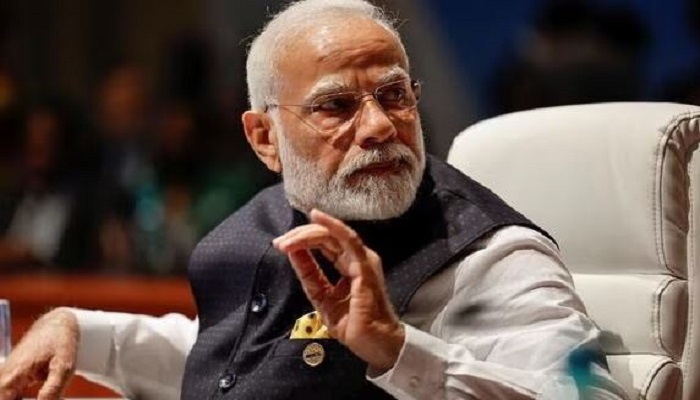
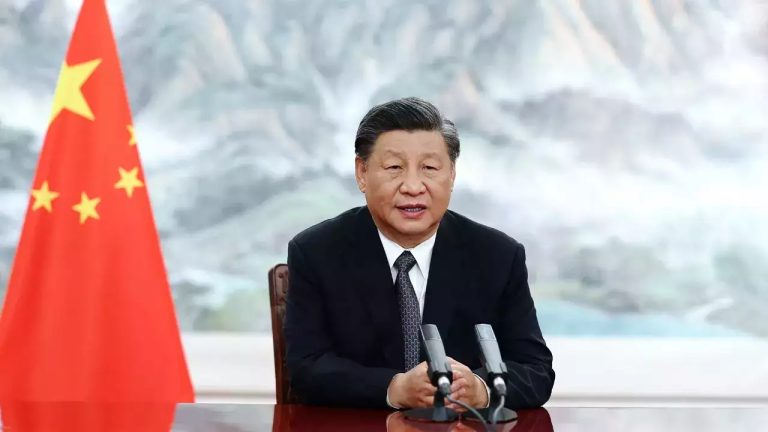
PM Modi will leave tomorrow to attend the BRICS Summit in South Africa’s Johannesburg. PM Modi will be there in the African nation for 3 days, from the 22nd to the 24th of August. Amid big speculations about meetings and declarations, the Chinese foreign ministry has hinted that there may have been a bilateral meeting between PM Modi and Chinese Premier Xi Jinping.

As per reports, China’s ambassador to South Africa Chen Xiaodong, told while speaking to the media, “I am confident that as two nations, two countries, we will have direct talks, direct meetings. I cannot say there is tension between us, but as neighboring countries we have many common interests at the same time we have some problems.”

Xi Jinping will be reaching Johannesburg on August 21, a day before PM Modi. No official declaration or mention of a possible bilateral meeting has been done from the Indian side.

If the bilateral meeting happens between PM Modi and Xi Jinping, it will be a major event because the last time the two leaders met, was a brief encounter in November 20202, in Bali, Indonesia during the G20 summit. Tensions have been running high between the 2 countries since May 2020 when clashes between troops in Galwan resulted in the deaths of 20 soldiers from India and dozens of PLA troops.

What is BRICS, and why it is gaining attention now

A Goldman Sachs economist named Jim O’Neill first used the term ‘BRIC’ to describe the major emerging economies of the global south, Brazil, Russia, India, and China. He predicted that these nations will have the potential to drive the world economy in the 21st century.

After the global financial crisis in 2008, the discussion around the declining Western influence, the weakening of the Western financial hegemony, and the emergence of the global South gained prominence. In 2009, the leaders of the BRIC met for the first time in Yekaterinburg, Russia. India’s then PM Manmohan Singh, Russia’s then Presiden Dmitry Medvedev, Chinese President Hu Jintao, and Brazil’s then and current President Lula DeSilva attended the summit on Medvedev’s invitation. 2 years later, South Africa joined the grouping, making it ‘BRICS’.

Leaders of Brazil, Russia, China, and India at the first BRIC summit in Russia, 2009

Contrary to anticipations though, the grouping has not achieved much steam in the past years. It remained on the sidelines of global politics, and the anticipated anti-West push in the financial and geopolitical arena never really materialized in any solid form.

Together the BRICS nations account for 42% of the global population, more than 3 billion people. They account for over 26% of the global economy and have a combined GDP of over 23 trillion USD. The BRICS nations control over 30% of the world’s territory and 18% of global trade.

Speaking at the Global South Summit in January this year, PM Modi emphasized that with three-quarters of the global population, the Global South needs to have an equivalent voice.

Though a lot was expected of the BRICS, the group has so far remained largely silent. The possibility of a cohesive alliance between the world’s non-Western major economies has been idealistically projected as immensely powerful, but the BRICS nations are yet to assert that power together, unlike the G7.

The BRICS has been always about countering Western hegemony. One of the major achievements of the alliance has been the foundation of the financial institutions to counter the IMF, like the New Development Bank. The NDB has financed multiple projects in the BRICS nations. It allows the usage of national currencies and does not impose its specific rules and regulations on the policies of the concerned nation, unlike the IMF.

A combined BRICS currency? Russia has been pushing for it

Brazil had last year floated the idea of a combined BRICS currency. A lot of speculations have been made about a combined BRICS currency, aimed at the de-dollarisation of the world, especially the global south.

Russian media and political powers ran the idea for weeks before the BRICS summit. Russian government channels even went so far as insinuating that the BRICS nations are already in agreement over launching a new currency backed by gold, unlike the credit-backed US dollar.

Chinese media has been also running positively speculative stories about a possible BRICS currency.

However, Indian Minister of External Affairs Dr. S Jaishankar clarified in July that there is no plan as such for a combined BRICS currency, and currencies are expected to remain a national issue for participating nations.

The CFO of BRICS News Development Bank Leslie Maasdorp also dismissed the idea, stating that there is no such suggestion as of now.

As per the latest news, host South Africa has clarified that the idea of a combined BRICS currency is off the table. The new Development Bank has disbursed only $33 billion worth of loans so far in its existence, roughly one-third of what the IMF has disbursed in a year.

India’s reluctance to support a BRICS currency holds much significance, because with a rapidly growing GDP, the sheer scale of its market, and its current stand as one of the world’s top 5 economies, India is hoping to increase the influence of its own currency. It does not need the financial support of BRICS to fuel its economy and has been on excellent trade terms with the USA and Europe.

China wants to expand quickly, India is hesitant

Over 40 nations have so far applied to be a part of the BRICS, including major powers like the UAE, Indonesia, Egypt, Argentina, and Saudi Arabia. China, which already enjoys a considerable economic heft in Africa, has been quite bullish on expanding the BRICS. Russia, currently isolated by most Western powers due to the war in Ukraine, has been seeking ways to expand its influence, establish better relations with non-Western powers and spread its influence in the Global South.

India, however, has been reluctant to let other countries in. Primarily because it is wary of China. India and China, despite booming trade partnerships, are hostile neighbors and have a tense land border, the most recent military conflict being in 2020.

India is wary that a stronger China with stronger ties with major powers in an expanded BRICS will reduce the group to a Chinese tool of global dominance, at the cost of Indian interests. India has been forging a stronger than ever bilateral relationship with the USA keeping the same China-wariness in mind.

Brazil has similar concerns too. Brazil has been against expansion in the BRICS, fearing a dilution of its own interests and voice.

The agenda for the 15th Summit in Johannesburg is ‘BRICS in Africa: Partnership for Mutually Accelerated Growth, Sustainable Development, and Inclusive Multilateralism’.

Security interests and economic growth to be India’s top agendas

As PM Modi is set to start his journey to Johannesburg, India’s main focus is going to be the security interests of member states, food security, and fight against terrorism.

India’s ‘security interests’ are currently in conflict with China’s territorial expansion plans, and as the two Asian giants share a 3500 km land border, the security interests are paramount. The tension at the LAC remains a major thorn in the way of normalization of India-China relations and its ripples are bound to be felt in the BRICS summit too.

Russian President Vladimir Putin will not be attending the summit at Johannesburg. He has an arrest warrant against him by the International Criminal Court due to the war in Ukraine. Russia will be represented by Foreign Minister Sergey Lavrov.

This will be the first in-person BRICS Summit after the pandemic. Invitations have been sent to 67 foreign leaders across Asia, Africa, and the Caribbean. The UN Secretary-General and the Chairperson of the African Union have been invited too.