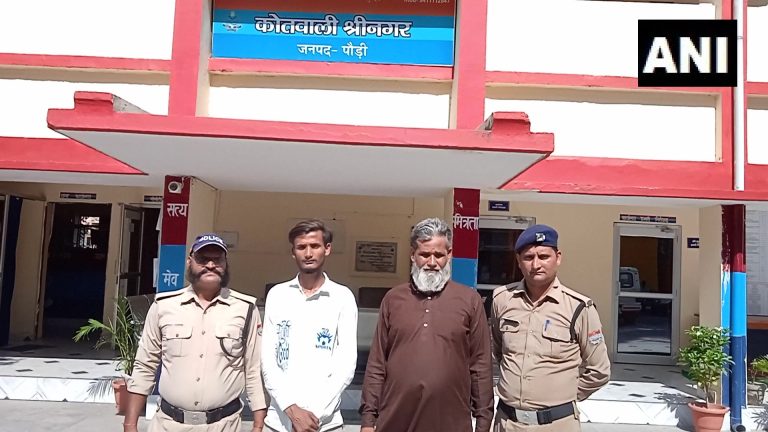
As the controversy around forced conversions and love jihad continue to grip Uttarakhand, another case of religious conversion has come to the fore from Srinagar, Pauri Garhwal. A father-son duo has been arrested by the police for forcing a girl to convert to Islam.
An FIR was filed by the father of the victim alleging that his daughter’s friend, and the friend’s brother belonging to a specific religion (Islam) attempted to convert her. She was also forced to wear a hijab, offer namaz, and marry the boy. The father of the boy was also allegedly involved in the crime.
A man gave a complaint that his daughter is being forced by a man to convert to Islam, wear Hijab & offer namaz. He allegedly also forced her to get married to him. We registered a case & arrested the man and his father. Further investigation is underway: Shyam Dutt Notiyal, DSP pic.twitter.com/TrY5mVraDm
Mujeeb Khan (22) and Babu Khan (45) were on the run but were nabbed by the police from Rishikesh railway station. A case has been registered against both of them under sections 354 and 3/5 of the Uttarakhand Religious Freedom Act 2018. An additional section has been invoked on the son for molestation.
Both accused have been sent to the district jail Khandusain on the orders of the court
Social activists including Srinagar Vyapar Sabha have also demanded action against the accused alleging that he planned to run away along with the victim.
Cases of conversion and love jihad growing in Uttarakhand
There have been growing concerns over the cases of conversion and love jihad in Devbhoomi Uttarakhand.
15 June 2023: Teen’s body found hanging in Dehradun
A 17-year-old Hindu girl’s dead body was discovered hanging at her residence in Laxman Chowk of Dehradun, Uttarakhand. “I am leaving your life, both of you be happy,” was also found written in blood on a wall of the room. The police took the dead body in their possession and transported it to a hospital for postmortem.
Reportedly, she was in love with a Muslim individual named Shadab, and the victim’s family accused him of leading the girl to kill herself.
15 June 2023: The Ghajwa-e-Hind threat
Devbhoomi Raksha Abhiyan Sangathan founder, Swami Darshan Bharti, received a letter in which Islamists issued death threats to the Hindu saint for protesting against Love Jihad cases.
Swami Bharti has been at the forefront of protests against the rampant Love Jihad incidents that are taking place in the Purola area of Uttarkashi, Uttarakhand.
14 June 2023: Muslim girl traps Hindu girl, and forces her to convert
A Hindu girl was forced to convert and marry by a Muslim man who was the brother of the victim’s friend. The individuals accused in the case are Armaan Ansari and his sister Tamanna.
31 May 2023: Hindu minor girl abducted by Uved Khan
A Hindu minor girl was abducted by two youths, one of whom is from the Muslim community, in Purola region of Uttarkashi. The two accused have been identified as Uved Khan and Jitendra Saini.
Massive protests were launched by locals who demanded a shutdown of shops owned by non-locals, the majority of whom are from the minority community.
13 June 2023: Muslim man caught taking intimate images of a Hindu student
A Muslim man was caught by a local Hindu organization while he was taking intimate photographs of a Hindu medical student. The man also blackmailed the female student using the photographs and forced her to change her religion to Islam.
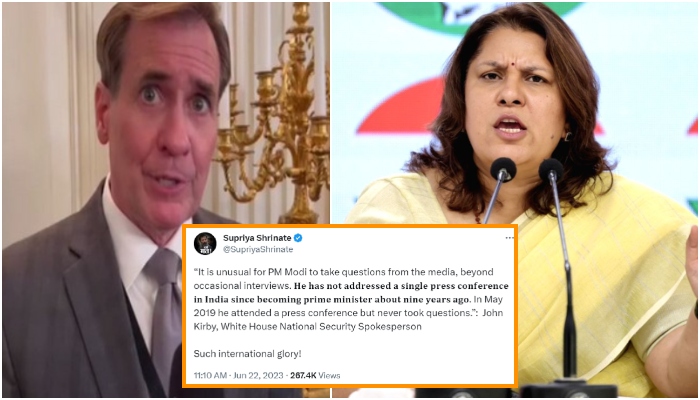
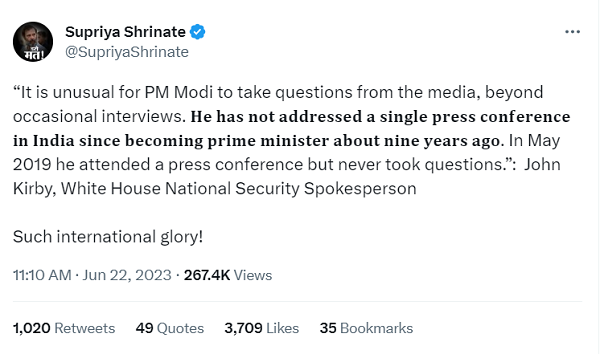
On Thursday, Congress spokesperson Supriya Shrinate tried to spread fake news amid PM Narendra Modi’s visit to the United States. In an attempt to criticize PM Modi, Shrinate who has also worked as a journalist misquoted John Kirby, White House National Security Spokesperson. She indicatively claimed that Kirby had criticized PM Modi for not taking any press conferences in the last 9 years.
““It is unusual for PM Modi to take questions from the media, beyond occasional interviews. ?? ??? ??? ????????? ? ?????? ????? ?????????? ?? ????? ????? ???????? ????? ???????? ????? ???? ????? ???. In May 2019 he attended a press conference but never took questions.”: John Kirby, White House National Security Spokesperson,” her tweet read.
Interestingly, the words diligently quoted by Shrinate have never been said by John Kirby. Shrinate happened to pick the quoted statement from a recently published Reuters report and falsely claimed that Kirby had stated those.
Netizens mocked Shrinate for spreading fake news by putting wrong quotes in the name of Kirby. They highlighted that the quotes used by Shrinate was actually not a quote but a paragraph from a Reuters report. They also said that if Kirby had said those words, Reuters would have published the same as his quote.
— Shashank Shekhar Jha (@shashank_ssj) June 22, 2023
Reuters on June 22, published a report saying that US President Joe Biden and PM Modi would address and take questions from journalists today amid the Indian leader’s state visit. The report also stated that one of the senior White House officials had called it a ‘big deal’.
Furthering the report, Reuters wrote, “It is unusual for Modi to take questions from the media, beyond occasional interviews. He has not addressed a single press conference in India since becoming prime minister about nine years ago. In May 2019 he attended a press conference but never took questions.” These exact words were used by Shrinate to claim that John Kirby, White House National Security Spokesperson said so.
However, as per the Reuters report, Kirby called the event a ‘big deal’ and said, “We are just grateful that Prime Minister Modi is participating in a press event at the end of the visit. We think that’s important and we’re glad he thinks that’s important too.”
Reportedly, Kirby yesterday in an exclusive interview to ANI said that he was looking forward to deepening relations with India. “India is a world player and a net exporter of security and stability. India is already exporting security in the Indo-Pacific region and beyond, and they are contributing to the Indo-Pacific Quad. We are participating with India in the I2U2,” he said.
PM Modi will attend the state dinner hosted in his honor by US President and the first lady. The PM will also address a joint sitting of the US Congress today.
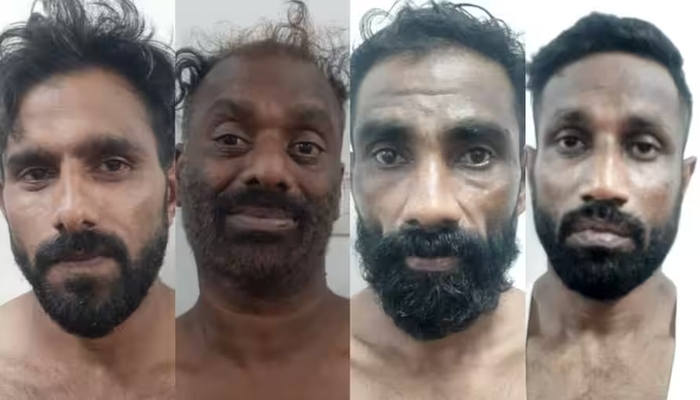
On Thursday, Kozhikode Police arrested four history sheeters, identified as Nainook, Nishad Ali, Sajar, and Jasim for sexually assaulting a 16-year-old minor boy. The alleged incident took place on Wednesday morning at Kozhikode Beach when the four gang members assaulted the minor. They also tried to drown the victim’s friends in the sea.
The town police station Inspector Baiju K Jose identified the accused as Nainook (40), a resident of Panniyankara, and his accomplices as Nishad Ali (35), Sajar (35), and Jasim (35).
Local police managed to arrest them from their hideout in the city. In the operation, two policemen also suffered injuries.
The police stated that the incident transpired on Wednesday morning when the victim along with other children was playing on the Kozhikode beach. When the victim’s friends objected to the accused persons sexually assaulting the victim, two of the accused Nainook and Nishad tried to drown them in the sea.
The police had to conduct an operation in Panniyankara to nab the accused persons. During the operation, the accused tampered with a gas cylinder endangering everyone’s lives. However, the police forcibly entered the premise and arrested them.
The accused also vandalised a police vehicle. Notably, two of the accused Sajar and Jasim have been arrested for assaulting the police officials. The police also found Cannabis plants at the 40-year-old Nainook’s residence.
The gang is known for committing several crimes in the city. They will be produced before the magistrate after a routine medical exam where police will seek their custody.
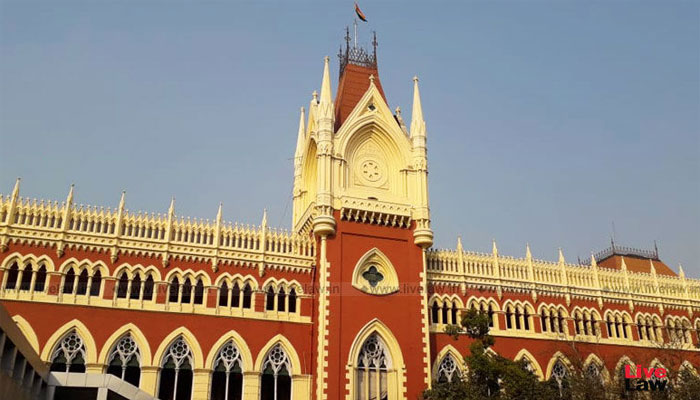
On June 20, Calcutta High Court ordered the formation of a Special Investigation Team (SIT) to investigate the tension at the Matua temple of Binapani Devi, aka Bora Ma, at Thakurnagar of district Bangaon, West Bengal. The order was passed by a single-judge bench of Justice Rajasekhar Mantha after hearing a petition filed by Bharatiya Janata Party (BJP) MP of Bongaon Shantanu Thakur. In his plea, Thakur accused Trinamool Congress (TMC) National General Secretary Abhishek Banerjee and his associates of creating tension during his visit on June 11.
Union Minister of State for Ports, Shipping and Waterways Shantanu Thakur said in his plea that the district police did not take any action against the offenders. On the other hand, the police filed a police complaint against the devotees of the temple, who TMC supporters heckled. The petition was filed in the High Court on Monday and came for a hearing on Tuesday.
In his order, Justice Mantha directed that the SIT should be headed by an IPS officer in the rank of Additional General of Police (ADGP). He also directed the police to take CCTV footage from the temple for investigation immediately. Furthermore, Justice Mantha ordered the immediate release of the Matua devotees that were arrested by the police in the matter. The next date of hearing has been set for July 18.
Devotees hackled by TMC supporters at Matua Temple
On June 11, TMC leader Abhishek Banerjee was allegedly denied entry into the sacred Harichand-Guruchand temple of the Matua community in Thakurnagar in North 24 Parganas district of West Bengal. As per reports, he was stopped by a Matua community section and greeted with black flags and ‘go back’ slogans. Abhishek Banerjee, however, alleged that it was the handiwork of BJP MP Shantanu Thakur and his followers.
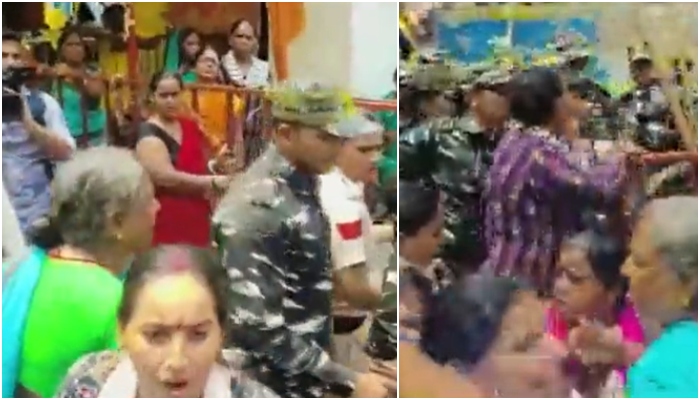
He accused them and CISF personnel, accompanying the BJP MP, of forcibly closing the gates of the main temple and preventing him from offering prayers. The TMC leader also claimed that the central forces assaulted women devotees who came to pray at the Matua temple.
Meanwhile, the BJP has rubbished the allegations levelled by Abhishek Banerjee. While speaking to the media, BJP MP Shantanu Thakur said, “Abhishek Banerjee had brought in goons to foment trouble, but members of the Matua community thwarted him.”
He further added, “TMC general secretary was not allowed to use the Matua community for political gains.” Thakur informed that BJP workers and MLA Ashoke Kirtaniya sustained injuries after TMC goons attacked them before Abhishek Banerjee arrived at the Harichand-Guruchand temple.
He said that the local police and TMC workers manhandled him when he went to meet the injured party workers at the Chandpara Hospital. Thakur also told Times Now that TMC leaders such as Jyotipriyo Mallick, Bratya Basu and Sujit Bose and their supporters assaulted the temple priest.
“They threw the purohit (temple priest) out and prevented the devotees from visiting the main temple…When I was informed about the matter, I reached the temple premises. TMC goons pushed me and abused me verbally,” he narrated.
Shantanu Thakur emphasised, “I am a member of the Matua family. I belong to the 6th generation of Sri Sri Harichand Thakur ji. It is my duty to protect the temple at all costs. And TMC goons were trying to stop me from entering the temple.”
Abhishek Banerjee had claimed that he could have forcibly entered the Harichand-Guruchand temple with his supporters but supposedly chose not to do so to avoid a clash at the holy site.
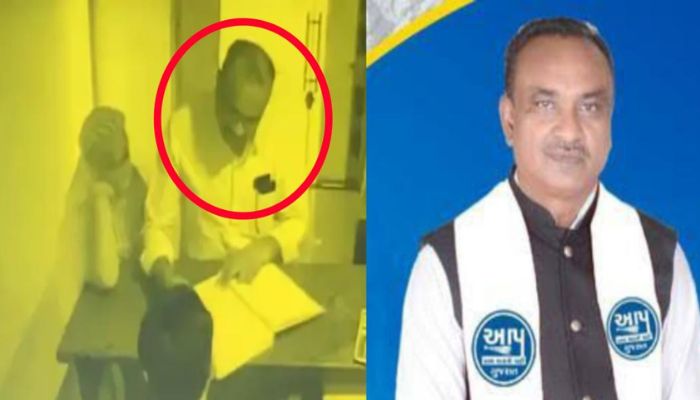
A controversy erupted on Wednesday, 21st June 2023, as reports claimed that Bhupat Bhayani, an MLA from the Aam Aadmi Party (AAP) representing Visavadar, was caught in a hotel room with a married woman. The incident took place at the Suraj Hotel in Surat’s Kadodara area. Additionally, a CCTV video allegedly showed the MLA and the woman checking in at the hotel reception.
According to a report by Divya Bhaskar, the incident unfolded when the AAP MLA accompanied the woman to a hotel in Kadodara, near the city of Surat. The report identified the person captured in the viral CCTV video as Aam Aadmi Party MLA Bhupat Bhayani. It was alleged that Bhayani was seen entering a room with the married woman, suggesting a close relationship between them.
The Visavadar MLA fled covering his face as the woman’s husband arrived
The report claimed that Visavadar’s AAP MLA Bhupat Bhayani was discovered in a hotel room with the married woman. Upon learning about the situation, the woman’s husband promptly arrived at the hotel. Caught off guard by the unexpected presence of the husband, the MLA from Visavadar swiftly covered his face with a handkerchief, expressing shock.
Another report stated that Bhupat Bhayani had allegedly rented the room for Rs 800. As per the report, the AAP MLA spent approximately 50 minutes in the hotel room with this married woman. However, when the woman’s husband arrived at the hotel and began recording a video on his mobile phone, Bhayani was forced to hastily flee with a handkerchief concealing his face.
As per the allegations, the woman’s husband refrained from filing a police complaint in an attempt to salvage his marital life. Furthermore, it is reported that he has not yet made the recorded video public. The woman’s husband, according to the report, asserts that if a police investigation is conducted, it will uncover Bhupat Bhayani’s alleged involvement in intimate relationships with other women as well.
When Divya Bhaskar’s journalist Deven Chitte contacted the Aam Aadmi Party MLA and asked him about this incident, he said, “I’m at home right now, please, I can’t give you any kind of comment or reaction right now, I’ll meet my legal team and react later.”
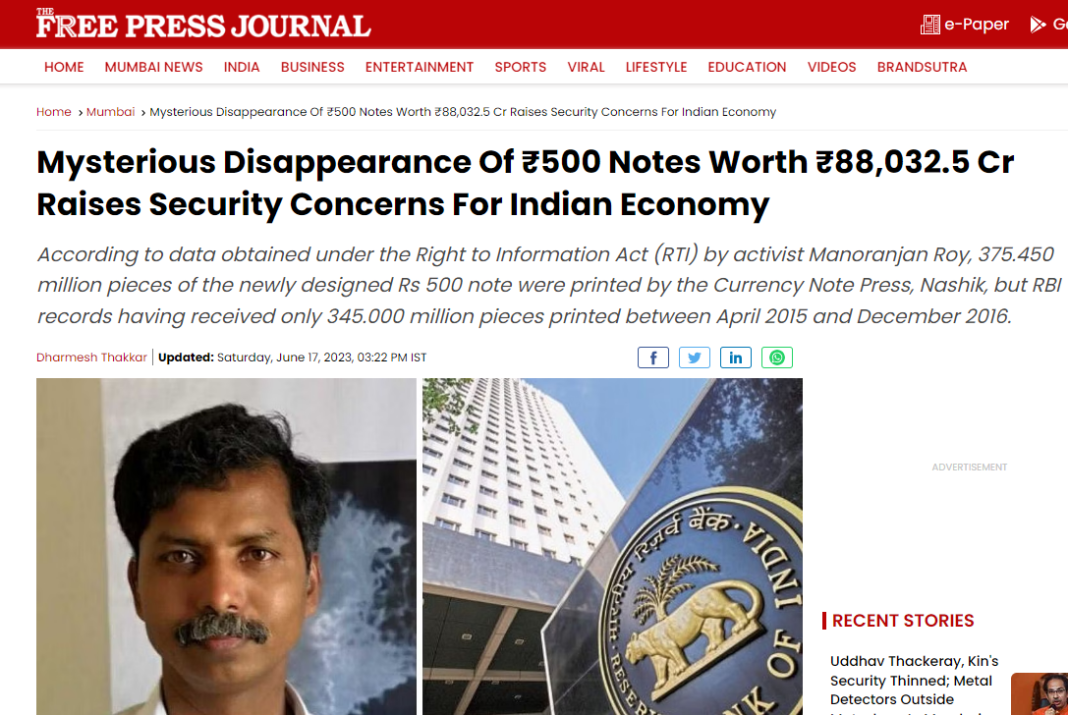
On 17th June, Free Press Journal published an explosive report claiming that Rs 500 banknotes worth as much as ₹88,032.50 crore were missing. Based on RTI replies on data submitted by banknote printing presses on notes sent and RBI data on notes received, it claimed that there was a huge mismatch of 1760.65 million pieces of the ₹500 notes for the year 2016-17. The claim was subsequently published by almost all other media houses citing the FPJ report and the RTI queries.
The Reserve Bank of India has already dismissed the claim. Now, based on the relevant documents based on which the claim was made by the RTI activist and FPJ, OpIndia can confirm that there are no missing ₹500 notes. Several crucial details, some of which are mentioned in the documents obtained by the RTI queries and cited in the report itself, were ignored, which led to the wrong calculation of data, leading to the assumption that notes were missing.
In the clarification issued late on the night on the same day when the FPJ report was published, RBI affirmed that all banknotes supplied from the printing presses are accounted for, and the report was based on an erroneous interpretation of information obtained under RTI. The central bank added that robust systems are in place for the reconciliation of banknotes printed at the presses and supplied to RBI which include protocols to monitor the production, storage and distribution of banknotes.
What the report claimed
The report is based on the RBI annual report, and the number of notes sent by three currency printing presses to the RBI, which are Bharatiya Reserve Bank Note Mudran (P) Ltd (BRBNML), Bank Note Press in Dewas (BNP), and Currency Note Press in Nashik (CNP). The latter were obtained through RTI, while RBI’s annual report is available on its website.
According to the report, in the year 2016-17, the number of notes sent by these three presses was 5,195.65 million pieces from BRBNML, 1,953.000 million pieces from BNP Dewas, and 1,662 million pieces from CNP Nashik, totalling 8,810.65 million pieces of “new ₹500 notes”. According to the report, in the same year, RBI received only 7,260 million pieces of ₹500 notes, and therefore there is a mismatch of 1550.65 million pieces.
It further claims that 375.45 million pieces of the newly designed ₹500 note were printed by the CNP, Nashik between April 2015 and December 2016, but RBI records show it received only 345. It adds that 210 million pieces of ₹500 notes, printed between April 2015 and March 2016 at CNP Nashik, were sent to the RBI, but it is not mentioned in the RBI report, and therefore these notes are also missing.
Screenshot of the FPJ report
Adding the “missing” 1,550.65 million pieces for 2016-17 and 210 million pieces for 2015-16 from CNP Nashik, the report concluded that 1,760.65 million banknotes of ₹500 denomination are “missing”, amounting to ₹88,032.50 crore.
While the RBI clarified that the numbers were wrongly interpreted, the brief clarification didn’t include an explanation of how the numbers were misinterpreted. To understand what exactly happened and how Free Press Journal arrived at the conclusion, OpIndia contacted the writer of the story, Dharmesh Kakkar, to learn about the documents relied upon.
When we received the documents, which are annual reports on notes printed by various security printing presses and RBI report on notes received, we analysed them minutely. It was found while examining the documents that the number of notes sent by the presses actually matches the number of notes received by RBI for the year 2016-17, and there is no difference as claimed in the report. RBI was correct in saying that numbers were interpreted wrongly.
Crunching the numbers
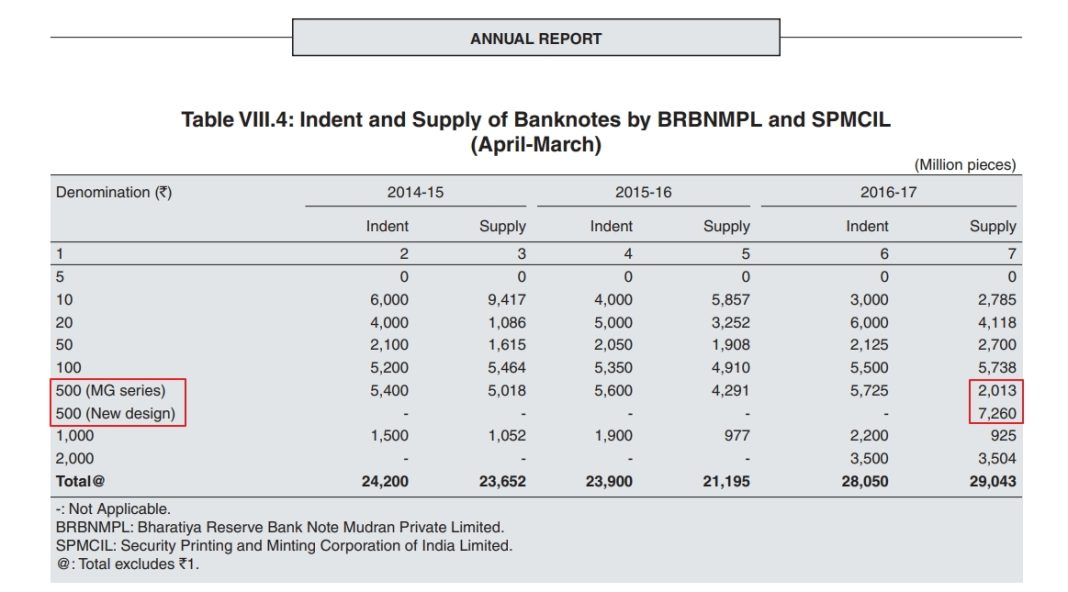
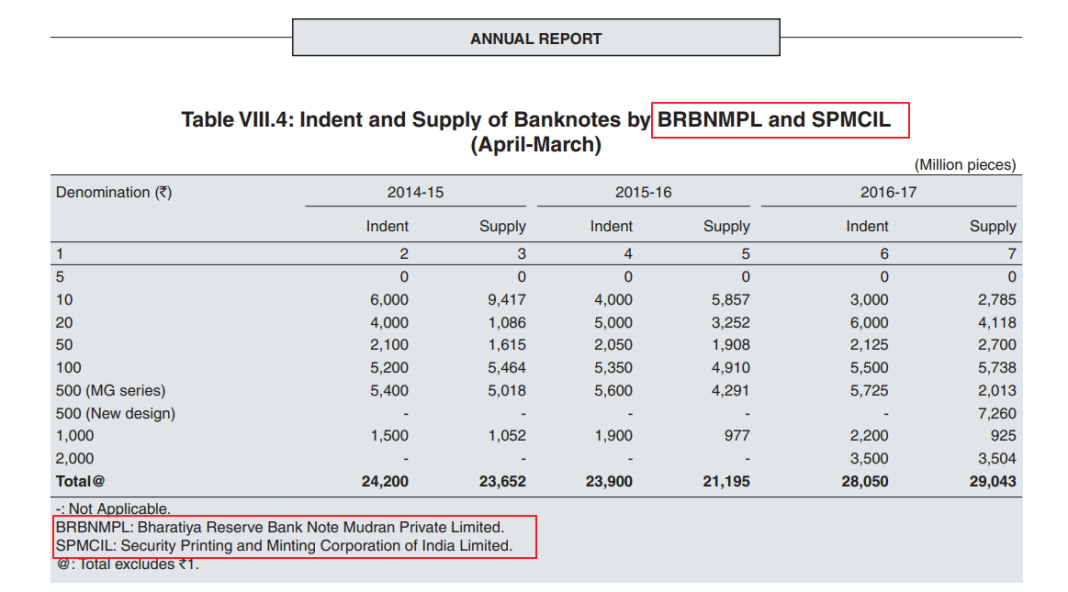
Citing the Currency Management chapter in the annual report of the RBI for 2016-17, the report claims that RBI received 7,260 million pieces of ₹500 notes from the presses. The report is available on public domain, and when we checked, we made a stunning discovery. The report actually has two numbers for ₹500 notes for the year 2016-17, MG series and New design.
The RBI report states that in 2016-17, it received 2,013 million pieces of old ₹500 notes, apart from 7,260 million pieces of new notes. Therefore, RBI received 9,273 million pieces of ₹500 notes, including both demonetised and new versions.
From RBI annual report for 2016-17
RBI received two versions of ₹500 notes in 2016-17 because the demonetisation of old ₹500 notes and ₹1000 notes took place in that year, in November 2016. It has been reported that the decision of demonetisation was kept a top secret, and the printing presses were printing old ₹500 notes till days before that.
It was earlier reported based on an RTI query that the last batch of old ₹500 was printed on 27 October 2016 at Bharatiya Reserve Bank Note Mudran (P) Ltd, just days before demonetisation was announced on 8 November 2016. Moreover, the printing of new notes at BRBNMPL began on November 23, as per another RTI response. A Times of India report from 13 November 2016 states that the printing of new ₹500 notes started at CNP Nashik two weeks ago, which means the last days of October or the start of November.
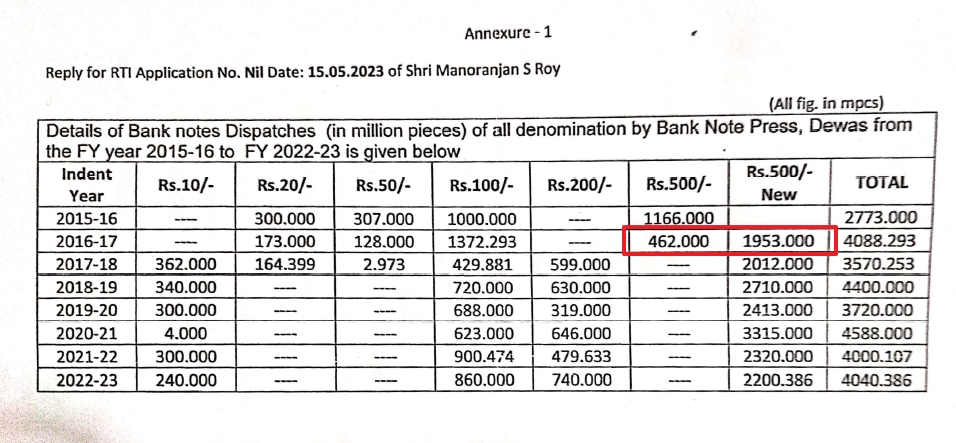
Now, if we analyse the numbers obtained from the three presses, we can find that Bank Note Press in Dewas has given two numbers. In 2016-17, this press supplied 462 million pieces of old ₹500 notes, and 1,953 million pieces of new ₹500 notes. Therefore, a total of 2,415 million pieces of ₹500 notes, including both versions, were supplied to RBI by BNP Dewas.
RTI response from Bank Note Press in Dewas
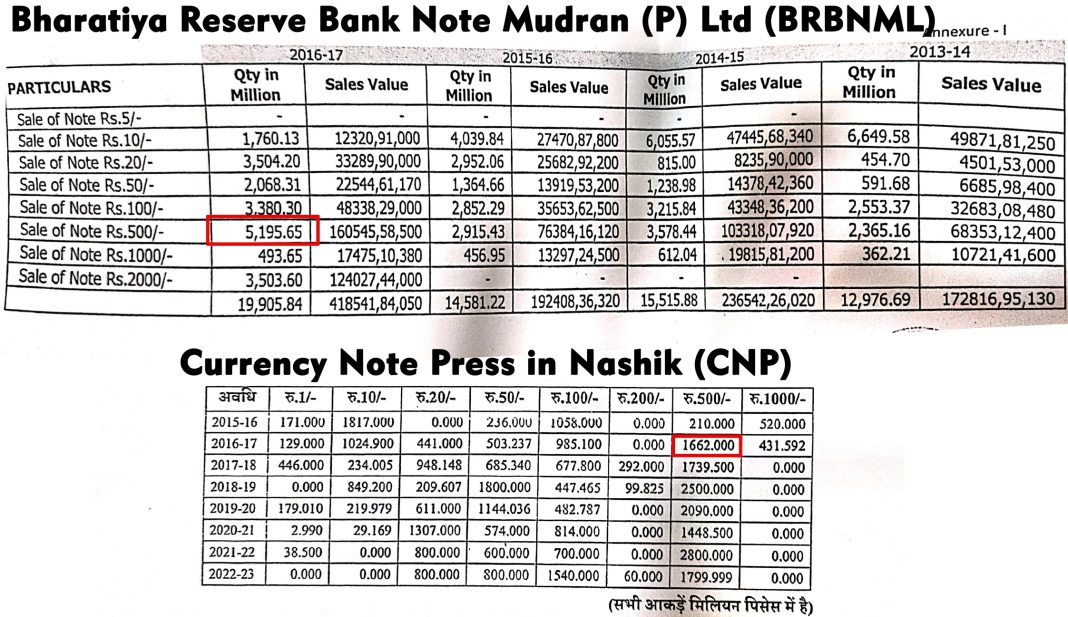
But in the documents supplied as RTI response by Bharatiya Reserve Bank Note Mudran (P) Ltd (BRBNML) and Currency Note Press in Nashik (CNP), there is no separate mention of old and new ₹500 notes. They just mention single numbers, 5,195.65 million and 1,662 million respectively. And, the Free Press Journal assumed these two are the numbers of new ₹500 notes printed by BRBNML and CNP Nashik in 2016-17.
RTI Responses from BRBNMPL and CNP, Nashik
That is a completely wrong assumption because it is already known that the presses were printing old design MG series ₹500 notes till October 2016, and printing of new notes started only after that. This means, the numbers for 2016-17 given by BRBNML and CNP Nashik include both old and new numbers.
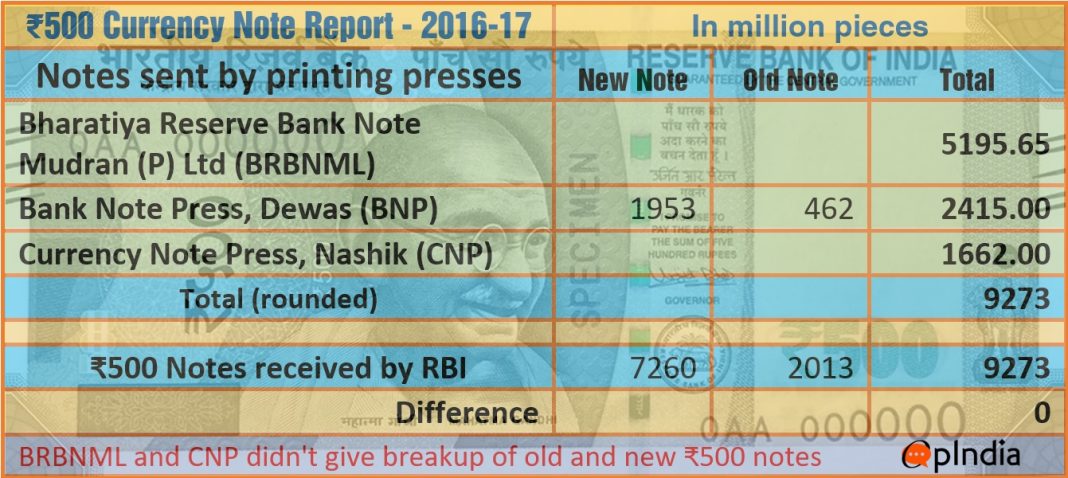
If we add these two numbers with the number of old and new ₹500 notes from BNP Dewas, we find that it matches exactly with the total of old and new notes given in the RBI annual report. The total comes to be 9,272.65 million, while the total of both the ₹500 notes in RBI report for 2016-17 is 9,273 million. It can be seen RBI rounded the number after the decimal, and 9,272.65 million became 9,273 million, which is an exact match.
This means, there is no mismatch of ₹500 notes sent by the presses and received by RBI in 2016-17. As two of the three presses have not provided separate numbers for old and new ₹500 notes, it is not possible to compare the new notes only based on the available data. The comparison has to be done on the total number of notes, both old and new. And when the comparison is done on the total numbers, they match exactly.
As the report took the number of only new notes from the RBI report and then took the total number of old and new notes from BRBNMPL and CNP, it was a wrong comparison. That is why the number of notes supplied by the 3 printing presses is showing more than the number of notes received by RBI.
The report also claimed that the numbers for 2015-16 also do not match, as it claimed that the 210 million notes sent by CNP Nashik is not seen in the RBI report. It is not known how the report arrived at this conclusion, because RBI report does not contain press-wise detail of notes received, it only gives the total numbers.
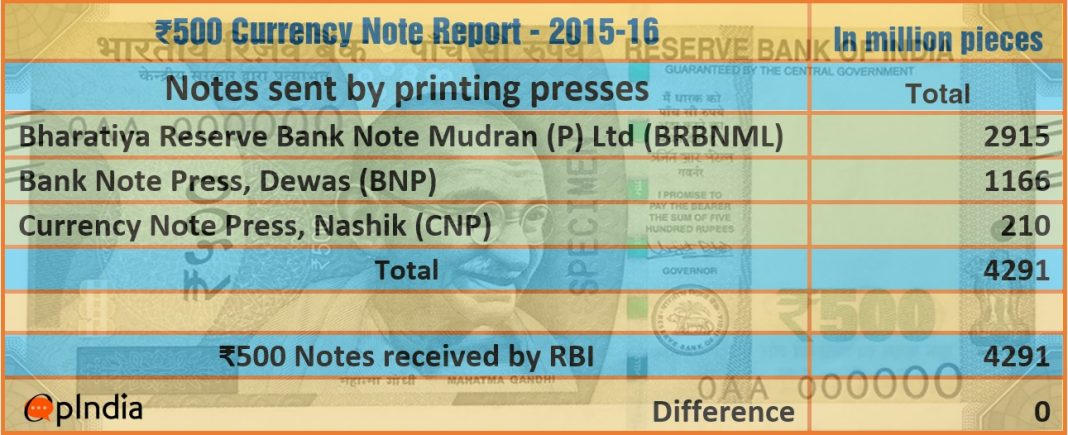
In the year 2015-16, only old MG series notes were printed by the security printing presses and sent to RBI, as the demonetisation took place over eight months after the end of the year. In that year, BRBNML sent 2,915 million pieces, BNP sent 1,166 million, and CNP sent 210 million pieces, based on the reports provided by the three presses in response to the RTI query.
These numbers can be seen in the RBI report and the RTI responses of the three presses given above. If we add the number of ₹500 notes sent by the three presses, the result is 4,291 million. This result matches exactly with the RBI’s number for the year, 4,291 million pieces. Therefore, there is no mismatch for the year 2015-16 too as claimed by Free Press Journal. It can be seen that 210 million pieces of ₹500 notes sent by CNP Nashik is included in the RBI report for that year.
Wrong claim that RBI does not mention a printing press
The report also made a claim that the RBI report does not mention receiving any new ₹500 notes from Currency Note Press, Nashik. In fact, it claimed that 210 million pieces of ₹500 notes were missing because it is the number of notes sent by CNP, as the report claims that the RBI report does not include this number.
This is clearly the result of the wrong interpretation of the report. The RBI annual report mentions banknotes received from BRBNMPL and SPMCIL. Here BRBNMPL is Bharatiya Reserve Bank Note Mudran (P) Ltd, for which we already have data. But SPMCIL is Security Printing and Minting Corporation of India Limited, and the FPJ report somehow assumed that it means Bank Note Press in Dewas, and therefore it claimed that CNP is not mentioned.
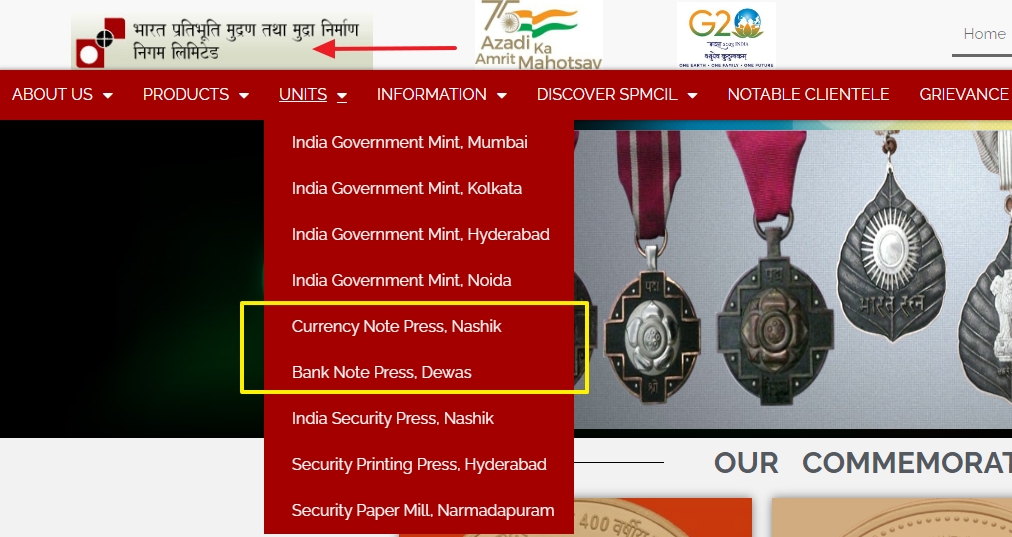
But actually, the Security Printing and Minting Corporation of India Limited (SPMCIL) is a company under the Department of Economic Affairs of the Union Finance Ministry. And the two note printing presses from whom RTI responses were obtained, Currency Note Press in Nashik (CNP) and Bank Note Press in Dewas (BNP), come under SPMCIL. Therefore, the number mentioned in the RBI report includes numbers from both BNP and CNP, as it clearly marked as SPMCIL, and does not mention BNP or CNP.
It is notable that these two presses were earlier independent units, but the SPMCIL was set up in 2016, and several mints, security paper printing presses under the finance ministry, along with these two note printing presses were brought under it. On the other hand, BRBMNPL is a division of RBI. Therefore, the RBI report gives data from BRBMNPL and SPMCIL, not individual presses under SPMCIL.
Screenshot from SPMCIL website
The above screenshot of the website of SPMCIL shows various mints and printing presses under it. As the FPJ report assumed that SPMCIL means BNP, it assumed that the numbers for CNP are missing in the RBI data. But, had they simply added the numbers for all three presses for 2015-16, they would have found that it matches with the RBI data for that financial year.
Blatant misrepresentation
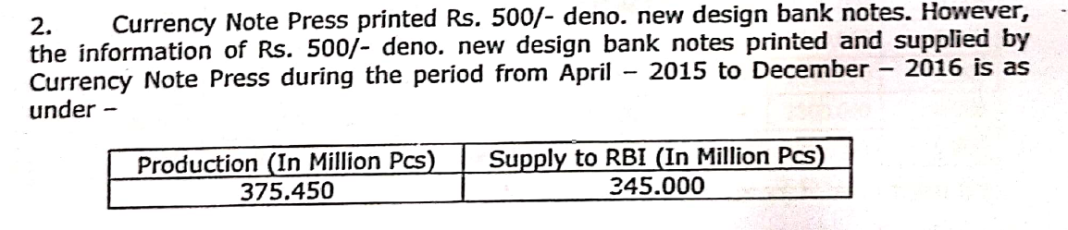
Apart from clearly wrong calculations and assumptions, the report also has one blatant misrepresentation of fact. It mentions that between April 2015 and December 2016, 375.45 million pieces of new ₹500 notes were printed by CNP Nashik, but RBI received only 345 million pieces.
Interestingly while in one place it claimed RBI does not include numbers from CNP Nashik, it also the report also claimed RBI report mentions 345 million pieces received from it. Both are wrong claims.
RBI annual report does not have a break up of notes received from BNP and CNP, and the number 345 million notes is not mentioned in the report. Surprisingly, the numbers are from the same source, the document supplied by CNP Nashik. It states that from April 2015 to December 2016, 375.45 million pieces of new ₹500 notes were printed, and 345 million of the same were supplied to RBI.
Therefore, both the numbers are from the press, one is production and the second is shipment to RBI. The second number is not from RBI as claimed by the report. It is obvious that the balance quantity, 30.45 million, was in stock at the end of the period at the press. But the report somehow assumed that it is a mismatch between notes sent by CNP and received by RBI.
Notably, although the report of the CNP states that 375.45 million pieces of new design ₹500 notes were printed from April 2015 to December 2016 by CNP, as the RTI query must have mentioned this period of 21 months, the actual printing must have taken place in the last two months of this period, November and December 2016.
Because, as mentioned above, demonetisation took place in November 2016, and up to October 2016, all ₹500 notes printed were old Mahatma Gandhi series notes which were demonetised. No new notes were printed in 2015-16, and from April 2016 to October 2016. Therefore, it can be seen that Currency Note Press in Nashik sent 345 million pieces of new ₹500 notes to RBI in 2016-17.
BNP Dewas sent 1,953 million pieces of new notes, CNP Nashik sent 345 million, therefore the balance of the 7,260 million received by RBI must have been sent by BRBNMPL, which would be 4,962 million pieces.
In conclusion, it is clear that Free Press Journal arrived at the wrong conclusion of missing new ₹500 notes because it compared data for only new ₹500 notes from RBI with the combination of both old and new ₹500 notes from two of the three printing presses. Along with that, it wrongly concluded that data for one press is not included in RBI data because it missed the fact that the concerned press is part of a company and the RBI has taken the total number for the company, and didn’t use separate numbers for individual presses.
OpIndia contacted Dharmesh Kakkar, the author of the Free Press Journal report, to ask if he has any comments to make on our conclusions. He said that he has no comments to offer, and their report was published based on claims made by RTI activist Manoranjan Santosh Roy, who obtained the reports from printing presses under RTI, and made the assumption that ₹500 notes were missing. However, as FPJ was given the documents by the RTI activist, it is clear that the portal didn’t examine the documents, and published Roy’s claims without any verification.
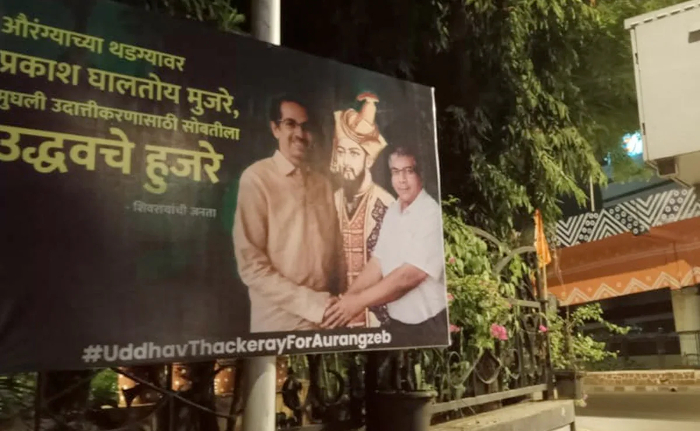
Hoardings of former Maharashtra Chief Minister Uddhav Thackeray and Vanchit Bahujan Aghadi chief Prakash Ambedkar with Aurangzeb’s picture in it, were put up in the Mahim area of Mumbai, police said on Thursday.
“Posters were put up at night, no information yet on who put them up. It has been removed now. No complaint received so far,” Mumbai Police said.
According to the police, they will register an FIR against unknown people if law and order are disturbed. Further investigation is underway.
Meanwhile, Maharashtra Minister and Shiv Sena leader Deepak Kesarkar reacted to the matter and said Uddhav Thackeray’s new love for Aurangzeb can be seen.
“Uddhav Thackeray’s new love for Aurangzeb can be seen. Those who’re compromising with Hindutva, won’t be forgiven by Chhatrapati Shivaji Maharaj,” Kesarkar added.
Earlier on June 19, Maharashtra Deputy Chief Minister Devendra Fadnavis said on Sunday that no Muslim in India is a descendant of Aurangzeb, and nationalist Muslims in the country do not recognize the Mughal emperor as their ruler.
Fadnavis also said that there is only one king, and that is Chhatrapati Shivaji Maharaj and the Muslims also respect him.
“Our king is only Chhatrapati Shivaji Maharaj. We cannot have another king. Muslims in India are not descendants of Aurangzeb. Aurangzeb and his clan came from outside,” he added.
Earlier on Thursday, June 8, tension simmered in Maharashtra’s Kolhapur after some youth allegedly posted objectionable posts on social media with a reference to Aurangzeb and Tipu Sultan.
(This news report is published from a syndicated feed. Except for the headline, the content has not been written or edited by OpIndia staff)
“Right to Education” is one of the fundamental rights mentioned in the constitution of India. Since 1947, every Indian government led by different political parties has put enormous efforts to protect this right. However, one of the biggest achievements was made when Prime Minister Atal Bihari Vajpayee and President APJ Abdul Kalam worked together to launch the “Education for All” campaign in 2001. The nation witnessed an unprecedented willingness of the Government to prioritize educating the mass.
In 2014, following a decade of corrupt governments led by the Indian National Congress party, people unanimously elected Narendra Modi from Bharatiya Janata Party (BJP) as the Prime Minister of India. Just before the pandemic, the then finance minister, the late Mr. Arun Jaitley had made a significant statement in the 2018 budget session that the Government was aiming to double the contribution of GDP in our Education system.
This statement indicated the Government’s sincere attempt to revamp the education system. Finally, in 2020 during the pandemic, the Government introduced the New Education Policy (NEP 2020). Interestingly it was done when the global pandemic was raging, Indian scientists were making indigenous vaccines against the Coronavirus and India was feeding no less than 800 million of her population free of cost under the PM-GKAY scheme. On top of that, we had to deal with neighbours like China and Pakistan on the military front.
While India was managing multiple threats and still growing on the economic front, the entitled Western world had already surrendered to the virus. India not only manufactured her own vaccines but also helped neighbouring countries and poorer nations of the world by supplying them vaccines, often free of cost. While the giant pharmaceutics of the West were lobbying for their respective governments in return for vaccines, India was helping the world while taking care of 1.4 billion of her own.
Now, post-pandemic, it becomes increasingly difficult for financially richer “first world countries” to sit on a moral high horse and continue to preach a third-world challenger who has emerged as the only bright spot on the world economic stage. Hence, based on fake news and with the help of half-baked journalists, a smear campaign is launched where it is declared that the Indian education board removes chapters on Periodic Table and Evolution for students in middle school. What it deliberately omits is the simple fact that all those students will learn those topics in high school as explained in detail by Prof. VS Baswanath from the SRM University AP.
The Government proposal on New Educational Policy (NEP 2020) was highly praised as it was the first step towards fulfilling Swami Vivekananda’s educational philosophy on nation-building. Being the world’s largest democracy and following its own civilization traditions, the Government of India has always been open to accepting constructive criticism to improve the education system. However, it is always possible to find a sell-out in any country. Similarly in India, finding an elitist anglophile who loathes the present government is readily available too.
These academic activists are motivated by nothing more than personal hatred for the present dispensation. They go to the extent of misguiding renowned science journalists and the Western world with tampered information. A simple rescheduling of the curriculum is pointed out as removal, making it the source of all misinformation going around. While the West, already facing the loss of face on the world stage for mismanagement during the pandemic with much less population and much more financial equity than a populous country like India, laps it up for moral oneupmanship. A country that is publicly celebrating her scientists for their service during the pandemic would do anything but remove basic tenets of science like evolution and the periodic table from the curriculum.
It was quite striking that a reputed journal like Nature published an editorial to criticize India’s educational policy based on the recent rescheduling of the textbook. The mention of Rashtriya Swayamsevak Sangh (RSS, alleged ideological source of the present Indian government) makes the agenda clearer. Recently, as the Indian education board, the NCERT clarified its stand in a series of tweets, it became clear that the editorial in Nature was based on fabricated data. The question is why was the information not cross-checked with NCERT themselves before publishing the article? It reflects lazy journalism. Renowned journalists and publishing houses are expected to be better than that.
Interestingly, it is not the first time such misleading claims about India have been made by the Western media. An editorial on the abrogation of Article 370 was published in the famous medicine journal Lancet. We witnessed that different Western media houses doubted the success of the Indian army’s surgical strike on cross-border terror camps. Most recently, BBC’s biased documentary on the Gujarat riots made it to the headlines. The smear campaign against the status quo seems to be a regular adventure for the preachy, sanctimonious Western media.
During the pandemic, many models were published that predicted India would face hundreds of thousand of deaths due to covid third wave. A cohort of economists with a couple of Nobel laureates has been constantly criticizing India’s economic policy. Blowing all doubts away, the outstanding vaccination policy helped India overcome the threat of the pandemic. The effective financial planning of the Government is steadily taking India towards achieving the target of a 5 trillion-dollar economy.
It is naive to think the media is politically unbiased and they prefer to sell reports based on their political beliefs. But scientific journals are expected not to behave the same. Scientific journals publish results based on scientific observation. So, it is shocking that journals like Nature started publishing news rife with political connotations.
By this time, the people of India have realized that a large group of politically biased economists and scientists holding high positions are involved in spreading fear among Indian voters by agitating them against the Government’s policy. They have lost all credibility over the last decade. So, their latest attempt to spread panic among the voters by softly targeting the education system is out in the open. Unfortunately, this time Nature got trapped in this political war, hopefully unknowingly. To keep its reputation and glory, Nature must clarify their position regarding its editorial published on 31st May under the headline “India Cuts Periodic Table and Evolution from School Textbooks”. Keeping the scientific fervour intact, the misleading article should be retracted.
The falsified editorial in Nature must be considered as “Wrongium, the Media’s Favourite Element” as brilliantly articulated by Prof. Salvatore Babones of University of Sydney in Australia. The least Nature can do is retract the article and publish an apology.
But why has a group of people in India been purposely denigrating their own democratically elected Government in front of the world media? It is probably because India is moving forward to regain the glory of its own pluralistic idea based on Hinduism and rapidly shedding her misplaced ideals of “Gandhi- Nehruvian” pacifism that has had a devastating effect on its indigenous populace for the last seven decades.
For Hindus, religiosity comes from our overall way of life, it is quite different from Abrahamics for whom the ways of life come from their religion. Those who are facing an existential crisis and suffering from an inferiority complex to disclose their socio-political ideology in front will be more frustrated in the coming years; hence, they will put more effort to denigrate the country’s progress by exploiting Western media.
The tranquilly that prevailed in the quiet town of Amravati in Maharashtra was shattered on the dreadful night of 21 June 2022, when bloodthirsty Islamists brutally hacked chemist Umesh Kolhe, 54, to death while he was on his way back home after shutting his store.
Kolhe was mercilessly murdered for sharing a social media post supporting former Bharatiya Janata Party (BJP) spokesperson Nupur Sharma.
Former BJP spokesperson Nupur Sharma’s alleged ‘blasphemous’ remark about Prophet Muhammad on May 26 sparked outrage amongst Islamists in India and worldwide. Her decision to merely quote an excerpt from the Islamic Hadith during a TV show proved catastrophic for her political career and mental peace after AltNews co-founder Mohammed Zubair dog-whistled about her comments to Islamists.
This set off a series of incidents culminating in a constant barrage of threats at Sharma and attacks on those who dared to speak out in her support, many of which were extremely brutal. Notably, Umesh Kolhe was one such several Hindus who fell prey to the ire of Jihadis for extending support to Nupur Sharma.
What did Umesh Kolhe’s post-mortem report reveal
According to reports, Islamists had stabbed Kolhe on the left side of his neck. He was rushed to a nearby hospital, and the pharmacist succumbed to his injuries during treatment.
The postmortem report of Amravati chemist Umesh Kolhe revealed that his brain vein was damaged due to the knife attack. Besides, his breathing tube, oesophagus, and nerves of his eyes were also damaged in this attack. The wound found on Umesh’s neck was five inches wide, seven inches long and five inches deep.
The CCTV footage reveals recce
After the murder, when the police started the investigation, they got some CCTV footage before the incident. In the video, three accused dressed in black are seen doing recce of the place. In another footage, the three accused are seen heading toward the spot to execute the murder.
The police had made misleading claims
The police had also come under scanner in the Amravati murder case. The police were accused of deliberately describing the hate crime as a robbery killing and concealing that the reason for the murder was a post in support of Nupur Sharma, while the Maharashtra ATS was already investigating the case from the terror angle. Police had claimed that it was a robbery case gone wrong, as the accused had killed Kolhe after he refused to give them anything. But this claim was questioned by many, including Maharashtra BJP leaders, because the accused have no past criminal records, and they didn’t take anything from Kolhe after attacking him. Umesh Kolhe was carrying around Rs 3000 cash and had his phone with him, which was found at the crime scene.
The brutal murder of Umesh Kolhe sent shockwaves throughout the country. Seeing the seriousness of the matter Union HM Amit Shah handed the probe of the case to the National Investigation Agency (NIA).
On July 2 last year, the NIA re-registered the case and took over the investigation. The case was registered under the Unlawful Activities Prevention Act (UAPA) Sections 16, 18, and 20 and the Indian Penal Code (IPC) Sections 34, 153 (A), 153 (B), 120 (B), and 302.
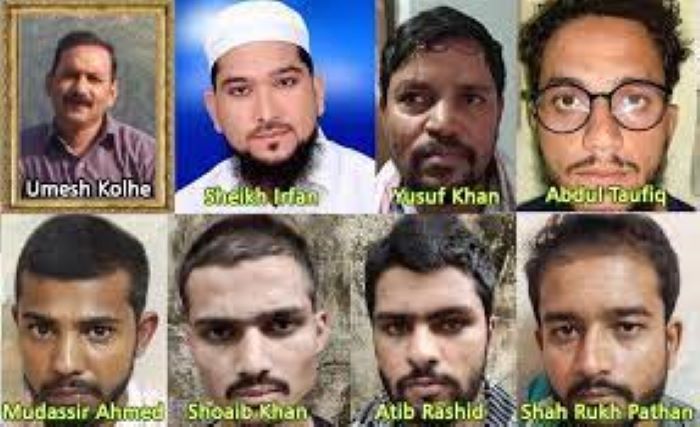
In August 2022, the NIA arrested two more accused in the case. The duo was identified as 23-year-old Abdul Arbaz and 41-year-Maulavi Mushfique Ahmad. The other arrested accused in the case include Irfan Khan (35), Yusuf Khan (44), Muddsir Ahmad (22), Shahrukh Pathan (25), Abdul Thoufique (24) Shoaib Khan (22), and Atib Rashid (22).
On September 12, the NIA declared a monetary reward of Rs 2 lakh to anyone who would provide leading information to arrest the absconding accused Shameem Ahmed. On September 22 it was reported that NIA arrested the absconding killer from Mumbai.
The National Investigation Agency (NIA) received a 90-day extension from a special court in the same month to submit the charge sheet in the case, which the agency did on December 16.
NIA filed chargesheet against 11 Islamists in Umesh Kolhe murder case
On December 16, the National Investigation Agency (NIA), investigating the murder case of Amravati’s pharmacist Umesh Kolhe, filed a chargesheet in the Mumbai NIA court against the 11 arrested accused.
Those named in the charge sheet are Mubashir Ahmed, Shahrukh Khan, Abdul Tausheef Sheikh, Mohd Shoeb, Atib Rashid, Yusuf Khan, Irfan Khan, Abdul Arbaz, Musfeeq Ahmed, Sheikh Shakeel, and Shahim Ahmed.
Source: Nagpur Today
According to the charge sheet, the 11 accused hatched a conspiracy, acquired the murder weapon, plotted their strategy so that the pharmacist’s whereabouts could be traced, and then premeditatedly killed him.
As the investigations in the Umesh Kolhe murder case in Amravati of Maharashtra progressed, it was revealed in the police investigation that Dr Yusuf Khan, the eldest of the arrested accused instigated all the murderers for this murder.
Dr. Yusuf Khan was a good friend of Umesh Kolhe who had helped him many times. Dr Yusuf Khan was the admin of the WhatsApp group in which Umesh Kolhe had shared a post supporting former Bharatiya Janata Party spokesperson Nupur Sharma, which led to his murder.
Umesh Kolhe’s murderers were all closely related, as several of them worked with an NGO run by the key conspirator Sheikh Irfan, who has been identified as the mastermind behind the crime.
Dr Yusuf Khan, friend of Umesh Kolhe, was the instigator
Veterinary doctor Yusuf Khan and chemist Umesh Kolhe knew each other for the past several years, and they were good friends. Yusuf Khan often sought help from Umesh Kolhe who seldom disappointed his friend. He used to lend money to Yusuf Khan in hours of need. Umesh Kolhe had helped Dr Yusuf Khan at the time of his sister’s wedding and his children’s admissions too. Despite such good relations, Dr Yusuf Khan conspired to kill Umesh Kolhe.
Dr Yusuf Khan is the eldest among the arrested accused. He was supposed to keep a watch on viral messages on social media and identify the targets. He was the admin of the group called Black Freedom in which Umesh Kolhe had shared a post supporting Nupur Sharma. Dr Yusuf Khan shared this information with another group called Rahebariya and informed his friends Sheikh Irrfan and others, and created hatred in their minds for Umesh Kolhe.
Sheikh Irrfan planned the attack on Umesh Kolhe
After Dr Yusuf Khan spread hatred against Umesh Kolhe, Sheikh Irfan came into action. He planned the murder. He gave the responsibility of recce to Maulana Mudassir Ahmed alias Sonu Raza Sheikh Ibrahim. After this, Sheikh Irfan involved daily wage workers in this plan. They included Shahrukh Pathan (age 25), Abdul Taufiq (age 24), Shoaib Khan alias Bhurya (age 22), and Atib Rashid (age 22). On the night of June 21, Shoaib stabbed Umesh Kolhe in his neck. None of these four criminals has any past criminal record.
Irfan resided in the Pathan Chowk Chawl in the Kamela Area. His neighbours said that he was a welder but the epidemic caused problems for his welding business. Irfan ran a registered NGO called Rahebar that worked for differently-abled according to its Facebook page. The four daily wage workers he chose to execute the murder had previously volunteered for this NGO.
Accused were members of Tablighi Jamaat, were highly influenced by the ideology of ‘Gustakh-E-Nabi Ki Ek Saza, Sar Tan Se Juda’: NIA
The NIA chargesheet stated that the accused were radicalized members of Tablighi Jamaat. The officials also said that the accused were persuaded by two ‘social activists’ identified as Irfan Khan and Maulavi Mushfique Ahmad.
The accused were also highly influenced by the ideology of “Gustakh-E-Nabi Ki Ek Saza, Sar Tan Se Juda.” (Beheading is the only punishment for anyone who criticizes the Prophet), the chargesheet stated.
The investigating agency had revealed that this was the second attempt of the radicalized group to murder the pharmacist. The first attempt was made on June 20, 2022, and failed.
On June 20, the accused were to eliminate him when he was leaving for his medical shop. The strategy, however, failed when Kolhe did not show up. After this, Irfan developed another strategy and formed a spy unit to monitor Kolhe’s movements to execute their conspiracy. On the night of June 20, the gang then reconvened with other accused, including Shaikh Shakil, Abdul Arbaz Mudassir Ahmed, Abdul Taufeeque Shaikh, and Atib, to replan Kolhe’s murder.
The plan to eliminate Kolhe began with one of the accused Dr Yusuf Khan propagating a post by Kolhe on one of the social media groups named ‘black freedom’ on June 14. According to the NIA, Yusuf purposefully took screenshots of the message after altering Kolhe’s phone number and disseminated it in another group called “Kalim Ibrahim,” which was founded by Irfan and others. The NIA asserted that the plan to kill Kolhe began with the dissemination of texts.
Kolhe was a ‘Law-abiding Citizen’
Kolhe was described by the NIA as a “law-abiding citizen” who had no adverse history of conflicts with anyone, let alone the accused in particular.
“He exercised his right to free speech in a free country and declared his support to the alleged controversial remarks of Sharma. His execution is not a simple act of murder carried out intending to merely punish him for an alleged blasphemy so committed.
“It is an act of terror, by a gang of radicalised men who wanted to make an example out of the victim’s murder. It was done in a manner that shall send shivers down the spine of the general population of this peace-loving democratic country, who would never dare to speak up, for what they think is right or wrong,” NIA said.
The NIA highlighted the brutality of killing a father in front of his son in a public place, adding that the act was carried out “with proper planning” and that “celebrating the act with an intention to strike terror in a large section of society is, to say the least, a terrorist action.”
The murder sparked riots in several locations, terrorised some into quitting their jobs, forced many to hide, and made many people fear for their safety and lives. According to the NIA, such terrorist activity has called India’s integrity and tenacity into question.
According to the NIA, the beheading of Udaipur tailor Kanhaiya Lal, who was killed in his shop by two Islamist fundamentalists on June 28 over the same issue of supporting BJP leader Nupur Sharma, occurred a week after Kolhe’s murder.
The two Islamists who had killed Kanhaiya Lal later made a video and even released it online. After the murder, several communal clashes broke out in various states, leading to the registration of multiple FIRs.
According to the NIA, the same ideology of some religiously radicalised individuals was present in all the FIRs, and the same “Sar Tan Se Juda” slogan terrorised those who supported ex-BJP spokesperson Nupur Sharma and advocated for free speech.
Besides Umesh Khole and Kanhaiya Lal, several other people were also murdered or brutally assaulted by Jihadis for extending support to Nupur Sharma. Here is our article detailing those incidents.
Massive protests erupted in Delhi’s Mandawali area on Thursday after the state government sent forces on the spot to execute the demolition of an old Shani and Hanuman temple. Hindus gathered around the temple on the morning of June 22 and protested against the government’s decision to demolish the temple.
The video of the protests went viral over social media in which the police staff deployed at the temple could be seen pushing the protesters backward as the latter demanded to stop the temple demolition. The protesters also could be seen chanting Hanuman and Shani hymns while they gathered on the streets.
#WATCH | A large number of people protest against the removal of a portion of a temple in Delhi's Mandawali area.
As per the initial information, the Public Works Department (PWD) Delhi issued a notice to the temple authorities on June 21 regarding the demolition of the temple. As per the temple authorities, the notice had been issued based on the complaint filed by three persons identified as Javed, Mansoor, and Naushad.
जावेद,मंसूर और नौशाद ने दिल्ली सरकार के PWD विभाग में इस शनि मंदिर और हनुमान मंदिर की शिकायत की गयी।
जिसके बाद दिल्ली सरकार के PWD विभाग ने इस मंदिर को तोड़ने का आदेश दिया है।
— Sagar Kumar “Sudarshan News” (@KumaarSaagar) June 21, 2023
The protesters have condemned the notice and are demanding that the temple not be demolished. Notably, this is not the first of its kind incident happening in Delhi. Earlier also the government has demolished or attempted to demolish several Hindu temples in the state.
Hindu temples demolished by Delhi government in the recent past
On March 15, the Delhi Development Authority (DDA) officials demolished a Hanuman temple built about fifty years ago. During the demolition drive the portrait of Lord Hanuman was also trampled. The temple was located in the city’s Shankar road area in the Rajendra Nagar neighborhood.
Then last week, a local news channel had reported that the authorities had attempted to demolish a 100-year-old Hanumana temple in the Bhajanpura area of Delhi.
Also, on May 14, the Delhi High Court cleared the path for the demolition of a 55-year-old Kali Mata Mandir at Mayapuri Chowk. The court had noted that the footpath for pedestrians as also the road has been encroached on by the temple which is ‘not permissible’.
In the current given case, VHP Delhi leader commented on the issue and said that the AAP government is targeting the Hindu temples deliberately to appease some particular community for votes. The protesters today could be seen chanting Hanuman and Shani stotra while they gathered on the streets to protest against the demolition of the old Shani and Hanuman temple located in Delhi’s Mandawali area.