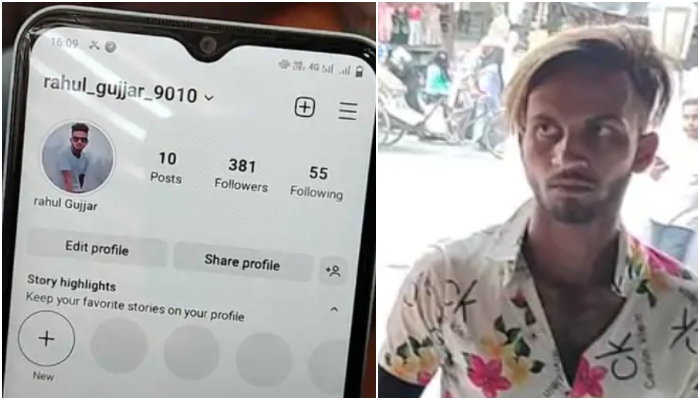
Another case of love jihad has come to the fore from the Moradabad city of Uttar Pradesh. The Police on Tuesday detained a Muslim boy named Imran Mansoori who posed as a Hindu boy named Rahul Gujjar to trap a minor Hindu girl in a relationship. The boy was detained at a hotel in the Budh Bazar area of the city.
The Police have filed an FIR against the accused and have booked him under the relevant sections of the Indian Penal Code and POCSO Act. According to reports, the accused boy created a fake Instagram ID in the name of Rahul Gujjar. He then initiated a conversation with a Hindu minor girl who studies in 12th.
The boy reportedly trapped the girl in a love affair and asked her to meet him. Later the accused took her to a hotel in the Budh Bazar area of the city. On a general inquiry by the hotel manager, the girl noticed the accused providing a different ID in the name of Imran.
On asking, he said that he had created a fake ID card in the name of a Hindu so that people don’t recognize him. The girl happened to believe his lies. But, the hotel manager raised the suspicion of seeing a different ID of the accused. The manager also noticed that the girl was a minor.
He soon contacted some members of the Hindu organization and also called the Police. The Police launched an inquiry into the case to learn and further reveal that the accused was actually a Muslim boy and he had created a fake Instagram account in the name of a Hindu to trap a Hindu girl in a love affair.
Police recovered photos of Hindu minor wearing Hijab from Imran’s phone
One of the Hindu activists while exclusively talking to Dainik Bhasker stated that this is the case of Love Jihad. “The accused had created a fake ID in the name of a Hindu person. He trapped the 16-year-old Hindu girl. The police later found out that his actual name was Imran Mansoori. His phone was also seized and some photos of the victim girl wearing a Hijab could be seen. This is all nexus, like the one shown in the movie The Kerala Story. This is jihad, nothing else,” he said.
The Police also stated that the ID Imran presented to the hotel manager for registration was his original ID. The Police have booked the accused for cheating and trapping a Hindu minor girl. The case against the accused has been booked under relevant sections of the IPC and POCSO Act. Further investigations are underway.
Similar cases from Uttar Pradesh reported earlier
Recently, a similar case was reported from Kanpur city of Uttar Pradesh when Javed Alam was booked by the Police for abducting a minor Hindu girl, assaulting her and then forcefully converting her religion to Islam. The accused also trapped the minor girl in a love affair and forcefully married her.
The accused had been booked under sections 363, 366, 506, 323, 376 of the Indian Penal Code and under sections 3 and 4 of the Protection Of Children from Sexual Offences Act and under sections 3 and 5(1) of the Uttar Pradesh Prohibition Of Unlawful Religious Conversion Act, 2021.
Also, on May 10, a court in Bareilly sentenced a doctor, Iqbal Ahmad to life imprisonment for killing his second wife, Nisha Devi, a resident of Saharanpur with the assistance of his two aides, Muhammad Yaseen and Misaryar Khan in 2021. The court issued the orders based on the testimony of his nine-year-old daughter who witnessed the murder incident.
The doctor had been identified as Iqbal and had posed as Raju to marry the victim. The wedding was solemnised in Saharanpur as per Hindu rituals. The couple then started staying in Saharanpur. As reported earlier, the man was already married but kept that a secret from Nisha. Nisha came to know about her husband’s identity when they moved to Meerganj in Bareilly. ‘Raju’ was actually Iqbal and he was already married. The accused then started putting pressure on her to embrace Islam, which she refused. Later the woman was found murdered.
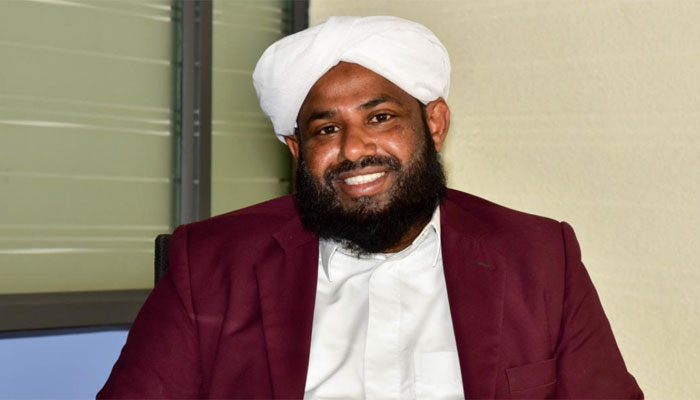
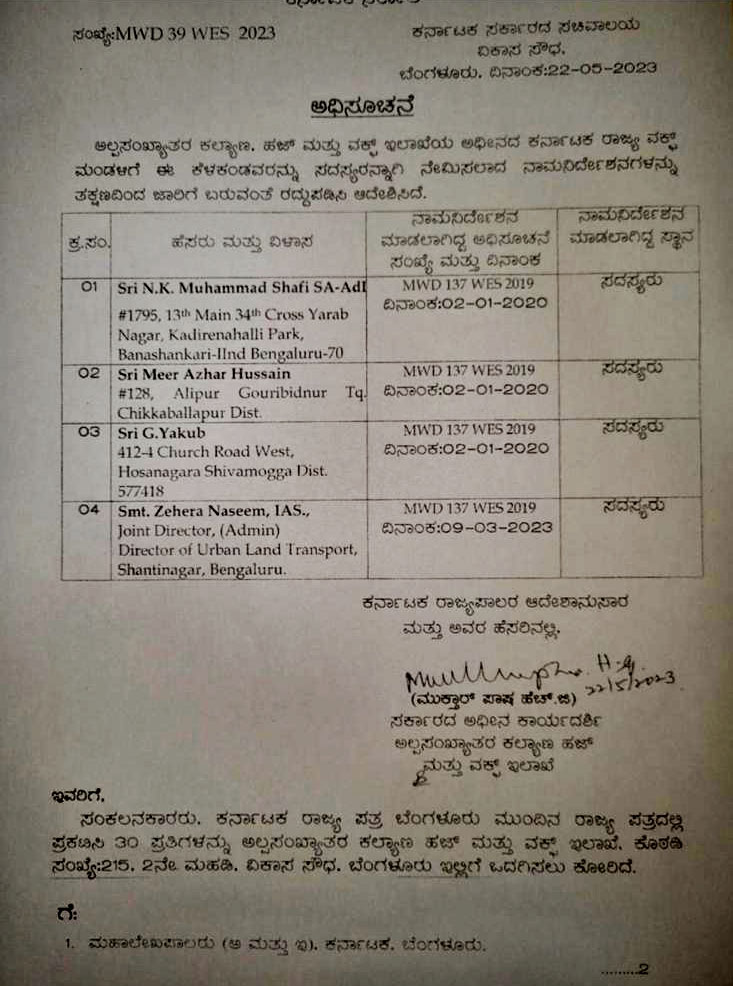
On May 22, the Congress-ruled Karnataka State Government issued an order to cancel the nomination of State Waqf Board Chairman Maulana NK Muhammad Shafi Saadi with immediate effect. The nomination of three other members named Mir Azhar Hussain, G Yakub and IAS Officer Zehara Nassem has been cancelled as well.
Shafi Saadi’s nomination cancelled by Congress-led Karnataka Government. Source: mediaoneonline
The order came at a time when Maulana Saadi was pushing the state government to elect a Muslim as Deputy CM. He had alleged that there was a pre-poll agreement between Congress and Muslims. Furthermore, Saadi said Congress won the Karnataka elections because of Muslim consolidation.
Saadi demanded high-profile ministries for Muslims including the Deputy CM post
A day after the Karnataka Assembly Election results were announced, Saadi demanded that a Muslim should get the post of deputy chief minister in Karnataka from the winning candidates of the community. They also demanded portfolios like Home, Revenue, Health and other departments for five Muslim MLAs. Karnataka State Waqf Board chief Shafi Saadi claimed 72 constituencies went into Congress’s hands only because of the Muslims. 15 Muslim candidates were fielded by Congress in the elections, out of which nine won.
While addressing the media, he said, “In about 72 constituencies, Congress won purely because of the Muslims. We, as a community, have given a lot to the Congress. Now it’s time we get something in return. We want a Muslim deputy chief minister and five ministers with good portfolios like Home, Revenue, and Education. It’s the responsibility of Congress to thank us for this. We held an emergency meeting in the Sunni Ulma board office to ensure all these are implemented.”
Saadi had at the time claimed that there was a pre-poll understanding that had been reached between him and the Congress party that he would canvass for Congress among the Muslim community. He had said that the Congress had assured him that the Deputy CM would be from the Muslim community. Interestingly, he had claimed that many Muslim candidates had left their constituencies, gone door to door and campaigned for Congress in other constituencies as well, focusing on the Muslim community voting for INC. He had also hinted that this was done in stealth.
It is also pertinent to note that SDPI, the political arm of banned terror outfit PFI, had extended full support to the Congress party for Karnataka elections. Earlier, they had planned to field 100 candidates, however, keeping in mind Muslim consolidation that Congress needed to win, they fielded only 15 candidates in the elections. All of them, except 1, had lost deposits leading to unbridled consolidation for Congress. They had also said that they would canvass extensively for the Muslim community to vote for Congress.
It would appear that after winning Karnataka through Muslim consolidation, if what Saad had claimed was true, Congress has summarily discarded him and clearly, backtracked on its alleged promises to its largest vote bank – the Muslim community.
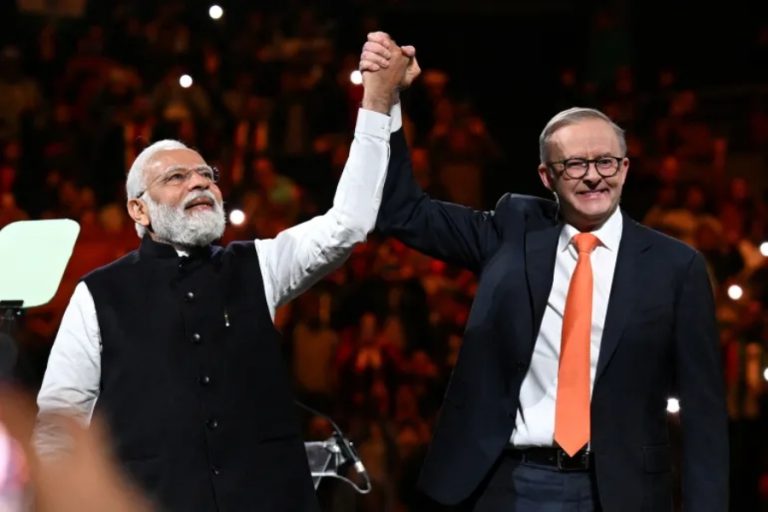
Prime Minister Narendra Modi who is on a three-day visit to Australia, on Wednesday raised the issue of attacks on temples in the country and said that Prime Minister Anthony Albanese had assured to take “strict actions against such elements in the future.”
During a joint address with his Australian counterpart Albanese, PM Modi said, “PM Anthony Albanese and I have in the past discussed the issue of attack on temples in Australia and activities of separatist elements. We discussed the matter today also. We will not accept any elements that harm the friendly and warm ties between the India-Australia relationship by their action or thoughts. PM Albanese assured me once again today that he will take strict actions against such elements in the future also. Notably, several cases of Khalistani extremism and brawls between Khalistani activists and pro-India demonstrators have recently come to the fore in several parts of Australia. Indian flags were burnt and even a Hindu temple was vandalised recently in Australia.
Earlier, Albanese during his India visit in March had said that Australia won’t tolerate any extreme actions and attacks that took place in religious buildings, and there is no place for such action against Hindu temples.
Responding to a media query about the assurances that the Australian PM gave to his Indian counterpart, Albanese said, “I gave him the assurance that Australia is a country that respects people’s faith. That we don’t tolerate the sort of extreme actions and attacks that we have seen on religious buildings, be they Hindu temples, mosques, synagogues, or churches. This has no place in Australia.”
“And we will take every action through our police and also our security agencies to make sure that anyone responsible for this faces the full force of the law. We’re a tolerant multicultural nation, and there is no place in Australia for this activity,” the statement quoted him saying.
Earlier in March, addressing India-Australia: Exchange of Agreements and Press Statements, Prime Minister Narendra Modi said that the Australian PM, in light of the recent attacks on temples in Australia had assured that the safety and well-being of the Indian community in Australia is a priority for him.
“Since the last few weeks, news of attacks on temples in Australia are coming regularly. It is natural that such news worries people in India. I have raised these concerns with Prime Minister Albanese who has assured me that the safety of the Indian community is a special priority for him,” PM Modi said. In March this year, Shree Laxmi Narayan Temple in Australia’s Brisbane was vandalised by pro-Khalistan supporters.
Sarah Gates, who is the Director of Hindu Human Rights said, “This latest hate crime is a pattern of Sikhs For Justice (SFJ) globally, clearly attempting to terrorise Australian Hindus. Coupled with a barrage of propaganda, illegal signs, and cyberbullying, the organisation intends to present all-pervasive threats, fear, and intimidation,” reported The Australia Today.
On January 16, Shri Shiva Vishnu Temple in Australia’s Carrum Downs was vandalised with anti-Hindu graffiti.
On January 12, the BAPS Swaminarayan Mandir in Australia’s Mill Park was smeared with anti-India and anti-Hindu graffiti. The temple was vandalised by anti-India elements with anti-India slogans written on the temple’s walls, located in the suburb of Mill Park, The Australia Today reported.
(This news report is published from a syndicated feed. Except for the headline, the content has not been written or edited by OpIndia staff)
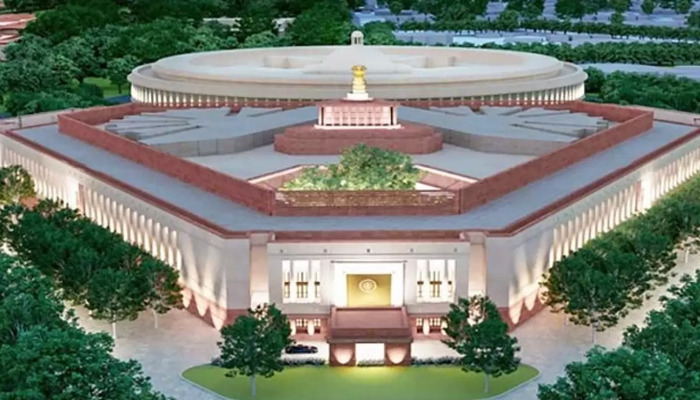
Ahead of the inauguration of the new parliament building on May 28, several political parties have decided to ‘boycott’ the event contending that it should have been done by President Droupadi Murmu rather than Prime Minister Narendra Modi. Among the parties ‘boycotting’ the event are the Trinamool Congress (TMC), Communist Party of India (CPI), Aam Aadmi Party (AAP), and Communist Party of India (Marxist). Meanwhile, Rashtriya Janata Dal (RJD) and Janata Dal-United (JDU) are also unlikely to attend the event as they raised objections over inaugurating the new parliament building on the birth anniversary of Veer Savarkar.
Announcing the party’s decision, TMC Derek O’Brien tweeted, “Parliament is not just a new building; it is an establishment with old traditions, values, precedents and rules — it is the foundation of Indian democracy. PM Modi doesn’t get that. For him, Sunday’s inauguration of the new building is all about I, ME, MYSELF. So count us out.”
Parliament is not just a new building; it is an establishment with old traditions, values, precedents and rules – it is the foundation of Indian democracy. PM Modi doesn’t get that
For him, Sunday’s inauguration of the new building is all about I, ME, MYSELF. So count us out
— Derek O'Brien | ডেরেক ও'ব্রায়েন (@derekobrienmp) May 23, 2023
CPI General Secretary D Raja has also said that his party will not attend the mega event.
CPI secretary and Rajya Sabha MP Binoy Viswam took to Twitter to express his objection to the inauguration event being held on Veer Savarkar’s birth anniversary and wrote, “How can we associate with such an endeavour that sidelines the @rashtrapatibhvn of India and link itself with the memory of Savarkar? Those who cherish the values of @parliamentary democracy and secularism can only keep away from this majoritarian adventurism.”
How can we associate with such an endeavour that sidelines the @rashtrapatibhvn of India and link itself with the memory of Savarkar ? Those who cherish the values of @parliamentary democracy and secularism can only keep away from this majoritarian adventurism.
Meanwhile, AAP leader Sanjay Azad announced his party’s decision on Twitter as he wrote, “Not inviting Her Excellency the President Mrs. Draupadi Murmu ji to the inauguration ceremony of the Parliament House is a gross insult to her. This is an insult to the Dalit tribal and deprived society of India. @AamAadmiParty will boycott the inauguration program in protest against Modi ji not inviting Her Excellency the President.”
संसद भवन के उदघाटन समारोह में महामहिम राष्ट्रपति श्रीमती द्रौपदी मूर्मू जी को आमंत्रित न करना उनका घोर अपमान है। ये भारत के दलित आदिवासी व वंचित समाज का अपमान है। मोदी जी द्वारा महामहिम राष्ट्रपति को आमंत्रित नही करने के विरोध में @AamAadmiParty उदघाटन कार्यक्रम का बहिष्कार…
In a Tuesday tweet CPI(M) general secretary Sitaram Yechury termed the ‘bypassing’ of the President as ‘unacceptable’ as he wrote, “Modi bypassed the President when the foundation stone for the new Parliament building was laid. Now too at the inauguration. Unacceptable. Constitution Art 79: “There shall be a Parliament for the Union which shall consist of the President and two Houses…”
Modi bypassed the President when the foundation stone for the new Parliament building was laid. Now too at the inauguration. Unacceptable. Constitution Art 79: “There shall be a Parliament for the Union which shall consist of the President and two Houses…”
Meanwhile, JDU leader KC Tyagi has said that his party stands with the opposition over the issue.
Moreover, the Congress party has also objected to the inauguration of the new parliament building by PM Modi, however, it is unclear whether the party will attend or ‘boycott’ the May 28 event.
In a series of tweets posted on May 22, Congress president Mallikarjun Kharge argued that the President is the highest constitutional authority adding that President Murmu represents the government, the opposition, and every citizen alike. Kharge further stated that the inauguration of the parliament building by the President would symbolize the government’s commitment to democratic and constitutional values.
She alone represents government, opposition, and every citizen alike.
She is the First Citizen of India.
Inauguration of the new Parliament building by her will symbolise Government’s commitment to Democratic values and Constitutional propriety.
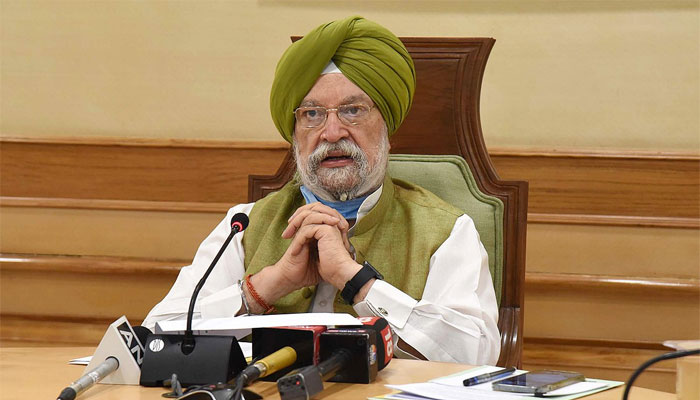
Interestingly, Union Minister Hardeep Singh Puri on Tuesday posted a series of tweets addressing the issue wherein he accused the Congress party of lacking national spirit and sense of pride in India’s progress as he reminded that on October 24, 1975, the then Prime Minister Indira Gandhi inaugurated the parliament annexe and on August 15, 1987, PM Rajiv Gandhi ingrate the parliament library.
“They should feel better if they remember Oct 24, 1975, the day when Smt Indira Gandhi inaugurated the Parliament Annexe! Or August 15, 1987, when Sh Rajiv Gandhi laid the foundation of the Parliament Library!,” Puri tweeted.
They should feel better if they remember Oct 24, 1975 the day when Smt Indira Gandhi inaugurated the Parliament Annexe! Or August 15, 1987 when Sh Rajiv Gandhi laid the foundation of the Parliament Library!
Notably, PM Modi will on May 28 dedicate to the nation the newly-constructed Parliament building. This comes after Lok Sabha Speaker Om Birla met the Prime Minister on Thursday and invited him to inaugurate the New Parliament Building.
On May 23, a video of Trinamool Congress’s (TMC) leader Nusrat Jahan went viral on social media in which she said Bharatiya Janata Party (BJP) and Congress workers will be beaten with bamboo sticks if they come to ask for votes in Basirhat. Her instigating statement ahead of the West Bengal panchayat polls has sparked a controversy. In her speech, Nusrat Jahan essentially instigated violence against workers and politicians of the BJP and Congress.
Nusrat was addressing a public meeting in her constituency Basirhat. During her address, she said, “In 2021, they said ‘is bar 200 par’ but they failed and their boat capsized. No matter how big the boats are, all capsize in the tide of Mamata Banerjee. They are planning a bigger conspiracy this time. They have stopped people’s money. They have stopped funds for the 100 days of work (MGNREGA) to the State. It is a conspiracy to stop Mamata Banerjee’s work for the people. “
Claiming people would beat BJP and Congress workers with sticks, she said, “They do not give anything to Bengal. Why will the people of Bengal vote for you? What have you done for the people of Bengal? You will not get a single vote. Whoever comes here during panchayat elections, be it BJP or Congress, will be beaten with bamboo sticks by the people of Basirhat.”
The panchayat elections in West Bengal are likely to be held by the middle of this year.
Sharp reaction from BJP
After the video of the speech by Nusrat Jahan went viral, there were sharp reactions from BJP leaders at the instigation of violence.
“Nusrat Jahan, TMC MP from Basirhat, in a desperate attempt to whip up frenzy, asks people in her constituency to beat up BJP and Congress workers with bamboo sticks and batons, when they come seeking votes in the panchayat elections! This politics of violence and intimidation in West Bengal is Mamata Banerjee’s abiding legacy. Elections in Bengal, local body elections in particular, are a sham”, tweeted Amit Malviya, the co-incharge of BJP for West Bengal.
Nusrat Jahan, TMC MP from Basirhat, in a desperate attempt to whip up frenzy, asks people in her constituency to beat up BJP and Congress workers with bamboo sticks and batons, when they come seeking votes in the panchayat elections!
Calling her a part-time politician, the official handle of BJP Bengal said in a tweet, “Part-time politician Nusrat Jahan, who is hardly found in her constituency & never helped people when in need, suddenly finds a way to garner attention. She asks people to beat BJP with bamboo! This is normal in Mamata’s Democracy. Bengal will soon teach them a lesson!”
Part-time politician Nusrat Jahan, who is hardly found in her constituency & never helped people when in need, suddenly finds a way to garner attention.
She asks people to beat BJP with bamboo! This is normal in Mamata’s Democracy. Bengal will soon teach them a lesson! pic.twitter.com/oW5cPzltGh
In a statement, BJP’s West Bengal chief Sukanta Majumdar said, “Beat up BJP workers with bamboo sticks & batons when they come to seek your votes-TMC MP. Nusrat, Our Karyakartas are fighting TMC goons having bombs & guns. We neither fear this, nor bamboo sticks.” Majumdar added that such remarks make the party’s resolve that Bengal must oust TMC stronger.
Beat up BJP workers with bamboo sticks & batons when they come to seek your votes-TMC MP
Nusrat, Our Karyakartas are fighting TMC goons having bombs & guns. We neither fear this,nor bamboo sticks.This makes our resolve stronger why Bengal must oust TMC. pic.twitter.com/7d9ymrVZa0
— Dr. Sukanta Majumdar (@DrSukantaBJP) May 23, 2023
West Bengal BJP state secretary Priyanka Tibrewal said, “These kinds of elements in our society are not very social. Even if you check her background… her marital status is still not clear. Violence is in their nature that has been proved. She has no time to attend to the constituency. Rather she is busy with two or three marriages. That is also undeclared.”
Post-poll violence in West Bengal
In May 2021, soon after the West Bengal Assembly Election results were announced, the workers of the winning party TMC unleashed a series of horrifying attacks on BJP workers across the state. Party workers and supporters were killed and raped to the point many BJP supporters left the state to save themselves. CBI is investigating the post-poll violence. Detailed coverage of violence in West Bengal can be seen here.
On May 23, Union Minister for Housing & Urban Affairs and Minister for Petroleum and Natural Gas, Hardeep Singh Puri gave a befitting reply to the Congress leaders who were creating a fuss about Prime Minister Narendra Modi inaugurating the new Parliament building.
In a series of Tweets, Puri said that Congress President and other leaders previously criticised the new Parliament building and questioned its necessity. He added that now they have shifted the goalpost by generously misquoting an article from the Constitution.
From criticising the New Parliament Building & questioning its very necessity despite many of them advocating for it before but not executing it, Congress President & other worthies are now shifting the goalpost by generously misquoting an article a day from the Constitution! pic.twitter.com/GUwexamcZy
Minister Puri further reminded the Congress leaders of their uncharitable comments about President Droupadi Murmu. He said, “After uncharitable comments about Hon’ble President in the past by its leaders, Congress president now makes uncalled for & gratuitous comments on her election! Tragic that Congress claiming to be a national party lacks in any national spirit & sense of pride in India’s progress.”
Why can’t they just join the nation in celebrating this creation of a valuable asset for posterity, as the New India’s temple of the mother of all democracies & jettison the prolonged sulk & indulgence in partisan polemics based on falsehoods.
Puri questioned Congress leaders’ intentions as they consistently indulged in partisan polemics based on falsehoods.
So, instead of now finding articles to justify their hypocrisy why can’t they just smile & join India on this momentous achievement & her march to greatness!
The minister reminded the Congress leaders of two specific dates. The first was October 24, 1975, when then Prime Minister of India Indira Gandhi inaugurated the Parliament Annexe and the second was August 15, 1987, when then Prime Minister Rajiv Gandhi laid the foundation of the Parliament Library.
He said, “So, instead of now finding articles to justify their hypocrisy why can’t they just smile & join India on this momentous achievement & her march to greatness!”
Comments by Congress leaders
For the past several days, Congress leaders have been attacking the ruling party BJP and Prime Minister Narendra Modi claiming that they are insulting the President of India by letting PM Modi inaugurate the new Parliament Building.
The Congress President and Rajya Sabha MP Mallikarjun Kharge accused the Modi government of using Dalit and Tribal communities for electoral reasons. In a series of tweets, Kharge accused the central government of not inviting then-President Kovind for laying down the foundation of the new Parliament building and President Droupadi Murmu for the inauguration of the same.
It looks like the Modi Govt has ensured election of President of India from the Dalit and the Tribal communities only for electoral reasons.
While Former President, Shri Kovind was not invited for the New Parliament foundation laying ceremony…
Quoting Kharge, Congress MP Shashi Tharoor cited Article 60 and Article 111 of the Constitution of India which suggest the President is the head of the Parliament. He said, “It was bizarre enough that the PM performed the ground-breaking ceremony & puja when construction began, but incomprehensible (& arguably unconstitutional) for him and not the President to inaugurate the building.”
Yes @kharge Sahib is right. Articles 60 and 111 of the Constitution of India make it clear that the President is the head of parliament. It was bizarre enough that the PM performed the ground-breaking ceremony & puja when construction began, but totally incomprehensible (&… https://t.co/fuan2AyMJm
Congress leader Manish Tiwari cited Article 79 of the Constitution of India which says, “There shall be a Parliament for the Union which shall consist of the President and two Houses to be known respectively as the council of States and the House of the People”.
Article 79 COI “There shall be a Parliament for the Union which shall consist of the President and two Houses to be known respectively as the council of States and the House of the People”
Parliament documents about events specified by Puri
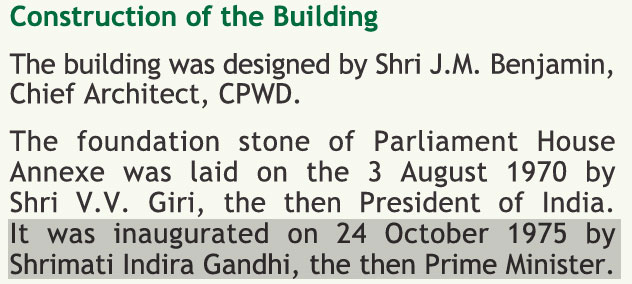
Several documents talk about the two events Minister Puri mentioned. For instance, a PDF in Lok Sabha documents named Parliament House Estate under the Section Construction of the Building noted that the foundation stone of the Parliament House Annexe was laid down on August 3, 1970, by then President VV Giri. The inauguration of the building was done by then-Prime Minister Indira Gandhi on October 24, 1975.
Source: Lok Sabha Documents
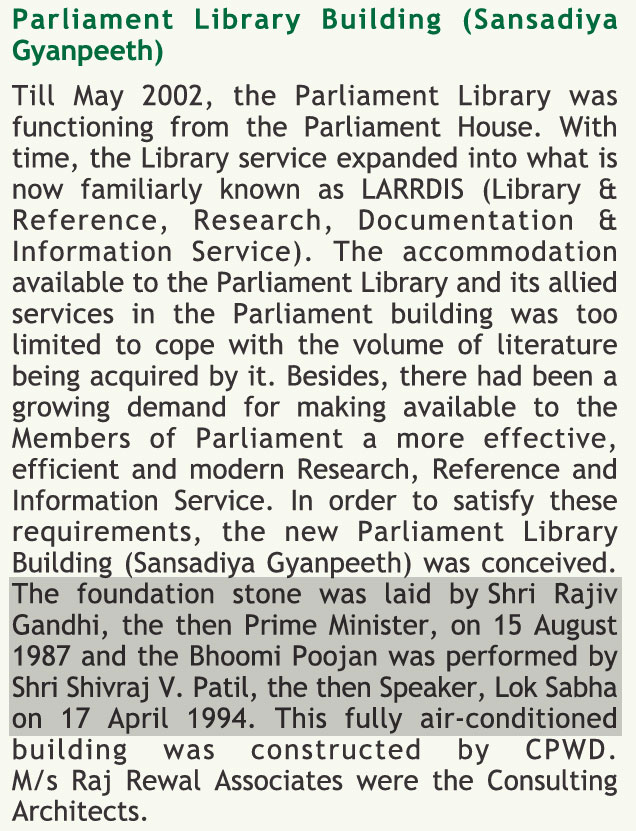
Furthermore, Section Parliament Library Building talked about Rajiv Gandhi laying down the foundation stone of the building on August 15, 1987. The Bhoomi Poojan was performed by then-Speaker of Lok Sabha Shivraj V Patil on April 17, 1994, again a Congress leader.
The Trinamool Congress-ruled West Bengal has become the hub for the ‘crude bomb’ cottage industry and children in the poor and marginalised areas of the State are paying the price for it, reportedIndian Express.
The newspaper interviewed the families of 24 victims, who had either lost their lives in crude bomb attacks or been gravely injured between 2021 and 2022. The incidents took place across 5 districts of West Bengal, namely, North 24 Parganas, Burdwan, Birbhum, Malda, and South 24 Parganas.
Bomb-making has become a profitable business due to the easy accessibility and procurement of raw materials. Crude bombs, such as the commonly used “Peto” and “Lal Sada,” are priced at an average of just over ₹150 in rural areas, making them a cost-effective choice for criminal activities.
The Case of Mahesh and Nikhil
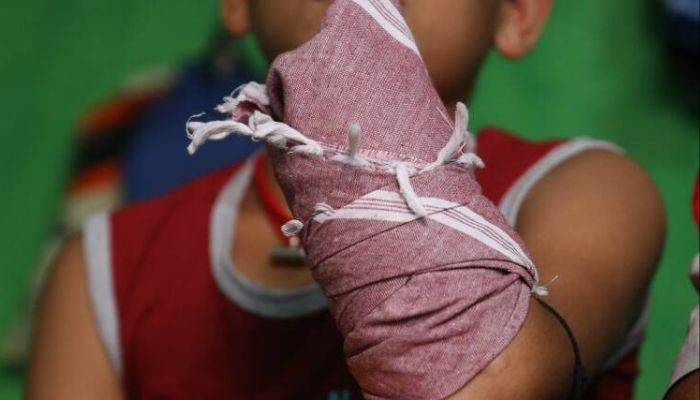
The Indian Express pointed out the case of an 11-year-old child named Mahesh Shaw, whose left palm was severely injured after mistaking a crude bomb for a toy box.
He was accompanied by a friend, an 8-year-old Nikhil Paswan, who died in the blast. Mahesh was lucky to survive but his left palm had to be amputated. The incident took place in October last year in Kankinara in North 24 Parganas district of West Bengal.
While recounting his ordeal, Mahesh said, “It was a day after Diwali. Nikhil and I went to play in the field near the railway tracks. We found two small metal boxes, both taped, with a cross on top. Nikhil handed one to me. As I tried to open it, there was a blast. My hand was shattered and before I ran, I saw Nikhil fall to the ground.”
The injured hand of 11-year-olf Mahesh Shawm (Photo Credits: Indian Express/ Partha Paul)
“Sometimes it hurts a lot. I can’t go to school or even take a bath on my own,” he said although it has been more than 7 months since the incident. Mahesh’s father works as a ferrywala and his mother at a local hosiery factory. Although the medical bill was initially paid for Trinamool Congress leaders, his family has not received any compensation so far.
“My son’s life is destroyed,” the father of the 11-year-old recounted. A bigger tragedy befell the family of 8-year-old Nikhil Paswan, who died in the blast. The deceased’s mother, Kusum Paswan, refuses to return home to avoid being reminded of the horror of losing her son.
Reportedly, the police later seized 60 crude bombs from the area. They had also arrested 4 people in connection to the case, who were later released on bail.
The death of Sheikh Arboz and Sheikh Nasirul
In Rasikpur, a village in Burdwan, tragedy struck on March 22, 2021, when seven-year-old Sheikh Abroz lost his life. According to the police and his grieving parents, Abroz innocently picked up a jute-wrapped object in a neighbourhood garden, mistaking it for a ball.
The object turned out to be a crude bomb, resulting in a fatal explosion. Abroz’s friend, Sheikh Ibrahim (8), was also injured in the blast. Abroz’s devastated mother, Sania Bibi, expressed her anguish over the loss of her son and criticized the state government for providing a meagre compensation of ₹2 lahks for the life of her child.
While speaking about the matter to The Indian Express, she said, “I asked my son to get some soil from the garden to use in our mud house. He went out and I heard a loud noise. A part of his face and his hands were blown away. He was declared dead at Burdwan Hospital. A case has been filed with the police, but no arrests have been made so far in connection to the case.
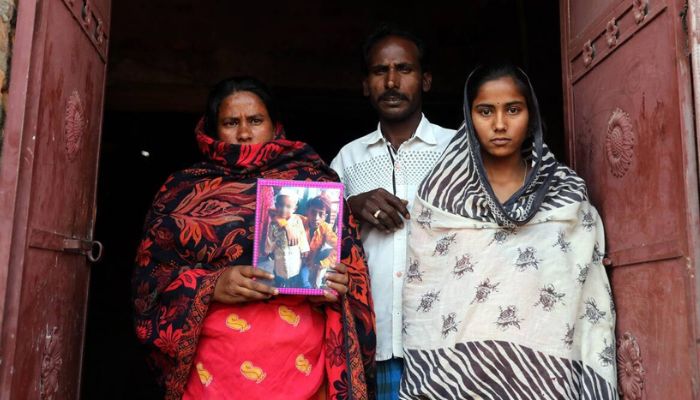
Family of Sheikh Nasirul, image via Indian Express/ Partha Paul
In Birbhum, a district in West Bengal, Sheikh Nasirul (11) tragically lost his life on May 27, 2021, when he stumbled upon a shiny metal box while walking with his grandfather along a canal.
Without realising the danger, Nasirul picked up the box, which exploded instantly, resulting in his death. His grandfather, Sheikh Jamir, expressed his grief and regret, stating that he wished he had been the one to pick up the object instead. The family did not file a complaint due to fears of harassment by the local police.
Other cases of crude bomb injuries and fatalities
In an incident dated December 7, 2022, two children namely Muhammed Afroz (8) and Muhammed Wasif(15) were injured in the Karbalay area after they mistakenly threw a crude bomb lying around into a makeshift bonfire.
“It was cold and we lit a small fire. From a garbage dump, we found a round object and threw it in the flames. There was an explosion. I got hurt in my legs, and my friend (Afroz) also got hurt badly,” Wasif told The Indian Express. Five people were arrested but were soon released on bail.
Similar incidents have occurred in different districts of West Bengal, leaving a trail of grief and fear. In Atghora village, Narendrapur, five children under the age of 14 were injured when two unidentified men lobbed crude bombs on October 28 last year.
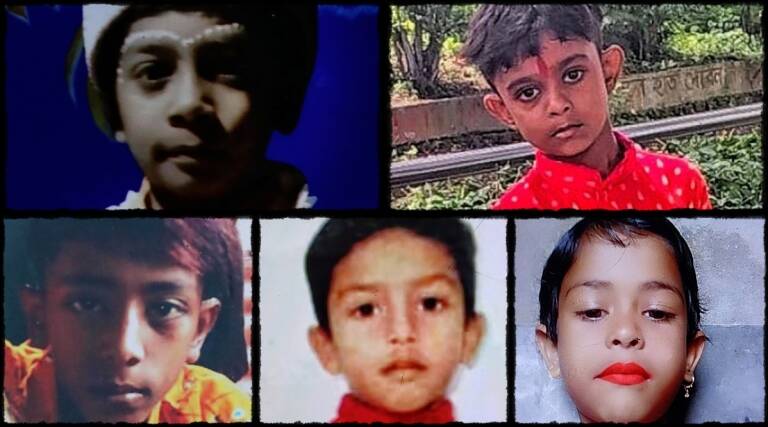
Children who died for mistaking crude bombs for toys, image via Indian Express/ Partha Paul
Laltu Adhya (12), one of the injured children, described the horrifying experience of hearing two loud explosions while playing in a field. Shuvajit Saha (9), Mithun Saha (11), Polu Saha (6), Bikram Saha (11), and Raihan Sheikh (10) suffered splinter injuries in a crude bomb blast that occurred in Gopalnagar on November 25, 2022.
Shuvajit’s mother, Mukti Saha, expressed her disappointment, stating that despite the considerable expenses incurred for her son’s treatment, they have not received any financial support.
Involvement of Trinamool Congress workers and supporters
In another case, a 10-year-old girl named Sohana Khatun died after picking up a crude bomb that she found on the terrace of her uncle’s home in Bakchora village. Her friend, Rahima Pravin was gravely injured during the incident.
Interestingly, the uncle of the deceased was identified as a Trinamool Congress worker named Abu Hossain Gayen. While speaking about the matter, panchayat Up-pradhan Abdul Hamid said, “It was a very unfortunate incident. Some of our party workers are engaged in such anti-social things.”
In August 2020, Opindia reported how a TMC worker named Humayun Kabir died while making crude bombs on the roof of his house in the Shamshergunj area in the Murshidabad district of West Bengal.
In another case from the same year, the Bhagwanpur police recovered 153 crude bombs from the backyard of one Trinamool Congress (TMC) supporter named Sheikh Kasemuddin in Lalpur village of East Midnapore District in West Bengal. Four people were arrested in connection with the case.
There have also been reports about two factions of TMC workers, hurling bombs at each other, in Balundi village in Arambagh municipality in Hooghly district of West Bengal.
Political Reaction to the crude bomb menace in West Bengal
While speaking about the matter to The Indian Express, Trinamool Congress spokesperson Jayprakash Majumdar claimed that the crude bomb related-injuries and fatalities in West Bengal were a ‘heinous and morbid conspiracy’ to somehow tarnish the image of the State.
BJP leader Dilip Ghosh informed, “Bombs are being stockpiled here and there and children are being killed or injured while playing. What’s more unfortunate is that the administration has no qualms about it. Earlier, arms were coming to West Bengal from Bihar’s Munger, but now they are being manufactured here itself.”
Sujan Chakraborty, the leader of the Communist Party of India (Marxist), remarked, “(TMC is) giving a free hand to criminals so they can grab political power and loot people’s money. In this situation, it is obvious such a thing is happening”.
National Commission for Protection of Child Rights (NCPCR) chairperson Priyank Kanoongo stated, “The response of the state towards such incidents has been very irresponsible — they are unapproachable and try to manipulate facts.”
Meanwhile, the Trinamool Congress (TMC) has cried foul and rejected the accusations levelled against them. In its editorial, The Indian Express noted that the rot began during the four decades of Communist rule in West Bengal.
“This was accompanied by violence becoming the everyday currency of exchange between the cadres of the ruling and opposition parties. The Mamata Banerjee-led Trinamool Congress, instead of charting out a different path, has become part of the problem,” it noted.
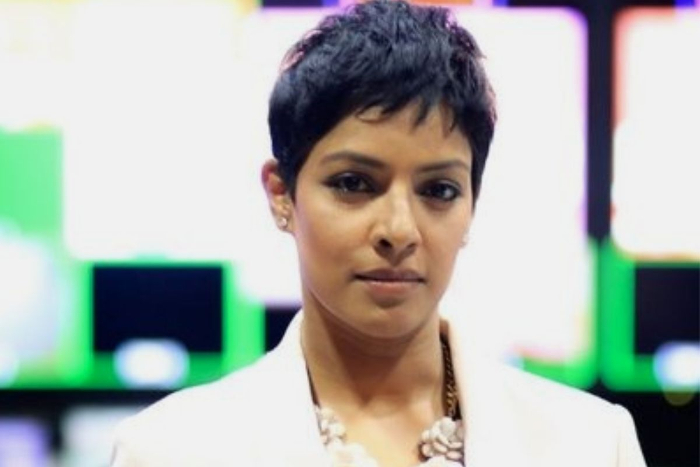
Senior editor Sarah Jacob has become the latest high-profile exit from NDTV, where she has been working for over 20 years. Sarah used to host the talk show We The People, one of the more popular shows on NDTV even when the viewership for the channel continues to spiral downwards.
Announcing her decision to leave the organisation, Sarah Jacob said, “Last night, I resigned from NDTV. To Dr (Prannoy) Roy and Radhika Roy, Thank you for building what was one of India’s great media institutions.” Sarah, in an internal communication to the NDTV team, reportedly described the organization as an “amazing newsroom filled with the most creative and driven reporters”.
Further, Sarah said, “From being a reporter to having my own show has been rewarding and I am forever grateful for all that NDTV gave me and continues to offer.”
Sarah also thanked her viewers, supporters, and critics as she signed off from NDTV.
This is the latest in the spate of resignations after the Adani Group acquired the network from Prannoy and Radhika Roy. Ravish Kumar left NDTV soon after and in January, NDTV’s group president Suparna Singh, chief strategy officer Arijit Chatterjee and chief technology and product officer Kawaljit Singh Bedi also stepped down.
Soon after Sreenivasan Jain and Nidhi Razdan also announced the end of their stint with the channel. Notably, Nidhi Razdan had earlier left NDTV to take up a teaching job at Harvard University before realising that there was no such job offered to her.
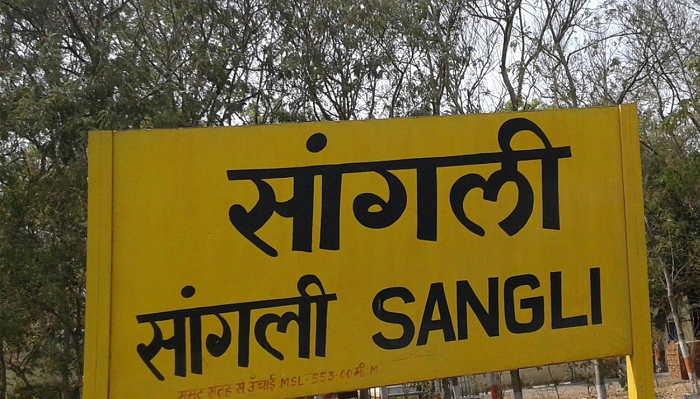
On Monday, 22nd May, Maharashtra Police arrested three Bangladesh women who were illegally staying in Sangli part of the state on the basis of forged identity documents. The three women have been identified as Roopa Sameer Sheikh, Rina Kalam Sheikh and Neha Sunil Yadav.
According to reports, the three had been residing in the Gokulnagari region of Sangli, Maharashtra and were arrested by the state police from their residences. The police investigated the case from February 17 to May 21 and filed complaints against the women on May 22.
As per the preliminary information, the women were lured with employment and brought to Sangli. They further worked as prostitutes. The women were provided with new, fake Aadhaar cards by their landlords in the city. The incident is said to have come to the fore after a Pune-based NGO informed the police about the women.
The state police then raided the Gokulnagari area and found the women with fake Aadhaar cards. The police meanwhile have also arrested one person from Miraj who made the fake Aadhaar cards.
The arrested women confessed to the police that they had been staying in the city for the past three years and were brought to India without any passport, visa and identity documents. The women also confessed to having made fake school transfer certificates.
Earlier in the day, eight Bangladeshi nationals who were illegally living in a chawl in the Kamothe Sector-22 area of Mumbai were also arrested by the police. Investigation revealed that all these Bangladeshi nationals, four men and four women were living as laborers at construction sites and also doing household work.
The arrested individuals had been identified as Irshad Tohit Mulli (40), Reshma Irshad Tohit Mulli (22), Junual Malik Islam (48), Pinky Junual Malik Islam (36), Kokan Manik Sheikh (32), Shobhabegum Kokan Manik Sheikh (30), Anikul Alam Samsul, Alam (34) and Kavita Khatun Jiyaju Shaikh (28).
The police have seized all the fake documents and arrested the three women. The women have been booked under the Passports Act, of 1950 and Foreign Persons Act. Assistant Inspector Pallavi Yadav is investigating the case further.
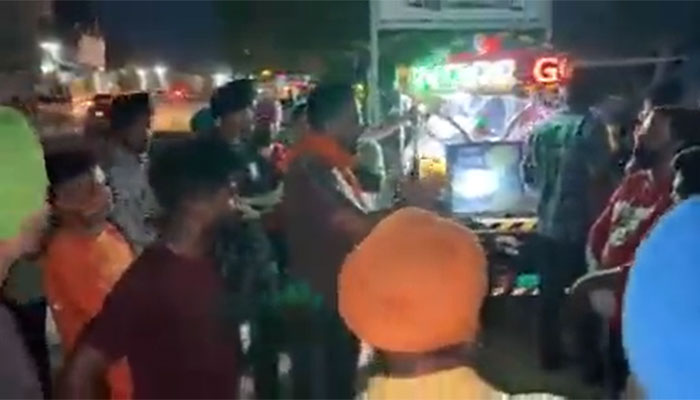
On Monday, May 22, a video from the village Samadh Bhai in the district of Moga, Punjab, went viral on social media in which a few men were seen threatening a migrant food cart owner in Punjabi. Looking at the details of the video, it appeared that the person speaking in the video accused the migrant cart owner of touching a Sikh youth’s Turban during an altercation. The exact date of the incident is unknown. OpIndia tried contacting the concerned police station but could not connect.
Going by the details of the video, there was an alleged altercation between a Sikh youth and a migrant food cart owner. During the altercation, the migrant may have accidentally touched the turban of the Sikh youth. For those who are unaware, Turban is considered an auspicious and religious symbol in Sikhism. It is considered disrespectful if someone touches or tries to remove a Sikh’s turban.
— Jagroop ਸਿੰਘ Sidhu?? (@JagroopsinghS20) May 22, 2023
Following the altercation, a group of Punjabis approached the migrant food cart owner and confronted him. The person who is threatening the migrant said, “There have been incidents in our village where miscreants of your [migrant] community removed Turbans of our Sikhs. If I come across one more instance like that, I will take away your food cart.” He further threatened that if any migrant was found indulging in any crime, his group would deal with them on a personal level and then hand them over to the police.
When the migrant defended himself saying he was not involved in any such case previously, the aggressor said, “Those are from your community only. You all are the same. Give them my message.” The details of the video including the date, exact location, and persons involved could not be verified independently by OpIndia.
Series of threats and anti-migrant sentiments
This is not the first time a video from Punjab against migrants from UP and Bihar surfaced on social media. On May 20, a video of India News went viral on social media in which an elderly Sikh was seen dousing a sugarcane juice cart owned by a migrant woman with diesel. The incident allegedly took place in Sunny Enclave, Kharar, near Chandigarh.
The text on the video that was written in Punjabi read, “The owner of the Prime Hospital doused the sugarcane juice cart with diesel. As the man who was accompanying the migrant woman started making a video of the person throwing diesel on the cart, he went away without setting it on fire. It is unclear what led to such an altercation.”
In the sunny enclave of Kharar Mohali Punjab , a Sikh tried to set fire to a poor migrant woman by throwing diesel on her sugarcane stall. Hatred toward immigrants from UP BIHAR is at its peak in Punjab .#Punjab#UttarPradesh#Biharpic.twitter.com/vhQ09gjGQS
— Punjabi News Portal π (@newsportal88) May 20, 2023
OpIndia tried contacting the police for further details. Kharar police confirmed that they were aware of the incident but no official complaint was filed in the matter by any party.
Attack on migrant dhaba owner
On May 17, Ashu, a resident of Loko Shed, came back to his food joint Mitran Da Dhaba located at Satiyawala Railway Crossing, after buying vegetables from the market. Within minutes, three men came on a bike at around 5:30 PM. Ashu asked them how can he serve them. They did not answer and instead attacked him unprovoked. They tried to assault Ashu’s wife Renu Devi too but she managed to escape. The attackers left after ransacking the dhaba. As nothing was stolen, Ashu said it was not about the robbery.
फिरोजपुर में प्रवासी के ढाबे पर हमला
At "Mitra da Dhaba" in #Ferozepur 5 days ago, 3 youths came on a motorcycle who ransacked the Dhaba and attacked the owner of the Dhaba, Ashu Vasi Loco Shed, badly injuring him.#Punjabpic.twitter.com/ifENyRHSZn
The incident was captured on CCTV. Ashu said he had no enemies and did not have any altercations with anyone. Notably, there have been three incidents of robbery at the food joint earlier. OpIndia tried connecting to the concerned police station for details but could not connect.
Campaign against migrant chaat seller
A few days back, a campaign was launched by social media users from Punjab to support a Sikh food cart owner who sells chaat. Though it could have been a simple request to encourage people to visit him and try his food, the social media users made it a matter of “Punjabiyat”. A photograph was published online where a migrant food cart owner selling chaat was full but the food cart owned by Sikh next to it had no customers.
This picture says it all…………. No caption needed | And by the way it's Amritsar Sahib Punjab . pic.twitter.com/eVGvlyNYS3
— Baba GurpreeT Singh Udaasi (@GyaniGurpreetS) May 8, 2023
The person who published the photograph urged his followers and fellow Punjabis to visit the Sikh food cart owner. The photograph was shared by many with a demand to stop giving business to migrant food cart owners. The campaign worked and more and more videos and photographs were made viral on social media. In those videos, the Sikh food cart owner had a lot of customers but the migrant had none.
While both of them could have enjoyed the business, the social media users made it a community issue and snatched bread and butter from a migrant working in Punjab.