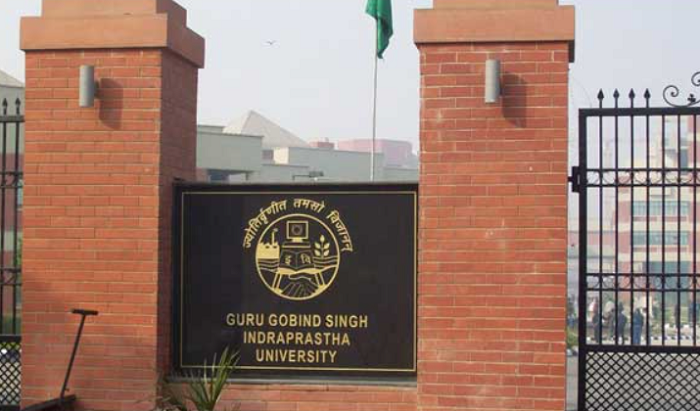
On Wednesday, a 30-year-old assistant professor at a Delhi-based university was detained by the Delhi Police for allegedly impersonating the Lieutenant Governor (L-G) of Delhi and calling the university’s vice chancellor on many occasions to request favors on his behalf.
Rohit Singh, an assistant professor at Guru Gobind Singh Indraprastha University (GGSIPU), was named by the police as the defendant. According to police, the accused began making calls on the L-G’s behalf in September of last year. He was apprehended on May 15 at the Indira Gandhi International Airport after arriving from the UK. A case against him was lodged at Dwarka North Police Station.
“Singh called the Vice Chancellor of the university twice over the landline phone impersonating the L-G. In the first instance, he got his leave sanctioned. In the second instance, on September 30 last year, he called the VC by impersonating the L-G to get his sister selected as faculty in the English Department of GGSIPU,” one of the police officers confirmed.
Singh has been taken into custody at the IGI Airport, according to Deputy Commissioner of Police (DCP), Dwarka, Harsh Vardhan. The matter was reported to the police after the second call to the VC.
“Singh works as an Assistant Professor in the Economics Department of the university and made the call for the appointment of his sister Manvi Singh in the English Department of the university. From the call detail record (CDR) of the Vice Chancellor’s landline number, it was revealed that the call was made from a United Kingdom-based number, and upon investigation, it was further established that the said UK number also had call interactions with mobile numbers belonging to the said candidate, Manvi Singh and her father Rajpal Singh,” said an officer.
According to the police, the duo was questioned and they admitted that the UK-based number belonged to the Singh, who had left on September 27 of last year for further study overseas. “A Look Out Circular against Rohit Singh was also initiated,” a police official remarked.
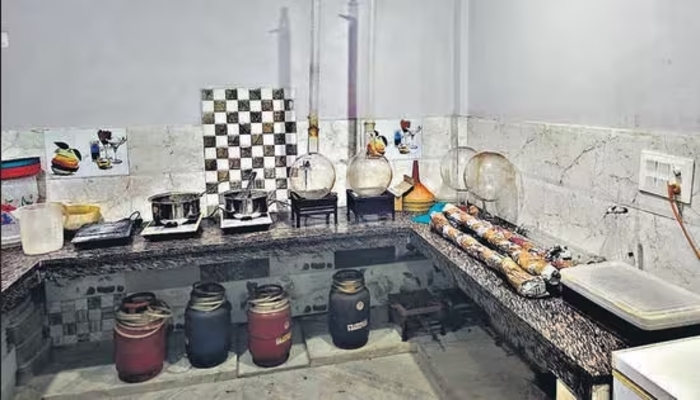
On Wednesday, May 17, Gautam Buddh Nagar Police busted a “Breaking Bad” style meth lab run by nine foreign nationals at a rented house in Greater Noida. Police have seized 46 kg methamphetamine (MDMA) worth Rs 200 crore and arrested the nine foreign nationals who came to India on a student visa and were allegedly operating a drug manufacturing lab here.
The nine foreigners, eight from Nigeria and one from Senegal rented a three-storey house in Greater Noida’s quiet neighborhood of Theta II and transformed it into a highly sophisticated meth-cooking lab, equipped with flasks, beakers, burettes, funnels, and other equipment, for making high-quality meth. Their activities went unnoticed for around a year until the police busted the lab on Wednesday, May 17.
The lab operated from the second storey of the house, mostly producing MDMA, sometimes known as ecstasy, a party drug that is chemically similar to stimulants and hallucinogens that generate feelings of enhanced energy.
Reportedly, when the police arrived at the building, one of the arrested suspects attempted to set fire to the entire unit. The cops, on the other hand, put out the fire even as another suspect jumped from the third floor. However, the police officers on the ground floor apprehended him.
Laxmi Singh, the police commissioner for Gautam Buddh Nagar, stated that after months of intelligence gathering, a tip-off was received on Wednesday, leading to the raids. Singh also called the raids the biggest-ever drug bust in Uttar Pradesh.
“Following the tip, a police officer posed as a drug buyer, and we caught two gang members from the Dhadha roundabout with approximately 5.5kg of meth. They took us to a three-storey house in Jaitpur-Vaispur (in Theta II) where a lab had been set up to manufacture the drug in its purest, white form. From there, seven more people were arrested,” stated Commissioner Singh.
Furthermore, the police revealed that they seized a considerable amount of raw materials capable of producing methamphetamine worth an additional 100 crore.
According to the police, the chemicals recovered include methyl alcohol, hypophosphoric acid, hydrosulfuric acid, iodine crystals, ammonia, ephedrine, acetone, sulphur, and copper salts among others, highlighting the scope of the unlawful activity.
Among the arrested suspects, eight are Nigerians and one is from Senegal. The suspects have been identified as Anudum Emmanuel, Ajoku Ubaka, Daniel Azuh, Levi Uzochukw, Jacob Emefiele, Kofie, Chidi Ijiagwa, Ajoku Klechi (all residents of Nigeria), and Dramemond from Senegal. Police are also probing if the suspects have been residing in India illegally.
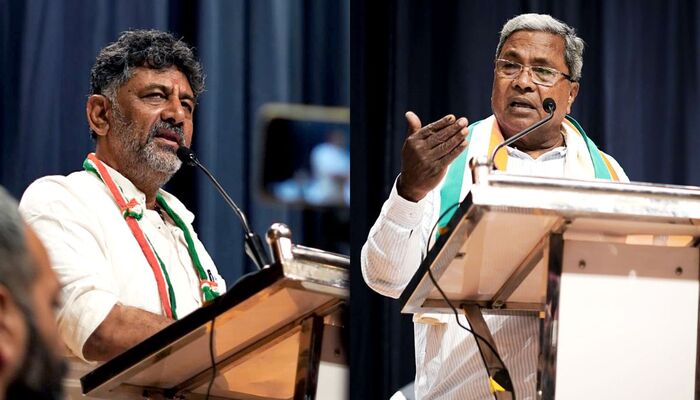
After their poster wars and following lots of speculations, the Congress party, on Wednesday, May 17, finalized Siddaramaiah as the next Chief Minister of Karnataka with DK Shivakumar as his deputy. The decision was arrived at during a series of late-night discussions on Wednesday that lasted into the early hours of Thursday. The meetings were attended by Congress President Mallikarjun Kharge, Congress General Secretaries KC Venugopal and Randeep Surjewala, and the two CM contenders.
Reportedly, a Congress legislative party meeting has also been scheduled for May 20, paving the way for Siddaramaiah to become CM for the second time.
As per media reports, Congress has decided on a rotational tenure of two-and-a-half years for both leaders, with Siddaramaiah taking the chair for the first half and then DK Shivakumar becoming the CM for the latter half.
Siddaramaiah apparently had the support of the majority of the Congress MLAs making party high command come down in his favor as the CM of the state.
Earlier, OpIndia had reported that after the Congress party’s victory in Karnataka assembly elections, the supporters of former CM Siddaramaiah put up a poster outside his residence in Bengaluru on May 14, calling him “the next CM of Karnataka.” Soon after, supporters of DK Shivakumar placed a poster outside his Bengaluru residence, demanding that he be declared “CM of the state.”
Unlike Siddaramaiah, DK Shivakumar has always been a member of Congress and has never lost an election since he won his first one in 1989. Siddaramaiah has been part of All India Progressive Janata Dal, Janata Dal, and Janata Dal (Secular) before joining Congress.
In the recently held Karnataka assembly elections, Congress won 135 seats pushing the Bharatiya Janata Party (BJP) out of power in the only southern state it ruled. BJP managed to win 66 seats. Janata Dal-Secular (JDS) bagged 19 seats. Independents have won two seats while Kalyana Rajya Pragathi Paksha and Sarvodaya Karnataka Paksha won one seat each.
With the increasing radicalization among Islamists in India, Hindu men are repeatedly being attacked if they even walk with a female Muslim colleague. At these times, Hindu men always end up at the mercy of law enforcement authorities.
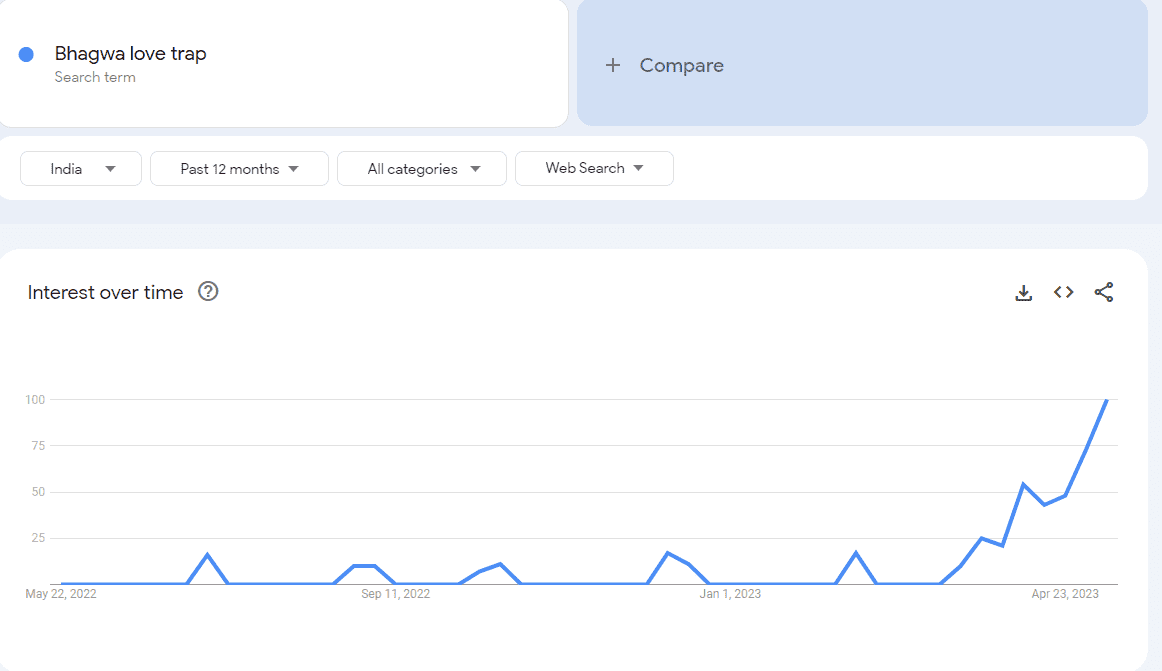
A couple of months ago, Islamists began peddling a baseless theory dubbed ‘Bhagwa Love Trap’ to counter 100s of documented cases of impersonation, identity fraud, and forced conversions to Islam (popularly known as Love Jihad).
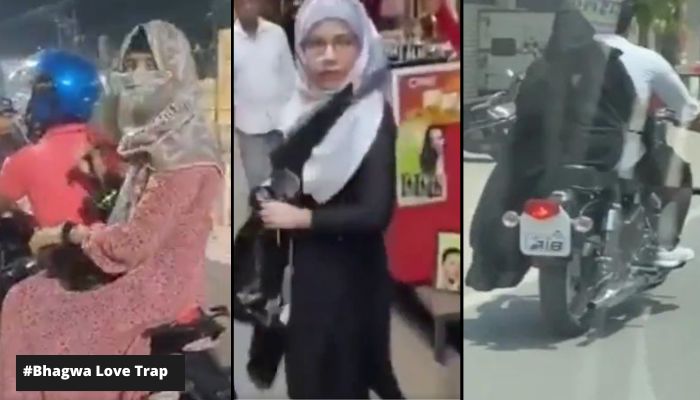
While it started out as a social media hashtag, Islamists soon began sharing videos of random hijab-wearing Muslim women and their male Hindu friends/ acquaintances and partners without their consent.
Results from Google trends on the search term ‘Bhagwa Love Trap’
The posts are often accompanied by emotional messages and sought public help in identifying the couples. Soon after, social media was rife with videos of Islamist mobs ambushing random Hindu-Muslim couples.
This would then be followed by heated arguments, physical assault on the Hindu men, and even molestation of the Muslim women. The attacks were carried out under the pretext that a sinister plot was underway to convert Muslim women to Hinduism by luring them into a love trap (the basis of the Bhagwa Love trap).
It is not a new phenomenon for Islamists to come up with conspiracy theories that absolve them of any wrongdoing or project them as perpetual victims. This time they seem to use the conspiracy theory of the ‘Bhagwa Love trap’ to rationalise their act of moral policing and violence against the Hindu community.
Social media conspiracy theory translates into real-life acts of violence
Multiple videos have now come to light where rabid Islamist mobs are seen openly harassing, abusing, and manhandling inter-faith couples. These videos have been reported from different cities/States of India.
The victims have been targeted on roads, restaurants, eateries, and even hotels. Based on local reports and social media videos, OpIndia has compiled a total of 30 cases where Hindu men and Muslim women were attacked by extremists under the pretext of ‘Bhagwa love trap.’
On May 15 this year, a violent Muslim mob abused and assaulted a Hindu man for being friends with a Muslim girl in Patna city of Bihar. The duo was stopped by the mob while they were on a bike and abused for roaming together.
The Muslim girl was also schooled by the mob and asked to leave the spot and go home.“Madarch*d. Bhagwa Love Trap karega. Muslim ladki ko phasayega,” the mob could be heard abusing and accusing the Hindu man.
*Abusive Content*
A Hijab wearing muslim girl was on a bike with a Hindu guy in Patna. Few people stopped them, abused and beaten the boy badly.
Goons shouted "Muslim ki Ladki ko ghumayega"
Girl kept saying he's classmate, she was told "Muslim ladki hoke kya kar rahin hain ye" pic.twitter.com/ndZ5SczIyN
A similar incident came to light on May 13, 2023, in the Muzaffarnagar city of Uttar Pradesh. The Islamists asked the Hindu man about his identity and threatened him for roaming with a Muslim girl.
The Muzaffarnagar Police took cognizance of the event and filed an FIR in the case based on the complaint of the Hindu man identified as Shivansh.
While speaking to Opindia, he narrated his ordeal, “They abused me. Threatened me. They even tried harassing the woman. They removed her burqa and harassed her. It was so shameful. We are just friends, not even friends, just classmates.”
खुले आम जाट समाज के युवा को धमकाती मुग़लों की भीड़ ॥ मुज़फ़्फ़रनगर पुलिस से शिकायत के बाद भी नहीं ली जा रही एफ़आईआर ॥ आप सभी हिंदू भाइयों से आग्रह ॥ विडीओ इतना शेयर करें कि मुख्यमंत्री साहब संज्ञान ले सके ॥ जाट लड़के को जान से मारने की धमकियाँ दी जा रही हैं ॥ @myogiadityanath… pic.twitter.com/Wpfh5B4QOz
— THE JAT ASSOCIATION (@Jatassociation) May 15, 2023
In one such video from Meerut in Uttar Pradesh, a group of extremists gheraoed two burqa-clad women and reprimanded them for befriending a Hindu man.
Initially, they stopped the two women and interrogated them for walking with a Hindu man. The Islamists then went on to forcefully remove the veils of the women. The police have registered a case against the two unidentified youths and are actively searching for them.
Muslim Mob Beaten a Hindu Boy for having friendship with Two Muslim Women
In another video of the same incident, the perpetrators were seen intimidating the Hindu youth accompanying the Muslim women. They were seen gripping the young man by his collar and forcefully dragging him around the market.
Muslim mob brutally beaten a Hindu boy after caught with muslim (girl) colleague.
A disturbing video has surfaced from the Muslim-dominated Juhapura area of Ahmedabad wherein an Islamist was seen harassing a hijab-clad Muslim woman for talking to a Hindu man. The video went viral on social media last month.
“You cannot keep such friends. How can you hug these people?”, the extremist warned. He even threatened to rip apart the Hindu man accompanying the girl.
यह घटना अहमदाबाद जुहापुरा 100 फीत रोड अंबर टावर देख लो अपने मुसलमानों की लड़कियों इनको समझाने पर देखो इनके कैसे इनकी गैरत भी नहीं जाती pic.twitter.com/Pv98WH7WbA
— Mohammad Firozalam Mohammad Samsher (@Mohamma06203448) April 28, 2023
A Twitter user (@warriorbeast73) shared a video and claimed that an Islamist mob abducted a Muslim girl and a Hindu boy and forced the girl to dial her parents.
He claimed that the incident took place in the Income Tax Office area of Ahmedabad. He also sought the immediate intervention of the law enforcement authorities.
Case-27)? Muslim youths kidnapped muslim girl and Hindu boy after caught together. They are forcefully asking girl's parent mob. no.
Several cases of harassment of Hindu men and their female Muslim friends/acquaintances and colleagues have come to light from the State of Madhya Pradesh.
In almost all cases, the hijab-clad girls were coerced into calling their parents while the Hindu men were verbally abused, manhandled, and even thrashed brutally.
Most of the videos were shared on Twitter by @warriorbeast73. The modus operandi in almost all cases appeared similar. An unsuspecting mob of Islamists ambushes a couple, wherein the girl is seen wearing a hijab. They coerce the man into revealing his name.
Again Muslim mob harassed, abused and threaten a Muslim girl to make viral for befriending Hindu man.
Once it is established that the man is Hindu, then, the extremists rough him up for daring to befriend a Muslim woman. They also try to harass the woman and justify their actions by blaming her for deviating from the path of Deen.
"Remove Your Niqab, I'll make your video Viral"
Muslim woman Harassed and threatened in broad daylight
The Twitter user (@warriorbeast 73) wrote, “Muslim youths have waged a war across India against Muslim woman, who has Hindu (male) friend under the fake allegation of #bhagwalovetrap.”
In April this year, the police apprehended three males for harassing a hijab-wearing Muslim college girl. The incident took place in the vicinity of Makai Gate in Chhatrapati Sambhaji Nagar in Maharashtra.
The girl’s mobile phone was also snatched and she can be seen asking the boys harassing her to give back her phone. The intimidation started due to the youngsters’ suspicion that she was hanging out with a Hindu man. At the time of the attack, the girl had come to visit the famous Bibi Ka Maqbara in the city.
The trio made an effort to stop the pair and even questioned the girl, “Why are you walking with some other boy”. Afterward, they started harassing her. One of them grabbed the girl’s hand as she quickly moved forward to escape them.
She begged them to release her hand. This lasted for a long time and no one stepped forward to assist the girl despite the fact that there were a lot of people around them.
Video from Sambhaji Nagar (earlier Aurangabad) where a burqa-clad girl was molested by her co-religionists for hanging out with a “gair-Muslim” pic.twitter.com/e08mB330Sf
In one case, Islamists reportedly barged into a cafe in Ranchi and harassed a Muslim woman and a Hindu man over their new-found conspiracy theory of ‘Bhagwa Love Trap.’
Islamists randomly went in a cafe asked boy's name who was with a Muslim girl.
The location of some of the disturbing videos could not be ascertained. Assault and public humiliation remained the key strategies, which were employed by the Islamists to shame the victims.
Found one more video of harassing a Muslim girl by radical Islamists, just because she was allegedly with a non-Muslim friend.
There were also instances of rampant verbal abuse and molestation of Muslim women by their co-religionists. In one case, the victim asked the perpetrator to not touch her inappropriately.
An Islamist responded by saying, “Hath Laga Sakate hai, kyoki Aap kaum ka Nam Badnam kar rahi ho! (We can touch you how we want. This is because you are bringing shame to our community).”
This is really heart-wrenching.
"Aap Mujhe Hath Nahi Laga Sakate" Muslim girl is saying this while a bunch of radicals are molesting her.
In reply to her, a molester is saying," Hath Laga Sakate hai, kyoki Aap kaum ka Nam Badnam kar rahi ho!"
In another case, an Islamist asked a burqa-clad Muslim woman to not wear a burqa and roam naked instead. “Women like you bring a bad name to the Muslim community,” he was heard as saying.
TW : Abusive language
"बुर्का उतार के नंगी फिरो, तुम्हारे वजह से मजहब का नाम खराब होता है"
In one video, an Islamist was seen inquiring whether a man accompanying a burqa-clad woman was a Hindu or Muslim. “Wait! Listen to me. Don’t you feel ashamed to roam with infidel Hindu in a burqa?”, the extremist threatened.
Islamists are asking religion of every boy who is with burqa clad women.
In some videos, Islamist mobs were seen barging into hotels and engaging in moral policing.
Ye dhako ye muslim ladki hindu ladke ke saath oyo hotel me range haat pakdi gai or pakde jaane ke baad ye khe rhi hai ke ye bhai hai mera is randi ko or video ko viral kro taki is ghar tak ptashale bhagwa love trap save muslim girl pic.twitter.com/6xcx9CodC9
It must be mentioned that the police have not taken cognizance of all videos, which have surfaced on social media. Only a few incidents have so far made it to local reports and mainstream media.
In the absence of appropriate action by law enforcement authorities, the extremists are only likely to be emboldened. This becomes more alarming when analyzed with the fact that the viral videos were shot by the perpetrators and not the victims.
It goes on to show that the Islamists have no fear of law and order despite being well aware that the videos could be used as evidence against them.
Disclaimer: Opindia could not independently verify the authenticity of all the videos due totechnical limitations.
On 13th May 2023, at around 9:15 pm, a mob of Muslims barged into the Trimbakeshwar temple at Nashik in Maharashtra. The Muslims who tried to enter the courtyard of the temple attempted this as they allegedly intended to forcefully put a Chadar on the Shivling inside the sanctum sanctorum. However, those who entered the temple and other local Muslims later claimed that they did so according to their annual custom of offering the fumes of frankincense to Trimbakeshwar from the first stair of the temple during the post-Sandal processions of a local dargah of one Hazrat Sayyad Ghulam Shah Wali Baba. Now, the servant of this dargah has apologised for this act and has said that he will discontinue this custom that is allegedly going on for the last one hundred years.
Salim Sayyad is one of the accused booked under sections 295 and 511 of the Indian Penal Code (IPC) in this case based on a complaint by the temple authorities. On 16th May 2023, while speaking to ABP Majha, he shared information about the alleged custom of offering the fumes of frankincense to Trimbakeshwar – that is the Hindu deity, Lord Shiva.
Salim Sayyad said, “When there is the annual Sandal of this dargah, we hold a procession in the town after the Sandal every year. We take proper permissions for this procession. When the procession passes from the temple, I go there and stand on the first stair of the temple and offer the fumes of frankincense to Trimbakeshwar. We call him Trimbak Raja. he is the king of this place. He rules this place. It is my belief that we are safe and prosperous here because of him. I chant Om Namah Shivay and Har Har Mahadev at the moment when I stand on the stair. I am accompanied by two-three companions who hold various things like a basket of flowers, etc. I hold the basket of Chadar on my head.”
He added, “My age is 66. My father passed away in 1994. Since then I lead to perform this ritual. Before that, my father used to do this all. I remember things very well since when I was ten years old. It is done in this way only. I don’t know why temple authorities filed a complaint against us this year. If they feel that we have erred by doing this, I apologise. I will never offer the fumes of frankincense to Trimbakeshwar Raja again. We never enter the sanctum. But we stand on the first stair. We don’t offer Chadar to Raja Trimbak. We offer the fumes as a mark of the respect we hold for him and as a mark of completion of our dargah’s Sandal. My grandfather also used to do this in the same manner. This custom is there for approximately the last 100 years.”
Trimbakeshwar Temple is one of the 12 Jyotirlingas of Lord Shiva. Only Hindus are supposed to enter and pray with Hindu customs here. The temple management committee lodged a complaint with the police after security guards stopped the four men from reaching the sanctorum. Videos of the incident went viral on various social media platforms. The four persons arrested by the police for forcibly entering the Trimbakeshwar temple are Aqeel Yusuf Sayyed, Salman Aqeel Sayyed, Matin Raju Sayyed and Salim Bakshu Sayyed. It is alleged that they tried to enter the temple premises by joining the Sandal procession and intended to offer chadar on the Shivling.
Maharashtra Deputy Chief Minister Devendra Fadnavis on Tuesday ordered an FIR in this case. He also ordered a Special Investigation Team (SIT) to thoroughly investigate the events and their aftermath. Fadnavis, who also holds the Home portfolio, stated that the Special Investigation Team (SIT) would not only investigate the recent incident but also look into a similar occurrence last year.
On Wednesday morning, members of various Hindu organisations including Hindu Mahasabha, Brahmin Mahasangh, Nashik Purohit Sangh, and Trimbakeshwar Purohit Sangh reached Trimbakeshwar temple. They performed purification rituals on the temple premises amid the chants of Har Har Mahadev. The Maha Aarti was performed after the temple purification rituals were completed. Meanwhile, police personnel were deployed to prevent any untoward incident.
On 13th May 2023, at around 9:15 pm, a mob of Muslims barged into the Trimbakeshwar temple at Nashik in Maharashtra. Trimbakeshwar is one of the twelve holy jyotirlingas of Lord Shiva. Only Hindus are supposed to enter the temple and pray to the deity with Hindu customs.
But the Muslims who tried to enter the courtyard of the temple attempted this as they allegedly intended to forcefully put a Chadar on the Shivling inside the sanctum sanctorum. Amid this controversy, it becomes necessary to know the history of the demolition of this temple, the conversion of the temple into a mosque, and reclaiming of the holy site by Hindus again.
Muslims forcibly entered Trimbakeshwar
As the local Muslims attempted to enter the temple, the temple management committee lodged a complaint with the police after security guards stopped them from reaching the sanctorum. Videos of the incident went viral on various social media platforms. Aqeel Yusuf Sayyed, Salman Aqeel Sayyed, Matin Raju Sayyed and Salim Bakshu Sayyed were arrested by the police for forcibly entering the Trimbakeshwar temple. A case was registered against them under sections 295 and 511 of the Indian Penal Code (IPC). Apart from this, Maharashtra Deputy Chief Minister Devendra Fadnavis has ordered the formation of the SIT.
It is alleged that they tried to enter the temple premises by joining the Sandal procession and attempted to offer chadar on the Shivling. Matin Sayyed, the organiser of the sandal, claimed that the accused did not try to put the chadar on the Shivling and they only carried the chadar to the steps of the temple.
Muslims blamed Hindus for disturbing the communal harmony of a syncretic culture
Avez Kokni, the former president of the Trimbakeshwar Nagar Parishad said, “There was no attempt to enter the temple or put any chadar inside the temple premises. Muslims in Trimbakeshwar have for generations been following the practice of sending the fumes of frankincense from the steps of the temple premises during an annual gathering at a nearby dargah. This practice has been going on for decades and the local Hindu community has never taken exception to it. We are surprised that this issue has now been raked up and it has taken a communal turn.” How long before Hindus realize if their deities really need the fumes of some frankincense?
Parvez Kokni, former chairman of the Nashik District Central Cooperative Bank and a resident of Trimbakeshwar said, “It is an age-old practice and a symbol of syncretism. This ritual has been taking place for ages. Muslims make up a very small percentage of the city’s population and have stayed in harmony. Our city has been peaceful and non-communal which would explain why in spite of being a Muslim, I was accepted as a leader. I am surprised why this age-old custom is now suddenly being questioned.” Will this flag-bearer of syncretic culture advocate for the Hanuman Chalisa recital in any local dargah or mosque let alone some big Jama Mosque? Sanjay Raut also termed the incident that took place in Trimbakeshwar to be correct.
Why such practices must be stopped?
As far as rituals are concerned, there is no noted tradition of taking any Chadar to any major temple of a Hindu deity – like a Jyotirling that holds separate importance among all temples. No verse of any Purana or Shastra advocates it, because Sanatan Dharma predates Islam by infinite time. Further, there is no provision for allowing a non-Hindu to enter a temple and perform rituals of his non-Hindu religion inside the premises. If any such practice exists in any Hindu temple, it deserves discontinuation with immediate effect.
Trimbakeshwar Shiva temple in Nashik is one of the 12 Jyotirlings. Aurangzeb's forces vandalized this ancient shrine and build a masjid in 1690. Balaji Bajirao Bhat, the 8th Maratha Peshwa, restored the shrine and pulled down the masjid in 1754. An account https://t.co/r0MTqpDBXk
There are many people who want Hinduism to be inclusive and not equally exclusive as some Abrahamic faith. But, even if there can be some local practices in many temples here and there across India, there must be some seclusion for a site as special as a Jyotirlinga.
Do you know ? Trimbakeshwar Temple, one of the 12 Jyotirlingas in Nashik, was demolished by Aurangzeb in 1680 AD and built a mosque there to make Nasik's name Gulchnabad.
Competent Dharmik authorities of Hindus need to take decisive action to amend these things wherever needed because Muslims in Nashik are citing a ‘syncretic’ culture behind this incident and indirectly accusing Hindus and temple authorities of spreading religious disharmony and hatred. They comfortably ignore, in fact, hide the fact that this harmony business is one-sided and no Maha Aarti, Yagya, Havan, or Puja is allowed inside any Muslim place of worship in order to strengthen the bond of mutual love and respect between the two communities.
Bramhagiri, 28 Km from Nashik City in Maharashtra. This ancient Hindu temple in the town of Trimbak, is one of the 12 Jyotirlingas and highly venerated and sacred pilgrimage site shrines in Bharat.
Mutual love and respect have been put as a burden on the shoulders of the Hindus where they are expected to allow non-Hindus to enter the temples to put Chadars on deities. What kind of respect a Hindu deity may get when Muslims forcibly enter a temple is seen in the case of Kashi Vishwanath Temple where a Shivling is found in the Wazukhana of the so-called mosque in the Gyanvapi complex where Muslims washed their hands and feet, washed their mouths and spit for centuries on a Shivling. Subscribers of the same faith, in Trimbakeshwar are now claiming that the temple authorities are hampering communal harmony.
Aurangzeb destroyed the original 1000 years old Trimbakeshwar temple, built a Masjid over it & renamed Nasik as Gulshanabad. Marathas recaptured Nashik in 1751 pulled down the Masjid & rebuilt Trimbakeshwar.
Trimbakeshwar was reclaimed with valour by Marathas
In 1689, Aurangzeb killed Chhatrapati Sambhaji Maharaj. After the death of the Hindu king, Aurangzeb unleashed more severe atrocities on Hindus adding to the already existing tyranny of the Mughals. He ordered the desecration of more temples in Maharashtra in 1690, with the intent of crushing the religious motivations of the Maratha empire. By building mosques over the demolished temples, he wanted to lower the morale of skilled and inspired Maratha warriors who were fighting to protect the Hindu kingdom under an inexperienced young Chhatrapati Rajaram Maharaj at that time.
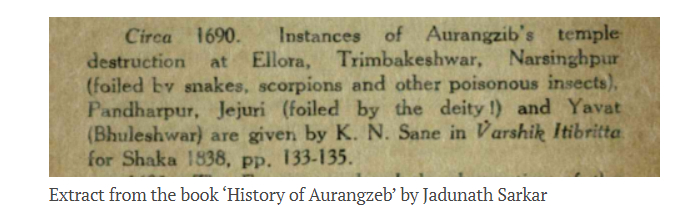
In many places in his book ‘History of Aurangzeb’, Jadunath Sarkar has quoted ‘Varshik Itibritta’ (meaning ‘annual newsletters’) written by Kashinath Sane. He quotes, “Circa 1690. Instances of Aurangzeb’s temple destruction at Ellora, Trimbakeshwar, Narsinghpur (foiled by snakes, scorpions, and other poisonous insects), Pandharpur, Jejuri (foiled by the deity!), and Yavat (Bhuleshwar) are given by K. N Sane in Varshik Itibritta page number 133-135”. It must be noted that if the figurative use of the language is to be ignored, the attack was not foiled but the fact remains that the temple in Trimbakeshwar was converted into a mosque. Kumbh Nagari Nashik – formerly known as Janasthan – was renamed Gulshanabad. The temple destroyed by Aurangzeb was more than 1000 years old.
In the book ‘New History of Marathas – Volume II’ GS Sardesai writes, “In November 1754, the shrine of Trimbakeshwar was restored by the Peshwa, and the Masjid was pulled down.” Other records show that the temple construction lasted for three years – that is from 1751 to 1754. This literally means that in the reign of Chhatrapati Ramraja, Marathas under the leadership of Balaji Bajirao Bhat alias Nanasaheb Peshwa performed the Karseva and rebuilt the Trimbakeshwar temple in the basalt stone as it is seen today.
The linga established inside the sanctum sanctorum of Trimbakeshwar is in the form of a three-faced embodying three deities, Brahma, Vishnu, and Mahesh. It is located at the foothill of Mount Brahmagiri 28 kilometres from Nashik city. The temple is built in the Hemad Panthi style. The style is named after the 13th-century minister of the Yadava dynasty – Hemadri Pandit as he iconized that style.
Conclusion
The Trimbakeshwar temple was not built just like that. Marathas could reclaim the holy site because they ruled the state power. To achieve this power, countless Hindu soldiers gave their lives for four consecutive generations. This feat was achieved through the assertion of military power by the warriors and financial powers by the Maratha administrators who collected taxes from most parts of India right since 1715.
It really took a lot to protect the lands, restore the deities in the temples, and reestablish Dharma. It is high time Hindus must rethink if their deities like Trimbakeshwar really need any of the fumes of some frankincense from some Islamic place of worship given the fact that the very temple was once destroyed by a subscriber of the same faith in the past to assert his faith and tyranny over the Hindus.
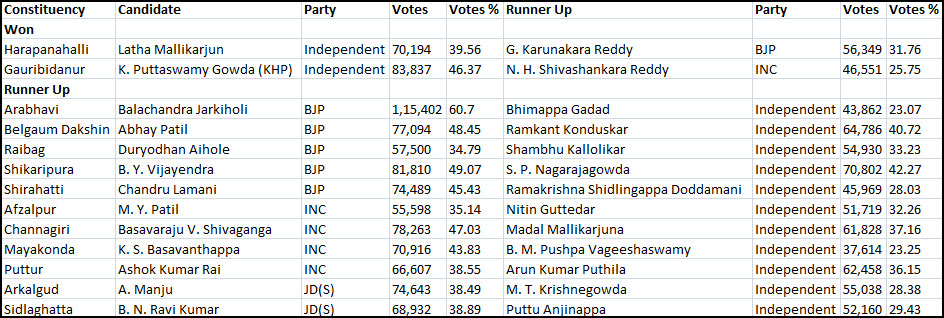
On May 13, 2023, results for the 2023 Karnataka Assembly elections were announced. Congress emerged as the single largest party with 135 seats. Bharatiya Janata Party (BJP) secured 66 seats. A total of 917 independent candidates contested the Assembly elections, and two of them, Latha Mallikarjun and K Puttaswamy Gowda, won from Harapanahalli and Gauribidanur, respectively. Eleven of the independent candidates were runner-up.
Source: ECI
Only 19 saved deposit
Out of 917 independent candidates, only 19 managed to save their deposits. Every candidate contesting elections in India must deposit Rs 10,000 at the time of the nomination. The money is returned only if they secure 1/6 of the total casted votes. It discourages those who contest elections just to get a little fame and have no intentions of working for the public.
A total of 898 independent candidates lost their deposits in these elections. Only 32 of these 898 candidates got more than 1 per cent votes. Furthermore, only 54 of them got over 1,000 votes, and only 112 got between 500 to 999 votes. The remaining 732 candidates got under 500 votes, and 132 of them got less than 100 votes. J Ashoka from Hosakote was the worst performer and got only 13 votes.
BJP candidates suffered close defeats on seats where rebel leaders filed as independent candidates
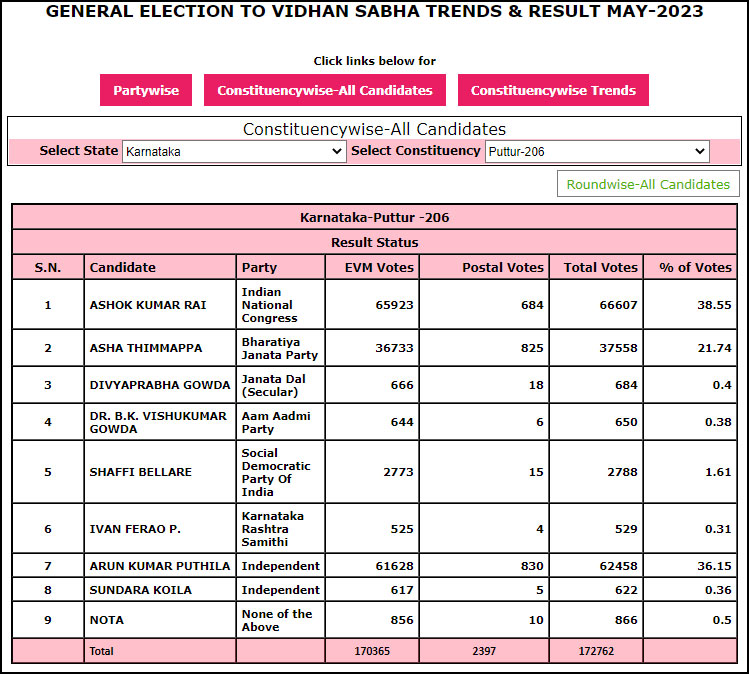
One of the biggest shockers came from Puttur for BJP. Congress’s candidate Ashok Kumar Rai won the seat against independent candidate Arun Kumar Puthila. While Rai got 66,607 votes, Puthila got 62,458 votes. BJP’s candidate Ashha Thimmappa got 36,733 votes. In 2018, BJP’s Sanjeeva Matandoor won the seat with 90,073 votes against Shakunthala Shetty of Congress, who got 70,595 votes with a margin of 19,477 votes.
Source: ECI
Puthila is a Sangh leader. He was expecting to get a ticket from BJP, but the ticket for the Puttur constituency went to Thimmappa. Irked by the party’s decision, Puthila announced he would contest elections independently. Sangh and BJP leaders requested him to withdraw his nomination, but he did not agree. As a result, the votes that were supposed to go to BJP got divided.
Suppose, if BJP had decided to give the ticket to Puthila or he decided to withdraw his nomination, a mere 4,000 votes swing from the existing BJP candidate would have resulted in the victory of the saffron party. Alas, it did not happen.
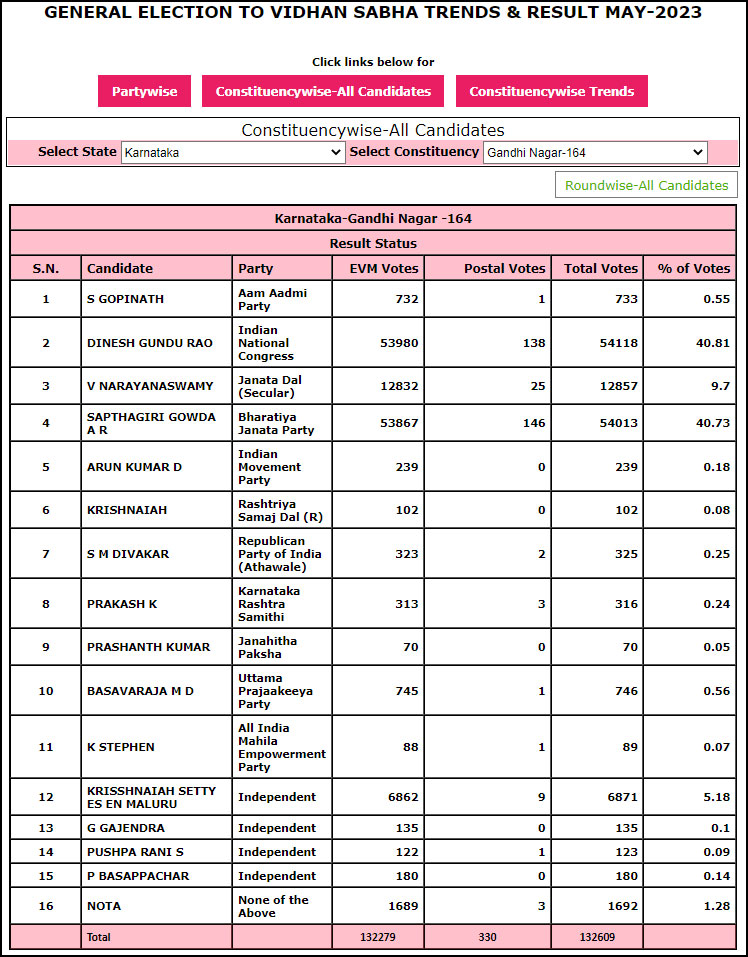
Puthila was not the only independent rebel candidate that caused BJP a seat. From Gandhi Nagar, Krisshnaian Setty ES EN Maluru got 6,871 votes. Earlier, he was a BJP leader but decided to contest the election as an independent. BJP’s AR Sapthagiri Gowda secured 54,103 votes, and the winning candidate of Congress, Dinesh Gundu Rao, got 54,118. The difference between BJP and Congress candidates was only 105 votes.
Source: ECI
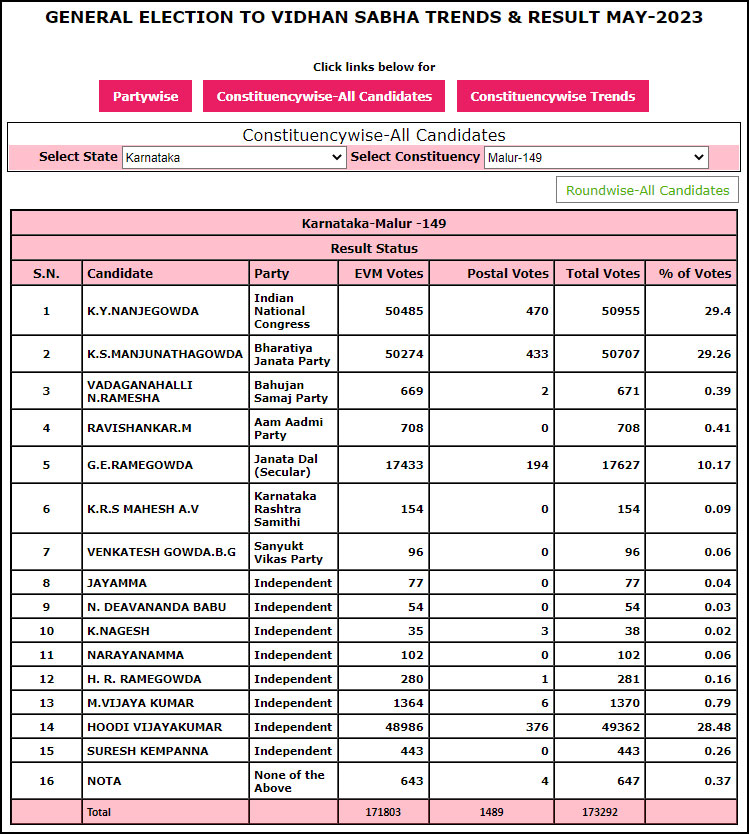
From the Malur constituency, Hoodi Vijayakumar, a former BJP leader, contested the election as an independent. He secured 49,362 votes. The runner-up on this seat, BJP’s KS Manjunatha Gowda, got 50,707 votes. Congress’ JY Nanje Gowda won the seat with 50,955 votes. The difference between BJP and Congress candidates was only 248 votes.
Source: ECI
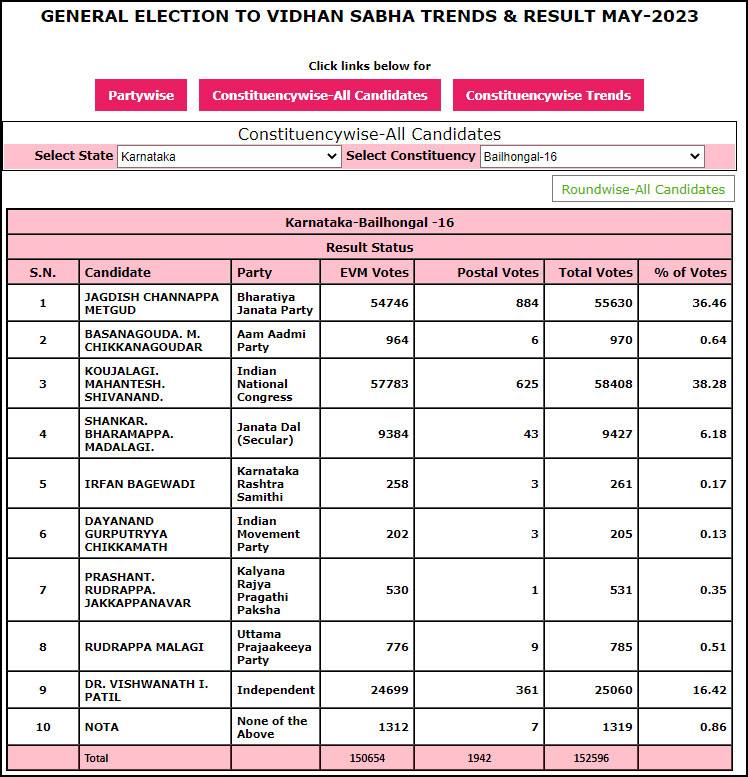
Dr Vishwanath I Patil from the Bailhongal constituency is a former BJP leader. He contested as an independent and secured 25,060 votes. BJP leader Jagdish Metud secured 55,630 votes and lost to Congress candidate Mahantesh Koujalagi who secured 58,408 votes. The difference was only 2,778 votes.
Source: ECI
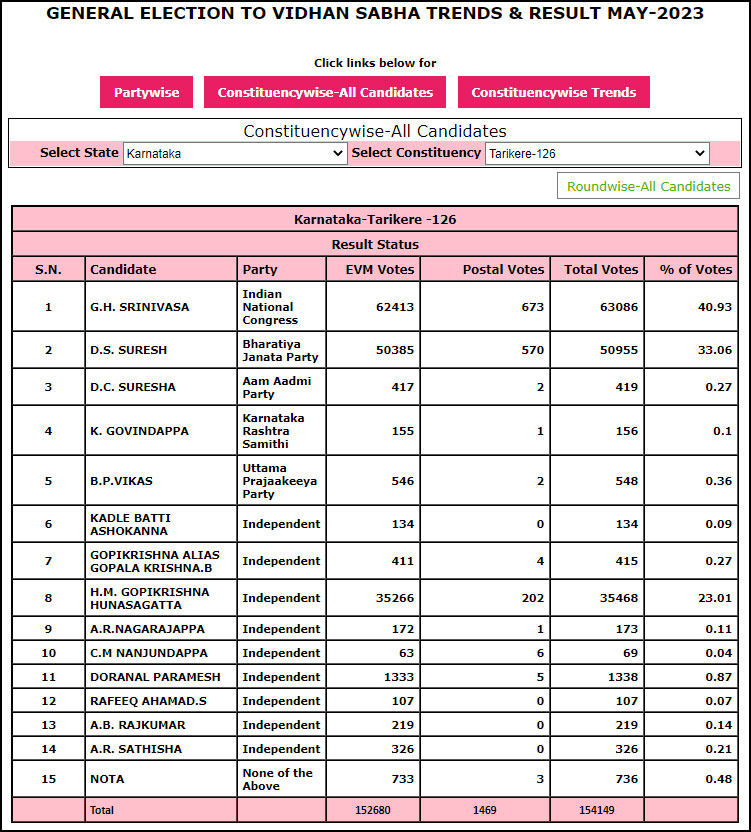
HM Gopikrishna, a BJP leader, decided to contest the election from the Tarikere constituency and secured 35,468 votes. BJP’s DS Suresh secured 50,955 and lost to Congress’s GH Srinivasa, who secured 63,086 votes. He lost by a margin of 12,131 votes. DS Suresh (44,940 votes) won from the Tarikere constituency against GH Srinivasa (32,253 votes) in 2018 by a margin of 11,687 votes. Srinivasa was an independent candidate at that time and Congress’s SM Nagaraju could secure only 20,404 votes. This year, Congress fielded Srinivasa who votes from his followers and Congress followers combined.
In 2017, Gopikrishna was with BJP but decided to contest the election as an independent candidate in 2018. He had secured 29,663 votes at that time. He again contested against BJP this year and made a huge impact as DS Suresh got marginally higher votes compared to 2018.
Source: ECI
Congress won Gandhi Nagar, Malur and Bailhongal constituencies in 2018. However, the total of BJP-leaning independent and BJP candidates show that BJP might have won these seats this year.
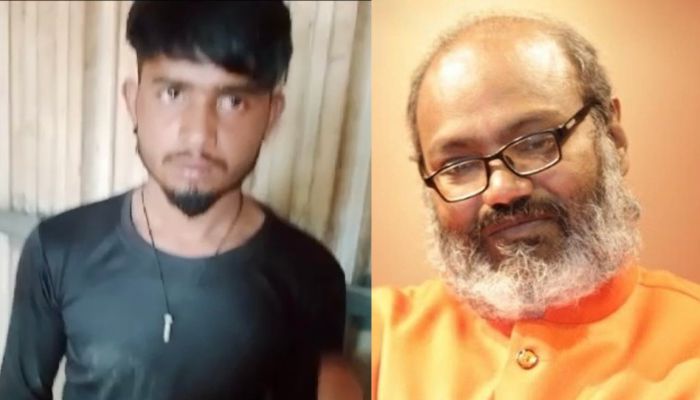
On Wednesday, 17th May 2023, a man named Mohsin was detained for barging into the Dasna temple in Ghaziabad of Uttar Pradesh. He was accompanied by 2 minor girls. Reportedly, one minor girl is Hindu and the other one is Muslim, and the trio entered the Hindu temple using the Aadhaar card of the Hindu girl. Although no complaint has been lodged with the police so far, the police have taken the suspect into custody after learning about the incident and are interrogating him.
The Mahant of the temple, Yati Narsinghanand, alleged that Mohsin was trying to enter the temple and do a recce of the premises.
OpIndia contacted Mahant Yati Narsinghanand of Dasna Shaktipeeth Temple to know more about this incident. He said, “The boy’s name is Mohsin. His age is around 24-25 years. He entered the temple using the Aadhaar card of a Hindu girl who visits here almost every day with her family.”
According to Yati Narsinghanand, Mohsin had crossed the circle of police security at the temple but was caught by his personal security guards. He said that he has not given any complaint letter to the police.
"डासना मंदिर से रेकी करते पकड़ा गया संदिग्ध"- यति नरसिंहानंद का आरोप..
Yati Narsinghanand said, “During the search, no weapons etc. were found from any of the three. Mohsin and the minor Muslim girl did not show their Aadhaar card to hide their identity.”
The video of this incident is also going viral on social media. In the viral video, the police are seen taking the suspects into custody. A girl in a school uniform is also seen in the video.
Dr Udita Tyagi, a devotee of the Dasna temple, has released a video from the spot. She has also alleged that one of the two minor girls detained along with accused Mohsin is a Muslim. She claimed that the age of the Hindu minor girl is 13.
— DCP RURAL COMMISSIONERATE GHAZIABAD (@DCPRuralGZB) May 17, 2023
One of the volunteers in the Dasna temple informed that the arrested accused Mohsin belongs to Dasna and that he had entered the temple premises with the intention of doing a recce. Assistant Commissioner of Police (Web City) of Ghaziabad said, “On 17.5.23, two minor girls and a young man from Dasna came to enter the temple, one of whom had an ID and two did not have an ID, they were stopped by the security personnel and legal action is being taken by interrogating them.”
It is notable that while speaking with OpIndia in May 2021, Yati Narsinghanand had told that he has a threat to his life as Islamists are targeting him. This is not the first incident of suspicious persons entering the Dasna temple or trying to attack Yati Narsinghanand. Earlier, some suspects have been caught while trying to enter the Dasna temple.
On the night of June 2, 2021, two men named Kashif and Vipul barged in with the deadly drug cyanide and surgical blades. Both of them had got their names mentioned in the entry register outside the main gate of the temple as Dr Vipul Vijayvargiya from Nagpur and Kashi Gupta. Both the suspects were accused of planning to attack the Hindu saint during the evening puja.
On Tuesday, August 10, 2021, at 4 am, two sadhus were stabbed by a suspect at the Dasna temple. Both sadhus were seriously injured in this attack.
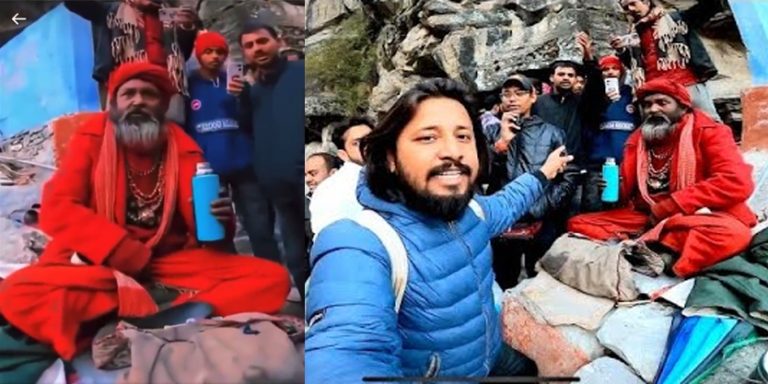
A phoney Aghori monk in the Mana region, in the district of Chamoli, Uttrakhand was seen on camera making offensive comments about Badrinath and Kedarnath temples. YouTuber Rohit Pahadi had published a video on YouTube and Facebook containing the comments of the man dressed as an Aghori monk. Rohit had met the ‘monk’ in the Mana area on 15 May during his recent trip to Badrinath. After learning about the aforementioned incident, the Superintendent of Police for Chamoli, Pramendra Singh Dobal, issued orders for quick action in the matter.
In the video, the man dressed in saffron attire can be seen uttering highly offensive and inflammatory statements about two of the most pious religious places of Hindus. He claims that Muslims once performed namaz at the two locations, Badrinath and Kedarnath. He also claimed that the Hindu temples there were earlier known as Badruddin Baba and Kedaruddin Baba, where Muslim priests used to offer namaaj. He brought the Mughals into the argument and boasted that Mughal emperors Babar and Akbar ruled there. He also alleged that the idol of Lord Narayan was vandalised and thrown in a cave.
A ‘Maulvi’ disguised as a Hindu Sadhu is spreading misinformation and fear-mongering. Fake conspiracies are carefully planted questioning the legitimacy of Hindu shrines and dhams by alleging presence of Islamic structures.
However, he was relentlessly challenged by Rohit Pahadi who was recording their entire confrontation. Pahadi also charged that the man in saffron could even be a maulvi (priest) of a Mazar (Muslim shrine) or simply doing it for money.
When Rohit Pahadi asked him where namaaz was offered earlier, the man said it was offered at ‘Badruddin Baba Mandir’. When asked who told him this, he said that everyone knows Badrinath and Kedarnath were Badruddin and Kedaruddin, and Akbar used to rule these places. He further claimed when Muslim rulers used to rule India, they broke the idols of Hindu deities and namaaz was offered in Hindu temples.
Rohid Pahadi confronted the bogus priest by saying that Badrinath is one of the four holy locations in India’s Char Dham pilgrimage and that people bring their parents to the holy spot to receive blessings from God.
Regarding this incident, an FIR No. 02/2023 under Sections 295 (A) (Deliberate and malicious acts, intended to outrage religious feelings of any class by insulting its religion or religious beliefs), 153 (A) (Promoting enmity between different groups on grounds of religion, race, place of birth, residence, language, etc., and doing acts prejudicial to maintenance of harmony), and 298 (Uttering, words, etc., with deliberate intent to wound the religious feelings of any person) of the IPC was filed at Kotwali Shri Badrinath against the accused named Shanantu Vishwas.
सोशल मीडिया पर श्री बदरीनाथ व श्री केदारनाथ धाम के विषय में तथाकथित साधु द्वारा अभद्र टिप्पणी करने विषयक प्रसारित वीडियो का संज्ञान लेते हुए @chamolipolice द्वारा इस संबंध में कोतवाली श्री बदरीनाथ में शानन्तु विश्वास के विरुद्ध अभियोग पंजीकृत कर वैधानिक कार्यवाही की जा रही है। pic.twitter.com/rVCxmdpTsd
— उत्तराखण्ड पुलिस – Uttarakhand Police (@uttarakhandcops) May 17, 2023
Along with the case against the ‘sadhu’, police also expressed displeasure with the YouTuber for uploading the video containing comments disrespectful to Hindus. Rohit Pahadi had also made objectionable comments in his video as he had claimed that the man could be a Muslim cleric posing as a Hindu monk.
As a result, later Rohit Pahadi deleted the video from his YouTube channel and posted a video informing about the same. He admitted his error of sharing the video without following the proper legal procedure after being questioned by the authorities in relation to the occurrence. The content creator has also asked people not to share the video on social media.
He said that he met the man at Mana village near Badrinath 3-4 days ago. He said that ‘sadhu’ came to his vlog and made several objectionable comments on Badrinath and Kedarnath. Rohit Pahadi said that a case has been registered in the matter at Badrinath police station.
In the meanwhile, Chamoli SP Pramendra Dobal has urged everyone to not share such criminal videos without knowing the legal process involved. He added that legal action will be taken if such offensive videos are circulated.
Politicians from the so-called left-liberal and secular establishment have been making concerted attempts to push a mythical ‘Dalit-Muslim unity’ narrative to draw the subalterns away from their Hindu roots and undermine the numerical superiority of the Hindu majority. The mainstream media, its propaganda wing, has further been aiding their efforts by stimulating a favourable narrative that Muslims and Dalits are natural partners, even though several incidents, time and again, have busted and exposed the farce of the ‘Dalit-Muslim unity’ construct.
While Islamists have been committing crimes against the Dalits in several parts of the country, many of such dreadful cases have recently been reported from the state of Kerala, yet again weakening the much fantasised ‘Dalit-Muslim vote-bank’ narrative and rendering it unviable ahead of the 2024 Lok Sabha elections. Here are 8 such community crimes committed by Islamists against Dalits reported from the state of Kerala, the recent one believed to have happened on May 14, 2023.
A migrant worker from Bihar was beaten to death in Kerala’s Mallapuram on suspicion of theft; 8 arrested
On Sunday, May 14, Kerala police arrested eight people in connection with the lynching of a migrant worker in Kizhissery. The deceased victim was identified as Rajesh Manjhi, a 36-year-old native of the east Champaran district of Bihar. The migrant worker was lynched by a mob on Saturday over the allegations of theft.
Reportedly, the matter pertains to the Kondutty Police Station precinct in Mallapuram. The accused persons captured Manjhi from a house along the Kizhissery-Thavanur road on Saturday at around 1:00 am. The police learned about the incident at 3:25 am.
When the police arrived at the crime spot they found the victim lying on the wayside in a severely injured state. Police took Manjhi to a local hospital early in the morning. However, he was declared dead and his body was later transferred to the Government Medical College Hospital in Kozhikode. The post-mortem examination revealed multiple wounds on the body of the deceased, exposing the mob attack.
The fateful incident is said to be of May 13 night. Accused persons later identified as Fazil Shafudhin, Muhammad Afzal, Mehboob Ahmad Samad, Habib, and their associates tied down Rakesh and thrashed him brutally allegedly on suspicion of theft. The Kerala police, have arrested as many as eight persons pertaining to the barbaric act and confirmed that the murder of the tribal youth was a case of mob lynching.
Jishnu Raj was attacked by the Popular Front of India (PFI), accused of destroying their party flex boards
In June 2022, a person identified as Jishnu Raj belonging to the Dalit community, was reportedly attacked in the early morning hours by members of the SDPI, the IUML, and the political section of the now-banned Islamic terrorist organization named the Popular Front of India (PFI). The PFI and SDPI members claimed that the victim had destroyed their parties’ flex boards.
The IUML and the SDPI denied any involvement in the event, despite the state head of the DYFI, V Vaseef, calling it an “extremist model mob attack.” Five persons were detained by the police in connection with the incident. The arrested persons were identified as Muhammad Salih, Muhammad Ijaz, Najarif, Riyas, and Haris. They are all residents of the Kozhikode district’s Thiruvode.
The police had further booked 29 people, out of which 10 were identified, in the case. They were charged under various sections of the IPC including 308 (Attempt to commit culpable homicide), 324 (Punishment for voluntarily causing hurt by dangerous weapons and means), 143 (Unlawful assembly) and 148 (Rioting, armed with a deadly weapon). They were also charged under relevant sections of the SC/ST (Prevention of Atrocities) Act.
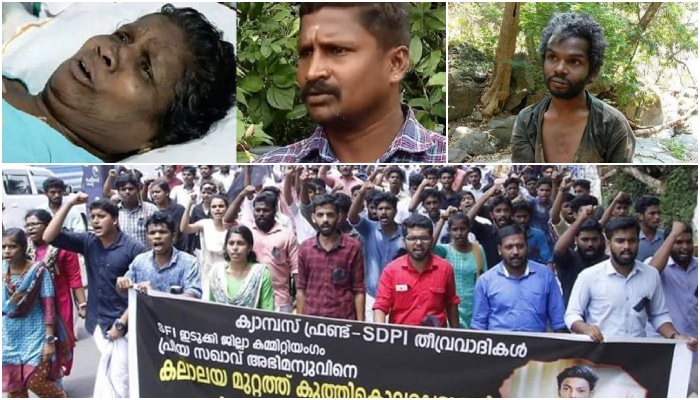
Abhimanyu, a Student Federation of India member was stabbed to death by the PFI unit Campus Front
On July 5, 2018, Abhimanyu a member of the Students’ Federation of India, was stabbed to death by members of the now-banned Islamist terrorist organization named the Popular Front of India’s student wing Campus Front in Ernakulam’s Maharaja College.
According to the then Kerala Director General of Police Loknath Behera, Abhimanyu’s killers were not students of the college. They had earlier attacked Students’ Federation of India workers on the campus.
The Police had detained several PFI and SDPI workers and had conducted raids at the offices and homes. Four persons were arrested in the murder case of Abhimanyu, who was an undergraduate student at Maharaja College.
Kerala Dalit law student’s rape-murder: Convict Ameer ul Islam sentenced to death
In December 2017, a migrant worker from Assam was given the death penalty by a municipal court in Kerala’s Ernakulam for raping and murdering a 29-year-old Dalit woman, a barbaric incident that led to huge demonstrations throughout the state.
The trial court while delivering the decision stated that the accused Ameer ul Islam never deserved any pity, further stating that it was one of the rarest of the rare situations. It was noted that the accused posed a serious threat to society and did not exhibit any regret for perpetrating the horrible murder.
In accordance with many articles of the Indian Penal Code, Islam was also given a 14-year prison term and a fine of Rs. 5 lakhs. He heard the contents of the decision through a translator without showing any reaction.
Islam, belonging to the Nagaon district of Assam, worked as a labourer for almost eight years in different parts of the southern state. He lived in a small house that was 500 metres away from the woman’s house when he committed the crime.
The trial in the case started in April 2017 and was completed in eight months. As many as 100 witnesses were heard and 291 documents and DNA test reports were presented during the trial.
Seven SFI Activists in Kerala Booked for Attacking Dalit AISF Leader
On October 22, 2021, Kerala police filed a complaint against seven Student Federation of India (SFI) representatives for assaulting and threatening a woman leader of the All India Students Federation (AISF) during an event involving the MG University senate election.
SFI is the CPI(M)’s student wing, while AISF is the coalition partner CPI’s student wing. The woman leader alleged that the SFI leaders verbally abused her and made casteist remarks against her. Police filed a complaint under the SC/ST (Prevention of Atrocities) Act and other IPC provisions, including 143 and 323.
CPM-linked Islamists attacked a Hindu SC family for bursting Deepawali crackers in Palakkad, Kerala
A Hindu Dalit family was assaulted and beaten up for bursting firecrackers on Deepawali. The complaint was filed at Vadakancherry police but the victim’s family alleged that no action was taken by the Police. A Hindu Dalit person named Manikandan and his mother, from Anchumoorthi Mangalam in Palakkad, were injured.
The incident occurred on October 23, last year the eve of Deepawali, while bursting firecrackers. Manikandan’s neighbour Rahmatullah and his son came and questioned why they were bursting firecrackers and thrashed Manikandan. The father-son duo kicked Manikantan’s elderly mother in her chest. The frail lady was reported bedridden.
Manikantan said that Rahmatullah hurled casteist abuse at him and his mother. He said filed a complaint with the Chief Minister as the police were not ready to file a case despite the protest. Reports mention that the Kerala police filed a complaint against Rahmatullah after 20 days but avoided adding the stringent Scheduled Castes and the Scheduled Tribes (Prevention of Atrocities) Act. The SC-ST atrocities act was enacted to prevent atrocities and hate crimes against SCs like Manikantan.
Dalit Hindus were denied water supply for attending pro-CAA events
In January 2020, the Hindu residents of a colony at Kuttipuram in the Malappuram district of Kerala were reportedly denied drinking water and had to face a boycott allegedly by Muslim groups for supporting the government on the historic Citizenship Amendment Act (CAA).
Reportedly, a person living near the colony used to supply drinking water to the Hindu-dominated colony. However, after protests against CAA got heated up the Hindus of the colony were denied water.
An NGO named Seva Bharati stepped in to provide drinking water to the households of the colony after they heard about the injustice done to the residents. Following the boycott of Hindus by Muslims, there is widespread anger for blocking the primary source of life for these residents.
Attappadi Madhu murder case: 14 of 16 accused convicted
Madhu, a tribal man from Chindakki village in Attappady, Palakkad, was killed after he was caught, tied and thrashed by a group of local people alleging theft of food articles from a grocery shop on February 22, 2018. He was assaulted by the mob and later handed over to the police.
The Mannarkkad Special Court for Scheduled Caste Scheduled Tribe has found 14 accused in the Madhu Murder Case guilty of charges under IPC 304(2) for culpable homicide.
The names of the accused (from one to 16 ) are Hussain, Maraikkar, Shamsudeen, Aneesh, Radhakrishnan, Abubacker, Siddique, Ubaid, Najeeb, Jaijumon, Abdul Karim, Sajeev, Satheesh, Hareesh, Biju and Muneer. On April 4 this year, a special court in Kerala’s Palakkad district found guilty 14 of the 16 accused persons in the lynching and murder case of Attappady Madhu. The court acquitted 2 persons named Abdul Kareem and Aneesh.