Home Blog Page 2483

Australia: Khalistanis with swords attack Indians carrying Tiranga in Melbourne, one arrested

0

On Sunday, January 29, several videos appeared on social media showing Indian Australians being attacked by Khalistanis with swords while carrying the Indian tricolour.

The Australia Today earlier reported that Indian Australians had notified the Victoria Police that they have planned a protest at the Federation Square in Melbourne against the rising pro-Khalistan activities in the country. 

It is notable that the Khalistani terrorist outfit ‘Sikhs For Justice’, which has been banned by the Indian government, had announced that a referendum on Khalistan will take place on January 29 at Federation Square. 

Taking to Twitter, Sarah L Gates, Director of Hindu Human Rights Australasia shared the video of a group of Khalistan supporters chasing an Indian youth who was carrying the Indian national flag. 

“Khalistanis now sharing footage of a Khali mob approaching a lone Indian youth with Tiranga and assaulting them near Federation Square Khalistan Referendum. I hope @AusFedPolice will not turn a blind eye,” Gates tweeted.

Australian Hindu Media informed that a sword-yielding Khalistani was arrested by the police at Federation Square during the Khalistan event.

“Khalistani goon, armed with a sword, who attacked Indians holding the Tiranga – arrested by police at Khalistani event at Federation Square, Melbourne today,” Australian Hindu Media tweeted.

Earlier, The Australian Hindu Association Inc wrote a letter to the Minister of Police in Victoria seeking an investigation into Hinduphobic crimes committed by Khalistani-elements in the Australian state. In the letter addressed to Anthony Carbines, Minister of Police of Victoria state, the organization expressed concerns of Australian Hindus about the organized attacks on Hindu Temples. The letter also mentioned voting is scheduled at Federation Square on January 29 by Sikhs For justice for Referendum 2020. It was added that the Government of India has already banned SFJ under UAPA in 2019.

It is important to note that three separate anti-Hindu attacks on temples have taken place in Australia in less than a month, all of which were organized by locals who support the Khalistani propaganda.  At the Hare Krishna Temple run by ISKCON in Melbourne’s Albert Park, an attack took place on January 23. Reportedly, temple walls were defaced with anti-India slogans of ‘Khalistan Zindabad’ and ‘Hindustan Murdabad.’ The miscreants had also hailed slain Khalistani terrorist Jarnail Singh Bhindranwale as a martyr.

Earlier, on January 17, Khalistani supporters vandalised the historic Shri Shiva Vishnu Temple in Carrum Downs in Melbourne. During the vandalisation, the miscreants wrote anti-Hindu and anti-India slogans on the walls near the temple.

On January 12, BAPS Swaminarayan Mandir, a Hindu temple in Melbourne, Australia, was trashed by Khalistan supporters and damaged by painting anti-India graffiti on it. According to the reports, the walls of Melbourne’s iconic Swaminarayan temple in Mill Park’s northern suburbs were spray-painted with ‘Hindustan Murdabad’ slogans.

Odisha Health Minister Naba Das shot at in Jharsuguda, critical

Odisha Health Minister Naba Das was shot at near Brajarajnagar in Jharsuguda district. He has sustained injuries as per reports.

Some reports suggest he was shot at by a policeman. His condition is very critical. The incident occurred when Das was on his way to attend a programme at Gandhi Chowk in Brajarajnagar when ASI Gopal Das fired at him and bullets hit the minister’s left side of chest. Another policeman accompanying Das also sustained injuries after bullets hit him. Das is currently being airlifted to Bhubaneswar as per media reports.

Chief Minister Naveeen Patnaik has condemned the attack on Minister Das. The ASI who shot at him was his PSO and is detained by police and interrogation is on.

Viral video shows Islamist threatening to burn down Indore over claims of ‘blasphemy’

0

Days after Islamists were seen chanting ‘sar tan se juda’ slogans in the city of Indore, another viral video has gone viral where they can be heard talking about burning down the city.

A man, dressed in a beige jacket, could be heard saying, “The police told us that they are taking action against the accused and handed over a copy of the FIR to an Islamic cleric. They also claimed to have launched a manhunt.”

“If action is taken against the accused, then, it is fine. Else, we will take step-by-step action. We will start with jail bharo andolan and later burn down the city of Indore. We do not give a damn.”

Amidst chants of Insha’Allah, he continued, “Now, everyone retire to your homes and wait for the police action for the next 2 days. If the police fails, then, we will start with the jail bharo andolan.”

A man from the crowd yelled that the protest march must commence after Jumma Namaz. While hailing himself as a ‘lion’, another man wearing a headgear claimed that the so-called blasphemy accused are lynchers and consumers of a swine’s urine.

At that point, the man in beige jacket suggested that they will then burn down the city of Indore if they are not happy with police action, they don’t care, a statement that found much appreciation with the mob.

“We are not ready to do such a thing just today but till the end of time to safeguard the honour of Prophet Muhammad,” he announced amidst chants of ‘Allah hu Akbar.’

It must be mentioned that several Bajrang Dal workers were falsely accused of disrespecting Islam and committing blasphemy by extremists after they recited Hanuman Chalisa to protest against the film ‘Pathaan’ in Indore.

‘Sar Tan Se Juda’ slogan raised in Madhya Pradesh’s Indore city

On January 25, Vishwa Hindu Parishad national spokesperson Vinod Bansal took to Twitter to share two videos, wherein several people were seen raising the cry for beheadings with the controversial Islamist slogan of ‘Sar Tan Se Juda’.

While the first video was reportedly captured outside the Badwali Chowki, the second incident occurred outside the Khajrana Police Station in Madhya Pradesh’s Indore.

In both videos, Muslim men, including young children, can be heard shouting “Gustakh-e-Rasool ki Ek hi saza, sar tan se Juda, sar tan se Juda.”

The slogan translates to, “There is only one punishment for being disrespectful to Rasool (Prophet Muhammad), their head separated from their torso, their head separated from the torso.” This Islamist clarion call, has become a staple feature of violent protests that have, in the name of blasphemy, erupted in almost every corner of the country in recent times.

From Mughal Garden to Amrit Udyan: A look back at the soul of Rashtrapati Bhavan’s floral marvel

The iconic 15 acre Mughal Garden of the Rashtrapati Bhavan was renamed “Amrit Udyan” on Saturday amid the “Azadi ka Amrit Mahotsav” commemorating 75 years of India’s freedom. This action follows the Center’s renaming of Rajpath to “Kartavya Path.”

The renamed garden is being inaugurated by President Draupadi Murmu today, and it will be open to the public from January 31 up to 31st March, when the Udyan Utsav will be held. Although called Mughal Gardens, the garden on Raisina Hill was not built by the Mughals, as the entire complex was built by the British, long after the fall of the Mughal empire. However, because the design of garden was influenced by Mughal gardens built by Mughals in various locations throughout the country, it was known by the generic name Mughal Gardens.

There are several Mughal gardens in the country, most of them on the premises of Mughal-built structures like the Taj Mahal, Humayun’s Tomb, Red Fort etc.

Mughal Gardens have a lengthy history in India.

The Mughals were said to cherish gardens. In Babur Nama, Babur declares that the Persian charbagh form (literally, four gardens) of garden is his favorite type. The charbagh structure was designed to be a symbol of the jannat, an earthly utopia in which people live in perfect harmony with all other aspects of nature.

These gardens are spread out over regions that were once under the control of the Mughals and are distinguished by their rectilinear designs, which are divided into four equal pieces. All of them are constructed in this manner, earning them the name “Mughal Gardens,” including the ones encircling Humanyun’s Tomb in Delhi and the Nishat Bagh in Srinagar.

The usage of streams to mark off the garden’s various quadrants is one of their distinctive features. These were not only essential for maintaining the garden’s flora, but they were also a significant component of its attractiveness. Fountains were frequently constructed as a symbol of the “cycle of life.”

The gardens at the new Viceroy’s residence (Rashtrapati Bhavan)

As extensive is the history of the Estate’s famous gardens as are its fragrant flower reserves. The British made the decision to move Delhi from Calcutta as the capital of India in 1911. It would be a massive undertaking to build a brand-new city, New Delhi, to serve as the British Crown’s administrative capital in its most lucrative colony.

The Viceroy’s House on Raisina Hill was built on roughly 4,000 acres of land, with Sir Edwin Lutyens tasked with designing the structure. A sizable garden in the back of the Viceroy’s House was essential to its design.

The initial plans called for developing a garden with traditional British sensibilities in mind, but the wife of the Viceroy at the time, Lady Hardinge, encouraged planners to design a Mughal-style garden, as she was greatly impressed by the Mughal Gardens. She is credited with drawing inspiration from the Mughal gardens she visited in Lahore and Srinagar as well as Constance Villiers-book Stuart’s Gardens of the Great Mughals (1913).

The Taj Mahal’s surroundings, the Mughal Gardens of Jammu and Kashmir, and even Persian and Indian miniature paintings served as inspiration for the garden. Indian and traditional European architectural features were integrated in Lutyens’ designs, creating a distinctive aesthetic that continues to characterize Lutyens’ Delhi today.

Sir Edwin Lutyens, completed the garden’s design in 1917, and plantings took place in 1928–1929.

The wife of Sir Edwin Lutyens referred to the garden as a ‘paradise‘ in the book ‘The Life of Sir Edwin Lutyens,’ written by Christopher Hussey. She added, “lowers are set in such masses, producing a riot of colour and scents, that, when, with the fountains playing continually, there is not the least sense of stiffness. The round garden beyond beats everything for sheer beauty and is beyond words.”

Roses are the popular key feature of the garden

William Mustoe, the director of horticulture who planted the garden, is credited with introducing more than 250 distinct varieties of hybrid roses that he had gathered from all over the world. Mustoe was particularly talented at cultivating roses. A well-known horticulture named Lady Beatrix Stanley stated in 1931 that she had never seen prettier roses in England. Later, greater diversity was provided, particularly under Dr. Zakir Husain’s administration.

The Rashtrapati Bhavan’s gardeners have continued the practice of caring for the gardens’ signature feature, the wide variety of roses. They are Oklahoma (also known as Black Rose), Adora, Mrinalini, Taj Mahal, Eiffel Tower, Scentimental, Black Lady, Blue Moon, and Lady X. In addition, there are roses named after famous people, like Arjun and Bhim, Mother Teresa, Raja Ram Mohan Roy, Abraham Lincoln, and Jawahar Lal Nehru. In 1998, the imaginative gardeners also added new, exotic species of flowers, including tulips, heliconia, and birds of paradise.

The garden has seasonal flowers in more than 70 different species. Tulips, Asiatic lilies, daffodils, hyacinths, and other flowers are among them. The garden also grows 60 of the 101 known types of bougainvillea.

The ground of the Rashtrapati Bhavan’s garden is covered in ‘Doob grass.’ When the Mughal Gardens were being constructed, it was transported from Calcutta (now Kolkata). In addition to these, the garden comprises bushes, vines, and about 50 different kinds of trees, such as the Moulsiri tree, Golden Rain tree, flower-bearing Torch Tree, and many more.

Over three hundred permanent and casual employees are deployed for the development and maintenance of the gardens of Rashtrapati Bhavan.

Every Rashtrapati Bhavan resident added their personal touch

Over time, the gardens have changed. While roses continue to be the garden’s main feature, each Rashtrapati Bhavan resident has contributed their own distinctive touch.

For instance, when there was food scarcity in the nation, C. Rajagopalachari, the previous Governor General of India, personally ploughed the ground and set aside a portion of the garden for foodgrains, as a gesture to address the problem. In its place now, the Nutrition Garden, also known as Dalikhana, grows a variety of vegetables using organic methods for consumption at the Rashtrapati Bhavan.

Rainwater harvesting for recharging groundwater in the presidential estate was done by President K.R. Narayanan in collaboration with the Centre for Science and Environment.

APJ Abdul Kalam created numerous theme-based gardens, like Herbal Gardens, Tactile Gardens for the visually handicapped, Musical gardens, Bio-Fuel Park, Spiritual and Nutrition garden and more. While President R Venkatraman added a cactus garden because he simply liked cacti.

On the initiative of the former president Pranab Mukherjee, the garden was made accessible to the general public in August 2012. On the Estate, almost 2000 different species of trees were planted during his administration. President Pratibha Patil had got Bonsai Garden and nature trails added to the estate during her tenure.

Over the years, the Garden along with the entire Rashtrapati Bhavan complex has been made more accessible for visitors. Circuit three of the tour takes visitors through the pristine Mughal Gardens or Amrit Udyan that have been designed as three successive terraces. It is said that the large geometrical designs of the garden can only be appreciated from the first story of the building. The three gardens are the Rectangular Garden at first, followed by Long Garden and finally the Circular Garden.

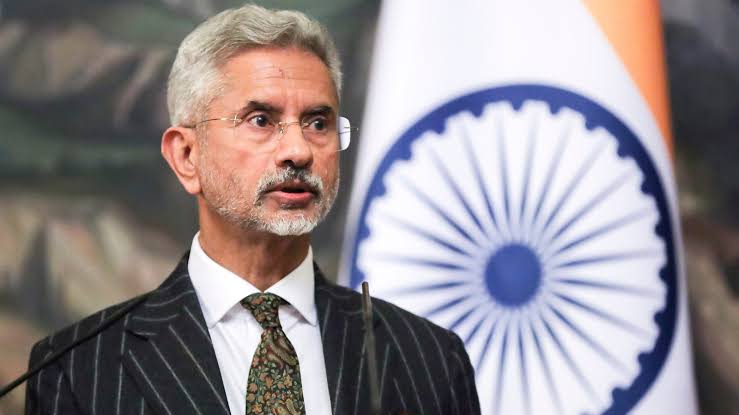
‘Krishna forgave Shishupal 100 times, you know what happened next’ – MEA Dr S Jaishankar on India’s strategic stand on Pakistan

On January 28, Minister of External Affairs Dr S Jaishankar drew a comparison between modern-day India and Mahabharata times during the launch the Marathi version of his book ‘The India Way: Strategies for an Uncertain World’. The analogy was based on one of the chapters of his book titled ‘Krishna’s Choice’ where Dr Jaishankar talked about how India’s current political stand in the world is strikingly similar to Krishna’s stand during the time of Mahabharata.

Dr Jaishankar was replying to a media query when he compared Pakistan to Shishupal, Krishna’s cousin, who was forgiven 100 times as Krishna had promised Shishupal’s mother he would not punish his 100 offences. On the 101st offence, Shishupal was beheaded by Krishna using the cosmic weapon Sudarshan Chakra.

The video where Dr Jaishankar talked briefly about current India and Mahabharta’s political similarities has since gone viral on social media.

Inclusion of mass in foreign policy

Speaking about how a country’s foreign policy should be designed, Dr Jaishankar pointed out that people of different regions perceive the same topics differently, hence it is important to think about everyone while drafting foreign policy. He noted that if a person from North India is asked about the Navy in ancient India, he may have limited knowledge about it. However, if a South Indian is asked the same question, he would proudly talk about the naval prowess of Cholas and other kingdoms.

India cannot continue to rely on others

Speaking about the supply chain and the importance of data in today’s time, Dr Jaishankar said that both elements play a vital role in today’s time. When Covid came, the world came to know how any disruption in China could break the entire supply chain. Learning from the experiences in the past, India cannot continue to rely on others for the supply chain, and we have to build our own. Furthermore, it is important to play a strategic role in the global supply chain, unlike the 1980s when we were limited to the Indian supply chain itself.

Dr Jaishankar also talked about the importance of data and how it is being monetised, and by whom. He emphasised the importance of keeping the data secure and using it for our benefit rather than relying on others to store and monetise it. Notably, suppose an international company wants to operate in India, and it uses the data of Indian customers at a large scale, like Google or Facebook, as per the law. In that case, the company has to have a data centre in India. They cannot take the data outside.

Everything has a limit and when limits are crossed, surgical strikes happen

Speaking about the strategic diplomacy with the neighbours, Dr Jaishankar pointed out that everything has a limit, and when that limit is crossed, reactions [like Surgical Strikes] happen. He gave examples of the Uri and Pulwama attacks and the response that India gave to Pakistan. He also talked about the importance of development across borders. Hitting out at the previous governments, he said that the earlier governments took the path of “no development at borders is the best strategy”, resulting in the loss of many soldiers. He pointed out how the current regime in India is working extensively on developing the borders to ensure the security and safety of India’s people.

India’s stand towards nations in stress

Dr Jaishankar also talked about how India rushed to help other countries when natural calamities happened, like in Nepal. Furthermore, India provided vaccines to many countries to fight Covid. He mentioned that lakhs of Indians study and work in different countries. To ensure they have rights in those countries, India is working on getting regulations for Indian nationals set in a way that they get equal rights as citizens.

Revolutionary change in India’s position

Dr Jaishankar said since the new government came into power in 2014, he has noticed a revolutionary change in every aspect. He mentioned that he was not talking from the government’s point of view but from the point of view of a diplomat who has seen India’s foreign policy for decades. “The changes that take place in every cabinet meeting are revolutionary,” he said, pointing out that such steps have not been taken for decades to strengthen India’s position at the global level.

‘I cannot comment on what is happening in Pakistan’

When asked about the current situation in Pakistan, Dr Jaishankar said it would not be right to talk about the neighbouring country on a public forum. However, he pointed out that, like Pandavas could not choose their relatives, India cannot select its neighbours. Speaking about the notice India sent to its Pakistani counterpart on Indus Water Treaty, Dr Jaishankar said that both countries have Indus Commissioners who will discuss the matter first. If required, MEA will intervene.

India is wrongly read by the western media

Speaking about how western media treats India, he said they use “Hindu Nationalist Government”, but no one would ever say “Christian Nationalist Government” for western countries. He noted that in India, being a nationalist is seen as something to be proud of, but it is not the same in western countries. Being a nationalist is not seen in a good way in many countries.

He said, “If you look at the last nine years, there is no doubt that government and politics of the day are more nationalistic…I don’t think there is anything to be apologetic about it. The same nationalist people have helped countries abroad and moved forward in disaster situations in other countries. So if you read next time in a foreign newspaper because they always, foreign newspapers, they like using words like Hindu nationalist comment, okay.”

He added, “So next time you read it, ask yourself, how wrongly are they reading me that they do not understand that this country is getting ready to do more with the world, not less with the world.”

During the QA session, a journalist asked, “We talk a lot about the strategic culture, and you have written about Krishna’s Choice. Why is strategic culture lacking, and how has it changed?”

“If I ask someone who was the biggest diplomat of India, I can give you in writing the person will take the name of a diplomat from a western country. If I ask about diplomacy books, they will name foreign authors. I wrote because I wanted to tell the people of India to look at their own house”, the External Affairs Minister said.

He further said, “If someone asks me who the greatest diplomat was, I will say it was Shri Krishna and Hanuman Ji. I am seriously speaking. Suppose you see them from a political point of view. What was the situation? What was the mission? How they handled it? Hanuman Ji not only completed his mission but took further steps and communicated with Sita Ji. Then took stock of Lanka and even burnt it. He was a multipurpose diplomat.”

“If we talk about the top ten strategic concepts, I can give examples from Mahabharata. If we see the world today, it is a multipolar world. At that time, what happened in Kurukshetra? It was a multi-polar Bharat. There were different kingdoms. Every kingdom was asked which side they wanted to take. Some of them were non-aligned, like Balram and Rukma. When we talk about constraints, Arjuna’s confusion fits best. He was emotionally interdependent. It was not materialistic but emotional.”, he added.

Talking about strategic patience with Pakistan, Dr Jaishankar said, “We say Pakistan did this and that. Let’s show strategic patience. The best example of Strategic patience is how Krishna Bhagwan handled Shishupal. He forgave Shishupal 100 times, and then you know what happened.”

Furthermore, he said, “There are new terms and rules based on the order. There is dignity among countries. There are some rules. What does Mahabharata teach us? Those who always break the rules start to talk about them on their end. There are so many examples. We debate that a larger country is against us. Do remember the ratio of Pandavas vs Kauravas was 7:11. Pandavas were a small army, but they won. Reputation has value. Pandavas’ reputation was better.”

He also talked about tactical adjustments and strategic deception based on the situation. Giving the example of how Yudhishthir, who had never lied in his whole life, strategically made Guru Drona believe that his son Ashvathama had died. In reality, an elephant named Ashvathama was killed. Another example he gave was of Shikhandi, a transgender whom Krishna used to kill Bhishma Pitamah. In both cases, the Pandavas could be seen as wrong, but at that time, tactically, it was the right move.

Dr Jaishankar’s book was released in 2020. It is available in multiple languages, including English, Hindi, Marathi and others.

Rahul Gandhi unfurls Tricolour at Lal Chowk, Srinagar with his own cutout larger than the Tiranga, netizens say disgusting, disrespectful

Congress leader and Wayanad MP Rahul Gandhi today unfurled the Indian national flag at Lal Chowk in Srinagar as part of his luxurious ‘Bharat Jodo Yatra’.

However, as seen in the above video, Rahul Gandhi’s own cutout was larger and taller than the Indian flag which many felt was disrespectful and disgusting behaviour by a senior leader like Rahul Gandhi.

Netizens were quick to point out the seemingly disrespectful behaviour by Rahul Gandhi.

People pointed out how it is a shame that Rahul Gandhi’s cutout was bigger than the flag.

Some even pointed out how the fact that the Indian National Flag was raised at the Lal Chowk in Srinagar was possible because of PM Modi and HM Shah who abrogated the Article 370 which made Jammu & Kashmir an integral part of India without any riders attached.

Earlier, at peak of Pakistan backed Islamist terrorism in the valley, there have been instances where the Pakistan flag was unfurled at Lal Chowk and the India national flag was not allowed to be hoisted there.

Even Congress friendly ‘intellectuals’ were upset at the flag hoisting.

They were upset how despite claiming ‘outsiders’ were administering J&K, Rahul Gandhi unfurled the Indian flag in Srinagar as he too is ‘mainstream’.

Netizens also speculated whether this disrespect for the national anthem was also in violation of the Flag Code.

As per the Flag Code, no other flag or bunting should be placed higher or side by side with the flag. And while it does not specify a larger than the flag cutout, many felt this could also be violating the Flag Code.

Congress had said Rahul Gandhi won’t unfurl Indian National Flag at Lal Chowk as it was ‘RSS agenda’

Earlier this month, AICC in-charge of Jammu & Kashmir and party MP Rajni Patil had said that Gandhi will not hoist India’s national flag at Lal Chowk. She had said that the party believes that the unfurling Tricolour at the Lal Chowk in Kashmir is part of ‘the RSS agenda’. Instead, Gandhi will hoist the national flag at party headquarters in Srinagar on January 30, Patil had said.

Alleging that the Congress together with National Conference has utilized Lal Chowk as a symbol of specific ideology since 1947, he added that “even if it wants to unfurl the Tricolour there, it will make uneasy both the National Conference and PDP who are supporting the Rahul Gandhi yatra”.

At least 41 dead as bus carrying 48 people falls into a ravine in Balochistan

0

At least 41 people were killed after a passenger coach fell into a ravine in Pakistan’s Balochistan on Sunday, Dawn reported citing officials. The incident occurred in the Lasbela district of Balochistan.

Lasbela Assistant Commissioner Hamza Anjum has confirmed the incident. Anjum stated that the vehicle carrying 48 passengers was travelling from Quetta to Karachi, as per the Dawn report. 

He said that the vehicle crashed into the pillar of a bridge near Lasbela and subsequently fell into a ravine and caught fire. Hamza Anjum feared that the number of casualties could rise to 48. 

“Due to speeding, the coach crashed into the pillar of a bridge while taking a U-turn near Lasbela. The vehicle subsequently careened into a ravine and then caught fire,” Dawn quoted Hamza Anjum as saying.

According to Hamza Anjum, three people, including a child and a woman have been rescued from the accident site, according to Dawn. One of the injured persons succumbed to his injuries while being taken to hospital. He added that the bodies recovered from the wrecked bus were unidentifiable. Anjum said that DNA testing will be conducted to identify the deceased. 

(This news report is published from a syndicated feed. Except for the headline, the content has not been written or edited by OpIndia staff)

Drones drop bombs at a defence factory in Iran, govt calls the attack unsuccessful, claims drones eliminated by air defence

0

In the midst of heightened regional and international tensions engulfing the Islamic Republic of Iran, drones carrying bombs targeted an Iranian defence factory in the central city of Isfahan on Saturday night. 

As per Iran’s state media IRNA report, the alleged attack took place at around 11:30 pm on Saturday. Later, the state news agency IRNA reported that “small drones” caused the explosion.

In a statement, Iran’s defence ministry said, “There was an unsuccessful attack by small drones against a defence ministry industrial complex, and fortunately with predictions and air defence arrangements already in place, one of them struck.”

Two more drones were eliminated by the complex’s air defence system. “Fortunately, no one was killed in this failed attack, but the complex’s roof did sustain some minor damage,” the statement added.

This comes after a massive fire broke out on Saturday at an oil refinery near the city of Tabriz in East Azerbaijan Province in northwest Iran, according to the semi-official Fars News Agency.

Press TV, the English-language branch of Iranian state television, aired a mobile phone video that appeared to capture the moment the drone struck the Imam Khomeini expressway. An explosion and sparks hit a dark building as a small crowd stood by, probably drawn by anti-aircraft fire. Following the strike, the locals present there fled.

The Defense Ministry did not specify what was produced at what it referred to as a “workshop.” Both a sizable air base constructed for its fleet of American-made F-14 fighter jets and its Nuclear Fuel Research and Production Center is located in Isfahan, about 350 kilometers (215 miles) south of Tehran.

It is notable that two hours before the drone attack, an earthquake was reported by IRNA in Khoy city. A 5.9 magnitude earthquake struck the city of Khoy, West Azerbaijan province, in northwest Iran at around 9:44 p.m. (local time).

According to reports, many areas in Iran’s province of West Azerbaijan felt the tremors, which were reportedly quite strong. Numerous other cities, including Tabriz, the provincial capital of neighboring East Azerbaijan also felt the tremors.

According to the United States Geological Survey (USGS), the earthquake struck 14 km south-southwest of Khoy at a depth of 10 km at 23:44:44 (UTC+05:30).

As per the latest numbers reported, the earthquake resulted in the death of 7 people and around 440 injured. 

Afghanistan: Taliban bans women from attempting university entrance exams

0

On Saturday, January 28, the Taliban ‘caretaker’ government in Afghanistan issued the latest decree against women. The decree bars women from attempting university entrance exams for the 2023 school year which are slated to be held in February. The letter with instructions has been sent to private universities and schools. 

Girls cannot register for the exams until further notice, according to a notice sent to the universities by the Taliban Ministry of Higher Education.

In order to avoid punishment, the statement states that private universities must adhere to the ruling regime’s laws and rules, and not violate the latest decree that bans the admission of female students to private universities.

Latest decree barring women from attempting university entrance exams for the 2023 school year (Image via TOLO News)

This latest decree comes after global outrage and condemnation against the Islamist group’s diktat banning female students from universities and schools until further notice. Reportedly, Nida Mohammad Nadeem, Afghanistan’s Minister of Higher Education, has asserted that the ban is necessary to stop ‘gender mixing’ in universities and because he believes some subjects being taught go against Islamic principles.

Following the visit of a delegation led by the highest-ranking female official in the UN, Deputy Secretary-General Amina Mohammed, U.N. humanitarian chief Martin Griffiths and the heads of two significant international aid organizations also visited Afghanistan this week. The aim of their visits was to attempt to undo the Taliban’s oppression of women, including their ban on Afghan women working for domestic and international humanitarian organizations.

It is notable that on 24th December 2022, all domestic and international non-governmental organizations (NGOs) in Afghanistan were ordered by the Taliban government to forbid the presence of female employees at work. 

The Taliban banned women from working in NGOs alleging that they are not wearing the Islamic headscarf correctly. The Taliban government claimed that it had received “serious complaints” that women working in NGOs were not following the Islamic dress code properly.

A day later, three big international NGOs announced that they are suspending their work in Afghanistan. These aid groups, Save the Children, the Norwegian Refugee Council, and CARE, suspended their work in light of the ban on women.

Notably, since the Taliban government came to power in Afghanistan in 2021, women’s rights there are being restricted. Women are prohibited from holding important positions in all spheres of life and are required to adhere to the strict Islamic dress code. They are also excluded from employment and education. Women are also barred from entering parks and gyms and from traveling without a male relative. 

Recently, the Taliban government instructed the country’s female clothing retailers to mask the mannequins showing off the latest fashions. The mannequins with their heads covered have come to represent the Taliban’s puritanical rule over Afghanistan.

Shaligram stones for idols of Shri Ram and Janaki for Ram Mandir in Ayodhya dispatched from Nepal: Read details

Nepal has dispatched two Shaligram (non-anthropomorphic representation of Lord Vishnu in Hindu religion) stones to India’s Ayodhya for the construction of idols of Ram and Janaki expected to be placed in the main temple complex of the under-construction Ram Mandir. Found only on the riverbanks of Kali Gandaki River that flows through Myagdi and Mustang district, the Shaligrams are already on their way to Ayodhya via Janakpurto. On arrival, idols of Lord Ram and Sita will be built by Ram Janmabhoomi Teertha Kshetra. 

Nepali Congress leader and former deputy prime minister Bimalendra Nidhi, who hails from Janakpur, the birthplace of Sita, is coordinating with the Janaki temple which is sending the two stones from the Kali Gandaki River where Shaligrams are found in abundance. 

“Stones found in the Kaligandki River are well known and very precious in the world. It is widely accepted that these stones are symbols of Lord Vishnu. Lord Ram is the incarnation of Bhagwan Vishnu which is why the stone from Kali Gandaki River, if available, would be very good to make Ram Lala’s murti (Idol) in Ayodhya for Ram Janma Bhumi Temple. It was requested by Champat Rai- the General Secretary of the Trust (Ram Janma Bhoomi Teertha Kshetra) and I was very much active and interested in this, ” Nidhi told ANI. 

“I visited Ayodhya along with my colleague Ram Tapeshwar Das- Mahantha(Priest) of Janaki Temple. We had a meeting with the Trust authorities and other saints of Ayodhya. It was decided that upon the availability of the stones from Kali Gandaki River of Nepal, it would be good for them to make the Murti (Idol) of Ram Lala,” the former deputy prime minister said. 
He said that they have finalized two stones, one weighing 18 tons and another of 16 tons and it has been approved both technically and scientifically for the making of the idol. 

Nidhi said that the two shilas are likely to reach Ayodhya on February 1. Stone convoys will travel through Pipraun Girjasthan of Madhubani, Bihar, which holds religious significance, and will make night stops at two places, Muzaffarpur and Gorakhpur before reaching Ayodhya on February 1. 

The Nepali leader said Janaki temple would later send a bow to Ram temple in Ayodhya as per the specification of Ram temple trust. He said Ayodhya and Janakpur are places of historic importance and the use of Nepali stones for sculpting Ram and Sita idols and the bow from Nepal would reflect the deep religious and cultural bonds between the two countries. 

The Sher Bahadur Deuba government had authorised handing over of the stones to Ayodhya. Legend has it that Sita, also known as Janaki, was the daughter of king Janak of Nepal. 

Every year, Janakpur not just celebrates the birth of Lord Ram, but also the wedding anniversary of Ram and Sita. 
Nidhi has been coordinating with authorities in India and the Ram Temple Trust in Ayodhya for over two years to take this initiative forward. 

In his conversation with former Indian Ambassador to Nepal Manjeev Singh Puri in 2020 in Janakpur, Nidhi proposed sending a bow to Ayodhya. Nidhi said he thought of sending two stones to Ayodhya only after talking to Indian authorities, particularly Champat Rai, general secretary, Ram JanmabhoomiTeerthaKshetra in Ayodhya. 

Nidhi said in December 2022, they got clearance from the Nepal government to send the two stones and a bow to Ayodhya. The two shilas will first be brought to Janakpur from the Kali Gandaki River for public viewing before being sent to Ayodhya. Nidhi said they had received permission from the Department of Mines and Geology to send the two stones to Ayodhya. 

Chairman of Myagdi’s Galeshwor Shivalaya Area development trust, Madhav Prasad Regmi, said: “This is a matter of pride and happiness for us that the Shaligram/ Shila from here is going to India’s Ram Temple. It would establish a direct relationship between Galeshwork-Kaligandaki-Janaki-Ayodhya. It is a matter of pride for us.” 

“As the Shaligram start moving towards Ayodhya, words about the importance of Shaligram/ Shila and Kaligandaki would be known to a large mass of people. This would increase the arrival of Hindus and this place would be known for its religious tourism,” Regmi said. 

Indira Baruwal, a resident of Myadgi, Nepal said two Shaligrams being dispatched to India “is a matter of pride for all, the whole nation- not only the Myagdi District. The relationship which exists between Nepal and India would further strengthen because of it. We as Nepali should be proud of it, not only the residents of Myagdi.” 

Another resident Indira Baruwal said: “Kali Gandaki is renowned in the world for the availability of the Shaligram as it is only found here. It itself is a really sacred river but after the installation of Ram Murti (Idol) made from Shaligram found here, the Galeshwor Dhamit will attract not only Nepali but Indian pilgrims.” 

Resident Deepak Karki said that he is extremely happy about Nepal’s Shaligrams being used to build Lord Ram’s idol. “It stands as proof of the purity and importance of our river and the place where we are living. The Shaligram which is found in abundance here is making its way to India. This place itself is a pilgrim site and the stones that are found here have more value which has given us immense pleasure that we have been residing in this place,” he said, “Religious tourism of the area would obviously boost,” Karki added.

(This news report is published from a syndicated feed. Except for the headline, the content has not been written or edited by OpIndia staff)