Home Blog Page 2521

Pfizer director assaults journalist after being caught on camera saying the Pharma giant is working on ‘mutating Covid-19 virus’. Here is what happened

Jordan Walker, the Director of Research & Development Strategic Operations at Pfizer, was seen assaulting a journalist on camera after being caught on camera saying that the pharma giant is working on “mutating” the Covid-19 virus strains for the development of new vaccines.

‘Project Veritas’, a conservative group known for undercover stories, had set up a date with the Pfizer Director and quizzed him about the vaccine developed by the pharmaceutical company. The video was released on January 26, 2023.

Without realising that he was being recorded the whole time, Jordan Walker made damming revelations about the work undertaken by Pfizer and the lack of ethical checks and balances within the company.

Soon after the ‘date’ with an undercover journalist, the Pfizer Director was confronted by the founder of Project Veritas, James O’ Keefe. “Why does Pfizer want to hide from the public that they are mutating the Covid viruses?” Keefe had asked.

Jordan Walker first went on a hysterical rant, and then tried to destroy the iPad belonging to the group. He also threw punches at a journalist and tried to run away from the restaurant where he was being videotaped.

In his defence, the Pfizer director claimed, “I was trying to impress a person on a date by lying.” He later cried foul and alleged, “Why are you doing this to someone who is just working at a company to literally help the public? You cannot record people like that.”

The Background of the Controversy

On January 26, Project Veritas released the sting operation, conducted on Jordan Walker, on social media. On being asked about Pfizer’s plans to make the Covid-19 vaccine more potent, Jordan Walker said, “Oh actually we had a meeting about that today. So there’s a lot. Ugh, I don’t know if I should be saying this.”

“We are exploring like – You know how the virus keeps mutating? Well, one of the things we are exploring is like, why don’t we just mutate it ourselves so we could create preemptively develop new vaccines, right? So, we have to do that,” he was heard as saying.

“If we’re gonna do that though, there’s a risk of like, as you could imagine no one wants to be having a pharma company mutating f**king viruses, he added.” Jordan Walker casually said that Pfizer was considering mutating the Covid-19 virus to develop a new version of the vaccines.

The undercover ‘Project Veritas’ journalist then pressed him about the pharmaceutical company’s plan about mutating the virus. “Well, that is not what we say to the public…”Walker confessed.

“Don’t tell anyone. Promise you won’t tell anyone. The way it would work is that we put the virus in monkeys, and we successively cause them to keep infecting each other, and we collect samples from them,” he added.

“You have to be very controlled to make sure that this virus that you mutate doesn’t create something that just goes everywhere. Which, I suspect, is the way that the virus started in Wuhan, to be honest. It makes no sense that this virus popped out of nowhere. It’s bullsh*t,” Jordan Walker lent credence to the ‘lab leak theory.’

On being asked whether it was similar to the gain-of-function research, the Pfizer Director said, “It is definitely not gain-of-function…Directed evolution is a little different. You’re not supposed to do Gain-of-Function research with viruses. Regularly not.”

“We can do these selected structure mutations to make them more potent.” There is research ongoing about that. I don’t know how that is going to work. There better not be any more outbreaks because Jesus Christ,” he emphasised.

Jordan Walker added, “From what I have heard they are optimising it, but they’re going slow because everyone is very cautious — obviously, they don’t want to accelerate it too much. I think they are also just trying to do it as an exploratory thing because you obviously don’t want to advertise that you are figuring out future mutations.”

He also accepted that the pandemic has been a cash cow for Pfizer and will continue to remain so in days to come. “Yeah, it would be perfect,” he said on the idea of the pharma company making money from new Covid-19 vaccines.

Jordan Walker also said that Pfizer has been a revolving door for government employees who are in charge of reviewing drugs and how they later join the same pharma companies.

“Because if the regulators who review our drugs, you know that once they stop being a regulator, they want to go work for the company…they are not going to be harsh on the company where they’re getting their job,” he confessed.

“It is pretty good for the industry to be honest, it’s bad for everyone else in America,” he further added. Soon after, the founder of Project Veritas released internal documents that showed that Jordan Walker indeed worked as Pfizer Director, Research & Development Strategic Operations.

The contentious video has been viewed over 2.6 crores (26 million) times on Twitter. While the British newspaper, Daily Mail, initially covered the story, they later deleted it from their site.

Questions on Pfizer vaccine

It is notable here that the expensive vaccine for Covid-19 developed by Pfizer has been the government-mandated vaccine in the USA and many other nations. A tremendous amount of lobbying was done by Pfizer through multiple channels to get India to approve their vaccine. A number of politicians, self-proclaimed journalists and ‘experts’ had tried to proclaim the Pfizer vaccine as ‘the best’ and attempted to pressurize the Indian government into importing it. However, the Indian government had preferred ‘made in India’ vaccines over Pfizer and Moderna, because Pfizer had refused to conduct trials locally and had demanded immunity from the legal process in case of adverse effects.

BuzzFeed decides to use OpenAI for generating content, employees ask if they will lose jobs

On Thursday, digital media house BuzzFeed announced that it would work with OpenAI, the company behind ChatGPT, to enhance its quizzes and tailor some content for its audiences. With this move, BuzzFeed becomes the latest addition to digital publishers like CNET turning to AI to create or enhance its content, this however, has also raised concerns among the employees if they would be losing their jobs with the company intending to rely on AI.

In a memo to employees, Jonah Peretti, the company’s co-founder and chief executive stated that this year, artificial intelligence will play a major role in BuzzFeed’s editorial and business operations.

Peretti has reportedly said that OpenAI’s software will be used for the creation of quizzes to produce individual results. While Peretti expects AI to support the creative process and enhance the company’s content, with humans providing ideas, “inspired prompts” and “cultural currency”, the employees have raised concerns over the implications of this move to rely on AI after receiving the memo on Thursday.

As per a Wall Street Journal (WSJ) report, one of the employees inquired about Peretti’s plans for countering “inevitable legal issues” involving the company’s visual work produced by illustrators, photographers, and art directors as well as content covered by U.S. copyright.

Responding to this on Slack, CEO Peretti replied, “We’ve experimented with AI-generative images in the past, and we recognize these concerns and take them seriously,” a BuzzFeed spokeswoman told WSJ.

Many employees also voiced concerns about fact-checking AI-generated content and questioned whether the use of AI technology would result in a decrease in the number of employees. In response, Peretti wrote that the tools are an opportunity to make full-time employees more productive and creative, not a strategy for workforce reduction.

Following the announcement, BuzzFeed’s stocks skyrocketed by 150% on Thursday to more than $2 a share. 

About ChatGPT

San Francisco-based artificial intelligence company OpenAI Inc created ChatGPT. It is a non-profit parent company of the for-profit OpenAI LP. The company is best known for DALL-E, a deep-learning model for generating images from text-based instructions. Microsoft is a partner and investor in the company. OpenAI and Microsoft together have developed the Azure AI Platform. 

Barabanki: Islamic flag hoisted on Republic Day in Madarsa, accused say celebrating national festival, hoising tricolour not allowed in Islam, two arrested

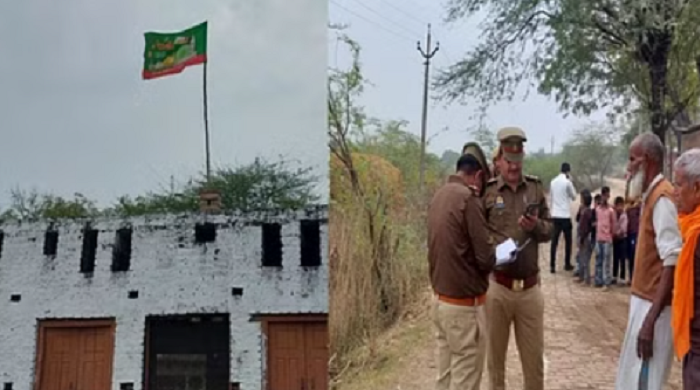
On Thursday, the Uttar Pradesh Police arrested two persons in Barabanki for hoisting an Islamic flag instead of India’s national flag in the Madarsa on the occasion of the 74th Republic Day. The men also distributed sweets after hoisting the Islamic flag at the Madarsa. The police have filed a complaint against three accused and have arrested two persons in the case.

According to reports, the incident is said to have happened in the Asharful Ulum Imadadiya Sakin Madarsa in the Rampur Majna area of Husainabad village in Barabanki. The accused men held a Republic Day function at the Madarsa and invited students to the event. They hoisted the Islamic flag during the parade instead of India’s national flag and also distributed sweets after the function. The men also failed to sing the national anthem at the event.

The residents of the Husainabad village happened to oppose the men for hoisting the Islamic flag on the occasion of the 74th Republic Day. In response, the accused said that the tricolour is not allowed and cannot be hoisted as per their religion. The video of the incident was shot and the police were informed.

The Police arrived at the spot this morning and ordered to take down the Islamic flag hoisted in the Madarsa. Also, the revenue administrator Shahi Kumar Tripathi reached the spot and demanded action against the accused. Accordingly, two individuals named Hafiz Mohammad Sohraab and Mohammad Tafsil Tabrez Mijammudin Rizwan were arrested by the Police.

However, the men said that the flag was hoisted by a person named Aasif who is absconding at present. According to the reports, the video of the incident was shot and was made viral over the internet. Several netizens happened to criticize the incident and asked CM Yogi Adityanath to take appropriate action.

During the investigations, accused Hafiz’s son Sahibaan said that the Madarsa was in operation from last 15 years and reiterated that tricolor is not hoisted in Islam. “Hoisting tricolor is not allowed in our religion. Also, celebration of national festivals is not allowed in Islam,” he said.

Additional Superintendent of Police Akhilesh Narayan Singh confirmed the series of incidents and stated that the Islamic men had deliberately hoisted the Islamic flag at the Madarsa. “Two people in the case have been arrested and the police are searching for one who is absconding at present. Further investigations in the case are underway,” he said.

Assam: Mofidul Islam buys 120 tickets to watch SRK’s ‘Pathaan’, detained for making derogatory comments

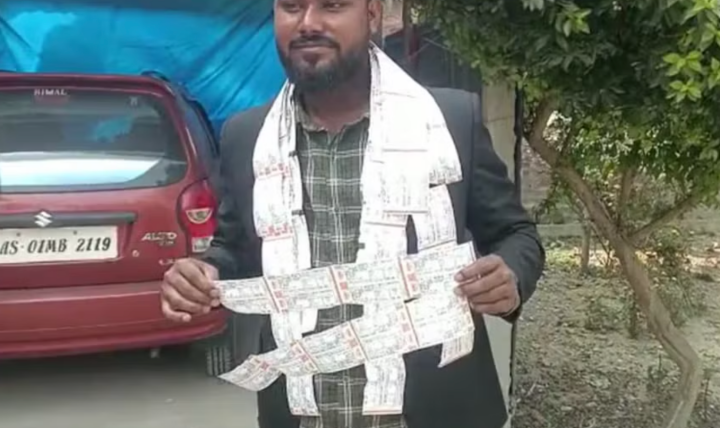
On Wednesday, January 25, a man in the Darang district of Assam bought 120 tickets for Bollywood actor Shah Rukh Khan’s latest film Pathaan. The man identified as Mofidul Islam was, however, detained for allegedly giving provocative statements about the film. The police detained Islam in order to maintain law and order. 

A resident of the Dhula area in Darang, Mofidul Islam is a North-East Minorities Students’ Union (NEMSU) leader. Police informed that Mofidul Islam had challenged Bajrang Dal and other Hindu rights organizations that had opposed the release of the Pathaan film.

Prasanta Saikia, Superintendent of Police in Darang District, told IANS, “Islam purchased around 120 ‘Pathaan’ movie tickets. After that, he started saying offensive comments and challenging people, which could disturb communal harmony in the area, after this we detained him.”

SP Saikia added that a case has been registered against the NEMSU leader under section 107 of the Indian Penal Code. “Islam was later allowed to go as there were no serious charges against him, however, we are closely watching him,” SP Saikia said.

Islam was seen wearing the tickets like a garland around his neck. He was allowed to go by the police after a brief detention.

Another incident involved a youth who allegedly purchased 192 tickets for Khan’s movie “Pathaan.” The man has been identified as Farooq Khan, a local of Rangia’s Kendukona area.

Ahead of the film’s release actor Shah Rukh Khan had recently called Assam CM Himanta Biswa Sarma and expressed concern over the protests, to which, Sarma assured law and order as the head of the state.

Backlash against Pathaan

Shah Rukh Khan and Deepika Padukone starrer spy-action film by Yash Raj Films, Pathaan, released on January 25. The movie has already made headlines multiple times for several wrong reasons. First, the song Besharam Rang allegedly hurt religious sentiments as Deepika was seen wearing a saffron bikini while romanticising with SRK in the song. Later, the second song, ‘Jhoome Jo Pathaan’, stirred controversy as the song was reused version of music director Vishal-Shekhar’s old song. Furthermore, netizens have alleged that many scenes of the film were copied or inspired by Hollywood films.

Internet explodes with memes as Tara Singh of Gadar returns after over 2 decades

0

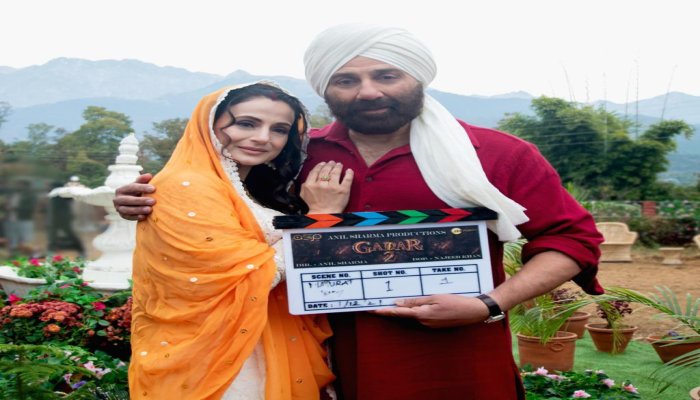
Gadar 2 marks the reunion of Sunny Deol and Ameesha Patel as the blockbuster film gets set to release its sequel, 21 years after the original film’s release. The movie’s creators and cast unveiled Gadar 2’s look, its poster, and its release date on the occasion of Republic Day. The release of Gadar 2 is scheduled for August 11, 2023. Anil Sharma, who directed the first movie, Gadar: Ek Prem Katha (2001), will also helm the sequel.

Sunny Deol also took to Twitter to inform everyone about this much-awaited film. His lead character Tara Singh, a cult hero among Indian film fans, is set to return this Independence Day.

Following the news, social media erupted with excitement, and the internet exploded with jokes and memes about the eagerly anticipated film.

A Twitter user Rahul Yadav posted a video of the iconic hand-pump scene from the original movie, Gadar: Ek Prem Katha, to welcome the news of the sequel.

Another Twitter user named Mudreeekk shared a famous dialogue from Sunny Deol’s superhit movie, Damini, to share his excitement about the upcoming film.

Another Twitter user, Utkarsh Sharma, posted a clip from the first Gadar film and said, “Tara Singh is getting ready to unveil the first look of Gadar 2 on January 26.”

In a witty show of humour, a Twitter user posted a Batman gif with lines from Sunny Deol’s popular song from the first Gadar movie, “Main nikla gaddi leke.”

Gadar 2 is produced by Zee Studios which is known for taking up path-breaking endeavors like The Kashmir Files. Sunny Deol, Ameesha Patel, and Utkasrh Sharma will all reprise their respective roles as Tara Singh, Sakeena, and Jeete in the sequel. Luv Sinha, Simrat Kaur, Manish Wadhwa, and Gaurav Chopra also play significant parts in the sequel.

Goddess Benzaiten: For ages, the Japanese have worshipped this Buddhist manifestation of the Hindu deity Maa Saraswati

Saraswati Puja or Basant Panchami is celebrated on the first day of spring. Goddess Saraswati is worshipped on this day and the day also marks the start of the spring season. People across India worship the Hindu deity, who is the goddess of knowledge, language, music, and all other art forms.

On this day, people also begin preparing for Holi, which falls forty days after Basant Panchami. This day is also considered very auspicious for a variety of other endeavours, including marriage, engagements, mundans, and more.

Yellow colour is associated with Saraswati because it represents knowledge and also denotes mustard fields, which are associated with the advent of the spring season. Moreover, Saraswati, the consort of Brahma, is said to have been born on Basant Panchami – the fifth day of the lunar month of Magh (which falls in January-February) and that is why yellow is the colour of the day since it represents the season Vasant or spring, thus, yellow flowers and sweets are offered to the goddess as part of the puja rituals, while devotees adorn themselves in shades of the same colour.

Goddess Saraswati’s pictures show her wearing a white sari and sitting on a white Nelumbo nucifera lotus. Saraswati is mostly associated with the colour white which signifies the purity of knowledge. Her white sari symbolizes that she is the embodiment of pure knowledge. Because the lotus is a symbol of Supreme Reality in Hinduism, the white lotus represents Supreme Reality.

Saraswati usually uses a swan as her vehicle. The swan is believed to have a sensitive beak that allows it to distinguish milk from a mixture of milk and water. As a result, the swan signifies the ability to distinguish between good and evil. A swan’s ability to stay and swim in water without being influenced by waves is another distinguishing attribute. The use of a swan as her transport demonstrates Maa Saraswati’s firm judgement, without becoming attracted to or influenced by the waves of the world or illusions (Maya) on the path to Divine Spirit.

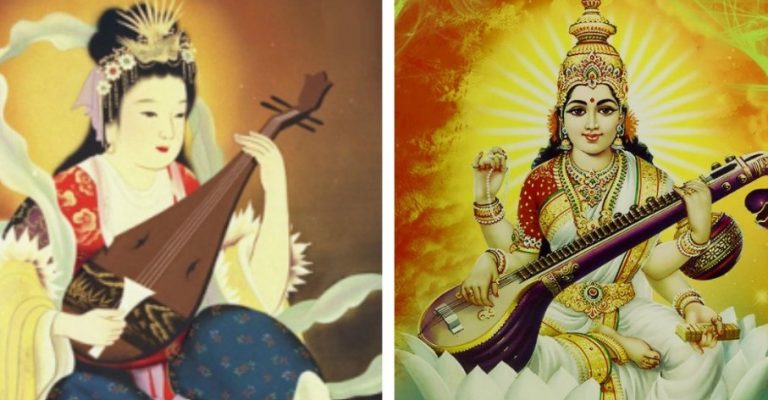
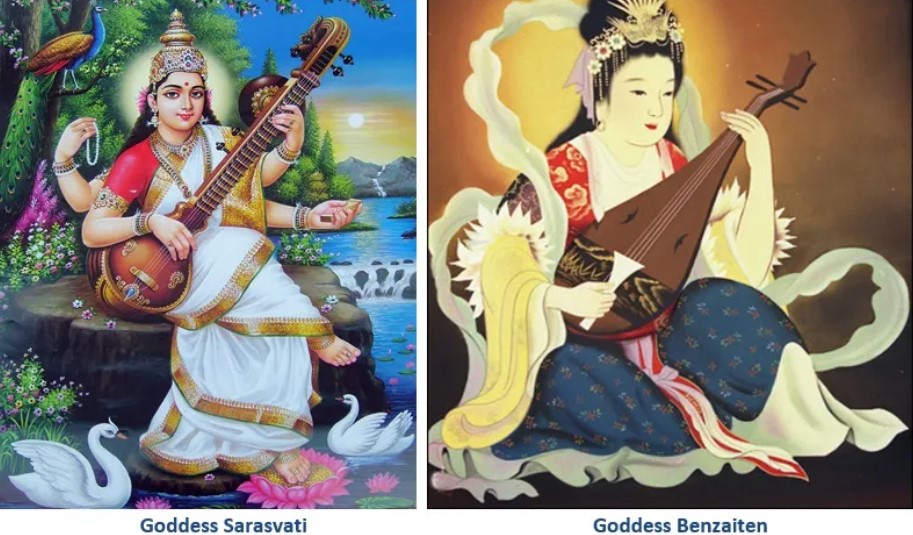
While these are some fascinating insights about the Hindu festival and Goddess Saraswati, another noteworthy fact is that Goddess Saraswati is revered not only in India but also in Japan. In fact, the Japanese Buddhist goddess Benzaiten, the goddess of everything that flows: water, time, knowledge, and music, has origins in the Hindu goddess Saraswati and shares a lot of the same characteristics.

Over time she evolved into a Buddhist goddess and is now included as the only female amongst the Seven Gods of Fortune also known as Shichi Fukujin. Both Benzaiten and Saraswati of Japanese and Indian mythology respectively are regarded as the goddess of eloquence, intellect, speech, knowledge, and music.

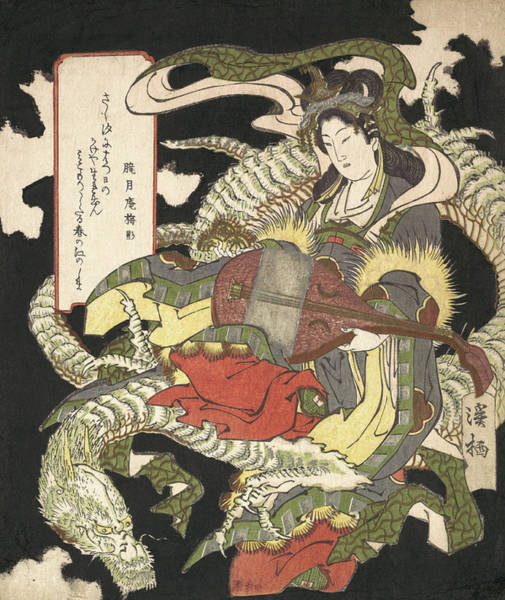
Worship of Benzaiten arrived in Japan during the 6th through 8th centuries, mainly via the Chinese translations of the ‘Suvarnaprabhasa Sutra’ or the Sutra of Golden Light, which has a section devoted to her. She is also mentioned in the Lotus Sutra and often depicted holding a biwa, a traditional Japanese lute, just as Saraswati holds a veena.

Like Goddess Saraswati is seen seated on a white Swan, Japan Benzaiten is seen seated on a white Dragon. The Japanese goddess is said to be closely associated with dragons and snakes. Her connection to snakes is possibly derived from Saraswati who is said to have killed a dreaded demon named Vritra. In the ancient Rigveda, Vritra was depicted as a serpent or dragon.

In Japanese Folklore too there are a series of tales known as the Enoshima Engi that tell of a horrifying five-headed dragon called Gozuru and how it terrorized the village of Koshigoe (near present-day Enoshima) until Benzaiten intervened to put an end to Gozuryu’s evildoings.

Japanese deity Benzaiten seated on a white dragon (source: Pixels)

Apart from this, she is also depicted with eight arms as the slayer of demons. She holds objects such as a bow, arrow, trident, wheel, sword, key, and sacred jewels in her eight arms. It is said that Japanese Generals used to offer prayer to Goddess Saraswati before embarking on war.

Furthermore, just as the goddess Saraswati is shown wearing white clothes, the majority of Benzaiten idols in Japan are also totally white.

Benzaiten or Benten is one of numerous Vedic gods and goddesses who made their way to Japan via ancient and mediaeval Buddhist books and teachings, adopting local forms. These are a blend of Hinduism, Buddhism, and Shintoism.

Just as Saraswati became Benten, Goddess Lakshmi became Kichijoten or Kisshoten in Japan. Similarly, the god of wealth- Kubera- became Bishamon and Shiva’s Buddhist form Mahakala- became Daikokuten.

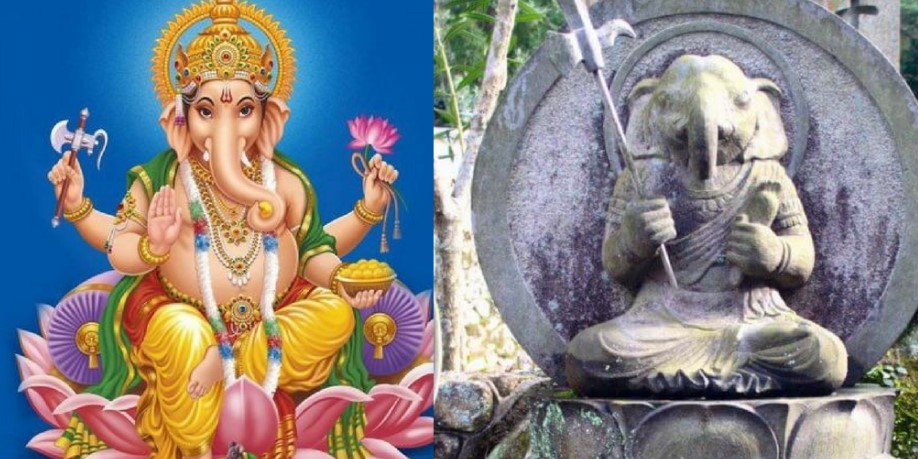
Hindu god Ganesha is also an inspiration for the Japanese god Kangi-ten, of the Shingon and Tendai schools of Japanese Buddhism. He is also known as Binayaka-ten, derived from Vinayaka, Ganabachi (Ganapati) and Ganwha (Ganesha). He, like Ganesha, is the remover of obstacles and also bestows material fortunes, prosperity, success and health. Kangi-ten, like Ganesha, is also depicted as elephant-headed, but as a male and female pair.

Left: Ganesha. Right: Japanese god

These deities are widely worshipped in Japan with multiple shrines devoted to them. Moreover, many books are written on the worship of Hindu gods in Japan and even today, it is claimed that Japan encourages a deeper study of Hindu gods.

‘Gareebi mein aata geela’ situation for Pakistan: With the country struggling to feed its people amid flour shortage, it now stares at loan default

Pakistan’s economy continues to struggle as it continues to borrow money to pay off the debts it had taken earlier. Due to this vicious cycle of debt and partial payments, the economy has been spiralling out of control, and a financial catastrophe has been brewing for some time.

According to a story in The Express Tribune, if Islamabad fails to deliver its $500 million debt payment, most of which is payable to a commercial bank in China, the nation could plunge into an economic abyss within the next 48 hours. By the end of 2021, Pakistan’s external debt had risen to $126 billion. For the $1.512 trillion Pakistani economy, failure to service $500 million of this amount to China within the next 48 hours risks initiating a calamitous chain of events. Apart from this, another loan of $300 million will have to be repaid by Pakistan to the same Chinese bank by the last week of February.

Pakistan only has around $4.1 billion in foreign exchange after it repaid $328 million guaranteed debt to China which the country had taken to set up power plants. After the current due is paid, the foreign exchange reserve will drop to just $3.5 billion.

The easing of Pakistan’s crippling debt is Islamabad’s top priority, given the plight of the economy there and the political unrest in the highly radicalised Islamic Republic. Islamabad has now contacted Washington to persuade the Bretton Woods organisation to be lenient on the Islamic Republic as it requires PM Sharif to increase energy bills and impose more taxes to raise money. This is because Islamabad has to accept very strict IMF conditions for further loans to Pakistan. Such drastic measures would be politically damaging for the current Pakistani leadership and give Imran Khan a chance to return during the next election.

While Pakistan has requested a bailout package from the IMF, the IMF has not taken a decision on the matter yet. It is being said that if the country fails to secure assistance from IMF, it will default on loan payments.

Owning to the precarious economic situation in Pakistan, the country is already experiencing its worst-ever flour crisis. People swarm around cars, pushing each other, as chaos frequently erupts around mini-trucks and vans distributing flour. Numerous altercations at flour vendors and tandoors have also been reported.

Pakistan has truly manifested the famous Hindi idiom ‘gareebi mein aata geela’ which means, misfortune seldom comes alone. In addition to running out of money, Pakistan has also run out of flour to feed its population, and the country is facing massive power cuts as well.

Things wouldn’t be as horrible if the economic front was the only one where Pakistan was struggling. Along with the economy’s collapse, the country is also struggling with terrorism as Tehreek-e-Taliban Pakistan continues to flourish. TTP had even declared a parallel government in the country earlier this month.

With no solution in sight, Pakistan’s crisis is getting worse by the day as one problem feeds into the others. Put bluntly, Pakistan is sinking, but the people of Pakistan appear to believe they will survive these trying times because the rest of the world cannot afford to let them perish. However, until and unless Pakistan is prepared to help itself, the world doesn’t seem willing to step in and save the day. However, Pakistanis are more focused on the political circus than the comprehensive economic reforms that could help them escape the quagmire they find themselves in.

The economy has reached its lowest point as a result of the excesses of Pakistan’s elite lawmakers, military personnel, civil servants, landed aristocracy, and business and trade organizations, who seized control of the state and its resources. At this moment, the emphasis is on preventing default, which would cause the economy to implode and unleash an unmanageable social and political conflagration in its wake. Although default will undoubtedly bring excruciating anguish, the unrepentant Pakistani elite is attempting to fear the rest of the world in order to keep Pakistan’s economy viable. The impending economic collapse is being used as a bargaining weapon, just as they attempted to exploit the floods to persuade the financiers to give them some leeway.

Essentially, Pakistan is terrorizing the globe by raising the spectre of nuclear weapons going awry and radical Islamists rampaging through the country and seizing power in a revolution. Despite how frightening they are, Pakistan is once again exaggerating these worries. Although Pakistanis may romanticize revolution, they lack the stomach for it, especially an Islamic Revolution that would most severely affect elite privilege.

The economy has reached a standstill, despite this. The collapse will likely be delayed until June 2023 if the IMF programme comes back on track by a few months, most likely by the end of the current fiscal year. Over the next six or so months, Pakistan will need about $10 billion. With the help of the IMF programme and contributions from the Chinese, the UAE, and Saudi Arabia in addition to Qatar’s $2 billion purchase of some assets, they will just about be able to raise this sum. This will however only last through June.

Pakistan will require an additional $30 billion or more in the upcoming fiscal year. Already, the IMF is placing extremely strict requirements on the reinstatement of the extended finance facility programme. These circumstances will not only be financially disastrous for the populace but also politically disastrous.

Because fuel prices will soar, power rates will increase, and gas prices will soar, inflation is predicted to increase by anywhere between 40 and 50%. The Pakistani Rupee will also lose value. Currency traders predict that the rupee will fall from its fictitious level of 230 to between 260 and 270 once it is allowed to float. Some economists worry that in a few months, the rupee may surpass the 300 level against the US Dollar. Massive inflation, which already hurts, will ensue from this.

Pakistan will need to increase interest rates to rein in inflation. The cost of conducting business will rise to unaffordable and unviable levels as a result. Even worse, any remaining strength in the government’s fiscal position will be destroyed by interest rate increases. Even at the present interest rate of 17%, there is a genuine risk that the cost of servicing the debt will exceed all federal receipts.

Pakistan must accept the harsh reality that default is unavoidable. The question is not if it will happen, but rather when. The only practical choice is to apply for a debt restructuring. However, the fact that it has such strict criteria will make the current IMF conditions appear light, making it almost as catastrophic as a default. However, the political and military establishments in Pakistan have been praying that the storm will miss them.

It is obvious that the generals and Pakistan’s elite do not want to reduce their privileges or spending, but they do want the rest of the nation to be willing to make sacrifices. They demand their royal customs, golf courses, and Dubai vacations; they send their children to Western institutions; they demand outrageous subsidies from the state’s empty coffers; but they deny the common people of Pakistan even the most fundamental right to life.

The Pakistani Army is similarly hesitant to reduce expenses. Pakistan can no longer afford the pricey weapon systems it keeps purchasing. And to make matters worse, it continues its expensive strategic escapades on both sides of the border. Only if the strategic environment improves, relations with India and Afghanistan are normalized without any legacy restrictions, and action is taken against terror organizations based in Pakistan can military budgets be reduced.

However, according to the Rawalpindi General Headquarters (GHQ), the current economic mess isn’t transpiring because the military has no intention to change the way it thinks about its strategy for dealing with India and Afghanistan. The tactical modifications did open up room in the past, not anymore. As a result of becoming aware of Pakistan’s cunning, New Delhi no longer feels the need to retaliate in kind for Pakistan-only tactical decisions. In any event, the Taliban are now displaying their true colours, and it appears that the western borderlands of Pakistan will continue to be unrest-ridden, unstable, and radicalized as a whole.

The political elite, much like military, is more concerned with protecting its political capital and safeguarding its political future than it is with saving the nation or its future. The political squabbling at a time when the nation is on the point of disintegrating is strange. Imran Khan wants elections held right away, believing he will win. The ruling coalition has nothing with which it can enter the hustings, therefore it wants to put off elections as long as it can. The Army seeks to maintain its position of power despite not wanting to harm democracy. It also opposes Imran Khan regaining power, at least not right now, and is prepared to use whatever means necessary to do so.

For the time being, it appears that the government will sign the agreement and rejoin the IMF programme. However, it will begin spending money in a month or two to regain its political backing. This means that Pakistan will be experiencing a crisis that is even worse than the one it is currently experiencing by the time elections are held and a new administration is in place. In other words, anyway you slice it, Pakistan’s economy, along with the country’s current state and political system, are doomed to failure.

The best tableau in the Republic Day parade will be awarded, here is how you can vote and help your favourite state/ministry win

On January 26, 2023, India witnessed the 74th Republic Day Parade showcasing the country’s culture, diversity and strength. Apart from marches by defence forces and displays of the country’s military capabilities, the parade also included tableaus by several states and several central ministries. Every year, the government selects one Tableau and one marching contingent as the best ones, selected by an Expert Committee of the Ministry of Defence. In addition to the committee’s selection, a popular choice award is also given to Tableaux and the Marching Contingents based on public votes.

Accordingly, the Government of India has invited everyone to vote for their favourite Tableau from Central Government Ministries, States and Marching contingents on the mygov portal. Based on the votes, the best among them will be selected for the popular choice category.

Last year, UP Tableau featuring Bhagwan Ram was selected by the committee for the first prize, while Maharashtra was voted as the best Tableau among the States/UTs in the popular choice category as the state got higher 23% votes. UP was second in the popular vote with 22% votes.

There are four categories where people can vote. The four categories are, tableaux of central govt ministries, tableaux of states and UTs, Marching Contingents, and best display among displays, contingents, cultural performances and flypast etc.

Here is how one can vote for their favourite Tableau and Marching Contingent.

  • First, go to this link on mygov portal.
  • You have to log in to participate in the voting process. Click on “Login to Participate”.
  • There are several options to choose from. We logged in using a Google account.
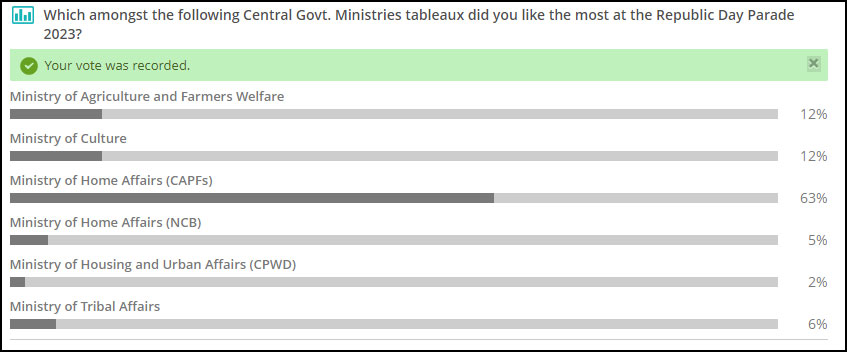
  • Once you are logged in, you can select the one you want to choose and click on “Vote”. Six ministries participated in the parade.
  • Once voting is done, you will be able to see real-time results.
Source: MyGov.in

Please note that you have to do it for every category.

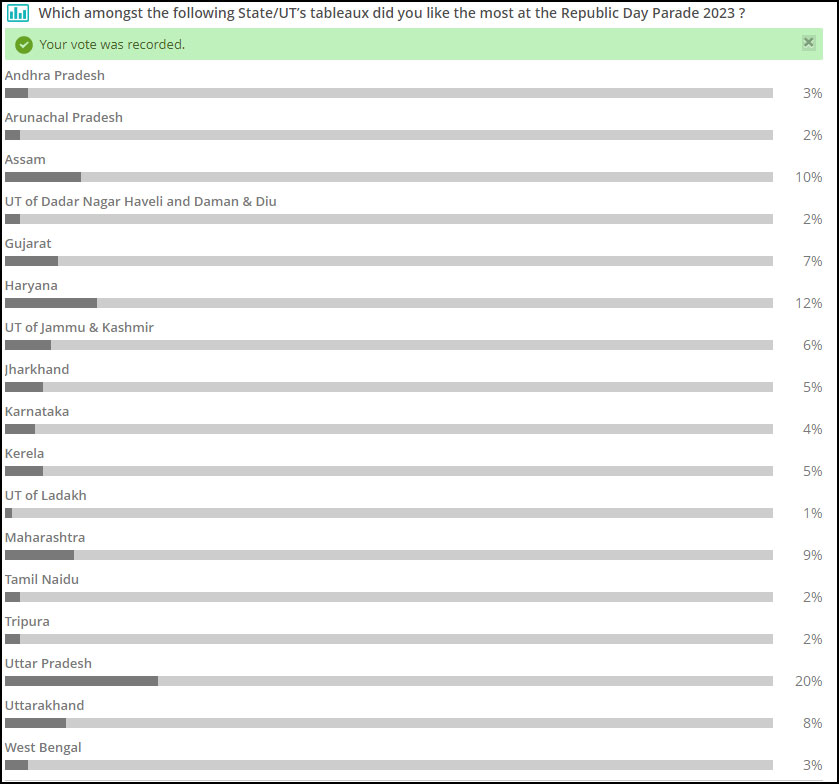
This is a current voting trend for the tableaux of states. 17 states and UTs participated in the parade this year.

Source: MyGov.in

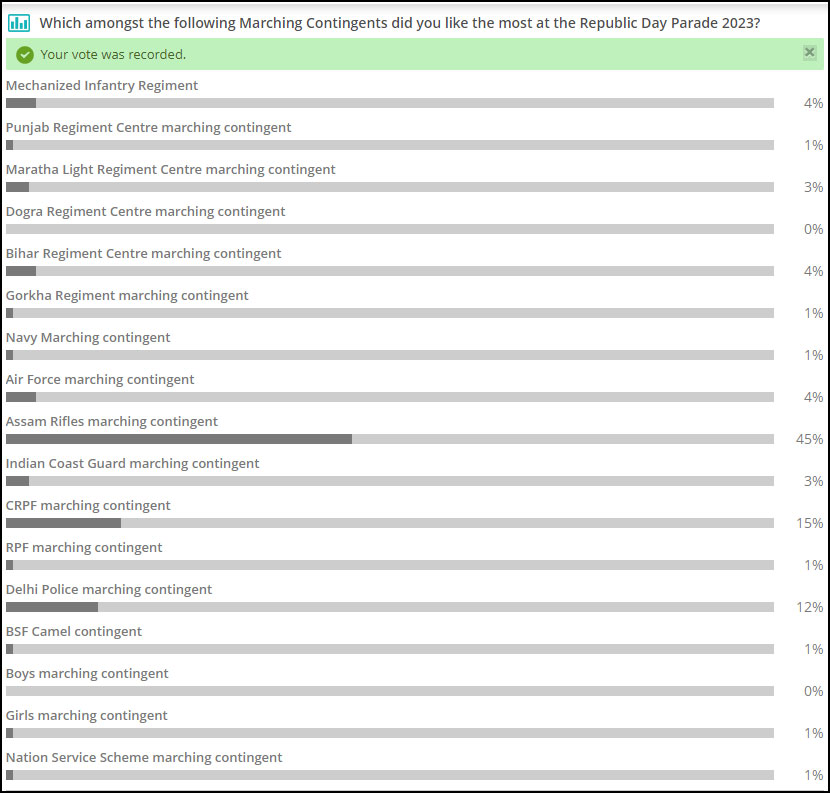
This is the current voting trend for the Marching Contingents. There were 17 Marching Contingents that displayed their skills at the parade.

Source: MyGov.in

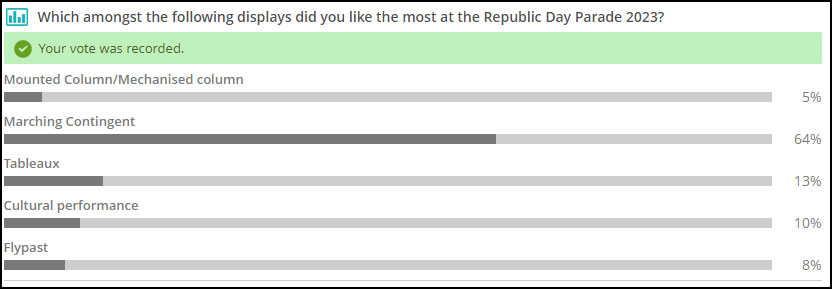
This is the current voting trend for the displays.

Source: MyGov.in

Alternatively, you can also scan QR codes or vote by SMS.

List of Ministries

  1. Ministry of Agriculture and Farmers Welfare
  2. Ministry of Culture
  3. Ministry of Home Affairs (CAPFs)
  4. Ministry of Home Affairs (NCB)
  5. Ministry of Housing and Urban Affairs (CPWD)
  6. Ministry of Tribal Affairs

To vote for ministries, you can send an SMS using your registered mobile number. The syntax is “MYGOVPOLL <Space> 336981 <Comma> Choice Number” and send it to 7738299899

Eg: If you want to choose the Ministry of Home Affairs (NCB), the syntax will be MYGOVPOLL 336981, 4

List of States

  1. Andhra Pradesh
  2. Arunachal Pradesh
  3. Assam
  4. UT of Dadar Nagar Haveli and Daman & Diu
  5. Gujarat
  6. Haryana
  7. UT of Jammu & Kashmir
  8. Jharkhand
  9. Karnataka
  10. Kerela
  11. UT of Ladakh
  12. Maharashtra
  13. Tamil Naidu
  14. Tripura
  15. Uttar Pradesh
  16. Uttarakhand
  17. West Bengal

Syntax to choose state is “MYGOVPOLL <Space> 337011 <Comma> Choice Number” and send it to 7738299899

Eg: If you want to choose Uttar Pradesh, the syntax will be MYGOVPOLL 336981, 15

List of Marching Contingents

  1. Mechanized Infantry Regiment
  2. Punjab Regiment Centre marching contingent
  3. Maratha Light Regiment Centre marching contingent
  4. Dogra Regiment Centre marching contingent
  5. Bihar Regiment Centre marching contingent
  6. Gorkha Regiment marching contingent
  7. Navy Marching contingent
  8. Air Force marching contingent
  9. Assam Rifles marching contingent
  10. Indian Coast Guard marching contingent
  11. CRPF marching contingent
  12. RPF marching contingent
  13. Delhi Police marching contingent
  14. BSF Camel contingent
  15. Boys marching contingent
  16. Girls marching contingent
  17. Nation Service Scheme marching contingent

Syntax to choose Marching Contingents is “MYGOVPOLL <Space> 336991 <Comma> Choice Number” and send it to 7738299899

Eg: If you want to choose Air Force marching contingent, the syntax will be MYGOVPOLL 336981, 8

List of displays

  1. Mounted Column/Mechanised column
  2. Marching Contingent
  3. Tableaux
  4. Cultural performance
  5. Flypast

Syntax to choose displays is “MYGOVPOLL <Space> 337001 <Comma> Choice Number” and send it to 7738299899

Eg: If you want to choose Tableaux, the syntax will be MYGOVPOLL 336981,3

Tableaus that won hearts

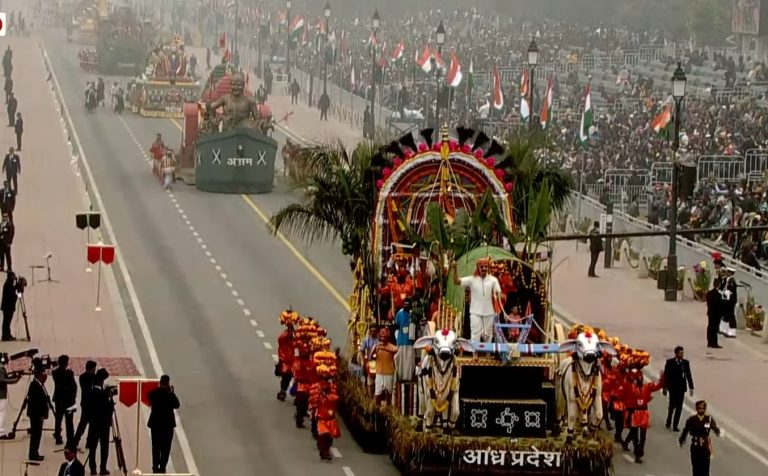
Scenes from the Sanskrit epic Ramayana and the three-day Deepotsav celebrated in Ayodhya last year were chosen as the main themes for Uttar Pradesh’s tableau, which rolled down the Kartavya Path in New Delhi during the 74th Republic Day parade today (Thursday, January 26, 2023).

Ayodhya Deepotsav 2022, celebrated on the eve of Diwali, had set a new Guinness World Record by lighting over 15 lakh earthen lamps on the banks of the Saryu River in Uttar Pradesh. The tableau also featured Lord Ram and Goddess Sita being welcomed by the people of Ayodhya on their return from 14 years of exile.

Haryana chose the Bhagavad Gita as its inspiration for this year’s Republic Day tableau with a huge model of a chariot pulled by four horses being its main attraction. The front part of the tableau depicted Lord Krishna in his ‘Virat Swaroop.’

Gujarat’s tableau showcased clean energy production along with Kutchi embroidery and traditional ‘bhungas’, with artists performing in traditional garba costumes.

Assam’s Tableau featured Ahom General Lachit Barphukan, who led the Ahom army to defeat the Mughals in the final Ahom-Mughal battle, coinciding with his 400th birth anniversary. The tableau also included the Maa Kamakhya temple, accompanied by artists performing a bihu dance.

Indian High Commission in Australia condemns repeated temple vandalisations, asks Australian government to ensure Indians’ safety

0

The Indian High Commission in Canberra on Thursday condemned the “deeply disturbing” incidents of vandalisation of three Hindu temples in Melbourne, and asked the Australian Government to ensure the safety and security of members of the Indian community and their properties in the country.

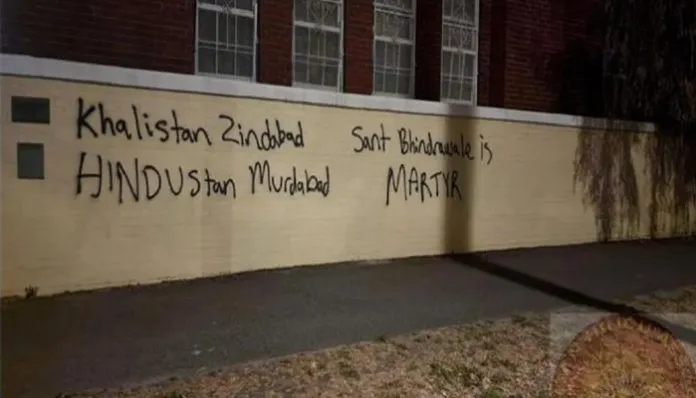
Last week, ISKCON’s Hare Krishna Temple was vandalized in Melbourne’s Albert Park area, while Shri Shiva Vishnu Temple in Carrum Downs was vandalized on January 16 and BAPS Swaminarayan Temple in the Mill Park area on January 12. 

“The High Commission of India strongly condemns the deeply disturbing incidents of vandalisation, including of three Hindu temples in Melbourne in recent weeks. The frequency and impunity with which the vandals appear to be operating are alarming, as are the graffiti which includes glorification of anti-Indian terrorists,” read a release issued by the Indian High Commission in Canberra on its official Twitter handle @HCICanberra.

The commission said that these vandalisation incidents are clear attempts to sow hatred and division among the peaceful multi-faith and multi-cultural Indian-Australian community.

“Signals that pro-Khalistan elements are stepping up their activities in Australia, actively aided and abetted by members of proscribed terrorist organisations such as the Sikhs for Justice (SFJ) and other inimical agencies from outside Australia, have been evident for some time,” the release read.

According to the Indian High Commission in Canberra, India’s concerns have been shared with the Australian Government, both by the High Commission and by India’s Consulates in Australia, and by the Indian Government with the Australian High Commission in Delhi.

“It is hoped that not only will the perpetrators be brought to justice but suitable action will also be taken to prevent further attempts,” the commission said.

“In addition, our concerns about the so-called referendum in Melbourne and Sydney, Australia, announced by the proscribed organisation, the Sikhs for Justice, have been conveyed to the Australian Government,” the release read.

Recently, Australian High Commissioner to India had also condemned the vandalisation of a Hindu temple engraved with anti-India graffiti in Melbourne’s Albert Park and said that the country won’t tolerate hate speech or violence.

“I am gravely concerned by the mindless vandalism of Hindu temples in Victoria. Australia does not tolerate hate speech or violence and Australian authorities are investigating,” Barry O’Farrell said in a statement given to media on the mail.

He recalled Australia’s Foreign Minister and said, “the Indian diaspora are valued and important contributors to our vibrant and resilient multicultural society.”

Farell said that Australia values diversity and inclusion and also respects the right of individuals to engage in peaceful protest, and supports the non-violent expression of views.

The Australian Government will continue to work closely with faith leaders to promote community harmony, he added. 

(This news report is published from a syndicated feed. Except for the headline, the content has not been written or edited by OpIndia staff)

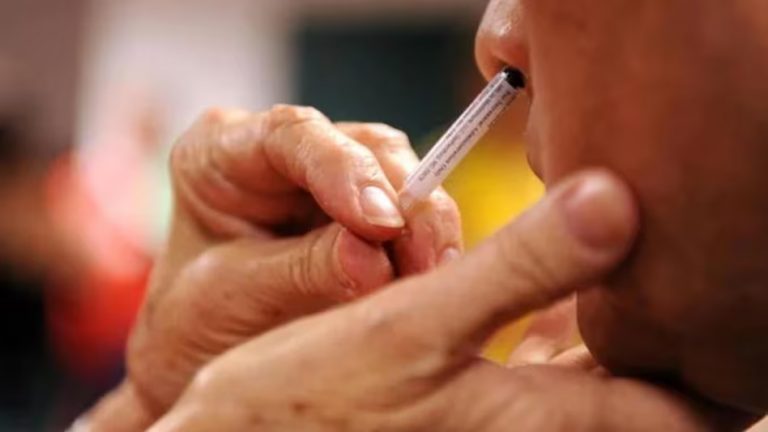
iNCOVACC can produce 3 immune responses, no other nasal vaccine in the world can produce: Bharat Biotech Chairman Dr Krishna Ella

0

Bharat Biotech’s Chairman and MD Dr Krishna Ella, on the launch of the ‘iNCOVACC’ vaccine, said that the vaccine is easy to deliver and doesn’t need any syringe or needle. As the country marked its 74th Republic Day, Union Health Minister Dr Mansukh Mandaviya and Union Science and Technology Minister Jitendra Singh launched Bharat Biotech’s first India-made nasal Covid-19 vaccine, iNCOVACC.

“It’s easy to deliver and doesn’t need any syringe or needle and most important it produces three immune responses, IgG, IgA, & T cell response. No other vaccine in the world can produce three responses compared to the injectable, which produced mostly IgG or T cells response,” said Dr Krishna Ella, Chairman & MD, Bharat Biotech while talking to ANI.

It is developed by Bharat Biotech International Limited (BBIL) in collaboration with Biotechnology Industry Research Assistance (BIRAC), a PSU under the Dept of Biotechnology, Ministry of Science and Technology.

Expressing his elation at the event, Dr Mandaviya said, “Over 65 per cent of vaccines supplied in the world are from India. Congratulating the BBIL team and the dept of Biotech for bringing about the world’s first nasal vaccine, he stated that “being the world’s first intra-nasal COVID19 vaccine, this marks a glorious tribute to the call for Atmanirbhar Bharat”.

The Union Health Minister added that India’s vaccine manufacturing and innovation capability is appreciated all over the world as it has made a mark in producing quality and affordable medicines. He also highlighted that BBIL in collaboration with ICMR introduced COVAXIN in India within a month of the launch of first COVID vaccine in the world.

Congratulating BBIL for innovating another vaccine in collaboration with BIRAC, Dr Jitendra Singh said that “India has taken a lead in developing vaccines and medicines for diseases common in the developing world”.

He credited Prime Minister Narendra Modi’s personal intervention and regular monitoring for inspiring and enabling the launching of “Mission Covid Suraksha” which has not only strengthened AatmaNirbhar Bharat but also bolstered India’s status as a worldwide vaccine development and manufacturing centre, thus showcasing the strength of India’s Science and Technology capabilities.

“Next step would be to develop vaccines for non-communicable diseases”, he added.

He also stated that ZyCoV-D, the world’s first and India’s indigenously developed DNA-based vaccine for Covid-19 to be administered in humans including children and adults 12 years and above, was also developed in partnership with the Department of Biotechnology in the Ministry of Science and Technology under ‘Mission Covid Suraksha’ through BIRAC.

iNCOVACC is a cost-effective covid vaccine which does not require syringes, needles, alcohol wipes, bandages, etc, saving costs related to procurement, distribution, storage, and biomedical waste disposal, that is routinely required for injectable vaccines. 

It utilizes a vector-based platform, which can be easily updated with emerging variants leading to large-scale production, within a few months. These rapid response timelines combined with the ability of cost-effective and easy intranasal delivery, make it an ideal vaccine to address future infectious diseases, stated an official release.

A rollout of iNCOVACC is expected to begin in private hospitals that have placed advance orders. An initial manufacturing capacity of several million doses per annum has been established, this can be scaled up to a billion doses as required. iNCOVACC is priced at INR 325/dose for large volume procurement by State Governments and Govt of India, as per an official release.

Dr Rajesh Gokhale, Secretary, Dept of Biotechnology, Shri Rajesh Kumar Pathak, Secretary, of Technology Development Board and other senior officials of the Ministry were present on occasion. Dr Krishna Ella, Co-Founder and Executive Chairman, Bharat Biotech and Smt. Suchitra Ella, Co-Founder and MD, of Bharat Biotech were also present.

(This news report is published from a syndicated feed. Except for the headline, the content has not been written or edited by OpIndia staff)