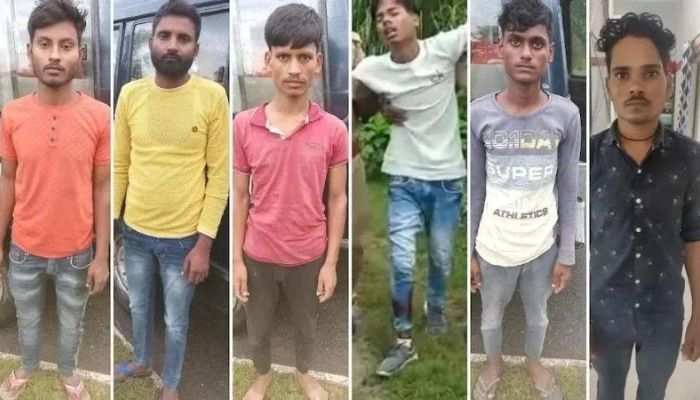
On September 14, 2022, two Dalit sisters were raped and killed in Uttar Pradesh’s Lakhimpur district. Junaid, Sohail, Arif, Hafiz, Chhote, and Karimuddin were arrested in the case. The charge sheet in the case was filed in 14 days, but now it has come to light that the victim’s family has been left to fend for themselves after that.
Sandhya Dwivedi of Dainik Bhaskar spoke to the victim’s family and reported on the matter in detail. According to the report, the cheques given by Congress leaders to this family in the name of help at that time have either bounced or been rejected due to a sign mismatch. The family also said that the help promised by the administration has also not been provided to the victim’s family.
Not only this, the family is getting tired of making the rounds of the court, having gone there 45 times in the last 2 months. Questions of the lawyers of the accused and the court proceedings have also caused mental agony to the family. According to the report, the victim’s mother was asked questions like ‘whether the girls were dressed or not?’, ‘how torn were the clothes?’, ‘where exactly were they torn from?’ etc, upsetting her.
The cheques provided by Congress bounced
The victim’s family was promised help by several politicians and organizations at the time of the incident. Cheques were given to them as financial assistance. According to the report by Dainik Bhaskar, Congress MLA Virendra Chaudhary gave a cheque of Rs 1 lakh and the UP Congress Committee gave a cheque of Rs 2 lakh. However, the cheque received from the Congress party bounced. Congress MLA’s cheque was rejected due to a sign mismatch. Similarly, a cheque of Rs 1 lakh from Uttar Pradesh Navnirman Sena president Amit Jani has also bounced.
Dainik Bhaskar’s report has quoted UP Congress leader Siddharth Trivedi as saying that this issue will be resolved as soon as possible. When OpIndia spoke to former Uttar Pradesh Congress president Ajay Singh Lallu in this regard, he denied having any information. Amit Jani told OpIndia that his cheques got wet in the rain. He said that he had later called the victim’s family and asked them to take the cash. He said he is hurt as the victim’s family took this matter to the media.
Lakhimpur administration’s promises to the family
The Lakhimpur administration had also promised financial assistance of Rs 16 lakh to the victim’s family at the time of the crime. They were also assured help in the form of a house and a job. But Dainik Bhaskar has quoted the victim’s family as saying in its report that these promises have not been fulfilled. OpIndia contacted the office of Lakhimpur Kheri’s District Magistrate IAS Mahendra Bahadur Singh in this regard. The DM’s office asked us to seek information from ADM about this case. The ADM, unaware of the information in this regard, asked us to contact him later. We will update this report as soon as we get the information from the ADM office.
Dainik Bhaskar’s report mentions that the UP government had promised to punish the culprits within a month. The charge sheet was also filed in 14 days, but the hearing in the case is still going on. Sometimes the transfer of the judge and sometimes the accused being minors has slowed down the hearing. Meanwhile, the victim’s family is tired of making the rounds of the court.
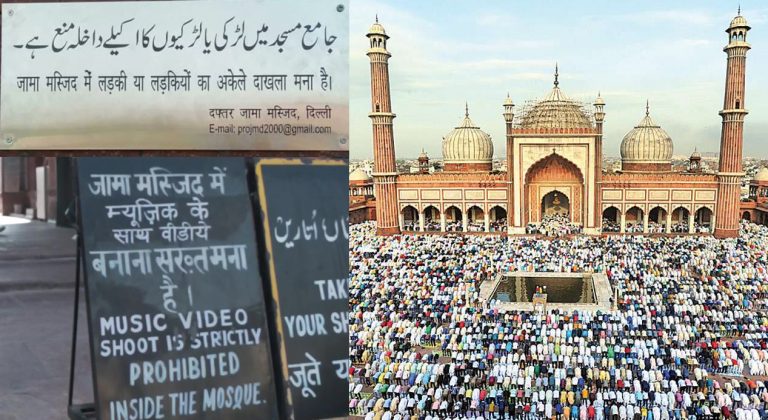
Hours after Jama Masjid in Delhi triggered a controversy by banning entry of women without male companions, the controversial order has reportedly been withdrawn. According to reports, Shahi Imam Bukhari of Jama Masjid revoked the ban imposed on girls’ entry after Delhi’s lieutenant governor of Delhi VK Saxena intervened and asked him to rescind the decision. Imam Bukhari agreed to lift the ban on women entering the premises under the condition that girls and women “respect and maintain the sanctity of Delhi Jama Masjid” premises.
In a conversation with Shahi Imam Bukhari of the Jama Masjid on Thursday, Delhi’s Lieutenant Governor VK Saxena asked him to revoke the order banning women’s access to the mosque. Imam Bukhari has reportedly consented to withdraw the order with the condition that visitors respect and preserve the sanctity of the Mosque.
The Jama Masjid management forbade the admittance of females without male companions under a regulation that was implemented earlier in the day. It is notable that the Delhi Jama Masjid received a lot of criticism after placing a notice stating that girls would not be permitted into the premises. The Delhi Commission for Women’s chairman Swati Maliwal took up the issue and emphasized that the decision made was incorrect.
She tweeted, “The decision to stop the entry of women into Jama Masjid is wrong. As much as a man has the right to worship, so also does a woman. I am issuing notice to the Imam of Jama Masjid. No one has the right to ban the entry of women like this.”
जामा मस्जिद में महिलाओं की एंट्री रोकने का फ़ैसला बिलकुल ग़लत है। जितना हक एक पुरुष को इबादत का है उतना ही एक महिला को भी। मैं जामा मस्जिद के इमाम को नोटिस जारी कर रही हूँ। इस तरह महिलाओं की एंट्री बैन करने का अधिकार किसी को नहीं है।
Syed Ahmed Bukhari claimed that the decision to ban girls was made as a result of certain “incidents” that were allegedly reported on the premises of the historic building. The Jama Masjid management had put up signs outside the mosque notifying visitors that girls are not welcome inside. The sign boards were placed outside the three entrances of the mosque. “It is forbidden for girls/women to enter Jama Masjid alone,” the signboards read.
Jama Masjid PRO Sabiullah Khan had said that entry of women coming alone was barred because, “when women come alone, they do improper acts, videos are shot, photos are clicked. An order has been issued to stop all this”. He had further added, “no restrictions on families or married couples. Making religious places a meeting point is inappropriate, be it Masjid or Mandir.”
He further added, “Women make TikTok videos. They dance in the Masjid premises. They come and meet men here and this has to stop. If women want to come here for worship they would be welcome. But they cannot see religious places like Masjids as a park. Masjid is for worship and everyone must only do that here.”
Delhi | Notice banning the entry of women coming alone or in groups to Jama Masjid, removed from Gate No. 3 of the mosque pic.twitter.com/mbwbKXkGG7
Jama Masjid management had put up signs outside the mosque saying, “It is forbidden for girls/women to enter Jama Masjid alone.” Now, these signage have been removed, as per ANI.
Mughal Emperor Shah Jahan constructed Delhi’s Jama Masjid between 1650 and 1656. The mosque includes three massive gates, four towers, and two 40-meter-high minarets made of red sandstone with white marble strips.
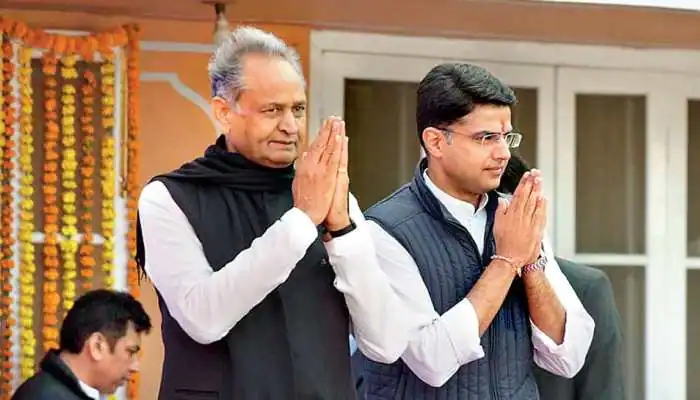
At a time when Congress leader Sachin Pilot was seen along with Rahul Gandhi in the Bharat Jodo yatra, Rajasthan Chief Minister Ashok Gehlot called him a ‘gaddar’ (traitor), and said that he will not allow Pilot to become the CM of Rajasthan. Gehlot made the comments in an interview with Sreenivasan Jain of NDTV, where he said that Sachin Pilot is a traitor who orchestrated a revolt to get the position of the chief minister.
When asked if the Congress High Command desired to make Pilot CM, Gehlot responded, “How are they going to make him? A man with less than ten MLAs. Who revolted; and was labelled a traitor. He betrayed the party and is thus a traitor. How are people supposed to accept him?”. Gehlot said, “A gaddar (traitor) cannot be Chief Minister.”
Further, as the Jain said that Sachin Pilot had said he was unhappy within the Congress, and so he revolted, Gehlot said that if he was unhappy with the Congress party, he should have gone to ‘Madam.’ “If he had gone to AICC HQ and sat there, it would have been different. For the past 50 years, protestors have gone to AICC. They have spoken to Madam. Raised their complaints,” Gehlot stated.
“The MLAs are saying that we won’t accept a ‘Gaddar‘. But you also agree with this?” Sreenivasan Jain asked, to which Ashok Gehlot responded, “I accept it, of course, why not?” Ashok Gehlot further remarked that nothing sort of a ‘rotating CM’ formula was promised in 2018 and that the best person to answer this query would be Rahul Gandhi.
“It must be a first for India that a party president tried to bring down his own government,” Gehlot said about the revolt by the Pilot camp in 2020. He also alleged that the failed revolt was engineered and funded by BJP. “Amit Shah was also involved in it, Dharmendra Pradhan was also involved in it. All had a meeting in Delhi,” he alleged.
Ashok Gehlot also alleged that the rebel Congress MLAs had met BJP leaders at that time, and that BJP had distributed ₹10 crore each to the MLAs who were staying at a Gurugram resort. He said that while he does not know which MLAs got money, he knows that some got ₹5 crore, some for ₹10 crore, and claimed that he has proof.
Sachin Pilot calls the allegations baseless
After the comments of Ashok Gehlot created a storm, Sachin Pilot responded to it by calling the allegations baseless. “Ashok Gehlot called me ‘incompetent’, ‘traitor’ and made lots of allegations. These allegations are completely unnecessary. What we need is to see how we can strengthen the Congress party. We have to see how we can make Rahul Gandhi’s Bharat Jodo Yatra a success,” Pilot said.
He also suggested that Gehlot should concentrate on the Gujarat elections, as he is the party’s in-charge there, instead of attacking him. He said, “Only Congress can challenge the BJP in the country. Elections are underway in Gujarat, where Ashok Gehlot is in-charge. We have to put up a united fight to defeat the BJP.”
He posted a photograph on Twitter where he is seen with Rahul Gandhi and Priyanka Vadra at Bharat Jodo Yatra, and wrote, “Today is a new day of Bharat Jodo Yatra but the resolve and enthusiasm to connect the country remains the same. Participated in Bharat Jodo Yatra which started today from Borgaon, Madhya Pradesh. Every step with @RahulGandhi ji and @priyankagandhi ji indicates a positive change.”
भारत जोड़ो यात्रा का आज एक नया दिन परंतु देश जोड़ने का संकल्प व जोश वही। मध्य प्रदेश के बोरगांव से आज आरंभ हुई भारत जोड़ो यात्रा में सम्मिलित हुआ। @RahulGandhi जी एवं @priyankagandhi जी के साथ उठता हर कदम एक सकारात्मक परिवर्तन की ओर इशारा करता है।#BharatJodoYatrapic.twitter.com/M0DsUJyLVl
Rajasthan minister Rajender Singh Guda, a member of the Pilot camp, said that Sachin Pilot is being surrounded like Abhimanyu. “Sachin Pilot has been surrounded like Abhimanyu. And like him, he knows how to penetrate the Chakravyuh,” the minister said.
The Congress party is facing omens of a split in the state of Rajasthan with leaders in two camps, the Pilot camp and the Gehlot camp, taking to extremes about seeing their leaders for the top job. Recently, Hemaram Choudhary, a Rajasthan government minister who is close to Pilot, stated that the party came to power due to Sachin Pilot and that given his hard work, he should be handed the responsibility.
Suchitra Arya, vice president of the State Agriculture Industry Board, also advocated for Pilot’s elevation as chief minister. She said, “If the situation doesn’t change, the party will collapse. Sachin Pilot is an important face and lakhs of people come to hear him. It’s the limit now; he should be made the chief minister.” She stated that if Sachin Pilot is made the CM, only then would Congress be able to reclaim power.
Infighting in Rajasthan Congress
The schism between the two factions within the state administration became obvious in July 2020, when rebel Congress politician Sachin Pilot was sacked as Deputy Chief Minister and State Congress Chief by the Congress party, which accused him of planning to destabilise the government with the BJP.
This was followed by a month-long enthralling drama, with Ashok Gehlot first disclosing that the two were not on talking terms for the past 1.5 years. The tussle became bitter when the Rajasthan CM lashed out at the rebel leader by calling him “Nikamma and Nakaara (useless).” The show reached its climax with ultimately Sachin Pilot returning to his home turf and conceding before Ashok Gehlot.
Soon, Rajasthan Chief Minister Ashok Gehlot informed that a 3-member committee was constituted by the Congress party to resolve grievances with Sachin Pilot. He claimed that peace and brotherhood would always remain in the grand old party. Things got sorted for a while but the differences surfaced again in September 2022.
On September 23, it was announced that Chief Minister Ashok Gehlot would run for the presidency of the Congress Party. However, he stated that he intends to stay as Rajasthan’s Chief Minister even if he is elected as the Congress Party’s Chief.
Later that day, Rahul Gandhi stated unequivocally that if a person currently holding a position in the Congress Party is chosen as its leader, that person will resign from his post. With the possibility that Gehlot would have to resign as Chief Minister, the political scene in Rajasthan got frenzied, especially with rumours that Pilot would be the next Chief Minister.
The MLAs who supported Gehlot became irritated as soon as rumours about Sachin’s name surfaced. On September 25, a Congress Legislature Party meeting was scheduled, the second in a week. However, at the last minute, around 90+ MLAs threatened the leadership with resignation if Pilot’s name was confirmed. They wanted Gehlot to remain the state’s chief minister.
After visiting Sonia Gandhi on September 29, Rajasthan Chief Minister Ashok Gehlot admitted moral responsibility for the state’s political crisis and withdrew his nomination from the Congress presidential election.
Resignation by party state in charge Ajay Maken
Recently this month Ajay Maken, the general secretary of the Congress, resigned from his position as the party’s in-charge for Rajasthan. Makhan was reportedly furious that Ashok Gehlot’s supporters, who were handed show-cause notices for holding a separate Congress Legislature Party (CLP) meeting in Jaipur on September 25, have not been punished.
The Rajasthan state assembly election is coming up in around 11 months, and the Congress is in turmoil due to the seemingly never-ending feud between its two key politicians there. Pilot supporters believe a decision will be made before Rahul Gandhi arrives in Rajasthan for the Bharat Jodo Yatra in the first week of December, but party strategists doubt this would result in substantial changes.
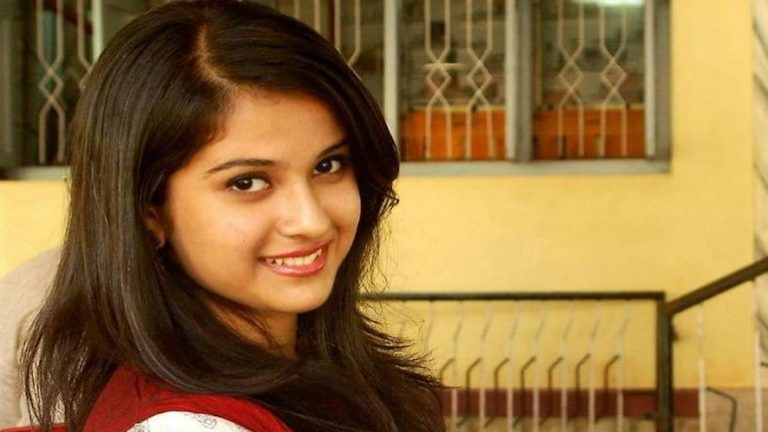
The Central Bureau of Investigation (CBI) investigating the death case of Disha Salian concluded on Wednesday, November 23, that she died by accident. Disha Salian, who had worked as Bollywood actor Sushant Singh Rajput’s manager for a brief period of time, was found dead under mysterious circumstances on 8 June 2020, six days before Sushant allegedly died of suicide.
Speaking about the case, the CBI has now said that it has been found that she had slipped from the parapet of her Mumbai flat. The agency also stated that there is no link between Sushant Singh’s death and Disha’s death.
According to the CBI, Disha was not murdered. She was in an inebriated state and had lost her balance, culminating in her death from a fall from the 14th floor of her building. There is no indication that she was murdered, it was just an accident, said CBI.
A senior officer told Economic Times, “Since serious allegations were levelled in the Salian matter and claims were made that the two deaths were linked, as Salian had briefly worked for Rajput, her death has been probed in detail.”
“The investigation has revealed that Salian had been organising get-togethers at her residence in the run-up to her birthday. The party on June 8th night was part of it. However, that night, Salian, who had consumed alcohol, lost her balance and slipped from the parapet of her flat,” the official added.
The official further stated that a full investigation was conducted, including recordings of eyewitness accounts from the party, as well as forensic reports and observations from the reconstruction exercise, which was also conducted to determine the nature of the injuries in the matter.
Media reports cited another CBI official as saying, “The probe hasn’t found any substance in the allegations levelled by Rane that Salian was assaulted and had approached Rajput for help and that there is a larger political conspiracy at play. It was necessary to probe the circumstances owing to the sensitive nature of the case and the nature of allegations.”
It may be recalled that initially, it was alleged that Disha Salian had committed suicide. However, just six days after Disha’s death i.e. on June 14, Sushant Singh Rajput also committed suicide. Following Sushant Singh’s death, allegations were made that Salian’s death could have been a murder and possibly linked to the mysterious death of actor Sushant Singh Rajput. After this, people demanded a CBI inquiry, calling the death of these two a conspiracy.
Narayan Rane alleges MVA Govt led by Uddhav Thackeray destroyed the evidence before CBI took up the inquiry
Following both the deaths, BJP leader from Maharashtra and Union minister Narayan Rane and his son Nitesh Rane alleged that the late Bollywood actor Sushant Singh Rajput’s former manager had not committed suicide but she was raped and murdered. Speaking at a press conference, Rane alleged that Disha’s autopsy report reveals she had injury marks on her private parts. He had accused Mumbai police of trying to scuttle the probe.
Rane said he had a pen drive in his possession and had prepared a transcript of an eyewitness account of Disha Salian’s alleged murder, stating that a state minister is involved in the case.
Nitesh Rane had also alleged that Sushant Singh Rajput had learned about the rape and subsequent murder of Disha Salian and decided to reveal it in front of the media, which is when even he was killed.
Now again, despite the revelation made by CBI, Narayan Rane has stood by his statement. He Tweeted on November 23, “I don’t blame the CBI for its observations in Disha Salian’s case. CBI entered only after 72 days. From 8th June the “clean up” was done so well with the help of the MVA Gov that by the time the CBI entered nothing much could be recovered. Master of all Cover ups!”
I don’t blame the CBI for its observations in Disha Salains case. CBI entered only after 72 days. From 8th June the “clean up” was done so well with the help of the MVA Gov that by the time the CBI entered nothing much could be recovered. Master of all Cover ups!
However, there is no clarity on when the CBI would submit its final findings in this matter. Let us inform you that the CBI has not opened a separate probe into Disha’s death. Its investigation was running concurrently with the one into Sushant Singh’s death. Initially, the Mumbai Police were looking into the matter.
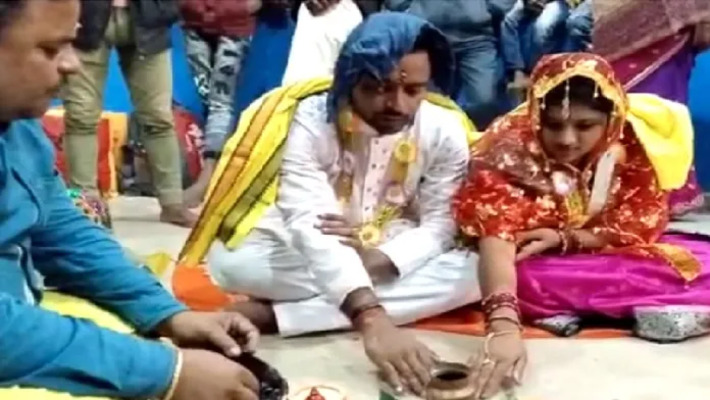
In Jharkhand’s Godda district, a Muslim girl named Muskan Khatun embraced Hinduism and got married to her Hindu partner Ram. Muskan Khatun said that she likes the Hindu Dharma and is very happy with her decision.
Both Ram and Muskan reside in Godda. Muskan is originally from Bihar’s Bhagalpur and was staying in Godda with her maternal grandmother, and pursuing her studies. Ram and Muskan met a year ago and became friends. Their friendship soon blossomed into love. However, Muskan Khatun’s family members were opposed to Muskan’s relationship with Ram.
Bihar: Muskan Khatoon returned to Sanatan Dharma and married Ram Kumar.
Now getting death threats.
The family members of the girl are threatening to kill them.
On October 17, 2022, the couple reached a local court to register their marriage, however, the family members of Muskan got to know about this and reached the court premises and assaulted her. Local police had to intervene and give security to the girl. Muskan told the court that she wants to marry Ram of her own free will and also sought police protection in the wake of a threat from her family.
Subsequently, the girl was provided with police protection. The couple then reached Meenakshi temple located at Peerpainti in Bhagalpur. Muskan converted to Hindu Dharma and amidst the chants of ‘Har Har Mahadev’, got married to Ram in a traditional Hindu wedding ceremony on November 22.
Reportedly, several Vishwa Hindu Parishad (VHP), Bajrang Dal, and RSS activists were also present during the wedding. While Muskan’s family members have threatened to kill her as she has changed her religion and married a Hindu man, Ram’s family has accepted their marriage.
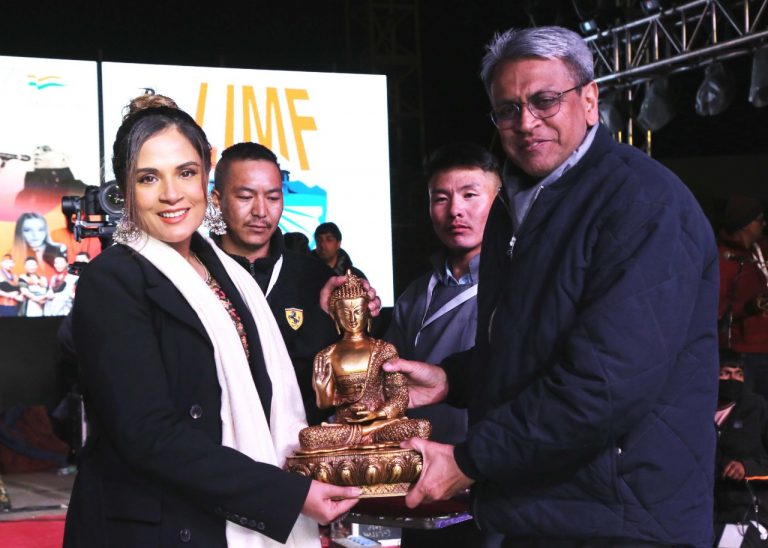
Bollywood entertainer Richa Chadha who is more in news for her controversial statements than for her movies was invited to the first-ever Ladakh International Music Festival conducted from April 30 to May 2nd this year in Leh.
The event was held at Leh’s Col Sonam Wangchuk Stadium and was organized by the Fire and Fury Corps of the Indian Army, the Ministry of Culture, and the Ladakh Tourism Department. The objective of the event was to pay tribute to the soldiers who sacrificed their lives in the service of the nation and also provide a platform to local artists to showcase their musical talent.
A number of popular bands were invited to perform at the event. The Army had released its Rezang La anthem. Actor Darshan Kumar was also invited as a special guest along with Chadha.
The first ever #Ladakh International Music Festival (#LIMF) concluded in Leh on Monday, officials said.
The army said that the event, which was conducted over three days from April 30 to May 2, saw performances by local as well as contemporary bands. pic.twitter.com/zI1v3hvqJz
Richa Chadha had back then praised the Indian Army soldiers saying that it was an experience of a lifetime. “I spent a memorable day with these young soldiers in Ladakh at 12000 feet above sea level. it was an experience of a lifetime for me. And there’s always something special about meeting army personnel. It moves you from within. These young soldiers are training hard to be at the border, guarding the nation, this fills my heart with respect. Meeting the real heroes of our country was an extremely humbling experience,” Chadha remarked at that time.
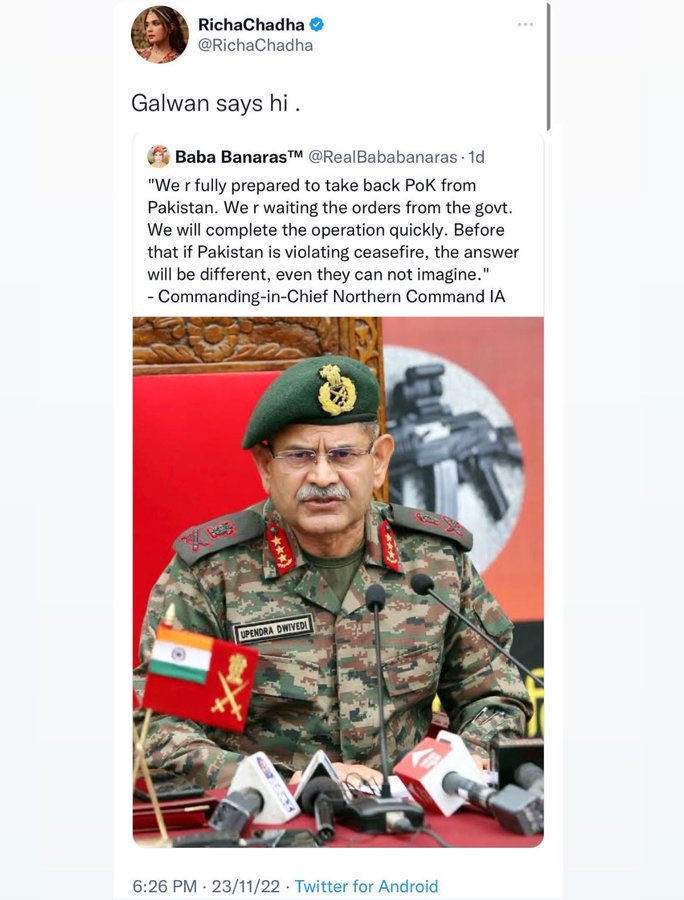
On November 23, however, Richa Chadha was seen mocked the Indian Army in a tweet in response to a statement from the Commanding-in-Chief, Northern Command of the Indian Army that they are prepared to take back Pakistan-occupied Kashmir (PoK) if the government issues such an order.
Richa Chadha taunted the Indian Army and tweeted, “Galwan says hi.”
Screenshot of now-deleted tweet by Richa Chadha
The actress, however, deleted her tweet after she was criticized by netizens for her insensitive jibe.
Chadha issued a half-hearted apology after her tweet mocking the Indian Army sparked outrage on social media and otherwise.
On Thursday, Richa Chadha took to Twitter to tender her ‘apology’, she tagged her lawyer Saveena Bedi Sachar and attached an apology message. “If the 3 words which are being dragged into controversy have offended or hurt anyone, I apologise and also say that it would sadden me if even unintentionally my words have triggered this feeling in my brothers in the Fauj of which my own Nanaji has been an illustrious part.”
Notably, filmmaker Ashoke Pandit has filed a police complaint against Richa Chadha at the Juhu police station for her outrageous Tweet mocking the Indian Army and martyrs of the Galwan clash.
Ashoke Pandit, president of the Indian Film & Television Directors’ Association, took to Twitter to share a copy of the police complaint he filed at the Juhu police station. According to the complaint, Richa Chadha has mocked and insulted our security forces, particularly those who died fighting our enemies in Galwan valley.
The Galwan clash
In June 2020, Chinese PLA troops attacked Indian soldiers of the Bihar Regiment in the freezing terrain of the Galwan valley, killing 20 Indian soldiers. Dozens of Chinese troops were killed in the hours-long clash, but China never disclosed the exact number of soldiers killed. India recognised the fallen soldiers and had given them Martyr status and gallantry awards.
Since that clash, which resulted in several casualties on both sides, there has been a tense ceasefire in the Ladakh theatre between the two Asian stalwarts, despite the fact that both countries have nearly 60,000 soldiers and advanced weapons deployed in the area.
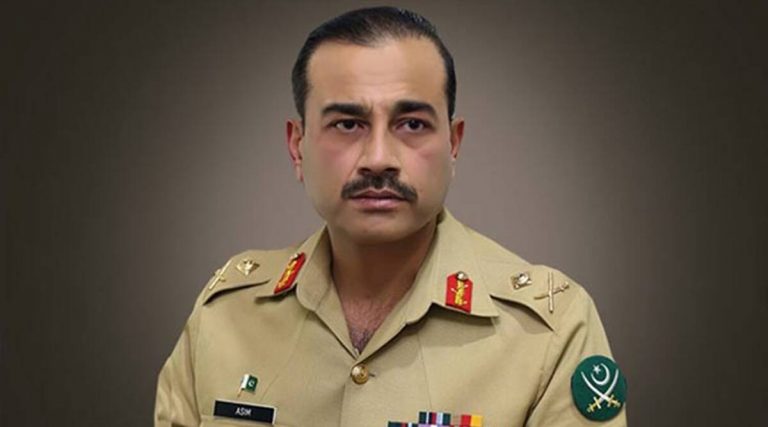
Former ISI chief Lieutenant General Asim Munir has been selected as the next chief of Pakistan’s army by PM Shahbaz Sharif. Current chief General Qamar Jawed Bajwa, 61, is scheduled to retire on November 29 after securing a three-year extension. At the same time, Lt. Gen. Sahir Shamshad Mirza has been selected as the Chairman of the Joint Chiefs of Staff Committee (CJCSC).
Marriyum Aurangzeb, Minister of Information, announced the news on Twitter. Aurangzeb took to Twitter, writing, “Using constitutional power, Pakistan’s Prime Minister, Muhammad Shehbaz Sharif, has chosen to nominate Lt. Gen. Sahir Shamshad Mirza as Chairman of the Joint Chiefs of Staff and Lt. Gen. Syed Asim Munir as Chief of the Army Staff. A summary of this has been submitted to Pakistan’s President.”
وزیراعظم پاکستان محمد شہباز شریف نے آئینی اختیار استعمال کرتے ہوئے لیفٹنٹ جنرل ساحر شمشاد مرزا کو چئیرمین جوائنٹ چیفس آف سٹاف اور لیفٹنٹ جنرل سید عاصم منیر کو چیف آف دی آرمی سٹاف مقرر کرنے کا فیصلہ کیا ہے۔ اس بابت سمری صدر پاکستان کو ارسال کر دی گئی ہے۔
Defence Minister Khawaja Asif told the media minutes after the news that the subject had been handled in accordance with the law and the Constitution. He stressed that president Arif Alvi should follow the premier’s suggestion in order to avoid a “controversy.” He expressed hope that president Arif Alvi would not make the appointments “controversial” and would endorse the advice of the government.
ایڈوائس صدر علوی کے پاس چلی گئی ھے.اب عمران خان کا امتحان ھے وہ دفاع وطن کے ادارے کو مضبوط بنانا چاہتا ھے یا متنازعہ. صدر علوی کی بھی آزمائش ھے کے وہ سیاسی ایڈوائس پہ عمل کرینگےیاآئینی وقانونی ایڈوائس پہ. بحیثیت افواج کےسپریم کمانڈرادارے کو سیاسی تنازعات سےمحفوظ رکھنا انکا فرض ھے
He posted the same views on Twitter, saying that this will be a test for President Alvi, whether he will follow political advice or constitutional and legal advice. “As the Supreme Commander of the Armed Forces, it is his duty to protect the country from political conflicts,” Khawaja Asif said referring to the president. He also said that it will be a test for former PM Imran Khan, on whether he will make the matter controversial or strengthen the institution of the army.
It is notable that president Arif Alvi is a founding member of Imran Khan’s Pakistan Tehreek-i-Insaf (PTI), and that’s why the current government is apprehensive that he may not approve the selection of the new army chief. In the meanwhile, Imran Khan has stated Alvi will discuss with him the matter after receiving the summary.
“When the summary comes, I and the president of Pakistan will act according to the Constitution and laws,” Imran Khan was quoted by the PTI on Twitter. Yesterday Imran Khan had said that the president will ‘definitely’ discuss the appointment with him. “President Dr Arif Alvi will definitely consult me on the summary for the appointment of army chief and take a decision as per the law and Constitution. I am head of the party that Dr Alvi belongs to,” the former PM said.
Who is Asim Munir?
Lt Gen Asim Munir was one of three candidates vying for the top two positions. He was the chief of the Inter-Services Intelligence (ISI) when tensions between India and Pakistan peaked in the aftermath of the Pulwama terror attack in February 2019, which claimed the life of 40 CRPF men. According to experts acquainted with the situation, Munir was among the military decision-makers engaged in determining Pakistan’s reaction and security measures at the time.
According to National Security Advisory Board (NSAB) member Tilak Devasher, Asim Munir was among those in Pakistan who supervised the Pulwama terror attack. “It was under his watch that the Pulwama attack took place and he was DG of the ISI in November and this happened in February 2019. He also served in the areas in the core that overlooks or deals with Kashmir in India. So, he is very familiar with this area,” Devasher told ANI in an interview.
As per reports, Munir’s selection as the next army leader will be a blow for former prime Minister Imran Khan since it comes at a time when the military and Khan are at odds over Khan’s earlier expulsion from office this year. Imran Khan has called for a rally in Rawalpindi on November 26, two days before General Bajwa passes the baton to the incoming Army chief.
Over the course of its 75-year history, the army of Pakistan has ruled the nation with a great deal of political sway. The nomination of Asim Munir may have an impact on Pakistan’s precarious government, its relationships with India and Afghanistan, which is now controlled by the Taliban, as well as its flex towards China or the United States.
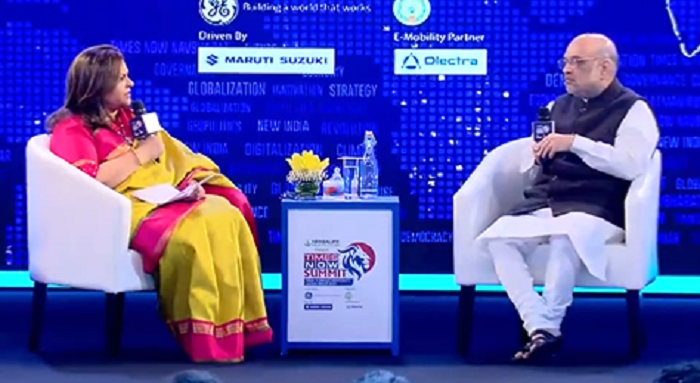
On Thursday, Union Home Minister Amit Shah stated that the CAA has already been approved by the government and that individuals should stop fantasizing about the law being repealed or not being enforced. Shah at the Times Now Summit in New Delhi reminded that the CAA, the legislation that sparked widespread demonstrations and rioting, has not been placed in a cold freezer.
When questioned about the delay in enforcement, the Union Home Minister stated that the COVID-19 pandemic-triggered lockdowns had pushed back the process of CAA rollout, but that the remaining formalities would be completed shortly. The home minister also said that NRC remains on the agenda of the government.
We need to make rules for implementation of CAA, which is pending because of Covid. Those who are dreaming that CAA won’t be implemented, are wrong. CAA is a reality and law of the land.
“CAA, NRC has not been put in the cold freezer. CAA is a law, and it cannot be changed now, we have to frame rules, these got delayed due to COVID-19 but the work will soon begin. No one should even dream that CAA will not be implemented. Those who think like that are mistaken,” Shah said.
Shah on Abrogation of Article 370
On the removal of Article 370 from Jammu and Kashmir, which has been lauded as one of the most contested acts by the Narendra Modi government, Shah said it was a collaborative victory for the NDA regime, adding that the decision has radically transformed the situation of militancy in Jammu and Kashmir.
“This is not a personal achievement. I am a member of the Cabinet, and the achievement is of the Modi Cabinet and the government. But yes, in Jammu and Kashmir, the Modi government has brought in a drastic change. It used to be said that J&K is with India due to Article 370. Now Article 370 and 35A are not there but J&K is still with India,” Shah added.
“Now Article 370 and 35A are not there but J&K is still a part of India. Around 30,000 panches and sarpanches are leading the democracy movement there, Rs 56,000 crore worth of investment has come in, 80 lakh tourists have visited the UT – the highest number since Independence. J&K is achieving new heights. Since the 1990s, terrorism has been at its lowest and no stone-pelting incidents are taking place anymore. J&K is thriving now,” he said.
On Uniform Civil Code
He meanwhile also spoke on the Uniform Civil Code issue. During a live interview with Times Now Navbharat Editor-in-Chief Navika Kumar, Amit Shah stated that if the states do not execute the UCC legislation by 2024, the Central government will take the matter into its own hands. “The Constituent Assembly has also advised the state legislatures and Parliament to implement UCC whenever the time is right. Laws should not be formulated based on religion,” Shah added.
“Except for BJP, no other party supports or speaks in favour of the UCC. The BJP, which rules in Himachal Pradesh, Uttarakhand and Gujarat, we have set up a panel and the panel is holding consultations. Our governments will work according to the recommendations received. I want to assure the audience here that the BJP is committed to implementing the Uniform Civil Code,” the minister said.
Amit Shah, a crucial player in the BJP’s continued electoral success and a man termed a “political master,” acknowledged the fundamental beliefs and values of his party. He continued saying that the BJP does not view elections as a method of gaining power but rather as a way to connect with people and understand their issues.
“We believe we will win or we will lose, we appear to be different because we believe elections are not just the means to achieve power but to reach out to all the people of the country. Every leader of the party reaches out to the electorate with our ideology and how we run our governments,” Shah said. “Our aggression is not to claim power but to connect with the people,” the minister added.
On Rahul Gandhi’s remarks about Veer Savarkar
Regarding Rahul Gandhi’s recent statements about Veer Savarkar, Shah stated that 130 crore Indians revere Veer Savarkar’s patriotism and refer to him as ‘Veer.’ Those who are criticizing him now should strive to spend even 10 days in jail before speaking about someone who has been imprisoned for more than ten years. ” No one has the right”, he argued, “to make such repulsive and despicable statements about a freedom warrior.”
The whole nation calls Savarkar a ‘Veer’. He’s not a Padma or any other award winner who has been felicitated by the govt. He has been given the title of ‘Veer’ by the 130 crore Indians: @AmitShah reflects on Rahul Gandhi’s comments about VD Savarkar. pic.twitter.com/BXT0gSGX5n
Amit Shah meanwhile also downplayed AAP’s involvement in the contest in the upcoming Gujarat Assembly Elections, stating that the major rivalry exists between Congress and the BJP. When asked about the BJP’s chances in the Gujarat elections, the Home Minister stated that current trends indicate that the party is on track to achieve a historic victory in the state.
“We will break our own records of winning the highest number of seats and vote share. Pressed further to give a number, Shah said the BJP’s past record has been 129 seats, so we will win more than that,” he was quoted.
Shah responding to AAP’s accusations over Satyendar Jain row
The Minister was also requested to respond to the AAP’s accusation that the BJP is attempting to damage Arvind Kejriwal’s party’s image because it is fearful of them ahead of the Delhi MCD elections. The AAP also blamed the BJP of deliberately producing videos of jailed AAP Minister Satyendar Jain daily.
Instead of blaming the BJP, Shah said that the AAP should respond to whether the videos of Satyendar Jain from Tihar jail are real or fabricated. “And then they become answerable on why they are not sacking their Delhi minister (Satyendar Jain) who is in jail. It is shocking that the minister has not resigned so far on moral grounds.”
The people questioning us over release of videos, have to answer if the video is correct or not. In my political career I haven’t ever seen a minister (AAP’s #SatyendarJain) operating from jail & that too without resigning: @AmitShah tells @navikakumar. pic.twitter.com/4txuEgF1nc
Regarding border security and the current standoff with China, Shah stated that there is no misunderstanding and that the disagreement has existed since the period of Congress governments established following Independence. “Who is raising the question now? Those during whose governments we lost more than one lakh acres of land. The Modi government has committed that it will not allow even one inch of land to be taken away by other countries,” Shah said.
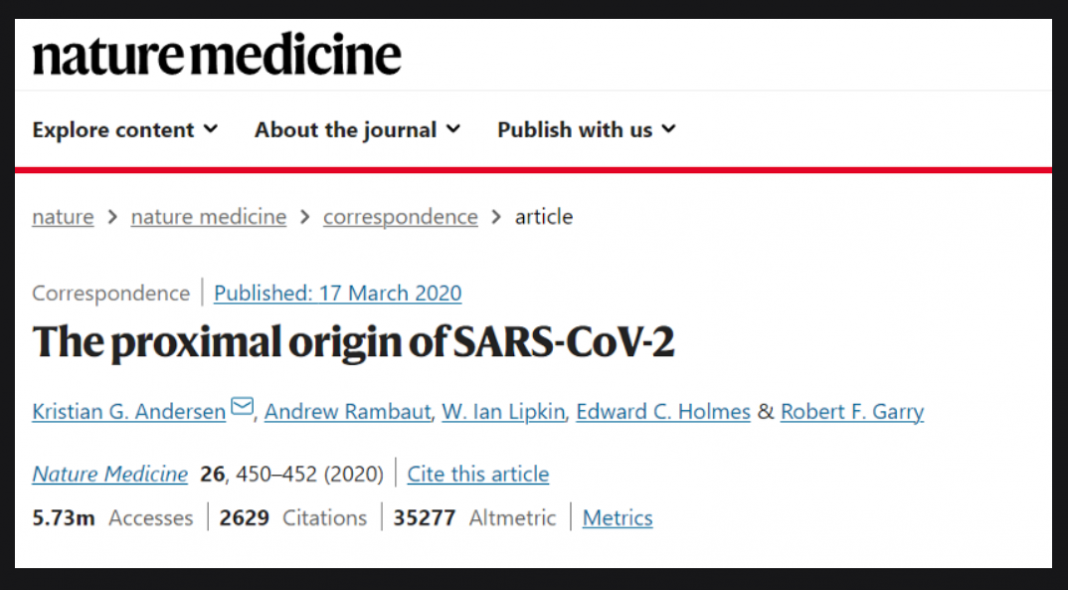
According to reports, experts in the United Kingdom aided in shutting down covid lab leak theory back in 2020. The article “The proximal origin of SARS-CoV-2,” published in Nature Medicine in March 2020, stated that the pandemic was triggered by a natural breakout event, and was crucial in dampening debate about the virus’s origins.
However, recently declassified emails from early 2020 show that the authors engaged in long talks with specialists, including Sir Patrick Vallance and Sir Jeremy Farrar, the head of the Wellcome Trust, in the weeks before publication. Experts were cautioned in those email conversations that the odd traits identified in Covid-19 may have developed in both lab or wild animals.
The proximal origin of SARS-CoV-2, Nature Medicine
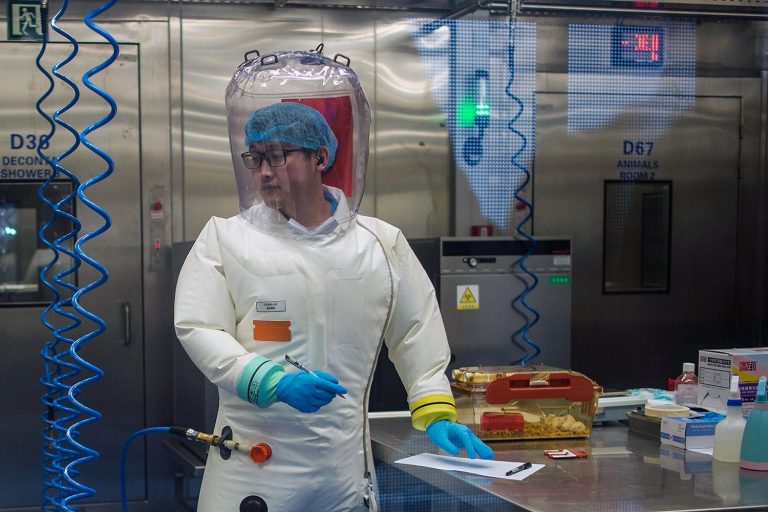
They were also cautioned that the Wuhan Institute of Virology (WIV) had been doing research on bat coronaviruses at risky biosafety levels. However, by the time the article was published, all mention of Wuhan’s biosecurity issues had been omitted, and the authors contended that lab proliferation of the virus was doubtful.
Since the article’s publication, questions have been raised about its drafting and composition. Professor Kristian Andersen of the Scripps Research Institute in La Jolla, California, the paper’s primary author, had previously warned colleagues that elements of the virus appeared to have been produced in a lab. The article, however, made no mention of this.
Latest revelations indicate that a few of the authors were concerned about a lab leak and brought up their concerns in the weeks leading up to the publication with senior scientists including Sir Patrick Vallance and Sir Jeremy. The virus would look the same whether it evolved spontaneously or in lab mice through a procedure called “serial passaging,” one of the authors even agreed in an email thread.
Sir Patrick Vallance, Chief Scientific Adviser to the Government of the United Kingdom since 2018.
Dr Robert Garry of Tulane University noted in an email on February 8, 2020, that identical effects had been discovered when avian flu was passed on to experimental chicks. However, by the time the article was published, the writers had ruled out the idea.
Many scientists now think that a lab leak is very likely, however, the majority of the supporting data was discovered by hackers and rogue scientists who were labelled conspiracy theorists for questioning the mainstream version. According to the most recent email revelations, experts who discounted a lab leak admitted amongst themselves that it was likely.
Professor Edward Holmes, one of the contributors to the Nature Medicine article from the University of Sydney, admitted in an email on February 8 that many individuals suspected the virus had slipped from the Wuhan facility. “Ever since this outbreak started there have been suggestions that the virus escaped from the Wuhan lab, if only because of the coincidence of where the outbreak occurred and the location of the lab. I do a lot of work in China and I can tell you a lot of people there believe this and believe they are being lied to,” Holmes said.
Role of US scientists
The email exchange also included Anthony Fauci, the head of the National Institute of Allergy and Infectious Diseases (NIAID), United States, which funded research at the Wuhan institute.
In 2021, OpIndia reported how several researchers, US government officials, and intelligence officials all wanted to look into the role played by the Chinese lab, but Dr Fauci and others dissuaded them because they had a significant stake in the outcome because they helped get the US government to fund the virus study at the Wuhan research facility.
Indian scientists had flagged ‘unnatural insertions’ in the COVID-19 genome
In January 2021, researchers from IIT Delhi’s Kusuma School of Biological Sciences and Delhi University’s Acharya Narendra Dev College published a research paper in which they discovered that the spike glycoprotein (S) of SARS-CoV-2 had four insertions that were not found in any other Coronavirus, and the insertions were similar to those found in HIV virus. The investigation suggested the likelihood that SARS-CoV-2 was bioengineered from existing Coronavirus and HIV viruses.
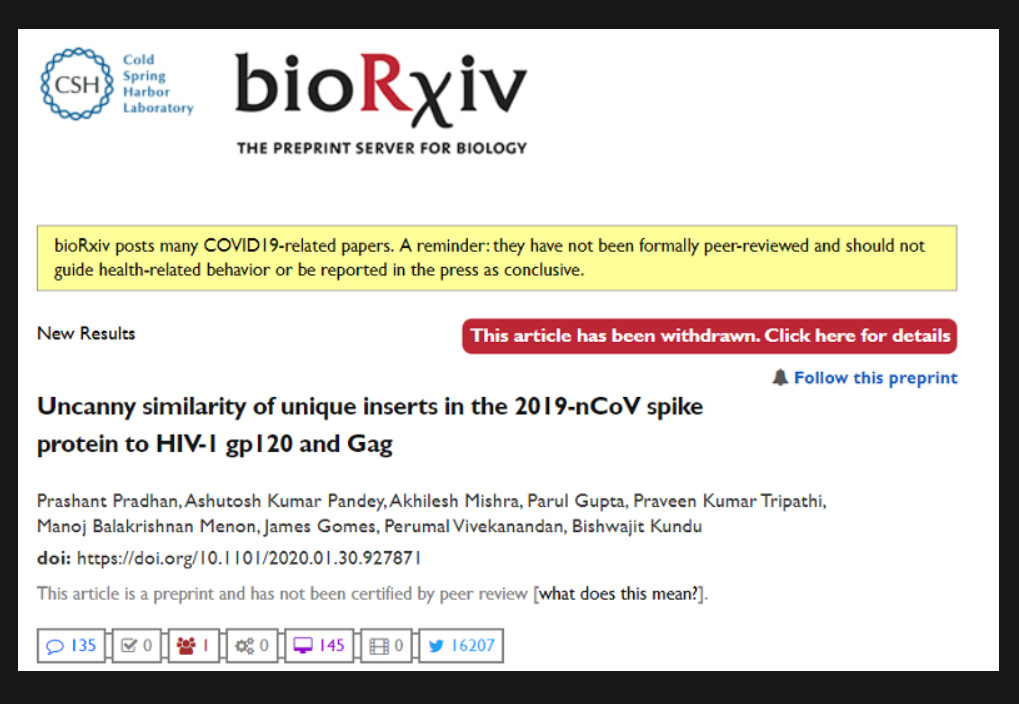
The study, titled “Uncanny similarity of unique inserts in the 2019-nCoV spike protein to HIV-1 gp120 and Gag,” evaluated all of the coronavirus sequences available in the NCBI viral genome database. The analysis by the Indian scientists established that the virus underwent “unconventional evolution,” even if it did not prove that it was created in a lab. The scientific paper thus advised more investigation into the virus’s origin.
The research paper’s preprint was published on bioRxiv on January 31, 2020, however, it was withdrawn by the authors on February 2. The notice of withdrawal said that they intended to amend it in response to suggestions made by the academic community regarding their technical approach and interpretations of the results.
The withdrawn article.
Although the theory of a lab leak was widely accepted in the early stages of the pandemic, the US government and a sizable percentage of the scientific community rejected it. Former American President Donald Trump frequently brought up the matter, but by February 19, 2020, when The Lancet published a statement completely discounting the chance that the virus had escaped from the Wuhan Institute of Virology, the idea had already been completely dismissed. Any meaningful investigation into the origin of the virus was all but eliminated by the statement signed by 27 experts and published by such a reputable medical journal since it completely shut down one aspect of the inquiry.
The Delhi High Court on Thursday, November 24, dismissed a petition filed by former Aam Aadmi Party (AAP) Councilor Tahir Hussain seeking the quashing and setting aside of charges brought against him by the trial court in connection with the North East Delhi Riots 2020 under the provisions of the Prevention of Money Laundering Act.
The order was pronounced by a single bench of Justice Anu Malhotra on Thursday after having reserved it on November 15.
On November 15, the court asked both lawyers to submit written submissions of no more than three pages in two days and reserved the order on Tahir Hussain’s plea against framing of charges against him in a money laundering case related to the northeast Delhi riots of 2020.
Court frames charges against AAP ex-counsilor in money laundering case linked to the 2020 Delhi riots
Additional Sessions Judge Amitabh Rawat filed charges against Tahir Hussain under Section 3 of the Prevention of Money Laundering Act, 2002, which is punishable under Section 4.
The court has also denied statutory bail to Hussain in the case.
Notably, the court has taken cognisance of the matter in 2020 after the Enforcement Directorate had filed a complaint against Tahir Hussain under Sections 44 and 45 of the Prevention of Money Laundering Act, 2002 for the commission of the offence of money laundering.
In August 2020, the Enforcement Directorate (ED) released a statement informing about the arrest of radical Islamist and former Aam Aadmi Party (AAP) councillor Tahir Hussain under the Prevention of Money Laundering Act, 2002 (PMLA).
The investigation is being conducted by the ED under the PMLA on the basis of First Information Reports (FIRs) that have been filed by the Delhi Police, Crime Branch, and Dayalpur Police Station that had pressed charges against Tahir Hussain under the Indian Penal Code (IPC) Sections 120B (criminal conspiracy), 302 (murder), 307 (attempt to murder), 385 (creating fear for extortion), which are cognizable offences under the Prevention of Money Laundering Act.
Tahir Hussain transferred funds from his companies to fuel riots
The ED in its statement has revealed that Tahir Hussain had transferred large sums of money to fraudulent operators via companies that are either owned or controlled by him and his relatives. The operators had then returned the funds to him in cash, which was then utilised to fuel violence during the Anti-Hindu riots of Delhi in February this year. Moreover, a probe into his companies by the ED has unearthed money laundering scams by Hussain in the past.