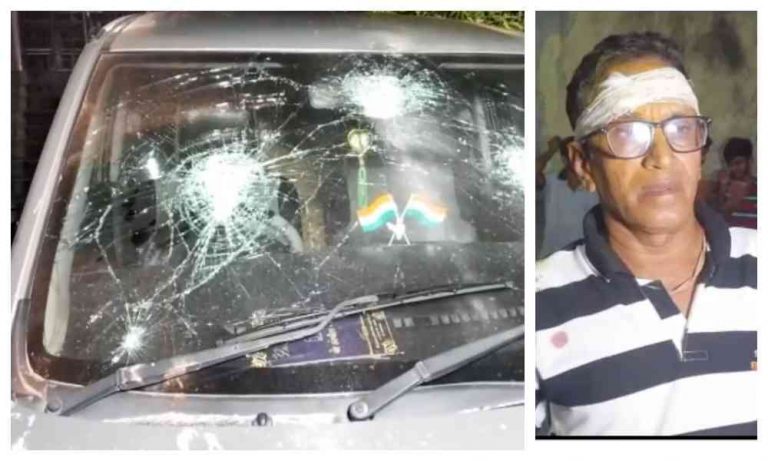
Navratri celebration in Kheda turned violent after a Muslim mob led by two youths identified as Arif and Zahir pelted stones on the Hindu devotees.
All the accused are being identified and strict action will be taken. Police deployed in the village and necessary arrangements have been made: Rajesh Gadhiya, DSP Kheda
As per local media reports, stones were pelted on those who were celebrating Navratri in Undhera village of Maatar taluka of Kheda district. About 6-7 people were injured and were taken to hospital. Two police officials were also injured in the stonepelting. Police has increased security in the village.
Report states that during Navratri celebrations, Arif and Zahir led a mob and created a ruckus during Navratri celebration. The leaders of the village tried to broker peace but the mob did not back off. They returned and started pelting stones. Local residents of the village said they asked the Navratri celebrations to be called off in the area and said that the Navratri could not be celebrated there.
Earlier last week it was reported how a Muslim teacher in Kheda had made students beat their chest and chant ‘Ya Hussein’ in Muharram style mourning instead of performing Garba during Navratri celebration. There have also been reports where Muslim men have tried to enter Navratri venue under fake names. Reports have also emerged where in some areas local Muslims have opposed celebration of Navratri.
Navratri is celebrated for nine nights where Goddess Durga is worshipped in various forms. In Gujarat, garba, i.e. dancing, is the form of worship for the goddess. Islam believes idolatry is the biggest sin and is punishable with death.
Earlier last month, when Rahul Gandhi announced that he would launch a 150-day-long march from Kanyakumari to Kashmir, dubbed ‘Bharat Jodo Yatra’, propagandists masquerading as ‘neutral journalists’ fell over themselves to hail the move as the next big thing in the Indian politics.
Of course, it was more to do with their latent desire than the actual reality, especially after eight years of the Modi government at the helm and months before the all-important 2024 Lok Sabha elections that grant the prospect of Modi rule for another five years at least. So when Rahul Gandhi and Congress announced a mass mobilisation programme they intended to launch, instead of first evaluating the goals of the yatra, propaganda pushers made a beeline to mark their deference to the Gandhi scion and his moribund party, Indian National Congress.
Despite innumerable election defeats, including some of the embarrassing debacles such as the loss at Amethi, the decades-old pocket borough of the Congress party, the liberal intelligentsia continues to labour under the delusion that Rahul Gandhi is the only potent political leader who has the capability of stopping the Modi juggernaut.
But when one harbours pathological hatred against a person just because he refuses to subscribe to their ideology and repeatedly cocks a snook at them, it is not hard to imagine why they would continue to place their bets on a leader who is, arguably, more committed to ‘Congress Mukt Bharat’ than ‘Bharat Jodo Yatra’.
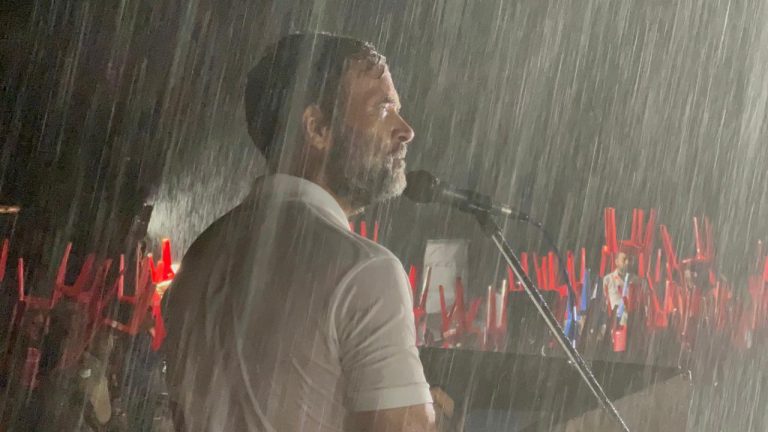
Therefore, when pictures of Rahul Gandhi addressing a public meeting in Mysuru amid rains surfaced online, desperate propagandists grasped at the straws and went into raptures about their leader, hoping that the container yatra as the ‘Bharat Jodo Yatra’ is popularly called, would usher the Congress into an era of electoral wins and arrest the party’s irreversible slide into political oblivion.
‘Neutral journalists’, ‘unbiased intellectuals’, and ‘liberals’ go gaga over Rahul Gandhi addressing a rally amid rains
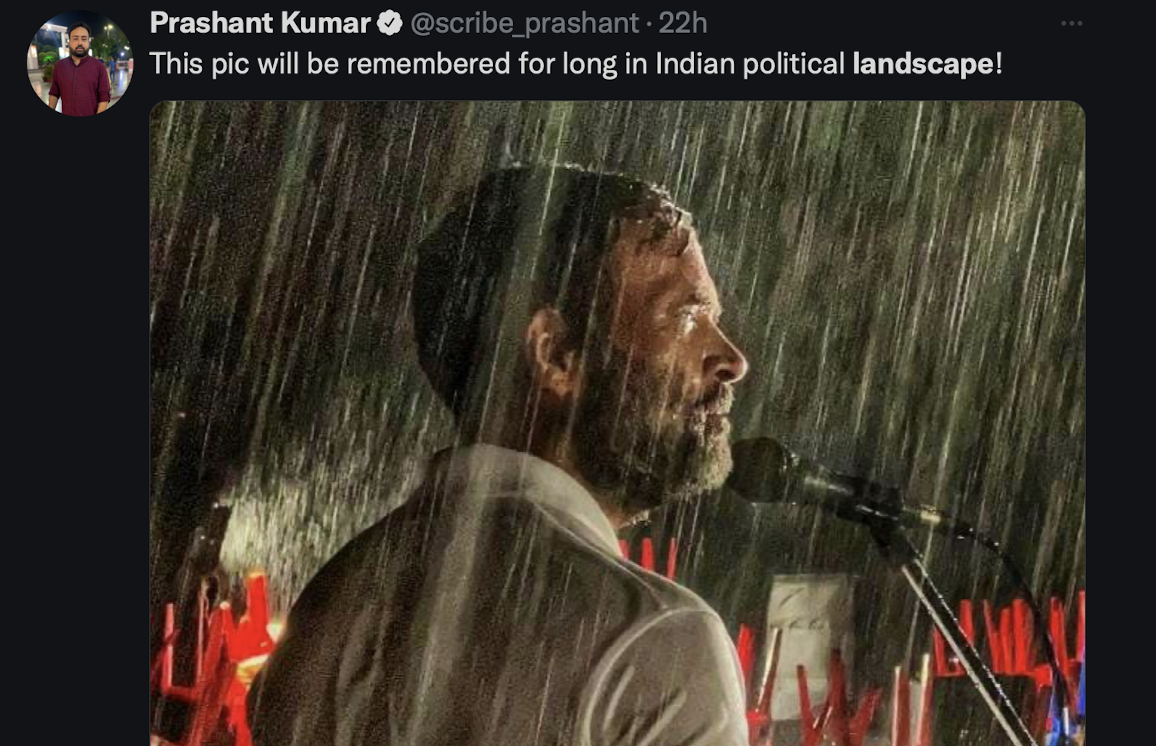
A raft of ‘journalists’ sympathetic to the Congress party rushed to swoon over their ‘preferred’ political leader after images of Rahul Gandhi addressing a political rally amid rains emerged on social media. In no time, the so-called neutral journalists shared pictures of a drenched Rahul Gandhi, lavishing praises on him for carrying on with his political rally despite the rains.
“This pic will be remembered for long in Indian political landscape,” tweeted ‘journalist’ Prashant Kumar, whose deference to the Gandhi family is evident in his other tweets.
Source: Twitter
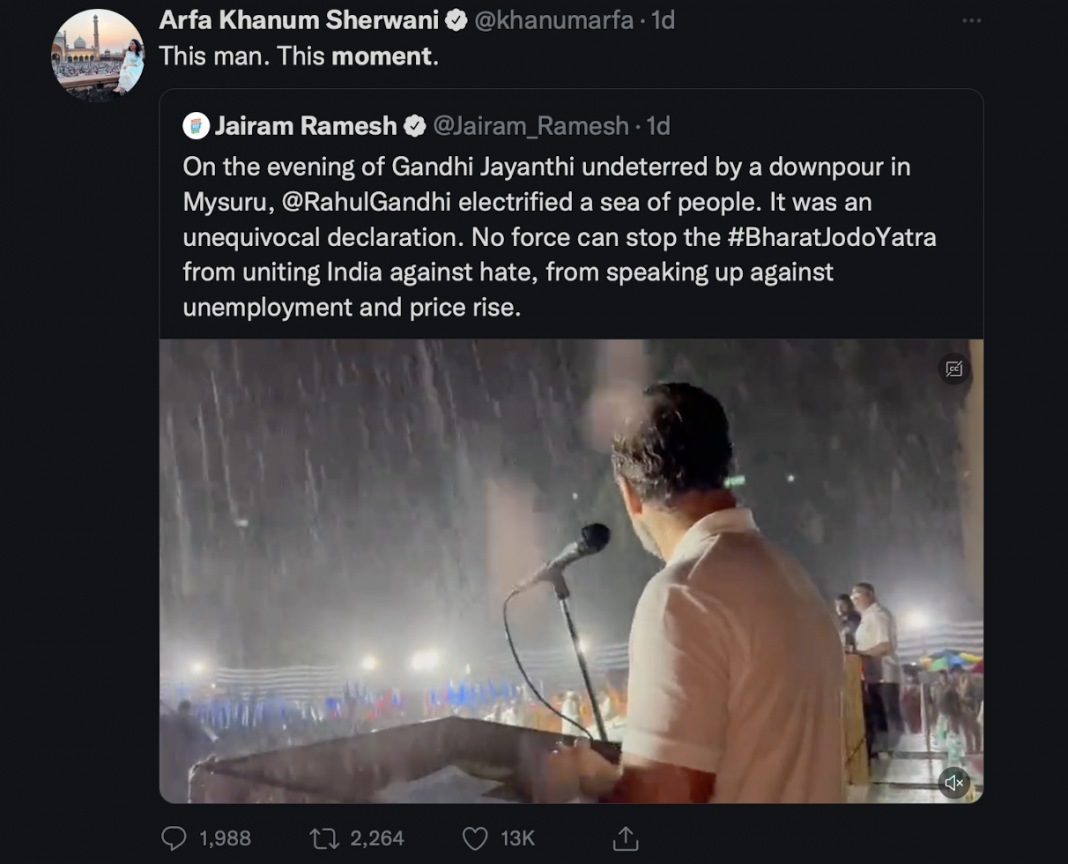
The Wire ‘journalist’ Arfa Khan Sherwani, who has a knack for defending Islamists with perverse rationales, also took to Twitter to hail Rahul Gandhi for addressing a rally during rains.
Source: Twitter
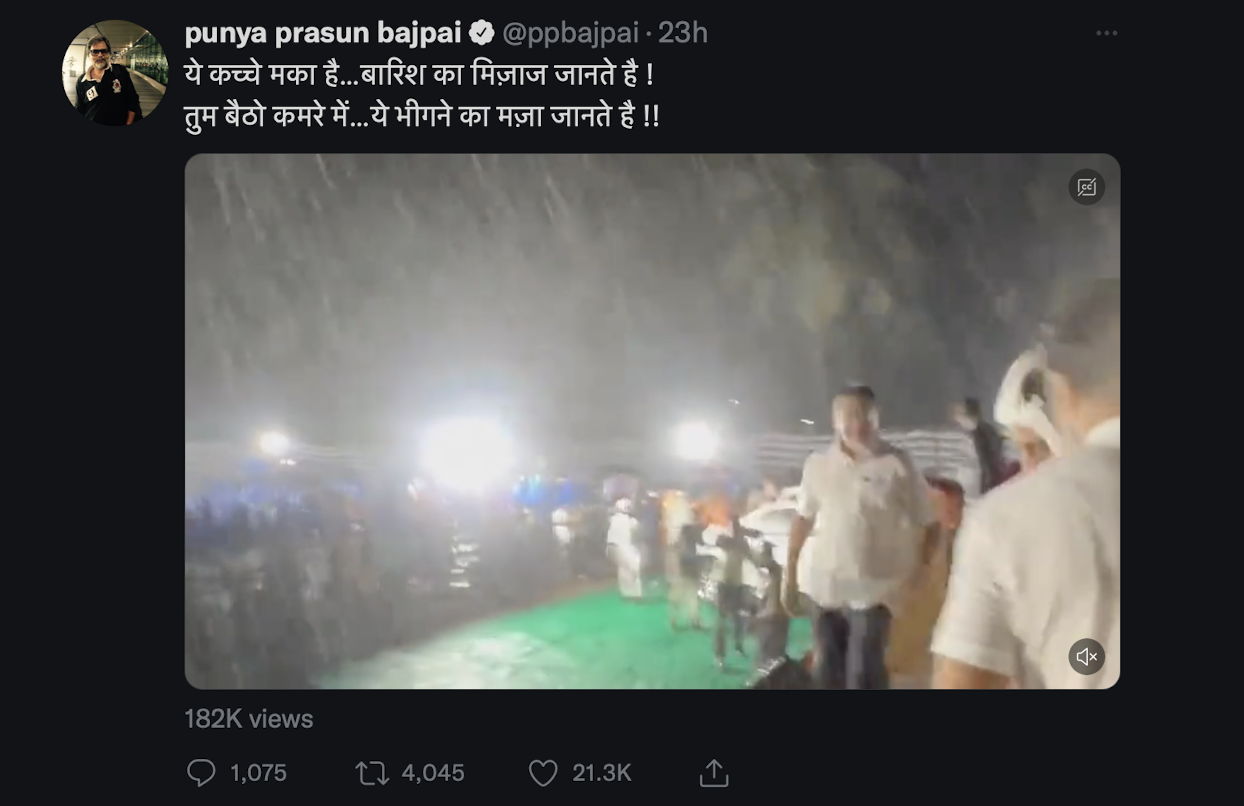
Punya Prasun Bajpai, another ‘journalist’ with a favourable bias toward the Congress party, also gushed over the pictures of drenched Rahul Gandhi addressing a crowd from the podium.
Source: Twitter
Similarly, Vinod Kapri, Swati Chaturvedi, Ranvijay Singh, and others joined in their exercise to adulate Rahul Gandhi.
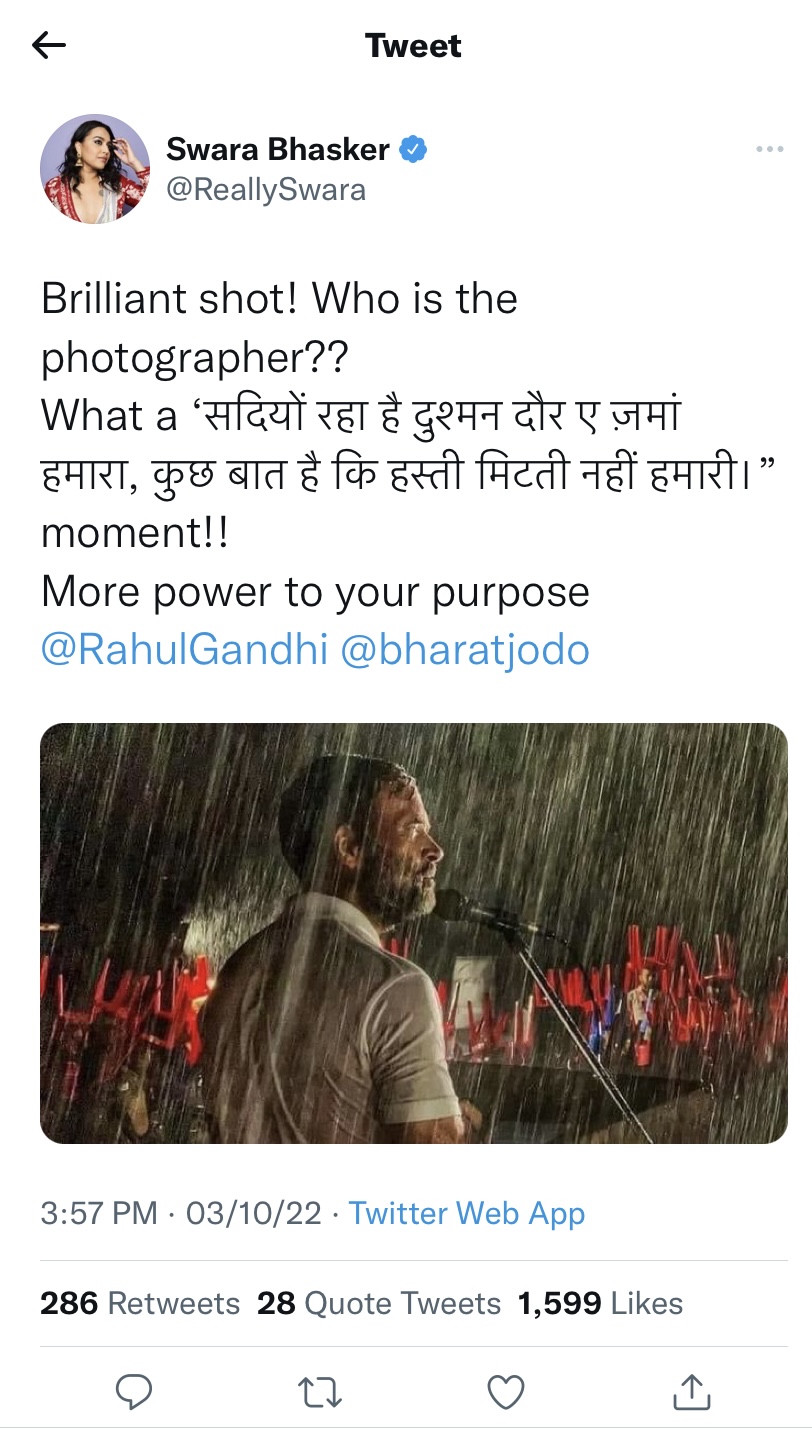
Actor Swara Bhasker, whose recent film ‘Jahaan Chaar Yaar’ failed miserably at the box office, also gushed over the picture of Rahul Gandhi addressing a public rally amid the rains. “More power to your purpose,” the actor tweeted.
Source: Twitter
How Rahul Gandhi fans exaggerate seemingly ordinary actions of their leader
However, this is not the first time that propagandists have queued up to hail run-of-the-mill deeds by Rahul Gandhi as acts of “unparalleled political brilliance”. It is another thing that such “political masterstrokes” have done little to revive the Congress party’s dying electoral fortunes. If anything, they have only accelerated the party’s descent into an abyss of irrelevance and insignificance.
But that has not deterred cheerleaders from fawning over the Gandhi scion. Every once in a while, they home in on an ordinary remark or act by Rahul Gandhi and trumpet it as if it had the potential of upending India’s political landscape. But then, a rude awakening hits them when Congress loses yet another election even as their supreme leader shows no sign of drawing learnings from his repeated failures.
The bar is set so low that a run-of-the-mill deed is passed off as an act of profound significance
Whether it is the Daro Mat campaign in 2017, where Rahul Gandhi tried to pass off ED action against him as politically motivated or the photo-op from his visit to Kerala in February 2021, when his dive into the sea with local fishermen had the ‘neutral journalists’ spellbound, or the image of an old lady hugging Rahul Gandhi, there have been countless incidents when the Congress sympathisers and dynasty loyalists took no time in aggrandising their leader and singing tributes to him. Every few months, Gandhi enthusiasts declare that Rahul Gandhi has finally “come of age” and is ready for the top job.
However, the admiration Rahul Gandhi receives from his ardent fans is profoundly amusing, given that they routinely deride their political opponents by calling them ‘Bhakts’ while themselves raising Rahul Gandhi on a high pedestal and losing no opportunity to pay obeisance to him, even on something as mundane as addressing a political rally amid rains.
And while the list of incidents when ‘neutral journalists’ and ‘unbiased intellectuals’ have showered unwarranted heaps of praises on Rahul Gandhi is quite long, it demonstrates that his fans cling on to anything that exalts their leader’s political stature because the list of his other gaffes, from winking in the parliament to giving biscuits to Pidi to “aalu daalo sona niklega” to “pichatees”, is so long that the moment he behaves reasonably normal, the propagandists fall over themselves to put him on the pedestal.
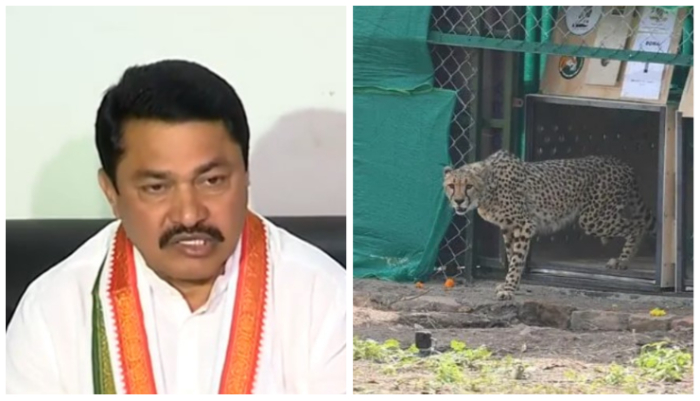
Nana Patole, another treasure from the Congress vault, issued a bizarre statement on Monday saying that the lumpy skin disease virus, which has been prevailing in Nigeria for many years, is being spread in India by the eight Cheetahs that Central Government brought in from Namibia.
The President of the Maharashtra Pradesh Congress Committee attacked PM Modi by accusing him of purposely bringing the Lumpy disease, basically prevailing in Nigeria, to India by importing the Cheetahs from Namibia. He said that it is the central government’s ploy to harm the farmers.
In a video shared by news agency ANI, Nana Patole is heard saying, “This Lumpy illness has been prevalent for many years in a country called Nigeria and the Cheetahs have been brought from there. The spots on a cheetah’s body are comparable to those seen in animals suffering from lumpy sickness. This is the central government’s plot. It has deliberately done this so that the farmers suffer.”
#WATCH | “This lumpy virus has been prevailing in Nigeria for a long time and the Cheetahs have also been brought from there. Central government has deliberately done this for the losses of farmers,” says Maharashtra Congress chief Nana Patole pic.twitter.com/X3DrkFyMPw
Responding to Maharashtra Congress president Nana Patole’s outlandish remarks, BJP MLA Ram Kadam said, the Congress party should be awarded the Nobel Prize for connecting the Lumpy skin disease spread with the arrival of Cheetahs in the country.
महाराष्ट्र में जानवरोंमें #लिंपी बीमारी केंद्र सरकार द्वारा #चीते देश में लाये गये इस कारण फैल रहा है ,,, इति #कोंग्रेस प्रांत अध्यक्ष
Notably, the Cheetahs had arrived from the African nation Namibia and were released into Madhya Pradesh’s Kuno National Park last month on a day that also marked PM Modi’s 72nd birthday, whereas the lumpy skin disease has lingered around for well over three months in the country.
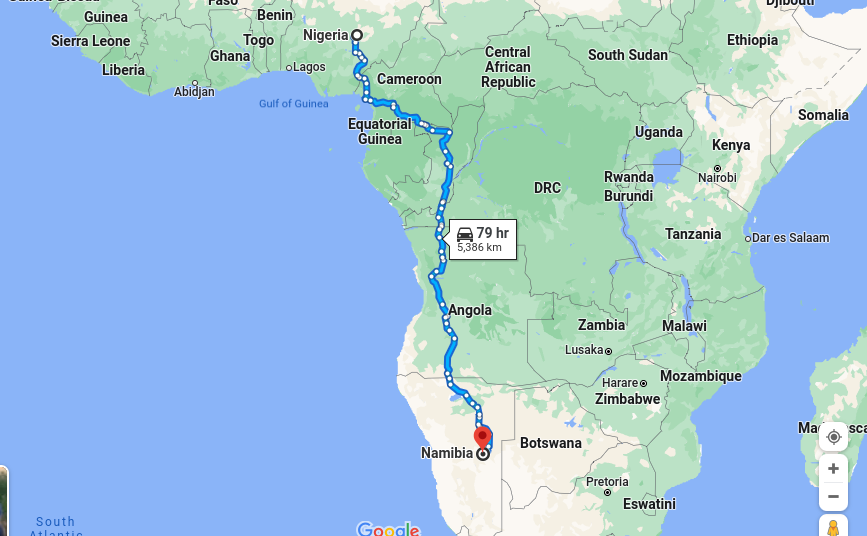
Furthermore, the Cheetahs brought to India were not Nigerian Cheetahs, but Namibian Cheetahs. While both Nigeria and Namibia are in the same continent Africa, the distance between the two countries is well over 5,000 KMs. However, Nana Patole didn’t let such small details distract him.
Distance between Namibia and Nigeria (Source: Google Maps)
Notably, Patole’s bizarre remarks came days after a suspected case of lumpy skin disease, which affects cattle like cows and buffaloes, in an animal was detected in the Mumbai suburb of Khar in Maharashtra.
Earlier, Prime Minister Narendra Modi released the cheetahs brought from Namibia into a special enclosure at the Kuno National Park (KNP) in Madhya Pradesh on September 17.
The cheetahs were brought in as part of a plan to reintroduce the big cat to India seven decades after it was declared extinct.
Interestingly, the Congress party had then courted controversy by trying to hog credit for Project Cheetah. Despite its failed bid in 2013, it had tried its best to eclipse the achievement of the incumbent BJP government.
On Friday (September 30), the British Broadcasting Corporation (BBC) wrote a detailed piece in favour of voting machines, which have been the subject of controversy during the general elections in Brazil.
The article, authored by Juliana Gragnani and Jake Horton, attempted to dismiss all concerns about electronic voting machines that were raised by incumbent Brazilian President Jair Bolsanaro.
BBC accused Bolsonaro of ‘sowing doubts about the country’s voting system without evidence’ and supposedly echoing the rhetoric of former US President Donald Trump. The Brazilian President had called for public counting of votes, and printable paper ballots to safeguard the voting machines (much like India’s VVPAT system).
Screengrab of the BBC news report
BBC, the national broadcaster of the United Kingdom, dismissed his concerns as conspiracy theories that are not rooted in reality. To bolster its claims, BBC relied on third-party research and testimonies of the Supreme electoral court of Brazil to build a case against Bolsanaro.
“There is no reasonable proof of fraud going on in the past, at least in big audits that have been done…The view of most of the technical community is that fraud is really hard in the current system. The system can be improved and should be, but that doesn’t mean there’s been fraud,” the BBC quoted one Professor Marcos Simplicio as saying.
Further, into the article, Juliana Gragnani and Jake Horton suggested that the voting machines in Brazil are subject to both internal and external scrutiny. “Before each election the court invites researchers and software experts to look for vulnerabilities in the voting system. This year, more than 20 experts tried to penetrate the system but failed to do so,” the article read.
BBC also accused Bolsanaro of disseminating ‘old misleading videos’ about voting machines, which have been debunked by the Supreme electoral court of Brazil. The UK’s national broadcaster sided with the country’s nodal electoral authority and rightly put the ‘burden of proof’ on Bolsanaro (who has raised concerns about the electronic voting system in the first place).
BBC cast aspersions about electronic voting in India
However, such a privilege was not extended to the Election Commission of India (ECI), the nodal election body in India. The BBC desperately tried to delegitimise it in a bid to cast aspersions about the Electronic Voting Machines (EVMs) used in India.
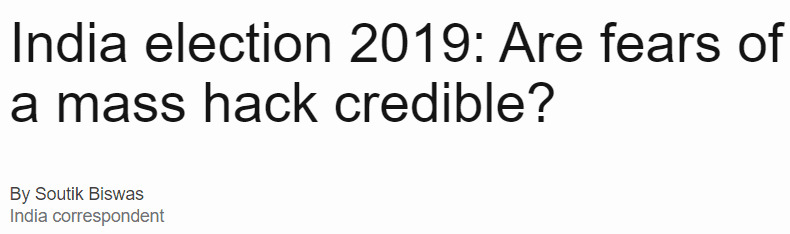
In an article published on January 25, 2019, BBC’s India correspondent Soutik Biswas claimed that concerns about the technology used in election voting machines (EVMs) are ‘credible’ and have persisted for a long time.
From the very onset, the tone of the article was quite different from the one written about Brazil’s voting machines. In India’s case, BBC was not dismissive of the aspersions cast about its electoral process (which is, by the way, the largest democratic exercise in the world).
Screengrab of the article by BBC
“There have been at least seven challenges in the courts but India’s election authorities have steadfastly defended the machines as tamper-proof,” the article read. BBC cited the claims of a conspiracy theorist named Syed Suja who claimed that PM Modi rigged the Lok Sabha elections of 2014.
Despite Syed not providing any evidence for his claims, BBC was quick to reference him in the article and sow seeds of doubt about the electoral process (something which it has now accused Jair Bolsanaro of doing in Brazil).
Instead of putting the burden of proof on the accuser, it tried to put the onus on the Election Commission to negate the claims (unlike the case in Brazil article). “India’s election authorities have steadfastly maintained that the voting machines cannot be tampered with, and physical tampering is easily detectable. From time to time, these claims have been contested,” it said.
Screengrab of the article in Economic Times
BBC also cited experts who believe in the probability of mass-scale hacking of voting machines but have not been able to demonstrate a real-life example for the same. In fact, the Election Commission had invited hackers in 2017 to come to their office and try manipulating results on real EVMs.
Interestingly, none of the conspiracy theorists and self-proclaimed hacking experts turned up for the event. The BBC then went on to highlight stories from different countries where EVMs have been called into question. However, none of the examples suggest a successful execution of mass tampering.
The article also insinuated that transparency in India’s electoral process began only in 2013, with the Supreme Court of India calling for the introduction of paper trails in EVMs.
“…Things may be moving in the right direction in India in efforts to make elections more transparent and trustworthy. Five years ago, the Supreme Court ruled that all machines should be equipped with printers producing voter-verifiable paper audit trails,” it said.
UK broadcaster has a history of peddling misinformation
The broadcaster also quoted a computer science professor who was apprehensive of electronic voting systems. “My general opinion is that we should get as much technology out of the process as possible…Software is very hard to get right, and with an intent to have votes not be identified with voters, there is no good way to verify that things have worked as intended,” remarked one Professor Duncan Buell.
While the objective of the recent article on Brazil was to educate the readers against falling for misinformation about voting machines, this 2019 article by BBC was a clear attempt to increase distrust for use of technology in the voting process.
This is not the first time that the BBC resorted to such a narrative-building exercise. In 2017, Opindia had reported how the broadcaster deliberately shared a 2010 article about alleged EVM hacking after BJP swept Uttar Pradesh polls in 2017.
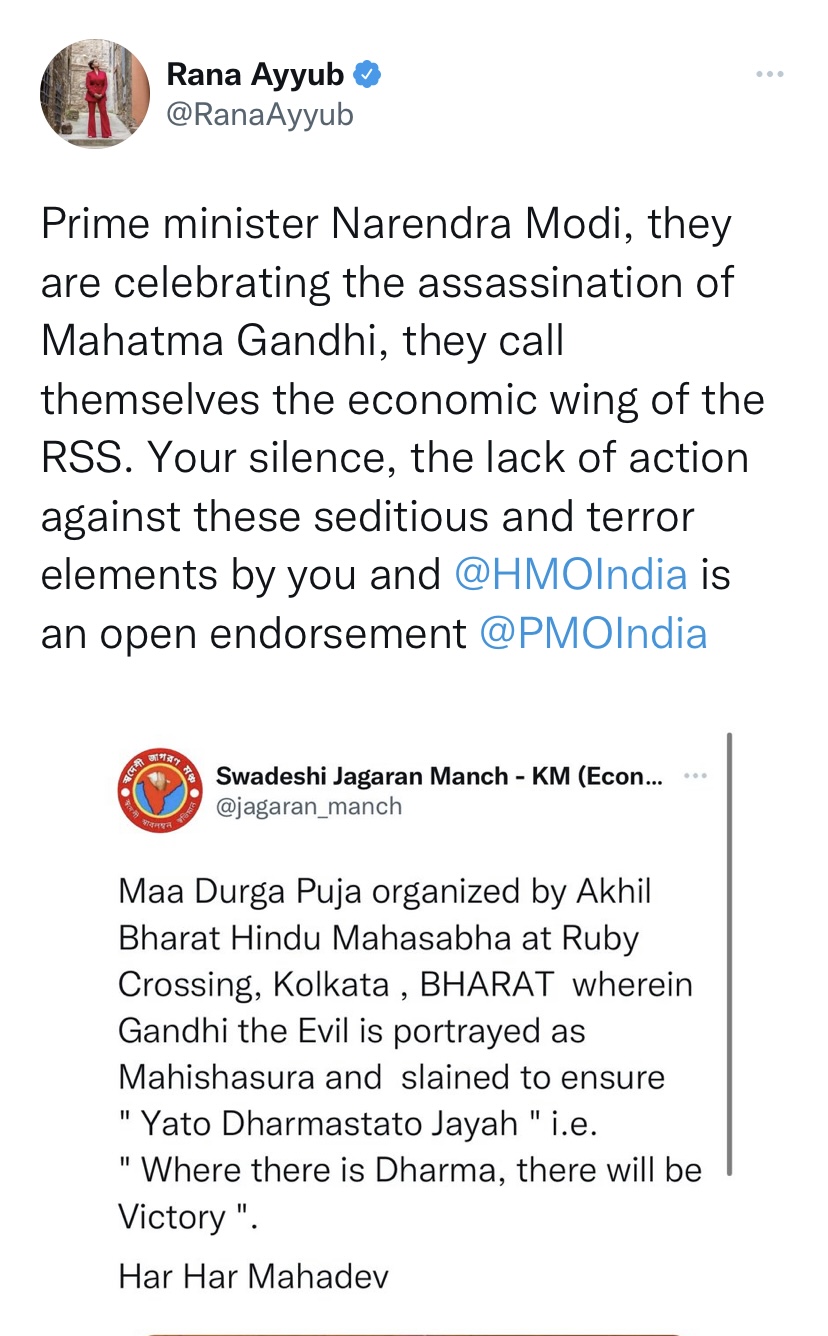
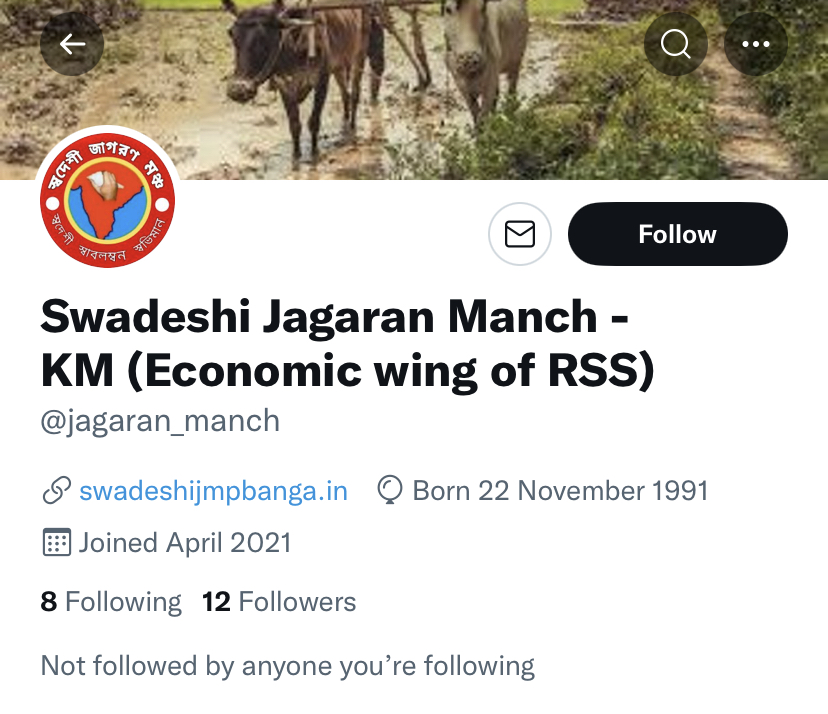
Journalist’ Rana Ayyub on Monday shared a tweet by fake Twitter account of Swadeshi Jagran Manch to attack the RSS and the Modi government.
Ayyub, who is mired in a donation scandal and has a habit of sharing fake news, took to Twitter to share a tweet posted by an account that called itself ‘Swadeshi Jagaran Manch-KM (Economic Wing of RSS) and accused the Sangh of celebrating the assassination of Mohandas Karamchand Gandhi.
“Prime minister Narendra Modi, they are celebrating the assassination of Mahatma Gandhi, they call themselves the economic wing of the RSS. Your silence, the lack of action against these seditious and terror elements by you and @HMOIndia is an open endorsement @PMOIndia,” Ayyub tweet.
Source: Twitter
The donation fraud accused attacked PM Modi, alleging that lack of action against the “seditious and terror elements” is an open endorsement.
It is, however, worth noting that Ms Ayyub shared tweet posted by a fake Twitter handle to attack PM Modi and the RSS. Ms Ayyub shared a screenshot of the tweet posted by an account whose handle goes by @jagaran_manch and which is not verified on Twitter and has only 12 followers.
Rana Ayyub leans on fake account to attack RSS and Modi Government
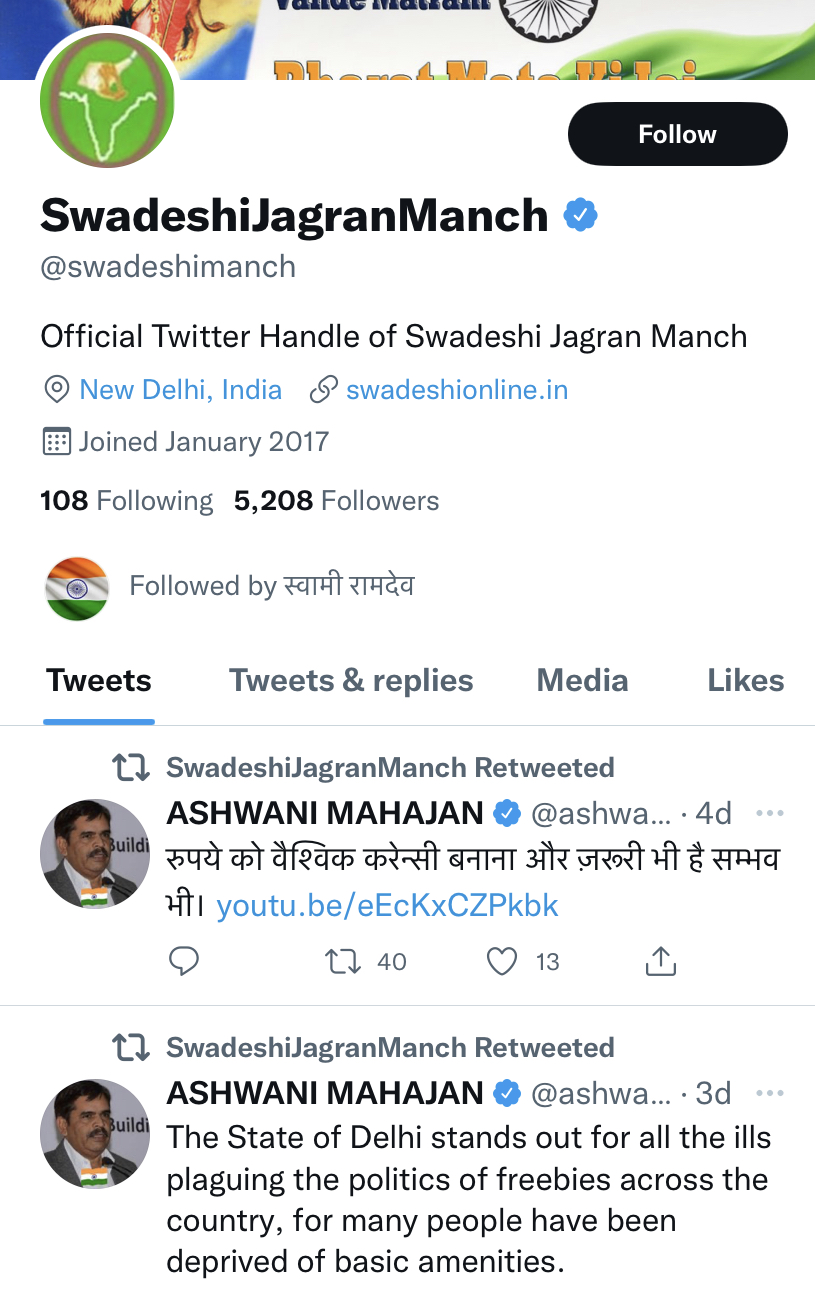
The original Twitter account of Swadeshi Jagran Manch is @swadeshimanch and not the account whose tweet was shared by Rana Ayyub. Here’s the verified account of the organisation:-
source: Twitter
A cursory glance at the tweets posted by the official Twitter account of Swadeshi Manch reveals that it has been a long time since it posted a tweet, and has only intermittently retweeted tweets posted by others.
However, in her bid to attack the RSS and the Modi government, Ms Ayyub shared the tweet by a fake account before verifying if the claims made by it are true or whether the account is authentic.
It is worth noting that the pandal that showcased an idol resembling Mahatma Gandhi instead of an Asura being killed by Goddess Durga was organised was from Kolkata, the capital of Mamata Banerjee-ruled West Bengal.
Additionally, the pandal was reportedly organised by the All India Hindu Mahasabha, an organisation that has got nothing to do with the RSS. Both RSS and All India Hindu Mahasabha are two independent organisation and have no affiliate relationship. Moreover, a case has already been registered against All India Hindu Mahasabha and the idol was remade to look like an Asura once again.
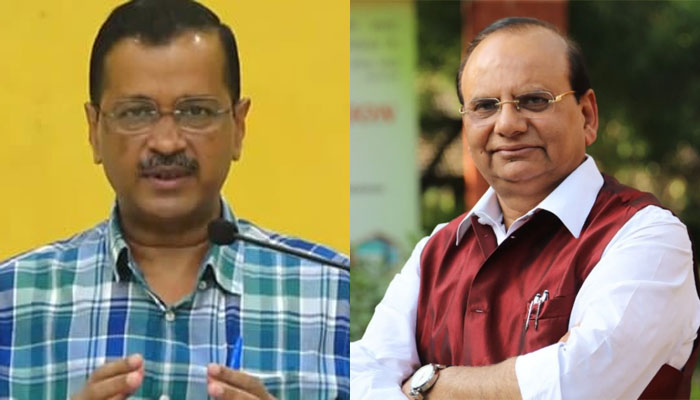
On October 3, the Lieutenant Governor of Delhi Vinai Kumar Saxena wrote to Chief Minister of Delhi Arvind Kejriwal and expressed his displeasure over the absence of the CM from Raj Ghat on the occasion of Gandhi Jayanti and Lal Bahadur Shastri Jayanti.
Delhi LG VK Saxena wrote to CM Arvind Kejriwal for his absence at Raj Ghat and Vijay Ghat yesterday during the Birth Anniversary of Mahatma Gandhi and Lal Bahadur Shastri. pic.twitter.com/yprIpyLvsR
In the letter that went viral on social media, the Delhi LG said, “It is with a deep sense of pain, regret, and disappointment that I draw your attention towards the utter disregard displayed by you and the Government headed by you towards the commemoration of Gandhi Jayanti and the Jayanti of Bharat Ratna, Lal Bahadur Shastri Ji yesterday.”
LG further mentioned that neither CM Kejriwal nor any ministers of the Delhi government were present at the Raj Ghat or Vijay Ghat, irrespective of the fact that the President of India, Vice President, Prime Minister, Speaker of Lok Sabha, and other top political leaders of all parties were present to pay homage to MK Gandhi and former Prime Minister of India Lal Bahadur Shastri on their birth anniversaries.
कल 2 अक्टूबर को दिल्ली के CM का ग़ायब रहना अत्यंत गम्भीर
राजघाट विजय घाट पर राष्ट्रपति, उपराष्ट्रपति , PM सहित सभी गणमान्य लोग आते है
निमंत्रण दिल्ली के CM की तरफ़ से जी होता है
ये महात्मा गांधी का, शास्त्री जी का और देश की परम्पराओं का अपमान है
It was pointed out by LG that though Deputy Chief Minister Manish Sisodia was present at the event, he left the premises without waiting for the President to arrive. He said, “While the Dy. Chief Minister was perfunctorily present there for a few minutes, he did not deem the occasion fit enough for him to stay the course.”
LG added that the President and the Vice President were invited after approval from the CM and Deputy CM. Both Deputy CM and the minister In-charge of General Administration Deptt (GAD), GNCTD, were in the loop for the same. He said, “What makes this absence all the more unacceptable and appalling is the fact that Hon’ble President of India and Hon’ble Vice President of India were duly invited for the program after approval from the Chief Minister and the Dy. Chief Minister and Minister In-charge of General Administration Deptt (GAD), GNCTD, were in the loop, having initiated and approved the proposal for the same, as the file went up to the Chief Minister.”
Furthermore, LG said that the President’s Secretariat had clearly apprised the Chief Minister through his Addl. Secretary that the Chief Minister was expected to be present at the program to receive the President of India at Vijay Ghat, and the Homage Function was officially under the charge of Govt. of National Capital Territory of Delhi (GNCTD).
Notably, the invite to the program was issued in the name of the Chief Minister, who was not even present at the program. LG added, “You were absent from the program at Vijay Ghat and the Dy. Chief Minister, who came there, left the venue without waiting for the Hon’ble President to arrive. This is not only highly improper but prima facie amounts to a deliberate breach of protocol indicative of disrespect and insult to the Hon’ble President of India, the highest Constitutional Authority of the Republic.”
Kejriwal is on a Gujarat tour for the upcoming Assembly Elections
It has to be noted that while invitations were issued in CM Kejriwal’s name to the President, Vice President, Prime Minister, and others for the Homage program, he decided not to be present for the program and spent his day in poll-bound Gujarat.
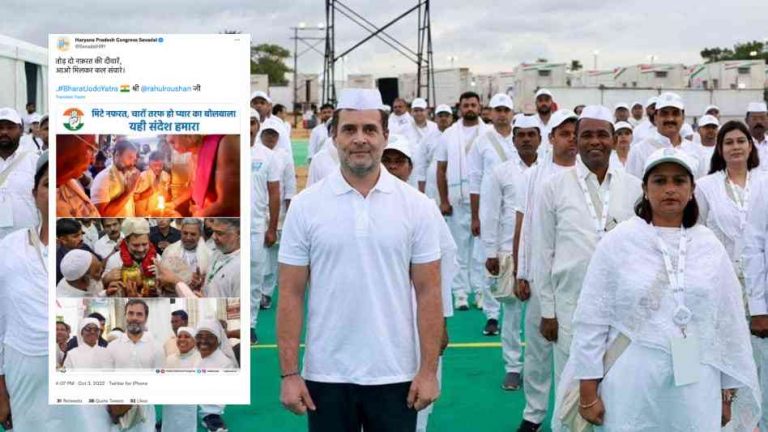
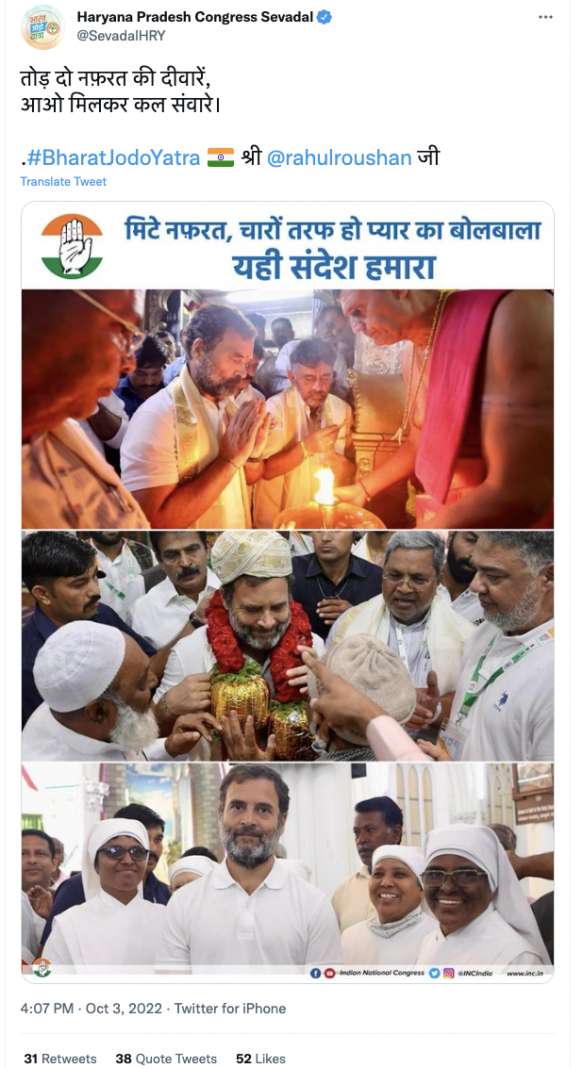
Pigs have flown, our dear readers. It was a fine, sunny pre-parali afternoon and I was enjoying my afternoon cup of adrak chai when a wellwisher sent across a tweet. “What to say about the Sanghi who never went to a Shakha”. The tweet was by Haryana Pradesh Congress Sevadal account.
Haryana Pradesh Congress Sevadal tweet
The tweet in Hindi talked about breaking down walls of hatred and building a better tomorrow. It had pictures of Wayanad MP and senior Congress leader Rahul Gandhi at places of worship for Hindus and in some he was surrounded by religious heads of other faiths.
Except, Congress social media account got the wrong Rahul.
And imagine this change of plans for Rahul coming just a day after Rahul (Roushan) attended an RSS event for the first time in his life on 2nd October, 2022.
Spent Gandhi Jayanti morning at an RSS event in Delhi. Sanghi who finally went to a shakha ? pic.twitter.com/xAzLiqNc8E
To put things in perspective, Rahul (Roushan) has authored a book titled ‘Sanghi Who Never Went To A Shakha’ while Rahul (Gandhi), when not away at undisclosed locations outside India, spends major chunk of his life hating on the RSS. So much that days after Rahul (Gandhi) started his Bharat Jodo container yatra, Congress social media accounts put up a message on social media wherein it showed burning of the half-pants worn by RSS Swayamsevaks with a caption that read ‘145 days to go’.
Five days into this ‘yatra’ which was advertised as Congress’ move to ‘unite’ India, the party’s official social media handles have shared the above disturbing image which talks about complete annihilation of those associated with the Rashtritya Swayamsevak Sangh (RSS) by showing the half-pants the Swayamsevaks wear as part of uniform on fire.
Amidst all this, imagine the multiple emotions the team at OpIndia went through. From shock…
OpIndia team when we saw the tweet for first time
… to amusement…
OpIndia team after few seconds
… to just plain facepalm.
Y U DO DIS, Congress
But then, we immediately decided to not let go of this opportunity to pull the leg of our boss, Rahul Roushan, whom we dearly love and hate at the same time.
And other than documenting this embarrassing situation for boss Rahul (Roushan), we also take this opportunity to remind everyone how this is not the first time Congress social media accounts have goofed up over the years.
In October 2021, Maharashtra Congress Sevadal cracked a ‘rice bag’ joke to target PM Modi. Quoting ANI’s tweet that talked about Prime Minister Narendra Modi’s meeting with Pope Francis at the Vatican, Maharashtra Pradesh Congress Sevadal cracked a ‘Rice Bag’ joke. The organization wrote, “BIG BREAKING: IMD warns of a massive shortage of rice due to low yield and untimely rains. PM Modi taking all necessary steps in the direction.”
Congress Sevadal’s tweet
‘Rice Bag Convert’ or ‘Rice Christians‘ or simply ‘Rice Bag’ refers to people who convert to Christianity after being induced to do so by Christian missionaries on the promise of material benefits. The term has been in use for centuries. According to The Brewer’s Dictionary of Phrase and Fable, published in the 19th Century, Rice Christians are “Converts to Christianity for worldly benefits, such as a supply of rice to Indians. The profession of Christianity born of lucre, not faith.”
Over time, the usage of the term has entered mainstream use to mock Christians who converted for material benefits.
In May this year, Maharashtra Congress Sevadal again tried to whitewash crimes of the tyrants like Aurangzeb.
Mahatashtra Congress Sevadal tweet
The official handle of the Maharashtra Pradesh Congress Sevadal insinuated that the ancient Hindu temple was not destroyed by the Mughal emperor, by claiming how the photograph taken in 1890 can prove that Aurangzeb had destroyed the temple when the Mughal emperor had died almost two centuries prior.
Congress Sevadal tried to dismiss the fact that Aurangzeb had destroyed the temple to build just because a photograph of the partially destroyed wall was taken decades later. But the fact is, it is an undeniable fact that the original Kashi Vishwanath temple was destroyed during the regime of Arungzeb and the mosque was built on its ruins. Even the Muslims don’t deny this fact, they only justify this by saying that Aurangzeb had ordered to demolish the temple after spotting some crimes by the priests in the temple.
This is not it. In 2019, the official Twitter handle of Uttarakhand Pradesh Congress Sevadal launched a sexist attack against union minister Smriti Irani by posting a fake screenshot of a TV news report. The verified Twitter account posted an image which looks like a screengrab from a Hindi News Channel, and it reports that Smriti Irani has said she will commit suicide if prime minister Narendra Modi loses. Later the tweet was deleted.
Congress’ now deleted tweet
Similarly, ahead of Uttar Pradesh state assembly elections, UP Congress Sevadal account shared video of flooded roads to insinuate that the UP administration was not managing things. Except, the video was from Rajasthan, a state ruled by Congress itself.
It is almost as if gaffe-king Rahul Gandhi himself runs these accounts.
What is Congress Sevadal
Congress website does not have much description on what ‘Sevadal’ faction does, but from other websites, it appears to be just another wing to accommodate people and make them leaders so they feel important. It is supposed to be some sort of ‘grassroots’ front organisation and is present in all states. It is supposed to be volunteer based organisation and no surprise that the first President of Sevadal was Jawaharlal Nehru.
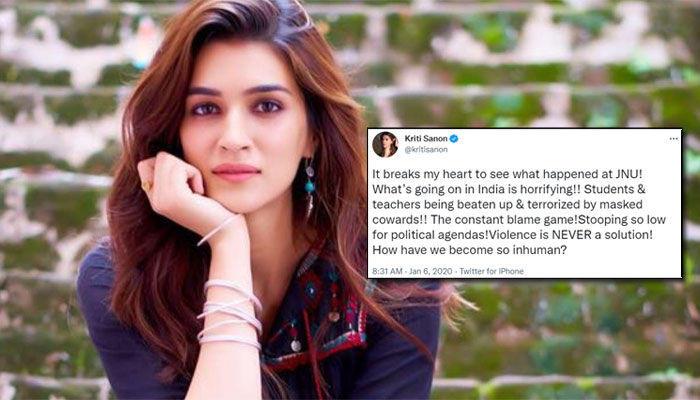
On October 3, following the release of the trailer of the upcoming film Adipurush based on Ramayana, Kriti Sanon, who is playing the role of Mata Sita, is under fire on social media platforms for her tweet from January 2020 on JNU violence amid anti-CAA protests. At that time, in a tweet, she had condemned an “attack on JNU teachers and students”.
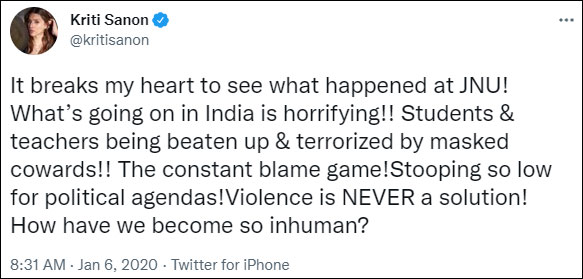
Kriti Sanon’s 2020 tweet is going viral on social media.
Kriti had written, “It breaks my heart to see what happened at JNU! What’s going on in India is horrifying!! Students & teachers are being beaten up & terrorized by masked cowards!! The constant blame game! Stooping so low for political agendas! Violence is NEVER a solution! How have we become so inhuman?”
Earlier, in a video statement to the media, she had said, “Right now, to be very honest, whatever is happening in general, it really saddens me because there is so much violence which is not a solution to anything. I feel like we will not gain anything from violence. What I mean is [there should be] proper conversation on the topic. People need to be heard. The students were protesting, and I think silent protest is something which is our right. So, people who are protesting need to have a conversation with the government. Their point of view needs to come out. The violence part right now needs to be curbed. We all need to come together as secular India that we are. Have the conversation as adults and solve the issue.”
Netizens react to an old tweet
Twitter user Sameet Thakkar wrote, “Playing Sita Mata In Rape Accused Bushan Kumar Upcoming Movie Adipurush.”
Twitter user Avinash Choubey said, “Hey Kriti Sanon, do you think that JNU students who shouted Bharat Tere Tukde Honge were right and Narendra Modi govt was being political, and you want us to believe you are Sita in #Adipursh.”
Twitter user Hari Nandan said, “Kriti Sanon is clueless. No wonder what a pathetic picture she has chosen where they are not even aware how to do costumes, and everyone looks like a Mughal.”
@kritisanon is clueless. No wonder what a pathetic picture she has chosen where they are not even aware how to do costumes and everyone looks like a Mughal https://t.co/7gDTj3Ej1B
The film Adipurush is scheduled for release on January 12, 2023. Actor Prabhas is playing the role of Ram, Kriti has been cast as Sita and Saif Ali Khan as Ravana in the film.
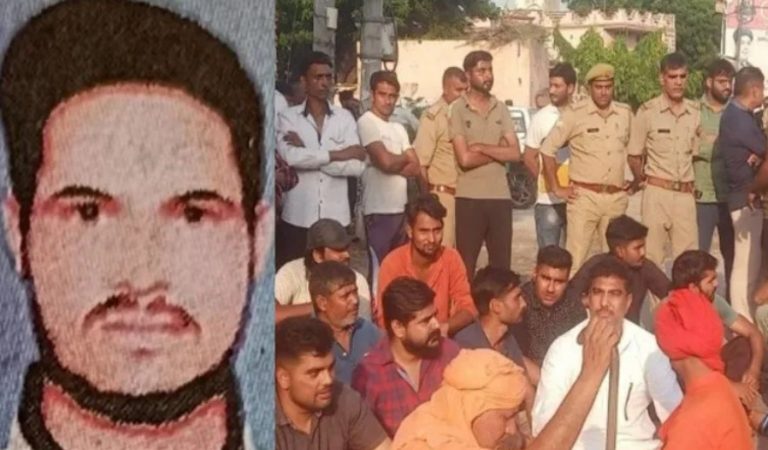
The Meerut police have arrested the two main accused Asif and the 40-year-old Faimidu Nat who brutally beheaded the 20-year-old Hindu man Deepak Tyagi in Parikshitgarh in Uttar Pradesh’s Meerut district on September 27, 2022. Faimidu was the father of the Muslim girl with whom Deepak Tyagi was allegedly in a relationship.
Reportedly, the duo’s arrest came after the police recovered the severed head of the deceased youth, five days after his headless body was found in a sugarcane field. Furthermore, the police team also recovered the murder weapon (a sword) the accused had used to behead Deepak Tyagi.
According to the police, the victim’s illicit relationship with the married daughter of Faimidu Nat led to the murder. The Meerut police department took to Twitter to share the recent update on the case.
“Deepak was killed with a sword. His severed head was discovered about five kilometres from the field where his corpse was discovered. The accused men plotted the crime in such a manner so that the victim could not be identified by the investigating authorities,” Rohit Sangwan, SSP Meerut, told the media.
He further informed that Deepak Tyagi was in an inebriated state on the night of the murder. The accused saw this as an opportunity to attack and kill him.
“At night, an inebriated Deepak was resting near a tubewell in the village when the accused men attacked him,” he claimed. Both accused have been charged under Section 302 of the Indian Penal Code (punishment for murder), SSP Sangwan said.
20-year-old Hindu man Deepak Tyagi beheaded in Meerut allegedly over relationship with a Muslim girl
Notably, on the morning of September 27, the headless body of a young man, identified as Deepak Tyagi was found in the Parikshitgarh area of Meerut. Deepak Tyagi’s father filed a complaint against unknown attackers. The police started interrogation by taking six people of Ahmedpur Badhala into custody.
As per a report, Deepak Tyagi had an affair with the daughter of Zehmeet. Deepak’s family members had opposed this relation but to no avail.
Deepak Tyagi was the youngest of Dhirendra aka Bhagatji’s four daughters and two sons. The family of Deepak Tyagi has refused to conduct the last rites until the head is found.
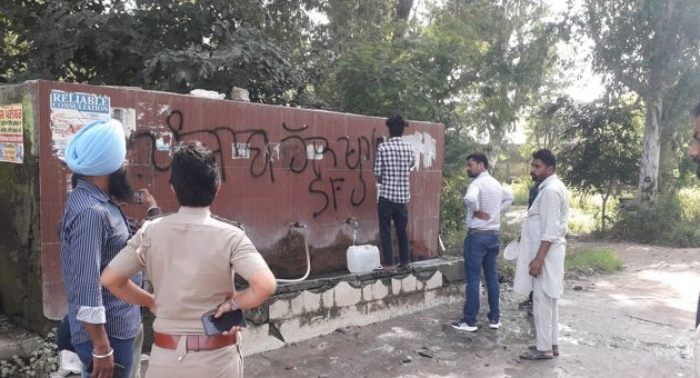
On Sunday, October 2, pro-Khalistan and anti-India slogans were found written on the outer wall of the office of the Divisional Forest Officer in Punjab’s Bathinda city, a stronghold of the Aam Admi Party (AAP). The slogans have been painted over with spray paint. Banned outfit Sikhs for Justice has taken responsibility for the despicable act.
Pro-Khalistan slogans written on the walls of the forest department in Bhatinda. Anti-India and Pro Pakistan slogans were written by some unidentified person. Employees of the forest department were seen painting the slogans to hide them.@Gurpreet_Chhina shares more details pic.twitter.com/HaxyHTVy0M
As per information, slogans like “Hindustan Muradabad, Muslim-Sikh BhaiBhai and Khalistan Zindabad” were written on a water tank adjacent to Phases 4 and 5 of Model Town and on a wall outside the Divisional Forest Office on Joganand Road.
After getting the information, police personnel and intelligence officials rushed to the spot and wiped off the slogans from the wall. A probe has been launched into the same.
Meanwhile, on October 2, after the incident, Khalistani terror outfit SFJ released video footage wherein SFJ chief Gurpatwant Singh Pannu is heard taking responsibility for the act.
In the video message, SFJ General Counsel Gurpatwant Singh Pannun urged Pakistanis to support the Punjab Independence Referendum in order to welcome new neighbour Khalistan, stating, “Lines were drawn between Sikhs and Hindustan after June 1984 attack on Sri Darbar Sahib and over 100,000 Pro Khalistan Sikhs laid down their lives for Independence”.
“SFJ’s global Khalistan Referendum with 6th November voting in Toronto is a step towards liberating Punjab from Indian occupation” added Pannun.
In a similar incident, on the intervening night of June 14 and June 15, some anti-social elements wrote slogans of ‘Khalistan Zindabad’ on the walls near Shaktipeeth Shri Devi Talab Mandir in Jalandhar Punjab. Notably, similar slogans were spotted near an educational institution on Lodawli Road in Jalandhar. Then too, banned terrorist organization Sikhs For Justice took responsibility for writing slogans on the walls near the temple.
There have been multiple attempts to create Law and Order situation in Punjab by Khalistani elements. Earlier, similar slogans were found outside the house of session judges in Faridkot. On June 13, similar reports came from Ferozpur, where slogans of Khalistan Zindabad, Sikhs For Justice Zindabad, and SFJ January 26 2023, were written outside the Divisional Railway Manager’s office.