Home Blog Page 2952

Steady rise in mazars and madarsas adjoining Buddhist places of worship in UP’s Shravasti near Indo-Nepal border: Ground report

Several recent reports have shown that demography is changing rapidly along India’s border with Nepal. The number of mosques and madarsas is constantly increasing. From August 20 to 27, 2022, an OpIndia team visited several areas in Nepal bordering India to observe the ground situation. What follows here is the fourth episode of the series of reports documenting the steady Islamisation of the border noticed by the OpIndia team.

Shravasti district is one of the districts of Uttar Pradesh. Shravasti was the capital of the ancient Indian kingdom of Kosala where Gautam Buddha spent most of his time after attaining enlightenment. It is near the Rapti river in the northeastern part of Uttar Pradesh India, close to the Nepal border. We learned during our visit to the area, that in Shravasti, it is very common to find mosques and madarsas next to Buddhist temples and places of faith. The majority of the settlements near Angulimal Cave are predominantly Muslim.

Semi-constructed Mazar and Idgah in Purainiya village

As our team toured the area, we discovered a semi-constructed Mazar in a garden in the Purainiya village, around 100 metres away from the highway on the Bhinga road and about 1 kilometre from the Angulimal cave. Purainiya is a small hamlet in Hariharpur Rani Block in the Shravasti District of Uttar Pradesh. The structure’s construction was completed, but the plastering was still not done. There was no one to be spotted on the site to answer who was carrying out the construction.

The semi-constructed mazar in Purainiya village

As we moved ahead, we spotted an Idgah, located around half a kilometre away from the aforementioned Mazar (shrine). This Idgah was located near the road that connected the village to the main highway. The Idgah could accommodate a crowd of approximately 200 individuals. An iron gate guarded the main entrance to the Idgah, which was surrounded by a pucca (brick) border.

The mazar spotted at a distance of 1 km from the Idgah

We noticed that the Mazar was built on a pond in Katra village, Ikauna Tehsil, Shravasti district, created for water harvesting under the central government’s MNREGA scheme. The Mazar had been carved into the dam of the pond in the shape of a Karbala and cemented. There were Islamic flags hoisted at the same location.

Mazar built on a pond created for water harvesting under the MNREGA scheme

The farm pond in which the Mazar was built was created under the government water harvesting scheme to meet the water needs in the water distressed areas but what we observed was that the water in the pond was negligible and the remnants of many tazias were thrown in it. This pond is located barely 100 metres inside the main highway on the connecting road of Katra village.

Tazia is a replica of the mausoleum of Prophet Muhammad’s grandson Imam Hussain, and is made in numerous forms and sizes. Basically, Muslims bring home the Tazia on any day between the eve of the first day of the Islamic festival Muharram and the ninth day. It is buried on the tenth day of Ashura when Imam Hussain died.

Remnants of Tazia thrown in the public pond

Dr Ayub Khan’s posters mounted on electric poles throughout a nearly 20-kilometer stretch

As we progressed, we noticed numerous political billboards along the main highway. The most prominent hoardings were those of the National President and former MLA of Peace Party Dr Ayub Khan. These boards were mounted on electric poles on either side of the highway. There were appeals to join the Sampurna Swaraj Rally on these posters. These boards were found for around 20 kilometres from the confines of the Balrampur district to Bhinga.

Ayub Khan’s billboard

Notably, Dr Ayub, who was elected to the Vidhan Sabha in 2012, was arrested from Gorakhpur on August 1, 2020, for issuing an advertisement with derogatory content in a newspaper after a complaint was filed against him at the Hazratganj police station in Lucknow. He was granted bail in October 2021.

‘Karbala’ and Islamic flags adorned the main road

We passed by Gopiyapur, a small hamlet in Mahewa Block in Etawah District of Uttar Pradesh, on our way back to Balrampur from Shravasti. There were Islamic flags right next to the road at this location. Some flags were green, while others were red. We spotted at least three pucca structures next to the road that were painted green. The locals referred to these structures as ‘Karbala’.

Islamic flags on homes, mosques and madarsas

Despite the fact that the country was commemorating its 75th year of independence at the time, many roadside houses near Gopiyapur had Islamic flags fluttering atop them. Amen Mobile and Yadav Travels boards were visible beneath these dwellings. In the centre of the green flags, a tricolour was also waving.

Roadside houses near Gopiyapur had Islamic flags fluttering atop them

These areas seemed to have been completely Islamified over the years. A dargah was visible adjacent to the road near Gopiyapur on the main route leading to Shravasti. Dargah Chaddars were being sold and a large conngregation of people was seen roaming around in and around the dargah.

The dargah spotted adjacent to the road near Gopiyapur

While our team was moving towards Shravasti, they noticed a Madarsa, situated just 200 meters away from this dargah. The madrasa had a black gate and some Arabic words written on the outside.

Madarsa situated in Gopiyapur

A person at a tea stall near the madarsa told us that what you see on the road is often what you see inside the villages also. Another person stated that if you travel to the Bhinga area of this district, you will see more mosques and madrasas than this.

A creeping Islamisation of Nepal and its border areas appears to be underway, with Islamists steadily establishing their foothold in distant villages, including those on the Indian border. In the first three parts of this series, OpIndia documented the demography change ongoing in Nepal, as well as the worrying surge in the number of mosques and madarsas in the Himalayan nation’s border villages. Additionally, we also spoke about the rising incidences of love jihad in Nepal, as well as its Delhi connection and smuggling and various other notorious activities that are threatening India’s border with Nepal.

The first report in this series can be read here in Hindi: कभी था हिंदू बहुल गाँव, अब स्वस्तिक चिह्न वाले घर पर 786 का निशान: भारत के उस पार भी डेमोग्राफी चेंज, नेपाल में घुसते ही मस्जिद, मदरसा और इस्लाम – OpIndia Ground Report

The same report can be read here in English: Demographic change hits other side of the border too, Mosques and Madarasas mushroom in former Hindu dominated areas in Nepal: Ground report

The second report in this series can be read here in Hindi:  घरों पर चाँद-तारे वाले हरे झंडे, मस्जिद-मदरसे, कारोबार में भी दखल: मुस्लिम आबादी बढ़ने के साथ ही नेपाल में कपिलवस्तु के ‘कृष्णा नगर’ पर गाढ़ा हुआ इस्लामी रंग – OpIndia Ground Report

The same report can be read here in English: Islamic flags flying atop houses and mosques, madarsas influencing businesses: The creeping Islamisation of Nepal’s Krishnanagar

The third report in this series can be read here in Hindi:  नेपाल में लव जिहाद: बढ़ती मुस्लिम आबादी और नेपाली लड़कियों से निकाह के खेल में ‘दिल्ली कनेक्शन’, तस्कर-गिरोह भारतीय सीमा पर खतरा – OpIndia Ground Report

The same report can be read here in English: Rising cases of love jihad in Nepal and its Delhi connection, smuggling plaguing India’s border with Nepal: Ground report

PVR and INOX stocks crash after poor reviews of Brahmastra from critics, ₹800 crore in market value wiped out

Back-to-back mega flop movies from Bollywood in recent months has resulted in heavy loss for film distributors and theatres, apart from the producers of the films. The latest big-budget Bollywood movie Brahmastra Part One: Shiva was released today with poor reviews from film critics, and it seems the movie has a new victim, the investors of theatres.

Made with an ambitious budget of ₹410 crore, Brahmastra released today with much less than expected advance booking. Ahead of its release to the public, the movie was poorly reviewed by film critics, with Taran Adarsh calling it a ‘king-sized disappointment’, who gave it just two out of five stars.

While the movie did receive some favourable reviews from some critics, the stars given to it range from 2 to 3.5. Most reviewers said that while the VFX and CGI in the movie are good, the story is poor. And moments after the bad reviews of the movie started to appear, the stock price of major multiplex chains in the country started to fall.

According to estimates, PVR and INOX, the two major listed theatre chains, lost over ₹800 crore in market capitalisation today. The stocks had started to gain in recent days, but they crashed today, coinciding with the release of Brahmastra.

The PVR stock, which had reached a high of around ₹2,200 in the beginning of August, had opened at ₹1,942 today at the NSE. But soon after the reviews of the Brahmastra started to arrive in the media, the stock crashed and reached ₹1,829 at around 12 pm, falling by more than 5%, and is currently trading at around that price.

Similarly, INOX had reached a high in the first week of August and had opened at ₹522 at the NSE today. The share price fell by almost 5% to reach around ₹490 at around 12 pm today. It is notable that graphs of both PVR and INOX share prices show exactly the same pattern.

It is being analysed that the poor opening of the movie Brahmastra is the reason for this fall in the share price of the multiplex chains. According to analysts, the movie will do a lifetime business in the range of ₹130-200 crore, which will not be enough to recover the cost of ₹410 crore. This will mean a massive loss for the makers of the movie.

Brahmastra is produced by Karan Johar, Apoorva Mehta, Namit Malhotra, and Director Ayan Mukerji, under the production companies Dharma Productions, Starlight Pictures, and Prime Focus in association with Star Studios, which is a subsidiary of Disney Star. Ranbir Kapoor and Marijke DeSouza are also producers of the movie. Fox STAR Studios is distributing it in India, while Walt Disney Studios Motion Pictures is handling international distribution.

Brahmastra has Ranbir Kapoor and Alia Bhatt in lead roles and has big names like Amitabh Bachchan, Nagarjuna, and even Shah Rukh Khan. While the makers had high expectations from the movie, they had to face the ongoing general negative outlook towards Bollywood movies among the public.

If Brahmastra fails this weekend, this will be a big loss for all these companies, along with the theatres, and investors in the companies. If the movie flops, it will join the recent big budget flops like Aamir Khan’s Laal Singh Chaddha, Akshay Kumar’s Raksha Bandhan and Samrat Prithviraj, Anurag Kashyap directed Dobaaraa, Ranbir Kapoor’s Shamshera from Yash Raj Films etc.

With very few mega hits in recent times, Bollywood filmmakers have been trying to recreate the success of Southern larger-than-life movies like RRR, KFG, Bahubali etc, and made Brahmastra, Shamshera etc movies on a similar scale, but they have failed to excite the audiences due to poor storylines.

With the massive budget of ₹410 crore, it will be difficult for the makers to recover the cost if the analysts are right that it will collect a maximum of ₹200 crore. If that happens, even revenue from OTT platforms will not cover the costs, because with recent flops, OTT platforms have stopped big money for Bollywood movies, and it is unlikely that any streaming company like Netflix or Amazon Prime will pay big money to acquire the movie.

PVR and INOX head for a merger

In related news, theatre chains PVR and INOX are considering a merger of both companies. PVR has called a meeting of its shareholders and creditors on October 11 to seek their approval for the scheme of merger with rival Inox Leisure. Earlier in June, both PVR and Inox Leisure had said they had received clearances for their merger from exchanges NSE and BSE.

Karnataka: Ganesh temple construction at Bangalore University sparks protest by some students and faculty members against ‘saffronisation’

0

On Thursday, students at Bangalore University in Karnataka protested against the construction of the Lord Ganesha temple on campus. The protesting students claimed that despite objections from the registrar and vice-chancellor of the University, the Bruhat Bengaluru Mahanagara Palike (BBMP) stayed adamant about building the temple on university grounds.

According to the reports, there was already a Ganesh Temple on the university’s Jnanabharathi campus which is on the way to Mallathahalli on Mysore road. However, it was forcefully demolished due to road expansion. It was proposed that the temple be moved to a new place inside the university grounds.

The protesting students however objected to this and attempted to stop the construction of the temple’s foundation inside the University campus. The students maintained that according to guidelines issued by the United Grants Commission (UGC), the university is a place to pursue education and not to practice religion. “The BBMP is trying to saffronize the university and is spending money on the temple”, the students stated.

Reports mention that the BBMP officials allegedly called the protesting students and faculty members as ‘mischiefs’. The University teacher’s council then demanded the suspension of the officers who allegedly insulted the faculty members and also the engineers for carrying out construction work on the campus.

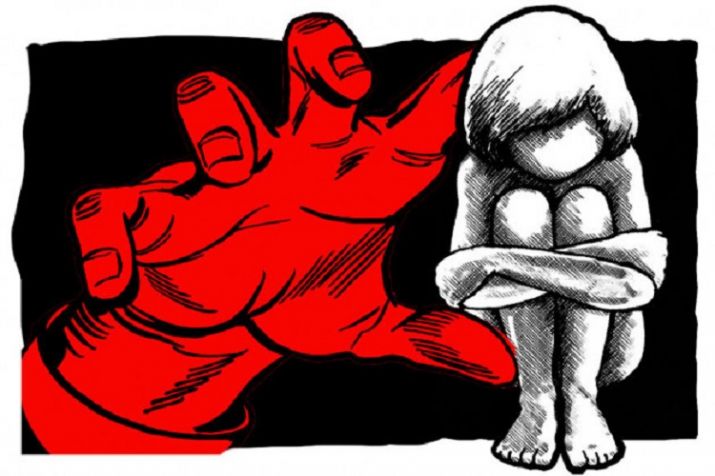
Uttar Pradesh: Teacher Ishtiaq Ahmed booked for sexually harassing 9 schoolgirls, victims had stopped going to school in fear

0

On Friday, the Uttar Pradesh Police filed an FIR against a school teacher named Ishtiaq Ahmed in Muradabad for physically and mentally abusing school-going minor girls. The Police action against the teacher was initiated after the parents of 9 minor girls lodged a complaint against the teacher.

According to the reports, the incident came to light when 9 girls aged between 11 to 13 refused to go to the school fearing the accused teacher. Upon inquiry by their parents, the girls said that teacher Ishtiaq Ahmed physically abused them and touched them inappropriately. The girls also said that the teacher frequently talked to them about their undergarments. The incident is said to have happened in Kala Jhanda primary school, Thakurdwar, Muradabad.

The parents of the teacher expressed anger over the incident and said that the accused does not deserve to be called a teacher and that he should be put behind the bars. “He talks about underwear to girls who age between 11 to 13 and asks humiliating questions. Our children feel unsafe at the school”, one of the parents was quoted.

Meanwhile, an elder sibling of one of the victims noted that the teacher had a habit to sit next to the small girls to explain the topic, and touching them inappropriately, running his hands over their bodies. “He does this to many girls. Girls studying in 6th and also in 8th have complained against him”, the sister added.

According to reports, the girl students who have levelled such serious allegations against teacher Ishtiaq Ahmed are between 11 and 13 years old and study in either class 6 or class 8. SP Rural Sandeep Kumar Meena said, “A case is being registered against the accused teacher under serious sections and efforts are being taken to nab him. We’ll soon arrest him”.

The legacy of CJI Ramana: Frequent preachy speeches and why it did not achieve what he wanted – bring Judiciary closer to the people

Recently, Justice N.V.Ramana retired as the Chief Justice of India after 16 months of tenure. The English media, which celebrated his multitude of preachy speeches during his tenure, was suddenly very unhappy with his tenure. Working in great tandem, all of them wrote articles (1, 2, 3, 4, 5, 6)  repeating only one argument – that he resorted to “judicial evasion” by keeping 6 Constitutional cases pending during his tenure. 

I was dismayed reading all these articles. Dismayed not because all of them highlighted the same point, but dismayed because they all were highlighting the least of his failures! CJI N.V. Ramana was definitely a vocal judge occupying the media space quite frequently. The reason he was in the news fairly regularly was that he gave speeches on various topics, almost every weekend. In his farewell speech, he mentions that this frequency was a conscious choice. Why? Because he wanted to bring the courts closer to the people. 

Now, that’s a baffling argument to make. Why would mere speeches from the Chief Justice of India (that more often sounded like sermons to everyone in the society) bring the courts closer to the people? He is perhaps the only Judge on record to give a free sermon to almost every institution and every section of the society in the country. Except, of course, the Judiciary! Why would his views on how media should function bring courts closer to people? Why would his complaints about the executive and legislature bring courts closer to the people? Why would he lament that people of our country cannot afford courts to bring courts closer to people? Why would his opinion on investigative agencies like the CBI, bring courts closer to people? 

You may now be tempted to ask – but what is it that brings Courts closer to the people? For starters, it will help if Courts start delivering judgments and documentation in regional languages. This is not the intellectual idea that I am flaunting here. According to our very own Justice N.V. Ramana – “I am receiving many representations for introducing local languages in proceedings before high courts”. The next obvious question is what has the mighty and powerful Chief Justice of India done about this? Nothing. As with almost everything, he has only offered his opinion and advice on this matter – “I think the time has come now to revisit the demand and take it to a logical conclusion.” What exactly does he mean by saying “revisit the demand”? If he received “many representations”, then why exactly couldn’t he do anything on this?  Doesn’t the CJI has enough powers to at least make a beginning on this front? Aren’t you as baffled as I am? 

In his farewell speech, he lamented that he could not solve the problem of listing cases in the Supreme Court. Surely, another thing that can bring courts closer to people. It really begs the question – how can the mighty Chief Justice of India not solve things that he is fully empowered to do? If he is not able to solve matters right under his nose, then what right does it give him to sermonise everyone else in society? 

Do you know what else will bring courts closer to the people? “Modernisation of judicial infrastructure as a means for providing access to justice”. Again, not my intellectual idea. He said it. And do you want to know what he did to solve it? In his own words, he “pushed” for it. How did he “push” for it? By proposing a “National Judicial Infrastructure Authority”! In March 2021, the CJI has made a proposal to the GoI. In April 2022, this topic was discussed at the meeting of all the CMs and CJIs of the states and no consensus was reached.  The reference to infrastructure is very basic here – not enough complexes have separate toilets for ladies (only 74% of court complexes have them!). It really beats me – since 2014, nearly 5000 crores have been released by the GoI to the states for infrastructure-related works. The state governments also release money for such infrastructure. Can we really not build separate toilets in our court complexes with this kind of money?

One of the important reasons why Courts aren’t perceived to be closer to people is the huge pendency of cases in the courts! And one of the important driving factors behind this pendency is the vacancies in Judiciary. It is here that Justice N.V. Ramana has definitely made a long-lasting impact on the Judiciary. The collegium headed by him was able to clear the appointment of 11 new SC judges and 224 new High Court Judges! These are excellent numbers and Justice N.V. Ramana must be complimented for working closely with the government to close these vacancies, at least in the Supreme Courts and High Courts (he cannot do much about vacancies in the lower courts though, it’s a fact). 

But then he also tells us – “I also tried to highlight the difference between the arrears and backlogs to put things in perspective.” Yes sir, for the lakhs of people waiting for their pending cases to close, explaining the difference between arrears and backlogs will come as a huge relief! The problem of Judicial vacancies is being monitored by the Supreme Court itself, since 2018, but we are yet to know of progress (or the lack of it) since. 

In his speeches meant to being the courts closer to the people, Justice N.V.Ramana has also focussed exclusively on defending the Judiciary and the ways it functions. He sought to lay the blame for delayed Justice itself at the doors of the executive and the legislature; he repeatedly told us how hard the life of a Judge is and how people don’t understand the sacrifices the Judges make in their family lives. Yes, the violent attacks on some Judges are a matter of concern that needs to be addressed.  But for the crores of people in our country, who make countless sacrifices in their lives, it really doesn’t prick their conscience that Judges also make certain sacrifices. 

His lament on the disproportionately high costs of working with the courts is yet another thing on which nothing has been done.  The legal fees for continuous representation are so high that the undertrials languish in jails for months and years together. You find out that the Judiciary itself called this a “crying shame on the judicial system”, way back in 1978!  

Justice N.V. Ramana hasn’t delivered all these speeches as an individual. He delivered them as the Chief Justice of India. His sermons on what needs to change in Judiciary can only become a reality when the Judiciary feels the exact pressure that our executive and legislative wings feel every 5 years. The Judiciary needs to adopt self-correcting measures on the same line that the executive and legislative wings have done over the years. 

Popular uprisings, meaningful debates, social/mainstream media pressure, adaptability to change – these are some of the things that led to both the executive and legislature making far-reaching changes in how they function. We don’t need verbose judgments or rhetorical speeches. We need speedier justice and if the learned Judiciary can’t do what it takes to ensure it, then it is just a matter of time before some of these things will make the Judiciary do it. Is the learned Judiciary really waiting for these to happen?

Cattle smuggling case: Mamata Banerjee directs party workers to “give a heroic welcome” to Anubrata Mondal on his release from jail

0

On Thursday, Bengal Chief Minister Mamata Banerjee directed her party workers from Birbhum district to “give a heroic welcome” to TMC leader Anubrata Mondal who has been arrested in a cattle-smuggling case. 

“Keshto (Anubrata) is unwell. Every election, they restrict his movement in the hopes of improving their chances. They will fail if they believe that these tactics will help them get even two seats in Parliament. Those who have come from Birbhum should battle three times more until Keshto returns. When he gets out of jail, give him a hero’s welcome. “He deserves it,” Mamata stated during a special TMC meeting here.

“They believe that by arresting certain powerful leaders, district and block-level workers will be intimidated, giving the BJP a chance to win.” A lion that is injured is more dangerous. The BJP and central agencies should step up their attacks, but nothing has been established. Every conflict will be met with another fight. ‘ghaas kaatle aaro baare,’ I tell you (if you cut grass, it grows more). Similarly, the more you use ED-CBI scissors on us, the bigger we’ll get,” Mamata Banerjee said.

Asansol Court rejects Anubrata Mondal’s bail plea

Anubrata Mondal, Mamata Banerjee’s ‘Bahubali’ leader, has been denied bail yet again. His custody has been extended for 14 days, and his next hearing is scheduled for September 21. “If Anubrata Mandal is granted bail, it will be impossible to conduct the inquiry properly,” CBI counsel Kalicharan Mishra argued in court. Birbhum district lawyer Anupam Adhya and lawyer Malay Mukhopadhyay appeared in the Asansol court for Anubrata and requested bail, which was denied.

Mamata Banerjee rants over ‘media vultures’ for always attacking TMC leaders

To dispel rumours of internal party trouble, the TMC supremo stated that there was no conflict within the party or between old and young leaders. “There are a few nice journalists, but many of them are vultures waiting to attack us.” They refuse to see the positive and continue to defame us. They try numerous methods to cause a schism among us. They occasionally report on disagreements between MPs Satabdi Roy and Anubrata Mondal. They even mention a schism between Abhishek Banerjee and me. They don’t realize that we can never be divided. Lies will never become truth. You tell source-based stories about money, jewellery, and valuables being confiscated from various locations, but has anything been proven yet? ”

Anubrata Mondal and his many ‘achievements’

On 11 August, The CBI arrested Trinamool Congress (TMC) Birbhum district president Anubrata Mondal in relation to the cattle smuggling case, although this is not the first time the TMC leader has been charged. In truth, Mamata Banerjee’s close assistant has come under fire from the public in a number of previous instances.

He is known for making divisive statements and has threatened the police and incited TMC cadres to ‘hurl bombs’ at them on multiple occasions.

Mondal is also accused of sheltering a large number of goons under his patronage. He is also said to be involved in illegal enterprises such as sand mining, stone quarrying, and cattle smuggling in the Birbhum area.

He has also threatened opposition leaders with violence. During the 2018 Panchayat elections, Mondal informed the press, “When the opposition leaders go to file their nominations, the development would stand by the wayside,” implying that his goons would be waiting for the candidates.

Birbhum Massacre

The Central Bureau of Investigation (CBI) questioned Trinamool Congress (TMC) Birbhum district president Anubrata Mondal in June this year as part of its investigation into episodes of violence in West Bengal following assembly elections last year.

The CBI questioned him in connection with the killing of one Gaurav Banerjee in the Birbhum district after the assembly elections in 2021. “The CBI questioned him about his role in the crime,” according to sources.

The TMC leader was also suspected of being complicit in the Birbhum atrocity in West Bengal, in which nine people were burnt to death.

West Bengal CM Mamata Banerjee complaints about not being invited to meet Bangladesh PM Sheikh Hasina: Here is what the Modi govt said

A day after the West Bengal Chief Minister criticized the Centre for not inviting her to be a part of the ongoing visit of Bangladesh Prime Minister Sheikh Hasina to New Delhi, the government on Thursday said that no chief ministers of any state are invited for such visits.

The government officials said that Chief Ministers sometimes are invited to be part of ceremonial events or state banquets, but on this visit, there was no such occasion. “PM Modi in the year 20105 had invited Banerjee to a ceremonial event which was held for flagging off the bus services between India and Bangladesh”, the government sources were quoted.

West Bengal CM Mamata Banerjee on Thursday called off the Centre for not giving her a proper invitation to be part of Hasina’s visit. “I never saw that. Bangladesh’s Prime Minister came to India, and Bengal was excluded from that. I share a very good relationship with Hasina. She used to send me Hilsa, mangoes, and other things. I also send her gifts every year”, Banerjee said at a special session of the TMC.

She also added the Centre did not invite her even after Bangladesh Prime Minister herself expressed a desire to meet Banerjee. “I do not want to talk about external affairs issues or bilateral ties. But I have seen and did not know why the Central Government is trying to stop me whenever I get an invitation from any foreign country. Why this anger against me? I got an invitation from Chicago but the Central Government refused to permit that tour. I want to know what the government is so worried about”, she was quoted.

The TMC Chief meanwhile also did not attend the event of unveiling of Netaji Subhash Chandra Bose’s statue at Kartavy Marg in New Delhi claiming that the invitation from the Central Government was improper. The Centre had reportedly invited the West Bengal CM for the inauguration event of Netaji’s statue.

Criticizing the government over the installation of Netaji’s statue, Banerjee on September 8 said, “I feel bad they’re now making a Netaji Statue in Delhi. What about the statue present before? I received a letter from an under-secretary stating PM will inaugurate the statue today&you be there before the event commences. Am I their bonded labor?”

BJP’s Amit Malviya also took cognizance of the incident and said that Banerjee was upset as Netaji’s statue was being installed in the national capital.

“Mamata Banerjee is feeling bad that Netaji Subhash Chandra Bose’s statue is being installed in the heart of Delhi. She did nothing to honor his legacy and now that Prime Minister Modi has taken the historic decision, she is making puerile attempts to sully the solemn occasion”, he tweeted.

Bangladesh Prime Minister Sheikh Hasina arrived in New Delhi on Monday. She is on a four-day visit to expand the overall ties between the two countries.

Hathras conspiracy case: SC grants bail to UAPA accused Siddique Kappan after 2 years, asks him to mark attendance at local police station

0

On 9th September 2022, the Supreme Court granted bail to so-called journalist Siddique Kappan who is accused of planning to incite riots over the Hathras case. The court has asked him to deposit his passport and mark regular attendance at the police station as he is released on bail after 2 years.

Besides, the court has imposed strict conditions on the accused Siddique Kappan. The court ordered that he will live in Delhi for the first 6 weeks after his release. After this, he is allowed to move to Kerala, but even in Kerala, he is ordered to regularly mark his attendance at the local police station.

A bench led by CJI UU Lalit heard the case. Senior Advocate Mahesh Jethmalani appeared for the Uttar Pradesh state government while Kapil Sibal represented Siddique Kappan in this case. Stating the charges against the accused, Mahesh Jethmalani said, “Kappan was in a meeting of PFI in Sep 2020. It was said in the meeting that funding had stopped. It was decided in the meeting that they will go to sensitive areas and incite riots. On Oct 5, they decided to go to Hathras to incite riots. He was funded with Rs 45,000 to create riots.”

Mahesh Jethmalani added, “He claimed to be accredited to a newspaper Tejus. We have found that he was accredited by the official organization of PFI. PFI has to be notified as a terrorist group. One State, Jharkhand, has notified it is a terrorist group. He was planning to incite riots. It’s a little bit like what happened in 1990. It is a fit case for invoking 124A also because they are creating disaffection using the rape of a minor girl.”

When the bench first mentioned granting bail to Siddeque Kappan in this case and allowing him to go to Kerala, advocate Mahesh Jethmalani strongly objected to it. Responding to his objection, the CJI said, “We will say, for the next 6 weeks he will be in Delhi and mark his presence in the local police station. After 6 weeks you can go back to Kerala but report to the local police station.”

Pronouncing the bail order, CJI said, “The appeal challenges Allahabad HC order. The appellant was taken in custody on 6 October 2020 and since then has been in custody in connection with the mentioned crime in connection with Section 17/18 UAPA, 153A 295A IPC, 65/72 IT Act. It appears that the charge sheet has already been filed on April 2, 2021, however, the matter has not been taken into consideration on whether charges need to be framed or not.”

The court further said, “However, considering the length of custody undergone by the appellant and the peculiar facts and circumstances of the case, we direct as under – 1. The appellant shall be taken to the trial court within 3 days and shall be released on bail on conditions as deemed fit. 2. It shall be the condition of bail that the appellant shall stay within the jurisdiction of Jangpura in Delhi. The appellant shall not leave the jurisdiction of Delhi without the express permission of the trial court. The appellant shall record his presence at the local police station every Monday. This condition shall apply for the first 6 weeks.”

The order further mentioned, “After 6 weeks, the appellant shall be at liberty to go to Kerala but shall report to the local police station in a similar fashion, that is every Monday, and mark his presence in the register kept on that behalf. The appellant shall either in person or through a lawyer shall attend the trial court every single day. The appellant shall deposit his passport with the investigative machinery. The appellant shall not misuse the liberty and shall not get in touch with any of the persons connected with the controversy. Mr.Sibal points out that proceedings under PMLA have also been initiated against the appellant in connection with the appellant may be required to attend the proceedings to apply for bail. The conditions as stated above shall stand relaxed to the extent the appellant is required to avail of the relief of bail.”

Siddique Kappan was arrested by the UP Police on October 5, 2020, while he was proceeding to cover the Hathras case where a 19-year-old Dalit woman had died after a strangulation attempt. He was arrested along with three other persons, under stringent sections of UAPA and sedition charges for attempting to create a caste conflict in the state amidst the Hathras case controversy.

Apart from Siddique Kappan, Siddique of Nagla in Muzaffarnagar, Masood Ahmed of Jarwal in Bahraich district, and Alam of Kotwali area in Rampur district were arrested. Reportedly, all the arrested four had connections with the radical Islamic organization Popular Front of India (PFI) and were planning to cause caste-based unrest in the state.

Queen Elizabeth II’s death: Tucker Carlson hails England for leaving behind a civilisation when they quit India. Here’s how he is wrong

Western opinion shapers often have a mistaken sense of world history since they tend to look at it from the coloniser’s prism. They labour under the belief that the colonial and imperialist rule greatly benefitted the colonised subjects by offering them the fruits of the industrial revolution and bringing them to “civilisation”. Fox News anchor Tucker Carlson is one such individual who believes India’s civilisation is not millennia old, but just over three centuries old and a gift that Britain bequeathed India when it left in 1947.

In his bid to rant against the current US government and emphasise its numerous failures, most notably the bungled pullout from Afghanistan, Carlson sang paeans to the former English monarch, Queen Elizabeth II, who breathed her last on Thursday, at 96. Lavishing praises on Elizabeth II, Carlson slammed her critics highlighting how England left behind a “civilisation” in India when they quit in 1947 while rubbing it in the spectacular US failure while abandoning Afghanistan.

“When the U.S. government withdrew from Afghanistan after 20 years, we left behind airstrips, shipping containers and guns. When the British pulled out of India, they left behind an entire civilization, a language, a legal system, schools, churches and public buildings, all of which are still in use today. Here’s the train station the English built in Bombay, for example. There’s nothing like that in Washington, DC right now, much less in Kabul or Baghdad,” said Carlson, enthusing about the British rule in India that authentic and unbiased historians say was among the darkest periods endured by the country. 

He further continued, “Today, India is far more powerful than the UK, the nation that once ruled it and yet, after 75 years of independence, has that country produced a single building as beautiful as the Bombay train station that the British colonialists built? No, sadly, it has not. Not one.”

Now, that’s pretty presumptuous of Carlson to say India has not built a single building as beautiful as the Mumbai Train station. As author Margaret Wolfe Hungerford rightly noted, “beauty is in the eye of the beholder”. A colonial slave will always drool over buildings and other establishments built by the British, overlooking what the natives built after attaining independence. And to Carlson’s chagrin, India has built many magnificent structures post-independence. The Lotus Temple in Delhi, the Vidhana Soudha in Bengaluru, Auroville Dome in Puducherry, and many more. The recently built ‘Statute of Unity’ speaks volumes of infrastructural strides made by India in the years since its independence. 

While it is Carlson’s personal choice to slaver over buildings made by the British before India’s independence, what needs to be contested and opposed is his mistaken belief that the British were on an altruist expedition in India, with “civilising” the indigenous masses being their primary object of imperialist ambitions.

Racism, economic exploitation, and unabashed loot define the “civilisation” that the British imparted to India

Contrary to what Carlson would have his watchers believe, Britishers in India were guided by the sole aim of squeezing the country dry. In fact, they left India in 1947 not as an act of benevolence as people like Carlson and other perennial sycophants of the British continue to perpetuate, but because remaining in India had become untenable for them, especially in the wake of the losses borne in World War II and Britain’s growing reluctance to grapple with Indian independence movement that was beginning to assume dangerous proportions.

As per conservative estimates, the Britishers looted over 45 trillion dollars during 190 years of their imperial rule in India. In the 18th century, when Britain began seizing Indian territories by fuelling inter-religious feuds and exploiting societal fault lines, India contributed approximately a quarter of the world’s GDP. When they left in 1947, India’s GDP share was less than 1 per cent of the world’s GDP. As Indian politician and author Shashi Tharoor poignantly notes in his seminal book “An Era of Darkness”, Britain’s Industrial revolution was built on the destruction of India’s thriving manufacturing industries.

If one considers the amount of wealth that was repatriated to England during those gloomy years of slavery, the value comes out to be close to 14 million pounds every year for 190 years, besides the attendant British inequities & racial transgressions endured by Indians for those woeful years. It is pretty rich of Carlson and apologists of colonialism to clthat the democracy was the positive outcome for the Indians, and that the British rule imparted “civilisation” to what they considered as a nation of unwashed and perpetually squabbling masses. Britishers created deep fissures in the society, some of which exist even today, in their bid to wrench as much wealth as possible from Indians. 

Britishers ruled India & Indians, but most positions in the government were reserved only for Britishers. When eminent Indians like Dadabhai Naroji pointed out the treachery and demanded greater autonomy, the British Raj conceded initially but the decision to grant Indians a say in their self-government was merely an eyewash meant to contain then simmering outrage against their inequities and atrocious rule. After the outrage died down, the British, through subterfuge, accumulated all the decision-making power with themselves. 

The roles extended to Indians were at best frivolous and at worse spineless. It is one thing, to empower the masses with providing opportunities of ruling themselves and another thing, to duplicitously stof them off their power by passing a legislation superseding their roles & responsibilities by bestowing their heads with supreme powers to annul any legislation passed by the lower rung Indians.

Apologists of the British empire like to claim that the British brought the Railways in India. What they conveniently hide is the fact that the railways was introduced in India for the transportation of goods and personnel across the hinterland and to aide the mercantilist goals of the East India Company. As historians point out, the perception that Indians should be grateful to the British for starting Railways is deeply flawed as the English had their own selfish reasons to bring the Railways in India. The purpose of the Railways was to serve the British to extract raw materials, goods, and minerals from the rural India that were hitherto inaccessible. 

In his book, Tharoor mentioned about how Indian passengers and employees working for the Railways had to face racism from their British counterparts. Indians, he wrote, were never offered the posts of ticket collectors or station masters, which were reserved only for the Europeans. While the Europeans travelled in relative luxury, Indians were consigned to the horrendous third class with wooden benches but were charged the highest passenger rates anywhere in the world at that time. By contrast, the British companies who were shipping freight on the railways, paid the lowest freight rates anywhere in the world. 

The Britishers also stole the much-vaunted Kohinoor diamond from India and spirited it away to England, where it was set in the platinum Crown created for the British monarch. The story of its thievery with laced with subterfuge, immorality, and cruelty. The diamond was taken away from the treasury of the Sikh Empire by Lord Dalhousie, the Governor General of India in 1849, when Duleep Singh, son of Maharaja Ranjit Singh, was 11 years old. The British took the diamond by force and peddled a false narrative that it was gifted by the king to the Queen. 

In addition to this, Great Britain is also responsible for engineering the Bengal famine in 1943, when three million people died due to starvation or malnutrition. The Bengal famine of 1943 was not a result of a severe drought but it was caused by a complete failure of the policy of the then-British Prime Minister Winston Churchill, who diverted essential food rations to Greece and other European countries even when they did not need it while people in Bengal continued to die of starvation. 

The resilience of Indian civilisation and its millennia-old ethos helped power India’s rise, not British benevolence of “civilising” the colonised

If that’s the definition of “civilisation”, Carlson must enrol himself in a school rather than using his bully’s pulpit and propagating a deeply skewed and bastardised version of history.

Despite being economically exploited for over two centuries, suffering social and religious feuds spawned by the British, enduring racist atrocities, and oppression of the poor with crippling taxes, inducing famines and expropriating indigenous resources and precious jewels, India did not harbour any ill feelings toward its former coloniser after it attained independence. Neither has she demanded any reparation or compensation from Great Britain for two centuries of atrocities meted out on her. Instead, it continues to treat England as a partner nation in an increasingly intertwined world.

It is India’s millennia-old civilisational ethos that prizes forgiveness over vengeance, collective growth over bitter resentment, and the sanctity of life over materialistic growth, which lifted it out of the abyss that Britain had left it and subsequently propelled the country to being the 5th largest economy in the world, in just over 75 years after its independence. England did not leave behind any “civilisation” to India, it was India’s civilisational resilience that powered her growth despite suffering two centuries of cruelly oppressive British rule.