Home Blog Page 3028

“Tell this to all Hindu cowards”

Dear Hindus,

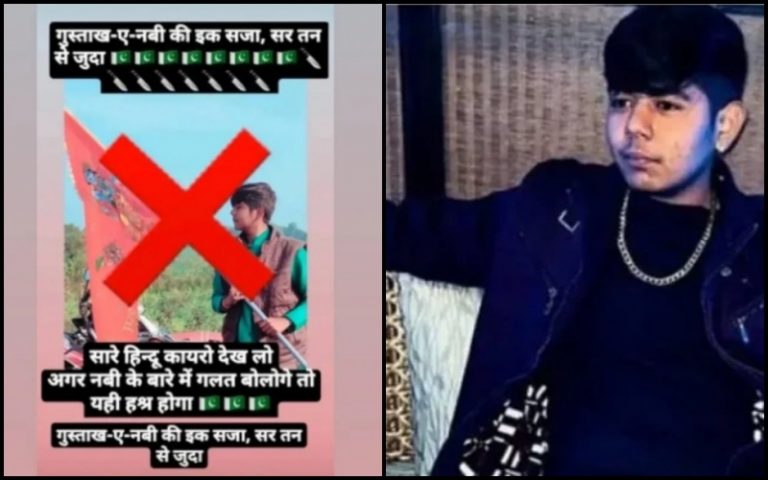
We have lost another Hindu to our own cowardice. Nishank Rathore was found dead a day after his father got a message from his phone – “your son was brave”. “Gustakh-e-Nabi ki ek saza, sar tan se juda”, the message said further. Uma Shankar Rathore, the father of the victim, received the message at 5.44 pm on Sunday evening. Panicked, he started attempting to trace his son. He had gone to meet his elder sister, his other daughter informed him. Later in the evening, his dead, mangled body was found on the railway tracks.

“Tell this to all Hindu cowards”, read the message to Nishank’s father, “Never ever Blaspheme”.
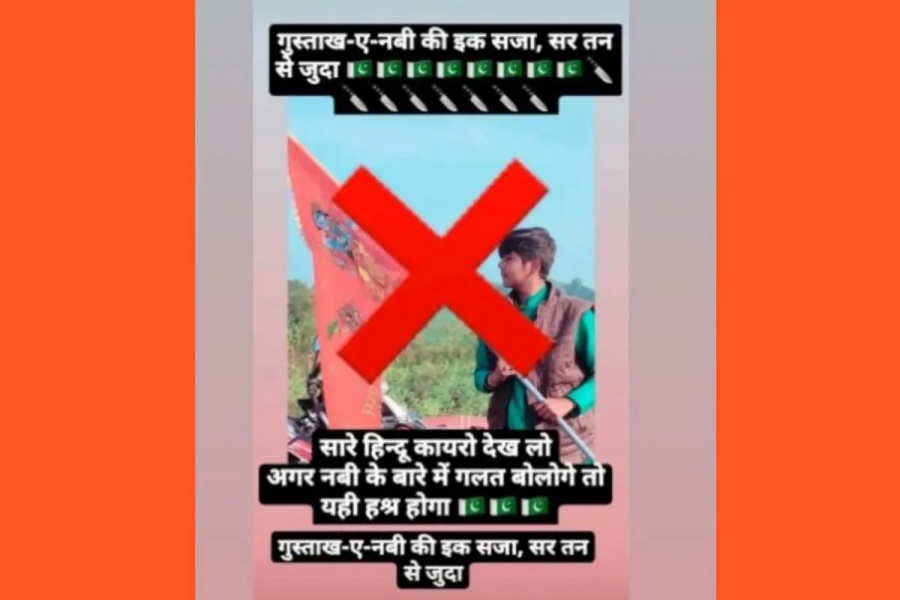
The message that Nishank’s father got

It was late last night when we reported the news of Nishank being murdered and the bone-chilling message that was sent to his father, from his phone, by the killers, moments before he was chopped up. “Another one”, was the first thought that ran through my head. The very next moment, I felt immense shame. I was not as outraged as I was after I watched the video of Kanhaiya Lal being murdered. I was a little less outraged. I was a little less shaken up. I was a little less devastated and more importantly, I was a little less angry. It was a sense of despondency that edged out some of the anger I had harboured in my heart since the Kanhaiya Lal murder.

What was it? Was it the lack of a video? Did the stark visual of two Muslim men holding a blood-soaked knife and the video of Kanhaiya Lal pleading for his life flip a switch that only visual representation of brutality could? Do I need a video to feel anger every single time a Hindu is murdered? Without the video, without the slap across the face that the video represents, was my heart too hardened? Did I even care? Can I, beyond doubt, convincingly claim that I care for the lives of Hindus if every murder does not inflame me just as much? Am I not just as bad as the rest of them? Did my lack of rage mean that Nishank’s life was less precious than that of Kanhaiya Lal simply because his murder was not captured on camera?

“Your son was brave”, the killers messaged. He must have fought. He must have tried to defend himself. He must have been defiant in the face of death. Why else would they say Nishank was brave, I thought. He did not beg. Or maybe he did. But he fought, I tried to convince myself. Nishank was brave.

It is us, you and I, dear Hindus, who are cowards. The killers were not particularly wrong when they sent a message to “Hindu cowards”. “Never blaspheme” – the warning should ring true in our ears. We have steered so far from the path of our ancestors who laid their lives down for Dharma, that even shame alludes us. We choose to close our eyes and hearts and assume that the beast of Islamism affects “others”. The Kashmiri Hindus were far off in Kashmir and it happened in the 90s – things are different now, we convince ourselves. Kanhaiya Lal lived among uneducated Muslims, our friends are different – they would never do this, we tell ourselves. Our residential area is better, this only happens in low-income groups, economic prosperity and education would solve this problem, we know better Muslims, we know secular Muslims, we know Muslims who hardly practise religion, they don’t go to the mosque, they don’t pray 5 times a day, they are just like you and me, we repeat to ourselves. We pretend that our economic prosperity, coupled with the educational superiority of the ones we associate ourselves with, is the only shield we need.

The delusion is necessary, perhaps. It is necessary because reality would paralyse us with fear. Would “Hindu cowards” survive the realisation that it was Umesh Kohle’s friend of 20 years who sold him out and planned his murder? That the most infamous Islamists have had an education far superior to most of us? Would we survive the realisation that money has never been an effective way to combat religious conviction, least of all conviction that, for centuries, has pushed its adherents to turn into barbarians? Do you think Kanhaiya Lal could have saved himself had he offered those knife-wielding barbarians some money? A better house? A better job? Do you think Kanhaiya Lal, Umesh Kohle or Nishank’s killers would have suddenly realised that their religious conviction to behead could be set aside if only they had a better car? Can “Hindu cowards” live with the realisation that it could be, and most probably, will be, them next? Could we live with the realisation that our friend, our neighbour, our cook, our vegetable vendor could be the one who picks up a knife next to behead us because we breathed wrong? Could we?

Cowards are a special breed. They spend a large portion of their time convincing themselves that their cowardice either stems from a legitimate abyss created by the circumstances that surround them or that their cowardice is actually an act of silent bravery.

And don’t we Hindus do just that? We feel such pride in telling ourselves that we are a peaceful people, a plural people, a people who never defend themselves even when the sword is slicing through our neck. We take such pride in telling the world that we died without so much as a toot. We call a man a Mahatma, who asked us to die with a smile on our faces as our Mohammadan brothers came to kill us. He insisted that Hindus remain “non-violent” when the Moplah Muslims were raping our women, killing our children and beheading our men – for the sake of unity, he said – remain non-violent because the Mussalman had “gone mad” after the British “insult to Islam”. We call him a Mahatma, very proudly.

Today, we have even lost the ability to be angry. It is said that fatigue makes cowards of us all – and fatigued we are. In West Bengal, when Islamists and TMC goons (often the same) went on a rampage, raping women, and killing Hindus, after a certain point, the news of death just became par for the course. Ritu, the girl who was gang raped in front of her father after goons came to her house saying “we want Hindus girls” became just a statistic – a news report to be read, forgotten and used occasionally to prove a point during arguments.

The Islamists, are in essence, repeating the TMC module. They are killing so many of us, that ultimately, we lose the ability to even be angry about Hindus being murdered. When we lose that anger and fatigue sets in, the bravest of us turn into cowards – and they know this.

They know that if they keep killing us, ultimately, we will consider our own death par for the course. They know our anger will turn into despondency and our despondency will soon turn into nonchalance. The fear that we feel every time a Hindu is murdered by Islamists, fear for our children, and our future, will turn us into paralysed cowards who will continue to take pride in tolerating our own annihilation. They will continue to weaponise our innocence, our naivety, while we wither away and bury our anger deep in our hearts, justify our cowardice in the name of unity, brotherhood, peace and plurality.

There is a message in this for “Hindu cowards”, indeed. There is a lot that needs to be done. There is a lot that as a people, Hindus need to unlearn, learn and internalise. But let the bravery of Nishank not go in vain. Let us “Hindu cowards” at least, not let our rage be extinguished. At least that.
Malaysia: Hindu woman allowed to reunite with kids converted to Islam without her consent, locals say the kids must remain Muslims

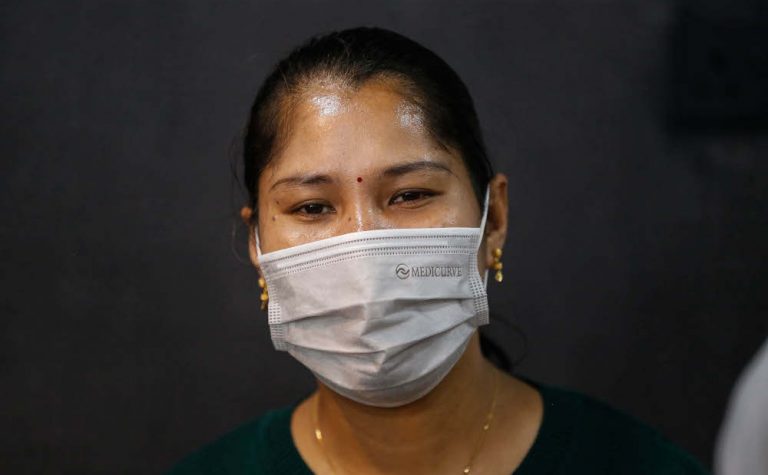
A Malaysian Hindu mother who was given custody of her children after her ex-husband took them and unilaterally converted to Islam is now contesting the forced conversion of her children to Islam. Loh Siew Hong, a 35-year-old Hindu Chinese woman in Malaysia, was granted custody of her children on February 21 this year following a three-year legal battle.

However, Loh’s ordeal is far from over, with her attorneys contending that the children’s conversion to Islam was unlawful. Some traditionalist Muslims argue that now that the youth have converted, there is no turning back. The Pan-Malaysian Islamic Party, an Islamist group that forms part of the national government, has advised Loh not to dispute the conversion. The punishment for apostasy in Islam is death.

The group’s information chief Khairil Nizam Khirudin told AFP, “If we can meet her, we will persuade her to allow the children to practise Islam.” Loh is encountering hostility in her efforts to re-convert her children to their original faith. Loh’s case is similar to several others in which the wife is tortured before her children are converted unilaterally by the husband.

Background of the case

Loh Siew Hong filed for divorce and separated in March 2019 from her husband after years of domestic violence at the hands of her Indian-origin spouse Nagahswaran Muniandy. Loh was thereafter hospitalised for a lengthy period as a result of injuries inflicted by her ex-husband. Her children were taken away by her ex-husband, who had by that time converted to Islam.

During her hospital stay, her ex-husband Muniandy relocated her son, aged 10, and two twin daughters, aged 14, to the State of Perlis where he converted them to Islam with the help of an Islamic NGO. Since the children were minors and Loh Siew Hong’s consent was not sought, the conversion was considered “unilateral”.

Hong failed to trace her children and sought the help of the police. “In December 2019, she obtained interim custody of her children pending her divorce, but her court case was delayed when Malaysia went into Covid-19 lockdown in March 2020; she finally obtained an order granting her full and sole custody in March 2021,” reported MalayMail.

Meanwhile, her estranged spouse Muniandy was caught and sentenced to prison in Kelantan for a drug-related offence. The NGO refused Loh Siew Hong’s request to meet her children. The youngsters were then relocated to a children’s home in Kedah.

The legal battle

Loh Siew Hong filed a habeas corpus application before the Kuala Lumpur High Court on February 13 of this year. Following the submission of the application, the children were placed in the care of a ‘neutral’ party, the Perlis Welfare Department.

Hong stated in her application that a female Islamic preacher named Nazirah Nanthakumari Abdullah confined her children at the Hidayah Centre Foundation in Bayan Lepas, Penang, Malaysia and would not allow her to meet them. The Islamic NGO instead transferred her children to a children’s home.

In the court order, Justice Datuk Collin Lawrence Sequerah noted that Loh was accorded the custody of her 3 minor children by the Kuala Lumpur High Court in December 2019 (interim ex-parte order) and in March 2021 (final order). He stated, “The court orders should not be treated with impunity. I allow the application as per enclosure one (writ of habeas corpus)…The three children are to be released forthwith into the sole custody, care, and control of the applicant.”

Challenging unilateral conversions

Though Loh has been united with her children, her struggle continues as she faces opposition from the Islamic society to get her children’s conversion annulled. The topic has become yet another flashpoint between increasingly vocal Islamist hardliners and those defending minorities’ rights.

Decades of policies favouring Malays, critics argue, have strained ties, with the country’s generally moderate brand of Islam losing momentum to increasing radicalism. According to human rights organisations, most incidents of unilateral conversion go unreported, only coming to light when a parent files a legal challenge. Loh’s case is one such case.

SSC scam: TMC Minister Partha Chatterjee helped get govt jobs for 10 relatives of his bodyguard using fabricated papers

TMC Minister Partha Chatterjee, who was earlier arrested in the School Service Commission (SSC) scam case, has reportedly helped 10 relatives of his bodyguard to land government school jobs.

The matter came to light when a petition was filed against it in the Calcutta High Court on Monday (July 25). As per reports, a man named Biswambhar Mondal used to work as a bodyguard of the TMC Minister.

A resident of the Chandipur area in the East Medinipur district, Mondal has been accused of using his connections with Partha Chatterjee to secure jobs for his brothers and cousins.

Mondal’s brothers, Bangshagopal and Devgopal, and 8 of his cousins had reportedly got jobs in different East Medinipur schools using ‘concocted and fabricated papers.’ Bangshagopal is also a leader of the Trinamool Congress party.

In his defence, he said, “This is all political vendetta. They are jealous. All of us have got jobs through proper channels.” Bangshagopal claimed that there was no evidence to suggest that he and his cousins got jobs using unfair means.

While speaking about the development, the counsel for the petitioner said, “The court has asked to add the party to the main SSC scam case and has asked them to file an affidavit about their job details and how they got it by August 17. Biswambhar Mondal was Chatterjee’s bodyguard and it is his family who got these jobs.”

Court remands Partha Chatterjee, Arpita Mukherjee to ED custody

On Monday (July 25), a special court remanded Trinamool Congress (TMC) Minister Partha Chatterjee and actress Arpita Mukherjee to Enforcement Directorate custody for a period of 10 days.

The duo was arrested in connection to the School Service Commission (SSC) scam case. During the hearing, the Court noted that the material produced before it by the central agency suggested that the offence was very serious.

It observed that the case was in its early stage and that investigating authorities should be given the opportunity to find the truth. The court rejected the bail application of both Partha Chatterjee and Arpita Mukherjee and remanded them to ED custody till August 3, 2022.

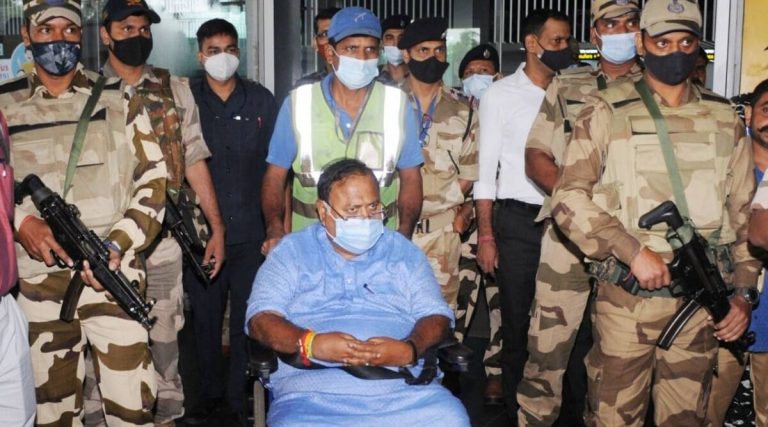
In a tweet, The Economic Times informed that Partha Chatterjee has been brought to Kolkata airport from AIIMS Bhubaneshwar and will be taken to the Central government office (CGO) complex following the court’s order.

Earlier, the TMC Minister was ‘greeted’ with ‘chor chor’ chants outside AIIMS Bhubneshwar. Videos had emerged wherein the crowd gathered outside the hospital could be heard shouting ‘chor chor’ slogans as Partha Chatterjee was being wheeled into the hospital.

He had reached AIIMS Bhubaneshwar through Air-Ambulance early on July 25, 2022. He was shifted from state-run SSKM Hospital in Kolkata to AIIMS Bhubaneswar, based on an order passed by the Calcutta High Court.

Dr Ashutosh Biswas, Director of AIIMS Bhubaneswar had informed the media that the chest pain of Partha Chatterjee was not serious. “He was having problems because of his chronic illness. We investigated and the report has been submitted to the High Court, there was not much chest pain. He is in stable condition and will be discharged today.”

Gujarat: Ahmedabad resident Mohammed Soheb Yakub sexually assaults a minor, touches her breasts, arrested

On Monday, Ahmedabad-based youth named Mohammed Soheb Yakub was arrested by the Police for sexually harassing a minor girl in the city of Anandnagar area. Yakub slapped the young girl and also touched her breasts in the public and then fled from the scene.

According to the reports, the incident is said to have happened on Wednesday, July 20 when the girl who studies in class 10 was going for her tuition classes. She halted at the signal close to Jodhpur Char Rasta at MG farm road. Yakub also arrived at the signal on the bike and harassed the girl in public.

The accused slapped the minor girl and then touched her breast. He then immediately fled from the scene leaving the girl embarrassed in the public. The accused who sexually assaulted the girl was wearing a helmet. Reportedly, the Anandnagar Police was informed about the incident and immediately began the investigation.

The Police reached the spot and checked the CCTV footage from the camera installed at the signal and some of the nearby shops. The officers then identified the accused and nabbed him for assaulting a minor girl. The case has been registered and the Police have charged the accused under the relevant sections of the Indian Penal Code, 1860.

India objects to China and Pakistan’s invite to third countries to join CPEC Projects

On July 26, India issued a statement objecting to the participation of third countries in CPEC Projects. Official Spokesperson of the Ministry of External Affairs Arindam Bagchi said such actions directly infringe on India’s sovereignty and territorial integrity.

In the official statement issued in response to a media query, Bagchi said, “We have seen reports on encouraging proposed participation of third countries in so-called CPEC projects. Any such actions by any party directly infringe on India’s sovereignty and territorial integrity. India firmly and consistently opposes projects in the so-called CPEC, which are in Indian territory that has been illegally occupied by Pakistan. Such activities are inherently illegal, illegitimate and unacceptable, and will be treated accordingly by India.”

Pakistan and China invited third countries to join CPEC

On July 23, it was reported that Pakistan and China had invited third countries to join China-Pakistan Economic Corridor (CPEC) Projects. The CPEC Joint Working Group (JWG) on International Cooperation and Coordination held a meeting on Friday, July 22 2022. In this meeting, the foreign office issued a statement that said, “As an open and inclusive platform, both sides welcomed interested third countries to benefit from avenues for mutually beneficial cooperation opened up by CPEC.”

Current situation of the China-Pakistan Economic Corridor

At a time when Pakistan is being pounded by a domestic financial crisis, the $65 billion mega project has started its second stage. Additionally, China is also dealing with a real estate crisis and an increase in depositor protests. The CPEC is the central focus of China’s ambitious Belt and Road Initiative (BRI), which aims to reintroduce historical trade networks by creating a modern-day Silk Road that links it to south and southeast Asia, the Middle East, Africa, and Europe.

CPEC is one of China’s most significant projects as a single country. It was intended to demonstrate the success of the BRI while also allowing China to harness connections with its ally in order to get licenses and protection assurances for its projects. However, China’s inability to pitch CPEC as a roaring success and template has caused a setback to other BRI projects that are also in debt.

Pakistan and the CPEC problems

India has categorically objected to the CPEC project as it passes through Pakistan-occupied Kashmir (PoK). On several occasions, India has asked Pakistan to vacate the area. For Pakistan, CPEC was envisioned to be a boon when Chinese President Xi Jinping and the then Pakistan Prime Minister Nawaz Sharif launched the CPEC in 2015. Seven years down the line, it has proved more of a curse for Pakistan’s economy. Islamabad was forced to import billions of dollars in materials for the project, which increased the country’s current account deficits. COVID-19 pandemic only added to the worries of the Islamic country.

Besides financial problems, security and corruption emerged as major issues plaguing the CPEC’s stretch passing through Pakistan. This is because a major part of this stretch passes through Balochistan, and the Baloch people are resisting this project and the presence of the Chinese and Pakistani armed forces in the name of providing protection to and monitoring the construction works. Strong Baloch opposition to Islamabad’s control over their land has expressed itself in opposition to the CPEC projects.

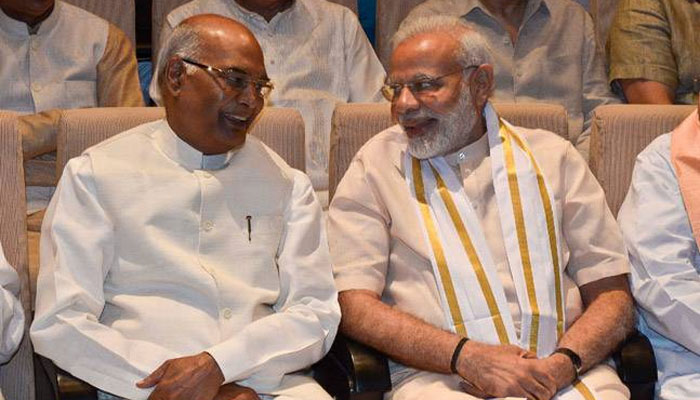
‘You set the highest standards of principles, probity and performance, and of sensitivity and service’ PM Modi writes heartfelt letter to former President Ram Nath Kovind

On July 26, former President of India Ram Nath Kovind shared a letter written to him by Prime Minister Narendra Modi. While sharing the letter, he said, “This letter from Prime Minister Narendra Modi has deeply touched me. I take his kind and heartfelt words as a reflection of the love and respect fellow citizens have showered on me. I am sincerely grateful to you all.”

In his letter to the former President, PM Modi said he set the highest standards of principles, probity and performance, and of sensitivity and service. The letter read, “As your term draws to an end, I join the entire nation in saluting you and extending our deepest gratitude for your outstanding service as the President of our Republic and for a long and distinguished career in public life. You set the highest standards of principles, probity and performance, and of sensitivity and service.”

Speaking about how his journey from a small village to Rashtrapati Bhavan is an inspiration, PM Modi said, “As we approach the 75th anniversary of Independence, your remarkable personal journey, from a small village deep in the heartland of our country to Rashtrapati Bhavan, has been a parable for our country’s evolution and development, and an inspiration for our society. Through your life and career, you have persevered with determination and dignity, with a deep commitment to the morality and integrity that is at the core of the Indian ethos, and with the highest regard and responsibility towards the principles of our Constitution.”

He added, “In turn, as the highest authority of our country, you upheld and reinforced the ideals of our Constitution and the vitality of our democracy with sound judgment, great dignity and extraordinary statesmanship and always with the best interests of our Republic as your compass.”

PM Modi said he saw the former President’s compassion and concern for the welfare of the weakest in the Indian society. He added that as the head of the state, former President Kovind was the source of calmness, unity and reassurance at home and a persuasive advocate of India’s values and interests abroad during the unprecedented stress of the pandemic.

He said, “As the Head of State at a time of unprecedented stress of the pandemic and a world caught in turbulence and conflict, you were a source of calmness, unity and reassurance at home, and a persuasive advocate of India’s values and interests abroad.

You were the First Citizen of the country, but I always found you unwavering in your compassion and concern for the welfare of the weakest citizen. Even as you reached the highest office in our land, you remained firmly and proudly rooted in its soil and connected with the people – happy in their company, sensitive to their problems, perceptive about their expectations, and acutely aware of the needed change. You were a steadfast and passionate champion of social transformation and inclusion, speaking for the poor, the historically excluded and oppressed, and the marginalised, with special attention to the status and role of women.”

The letter further read, “During your Presidency, in your numerous actions, interventions and speeches, you have represented and carried the best of India to all corners of our country and the world. The themes and issues that you have prioritised – the civic duty in giving back to society, the commitment to an India that is a confluence of our ancient heritage as well as of modern science, and of sustainable social change driven by increasing and expanded access to education, especially for girl children – have been well thought-out and meaningful.”

Speaking about the interactions between him and the former President, PM Modi said, “I am proud that my interaction with you goes beyond the Presidency. I have seen you toil among people during your political career. As a Member of Parliament, you made a mark as an effective Parliamentarian who often raised issues pertaining to social welfare and education. Your gubernatorial tenure in Bihar was outstanding. You made unparalleled efforts to make the Raj Bhavan into a Lok Bhavan, which is accessible to the common people.”

He added, “I have always been deeply touched by your humility, grace and generosity. I will never forget our visit to Paraunkh a few weeks ago. I was particularly touched to see how you had donated your family residence to help others, especially those belonging to the poor and marginalised sections of society. It was equally heartening to see you retain the deep connect with your roots and the affection the people showered upon you. Your special gesture of coming to receive me at the helipad will remain etched in my memory forever.”

PM Modi said the former President’s gesture to visit his mother showed how deep-rooted he was committed to the value-systems integral to the land. He said, “Equally special was your gesture of visiting my mother and talking to her on several issues. It showed your deep-rooted commitment to the value-systems integral to our land.

Your life and service reflect the dearly held belief that you recently shared with students never fail to give back to society which has given you the opportunity to become a successful individual.

You have always been generous with your time and counsel to me over the past five years, and I will continue to turn to you for advice. It has been a real privilege to work with you.”

Former President Ram Nath Kovind‘s tenure as the President of India ended on July 25, 2022. President Droupadi Murmu took charge of the post on Tuesday.

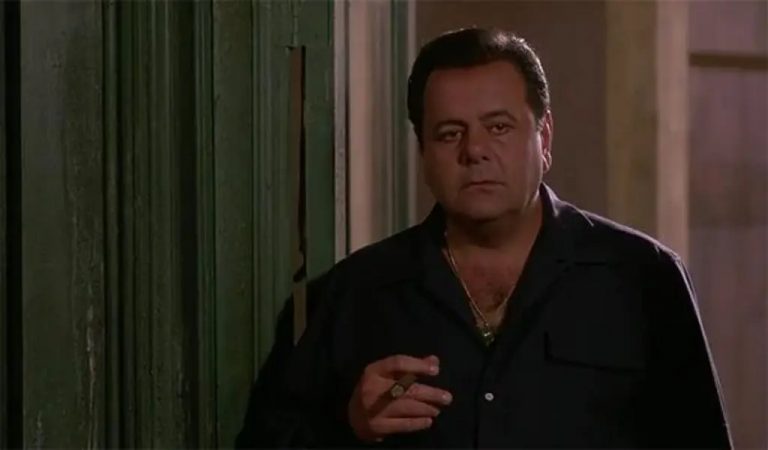
Another ‘Goodfella’ gone, Paul Sorvino aka Paulie Cicero dies aged 83

July hasn’t been good for actors who played beloved mafia figures in media. First, it was James Caan who played Sonny Corleone in The Godfather, then it was Tony Sirico (an actual mobster) who played the goofball Paulie “Walnuts” Gualtieri in The Sopranos, and by the end of the month, we have also lost Paul Sorvino, the caporegime from Martin Scorsese’s classic Goodfellas. The lead actor from Goodfellas, Ray Liotta, also died in May earlier this year.

The Tony-nominated actor died of natural causes at the age of 83, his wife Dee Dee shared the news. While no official cause of death is given, Sorvino, the father of Academy Award winner Mira Sorvino, is suspected to have died due to natural causes.

Apart from his iconic role in the Goodfellas, Sorvino also played memorable roles as Sergeant Phil Cerreta in Law & Order, James Caan’s bookie in The Gambler, secretary of state Henry Kissinger in Oliver Stone’s Nixon, Claire Danes’ father in Romeo + Juliet, and a heroin-addicted lounge singer alongside Alec Baldwin in The Cooler.

Paul Sorvino was born on April 13, 1939, in the Bensonhurst section of Brooklyn. His father was an Italian immigrant who worked in a robe factory, and his mother was a housewife and piano teacher. Born and raised in Brooklyn, Sorvino spent a lot of time living in California with his mom before graduating from Lafayette High School in 1956.

Sorvino started his career as a copywriter in an advertising agency before deciding to go into theatre. He made his debut in the movies in 1970 with ‘Where’s Poppa’ before going on to act with Al Pacino in ‘The Panic in Needle Park’ in 1971, the second Hollywood movie for both of them. Sorvino was nominated for a Tony award in 1973 for his performance as Phil Romano in the Pulitzer-winning Broadway production of Jason Miller’s That Championship Season.

Sorvino’s last appearance on screen was as Uncle Carmine in the American thriller film ‘The Birthday Cake’. Sorvino is survived by 3 kids, actors Mira and Michael, and Amanda.

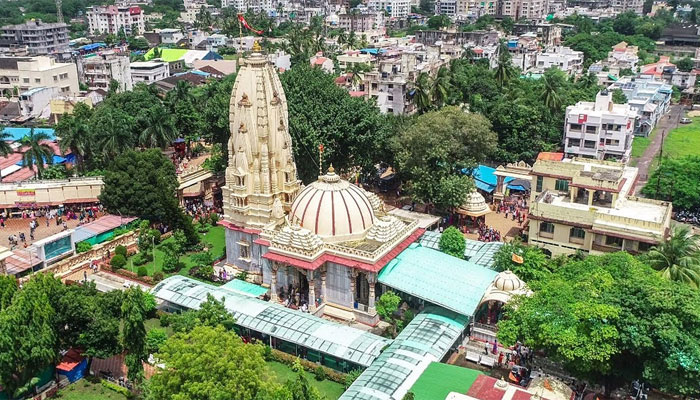
Navsari: VHP objects awarding tender to Mumbai-based Anwar Sheikh at the Somnath Mahadev Temple fair in Bilimora

On July 25, Vishwa Hindu Parishad demanded the withdrawal of a tender worth Rs 46 lakh issued to Mumbai-based Anwar Sheikh for the construction of shops (tents) and children’s play area for the Somnath Mahadev Temple fair in Bilimora town of Navsari, Gujarat. The construction has already commenced by the contractor.

VHP has stated that awarding the tender to a Muslim will hurt the religious sentiments of lakhs of devotees who will visit the fair. They visited the Temple Trust office and warned if the tender was not cancelled, they would do protests. VHP alleged that in such circumstances, there would be a possibility that meat would be consumed on the premises. They further alleged Namaz might be offered on the premises, which would hurt the religious sentiments of lakhs of Hindus. Reports suggest that after the objection raised by VHP, a meeting was held with the temple trust, and the matter was resolved.

As per reports, the fair takes place every year at the temple premises, and over 10 lakh devotees visit the temple during that period. VHP Bilimora President Hiren Shah said in a statement, “This is for the first time a Mumbai-based firm has filled the tender for children’s rides while the other two tenders have been given to Hindus.” He further added that VHP’s teams would keep vigil at the fair, and if they find anything objectionable, action will be taken accordingly.

Temple Trustee Shiva Patel said the matter was resolved after the meeting. He said, “We have come out with a solution that the tender cannot be cancelled currently, but will take guarantee from the people (contractor) that they will not eat the meat inside the campus or will offer prayers. Next time, we will think of issuing the tenders. We had also presented our problems before the VHP, after which they agreed.”

Somnath Mahadev Temple fair takes place every year during the month of Shravan. Lakhs of devotees visit the temple during the fair to take blessings of Bhagwan Shiv. The stalls at the temple attract a lot of customers, and businesses worth crores take place during that period. Due to the Covid-19 pandemic, the fair did not take place for two years.

OpIndia tried to contact Hiren Shah but could not connect.

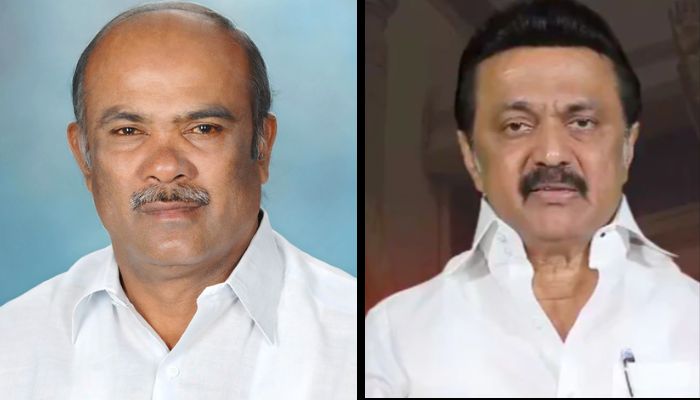
If there were no missionaries, Tamil Nadu would be like Bihar: Tamil Nadu speaker panders to Christians, says CM knows they made his govt

On Jue 28, Tamil Nadu speaker M Appavu courted controversy after he claimed that the State would have turned into Bihar, had it not been for Christian missionaries.

He made the contentious remarks during the centenary celebrations of St Paul’s seminary in Tiruchirappalli. A video of the event has now gone viral on social media.

He alleged that the development of Tamil Nadu was due to the work of missionaries in the State. M Appavu said that the MK Stalin-led-government belonged to those who observed fast and prayed to God.

The Tamil Nadu speaker remarked, “Chief Minister knows that this government was created by you all. You can go ahead and speak to your CM and I shall support you.”

“If you are removed, there wouldn’t be any growth in Tamil Nadu. If there were no missionaries, then Tamil Nadu would be like Bihar,” he added. M Appavu thanked Christian missionaries for his personal growth and for laying the foundational structure of the State.

Political reactions

His contentious remarks created an uproar in political circles, with the BJP demanding an apology from the Tamil Nadu speaker. BJP spokesperson Mohan Krishna slammed M Appavu and said, “He should apologize as the kinds of words he has used are very communal.”

“He stated that without Catholic Christians, Tamil Nadu would become Bihar. It is absolute appeasement…Since coming to power, the DMK is always in controversy. Their agenda is to demean Hindus there and encourage anti-Hindu propaganda in the state.”

Meanwhile, the Tamil Nadu speaker defended his remarks and alleged, “Only Christian missionaries made education available for all. Christian missionaries brought social equality. The Dravidian movement is an extension of their work.”

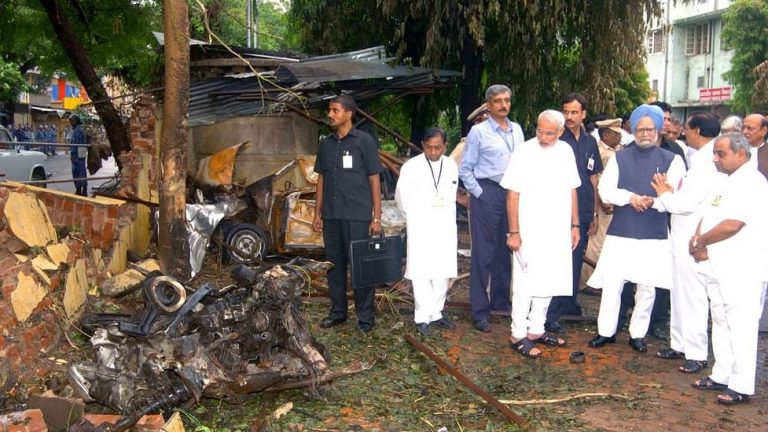
26 July, 2008: When terrorists chose Quran over constitution and killed Amdavadis, never forget the dastardly attack

It was a Saturday evening and my parents were visiting some relatives somewhere in Shahibaug area of Ahmedabad. Around 7 PM I got a call from my colleague, a place where I was interning as a part of my Chartered Accountancy course, asking me if I am alright and safe at home. I wondered what happened. I was informed there were serial bomb blasts in the city and many of them took place on the route our team was taking for a client’s office where we were doing the audit of the annual accounts.

I switched on the tv and the visuals were of the crossroads we were passing by every day for the past 2 months. The visuals then moved to Civil Hospital where one more blast took place. The terrorists had targeted two hospitals near the blast site so that when the injured are brought in for first aid, more people can be killed. Civil Hospital is where my parents were visiting our relative. I made panic calls but the network was jammed immediately and no calls would get through. I did not know what to do.

A few hours later, my parents reached home and I cried out of relief.

The three of us watched tv in stunned silence that evening. In a city that has a history of communal violence and that had witnessed the 2002 Godhra carnage and subsequent riots just a few years prior, we expected the worst. The police and state administration, however, swung into action and made sure peace prevails.

I got a call from my boss informing me that I am being taken off the audit team. I was the only girl in the team in the godforsaken industrial area and he didn’t want my safety concern as additional work. He said he would join us for two days where I would hand over my work. On Monday, we stayed back till 2 AM so that I did not have to go there the next day. The client had arranged for our conveyance from our office on Ashram Road to Vatva.

At 2:30 AM when we left for Ashram Road, it had started drizzling. There were 8 of us in the cab including the driver. We were stopped by police six times on our way back. Police eyeing a bunch of people with backpacks and laptops suspiciously along with a lone woman in the group. At one place, a woman police officer was called in to check my bag and ask me for details on where we are coming from and where we were going. I had to switch on the laptop to show her how it is not going to blow up I guess.

It was terrifying.

Years later, I spoke to one of the survivors. The young man I talked to was 8 years old when he lost his father and elder brother.

On 26 July 2008, 8-year-old Yash Vyas with his 10-11-year-old brother Rohan and father, Dushyant Vyas, stepped out of the home to learn how to cycle. They rode the cycle for about 2-3 hours. At around 7:30-7:45 PM, someone called up his father and asked him to wait at the Civil Hospital. Yash doesn’t know the exact details, but his father who worked at Ahmedabad Civil Hospital’s cancer department’s laboratory waited.

10 minutes later, an ambulance rolled in. His father asked his two sons to wait for him with the cycle and went to check in the ambulance. And there was another blast. The blast was so powerful it was heard over a radius of 2 km from the spot. Rohan was burnt beyond recognition. Yash was injured. He then saw his father being taken on the stretcher at 8:30 PM. That was the last time he saw him. He fell unconscious. His father, severely injured, bled to death.

56 people had died in the bomb blasts.

The day I spoke to Yash, Safdar Nagori, one of the convicts in the blast, had said how he would choose Quran over Constitution. Terrorism may not have any religion, but this terrorist did kill in the name of his religion. A resident of Ujjain, Madhya Pradesh, 54-years-old Nagori was associated with the banned Islamic terrorist organization Students Islamic Movement of India (SIMI). After SIMI was banned, reports suggest, many of the members joined the ranks of PFI (Popular Front of India). PFI members are now getting caught running terror modules and planning Ghazwa-e-Hind and turning India into an Islamic caliphate. Just another religion-less terror group.

The Threat Email

On 26th July 2008 at 6:41 in the evening, several news agencies received a 14-page e-mail five minutes before the explosions with the subject line: “Await 5 minutes for the revenge of Gujarat”. It was clear enough that the terrorists were referring to the Gujarat riots of 2002 which took place after the Godhra carnage. This email was sent by Indian Mujahidin. The email further said, “In the name of Allah the Indian Mujahideen strike again! Do whatever you can, within 5 minutes from now, feel the terror of Death!” By mentioning Allah, it was also clear that Islam is the inspiration of these terror attacks.

The terrorists mocked the Indian security systems reminding the then CM of Maharashtra Vilasrao Deshmukh and his deputy R. R. Patil of the bomb blasts that took place in the local trains of Mumbai on 11th July 2006. The email said “We wonder at your memory. Have you forgotten the evening of 11 July 2006 so quickly and so easily?”

The Blasts

Five minutes later, as threatened in the email, the city of Ahmedabad shook with the serial blasts. It started at 6:45 PM and the explosives blasted in various parts of the city at regular intervals. There were 21 blasts in all which took place at 14 different locations in the city in the next 70 to 80 minutes. The bomb blasts shook the following areas: Khadia, Raipur, Sarangpur, Maninagar, Hatkeshwar Circle, Bapunagar, Thakkarbapa Nagar, Jawahar Chowk, Govindwadi, Isanpur, Narol, and Sarkhej.

Two more severe blasts occurred in two hospitals in the city namely L. G. Hospital Maninagar and Ahmedabad Civil Hospital’s Trauma Center. The bomb blast in the civil hospital caused what could be the peak of the most horrific scenes in the city ever.  The blast in the hospital claimed 37 lives, the most of all 21 blasts in the city. The hospital was targeted specifically with the intention of raising the count of casualties which would, in turn, amplify the fear in the minds of people.

The Investigations

27th July 2008, late in the night. Abhay Chudasama, DCP of the crime branch of Ahmedabad police was busy gauging the depths breadths of this case when he started receiving inputs from the network of his informers about the said activities SIMI agents were involved in for the last few days. A report by News18 has detailed his role in the investigation of this case.

According to the report, Abhay Chudasama had an invincible and impeccable network of informers which is a prerequisite to breaking the backbones of organized crimes like such terrorist attacks. All he needed was a team of a few more committed officers. The state government extended full support on this front and he was provided with a team of brave and intelligent officers with an excellent track record of solving complicated cases.

The state home ministry overnight deputed a team of officers like GL Singhal, Himanshu Shukla, Rajendra Asari, and Mayur Chavda into the crime branch. Earlier these officers were at that time serving in different cities of the state. It must be noted here that, the network of informers, in this case, grew exponentially with every single officer included in the team. DGP Ashish Bhatia was the joint CP now.

The Initial Leads

As per the inputs received from the informers, Abhay Chudasama led the investigations in those directions. A handful of suspects were rounded up. No concrete development was marked in the initial two weeks despite tireless efforts by the team. Only the IP address from which the email was sent to various news agencies was found. It was U.S national Ken Haywood from whose IP address the threatening email was sent. He used to live in the Sanpada area of New Mumbai. His residence was raided by the ATS officials on 27th July 2008 soon after tracing the IP address. But the real culprits were yet to be traced.

After two and half weeks of futile efforts, one day Abhay Chudasama received a call from the informer. He heard a ‘Pakki Khabar’ from the other end. The informer in Bharuch had seen the red and white car used in the Ahmedabad bomb blasts. Within minutes, DCP Chudasama left for Bharuch. He was accompanied by IPS officer GL Singhal and DSP Mayur Chavda.

Officers reached the spot as told by the informers. The house they raided gave them the first lead. The terrorists had made a few of the bombs in the same house. The interrogations of the house owner revealed a phone number. And this phone number was the master key that went on to open the locks of not only the Ahmedabad blasts but also the locks of the bomb blast cases in other cities like Hyderabad, Bangalore, and Jaipur where blasts had taken place.

Connecting The Dots

The technical surveillance team received some more clues. According to these clues, suspects were being picked up one after the other. The teams were ensuring almost zero time lag between receiving the information and catching the suspects. Jahid Sheikh was the first to be arrested on this lead. The links to this case unfolded and it was revealed that it was a grand pan-India conspiracy.

The Arrests

The day Mufti Abu Bashir and his allies were brought to Gujarat, these different teams had caught 10 more accused from different locations. The total number of arrests on that single day was 13. Everyone was being interrogated separately. More information came out. The technical surveillance team was already prepared with its equipment. The officers located and arrested 30 more accused within the next two days.

This network was called Indian Mujahidin as they had identified themselves in the threat email. It was the same old SIMI that is the Students Islamic Movement of India in its new form.

Ahmedabad crime branch arrested 78 accused suspects. 13 from Ahmedabad, 5 from Vadodara, 1 from Bharuch, 1 from Bhuj, 2 from Surat, 11 from Maharashtra, 12 from Madhya Pradesh, 10 from Karnataka, 9 from Uttar Pradesh, 5 from Kerala, 3 from Andhra Pradesh, 3 from Rajasthan, 2 from Jharkhand, and 1 from Bihar. When 30 accused were arrested at once, the role of SIMI was exposed.

‘Quran’s verdict is above all’

Dinesh Nargave, Superintendent, Bhopal Central Jail, said soon after Nagori was sentenced to death, he said, “The Indian Constitution does not matter to me. The only thing that matters is the judgement of the Quran. It is at the top.” Nagori was General Secretary of SIMI. He was accused of arranging the explosives used in the serial blasts. He also raised funds for the other illegal activities of SIMI. His father was an assistant sub-inspector in the crime branch of Madhya Pradesh Police.

Expert in brainwashing

According to officials, Nagori is an expert in brainwashing people. So much so he was able to convince a guard at Bhopal Central Jail to convert to Islam. The guard was removed from duty after the superintendent came to know about the incident. According to the superintendent, whoever was placed on duty at his cell, he tried to lure them into converting to Islam. He used to tell them, “Everyone is equal in Islam. Hindu religion does not support equality. Convert to Islam, and you will be treated as equal.”

Ahmedabad Serial Bomb Blast case

On February 18, 2022, a special court in Ahmedabad announced a death sentence for 38 out of 49 convicts in the 2008 serial blast case. The remaining 11 have been sentenced to life imprisonment until death. Earlier on February 8 2022, the court had convicted 49 out of 77 accused in the case. The serial bomb blasts that took place in Ahmedabad on July 26 2008, had caused 56 deaths, and 243 innocent citizens were injured in the blasts.