Home Blog Page 3039

Sri Lanka crisis: President Gotabaya Rajapaksa flees to the Maldives, India denies facilitating escape

On Wednesday, the Indian High Commission in Colombo refused to have helped the outgoing Sri Lankan president Gotabaya Rajapaksa flee to the Maldives. Extending support to the people of Sri Lanka amid the mounting political and economic problems in the country, the High Commission said that the media reports which claimed that India helped Rajapaksa escape from Sri Lanka were ‘baseless and speculative’.

“High Commission categorically denies baseless and speculative media reports that India facilitated the recently reported travel of the President of Sri Lanka and Basil Rajapaksa, founder and national organizer of SLPP, out of Sri Lanka. It is reiterated that India will continue to support the people of Sri Lanka”, the Commission tweeted.

In the series of tweets, it also added that the High Commission will stand by the people of Sri Lanka as they seek to realize their aspirations for prosperity and progress through democratic means and values, established democratic institutions, and a constitutional framework. To allow a peaceful succession of power, Gotabaya Rajapaksa has pledged to formally step down as president on Wednesday.

Reportedly, the Sri Lankan Prime Minister’s office announced earlier today that President Gotabaya, his wife, and other family members had left the country. Further according to the information provided by the Sri Lanka Air Force, the President landed at Male, the capital of the Maldives at about three in the morning. This is a week after the President left his official residence just before tens of thousands of protesters overran it.

Last night the Antonov-32 military aircraft that took off from Sri Lanka’s main international airport boarded President Rajapaksa, his wife, and two bodyguards to Male. Reports mention that on their arrival in the Maldives, the First Family was driven to an undisclosed location under police escort.

Some earlier reports had stated that Rajapaksa had left the country in a Navy ship around the time the protestors had stormed into his palace on July 9.

The Rajapaksas skipped four flights on Tuesday that were supposed to take them outside of Sri Lanka when immigration officials voiced their displeasure with allowing them to pass, as per the latest reports. The President and his family intended to bypass immigration and customs without having to stand in line with the general public, but authorities at immigration and the Colombo International Airport refused to comply.

The flights eventually took off without the Rajapaksas on board. Earlier on Tuesday midday, an enraged public detained Basil Rajapaksa, and immigration officials refused him passage to the aircraft by refusing to stamp his passport. Sloganeering ensued, and Basil soon fled the airport. He was supposed to go to Dubai, where he would have connected to another flight to Washington, DC.

1984 anti-sikh riots: Four more arrested, including one 3 time Congress corporator, for killing 13 in Kanpur during the violence

On Tuesday, four more people were arrested for brutally killing 13 people in the Dabauli and Govind Nagar areas of Kanpur during the 1984 anti-Sikh riots. The Special Investigation Team probing the case revealed that one of the accused is a three-time corporator from Congress and is in his 70s today.

According to the reports, all the accused who have been identified as Rajan Lal Pandey, Deepak Dammulal, Dhirendra Tiwari, and Kailash Pal are old and aged between 70-75 years. Only Pandey is 85 years old. Further according to SIT DIG Balendu Bhushan Singh, arrests were made in four cases as a result of SIT team activities. Of the 73 individuals charged in 11 cases, the team has so far detained 21 of them.

Pandey, Dammulal, and Tiwari have been arrested for brutally murdering six people in three cases while Pal who was Congress corporator for three terms then has been arrested for the Dabauli killings. Pal had reportedly killed Vishakh Singh, his wife Simran Kaur, daughter Gurbachan Kaur and four of his sons.

Pal and two other corporators led the mob to Singh’s home, where they initially stole money and other valuables before killing seven members of a family. Two of Vishakh Singh’s surviving sons who had immigrated from Kanpur, Mahendra Singh and Avtar Singh, had made their testimonies as eyewitnesses and named Pal as the mob leader in their declarations.

Reports mention that the officers who led the SIT team investigation to arrest the four accused were named Surya Pratap Singh, Sunil Kanaujia, Jitendra Kumar Singh, and Sanjay Maurya. The teams led by all four officers would get a cash reward of ₹10,000, the SIT DIG said.

The 1984 Anti-Sikh riots took place aftermath of the assassination of then Prime Minister Indira Gandhi. Indira Gandhi was assassinated on 31st October 1984 by her Sikh bodyguards as revenge for Operation Blue Star. From 1st November to 4th November, Sikhs across the country were killed. The government figures suggest the angry mobs, many of which were led by Congress leaders, brutally murdered 3350 Sikhs.

Congress leaders Sajjan Kumar and Jagdish Tytler were directly accused of a large role in orchestrating the riots. However, Congress had tried to justify the riots. On 19th November 1984, while giving a speech in front of thousands of people, then-Prime Minister Rajiv Gandhi said, “Jab Bhi koi bata ped girta hai, to dharti thodi hilti hai. (When a big tree falls, the earth shakes.)”

As per the government reports, more than 3350 Sikhs were killed in the riots. However, the unofficial figures claim that around 8,000 to 17,000 Sikhs lost their lives.

‘Pelt stones and hurdle bombs for Rs 5,000, legal aid will be given’: How Islamists organised the Kanpur violence

The Special Investigation Team (SIT) looking into the June 3 Kanpur violence has made appalling revelations during a court hearing. In the case diary, the SIT mentioned that during the investigation, they found there was a fixed rate for pelting stones and hurdling bombs during the violence. The investigation agency further noted that there was a detailed plan in connection to the violence in Kanpur, and every person involved in instigating violence had different responsibilities. They had fixed rates and came up with a methodology to pay the rioters.

During the investigation, SIT found that those who were called for the violence were assured they would get free legal aid and their family would get financial support. The people were appointed by Mukhtar Baba, the owner of Baba Biryani. The assurance of legal and financial help was given was Haji Vasi. Afzal Hamza, who is the manager of Vasi, had formed a team to instigate violence. A sum of Rs 10 lakh was paid to the rioters in advance.

Different rates were fixed for stone pelters and bombers. As per their alleged plan, Hayat Zafar Hashmi and Nizam Qureshi were given the work to ensure there was a ‘bandh’ during the protest. On the other hand, Mukhtar Baba, his son Mahmood, Haji Vasi, and his manager Afzal managed the crowd and ensured violence. Haji Kuddus was given the responsibility of getting support from the administration, and in exchange, he got a flat free of cost.

During the hearing, Bekanganj Police Station in-charge stated that builder Haji Vasi, his manager Hamza, Mukhtar Baba, and his son Mehmood Umar wanted to encroach on Chandreshwar Hata. They had promised Rs 1 crore if the rioters managed to encroach Chandreshwar Hata.

SIT noted that stone-pelters got Rs 1,000 while those who brought stones on handcarts and hurled bombs were paid Rs 5,000. Minors were “hired” to pelt stones and take part in the violence. The main idea behind hiring minors for the riots was that in case they got arrested, strict action would not be taken against them. They had promised lifetime financial support to the minors to lure them into taking part in the riots.

Kanpur Violence

Kanpur violence of June 3 happened on the pretext of alleged derogatory remarks against Prophet Muhammad by former BJP Spokesperson Nupur Sharma. Islamists had called for a district-wide shutdown. After Friday prayers, thousands of Islamists joined the rally and began pelting stones at the police and the public.

Later, the police arrested over 40 rioters in the case and demolished unlawful properties possessed by primary accused Hayat Zafar Hashmi and his associates. The police also discovered damning communications on Hashmi’s phone and investigated his bank accounts in order to track down money received from Gulf nations to allegedly support the violence.

Rajasthan: After threatening to ‘shake India’ and calling for an economic boycott of Hindus, Ajmer Dargah’s Sarwar Chishti attends ‘peace rally’

On July 12, Khadim of Ajmer Sharif Dargah Sayed Sarwar Chishti attended a ‘peace rally’ in Ajmer city. Chishti, who is secretary of the Anjuman Committee, is the same person who had threatened a movement that would ‘shake India’.

On July 9, it was reported that he had called for an economic boycott of Hindus as they had organized a rally in support of former BJP spokesperson Nupur Sharma. Reports suggest he is also a member of the Islamist organization Popular Front of India.

The peace rally that he attended was organized by the religious leaders following communal tension after the brutal beheading of Hindu tailor Kanhaiya Lal by Islamists in Udaipur.

Sarwar Chishti had been caught on camera inciting a group of Muslims around him, saying that Muslims were the rulers of India for hundreds of years and by changing the names of railway stations, the current government cannot erase the facts that Muslims ruled the country. He had warned the administration saying that such activities will only force the Muslims to aim to rule India again.

Sarwar Chishti is not the only one linked to Ajmer Dargah, who gave hate speeches in recent times. Another Khadim Gauhar Chishti had raised slogans of ‘sar tan se juda’ outside Ajmer Dargah on June 17. Another Khadim Salman Chishti had announced that he would give his house to anyone who would ‘bring the head of Nupur Sharma.’

Following multiple hate speeches, Gaddi Nashin-Dargah Ajmer Sharif and chairman-Chishty Foundation Haji Syed Salman Chishti had called for denouncing the hate speeches and termed them as anti-Islamic and anti-humanity.

The brutal murder of Kanhaiya Lal and Umesh Kolhe

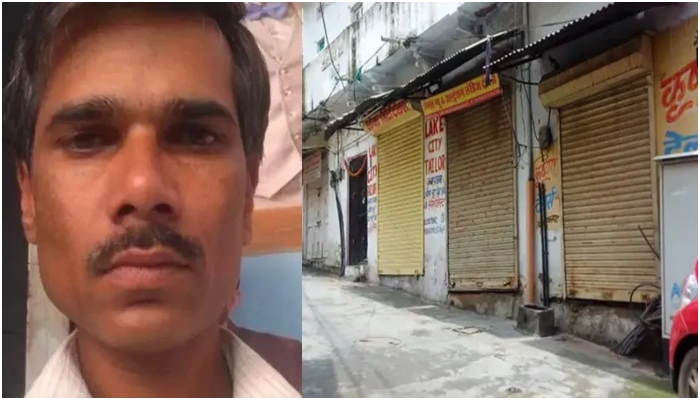
Following the remarks about Prophet Muhammad by Nupur Sharma that were deemed as ‘blasphemous’, there were multiple violent protests across the country. At least two persons named Kanhaiya Lal from Udaipur and Umesh Kolhe from Amravati were brutally killed by Islamists as both of them had published posts in support of Nupur Sharma on social media.

Riot accused joined peace rally in Jahangirpuri, Delhi

This is not the first time a person who was accused of provoking people to violence participated in a peace rally. In May 2022, it was reported that a person named Tarbez Khan participated and, in fact, led a peace rally in the riot-hit Jahangirpuri area of the National Capital. He was arrested by Delhi Police on May 7 for instigating rioters to attack the Shobha Yatra on Hanuman Jayanti in Delhi’s Jahangirpuri area. He created an image of a peace-loving person and, in the background organized protests and communal violence.

Rhea Chakraborty, others charged by NCB for abetting Sushant Singh’s ‘extreme drug addiction’, using his money to buy drugs

The Narcotics Contro Bureau has filed its draft charge sheet in the case of Sushant Singh’s Rajput’s death. As per reports, the actor’s former girlfriend Rhea Chakraborty has been charged with abetment of his drug addiction and using the late actor’s money to buy drugs.

The draft charges have been submitted to the special NDPS court in Mumbai by the NCB.

As per reports, there are 38 charges against 35 accused in the case. Rhea, among others, has been charged with receiving and paying for banned substances that she procured for Sushant Singh Rajput.

In the charge sheet that was filed on Tuesday, the NCB has stated that between March and December 2020, all the 35 accused linked with the Sushant Singh Rajput case were involved in a conspiracy to procure finance drug trafficking, including sales, distribution and delivery for Bollywood and Mumbai’s ‘high society’ elites. The contrabands included Ganja, LSD, cocaine and other drugs.

The accused Siddharth Pithani, a friend of the late actor, and others including Rhea, her brother Showik, Samuel Miranda and Sawant were all allegedly involved in the procurement of ganja that was paid for using Sushant’s bank account with Kotak.

They had allegedly procured the ganja by labelling it as ‘puja samagri’, and thus abetted Sushant’s ‘extreme drug addiction’, the charge sheet has stated.

It is notable here that Sushant Singh was found dead in his apartment in June 2020. As the case was taken over by NCB and CBI, Siddharth Pithani was arrested in May 2021. He was granted bail last week. Actress Rhea got bail in October 2020.

The Judicial Brief: The need for accountability and transparency in the judicial system and imperfections that must be addressed urgently

An independent, objective and unbiased judiciary is one of the most important pillars of democracy. In fact, it is supposed to be one of the strongest pillars that people can depend upon and trust above all others. When aggrieved by the legislature, the executive or the media, people trust the judiciary to come through for them. When such great powers are vested in this function, its responsibility to retain the trust of the people also multiplies many folds. Therefore, when the judiciary is at the receiving end of mockery, it is a cause of concern. It is an indication that people’s trust in the institution is wavering.

However, when such concerns are raised, they are met with hostility. Instead of evaluating the causes, several times, there are hopes expressed for the parliament to curb public dissent by enacting laws to that effect. This is an undesirable approach.

The judiciary in India has been beyond reproach for a very long time. While this was designed to ensure the independence of the judiciary, however, one realises increasingly that such independence should not be without checks and balances. Having been left to its own accords, the judiciary has developed certain chronic imperfections that must be urgently corrected. Some of these deformities are highlighted below:

  1. Nepotism has buried its roots deep within the Indian judicial system. A recent article in a leading newspaper highlighted how every 3rd judge was an ‘uncle’ of another judge in High Courts. This “Uncle Judges Syndrome” was even highlighted by the Law Commission of India in their 230th report. Relations precede talent in the appointment of judges – a system that needs overhauling. An objective real-time marking and grading system should be developed to average out the impact of favouritism and grudges that may determine the career path of a judge in the present collegium system.
  2. As Shri Arun Jaitley had once most famously put it, “The temptation of post-retirement appointments influences pre-retirement judgments.” This is a serious threat to the independence of the judiciary – the foremost requirement for its effectiveness. The parliament must enact a strong law that prevents judges from taking up any kind of post-retirement engagements/ appointments/ jobs whatsoever.
  3. Of late, we have seen many instances of judges exceeding the judicial brief. One may argue that there is no such ‘Laxman rekha’ that applies to a judge, but that premise is instinctively invalid because no one should be above the law, not even a judge. It is therefore very important that the roles and responsibilities of a judge are well-defined, as also the boundaries within which a judge must operate.

Many judicial overtures have been with respect to interference in the legislative functions. And many of these overtures have been when the judiciary allowed personal opinions to overshadow merit-based judgement in a case. The recent outburst blaming Nupur Sharma for the Kanhaiyalal beheading is an example of such fallacies. A similar incident happened when a judge of the Madras High Court blamed the Election Commission for the surge in Covid cases and proclaimed that the Election Commission should be tried for murder! Neither of these ‘oral observations’ made it to the final order.

Some people argue that oral observations have no legal standing. To them, I ask what is the need for oral remarks that do not form a part of the final judgement? And if there is a need, then why is it not included in the final judgement? Judges must be impassioned if they want to be fair. Judges must not allow emotions to cloud the objectivity of their judgement. If they do, it shakes the trust that people have in the judiciary. It is remarks like these that lower the dignity of the courts and must be prevented with the help of a well-defined enforceable judicial brief.

Despite being legally irrelevant, oral observations have far-reaching ramifications. For one, oral observations from the highest guardians of the legal system are almost always interpreted as having been endorsed by the institution. Secondly, such remarks almost always go viral and lead to a media/ public trial of the case itself. Even in the case of the EC, the counsel for EC argued in the Supreme Court that the remarks made by the High Court were widely reported in the media and tarnished the image of the EC as an independent constitutional body, and caused undue prejudice to EC. Such oral observations can impact public opinion and lead to stigmatization. They also open the door to the public mockery of our courts.

The role of a judge is that of objective evaluation as per procedures hard-wired in the constitution. A judge must give their judgement, not their opinion.

4. Accountability is another grey area in our judicial system. This is perfectly reflected in the Latin phrase – “Quis custodiet ipsos custodes?” implying ‘who will judge the judges?’ While judges are required to depend solely on evidence to deliver verdicts, it is important to make them accountable for their decisions. Systems and procedures should be put in place that removes all elements of ‘whims and fancies’ from a judgement. Allowing/ disallowing evidence, witnesses, etc. should all be process-driven instead of being person driven. This will bring greater transparency to the system, and make it more accountable, and thereby more trusted.

In all of the above, you may notice that emphasis is laid on the trust that people have in the judiciary. This can never be overstated. Law is black and white. Law is written, recorded and preserved. Law demands proof. Law is liberal – it considers a person innocent until proven guilty. Law protects all. All this is to ensure transparency and promote trust. And if people cannot trust the judiciary then it is the biggest failure ever. Therefore, in moments such as now, when the judiciary is being mocked, egos must be set aside and retrospection must be resorted to. It is easy to charge someone with contempt, and jail or penalise them, but that does not erase the underlying cause of such mockery.

The current judicial system in India has become regressive, collapsing under the weight of the British era baggage that it still carries. Baggage of both redundancy and privileges that are unhealthy for a progressive society. Redundancies that must be removed, and privileges that must be moderated. The current judicial system needs a breath of fresh air. Judicial reforms must be brought about in India on an urgent basis.

We need a vibrant judiciary in the country because it is the judiciary that people turn to when all else fails. We need a vibrant and evolving judiciary so that it comes through in every trial that it faces. After all, it was Justice J.R. Midha who famously said, “In the Court of Justice, both the parties know the truth, and it is the judge who is on trial.’

The judiciary must win every case it faces.

Gujarat Riots Case: Crime Branch arrest jailed former IPS Sanjiv Bhatt for embezzling funds and forging documents, shifted to Ahmedabad

On July 12, the Crime Branch of Gujarat Police arrested former IPS officer Sanjiv Bhatt who was lodged in Palanpur jail. The arrest came days after the Police arrested former senior officer RB Sreekumar and activist Teesta Setalvad in the Gujarat riots case. Both of them were arrested for allegedly fabricating evidence and sent to 14-day judicial custody by the court.

Bhatt was lodged in jail in connection with the custodial death in 1990. A Jamnagar Sessions Court had sentenced him to life imprisonment. The Crime Branch arrested him from the jail and shifted him to Ahmedabad on Tuesday. It is noteworthy that in a recent judgment in Zakia Jafri Case, the Supreme Court lashed out at Teesta Setalvad, Sreekumar, and Bhatt for falsifying evidence. The court categorically said that Setalvad tutored the witnesses during trials and ‘kept the pot boiling in the matter.

The apex court had noted that the SIT investigation in the case showed that the statements given by Bhatt and Sreekumar alleging the role of then-Chief Minister Narendra Modi in letting the riots continue were false. The court also noted that the allegations made by the two against the senior officials over inaction were also fabricated.

After the verdict by the apex court, the Gujarat Police Crime Branch registered a case against the three under Sections 468, 471, 194, 211, 218, and 120 (B) of the Indian Penal Code.

Gujarat Police had sought custody of Bhatt

On June 27, Gujarat Police had sought custody of Sanjeev Bhatt, two days after filing a case against him. Reports suggest that in its application, the Police said they wanted to confront Sanjiv Bhatt, Ex-DGP RB Sreekumar, and so-called activist Teesta Setalvad with each other and also question the trio about the documentary evidence from the 2002 Special Investigation Team (SIT) investigation.

SC gave a clean chit to PM Modi, Amit Shah, and others in the 2002 Gujarat riots case

On June 24, the Supreme Court rejected the claims of a larger conspiracy into the Gujarat riots by PM Narendra Modi and other top Gujarat officials. These allegations were levelled by Zakia Jafri, the wife of deceased former Congress MP Ehsan Jafri. At that time, Modi was Gujarat’s chief minister.

While delivering its verdict, the apex court said that the “appeal is devoid of merits.” A bench headed by Justice A M Khanwilkar refused to order a probe into allegations of a “larger conspiracy” behind the Gujarat riots.

The Supreme Court said in its judgment that Teesta Setalvad, a co-petitioner in the case, exploited the emotions of Zakia Jafri. The court denied Zakia Jafri’s request to reconsider the Special Investigation Team’s decision to exonerate Modi in the riots case.

SP leaders, local Muslims, conspired to takeover a Krishna Temple land in Mathura 15 years ago, turned it into graveyard during COVID: Details

A Bihari Ji Temple was neglected for decades and turned into ruins in Shahpur village in Kosikalan, Mathura. Following that, a conspiracy was hatched in September 2004 to take over the land that belonged to the Temple, and slowly the land was turned into a “graveyard.” The persons who were involved in the conspiracy included the then-village head, Samajwadi Party leaders, and local Islamists.

The conspiracy was unearthed in 2020 when the throne of Bhagwan Krishna was demolished overnight, and a tomb was built in its place. A local identified as Ram Avtar Singh, who was associated with Bihari Ji Maharaj Seva Trust and Dharma Raksha Sangh, informed the authorities about it and filed an official complaint. It took two years for the Police and authorities to find out the details. After finding out what had happened in over 15 years, a case was filed against two dozen people, including the then-Revenue Inspector and lekhpal (person who maintains records for land and produce).

The conspiracy was hatched in 2004

On September 2, 2004, then-village head of Shahpur Ramvir Singh, Bhola Pathan, Samajwadi Party leader Nawab Khan, locals including Asghar, Shakeel Khan, Salim Khan, Shamshad Khan, Zafar, Irshad Khan, Iqbal Khan, Hanif Khan, Ahsan Khan, Ashfaq, Nasir Pathan, Nawab Qureshi, Luqman, Aziz, Yusuf, Ahmed, Shaukat, Samsu and Deputy head Khurshid submitted a proposal to convert a piece of land to a graveyard.

The land pieces with registration numbers 108/4 and 108/5 were proposed to build a graveyard. The file was forwarded by the authorities for approval to Lucknow. Ram Avtar Singh said in a statement that the land mentioned in the proposal was Chakroad, and details were changed with the help of Lekhpal and Revenue Inspector Shahpur. They changed it from 108 to 1081, which belongs to Bihari Ji Temple and the people living around it. The land usage was changed from Temple to the graveyard in the official records.

As the records were changed, they were waiting for the right time to start taking over the land. In 2019, a group of Muslims allegedly broke the well near the Temple. During the initial days of the Covid pandemic, several Muslim men from the local area went to the Temple and broke the throne of Bhagwan using sticks, guns, and other tools.

After the incident, Singh filed a complaint against unknown people for building a tomb at Temple land. The Police filed a case of disturbing the peace and initiated an investigation. As the incident took place during the Covid period, it was not a matter of priority for the Police. However, Dharm Raksha Sangh kept building pressure on the authorities to continue the investigation.

When the situation got better in terms of the Covid pandemic, Dharma Raksha Sangh came into action and sought all land records from the revenue office. Saurabh Gaur, President of Dharma Raksha Sangh, Mohini Bihari Sharan, and Ram Avtar Singh met the officials and handed over the documents to them. They informed about the manipulation done at the district level. SSP Dr Gaurav handed over the investigation to Additional SP (Dehat) Srish Chandra.

During the probe, Superintendent of Police Shrish Chandra found that the land records were manipulated at the district level to show the land as a graveyard instead of the Temple. It is notable that the Shahpur village is located on the border area of Mewat, which has a close to 50% population of Muslims. The investigation revealed that the land records of the land were changed with utmost care to ensure the manipulation did not come to light.

FIR filed against over two dozen people

A complaint was filed by Singh against two dozen people, including the Revenue officer, on July 9 in the matter. The reports named Idu, Nasir, Hanif, Shahid, Ashfaq, Rizwan, Salim, Raju, Jamal, Akhtar, Suleman alias Sulla, Aziz, Shakeel, Insad, Zahira, Mushtaq alias Musa, Jameel, and Shahid as accused in the matter.

Excerpt from FIR.

OpIndia accessed the FIR registered in the case. In the complaint, Ram Avtar Singh said, “The accused manipulated the land records and changed the land registration number 108, that was proposed for a graveyard, to registration number 1081 that belonged to the Temple. As there was no priest appointed at the Temple, it had turned into ruins. On March 15, 2020, at around 2 AM, a local named Sureshchand saw 25-30 Muslim men entering the Temple. Many of them were identified by the locals. They used different tools to break the throne of Bhagwan and also damaged the well near the Temple.”

The complainant further added that the villagers were scared after the incident. They reported the matter to the Panchayat. When the Muslim community was called out, they started abusing and claimed that there was no temple and the land was marked for a graveyard. They also made a Mazar at the place of the throne.

Statement by the Police

Mathura Police has issued a statement on the matter. ASP Shrish Chandra said, “A complaint was filed stating land records were manipulated, and a religious place was demolished by some people. During the investigation, the complaint was found to be true. An FIR has been registered in the matter. Appropriate action as per the law will be taken.”

The FIR has been registered under Sections 420, 467, 468, 471, 120B, and 427 of the Indian Penal Code in the matter. Notably, Section 295A has not been added to the FIR. Speaking to OpIndia, the station officer of Kosi Police Station said they have filed FIR in the matter, and an investigation is underway. No arrests have been made so far in the matter.

The authorities have said that the land ownership will be transferred to the temple administration at the earliest.

The issue was raised in May as well

This is not the first time this issue has been raised. In May this year, religious leaders had given an ultimatum to the authorities to take immediate steps to resolve the matter in 15 days. As per NewsTrack report, the religious leaders strongly objected to the construction of the tomb at the place of Bihari Ji temple and said they would approach CM Yogi Adityanath in the matter.

Statements by religious leaders and activists

In a statement, Gaur said, “In 2004, a person named Bhola Khan and his associates turned Bihari Ji temple into a landmarked graveyard with the help of SP leaders and administration. The Hindu community living around the temple was mortified. In 2020 during Covid the time, the members of the Muslim community removed the throne of Bihari Ji and built a Mazar at that place. When members of Dharma Raksha Sangh protested, the Police took action against them as the local administration was involved. When we approached higher authorities, an investigation was initiated, and it was found the land belonged to the temple. Even the Waqf Board said the land was not allotted for the graveyard. There was a time when Aurangzeb used to demolish temples. These are Aurangzebs of a new era who have started demolishing temples and taking over the land.”

Mahant Mohini Bihari Sharan Ji Maharaj said, “They made a Mazar at the temple land. It was made with the help of local administration. The local administration under the previous government manipulated the land records and changed temple land to land allocated for a graveyard. If the administration fails to change the land ownership back to the temple, we will form a committee and approach CM Yogi Adityanath.”

Mandleshwar Swami Krishnanand Ji Maharaj said, “We condemn the construction of Mazar after demolishing throne of Bihari Ji. They are targetting Hindus and demolishing temples to build Mazar and mosques. The administration should take cognizance of the matter and take appropriate action. The land belongs to Bihari Ji. A bhavya temple of Bihari Ji should be built there.”

India-funded school under ‘Azadi Ka Amrit Mahotsav’ inaguagurated in Nepal even as communist party leaders court Chinese officials

Prashant Kumar Sona, Second Secretary, Embassy of India on Sunday, July 10 inaugurated a school building and hostel for Shree Ghanteshwar Secondary School for Doti district in Nepal under grant assistance from the Government of India. 

The project was carried out as a community development project for a cost of Rs 9.69 million with grant assistance from the Government of India under the India-Nepal Development Cooperation in the Education Sector.

This is one of the 75 initiatives that will be officially launched this year in Nepal as part of the “India@75 Azadi Ka Amrit Mahotsav” which celebrates 75 years of India’s independence.

According to an official statement by the Embassy of India in Kathmandu, since 2003, India has taken up over 527 High Impact Community Development Projects (HICDPs) in Nepal and has completed 470 projects in the areas of health, education, drinking water, connectivity, sanitation and creation of other public utilities across all 7 provinces of Nepal at the grassroots level. Out of this, 34 HICDPs are in Sudurpashchim Province, including 3 projects in Doti District.

While the Indian government, led by Prime Minister Narendra Modi, is vigorously promoting infrastructure development and outreach programmes in Nepal, the country’s communist party leaders are busy meeting and discussing current political issues and the possibility of forming a Left alliance in Nepal with Chinese government officials.

According to reports, the head of the International Liaison Department of the Chinese Communist Party, Liu Jianchao is scheduled to meet CPN-UML Chairman KP Sharma Oli, Chairman of Unified Socialist Party Madhav Kumar Nepal, and senior leader Jhalanath Lhanal.

He has already met Prime Minister Sher Bahadur Deuba, Foreign Minister Dr Narayan Khadka, and Maoist Center Chairman Pushpa Kamal Dahal “Prachanda”.

According to media reports, during the meeting, issues of mutual interest were discussed.

It is important to note that Nepal shares a border with five Indian states- Sikkim, West Bengal, Bihar, Uttar Pradesh, and Uttarakhand. Nepal, being landlocked, heavily relies on India for the transportation of goods and services.

Nepal is cognizant of the simmering tensions between India and China over the Sino-Indian border, yet is not hesitant of engaging with Chinese authorities while accepting favours from India.

The long-standing India-China impasse

Beijing has claimed Arunachal Pradesh, an Indian state, as part of China and showed it on official maps as part of the south Tibet Autonomous Region (TAR).

The Indian government, led by Prime Minister Narendra Modi, has, however, been vigorously promoting infrastructure development and outreach programmes in Arunachal Pradesh, despite China’s constant ‘warnings.’

The Tibetan spiritual teacher Dalai Lama visited the state in April 2017 to attend a ceremony in Arunachal Pradesh, which China strongly opposed. India, on the other hand, has been emphasising to China that Arunachal Pradesh is and will continue to be an important part of India.

During the Doklam impasse, where Indian and Chinese troops were locked in a tense staredown, India had made it clear that it would not be bullied by an increasingly revisionist China under the leadership of Xi Jinping.

Kerala High Court acquits 13 RSS workers in a 2008 murder case of a CPM worker, slams prosecution’s attempts to tutor witnesses and form a scripted story

On Tuesday, 12th July 2022, a division bench of the Kerala High Court acquitted 13 RSS workers who were convicted to life terms by a trial court in connection with the murder of a CPI(M) worker named Vishnu in 2008. The 13 RSS workers were convicted by the Thiruvananthapuram Additional District and Sessions Court, following which, they appealed in Kerala High Court in 2016.

While acquitting them, the honourable court ripped into the prosecution for relying on a fabricated story to seek the conviction of the RSS workers. A Division Bench of Justice K. Vinod Chandran and Justice C. Jayachandran observed that the prosecution case reeked of a deliberate attempt to tutor witnesses, collect evidence and define a scripted story.

The court further noted, “There is absolutely no evidence worth its salt and the prosecution failed to prove any corroborative circumstance but for the political rivalry existing between two groups.”

Further slamming the prosecution, the court said, “We cannot but acquit the accused of the charges levelled against them, the prosecution having miserably failed to prove the incriminating circumstances against the accused.”

Vishnu murder case in Kerala in 2008

On April 1, 2008, DYFI (youth wing of CPM) leader Vishnu was hacked to death in front of the Kaithamukku passport office. All the suspects who underwent trial for the murder are RSS workers. The Thiruvananthapuram Additional Sessions Court had found 13 RSS workers guilty. 11 out of them were given double life imprisonment, one was sentenced to life, and another one was sentenced to 3 years.

However, Kerala High Court noted that there was no evidence to send these RSS workers to prison in the mentioned murder case, and it was all a scripted story based on the political rivalry between the groups.