Before the middle of the 18th century in Iran, there was a ruler whose stories of cruelty are still told by the people living in the territories he invaded. The name of that Islamic ruler of Persia was Nadir Shah, who was the founder of the Afsharid dynasty. During the attack on Delhi, he committed atrocities far and wide. Then the weak Mughal regime had to hand over the whole of Afghanistan to him. Because of his military successes, historians also call him ‘Napoleon of Persia’.
Timur and Genghis Khan, the two most expansionist and ruthless rulers of Central Asia were the inspiration of Nadir Shah. Nadir Shah, who ruled Iran from 1736 until his assassination in 1747, took advantage of the revolt of the Hotaki Pashtuns to overthrow the then ruler Sultan Hussein. His empire in its peak extended to Armenia, Azerbaijan, Georgia, northern Caucusus, Iraq, Turkey, Turkmenistan, Afghanistan, Uzbekistan, Pakistan, Bahrain, and Oman.
Nadir Shah’s invasion of India
Nadir Shah sent a message to the Mughal ruler of Delhi, Muhammad Shah. At that time, he was carrying out his war campaign in Afghanistan and he made it clear to the Mughals that no fugitive from there should get shelter in the Mughal Empire. After Nadir Shah’s occupation of Kandahar, many people there fled to Kabul. The Mughals assured the Persian ruler that things would happen as he said.
But, when many Afghans took refuge inside the Mughal regime and Nadir Shah came to know of this, he took offence. Nadir Shah then sent one of his envoys to Delhi for the third time and asked him to return after a maximum stay of 40 days. However, in Delhi, the Mughals did not give him any importance or attention and also prevented him from going back. When a year had passed, Nadir Shah sent him an order asking him to come back irrespective of whether he would get a response from the Mughals or not. Nadir Shah had no intention of going towards Delhi, but he could not bear this insult.
Nadir Shah had no problem reaching Kabul because no one dared to stop him on the way and he was given the way out of fear. At Kabul, he must have had a mild war, but the Mughal army there had to surrender. By the summer of 1738, Persian troops had advanced from Kabul. On the way, he went on a rampage and recruited the strong muscular Afghans into his army.
When the chieftains of Kabul left for Delhi with Nadir Shah’s emissary with his message, the messenger was killed by Jalalabad’s governor Mir Abbas on the way. Mir Abbas had to bear the brunt of this in the form of Nadir Shah’s attack, in which he was murdered and his family was chained and presented before Nadir Shah. It is also worth knowing that when Nadir Shah reached Delhi, it was only thirty-two years since Aurangzeb’s death.
The Mughal Empire was steadily weakening, as the power of the Marathas in central India and the western part was constantly increasing. Many Muslim chieftains who ruled under the Mughals had also declared their independence. The Pashtuns in the north had started a rebellion, which had weakened the capacity of the Mughal regime in Afghanistan. Like the Ottomans and Persians, the wealth of the Mughals was also famous all over the world, so Nadir Shah also had the intention of committing heavy looting.
Nadir Shah first stopped at Kararbaug, located in the south of Ghazni, from where he entered the Mughal-ruled territory. His son Nasrullah went ahead with an army and captured Bamiyan. The governor of Ghazni ran away, but the other Muslims there welcomed Nadir Shah. Nadir Shah started ruling Afghanistan from Kabul itself and appointed his own people. He had a war with the Mughals near Khyber and Peshawar was occupied by Nadir Shah.
In February 1739, Nadir Shah built a bridge over the Indus river and after that, in the Battle of Karnal, the Mughals again suffered defeat. 120 km from Delhi, Muhammad Shah had arrived with a large military force, spanning a width of 3 km and a length of 25 km. Apart from the army of 4.5 million, there were also thousands of guns, cannons, and elephants in it, but most of the soldiers were untrained. It was Nadir Shah’s ploy that he forced Muhammad Shah to fight the war at the place of his choice. He had already done the whole recce.
Persian army wreaked havoc in Delhi
Nadir Shah killed 20,000 Mughal soldiers and Muhammad Shah had to surrender. The Mughal resistance was feeble. Muhammad Shah had to appear before Nadir Shah. When Nadir Shah entered Delhi, the defeated Mughals welcomed him with the firing of cannons and guns. Nadir Shah celebrated Persian New Year ‘Navroz’ in Delhi itself. But, the people of Delhi rebelled against Nadir Shah.
To crush the revolt, he came down to terrible cruelty. The Persian army killed 30,000 people within six hours. Many people were taken to the banks of river Yamuna and beheaded there. The Persian army entered the houses of the people and started killing them. After that, they set the houses on fire. Many people committed suicide with their families because they preferred it over getting killed at the hands of the Persian army. Two Mughal chieftains, Syed Niaz Khan and Shahnawaz Khan, were involved in the rebellion. They were brought along with hundreds of their supporters and killed in front of Nadir Shah.
After this, Nadir Shah sent his people to collect taxes in every locality of Delhi. The Persian army also took over the ‘Peacock Throne’ of the Mughals. Kohinoor and Diya-e-Noor diamonds were also offered to Nadir Shah. Peace came only when the Mughals themselves quickly presented a part of their empire and wealth to Nadir Shah. All the lands west of the Indus River became part of the Persian Empire of Nadir Shah.
In early May 1739, Nadir Shah began preparing to go back to Persia. It is said that he had looted so much money from India that after going back, he did not have to collect taxes for the next three years in his country. He also took thousands of elephants, camels, and horses with him. An impoverished, and weakened Mughal regime then became an easy target for the British.
Germany has become the latest country to recognise Bharat Biotech’s Covid-19 vaccine Covaxin for travel to the country starting June 1.
According to the reports, the German Ambassador to India, Walter J Lindner, on Thursday took to Twitter to announce that the German government has decided to recognise WHO-listed Covaxin for travels to Germany starting June 1. He also added that the Germany Embassy in India has been pushing very actively for such a decision.
Very happy that GER government just decided to recognize WHO-listed Covaxin for travels to GER, starting June 1! This Embassy has been pushing very actively for such decision (because of Covid-backlogs visa sections have longer waiting periods than normal, please have patience) pic.twitter.com/LFKqlyYzaW
— Walter J. Lindner (@AmbLindnerIndia) May 26, 2022
Following the recognition, there will be no more checks for Covid vaccination or testing for travelling to Germany from any country that is not a virus-variant region from next month. Covaxin will officially be recognised effective June 1.
Earlier in November, the World Health Organization (WHO) had issued an emergency use listing (EUL) for COVAXIN, adding to a growing portfolio of vaccines validated for the prevention of Covid-19. WHO’s EUL procedure assesses the quality, safety and efficacy of Covid-19 vaccines and is a prerequisite for COVAX vaccine supply.
The recognition also allows countries to expedite their own regulatory approval to import and administer Covid-19 vaccines.
“This emergency use listing expands the availability of vaccines, the most effective medical tools we have to end the pandemic,” said Dr Mariangela Simao, WHO Assistant-Director General for Access to Medicines and Health Products said.
Earlier, the United Kingdom had recognised India’s indigenous Coronavirus vaccine Covaxin as valid in the country.
Covaxin for minors
In April, the Drugs Controller General of India (DCGI) granted an emergency use authorisation (EUA) to Covaxin for the age group of 6-12 years.
In a statement, the Hyderabad-based Pharma company Bharat Biotech had said that it had conducted phase II/III, open-label, and multicenter studies to evaluate the safety, reactogenicity, and immunogenicity of Covaxin in healthy children and adolescents in the 2-18 age group.
The company said that the clinical trials conducted in the pediatric population between June 2021 to September 2021 have shown robust safety, reactogenicity, and immunogenicity.
Covaxin is a ready-to-use liquid vaccine, stored at 2-8 degrees Celsius, with 12 months shelf life and a multi-dose vial policy.
Days after a Khalistani terrorist link to the case pertaining to the Chandigarh jail bomb plot was established, the Chandigarh police handed over the case to the National Investigation Agency (NIA). Accordingly, the counter-terrorist task force of India has filed an FIR under Sections 13, 18 and 20 of the UAPA (Unlawful Activities Prevention Act) and Sections 3 and 4 of the Explosive Substances act and will probe the case further.
A tiffin bomb was recovered nearby the wall of Burail jail on April 23.
Kuldeep Singh Chahal, senior superintendent of police, Chandigarh was quoted by HT as saying, “Investigations have pointed towards the involvement of SJF member Jaswinder Singh Multani. We are now in the process of handing over the investigation to NIA.”
“We have also added requisite sections of Unlawful Activities (Prevention) Act (UAPA) to the FIR registered after the recovery of the bomb on April 23,” added Chahal.
According to reports, on April 24, a day after the purported incident, the Chandigarh police had registered an FIR under Sections 3 and 4 of the Explosive Substance Act at the Sector-49 police station. Now, after the NIA took over the case, Sections 13, 18 and 20 of the UAPA have been added.
According to the FIR filed by the NIA, “On 23.04.2022 around 7.30 PM, Amanjot Singh, Insp along with QRT of Operations Cell, was patrolling, and when they reached the back wall of Burail Jail, they saw flames of fire in the bushes near the wall. The Patrolling team stopped immediately at the spot to check the flames and saw there was fire in the bushes and a suspicious tiffin looking like IED, an object looking like detonator and a black colour bag was lying near the tiffin. The fire was about to reach the tiffin and was extinguished. Accordingly, information was given to PS Sector 49, Chandigarh, resulting in registration of FIR No. 33 dated 24.04.2022.”
The FIR further read, “The Central Government has received information regarding registration of an FIR No 33 dated 24/04/2022 at PS Sector 49 UT Chandigarh… The Central Government is of the opinion that a Schedule offence under the National Investigation Agency Act, 2008, has been committed and having regard to the gravity of the offence, and its ramifications on National Security, it is required to be investigated by the National Investigation Agency in accordance with the National! Investigation Agency Act, 2008.”
Notably, the NIA took over the case after the Chandigarh police, probing the recovery of a bomb near Model Jail, Sector 51, in April this year established the involvement of Jaswinder Singh Multani, a prominent member of banned pro-Khalistan outfit Sikhs for Justice (SFJ) in the case.
Khalistani terrorist Jaswinder Singh Multani
Multani, 45, was also the architect of the 2021 Ludhiana court blast case and was caught in Germany in December last year. He is a close associate of SFJ founder Gurpatwant Singh Pannu, who is living in the United States. He is notorious for radicalising Sikh youth to participate in extremist activities. He is from Hoshiarpur, Punjab. Multani, along with his Pakistani associates, is believed to have been allegedly planning to target Delhi and Mumbai as well.
Last year, Punjab police arrested him for allegedly plotting to assassinate farmer activist Balbir Singh Rajewal in order to incite unrest. He was previously under investigation for terror-related acts in Punjab in 2021, and reportedly providing firearms, explosives, narcotics, pistols, and hand grenades through Pakistani operatives.
How Chandigarh police established links between the Chandigarh jail bomb plot and Multani
During the course of the investigation, the Chandigarh police lifted mobile phone dump data and analysed the CCTV cameras near the spots.
A senior official privy to the case said, “several suspicious numbers were short-listed and one of them was found switched off since the discovery of the bomb. Further analysis revealed that the number was in the name of JS Multani and was used to make an international call to Germany.”
According to sources, a review of the calls revealed that Multani offered to supply material for the bomb and that a second call was made after the bomb was planted.
“This was an attempt of separatist organisations to show their presence in the city,” shared a senior police official on conditions of anonymity.
Chandigarh jail bomb plot
While patrolling the area on April 23, a team from the Chandigarh Police’s operations department discovered the explosive after seeing smoke near the jail’s wall. It was hidden in a bag that also included a box, a detonator, and some burned wires. The explosive was defused the next day by a National Security Guard (NSG) unit.
An Urdu Pakistani newspaper was used to wrap the detonator. There was also a little polybag of nails in the bag, and some printouts with the words “Khalistan Action Force” scribbled on them. On April 28, another detonator and a cellphone were discovered during an area check.
Burail Jail in Chandigarh houses many notorious Khalistani terrorists
The Model Jail in Chandigarh holds several notorious Khalistani terrorists, including Jagtar Singh Tara and Paramjit Singh Bheora, members of the Khalistani outfit Babbar Khalsa International (BKI). They were convicted of assassinating former Punjab chief minister Beant Singh. Some others held guilty in the case, including Lakhwinder Singh Lakha, Shamsher Singh and Gurmeet Singh, are also imprisoned here.
Notably, Tara and Bheora, as well as Jagtar Singh Hawara, who is currently imprisoned in Delhi’s Tihar Jail, had escaped from the Chandigarh jail in January 2004 after excavating a 109-foot tunnel while the assassination case was still being tried.
Hawara was re-arrested in 2005 for his role in the Delhi twin blasts, while Bheora was re-arrested by the Delhi Police in 2006 while attempting to establish a base in Delhi.
Hours after the terrorist and Kashmiri separatist Yasin Malik was sentenced to life imprisonment by the Special NIA court for terror funding activities in Jammu and Kashmir, the leftist cabal in India joined the Pakistani citizens to shed tears over the decision by the Court.
Characterising Malik as a ‘martyr’, Aakar Patel, the former head of Amnesty International India stated on Wednesday that the Indian Court had convicted despite him not having contested the charges levelled against him and that this was a serious issue. “Yasin malik’s conviction despite not contesting charges against him is serious moment. A Kashmiri has martyred himself saying that India’s judiciary is bigoted and skewed against him. Remember that SC (mishra) didn’t release mufti on habeas. It can redeem itself only through action”, he said sharing his thoughts on the social media platform.
Screenshot from the tweet
Also, one Gaurav Sabnis, an Associate Professor at the School of Business at Stevens Institute of Technology, refused to call Malik a terrorist. He also called the Modi-led government a fasict government and slammed it for leveling ‘flimsy charges’ against the terrorist. “Yasin Malik has been a complicated figure for decades in the middle of a complicated situation in Kashmir. One thing he’s not been, at least since 1994, is a ‘terrorist’. Giving him life imprisonment over blatantly flimsy charges is a straightforward fascist move flexing muscles”, he tweeted.
Screenshot from the tweet
He also blatantly cornered the Modi-led government and the Indian judiciary for taking action against the Bhima Koragaon case accused Sudha Bharadwaj, Anti-CAA riots case accused Umar Khalid, Aryan Khan and many more criminal heads like these. He remarked that the Indian Courts and the government could label anyone as a criminal who oppose the Rashtriya Swayamsevak Sangh (RSS) and its ideology.
“Just like with Sudha Bhardwaj or Umar Khalid or Munawwar or Aryan Khan or many many such cases in the last 8 years, this is them saying you don’t even need to anything criminal for us to make you a criminal. Just opposing their sanghi agenda is a crime, and courts will agree”, he added in the series of tweets.
Screenshot from the tweet
It must be noted that Sudha Bharadwaj, amongst other things, had condemned the hanging of Parliament attack convict Afzal Guru and Umar Khalid has been accused of instigating 2020 Delhi riots. Munawar Faruqui, the ‘comedian’ Sabnis mentioned had mocked the Hindus burned alive in 2002 Godhra carnage and Aryan Khan, son of Bollywood superstar Shah Rukh Khan was involved in drug scandal which was being probed by Mumbai Police, which is under the Congress-alliance government.
Aakar Patel and Gaurav Sabnis are just a sample of the entire left-liberal cabal in this case who probably also think that punishment to Malik for terror charges is a grave injustice to him. It is one thing criticising the government, not agreeing with it and even hating the democratically elected prime minister. It is all part of the democracy. But your hatred must not blind you that you stop seeing a terrorist as one. This is exactly how the wounds inflicted on Kashmiri Hindus were kept raw by previous governments by giving patronage to people like Yasin Malik who had mercilessly killed them and forced them to leave the valley.
Sabnis in his tweet refused to call Malik a terrorist ‘especially after 1994’. “One thing he’s not been, at least since 1994, is a terrorist”, he said. This is juts like saying that 26/11 Mumbai terror convict Ajmal Kasab who was hanged to death was innocent as he was in jail and could not operate weapons after 2008 and hence Kasab ceased being a terrorist.
Death Penalty to terrorist Yasin Malik-
On May 25, terrorist and Kashmiri separatist Yasin Malik was sentenced to life imprisonment by the Special NIA court for terror funding activities in Jammu and Kashmir. On May 10, he had pleaded guilty to all charges, including those under the stringent Unlawful Activities and Prevention Act (UAPA), before a Delhi Court in a case related to terrorism and secessionist activities in Jammu and Kashmir that convulsed the Valley in 2017. He had admitted that he was involved in terrorist activities, had also hatched criminal conspiracies, and that the sedition clauses against him were also correct.
Yasin Malik told the court that he did not wish to challenge the charges against himself under Sections 16 (terrorist activity), 17 (raising funds for terrorist activities), 18 (conspiring to commit terrorist activity), 18 (conspiring to commit a terrorist act), and 20 (being a member of a terrorist group or organization) of the UAPA and sections 120-B (criminal conspiracy) and 124-A (sedition) of the Indian Penal Code.
He has been active in Kashmir politics and is one of the key instigators and secessionist leaders in the Kashmir valley. He is the chief of the Jammu and Kashmir Liberation Front (JKLF), an outfit that was banned shortly after the Pulwama attack. He was accused of kidnapping former Union Home Minister Mufti Mohammed Saeed’s daughter Rubiya Saeed in 1989 and of killing 5 IAF personnel in early 1990. He also was involved in the killing of Justice Neelkanth Ganju, the judge who had ordered the death sentence for JKLF terrorist Maqbool Bhatt, and the murder of the former director of Doordarshan Kendra in Srinagar, Lassa Kaul.
How terrorist Yasin Malik was portrayed as a peace icon by ‘secular liberals’
Terrorist Yasin Malik has been one of the primary figures who led the Kashmiri Hindu genocide in the 1990s. Despite his terror links and his involvement in the genocide of Kashmiri Pandits in the valley, the erstwhile governments, and the left-liberal media establishment have often tried to portray Yasin Malik as a peace icon and ‘messiah’ of the Kashmiris. The ‘secular-liberal’ intelligentsia has time and again attempted to whitewash the crimes committed by Yasin Malik and often considered him to be a legitimate stakeholder in the Kashmir peace process.
In the year 2008, a terrorist responsible for the killing of several thousand Kashmiri Pandit was dressed up by the media as some sort of a ‘hero’. He was invited by the India Today Group and was sold to the public as a ‘Youth Icon’. The India Today group gave a platform to a terrorist to further his anti-India propaganda. In his 12-minute speech, Yasin Malik was seen pushing the separatist agenda live on television.
Also, controversial NDTV India anchor Ravish Kumar had once referred to the terrorist as ‘Yasin Sahab’, and had showed him respect. Ravish Kumar had dialed terrorist Yasin Malik, who at the time was on a visit to Pakistan to meet and greet Lashkar-e-Taiba chief Hafeez Saeed. During the show, the BJP had raised its objection against inviting terrorists like Yasin Malik. However, Ravish Kumar defended his choice of inviting Yasin Malik to his show.
in year 2006, the then Prime Minister Manmohan Singh had invited him to a meeting in his official residence in New Delhi. Singh had also held crucial talks with terrorist on the part of his crucial outreach programme with the Jammu and Kashmir political leaders, separatists and other groups. The images of Singh happily merrymaking with terrorist Yasin Malik has become one of the most dismaying images of the recent past.
Image source- India Today
Recently, in year 2019, after the NIA arrested Malik on the charges of receiving funds through various illegal means, including hawala transactions and funding separatist and terrorist activities in the state of Jammu and Kashmir, several Jammu and Kashmir mainstream politicians had jumped into the support of the terrorist. Soon after his arrest, the National Conference president Farooq Abdullah had demanded the immediate release of the Pakistan sympathiser. He had saluted Jammu and Kashmir Liberation Front (JKLF) chairman Yasin Malik for “choosing death over bowing before New Delhi”. Abdullah had also congratulated Malik for his strong willpower and praised his unwillingness to sell the self-respect of Kashmiris. Joining the chorus, PDP chief Mehbooba Mufti and Abdullah’s son Omar Abdullah also demanded the Centre to release terrorist Yasin Malik from the NIA custody immediately.
It is important to note that while Malik has been receiving support from Pakistan Ministers and several other ‘intellectuals’ from India, the scenario of the representative of the leftist liberal cabal in India, Arundhati Roy sharing a merry laugh with Malik cannot be erased from memory of any Hindu. Roy and Malik, who share a camaraderie, have been at the forefront of instigating Kashmiri youths to wage war against the Indian state.
Image Source: Taipei Times
Malik gets pouring support from Pakistan Ministers after NIA Court’s decision-
On Wednesday, following the National Investigative Agency’s demand for the death penalty for Yasin Malik, several Pakistan Ministers and politicians extended their support to the terrorist by seeking his release from the custody. Politicians like Naaz Baloch, former Pakistan PM Imran Khan, Actor Shaan Shahid, journalist Hamid Mir, Cricketer Shahid Afridi stood by Malik and demanded UN interference in the case. They all maintained that the Indian governmnet was doing injustice to Malik by convicting him under ‘falsified’ charges.
Reportedly, Malik was sentenced to life imprisonment by the Special NIA court for terror funding activities in Jammu and Kashmir. He was awarded two life imprisonment sentences, besides 10 years of rigorous imprisonment for 10 offences and a Rs 10 lakhs financial penalty.
The Court also formally framed charges against other Kashmiri separatist leaders accused in the case including Farooq Ahmed Dar alias Bitta Karate, Shabbir Shah, Masarat Alam, Md Yusuf Shah, Aftab Ahmad Shah, Altaf Ahmad Shah, Nayeem Khan, Md Akbar Khanday, Raja Mehrajuddin Kalwal, Bashir Ahmad Bhat, Zahoor Ahmad Shah Watali, Shabir Ahmad Shah, Abdul Rashid Sheikh, and Naval Kishore Kapoor.
On May 25 (local time), Hindu organisations and activists in Australia, including the Hindu Council of Australia, Australian Hindu Association Inc. and others, raised objections over Queensland MP Annastacia Palaszczuk’s proposal to ban ‘the public display of hate symbols such as swastikas’. After MP Palaszczuk announced the proposal, the Hindus strongly objected to it and urged the MP to change the language of the proposal.
In a social media post, the MP had written, “BREAKING: Queensland will ban the public display of hate symbols such as swastikas. We do not do this lightly or without good reason. Late last year, police seized a Nazi flag flown near a Brisbane synagogue. Only a few months earlier, a train carriage in the suburbs was graffitied with swastikas and Nazi slogans. Today I’m announcing our intention to introduce legislation to Parliament that will make it a criminal offence to display symbols promoting hatred and causing fear. These crimes are not harmless. Nor are their ideologies. They are to be called out, confronted and condemned.”
Now-edited post of Queensland MP Palaszczuk. Source: Facebook
Objecting to the proposal to include Swastika in hate symbols, the Hindu Council of Australia issued a press release dated May 26. They pointed out that while the Council stands with the authorities and communities to ban the hate symbols, it “strongly opposes the prohibition or criminalisation of our ancient, auspicious and holy symbol, the Swastika.”
Press release by Hindu Council of Australia
They further added that it was disappointing that MP referred to the Nazi symbol as Swastika and not as “Hakenkreuz” or the Hooked Cross.
“Hindu Council of Australia stands united with the Queensland Government and the Jewish community to promote the important work of fighting anti-Semitism and other racist and exclusionary ideologies and wholeheartedly supports a prohibition on the Nazi hate symbols. However, the Hindu Council of Australia strongly opposes the prohibition or criminalisation of our ancient, auspicious and holy symbol, the Swastika,” the statement said.
They said, “The intention of bringing this legislation conflates, prohibits, and criminalises the display of the ancient Hindu symbol Swastika. The prohibition and use of the word ‘swastika’ prejudice our benevolent practices. The Swastika pre-dates, by millennia, the hateful use of Hakenkreuz by the Nazis.”
The Council further urged the MP to publicly clarify that prohibition would be limited to the Nazi hate symbol ‘Hakenkreuz’ and NOT the holy Swastika. It also urged adding an exemption to the prohibition by the Queensland Parliament for the use of the Swastika as a cultural and religious symbol. The Council requested the Parliament of Queensland to work with them and support a “multi-lingual awareness campaign about the original, positive meaning of the (ancient) Swastika and to counter any prejudicial misunderstanding that can lead to discrimination and criminal offence.”
A similar request was made by the Australian Hindu Association Inc. In the press release, the organisation said though they welcomed the decision to prohibit the use of Nazi symbols, it was “incorrect and offensive to Hindus to describe the Nazi Hakenkreuz as Swastika.” The organisation further explained the difference between the two symbols using graphics. It added, “The Queensland government must consult with Hindu, Buddhist and Jain organisations, including the AHA, before tabling the proposed legislation.”
‘Swastika’ must not be criminalised in proposed Queensland Nazi hate legislation. Hindus will be at risk of prosecution for practising their faith. AHA calls for consultation with Hindu, Buddhist and Jain organisations before promulgating legislation @AnnastaciaMP@amenksinghpic.twitter.com/BkyAr8qraZ
— Australian Hindu Media (@austhindu) May 26, 2022
The letter added, “Before any Nazi hate legislation comes into force, it is imperative that the Queensland government educates Queensland politicians, media, police and the general public about the difference between the Swastika and the Hakenkreuz.”
Speaking to OpIndia, Australian barrister andAustralian Hindu Association President Amendra Singh said, “Unfortunately, there is widespread ignorance amongst Australian politicians and media on this issue. You recently had the Queensland Premier tweeting (now deleted) that her government would ban swastikas.”
“Such ignorant and insensitive representation of Hindu symbols will continue so long as these people obtain their information from elites who have no understanding of our culture or sensitivities. Australian decision-makers need to take a close and hard look at who they rely on for advice on Hindu issues; and who they invite on committees that advise them. This would never have happened if they had spoken to a single ordinary Hindu,” he added.
Queensland MP issued a clarification
After the backlash, Queensland MP Palaszczuk issued a clarification and said, “Important to note that we know these symbols have profound meaning in some religions, including Hinduism, Buddhism and Jainism. The new laws will allow symbols to be used in these respectful circumstances but prevent them from being used as a symbol of hate.”
Comments under the post by Queensland MP Palaszczuk. Source: Facebook
She also changed the language of her Facebook post and removed the word “Swastika”. The bill will be introduced in the second half of the year.
Edited post by Queensland MP Palaszczuk. Source: Facebook
In the meanwhile, Queensland’s Multicultural Affairs Minister Leanne Linard also clarified it further by saying that the new laws would not apply to those practising Hinduism, Buddhism or Jainism, for whom the swastika is used as a religious symbol – where its use predates its adoption by the Nazis by centuries.
“We know that swastika symbols have a profound meaning in some religions. The new laws will allow these symbols to be used in these respectful circumstances but prevent them from being used as a symbol of hate,” the minister said.
Victoria state in Australia introduces bill to ban Nazi symbols but exempts Swastika
In a similar legislation introduced earlier this month, the state of Victoria in Australia is also planned to ban hate symbols including the Nazi hooked cross. However, the bill recognised the difference between the Nazi Hakenkreuz and the religious symbol Swastika from the beginning, and said it will be allowed. The legislation says that it will come in to effect one year later to allow for a community education campaign to raise awareness of the origins of the religious and cultural swastika, its importance to the Buddhist, Hindu, and Jain communities and its distinction from the Nazi symbol. later,
California proposed an amendment to differentiate between peaceful Hindu Swastika and Nazi Hakenkreuz
On May 23, California Legislative Assembly Member Rebecca Bauer-Kahan read Assembly Bill 2282 for the second time with specific amendments that would differentiate between peaceful Hindu Swastika and Nazi Hakenkreuz. Once the bill is passed by the Assembly, it would decriminalise the Hindu Swastika.
Notably, Hindu American Foundation has been extensively working on educating the general public as well as the lawmakers about the difference between the Nazi Hakenkreuz (hooked cross) and the Hindu holy symbol Swastika. In a tweet, the organisation wrote, “California Legislative Assembly Member Bauer-Kahan responds to education efforts of Hindu American Foundation and California Dharma communities to amend #AB2282 & decriminalise the Hindu Swastika!”
Canadian MP called for differentiating Nazi Hakenkreuz and Swastika
On March 1, Chandra Arya, an Indian origin member of the Canadian Parliament, issued a speech calling upon the members of the house and all Canadians to distinguish between the Hindu religious sacred symbol Swastika and the Nazi symbol Hakenkreuz.
Since 2014, Narendra Modi has established his credentials as a reformer and has stood as a Prime Minister par excellence. With him coming to power, India is gradually breaking the shackles of Colonial hangover steeped into the Socialist era of Nehruvianism that rocked India for six decades. His promise of ‘Acche Din’ and the vision for a New India owe much to his idea of India as a young nation that continues to evolve as a millennia-old civilization.
In 8 years, PM Modi became a world leader with highest approval rating. One of the striking features of the Modi regime has been the successful implementation of welfare schemes ensuring basic facilities like water, sanitation, gas, electricity, housing and connectivity across the length and breadth of India. Modi has a barrage of hits in his arsenal including unprecedented Infrastructure development, abrogation of Article 370 and 35 (A), curtailing terrorism, increased participation of women in the democracy, and carving out an independent foreign policy among many others.
In the past 8 years, the Modi government has done a substantial lot to usher in ‘Acche Din’. The rot of over 70 years certainly takes more than 8 years to clean up. While Narendra Modi completes eight years in office as a Prime Minister today, here is a wishlist of eight things that the government should do as we gear up for a probable (inevitable, it seems like) Modi 3.0.
1. Repeal Places of Worship (Special Provisions) Act
The Places of Worship (Special Provisions) Act was passed by the Parliament with the motive to prohibit conversion of any place of worship and to maintain the religious character of any place of worship as it existed on August 15, 1947. The Places of Worship Act excluded the Ram Janmabhoomi case and applied to all other religious places. There were certain other exceptions also mentioned in the act, like the place of worship being over 100 years old.
Today, The Places of Worship Act infringes on the rights of Hindus, who are demanding the rightful ownership of their sacred shrines including Kashi and Mathura after Ayodhya. While after the survey of the disputed Gyanwapi structure, with the emerging signs of traces of a Hindu temple and the presence of Shivling inside the premises it is amply clear that the present-day mosque rests on the erstwhile temple of Vishveshwar, even if the glaring Hindu temple remains was proof that was not sufficient for naysayers.
The newly built Kashi Vishwanath Corridor project in Varanasi. Image: News18.com
However, with the Places of Worship Act that was brought into force in 1991, the upright restoration of Kashi into a temple for Vishveshwar is impossible. Beyond the considered case, it remains utterly discriminatory upon Hindus to claim the rightful ownership of their civilizational heritage after a millennium of barbaric invasions with the act in place. Many have argued that the law deprives Hindus, Jains, Buddhists, and Sikhs to take back their places of worship and pilgrimage connected with cultural heritage (Article 29) and restricts them to restore the possession of places of worship and pilgrimage but allows Muslims to claim under S.107, Waqf Act.
Thus, given that this government has been attentive and aware of the rights of Hindus, ignored by previous governments who even wanted to introduce bills like the Communal Violence Bill, this government appears to be the only hope for Hindus to get rid of legislation that infringes upon their rights. Elected representatives of the State cannot come in the way of the reconciliatory process between two communities which starts with acknowledging the truth and restoring the rights of the persecuted majority.
2. Implementing the New Education Policy, re-narrating the history books
The Educational system in India draws heavily from the colonial biases of those who documented India’s journey as a nation-state, obscure ways of examinations, and conceptualization of courses completely independent of the market demand and needs of the present. The Indian pedagogy must evolve to make education more experiential, holistic, integrated with core values of the land, inquiry-driven, learner-centred, communicative, flexible, and enjoyable.
In consonance with the 2030 Agenda for Sustainable Development adopted by India in 2015 to “ensure inclusive and equitable quality education and promote lifelong learning opportunities for all,” The Government of India brought in the much-awaited New Education Policy in 2020. The draft for NEP invited comments and objections alike. While the draft has made some breakthrough recommendations to rekindle Educational prowess in India, the implementation has been pending for various reasons.
The Narendra Modi dispensation has a responsibility to shape the new discourse and a vision for India through the new Education Policy
The Covid-19 pandemic was one of the main reasons why the upgradation and implementation of NEP remained undone. One of the major policy demands before The Narendra Modi government was the demand to overhaul the Indian textbooks and make them in tune with the culture and context of India as a continuing civilization along with the accurate representation of our history, including what the Islamic barbarians did to the Hindu civilisation and the true representations of Kings and leaders who spearheaded the civilisation of Bharata.
The History curriculum in India often glorifies the invaders and downplays the role of Indian dynasties in the curriculum. A case for the same has already been laid in the intellectual space, and historians and thinkers have repeatedly won over the imagination of the New India which demands to overthrow the hegemony of the Left on this issue. While the Modi government has already been accused of “saffronisation” of the curriculum, it is a pill that they would have to swallow, sooner or later, for the sake of our children.
3. Cleaning up the Bureaucracy, owning up the ‘System’
Much beyond the maligned ideological ecosystems that keep churning most of the news cycle today, it is the bureaucracy that forms the real ‘system’ of the country. The administrative officers or Babus are the building blocks of any government’s goals for delivering efficient and transparent governance. The Civil services – a brainchild of British India, and the post-Independence conversion of it into IAS have largely failed in bringing an indigenous element into the administrative character. The system today denies reforming itself to be more people-centric, is introverted in terms of functioning and shies away to prove its timely competence.
Moreover, The Indian Administrative Service and its allied branches of IFS, IRS and IPS are a model superimposed on the contrasting ways of deep-rooted Indian practices in governance, statecraft and policy implementation. The rigid framework under which our babus work continues to discount the understanding of Indian society and has acquired a superiority complex of its own; while it is supposed to serve the interests of the people. While there is a watertight argument for cleaning up the bureaucracy, the first step that needs to be taken is newly conceptualizing the IAS afresh.
Since its inception, the Modi government has exercised a top-down approach in bringing discipline, cleanliness and accountability to the ways of administration. It is perhaps in the larger interest of the nation to work with an iron fist upon its Mission Karmayogi – The National Programme for Civil Services Capacity Building (NPCSCB) launched in September 2020.
4. Implement CAA and nationwide NRC
Passed in the Parliament in December 2019, the Citizenship Amendment Act allows persecuted religious minorities residing in Pakistan, Bangladesh and Afghanistan to acquire Indian citizenship on a fast track basis. Under the Act, people from the Hindu, Buddhist, Sikh, Jain, Parsi and the Christian communities who fled to India before December 31, 2014, will be given Indian citizenship.
According to the Manual on Parliamentary Work, the rules for any legislation brought in the parliament should be framed within six months of the presidential nod. During the pandemic, the Central Ministry of Home Affairs was not in the position to frame rules within six months of the enactment of the CAA, it continued to seek time from parliamentary committees for the same since June 2020 for four times.
With the bold and much-needed ideation of CAA by the Modi government, the nation saw nationwide protests that were designed to evolve into riots across the country by Islamists and Leftists. Bearing the brunt of International pressure, the government refused to buckle down and stood in solidarity with persecuted Indic minorities in neighbouring Islamic nations. Only recently, Amit Shah made a statement saying that CAA would be implemented once the pandemic is over.
Along with CAA, it is also necessary to take steps to oust illegal immigrants from the country, especially Bangladeshis and Rohingya Muslims. Both sections pose a significant threat to the nation as detailed several times before. We have seen several crimes in which these illegal immigrants were used as weapons. In fact, during the anti-Hindu Delhi Riots, Umar Khalid had specifically called for the mobilisation of Bangladeshi Muslims against the act, leading to rampant violence in Northeast Delhi against Hindus.
While opposition parties and Muslim leaders seek the rehabilitation of illegal Muslims, the Modi government has stood firm on their idea of ousting them from the nation. While in Assam, the Supreme Court mandated NRC, it is now becoming increasingly necessary for a national version of the NRC to ensure that the sovereignty of the nation is not threatened by illegals.
5. Free Temples from Government Control
The Indian Nation-State since its formation after the country attained Independence has taken upon itself to govern and administer Hindu Places of Worship through a network of laws. The state of Karnataka alone has five different laws that institutionalise government control of Hindu temples, while the case is not so when it comes to places of worship of other religions. In Tamil Nadu, The Hindu Religious and Charitable Endowments Department controls more than thirty-six thousand temples, 56 mutts, 1,721 specific endowments and over 189 religious trusts.
When the state governments enshrine themselves to control Hindu temples, the much-underlined promise of a secular state goes in vain. The Indian-style secularism reduces itself to a one-way street, with the state interfering in personal matters of the majority religion. Moreover, it reflects a patronising mindset with an assumption that the Hindus are unfit to run their own religious institutions.
Giving freedom to temples will also enable them to build institutions like hospitals, schools, orphanages and old-age homes under their fold. The dynamics of what once counted as a Hindu temple could be revised to its fullest potential if the religious institutions of Hindus are liberated from state control. While the BJP-ruled states of Uttarakhand and Karnataka have taken the preliminary steps forward in this direction, there needs to be a nationwide narrative change on this issue.
What needs to be brought in is a contextual, ritual-specific, state-approved legislation for delimiting the government control of temples with an understanding and allegiance to the tradition of the temples.
6. Challenges in internal security and curbing anti-national forces
One of the greater challenges that have escalated before the Indian state is the balance in upholding civil liberties and the right to dissent on one side and purging it from becoming a force of anarchy on the other. The recent years have seen protests fanning quickly into rioting situations – be it the anti-Hindu Delhi Riots that fumigated from the manufactured discontent over the CAA/NRC in 2020 (and the extensive conspiracy by the Islamists and Leftists to create violence against Hindus) or the Republic day riots that fanned over Farm Law agitations in 2021.
The hostage of public properties and rights of passage when in the name of protests, activists block highways and streets have not only cost us a price in the derailment of the micro-economic growth of the region but these sites also have the potential of turning into hotbeds of anarchy. The glaring attribute of these contested agitations is their ability to quickly transform into provocation before some anti-social elements disturb the law and order.
Violent agitation against Farm Laws at Republic Day in Delhi, 26 January 2021.
In this regard, organisations and NGOs, indulging in anarchic activities in India in the name of protests, have to be identified by the government on a regular basis. The government must ensure that mischievous entities do not get an FCRA license or a visa to work in India.
7. Pushing for Judicial reforms
Over the years, the need for Judicial reforms in India has been growing. Pending cases before the courts, lack of interaction between the layers of courtrooms, Judicial overreach and consultative selection of successive Chief Justices have been hard-pressed issues before the Indian Judiciary which continues to work under a restrictive framework. The Justice system in India has to evolve as a modern-day institution delivering timely justice to the matters put before it. At the same time, the democratisation of judicial processes in terms of appointments, rights granted to Justices and timely delivery of judgements remains an issue.
The Indian State needs to pave the way for the modernization of the Judiciary by allocating dedicated funds in the process. The infrastructure gap needs to be levelled with the Centrally Sponsored Scheme for Judicial Infrastructure under which the Government has released Rs 5,266 crores in the last eight years. The issue of underutilization of funds and poor planning of Judicial Infrastructure also needs to be addressed.
At present, the Indian high courts list 5.8 million pending cases and the daunting case backlog is one of the biggest challenges for any public institution in India. The reason for this is an excessive rise in the fresh cases, which is a result of extensive jurisdiction granted to the judiciary in the Indian Constitution. The Central law ministry should work with the courts to rework the civil and criminal procedure codes that stifle quick case disposals. Plus, a case has to be built to restrict excessive jurisdiction granted to the court to take suo moto cognizance of daily-life happenings in the country.
8. Ramping up Sustainable Urban Development goals
One of the key features of the Narendra Modi Government has been its impetus on Urban development and ramping up infrastructure, with a high striking rate of rapid urbanisation, it is important that we address the evolution and expansion of our new urban areas with respect to the geographical, socio-cultural, economic and ecological context. With over 60% of the people set to live in cities by 2040, the need to accommodate a large influx of migrants into the urban fold thus needs to be considered.
Sustainable urban development in India’s context would mean primarily catering to this host of new migrants set to live in the Indian cities. With schemes like HRIDAY, AMRUT and PMAY in consonance with the Smart Cities Mission, the Government of India has before it as a challenge to decentralise the planning processes and hand more liberty to the city-level institutions. Maintainance of new infrastructure and amenities within the city would mean additional responsibilities on the Urban local bodies.
The Sabarmati Riverfront Project: The fountainhead of the Narendra Modi-style of Urban Development that was conceived by him during his tenure in Gujarat as a Chief Minister. Image via Twitter
The Narendra Modi Government can lead with an example by rethinking urban governance by handing over more political imperative and powers to the local bodies by exploring newer models of administration, which it is doing to a large extent. For ideal maintenance of newly built urban infrastructure like highways, roadways, riverfront, parks, footpaths, etc. laws for making people accountable for the maintenance of shared urban properties should be amended.
The Urban development goals of the Central Government would also include improving the air quality index in Indian cities, working on contemporary methods for waste collection and sewage disposal and putting an impetus on the promotion of public means of transportation like buses, metro trains, trams, etc.
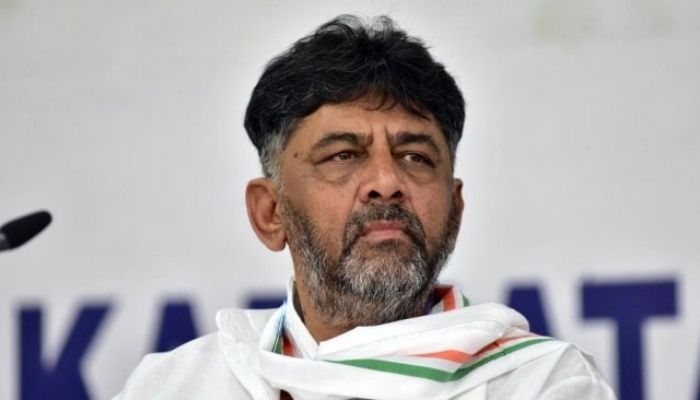
The Enforcement Directorate (ED) filed a chargesheet against Karnataka Congress president D K Shivakumar on Thursday. The ED has filed a charge sheet against Shivakumar and others in an alleged money laundering case.
Enforcement Directorate has filed a chargesheet against Karnataka Congress president DK Shivakumar and others in an alleged money laundering case.
Shivakumar is presently on bail in the money laundering case registered by ED based on a complaint filed by I-T Dept pic.twitter.com/MqbNzhOW2T
“The prosecution complaint has been filed under various sections of the Prevention of Money Laundering Act (PMLA) before a Delhi court,” ED officials said.
The Congress leader is presently on bail in a PMLA case registered by ED based on a complaint filed by the I-T department. The investigation agency has claimed that there is no account of Shivakumar’s assets worth about Rs 8 crore, due to which this charge sheet has been filed against him.
On September 3, 2019, DK Shivakumar was arrested by the ED for not cooperating during the investigation on him. He was arrested under the Prevention of Money Laundering Act (PMLA) after his links with corrupt Karnataka state government officials were established. The money laundering angle came to light after-tax officials raided Shivakumar’s residence are other locations in New Delhi, in August 2017, which led to the seizure of unaccounted cash worth Rs.8.59 crore without evidence of its source of income.
DK Shivakumar was granted bail in the same year in October after he moved the High Court for bail when his bail plea was rejected by a special CBI Court. Others penalised along with Shivakumar were his business associates Sachin Narayan and Sunil Kumar Sharma (owners of Sharma Travels) and Anjaneya Hanumant and Rajendran, the employees of Karnataka Bhavan in New Delhi, where the cash was found.
According to court documents filed on Wednesday, May 25, social networking giant Twitter has agreed to pay a USD 150 million fine after being accused of illegally selling private information, such as phone numbers, to target advertising despite claiming users the information would be used for security reasons. It read that between May 2013 and September 2019, Twitter was accused of misleading its users about the “security and privacy” of their data.
As per reports, officials from the United States have pointed out that around $3 billion of Twitter’s $3.4 billion in earnings in 2019 came from advertising.
As part of the settlement announced by the Justice Department and the Federal Trade Commission, the company will pay $150 million. In addition to the monetary settlement, Twitter will be banned from “profiting from its deceptively collected data,” the FTC said. Additionally, the social media giant has been asked to strengthen its compliance practices under the terms of the agreement.
Twitter chief privacy officer Damien Kieran took to Twitter to share a blog post wherein he wrote how “Twitter reached a settlement with the Federal Trade Commission (FTC) regarding a privacy incident disclosed in 2019 when some email addresses and phone numbers provided for account security purposes may have been inadvertently used for advertising. the FTC settlement.”
“@Twitter, keeping data secure and respecting privacy is something we take extremely seriously. Today we shared an update on our settlement with the FTC regarding a privacy incident disclosed in 2019,” Tweeted Damien Kieran
“Our settlement with the @FTC reflects Twitter’s pre-existing commitments and investments in security and privacy. We will continue to partner with our regulators to make sure they understand how security and privacy practices at Twitter are always evolving for the better,” added the microblogging site Twitter’s chief privacy officer.
2/2 Our settlement with the @FTC reflects Twitter’s pre-existing commitments and investments in security and privacy. We will continue to partner with our regulators to make sure they understand how security and privacy practices at Twitter are always evolving for the better.
It may be noted that the complaint against the social media giant had said that the misrepresentations violated the FTC Act and a 2011 settlement with the agency. “Specifically, while Twitter represented to users that it collected their telephone numbers and email addresses to secure their accounts, Twitter failed to disclose that it also used user contact information to aid advertisers in reaching their preferred audiences,” the complaint said.
The fine comes as Twitter is undergoing a USD 44 billion buyout attempt from billionaire Elon Musk.
It may be recalled that in 2018, the Italian Competition Authority (AGCM) imposed a penalty of 10 million euros ($11.4 million) on Facebook for illegally harvesting the data of its users for commercial purposes. Besides imposing a fine, AGCM had also asked Facebook to run an apology on its website and app.
Facebook had faced allegations of misleading people by not informing them when they sign up that their personal data will be used by it for commercial purposes. The Authority also observed that Facebook does not reveal to its users that their personal data will be used by it for its own benefits and instead stresses on Facebook is free. However, Facebook had denied the allegations of selling user data to any third parties.
Congress leader Rahul Gandhi’s controversial visit to the United Kingdom, especially his meeting with British Labour Party leader and MP Jeremy Corbyn in London, has come under the scanner as reports have emerged that the Congress MP skipped the due procedure and did not seek political clearance for his visit.
According to the reports, the recent trip of Rahul Gandhi to the UK to attend two events and later his meeting with controversial British Labour Party leader and MP Jeremy Corbyn have come under intense scrutiny as the Gandhi-scion neither took the government’s approval, which is mandatory nor informed the government before he travelled abroad.
The existing rules say that all Members of Parliament are required to get prior political clearance from the Ministry of External Affairs before travelling abroad. Therefore, the MPs should obtain approval from the Ministry of External Affairs by putting the information on the website at least three weeks before their trip.
Rules for MPs before foreign visits
Besides that, all MPs should receive invitations from foreign governments and institutions through the Ministry of External Affairs. If an MP is invited directly, he/she should bring it to the notice of the Ministry of External Affairs, and political approval has to be obtained.
However, Rahul Gandhi did not take the Union ministry’s approval. However, RJD Member of Parliament Manoj Jha, who participated in the same event in London, had all due permission and political clearance. Manoj Jha had spoken at the Cambridge University a day ahead of Rahul Gandhi.
Rahul Gandhi visits the United Kingdom, promotes anarchy in India and meets anti-Indian elements
Last week, Gandhi-scion Rahul Gandhi made a controversial visit to the United Kingdom to attend a few events, where he discussed several ideas stoking a huge furore back at home in India. During his visit, Rahul Gandhi delivered a speech at the “Ideas for India” conference organised by the non-profit think-tank Bridge India, where he shared several ideas, including promoting sub-nationalism besides instigating anarchy in the country by calling for a ‘mass action’ against the Indian state.
A few days later, Rahul Gandhi fuelled another controversy by meeting Jeremy Corbyn, the anti-India and pro-Pakistan anti-semite who used to head the Labour Party in Britain. Accompanied by Indian Overseas Congress President Sam Pitroda, Rahul Gandhi was pictured with the former Labour leader who led his party to two massive defeats in national elections, just like Rahul Gandhi.
Corbyn has always supported Kashmiri separatists and perpetuated Pakistan’s rhetoric on the subject of Kashmir. During his time as the head of the Labour Party, his party’s MPs tried to interfere in the Kashmir issue several times, repeating Pakistan’s talking points. The Labour Party even passed a resolution asking for international intervention in Kashmir and a call for an UN-led referendum during Corbyn’s tenure.
A very productive meeting with UK representatives from the Indian Congress Party where we discussed the human rights situation in Kashmir.
There must be a de-escalation and an end to the cycle of violence and fear which has plagued the region for so long. pic.twitter.com/wn8DXLohJT
Again, Rahul Gandhi delivered another controversial speech at an event titled “India at 75” at Corpus Christi College at Cambridge University, hosted by a Congress party sympathiser Shruti Kapila. During his recent visit to Cambridge University for a talk show, Rahul Gandhi again brought up the issue of sub-nationalism to compare it with the other democracies.
The Gandhi-scion compared India to confederations such as European Union and not to the federal democratic setup as the United States. As per Gandhi, India’s political formation is much like a loosely-connected supranational European Union, where multinational political unions together negotiated power as an arrangement.
The much-awaited biopic on former ISRO scientist Nambi Narayanan titled Rocketry-The Nambi Effect, is due to hit the screens on July 1, 2022. Actor R Madhavan took to his Twitter handle on Wednesday, May 25, to share the first motion poster of the upcoming movie.
R Madhavan has made his directorial debut with the movie and will be seen playing the titular role in the film, which is based on the life of Nambi Narayanan, the former scientist and aerospace engineer of the Indian Space Research Organisation, who was hounded and persecuted by the Congress government.
— Ranganathan Madhavan (@ActorMadhavan) May 25, 2022
In the first of its kind, one-minute motion poster, actor R Madhavan gradually appears adorning the look of the veteran scientist against the backdrop of space. “Sometimes a man wronged…is a nation wronged,” reads the tagline on the poster of the movie titled Rocketry: The Nambi Effect.
The movie, which is directed jointly by Anant Mahadevan and R Madhavan and marks the latter’s debut as a director, was screened at the prestigious Cannes Films Festival in France on May 19. After its world premiere at Cannes, the film will be released in India on July 1, 2022.
The film’s official announcement occurred about a year ago, and it’s been said that Madhavan has been undergoing extensive training to get into the character’s skin. The actor will portray the scientist at various stages of his life, ranging from 27 to 75 years old.
The trailer of the movie which was released in April 2021, captured the real-life story of former ISRO scientist Nambi Narayanan, his professional success and events that led to his imprisonment and police cases against him by the then governments. Many scenes in the trailer are hard-hitting and reminiscent of the forgotten pain of one of India’s most decorated and criticised scientists.
How Congress hounded India’s most celebrated rocket scientist Nambi Narayanan
It is pertinent to note that scientist Nambi Narayan was a victim of persecution by the Congress party. The political rivalry between the two factions of the Kerala Congress party led to the arrest of Narayanan, along with two other scientists D Sasikumaran and K Chandrasekhar in November 1994. The Kerala police had levelled charges of espionage under sections 3,4 and 5 of the Official Secrets Act against the scientists.
Apart from these three scientists, SK Sharma, an Indian representative of the Russian Space Agency, a labour contractor and a person named Fauzia Hassan were also arrested. Narayanan was then heading the cryogenics division at the ISRO. All of them were accused of giving secret information about ISRO’s rocket engine to Pakistan.
Narayanan’s arrest and subsequent prosecution are said to have set the Indian Space Research program decades behind. A Supreme Court ordered a probe in 2018 had found that the charges against the scientist were fabricated and he was wrongfully targeted by some people in power with vested interests. In 2019, the Union government led by Narendra Modi finally awarded the prestigious Padma Bhushan to Nambi Narayanan on the occasion of 70th Republic Day 2019.