Home Blog Page 3276

Jharkhand court convicts Ataullah Malik of raping a 5-year-old girl, sentences him to 25 years of rigorous imprisonment

A local court in Jharkhand has held Ataullah Malik found guilty of raping a five-year-old girl and sentenced him to 25-years of rigorous imprisonment.

According to the reports, the years after the accused Ataullah had raped a 5-year-old girl in the Jugsalai area of Jamshedpur in Jharkhand.

Ataullah Malik, a resident of Jugsalai Gaurishankar Road in Jamshedpur, had abused and raped a 5-year-old girl at her home in April 2019. The Jugsalai Police had registered a case against the accused after the intervention of the court.

The court had found Ataullah guilty of the crime and sentenced him to 25 years of rigorous imprisonment. The accused has been directed to pay a penalty of 55,000 rupees under various sections of the IPC. The court has also ordered a maximum of 7 years imprisonment under the POCSO Act on non-payment of the penalty.

The case was heard by POCSO Special Court Additional Sessions Judge Sanjay Kumar Upadhyay, who directed that the amount be given to the minor victim.

Commutation of death sentence to a rapist of a minor girl sparks outrage

Earlier last month, the apex court’s decision to commute the death sentence of an accused convicted of rape and murder of a minor girl had sparked massive outrage across the country, with questions being raised over the top court’s verdict to grant mercy to an offender of a serious crime.

The Supreme Court had cancelled the death sentence announced upon rape and murder convict Mohd. Firoz. The apex court challenged the legality of the judgement passed by the Madhya Pradesh High Court in Jabalpur in 2014 stating that ‘every sinner has a future.

The three-member bench comprising Justices UU Lalit, S. Ravindra Bhat and Bela M. Trivedi pronounced the order observing that the maximum punishment prescribed may not always be the determinative factor for repairing the crippled psyche of the offender. The bench re-examined the evidence in the case and held a view that the prosecution was very conclusive in order to rule out the possibility of any other hypothesis except the guilt of the accused.

The decision had nevertheless triggered a furore on social media, with many netizens questioning the Supreme Court’s decision to commute the death sentence of a convict who raped a 4-year-old girl and later murdered her.

“Did she really say Kafir?”: Netizens in disbelief as video shows Mamata saying something that sounds like ‘we are not kafirs’

On May 3, a video of West Bengal Chief Minister Mamata Banerjee went viral on social media where she was addressing the crowd on the occasion of Eid. During her address, she said something that sounded like ‘Kafir’. She said, “Let them do what they want. We are not scared. We are not cowards. We are not ‘Kafir’ [possibly]. We fight. We know how to fight. We will fight against them. We will finish them.”

Netizens were in disbelief as the video went viral. Many expressed their concern over a sitting CM using the word in a public address. Interestingly, Banerjee, who prefers to speak in Bangla most of the time, gave the statement in Hindi that also added up to the speculations that she allegedly wanted to give a message to those who “do not speak Bangla”.

Swarajya Magazine’s author Satish Viswanathan pointed out it was concerning that a sitting CM used a public platform to say ‘hum kafir nahi hain’. He said, “A sitting CM says “Hum Kafir nahin hai” on a public platform. For centuries, the pejorative has been used to dehumanize Hindus and justify violence against the community. The Overton window has definitely shifted with regards to normalization of violence against Hindus.”

Twitter user _Agnijwala_ said, “Speech in Hindi..to woo whom? But will constantly attack obangalis & call them goons brought from neighbouring states. She literally said, “Hum kafir nahi hai”.. waiting for @BanglaPokkho to rephrase & say that she meant “Hum musafir nehi hai.”

Another Twitter user Mr Sinha said, “We aren’t coward, we aren’t Kafirs, we will fight against them, we will finish them” – Mamata Banerjee. For those who don’t know, “Kafir” is a slur used by radical I$Iamists against Hindus.. Their book says Kafirs don’t deserve to live.”

Twitter user Shivani Sahay said, “Why she is not speaking Bengali? Why she is saying “hum kafir nahi hain” (we are not infidels)? She need not say this on behalf of all the infidel, people not of any book, on our behalf. Her kowtowing to violent radicalized constituencies does not bode well for West Bengal.”

Some netizens said she was subtly showing her “true religion”. Shivangi said, “Finally Mamata Banerjee declares her true religion.. in the speech she is praising Khuda, Aman etc. n saying “Hum Kafir Nahi Hain”. N Bengali Hindus are busy bashing BJP!”

Adhik Burman said, “Hum darte nhi hai,Hum Kafir nhi hai?? This is how Hatred and Abuse against Hindus are being Mainstreamed by Anti humanitarian evil Islamist and Abhrahmic fascist forces. Bengali people? Wake up.. What’s wrong with your choice. Sick of so much hatred against Hindus.”

Political Commentator Sunanda Vashisht said,”  ‘We aren’t Kafirs’ – Did Mamata really say that? Who is not a kafir? Mamata is not a kafir anymore?”

A few netizens said with the history of mispronouncing words even in Bangla, it was difficult to be 100% sure about what she said during the address. Twitter user Coolfunnyshirt said, “Did she actually say that? uska pronunciation ka legendary problem hai waise.. in every language..”

Though it is unclear what West Bengal CM said during her address, she has a history of making controversial statements. Not to forget, during state elections, she used to the slogan “Khela Hobe“, which was commemorated on Direct Action Day. Given such history, no one should be surprised if she actually used the word ‘kafir’ and said, ‘we are not cowards and know how to fight’.

Twitter announces new feature ‘Twitter Circle’ for close group Tweeting, days after halting updates after accepting Elon Musk’s takeover offer

Just weeks after Twitter agreed to the proposal of Elon Musk to take over the company, the micro-blogging platform has planed to add on features of user discretion to enhance usability. In line with this, Twitter is testing a series of features for the users.

According to the reports, Twitter is testing its latest feature called “Twitter Circle”, through which users can handpick a smaller crowd of 150 people with whom they want to share their tweets.

“We’re now testing Twitter Circle, which lets you add up to 150 people who can see your Tweets when you want to share with a smaller crowd. Some of you can create your own Twitter Circle beginning today!” the social media platform put out a tweet.

It is being said that the new feature will work on a similar line to “Instagram’s Close Friend” feature, which allows users to limit their audience for their Insta stories.

Here is how ‘Twitter Circle’ will work:

Any Twitter user can add up to 150 people irrespective of whether they follow them or not. As the users tweet, they have to select the option ‘Twitter Circle’ to limit their tweet to only those people they have chosen. They can then share specific tweets to this select group without outsiders being able to view them. 

Users will get an option to edit the list of people they have selected in ‘Twitter Circle’. Also, people will not be notified if you remove them. The update is currently in limited testing.

According to the Twitter Help Desk page on Twitter Circle, this feature is in its early stages right now, and only a limited number of people globally can create Twitter Circle Tweets. Anyone invited to a Twitter Circle can interact with them. It is available to a limited number of people globally on Twitter for iOS, Twitter for Android and twitter.com. If Twitter Circle is available to someone, they will see the option to create a Circle when they compose a new Tweet. One user can create only one Circle.

It is interesting to note that the members added to a Twitter Circle by someone can’t remove themselves from the Circle, but they can mute the conversation if they don’t wish to participate.

Twitter had blocked product changes

After it was announced that Twitter will be purchased by Elon Musk, Twitter had stopped making changes to the platform. The company had locked its source code, to prevent disgruntled employees making any unauthorised changes to sabotage the platform. It was reported that Twitter won’t allow product updates unless they are critical. But with the announcement of Twitter Circle, Twitter seems to have lifted the blockade on product updates.

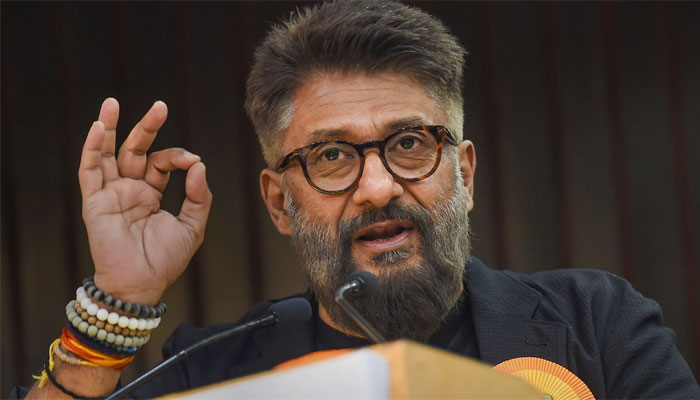
Filmmaker Vivek Agnihotri presents proofs of booking for press conference at Press Club of India after media body claims no bookings done: Details

On May 4, filmmaker Vivek Ranjan Agnihotri informed via Twitter that after Foreign Correspondents Club, New Delhi cancelled his Press Conference scheduled for May 5, now Press Club of India has done the same. In his tweet, Agnihotri said, “Wow! Press Club of India also cancelled me. The watchdogs of democracy and messiah of free speech not only banned me undemocratically but are also lying through their teeth.” He was quoting a May 3 tweet of PCI where they had claimed that Press Conferences at their premises are allowed only with advance booking that too done through a member of the Club.

Agnihotri added a few images in his tweet to prove that his agency had booked Press Conference at PCI before without any recommendation from a member. There was a letter from Zee Studios in which it was mentioned that the agency had been booking PCs at PCI regularly. A person named Jitender had confirmed that the club was available on the required date and time. However, when this time they sent an associate for the booking, Jitender did not meet her and later stopped picking up the call. He also shared call details showing Jitender was called multiple times but he decided not to reply. A receipt added in the tweet showed booking done in March without any fuss.

In a follow-up tweet, he said, “When my video on FCC cancellation went viral, Press Club of India conspired with them and cancelled our presser. These anti-free speech, anti-Truth, agenda-driven elite clubs flourish on Govt’s sprawling properties in Lutyen’s Delhi. It’s time for us to expose these arrogant cheats.”

Agnihotri later announced alternate venue and time for the press conference.

FCC cancelled Agnihotri’s Press Conference

On May 3, Agnihotri, in a video message, said that FCC cancelled his booking for Press Conference scheduled for May 5 after its members objected to the same.

“The cancellation of the event is undemocratic and a part of a hate campaign. The watchdogs of free speech, the media houses are banning the free speech”, he added. He said that the Foreign Correspondents Club had decided to host a press conference as many of the foreign media persons were keen to know the truth about the Kashmiri Hindu Genocide. “The Global Kashmiri Diaspora informed me that foreign media persons also wanted to talk to me about the film the Kashmir Files. But as a part of a hate campaign, the Foreign Correspondents Club has cancelled the Press Conference”, the director stated.

He added that the Foreign Correspondents Club had also made unusual demands for food and cocktails at the press conference, and on their request, the team of Zee Studios had made all the arrangements for food and logistics. “This is undemocratic. My conscience does not allow me to pass this incident. Many foreign correspondents have called me and are still willing to attend the conference. I’ll host an open house conference now”, he added.

Kerala: Ex-Muslim Askar Ali attacked, assaulted by mob for quitting Islam, faces threats from own community

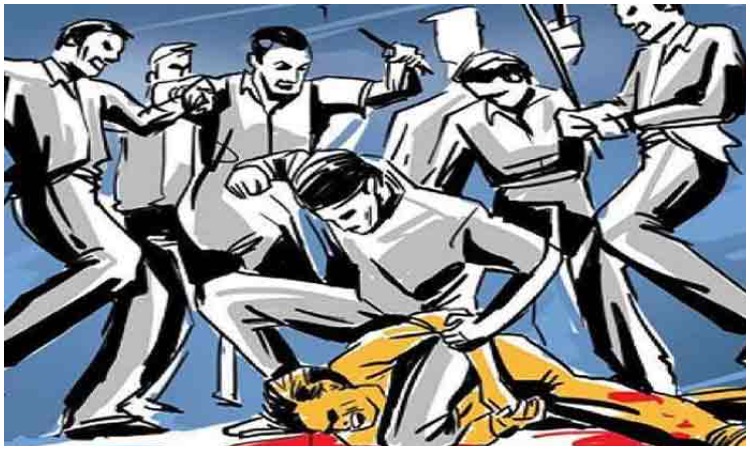
A mob attacked a 24-year-old man in Kerala’s Kollam for deciding to quit Islam, reports Indian Express.

According to the report, Askar Ali, who had recently renounced Islam, has filed an attempt to murder case with the Kollam police against a mob comprising of fellow Muslims. In his complaint, Ali alleged that the mob attacked him after he quit Islam and added that he was facing threats from within the community for doing so.

Askar Ali, who hails from Malappuram, has completed a 12-year Hudawi religious programme from a prominent religious academy in Malappuram. On Sunday, he was in Kollam to deliver a talk on his experience as a student of Islamic studies at an event organised by Essense Global, an organisation promoting “scientific temper, humanism and the spirit of inquiry and reform in society”.

In his complaint, Ali said that a group of people from Malappuram tried to abduct him to ensure that he did not address the event.

“They took me to Kollam beach, where I was manhandled. They destroyed my mobile phone and tore my clothes. They forcibly took me to a vehicle and tried to lock me inside. When locals raised the alarm, the police saved me,” Ali said.

Later, Ali was freed by the police, who then delivered his address in the presence of the police. Ali addressed the event, where he shared his experience as a student of Islamic studies.

Askar Ali also alleged that he was sexually harassed during his studies and his journey toward “the path of humanism”.

According to Ali, his decision to renounce Islam has not gone down well with his family. The police said that Ali did not want to go with his family and the court allowed him to live as per his wish. He has not sought any protection, the Kollam police added.

Watch: Videos of drug dealers in Faridkot openly selling narcotics to Punjab youth goes viral

Within months after the Aam Aadmi Party took the reigns of Punjab, the notorious drug mafia seems to have made a comeback in the state.

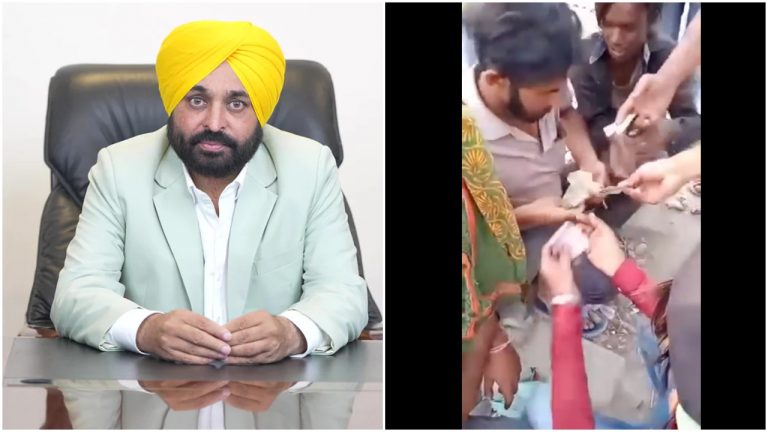
A video has gone viral on the internet showing youth of Punjab lining up to buy ‘Chitta’ – a narcotic substance derived from Heroin from a drug dealer.

According to Gagandeep Singh, a journalist from Punjab, people in Punjab were buying drugs just like vegetables or ration from local drug dealers. In the video, the desperate drug addicts can be seen buying drugs for cash at a railway track in the Faridkot district of Punjab.

The journalist confirmed that the video is from Faridkot, as confirmed by SSP Avneet Kaur. The police have claimed that an arrest has been made in the case.

Congress leader Navjot Singh Sidhu slams the AAP govt in Punjab

Congress leader Navjot Sidhu on Wednesday hit out at the Punjab government over their failure to check the drug mafia in the state.

Taking to Twitter, Navjot Singh Sidhu criticised the AAP-led Punjab government, saying there is no will to put an end to the drug dealers in the state. He also shared a video of a man selling drugs at a village in the Faridkot district.

Tagging Punjab Chief Minister Bhagwant Mann and Aam Aadmi Party supremo Arvind Kejriwal, Navjot Singh Siddu wrote, “STF report and Hon’ble High Court have, on multiple occasions, observed that a nexus between Drug peddler, Police and Politician exists, which is yet to be broken. Political will absent…Ramifications are clearly evident…Somewhere in Faridkot”.

This incident comes just a week after the Punjab police arrested a college girl and two male accomplices for smuggling drugs.

The counterintelligence department had arrested an MSc Biotech student of Khalsa College – Lovepreet Kaur, and her two accomplices from Amritsar for drug smuggling. Kaur, along with cousin brothers Deepak Rai and Mehak Rai, both residents of border village Mahawa, were arrested by CI along with 6 kg of heroin during a raid conducted by CI at a flat.

The value of seized drugs is estimated to be around Rs 42 crore in the international market.

60 constables of Delhi Police armed battalion suspended for failing to perform duty in sensitive areas on Eid-ul-Fitr

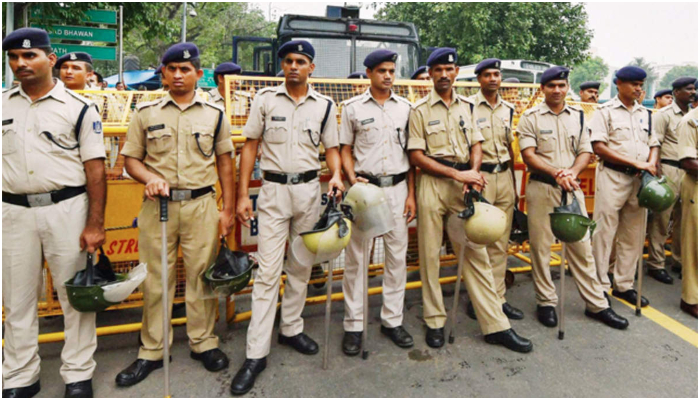
On Tuesday, 60 constables of an entire company of a Delhi Armed Police battalion were suspended for not performing duty in areas they were deployed on the occasion of Eid-ul-Fitr. The constables were assigned the duty to be present in a few sensitive locations in old Delhi to prevent any untoward incidents during the festival.

This is after the Police ahead of Eid had received information that some anti-social elements were active in the areas and were planning to disrupt peace and harmony across Delhi. To prevent their nefarious plans, the DAP (Delhi Armed Police) battalion deployed several companies at various locations.

According to the reports, the DCP, North issued the suspension order on May 3 as it found that the staff deployed from the 3rd Batallion of the Delhi Armed Police were not on the duty point. “At 9.15 pm the company left without any information. They were not on duty point. The staff deployed from 3rd Batallion, have been marked as absent and placed under suspension,” the order read.

The constables were called from the Vikas Puri area to be present at the sensitive zones in old Delhi. They were ordered to monitor the law and order situation in the Sadar Bazar and nearby area of Red Fort and prevent any untoward incident on Eid-ul-Fitr.

The city of Delhi traditionally witnessed the celebration of Eid as a large number of people participated in the community prayers organised at major mosques, including the Jama Masjid and Fatehpuri Masjid in the Walled City. Festivities continued through the day after the early morning Eid namaz with families thronging marketplaces and partaking in iftars and community feasts.

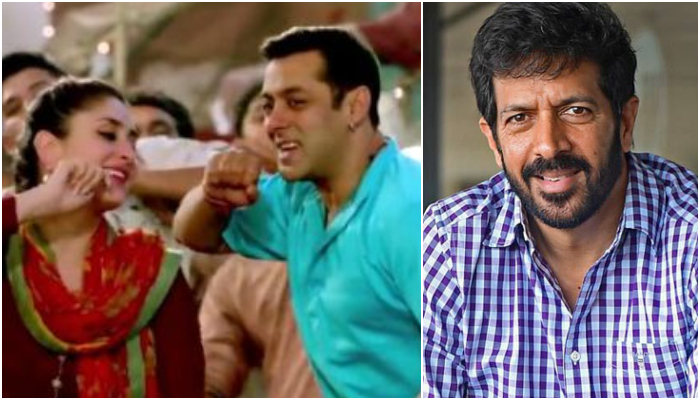
‘Chicken Kuk-Doo-Koo’ song in Bajrangi Bhaijaan was less about chicken, more about beef, here is what filmmaker Kabir Khan has to say

On Tuesday, Bollywood Filmmaker Kabir Khan revealed the importance of politics in the movies and said that no human, no filmmaker can be apolitical. He said that storytelling is all about how the filmmaker portrays the character and the politics of the story. He recalled one of his recent hit movies ‘Bajrangi Bhaijaan’ and stated that the famous Chicken song in it is political and a superlative example of how politics can be included in the film.

In an exclusive interview with the Bollywood Hungama, when Khan was asked about the intention behind storytelling, he said that if a person says that he is apolitical, it reveals that what’s happening in the country does not affect him. “I have often heard, and I get very worried when I hear this- people in the industry say we are apolitical. As human beings you cannot be apolitical, the way we frame a character is telling our politics. Sometimes saying apolitical only reeks of your privilege, because what’s happening in the country doesn’t affect you, you all with money can live in a bubble”, he said (Timestamp- 44:38)

Khan cited the example of the movie Bajrangi Bhaijaan and said that the song ‘Chicken Kuk doo koo’ which is assumed as a children’s song is the most political song of the film. He said that the song was released amid the beef ban controversy in the country and showed the way how one can slip into politics through films. “The song is basically saying- this is Chaudhary Dhaba, which is a metaphor for India. Aadha hai nonveg, aadha hai veg (half dhaba is non-veg, half is veg). You decide what you want to eat and all of us can sit together and eat. So that’s the way you slip into politics”, he was quoted.

The film ‘Bajrangi Bhaijaan’ was released in the year 2015. It narrated the story of Pawan- a staunch vegetarian (Salman Khan), a devotee of Lord Hanuman. He finds a speech-impaired girl (Harshaali Malhotra) lost in Haryana and soon learns that the girl belongs to Pakistan and that she consumes non-vegetarian food. The song Chicken Kuk Doo Koo entertains the audience when Pawan and his girlfriend (Kareena Kapoor) take the little girl to a nearby Chaudhary Dhaba to let the girl eat chicken alone on a separate table.

Kabir Khan meanwhile added that film-making is one of the ways in which a person can reveal his/her political ideology. “The way a film character is framed, the dialogues are spoken by the character, all say a lot about the filmmaker’s political ideology. No person can be apolitical. Saying that is only a privilege”, he reiterated. Khan was accompanied by Suresh Triveni, Hardik Mehta, and Nidhi Bisht at the Xavier Institute of Communications initiative event. He was in conversation with Bollywood Hungama’s Faridoon Shahryar where they also discussed the ‘OTT v/s Cinemas’ debate.

Khan termed the debate between OTT and Cinemas erroneous. “Both can co-exist. Henceforth you may need to give audience big spectacle movies to attract them to come to cinemas”, he added. Kabir and Hardik also talk about the changing face of writing and the importance of good writers.

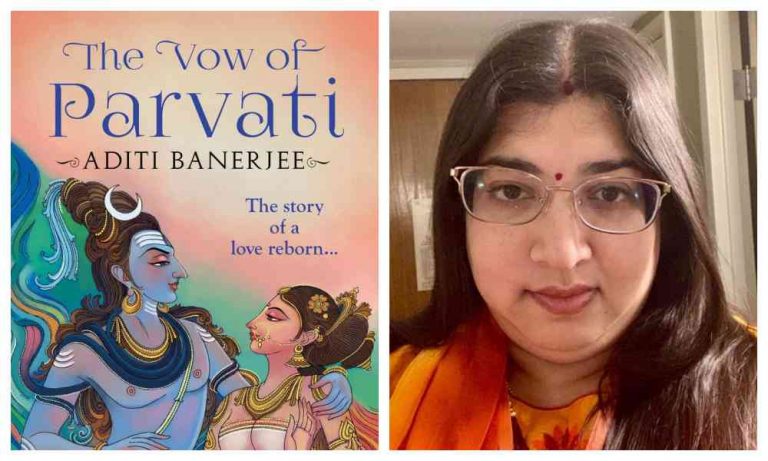
The Vow of Parvati: Author Aditi Banerjee talks about why books with strong female protagonist are getting readers interested

Author Aditi Banerjee’s The Vow of Parvati, published by Bloomsbury India in April 2022 is a story of Devi Sati/Parvati and how she transformed from a beautiful, gentle, powerful yet shy Devi unaware of her own strength into the Devi we revere and worship today through her relationship with and love for Shiva and her family. Speaking to OpIndia, Banerjee said, “Devi encompasses all aspects of the female form, from the child to the crone, from the gentle to the fierce, from the scholar to the warrior. And in a sense we can see them all emanating from Sati / Parvati.”

She further said, “In her resides the one who gave up her life for Shiva, who fasted and underwent all kinds of austerities to win his favour, as well as the one who sits on the jewelled throne, supported by Shiva and all of the Devas, who carries a weapon forged from the strength of all of the other Devas combined. She is Shakti, the energy that pervades the cosmos and all of existence, and she is also the one who delights Shiva, the eternal renunciate. She and Shiva form the ideal couple, because in their union, they retain their independent roles and existence while also merging into a seamless oneness and wholeness, which represents the completeness of Brahman.”

On whether she considers her story on Devi Parvati a fiction or mythological fiction, Banerjee said, “It is unfortunate that we are trapped by English categorizations that do not map onto Indic / Hindu classifications or frameworks. Mythology / fiction vs. nonfiction in the West is basically distinguishing what is or may be historical fact from that which is ‘made up’. ‘Mythology’ is used to characterize non-Western traditions and faiths as false.”

“That said, there is a thirst for literature inspired by the Itihaasa and Puranas and also from ancient Greek, Norse, and other pagan epics. As the modern world has become divorced from its ancient civilizational heritage, there is now an emerging desire to reconnect with our roots and to delve into the ancient epics. The epics do not exist just for storytelling or to transmit religious beliefs. They encode lessons about human nature, the nature of the world, the meaning and purpose of life, and all throughout history, people studied the Classics to develop a greater appreciation and understanding of the mystery of life. So, it is natural to want to reengage with tales that have stood the test of time and place, that have become part of our cultural DNA. At the same time, many of us find the original texts to be inaccessible or daunting. So, this kind of literature serves as a gateway by retelling those stories in a syntax and format that is more familiar and easier to digest for a modern audience. In time, hopefully people will be inspired to read the original texts, whether in Sanskrit or in translation,” she said.

On the shift to strong leading female protagonists in books from traditionally male heroes, Banerjee said, “All of the female protagonists being written about today were there, fully fleshed out with incredible nuance and richness, in the original texts: Draupadi, Gandhari, Sita, Kunti, etc. It is just that over time most of the attention was paid to the heroes who dominated the actions of the stories. Since their stories have always been told, the interest is in discovering lesser well-known characters and incidents so that those stories can be brought out, too. Also, we have been fed so many distortions and lies through colonialist discourse about how passive and meek our female personalities were that there is a great need to excavate the real characters from the original literature and showcase them to the world, to show how much strength, complexity and depth these female protagonists had.”

“I think there is a lot of interest right now in reading about female characters. Not only for entertainment value but also because it is inspiring and empowering for girls and women to read about strong female characters who can serve as role models to aspire towards or serve as cautionary tales on how we may go astray,” Banerjee added.

Banerjee’s previous book, The Curse of Gandhari, talked about the Queen who cursed Shri Krishna. Speaking about how the two leading ladies are different in characters, strength and stories, she said, “Gandhari was very human while Sati/Parvati is Devi. So, while The Curse of Gandhari could trace the life story of Gandhari from the perspective of a flawed woman, who made mistakes and had regrets, this was a more challenging story to write since Sati / Parvati was always Devi and therefore in certain respects already perfect. The interesting thing for me to write about was how both Shiva and Sati, complete and self-sufficient and self-satisfied in their own rights, still evolved through their connection with each other — that, they became something greater together than they are just on their own. So, the idea that even the devas could grow, learn, and evolve through love was the impetus behind this story.”

Speaking about the inspiration behind her book, Banerjee said that it was her own marriage that inspired the story of Devi Parvati. “For over a year before my wedding, I had observed the Somvar vrata in honor of Shiva and Parvati and we also had our wedding rites performed by 11 purohitas from Ujjain at Triyuginarayana, an ancient mandir a few hours away from Kedarnath in the Himalayas, where it is said that Shiva and Parvati were married. The fire from their rites still burns there today and we took our saptapadi around that sacred flame. We have been so blessed by that experience, and this book is a small offering of gratitude and reverence for everything that Shiva and Devi have bestowed upon us,” she said.

Here is an excerpt of Aditi Banerjee’s book The Vow of Parvati:

And then she heard the light patter of his bare feet in the assembly hall. Her eyes jerked open, and she stared at Shiva. All anxiety and fear left her. Time slowed and stopped. One of his names was Kaal Bhairava, the Lord of Time. He walked toward her until he stood before her. Never had anyone looked as beautiful to Sati as he did. He was majestic and calm, radiant and overflowing with power. At that moment, she lost her heart to him.

He took her in with soft affection, the same way he had looked at the white flower after it had fallen to the ground from her hands. His glance was so warm that she began to feel dizzy.

Shiva slanted his head in a request for permission. She nodded. She remembered how she had named him Shiva that night. In some way, she had completed him, and now it was his turn to do the same for her. He knelt at her feet. He reached out his hand to hold her right foot. His touch sent a jolt of pure sensation through her, and she would have jumped out of her seat had he not gripped her foot. He let her left foot remain crossed but pulled her right foot down to touch the ground. As soon as the tender bottom of her foot made contact with the cold ground, a rush of energy coursed downward from the tip of head to the sole of her right foot, pouring into the ground, blessing all the worlds.

She closed her eyes and felt power, shakti—the life force that sustained the entire universe—flowing through her like a river in spate. She opened her eyes again to see that the pink of her sari had deepened into crimson red, the red of blood and fire and life itself. The red of womanhood. Her braids had loosened into waves that cascaded down her back, black as night.

Shiva’s eyes darkened as he looked at her. She could not know how enchanting, how captivating she was at that moment. Any deva whose eyes had opened would have fallen in love with her in a heartbeat, but Shiva did not let anyone else awaken.

He lifted the crown of flowers from her head. He held it until it grew into a circlet of gold. The roses transformed into rubies that retained their shape and colour but were now brighter than the sun. This crown would last forever,  unlike the simple one she had designed. He carefully placed it on her head.

He leaned back and studied her, inch by inch. She watched him wide-eyed. It was as if he were not completely satisfied. Not that he was not satisfied with her, but that the dress, the decorations, did not do her justice. Even the golden crown he had fashioned did not appear to placate him.

Then, with a sudden movement, he plucked out the crescent moon that adorned his own hair and tucked it carefully into Sati’s, behind the golden crown. The moon, cold as it was, still bore the warmth of his body, the inner fire of his tapasya, and she felt the accumulated powers of thousands of years of meditation flow from Shiva to her. It was more intimate than an embrace. His fingers sifted through her hair, sliding across her scalp in a way that made her flesh tingle. As brightly as the moon shone, it paled in comparison to the radiance emanating from her now that she was in her full power.

For a moment, his hand lingered in her hair. She wished that the wheel of time would never again continue its rotations, that time would remain frozen in this moment forever.

Then, in the space of a moment, everything changed.

You can buy a copy of her book here.

Pope Francis says NATO ‘barked at Russia’s door’ paving the way for the Ukraine-Russia war

Pope Francis has blamed the United States-backed military coalition North Atlantic Treaty Organisation (NATO), for the ongoing Russia-Ukraine war.

According to the reports, Pope Francis said that NATO “barking” at Russia’s door may have led to Vladimir Putin launching a military operation in Ukraine, adding that he has offered to meet the Russian president in Moscow.

In an interview with the Italian newspaper Corriere Della Sera, Pope Francis spoke on the ongoing Russia-Ukraine war, in which he added that he might not go as far as saying NATO’s presence in nearby countries “provoked” Moscow but maybe facilitated the invasion.

Francis also condemned the “brutality” of the war and compared it to Rwanda’s civil war in the 1990s, which resulted in a genocide of the Tutsi minority.

Ever since the war began in February, Pope Francis has repeatedly criticised the Russia-Ukraine war, however, he has avoided directly blaming Russians or Putin for the special military invasions in Ukraine. It is being said the neutral policy of the Vatican is in line with its foreign policy of keeping the door open for possible dialogue.

The Vatican has been requesting a meeting between Pope Francis and Putin since mid-March. “Of course, we needed the leader of the Kremlin to allocate a window of time. We haven’t yet had any response, and we are still trying, even if I fear that Putin can’t and doesn’t want to have this meeting at this time,” the Holy See had said.

In the interview, Francis also said he would be not going to Kyiv for now, “First I have to go to Moscow, first I have to meet Putin.” The Holy See had sent two representatives – Cardinal Konrad Krajewski and Cardinal Michael Czerny, to the war-ravaged nation.

Francis also revealed that he had cancelled a meeting with Patriarch Kirill, the head of the Russian Orthodox Church and a key backer of Putin.