Home Blog Page 3325

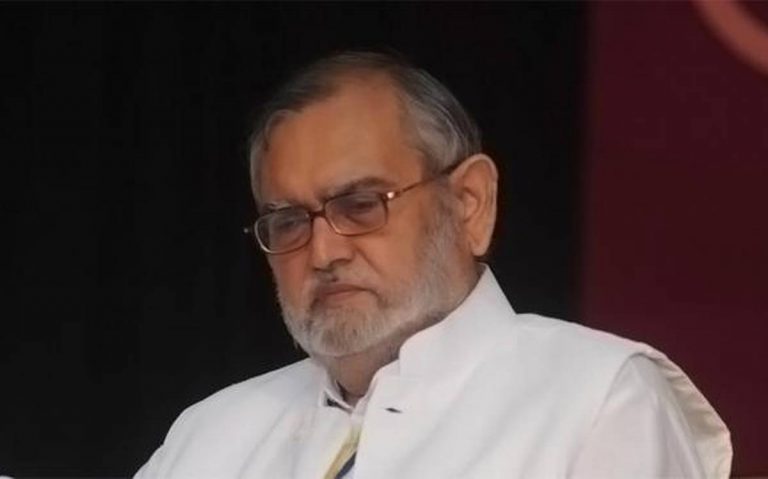
Delhi Minorities Commission chief Zafarul-Islam Khan tries to downplay Hindu victim of Khargone violence

Delhi Minorities Commission chief Zafarul-Islam Khan has taken to Twitter to call out a Hindu victim of the Khargone violence who had spoken to the media about the betrayal he faced from his Muslim neighbours. Despite there being video evidence of the Hindu victim’s confession on the public platform, Khan went on to insinuate that the Hindu victim was lying.

“This is fake. The so-called oft-quoted “victim” is unknown,” tweeted the Delhi Minority chief.

Khan, who was booked on charges of sedition for threatening Hindus, was responding to a tweet by popular Twitter user Vikrant. Vikrant had shared a link to a report published by OpIndia on April 16, which entailed a testimony of one of the Hindu victims who revealed that he was attacked by his Muslim neighbour whom he had alerted about the riots and asked to stay safe amid the violence.

Vikrant Tweeted, “Hindus have always been accommodative, but they only suffer for their grand gesture. In Khargone, a Hindu man, concerned about his Muslim neighbour’s security, asked him to not venture out. Later the same man directed muslim mob to attack his house”, along with the link to the OpIndia report.

When Khan subtly tried to call the testimony of the Hindu victim a lie, Vikrant again shared the video evidence of the same shared by another Twitter user Divya Kumar Soti.

Soti had shared the snippet of the Hindu victim’s interview with India TV. Notably, OpIndia had also embedded Soti’s Tweet in its report wherein the Hindu victim, who had suffered in the riots had shared his dreadful story of betrayal, perfidy and treachery he endured from his Muslim neighbours.

n an exclusive conversation with India TV, the Hindu victim said that he had asked his Muslim neighbours to stay secure amid the escalating violence. He stated that his neighbours defrauded him and joined the rioters who were pelting stones and petrol bombs on Hindu residences.

“As I heard of violence escalating during the Ram Navmi procession in another area of Khargone, I told my neighbours to lock themselves safe in their houses. I also closed the doors to protect my family. Later, these Muslim neighbours joined the rioters and led a mob attack on my family”, the victim said on April 15.

He added that there was no procession in his area but the Muslims began targeting all the Hindu residents of Khargone. “They pelted stones, burnt vehicles belonging to Hindus, threw petrol bombs to create fear in the minds of Hindus. Suddenly 200-300 Muslims gathered in my colony and abused us. They banged at my door intending to break it but could not. So they broke my electricity meter and wrote outside my house ‘Yeh Ghar Bikau Hai’”, he said. (Time Stamp- 26:00 onward)

The Hindu victim continued to curse his Muslim neighbours who joined the rioters to attack them. He said that his neighbours maintained good relations with his family earlier, but unveiled their real faces on April 10.

It is appalling that despite there being video confession of the Hindu victim’s story, the Delhi Minority Commission chief outrightly called him fake.

Khargone violence: Islamists attack Ram Navami procession

Last week, a Ram Navmi procession in the Khargone area of Madhya Pradesh was attacked by Islamists which led to communal riots disrupting peace in the state. The Islamists pelted stones at the procession that began in the Talab Chowk area of Khargone on April 10. Islamists also attacked Hindu women and taunted them saying, “Where is your Ram? We Ravans have come to abduct you”.

Riots escalated after several vehicles and shops were set on fire. The cops struggled to pacify the situation and resorted to firing tear gas shells to disperse the violent crowd. During the orgy of violence, a total of 24 people were injured, including six police personnel. The Khargone administration later took strict action against the miscreants who had pelted stones. The illegally constructed buildings owned by the stone pelters were bulldozed by the administration.

The Police suspect that the attack was pre-planned and that it is part of a huge conspiracy. While the investigation in the case is underway, the Police continue to guard the area, and section 144 stays imposed.
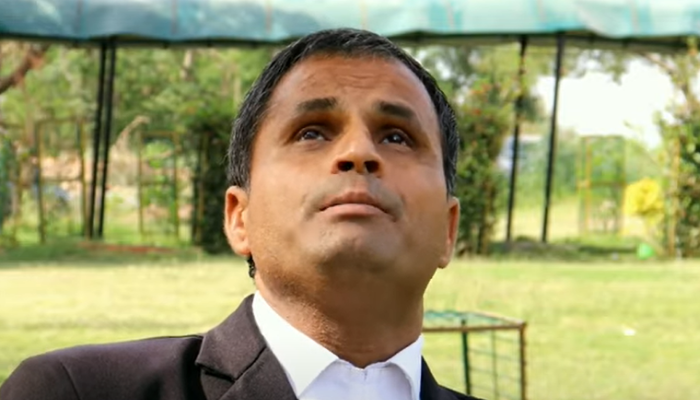
Meet Suraj Singh, the only visually impaired lawyer practising in the J&K and Ladakh High Court, and now appointed as a Government advocate

Visually impaired Lawyer Suraj Singh has been appointed as the Government Advocate in the High Court of Jammu and Kashmir and Ladakh. The appointment came after the lawyer sat on a protest outside the high court demanding sound implementation of disability laws in the Union Territory of Jammu and Kashmir by the administration.

Suraj Singh who hails from Jammu has been practising as a lawyer in Jammu despite his disabilities in vision. Singh’s appointment was passed in order by Anchal Sethi, secretary to the government. Suraj Singh’s appointment as the Government Lawyer will be for a period of one year and could be extended subjected to satisfactory performance in the court.

The press release issued by additional secretary Ashish Gupta said, “Government has taken a significant step which will go a long way in providing benefits to the specially-abled persons by upholding their dignity and removing discrimination by appointing Suraj Singh, a visually impaired Advocate as Government Advocate for defending Government cases before the High Court of Jammu and Kashmir at Jammu. There has been, since long, a persistent demand of specially-abled persons to give them due representation in Government assignments.”

It was Singh himself who was sitting on a prolonged Dharna outside the High Court in Jammu seeking enforcement of the rights recognised under the Rights of Persons with Disabilities Act of 2016. His plea was acknowledged by the Chief Justice of the Jammu and Kashmir and Ladakh High Court when he demanded due representation for himself regarding his appointment as a Government Advocate concerning the Disabilities Act.

Who is Advocate Suraj Singh?

Suraj Singh has carved a niche for himself as an advocate, despite all odds while practising as a visually impaired lawyer. He has been active since 2011, practising as the only 100% visually impaired lawyer in the High Court in Jammu. Singh completed his education in Braille, a tactile writing system used by people who are visually impaired. Suraj Singh, in an interview, proudly claims that his visual disability has never come in the way hampering his practice so far.

Beyond his restricted vision, Singh has high aspirations of being part of the power centre as a politician. “I pursued my passion for law while I also want to see myself becoming a minister one day,” says Advocate Singh. He recounts an incident when he was trapped inside a manhole after falling into it by a mistaken step, which prompted him to take issues of people with disabilities seriously. At this juncture, while Singh paved a way for himself by banking upon his other active senses, he highlighted with a sense of gratitude, the role played by his family and close friends in supporting him in his day to day chores.

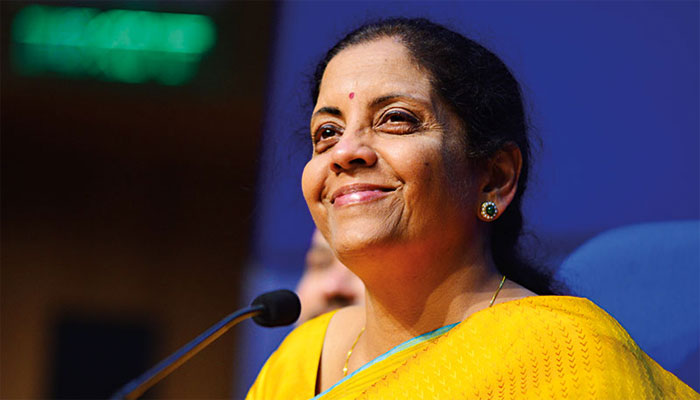
FM Nirmala Sitharaman opens up about crypto, says Money Laundering and Terror Funding are the biggest concerns

0

Indian Finance Minister Nirmala Sitharaman has said that money laundering and terror funding are the biggest concerns when it comes to crypto transactions. Speaking at a seminar on Digital Currency titled “Money at a Crossroad: Public or Private Digital Money?” on the 18th of April, she talked about the need for collective monitoring of crypto transactions to ensure the funds are not used to fund terror or for money laundering. FM Sitharaman is currently on a US trip for International Monetary Fund (IMF) annual spring meetings.

Speaking on the current status of the crypto markets in India, FM Sitharaman said that it was only in the 2022-23 budget that the Indian government announced a 30 percent tax on income generated by transactions of crypto assets. Sharing the government’s plans for the digital currency, she said, “We don’t recognize those which are outside of the central bank. The central bank is yet to come up with a digital currency. It will happen in 2022-23.”

She added that the government has noticed a large number of transactions happening in cryptocurrencies. She said it was not possible to assert the veracity of data and the number of transactions available in the public domain is questionable. However, the government does realize that a lot of things are happening regarding transacting those assets.

As India has no plans to recognize cryptocurrencies as a currency that is backed by the bank or the government, the tax was imposed on them as assets. FM Sitharaman made it clear that imposing a tax on the crypto assets did not regularise them, and the central bank (Reserve Bank of India) is yet to come up with regulations for the cryptocurrencies.

Speaking about the tax on crypto, she said that the government was not sure how to track these transactions as a large chunk of them are being done via un-hosted wallets. She said the 1% tax that is deductible at the source of the transaction is not in addition to the 30 percent tax on crypto assets. The tax at the source will help the government to keep track of the transactions, and it is reconcilable with a 30 percent overall tax on the income via crypto assets.

She said, “We are trying to keep track of the transactions and making sure that these transactions comply with anti-money laundering rules. We are also making sure that these operations do not end up inadvertently funding any kind of terror activities. We wanted to make sure when there are no regulations, and as these transactions are becoming fairly large, we keep an eye on them. There should be financial implications for them. We have not legitimized them. They have no intrinsic value but certain operations are taxable for the sovereign of the nation. Thus we did this [imposed tax].”

The risks around crypto transactions

FM Sitharaman said when it comes to the nongovernmental domain, the risk that worried her was the un-hosted wallets across the globe. She said, “Regulation cannot be made by a single country. It has to be done collectively across borders. Every case needs a different approach as risk factors would be different depending on the case. As long as transactions happen through un-hosted wallets, monitoring will be very difficult.”

She said that central bank-driven digital currencies will make cross-border payments easier. It helps in improving efficiency, transparency, and better management. However, the protocols that were in place two years ago were very different from those in place today. “Unless there is a global approach at regulating, and also an understanding of technology as it keeps evolving, it will not be possible to regulate.” She added that the government is not interfering but only monitoring the transactions to ensure that these are not used for money laundering or funding terror activities.

India and its digital payment infrastructure

During the seminar, FM Sitharaman said that India has spent a lot of time building the digital infrastructure framework. She mentioned, “We have ensured that we have brought in the data security and data privacy elements and created what the India stack is.” She added that the system is an indigenously developed technology-driven enabler that allows the innovations coming across for creating platforms such as the API platform to support digital infrastructure.

She talked about the biometric system Aadhaar that was used to authenticate the beneficiaries’ bank accounts. It helped the government to eliminate ghost accounts, and the benefits were directly transferred to bank accounts via Direct Benefit Transfer or DBT. She added that a similar digital platform was created for the GST network as well.

The government funded and developed the system, and the private sector also came into play for the common collective good. Speaking about the digital adoption rate in India, she said that in the year 2019, it was 85 percent in India, while the rest of the world saw only 64 percent digital adoption.

Impact of Covid-19 pandemic

FM Sitharaman noted that during the Covid-19 pandemic, the government of India was able to test and prove that digital infrastructure adoption can happen in the country. She said, “Common people used it in a big way. The government used it for DBT. As the transparency increased in payments to the beneficiary, the confidence was built.”

She further added that 299 million (29.9 crores) people in rural India became digital savvy, and recently, India added 135 million (13.5 crores) people to the network and those people do not own smartphones but only feature phones. She was referring to the 123PAY UPI payment system that does not require a smartphone for digital transactions.

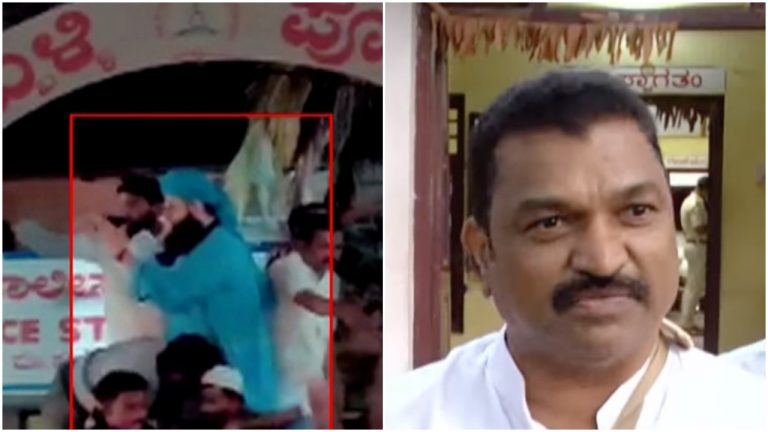
Hubbali: Maulana delivered provocative speech standing atop police commissioner’s car along with Congress leader, enraged mob attacked police station, temple

A provocative speech by a controversial Muslim cleric outside the Old Hubballi police station had enraged the Muslim mob culminating in attacks against the police station in Hubballi on Saturday, reports Vijayavani.

According to the reports, Maulana Wasim Mobalik, alias Pathan was seen standing atop the Hubballi police commissioner’s car outside Old Hubballi police station, making provocative speeches. The police suspect that the mob resorted to stone-pelting at the old Hubli police station, a nearby temple, and a hospital.

In the images that have gone viral, Maulana Pathan, dressed in blue attire, was seen standing outside the police station, inciting the crowd. Waseem addressed an agitated mob, which had gathered to protest against the post. After his inflammatory speech, large-scale violence happened in Hubballi.

The police have collected the video of the hate speech, which shows the accused Maulana standing on a vehicle of the police commissioner and delivering his speech, police said.

The Maulana made some provocative speech outside the police station, demanding to hand over the person who had allegedly made a derogatory speech against Islam. Next to Maulana Wasim, the local Congress leader Altaf Hallur can also be seen encouraging him to deliver the provocative speech.

Maulana had made a provocative speech at a dargah

It is also being reported that a provocative speech made at a dargah in Hubli earlier in the day fuelled protests outside the police station. Inspired by Maulana’s provocative speech, more than 200 Muslim youths assembled outside the police.

The local reports suggest that the Maulana has escaped after inciting the Muslim mob. The police have begun their search to arrest Maulana, whose speech is reported to have triggered riots in the city.

Meanwhile, the police have arrested more than 120 persons in connection with the violence. Many accused have disappeared, fearing arrest by the police. The eight special teams formed to nab the accused have continued their operations.

Muslim cleric asks not to share videos on social media

Similarly, audio has gone viral in which a Muslim cleric can be heard asking fellow Muslims to not share videos on social media as it could be used to identify the rioters and arrest them.

The cleric asked another person not to share any posts or videos with a person and asked him to convey messages among Muslims so that the police do not provide any evidence to act against the rioters.

“The police will recognise our people, and they will arrest them. Our people will be targeted and sent to jail. Whatever happened yesterday is due to the blessing of Allah,” a senior cleric can be heard saying in the video.

Police officials say the mob wanted to kill them

The Hubballi police have registered two cases against the Muslim mob in connection with the attacks on the police station in Hubballi based on a complaint filed by police inspector Jagdish.

In the complaint, the police inspector Jagdish said they were attacked and had to escape from the mob to save his life. He also said that the enraged mob threatened them to kill him and pelted stones at him and other police officials. Jagdish and his team were deployed to rescue the police personnel at the Old Hubballi police station, who was attacked by the Muslim mob.

“We sat inside the jeep as the mob encircled us. They stopped us from doing our duty and threatened us to kill. The mob had assembled outside Old Hubballi women’s police station. We received orders from higher officials to reach the premises. So at 10.30 pm, we left towards Aravind Nagar. a mob of 100-150 people stopped us from moving forward. The mob was carrying sharp weapons, rods, and stones,” the police inspector said in his complaint.

The violence at Hubli was not an isolated instance of stone-pelting in the country this Hanuman Jayanti. Similar events in different contexts occurred in Delhi’s Jahangirpuri and Andhra Pradesh’s Kurnool when Hanuman Jayanti Shobha Yatras came under stone-pelting attacks.

‘Road occupied by keeping scrap, daily cases of violence’, street vendors share their plight in Jahangirpuri

After the Islamist attack on the Hanuman Jayanti procession in Jahangirpuri, the victims of the violence continue to come forward to share their misery. Due to the imposition of Section-144 in the area after the violence, street vendors and small shopkeepers are suffering a lot as their livelihood has been impacted severely.

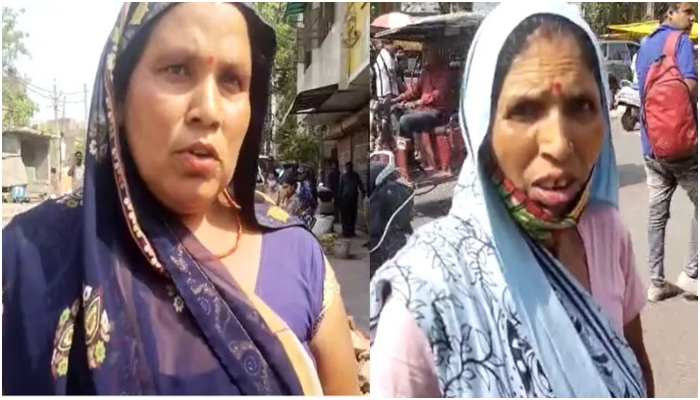
Team Opindia went on the ground and spoke to several such street vendors to understand their pain and suffering in the aftermath of the violence. Guddi, a resident of Budaun, Uttar Pradesh sells vegetables in the same block of Jahangirpuri where the violence erupted on April 16. Speaking to Opindia, Guddi said that she has suffered a heavy monetary loss due to the violence.

“Section 144 has been imposed in the area and the Police are not allowing us to sell vegetables here. The Police say that if the violence erupts again, where will the public go. They indulge in violence but we have to suffer. Our business has come to a standstill since Saturday and we have no other means to make a living. These fights are very common in this area,” Guddi said.

Another woman present there said that these people keep on fighting every day. “It hurts us a lot financially, but what to do? We do not fight with these people, if they do something, then we move away from there, otherwise, we will be beaten up,” she said sharing her plight. The woman also asked the administration to provide another spot for them to set up their vegetable cart. Further, she added, “These people create a lot of problems. There are a lot of pickpockets active here. Even if someone is carrying a mobile in the bag, they will steal it.”

A woman hailing from Etah complained that Bengalis have blocked one side of the road in their lane in Jahangirpuri. “They have blocked one side of the road in their area by keeping a lot of scrap on that side. There is also a market on the Bengali side. Those people go there to get vegetables. We don’t go there to sell,” she told OpIndia.

Narrating the violence of April 16, one of the vegetable vendors said, “We had set up our cart to sell vegetables in that area. Suddenly I saw everyone is running so I also ran from there. Nobody was telling the exact reason but they said that Hindu-Muslim violence has happened. We left all our vegetables there and ran in the opposite direction to save our lives”.

The lady also added that violence like this is common in the area. “Last month, one Muslim man had attacked a Hindu who died later. I am 62 years old now, I don’t even have a pension to rely on. If there is any violence, first of all, they drive the street vendors out of the area”, she stated.

She further added, “We don’t get involved in the violence. Drunkards and drug addicts come here and get involved in fights, and disturb the market”, she stated. Local shopkeepers in Jahangirpuri had also blamed illegal immigrants from Bangladesh and Rohingyas for the increased crimes in the area.

Jahangirpuri Violence-

On April 16, the Hanuman Jayanti procession was attacked by Islamists who pelted stones and glass bottles at the procession. Several people got injured as swords and pistols were also used by the attackers. Among the injured, there was one police sub-inspector as well who was shot by the rioters.

‘Porn addict’ Jasheer Pasha kills wife after assuming she acted in adult movies: Reports

On Sunday (April 17), a 40-year-old man killed his wife after assuming that she acted in porn movies, reported The New Indian Express. The incident took place at Ramanagara city in Karnataka.

The accused has been identified as one Jasheer Pasha. A porn addict, Pasha is an auto driver by occupation. The New Indian Express reported that the accused watched a porn film two months ago and assumed that the woman in the clip was his wife.

Due to his growing suspicion, Pasha began harassing his wife of 15 years. He accused her of infidelity and began assaulting her physically. Pasha thrashed his wife brutally at a family function in Kolar about 2 months ago. Several family members then came to know about his suspicions.

Towards March-end, Pasha again beat up his wife. The 35-year-old Mubeena was badly bruised and had to be hospitalised. At around 12:30 pm on Sunday (April 17), Pasha stabbed her in front of his children at their residence in Ramanagara.

While speaking about the matter, an investigation officer informed The New Indian Express, “Her father approached the Byatarayanapura police, but Mubeena stopped him from filing a complaint. The couple stayed in the city and shifted to Ramanagar just four days prior to the incident.”

“At 12.40 am on Sunday, the couple’s first son rushed to his grandfather Ghouse Pasha’s residence, which is close by, and told him that their mother had been stabbed by their father,” the officer added.

The complainant in the case has been identified as Ghouse Pasha, the father-of deceased Mubeena. On being informed about her death by his grandson, Ghouse rushed to the house, only to find Mubeena dead.

Reportedly, the accused hails from Shammanna Garden in Bengaluru while the victim was a native of Rehamaniyanagara on BM Road in Bengaluru.

West Bengal: BJP worker’s body found hanging from a tree in Birbhum, political situation tense as family, party alleges murder

A BJP worker’s body has been found mysteriously hanging from a tree at Mallarpur town in Birbhum District, West Bengal. A tense situation prevailed in the wee hours of Tuesday morning when the man was found dead hanging on a tree outside his house in Birbhum.

Graphic visuals, please view with caution:

BJP Karyakarta Purna Chandra Nag Murdered and Hanged at Mollarpur, Birbhum District from OpIndia Videos on Vimeo.

The incident took place on Tuesday when it was known that the deceased had not returned home since Monday. When the family was about to visit the police station to register a missing complaint, they found the victim’s body mysteriously hanging from a tree near their house. The deceased, Purna Chandra Laha, aged 40, was a daily wager who ran his home doing small jobs.

He was an open and active supporter of the opposing Bhartiya Janta Party (BJP) in the state. However, he was not an active participant in the daily political happenings, as per reports.

Graphic visuals, please view with caution:

BJP Karyakarta Purna Chandra Nag Murdered and Hanged at Mollarpur, Birbhum District from OpIndia Videos on Vimeo.

On Tuesday, after the body was spotted, it was recovered by the Mallarpur police and was sent to Rampurhat Medical College Hospital for autopsy. According to reports, no complaint has been registered in the case so far. Questions have started arising about whether the death was by suicide or was it a planned political murder. Given the uproar of political violence in the state, the BJP has alleged that the man may have been killed for political reasons.

The family of the deceased has also claimed that since he was known as a BJP worker in the village, his body was hanged from a tree by the TMC workers who killed him for being associated with the opposing party. The Police have launched an investigation into the shocking incident.

The lives of BJP workers have come under direct threat in West Bengal after the political violence that outpoured after the re-election of Mamata Banerjee as the CM in 2021. The TMC government has failed to address the law and order situation when it comes to political violence and especially the killings of BJP workers in the state.

Kerala: Kannur temple bans entry of Muslims in premises during festival, CPM and DYFI protest move

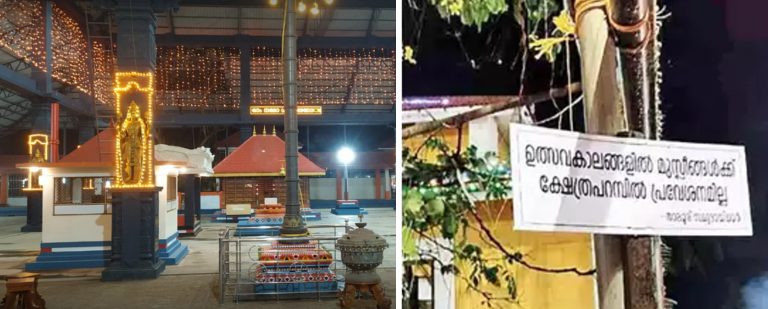
A sign at the gate to a temple in Kannur, Kerala, forbidding Muslims from visiting during the festival has sparked a debate in the neighbourhood. The sign was displayed outside the Malliyottu Palottukavu temple in Kunhimangalam, Kannur, stating that Muslims are not allowed to visit during the festival season, which began on April 14.

It’s worth remembering that the temple caused quite a stir last year when a similar sign with the same inscription was posted. The board’s reappearance has sparked outrage, with many people, including political parties, criticising the measure. In a statement to the media, CPI(M) Kannur district secretary MV Jayarajan called the incident “regrettable.” He added that such measures will cause discord among members of diverse communities.

Likewise, members of the Democratic Youth Federation of India (DYFI) reacted angrily to the temple’s decision to bar Muslims from accessing the temple premises. The DYFI’s leaders condemned the activity, calling it a “challenge to a secular society.”

Some locals also claim that their protest will have no effect on the resolution of the incident and that the board would remain in place until the conclusion of the festival. The board has been put up by the ‘Naloori Samudayis’, the committee that organises the festival in the temple.

According to an official who spoke on the condition of anonymity, the dispute is the work of certain social media activists. They are attempting to manufacture unneeded controversies in relation to the event. “Many Muslims conduct business here during the festival, and they have set up temporary stalls. The only issue is that they are not permitted to access the temple premises” he stated.

The temple management is yet to issue a remark on the matter.

In a recent incident, the managing committee of Hosa Marigudi Temple in Kaup, Udupi district, barred Muslims from bidding in the annual ‘Suggi Mari Pooje’ (annual fair) auction after Muslims in the coastal region closed shops and organised a bandh on March 17 to protest the Karnataka High Court’s judgement on the hijab issue.

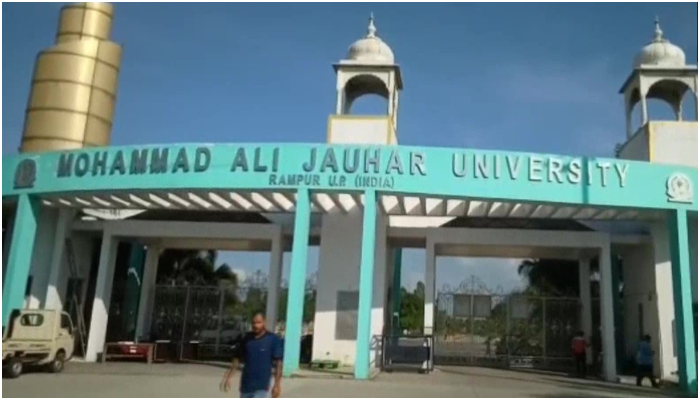
Supreme Court stays the take over of land from Mohammad Ali Jauhar Trust, which built a Mosque instead of a university: Details

On Monday, the Supreme Court stayed the Allahabad High Court order to take over of land allotted to Mohammad Ali Jauhar Trust at Uttar Pradesh’s Rampur. The Allahabad High Court had allowed the state to take over the land allotted to Mohammad Ali Jauhar University owned by Samajwadi Party leader Azam Khan.

According to the reports, the state government of Uttar Pradesh 2005 had allotted 400 acres of land against a ceiling of 12.5 acres (5.0586 hectares) to establish the university. The permission was granted based on various conditions. However, in 2020, the Sub Divisional Magistrate, Rampur found out that the Trust had violated the conditions by illegally constructing a mosque on the premises.

Based on the report submitted by the Sub Divisional Magistrate, the state government in the year 2021 declared that the land over 12.5 acres given to the University, would remain the state’s property. The Trust argued that the mosque was built for the teachers and non-teaching staff who are residing on the university premise.

The Trust later knocked on the doors of the High Court who dismissed the petition saying that the SDM report clearly stated that the construction of the Mosque on the land allotted was a violation of conditions and that the Trust had failed to use the land strictly for educational purposes. “The argument that the campus had residential premises for teaching as well as non-teaching staff, a ‘Mosque’ was constructed for them cannot be accepted as it goes against the permission granted by the state,” noted the Court.

The land was allotted in the year 2005 to the Trust under Section 154(2) of U.P. Zamindari Abolition & Land Reforms Act, 1950. A bench of Justices Ajay Rastogi and Justice CT Ravikumar on April 18 also issued notice on a plea filed by the Trust challenging the High Court’s decision and has listed the matter for the next hearing in August.

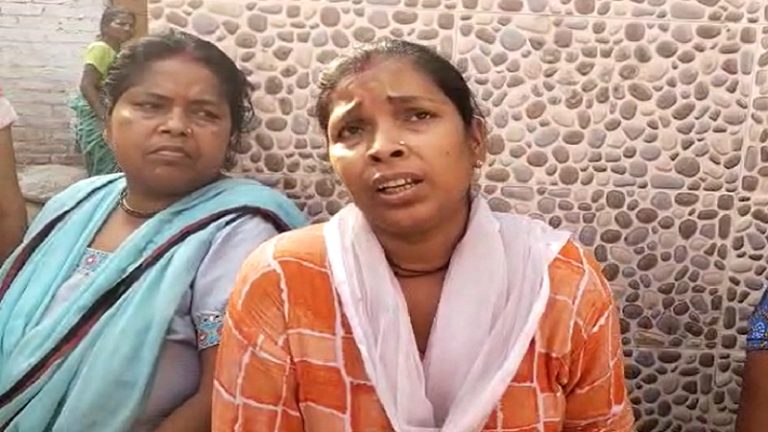
‘Our only fault is that we celebrated our festival’: The Hindu woman whose husband and 4 other family members are detained by Delhi Police

Five members of the same Hindu family, including a juvenile, were detained following the rioting in Delhi’s Jahangirpuri, as OpIndia previously reported. Durga Sarkar, a Hindu woman, said that Delhi Police had taken her husband, brother-in-law, and three sons without giving out any details for their detention.

This family is notable for playing a key part in organising the Shobha Yatra on Hanuman Jayanti. The family is currently in financial distress. After all of the family’s men were detained, the people left in the family are now struggling to meet their basic needs.

Durga Sarkar stated that despite her extensive search, she has heard nothing about the five members of her family. She stated that no one has stepped forward to assist them thus far. The situation is deteriorating as all of the house’s men are being held by the cops. She claims that no one in the police department speaks to her properly and that she is forced to go around without any information about her family members.

Durga Sarkar, who was fatigued after returning from the police station, stated that no one is willing to talk to anybody there. She went to two police stations but was unable to get any information about her family members. 

According to the woman, the police should also take her because no one else is left to look after her. The family originally hails from Murshidabad, West Bengal. Her husband’s leg was injured, while her brother-in-law was hit on the head. Bricks and stones were hurled at both of them during the riots.

She stated that until the police administration is in place, there is nothing to be afraid of because peace is maintained presently. However, she is concerned about what will happen in the area once the police have left. Furthermore, they have got no assistance from the government or from anybody else till now.

The woman is currently the only one left in the house. Even she is unable to prepare food in her own home. “My family members are arrested in an unlawful manner,” she said. ” They were simply commemorating Hindu festivals. They were taken by the police, who stated that they were taking them for interrogation and that they would leave once the questioning was completed,” she added demanding that she be permitted to provide meals to her family members at the very least.

Her two boys help around the house in addition to their education. They set up shops near the house and help the family’s income. Her children, she claimed, do not steal or indulge in illegal activities. Instead, they work hard. She stated that the funds for the Hanuman Janmotsav Shobha Yatra were raised by the poor Hindus of the area themselves. Durga Sarkar’s sister has stepped forward to help her. They are without parents. No one else is on her side.

Durga Sarkar is the name of the victim woman, and Suken Sarkar is the name of her husband. Suraj, the eldest son, is 20 years old, while the second son is between the ages of 17 and 18. Even though the woman’s third son is a juvenile, the cops have taken him away. Sukesh Sarkar is the name of the woman’s brother-in-law. The family was arrested immediately by the police after Jamiat-e-Ulema leaders arrived in the area.